Resume Buzzwords: I Found 20 to Cut and What to Write Instead
The 20 resume buzzwords that cost you interviews, why each one fails, and the specific rewrite to use instead, plus which terms are worth keeping and why.


Written by Dr. Priya Sharma
Career Development Expert & Resume Analyst
Updated August 2026
Reviewed by Sarah Chen
Is your resume ATS-friendly?
Drop your resume in and see which of these skills a scanner can actually read, and which ones the job you want is asking for that you have not listed.
PDF or DOCX. Max 2MB.
We never share your resume or use it to train a model.
In This Guide:
What are resume buzzwords?
Buzzword vs. keyword vs. cliché
| Term | Example | What it does |
|---|---|---|
| Buzzword | driven, strategic, innovative | Tells the reader who you are, not what you did |
| Keyword | Python, HIPAA compliance, P&L management | What a scanner and a recruiter actually search for |
| Cliché | team player, go-getter, hard worker | So common it reads as filler |
You're staring at your resume wondering why "detail-oriented" feels both necessary and empty at the same time. That tension is the whole issue with buzzwords.
Buzzwords: words that describe you
A buzzword names a trait: driven, strategic, innovative. It tells a reader who you are, not what you did - fine once in a summary line, dead weight if it's the whole resume.
Keywords: words that name a thing you did or used
A keyword names a thing: Python, HIPAA compliance, P&L management. I've read thousands of resumes, and keywords are what a scanner and a recruiter both actually search for - trait words never move either one.
Clichés: buzzwords so common they read as filler
"Team player," "go-getter," "hard worker" - say them to any recruiter and watch their eyes glaze. Every generation gets its own filler word; "synergy" used to be the offender, now it's "results-driven."
Nine times out of ten, cutting these costs you nothing.
Why the same word can be fine in one line and empty in another
"Led" is empty alone, strong attached to a proof point. Same with "innovative" - dead in a summary line, earned right after "redesigned the onboarding flow."
The word was never the problem. What follows it is.
Which buzzwords should you cut from your resume?
Which buzzwords should you cut from your resume?

You already know some of your lines aren't pulling weight. Here's the list I flag most, with what's specifically wrong with each one.
The five reasons they all fail are in why do these words hurt your chances, and the rewrites are in what to write instead.
Team player
This is the single most common line I see, and everyone else in the pile is claiming it too.
Results-driven
Nobody writes "I don't care about outcomes," so the phrase adds nothing a reader didn't already assume.
Detail-oriented
If you actually catch errors, say what you caught and how many - that's the version a recruiter believes.
Hard worker
Show the hours, the deadline you hit, or the project you carried - the work ethic shows up in the specifics, not the label.
Self-starter
Name the thing you started without being asked, and drop the label - the story does the work the word can't.
Passionate
Passion is a feeling, not a capability, and a resume is a proof document. Let what you built or shipped carry the enthusiasm instead.
Go-getter
Dated slang that reads more casual than most hiring managers want. Swap it for what you actually initiated.
Strategic thinker
"Strategic" with no plan behind it is just a compliment you gave yourself.
Innovative
If you built something new, describe the thing - the word "innovative" is the reader's conclusion to draw, not yours to state.
Expert
Often overstated, and it invites a reader to test you on it. Let your certifications and your track record make that claim so you don't have to.
Think outside the box
One of the oldest clichés in the pile. It describes no actual idea - name the idea instead.
Synergy
Corporate jargon that obscures rather than clarifies.
Best-in-class
Unverifiable without a ranking or comparison behind it. If you can cite one - a percentile, an award, a benchmark - do that instead of the label.
Proven track record
The phrase asks the reader to trust you rather than showing them. The track record itself, in numbers, is the proof - the phrase in front of it is just filler.
Seasoned professional
Your dates already show how long you've worked. This adds a label on top of information the reader can already see.
Responsible for
Responsible for, rewritten
Responsible for managing the sales team.
Grew sales team output 22% by restructuring territory assignments.
This describes your job description, not what you did with it. Two people can have the same "responsible for" line and wildly different results - say which one you were.
Duties included
Same trap as "responsible for": it's a list of tasks, not a list of outcomes. This is exactly the wording ResumeJudge rewrites for you - feed it your resume and the posting, and it turns duty-list bullets into achievement bullets that match what that employer is actually asking for.
References available upon request
Left over from the paper-resume era. Employers assume you'll provide references if asked.
Rockstar, ninja, guru
This trio works at maybe one company in fifty - a very casual, very early-stage startup - and reads unprofessional everywhere else. If you're not sure the culture wants it, leave it out.
Microsoft Office proficient
Basic office software is assumed at this point, the way knowing how to use email is assumed. Spend that line on the specific tool the posting actually names - see how to find the right words in a job posting.
Why do these words hurt your chances?
The two failure points aren't separate: a recruiter who's already primed to skim past buzzwords moves even faster on a resume the ATS has already flagged as keyword-thin. Fix the buzzwords and you usually fix both problems in the same pass.
I've read enough resumes to know why these words cost you interviews, not just style points.
Every other applicant claims the same thing
"Team player" turns up again and again in every stack of resumes I read. When that many people say the same thing about themselves, it stops being information.
A recruiter has about seven seconds and skims past them
That's roughly how long the first pass takes. A recruiter's eye is trained to skip straight past "results-driven" and "hard worker" because it has seen those words a thousand times and learned they mean nothing.
A claim with no proof makes your other claims look thin
Here's the part people miss: one unsupported claim doesn't just fail on its own, it makes the reader doubt the lines around it too. If "detail-oriented" has no evidence behind it, why should they trust the rest of the resume at face value?
They take up lines that could hold an achievement
Every buzzword is a line you didn't use for a number. Swap it for something concrete and you're already ahead - see what to write instead.
Applicant tracking systems search for skills, not adjectives
The scanner is matching your resume against the posting's actual skill and tool names, not your personality traits. ResumeJudge will scan your resume against a job posting and tell you exactly which required skills and keywords are missing, so you're not guessing at what the system is even looking for.
What do you write instead?
Once you've crossed a buzzword off, don't leave the line blank. Put something there a stranger could actually check.
Swap the trait for the thing you did that proves it
Every buzzword names a trait, and every trait has a moment where you actually showed it. Describe the moment instead of the trait.
"Team player" becomes the project you pulled off with four other people. "Detail-oriented" becomes the process you built that caught errors before they shipped.
If you'd rather not hunt for the right wording line by line, ResumeJudge takes your resume and the job posting and rewrites each bullet for you, trading the trait for the proof, in the terms that posting is asking for.
Attach a number: percent, money, headcount, time
Once you've named the thing you did, attach a number to it if you have one. A percent, a dollar figure, a headcount, a timeframe - any of them turns a claim into evidence.
"Cut errors by 30%" beats "detail-oriented" every time. Nine times out of ten that number is sitting in an old report or performance review you've forgotten about - go find it before you write the line.
When you have no number, name the scope instead
Not every job hands you a metric to quote. When you genuinely don't have one, name the scope instead: how many people, how many accounts, how long you ran it.
"Managed a team of five" and "supported 50+ client accounts" carry the same weight a percentage would, because both are things someone else could confirm.
"Team player" rewritten
Team player, rewritten
Team player with strong communication skills.
Coordinated a cross-functional launch across engineering, marketing, and sales, delivering two weeks ahead of schedule.
Weak: "Team player with strong communication skills." Better: "Coordinated a cross-functional launch across engineering, marketing, and sales, delivering two weeks ahead of schedule."
"Detail-oriented" rewritten
Detail-oriented, rewritten
Detail-oriented professional.
Built a QA process that cut errors by 30%.
Weak: "Detail-oriented professional." Better: "Built a QA process that cut errors by 30%."
"Results-driven" rewritten
Results-driven, rewritten
Results-driven sales professional.
Exceeded quarterly sales targets by 23% managing 50+ enterprise accounts.
Weak: "Results-driven sales professional." Better: "Exceeded quarterly sales targets by 23% managing 50+ enterprise accounts."
"Strategic thinker" rewritten
Strategic thinker, rewritten
Strategic thinker.
Designed a content strategy that grew site traffic 35% in six months.
Weak: "Strategic thinker." Better: "Designed a content strategy that grew site traffic 35% in six months."
"Hard worker" rewritten
Hard worker, rewritten
Hard worker.
Ran a three-month project end to end and got recognized for it by leadership.
Weak: "Hard worker." Better: "Ran a three-month project end to end and got recognized for it by leadership."
"Creative" rewritten
Creative, rewritten
Creative professional.
Designed a campaign that drove a 50% jump in web traffic.
Weak: "Creative professional." Better: "Designed a campaign that drove a 50% jump in web traffic."
Which buzzwords are worth keeping?
Which buzzwords are worth keeping?
Not every word on the cut list needs to go. Some earn their spot, and cutting those too is its own mistake.
Action verbs that open a bullet: launched, negotiated, rebuilt
These carry weight because they name an action, not a trait. "Negotiated three vendor contracts" tells me something happened. "Detail-oriented" tells me nothing. Start your bullets with verbs like these and the sentence does the work on its own.
Tools and software named in the posting: Python, Salesforce, Tableau
If the posting names a tool, use its exact name. These aren't buzzwords at all - they're nouns, and either you've used the tool or you haven't.
Certifications: PMP, CPA, AWS Solutions Architect
A certification is proof someone else already checked. That's the opposite of a self-description nobody can verify, so it stays, spelled exactly as the issuing body writes it.
Terms your field actually uses: HIPAA compliance, P&L management, conversion rate optimization
Every industry has its own shorthand, and leaving it out makes a resume read like it wasn't written by someone who's done the job. Which terms yours expects are set out field by field in which words does your industry expect to see.
How to tell a useful term from an empty one
Ask one question: could someone check it? A tool, a certification, a number - checkable. "Passionate," "driven" - not. I run resumes against the actual posting all day, and the ones that survive a scan are always the ones built from nameable things, not adjectives. ResumeJudge does that check for you: it scans your resume against any job description and shows exactly which of these nameable terms are missing before you hit apply.
Where do buzzwords belong on a resume?
Placement matters as much as which words you pick. I've seen strong terms fail simply because they sat in the wrong spot.
In the summary
Summary line, rewritten
Results-driven marketer.
Grew ad-driven revenue 150% on a $500K budget.
Your summary is where two or three buzzwords earn their keep, but only when a number sits right next to them.
"Results-driven marketer" is nothing. "Grew ad-driven revenue 150% on a $500K budget" is a summary line worth reading.
If you can't attach a figure yet, check what to write instead before you draft this section.
At the start of an experience bullet
Experience bullet, rewritten
Detail-oriented onboarding specialist.
Streamlined onboarding, cutting completion time from three days to 45 minutes.
Open the bullet with the action, not the adjective. "Streamlined onboarding, cutting completion time from three days to 45 minutes" beats "detail-oriented onboarding specialist" every time.
I tell people to run one strong, specific term per bullet, matched to what they actually did. Stack three buzzwords on one line and none of them survive.
In the skills section
This is the one place a list is the right format. Pull the exact terms from the posting, mix hard and soft skills, and skip the flowery ones entirely.
How often to repeat the same term
Two or three times across the whole resume is the ceiling. Past that, an ATS starts flagging it as stuffing, and a human reader notices even sooner.
What buzzword stuffing looks like, and why it fails the human reader
Stuffing is jargon crammed in with no accomplishment behind it, or the same word doing duty in every section. It can slip past a scanner and still die on a recruiter's desk in the seven seconds they give it.
Which words does your industry expect to see?
Which words fit which context
| Context | Words to use | Why |
|---|---|---|
| Technology and engineering | optimized, architected, automated, scaled | Names the actual stack, not 'technical' |
| Healthcare | administered, coordinated, HIPAA-compliant | Shows the regulatory side, not just the clinical one |
| Finance and accounting | forecasted, reconciled, P&L management | Shows which systems and reports you owned |
| Marketing | SEO/SEM, conversion rate optimization, CTR | A number next to a channel name |
| Sales | quota attainment, pipeline value, close rate | A raw number beats any word around it |
| Startup vs. big company vs. non-profit | disrupted/pivoted vs. streamlined/optimized vs. championed/advocated | Same job, different audience |
I've read resumes across a dozen fields, and the same word lands differently depending on who's reading it. What counts as strong in one industry reads as vague in another.
Technology and engineering
Tech resumes lean on verbs that show what you built: optimized, architected, automated, scaled, containerized. Name the actual stack - a language, a framework, a tool - instead of calling yourself "technical."
Healthcare
Healthcare rewards precision: administered, coordinated, documented, implemented. Compliance language like "HIPAA-compliant" or "evidence-based" carries real weight here, because it signals you understand the regulatory side of the job, not just the clinical one.
Finance and accounting
Skip "numbers person." Finance resumes want forecasted, reconciled, streamlined, and terms like P&L management or financial modeling - words that show which systems and reports you actually owned.
Marketing
Drop "creative thinker." Marketing hiring managers want platforms and metrics: SEO/SEM, conversion rate optimization, a budget figure, a CTR.
A number next to a channel name beats an adjective every time.
Sales
Quota attainment, pipeline value, close rate. Sales is one of the few fields where a raw number in the bullet does more work than any word around it.
Startup, large company, and non-profit: the same job, different words
The same role gets described three ways. Startups favor disrupted, pivoted, scaled.
Big companies prefer streamlined, optimized, coordinated. Non-profits respond to championed, advocated, mobilized.
Same work, different audience.
Junior versus senior: supported, ran, built the thing
"Supported" is honest for a junior role - don't reach for "spearheaded" on your second job. As you move up, the verbs should climb with you: ran, owned, built, architected.
How do you find the right words in a job posting?
How do you find the right words in a job posting?
Stop staring at the posting trying to guess what matters. The posting already told you - you just have to read it like a checklist instead of a paragraph.
Mark anything the posting says three times or more
Print it or paste it somewhere you can mark up, and circle any word or phrase that shows up three or more times.
That repetition is the company telling you what it actually cares about. If you'd rather skip the manual count, run the job description through ResumeJudge and it'll pull out exactly what's repeated and missing from your resume, so you're not eyeballing a wall of text.
Take the verbs it uses for the work itself
Not the adjectives about the ideal candidate - the verbs describing the actual job. "Owns the roadmap," "manages vendor relationships," "builds dashboards."
Those verbs belong in your bullets.
Copy tool names, acronyms and certifications exactly as written
If the posting says "Salesforce," don't write "CRM software." If it says "AWS Solutions Architect," don't write "cloud certified."
Exact spelling, exact capitalization.
Match the seniority the posting is asking for
A posting asking for "supported" language wants a different resume than one asking for "led." Read which one you're being asked for and write to it.
Check the company's own site and its employees' profiles for the same words
The posting is one data point. The company's about page and a few employees in similar roles will confirm whether that language is house style or just one recruiter's habit.
How do you check your own resume for buzzwords?
How do you check your own resume for buzzwords?
Read it aloud and mark every line that sounds like anyone
Read the whole thing out loud, top to bottom.
Every time a line makes you wince, or could belong to literally any candidate, mark it. Your ear catches what your eye skims past.
Search the file for each word on the cut list and count the hits
Open the cut list and search your file for each one. Ctrl+F, count the hits.
I've seen resumes with "results-driven" in the summary and then "results-oriented" in a bullet three lines down. Nobody proofreads for repetition like that, which is exactly why it survives.
Ask of every claim: could a stranger check this?
For every sentence, ask: could someone outside the company verify this?
"Grew revenue 18% in six months" - yes. "Passionate about excellence" - no, and that's the tell.
Ask whether the line describes you or the job you held
Cover the job title at the top of each section and read the bullets underneath. If they'd still make sense for a different person in a different role, they're not describing you - they're describing the job.
Give it to someone who does not know your work
Hand it to someone who's never seen you work and ask what you actually did. If they can't answer, a recruiter with seven seconds definitely can't either.
This is also the fastest way to see your resume the way a scanner does: ResumeJudge checks it against the actual job posting and tells you which lines read as filler and which skills the posting wants that you haven't named yet.
Frequently Asked Questions
Are buzzwords and clichés the same thing?
No, they overlap but aren't identical. A cliché is any worn-out phrase, including ones that have nothing to do with skills, like "hit the ground running." A buzzword specifically claims a trait or strength, like "dynamic" or "results-driven," without proving it. Most resume buzzwords are also clichés, but not every resume cliché is a buzzword.
Should I ever use a buzzword on my resume?
Rarely, and only if you can back it up with a number or a specific result in the same sentence. A word like "leader" means nothing on its own, but "led a team of six through a product launch" earns the claim instead of just stating it. If you can't attach proof right there, cut the word and describe what you actually did instead.
Are soft skills like communication and leadership buzzwords?
Not automatically - it depends on whether you back them up. Naming "communication" or "leadership" with nothing behind it reads as a buzzword because a recruiter has no way to check it. Pair the same word with a specific example, like presenting to a client or running a cross-functional project, and it becomes a real qualification instead of a claim.
How many buzzwords is too many?
Even one unproven buzzword per bullet point is too many. The issue isn't really a count, it's whether each claim is backed by something specific - a resume with no numbers or examples reads as buzzwords no matter how few words you used. Aim for every bullet to include a result, a tool, or a scope, and the buzzword problem mostly disappears on its own.
Do buzzwords help me get past an applicant tracking system?
\"No. See [applicant tracking systems search for skills, not adjectives](#applicant-tracking-systems-search-for-skills-not-a) for what the scanner is matching on instead.\"
Which buzzwords are the most overused right now?
Terms like "team player," "results-driven," "detail-oriented," "self-starter," "go-getter," and "hardworking" show up on so many resumes that they no longer set you apart. Phrases like "think outside the box" have the same problem. If a phrase could sit unchanged on a thousand other resumes, it's not doing any work for you.
Should I use 'I' on my resume?
No - leave out "I," "me," and "my." Resume bullets use implied first person, starting straight with an action verb: "Managed a team of six" rather than "I managed a team of six." Dropping the pronoun saves space and matches the tone hiring managers expect.
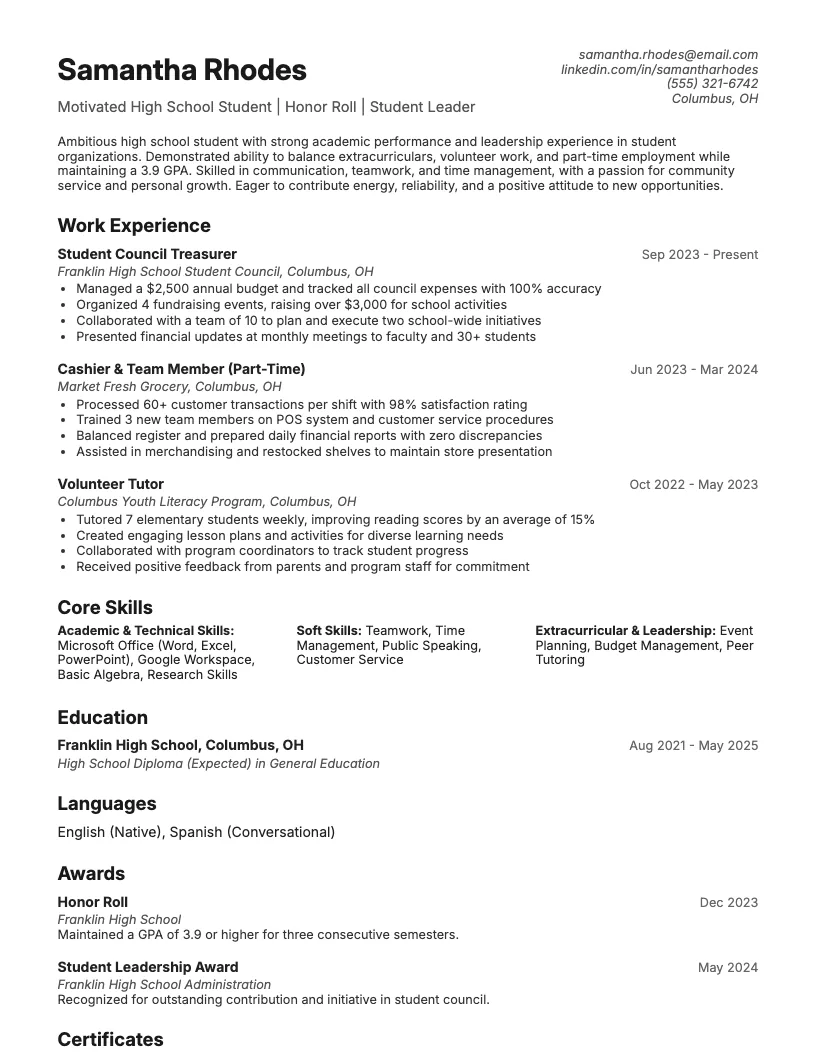
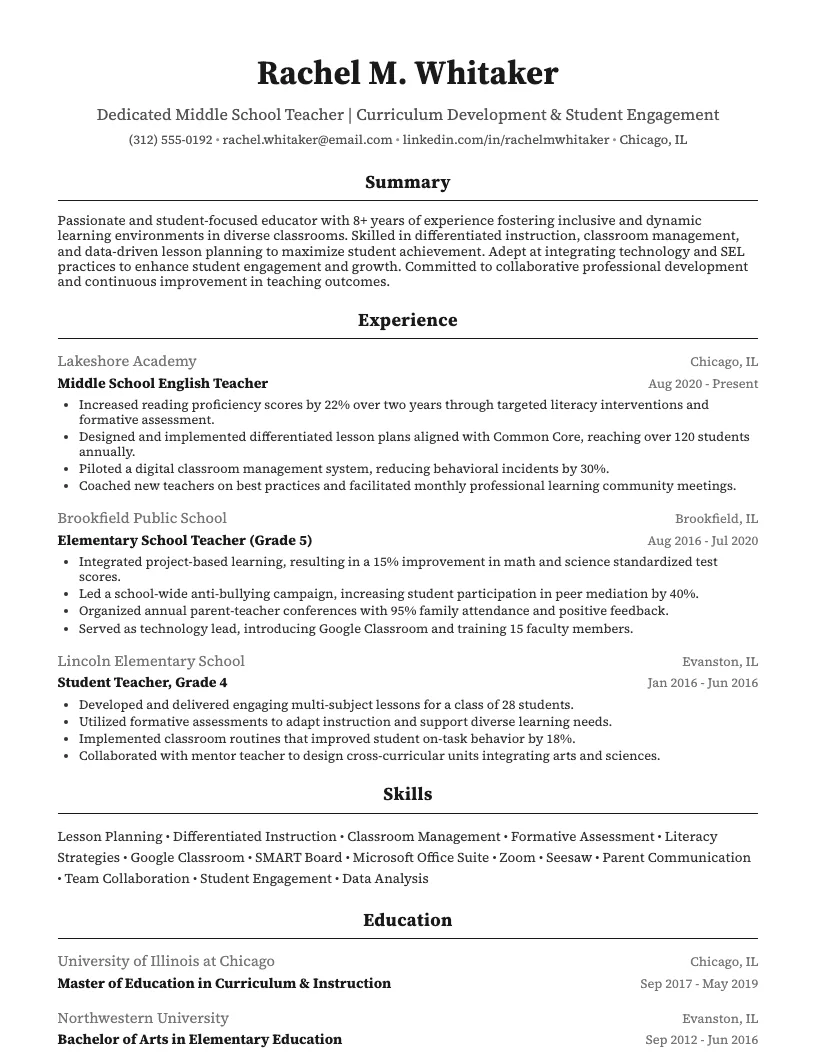
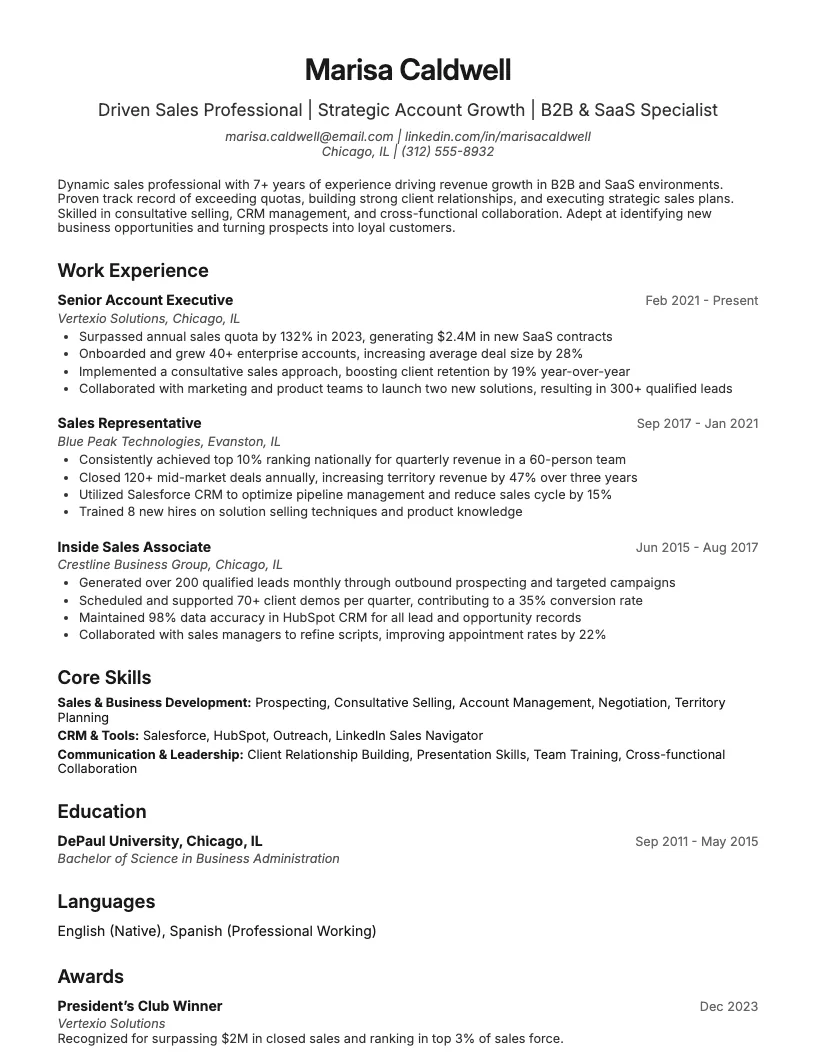
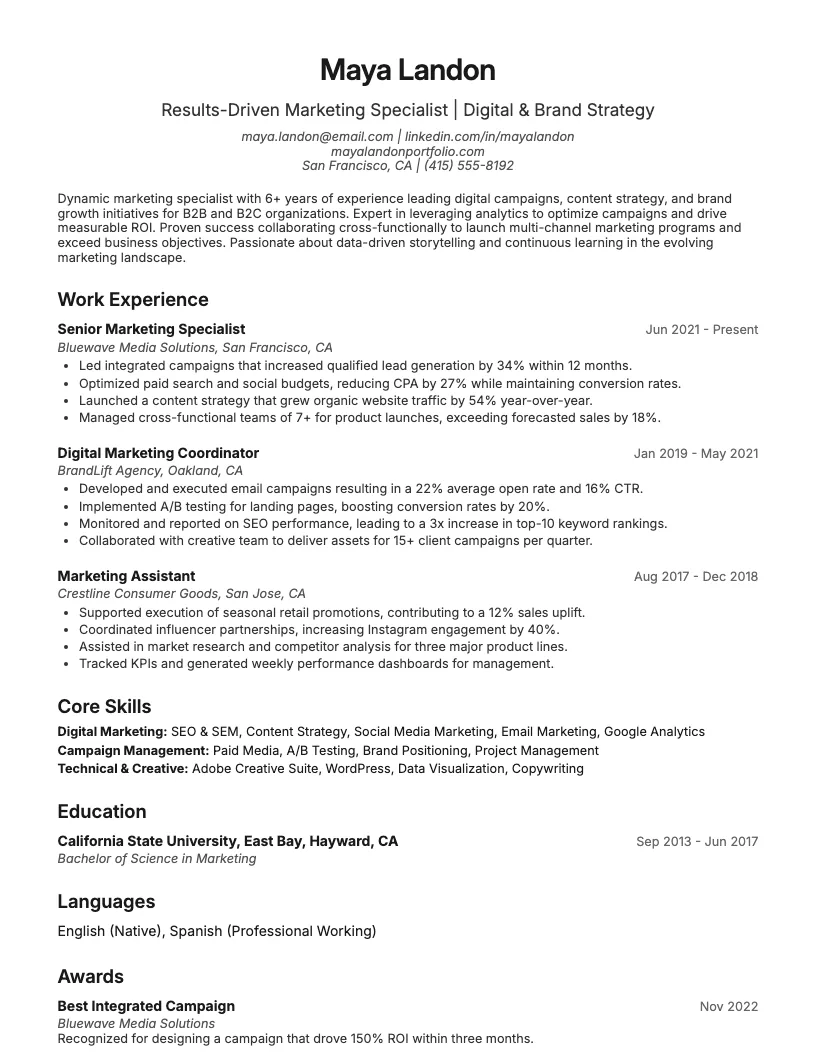
See these skills on a real resume
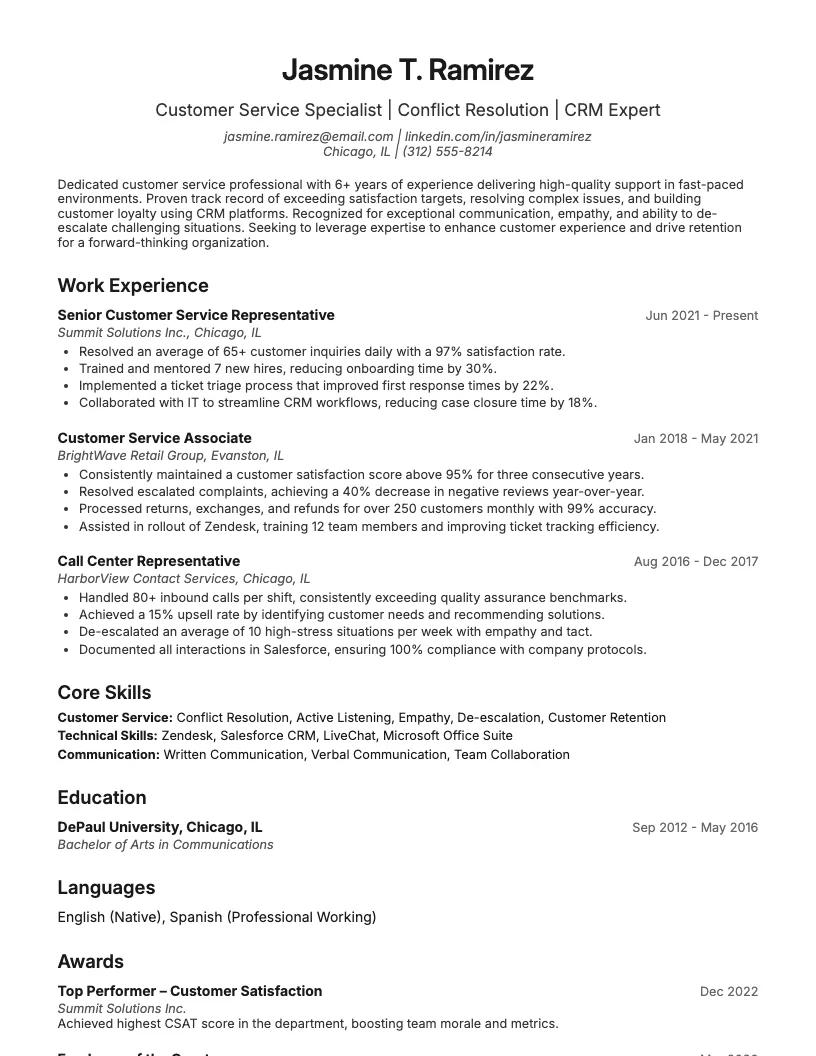
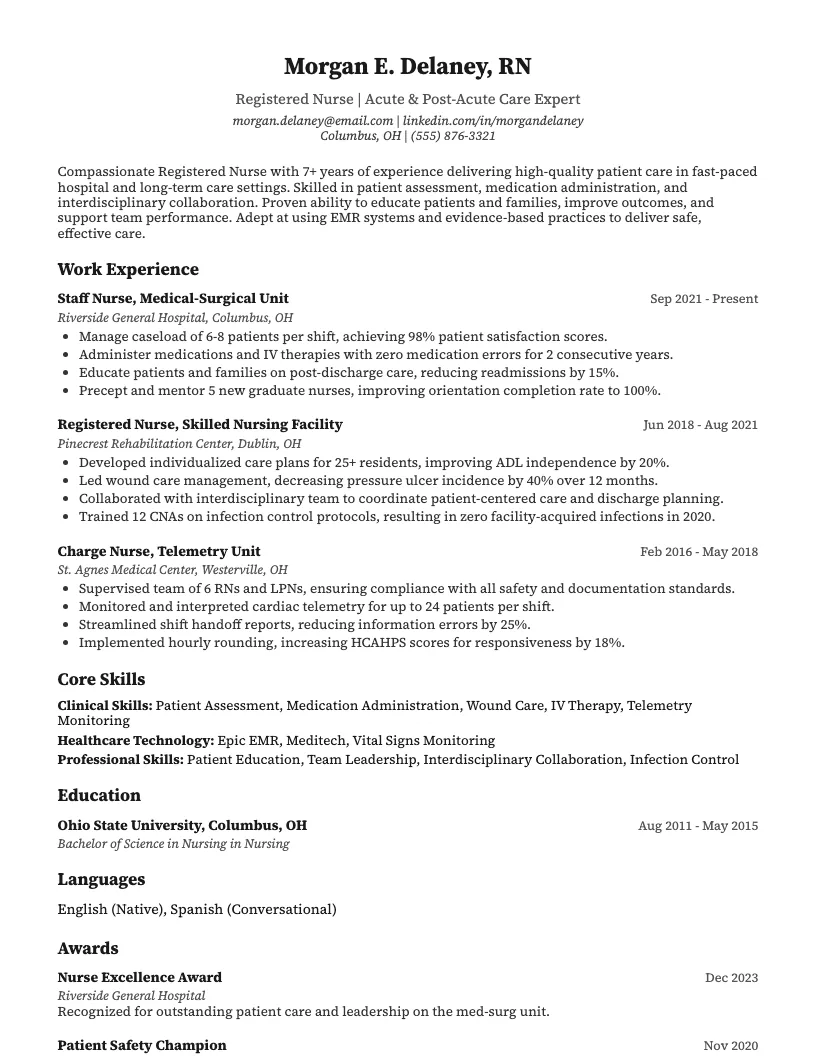
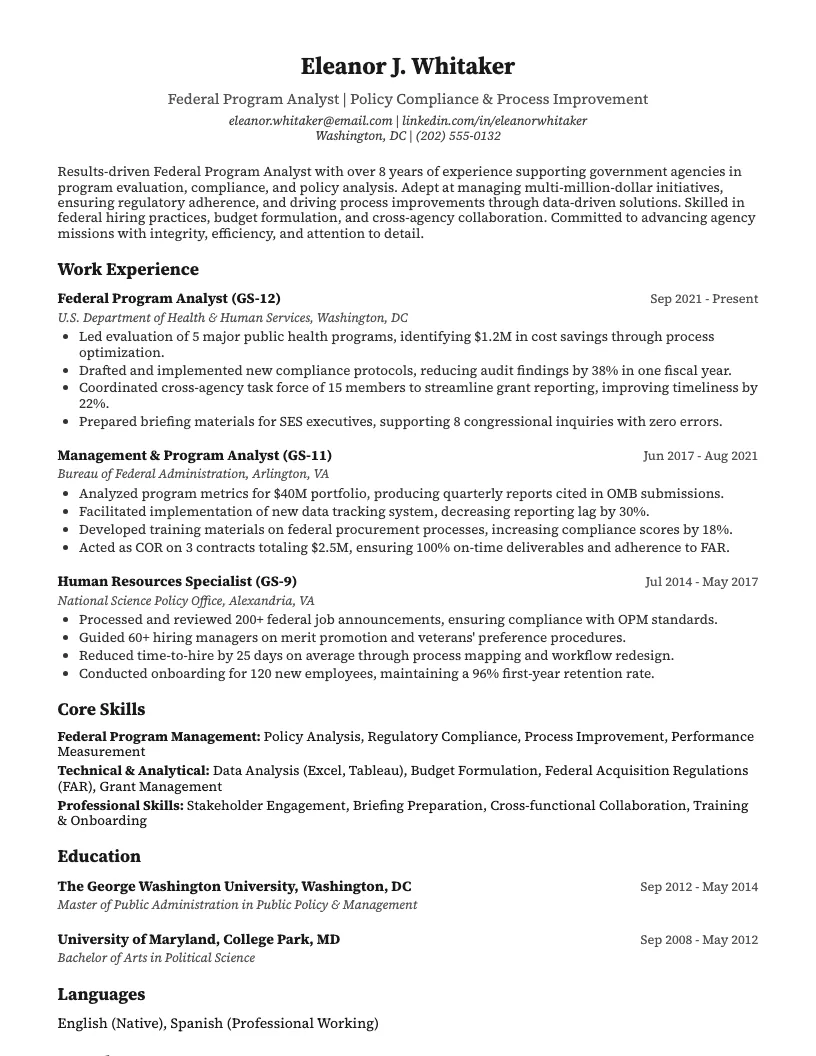
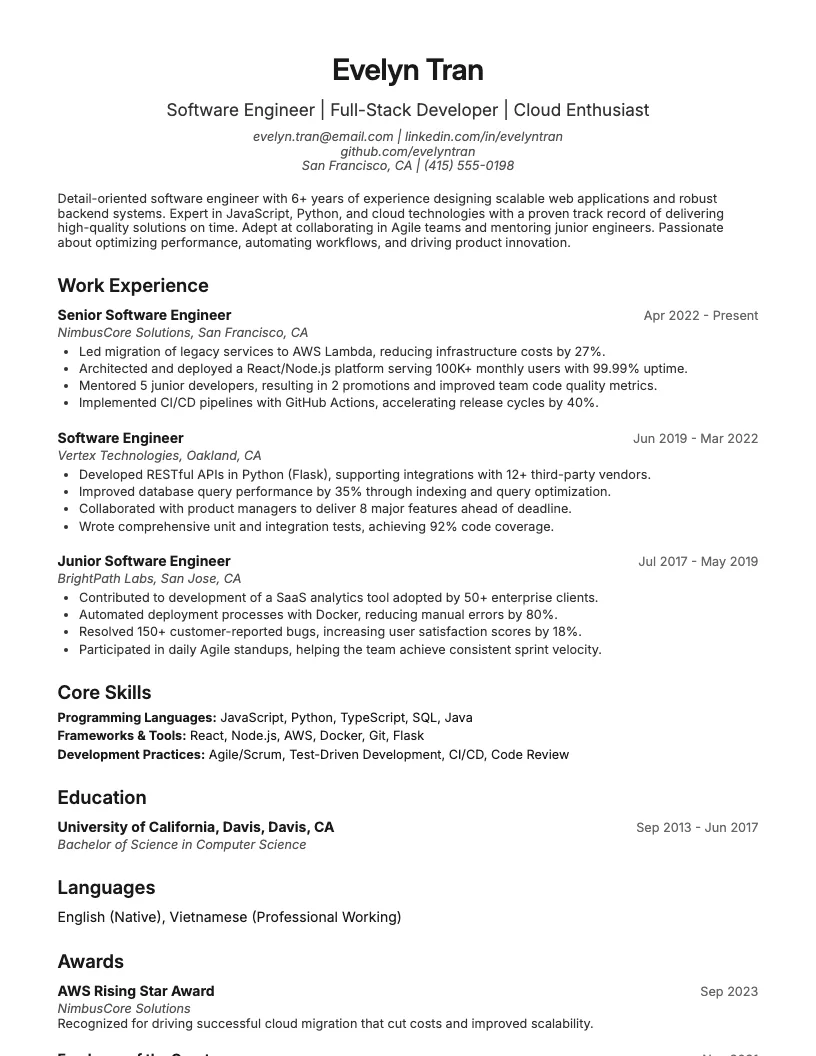
8 examplesStart from an example that already has them, and swap in your own.
Check your resume against the job you want
Scan your resume, see which skills and keywords the posting asks for that you are missing, and fix them before you apply.
Free to use • No credit card required