Resume Action Words: 16 Categories Sorted by What You Did, 8 to Avoid
See resume action verbs sorted into 16 categories by what you actually did, plus 8 overused phrases like responsible for and managed to cut from your bullets.


Written by Dr. Priya Sharma
Career Development Expert & Resume Analyst
Updated August 2026
Reviewed by Sarah Chen
Is your resume ATS-friendly?
Drop your resume in and see which of these skills a scanner can actually read, and which ones the job you want is asking for that you have not listed.
PDF or DOCX. Max 2MB.
We never share your resume or use it to train a model.
In This Guide:
What are action verbs on a resume?
An action verb is the word that opens a bullet point and shows what you actually did. "Led," "cut," "built," "closed" - that kind of word.
A weak bullet and the same bullet with an action verb
A resume bullet with an action verb
Responsible for managing projects.
Led cross-functional projects, delivering results 15% ahead of schedule.
Here's the same line twice. "Responsible for managing projects."
Then: "Led cross-functional projects, delivering results 15% ahead of schedule."
Same job, same person. One reads like a job description.
The other reads like someone who did the work.
Why "responsible for" and "worked on" weaken a bullet
"Responsible for" is the phrase I flag most, and it gets its own entry further down - see "Responsible for" for why it fails and what to put in its place.
"Worked on customer issues" has the same problem - it's vague about your part in it. Compare it to "resolved 100+ customer issues per week at a 95% satisfaction rate."
That's a person you'd hire.
Action verbs vs power words vs buzzwords
People use "action verbs" and "power words" almost interchangeably, and for a resume bullet the difference doesn't matter much. Both mean a specific, active word in place of a passive one - "collaborated" instead of "worked with," "directed" instead of "in charge of."
Buzzwords are the opposite: "team player," "results-driven," "detail-oriented." No action, no proof, just a label you're asking someone to believe.
What a verb can and can't do on its own
A strong verb can't rescue a bullet with no result behind it. If you're rewriting an old bullet, find the actual outcome first - the number or the change it caused - then pick the verb that matches it, not the other way round.
A strong verb makes a bullet easier to read. It doesn't make the achievement true, and it can't stand in for a result.
"Spearheaded" a project that went nowhere is still a project that went nowhere - see why "responsible for" and "worked on" weaken a bullet for what to pair it with instead. If you're not sure which of your verbs and skills actually match what a posting is asking for, running your resume against the job description in ResumeJudge will rewrite your bullets to include what's missing before a recruiter notices the gap.
What is the full list of resume action verbs?
What is the full list of resume action verbs?

I've read thousands of these lists, and the long ones leave you scrolling hundreds of words to guess which one fits. That's backwards.
You don't need a word, you need the right word for the thing you actually did. So here's the list sorted by what happened - find your situation, grab the verb, move on.
Pick the verb that matches what happened, then back it with a number - what a verb can and can't do on its own covers why the verb alone isn't enough. More on that at how you use action verbs in a bullet point once you've picked your words here.
Leadership and managing people
This is the biggest bucket on every list I've ever seen - one competitor puts 80 verbs under it, another puts 63. That tells you something: "led" gets overused because people default to it instead of picking the version that's actually true.
Directed, supervised, oversaw, coached, mentored, delegated, hired, recruited, guided, motivated, empowered, cultivated, chaired, headed, orchestrated, spearheaded, championed, fostered, unified, mobilized, appointed, authorized, trained, developed (people, not products).
If you managed a process rather than people, "directed" or "orchestrated" reads truer than "led." If you grew someone's ability, "coached" or "mentored" beats "trained" - training is one session, mentoring is a relationship, and hiring managers can tell the difference.
Achievements and results
These are for the bullet where you hit a number, not just did a task. Achieved, exceeded, surpassed, outperformed, attained, earned, delivered, won, secured, completed.
The mistake I see constantly: people use these verbs and then never attach the number that makes the claim mean anything. "Exceeded targets" tells me nothing.
"Exceeded quarterly targets by 22%" tells me you can do math and you're not afraid to show your work. See step 3 for how to attach that number.
Sales, revenue and new business
Closed, negotiated, secured, generated, captured, converted, upsold, pitched, forged, partnered, acquired, won, expanded, grew.
I'd steer you away from "sold" every time - it's flat and it's the first word every recruiter skims past. "Closed" or "converted" tells me you finished the deal, not just worked the pipeline.
If you brought in a partnership or funding rather than a straight sale, "forged" or "secured" fits better than any sales verb on the list.
Saving time and money
Reduced, cut, eliminated, streamlined, consolidated, trimmed, minimized, conserved, saved, decreased.
Nine times out of ten, the resume in front of me says "reduced costs" and stops there. Reduced from what to what?
Over what period? That's the whole bullet - the verb is the easy 10%.
Improving or changing something
Improved, streamlined, optimized, transformed, overhauled, revamped, upgraded, modernized, refined, restructured, redesigned, simplified, standardized.
Scale matters here. "Improved" is fine for a small tweak.
If you tore something down and rebuilt it, say "overhauled" or "restructured" - don't undersell a big change with a small verb, and don't dress up a minor tweak as a "transformation." Recruiters have seen both and they notice the mismatch.
Creating and building something
Built, launched, founded, established, designed, developed, created, pioneered, engineered, architected, initiated, introduced.
"Built" and "developed" get used so often they've gone flat - I barely register them anymore reading resumes. If you started something that didn't exist before, "founded," "launched," or "pioneered" says that in a way "developed" doesn't. Save "developed" for the times you genuinely grew something that already existed.
Project management and organizing
Coordinated, executed, planned, organized, facilitated, implemented, administered, scheduled, tracked, prioritized, managed (the process, not the people), delivered.
This is where ResumeJudge earns its keep, actually - if you're staring at a job posting that keeps saying 'cross-functional' or 'stakeholder management' and your bullets say 'coordinated,' you can run the resume against the posting and let it rewrite those bullets in with the process words it's actually asking for.
Research and analysis
Analyzed, assessed, evaluated, investigated, audited, examined, identified, interpreted, forecasted, quantified, surveyed, diagnosed.
Pick "diagnosed" or "identified" when the work was finding a problem, and "evaluated" or "assessed" when it was judging options against each other. They get used interchangeably and they shouldn't be - a diagnosis finds what's broken, an evaluation weighs what's good.
Communication and writing
Authored, drafted, presented, briefed, persuaded, negotiated, articulated, edited, published, documented, conveyed, advised.
"Communicated" itself is the one I'd cut. It says nothing - everyone communicates.
Say what kind: did you write it, present it, or talk someone into something? "Persuaded" and "briefed" both beat "communicated" because they tell me what actually happened in the room.
Teaching and training
Trained, coached, mentored, taught, onboarded, guided, instructed, tutored, facilitated (a workshop), developed (a curriculum).
Onboarding is training and I'd name it as such - a lot of people bury "trained new hires" in a generic bullet when "onboarded" is the more precise, more current word recruiters expect to see.
Teamwork and collaboration
Collaborated, partnered, contributed, coordinated, supported, united, aligned.
I've kept this category short on purpose. Teamwork verbs are the weakest ones on this whole page because they describe how you worked, not what you produced.
If you can swap "collaborated with the team to reduce turnaround time" for "cut turnaround time working alongside three other engineers," take the second one - it still credits the team and it still leads with the result.
Customer service and support
Resolved, advised, assisted, advocated, consulted, educated, fielded, supported.
"Resolved" is the one worth leaning on - it says you fixed something, not just that you were present for it. "Assisted with" and "helped" belong on the words to avoid list, not here.
Problem solving
Resolved, diagnosed, troubleshot, debugged, rectified, streamlined, solved, remedied.
Match the verb to the fix's size. A quick patch is "resolved."
A root-cause dig that took real digging is "diagnosed" or "troubleshot." Don't call every fix a "transformation" - I see that overreach constantly and it costs you credibility on the next bullet, even the true one.
Technical and engineering work
Engineered, architected, built, coded, deployed, automated, developed, tested, debugged, integrated, upgraded, migrated.
Technical resumes are where I see the most vague verbs paired with the most specific tools - "developed applications using Python" tells me less than "automated" or "deployed" would, because those verbs at least imply an outcome. If you're not sure whether your resume's technical bullets actually match the tools and skills a job posting is asking for, that's a quick thing to check against the posting directly rather than guess.
Finance and data
Budgeted, forecasted, reconciled, audited, analyzed, projected, calculated, quantified, allocated.
Finance bullets live or die on precision, so these verbs pair with a number almost by definition - "forecasted" or "budgeted" without a dollar figure attached is half a sentence.
Oversight, compliance and quality control
Audited, enforced, monitored, inspected, verified, ensured, regulated, screened, validated.
These verbs are close cousins - "monitored" is ongoing, "audited" is a point-in-time check, "enforced" means you had the authority to make someone change something. Pick the one that's actually true rather than the one that sounds most senior; a hiring manager in compliance will notice the difference even if a generalist recruiter doesn't.
Which action verbs should you use for your job?
Is your resume good enough?
Drop your resume in and see which of these skills a scanner can read, and which ones the job you want is asking for that you have not listed.
Upload your resumeFree. PDF or DOCX. We never share your resume or use it to train a model.
There's no single "best" list. The right verb depends on what you actually did and who's reading it, so match your verbs to your field instead of grabbing whatever sounds impressive.
Verbs for a management role
The words for this are already above, under leadership and managing people. The one thing to add for a manager: don't let "led" carry every bullet.
Directed a project, mentored two juniors, delegated a launch - each verb should point at a different kind of leadership.
Verbs for a sales role
The words for this are already above, under sales, revenue and new business. What's specific to a sales resume is the number: "Generated $400K in new pipeline" does more work than "responsible for sales."
If you can't remember the exact figure, a close estimate beats no number at all - just don't invent one.
Verbs for a technical role
The words for this are already above, under technical and engineering work. Nine times out of ten, a technical resume I'm asked to fix is full of "worked on" and "helped with" where the person actually shipped the thing themselves.
Say what you built, not what you were near.
Verbs for a customer service role
The words for this are already above, under customer service and support. "Resolved 40+ tickets a week" or "handled escalations for a 200-account book" tells a hiring manager exactly what you're capable of.
Vague ones like "communicated with customers" tell them nothing.
Verbs for a creative role
Creative work calls for verbs that show ownership of the idea, not just execution of someone else's: designed, developed, conceptualized, launched.
I'd rather see "designed a rebrand that shipped across six markets" than a portfolio link and the word "worked." The verb should show you had the idea, not just the hands.
Verbs for a first resume with no work experience
You don't need a job title to use a strong verb. A class project, a club, a part-time shift - all of it can carry organized, coordinated, built, researched.
"Organized a fundraiser that raised $2,000" reads just as well coming from a student as from a manager. If you're not sure which of your projects counts, checking your draft against a real posting will show you fast which ones a recruiter would actually credit.
How to pull the right verbs out of the job posting
Open the job description and underline every verb in it. That list is your shortlist - employers tend to repeat the same three or four action words across a posting, and matching them back in your resume helps both a recruiter and an ATS see the fit fast.
I always tell people not to just copy the posting's verbs wholesale, though - only use one if it's actually true of what you did. This is also where a tool like ResumeJudge earns its keep: paste the posting in and it'll rewrite your draft to work in the verbs and skills it's asking for, so you're not guessing.
How do you use action verbs in a resume bullet point?
How do you use action verbs in a resume bullet point?
I've read thousands of these bullets, and the ones that get skipped over almost always break the same five rules. Fix these and the bullet does its job.
Step 1: Put the verb first
Not "I was responsible for," not "duties included" - the verb, first word, every time.
A recruiter's eye lands on the start of the line. If that word is "led," "cut," or "built," they know what you did before they finish reading.
If it's "responsible," they're already moving on.
Step 2: Say what you did, not what you were assigned
"Assisted with the onboarding process" describes a job description. "Rebuilt the onboarding process" describes you.
The test I use: could your manager have written this line about the role before you were hired? If yes, it's a duty, not an accomplishment - see what a verb can and can't do on its own for why that distinction matters so much.
Step 3: Add the number that shows the size of it
The verb shows what you did; the number shows how much. You need both.
"Increased sales by 25% through targeted outreach" beats "helped improve sales" for the same reason a receipt beats a promise.
If you're not sure which number to lead with, checking your draft against the actual posting is worth doing - ResumeJudge will flag where a bullet is making a claim the job description cares about but never backing it with a figure.
Step 4: Use a different verb in each bullet
I see this constantly: five bullets, four of them start with "managed." It reads like you only have one skill, even if that's nowhere near true.
Pull from a range - one for leading, one for building, one for fixing, one for analyzing. The full list of resume action verbs is there so you're never stuck reaching for the same word twice.
Step 5: Check the verb is one you'd say out loud
If "spearheaded" would make you wince in an interview, don't put it on the page. The gap between what you wrote and what you'd actually say is the first thing that comes apart under a follow-up question.
Strong doesn't mean fancy. "Fixed," "cut," and "built" carry more weight than a thesaurus word most people don't use in conversation.
Verbs in the summary, the skills section and a cover letter
Your summary gets one or two strong verbs, not five - it's a preview, not another bullet list.
The skills section usually doesn't need verbs at all; it's a list of nouns. Save the verbs for where you're describing what you did with those skills.
A cover letter can carry more of them, since it's read start to finish rather than scanned.
Getting the tense right for current and past jobs
Tense in a current-job bullet
Managed a team of six.
Manage a team of six.
Current job: present tense. "Manage a team of six," not "managed."
Every past job: past tense, no exceptions. Mixing tenses inside one job entry is one of the fastest ways to make a resume look like it was never proofread.
Three rewrites, weak bullet to strong bullet
"Responsible for managing projects" becomes "Led cross-functional projects, delivering results 15% ahead of schedule." The verb changed, and so did the proof.
"Held weekly status meetings" becomes "Ran weekly status meetings to communicate agency revenue growth." Same meeting, and now it says who was running it.
"Worked on customer issues" becomes "Resolved 100+ customer issues per week with a 95% satisfaction rate." That's the pattern - swap the vague verb, then back it with a number.
Which resume words should you avoid?
I've read thousands of these, and the same handful of words show up on almost every one. None of them are wrong exactly.
They're just so overused that a hiring manager's eyes slide right past them.
"Responsible for"
Replacing "responsible for" with what you did
Responsible for managing customer accounts.
Grew customer accounts 18% quarter over quarter.
This is the one I see most. It tells me what you were assigned, not what you actually did.
Two people can both be "responsible for" a project - one did all the work, the other showed up to meetings. Cut the phrase and start with the verb: what did you build, fix, or close?
"Managed"
"Managed" isn't a bad word. It's just doing nothing when it's the only verb on the page.
If every bullet on your resume starts with "managed," none of them stand out, and the reader can't tell your biggest win from your smallest task. Save it for when you actually managed people, and use something sharper - ran, coordinated, oversaw - everywhere else.
"Led"
Same problem as "managed." It's accurate often enough that people default to it for everything, from running a five-person team to sending a reminder email.
If you led something, say what changed because you led it. The number does more work than the verb does.
"Assisted with" and "helped"
These undersell you almost every time. Nine times out of ten, when I ask someone what they actually did on the project they "assisted with," it turns out they owned a real piece of it.
If you did the work, claim the verb for it. If you genuinely only supported someone else's effort, that's fine to say plainly - just don't hide behind "helped" when you mean "did."
"Team player", "detail-oriented", "hard working"
These are traits, not achievements, and a resume that lists traits instead of proof reads like it's asking to be believed rather than showing why. Every applicant claims to be a team player; none of them prove it with a sentence like that.
Show the trait instead. "Caught a $40K billing error before it shipped" says detail-oriented better than the phrase does.
"Proven track record" and "results-driven"
Both of these describe a resume that hasn't shown up yet. If your track record is proven, prove it - put the result in the same sentence and delete the label.
I'd cut these on sight. They're filler words dressed up as achievements, and they push the actual evidence further down the page where it gets less attention.
Verbs that oversell what you actually did
There's a failure mode on the other end too: verbs that claim more than happened. "Spearheaded" a task you were assigned, "orchestrated" a meeting you attended.
A hiring manager who's interviewed a hundred people can smell this in one line, and it costs you more than a plain verb would have. If a recruiter asks you to walk through it in an interview and the story doesn't match the verb, that's the moment you lose the room.
Pick a word you'd actually use describing the work out loud - see step 5 for how to test it. If you're not sure whether a bullet matches what the job posting is actually asking for, running it through ResumeJudge against the posting will rewrite the bullet to close that gap before a recruiter finds it.
Repeating the same verb down the page
Use a different verb for each line - step 4 covers how to pick them so they don't all sound the same by accident.
Frequently Asked Questions
How many action verbs should one resume use?
There's no set count - what matters is that every bullet point starts with one. A resume with ten bullets should have ten action verbs doing the work, not ten sentences that open with "responsible for" and bury the verb in the middle. Aim for variety across the page rather than hitting a number.
Can I use the same action verb twice on a resume?
Yes, but if you're reaching for the same one three or four times, a reader notices. "Managed" as your only verb for five different bullets reads as a lack of range, even if the work itself was varied. Swap in a close alternative - led, ran, oversaw - so each line feels distinct.
Do action verbs help my resume get past an ATS?
Not directly - most applicant tracking systems are matching on skills and keywords from the job posting, not on whether you wrote "led" or "oversaw." Where verbs do help is readability once a human opens the file: a strong verb makes a bullet easier to scan and credit you for. If you want to know exactly which keywords a posting is scanning for, ResumeJudge checks your resume against the job description and shows you what's missing.
Should action verbs be past tense or present tense?
Past tense for anything you're no longer doing, present tense for your current role. So a past job reads "managed a team of six," while your current job reads "manage a team of six." Don't mix tenses within the same job entry - pick one and stay consistent down the bullet list.
Is there a PDF list of action verbs I can download?
We don't offer one as a separate download, but the full list is right here on this page, organized so you can scan it and pull what fits. Copy what you need straight from the page rather than tracking down a PDF.
Do action verbs belong in a cover letter too?
Yes - the same logic applies. A cover letter that says you were "responsible for onboarding new clients" is weaker than one that says you "onboarded 40 new clients in your first quarter," and the fix is the same action verb habit you'd use on the resume itself.
What's the difference between an action verb and a resume keyword?
An action verb describes what you did - led, built, negotiated. A keyword is usually a noun: a skill, tool, certification, or job title the employer is searching for, like "SQL" or "project management." You need both - the verb makes a bullet read well, the keyword is what a hiring manager or an ATS is actually scanning for. ResumeJudge pulls the keywords a specific posting is asking for and flags which ones your resume is missing, which is a faster way to check than guessing.
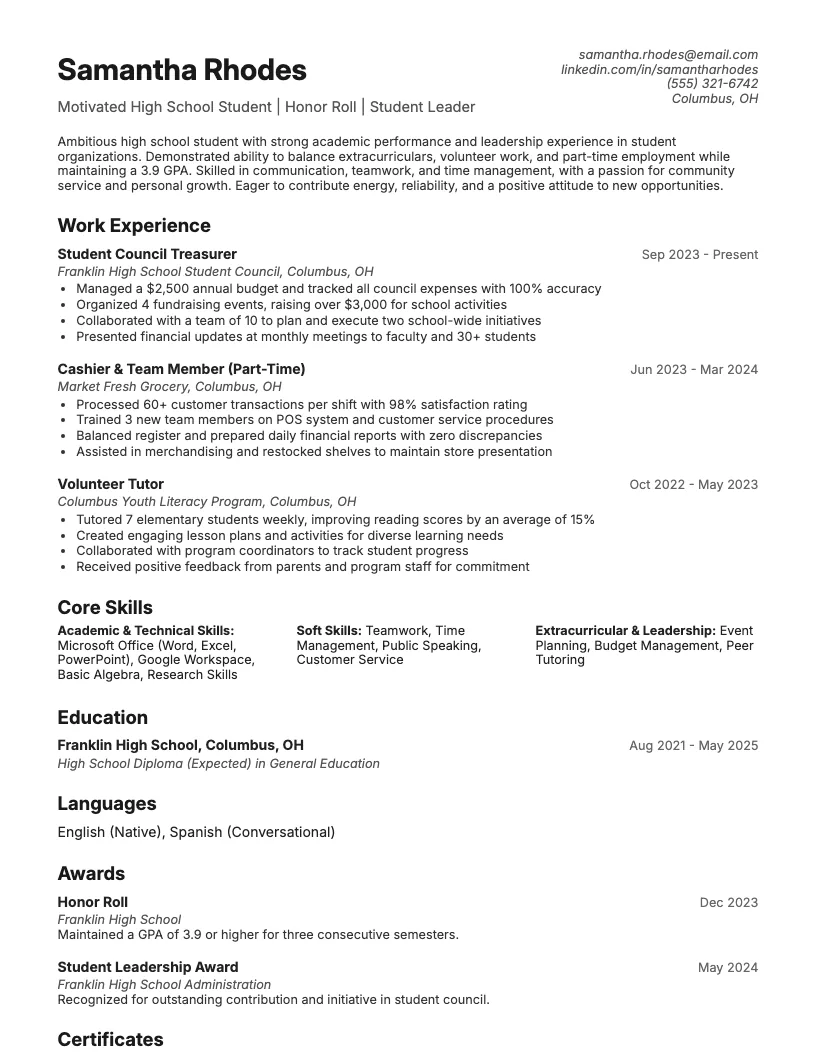
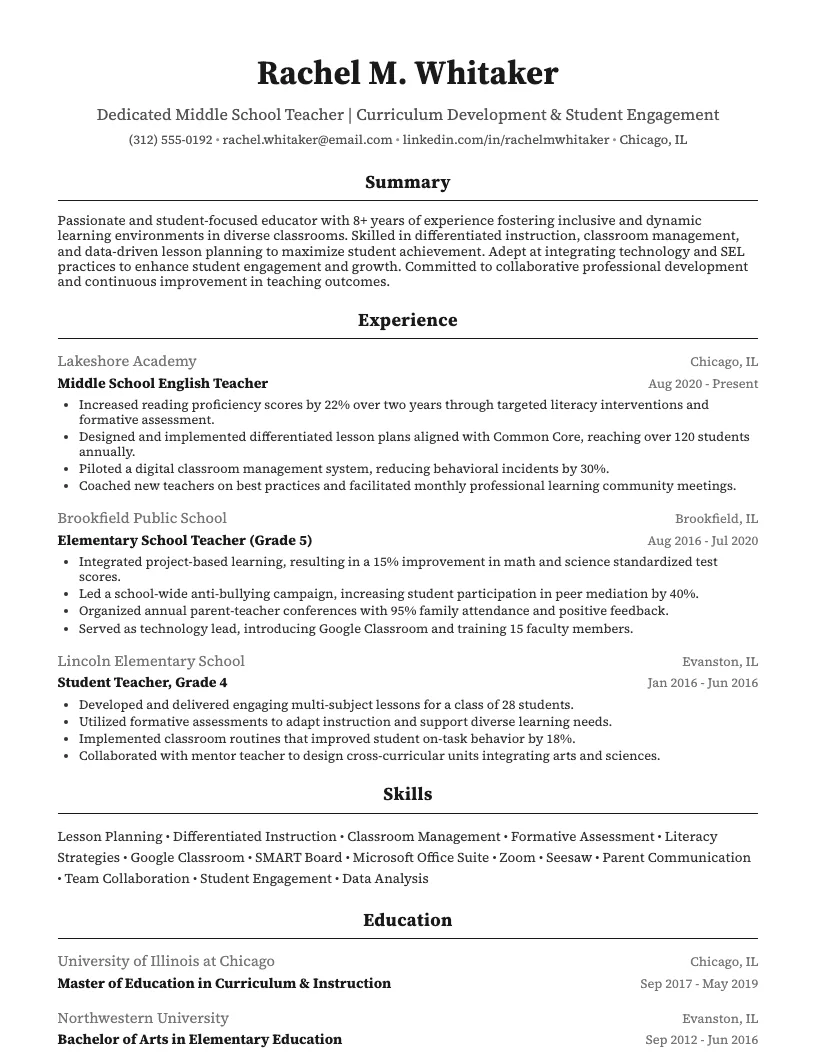
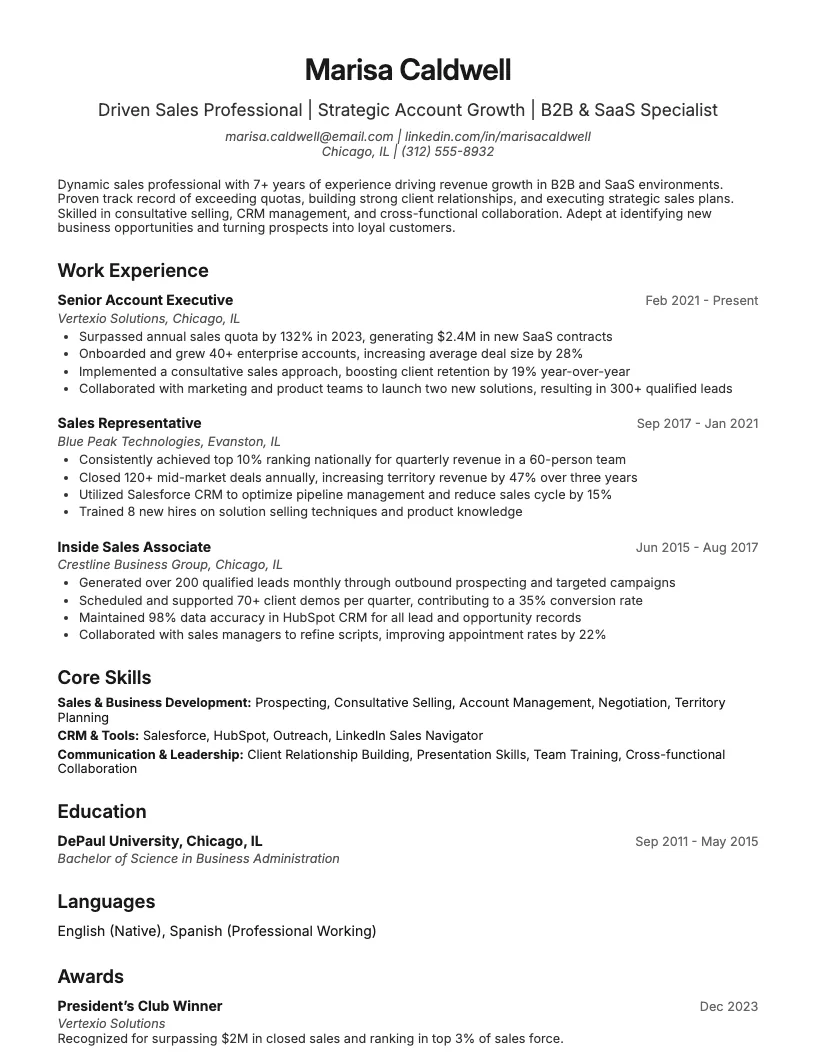
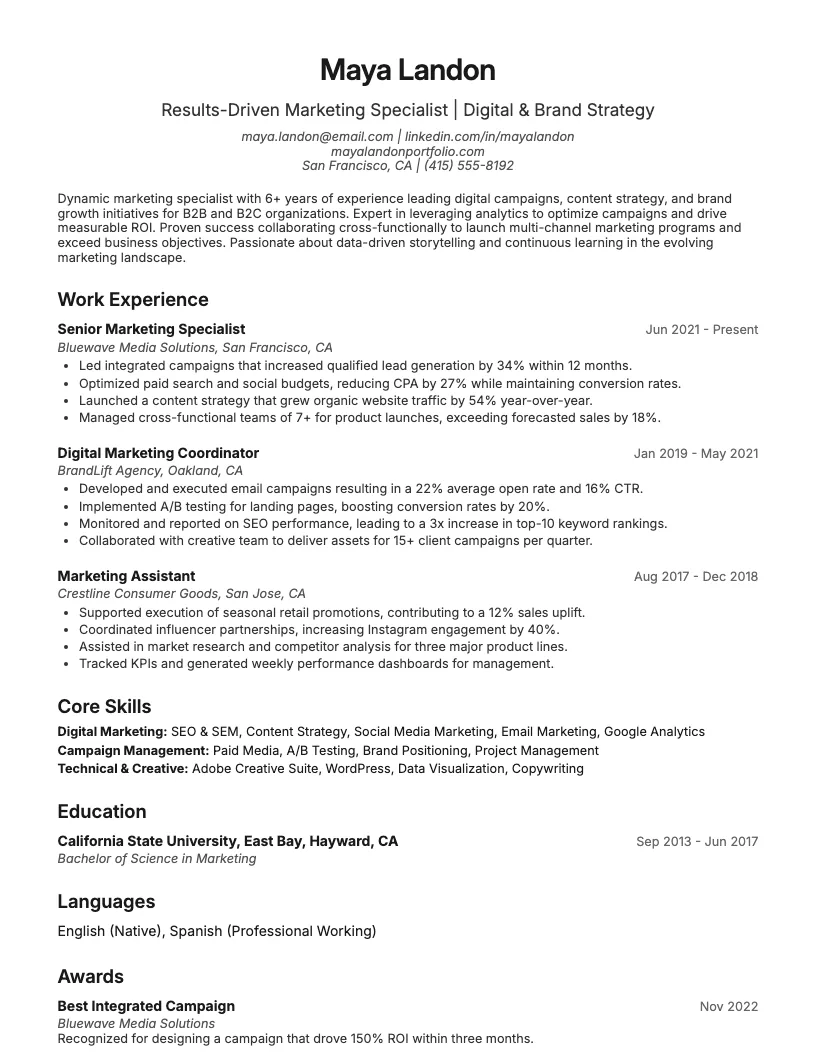
See these skills on a real resume
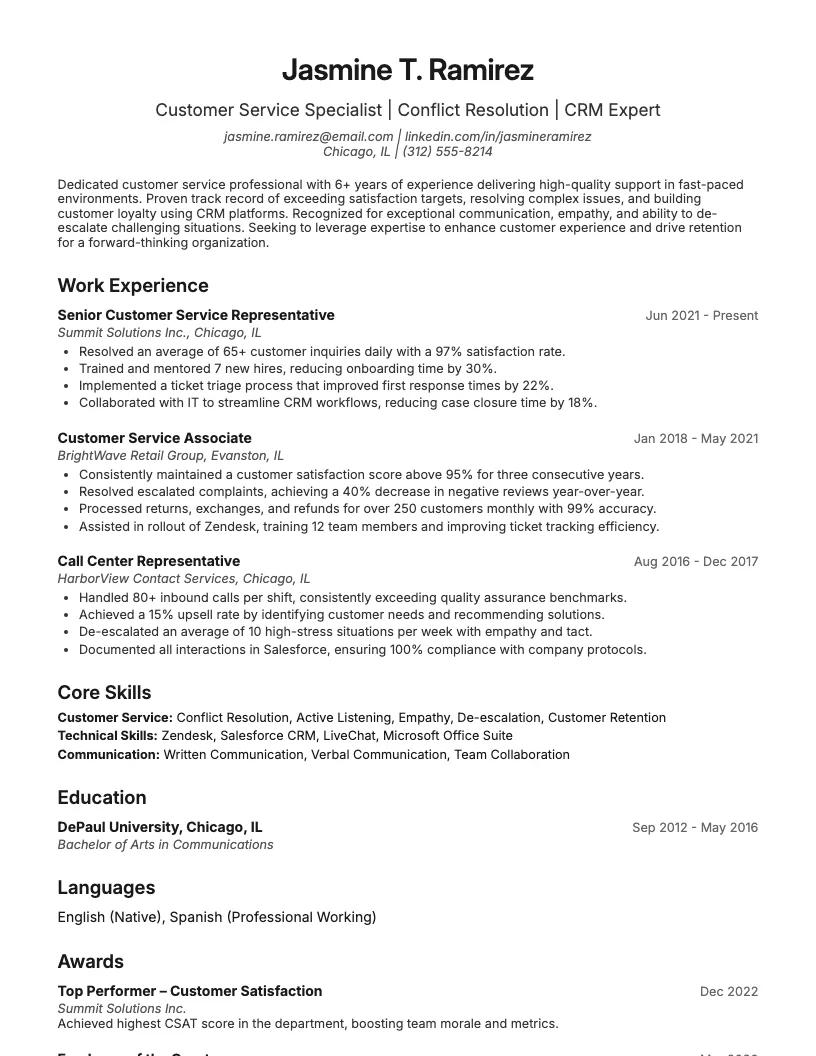
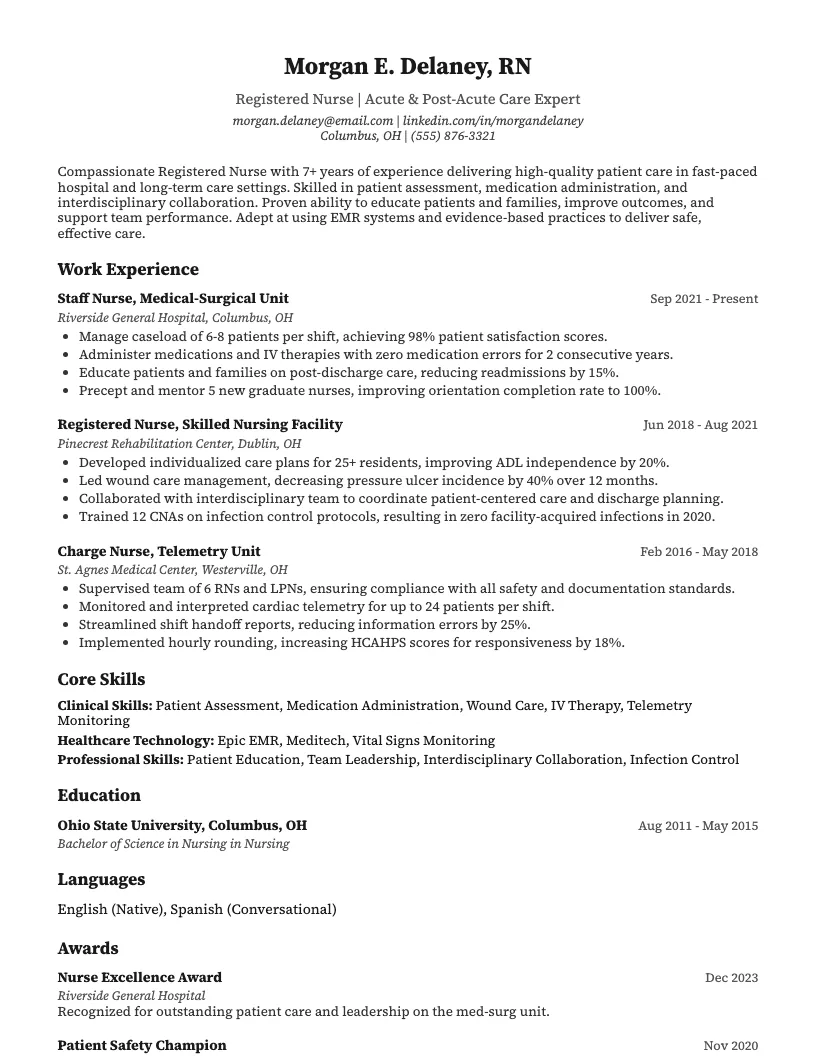
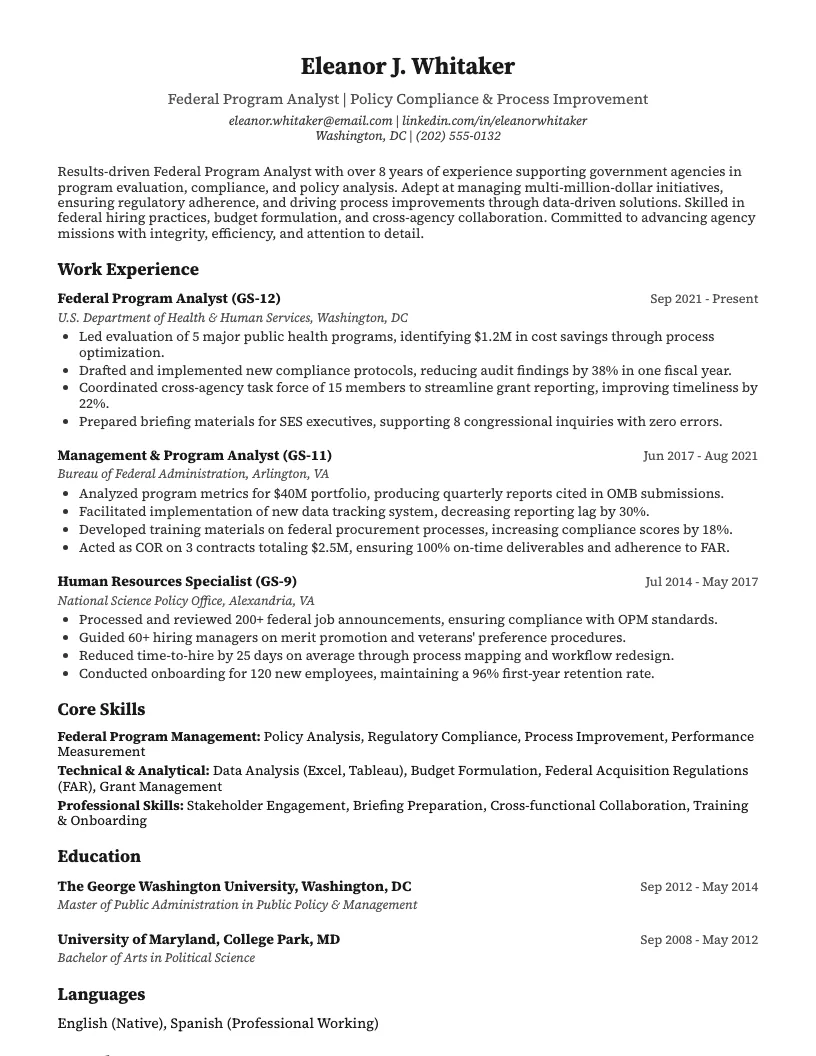
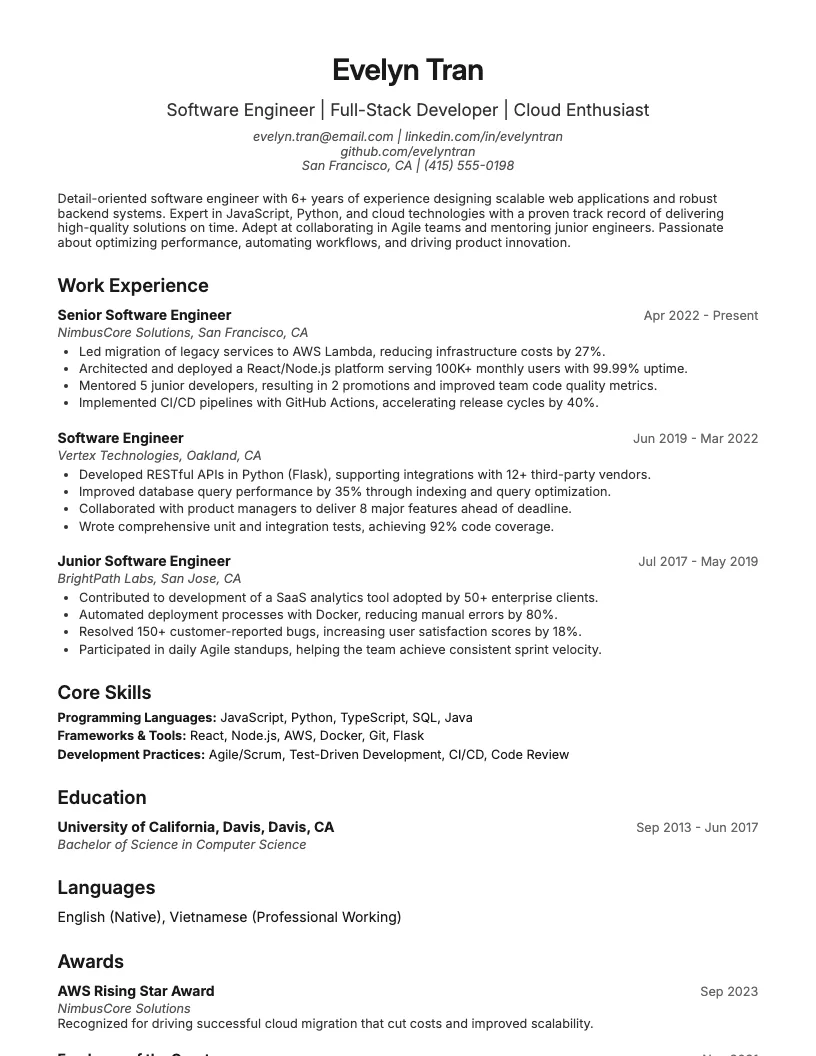
8 examplesStart from an example that already has them, and swap in your own.
Check your resume against the job you want
Scan your resume, see which skills and keywords the posting asks for that you are missing, and fix them before you apply.
Free to use • No credit card required