Accomplishments for Resume: 12 Job Examples I'd Actually Write
12 job-specific accomplishment examples, a bullet-writing formula, exact wording, and what to leave off - from someone who has read thousands of resumes.


Written by Dr. Priya Sharma
Career Development Expert & Resume Analyst
Updated August 2026
Reviewed by Sarah Chen
Is your resume ATS-friendly?
Drop your resume in and see which of these skills a scanner can actually read, and which ones the job you want is asking for that you have not listed.
PDF or DOCX. Max 2MB.
We never share your resume or use it to train a model.
In This Guide:
What counts as an accomplishment on a resume?
I've read thousands of these, and the ones that get callbacks all do the same thing: they show a result, not a task.
An accomplishment vs a job duty
Turning a duty into an accomplishment
Managed customer accounts.
Grew a book of 40 accounts to 65 in a year, with zero churn.
A duty says what you were supposed to do. "Managed customer accounts."
An accomplishment says what happened because you did it. "Grew a book of 40 accounts to 65 in a year, with zero churn."
Same job, completely different sentence.
Made or saved the company money
This is the strongest category there is, and it's not just sales. Cutting a vendor contract, renegotiating a lease, catching a billing error before it shipped - all of it counts if you can put a number on it.
Made something faster or cut out waste
Time counts the same as dollars here. Cut a report from four hours to one, killed a redundant approval step, got onboarding down from three weeks to one.
Nine times out of ten, this is sitting in someone's resume as a duty instead of a result.
Solved a problem nobody else had solved
The mistake I see most often: people leave out the part where three other people had already tried and failed. That context is what makes the fix worth reading about.
Led people or took on more responsibility
Training a new hire, covering for a manager, being the one people asked when something broke - that's leadership, even without the title.
Won an award, a promotion, or public recognition
An outside vote of confidence carries weight a self-assessment never will. Employee of the month, a client asking for you by name, a promotion inside eighteen months - put it down.
Accomplishments that have no number attached
Not everything reduces to a percentage, and that's fine. Keeping protocol around executives, building a reputation for accuracy, running operations solo without needing supervision - all of these count as accomplishments. How to write one of these as a bullet is covered further down.
How do you figure out your own accomplishments?
How do you figure out your own accomplishments?

Most people freeze when I ask them to list their accomplishments. Try answering these questions instead - they'll surface bullets you forgot you had.
Did you bring in money the company would not have had?
Think about any sale you closed, any client you landed, any renewal you saved.
If you can put a number on it, even a rough one, that's a bullet.
Did you save time, money, or headcount?
I see this one get missed constantly. Cutting a process from three days to one is worth just as much as a sales number, and it's often easier to quantify because you already know the before and after.
Did you build or improve something that is still in use?
A tool, a template, a process, a piece of documentation. If people are still using what you made after you're gone, that's proof it worked - say so.
Did you fix a problem before it became one?
This is the hardest kind to write down because nothing happened - and "nothing happened" is exactly the point. Name the risk you caught and what it would have cost if you hadn't.
Did anyone thank you, promote you, or ask you to do it again?
A promotion, a raise, being handed the same project a second time - these are all someone else's proof that your work held up. Use that.
Check your list against the job you actually want
Once you've got a list, don't just dump it all on the page - line it up against the posting and lead with what matches. ResumeJudge will scan a job description, show you which of your accomplishments actually speak to it and which ones you're leading with for no reason, and rewrite the ones that fall short.
How do you write an accomplishment as a resume bullet?
How do you write an accomplishment as a resume bullet?
There's a formula here, and once you see it you can't unsee it.
Step 1: Start with an action verb that says what you did
Open with a verb, not a noun phrase. "Led," "built," "cut," "launched" - not "responsible for" or "in charge of."
The verb should name your actual role, not just that you were near the work.
Step 2: Give the problem in a few words
Say what you were up against, briefly. A slow process, a shrinking budget, a team without a system.
This is the part people skip, and the bullet reads flat without it - a number with no story attached doesn't mean much to a stranger skimming your resume.
Step 3: End with the result and a number
Close with what changed, and put a figure on it. Percentage, dollar amount, headcount, time saved - whatever you tracked.
Before and after: "Managed social media accounts"
Turning a social media duty into a result
Managed social media accounts.
Grew social engagement 45% in six months by shifting to video-first content.
Before: "Managed social media accounts." After: "Grew social engagement 45% in six months by shifting to video-first content."
Before and after: "Hosted networking events"
Turning an events duty into a result
Hosted networking events.
Hosted 15 networking events that drew 2,000+ attendees and grew membership 30%.
Before: "Hosted networking events." After: "Hosted 15 networking events that drew 2,000+ attendees and grew membership 30%."
Before and after: "Saved the company $10,000"
Adding the how to a savings number
Saved the company $10,000.
Redesigned the sales process to cut inefficiencies, saving $10,000 a year.
A bare dollar figure isn't a full bullet - the reader needs the "how." "Redesigned the sales process to cut inefficiencies, saving $10,000 a year" tells them what you actually did.
How long a bullet should be
One line, two at most. If you need three lines to make the point, you're explaining instead of stating - cut it back to the verb, the problem, and the number.
What to do when a number would be a lie
Don't force a figure you can't stand behind - name the scope instead: team size, client count, project reach. If you're not sure your bullets would hold up against a real posting, running them through ResumeJudge will rewrite the vague ones into specific, provable bullets.
Where do accomplishments go on a resume?
Where do accomplishments go on a resume?
Most people bury their best line somewhere in the middle of a bullet list and hope someone reads that far. Don't. Give your strongest win real estate in more than one place.
In the summary at the top
Pull your single best number up here and write it into the sentence, not as a bullet. Something like "cut onboarding time by 15% while managing a team of nine" tells a recruiter in five seconds what three paragraphs of duties won't.
Under each job in the work experience section
This is where the bulk of your proof lives. Every role should carry its own evidence, not just a list of what you were assigned to do - see what counts as an accomplishment if you're not sure which is which.
In a separate awards or career highlights section
Worth adding only if the win needs context a bullet can't hold - a company-wide award, a certification, a title change.
In the education section
Fine for recent grads with a thesis award or a leadership role. Once you've got a few years of paid work behind you, drop it - nobody's hiring a director based on a dean's list mention.
How many accomplishment bullets per job
Four to six for your current or most recent role, two or three further back. ResumeJudge will flag it if a section runs thinner than that against the posting you're applying to, and give you specific rewrites to fill it out.
When you do not have room for a separate section
If you're fighting to hold one page, don't create a section just to have one - fold the win into the job it happened under instead.
How do you turn a skill into an accomplishment?
Turning a skill into a bullet
| Skill | Weak line | What proves it |
|---|---|---|
| Communication | "Strong communicator" | Meetings that cut turnaround 2 weeks |
| Leadership | "Led a team" | 12-person team, revenue +12% |
| Project management | "Managed projects" | Scope, budget, deadline stated |
| Technical skills | "Proficient in Excel" | Automated reporting, cut time 40% |
| Customer service | "Helped customers" | 300+ resolved weekly, 97% rating |
A skills list tells a hiring manager what you're capable of. It doesn't tell them you actually did anything with it.
Every soft skill on your resume can become an accomplishment if you attach it to a result - here's how for the five that show up most.
Communication: from "good communicator" to a bullet
Say what you communicated and what happened because of it: "Led cross-departmental meetings that cut project turnaround by two weeks."
Leadership: from "led a team" to a bullet
Size and outcome do the work here. "Led a 12-person sales team that grew quarterly revenue 12% and cut client attrition by 32%" tells a recruiter exactly what you were responsible for and what it produced.
Project management: from "managed projects" to a bullet
Scope, budget, and deadline are your numbers. How many projects, what size, on time or early - pick one and put a figure on it.
That's the same pattern I walk through under how to write an accomplishment as a bullet.
Technical skills: from a software name to a bullet
What you built with the software is the accomplishment: "Implemented automated reporting in Excel, cutting analysis time 40%." If you're not sure which tools a posting actually wants named, ResumeJudge will scan the listing and add the ones your resume is missing into the right bullet.
Customer service: from "helped customers" to a bullet
Volume and a score against a target are what prove it: "Resolved 300+ complaints weekly at a 97% satisfaction rating, 12 points above team goal."
What still belongs in the skills list instead
Not everything needs a bullet. Software names, certifications, and languages belong in a plain skills list near your education - trying to force a story around "proficient in Salesforce" just wastes space.
What words should you use in an accomplishment?
Words for an accomplishment bullet
| Type | Words | Example |
|---|---|---|
| Open with | led, built, cut, grew, launched | "Led a 12-person sales team..." |
| Avoid | responsible for, assisted with, helped | "Responsible for client accounts" |
| Close with | increased, reduced, saved, exceeded, delivered | "...saving $10,000 a year" |
The words carrying your bullet matter almost as much as the number at the end of it.
Action verbs that open a bullet: led, built, cut, grew, launched
Start with what you actually did: led, built, cut, grew, launched, closed, negotiated, redesigned.
The strong ones almost always open with a verb like that, not a noun.
Verbs to stop using: responsible for, assisted with, helped
"Responsible for," "assisted with," and "helped" describe a job description, not an accomplishment. They tell a reader what you were supposed to do, not what happened because you did it.
If a bullet opens with one of these, nine times out of ten it belongs in what counts as an accomplishment instead - it's a duty, not a result.
Result words: increased, reduced, saved, exceeded, delivered
Close with what changed: increased, reduced, saved, exceeded, delivered. One action verb up front, one result word at the end, and a number in between - that's the whole formula, and it's covered in full at how to write an accomplishment as a bullet.
Pull the wording from the job posting
Read the posting and use its exact phrases where they're true of you - "customer relationship management" instead of "customer service," if that's what the listing says. The tracking software matches on the posting's own words, not yours.
Words the tracking software is looking for
Hard skills score higher with a scanner than soft ones - it can confirm "Python" or "Google Analytics" far more reliably than it can judge "collaboration." ResumeJudge will check your bullets against a posting and add the hard skills you're missing before you hit apply.
Where keyword stuffing starts to hurt you
The moment a keyword shows up in a bullet you can't back up in an interview, it's working against you. Use the word because it's true, not because it's trending.
What are examples of accomplishments for your job?
Numbers change by field, but the shape of a strong bullet doesn't. Here's what that looks like in each one.
Sales
Sales resumes live or die on revenue. "Expanded client base 22% in six months, adding $3 million in revenue" beats "responsible for client accounts" every time.
If you've exceeded targets over multiple years, say by how much - "beat quota by an average of 45% over six years" is the kind of line I'd lead with.
Marketing
Show what moved because you touched it: a bounce rate that dropped from 62% to 34%, a list that grew 300% in six months, occupancy up 45% from a campaign you ran. Traffic, conversion, and list-size numbers are what marketing hiring managers scan for first.
Customer service
This is the field people most often forget has numbers. Complaints resolved per week, a satisfaction score against a team goal, a churn rate you brought down - "cut churn 6% while resolving 300+ tickets a week" says more than "handled customer inquiries" ever will.
Finance and accounting
Accuracy and savings carry this field. A 98% accuracy rate on transactions, a dashboard that led to 22% cost savings, an overtime analysis that saved 33% - these are the bullets I'd want if I were screening finance resumes.
IT and software
Cite what got faster or cheaper: a 30% cut in deployment time, a 50% gain in release efficiency, dollars saved from consolidating servers. If you're not sure which of your projects a hiring manager will care about, checking your list against the words the tracking software is looking for in the actual posting is worth the ten minutes - ResumeJudge will find which skills on the job description your resume is missing and write them into your bullets.
Engineering
Scope and savings both work here - front-end work across 20+ sites, or a repair fix that cut expenses by $25,000. Pick whichever number is bigger and more provable.
Healthcare
Fewer public numbers exist in this field because so much is patient-confidential, and that's fine - caseload size, a process you standardized, or a training program you ran are still accomplishments even without a dollar figure attached.
Teaching and education
Reach counts here: home visits serving 10+ students, or an event that pulled in 800 students and 60 outside organizations. Anything you built once and now runs every year is worth a line.
Project management
Lead with scope and money: "completed 9 projects worth $4 million over two years" tells a hiring manager everything about the size of role you're used to running.
Administration and operations
Look for the system you built that's still in use, or a team size you managed - "organized records well enough to earn a formal accuracy commendation" counts even without a dollar sign.
Management and leadership
Team size and what changed under you: "managed a 15-person team for 5+ years, raised satisfaction 25% through a new training program" shows both scope and result in one line.
Students and first jobs
No job title yet doesn't mean no accomplishment. A campus publication with 11,000 readers, a fundraiser that pulled in $10,000, a leadership role in a club - these prove the same things a job would.
Which accomplishments should you leave off?
Not everything you're proud of belongs on the page. I've cut plenty of accomplishments from resumes that were true, impressive, and still the wrong call to include.
Anything from high school or childhood
If you're past your first couple of jobs, drop anything from before college entirely. A recruiter reading about a high school award while you're applying for a mid-career role reads it as padding, not as strength.
College wins once you have real work behind you
Same rule, longer runway. Dean's list and campus leadership are fine for a first resume, but once you've got a job or two of real results, they get bumped by better proof.
See what counts as an accomplishment for what should take their place.
Political, religious, or personal causes
Keep these off no matter how significant they were to you. A hiring manager can only read them as a signal about your beliefs, and that's a risk with zero upside for you.
Numbers you cannot back up in the interview
If you can't explain how you got a number when someone asks, don't write it down. Interviewers probe the biggest bullet first, and a number that falls apart under one follow-up question costs you more than a modest, honest one ever would.
Figures your old employer treats as confidential
Revenue, margins, client names - if that data was proprietary, get comfortable with a range or a percentage instead of the raw figure. "Grew regional revenue by 22%" survives an NDA; the dollar amount might not.
Sports and hobbies, and the one case where they help
Most sports and hobby lines are dead weight. The exception is when the achievement proves a skill the job actually needs - team captain shows leadership, a ranked competitor shows performing under pressure - and even then, it belongs in a small line near education, not competing with your work history.
Frequently Asked Questions
How many accomplishments should I put on my resume?
There's no fixed number - four to six bullets under your current or most recent role, two or three under older ones, focused on the most relevant and impressive results rather than padding the list. If you're not sure which ones matter most, check them against the job posting you're applying to; ResumeJudge can show you which of your accomplishments actually match what the posting is asking for.
What if my job has no numbers in it?
Not every job has a clean metric, and that's fine. The section on what to do when a number would be a lie covers how to write these bullets: name the scope instead of inventing a figure.
Can I use accomplishments from volunteering or a side project?
Yes, especially if you're early in your career or switching fields and don't have much paid experience to draw from. Volunteer work and side projects count as long as they show real responsibility and results, not just participation. Keep them relevant to the job you want, and leave out anything purely personal that doesn't connect back to the role.
Do I need a separate accomplishments section?
No - for most resumes, accomplishments belong inside each job entry as bullet points, not in their own section. A standalone section can work if you have a few standout achievements that don't fit neatly under one job, like an award or a publication. Otherwise, folding them into your work history keeps the resume easier to read.
What makes an accomplishment strong enough to lead with?
Lead with whichever accomplishment is both the most impressive and the most relevant to the job you're applying for - impact alone isn't enough if it doesn't match what the posting is asking for. Look for the one with the clearest before-and-after, the biggest scale, or the most direct tie to the employer's stated needs. ResumeJudge can flag which of your accomplishments line up with what a specific job description is looking for, which makes this call easier.
Should I repeat the same accomplishment in the summary and the job?
Yes, if it's your strongest one - repeating it in the summary and again under the job it belongs to is fine and often helps, since the summary is what gets read first. Keep the summary version shorter and the job version more detailed. Just don't repeat more than one or two accomplishments this way, or the summary stops doing its job of highlighting your best material.
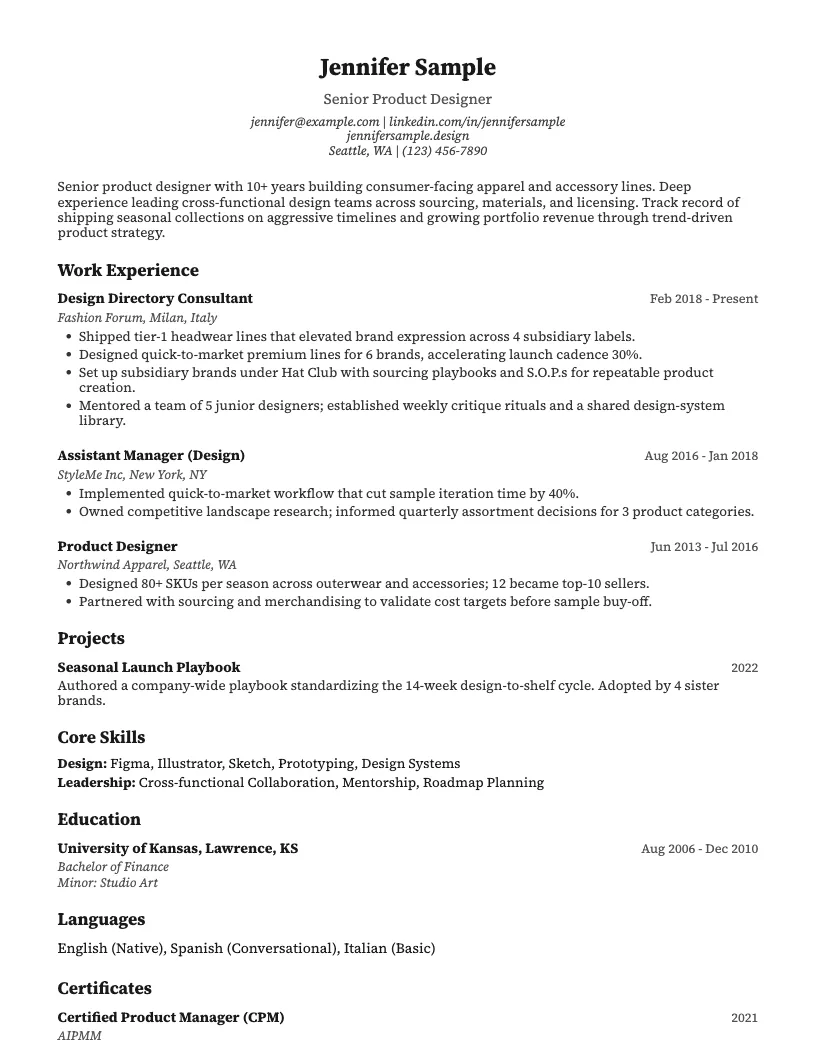
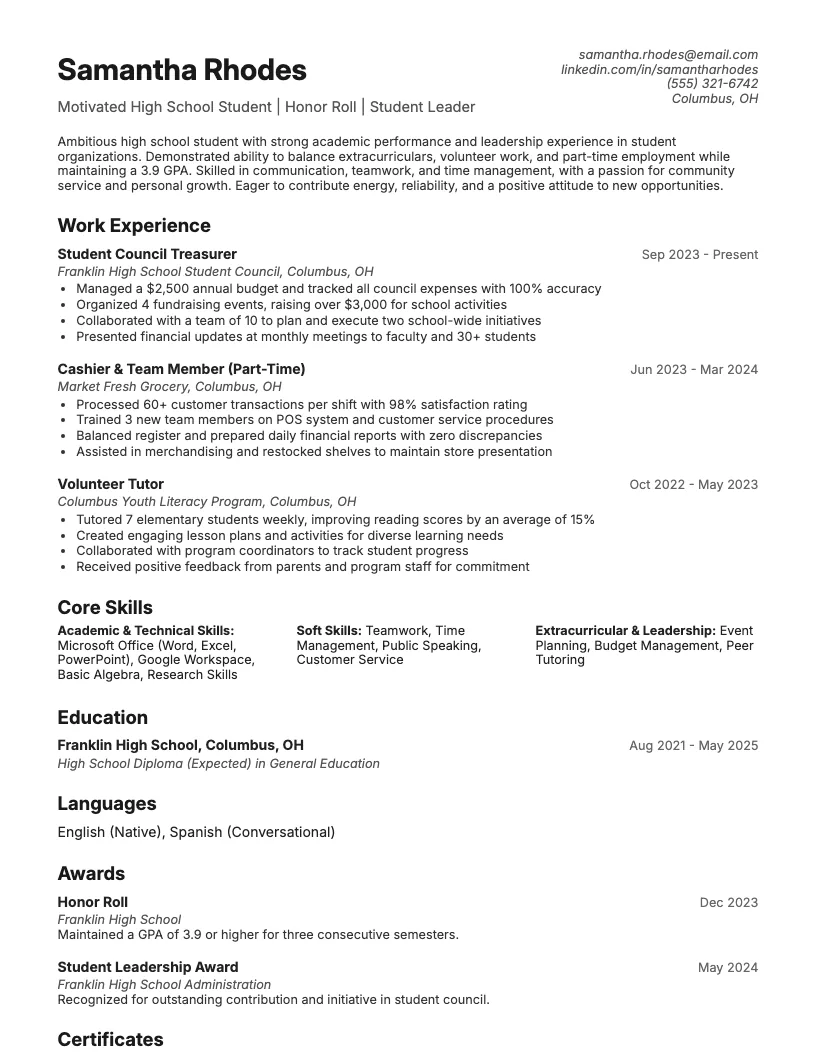
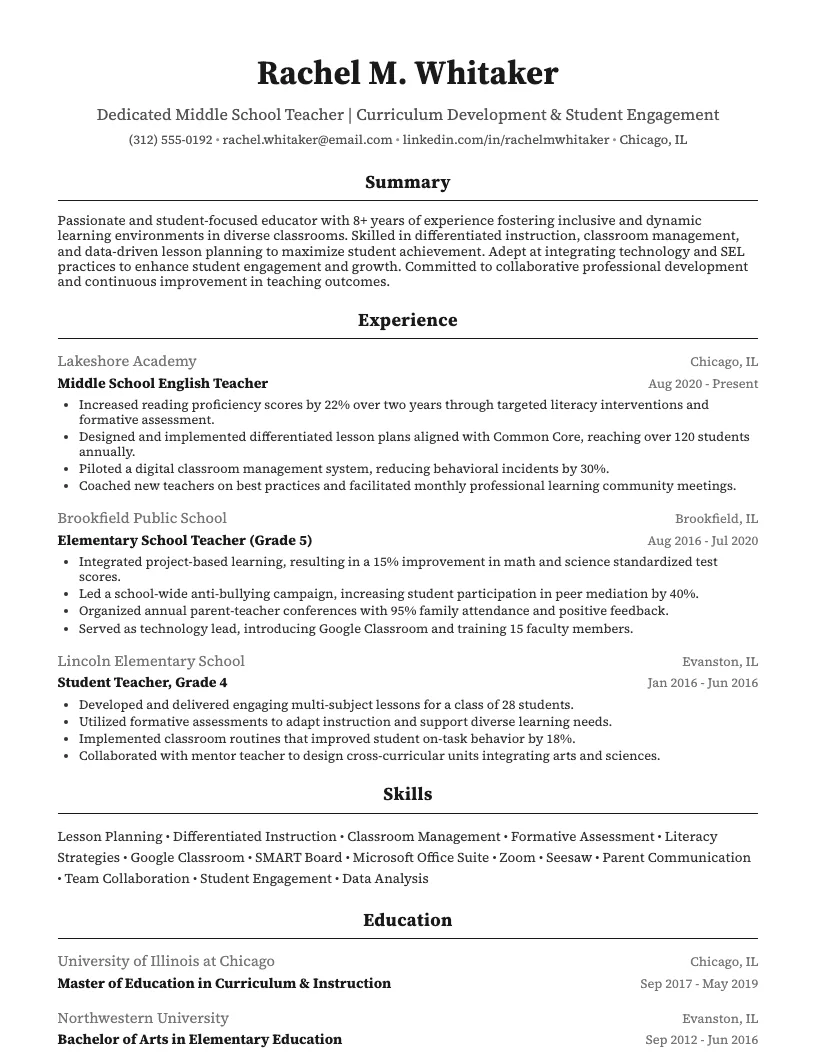
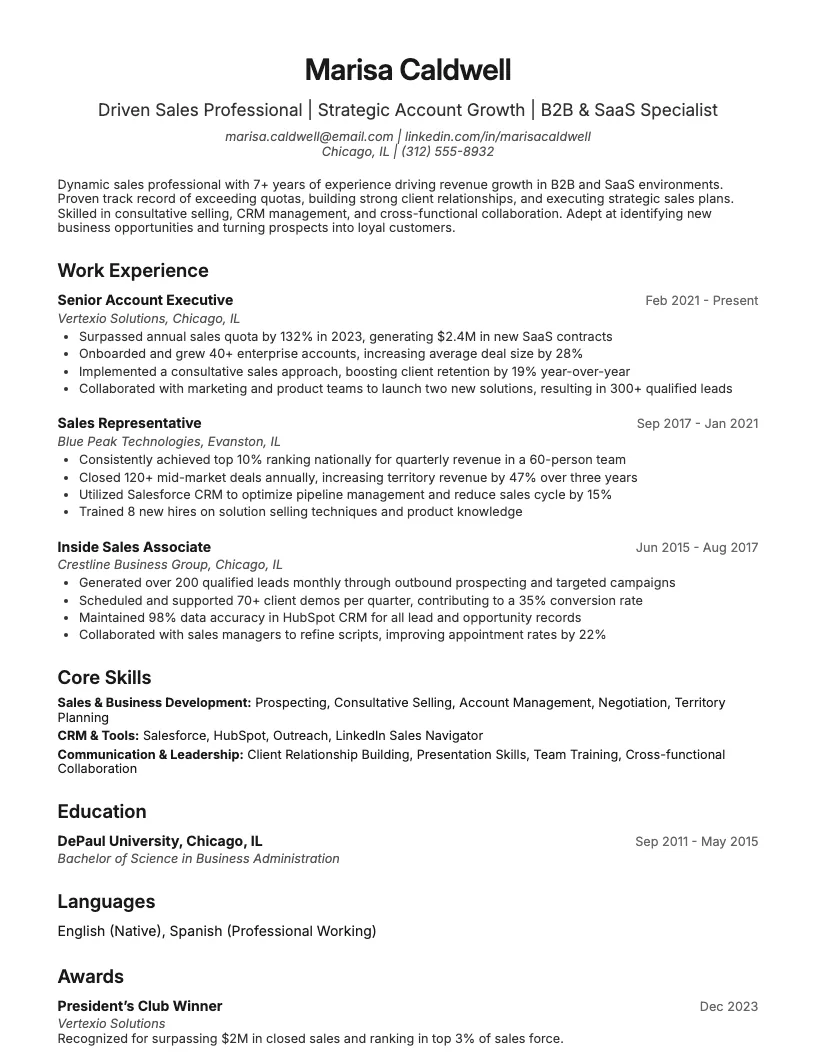
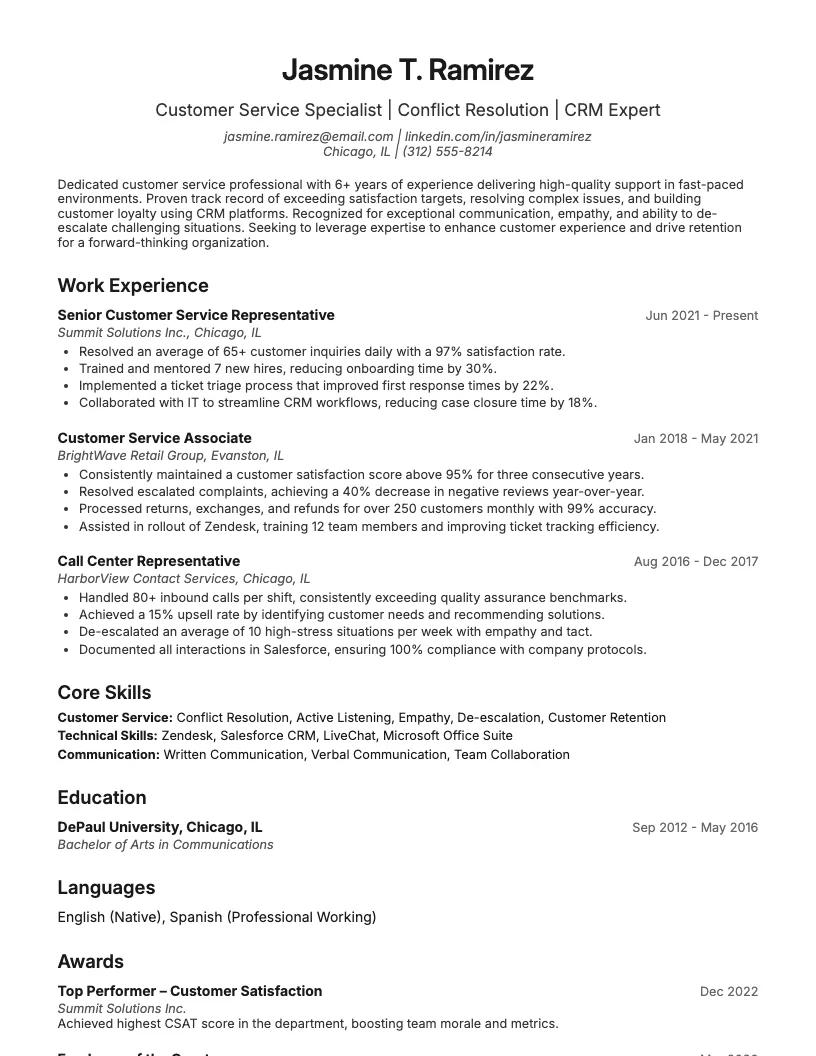
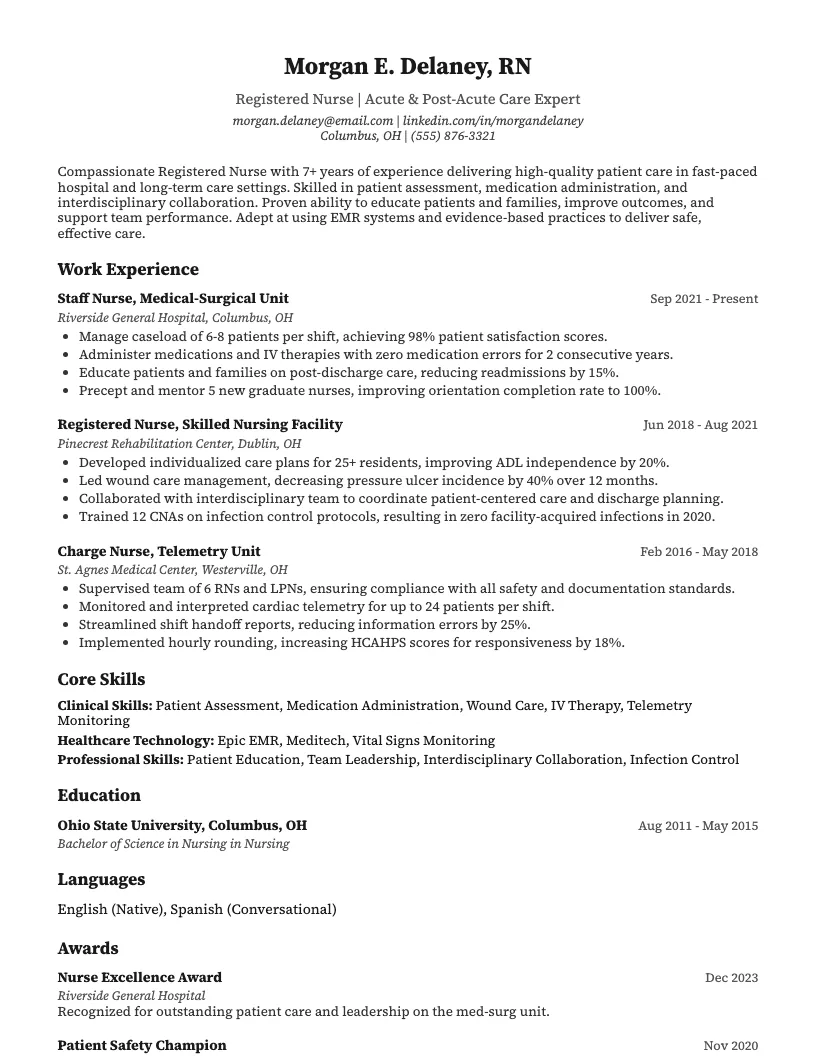
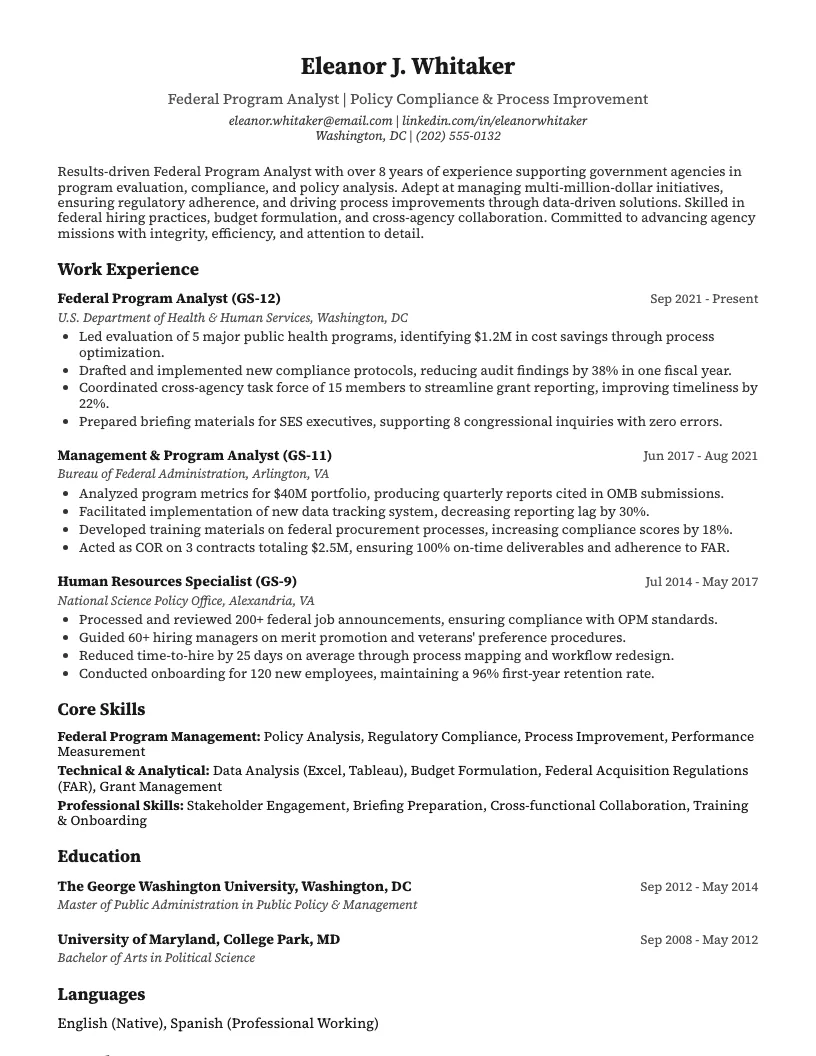
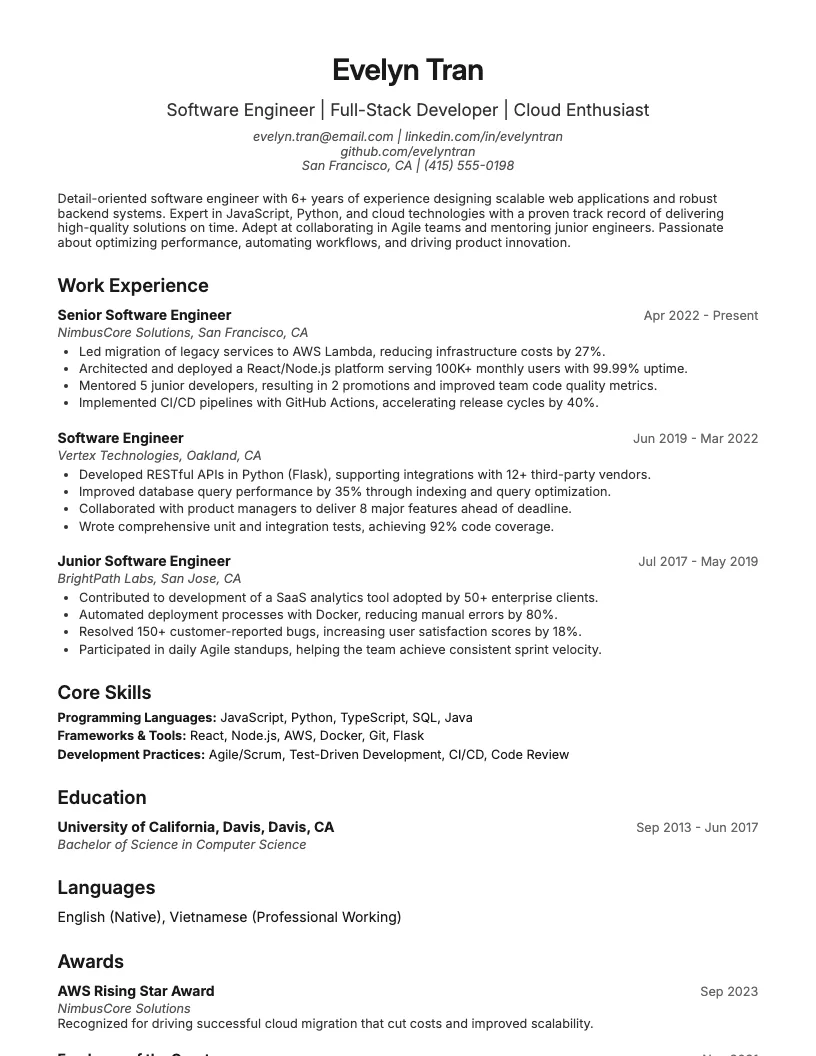
See these skills on a real resume
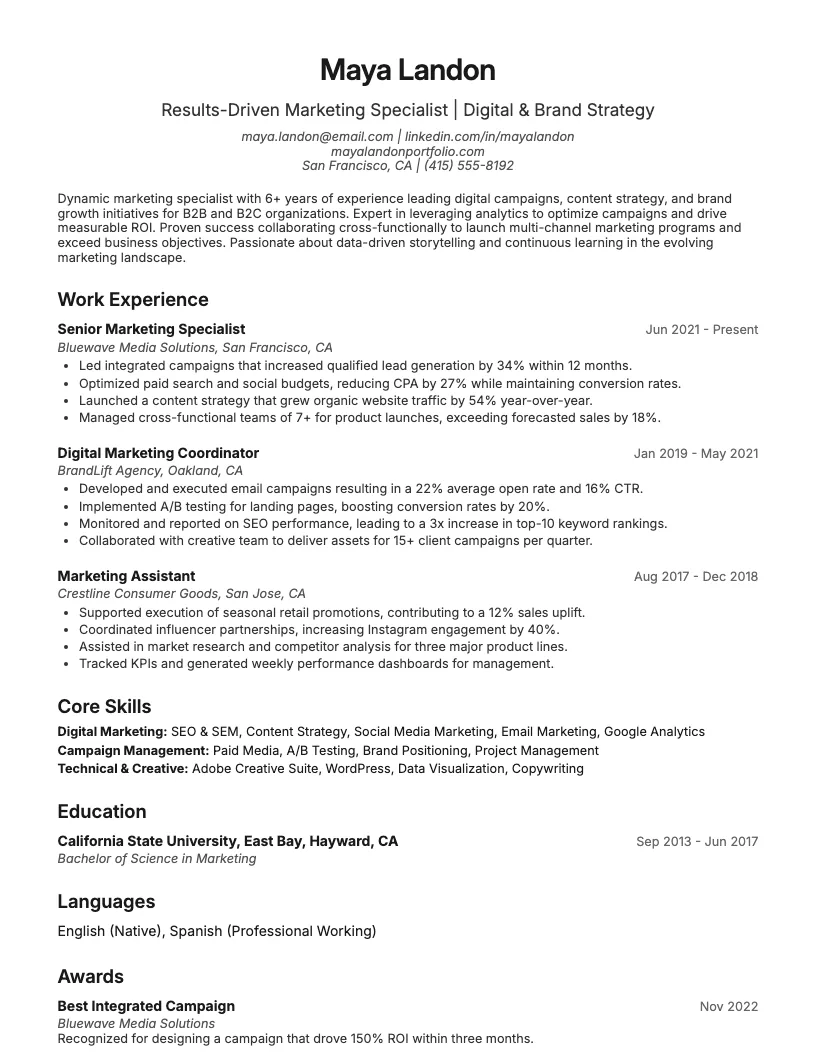
8 examplesStart from an example that already has them, and swap in your own.
Check your resume against the job you want
Scan your resume, see which skills and keywords the posting asks for that you are missing, and fix them before you apply.
Free to use • No credit card required