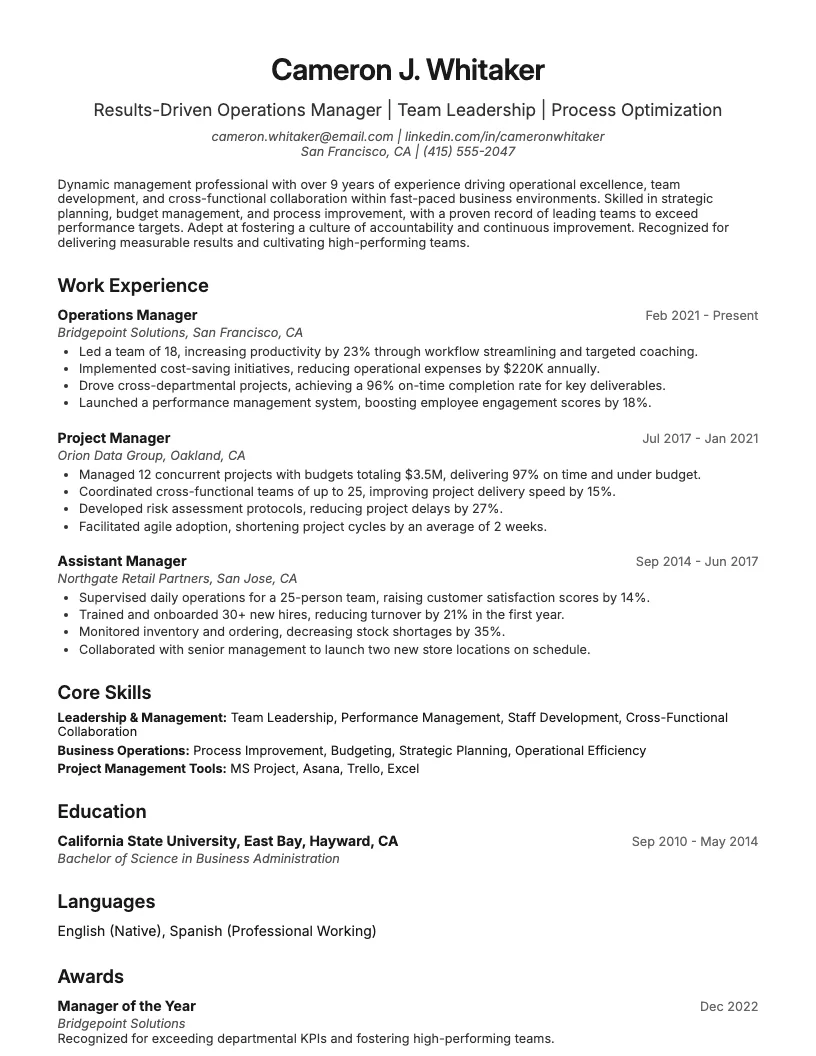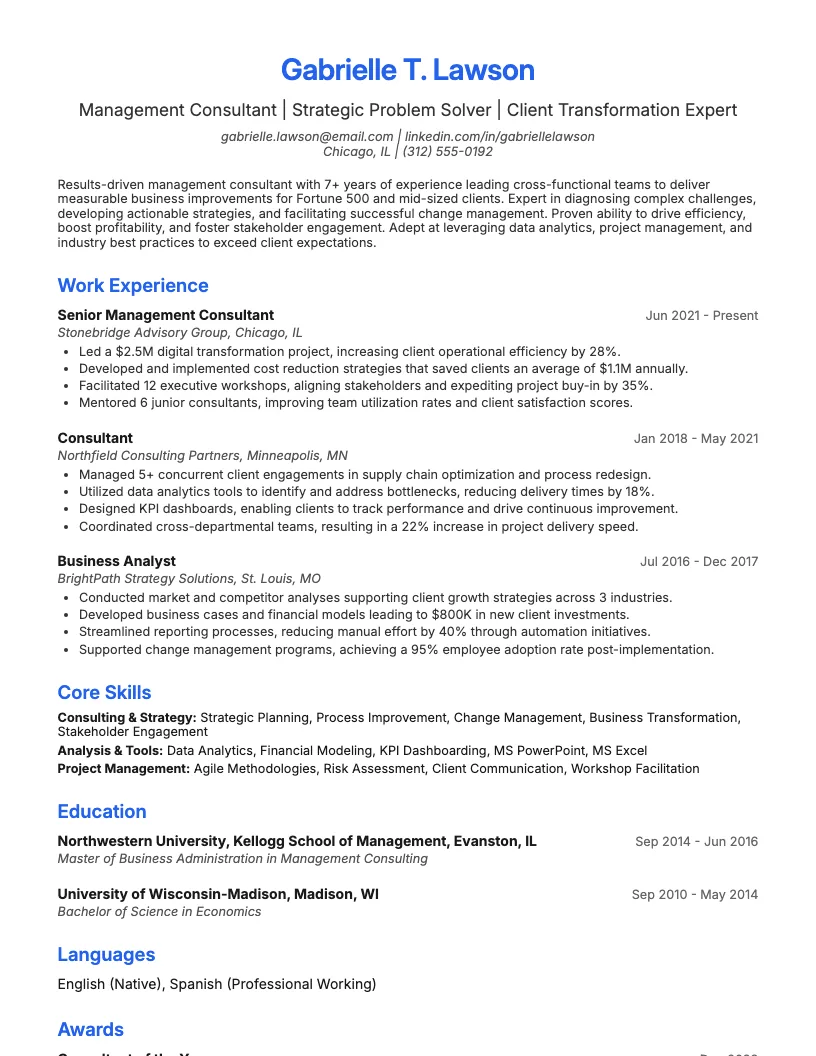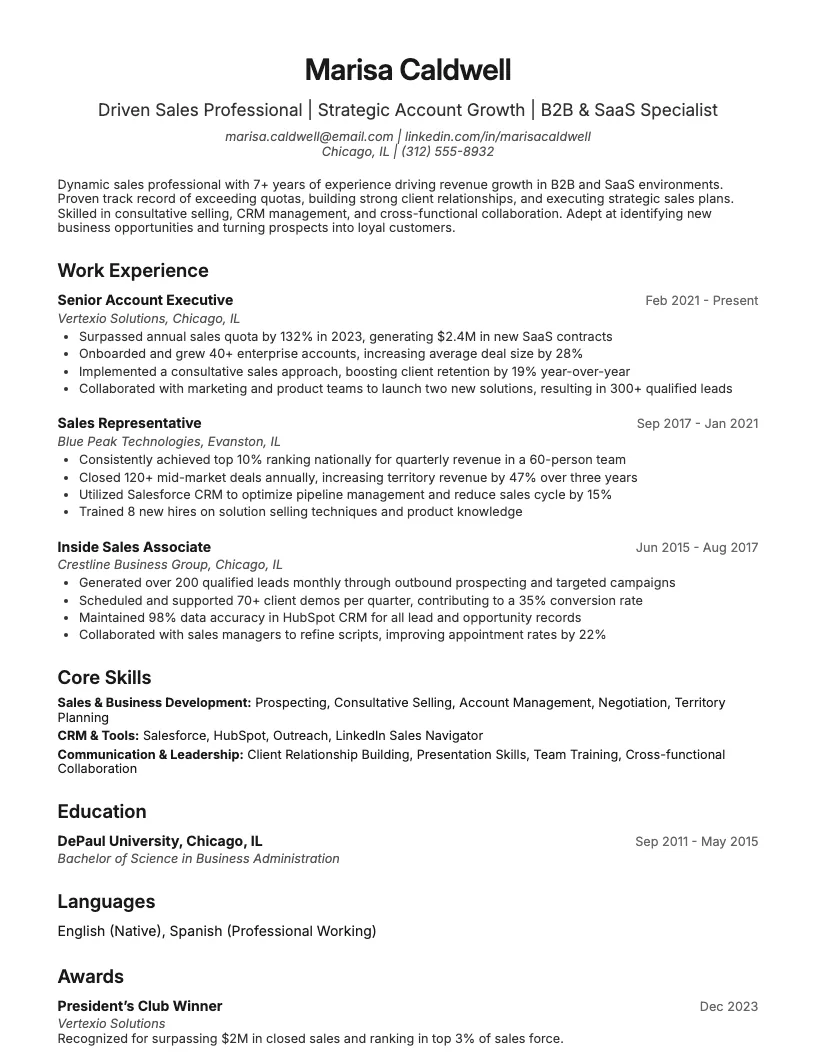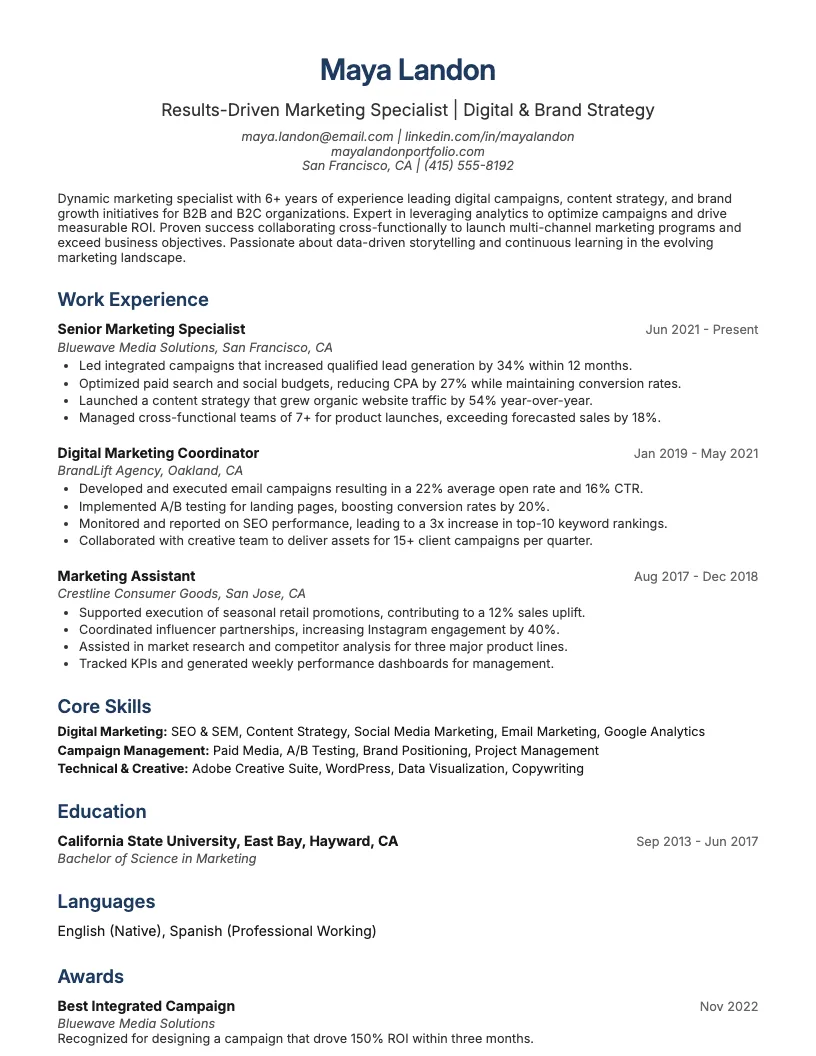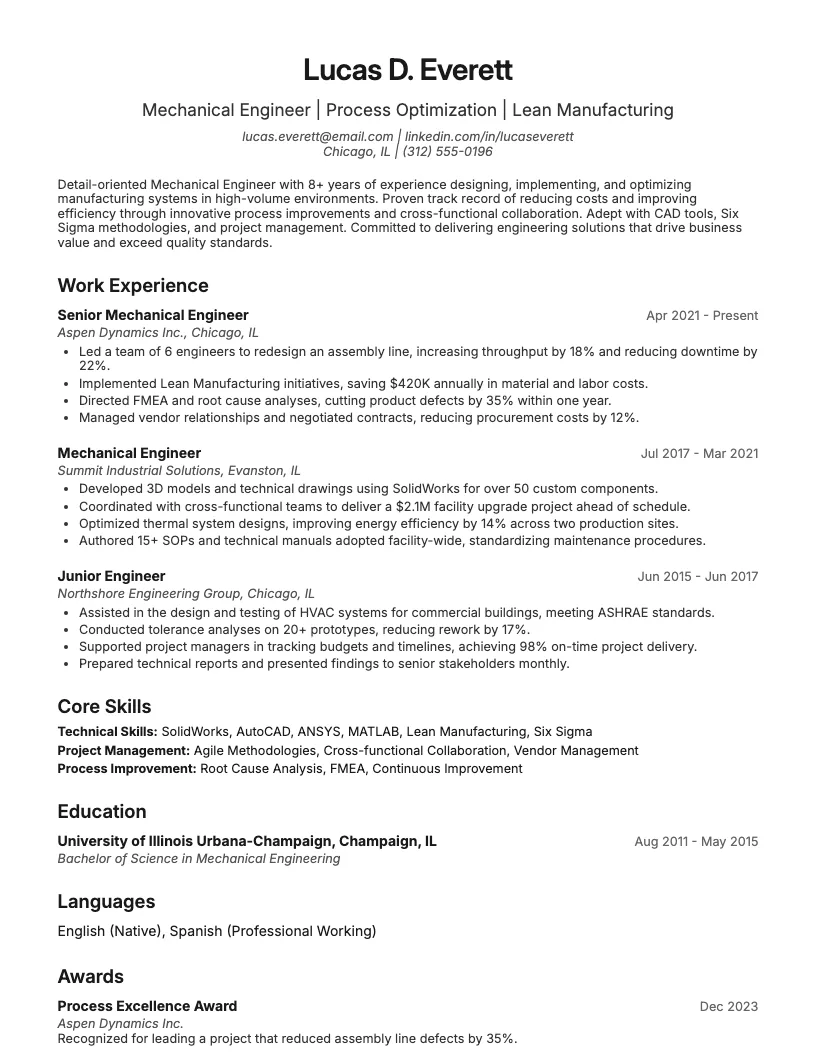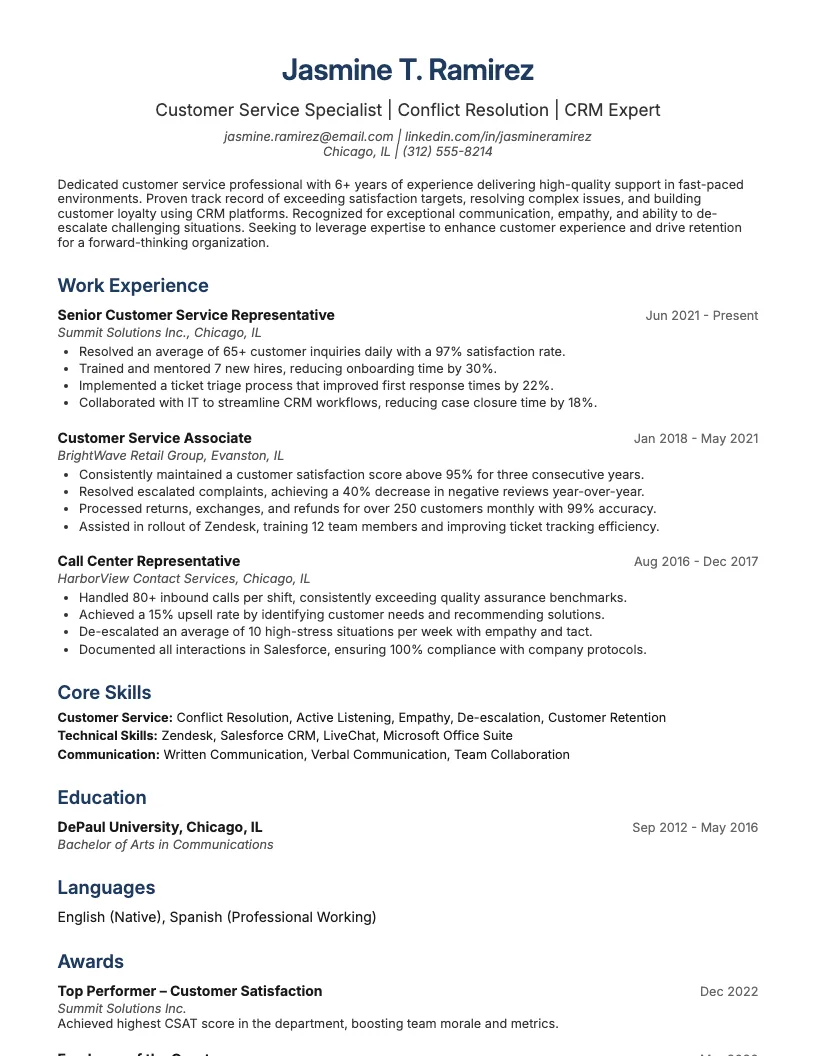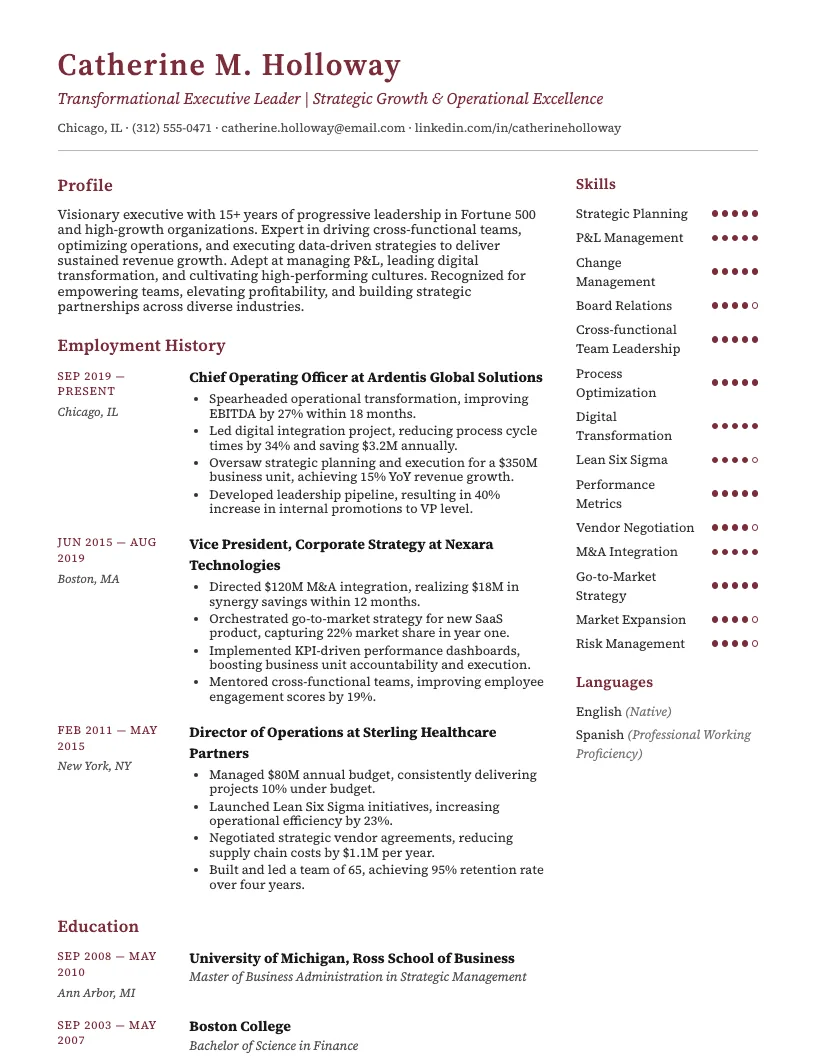
Chief Executive Officer (CEO) Resume Example
See full guide on Chief Executive Officer (CEO) resumes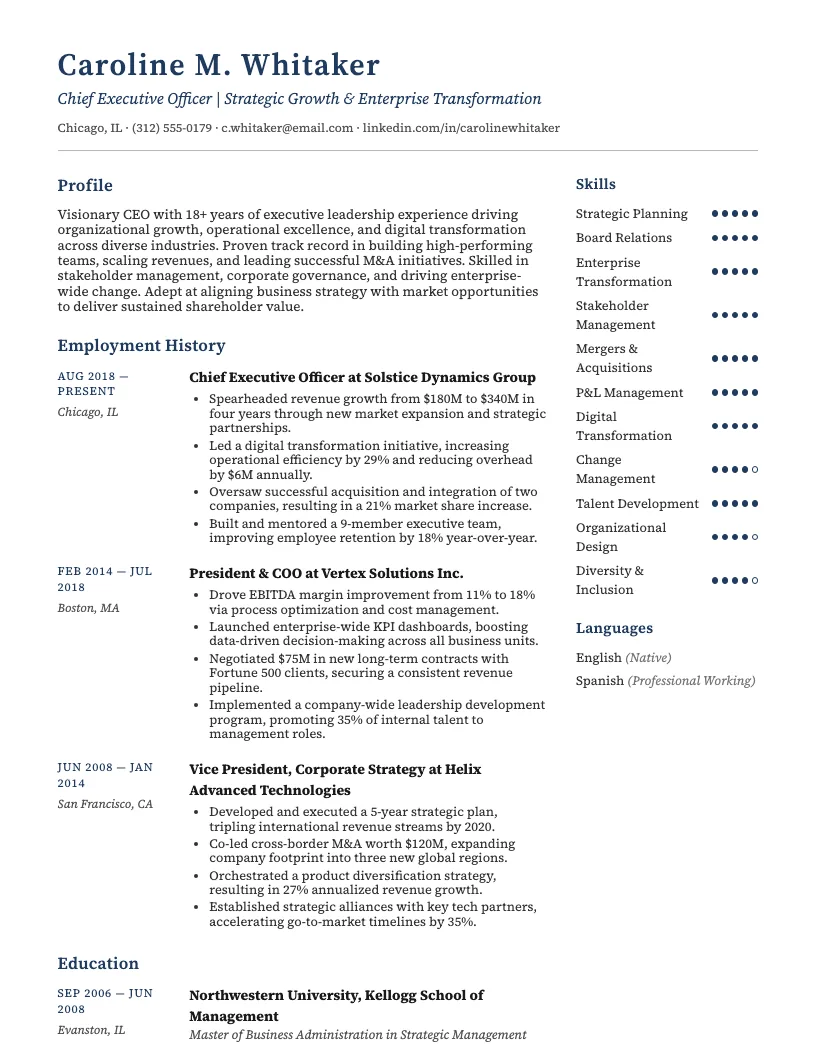 Click to enlarge
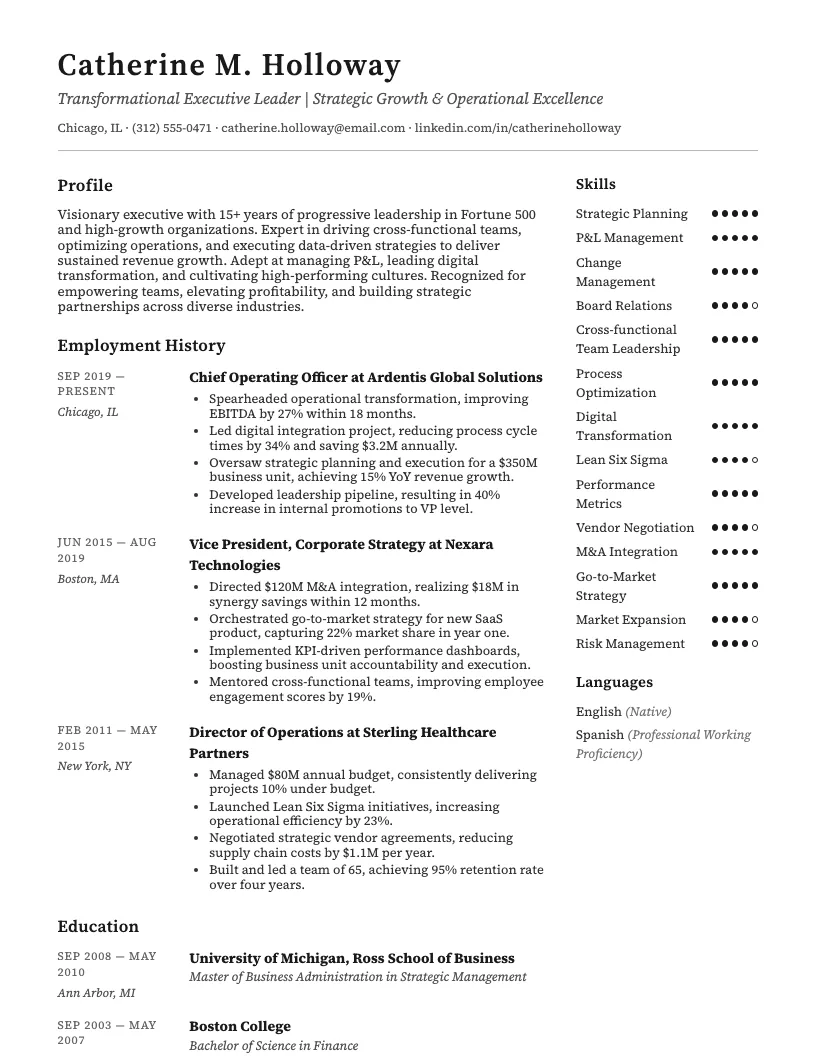 Click to preview

Get inspired by 54+ professional Executive resume examples, each written by career experts and optimized to pass ATS scans. Pick a proven template, tailor it to your role, and download a polished resume in minutes.
Pick the specialization closest to your target role and start from a proven resume example.
Finding the right executive resume can feel tough. Each role asks for a different mix of leadership, results, and industry know-how.
Here, I break down executive resume examples by experience level and job type. You’ll see what works for C-level, VP, and director roles.
I walk through sample resumes by industry and position. I also cover things like account executive resumes and sales-focused templates.
I see executive resumes vary a lot by industry, company size, and role. Tech, healthcare, and finance all want different skills in their leaders.
Having industry-specific examples helps you target your resume. You can see how a CTO resume highlights digital transformation, while a healthcare exec focuses on regulatory achievements.
You want to match your resume to the job. There are over 8,000 open executive roles on LinkedIn right now, so tailoring your approach really matters.
If you’re after an account executive resume template, you want something that highlights revenue growth, relationship management, and closing skills. I see hiring managers focus on numbers-percentages, quotas, and team leadership.
For sales account executive resume examples, it helps to show off your deal sizes, sales cycles, and client retention rates. Using active verbs and measurable achievements makes your impact clear.
Looking for ppc executive resume examples? Emphasize campaign budgets, ROI, and conversion rates. I suggest adding certifications like Google Ads and showing results with specific figures for credibility.
Choosing the right format-reverse-chronological or hybrid-keeps your achievements front and center, and don’t forget to pair your resume with a strong cover letter for maximum impact. This way, you’re ready to stand out in any executive-level search.
Landing an executive role means juggling both specialist knowledge and broad management skills. I see employers looking for leaders who adapt, negotiate, and communicate across all departments.
You need to prove you can handle strategy, people, and numbers. Executive positions often come with high expectations-about 70% require ten or more years of experience.
An executive resume needs to highlight your leadership, big-picture thinking, and decision-making skills. You want to show how you deliver results in high-pressure environments.
Recruiters scan for industry expertise, strategic vision, and a proven history of driving growth. Tailoring your resume to each role is key, especially when keywords matter for ATS.
I see a lot of executives trip up on ATS filters. The best trick? Mirror the language from the job description-pull out the exact skills and role titles they mention.
You want hard and soft skills in there, like “P&L management” or “cross-functional leadership.” Around 75% of resumes never get seen by a human because they miss these keywords.
Don’t just stuff keywords randomly. Use them in your summary, experience, and skills sections. This helps the system see you as a match, but it also reads naturally to people.

Writing an executive resume means showing your impact, not just your job titles. You want every section to highlight results and leadership.
You usually get more space here-sometimes two or three pages. Make every line count by focusing on your achievements, skills, and the value you bring.
The right format, clear sections, and details about your strengths make it easy for recruiters to see what you offer. I’ll break down each part next.
Start your executive resume with a dynamic profile. I use this section to capture my unique leadership brand and highlight what sets me apart right away.
Use specific numbers and big-picture achievements. If you led teams across three continents or managed $100M budgets, state that up front. This grabs attention fast.
Keep your summary short-four to six lines work best. Focus on key skills, industry expertise, and leadership style. This helps recruiters immediately see why you fit the executive role.
Showcase your executive achievements by focusing on real examples-think leading $20M projects, expanding teams by 40%, or launching new divisions. Hard data always makes your impact clear.
Use concise bullet points to highlight strategic decisions, key partnerships, or culture changes you guide. I always mention moments where I influence boardrooms or drive organizational change, and I make sure my application includes a cover letter to further highlight my fit.
Don’t forget the qualitative wins-like building inclusive cultures or mentoring future leaders. This helps you stand out as an executive who delivers value beyond just numbers.
I always list my highest degree first. For executives, a bachelor’s is usually the baseline, but a master’s or MBA adds real weight.
You should add industry certifications right after degrees. Credentials like PMP, Six Sigma, or executive leadership programs show you’re committed to learning and staying current.
If you’ve completed leadership or change management training, highlight those. These credentials help prove you can handle executive challenges-and many recruiters expect to see them, especially when paired with a tailored cover letter.
I always recommend highlighting executive skills with specific keywords from the job description. This helps your resume pass ATS scans and grabs a hiring manager’s attention fast.
Focus on leadership, strategic planning, financial management, and stakeholder engagement. If you have any technical proficiencies or industry-specific expertise, add those too-don’t leave them out.
You can format your skills section as a bulleted list or even weave skills into your achievements. This makes your strengths stand out and keeps your resume easy to scan.
I always look for a template that’s clean, organized, and visually balanced. Avoid flashy designs-simple layouts help recruiters focus on your achievements, not distracting graphics.
Stick with professional fonts and subtle colors. According to surveys, over 70% of recruiters prefer resumes that are easy to skim and visually uncluttered.
Make sure your template gives enough space for detailed accomplishments. You want every section to look readable, even if your resume runs two or three pages.
Choosing the right template wraps up your executive resume. Now, your content and layout work together to make a strong impression from the first glance.
Executive resumes usually need more space. Most end up being two to three pages, which lets you show off your impact without losing important details.
You want a format that's clean and easy to read. A cluttered resume hides your best achievements and can confuse recruiters.
A good structure highlights your leadership, results, and skills. The right layout also helps your resume get past automated systems and impress decision-makers.
A strong executive summary highlights your influence, leadership, and the impact you make. Numbers help here-think revenue growth, teams managed, or big projects led.
You want your summary to show your experience, industry expertise, and how you drive results. It’s not just about your title-it’s about what you achieve and who you help.
When I write my executive summary, I always call out how many years I’ve spent in my industry. Twenty years in tech or fifteen in finance? That matters.
You want to show you’ve seen it all-market shifts, regulatory changes, tough quarters. Concrete examples, like “led five major turnarounds,” help you stand out as an industry expert.
Don’t just say you’re experienced-prove it. List big wins, key numbers, or breakthrough projects. This helps employers see why you’re the go-to leader in your field.
I focus on key executive actions that set me apart. Instead of listing every skill, I spotlight specific wins-like leading a $30M merger or accelerating growth by 40%.
You want to keep it concise. Highlight two or three major achievements that show off your leadership style. This helps recruiters see your real impact, not just your job description.
Numbers matter. If you’ve slashed costs by 25% or launched a product in six countries, say it up front. That’s what catches attention and makes your summary memorable.
I always spotlight my teams in my executive summaries. People-first leadership shows in retention numbers, successful mentorship, and teams that hit ambitious goals together.
You want to share real examples-like coaching managers who later move up, or building a culture that boosts employee engagement by 20% or more.
There’s nothing more persuasive than quantifiable results tied to your people. This helps recruiters see you don’t just lead; you lift everyone around you.
Your executive employment history is all about results, impact, and leadership. This is where you back up your summary with specific achievements and real numbers.
You want to show how you drive growth, lead teams, and manage change. Highlight the variety in your experience, including consulting or interim roles if you have them.
Start with your most recent roles and give extra details there. Don’t skip older, unique experiences-those often show valuable skills and perspective.
Executive roles demand a wide mix of skills. You need to show leadership, strategic thinking, communication, and real results to stand out.
I see hiring managers focus on numbers and outcomes. They want proof-like leading a team of 90 or boosting revenue by double digits.
If you match your skills to the job and back them up with facts, you’ll get noticed. Let’s dive into the keywords and skills that matter most.
When I update my resume, I always use executive resume keywords like strategic leadership, stakeholder engagement, and change management. These keywords actually help recruiters find me faster.
You should tailor account executive resume keywords to each job. Try including client acquisition, B2B sales, and revenue growth. This shows you’re results-driven and understand what hiring managers need.
If you’re searching for keywords for executive assistant resume, focus on calendar management, confidential correspondence, and meeting coordination. These terms highlight your attention to detail and multitasking skills.
If you’re aiming for an executive role, education and certifications matter. Most executives I know have at least a bachelor’s degree, and many also earn MBAs.
Ongoing learning is huge at this level. Specialized certifications or management courses can really set you apart and show you’re serious about growth.
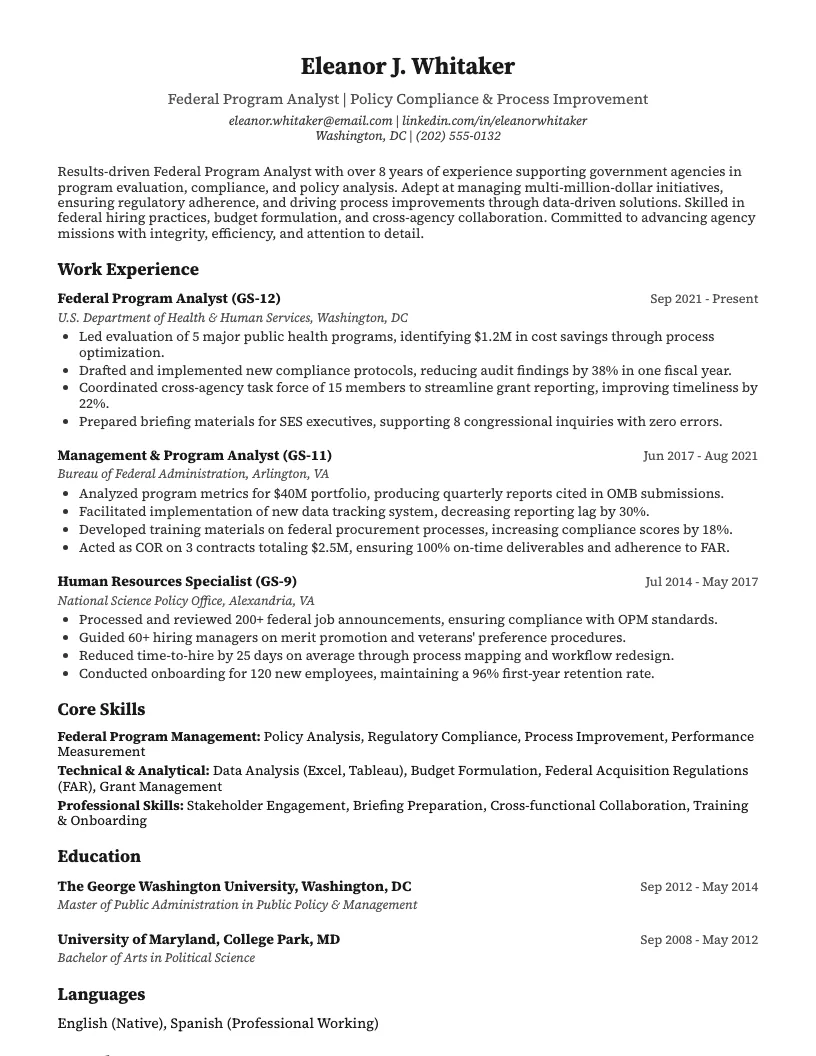
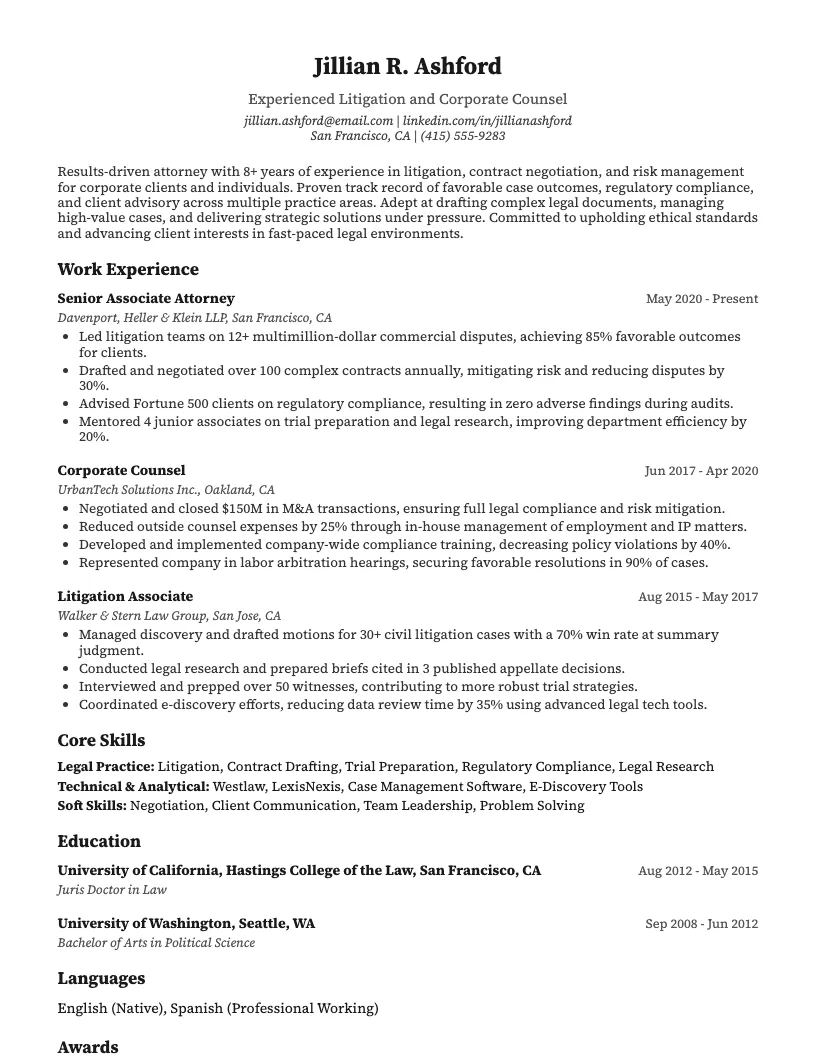
Browse Executive resume examples for related roles. Preview any example, open it in the builder, or read its full guide.
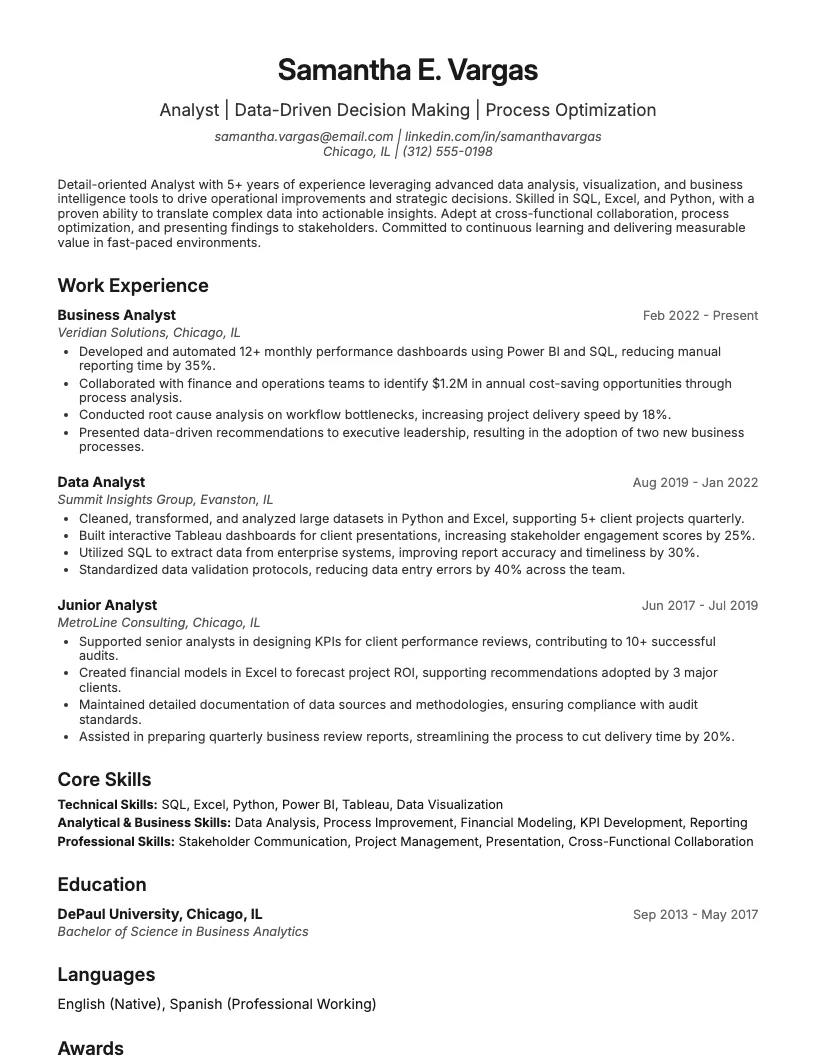
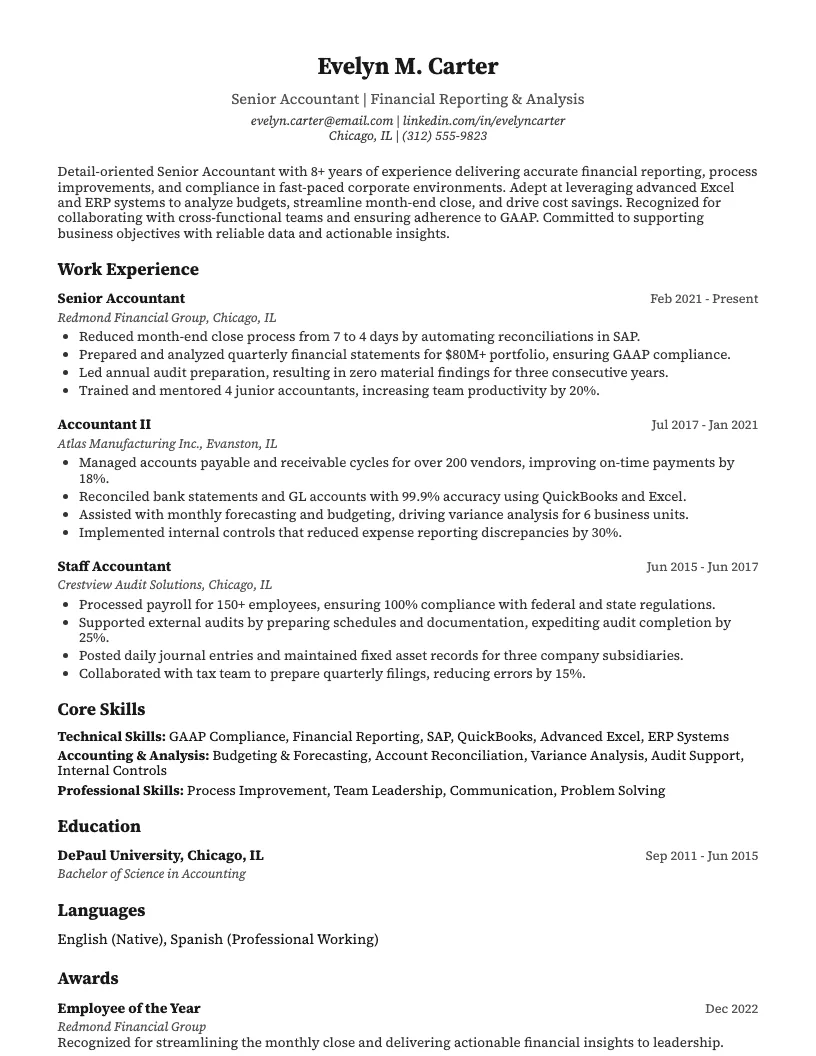
Click to enlarge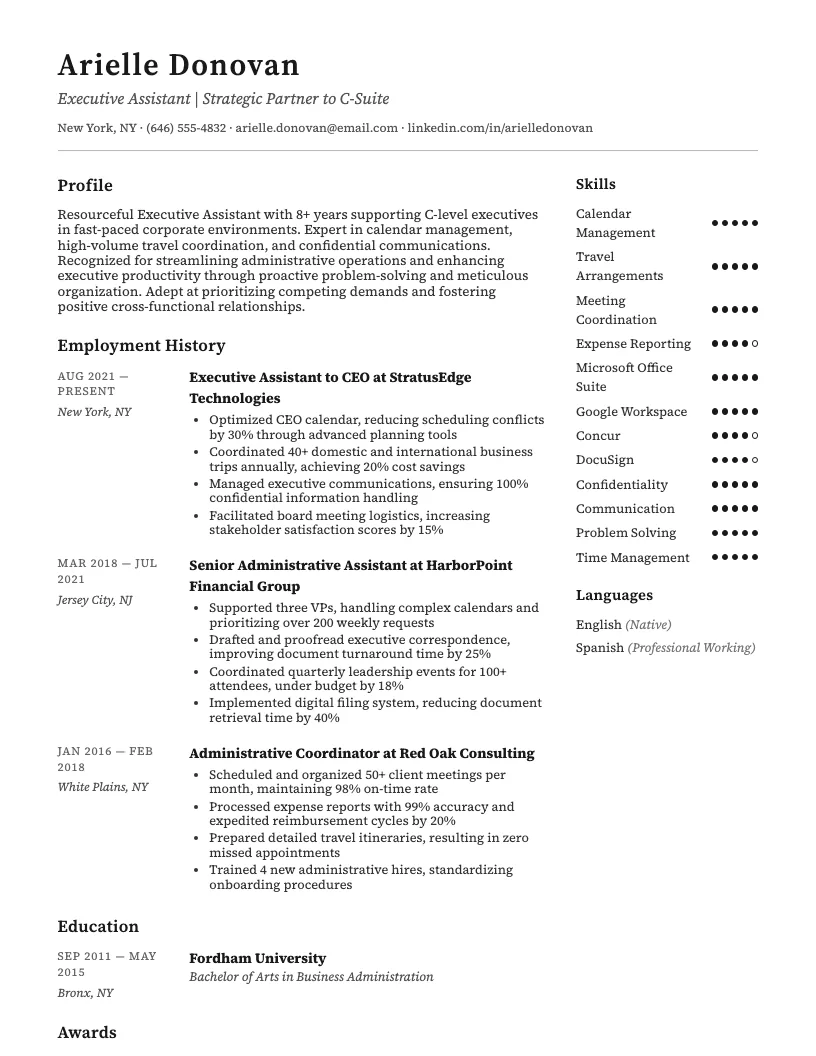 Click to enlarge
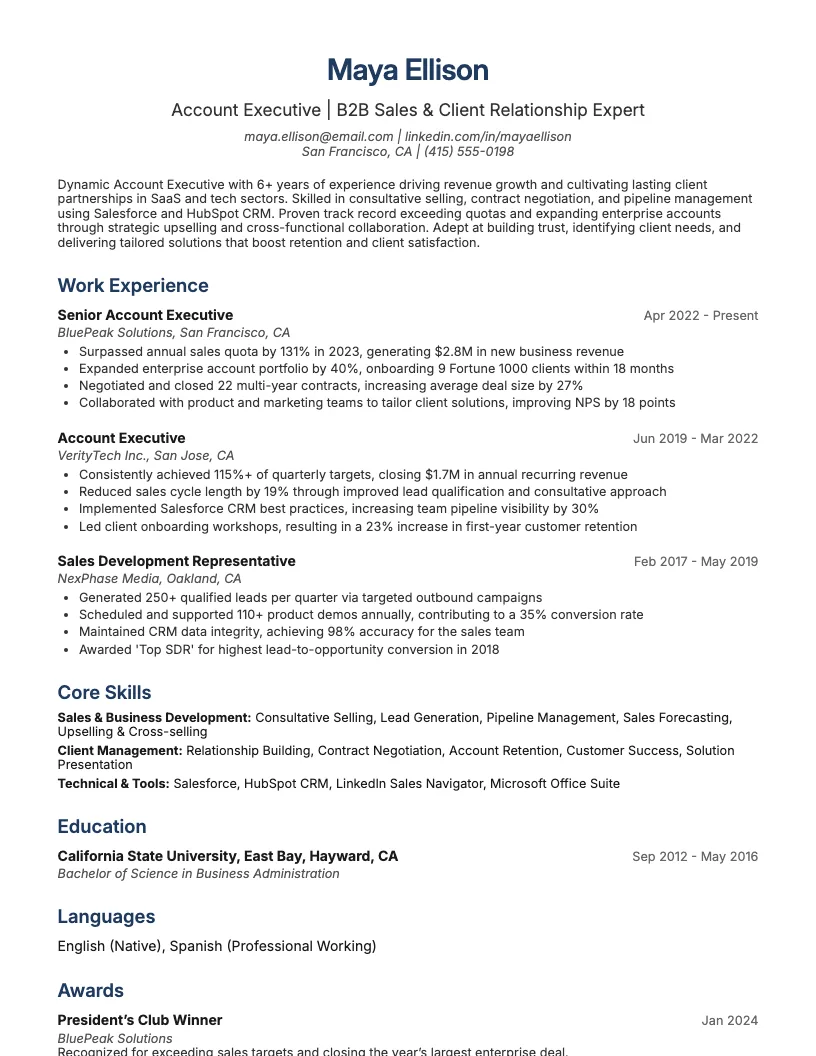 Click to enlarge
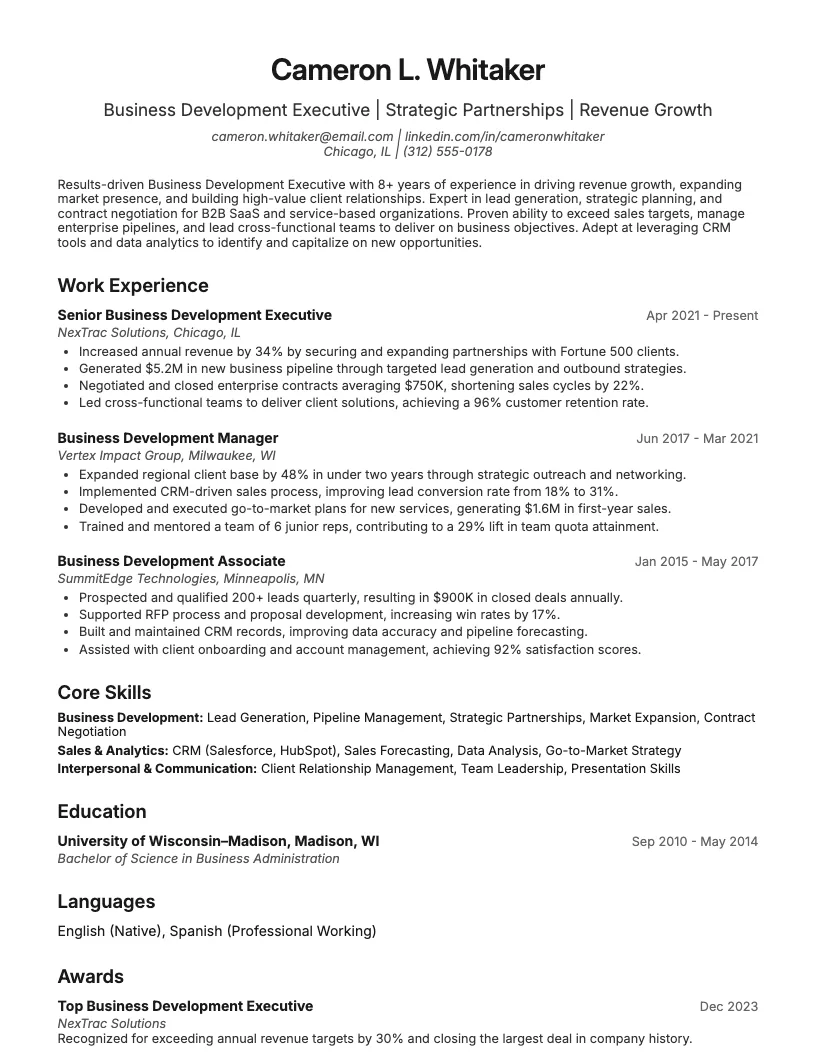 Click to enlarge
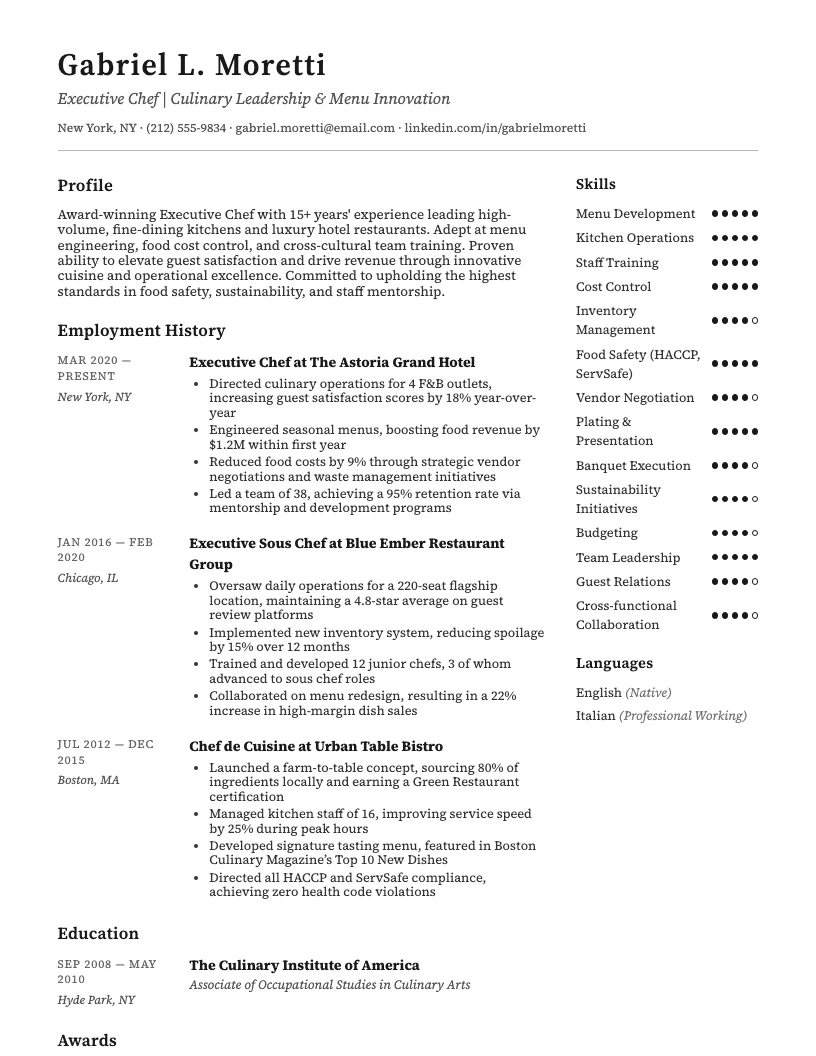 Click to enlarge
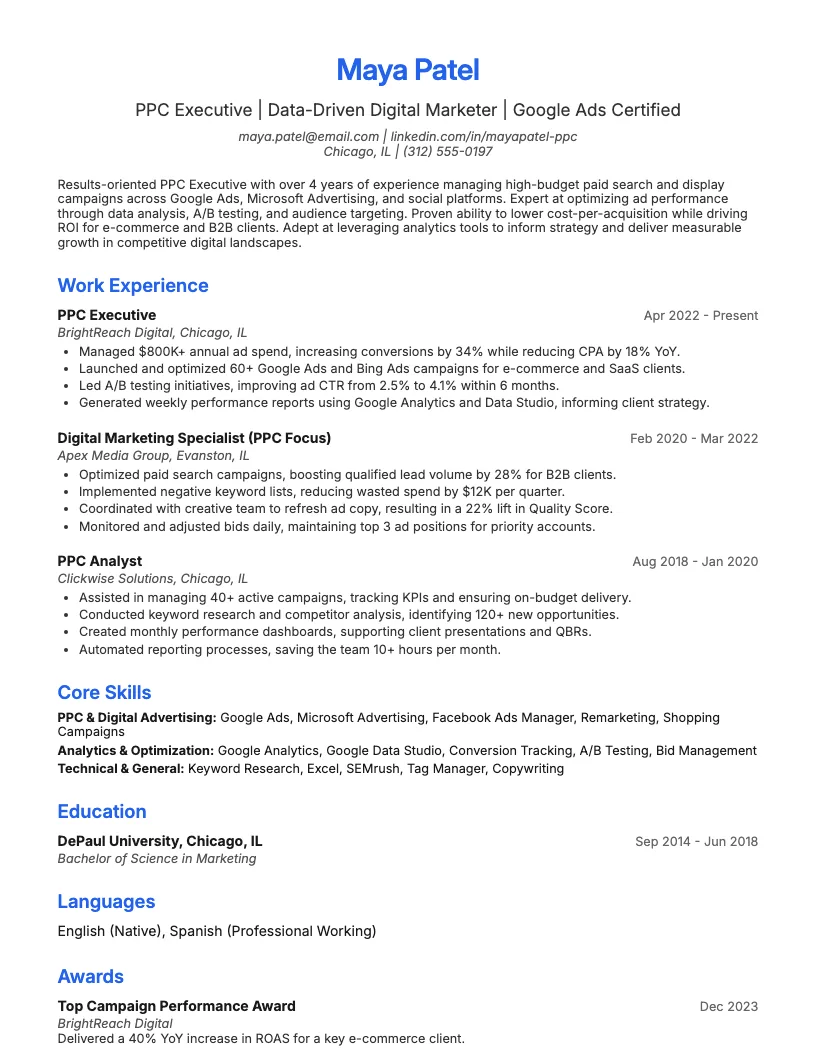 Click to enlarge
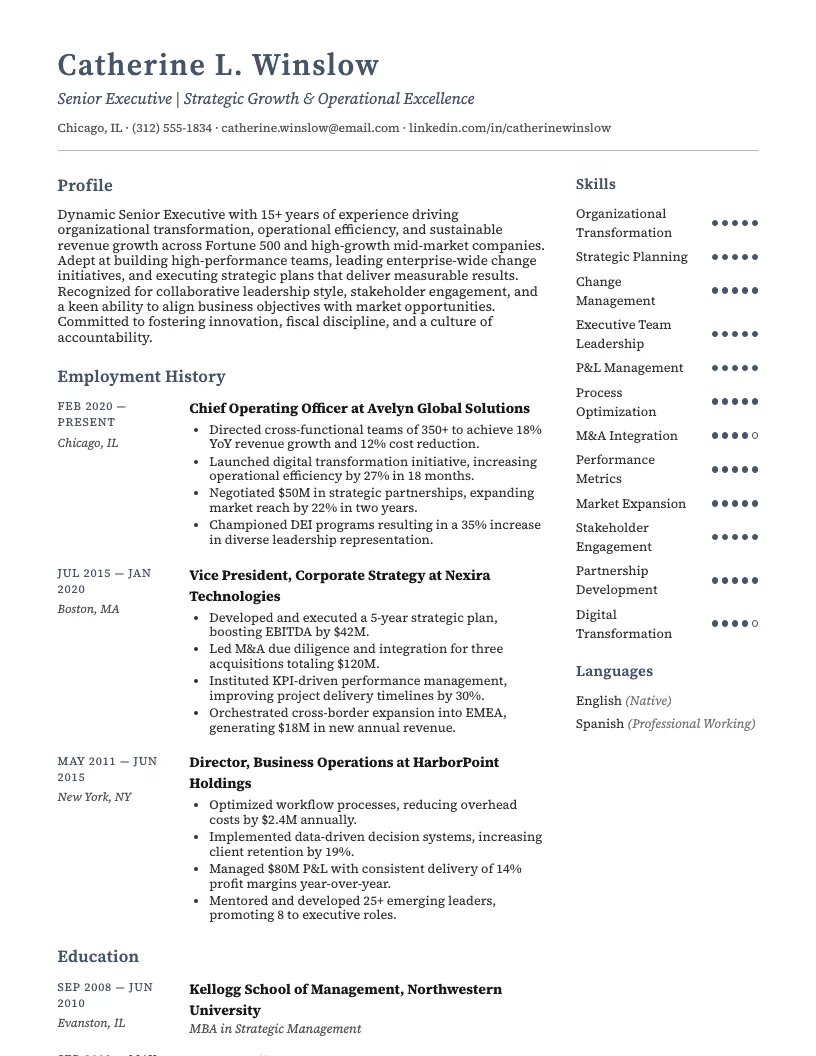 Click to enlarge
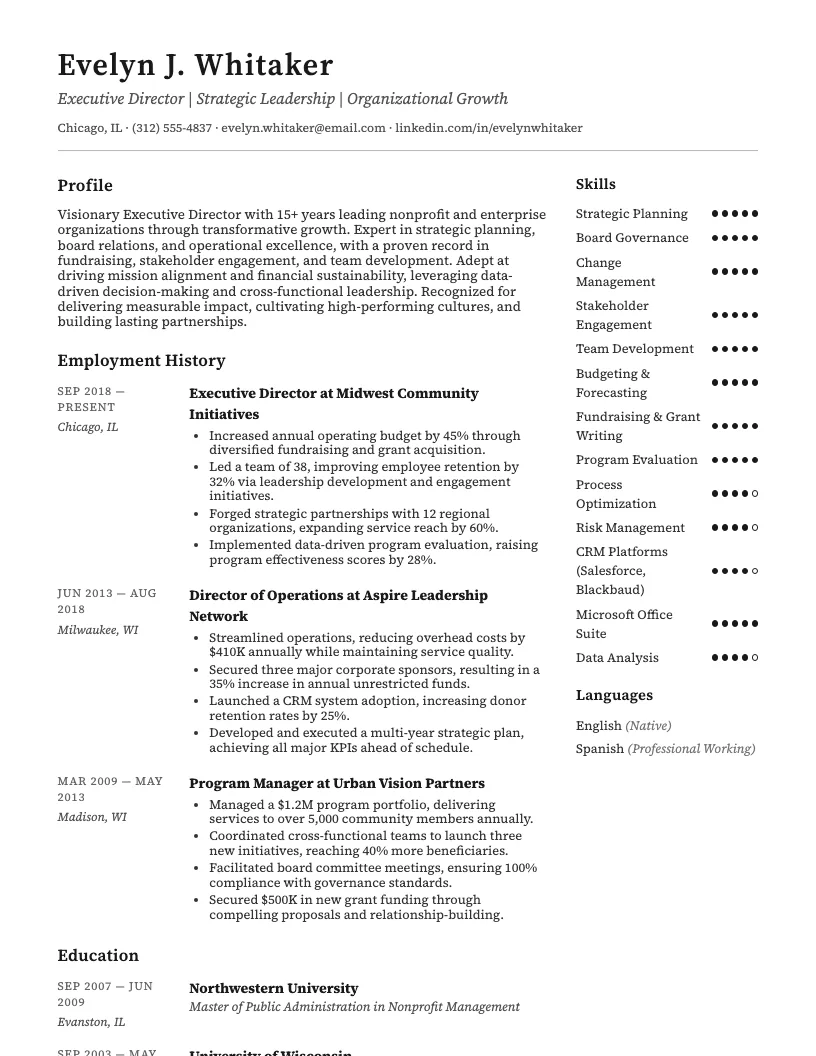 Click to enlarge Click to enlarge
Common questions about Executive resumes
An executive resume template is a professionally designed layout tailored for senior leaders, managers, and C-suite roles. ResumeJudge offers templates that highlight leadership, strategic impact, and career achievements.
Yes, ResumeJudge executive resume templates are optimized for ATS compatibility, ensuring your resume passes automated screening. This increases your chances of landing interviews for top positions.
Use an executive resume template when applying for senior roles like CEO, CFO, Director, or VP. ResumeJudge’s templates work well across industries such as finance, healthcare, and technology.
Absolutely! ResumeJudge templates are fully customizable, so you can showcase your unique skills, achievements, and industry expertise. Easily adjust sections to fit your career story.
Executive resume templates focus on leadership, strategic impact, and measurable results, while standard templates highlight general skills. ResumeJudge’s executive designs help you stand out for top-level roles.
Executive resumes are typically two pages to capture extensive experience and achievements. ResumeJudge templates ensure your content is concise, well-structured, and easy to read.
Yes, ResumeJudge offers executive templates tailored for various industries like finance, healthcare, technology, and marketing. Choose a style that fits your field and career level.
ResumeJudge executive templates feature dedicated sections for achievements, leadership roles, and measurable results, helping you highlight your most impressive career milestones.
Yes, ResumeJudge’s executive templates are ideal for board, director, and C-suite roles. They help you effectively present governance experience and strategic leadership.
Absolutely! ResumeJudge executive templates are perfect for both internal promotions and external job searches, ensuring your qualifications stand out to any hiring manager.
Explore more professional resume examples to inspire your job search
Use our AI-powered resume builder to create a professional, ATS-friendly resume in minutes.
Free to use • No credit card required