ATS Resume Keywords: 6 Steps I Use to Find the 10-30 You Need
Learn what ATS resume keywords are, how an applicant tracking system searches for them, and the 6-step process to find, place, and count the right 10-30.


Written by Sarah Chen
Senior Career Strategist & Resume Expert
Updated August 2026
Reviewed by Marcus Rodriguez
Is your resume ATS-friendly?
Drop your resume in and see which of these skills a scanner can actually read, and which ones the job you want is asking for that you have not listed.
PDF or DOCX. Max 2MB.
We never share your resume or use it to train a model.
In This Guide:
What are ATS resume keywords?
The five keyword categories and what to write
| Category | What to write | Example |
|---|---|---|
| Hard skills & tools | Name the exact software or method | QuickBooks, SQL |
| Job titles | Match the posting's title, not your old one | Customer Service Representative |
| Certifications | Full name plus the acronym | Project Management Professional (PMP) |
| Years & education | State the number clearly | 5+ years, Bachelor's degree |
| Action verbs | Lead with ownership, not passive voice | Managed, negotiated, engineered |
ATS keywords are the exact words a hiring system searches for when a recruiter types in "5 years project management" or "Salesforce" and hits enter. Nine times out of ten, the resumes that vanish from that search aren't weaker candidates - they just used different words than the posting did.
Hard skills and tools
These carry the most weight, and it's not close. Software names, machinery, methodologies, programming languages - anything you can point to and say "I can do this, here's proof."
A recruiter searching "QuickBooks" or "SQL" wants that literal string, not "financial software" or "database skills."
Job titles
Your title has to match the language of the role you want, not just the title your old employer gave you. If you were a "Guest Experience Associate" and you're applying to "Customer Service Representative" jobs, the system may not connect the two.
Use the posting's title somewhere on your resume, even if it's just in your summary.
Certifications and licenses
Write these out exactly as the industry does - full name, plus the acronym if there is one. "Project Management Professional (PMP)" catches both search styles; just "PMP" or just the spelled-out version catches only half.
Years of experience and education
Recruiters filter by number: "3+ years," "Bachelor's degree required." If the posting says "5 years," your resume should make it obvious you clear that bar, not leave someone doing the math from your dates.
Action verbs
Don't reach for a stronger verb than the one that's true. If you write "engineered" and an interviewer asks you to walk through the engineering, you need an answer ready, not just the word.
Verbs like "managed," "negotiated," or "engineered" don't just describe what you did - they signal ownership. I've read hundreds of resumes that bury a real accomplishment under "responsible for," which reads as passive and gets skipped by both software and humans.
How ATS keywords differ from general resume keywords
General resume keywords are written to impress a person; ATS keywords are written to survive a search first. The safest move is picking words that do both - run yours against a real posting with something like ResumeJudge and it'll show you what's missing and rewrite your resume to work those words in before a recruiter ever opens the file.
How does an applicant tracking system search for keywords?
Here's the part most people never see: a real human doesn't read your resume first. A search does.
The resume is converted to plain text first
The moment you upload a resume, the system strips it down to plain text. Fonts, colors, layout, all of it disappears.
What's left is just words, in whatever order the parser managed to pull them out.
Recruiters type searches into the system
From there, it works a lot like a search engine. A recruiter types in terms like "project manager" or "Salesforce," and the system returns every resume containing those words, ranked by how well they match.
What recruiters filter by: skills, education, job titles, certifications, years
I've seen the numbers, and they line up with what I see in resumes every day: 76% of recruiters filter by skills, 60% by education, 55% by job titles, 51% by certifications, and 44% by years of experience. Almost every recruiter using an ATS - 99.7% of them - runs a filter before they read a word.
Exact match beats a synonym
Matching the posting's wording
Customer assistance
Customer support
Some systems are smart enough to connect related words, but a recruiter typing a term into the search box is often taking it literally. If the posting says "customer support" and your resume says "customer assistance," you're betting the system will make that connection for you - and it might not.
Match the posting's exact wording wherever it's true of your experience.
How the system ranks you against everyone else
Once you clear the filter, you're not done. You're ranked against every other applicant on how many of those same terms show up, and how relevant the system judges them.
Two candidates can both "pass" the ATS and still land nowhere near each other in the results.
Formatting that stops the system reading your keywords
I've watched strong resumes get buried because of formatting, not content. Columns, text boxes, tables, headers and footers, and graphics all trip up parsers.
Keep it linear, one column, standard section headers, and save it as a Word file or plain text.
How do you find the ATS keywords for a job you want?
How do you find the ATS keywords for a job you want?

Step 1: Pull the exact job title from the posting
Start with the title, not the bullet points.
Jobscan found that candidates who put the exact posted job title on their resume are 10.6 times more likely to get an interview. That's not a small edge.
If the posting says "Software Engineer II" and your resume says "Programmer," fix that first, before you touch anything else.
Step 2: Mark every word the posting repeats
Read the posting twice. The second time, circle anything that shows up more than once.
A word an employer repeats three times in a five-paragraph posting isn't filler. It's what they're screening for.
Step 3: Take the tools, software and certifications by name
Skip the soft skills here. "Team player" won't get you past a filter.
Pull out the hard stuff instead: the software, the platforms, the licenses, the certifications.
Step 4: Read three more postings for the same role
One posting tells you what one employer wants. Three or four tell you what the role actually is.
Open a few more listings for the same title, even at companies you're not applying to yet. The words that show up in all of them are the ones worth building your skills section around.
Step 5: Copy the employer's wording, not your own
Say it their way - exact match beats a synonym covers what happens when you don't.
Step 6: Check your resume against the posting
Once you've rewritten your resume, put it next to the job description and go line by line. ResumeJudge does this part for you - it scores your resume against a posting, tells you exactly which keywords are still missing, and rewrites your resume to add them before you hit submit.
Worked example: a social media manager posting
Turning a posting's keywords into a bullet
Managed social platforms.
Ran Twitter advertising campaigns and used SEO and Photoshop to grow engagement 20%.
Say the posting asks for "SEO," "Twitter advertising," and "Adobe Photoshop." Those three go straight onto your resume, word for word, tied to something you actually did.
Not "managed social platforms." Instead: "ran Twitter advertising campaigns and used SEO and Photoshop to grow engagement 20%."
That's a sentence a scanner and a hiring manager both understand.
Where do you put ATS keywords on your resume?
Where each keyword goes
| Section | What to include |
|---|---|
| Headline & summary | Exact job title, top skills, years of experience |
| Skills section | 8-12 posting-matched items |
| Work experience | Action verb + keyword + result |
| Education & certifications | Degree or certification exactly as the posting states it |
Same keyword, different sections, different job to do. Here's where each one earns its place.
The headline and summary
Your headline is the first thing both the ATS and the recruiter see, so put the exact job title there if it's true.
Under it, two or three lines naming your top skills and years of experience. This is prime real estate - don't waste it on a generic "hardworking team player" line.
The skills section
I tell people to list eight to twelve items here, not forty.
A wall of forty skills reads like you're not sure which ones matter, and it usually means half of them aren't backed up anywhere else on the page. Pick the ones the posting actually asks for, in the posting's own words.
Work experience bullets: action, keyword, result
Writing an experience bullet
Responsible for CRM management.
Managed Salesforce pipeline for 200+ accounts, increasing close rate 18%.
This is where most resumes fall apart, and it's the easiest fix I know.
Every bullet should follow the same shape: start with an action verb, name the keyword or tool in the middle, close with a number. "Managed Salesforce pipeline for 200+ accounts, increasing close rate 18%" does more work than "Responsible for CRM management" ever will.
Education and certifications
If the posting names a degree or a certification, list it exactly the way they wrote it - don't paraphrase your own CPA license into "accounting credential."
How many keywords to include
Most resumes that pass land somewhere between ten and thirty keywords total, spread across the whole page, not crammed into one section.
There's no magic count - keyword stuffing covers why padding the number backfires.
Keyword stuffing and what it does to you
I can spot a stuffed resume in about three seconds - a summary that reads like a list of nouns with no verbs, or a skills section far past the eight to twelve that belong there.
It doesn't fool the system, and it definitely doesn't fool the person reading it after. Say each keyword once, where it's true, and move on.
Never claim a keyword you can't back up in the interview
If you list "Python" and can't write a loop when asked, that's a worse outcome than never mentioning it.
Nine times out of ten, the keywords that sink an interview are the ones someone added just to get past the scanner. Before you submit, run your resume against the actual posting - ResumeJudge will flag any skill it's listing that the rest of the page doesn't support.
Which ATS keywords apply to your industry?
Is your resume good enough?
Drop your resume in and see which of these skills a scanner can read, and which ones the job you want is asking for that you have not listed.
Upload your resumeFree. PDF or DOCX. We never share your resume or use it to train a model.
Every industry has its own vocabulary, and the ATS doesn't guess at yours. It matches what's on the posting to what's on your resume, word for word, so the terms that count in accounting are useless on a construction resume and vice versa.
I've pulled these lists together from the postings I've read most often. Treat them as a starting point, not a script.
Business, finance and accounting
This is the biggest bucket I see, and one list I looked at counted over 130 keywords just for this field. The core ones repeat constantly: budgeting, forecasting, financial reporting, auditing, risk management, compliance, accounts payable and receivable, reconciliation, P&L analysis.
If you touch a specific tool, name it. "Proficient in spreadsheets" tells the ATS nothing; "Excel" and "QuickBooks" do.
Information technology and computer science
Tech postings pack in more distinct keywords than almost any other field, sometimes over a hundred in a single job family. Languages (Python, Java, SQL), platforms (AWS, Azure), and methods (Agile, CI/CD, cloud computing) all get scanned separately.
The trap here is writing "programming languages" as a phrase instead of naming the ones you actually use. The ATS doesn't know what you meant, only what you typed.
Marketing, media and design
Marketing resumes need both the strategic terms (brand strategy, market research, campaign strategy, KPI) and the tool names (Adobe Creative Suite, SEO, CRM, Google Analytics). I see people lean hard on one side and skip the other, and both matter.
If you ran a campaign, name the platform. If you designed something, name the software.
Healthcare and medicine
Certifications carry more weight here than almost anywhere else, so put them exactly as licensed: CPR, BLS, RN, CNA. Beyond that, terms like patient care, case management, clinical documentation, and compliance show up on nearly every posting in the field, and skipping them because they feel obvious is a mistake I see constantly.
Education
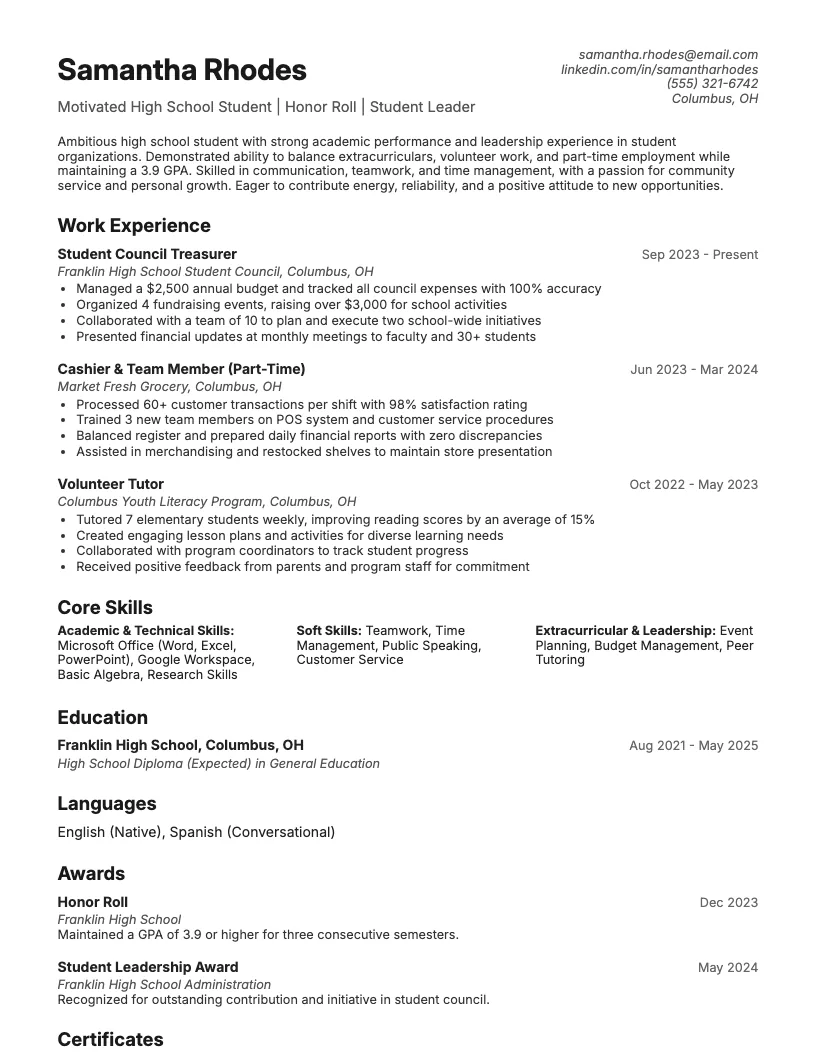
Curriculum development, lesson planning, classroom management, student assessment, differentiated instruction - these aren't filler, they're what the scanner is actually hunting for. If you've worked with a specific population, like special education or English language learners, say so by name rather than folding it into "diverse classrooms."
Customer service and retail
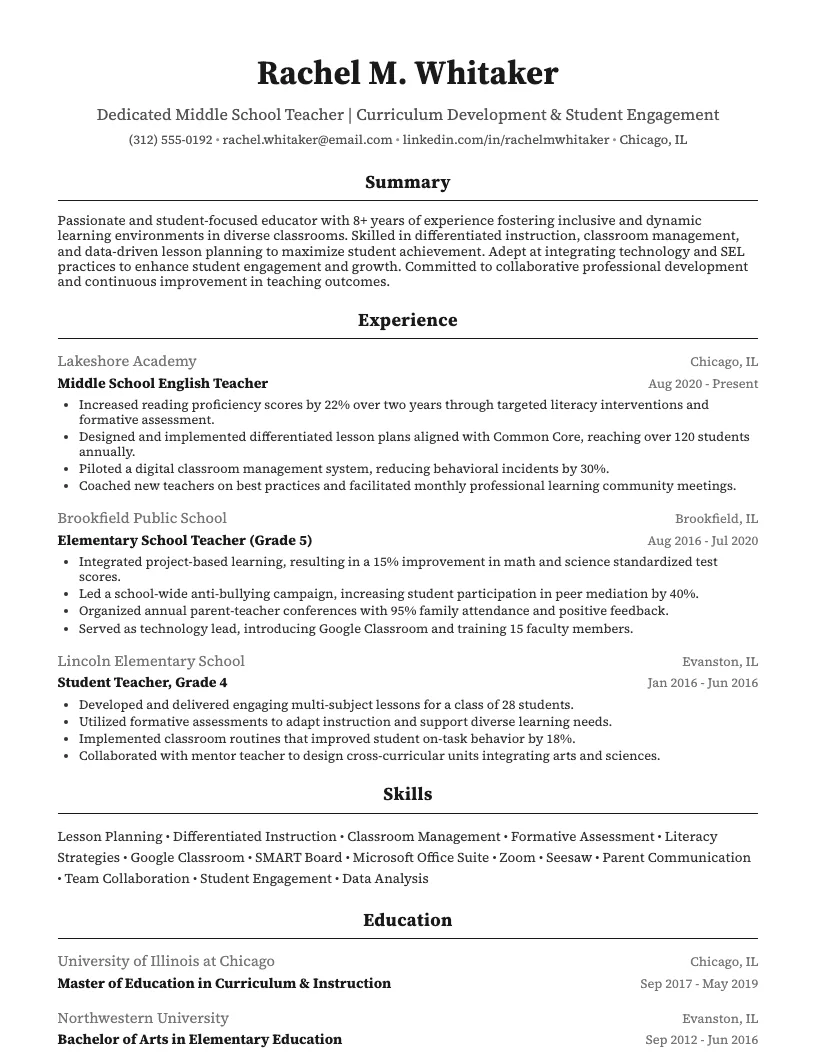
Customer satisfaction, conflict resolution, POS operation, upselling, inventory management. This is one of the shorter lists I've seen, maybe 30 or so common terms across the whole field, but that's exactly why each one you're missing stands out more.
If a posting mentions a specific system, like a POS brand, use its name.
Manufacturing, engineering and transportation
This group runs long, often 70 or more distinct keywords, because it spans the floor and the office: assembly, quality assurance, Six Sigma, supply chain, CAD software, structural analysis, process improvement. Match your resume to whichever end of that spread the posting sits on.
A quality-control resume and a mechanical-design resume shouldn't read the same.
Construction and skilled trades
OSHA certification, blueprint reading, site management, equipment maintenance, safety protocols. Trade-specific words matter more than general ones here - "carpentry" or "masonry" beats "hands-on skills" every time, and certifications should be typed out exactly as they're issued.
Law and legal
Legal research, contract drafting, litigation support, regulatory compliance, due diligence. Precision is everything in this field, so match the posting's phrasing closely - "contract drafting" and "contract negotiation" are not interchangeable to a scanner even though they're close cousins to a human reader.
Food service and hospitality
Food safety, menu development, inventory management, service excellence, hygiene standards. Certifications like food handler cards belong here too, written out in full rather than abbreviated.
Emergency services
First aid and CPR, incident management, risk assessment, disaster preparedness, crisis communication. These postings lean heavily on named certifications and training programs, so list them exactly as earned.
Administration and office support
Scheduling, records management, data entry, correspondence, calendar management, multitasking. This list looks plain next to design or tech, but it's exactly the terms recruiters filter by, so don't dress them up into vaguer phrases.
How to use a list like this without copying it wholesale
Nine times out of ten, the mistake I see isn't a missing list, it's someone pasting every word from a list like this onto a resume that doesn't back any of it up. A list like this tells you the shape of your field's vocabulary, not what's actually true of you.
The posting in front of you always beats a general list, because it's what the ATS is comparing against right now. If you've already worked through how to find the keywords in a specific posting, use this section to check you haven't missed a whole category, not to fill gaps with words you can't defend in an interview.
ResumeJudge will check your resume against a real posting, tell you which of these terms you're actually missing, and rewrite your resume to work them in - a faster and more honest test than working down a list by eye.
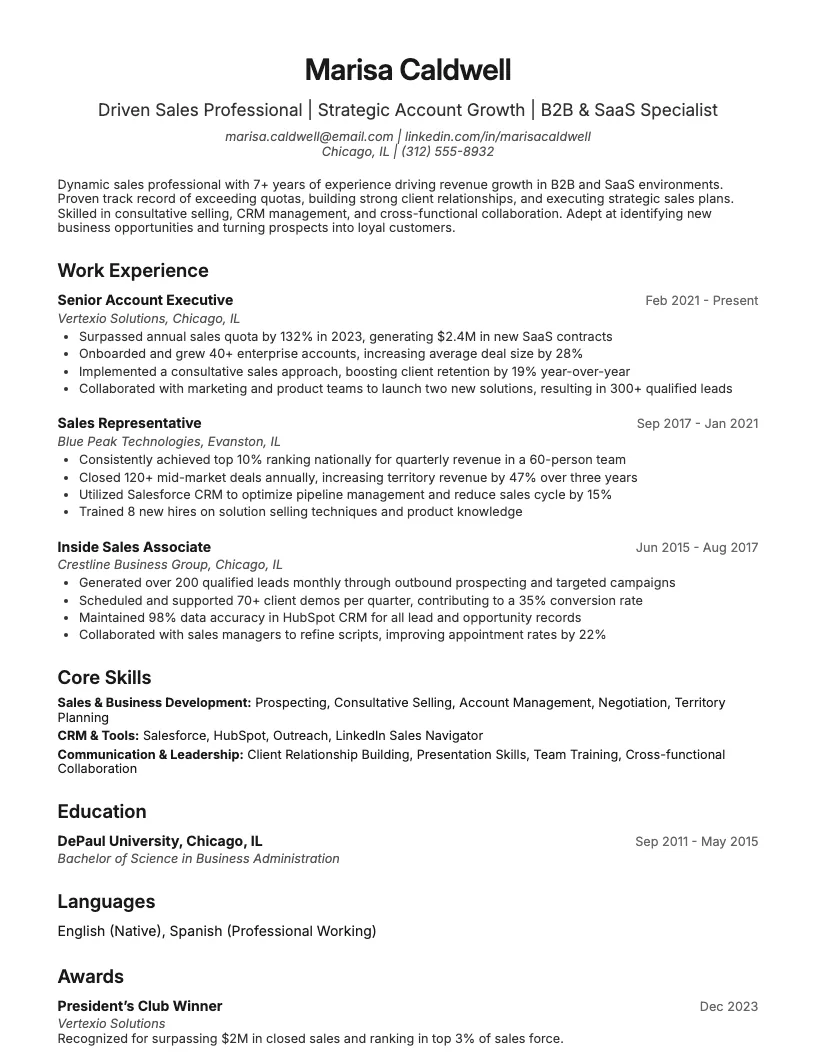
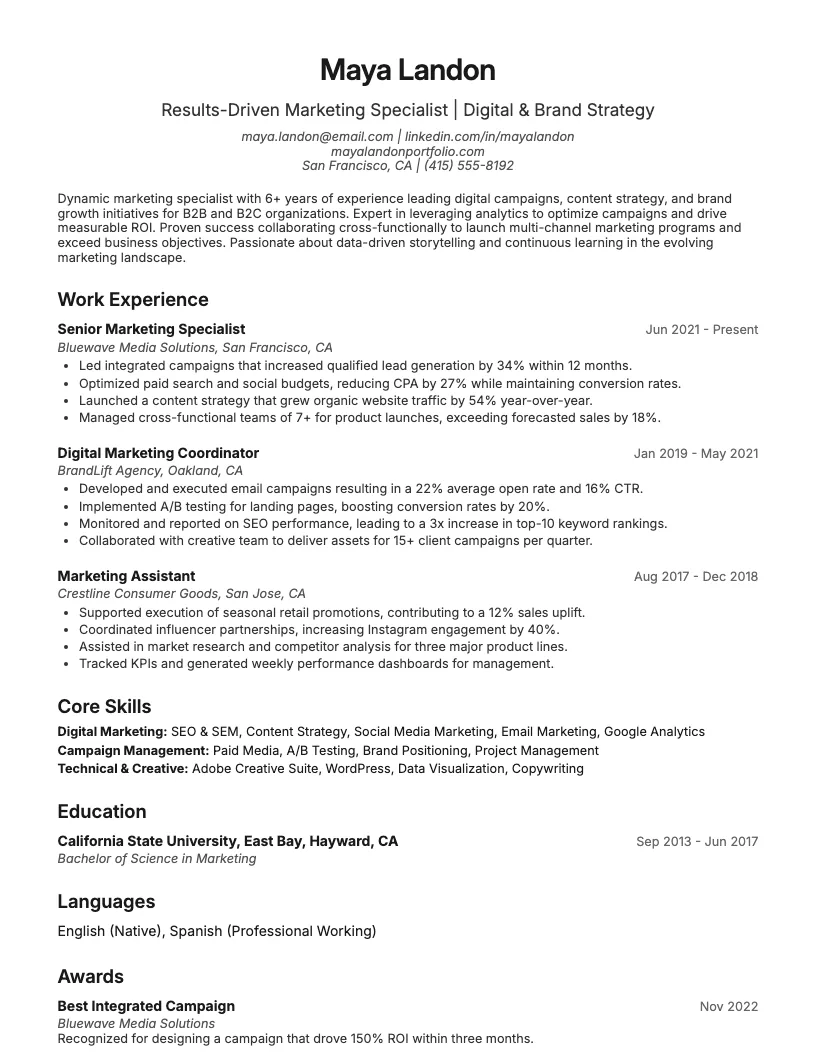
See these skills on a real resume
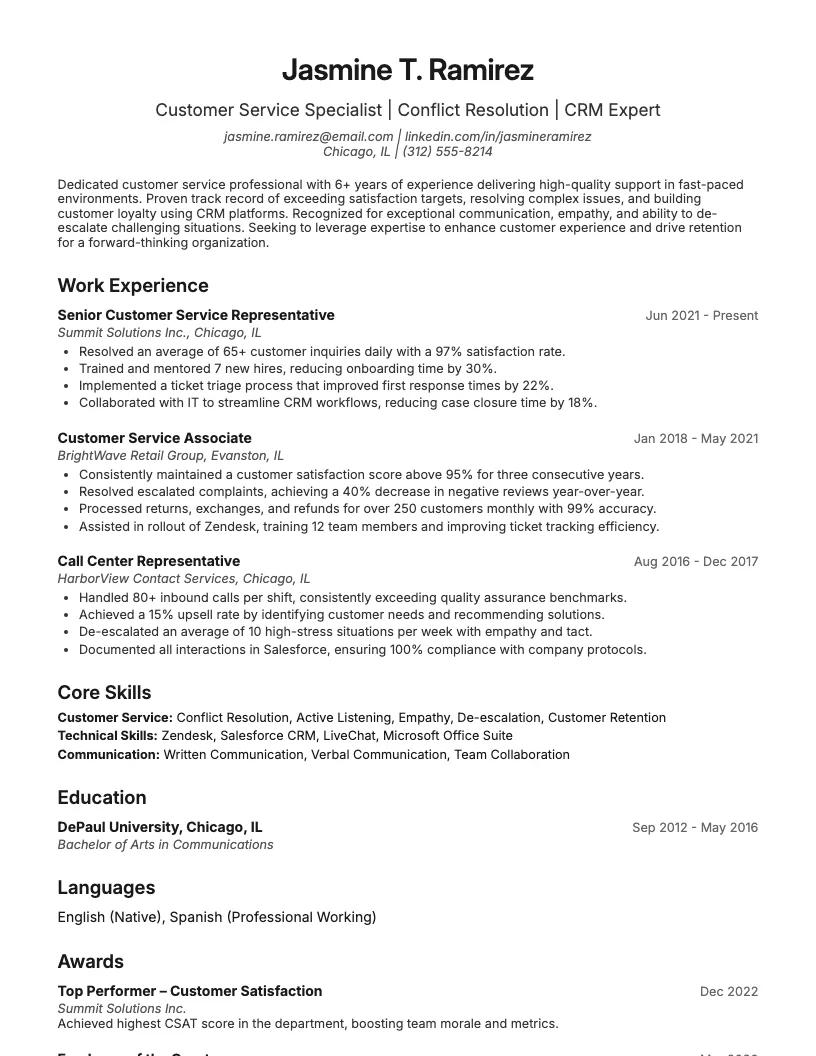
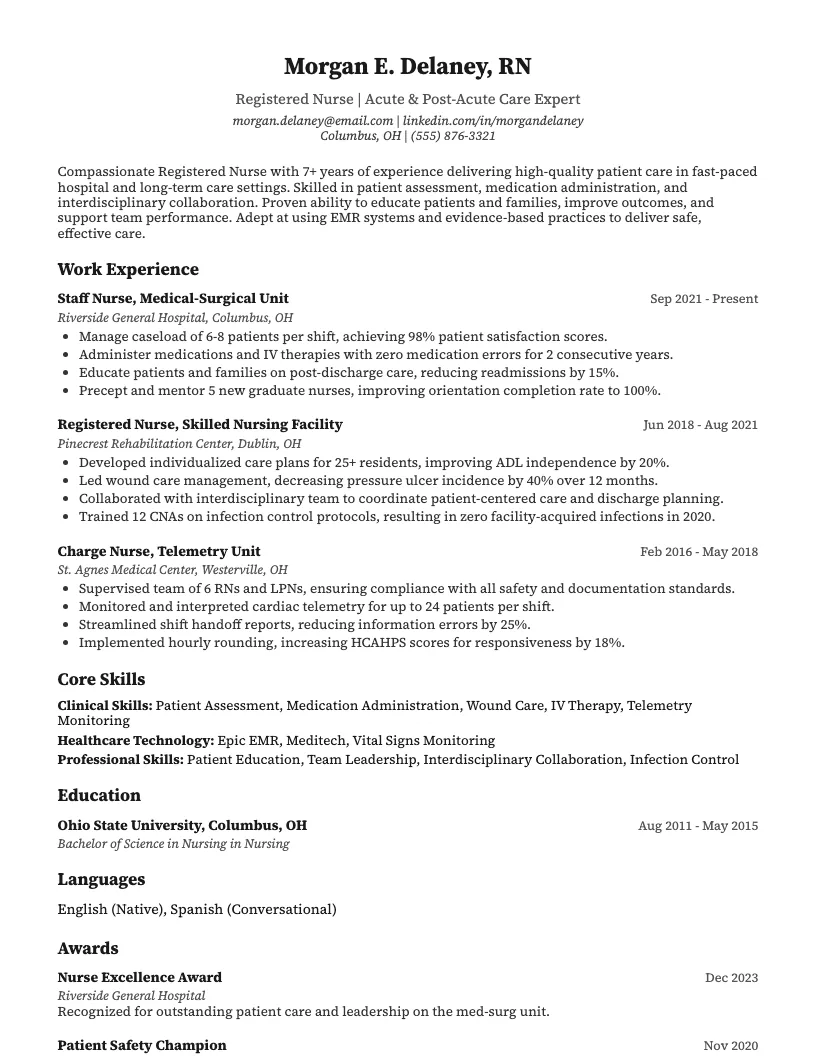
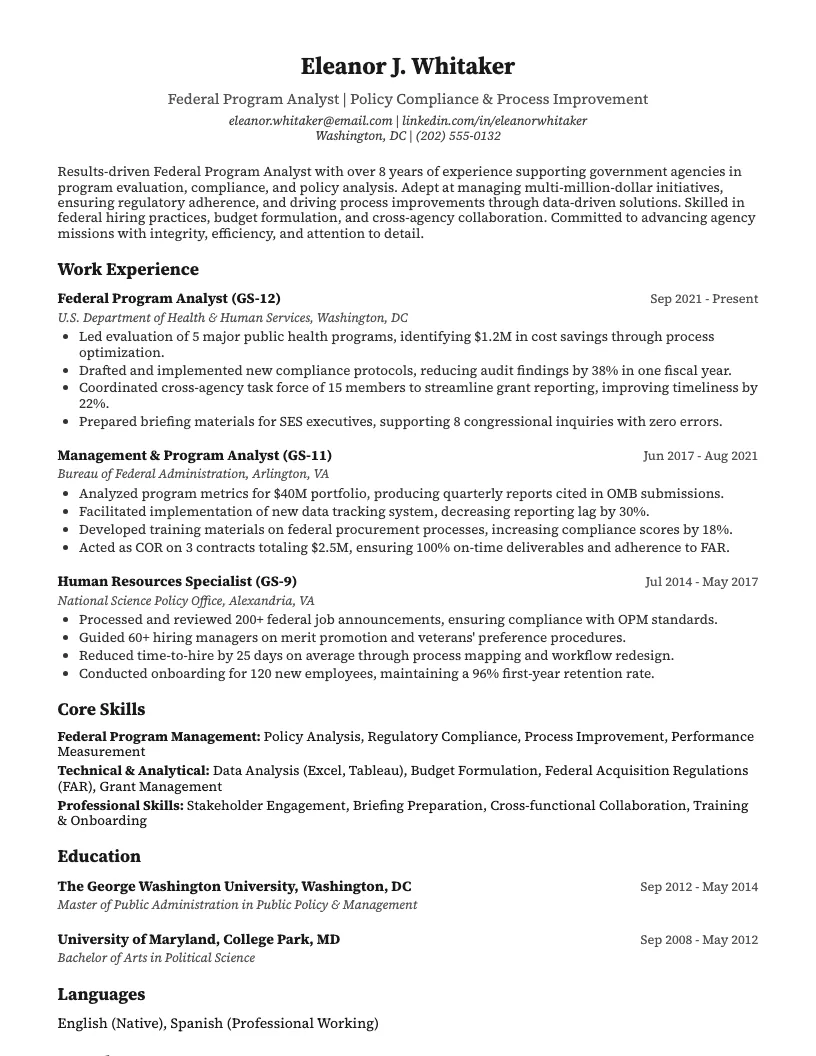
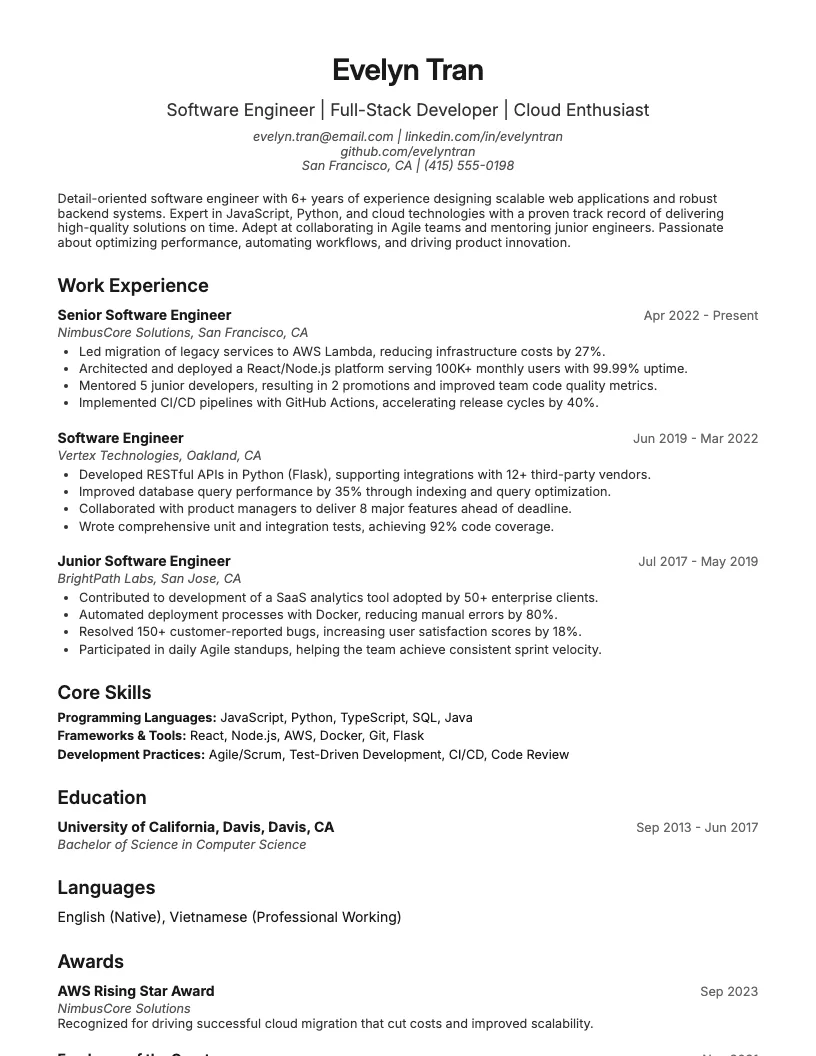
8 examplesStart from an example that already has them, and swap in your own.
Check your resume against the job you want
Scan your resume, see which skills and keywords the posting asks for that you are missing, and fix them before you apply.
Free to use • No credit card required