Interpersonal Skills: 12 Types and 8 Jobs That Need Them Most
See the 12 types of interpersonal skills, how they differ from personality traits, and exactly how to write them into your resume with real bullet examples.

Written by Dr. Priya Sharma
Career Development Expert & Resume Analyst
Updated August 2026
Reviewed by Sarah Chen
Is your resume ATS-friendly?
Drop your resume in and see which of these skills a scanner can actually read, and which ones the job you want is asking for that you have not listed.
PDF or DOCX. Max 2MB.
We never share your resume or use it to train a model.
In This Guide:
What are interpersonal skills?
If you've ever been told your resume needs more "people skills," you've hit interpersonal skills without knowing the term for it.
The short definition
Interpersonal skills are how you act when another person is in the room. Talking, listening, reading a mood, handling a disagreement - anything that only shows up when there's someone to do it with.
Why they are also called people skills
Recruiters say "people skills" because it's the plain version of the same idea. I've read hundreds of resumes and the two terms are interchangeable - use whichever fits the sentence, a hiring manager won't blink at either.
What makes a skill interpersonal and not just personal
Here's the test I use: does it need another person to happen? Patience is personal - you can be patient alone in traffic.
Conflict resolution is interpersonal - it only exists between two people. That line matters more than it sounds like it should, and I get into it properly in personal traits vs. interpersonal skills.
Where the word comes from: inter means between people
"Inter" means between, same root as international or interstate. So interpersonal, literally, is "between persons."
The opposite is intrapersonal - "intra" means within - which covers things like self-motivation and resilience, the work you do on your own. I cover that split in interpersonal vs. intrapersonal.
One thing I tell people before they even write a bullet: a job posting rarely says 'interpersonal skills' outright, it says 'communication' or 'collaborative environment.' ResumeJudge will check your resume against the actual posting, flag which of these words you're missing, and rewrite your bullets to work them in.
What are the main types of interpersonal skills?
Most job postings just say "strong interpersonal skills" and leave it at that. Here's what's actually hiding inside that phrase, and what I look for when a resume claims it.
Communication
This is the umbrella one - how clearly you get an idea out of your head and into someone else's, whether that's in a meeting, an email, or a one-line Slack message. I go into the mechanics of it under what interpersonal communication actually looks like, but the short version: employers rank it at or near the top of every skills survey I've seen, and it's the first thing I check on a resume.
Active listening
Not just "listening" - actively. That means putting the phone face down, not composing your reply while the other person is still talking, and asking a follow-up question that proves you tracked what they said.
I've read a lot of resumes that list "active listening" as a bullet and then can't back it up in the interview. If you claim it, have a story ready.
Empathy
Understanding what someone else needs, even when they haven't said it outright. On a resume this shows up as things like adjusting your approach for a difficult client or noticing a teammate was overloaded and picking up slack before being asked.
It's also the skill that quietly makes every other one on this list work better.
Teamwork
Almost every job posting I've ever reviewed touches this somewhere. Good teamwork is communication, listening, and flexibility all working at once toward one goal.
Say what the team built and what you did in it.
Conflict resolution
Disagreements happen in every job - the skill is handling them without it turning into a mess. Some people are naturally good at this, but nine times out of ten it's learned: understand where the conflict actually started, know a few de-escalation moves, and don't let it become personal.
It leans hard on negotiation, which I cover a bit further down.
Leadership
You don't need "manager" in your title to have this one. Leadership is making a good call, especially when it involves other people's time or work, and doing it with enough patience that people actually follow it.
I see it just as often from individual contributors as from anyone with direct reports.
Dependability
Show up, hit the deadline, keep the promise. It sounds almost too basic to call a "skill," but it's the one that earns you the harder, more visible assignments - and it's the fastest way to lose trust if it slips.
Adaptability
New software, a reorg, a project that changes scope halfway through - adaptability is not taking any of that personally and adjusting anyway. I've noticed it's one of the traits hiring managers now ask about directly in interviews, because so much of the last few years has been change nobody planned for.
Assertiveness
Saying what you mean, directly, without steamrolling anyone. A useful way to think about it: confidence, clear wording, and a controlled way of delivering it.
Assertive people cause fewer misunderstandings, not more - which is the opposite of what a lot of people assume when they hear the word.
Negotiation
Getting to an outcome that works for both sides, not just yours. It overlaps heavily with conflict resolution and assertiveness, and it's worth naming on its own because it comes up in places people don't expect - not just salary talks, but deadlines, scope, and who owns what on a project.
Building rapport
The quiet skill that makes everything else easier. Small things do most of the work here: remembering a detail from a previous conversation, matching someone's tone instead of talking over them, finding the one thing you actually have in common.
It's why some people get a "yes" in the same conversation where someone else would've gotten a "let me think about it."
Self-awareness
Knowing your own strengths, your own blind spots, and how you land on other people. If you don't have this one, none of the others hold up for long - you can't fix a habit you don't know you have.
Asking for honest feedback and actually sitting with it is the fastest way I've seen people build it.
If you're not sure which of these to actually put on your resume, run your draft against the job posting - a tool like ResumeJudge will flag which of these the listing asks for that your resume doesn't currently prove.
What is interpersonal communication?
Interpersonal communication is just what happens when you and another person exchange information, and most people are doing it badly without realizing it. I've read enough cover letters and resume summaries to know that "strong communicator" is the most claimed skill and the least demonstrated one.
It breaks down into a few channels, and where you fall apart usually shows up in only one of them.
Verbal communication
This is your word choice, your tone, and how you land a point without over-explaining it.
The people who do this well say less, not more.
Non-verbal communication
Body language, facial expression, posture - the stuff you're not controlling even when you think you are.
Nine times out of ten, when someone tells me an interview "felt off," it wasn't the answers. It was crossed arms, no eye contact, a flat voice saying "I'm excited about this role."
Written communication
Email, Slack, your resume itself. Tone and clarity carry the whole message when there's no face attached to it.
A resume is written communication under a deadline - the reader gives it seconds, not minutes. If you're not sure your bullets land the way you think they do, run them against the actual posting - ResumeJudge will rewrite the wording so it lands, before a recruiter ever sees it.
Listening
I'd put this above verbal skill, not below it. What doing it well actually involves is covered under active listening.
Everyday examples: a job interview, a customer complaint, a disagreement with a colleague
An interview is verbal and non-verbal at once - your answer and your posture are both being read. A customer complaint is mostly listening before anything else, and jumping to a fix too fast reads as dismissive.
A disagreement with a colleague usually comes down to who's willing to say "I might be wrong" first.
What gets in the way: distractions, distance, assumptions
A phone on the table kills a conversation faster than anything you say. Physical distance matters too - it's harder to read someone, and be read, from across a loud room.
And assuming you know what someone means before they finish the sentence is the fastest way to derail a conversation with a colleague.
What is the difference between interpersonal and intrapersonal skills?
People mix these two up constantly, and it matters on a resume because you'll list one and mean the other.
Interpersonal: skills you use with other people
Interpersonal means between people. It's outward-facing: communication, listening, empathy, teamwork, conflict resolution, leadership, and the rest of the main types.
Whether a word like patience counts as one is a separate question - see personal traits vs. interpersonal skills.
Intrapersonal: skills you use on yourself
Intrapersonal means within yourself. It's self-motivation, resilience, managing your own time and your own reactions.
This is the internal work nobody sees - the self-talk before a hard conversation, the reflection after a bad meeting.
Side-by-side comparison
| Interpersonal | Intrapersonal | |
|---|---|---|
| Direction | Outward, between people | Inward, within yourself |
| Shows up as | Conversation, body language, negotiation | Self-talk, reflection, self-regulation |
| Feedback comes from | The other person's response | Your own honest read on yourself |
| Built by | Team projects, difficult conversations, mentoring | Journaling, feedback, quiet reflection |
Why the two feed each other
Nine times out of ten, the person who struggles in meetings isn't missing communication skills - they're missing the intrapersonal work underneath it.
I've seen candidates list a dozen interpersonal skills with nothing to back them up. If a posting asks for both kinds, run your resume against it in ResumeJudge and it'll flag which ones you've actually shown versus just named.
What is the difference between personal traits and interpersonal skills?
You've probably written "patient" or "organised" on a resume and called it a skill. It isn't, not really.
A personal trait: patience, honesty, being organised
A trait is something you have on your own, no other person required.
Patience, honesty, being organised, staying calm under pressure - you can practise every one of those alone in a room. They describe who you are, not what happens when you and another person are both in the conversation.
An interpersonal skill: what you do with another person
An interpersonal skill only shows up when someone else is there.
Negotiating a deadline, resolving a disagreement, reading the room in a meeting - none of that exists in isolation. It's the difference between being calm and calming someone else down.
The same word can be both, depending on how you use it
Here's where it gets confusing, and it's the mistake I see most often: the same word can sit on either side depending on what you mean by it.
"Listening" as a personal habit is just attention. "Active listening" as an interpersonal skill is what you do to make the other person feel heard - nodding, paraphrasing, asking a follow-up. Same word, different job.
Why this matters on a resume
A hiring manager reading "organised" learns nothing about how you work with a team. A hiring manager reading "resolved a scheduling conflict between two departments" learns exactly that.
Nine times out of ten, the fix is to swap the trait for the interaction it produces. If a posting names a specific interpersonal skill, run your resume against it in ResumeJudge - it'll tell you if that skill is missing or just buried under a trait word instead.
See how to put these on a resume for the exact wording to use.
Why do interpersonal skills matter at work?
Almost every job involves other people
Even the most heads-down technical roles rely on other people. Software engineers write code alone but still have to hand it off, explain it, and take feedback on it - the same collaboration a nurse or a sales rep needs, just in a different room.
That's why nearly every posting I read names this stuff somewhere, even when the job title is "individual contributor."
What they change day to day: fewer misunderstandings, faster decisions
Clear communication heads off the misunderstandings that turn into arguments, hurt feelings, and a bad week for everyone.
Teams with strong interpersonal skills just move faster. Fewer meetings get spent re-explaining what someone meant, and fewer decisions stall waiting for people to get on the same page.
What employers say they are hiring for
When I read job listings closely, communication and teamwork show up almost as often as the technical requirements - they're just phrased more casually, so people skim past them.
Employers are also looking for who can lead without a title: someone who resolves conflict instead of escalating it, and who can be trusted to represent the team in a room. If a posting names skills you're not sure you've proven, running it against your resume is exactly what ResumeJudge is for - it flags what the job asks for that your resume doesn't show yet.
The cost when they are missing
I've watched plenty of technically strong people get passed over for promotion because nobody wanted to sit in more meetings with them.
Weak interpersonal skills don't usually show up as one big incident. They show up as friction - the coworker nobody wants on their project, the manager whose team keeps quietly rotating out.
What do strong interpersonal skills actually look like?
Strong vs. weak interpersonal skills in a meeting
| Behavior | Strong skills | Weak skills |
|---|---|---|
| Asking questions | Waits for the answer | Talks over the quiet person |
| Paying attention | Writes down what others say | Checks phone during updates |
| Handling disagreement | Names it out loud | Repeats the same point, louder |
Definitions don't tell you much. Watching two people run the same meeting does.
Someone with strong skills: what they do in a meeting
They ask a question and wait for the answer instead of filling the silence.
They write down what someone else said before adding their own point. When two people disagree, they name the disagreement out loud instead of letting it sit there.
Someone with weak skills: the same meeting
Same room, different habits. They talk over the quiet person, check their phone during someone else's update, and repeat their own point louder instead of asking why the other side isn't convinced.
Nobody writes this down anywhere. But it's the reason some people get pulled into the next project and some don't.
Signs you already have them
Nine times out of ten, if you're asking whether you have these skills, you have more of them than you think. People come to you before a decision, not just after.
You get asked to smooth things over. Colleagues repeat things back to you accurately, which means you actually said them clearly the first time.
What 'strong interpersonal skills' means on a job posting
On a posting, it's shorthand for "won't need managing through basic conflict." I've read hundreds of these listings, and the phrase almost always sits next to words like "cross-functional" or "client-facing" - that's your clue for which of the main types to lean on.
Before you apply, run your resume against the posting - ResumeJudge will flag which of those specific skills you haven't shown yet, then write the cover letter for that job too.
Which interpersonal skills matter most in your job?
Not every job leans on the same skill. I've reviewed resumes across a dozen fields, and the mistake I see most often is a nurse and a salesperson listing the same three words - "communication," "teamwork," "leadership" - when their day-to-day looks nothing alike.
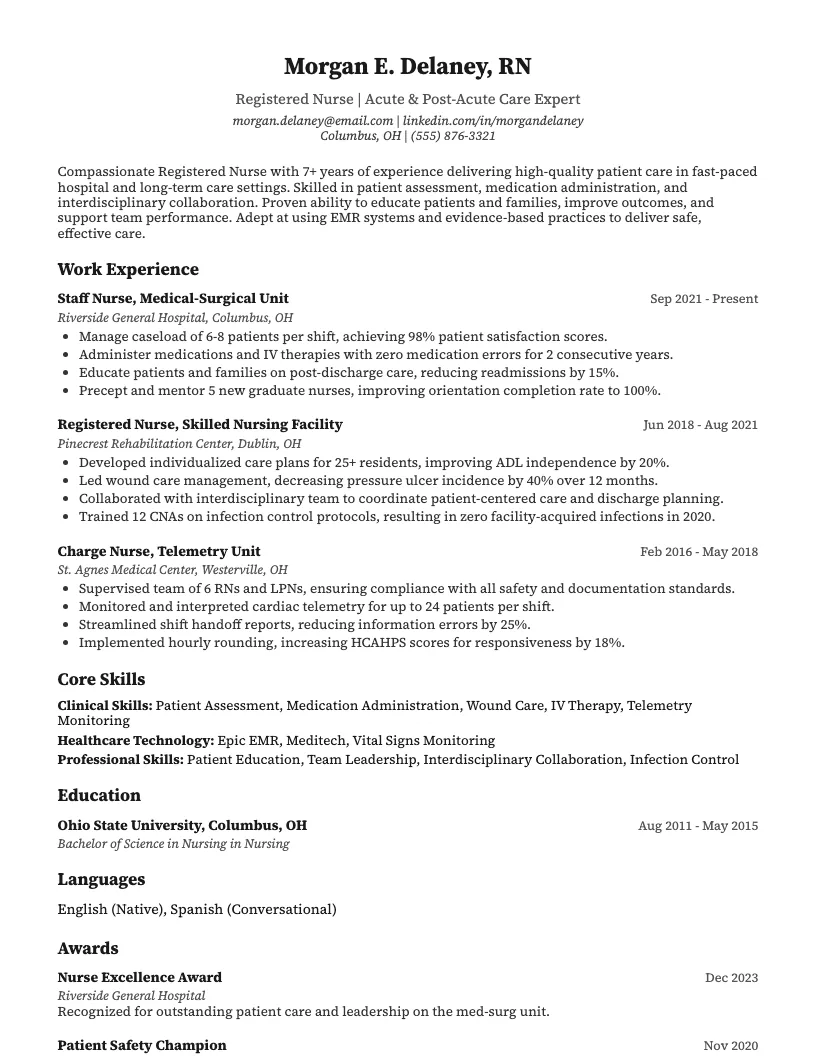
Nursing and healthcare
Bedside manner is the whole job, not a bonus. You're delivering hard news, calming someone who's scared, and reading a patient's face when they won't say they're in pain - that's empathy and non-verbal communication doing real work, not soft extras.
Cultural competency matters here too: knowing how to talk to patients from backgrounds different from yours, without assuming.
Social work
Same instinct as nursing, pointed at systems instead of symptoms. You need conflict resolution for families in crisis and enough self-awareness to not carry every case home with you.
Teaching
You're managing a room, not just delivering content. Good teachers translate the same idea five different ways until it lands, then handle the parent email that follows.
That's adaptability plus dependability, and a job posting for a teacher will usually spell out which one it wants more of.
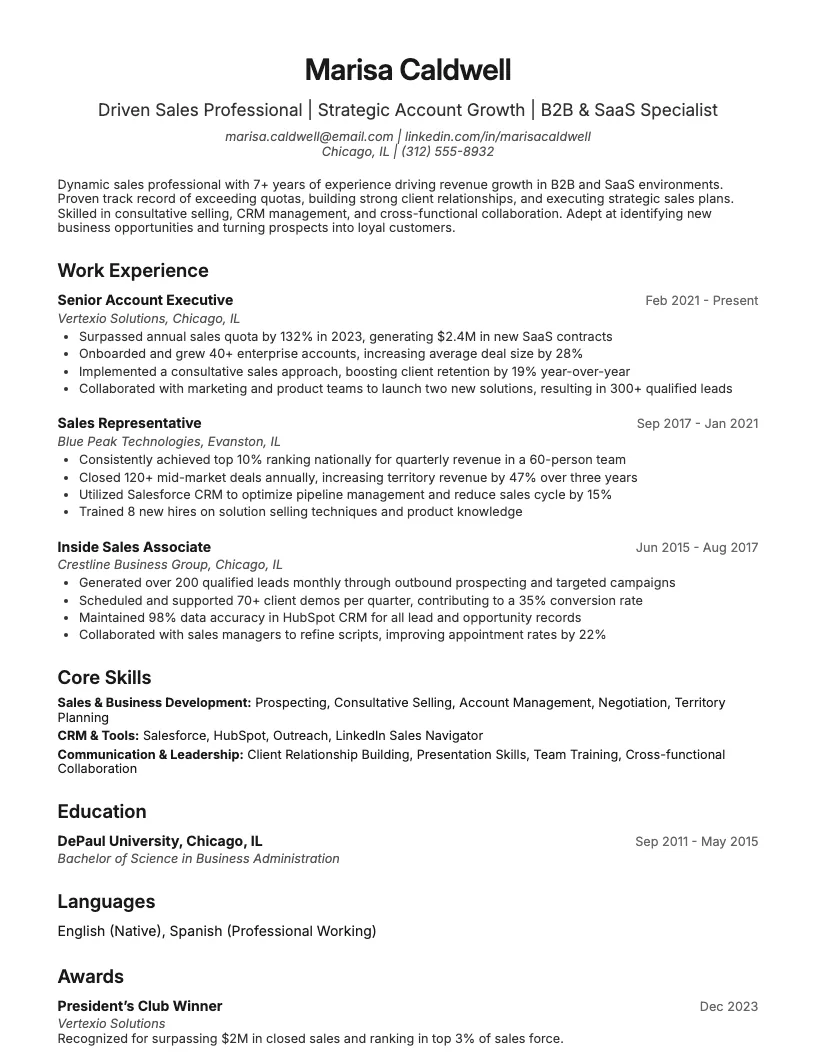
Sales
Sales runs on speed. You've got seconds to build enough trust that someone keeps talking to you, and reading a stranger's body language - are they open, are they already walking away - is a real, testable interpersonal skill, not a personality trait.
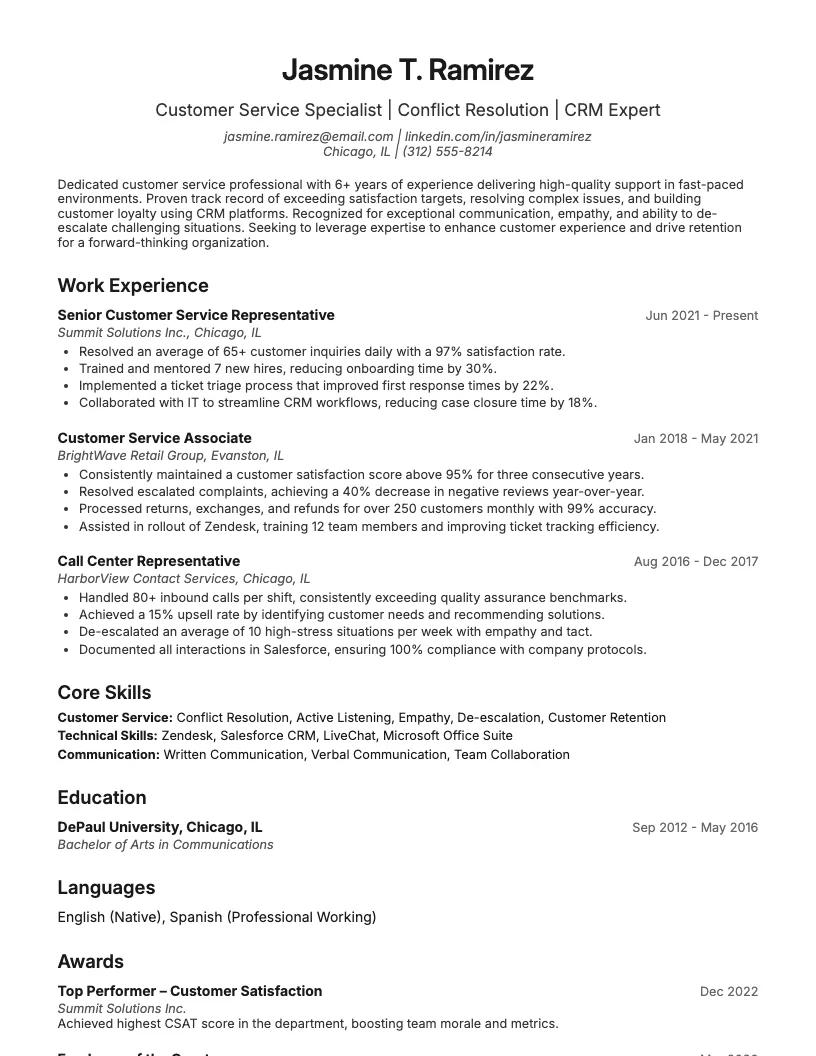
Customer service
I've seen the same scenario a hundred times: someone's angry about a charge that isn't even your fault. The rep who keeps their job calm and assertive, walks through the fix, and stops it from happening again is running conflict resolution and empathy at the same time.
Human resources
HR sits between the business and the employee, which means every hard conversation has two sides you have to hold at once. That's negotiation and problem-solving more than anything on a typical soft-skills list.
Management and team leads
Here's the pattern I see constantly: someone gets promoted for technical skill, then struggles because leading a team is an interpersonal job. Reading a quiet team member's body language before they burn out is leadership in practice, not theory.
If a posting names three of these skills specifically, run your resume against it - ResumeJudge will tell you which ones are missing before a recruiter does.
Remote and hybrid roles
Distance removes most of your usual cues, so what's left has to work harder. Which habits keep the skill sharp at a distance is answered in common questions.
How do you put interpersonal skills on a resume?
How do you put interpersonal skills on a resume?

Three places, and most people only use one. Put your strongest interpersonal skills in a dedicated skills section, one line in your summary, and then - this is the part almost everyone skips - proof of them inside your work experience bullets.
Where they go: skills section, summary, or work experience
The skills section is for scanning. It's where a recruiter or an applicant tracking system checks whether the words on the job posting show up on your page.
Your summary gets one, maybe two, tied to the role you want. Work experience is where you prove it happened.
Pick the ones the job posting names
Don't list every skill from the types section above. Match the posting.
If it says "collaborative," use collaborative. If it says "cross-functional," use that exact phrase.
I've watched resumes get skipped over a mismatch this small - an ATS looking for "conflict resolution" doesn't credit "handles disagreements well."
Checking your resume against the actual posting by hand is slow, and it's easy to miss two or three terms. That's the exact gap ResumeJudge is built to catch and fix - it flags which of the posting's skills your resume doesn't have yet, then rewrites your resume to include them.
Turn a skill into a bullet with a result
A skill on its own is a claim. A bullet with a number is evidence.
"Collaborated with designers, copywriters, and strategists on a rebranding initiative that increased website visits by 30%" does more work than "team player" ever will.
Words to use instead of 'good with people'
Skills-section wording
Good with people
Diplomatic, approachable, and a clear communicator
Swap it for the skill underneath: collaborative, persuasive, diplomatic, approachable, a clear communicator. Each one is checkable in a way "good with people" isn't.
Example skills section
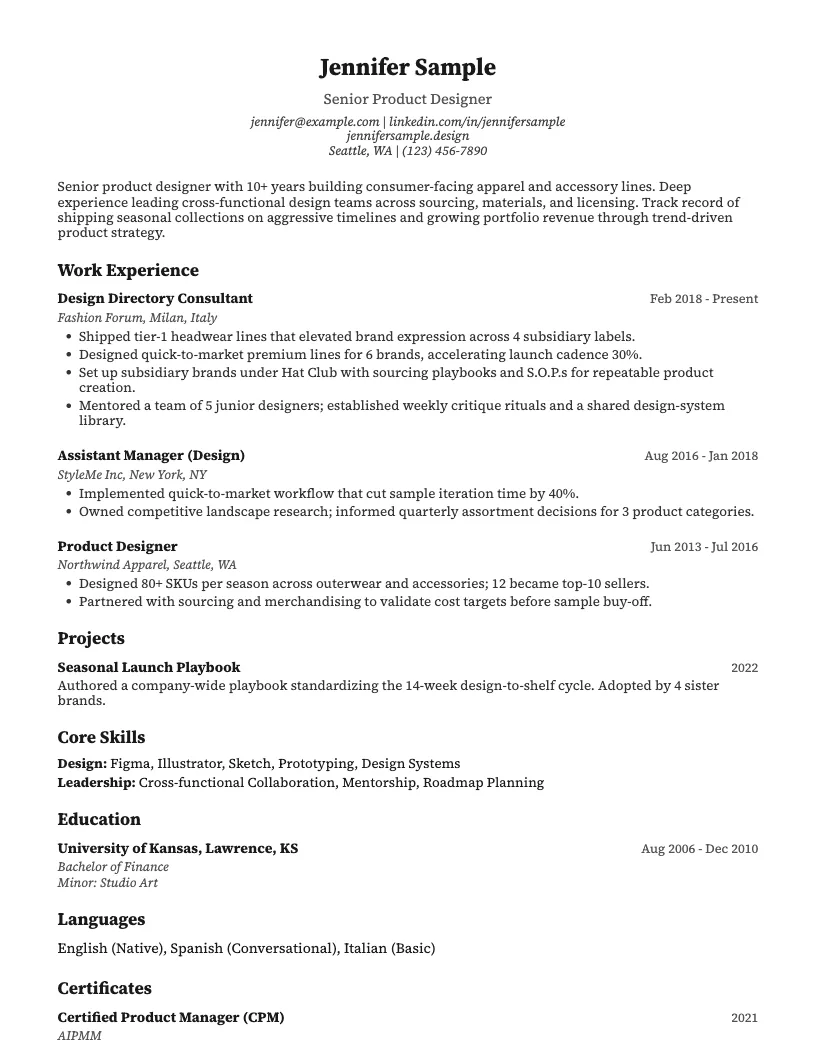
Active listening · Conflict resolution · Cross-functional collaboration · Client relationship management · Team leadership
Example work experience bullets
- Resolved recurring scheduling conflicts between two departments by proposing a shared calendar system, cutting missed handoffs by half
- Mentored three new hires during onboarding, all of whom hit full productivity within their first month
What not to do: a list of adjectives with nothing behind them
"Excellent communicator, team player, people person" with no bullet backing any of it up is the single most common mistake I see. It reads as filler because it is filler.
Every claim needs a bullet somewhere on the page that backs it up, or cut it.
How do you improve your interpersonal skills?
How do you improve your interpersonal skills?
You don't fix this by reading about it once. You fix it by picking one habit and running it for a month.
Practise listening without planning your reply
Here's the tell I look for in interviews and in meetings: does the person answer the question you asked, or the question they were already planning to answer?
Most people are drafting their next sentence while the other person is still talking. Stop doing that.
Let the sentence finish, pause a beat, then respond. It feels slow the first few times.
It isn't - it's the whole skill.
Ask for feedback from someone who will be honest
Not your biggest fan. Someone who'll actually tell you that you interrupt, or that you go quiet in tense moments.
Fifteen minutes a quarter with that person will teach you more than a workshop.
Watch your own body language
Crossed arms, a flat voice, checking your phone mid-conversation - none of it needs a word to land badly.
Match your body to your message before you worry about the message itself.
Say no clearly and without apology
Nine times out of ten, the person struggling with "assertive" on their resume just means they can't turn down a request. Practice the plain version: "I can't take this on right now" - no over-explaining, no three-paragraph justification.
Clear beats polite here.
Find a mentor
Pick someone whose people skills you actually admire, not just someone senior. Ask them how they handled a specific tense moment, not for general advice - general advice is forgettable, a real example isn't.
Prepare for a difficult conversation before you have it
Decide your one main point, pick a time and place that isn't a hallway, and stick to facts instead of accusations. Walking in with a plan is the difference between a conversation and a blow-up.
If you are an introvert
You're not starting from a deficit. Listening is most of this list, and it's built by practice rather than handed out by temperament.
You don't need to become louder - you need fewer, better interactions, not more of them.
Once you've picked which of these to work on, the skills section is where it needs to show up on paper - ResumeJudge will flag any a posting asks for that you haven't proven yet and rewrite the section to prove them.
Frequently Asked Questions
Is negotiation an interpersonal skill?
Yes, negotiation is an interpersonal skill. It combines listening, reading the other person's position, and staying calm while working toward an outcome both sides can accept, so it draws on the same abilities as persuasion and conflict resolution.
Are interpersonal skills the same as soft skills?
No, they're related but not the same thing. Soft skills is the broader category, covering things like time management and adaptability that don't require another person; interpersonal skills are the part of that category specifically about interacting with other people.
Are interpersonal skills the same as emotional intelligence?
No, they're closely linked but distinct. Emotional intelligence is about recognizing and managing emotions, your own and other people's; interpersonal skills are what you do with that awareness, the actual communicating and relationship-building that happens as a result.
How many interpersonal skills should I list on my resume?
There's no fixed number, but three to five is a reasonable range for one resume. Listing more than that turns into a wall of adjectives nobody reads, so pick the ones the job posting actually asks for, which you can check with a tool like ResumeJudge that flags what's missing against a posting.
Can you learn interpersonal skills, or are you born with them?
You can learn them. Some people start with an easier temperament for it, but skills like active listening, giving feedback, and reading a room are built through practice and repetition, not fixed traits you're stuck with.
How do I show interpersonal skills in an interview?
Show them through how you answer, not just what you say. Tell a specific story about a time you resolved a conflict or led a group, and pay attention to how you're actually listening and responding to the interviewer in the moment, since that's a live demonstration of the skill itself.
How do I keep interpersonal skills sharp when I work remotely?
Choose a video call over a written message whenever something matters, since tone gets lost in text and misreads easily. Keeping up regular one-on-ones and informal check-ins with teammates keeps the skill in use even without an office around you.
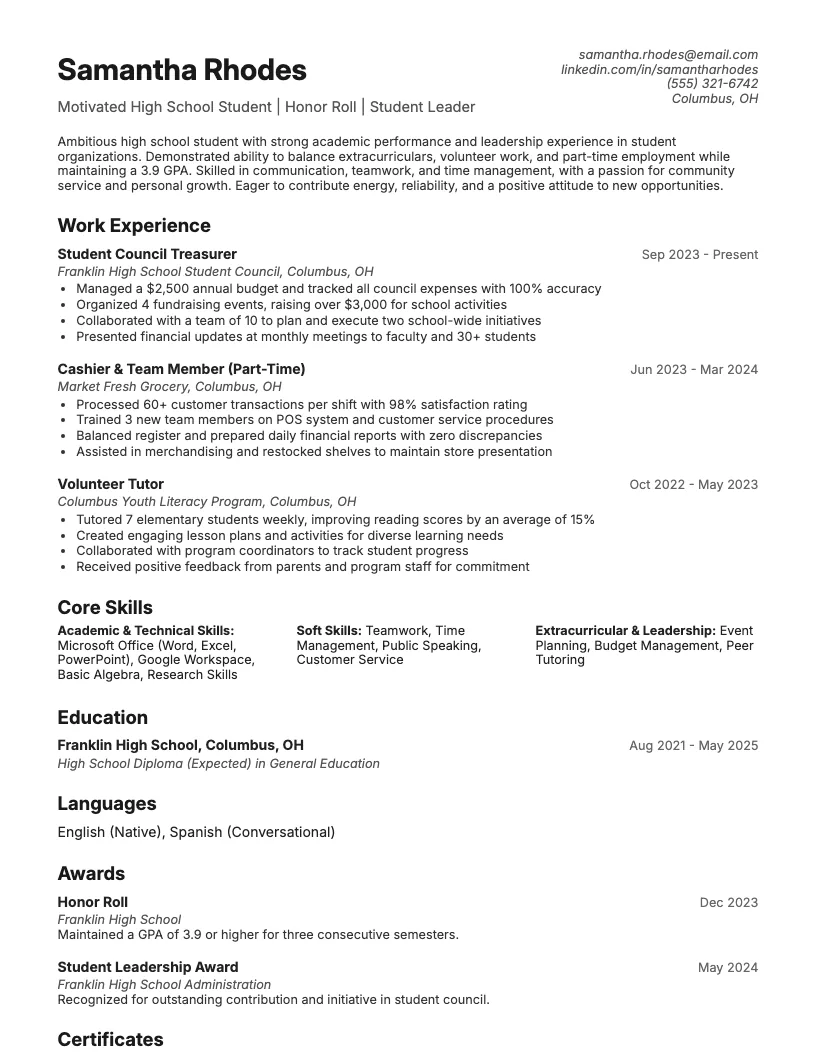
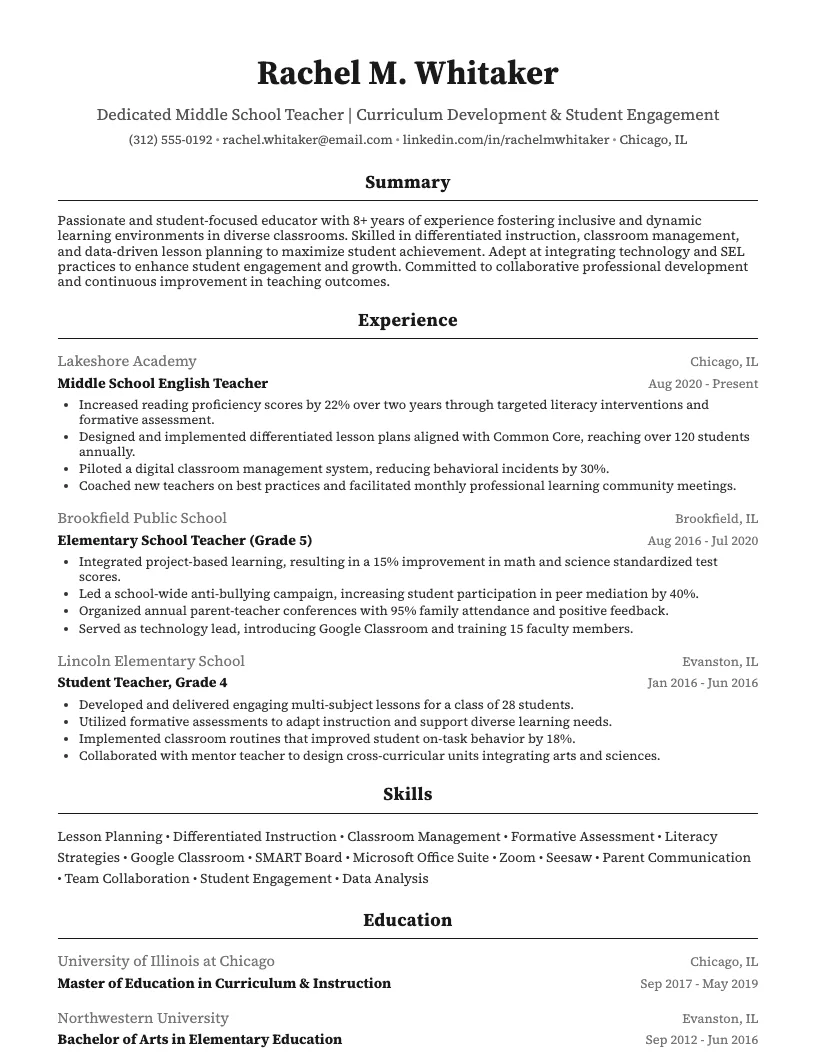
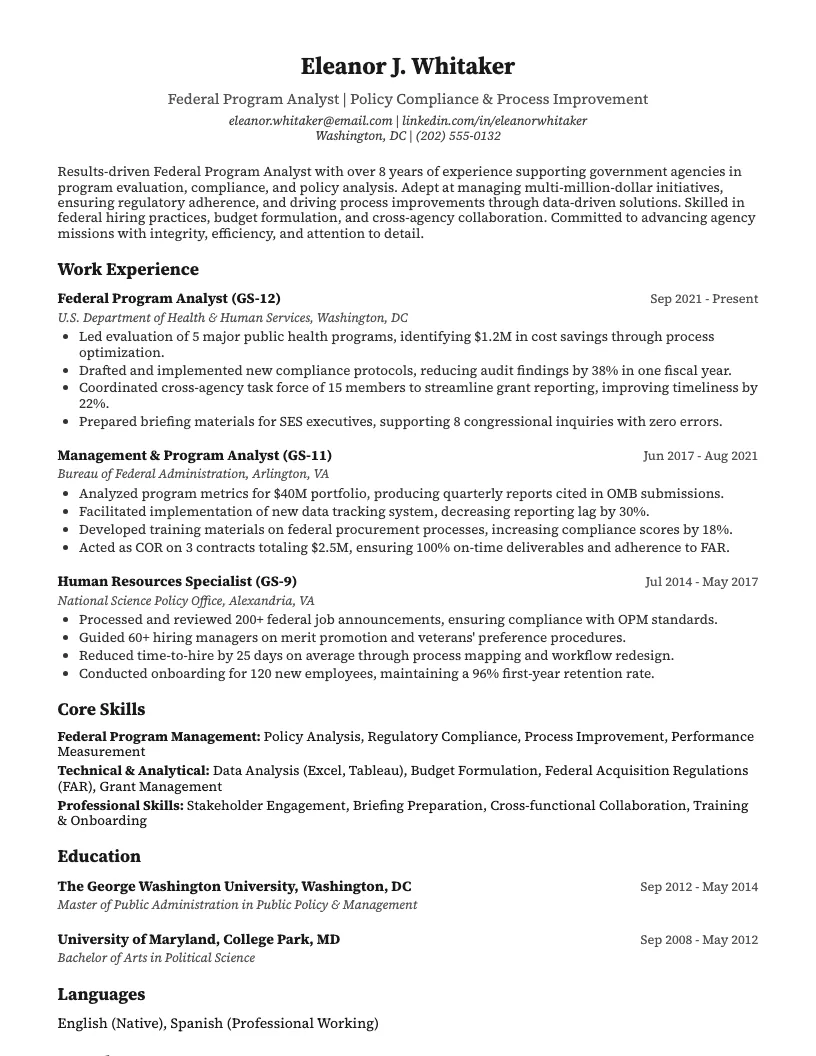
See these skills on a real resume
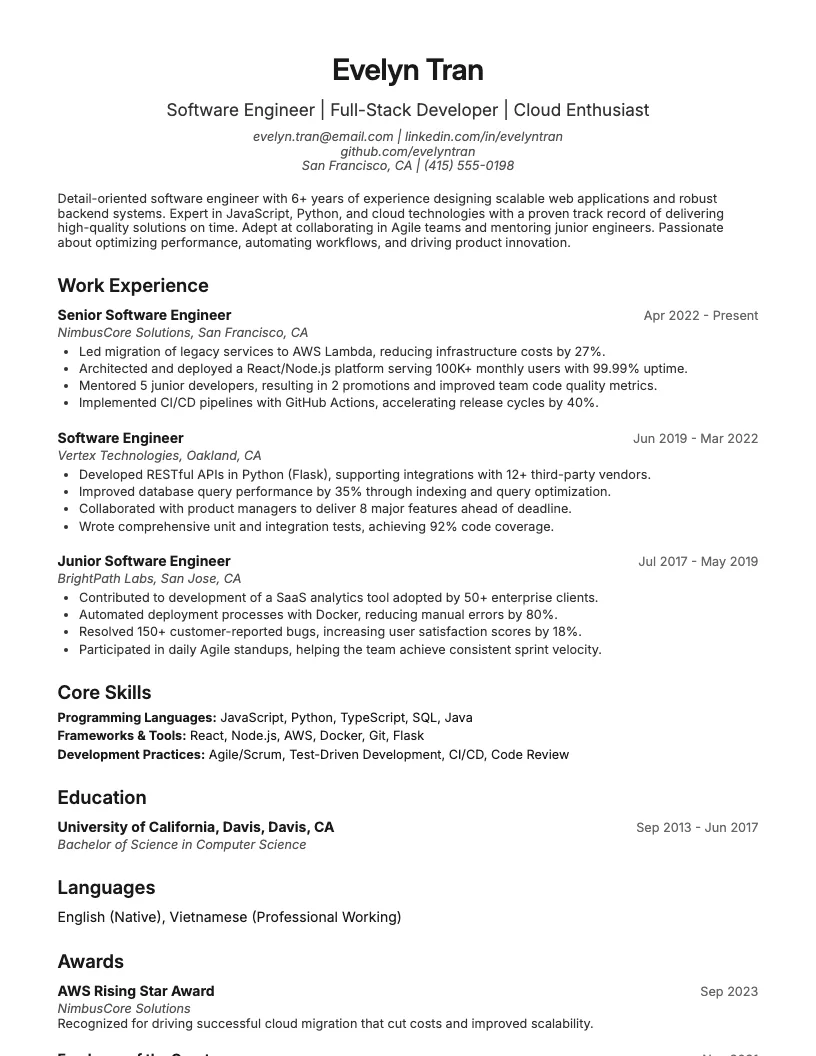
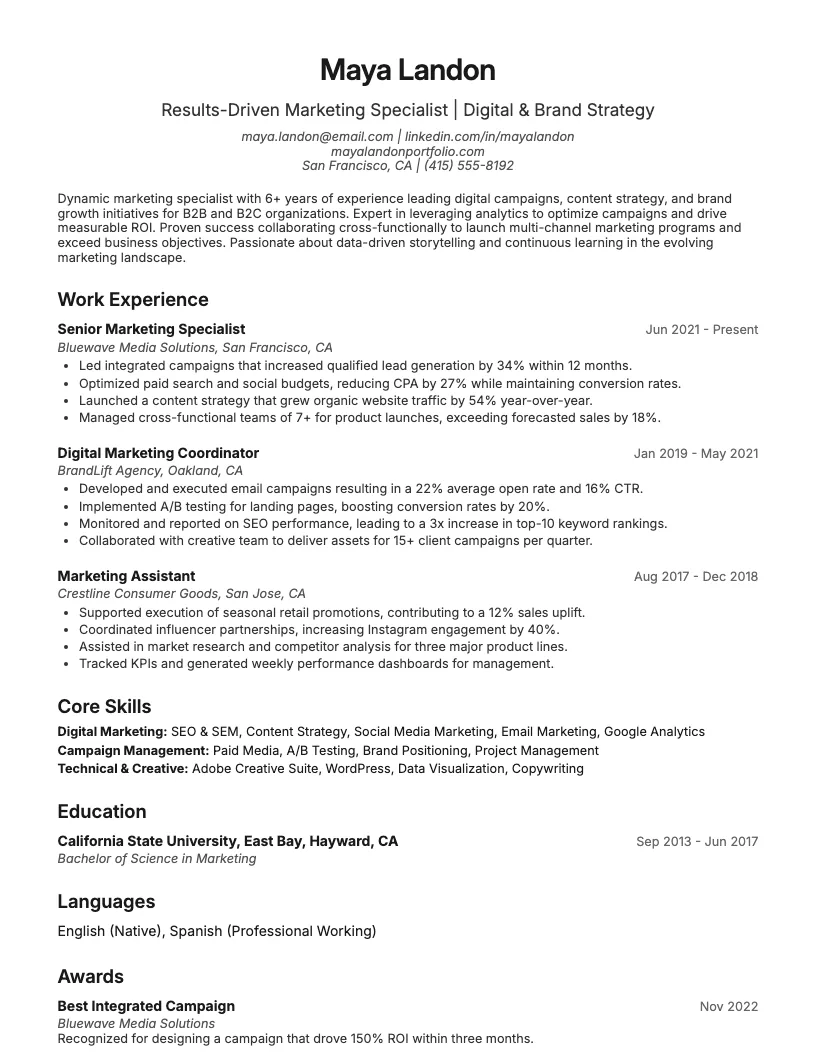
8 examplesStart from an example that already has them, and swap in your own.
Check your resume against the job you want
Scan your resume, see which skills and keywords the posting asks for that you are missing, and fix them before you apply.
Free to use • No credit card required