Communication Skills Resume: 11 Skills I'd Actually List [4 Types]
See all 11 communication skills recruiters look for, the 4 types they break into, and how to write resume bullets that actually prove you have them on the page.


Written by Dr. Priya Sharma
Career Development Expert & Resume Analyst
Updated August 2026
Reviewed by Sarah Chen
Is your resume ATS-friendly?
Drop your resume in and see which of these skills a scanner can actually read, and which ones the job you want is asking for that you have not listed.
PDF or DOCX. Max 2MB.
We never share your resume or use it to train a model.
In This Guide:
What are communication skills on a resume?
I've read thousands of resumes, and "communication skills" is the phrase I trust least. It's on almost every one, and it usually means the person didn't know what else to put.
Real communication skills break into four kinds, and a strong resume proves at least two of them without ever using the word "communication."
Verbal communication
This is speaking: presenting to a room, walking a client through a problem, talking a customer down from a complaint.
If you've led a meeting, trained someone, or pitched an idea out loud, that's verbal communication. Say what you did instead.
Written communication
Emails, reports, proposals, documentation. Anything you typed that someone else had to read and act on.
A resume with a typo undercuts this one instantly, so proofreading matters more here than anywhere else on the page.
Nonverbal communication
This is the part that happens in tone, body language, and eye contact rather than in the words themselves. You can't put "good eye contact" on paper, but you can describe roles where reading a room mattered: de-escalating a customer, sensing when a client was unsure, adjusting a pitch mid-meeting.
Interpersonal communication
This is the glue skill: collaborating with a team, resolving conflict, building trust with a stakeholder. It shows up less in what you said and more in how a working relationship went.
Why "excellent communication skills" on its own says nothing
Nine times out of ten, when I see that phrase alone, there's no bullet nearby that backs it up. A hiring manager reads it as filler and moves on.
If a posting asks for communication skills, the fix isn't a stronger adjective, it's a bullet that shows the skill in action. ResumeJudge will pull the exact wording a posting uses and flag whether your resume actually backs it up before you send it.
Which communication skills should you put on your resume?
There isn't one list of communication skills - the job decides which ones matter. Below are the eleven I see land the most across job postings, so pull whichever match yours.
Active listening
Active listening isn't "I stayed quiet while someone talked." It's asking a follow-up question, then repeating back what you heard so the other person confirms you got it right.
On a resume, that shows up as a bullet where you caught something others missed because you actually listened to a client, a patient, a teammate - not as the phrase "active listener" sitting on its own.
Written communication
The full breakdown of written communication is above; on the resume, name the specific thing you wrote.
Presentation and public speaking
This one covers more ground than most people think - pitching to a client, updating leadership, training new hires, running a team meeting. All of it counts.
Name the audience. "Presented to executive leadership" reads completely differently than "presented to five coworkers," and hiring managers notice the difference immediately.
Negotiation
Negotiation isn't just sales and procurement. Any job where you talk someone into a deadline, a budget, a scope change, or a compromise uses it.
The mistake I see most often: people list "negotiation" with no outcome attached. Put a number on what you actually got - a price, a timeline, a percentage - or leave the skill off entirely.
Conflict resolution
Every workplace has friction, and employers specifically look for people who can defuse it instead of adding to it. That's what this skill is actually selling.
If you settled a dispute between coworkers, calmed down an angry customer, or got two teams pointed the same direction again, that's your bullet.
Empathy
Empathy is the skill that quietly separates good managers and good coworkers from everyone else - seeing a situation from someone else's side before reacting to it.
It's hard to prove with one line, so pair it with an action: adjusted your approach for a struggling teammate, or caught a customer's frustration before it became a complaint.
Giving and receiving feedback
This is a two-way skill, and most resumes only cover half of it. Giving useful, specific feedback matters, but so does taking it well and actually changing something because of it.
I like seeing both sides on a resume - a line about coaching a teammate, and a line about acting on a manager's note that improved your output.
Persuasion
Persuasion is what turns a good idea into a green light - getting a boss, a client, or a room full of skeptics to say yes. Sales roles lean on it hardest, but it shows up everywhere ideas need buy-in.
If you talked leadership into a new process or got a client to expand a contract, that's persuasion doing real work - say so.
Cross-cultural communication
If you've worked with international teams, clients abroad, or a workforce from different backgrounds, this is worth calling out - it's not a skill every candidate can claim.
Keep it specific: which markets, which teams, what you adjusted to make it work.
Client and stakeholder communication
This is the skill that shows up on nearly every job posting for a client-facing or cross-functional role, so it's worth checking the listing for the exact wording before you write your version.
If you managed a client relationship, briefed executives, or kept a project moving between departments, that's stakeholder communication - and it belongs on the resume in those terms, not a vaguer stand-in. Running your draft against the actual posting is exactly the kind of check ResumeJudge does - it flags when a skill like this is asked for but missing from your resume.
Second-language fluency
Fluency in another language is a real communication skill, not a footnote - list the language and your level (conversational, professional, fluent) so it reads as concrete rather than decorative.
For client-facing, healthcare, or international roles, this can be the line that gets a second look, so don't bury it at the bottom of the page.
How do you pick which ones to list for the job you want?
Which communication skills to lead with, by job type
| Job type | Skills to lead with |
|---|---|
| Remote | Written communication, async updates |
| Customer-facing | Active listening, de-escalation |
| Sales | Persuasion, negotiation |
| Management | Feedback, presentation skills |
| Technical | Writing for non-technical readers |
| Healthcare/teaching | Empathy, cross-cultural communication |
Nine times out of ten, the resume in front of me lists the same five communication skills regardless of what job it's aimed at.
That's the tell of a resume that was written once and sent everywhere.
Pull the wording straight out of the job posting
Open the posting and underline every word that describes how the person will talk, write, or work with others.
If it says "collaborates cross-functionally," write cross-functional communication, not teamwork.
If it says "client-facing," don't write interpersonal skills and hope that covers it.
Matching the exact wording is what makes a hiring manager feel like you read the posting instead of guessing at it.
I'll run a resume against the actual posting in ResumeJudge and it'll flag the wording you're missing, then work those phrases into the resume for you - it's usually two or three, not a full rewrite.
Three to five, not fifteen
Pick three to five. I've seen resumes list twelve communication skills and it reads as noise, not evidence - the reader can't tell which ones actually matter to you.
Five specific, job-matched skills beat fifteen generic ones every time.
Skills for a remote job
Remote roles live or die on written communication. Lead with that: async updates, documentation, clear written status reports.
Verbal skills matter less when most of your day happens in a chat thread or a doc.
Skills for a customer-facing job
Active listening and de-escalation. If you've read what these skills mean, this is where the softer ones - patience, tone, reading a frustrated customer - actually earn their spot.
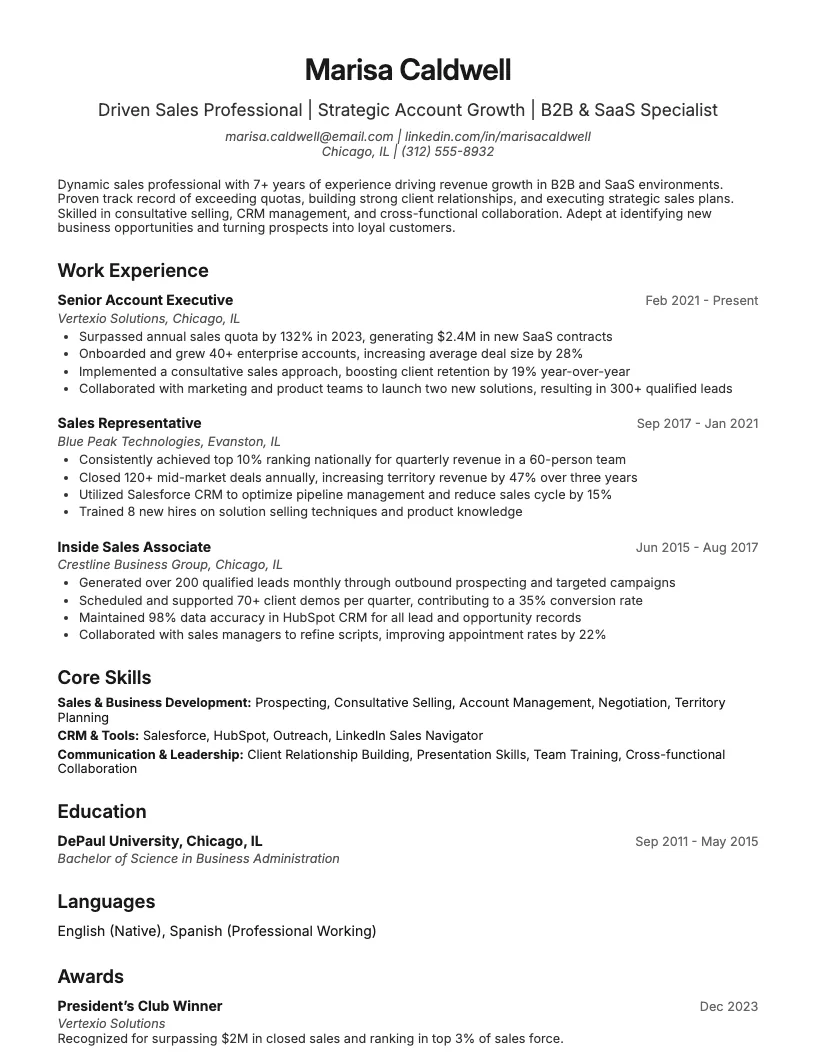
Skills for a sales job
Persuasion and negotiation, full stop. A sales resume that lists "communication skills" instead of naming the specific ability to move someone from no to yes is wasting the line.
Skills for a management job
Giving and receiving feedback, and presentation skills for when you're the one running the meeting. Add conflict resolution if you've managed a team of any size - every manager has needed it.
Skills for a technical job
Written communication, specifically the kind that explains a technical decision to someone non-technical. That's the skill hiring managers are actually screening for, more than jargon-free writing in general.
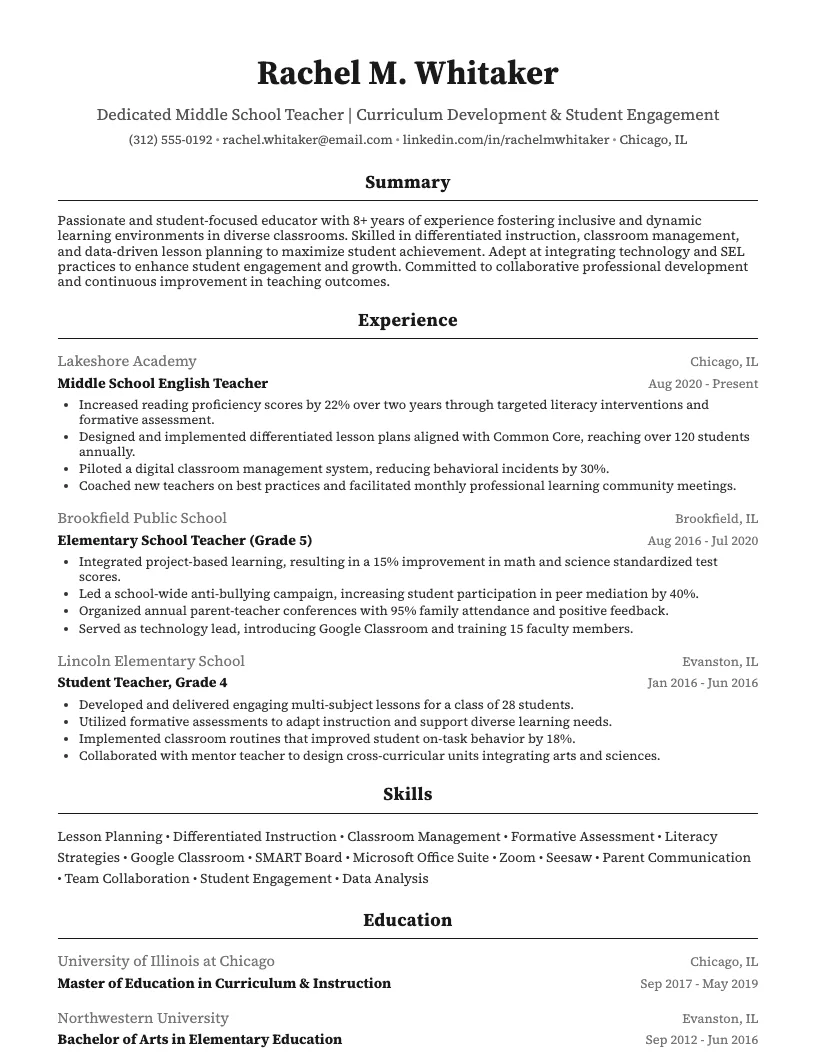
Skills for a healthcare or teaching job
Empathy and cross-cultural communication. You're explaining complex information to people under stress or at very different starting points, and that's a distinct skill from general written or verbal ability.
Where do communication skills go on a resume?
Where do communication skills go on a resume?

They go in four places, and most resumes I see only use one of them.
In the skills section
This is the easy spot, and it's fine as a start.
Pair each skill with a phrase that shows it in action instead of just naming it - "active listening: ran team retros, resolved two recurring workflow conflicts" beats "active listening" sitting alone on a line.
If you're short on space, check how many to list rather than cramming in ten.
In the summary at the top
A recruiter reads your summary before anything else, so put one communication skill there if it's central to the job - a sales manager naming a close rate, a nurse naming patient communication.
Three or four sentences, no more.
Inside your work experience bullets
This is where communication skills actually convince someone, because a bullet describing a real result carries more weight than a line in a list.
"Negotiated vendor contracts, cutting costs 12%" proves negotiation skill without ever using the word "negotiation" as a label.
In the education section if you are a student
If you have no work history, how to prove communication skills without a job further down covers what counts as evidence and how to write it up.
Keep the education section near the top of the page until you have enough work experience to push it down.
How the resume itself proves you can write
Here's the part people miss: your resume is a writing sample whether you meant it to be or not.
What that costs you when the writing slips is covered in claiming written skill on a resume with typos, and the case against proving one skill over and over is in repeating the same skill in every bullet. If you're not sure your wording matches what the posting is actually asking for, running the resume against the job description in ResumeJudge will rewrite the wording to match before a recruiter ever sees the gap.
How do you write a communication skills bullet point?
Most communication bullets fail for the same reason: they name the skill and stop there.
"Strong communicator" tells a hiring manager nothing they can act on.
The fix is always the same shape - name the skill, then show what you did with it, then say what happened.
Name the skill, then the thing you did with it
Don't make the reader guess which skill a bullet is proving.
Say it up front: "Active listening: resolved recurring client complaints by..." or "Written communication: drafted the weekly all-staff update that..."
That framing does double duty - a scanner matches the skill word, and a human sees the proof right next to it.
Put a number on it
I've read hundreds of these, and the ones that stick always have a number in them.
Followers grown from 5,000 to 25,000. Retention up.
Response time cut in half.
If you don't have a metric, count something - meetings run, proposals written, people trained. A resume built in ResumeJudge will flag bullets like these and rewrite them with the result attached, not just the label.
Action verbs that work for communication bullets
Skip "responsible for." Open with what you did: launched, resolved, negotiated, briefed, drafted, presented, persuaded.
Vary them across the resume - repeating "communicated" in every bullet reads as one skill dressed up six ways, not six accomplishments.
Weak bullet vs strong bullet: active listening
Active listening bullet
Good listener, works well with others.
Used active listening in client calls to catch recurring complaints early, cutting escalations by a third.
Weak: "Good listener, works well with others."
Strong: "Used active listening in client calls to catch recurring complaints early, cutting escalations by a third."
Weak bullet vs strong bullet: presenting
Presenting bullet
Comfortable presenting to groups.
Presented quarterly results to senior leadership and fielded live Q&A from a 40-person room.
Weak: "Comfortable presenting to groups."
Strong: "Presented quarterly results to senior leadership and fielded live Q&A from a 40-person room."
Weak bullet vs strong bullet: negotiating
Negotiating bullet
Strong negotiation skills.
Negotiated vendor contracts down 12% while keeping delivery timelines intact.
Weak: "Strong negotiation skills."
Strong: "Negotiated vendor contracts down 12% while keeping delivery timelines intact."
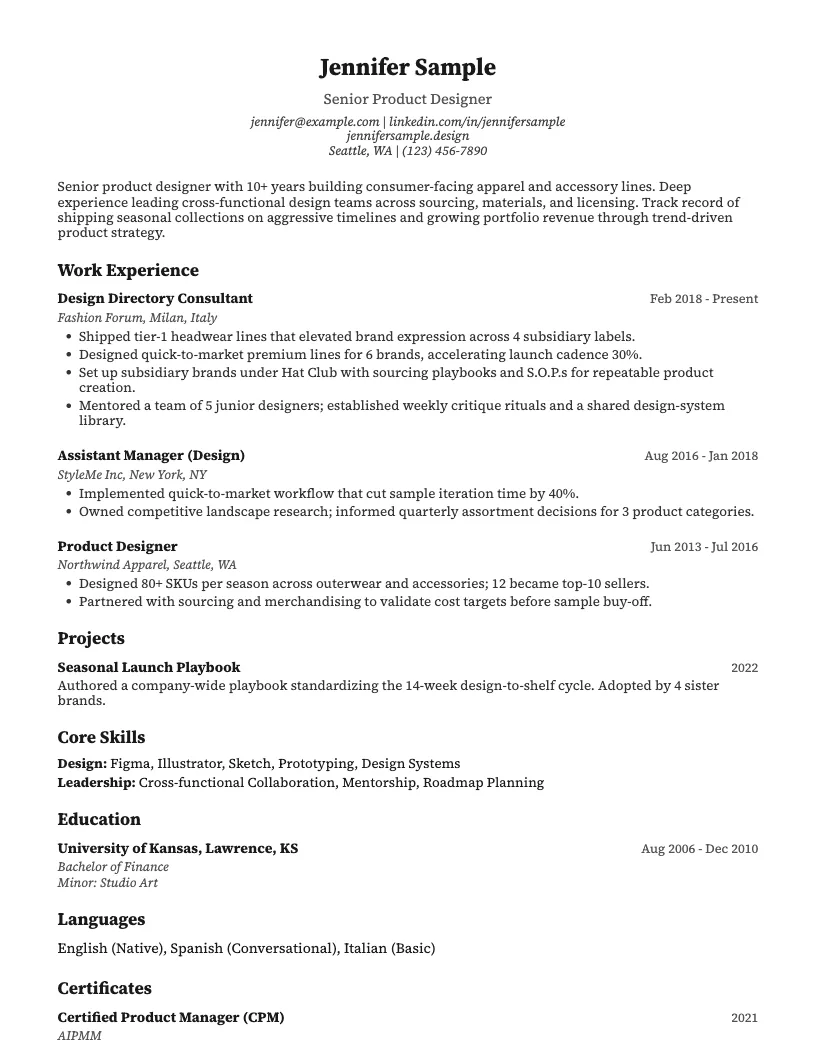
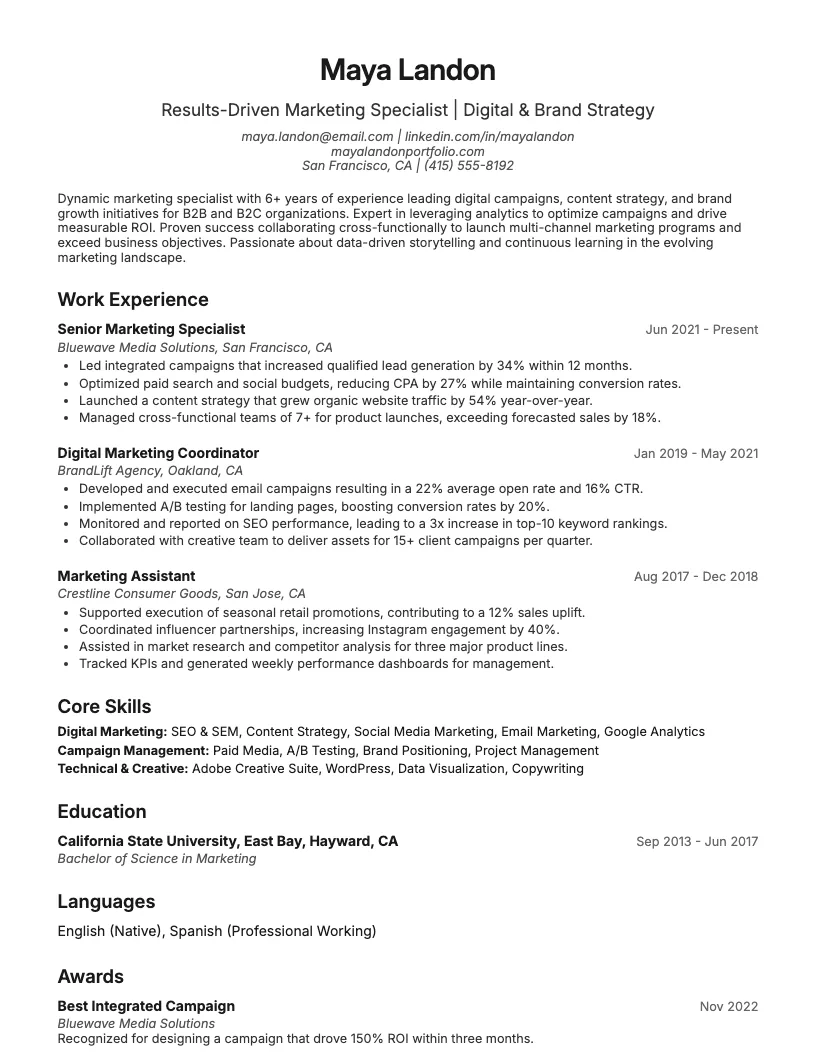
What do communication skills look like on a real resume?
Is your resume good enough?
Drop your resume in and see which of these skills a scanner can read, and which ones the job you want is asking for that you have not listed.
Upload your resumeFree. PDF or DOCX. We never share your resume or use it to train a model.
Reading about communication skills is one thing. Seeing them on an actual resume is what makes the advice click, so here are real examples across a few different situations.
Summary example: office manager
"Detail-oriented office manager with 10 years of experience managing office operations and interdepartmental communications. Managed a 21-person team responsible for $123 million a year in accounts.
Researched, drafted, and implemented interoffice communication changes that cut waste by 22% and increased departmental revenue by 19% in the first year."
Notice what's missing: no "excellent communicator" anywhere. The numbers do that job instead.
Summary example: nurse
"Compassionate registered nurse who builds trust with patients and families through clear, empathetic communication, backed by five years of bedside patient-care experience." Empathy reads as real here because it's tied to patients, not floating on its own.
Summary example: sales manager
"Persuasive sales manager with a 72% close rate, known for translating technical product details into terms clients act on." One stat and the sentence earns its keep.
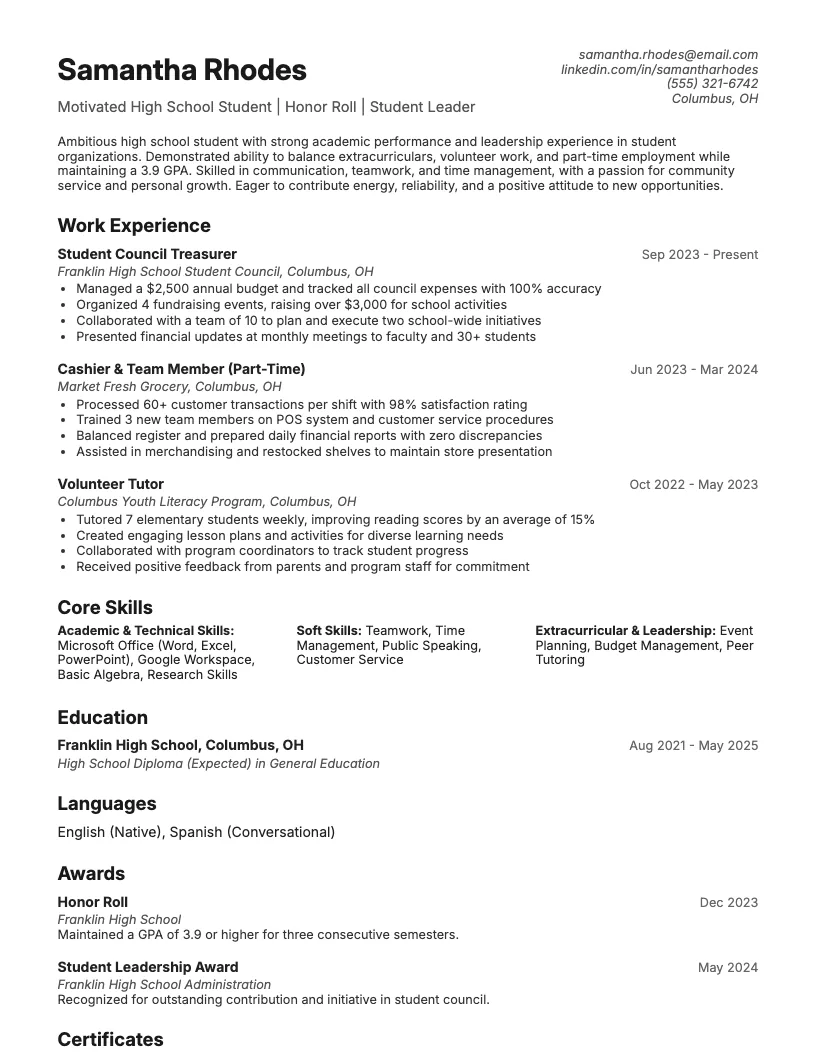
Summary example: student with no work history
"Communications student with strong written and verbal skills built through coursework, group presentations, and a part-time retail role handling 50+ customer interactions a shift." No job history, still specific.
Skills section example
A core competencies block for an office role might read: copywriting, email management, media communications, presentations, team building, training management, organization, scheduling. That's eight, more than I'd actually keep - see three to five, not fifteen for why I keep telling people to cut this list down.
Work experience bullets example
Worked examples of a work experience bullet, each one weak version next to strong version, are in how do you write a communication skills bullet point?.
Cover letter example line
"In my last role, I rebuilt our team's weekly reporting process, which cut review time by half and became the template two other departments adopted." One line, one concrete outcome - that's the whole trick.
How do you prove communication skills with no work experience?
How do you prove communication skills with no work experience?
If you've never had a job, "excellent communication skills" on a resume is just a claim nobody can check. What you need instead is a place you actually used the skill - and most students have more of those than they realize.
Coursework and class presentations
A capstone presentation, a thesis defense, a class you led a discussion in - these count.
Name the class, the audience size if you had one, and what you presented. "Presented final research to a class of 40" is a real bullet, not filler.
Group projects
Group work is where most students first practice negotiation and conflict resolution, even if they never called it that.
If you kept a team on schedule, split up work, or talked two people out of a disagreement, that's a bullet - just say what you did, not that you were "a team player."
Part-time and retail jobs
I've seen dozens of student resumes skip the coffee-shop or retail job because it feels irrelevant. It isn't.
Retail and food service are communication jobs - you talked to strangers all day, handled complaints, trained someone new. That's active listening and customer communication, and it belongs on the resume.
Volunteering and club roles
Ran a club's social media, organized a fundraiser, spoke at a meeting - unpaid work proves the skill just as well as paid work does.
Treat it exactly like a job: title, what you did, a number if you have one (members recruited, funds raised, event turnout).
Internships
Even a short internship usually has a communication moment worth a bullet - a client email you wrote, a meeting you sat in and took notes for, a report you helped draft.
Writing samples and a portfolio link
If you're claiming written communication, a link to a writing sample - a blog, a class paper, a portfolio site - backs it up in a way the word "written" on its own never will.
Once you've got a draft, run it against a real job posting - ResumeJudge will rewrite it so the skills you've listed actually match what the posting is asking for, which matters more than sounding impressive in the abstract.
What gets communication skills cut from a resume?
I've read enough of these to know the cuts happen fast, often in the first ten seconds. Here's what gets a line struck out.
"Excellent communicator" with nothing behind it
This is the single most common flag I raise. The claim sits there unproven, and a recruiter has no reason to believe it over the next twenty resumes that say the same thing.
Back it with an outcome instead - a presentation you gave, a client you talked down from cancelling, a report people actually read.
Listing all fifteen skills at once
If your skills section reads like a thesaurus entry for "communication," none of it lands. Space on a resume is limited, so every word has to earn its place.
Pick three to five that match the job and cut the rest.
Skills the job never asked for
Second-language fluency is a great skill. It's dead weight on a posting that never mentions clients, travel, or multilingual teams.
Match what you list to what the posting actually asks for - ResumeJudge will check your skills list against a job description and rewrite it so only the ones pulling weight make the cut.
Claiming written skill on a resume with typos
I've seen this one kill a resume outright. You can write "strong written communication" all you want - one typo two lines later and the reader stops believing you.
The resume is the writing sample. Let it prove the claim before you say it.
Repeating the same skill in every bullet
One "collaborated cross-functionally" is fine. Four of them in a row reads like you only know one verb.
Vary what you're proving - listening in one bullet, persuasion in the next.
Wording that does not match the posting
If the job ad says "stakeholder management" and your resume says "people skills," that's a gap a scanner - and a tired recruiter - won't bridge for you. Mirror their language.
Frequently Asked Questions
How do I say I have good communication skills without sounding generic?
Name the specific kind of communication instead of the general phrase - written, verbal, presenting, or negotiating - and show it doing something, like resolving a client complaint or presenting to a group. "Strong communication skills" on its own tells a hiring manager nothing they can picture. Naming the type and the moment does.
How many communication skills should I list?
Three to five is enough, picked to match what the posting actually asks for rather than every soft skill you can think of. ResumeJudge will show you which communication skills a given posting calls out, so you're not guessing which ones to keep.
Can I put communication skills in their own section?
Yes - a soft skills section, your summary, or your work experience bullets are all fair places for them. If the role is writing-heavy, pair the section with a portfolio or writing sample so the claim has something behind it.
How do I describe my written communication skills?
Use a concrete descriptor - advanced, proven, professional - and attach it to something you actually wrote: a report, a proposal, client emails. A portfolio or writing sample backs the claim up far better than the adjective alone.
Are communication skills more important than technical skills?
Neither outranks the other - they do different jobs on your resume. Technical skills show you can meet the role's requirements; communication skills show you can work with the people around you. A resume that's all one or the other reads as incomplete.
How do I quantify a communication skill?
Attach a number to the outcome, not the skill itself - a customer satisfaction score, a retention rate, how many people you trained or presented to. "Presented weekly updates to a 20-person team" proves the skill in a way "good presenter" never will. ResumeJudge can flag bullets like this that are still sitting on adjectives instead of numbers.
Should communication skills go in my cover letter too?
Yes, especially for customer-facing roles - a cover letter has room for a short story your resume bullets don't, like a specific instance where your communication solved a problem. Save the resume for the compressed, numbers-first version and let the cover letter carry the narrative one.
How do I back up these skills in the interview?
Have two or three real examples ready before you walk in, each one a situation, what you did, and what happened as a result. "I used active listening to de-escalate a customer complaint" lands better than restating the resume line, because it's specific and it's yours.
How do I improve my communication skills before I apply?
Practice in low-stakes settings first - a Toastmasters group, a short course, or just asking a manager or mentor for direct feedback on how you come across. Active listening is worth practicing deliberately too, since it's the half of communication most people skip. Once a skill is genuinely stronger, that's when it belongs on the resume.
See these skills on a real resume
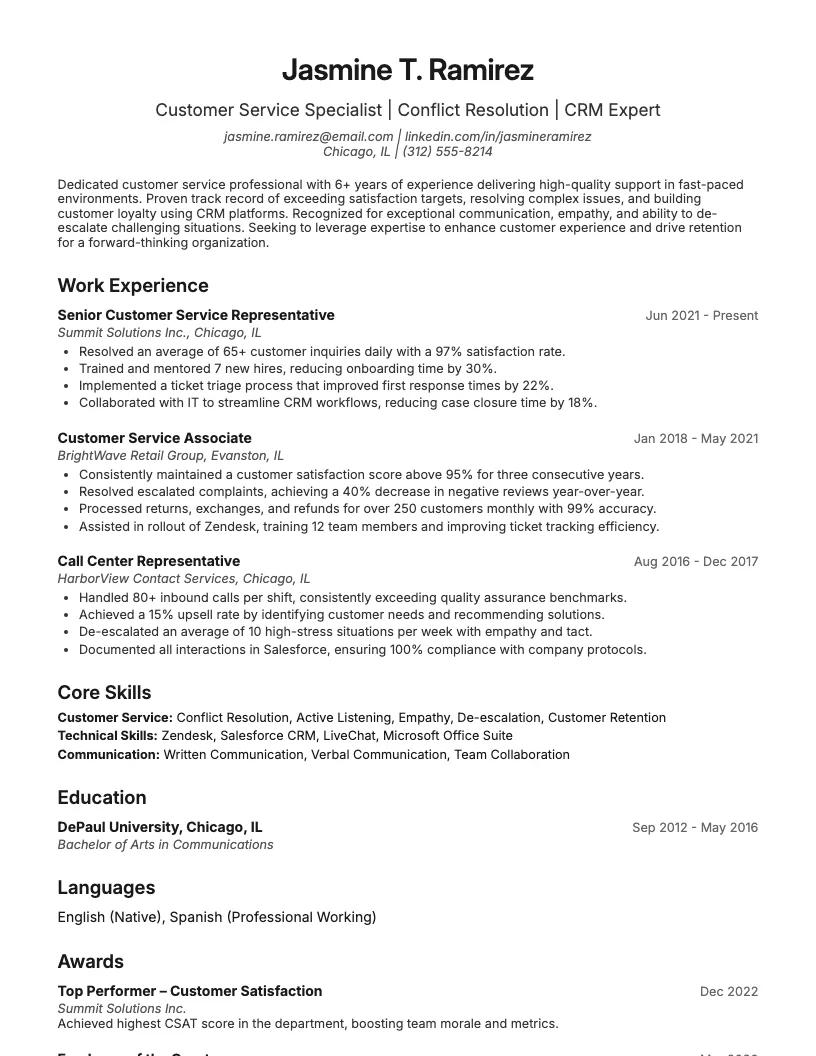
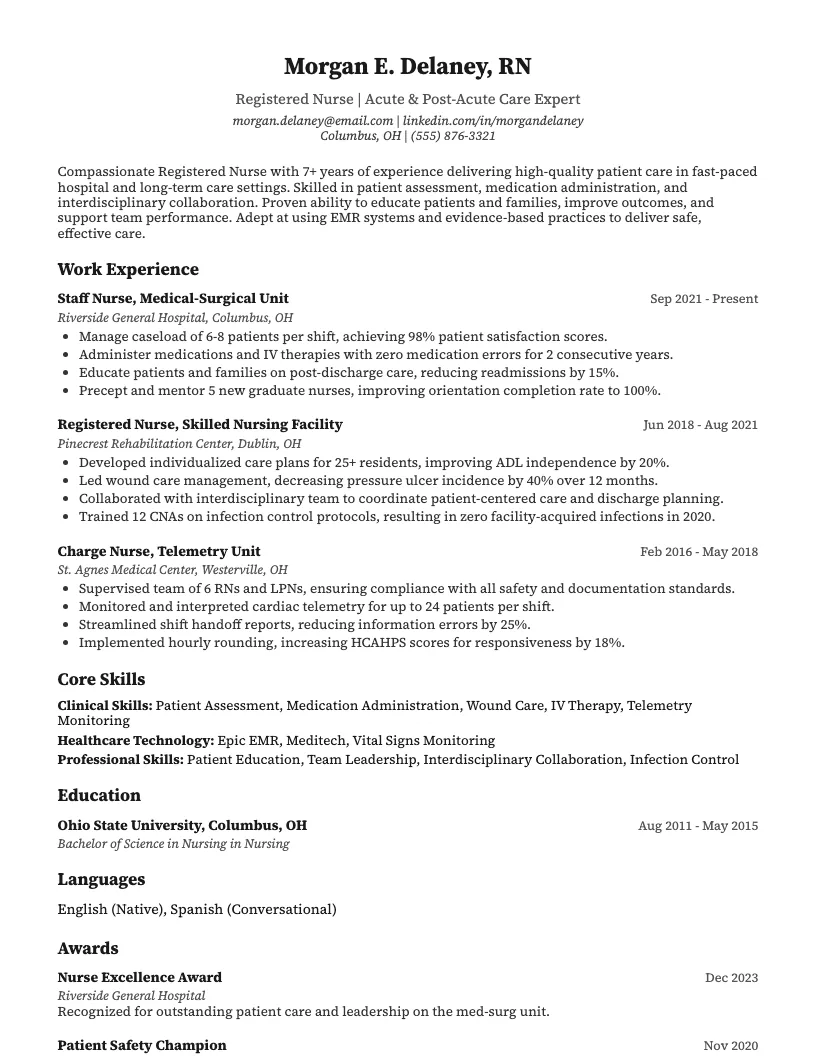
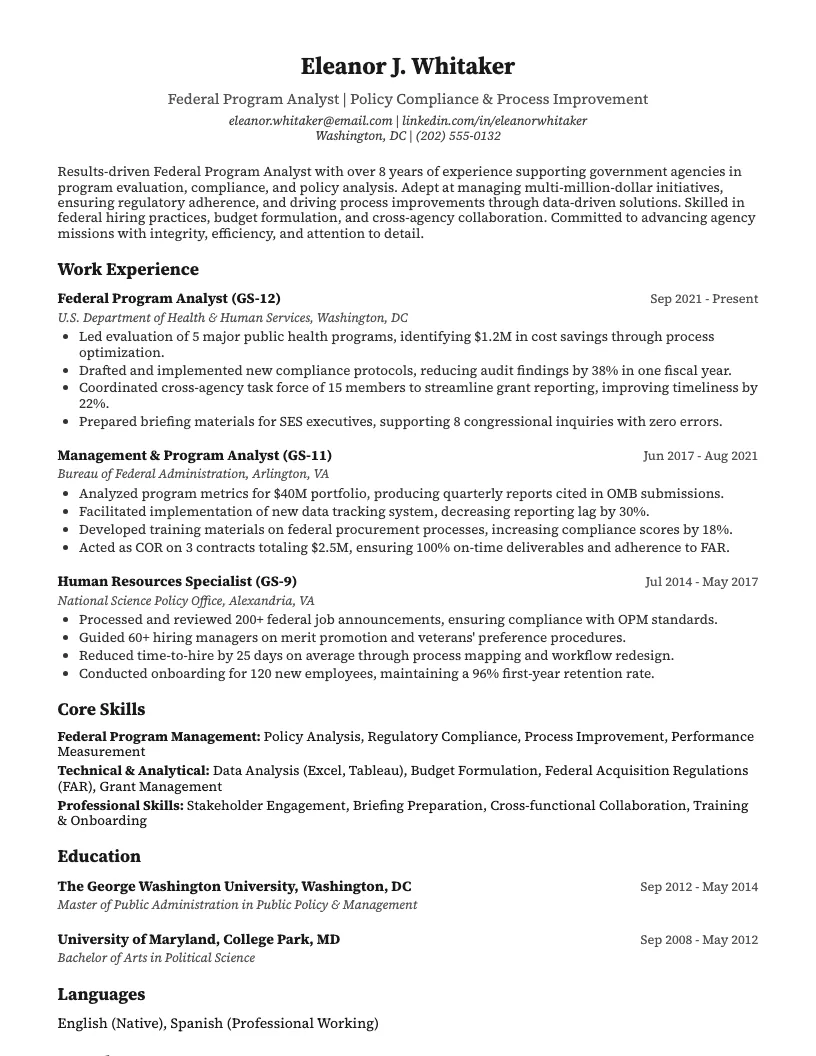
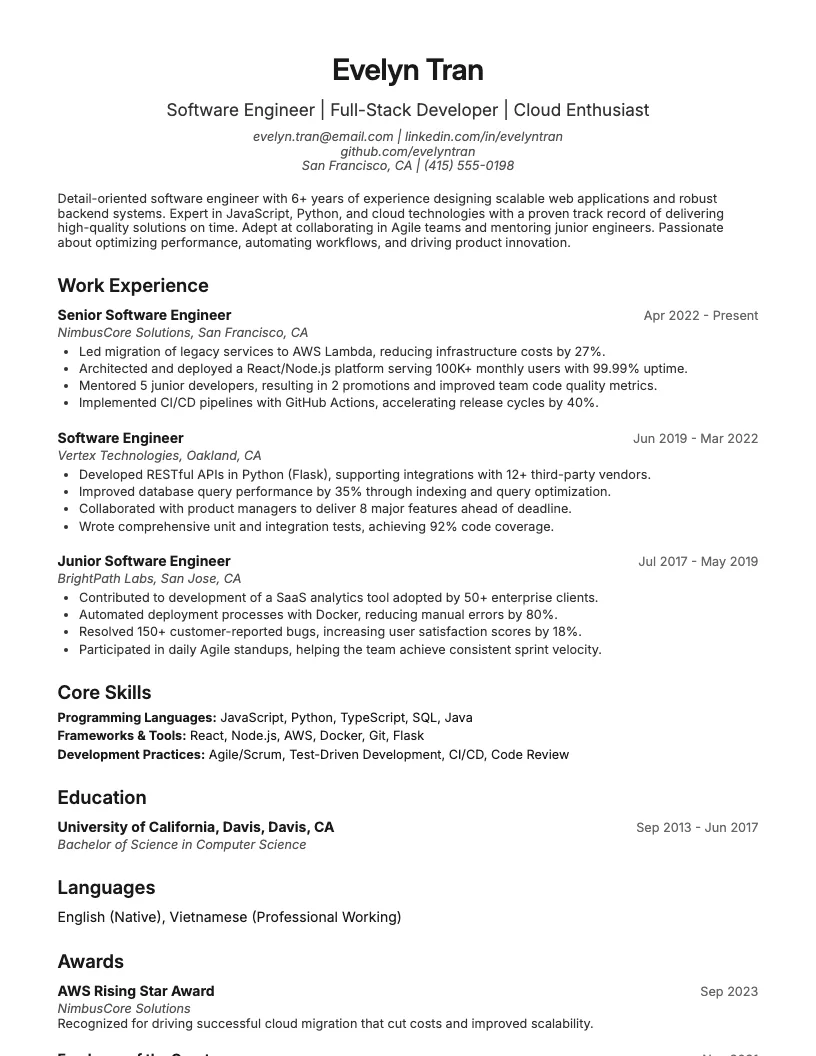
8 examplesStart from an example that already has them, and swap in your own.
Check your resume against the job you want
Scan your resume, see which skills and keywords the posting asks for that you are missing, and fix them before you apply.
Free to use • No credit card required