Problem Solving Skills: 12 Examples & How to Put Them on a Resume
12 problem solving skills explained, with weak-vs-strong resume bullets, a cover letter paragraph you can copy, and wording to borrow for each one you write.


Written by Marcus Rodriguez
ATS Optimization Specialist & Career Coach
Updated August 2026
Reviewed by Dr. Priya Sharma
Is your resume ATS-friendly?
Drop your resume in and see which of these skills a scanner can actually read, and which ones the job you want is asking for that you have not listed.
PDF or DOCX. Max 2MB.
We never share your resume or use it to train a model.
In This Guide:
What are problem solving skills?
What are problem solving skills?

You're staring at a job posting that wants "strong problem solving skills" and you have no idea how to prove you have them.
Here's the thing: nobody wants the phrase. They want to see you do it.
Identifying the problem
Every real example starts here - something broke, slowed down, or cost money, and you were the one who noticed before it got worse.
That's the part hiring managers actually care about. Spotting the problem early says more than fixing it fast.
Analysing the cause
I've read hundreds of resumes that jump straight from "there was an issue" to "I fixed it," skipping the part where you figured out why it was happening.
Employers read that gap as luck, not skill. Naming the cause is what separates someone who patches symptoms from someone who solves problems.
Generating options
The best candidates weigh more than one fix before picking one.
You don't need to write all of them on your resume - one line showing you considered a couple of paths is enough to signal judgement, not just action.
Deciding and acting on it
This is where you commit and do the thing. If the job posting names a specific tool or method, check your bullet actually mentions it - ResumeJudge will spot the gap and rewrite the bullet to work the missing skill in.
Reviewing what happened
Nine times out of ten, the resumes that stand out end this loop with a number: time saved, errors cut, revenue recovered.
No number, no proof it worked.
Problem solving is a soft skill, not a hard one
It's not a tool you list next to Excel or Python - it's a pattern you demonstrate through what you did, which is exactly what the examples below show.
What are examples of problem solving skills?
Nearly 90% of employers screen for this ability directly, so "problem solving" can't just sit alone in your skills section. It needs to break into the pieces hiring managers actually look for.
Research
Every real fix starts with understanding the problem before you touch it. That means talking to the people closest to it, pulling the numbers, and reading around the edges of the issue instead of guessing at the cause.
Analysis
Analysis is spotting the small thing that's actually wrong, not the obvious thing everyone already blamed - the analysing the cause step above, in the form a posting asks for it.
Critical thinking
This is weighing your options without letting your first instinct win by default - staying neutral about which answer you want to be right.
Creative thinking
Sometimes the standard fix doesn't exist yet. Brainstorming, mind mapping, looking at the problem sideways - creative thinking is what gets you a solution nobody else on the team thought to try.
Decision making
Fast, confident decision making under real constraints is its own skill, and it's worth its own line in a bullet, not just a mention buried inside "problem solving."
Troubleshooting
Troubleshooting is problem solving under a deadline - a system's down, a customer's angry, and you're working through causes live. It's the most common version of this skill you'll actually be asked to prove in an interview.
Root cause analysis
Most candidates who've actually used the five whys don't say so - they just describe fixing the symptom. Naming the method, even in five words, reads as more rigorous than a full paragraph explaining what you did instead.
If you've used a structured method like the five whys for analysing the cause, name it - it's a stronger signal than "identified and resolved issues."
Attention to detail
Nine times out of ten, the mistake that caused the problem was small. Noticing it before it compounds is what separates someone who solves problems from someone who just reacts to them.
Communication
A solution that stays in your head doesn't help anyone. Communication is what gets a fix understood, agreed on, and actually implemented across a team fast enough to matter.
Collaboration
Most workplace problems cross more than one desk. Collaboration is pulling in the right people early instead of solving something in isolation and hoping it holds up against everyone else's constraints.
Adaptability
Plans change mid-fix all the time. Adaptability is staying useful when the first approach doesn't work and you have to pivot without losing the thread of the problem.
Negotiation and conflict resolution
Not every problem is technical - plenty are two people who disagree on the fix. Being able to find the version everyone can live with is a real problem-solving skill, and one recruiters undervalue less than you'd think.
Twelve is a lot to work in, and you shouldn't try to list all of them. Pick two or three that match what the posting is actually asking for - if you're not sure which, run your resume against the job description in ResumeJudge and it'll find the ones you're missing and write them into your resume.
Then see how to put problem solving skills on a resume for where each one actually goes.
How do you put problem solving skills on a resume?
How do you put problem solving skills on a resume?
Don't write "problem solving" in the skills section
Here's the mistake I see on nine out of ten resumes: "problem solving" sitting in the skills list next to "Excel" and "teamwork."
A bare word like that proves nothing to anyone reading it.
What to put in the skills section instead
Swap it for the hard skills that actually show you solve problems: data analysis, root cause analysis, troubleshooting, quality assurance, auditing.
Anything specific enough that a recruiter or an ATS scan can match it to a job posting beats a vague label every time.
How to write it into a work experience bullet
The real place for problem solving is your work history, told as something that happened.
The bullet formula: problem, action, number
Every strong bullet answers three questions: what was the problem, what did you do, and what changed as a number.
Drop any one of the three and the bullet reads as a task, not an accomplishment.
Weak bullet vs strong bullet
Weak bullet vs strong bullet
Solved problems causing long delivery times.
Streamlined the delivery process and cut average delivery time from 10 days to 4 by redefining responsibilities and improving accountability.
Weak: "Solved problems causing long delivery times."
Strong: "Streamlined the delivery process and cut average delivery time from 10 days to 4 by redefining responsibilities and improving accountability." Same story, one version a hiring manager remembers.
Where to mention it in your resume summary
If the role leans on problem solving, work one accomplishment into your summary too, tied to the kind of challenge that employer actually has.
Two or three sentences is enough. Any more and it starts competing with your work experience bullets.
Action verbs to use instead of "solved problems"
Vary your verbs so every bullet doesn't start the same way: redesigned, reduced, streamlined, overhauled, resolved, uncovered, mediated, transformed.
Each one names the actual action, which is more convincing than the word "solved" ever is.
How to word it on a CV
Same rules on a CV as a resume: no bare "problem solving" line, evidence in the experience section instead.
If you're not sure your CV's skills match what a posting wants, run it past ResumeJudge and it'll flag what's missing before you send it.
What do problem solving bullet points look like?
Is your resume good enough?
Drop your resume in and see which of these skills a scanner can read, and which ones the job you want is asking for that you have not listed.
Upload your resumeFree. PDF or DOCX. We never share your resume or use it to train a model.
Every bullet below follows the same shape: what was broken, what you did, what changed. Skip that shape and you're back to "solved problems," which says nothing.
Operations and production
"Proposed a plan to reduce shrink, which increased work efficiency and customer service by over 75%." The pattern here is a broken process, a fix, and a number that would make sense to your next manager, not just your old one.
Customer service and support
"Reduced double-booking and error rates by 45%, adding $10,800 in yearly sales." I see a lot of support bullets that stop at "handled customer complaints."
Say what the complaints were about and what stopped them from happening.
Software engineering
Bug and error-rate numbers are the easiest problem-solving proof on an engineering resume, because most ticket systems and monitoring dashboards already show the before-and-after for you. Pull the number from the dashboard instead of estimating it.
Engineers tend to describe the fix and skip the cost of the bug. Better: "Identified a race condition causing 3% of checkout failures; rewrote the retry logic and dropped the error rate to under 0.1%."
If the posting names a specific tool or framework, ResumeJudge will tell you if that word is missing from your resume before a scanner does.
Sales and account management
"Developed a contingency plan during a downturn that saved $540K a year." Sales resumes usually have the numbers already - the problem is they're attached to the wrong verb.
"Managed accounts" isn't a problem solved. "Renegotiated terms with 12 at-risk accounts and kept 10 of them" is.
Data and analytics
This is where root cause work belongs - see root cause analysis for the underlying skill. On the resume: "Traced a 15% drop in signups to a broken tracking pixel and got it fixed within a week, recovering the lost signal."
Name the cause, not just the dashboard you built.
Healthcare
"Redesigned intake paperwork after patients kept missing appointments, cutting no-shows by 20%." Healthcare resumes often bury this kind of fix inside a list of duties.
Pull it out into its own line.
Project management
"Implemented efficiency policies later adopted company-wide." "Managed vendor and client communication during a dispute over production timelines."
Project managers solve problems between people as often as with process - both count, and both need a result attached.
Entry level, from coursework and campus roles
No work history yet? Use school.
"Captained the debate team to nationals after losing two members mid-season" or "Maintained a 3.5 GPA while funding my own tuition" both show you handle a setback without a manager telling you how.
A full resume summary that shows problem solving
"Production manager with a track record of catching issues before they hit output - cut floor errors 10%, HR complaints 20%, over 18 months managing a 50-person team." One line, three numbers, no mention of the word "problem-solving" anywhere in it.
How do you write about problem solving in a cover letter?
How do you write about problem solving in a cover letter?
A cover letter has room for exactly one problem-solving story. Not three.
One, told well.
Pick one problem the employer actually has
Read the job posting for the pain, not the title. A support role that mentions "high ticket volume" is telling you what keeps them up at night.
Pick a story from your own background that answers that specific pain, not your best story in general.
The three sentences: the problem, what you did, what changed
I tell people to write it in exactly three sentences before they touch the rest of the paragraph. Sentence one: the problem, in plain terms.
Sentence two: what you did about it. Sentence three: the number it changed.
Skip any of the three and the story reads as a claim instead of proof - the same problem, action, number shape that works in a resume bullet works here too.
A cover letter paragraph you can copy
"In my last role, our team was losing customers to slow response times. I built a triage system that flagged urgent tickets automatically.
Response time dropped 40% within two months."
Swap in your own problem, action, and number, and you have a paragraph that does more work than most full pages. If you're not sure your resume tells the same story, running it against the posting in ResumeJudge will rewrite the parts that don't line up yet.
What not to say: "I am a natural problem solver"
Nine times out of ten, this sentence is the whole problem-solving section of a cover letter, and it proves nothing. Anyone can claim it.
Almost nobody backs it up.
Cut the label and lead with the story instead - the letter gets shorter and more convincing at the same time.
How do you improve your problem solving skills?
How do you improve your problem solving skills?
You don't get better at this by reading about it once. You get better by running the same routine enough times that it becomes automatic.
Learn a framework: the five whys and root cause analysis
Pick one method and drill it until it's reflexive. The five whys is the easiest to start with: state the problem, ask why it happened, then ask why that happened, and keep going until you hit something you can actually fix.
Most people stop at the first "why" and fix a symptom instead of the cause. That's the mistake I see most often when candidates try to write a root cause analysis bullet and it comes out vague.
Practise spotting problems before anyone reports them
The candidates who stand out aren't the ones who react fastest. They're the ones who noticed the problem before it had a ticket number.
Pick one process you touch daily and ask what it costs in time or money if nobody ever fixes it. That question alone trains the habit.
Question the standard way your team does it
"That's just how we've always done it" is usually a sign nobody's checked lately. Pick the one workaround your team repeats every week and ask why it still exists.
Work on problems outside your own job
Volunteer for the project in another department. Different context forces you to solve without your usual shortcuts, and that's where real range comes from.
Ask someone who solves problems well how they did it
Nine times out of ten, the person who handles a crisis well can't fully explain why in the moment. Ask anyway, then ask again a week later.
Get better at the number at the end
If you can't say what your fix saved in time, money, or errors, you haven't finished solving it. Run your resume through ResumeJudge against a posting and it'll flag exactly where a bullet needs that number and doesn't have one yet.
Frequently Asked Questions
Should I write "problem solving" in my skills section?
No. See [don't write "problem solving" in the skills section](#don-t-write-problem-solving-in-the-skills-section) for why, and what to put there instead. If you're deciding what actually belongs in that skills section, check the posting itself - ResumeJudge will tell you which skills and keywords the job asks for that your resume is missing.
Is problem solving a hard skill or a soft skill?
It's a soft skill. It sits alongside things like communication and teamwork - hard to measure directly, but employers still look for it because it shows you can handle unexpected situations without being told exactly what to do. For what that means for where you put it on the page, see [problem solving is a soft skill, not a hard one](#problem-solving-is-a-soft-skill-not-a-hard-one).
What's the difference between problem solving, critical thinking and analytical skills?
They overlap but aren't the same thing. Analytical skills are about breaking information down and finding patterns in it. Critical thinking is about judging that information and deciding what's true or what matters. Problem solving is the broader skill that uses both of those, plus creativity and follow-through, to actually fix something.
How many problem solving examples should my resume have?
One or two strong examples are enough - a resume that tries to prove problem solving in every bullet ends up proving none of them well. Pick the one or two moments where you solved something with a clear before-and-after, and put the numbers in. If you want a second opinion on whether your examples land, ResumeJudge can give you specific rewrites for the bullets, section by section, rather than generic advice.
Do employers really check for problem solving?
Yes. Surveys of hiring managers consistently put problem solving near the top of the skills they screen for, right alongside communication. They check for it because it's a proxy for how much they'll need to manage you - someone who can work through issues independently is less work to employ.
What interview questions will they ask about problem solving?
Expect questions about how you handle pressure, walk through a time something went wrong, or describe a problem you solved using data. A common one is "tell me about your biggest failure and what you learned from it." The best way to prepare is to have two or three of these stories ready in a situation-action-result shape, so you're not building the answer on the spot.
I'm a student with no work experience - what example do I use?
Use a class project, an internship, a part-time job, or even something you organized outside of school - the source matters less than showing your thinking. Walk through the problem you ran into, what you tried, and what happened as a result, and say plainly how that same approach would carry over to the job you're applying for. Employers reading student resumes aren't expecting years of experience; they're checking whether you can reason through something on your own.
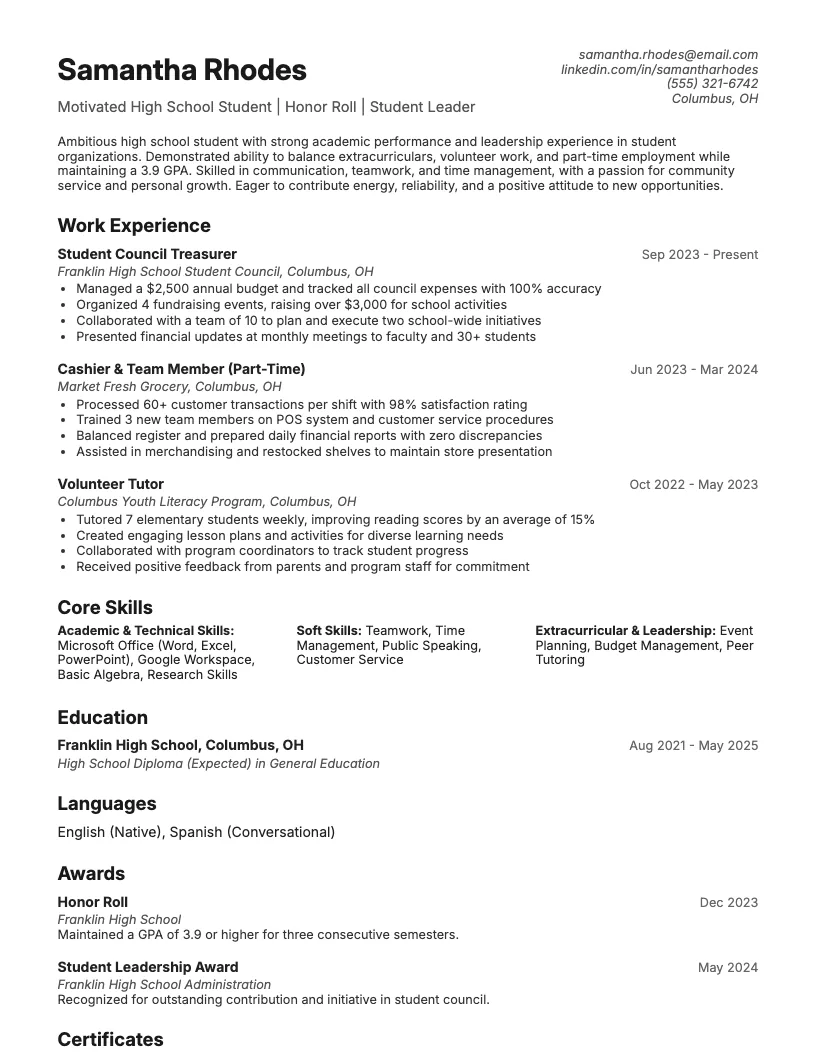
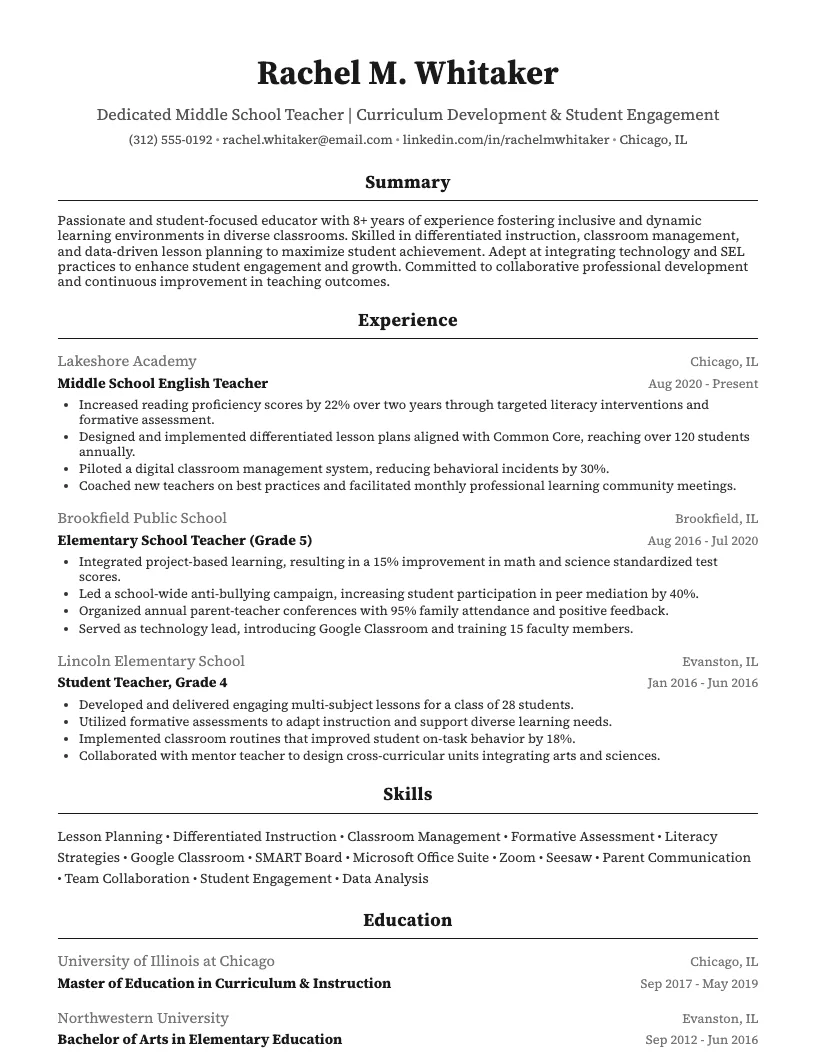
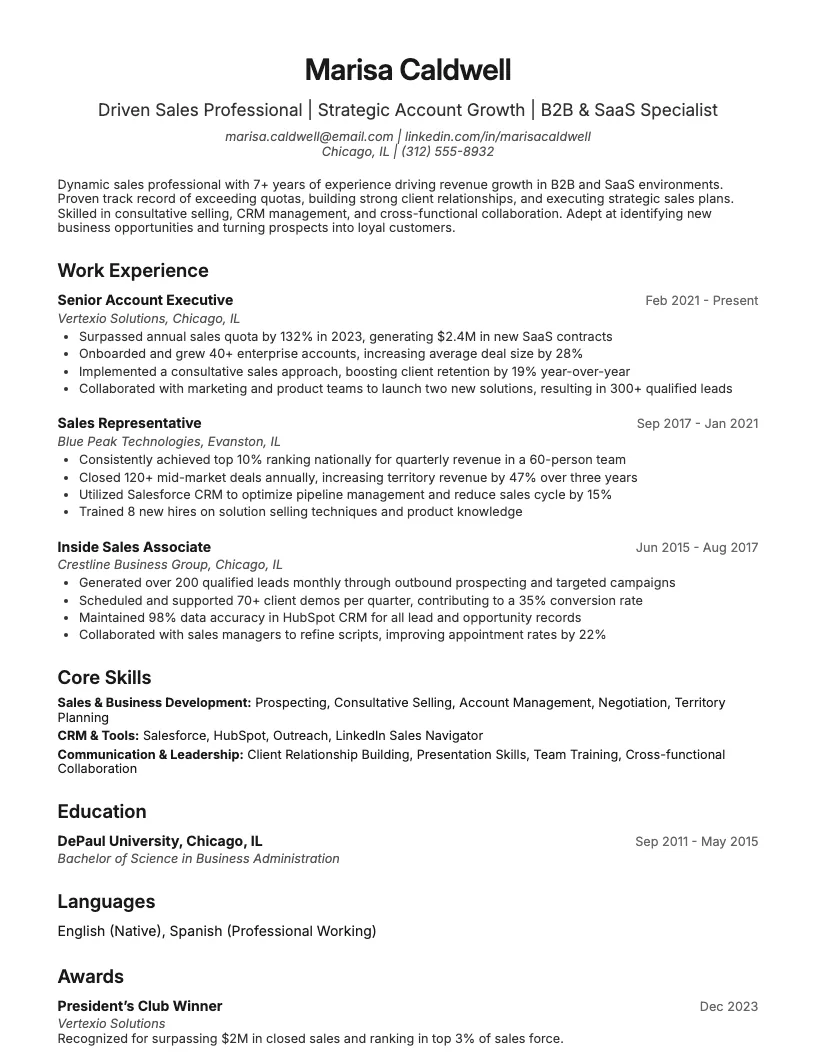
See these skills on a real resume
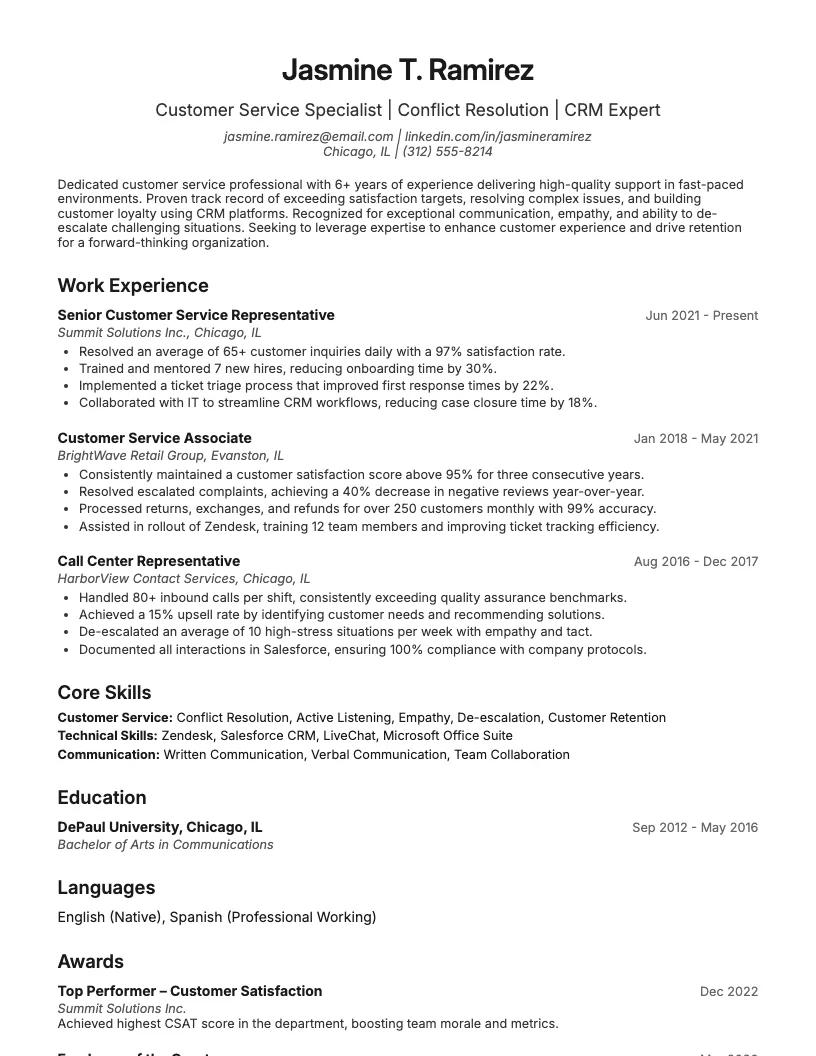
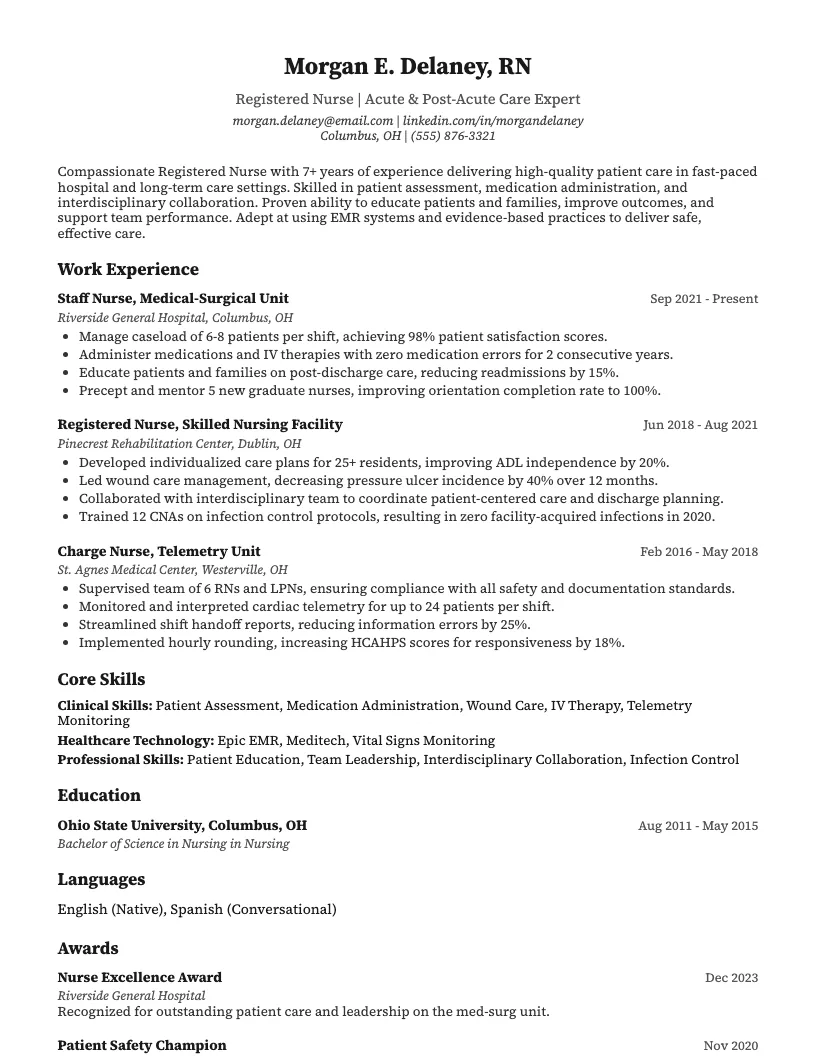
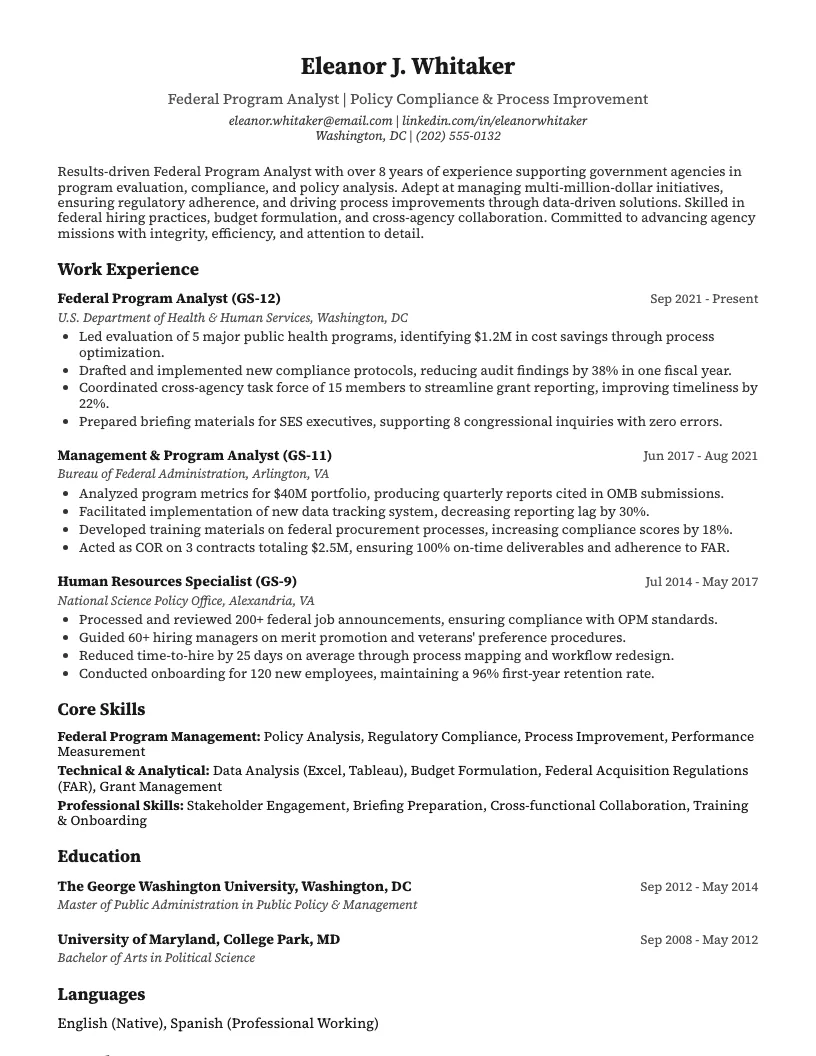
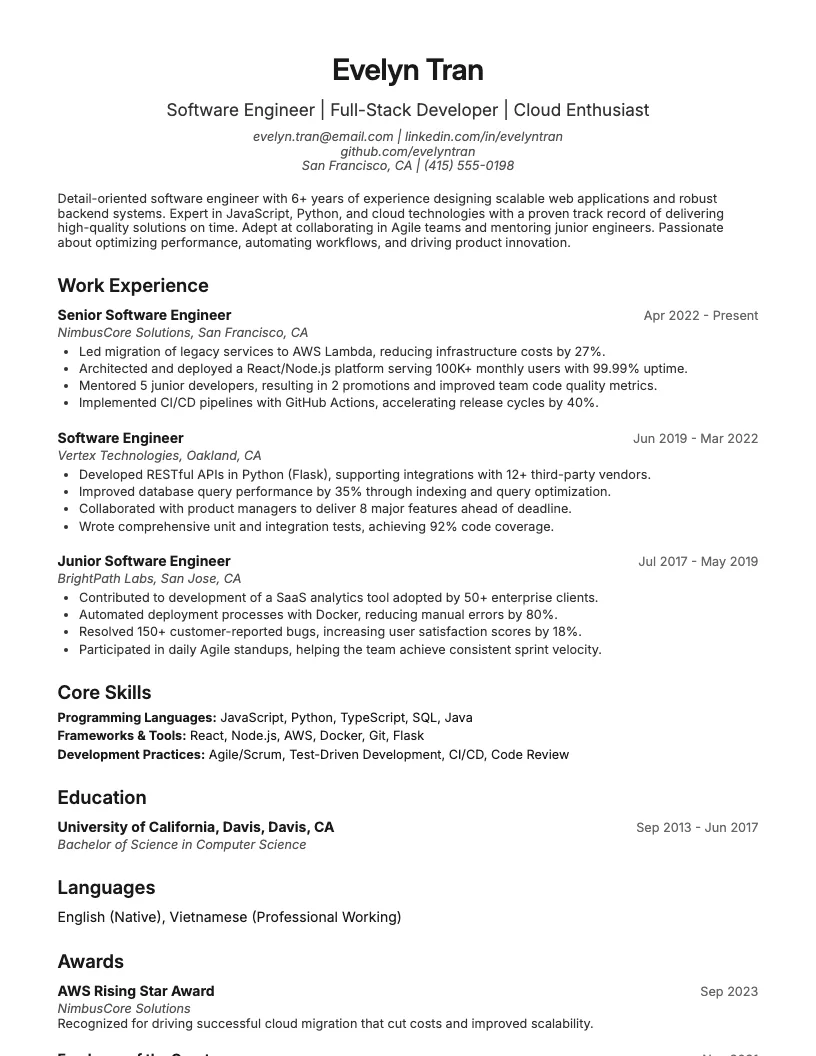
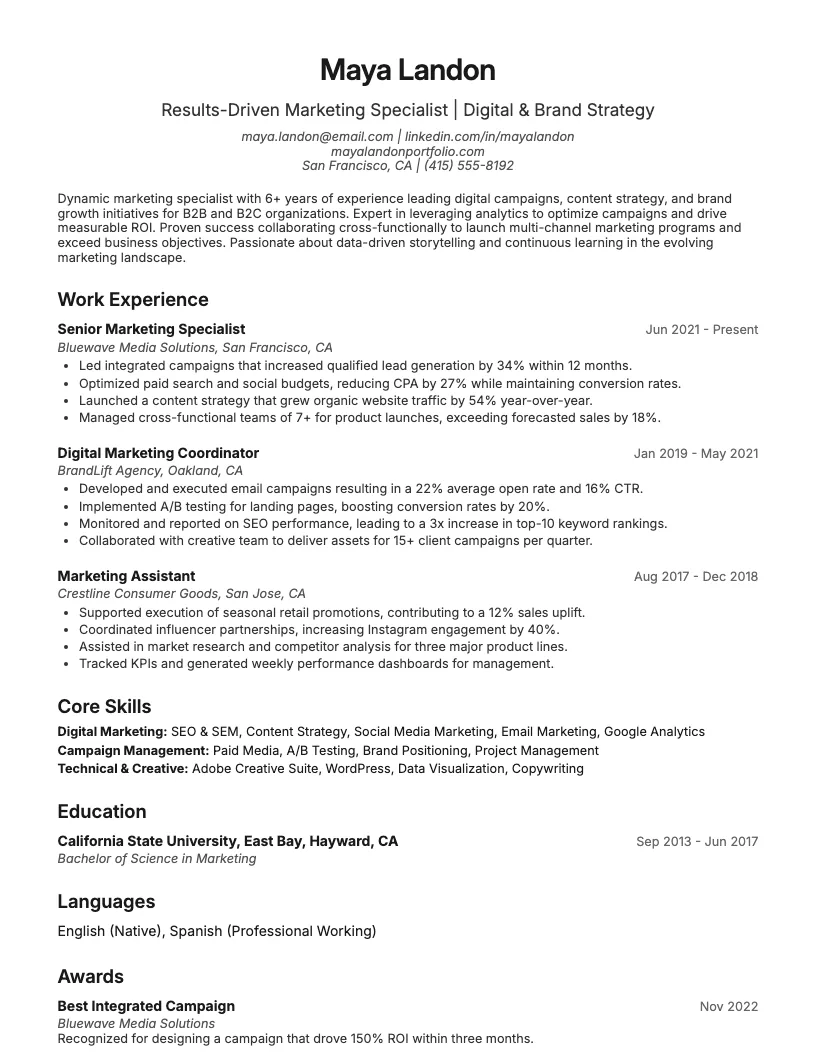
8 examplesStart from an example that already has them, and swap in your own.
Check your resume against the job you want
Scan your resume, see which skills and keywords the posting asks for that you are missing, and fix them before you apply.
Free to use • No credit card required