Federal Resume Keywords: 14 Terms Plus 27 Verbs for USAJOBS Postings
See the 14 keyword categories, word lists for 6 federal agencies, and the 27 action verbs reviewers score, plus exactly where each one goes on your resume.


Written by Marcus Rodriguez
ATS Optimization Specialist & Career Coach
Updated August 2026
Reviewed by Dr. Priya Sharma
Is your resume ATS-friendly?
Drop your resume in and see which of these skills a scanner can actually read, and which ones the job you want is asking for that you have not listed.
PDF or DOCX. Max 2MB.
We never share your resume or use it to train a model.
In This Guide:
What are federal resume keywords?
If you've sent out a dozen applications through USAJOBS and gotten "not qualified" back on half of them, the resume probably isn't the problem - the wording is.
Federal keywords aren't the same animal as private-sector ones. They come in four flavors, and a federal resume needs all four to clear HR.
Specialized experience phrases
These are the exact lines pulled from the announcement's "Specialized Experience" paragraph.
I've reviewed resumes where someone had the experience but described it in their own words instead of the posting's - and got screened out anyway. Match the phrase first, then add your own detail.
OPM competencies
This is the KSA framework - Knowledge, Skills, Abilities - baked into the questionnaire and the evaluation criteria now instead of written as separate essays.
Each competency traces back to an OPM qualification standard, so the wording is fixed. You don't get to paraphrase "written communication" as "strong writer" and expect it to register.
Job series and grade language
Vocabulary shifts hard by series. A 2210 IT Specialist posting and a 1102 Contract Specialist posting barely share a word.
See which keywords your series needs for the breakdown by series code.
Agency acronyms and program names
Every agency runs on its own shorthand - program names, system names, statute references. Spell it out once, then use the short form. Reviewers read dozens of these a day and skim for the acronym they already know.
How these differ from private-sector resume keywords
Private-sector ATS software is forgiving about synonyms. Federal screening isn't, which is why the announcement's own wording matters so much - what happens to your keywords after you hit submit covers how that scoring works.
Federal resumes also run two pages of narrative paragraphs, not one page of bullets. That's more room for keywords, but also more room to bury them.
Where do you find the keywords for a USAJOBS posting?
Where do you find the keywords for a USAJOBS posting?

Every posting on USAJOBS is already telling you what to write. You just have to know where to look.
I've read hundreds of these announcements, and the applicants who get referred are the ones who mine six specific spots instead of skimming the page once and guessing.
The Duties section
This is the list of what you'd actually do in the job, and it's full of verbs and named functions you need to mirror.
Pull every action verb and specific task - "coordinates," "monitors compliance," "develops training materials" - and check whether your resume uses the same words.
The Qualifications and Specialized Experience section
This is the part that decides whether you're even minimally qualified, so it gets the closest read of anyone scoring you.
Look for the line that reads something like "specialized experience equivalent to the GS-XX level," then match the specific skills named right after it, word for word.
The assessment questionnaire
The questionnaire is where you rate yourself against each competency, and every competency it names has to show up somewhere in your resume too.
A competency you rate yourself on but never mention is what an HR specialist checks after you submit.
The Evaluation Criteria section
Not every posting spells out how it's scored. When one does, treat it as a checklist, not background reading.
Every factor named here needs a matching phrase in your resume - skipping one because it feels minor is how a qualified applicant misses Best Qualified.
The series and grade line
The job series number and the target grade belong on your resume, not just in the announcement.
Get the series wrong and your application can get screened out before anyone reads a single duty you listed.
OPM Qualification Standards on OPM.gov
This is the document the HR specialist is actually holding when they score your resume, not the posting itself.
It lists the required knowledge, skills, and abilities by grade for your series, so when a posting is vague, OPM.gov is where the real bar is written down.
Read five to ten postings in the same series and note what repeats
Pull five to ten announcements in your target series from different agencies and locations, and read the Duties and Specialized Experience sections side by side.
The phrases that show up in most of them are the real vocabulary of that series, not the wording of one HR specialist having a particular day.
Once you've got that list, turning it into bullets that actually score is the harder part - or hand ResumeJudge the posting and your resume, and it'll tell you which of these you're missing before you spend an evening cross-referencing six sections by hand.
What keywords do federal resumes use most?
What keywords do federal resumes use most?
You don't need every term a federal posting could throw at you. A handful of phrases show up across almost every GS series and grade, and getting those right does more for your score than chasing a long list.
I've read enough of these to know the pattern: reviewers see the same fourteen or so categories over and over, just dressed differently by agency. Here's what they are and why each one matters.
Specialized Experience
This is the phrase itself, not just a concept. Every announcement defines "specialized experience" for that grade, and if your resume doesn't echo the exact wording, you're not eligible on paper, no matter how qualified you actually are.
Program Management
Program development, program evaluation, program implementation. These three show up separately more often than people expect, and using only "managed a program" instead of naming which piece you owned costs you credit you've actually earned.
Policy Development and Policy Analysis
Policy analysis and policy implementation aren't the same skill on a federal resume, even though most people write them as if they were. Analysis means you assessed options; implementation means you carried one out.
Say which one you did.
Stakeholder Engagement
This one covers a lot of ground: interagency coordination, congressional liaison work, public engagement, cross-functional collaboration. Reviewers read it as "can this person work across organizational lines," so name who the stakeholders actually were.
Budget Formulation and Budget Execution
These are two separate stages, and I see resumes collapse them into one line constantly. Formulation is building the budget request; execution is spending against it and tracking appropriations.
If you did both, say both.
Written Communication
Drafting reports, memos, correspondence, briefing papers. Federal reviewers weight this heavily because so much of the job is producing documents other people rely on, so don't bury it as a soft skill at the bottom.
Oral Communication
Briefings, presentations to leadership, testimony, public speaking. Pair it with an audience whenever you can - "briefed senior leadership" scores better than "communicated effectively," because it tells the reviewer the level you operated at.
Analytical Skills
Problem solving, critical thinking, data-driven decision making. These sound generic until you attach a number to them, and a resume with no numbers next to its analytical claims reads as a resume that never actually analyzed anything.
If you're not sure which of these are the ones your target posting actually cares about, running your resume against that specific announcement in ResumeJudge will flag which of its required terms are missing from your draft, before you find out the hard way in the assessment questionnaire.
Contract Management and Federal Acquisition Regulation (FAR)
Contracting Officer's Representative, procurement, acquisition planning, FAR compliance. If you've held a COR designation, that acronym alone is doing keyword work most applicants miss.
Grants Management
Grant writing, grant administration, cooperative agreements, federal grants. This cluster is its own world - a resume heavy on contracts but light on grants language won't clear a grants-management posting, even from someone who's done adjacent work.
Records Management, FOIA, and Privacy Act
Information management, documentation, FOIA processing, Privacy Act compliance. Smaller category, but it's a hard requirement on a surprising number of administrative postings, so don't assume it's covered by "organized files."
Regulatory Compliance and Internal Controls
Audit support, risk management, internal controls, regulatory compliance. These terms cluster together in postings for a reason - they're describing one function, oversight - so use them together rather than picking just one.
Human Capital Management
Staffing, recruitment, performance management, personnel actions. HR-adjacent postings lean on this phrase specifically over "human resources," which reads as private-sector to a federal reviewer.
Process Improvement
Operational efficiency, streamlining, organizational effectiveness. This is where a number matters most - "improved the process" says nothing, "cut processing time by four days" says everything.
Action verbs federal reviewers respond to
There's a well-known set of about 27 verbs that keep turning up in federal resume guidance: achieved, streamlined, spearheaded, generated, exceeded, delivered, optimized, reduced. The mistake I see most often isn't a weak verb, it's the same one used four times on one page.
Nine times out of ten, the fix isn't finding a fancier synonym - it's matching the verb to what you actually did and putting it at the start of the line, not buried in the middle. If pulling the right verb and keyword into each bullet feels like more editing than you want to do by hand, ResumeJudge will rewrite your bullets against the posting itself, working these terms into the sections where a reviewer expects to find them.
Which keywords does your job series need?
Keyword focus by job series
| Series | Lean on | Watch for |
|---|---|---|
| GS-0343 Management & Program Analyst | Program evaluation, budget formulation, policy interpretation | Briefing leadership, performance metrics |
| GS-2210 IT Specialist | Risk management framework, NIST 800-53, configuration management | Match the specialty code first |
| GS-1102 Contract Specialist | FAR, DFARS, firm-fixed-price, IDIQ, source selection | Cost and price analysis language |
| GS-0346 Logistics Management Specialist | Integrated logistics support, property accountability, supply chain | Dollar value, inventory accuracy |
| GS-0301 Administration and Program | No fixed word list - pull from the posting | Broadest series, flexible qualifications |
| GS-1801/1811 Law Enforcement | 1811: investigative techniques, evidence handling; 1801: physical security | Don't mix the two vocabularies |
I've reviewed resumes for a dozen different series, and the mistake is always the same: applying the 0301 word list to a 2210 posting and wondering why nothing scores.
GS-0343 Management and Program Analyst
This is where a lot of veterans land first. Lean on management studies, program evaluation, budget formulation, and policy interpretation.
Show you can brief senior leadership and use performance metrics to spot inefficiencies - that's what separates a passable 0343 resume from one that gets referred.
GS-2210 IT Specialist
IT postings split by specialty, and that matters more than people think. An INFOSEC announcement leans on risk management framework and NIST 800-53; a SYSADMIN one leans on configuration management and enterprise network architecture.
Pull the specialty code off the announcement before you touch your resume, not after.
GS-1102 Contract Specialist
Federal Acquisition Regulation language does the heavy lifting here - FAR, DFARS, contract types like firm-fixed-price and IDIQ, source selection, cost and price analysis.
If your background is procurement or supply, this series usually fits better than a generic administrative one.
GS-0346 Logistics Management Specialist
Military supply and logistics experience translates almost word for word. Integrated logistics support, property accountability, supply chain management, and logistics information systems are the phrases HR is scanning for.
Numbers help more here than almost anywhere else - dollar value of property managed, inventory accuracy rate, how many locations you coordinated across.
GS-0301 Miscellaneous Administration and Program
0301 is the broadest series in government, which sounds like an advantage until you realize there's no fixed word list to lean on. You have to pull the language straight from each announcement.
It's often a first landing spot because the qualification requirements are more flexible than a specialized series - but that flexibility cuts both ways on keywords.
GS-1801 and GS-1811 Law Enforcement and Criminal Investigation
1801 covers general law enforcement work; 1811 is criminal investigation specifically, and the two overlap less than people assume. An 1811 resume needs investigative techniques, evidence handling, and interviewing front and center - an 1801 resume can lean more on physical security and threat assessment.
Why the same resume scores badly across two different series
I see this constantly: someone applies to a 0343 posting and a 0301 posting with the identical resume, because the jobs sound similar. They're not - the OPM qualification standard behind each series uses its own vocabulary, and HR pulls straight from that standard when scoring you.
One resume sent to ten different series almost never works. If you're not sure where yours falls short, ResumeJudge scores your resume against the actual posting and shows you exactly which of these phrases are missing before you submit - not after you've been passed over.
Worth doing every time you switch series, not just once. See how you work a keyword into a bullet once you know what's missing.
Which keywords does the agency you're applying to use?
Core vocabulary by agency
| Agency | Core terms | Names to use |
|---|---|---|
| Defense | National Security, Military Operations, Force Readiness | PPBE, Joint Staff, Combatant Commands |
| Homeland Security | Border Security, Immigration, Emergency Management | CBP, ICE, TSA, FEMA, USCIS |
| Health and Human Services | Public Health, Healthcare Policy, Human Services | CDC, FDA, NIH, CMS, HRSA |
| Veterans Affairs | Veteran Services, Healthcare Administration | VHA, VBA, NCA, PACT Act |
| Justice | Law Enforcement, Legal Affairs, Criminal Justice | FBI, DEA, ATF, USMS, BOP |
| Environmental Protection Agency | Environmental Protection, Regulatory Enforcement | Clean Air Act, Clean Water Act, NEPA |
The same GS-0343 posting reads differently at DoD than it does at HHS, and I've watched people reuse one resume across both and get skipped at the second. Every department runs its own vocabulary on top of the OPM competencies and job series language - see agency acronyms and program names for how deep that goes.
Match the agency, not just the series.
Department of Defense
DoD postings lean on National Security, Military Operations, and Force Readiness alongside Defense Acquisition, PPBE, Joint Staff, and Combatant Commands. If you're coming out of uniform, this is where translating military wording into the federal phrase matters most - a resume that still reads like an evaluation report gets passed over here.
Department of Homeland Security
DHS resumes need Border Security, Immigration, and Emergency Management, plus the agency's own alphabet: CBP, ICE, TSA, FEMA, USCIS, Secret Service. Program names like NIMS, ICS, and COOP show up constantly in duty descriptions, and I mark a resume down fast if it names the agency but skips the program it actually ran under.
Department of Health and Human Services
HHS wants Public Health, Healthcare Policy, and Human Services front and center, with CDC, FDA, NIH, CMS, HRSA, or IHS naming exactly which piece you worked in. Medicare, Medicaid, and Public Health Emergency response are the phrases reviewers scan for first.
Department of Veterans Affairs
VA postings mix Veteran Services and Healthcare Administration with VHA, VBA, and NCA - the three administrations aren't interchangeable, so use the one you actually worked under. PACT Act, VistA, and CPRS are the terms that separate a resume that's touched VA systems from one that hasn't.
Department of Justice
DOJ leans on Law Enforcement, Legal Affairs, and Criminal Justice, with FBI, DEA, ATF, USMS, or BOP naming the component. Investigations, Prosecution, and Legal Analysis are the verbs I'd expect to see doing the work in your bullets, not just sitting in a skills line.
Environmental Protection Agency
EPA resumes run on Environmental Protection, Environmental Policy, and Regulatory Enforcement, anchored to the actual statute - Clean Air Act, Clean Water Act, NEPA, CERCLA, RCRA. Naming the law you enforced does more for your score than naming the general topic.
Security clearance terms
Security Clearance, Top Secret, TS/SCI, Secret Clearance, and Public Trust belong near the top of the resume, not buried in a duty paragraph. If you've held one, say the level plainly - reviewers at defense and intelligence-adjacent agencies search for it directly.
Veterans' preference terms
Veterans' Preference, 5-Point and 10-Point Preference, CPS, and XP all need paperwork behind them - your DD-214, an SF-15, or a VA letter for a 30% or More Disabled Veteran claim. VRA and VEOA eligibility belong here too.
This is the one spot worth checking twice before you submit: run the resume against the actual posting and ResumeJudge will catch it if your preference claim doesn't match the wording the announcement expects.
How do keywords change with the GS grade you're applying for?
The same job series can call for a completely different vocabulary depending on the grade in the announcement. I've reviewed resumes where the wording was technically accurate and still lost points, because it was pitched three grades higher or lower than the posting.
| GS range | What the posting wants from you | Typical verbs |
|---|---|---|
| GS-5 to GS-7 | Following procedure, supporting the team | assists with, maintains records, processes requests |
| GS-9 to GS-12 | Working with less supervision | analyzes, recommends, develops, coordinates |
| GS-12 to GS-15 | Setting direction for others | directs, establishes policy, advises senior leadership |
GS-5 to GS-7: doing the task
At this level, the announcement wants proof you can execute, not lead. Lean on "assists with," "maintains files and records," "processes requests and forms," "enters data," "follows established procedures."
GS-9 to GS-12: working independently
Here the language shifts to ownership. Swap in "analyzes," "recommends," "develops," "coordinates," "evaluates" - words that show nobody needs to check your work.
GS-12 to GS-15: directing and setting policy
Now it's about shaping the work, not just doing it well. "Directs program operations," "establishes policies and procedures," "advises senior leadership," "manages programs," "develops strategic plans" - these are the phrases reviewers expect from someone at this grade.
SES: the five Executive Core Qualifications
SES applications run on their own vocabulary: the five Executive Core Qualifications. Leading Change (vision, strategic thinking, innovation), Leading People (team building, conflict management), Results Driven (accountability, decisiveness), Business Acumen (financial and human capital management), and Building Coalitions (partnering, negotiating).
Each ECQ needs its own story, not a shared pool of bullets.
Why using GS-13 wording on a GS-7 application hurts you
Matching bullet language to the grade
Directed program operations and advised senior leadership on strategic priorities.
Assisted with program operations and maintained records supporting senior staff decisions.
Nine times out of ten, the resume that undersells is fine - the one that oversells is what gets bounced. If you're a veteran with a decade of leadership experience applying to a GS-7 slot, the system still wants GS-7 language, not GS-13 language.
I run resumes through ResumeJudge against the exact posting and let it flag anywhere the grade of the wording doesn't match the grade of the job, then rewrite those lines down to size.
Where do the keywords go on the resume?
Where do the keywords go on the resume?
I've read federal resumes where every keyword from the posting got crammed into a skills list at the top and nowhere else. That doesn't work.
HR needs to see the keyword show up doing the job you did, not just sitting in a column - it needs to appear in several places, not one.
The objective line with announcement number, title, series and grade
Right under your name goes a single line: the job title, the GS series and grade, and the announcement number. Something like "Program Analyst, GS-0343-11/12, Announcement: HQ-24-0091."
Skip the announcement number and some HR specialists won't be able to tell which posting you meant.
The professional summary
Four or five lines, not a paragraph you'd write for a private company. State your target grade and series, your years of specialized experience, and two or three of the competencies from the announcement.
This is where the exact wording of the posting matters most, because it's the first thing a reviewer reads.
The key competencies block
A short hyphenated list mirroring the competencies named in the announcement - program management, policy analysis, stakeholder engagement, whatever the posting calls for. Copy the announcement's own language here, not your synonym for it.
If you're not sure which of your skills are missing from that list, that's what ResumeJudge checks - it compares your resume against the posting and flags the required skills and keywords that aren't showing up yet.
The duty paragraphs under each job
This is where most of your keywords need to live. Nine times out of ten, the resumes that stall had duty paragraphs describing the job instead of proving the competency.
See how to work a keyword into a bullet for the mechanics.
Functional headings inside a job entry
For a job with several distinct responsibilities, break the duties into labeled blocks - PROGRAM MANAGEMENT, BUDGET EXECUTION, STAKEHOLDER ENGAGEMENT - each with its own bullets underneath. It makes a long entry scannable and lets a reviewer find the exact competency they're scoring you on without reading the whole thing.
Training, certifications and technology skills
List current certifications, relevant training courses, and specific software or systems you've used - the kind of thing a posting names directly and a keyword search catches instantly. Skip anything expired or irrelevant; it dilutes the ones that matter.
Details HR needs regardless of keywords: hours per week, supervisor, salary, series and grade
Every job entry needs the employer's name and address, your job title, start and end dates, and hours worked per week. Salary and whether the agency may contact your supervisor are optional, so fill them in if you want to - but leave out one of the required fields and I've seen it get the whole application marked "not qualified" before a human ever reads your bullets - it's not a keyword problem, it's a missing-field problem.
Formatting the USAJOBS builder allows
The builder strips bold, italics, underlining and real bullet characters, so use CAPITAL LETTERS for emphasis and hyphens or asterisks for lists. Write a beautifully formatted resume in Word first and expect it to flatten the moment you paste it in - which is exactly the kind of rewrite ResumeJudge does for you, turning a formatted resume into wording the builder keeps intact.
How do you work a keyword into a bullet so it counts?
A keyword sitting by itself in a sentence doesn't do anything for you. I've read thousands of these bullets, and the ones that score are the ones where the keyword is attached to something you actually did, with a number behind it.
Open the bullet with the competency, then prove it with a number
Start the bullet with the competency itself, not a verb. Then back it with scope - how many people, how many dollars, how long it took.
A reviewer scanning fast should hit the keyword in the first three words.
Use the exact phrase from the announcement, then a nearby variation
The exact phrase from the announcement has to be in there somewhere, for the reason set out in how USA Staffing ranks you. Follow it with a nearby variation, the way "financial management operations, including fiscal planning" catches the literal match and the wording around it in the same breath.
Spell out the acronym once, then use the short form
First time an acronym shows up, write it out in full with the short form in parentheses - "Independent Government Cost Estimate (IGCE)." After that, use IGCE on its own.
Now a scanner looking for either version finds both.
Translate military wording into the federal phrase
Coming out of the military, your MOS language needs a civilian translation before HR will recognize it. "CBRN" means nothing to a specialist screening against a job series; "Chemical, Biological, Radiological, and Nuclear," attached to a program and a headcount, does.
Translate private-sector wording into the federal phrase
Coming from industry, it's the same move in the other direction. "Managed P&L" becomes "budget formulation and execution."
Federal reviewers are scoring you against the OPM competencies list, so give them the word that actually maps to one - not the corporate version of it. If you've got a dozen bullets to translate like this, ResumeJudge will take your resume and the posting and rewrite each one with the federal phrasing already sitting in it, instead of you doing it line by line.
Before and after: 'Managed projects for the department'
Turning a vague duty line into a scored bullet
Managed projects for the department.
Led budget formulation and execution for a $5M program, coordinating five partner agencies to a 15% efficiency gain.
Weak: "Managed projects for the department." Strong: name the program by dollar value, list who you coordinated with, close with a measured result - a $5M program, five partner agencies, a 15% efficiency gain.
Before and after: 'Responsible for supply operations'
Turning a vague duty line into a scored bullet
Responsible for supply operations.
Managed supply chain operations for a 500-person organization, processing 1,200+ requisitions monthly and cutting fulfillment time by 22%.
"Responsible for" is a job description, not an accomplishment. I'd rewrite it as "managed supply chain operations for a 500-person organization, processing 1,200+ requisitions monthly and cutting fulfillment time by 22%."
Same job, but now it reads like someone did something.
Before and after: 'Wrote policy documents'
Turning a vague duty line into a scored bullet
Wrote policy documents.
Drafted 12 proposed regulations, coordinated with legal counsel, and briefed Congressional staff on agency-wide adoption.
"Wrote policy documents" tells a reviewer nothing about size or reach. "Drafted 12 proposed regulations, coordinated with legal counsel, and briefed Congressional staff on agency-wide adoption" tells them exactly what you're capable of at this grade.
Keyword stuffing with nothing behind it
This is the mistake I see most. A skills block with fifteen buzzwords stacked up and not one bullet proving any of them looks worse to a reviewer than half as many keywords, each one backed by a real result.
If a keyword doesn't have a bullet standing behind it, cut the keyword.
What happens to your keywords after you hit submit?
Once you submit, three separate readers look at your resume, and each one is checking it against different wording. Miss the match at any one of those checkpoints and a strong candidate never gets seen by the hiring manager.
The assessment questionnaire and your self-ratings
Every question on the questionnaire ties back to a specific skill or ability from the announcement.
When you rate yourself "Expert" on contract negotiation, you're making a claim - and the resume is what either backs it up or contradicts it.
The HR specialist checking the resume against those ratings
An HR specialist reads your resume looking for evidence of each rating you gave yourself.
I've reviewed a lot of these, and the mismatch I see constantly is someone rating themselves "Expert" on a competency the resume never once mentions in those words. That gap is exactly what an HR specialist catches before a human decision-maker ever sees your name.
How USA Staffing ranks you against the announcement's wording
USAJOBS says plainly that real people - HR specialists - read your resume, and that some agencies also use an automated system to help review applications.
Nothing I've read promises that your synonym counts the same as the posting's own phrase, so I don't write as if it does. Use the announcement's wording and the match is obvious to whoever, or whatever, reads you first; paraphrase it and you're asking them to make the connection for you.
Category rating: Best Qualified, Well Qualified, Qualified
Your match score sorts you into one of the quality categories that agency uses - each agency decides how many categories there are and what they're called, so check the announcement rather than assuming. One set I see often:
- Best Qualified - resume and ratings line up closely with the announcement
- Well Qualified - solid match, but with gaps
- Qualified - meets the minimum, little more
Only the top tier reliably gets forwarded.
The referral list the hiring manager actually reads
Hiring managers get a ranked list, and most of them stop reading after the first 10 to 20 names.
If your resume lands outside that window, it doesn't matter how qualified you actually are for the job.
Why rating yourself Expert without matching resume wording lowers your score
Over-rating yourself is one of the most common ways good candidates tank their own score. Nine times out of ten, the fix isn't a better questionnaire answer - it's going back and making sure every "Expert" or "Advanced" rating has a bullet on the resume that proves it, in the announcement's own words.
Before you submit, check where each bullet stands against the posting - ResumeJudge scores your resume against the job description and flags exactly which self-ratings the resume doesn't yet back up, so you catch the mismatch before HR does.
Frequently Asked Questions
How many keywords should I put in a federal resume?
There's no set number to hit. Match every specialized experience requirement in the announcement instead of counting words, and the right number of keywords will show up naturally as you do that. A resume that fully covers the qualifications reads as complete to both the software and the human reviewing it.
Can I just paste the keyword list into a skills section?
No, a bare list of keywords scores poorly on its own. Each keyword needs to be attached to something you actually did, ideally with a number or result behind it, not repeated in a block at the top of the resume. ResumeJudge can take a posting and rewrite your resume against it, working those terms into the right sections instead of you pasting them in and hoping they stick.
Do I still have to write KSA essays?
Not in the old standalone-essay format for most jobs anymore. Hiring is now done mostly from the resume and the assessment questionnaire, but your resume still has to demonstrate the same knowledge, skills, and abilities the essays used to cover, so write your bullets to prove them directly. Competitive service announcements open to the public at GS-05 and above still ask for short written responses, so check the announcement before you skip it.
Should I put my current and target GS level on the resume?
Yes. Including your current grade and the grade you're targeting helps HR quickly work out your eligibility and where you fit on the pay scale, so state it plainly near the top of your resume rather than leaving it implied.
How long can a federal resume be now?
Two pages, for most federal jobs, since an OPM rule that took effect in September 2025 cut the old multi-page format down. A handful of exceptions exist for some Title 38 and senior executive roles, but for the large majority of USAJOBS postings, plan on two pages and make every line earn its place.
How far back should my work history go?
Five to ten years is the general guide, weighted toward roles that are actually relevant to the job you're applying for rather than a complete career timeline. Older or unrelated positions can be trimmed down or dropped, and you don't need to explain gaps, since HR is screening for applicable experience, not a full work history.
Do I need a different resume for every announcement?
Yes. Each announcement draws its keywords from its own specialized experience requirements and duties language, so a resume built for one posting won't automatically match the next one, even in the same job series. ResumeJudge can generate a resume tailored to each posting on its own, so you're not rebuilding one by hand for every application.
Should I apply if I don't match every keyword in the posting?
Yes, apply if you meet the minimum qualifications and specialized experience, even without every keyword in the posting. Federal category rating groups applicants by qualification tier rather than requiring an exact match, so being short a few terms doesn't rule you out on its own. ResumeJudge can score your resume against the posting first, so you know exactly where you stand and which requirements are worth strengthening before you submit.
Do keywords help my resume get found in the USAJOBS search?
Yes. USAJOBS' own advice for searchable resumes is to use terms that match the wording in the job's qualifications. Using the announcement's own terms, and making sure your resume status is set to searchable, both improve the odds it turns up when HR runs a search.
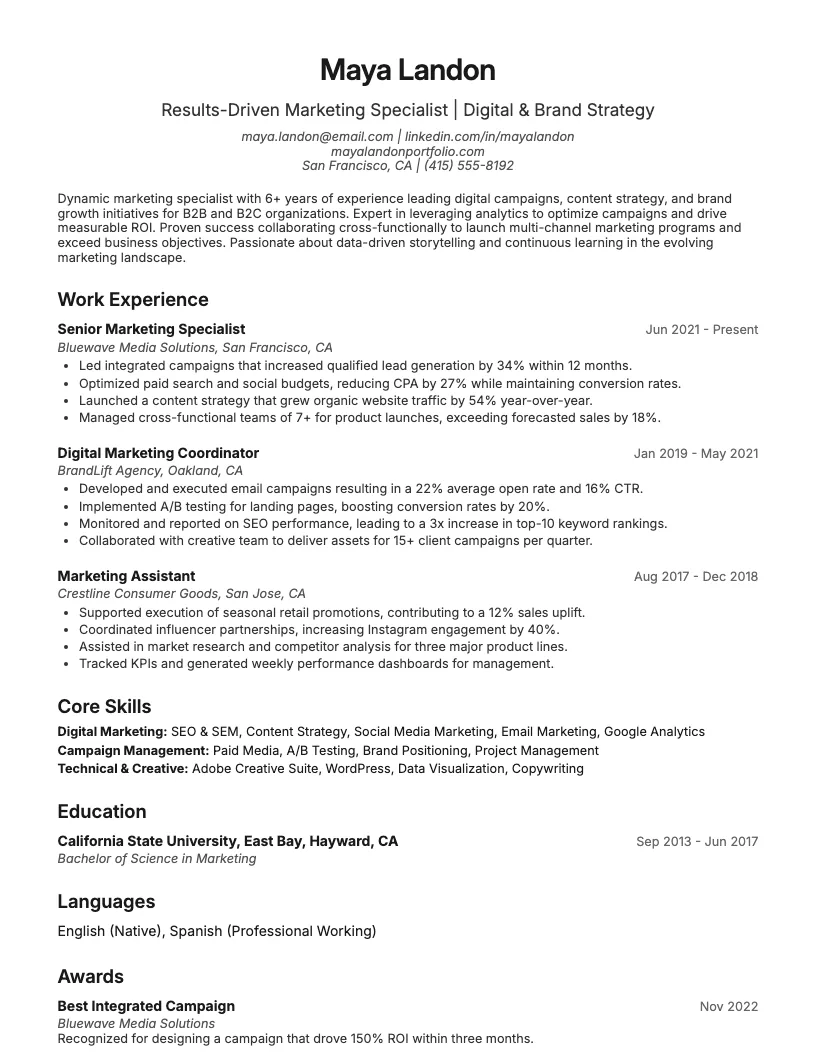
See these skills on a real resume
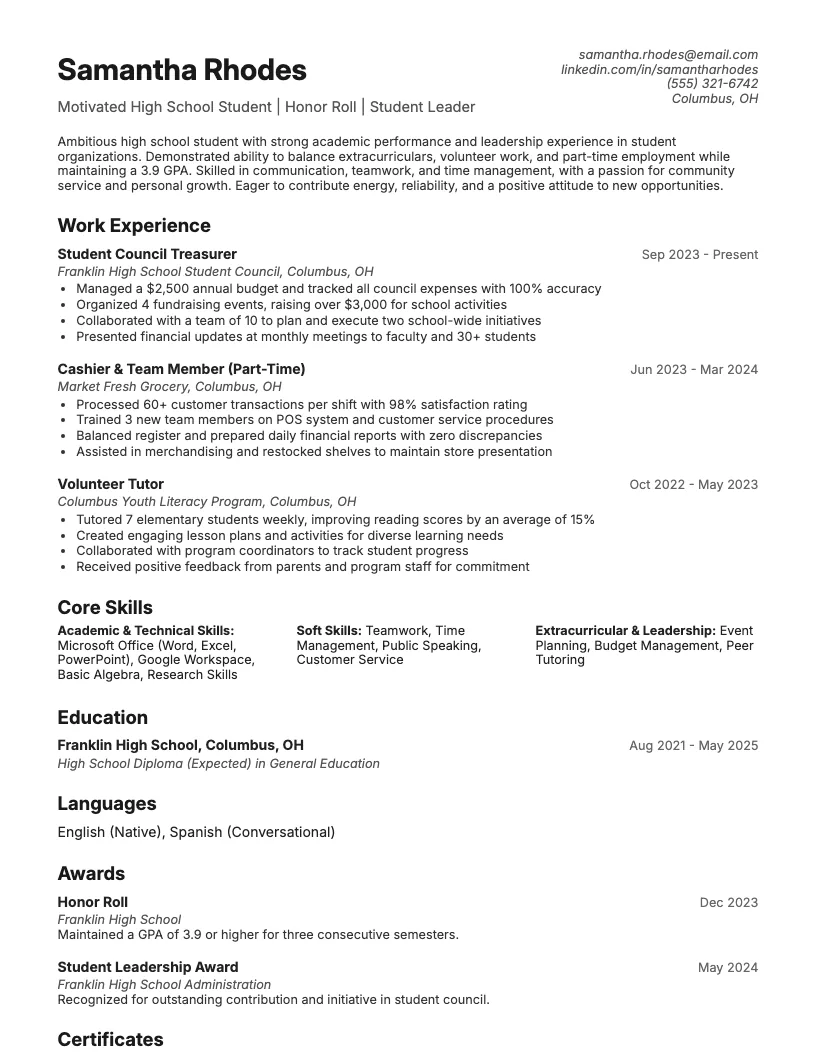
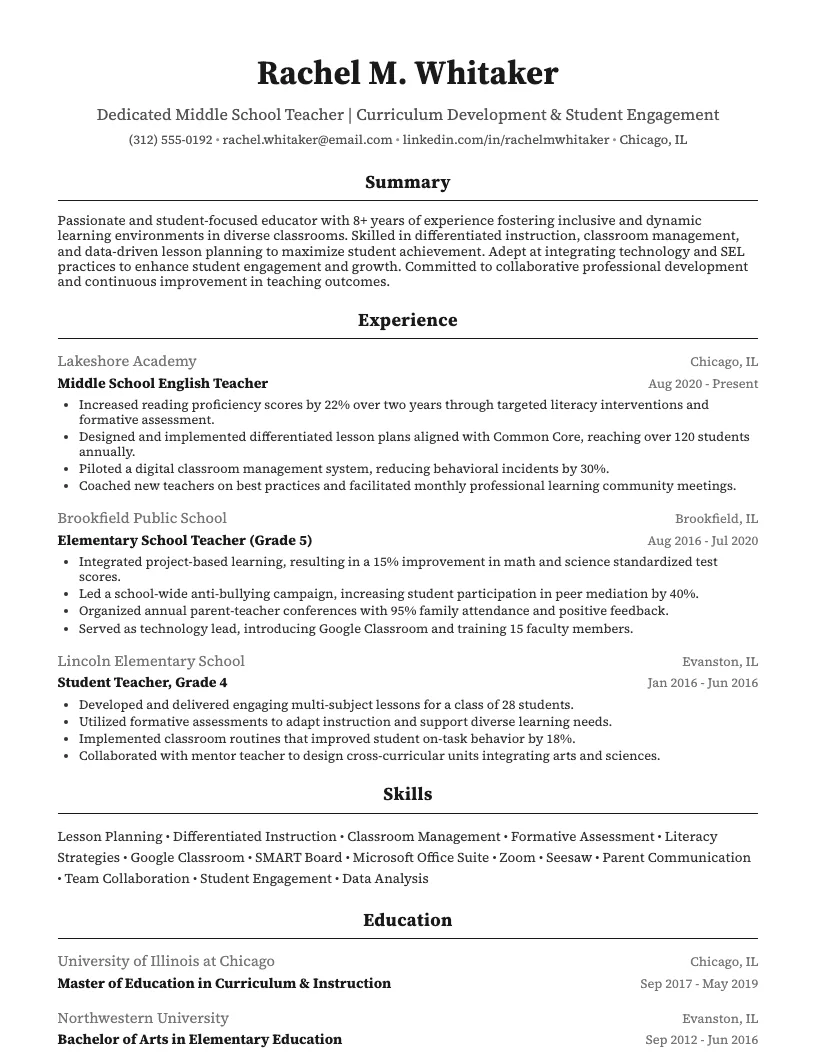
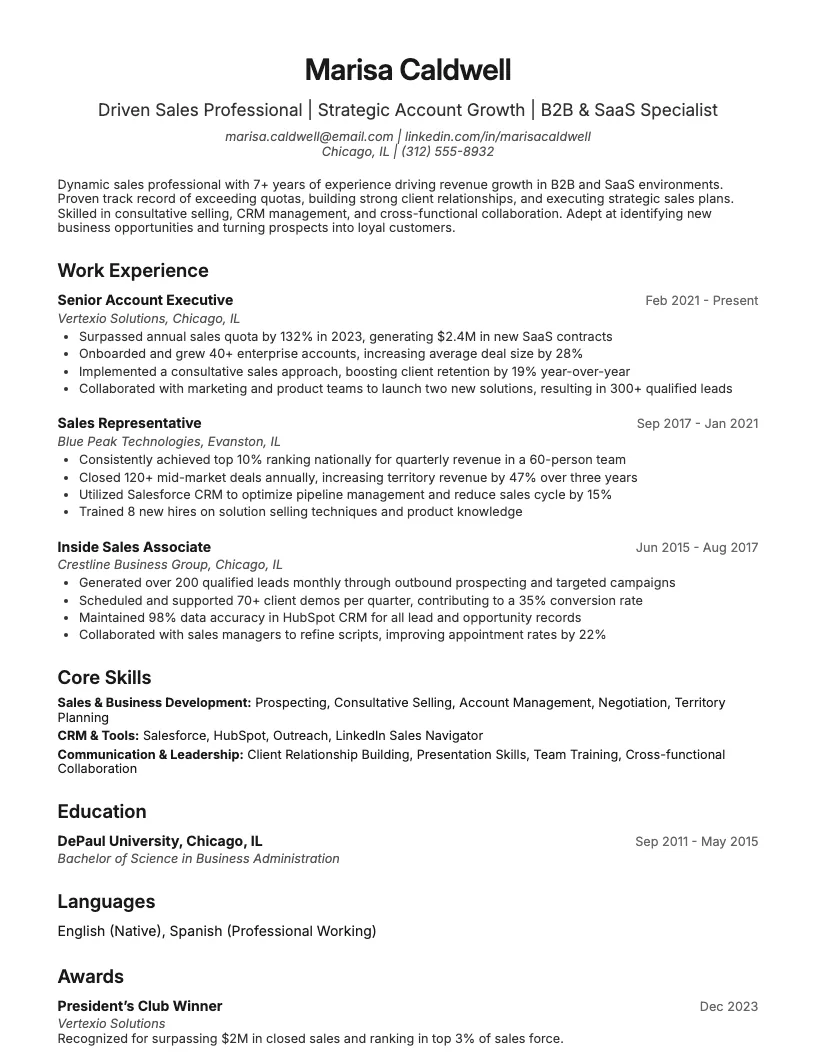
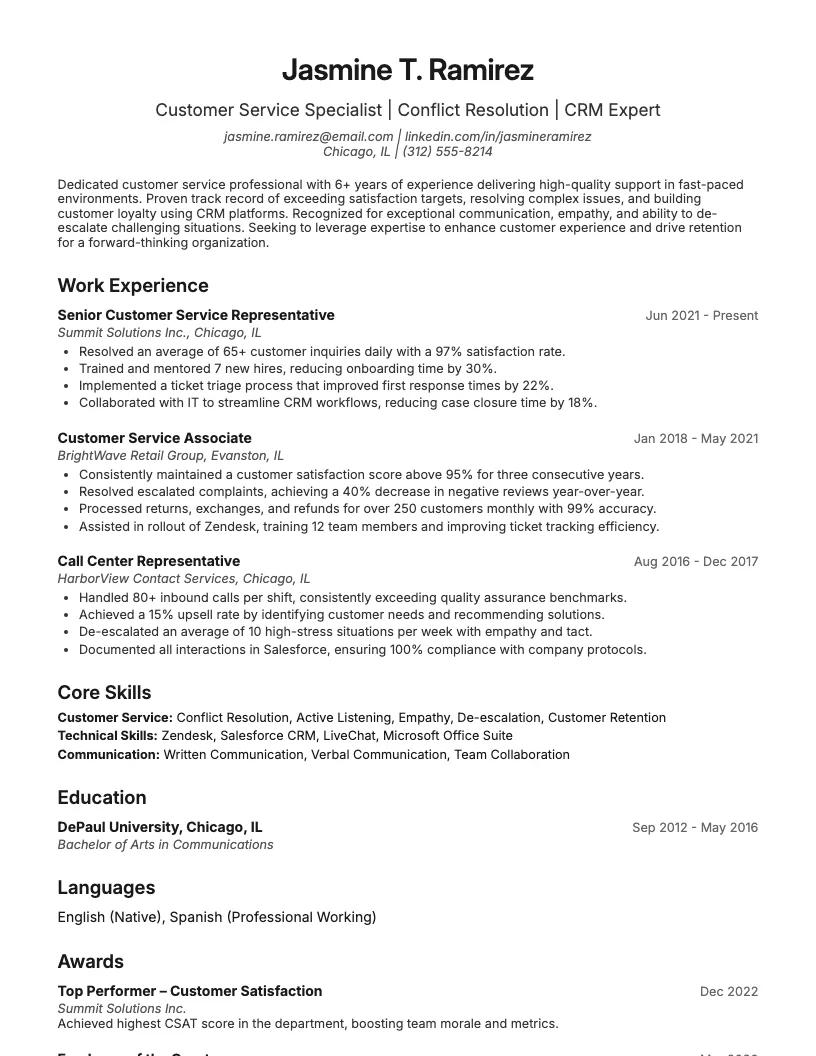
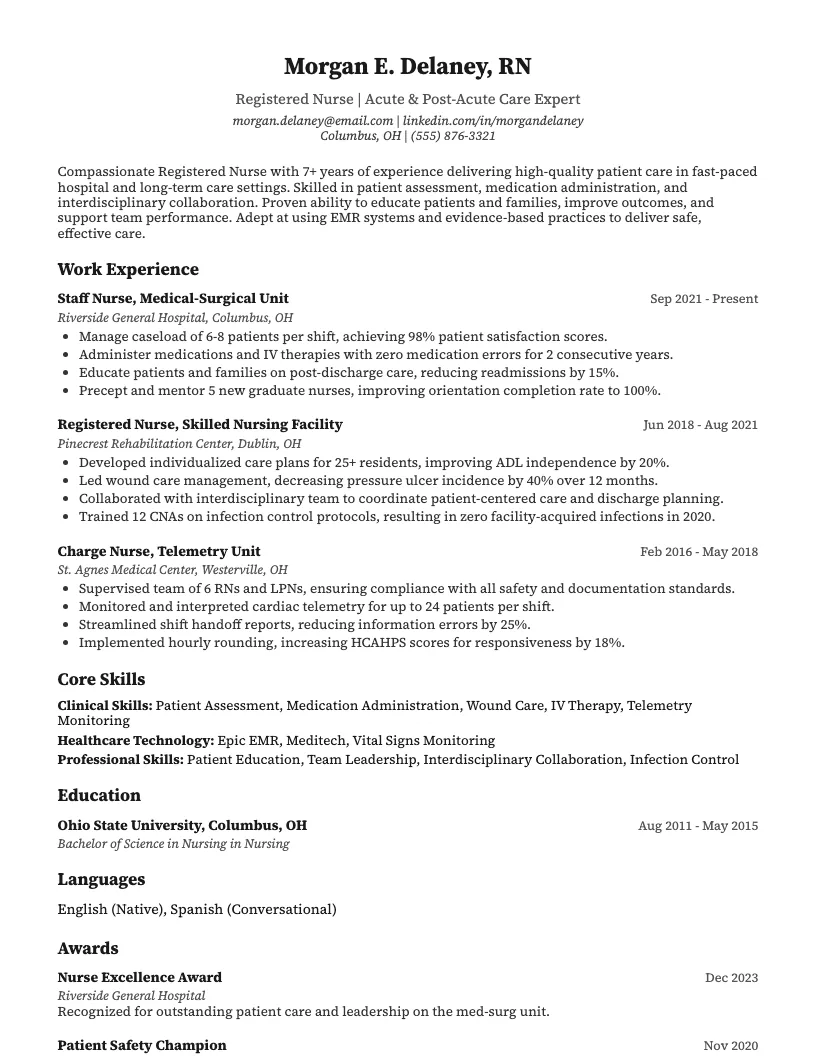
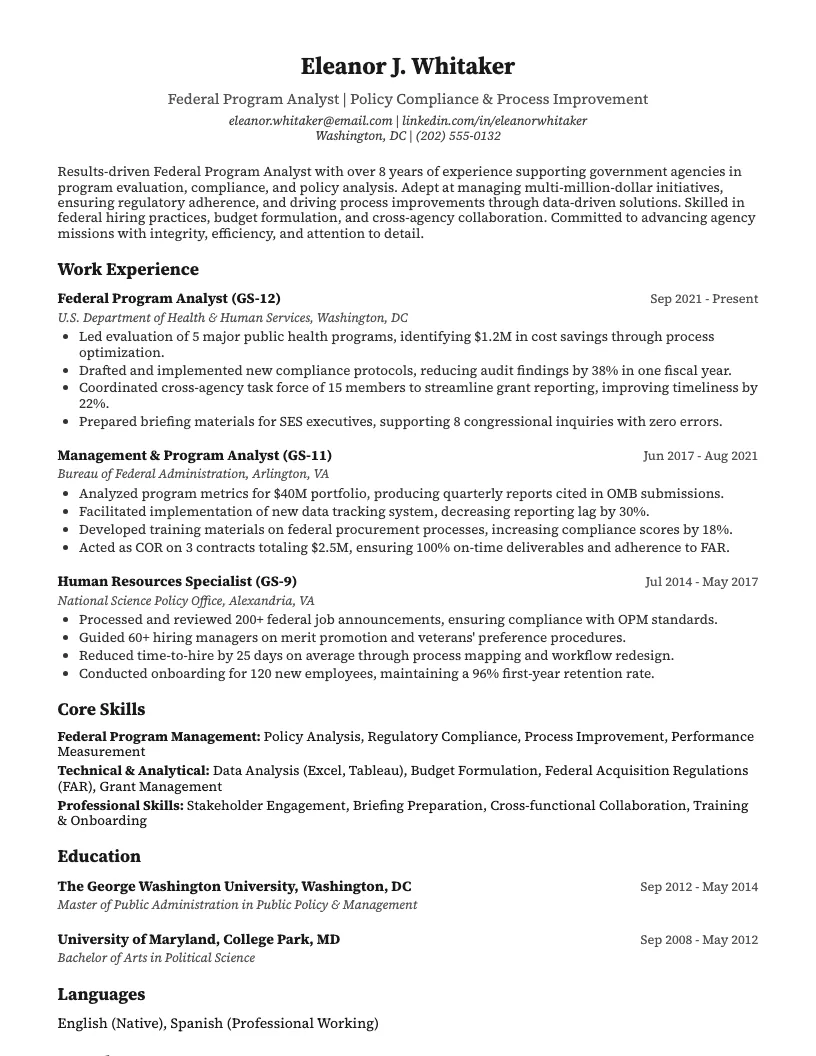
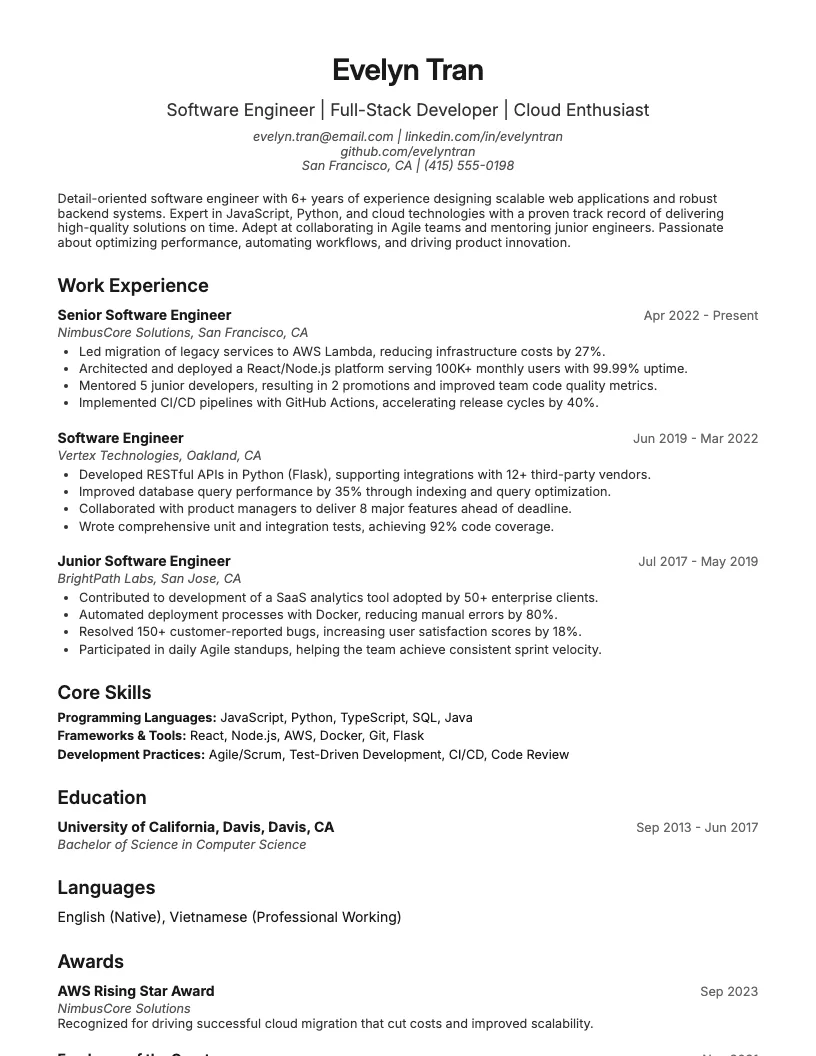
8 examplesStart from an example that already has them, and swap in your own.
Check your resume against the job you want
Scan your resume, see which skills and keywords the posting asks for that you are missing, and fix them before you apply.
Free to use • No credit card required