Resume Skills Keywords: 10 Fields, 6 Steps I Use to Find Them
What skills keywords are, 6 steps to find the ones your target job wants, keyword sets for 10 fields, and how to prove a skill instead of just listing it.


Written by Sarah Chen
Senior Career Strategist & Resume Expert
Updated August 2026
Reviewed by Marcus Rodriguez
Is your resume ATS-friendly?
Drop your resume in and see which of these skills a scanner can actually read, and which ones the job you want is asking for that you have not listed.
PDF or DOCX. Max 2MB.
We never share your resume or use it to train a model.
In This Guide:
What are skills keywords on a resume?
You already know your skills. The problem is most resumes describe them instead of naming them.
A skills keyword is the actual term a hiring manager or an applicant tracking system is scanning for - "Salesforce," not "customer relationship software." I've read resumes from strong candidates that got passed over for exactly this reason: the skill was there, just not in the words the posting used.
Nearly 90% of employers say their screening software filters out qualified people whose resume doesn't match the posting's wording closely enough, so precision here isn't a nitpick.
Hard skills
These are the ones you can prove: a language, a certification, a piece of software, a method you were trained on. They're specific, measurable, and they should carry most of your keyword weight - an ATS can score them objectively in a way it can't score a personality trait.
Soft skills
Communication, leadership, collaboration - the abilities that show in how you work rather than in a tool or a certificate. These are the ones that need something that happened attached to them.
Tools and software you have used
The named products you have actually worked in - Excel, Salesforce, SAP. Which name to write is covered further down.
Certifications and credentials
Write these exactly as issued - full name, and the acronym too if the field uses one. A posting might search for either.
How a skill keyword differs from an action verb
An action verb alone versus an action verb with the keyword named
Managed the budget.
Managed a $2M budget using SAP.
An action verb is what you did - managed, built, negotiated. A skill keyword is what you did it with or the ability it demonstrates.
On its own, "managed" tells a reader nothing; "managed a $2M budget using SAP" tells them everything. Putting the two together in a bullet follows a set order - the formula for a bullet is further down.
If you're not sure which keywords a posting is actually testing for, that's a scan ResumeJudge will run for you - it checks your resume against the job description and flags the ones you're missing before you hit submit.
What is an areas of expertise section, and how is it different from a skills section?
Areas of expertise versus a skills section
| Areas of expertise | Skills section | |
|---|---|---|
| Contains | Broad specialties, job-title phrases | Tools, software, named abilities |
| How many | One row near the top | 5 to 10 bullets |
| Where it sits | High, right under the summary | Lower - sidebar or above work history |
| Use it when | Multiple specialties or 10+ years | Early career or one function |
Nine times out of ten, when someone asks me this, they've already got a skills section and someone told them to bolt an areas of expertise block on top of it.
You don't need both by default. They do different jobs, and mixing them up is the mistake I see most.
What goes in an areas of expertise section
This is your broad specialties, not your tools.
Think "vendor contract negotiation" or "cross-functional team leadership" - phrases that describe territory you own, usually pulled straight from job titles one level above yours.
What goes in a skills section
This is the concrete list: the software, methods, and named abilities a recruiter or an applicant tracking system actually scans for.
Match the wording to the posting exactly here, not to what sounds impressive. More on how this list gets built and formatted is in the skills section further down the page.
How many to list in each
A skills section runs five to ten bullets, ranked with the most job-relevant ones first - that's the range that's worked for years and it still holds up.
Areas of expertise stays shorter and tighter: one row of phrases near the top, not a list you scroll through.
When you only need one of the two
If you're early career or applying within one function, skip areas of expertise entirely - a skills section does the job alone.
Save the expertise block for résumés spanning multiple specialties or ten-plus years, where a reader needs the big picture before the detail.
Where the section sits on the page
Areas of expertise sits high, right under your summary, because it's meant to be read in the first five seconds.
A skills section can sit lower - in a sidebar, or just above work history - because its job is to be scanned, not skimmed.
How do you find the skills keywords for the job you are applying to?
How do you find the skills keywords for the job you are applying to?

You don't need a tool to find the words a posting wants. You need a system, and most people never build one - they skim the ad once and start typing.
Step 1: Pull the skills named in the job posting
Read the whole posting, not just the bullet list under "Requirements."
The best keywords hide in the opening paragraph and the responsibilities section too. I've seen candidates miss the one skill the hiring manager cares about most because it only showed up in a sentence, not a bullet.
Whatever repeats is a signal - if a posting says "stakeholder management" twice, that's not filler.
Step 2: Read ten postings for the same title and note what repeats
One posting tells you what one company wants. Ten tell you what the role actually is.
Pull up ten listings for your target title and write down every skill that shows up in more than half of them. That short list is your real priority order - not whatever you happened to list first on your own resume.
Step 3: Check the company's About page for its own wording
Companies have house language - "customer obsession," "data-driven," "operational excellence" - and it shows up in how they describe the role too.
Match it where it's true. It costs you nothing and it tells the reader you did your homework.
Step 4: Look at postings one level above yours
Pull two or three listings for the next title up. You'll see skills that don't belong on your resume yet, and a few you already have but haven't been calling out.
Step 5: Write the keyword exactly as the posting writes it
Matching the posting's exact wording in your skills list
Adobe Creative Suite
Adobe Creative Cloud
"Adobe Creative Cloud" and "Adobe Creative Suite" are the same skill to a person and two different strings to most scanners. Match the posting's exact wording wherever it's true to your experience - this is the single easiest fix on this whole page.
If you'd rather skip the manual matching, ResumeJudge reads the posting and your resume together and rewrites the wording into the right sections for you.
Step 6: Add the acronym and the spelled-out form
List both "CAD" and "computer-aided design." A recruiter searching one won't necessarily catch the other, and you have no way of knowing which one they'll type.
Where do skills keywords go on a resume?
Most people cram every keyword into the skills section and call it done. That's the mistake I see most often - a keyword only earns its keep if it shows up in more than one place.
The skills section
This is still your home base for it. What goes in it is covered above; what matters here is the shape of the list. Group it by category instead of one long run-on line - nine times out of ten a grouped list reads faster than an alphabetical dump.
Don't try to fit every skill you own; fit the ones the posting names. (See how many to list if you're not sure where to stop.)
The headline and summary
Your headline should read like Job Title + Years + Top Skill - it's prime real estate, and I've seen too many people waste it on "Motivated Professional." The summary right below it is where you attach a number to your best keyword: "increased retention 30% using X," not just "skilled in X."
Work experience bullet points
This is where a keyword stops being a claim and becomes evidence. A skill sitting alone in a list is an assertion; the same skill inside a bullet describing what you did with it is proof.
More on the exact wording below.
Education, coursework and certifications
If you're early in your career or short on work history, this section carries more weight than people give it credit for. Relevant coursework, a certification, a class project - all of it can hold keywords a thin experience section can't.
The formula for a bullet: action verb + skill + result
A bullet using the action-verb-skill-result formula
Trained new employees on company procedures.
Reduced onboarding time by 20% by streamlining new-hire training.
Action verb, then the skill, then the result: "Reduced onboarding time by 20% by streamlining new-hire training." Skip the formula and you get a bullet that names a skill without proving it.
This is also exactly what ResumeJudge rewrites for you - feed it your resume and the job posting, and it slots the missing keywords into bullets like this one, in the right sections, instead of you guessing where they fit.
Which skills keywords should you use for your field?
Is your resume good enough?
Drop your resume in and see which of these skills a scanner can read, and which ones the job you want is asking for that you have not listed.
Upload your resumeFree. PDF or DOCX. We never share your resume or use it to train a model.
I've reviewed resumes across a dozen industries, and the keyword mistake I see the most is a candidate copying a generic list off some career site and dropping it into their resume as-is. The areas of expertise keywords that work for a nurse won't do anything for a project manager.
Think of this as matching your skills and experience keywords to the field you're applying in, not the field you came from. Below is a starting point for the fields I see most - use it to jog your memory, then confirm the exact wording against the posting in front of you.
Business, finance and accounting
This field runs on precision, so its keywords do too: financial reporting, budgeting, GAAP, reconciliation, audit, compliance, risk management, accounts payable. Vendor management, forecasting, and Excel or Tableau proficiency round it out - this is a field where the software you know matters as much as the certification you hold.
If you carry a CFA or PMP, that credential is a keyword in its own right - list it exactly as the issuing body spells it.
Marketing and sales
Marketing has the longest keyword list I run into - one list I checked had over 120 terms for this field alone, because it stretches from SEO and paid social to CRM platforms and event planning. Pick the ones that match your actual channel: SEO/SEM, campaign management, lead generation, Salesforce or HubSpot, market share, revenue growth.
Pair each one with the outcome it drove - not "ran email campaigns," but the open rate or pipeline it produced.
Information technology and software
Tech postings name specific tools, not categories, so your resume should too - Python beats "programming languages," AWS beats "cloud." The tool that's hot this year is stale in two, so a generic list only gets you so far.
Healthcare
Certifications carry as much weight as skills here - BLS, CPR, and license type belong next to clinical terms like case management, patient care, and EHR/EMR systems. Compliance and regulatory knowledge matter almost everywhere in this field, even outside direct patient care.
If you're moving from clinical to administrative work, add healthcare administration and public health to signal the shift.
Education
Curriculum development, classroom management, differentiated instruction, and IEP experience are the terms I see repeat across teaching postings. Coaching and mentoring count here too, even if they happened outside a formal classroom.
If you've run a program, add fundraising, recruitment, or admissions - schools search for those the same way companies search for sales terms.
Customer service, retail and HR
Conflict resolution and de-escalation matter on the service side; talent acquisition, onboarding, and employee relations matter on the HR side. Retail resumes deserve the same treatment - inventory management, merchandising, and loss prevention are keywords too, not just soft skills.
Don't skip the systems: POS, Salesforce, PeopleSoft, or whatever platform your last job actually ran on.
Manufacturing, engineering and skilled trades
Lean manufacturing, Six Sigma, quality control, and OSHA compliance show up constantly here, alongside the trade-specific ones - CAD, blueprint reading, preventive maintenance. If you've worked toward an ISO standard or led a process improvement, name it - vague "attention to detail" doesn't do the work a specific standard does.
Project management
Agile, Scrum, budget and scope management, stakeholder management, and PMP or CAPM are the core set - and they cross-list into nearly every other field on this page, because almost every job now involves running some kind of project. That overlap is exactly why a generic skills list undersells you: the same PM terms belong on a marketing resume and an engineering one.
Data and research
SQL, Python or R, Tableau or Power BI, and statistical analysis are the baseline; A/B testing and data visualization go on top for roles closer to product or marketing. Research-heavy roles add market analysis and competitive benchmarking.
Naming the tool is only half the job - showing what you did with it is what makes it count.
Languages
List each language with a level next to it - fluent, conversational, native - the same way you'd list a software version. A TOEIC score or a certificate like Advanced English adds proof a plain list doesn't.
How do you prove a skill instead of just listing it?
Nine times out of ten, the resumes that get skipped over aren't missing skills - they're missing proof.
"Leadership," "communication," "problem-solving" sitting alone in a skills list tell a recruiter nothing they can act on.
Proof is what turns a word into evidence, and it comes from four places: a number, a named tool, a real moment, and an honest level.
Attach a number to the skill
A number is the fastest way to make a skill believable. "Increased sales by 15%" or "boosted traffic by 30%" does more work than any adjective you could add in front of it.
If you don't have an exact figure, use a real range or a count - team size, accounts managed, tickets closed a week. Something you can defend in an interview.
Name the tool, not the category
"Design software" is a category. "Figma" is a keyword an applicant tracking system and a hiring manager both recognize.
I've seen hundreds of resumes lose this fight - they write the umbrella term and skip the actual product name underneath it, which is the part someone searches for.
Turn a soft skill into something that happened
Turning a soft skill into proof
Strong communication skills.
Presented quarterly results to senior leadership, aligning three departments on a new budget.
Don't write "communication." Write the sentence where it happened: what you communicated, to whom, and what changed because you did.
That's the same action-verb-plus-skill-plus-result formula your bullet points already need.
Say how good you are at it
Don't reach for 'expert' just because it sounds strong. If an interviewer tests it and you can't back it up, that's worse than leaving the level off - match the word to what you'd actually claim in the room.
Next to a listed skill, a level word - "intermediate," "advanced," "fluent" - tells the reader how far to trust it. Leave it blank and they'll guess low.
Skills keywords to leave off
Cut "hardworking," "team player," "detail-oriented," and "fast learner." They're claims with no evidence attached, and every other resume already says them.
If you're staring at a bullet that still feels generic, that's usually the sign it's missing a number or a tool name - running your resume against the actual posting is exactly what ResumeJudge rewrites for you, swapping vague lines for the specific wording the job asks for.
Frequently Asked Questions
How many skills should I list on my resume?
Somewhere around 5 to 10 skills works well for a dedicated skills section - enough to cover the terms the posting cares about without turning the list into noise. Lead with whatever matches the job description most closely, since a scanner reads top to bottom and so does a hiring manager doing a quick skim.
Should I use more hard skills or soft skills?
Hard skills should make up most of your list. They're specific, measurable things - tools, languages, certifications, techniques - so both applicant tracking systems and recruiters can match them directly against the posting. Soft skills like communication or leadership still belong on the resume, but they carry more weight when they show up inside an accomplishment, like "led a team of five," than as a bare word in a list.
Do I need to change my skills for every application?
Yes - the skills list should shift for every posting, not stay fixed across applications. Each job description uses its own wording for the same abilities, and a resume that echoes that exact wording matches better than one using a close synonym. ResumeJudge takes your resume and a job posting and rewrites the skills and keywords into the right sections for you, so you don't have to redo this by hand for every application.
What if I don't have the skills the posting asks for?
Don't invent it - list the closest skill you genuinely have and let your experience do the rest. If you're missing a specific tool or technique the posting names, look for a related one you do know and say so plainly, or point to a project where you picked up something close to it. Padding the list with a skill you can't back up in an interview does more damage than leaving it off.
Can I list a skill I only used at school or in a side project?
Yes, as long as you actually used it - a class project, capstone, or personal build counts as real experience with that skill. Say where it came from, like "built with X during a course project," so it reads as genuine rather than assumed. This matters most for students and career changers who don't yet have a job title that proves the skill on its own.
Does the applicant tracking system really search for these words?
Yes - most systems companies use to manage applications filter and rank resumes by the specific keywords in them, matching against the skills, titles, and terms listed in the job posting. A resume missing a skill the posting names can get filtered out before a person ever opens it, even when the candidate actually has that skill. ResumeJudge scans your resume against the job description and shows you exactly which of those keywords are missing before you apply.
Will listing skills in a table or column stop them being read?
It can - some applicant tracking systems parse resumes in a strict top-to-bottom, left-to-right order, and multi-column layouts or tables can scramble or drop text as a result. A single-column list under a clear "Skills" heading is the safest format if you're not sure which system a company uses. If you want to keep a table for visual reasons, repeat the same skill wording somewhere else on the resume in plain text as a backup.
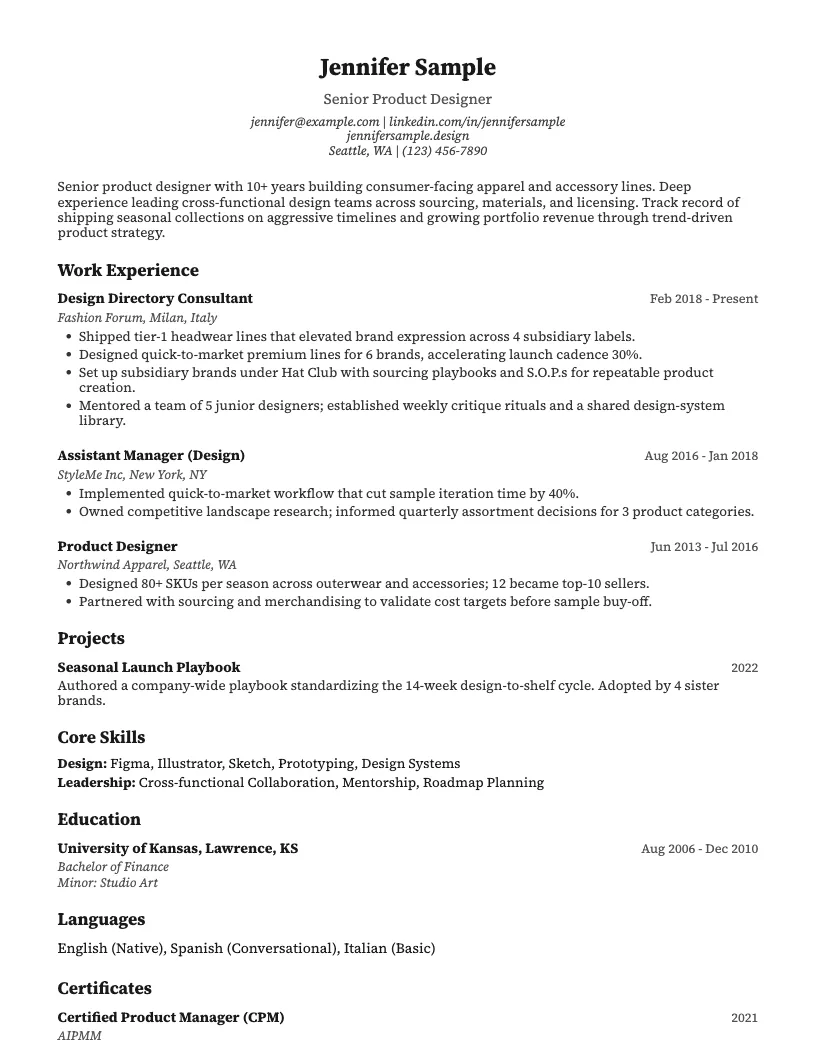
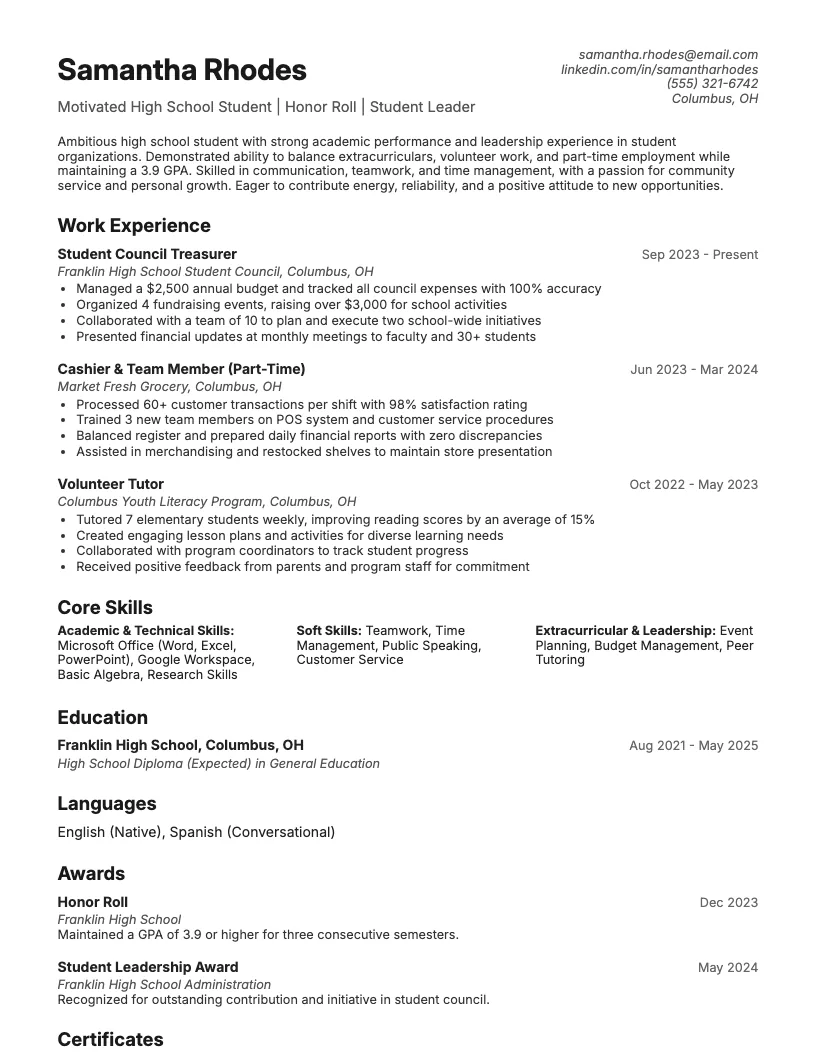
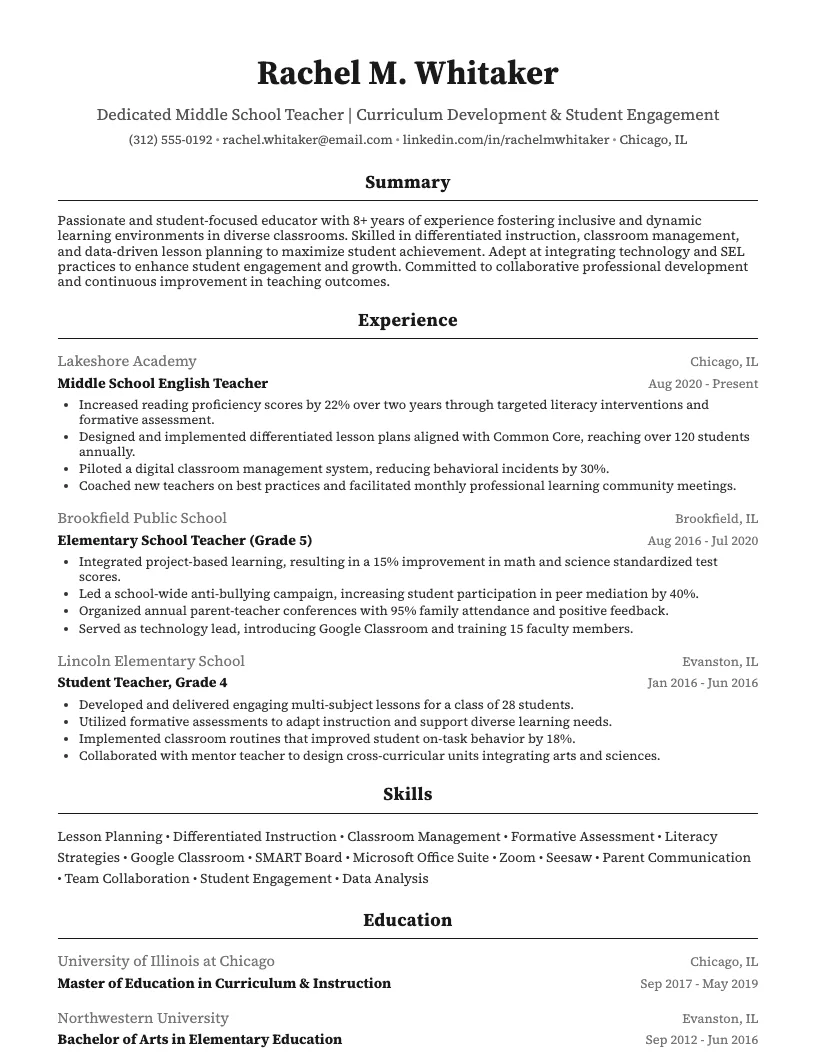
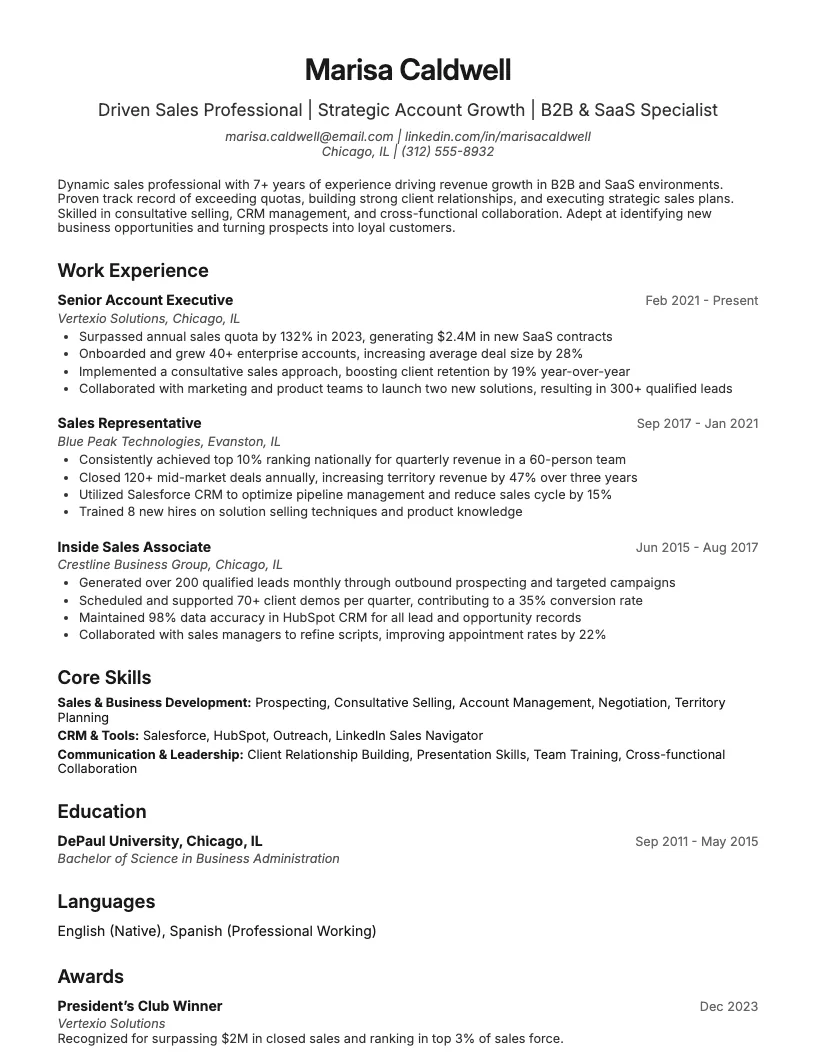
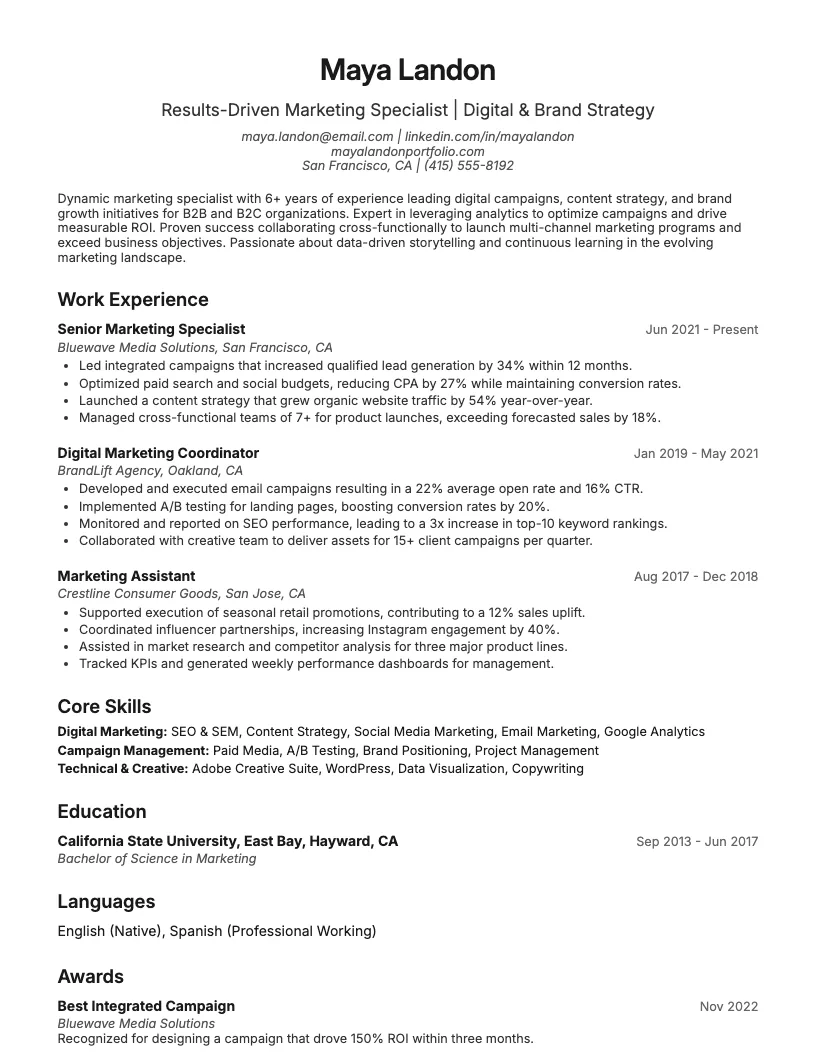
See these skills on a real resume
8 examplesStart from an example that already has them, and swap in your own.
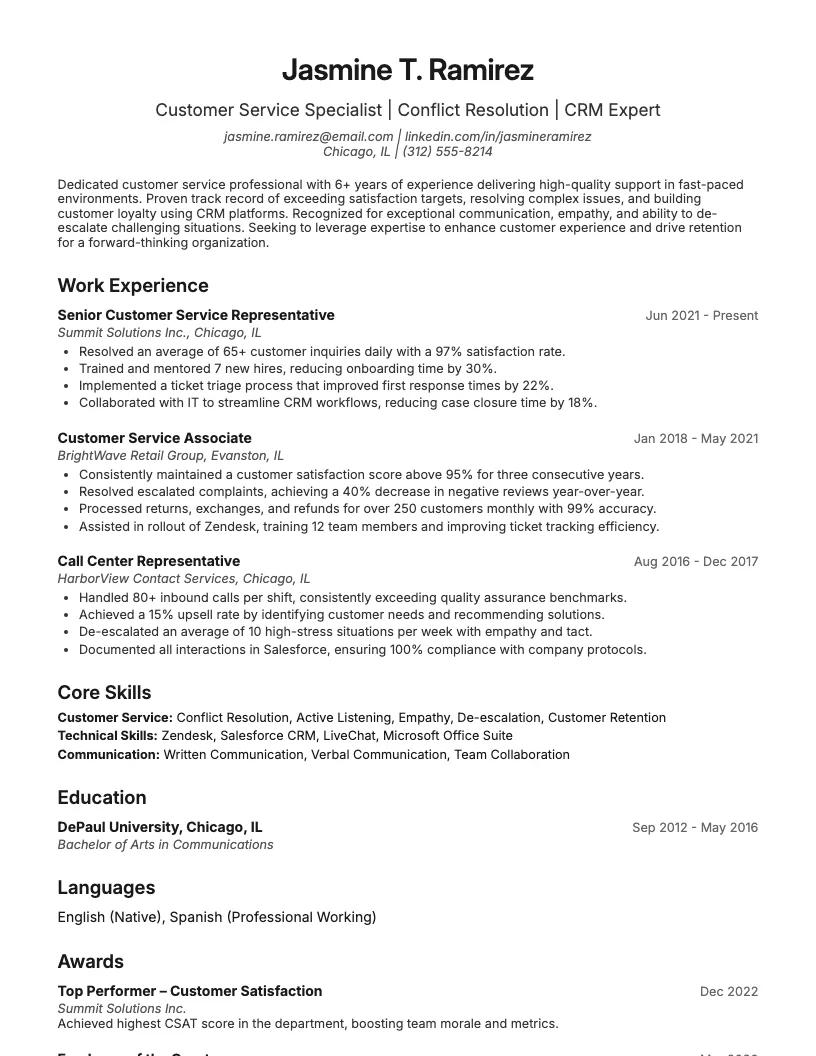
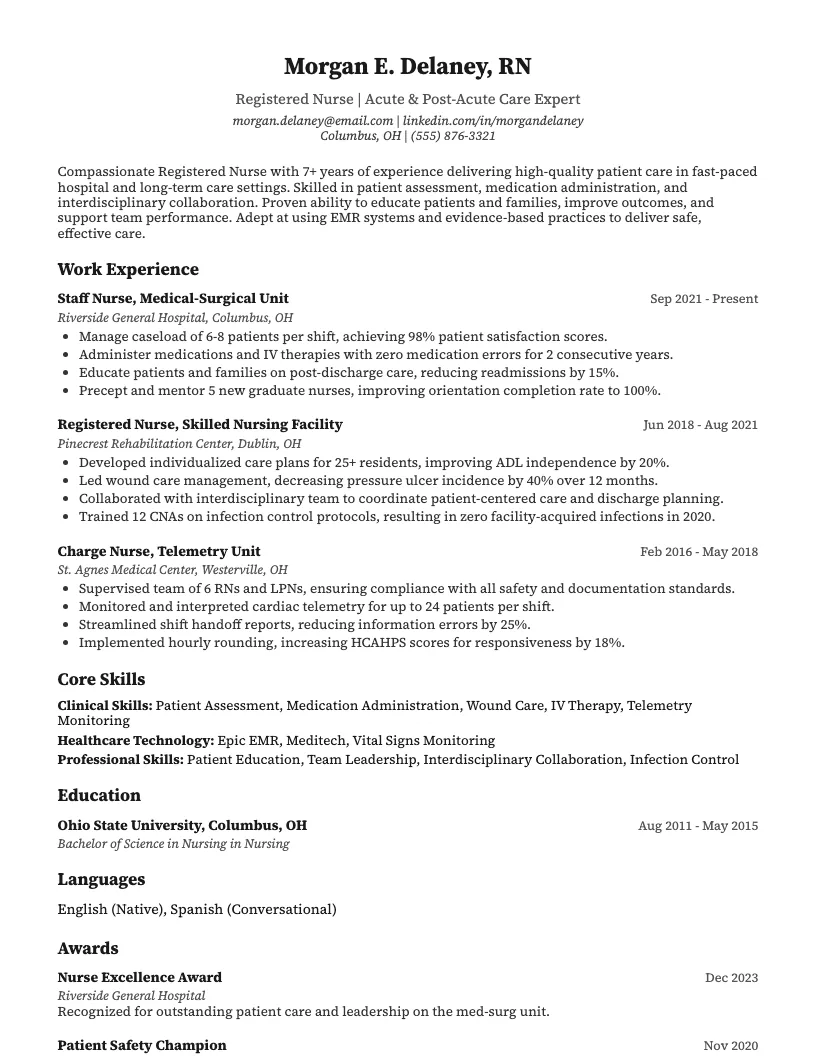
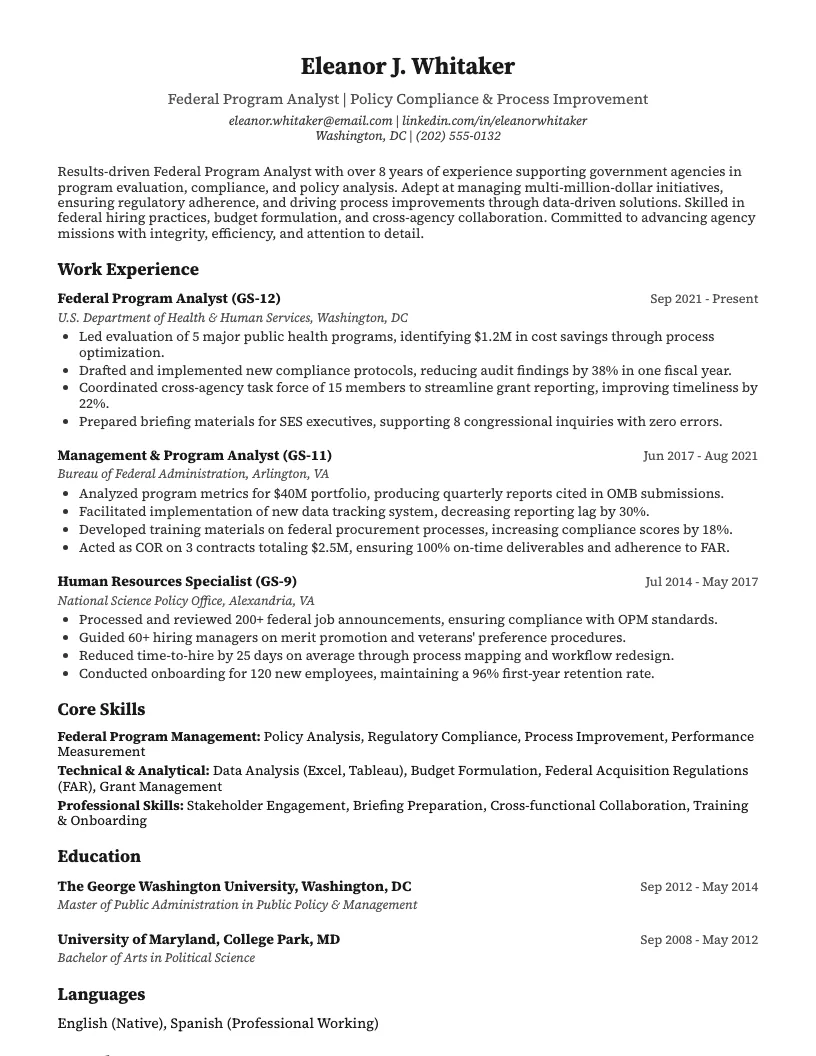
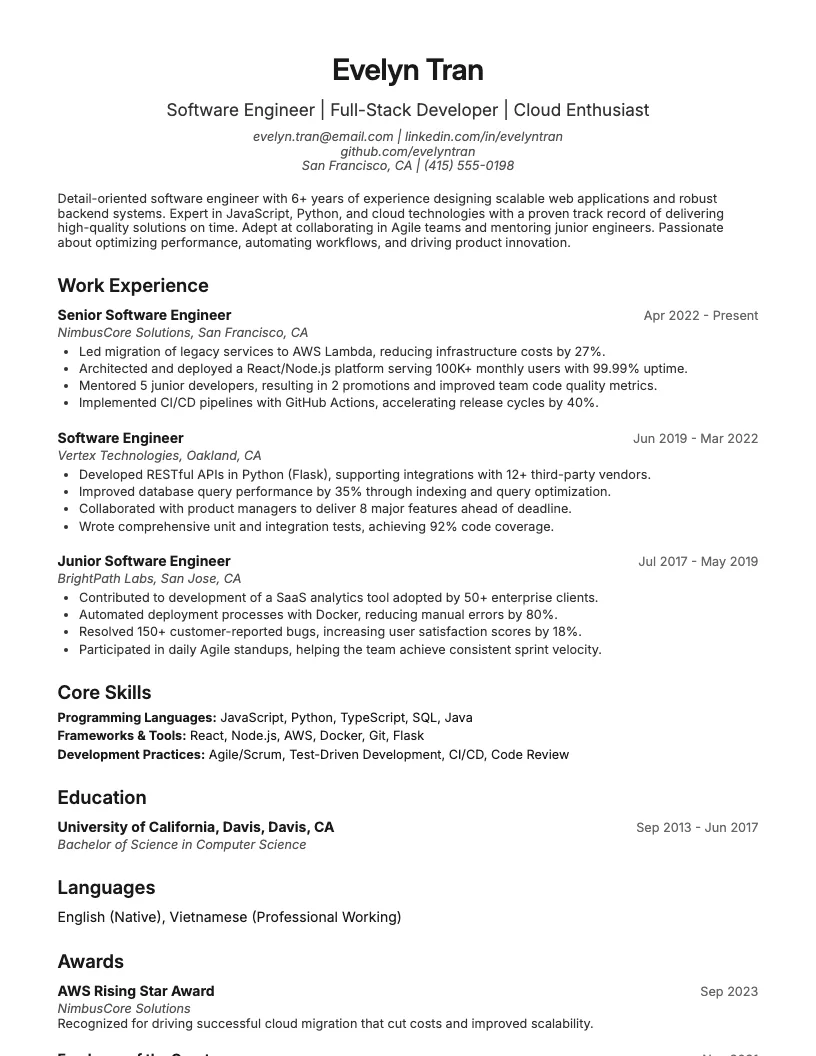
Check your resume against the job you want
Scan your resume, see which skills and keywords the posting asks for that you are missing, and fix them before you apply.
Free to use • No credit card required