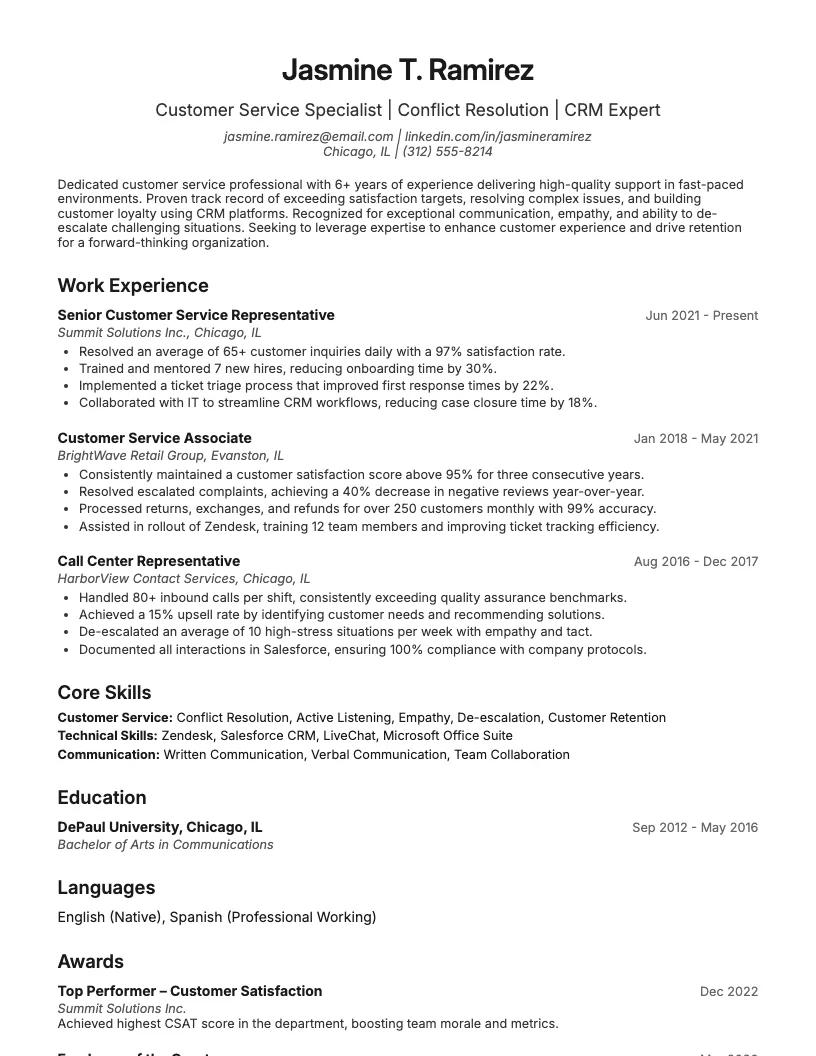
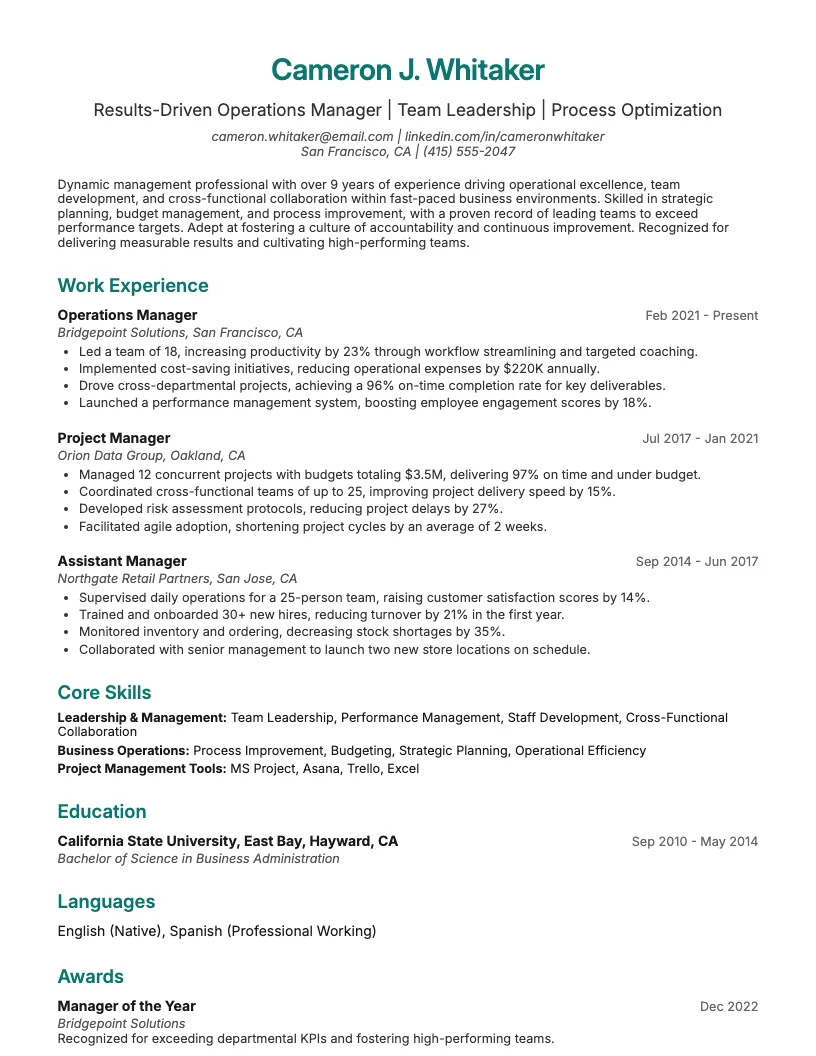
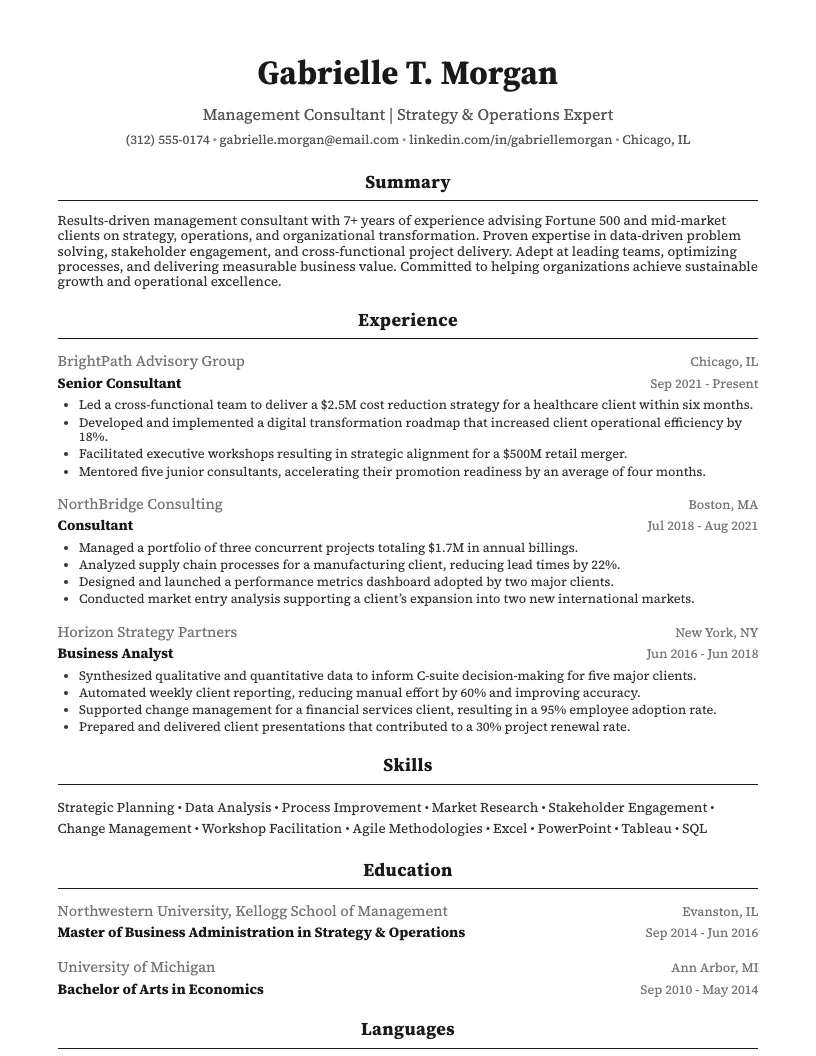
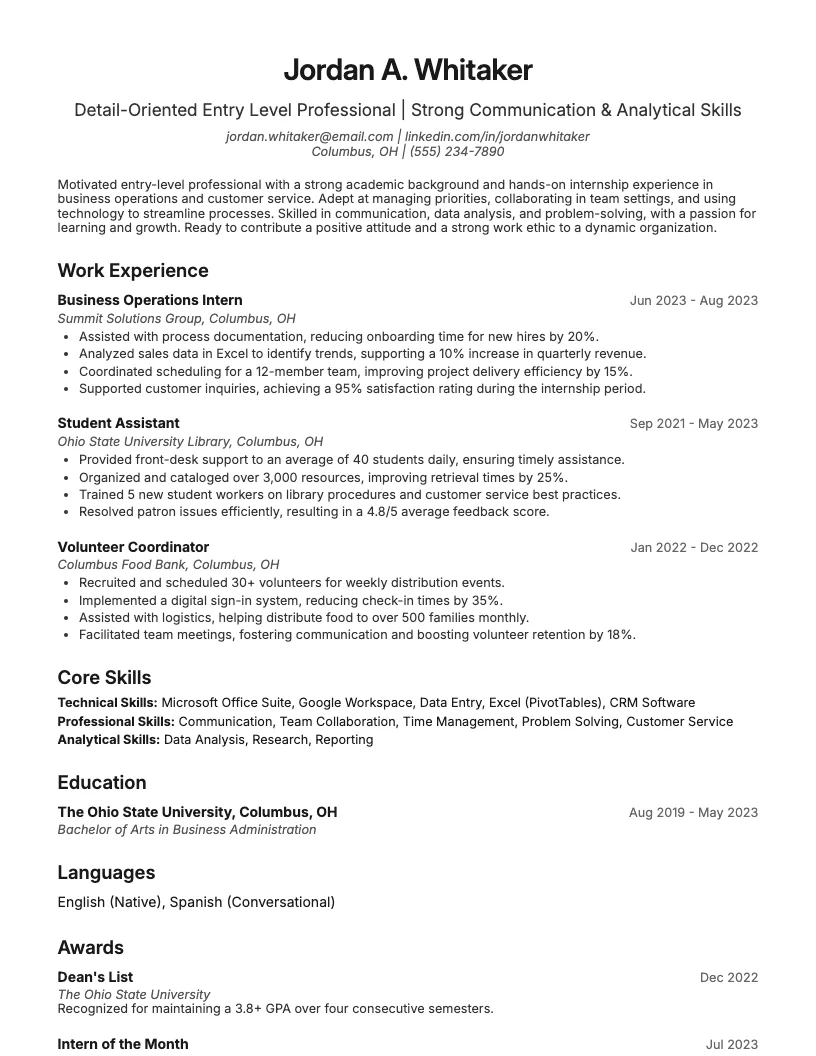
Mental Health Therapist Resume Example
See full guide on Mental Health Therapist resumes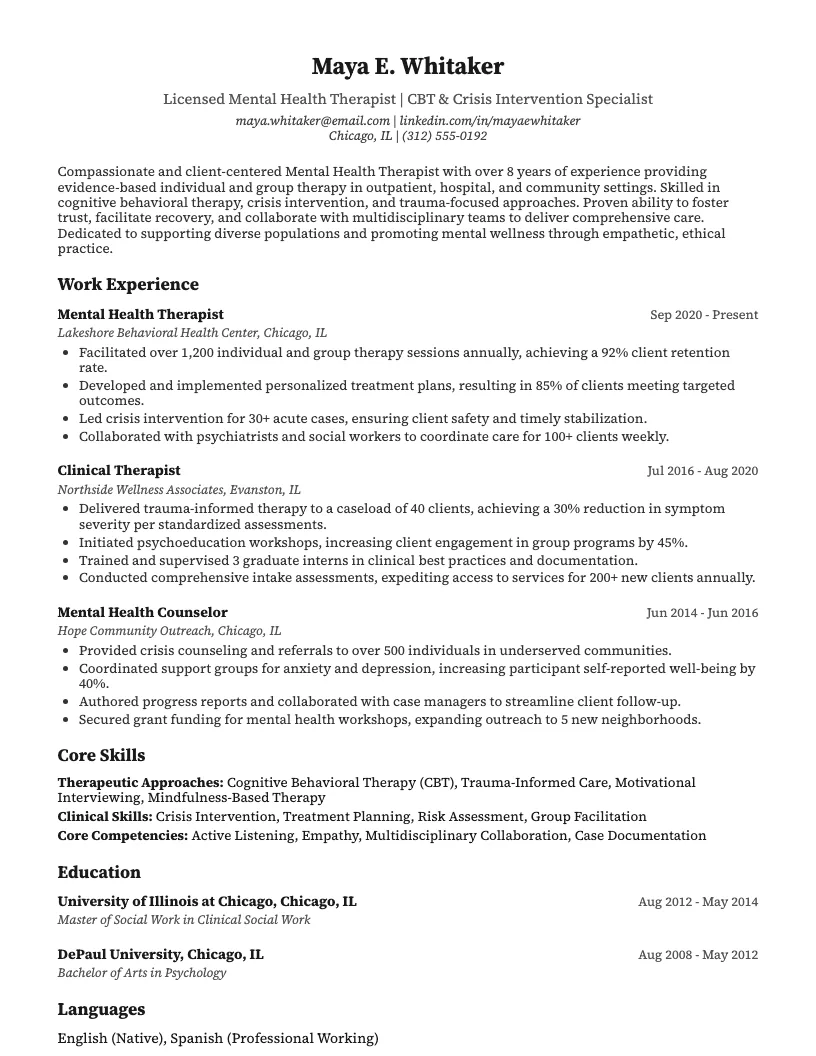 Click to enlarge
 Click to preview

Get inspired by 62+ professional Psychotherapist resume examples, each written by career experts and optimized to pass ATS scans. Pick a proven template, tailor it to your role, and download a polished resume in minutes.
Pick the specialization closest to your target role and start from a proven resume example.
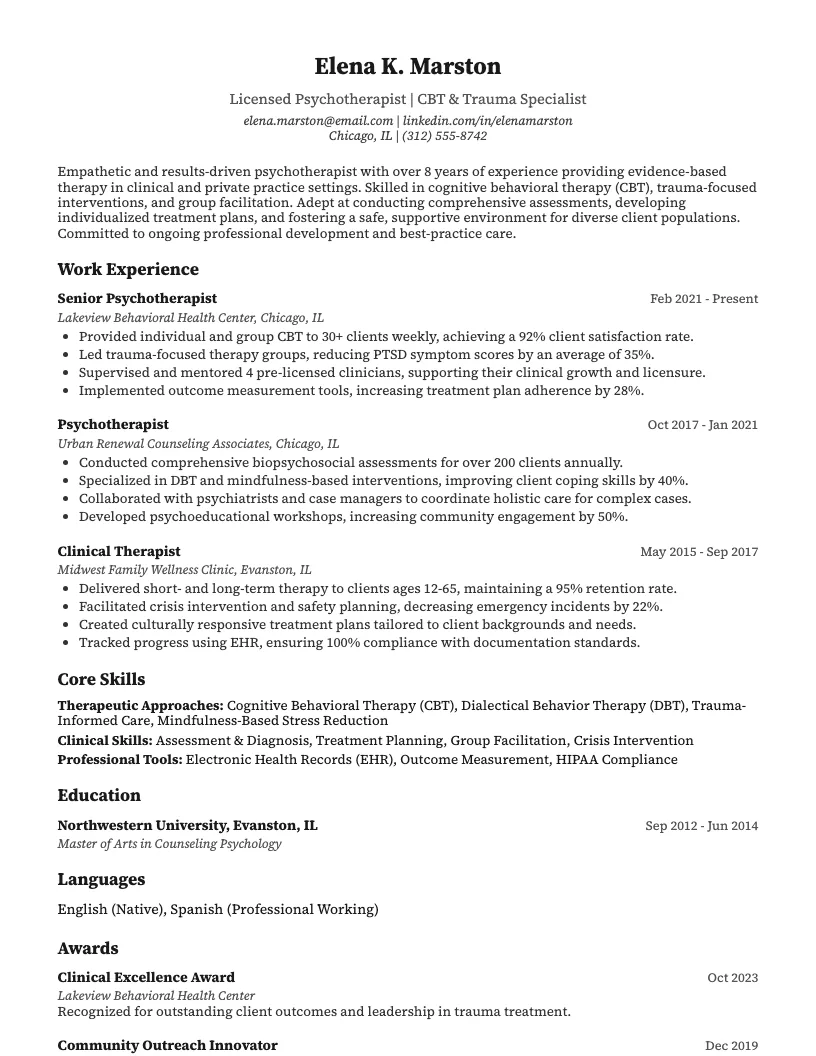
Psychotherapists help people handle emotional and behavioral issues. I work with clients who deal with anxiety, depression, trauma, and relationship problems.
Some of us focus on kids, others on adults. I might work in a private practice, a hospital, or a clinic.
My day often involves assessments, one-on-one sessions, and tracking progress. I create treatment plans tailored to each person’s needs.
It’s a mix of listening, problem-solving, and using different therapy methods. I also keep detailed notes and sometimes collaborate with other health professionals.
Everyone’s psychotherapist journey looks a little different. Your resume should match where you are in your career right now.
Whether you’re new or have 10+ years in the field, you need different skills and examples. I break down what works at every stage.
Writing a psychotherapist resume means showing both your clinical expertise and your approach to patient care. You need to hit the right tone from the start.
I always focus on the resume basics first-layout, format, and design. These details matter when you want hiring managers to take you seriously.
Most recruiters spend less than 10 seconds on an initial scan. A clear, well-organized resume helps you make your strengths obvious right away.
Next, you want to consider how your experience, education, and skills line up with the job you want. Tailoring your resume for every application can make a real difference.
Choosing the right resume format matters a lot for psychotherapists. I usually stick with reverse chronological order because recruiters and ATS systems both prefer it.
This format highlights your most recent experience first. It’s clear, easy to read, and helps hiring managers spot your qualifications quickly-especially if you’ve got steady, relevant work history.
If you’re new to the field or shifting careers, you might consider a functional or hybrid format. These put a bigger spotlight on skills instead of just job titles.
There’s no single “best” format for everyone. You want your strongest achievements and skills to stand out, so pick the structure that does that for you.
Keep your resume layout clean and easy to read. I recommend black and white, unless you’re applying to a pediatric practice-then, a touch of color is fine.
Use consistent fonts and bold headings so your information stands out. Make your contact details pop at the top, so hiring managers don’t miss them.
Break up big blocks of text. Bulleted lists help showcase your skills and experience. This helps recruiters scan your resume in under 10 seconds.
A professional template can save you time and prevent formatting errors. You want your resume to reflect the same professionalism you give your clients.

Building a strong psychotherapist resume means focusing on the most important sections. Each part shows off your experience, skills, and what you bring to the table.
You want to keep things clear, organized, and specific. I find that breaking it into summary, work history, education, and skills works best.
If you highlight the right details in each section, you make it easy for hiring managers to see your strengths. Let’s dive into what you need for each part.
Your resume summary is your chance to show who you are as a psychotherapist. In just 3-4 lines, you highlight your style, values, and what sets you apart.
I like to focus on my therapy philosophy and the types of clients I help. If you specialize in trauma or work with teens, mention it. This helps you stand out.
Use strong, specific adjectives to describe your approach-think empathetic, solution-focused, or collaborative. Add a short line about your proudest achievement or what motivates you every day.
This section is where you show your impact as a psychotherapist. Instead of just listing duties, I focus on real success stories and outcomes I help achieve.
Use reverse chronological order. I usually pick my top three roles in the last 10 years, unless I’m early in my career-then I include relevant internships or practicum.
Start each bullet with a strong verb-like "guided," "implemented," or "facilitated." This helps you highlight results, not just responsibilities. Quantify those results if you can.
Describe specific techniques or approaches you use, such as CBT or trauma-informed care. If you work with certain populations, mention them. Tailoring makes your experience more relatable.
Include practical skills, too. I mention things like insurance documentation, patient confidentiality, and detailed progress notes. These details show I understand the business side of therapy.
When you focus on both clinical and administrative wins, you give a full picture of your value. Next up: let’s break down how to showcase your education.
Your education section gives hiring managers a quick way to see if you meet the baseline requirements. For most psychotherapist roles, you need a master’s or doctoral degree.
I list each degree in reverse order, starting with the most recent. I include the school name, location, degree, and graduation year. That’s all you really need.
If you’ve done extra training-like workshops, certifications, or seminars-or want to see how to present these in a cover letter, this is the spot to show it off. This helps set you apart from other applicants.
The skills section is where you show off both your technical know-how and softer abilities. I always include at least five skills that matter most for therapy work.
Balance is key here. List clinical techniques like CBT or DBT, but don’t forget communication, empathy, and confidentiality. These prove you know what really matters in practice.
Tailor this section for every application. Scan the job ad for keywords-this helps your resume pass ATS filters and shows you understand what the employer values.
Finish strong by double-checking your skills are up-to-date. This wraps up your core qualifications and rounds out your resume sections nicely.
A strong psychotherapist resume highlights empathy, clear communication, and clinical skills. Your unique background and approach matter just as much as your credentials.
You want to target your resume to each employer. Show your therapeutic philosophy and experience in a way that fits the role you want.
Pay attention to layout and formatting. A clean, organized resume can help you stand out among over 100 applicants for many positions.
If you’re working on your psychotherapist resume, you might want to see what others in related therapy fields include on theirs. I find it helps to compare different approaches.
You can check out examples for physical therapists, art therapists, and more. Each one highlights skills, certifications, and achievements that employers look for in therapy roles.
If you’re searching for physical therapist resume examples, you’re in the right place. I know how important it is to show both your technical skills and patient care experience.
Physical therapists need to highlight specific achievements, like patient recovery rates or caseload numbers. You want employers to see your value at a glance.
There are dozens of ways to structure your resume, but using numbers-like “treated 25+ patients weekly”-helps you stand out. This section gives you practical inspiration.
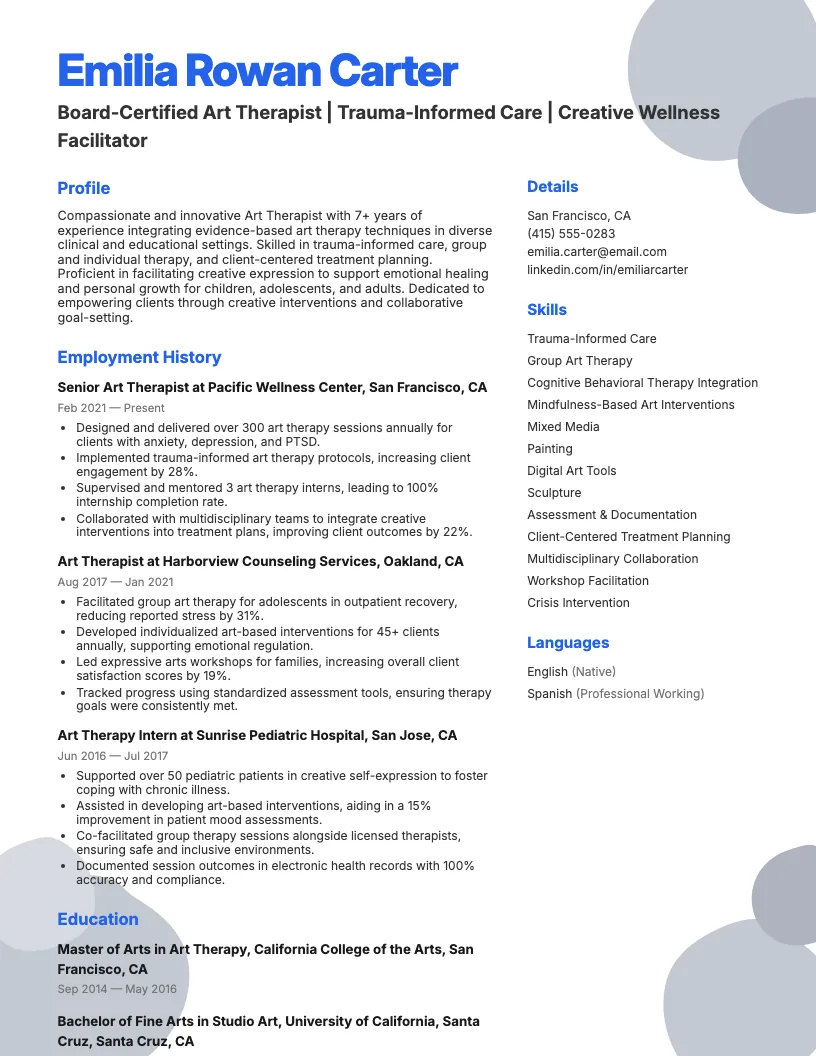
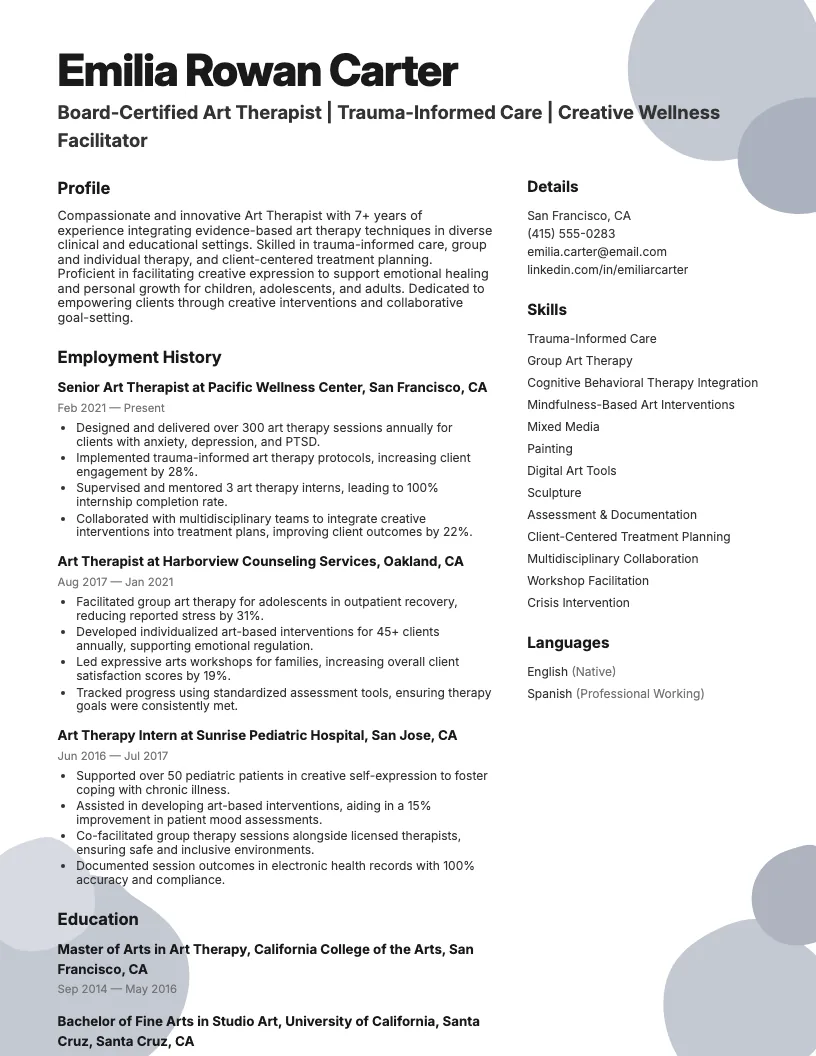
Art therapy blends creativity and mental health, so your resume needs to show both clinical skills and artistic background. I highlight hands-on experience with diverse populations.
You want to list your certifications clearly-about 70% of employers look for ATR or LPC credentials. Include details on successful therapy outcomes and how you tailor art modalities.
Showcase group session leadership and interdisciplinary teamwork. If you’ve managed art exhibits or community projects, add those. This helps your resume stand out among other art therapist resume examples.
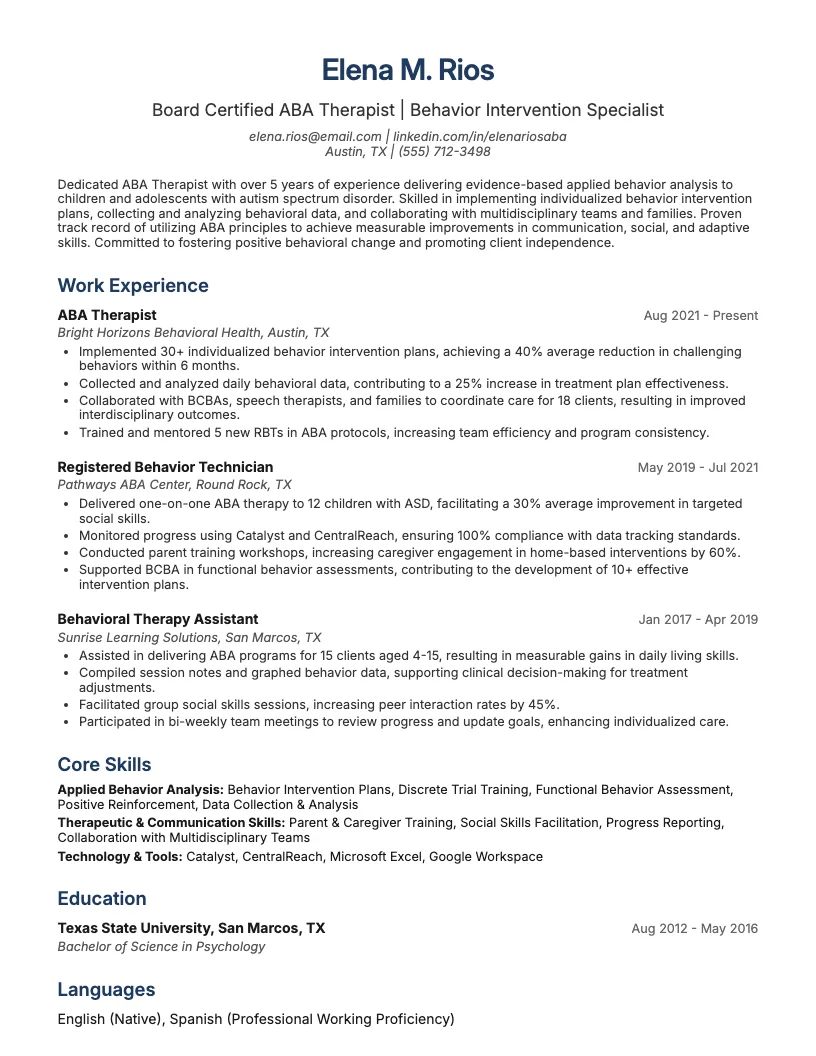
If you want ABA therapist resume examples, you’re in the right spot. I see employers ask for skills like data collection, behavioral intervention, and collaboration with families.
Highlight certifications like RBT or BCBA. I suggest including quantifiable outcomes, like “improved client behavior scores by 30%.” This shows what you actually achieve on the job.
Tailor your resume to each job. Use keywords like ABA therapy, treatment plans, and behavior modification. This helps your application stand out and pass automated screenings.
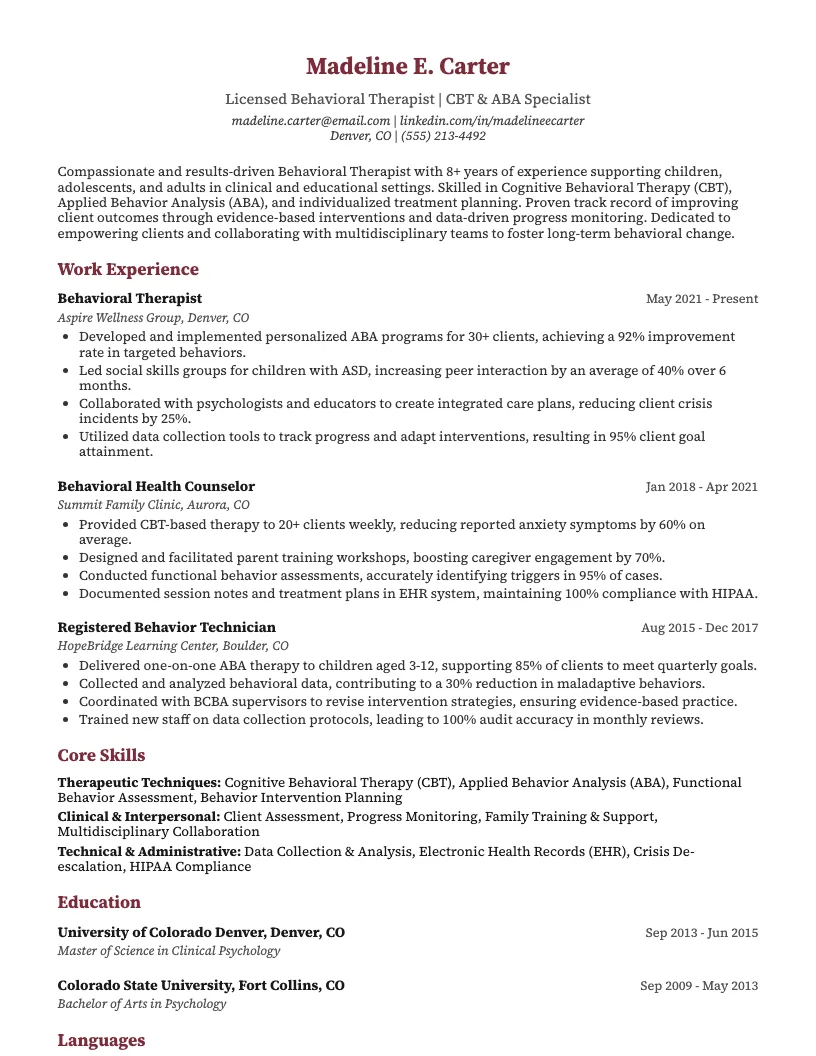
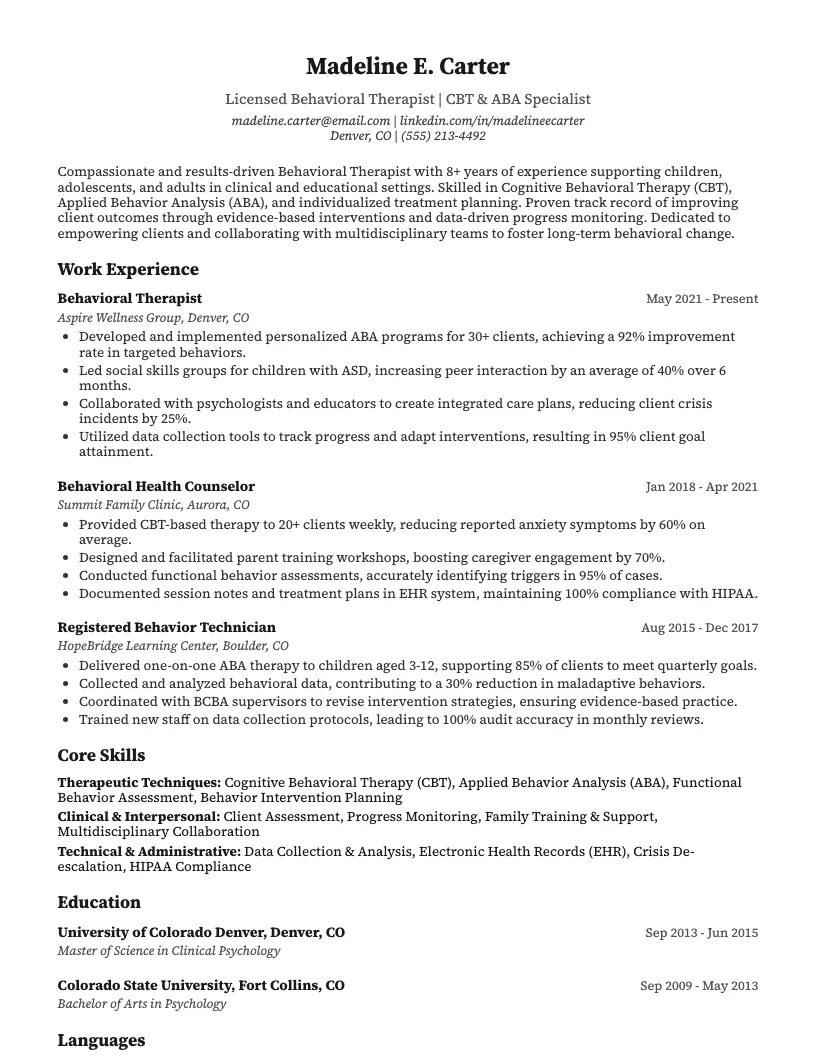
If you’re searching for behavioral therapist resume examples, you probably want to highlight your experience with behavior modification and client progress tracking. I always focus on measurable outcomes and certifications.
Employers look for specific skills, like functional behavior assessments and experience with ABA or CBT methods. You should include data-think “reduced negative behaviors by 45%” or “managed caseloads of 20+ clients.”
Don’t forget to detail your collaboration with families, schools, and healthcare teams, which is also important to mention in a school psychologist cover letter. This shows you know how to work across environments, which is huge in behavioral therapy roles.
If you're after marriage and family therapist resume examples, you want to show experience with couples, families, and group therapy. Highlight certifications like LMFT and clinical hours.
I always recommend quantifying your impact. For example, mention the number of cases managed or client satisfaction scores. This helps hiring managers see your tangible results.
Tailor your resume for different roles-private practice, clinics, or teletherapy. Clear sections for specializations and outcomes make your application stand out. Ready for the next therapy-focused resume?
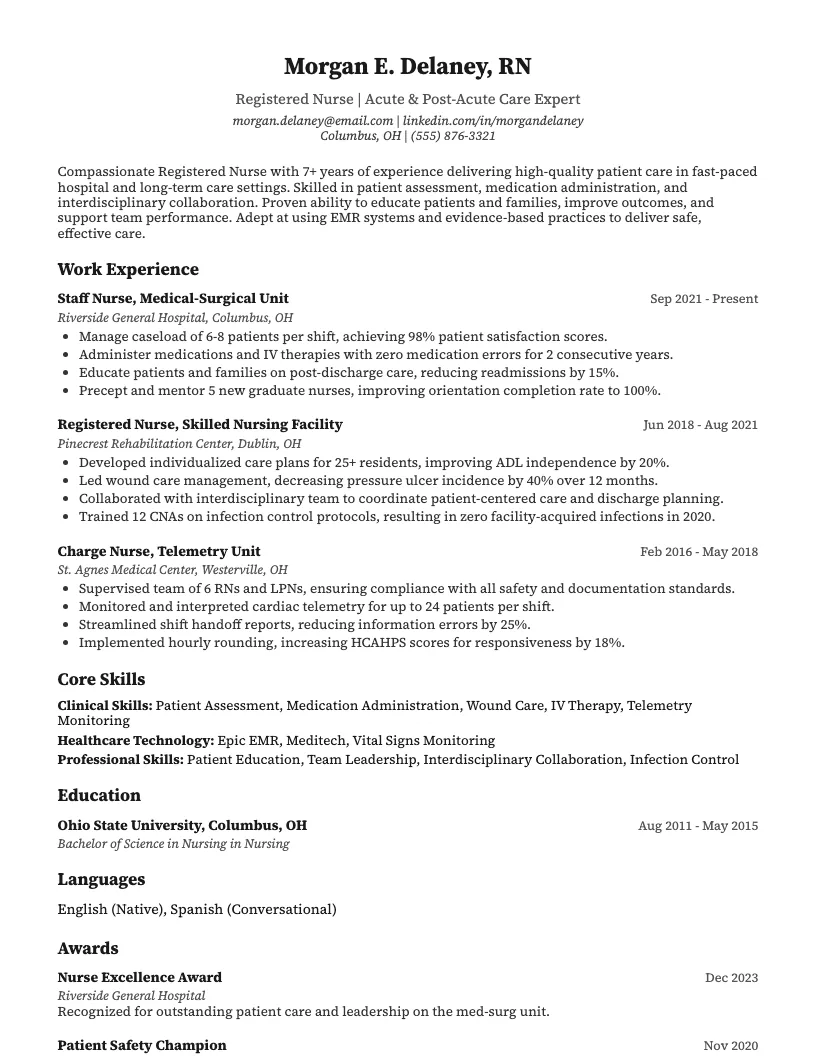
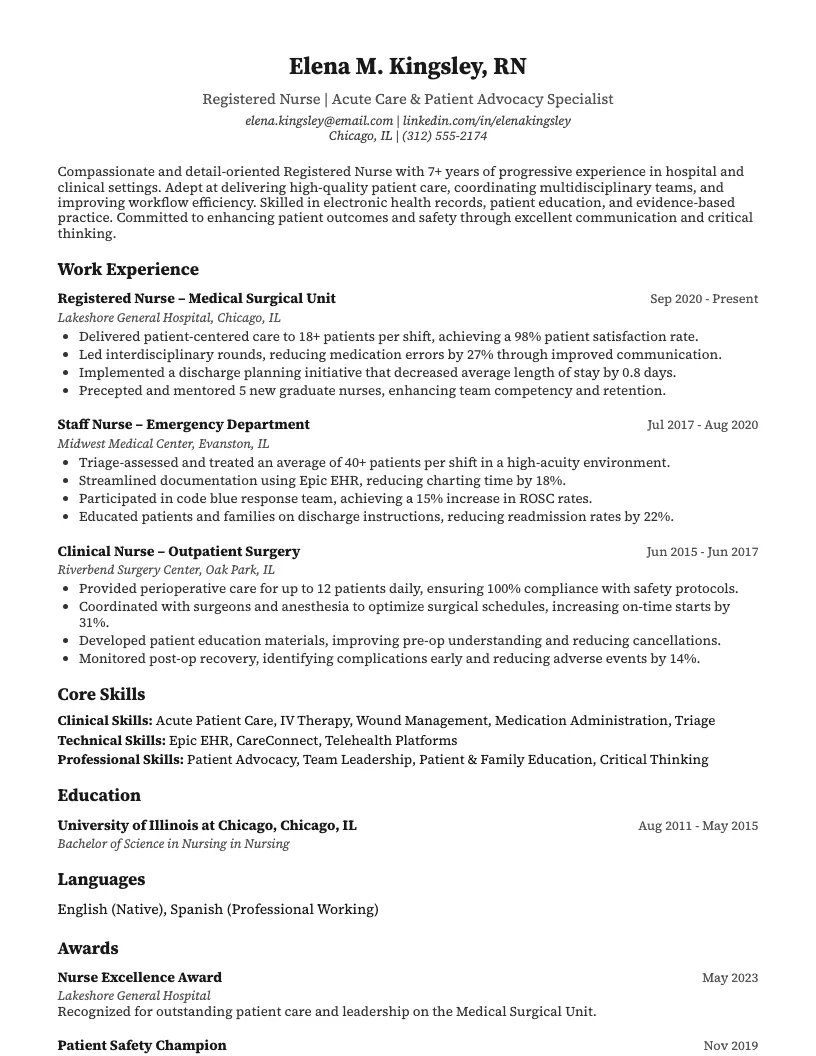
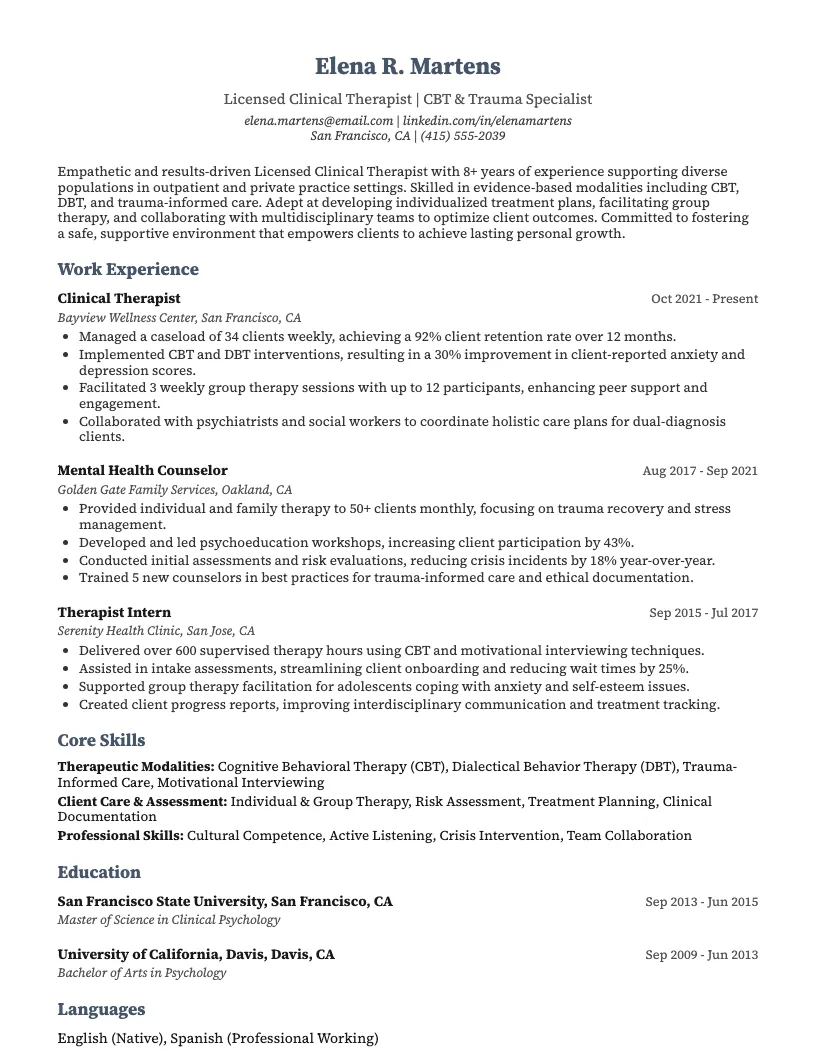
If you’re looking for mental health therapist resume examples, you’re in the right place. I know how important it is to show clinical skills and compassion on your resume.
You should highlight experience with crisis intervention, group therapy, and electronic health records. Employers want to see measurable outcomes, like improved patient progress or reduced hospitalization rates.
Make your resume pop by listing licenses, certifications, and any specialized training. This helps you stand out in a field where over 40% of therapists hold advanced credentials.
Massage therapist resume examples show how to highlight certifications, hands-on experience, and specialties like deep tissue or prenatal massage. I always suggest listing client volume, too.
You want to include state licenses and any continuing education. Employers look for CPR certification and proven customer service skills. Numbers help-think, “served 20+ clients weekly.”
If you’re looking for more therapy-related roles, keep browsing. There are other therapist resume examples ahead that cover different specialties and skills.
I see a lot of occupational therapist resume examples focus on clinical skills, but don’t forget communication. Employers love to see experience with both adults and kids.
Quantify your achievements. If you’ve helped 30+ patients regain independence or led group therapy for five years, say so. Numbers help your resume stand out.
You want to show a mix of teamwork and patient-centered care. Highlight certifications like OTR/L or continuing education credits-those details show you’re dedicated to growth.
If you’re searching for respiratory therapist resume examples, you want to show off your clinical skills and certifications. Employers often look for RRT or CRT credentials right up front.
I always suggest listing your experience with ventilators, patient assessments, and emergency response. Around 135,000 respiratory therapists work in the US, so you need to stand out.
Highlight any specialized training you have-like neonatal or ICU care. This helps recruiters spot your value fast. A tight, skills-focused resume makes a huge difference here.
That’s a wrap on related resume examples. Take what fits your career goals and get started on your next application.
Browse Psychotherapist resume examples for related roles. Preview any example, open it in the builder, or read its full guide.
Click to enlarge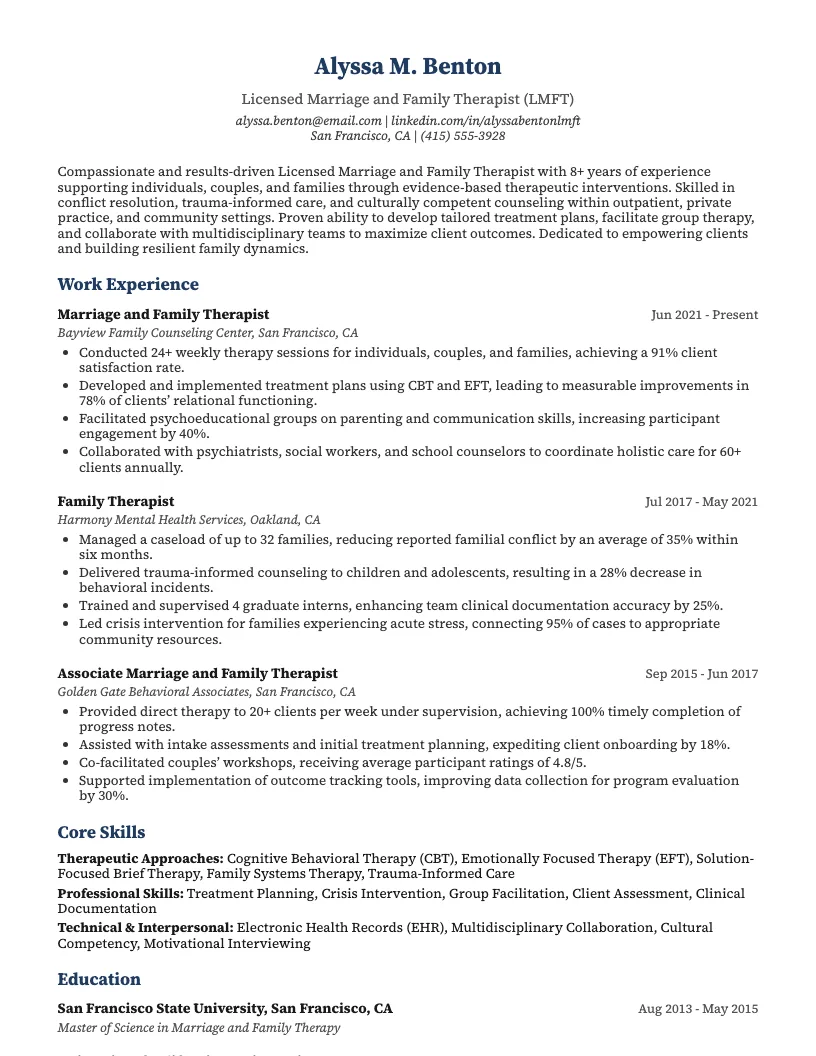 Click to enlarge
 Click to enlarge
 Click to enlarge
 Click to enlarge
 Click to enlarge
 Click to enlarge Click to enlarge
 Click to enlarge
Common questions about Psychotherapist resumes
A psychotherapist resume template is a pre-designed layout tailored for mental health professionals. It highlights clinical skills, therapy experience, and relevant certifications. ResumeJudge makes it easy to showcase your background effectively.
Yes, most psychotherapist resume templates from ResumeJudge are ATS-friendly. They use simple layouts and standard fonts, helping your resume pass automated screenings at hospitals, clinics, and private practices.
Use a psychotherapist resume template when applying for jobs in mental health clinics, hospitals, schools, or private practice. ResumeJudge templates help you present your therapy experience professionally.
Absolutely! ResumeJudge templates are fully customizable. You can add your specializations, licenses, or unique therapy approaches to fit your specific background and targeted roles.
Psychotherapist resume templates focus on counseling skills, patient care, and certifications, unlike generic templates. ResumeJudge ensures your template highlights industry-specific achievements and terminology.
A psychotherapist resume should be one to two pages long. ResumeJudge helps you organize clinical experience and credentials concisely, making your resume easy to read for employers.
Yes, new graduates can use these templates to highlight internships, supervised clinical hours, and relevant coursework. ResumeJudge offers sections tailored for entry-level candidates as well.
Include contact info, summary, education, licenses, clinical experience, and skills. ResumeJudge templates make it simple to add these sections and organize your strengths.
Yes, ResumeJudge templates are designed for both print and digital submissions. Their ATS-friendly formatting ensures your application is processed correctly online.
Definitely! ResumeJudge templates let you showcase expertise in CBT, DBT, trauma therapy, or other methods. Customizing these details can set you apart in specialized therapy roles.
Explore more professional resume examples to inspire your job search
Use our AI-powered resume builder to create a professional, ATS-friendly resume in minutes.
Free to use • No credit card required