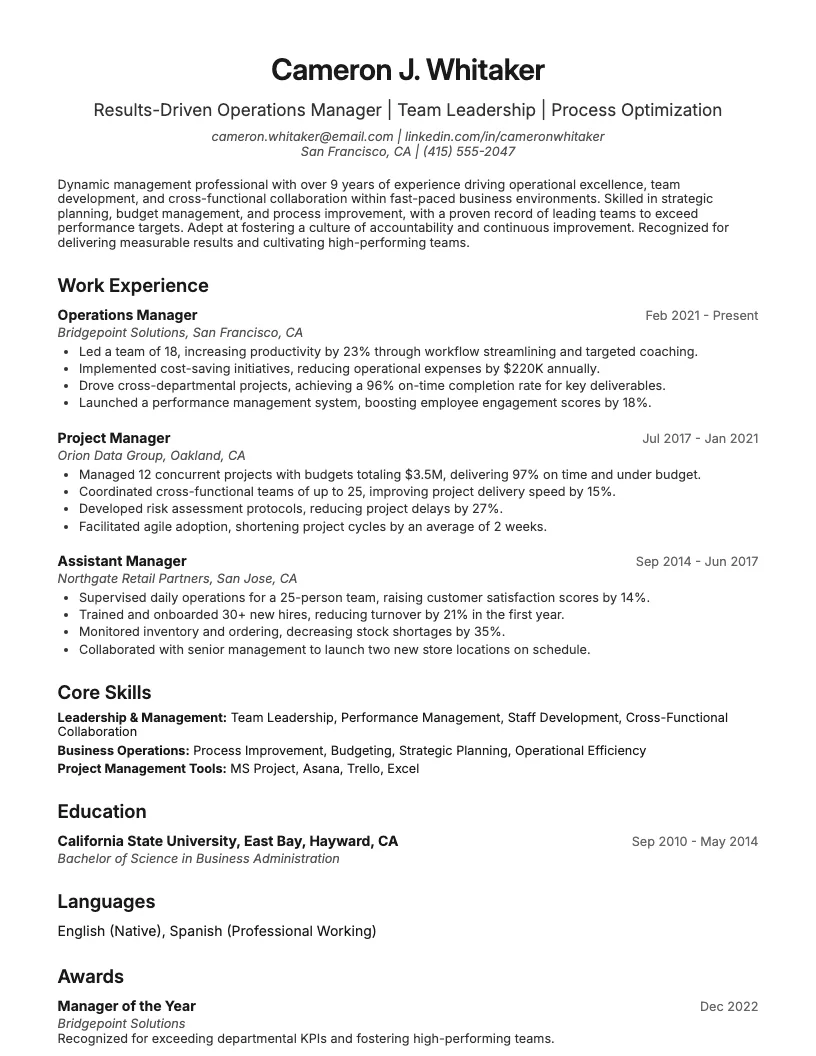
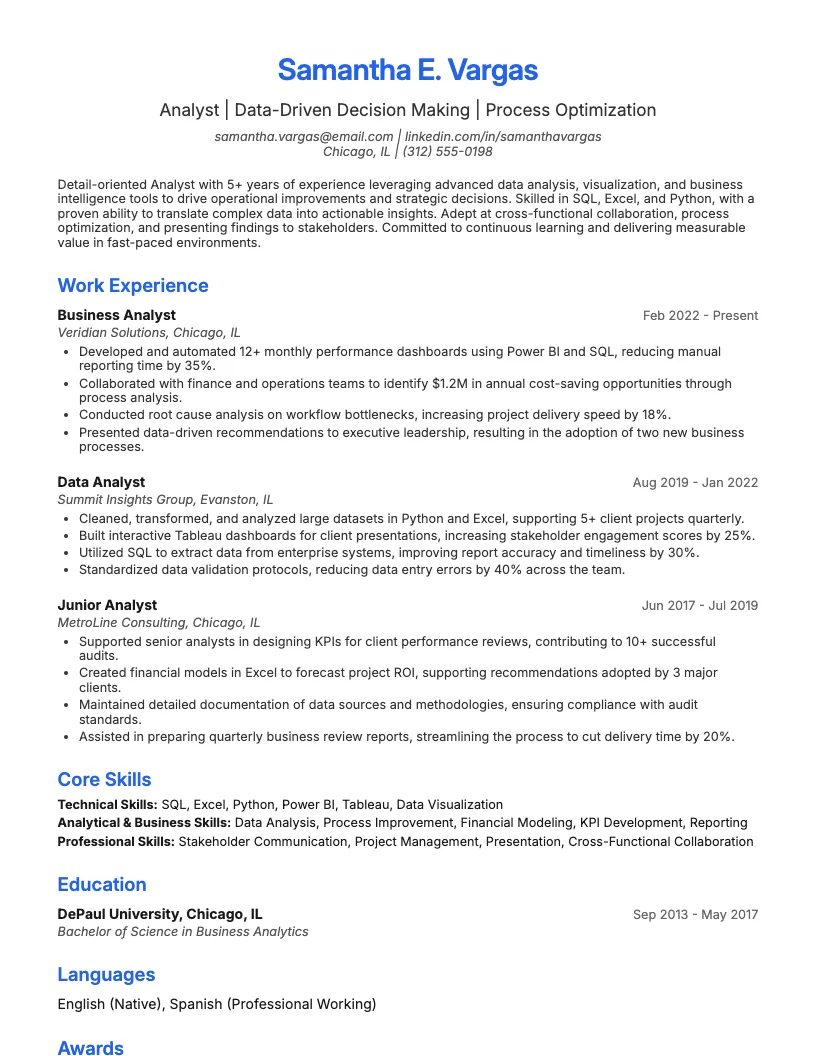
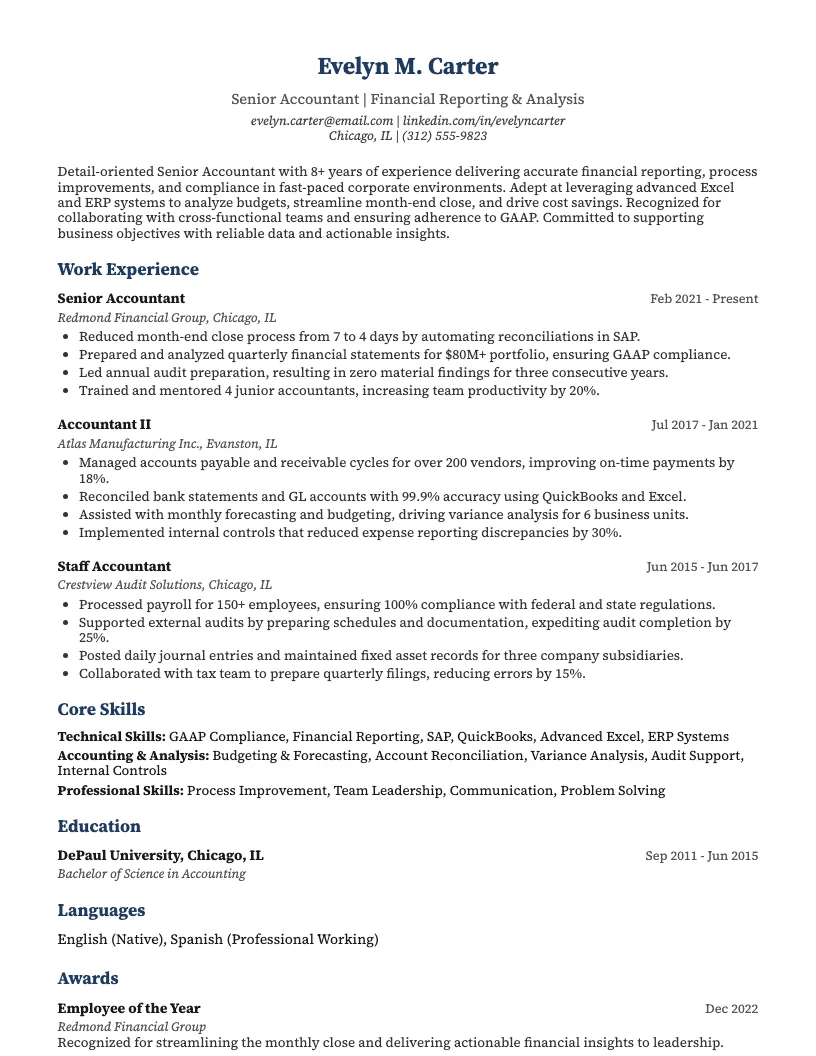
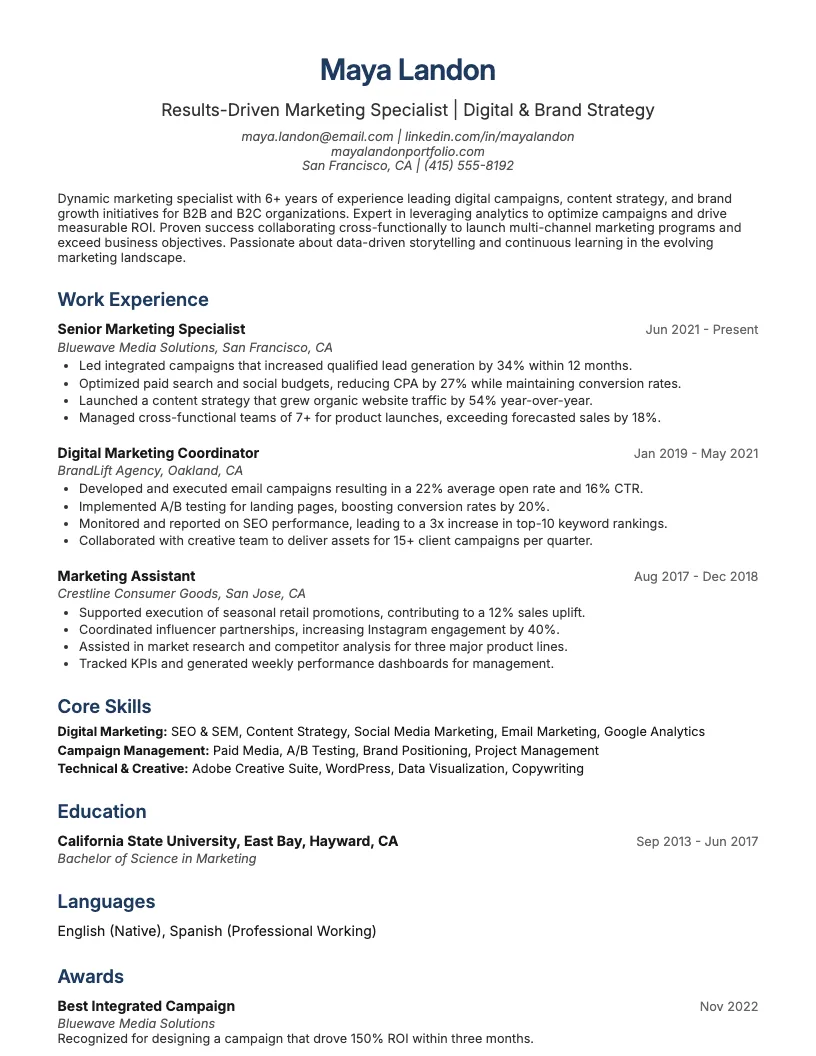
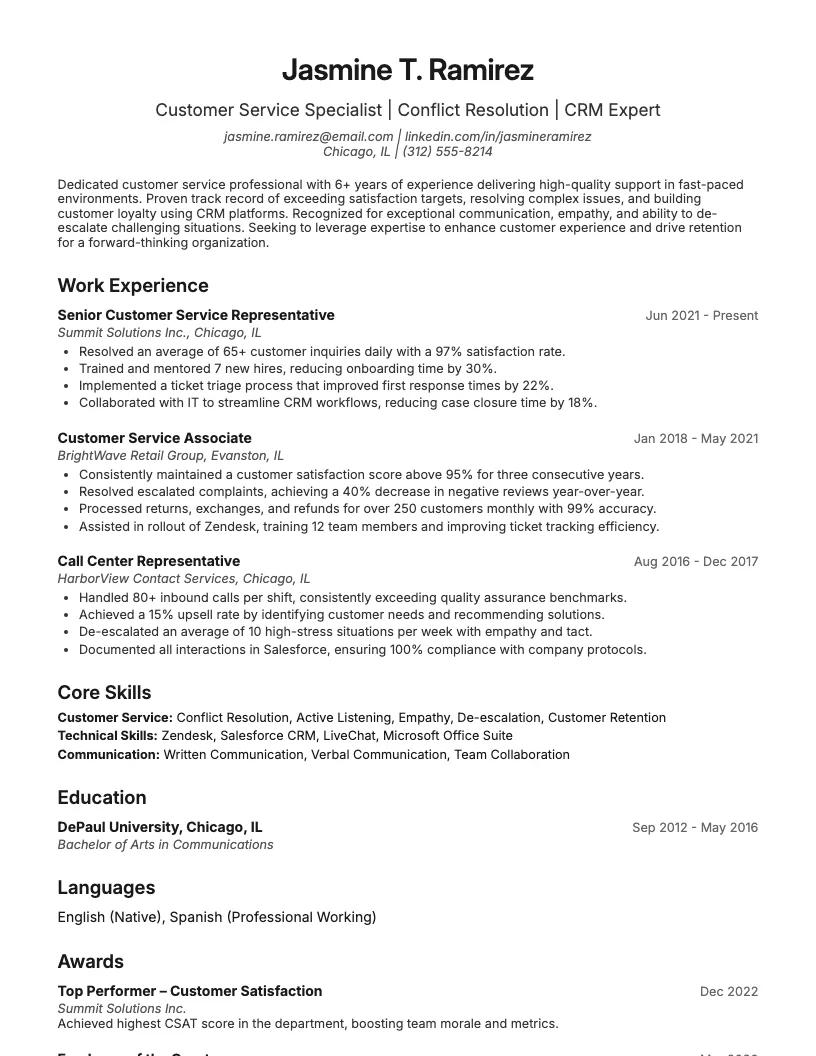
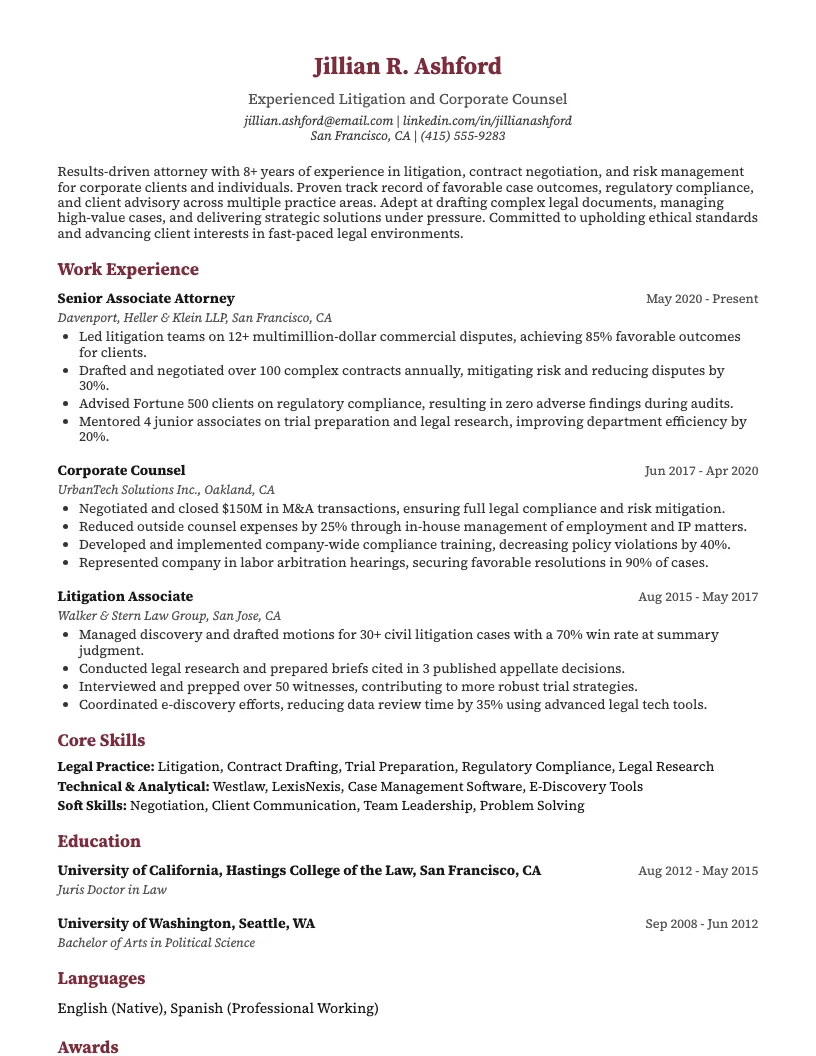
Financial Advisor Resume Example
See full guide on Financial Advisor resumes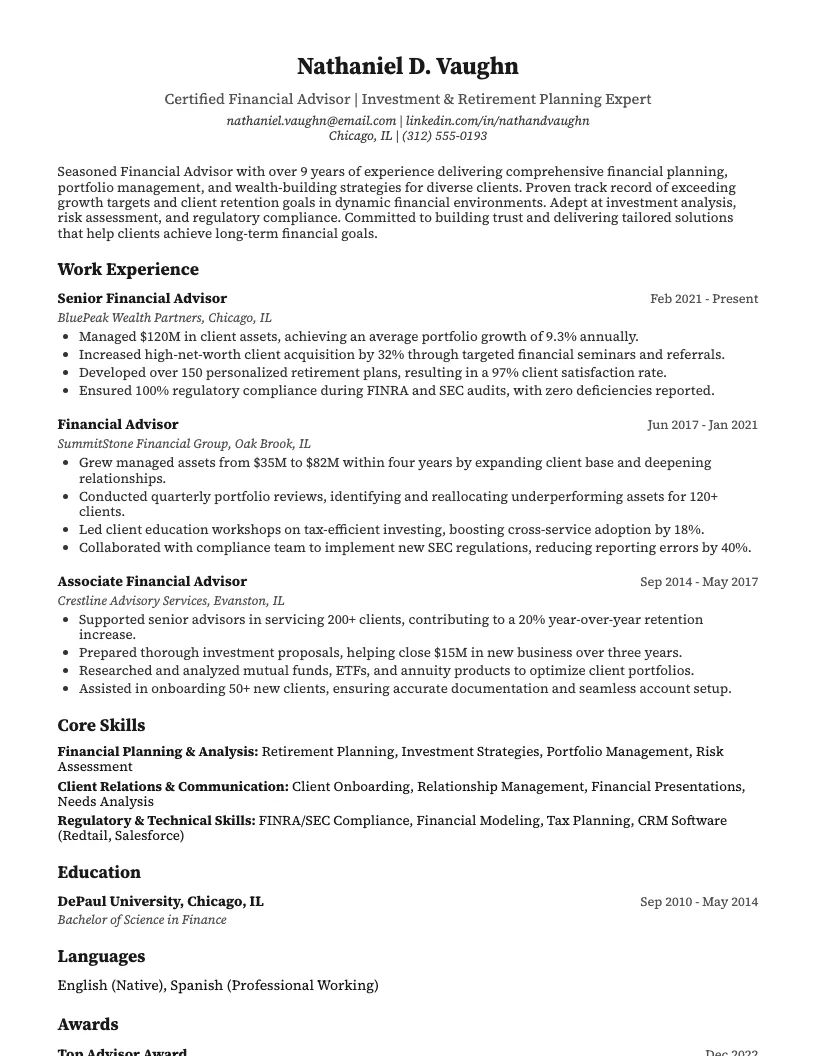 Click to enlarge
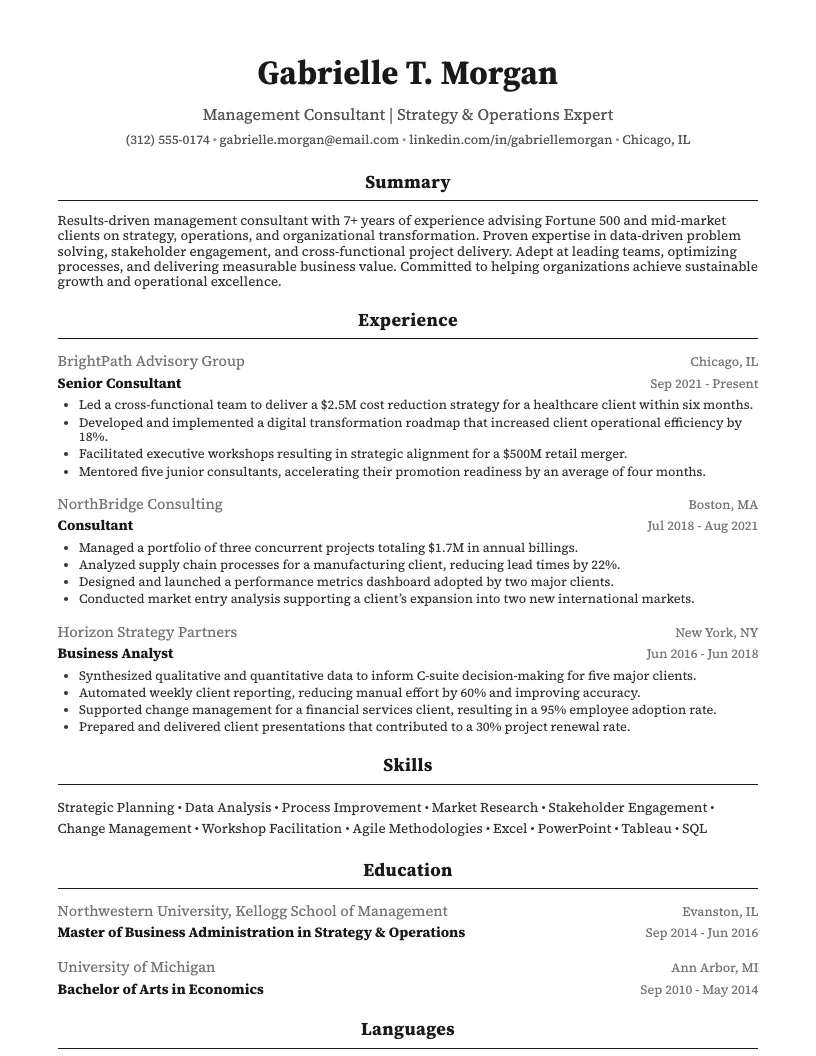 Click to preview

Get inspired by 62+ professional Consulting resume examples, each written by career experts and optimized to pass ATS scans. Pick a proven template, tailor it to your role, and download a polished resume in minutes.
Pick the specialization closest to your target role and start from a proven resume example.
Consulting covers a lot of ground, from management to specialized fields like tech or healthcare. Each role needs a unique resume approach, and I see that firsthand.
You might want to break in as an intern, pivot to strategy, or highlight your expertise. I cover proven resume examples for every level and specialty here.
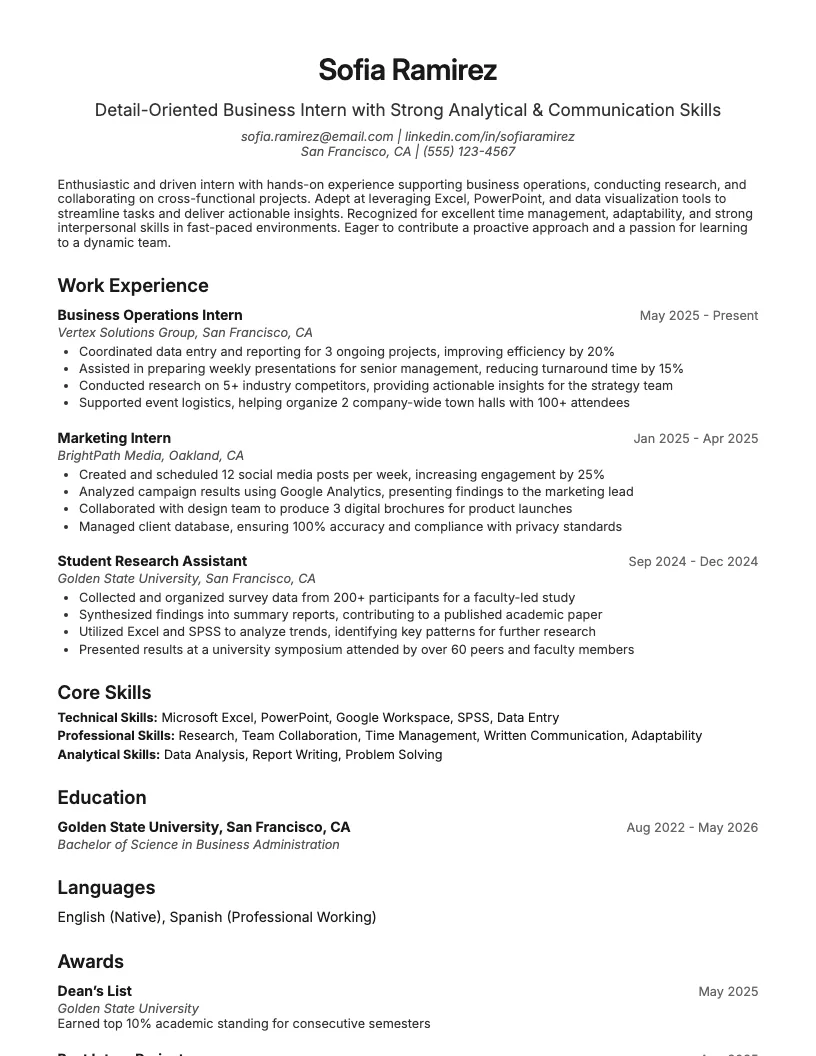
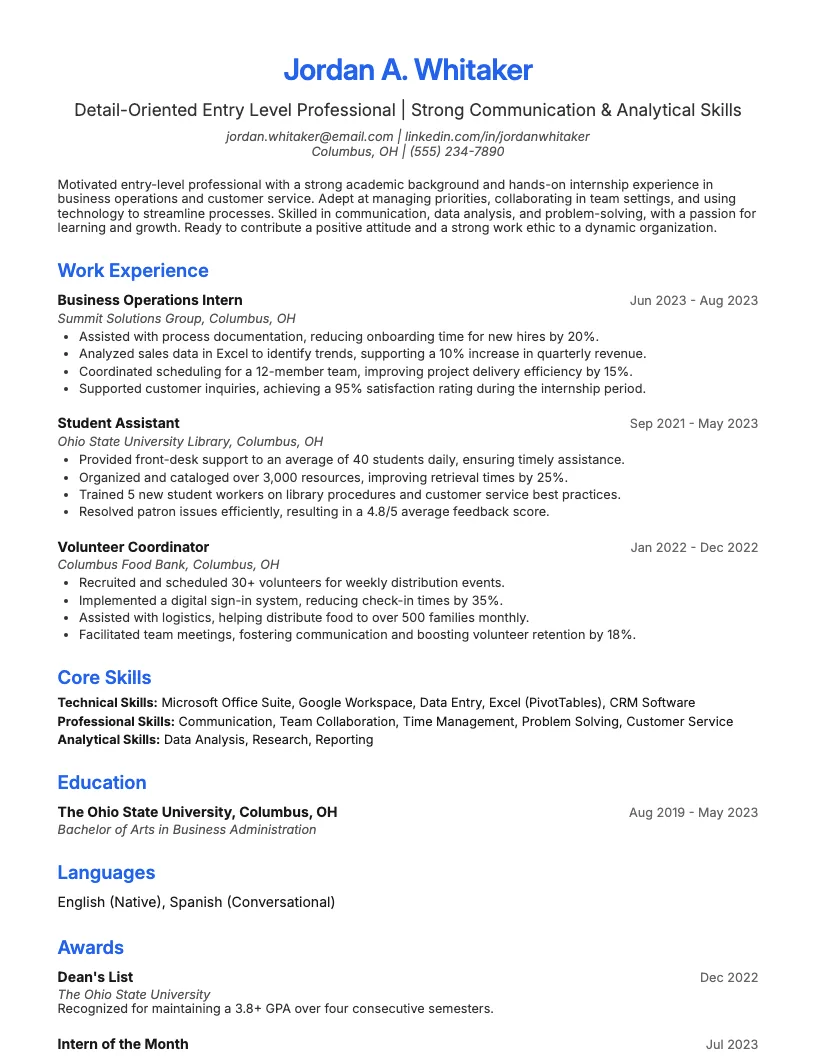
Starting out in consulting? I know how tough it feels to stand out with little experience. Entry-level and intern resumes focus on skills, coursework, and relevant projects.
You want to highlight problem-solving, analytical thinking, and teamwork. If you have quantifiable results from class projects or internships, use them, and don’t forget to pair your resume with a cover letter. Numbers help you look credible fast.
Showcase leadership roles in clubs, volunteer work, or part-time jobs. Employers like seeing initiative-even outside the classroom. Keep your resume clear and no longer than one page.
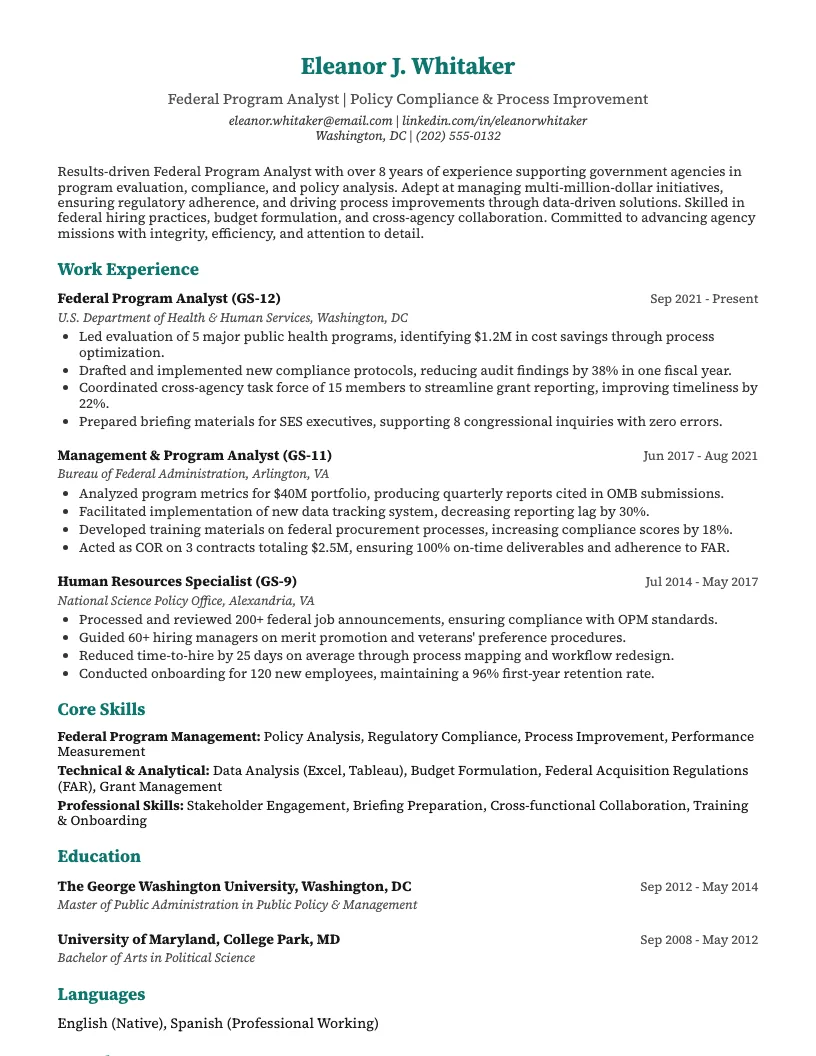
These resumes really shine when you show off your leadership skills. I usually highlight the number of analysts I manage-say, 6 direct reports-and the size of the budgets I oversee.
You want to quantify impact wherever possible. For example, mention how you secured a $1.2M contract extension or led a project that cut costs by 15%.
It helps to give examples of how you navigate scope changes or market shifts. This shows risk management skills and adaptability-two things hiring managers love in consulting.
Specialized consulting roles need resumes that highlight industry-specific skills. For example, tech consultants often show off technical certifications, while healthcare consultants focus on regulatory expertise.
I notice that quantifiable achievements really make a difference. Use numbers, like “improved process efficiency by 20%” or “managed $5M client portfolios.” This helps your impact stand out.
If you’re aiming for fields like finance, HR, or healthcare, tailor your resume for the job and consider referencing a cover letter for inspiration. Mention relevant software, compliance standards, or project leadership. Recruiters want to see clear proof of your expertise.
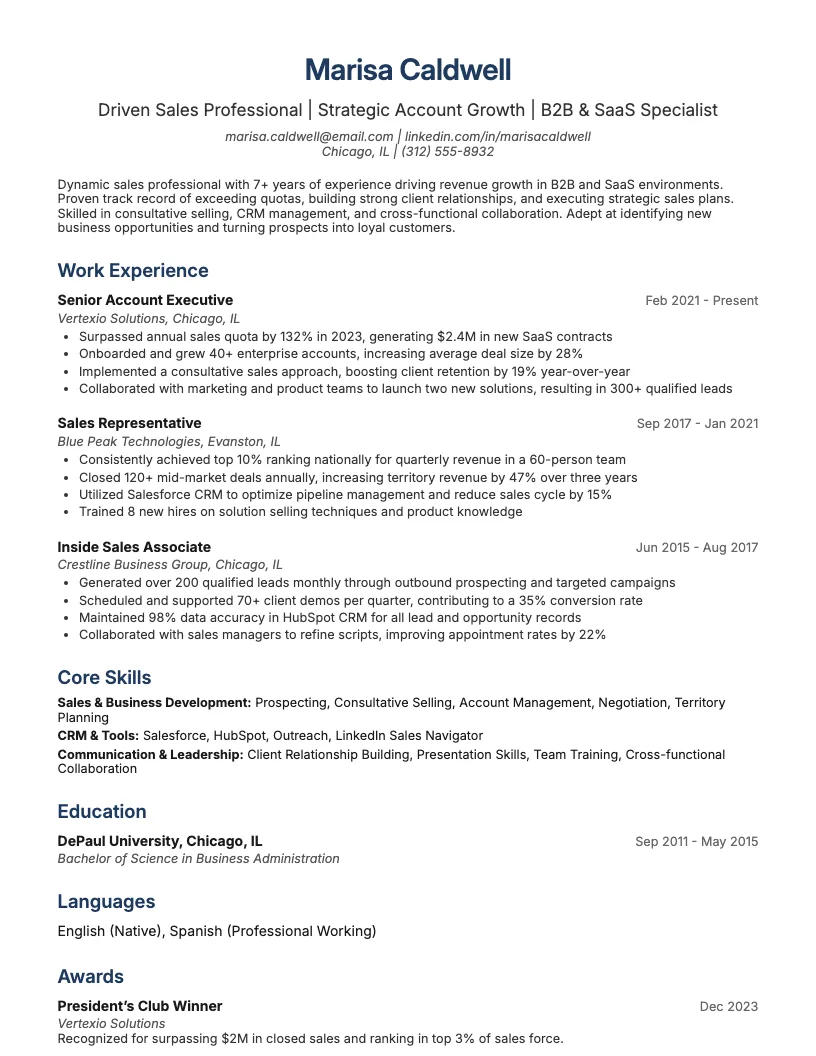
Sales consultant resume examples show how you can prove your impact with numbers. I like to see sales growth percentages, lead conversion rates, or average deal sizes.
You want your resume to highlight skills in negotiation, relationship building, and closing deals. Use bullet points to list specific achievements, like exceeding quotas by 15% or managing 200+ accounts.
There are also different sales consultant roles-some focus on B2B, others on retail. Pick resume examples that match the job you want. This makes your application more relevant and effective.
If you’re checking out new home sales consultant resume examples, you probably want to stand out in a crowded field. These roles usually focus on customer relationships, sales volume, and closing rates.
I always highlight my monthly sales numbers and customer satisfaction scores. You can also mention certifications like the NAHB Certified New Home Sales Professional-that gets noticed.
Don’t forget tech skills. Many hiring managers use CRM software or digital sales tools. Show you’re comfortable with these, and you boost your chances.
If you’re looking for computer consultant resume examples, you want to see real tech expertise front and center. I highlight specific skills like troubleshooting, cybersecurity, or cloud migrations.
You should mention measurable outcomes. For example, “Reduced server downtime by 30%” or “Improved network security for 15+ small businesses.” This helps you stand out, especially in tech-heavy fields.
Don’t forget to feature certifications like CompTIA A+, Cisco CCNA, or Microsoft Certified. You can also point out experience with software rollouts, IT audits, or end-user training.
If you’re looking at lactation consultant resume examples, you want to show both your clinical skills and your ability to educate and support new parents.
I always highlight certifications, like the IBCLC credential. Add numbers-like the number of clients you’ve supported or success rates for breastfeeding. This helps your impact stand out.
You can also include experience with hospital, clinic, or home visits. If you train staff or lead support groups, list it. Real numbers and outcomes make your resume stronger.
If you’re looking for leasing consultant resume examples, you want to stand out in property management. This role mixes customer service, sales, and admin skills-so your resume needs to show that.
I always highlight leasing metrics, like closing rates or occupancy increases. If you helped boost occupancy by 10% or handled 40+ leases a month, put that up front.
Showcase customer service skills and tech know-how. Mention using platforms like Yardi or Buildium. This helps recruiters see how you fit into their workflow.
If you’re hunting for marketing consultant resume examples, you want to show proven results. I always highlight metrics-think 15% increase in client engagement or $500K revenue growth.
You should spotlight your digital skills. Mention tools like Google Analytics, HubSpot, or Hootsuite. Recruiters check for certifications and actual campaign results, not just buzzwords.
There are hundreds of applicants, so keep your resume clear and impact-driven. Tailor each bullet to the job description. This helps your resume stand out and land more interviews.

Writing a consulting resume means showing your value fast. You need to highlight results, skills, and education in a clear, measurable way.
I focus on what hiring managers look for-impact, problem-solving, and specific achievements. Let’s break down each section so you stand out right away.
Kick off your consulting resume with a summary or objective that captures your expertise and core value. I use this section to highlight my years of experience and focus areas.
Aim for 2-3 lines. Mention your current title, industry, and any standout achievements. Numbers back up your claims-think “5+ years driving 20% cost reductions for Fortune 500 clients.”
This helps recruiters see, right away, why you’re a strong fit. If you’re new to consulting, tailor your objective to show how your skills transfer and what you want to achieve.
This is where you show what you actually did as a consultant. Don’t just list duties-highlight specific projects, clients, or industries you’ve worked with.
I always use numbers and hard results. For example, “Drove $2M in cost savings for a healthcare client” or “Reduced client onboarding time by 40%.” This stuff pops.
You want to prove your value. So, focus on measurable outcomes like revenue growth, process improvements, or successful change initiatives. This helps hiring managers see your real-world impact.
Next up, I’ll talk about how your education and certifications support your consulting expertise.
If you’ve got an MBA or a degree in business, finance, or engineering, show it off near the top of your resume. Employers often look for advanced degrees.
List your degrees in reverse-chronological order. Include the school, graduation year, and any honors. Relevant coursework or academic projects can help if you’re early in your career.
Certifications boost your credibility. Certified Management Consultant (CMC), PMP, or Lean Six Sigma are popular in consulting. Add the full title, issuing body, and year earned. This shows you’re committed to staying sharp.
A consulting resume needs a solid mix of hard and soft skills. I always put technical skills like data analysis, project management, and financial modeling front and center.
Don’t forget soft skills that clients value: communication, leadership, adaptability, and problem-solving. These help you work with teams, build trust, and drive results in high-pressure environments.
You should review the job description and tailor your skills section to match what each employer wants. This boosts your chances with both ATS and hiring managers.
If you don’t have direct consulting experience, use a hybrid resume format. This puts your transferable skills and quantifiable results front and center.
I focus on projects, internships, or part-time roles where I solve problems, analyze data, or drive improvements. You want to show impact, not just job titles.
Highlight concrete results-percentages, dollar savings, or process changes. For example, “Improved process efficiency by 20% in a student organization.” Numbers make your value obvious.
Use keywords from consulting job postings in your summary and skills sections. This helps recruiters-and applicant tracking systems-spot your potential, even if your experience is non-traditional.
Consulting resume keywords matter if you want to pass Applicant Tracking Systems (ATS). These systems scan for words like "process improvement," "stakeholder management," and "financial modeling."
I always include consultant resume keywords that reflect both hard and soft skills-think "data analysis," "client engagement," or "change management." This helps my resume match real job descriptions, especially when paired with a strong cover letter.
You can spot consulting resume keywords by reviewing multiple job ads. If a term pops up in at least 3 out of 5 listings, it's probably worth adding to your resume.
Tailoring consultant resume keywords to each job application boosts your chances of getting noticed. A few targeted tweaks can make a big difference in landing interviews.
That wraps up the essentials for making your consulting resume stand out. Now you’re ready to craft a resume that actually gets results.
Your resume format matters more than you think. If you want to stand out in consulting, a clean and well-organized layout is key.
You need a resume that’s easy to read and highlights your experience. The right format can actually help recruiters pick out your top skills and accomplishments fast.
I’ll walk you through the most popular formats, must-have resume sections, and smart design choices. Let’s make sure your consulting resume checks all the right boxes.
Most consultants stick with a reverse-chronological format. This layout highlights your latest experience and shows a clear career path. It’s the go-to for about 85% of applicants.
If you’re shifting industries or have lots of project-based work, consider a hybrid or functional format. This helps you showcase skills and achievements, not just job titles.
I like to keep things simple-a single-column layout works best for readability. It’s easier for recruiters and applicant tracking systems (ATS) to scan quickly.
You always want a clear header with your name, contact info, and LinkedIn or portfolio links. This helps recruiters find you quickly and confirms your professional identity.
Next up, add a short professional summary. I usually keep this to 2-3 lines. Highlight your experience, main skills, and what makes you a strong fit for consulting.
Your work experience section should use bullet points. Focus on achievements, not just responsibilities. Use numbers-like “increased client revenue by 20%”-to show your impact.
Don't skip a skills section. List both technical and interpersonal skills. Consulting firms look for a mix, so mention things like data analysis, project management, and communication.
Include your education details-degree, school, and graduation year. If you have certifications (like PMP or Lean Six Sigma), put them here or in a separate section.
I always suggest adding a short achievements or awards section if you have space. It’s a great way to spotlight standout results or industry recognition.
That’s the foundation. Once you’ve got these essentials, you’re set up for a resume that’s easy to scan and hits all the key points recruiters want.
I always recommend keeping your consulting resume clean and easy to read. Use a single-column layout, lots of white space, and clear section headings for a polished look.
Stick to 1-2 pages-most consultants don’t need more. Focus on relevant achievements and keep each bullet point brief. Recruiters only spend about 7 seconds scanning each resume.
For formatting, use 11-12pt font, bold headings, and bullet points. Avoid flashy colors or graphics-subtle color accents work, but too much distracts from your content. Submit as a PDF to keep your layout consistent.
You want your resume to look professional everywhere, so double-check for formatting issues before sending. Local standards matter too-some countries have different resume expectations.
There are hundreds of consulting resume templates out there. I always look for one that keeps things clean, with clear sections and enough white space.
You want a template that's easy to customize. I like being able to tweak headings, fonts, or even a little color to match my style-without going overboard.
Most consulting resume templates work best in a single-column layout. This makes your experience easy to scan, and recruiters spend only about 7 seconds on each resume.
Choosing a template is about balance. Pick one that highlights your strengths but doesn’t distract from your content. This wraps up the essentials for picking a strong format and layout.
A solid consulting resume isn’t just about listing jobs and degrees. It’s about showing real results, relevant skills, and the right mix of experience and education.
You need to highlight measurable achievements, certifications, and both hard and soft skills. If you want to stand out, focus on what hiring managers and recruiters actually look for.
Your professional summary sits right at the top of your consulting resume. This is your shot to quickly show off your impact, skills, and value to a potential employer.
I stick to clear numbers and facts here-think "increased client revenue by 25%" or "managed projects worth $2M." Recruiters love seeing quantifiable evidence of what you actually deliver.
Keep it short-three or four lines. Focus on your most relevant wins, not every project you’ve ever touched. This helps hiring managers instantly see why you’re a strong fit.
Your employment history is where you prove your impact. Focus on the biggest wins for each employer, not just a laundry list of duties.
I always stick to bullet points with hard numbers-think "Cut client costs by 20%" or "Led a $2M transformation project." This helps recruiters spot value fast.
Don’t worry about including every project. List only those most relevant to the job you want now. Prioritize results over responsibilities to stand out.
Now, let’s move on to your education and certifications.
Most consulting roles expect at least a bachelor’s degree-usually in business, economics, or a related field. If you’ve got an MBA, call that out right up top.
Certifications matter too, especially for niche industries. Think PMP, Six Sigma, or industry-specific credentials. These signal credibility and help you stand out to recruiters.
List each degree or certificate with the institution and graduation date. If it’s recent or directly relevant, put it higher up. This helps recruiters spot your qualifications at a glance.
Your skills section is where you show off both your hard skills and soft skills. This is the stuff that makes you a well-rounded consultant-not just a one-trick pony.
I like to keep my skills list short-usually five or six key skills that are tailored to the job description. This helps with ATS scans and grabs attention fast.
Hard skills are the technical side: data analysis, financial modeling, CRM tools, or PowerPoint wizardry. Soft skills cover things like client communication, leadership, and adaptability. Both matter.
Don’t just list generic skills. Be specific. For example, "Stakeholder management", "Lean Six Sigma", or "Change management". Quantify them if you can-think 20% faster project delivery or $500K cost savings.
If you’re not sure which skills to include, check the job ad’s top requirements. Prioritize those, and swap them out based on each application. This keeps your resume relevant and effective.
Now that your main skills are covered, you can add extra sections to show off more of your background and personality.
I like to add optional sections that help me stand out. Think about including awards, language skills, or even community involvement. These show recruiters more about you.
If you’ve led any projects outside your main roles, create a "Key Projects" section. Highlighting 2-3 high-impact projects can boost your credibility as a consultant.
You can also add a "Professional Affiliations" section. If you’re part of any consulting associations, list them. This helps show your commitment to the field.
If you want a real edge, check out a consultant resume sample before you start writing. This gives you a sense of what works in today’s market.
A good consulting resume sample shows how to organize each section in a clean, logical way. Recruiters spend under 8 seconds reviewing each resume, so clarity matters.
I always notice that high-impact samples include numbers and concise bullet points. They highlight results, like “increased client revenue by 25%,” not just tasks.
Use these samples as a guide, but don’t copy them outright. Tailor your resume to your experience and the specific consulting role you want. That’s how you stand out.
Landing consulting interviews isn’t easy. You need a resume that shows your results, skills, and experience in a clear, punchy way.
I’ll show you how to highlight achievements, use numbers, and pick the right words. Even if you’ve got limited experience, there are ways to make your background stand out.
If you want your consulting resume to pop, always quantify your impact. Numbers matter. I list things like “managed $2M budgets” or “increased client revenue by 25%.”
Use action verbs to show what you actually did. Words like led, streamlined, delivered, or analyzed paint a clear picture of your role and results.
Adding specifics, like “completed 12 market analyses” or “reduced project timelines by 30%,” makes your achievements real and easy to understand. This helps your resume stand out.
I know breaking into consulting with little experience feels tough. You still have options. Highlight internships, research projects, and volunteer work. These count if they build skills the job needs.
If you have unrelated jobs, focus on the transferable skills. Things like teamwork, communication, or data analysis show up in almost every consulting role.
You don’t need a packed resume. Make your education, certifications, or relevant coursework do the heavy lifting. Use real examples-leading a project, analyzing data, or presenting findings.
This approach shows you’re proactive and resourceful. That’s a big deal in consulting. Focus on what you bring, not what you lack.
Writing a consulting resume means showing both your technical skills and the impact you make with clients. You want every line to show real, measurable outcomes.
I always focus on highlighting project achievements, leadership, and communication skills. You need to make your experience and results clear, concise, and relevant.
Now, let’s break down best practices and some next steps to help you stand out in the consulting job market.
I always suggest keeping your resume laser-focused on achievements that matter-think numbers, clear outcomes, and direct impact. This grabs a hiring manager’s attention fast.
You want your communication to be crystal clear and to the point. Avoid jargon and emotional fluff. Instead, show off your skills through concise, relevant examples.
Next up, tailor your resume for every consulting role you target. Double-check each section to make sure it aligns with what the job actually asks for-this boosts your response rate.
If you haven’t already, gather feedback from peers or mentors. A second opinion helps spot gaps or awkward phrasing you might miss. This step really polishes your application.
Finally, always keep your resume updated as you complete new projects or certifications. Staying current makes it way easier to jump on new consulting opportunities as they pop up.
Browse Consulting resume examples for related roles. Preview any example, open it in the builder, or read its full guide.
Click to enlarge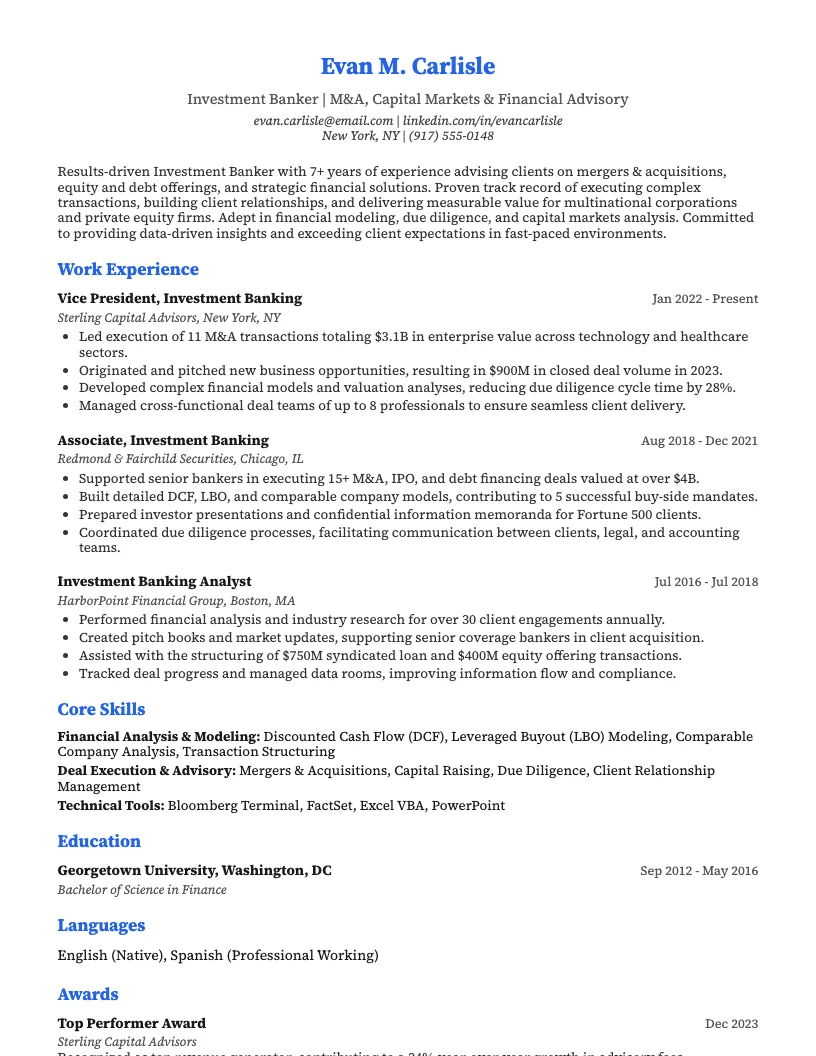 Click to enlarge
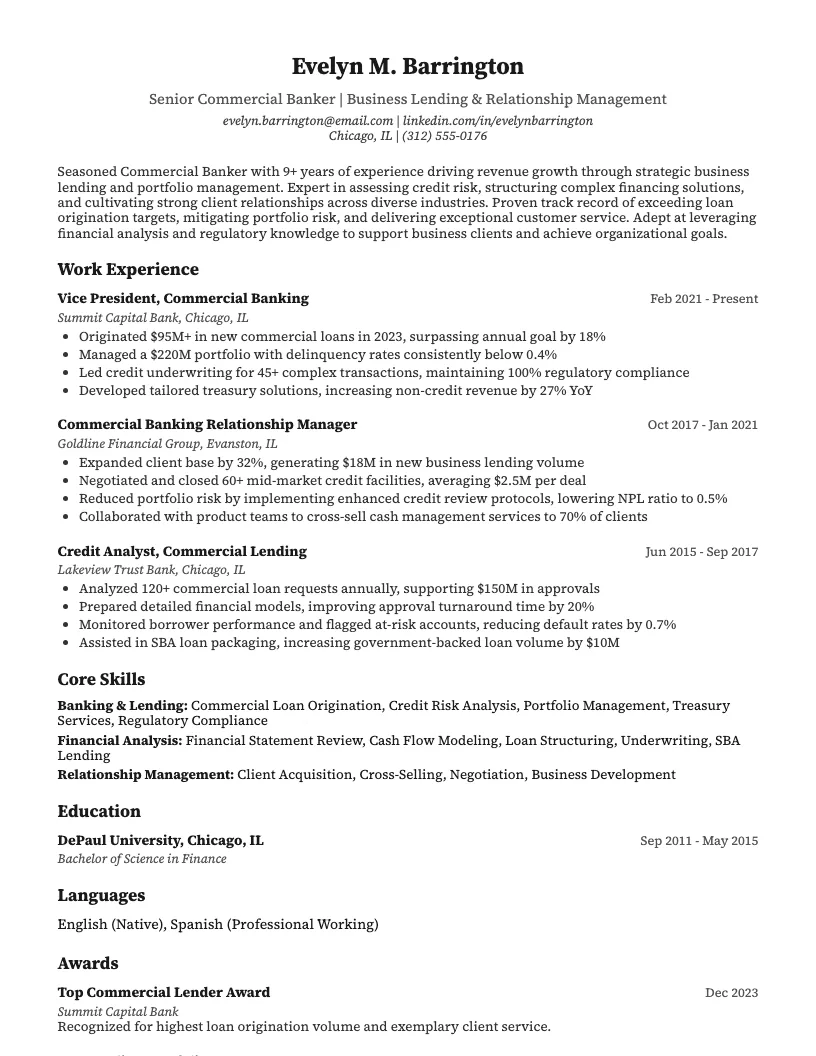 Click to enlarge
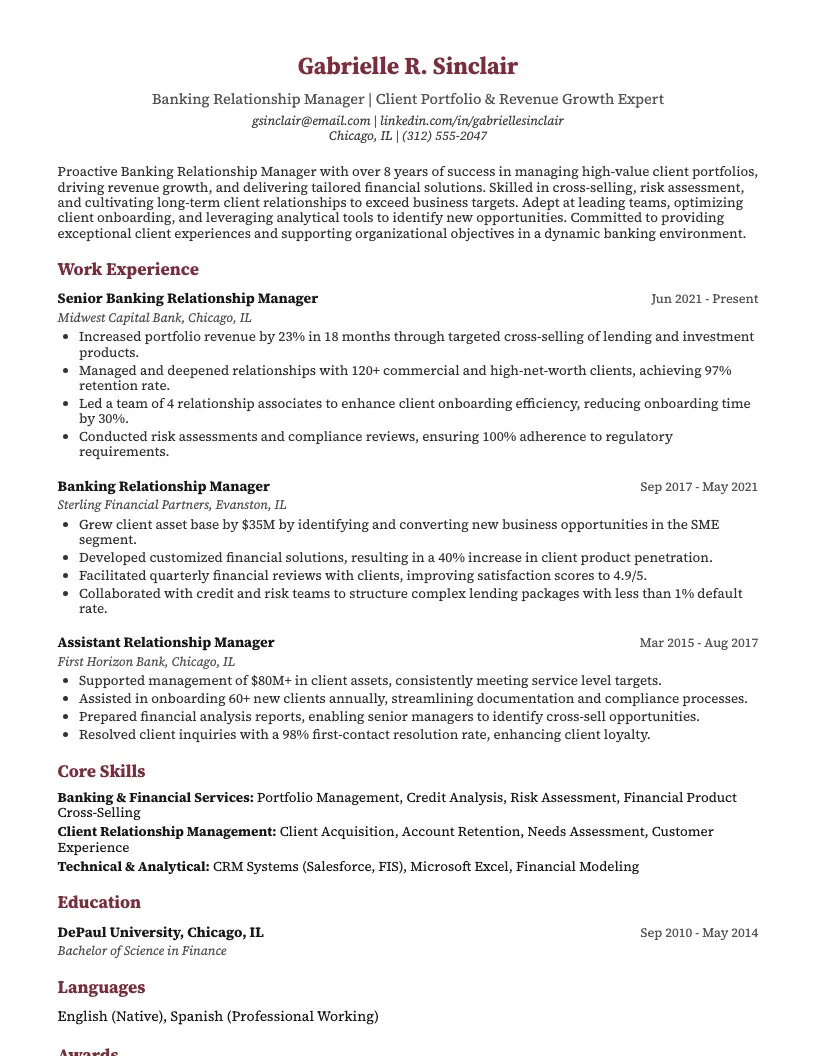 Click to enlarge
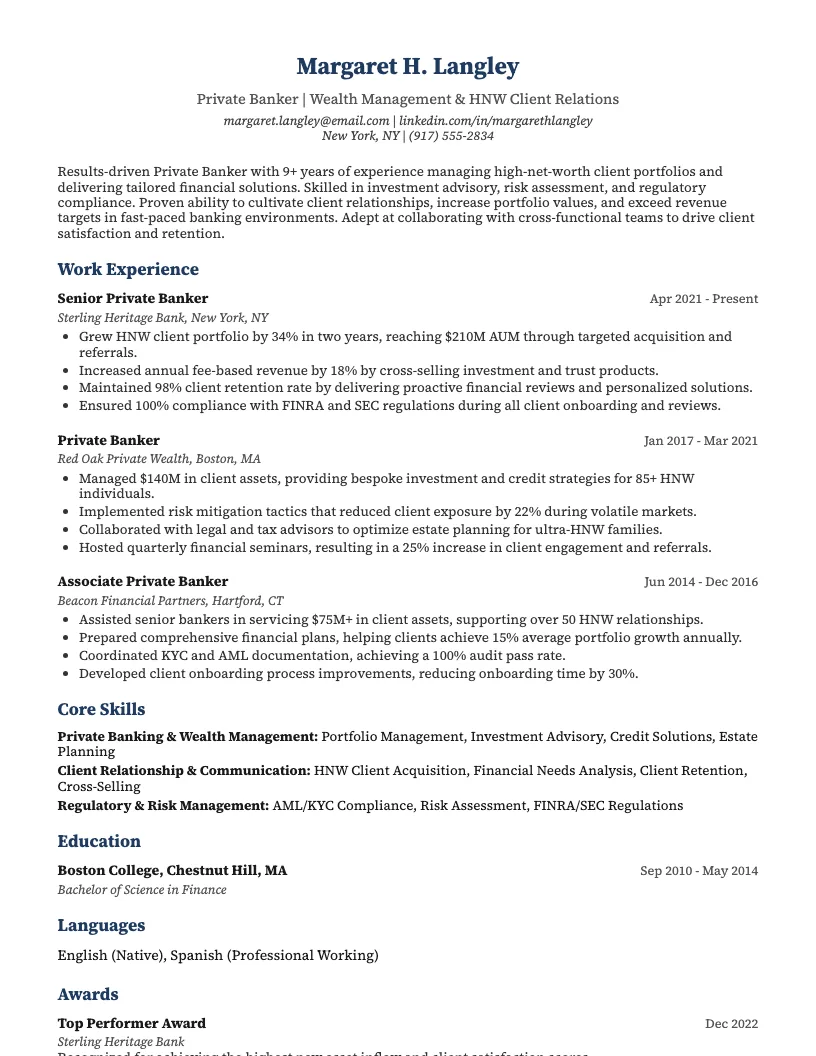 Click to enlarge
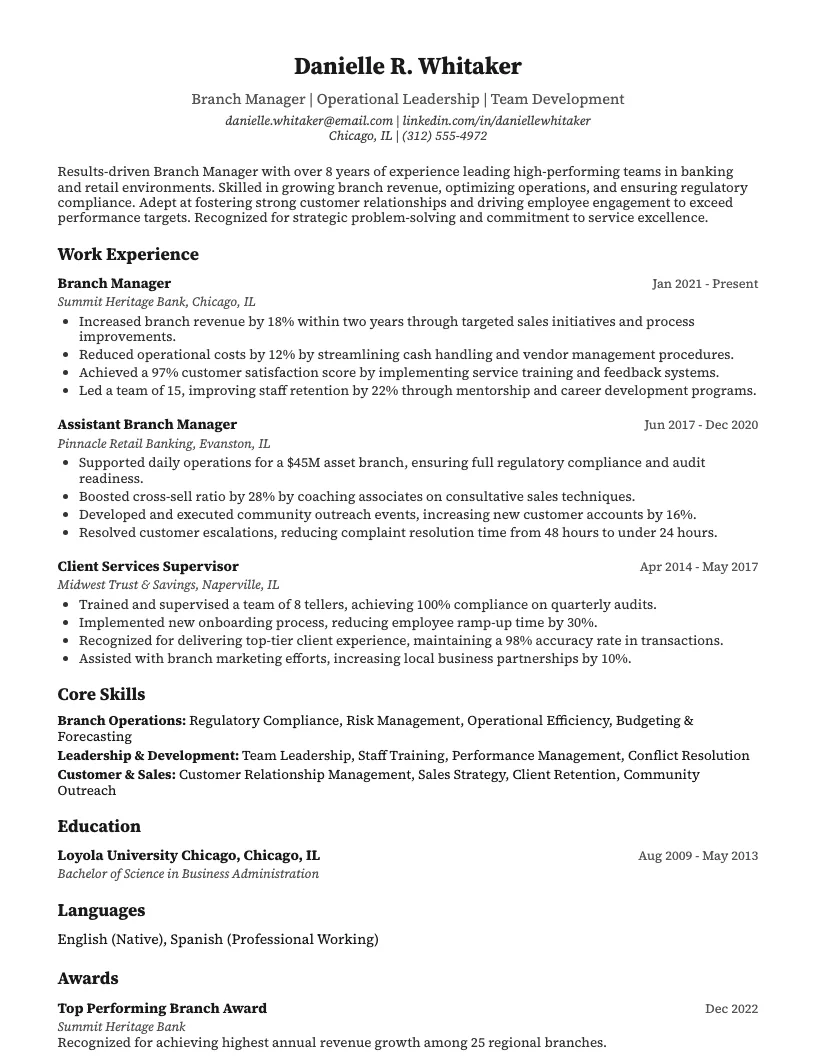 Click to enlarge
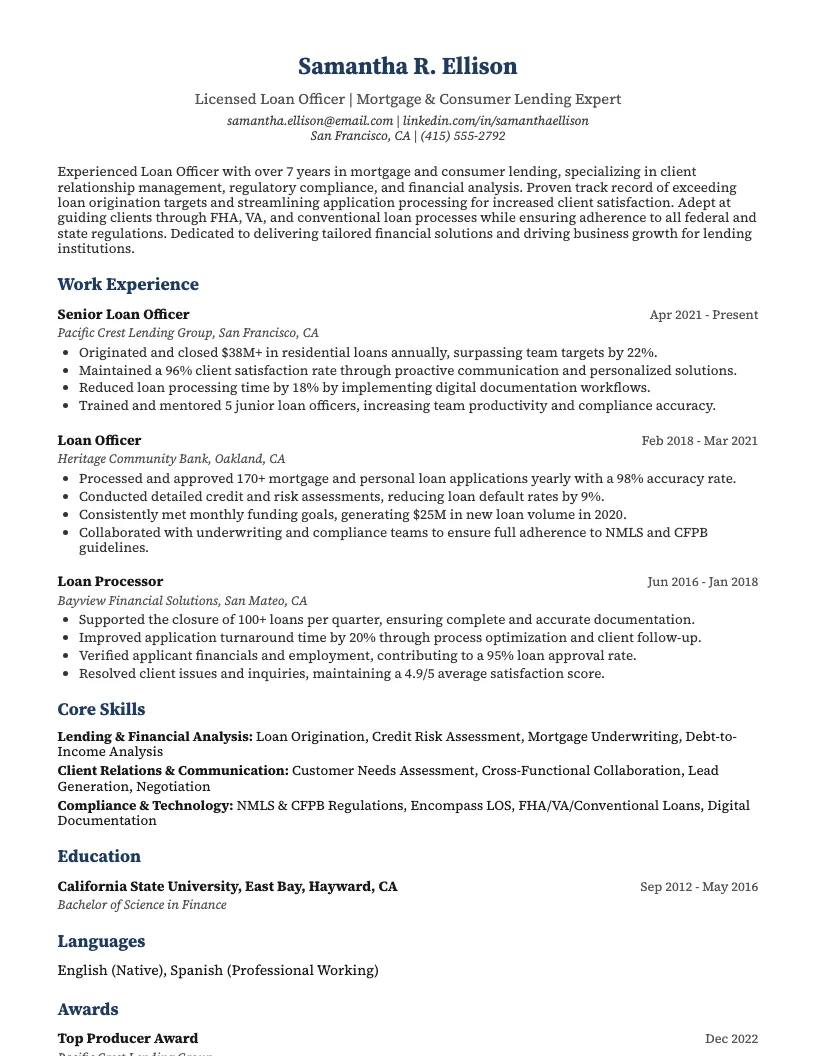 Click to enlarge
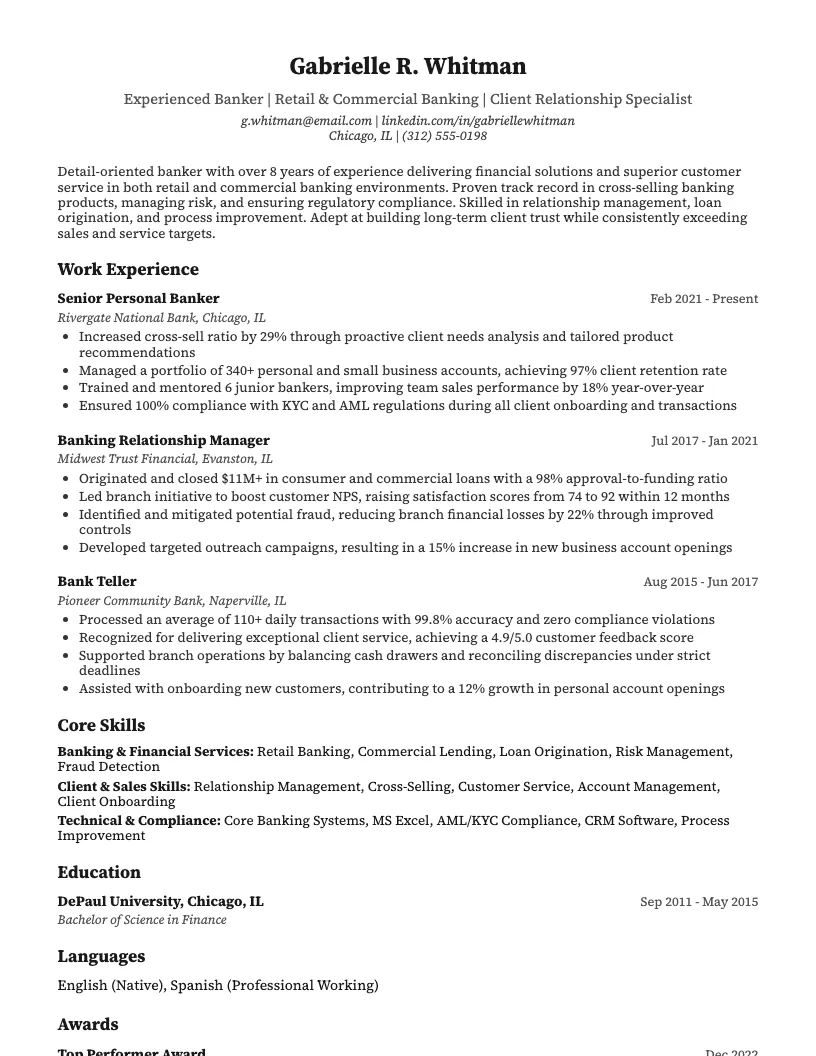 Click to enlarge
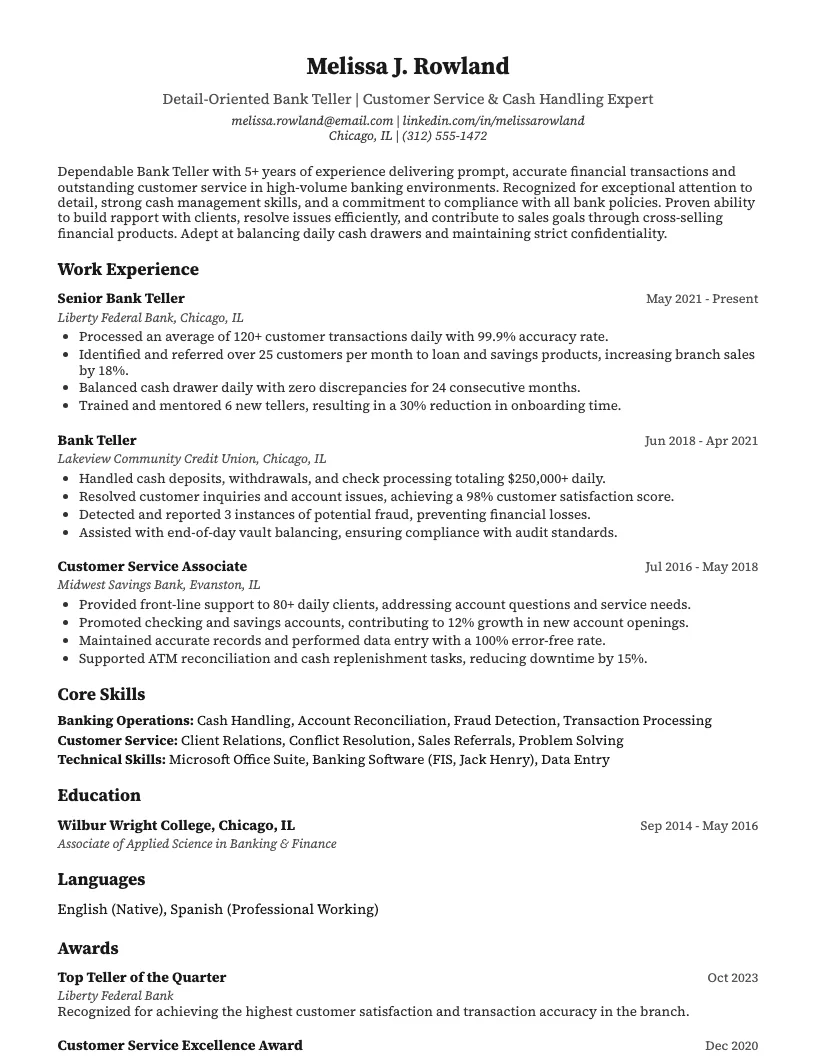 Click to enlarge
Common questions about Consulting resumes
A Consulting resume template is a professionally designed layout tailored for consultants. It highlights skills like problem-solving, project management, and industry expertise. ResumeJudge offers formats that showcase your consulting value to employers.
Yes, ResumeJudge’s consulting resume templates are ATS-friendly and use clean formatting. This helps ensure your resume passes automated screening and reaches hiring managers in consulting, strategy, and business advisory roles.
Use a consulting resume template when applying for roles in management consulting, business strategy, operations, or as an independent advisor. ResumeJudge makes it easy to tailor your resume for firms like Deloitte, Accenture, or boutique consultancies.
Absolutely! ResumeJudge templates are fully customizable, so you can add sections for certifications, industry specialties, or project highlights. This flexibility helps you target specific consulting roles and employer needs.
Consulting resume templates focus on analytical skills, business results, and client impact, while other templates may highlight technical or creative abilities. ResumeJudge offers specialized layouts to best fit consulting job expectations.
A Consulting resume should be one to two pages, with concise bullet points and clear achievements. ResumeJudge templates help you keep your content focused and impactful, which is preferred by consulting recruiters.
Yes, industries like management consulting, IT consulting, financial advisory, and healthcare strategy all benefit from consulting resume templates. ResumeJudge helps you highlight sector-specific skills for these roles.
Showcase measurable achievements and client impact on your ResumeJudge template. Use keywords from consulting job descriptions and tailor your resume to highlight leadership, problem-solving, and industry knowledge.
Yes, ResumeJudge templates are suitable for both experienced consultants and newcomers. You can emphasize transferable skills like analysis, communication, and teamwork when you’re starting out in consulting.
Include relevant certifications like PMP or Lean Six Sigma on your resume if you have them. ResumeJudge also offers consulting cover letter examples to strengthen your application and show your passion for consulting roles.
Explore more professional resume examples to inspire your job search
Use our AI-powered resume builder to create a professional, ATS-friendly resume in minutes.
Free to use • No credit card required