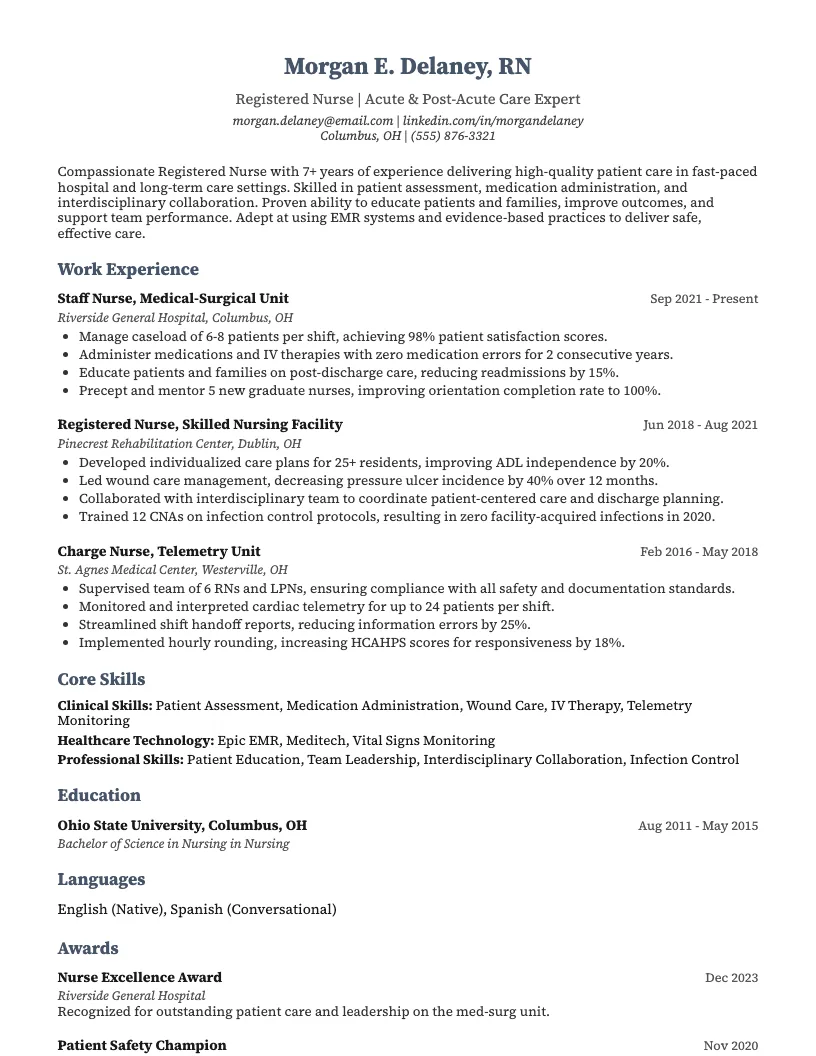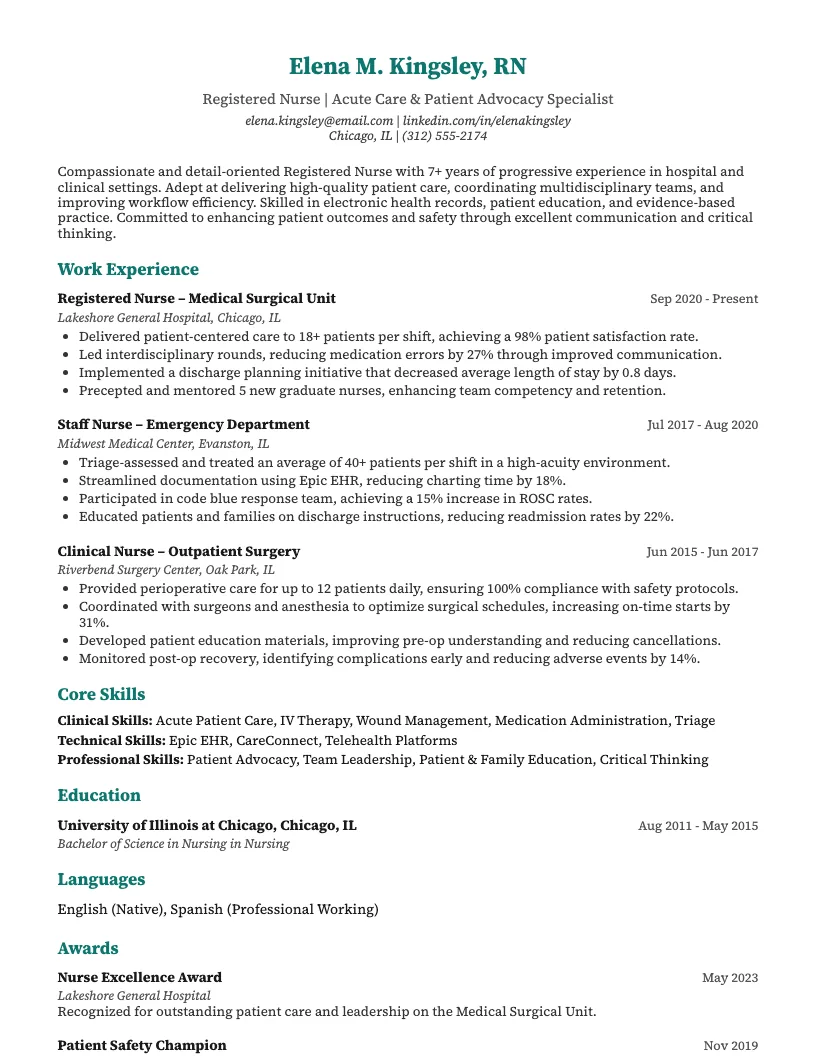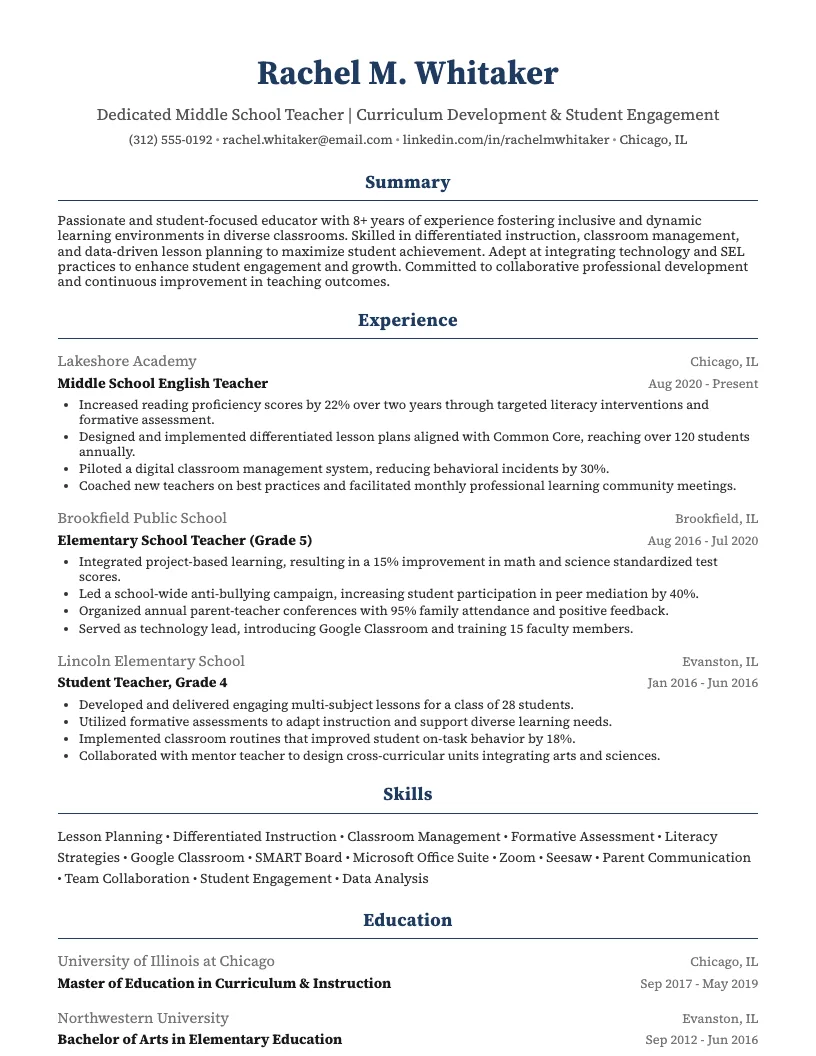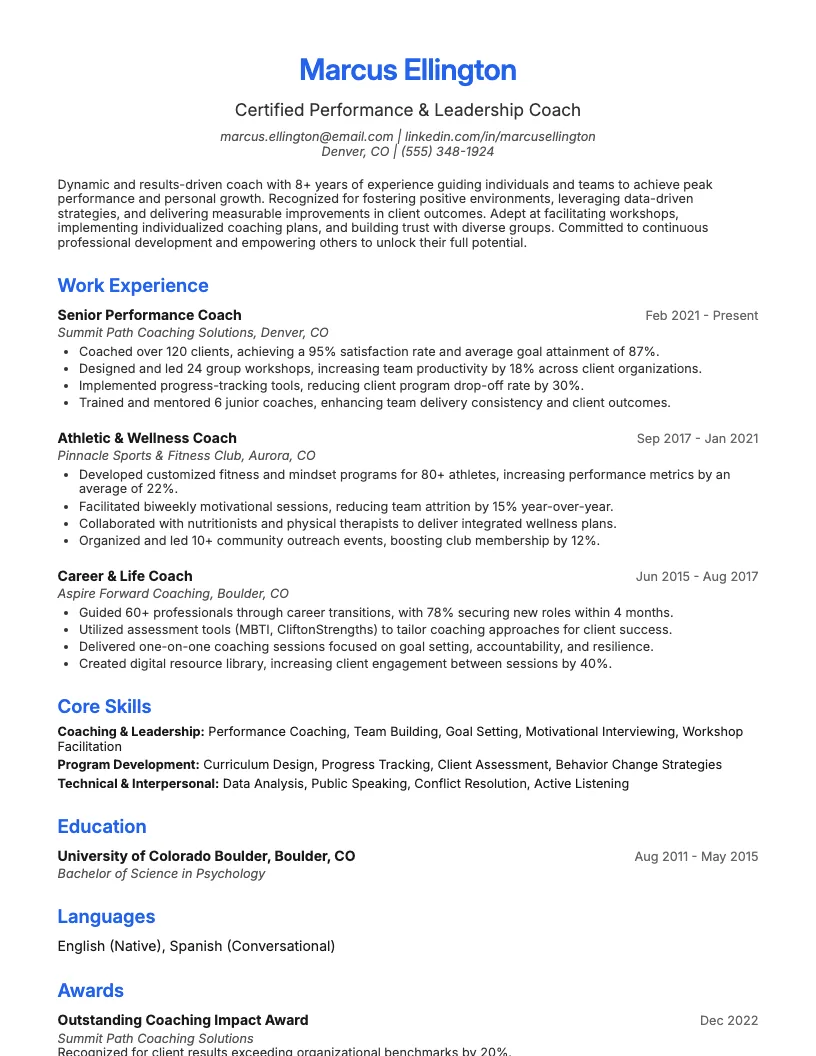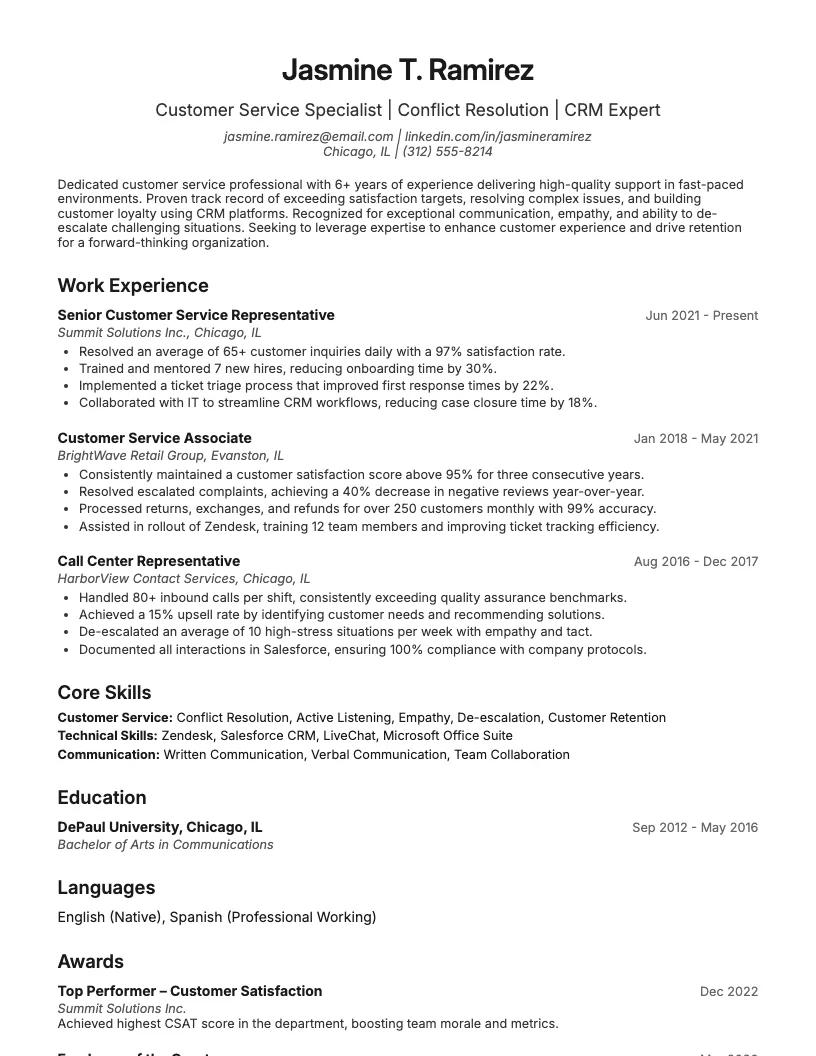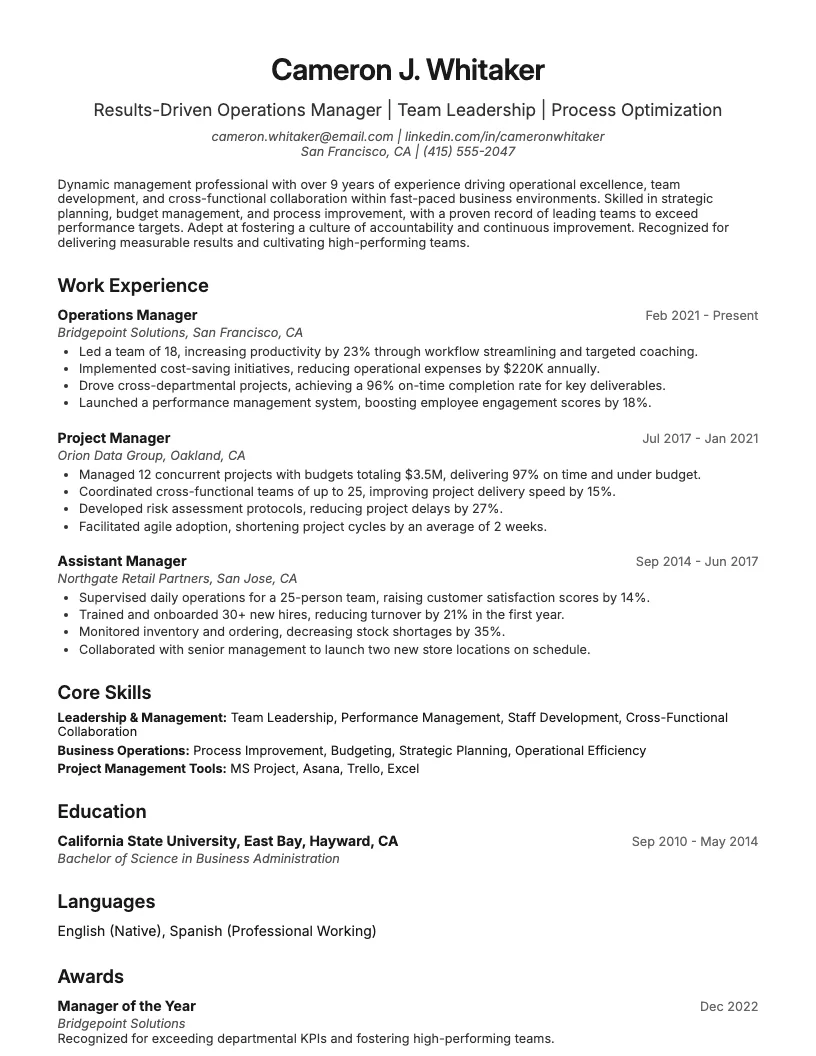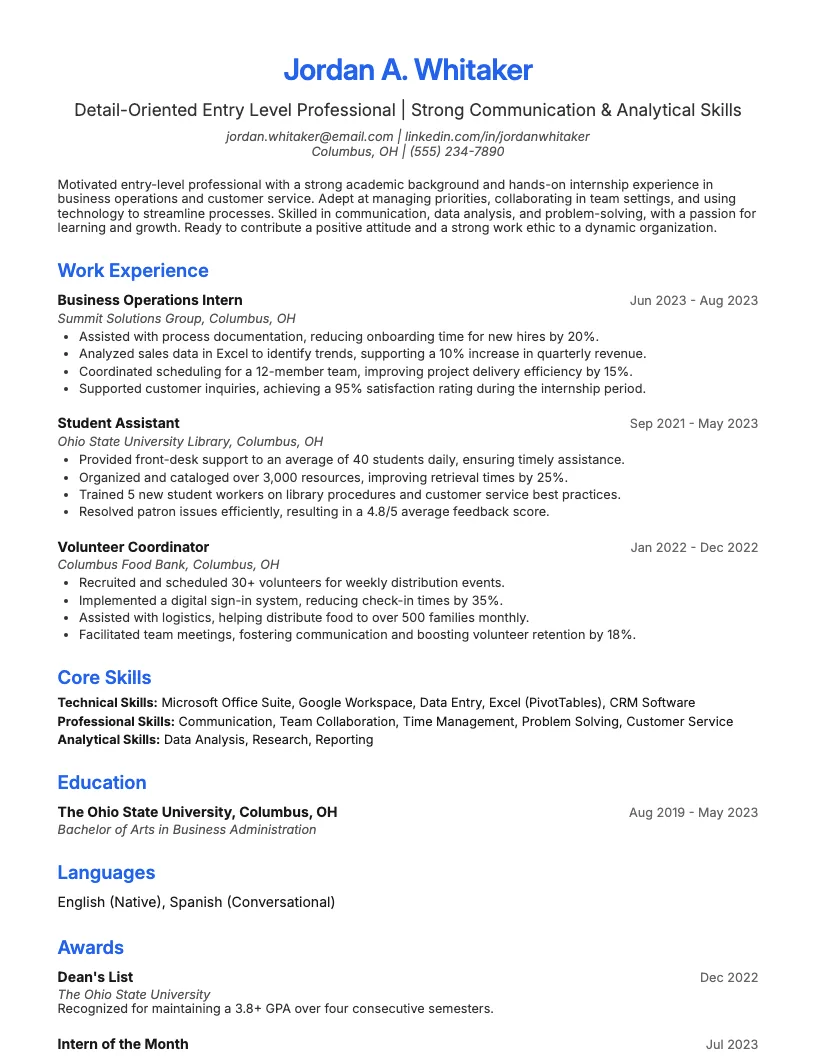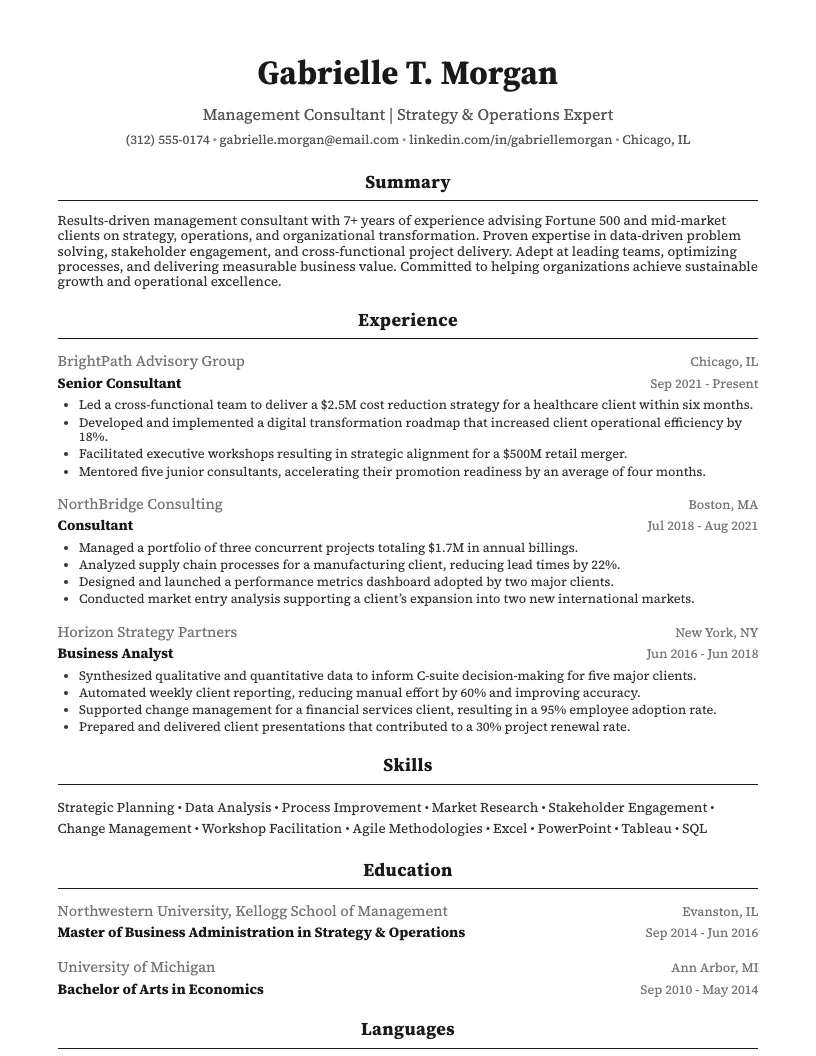
Marriage And Family Therapist Resume Example
See full guide on Marriage And Family Therapist resumes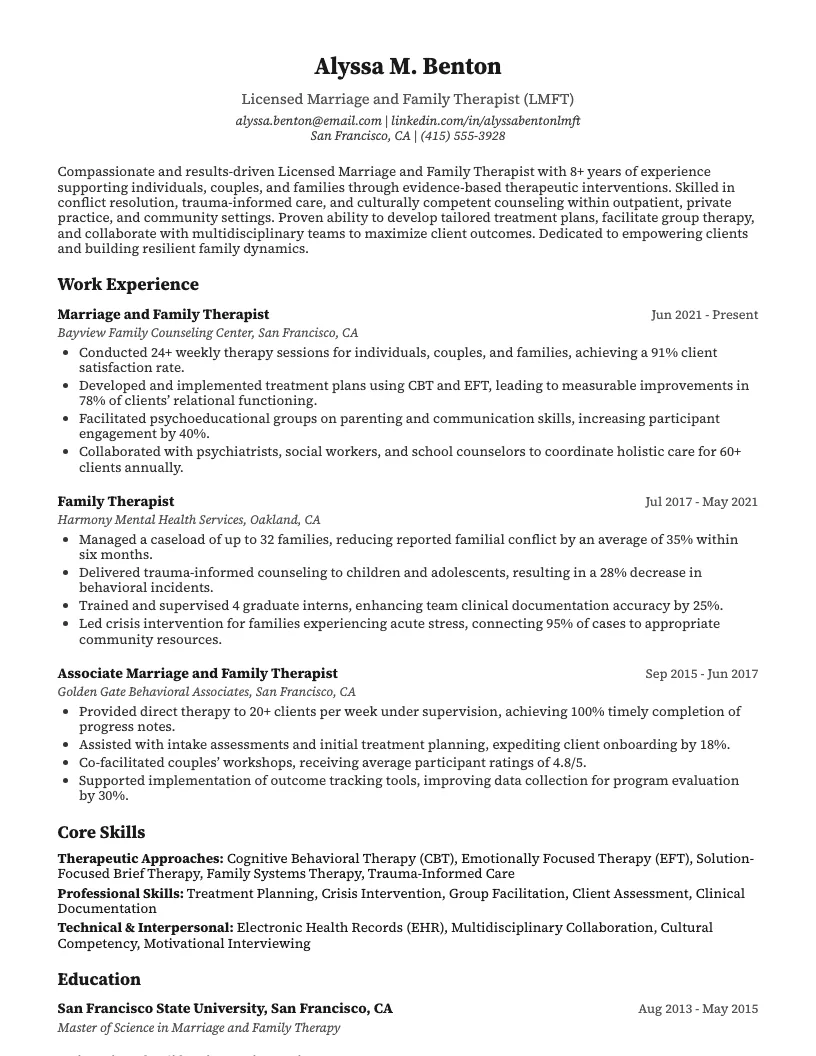 Click to enlarge
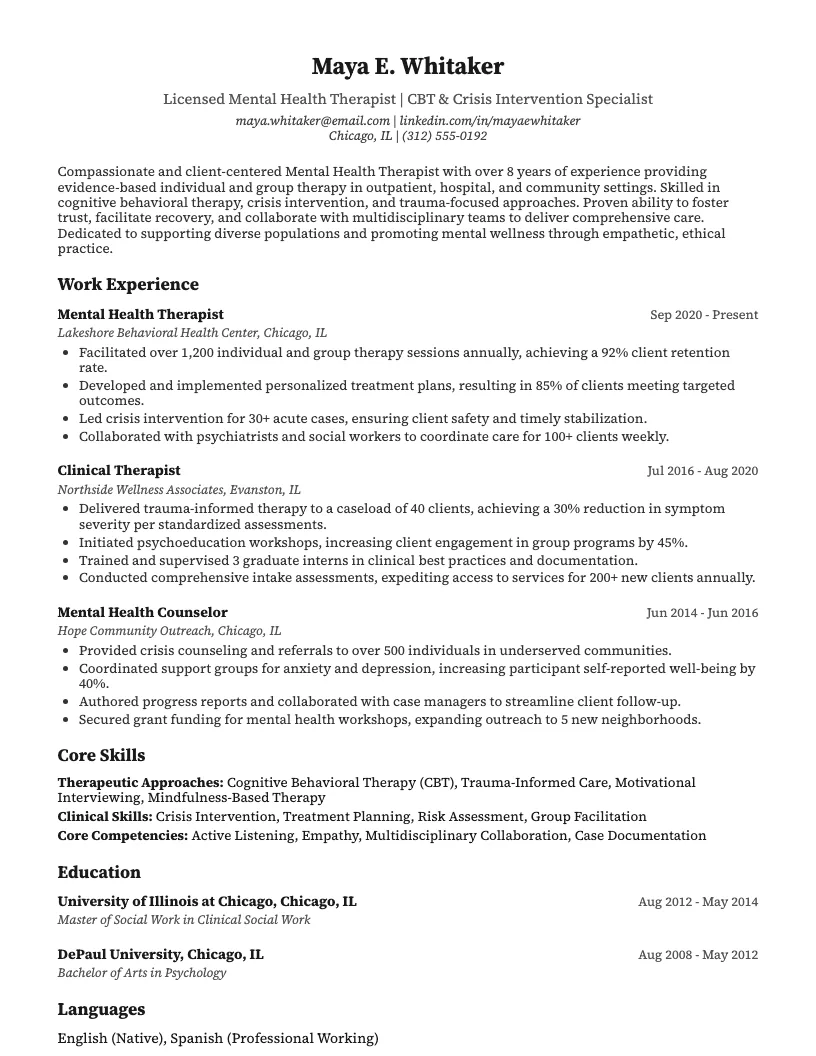 Click to preview

Get inspired by 62+ professional Mental Health Therapist resume examples, each written by career experts and optimized to pass ATS scans. Pick a proven template, tailor it to your role, and download a polished resume in minutes.
Pick the specialization closest to your target role and start from a proven resume example.
Building a solid resume for a mental health therapist role takes more than just listing credentials. You want your experience to stand out and reflect your impact.
I see hiring managers look for clinical skills, empathy, and real results. Whether you’re a counselor, psychologist, or therapist, your resume needs to show how you help people.
If you work in schools, clinics, or addiction services, each setting values different skills. I’ll show you resume examples for each job type, so you can tailor yours.
If you want a real shot at landing mental health therapist roles, make sure your application includes a cover letter so your resume stands out. I focus on skills, certifications, and quantifiable results from previous roles.
Highlight state licensure, clinical experience, and therapy methods you use. Employers look for at least 2-3 years of supervised clinical work, so show that clearly.
Don’t forget to mention caseload sizes, specific therapy types-like CBT or DBT-and outcomes. This helps you prove your impact and expertise in real-world settings.
If you want to become a counselor, your resume needs to highlight your ability to build trust and support clients. I always focus on communication and empathy skills.
Include any state licensure, as most counseling roles require it. There are over 665,500 counselors working in the U.S. right now, according to the BLS.
You should list specific client populations you serve, like adolescents or veterans. This helps employers see your direct experience and the unique value you bring.
If you’re aiming for a psychologist role, you need to show clinical experience, assessment skills, and a strong academic background. I always include my license and certifications up top.
Highlight your use of evidence-based therapies like CBT or DBT. Employers look for quantifiable impact-mention client caseloads, research contributions, or group sessions facilitated.
Focus on collaborative work with other healthcare professionals. This shows you understand integrated care. Use action verbs like “assess,” “diagnose,” and “develop” to make your work stand out.
If you're after school counselor resume examples, you're in the right spot. I see a lot of resumes that highlight both counseling and academic planning skills.
You want to show how you support over 300 students per year, manage crisis interventions, and run group sessions. This gives your resume more impact.
Make sure you include any state certifications and specialized training in trauma or conflict resolution. Recruiters look for data-driven results, like improved attendance or higher graduation rates.
If you’re eyeing a college admission counselor role, you need a resume that shows student advising, application review, and outreach. Numbers help-mention how many students you’ve supported.
I see strong resumes highlight communication, organizational skills, and specific software like Slate or Salesforce. Listing data-driven results-like boosting enrollment by 10%-really stands out.
You want to show your impact. Use phrases like “guided 300+ applicants” or “improved acceptance rates.” This helps recruiters see your value fast, and makes you memorable.
Camp counselor roles need a mix of leadership, empathy, and crisis management. Highlight any experience with youth or group activities. I always stress teamwork and communication skills.
Use numbers to show your impact. For example, “Led activities for groups of 25+ campers” or “Reduced behavioral incidents by 30%.” This helps your achievements stand out.
Focus on certifications like CPR, First Aid, or mental health training. You want to show you’re ready for anything. Next up, I’ll look at juvenile counselor resume examples.
When I review juvenile counselor resume examples, I notice employers look for experience working with at-risk youth. Highlight skills like crisis intervention, case management, and group facilitation.
You want to show results. Include numbers-like managing caseloads of 15+ clients or reducing incident reports by 20%. This helps your work stand out fast.
Focus on certifications. If you have a Bachelor’s in Psychology or a state counseling license, put it up top. Adapt your resume for juvenile justice settings to boost your chances.
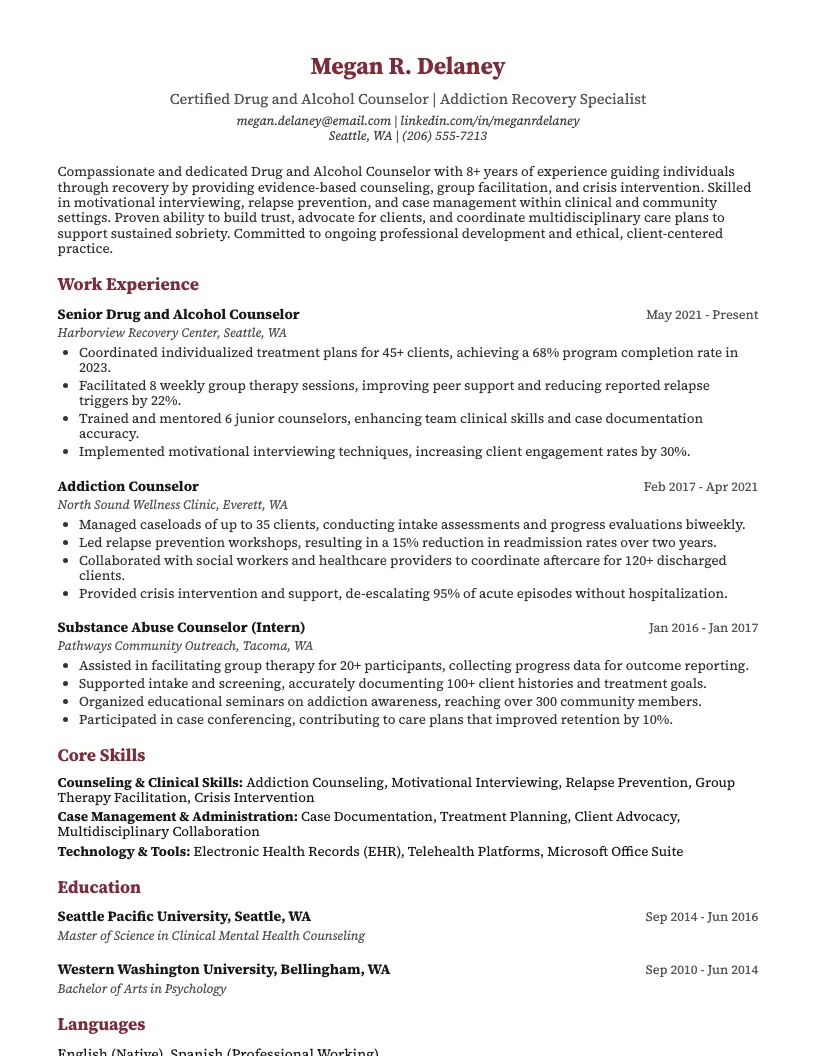
If you want drug and alcohol counselor resume examples, you’re in the right place. I see these roles focus on addiction recovery, group therapy, and relapse prevention.
You need to show strong communication skills and experience with treatment plans. Listing certifications like CADC or LADC helps your resume stand out.
Highlight real results-like “helped reduce relapse rates by 20%” or “led 15+ weekly group sessions.” This shows your impact and commitment to supporting clients.
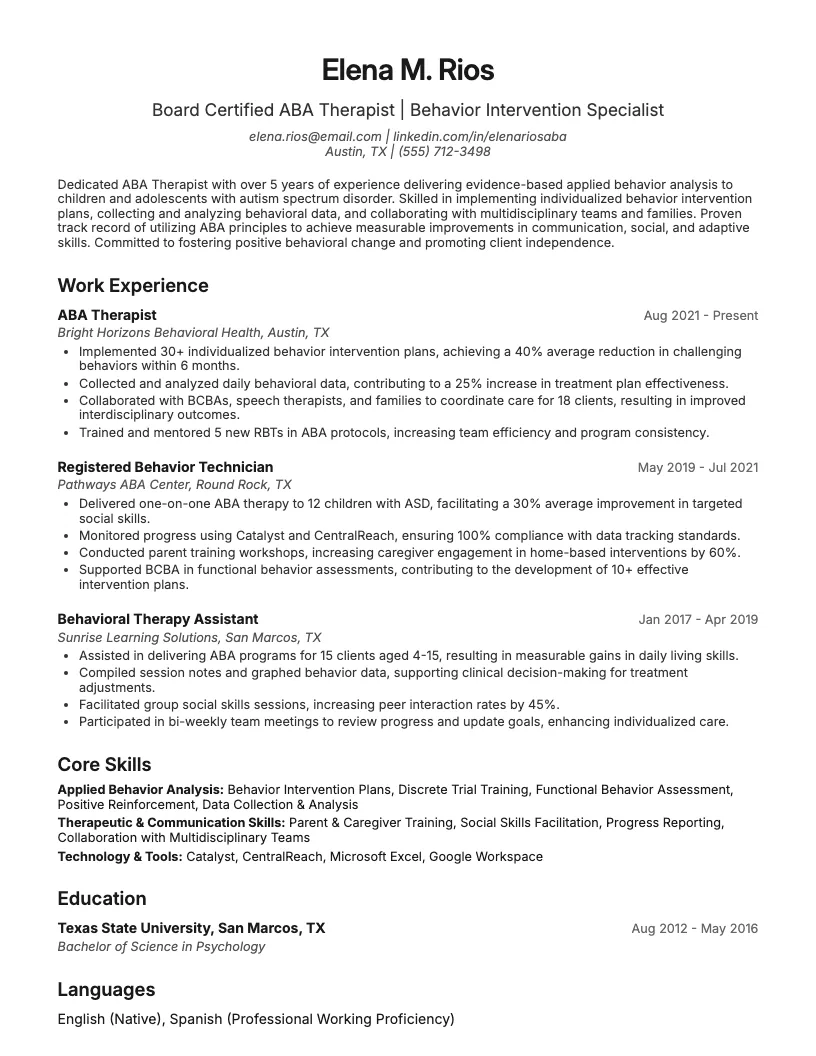
If you're searching for behavioral therapist resume examples, you want clear proof of skills in behavior modification and client support. I see most resumes highlight certifications like BCBA or RBT.
You want to show outcomes. Use numbers-like "worked with 12 clients weekly" or "reduced behaviors by 40%." Employers love specifics over generalities.
I always add hands-on techniques, like ABA or CBT, and any collaboration with families or teachers, and I recommend including a cover letter to further showcase these skills. This helps your resume stand out from other mental health roles.
If you’re looking for psychotherapist resume examples, you want to show both clinical skills and genuine empathy. I always highlight experience with different therapy modalities and client populations.
Use numbers to make your impact clear. For example, “guided 25+ weekly clients” or “improved treatment plan adherence by 15%.” This helps hiring managers see real results.
Focus on your specialties-CBT, trauma-informed care, or group therapy. Tailor each resume example to match the specific job description. That’s how you stand out in the mental health field.
I find that ending your resume with certifications or state licenses gives it a strong finish. If you include continuing education, it shows your commitment to growth.
Mental health therapists help people handle emotional and behavioral challenges. I work with clients dealing with anxiety, depression, trauma, relationship issues, and more.
I often create personalized treatment plans and track progress. Some therapists focus on specific age groups or issues, while others see a broad mix of clients.
You can find mental health therapists in private practices, hospitals, schools, or community agencies. The work usually involves assessments, therapy sessions, and regular documentation.

If you're writing a mental health therapist resume, you need to show your skills and experience clearly. Employers look for candidates who connect with clients and handle sensitive situations.
You'll want to cover your summary, experience, education, and therapist skills. Each section should highlight what makes you a strong candidate in mental health care.
Make sure your resume matches the job description. Tailoring your details for each application gives you a better shot at getting noticed by hiring managers.
Your professional summary is the first thing hiring managers see. I use this space to show my years of experience, therapy style, and the unique value I offer.
Keep it short-three to four sentences work best. Focus on your approach, client impact, and any specialties that set you apart. Numbers help. For example, mention serving over 200 clients or achieving high satisfaction scores.
Tailor your summary for each application. This helps you stand out and shows you actually care about the specific role, not just any job.
Focus on outcomes, not just job duties. I use specific numbers-like “maintained a caseload of 30+ clients weekly” or “improved patient satisfaction scores by 20%.”
Show how you make a difference. Describe successful treatment plans, group therapy leadership, or crisis intervention results. This helps employers see the real impact you have.
Use action verbs and keep statements concise. Quantify results where you can. This makes your experience section jump out and proves your value in concrete terms.
You need to list your highest degree first. Most mental health therapist jobs want at least a master’s in counseling, psychology, or social work.
Always include your state license, like LPC, LMFT, or LCSW—and consider pairing your resume with a cover letter to highlight your qualifications. If you have extra certifications-think trauma-informed care or CBT-add those too. This helps you stand out.
I also like adding graduation years and issuing organizations. It shows you stay current and are upfront about your background.
I always add a dedicated skills section. Highlight empathy, active listening, crisis intervention, and knowledge of evidence-based therapies like CBT or DBT. These are must-haves for any therapist role.
You should also list technical skills-like electronic health records and telehealth platforms. Around 75% of clinics use these tools now, so showing that experience matters.
Don’t forget soft skills. Communication, cultural competence, and conflict resolution show you can work with clients from all backgrounds. This wraps up your resume and keeps it balanced.
Picking the right resume format makes a big difference. It helps your experience stand out and gets you noticed by recruiters and applicant tracking systems.
Most hiring managers expect reverse chronological order. This layout puts your most recent roles and achievements up top, making them easy to spot.
If you’re just starting out, switching careers, or have gaps, other formats might suit you better. Each option has pros and cons you’ll want to consider.
Your resume summary is where you introduce yourself and set the tone for the rest of your application. You only get about 3-5 sentences, so make them count.
This is your chance to highlight your approach, your specialty, and your biggest achievements. If you work with specific groups or use certain methods, mention it here.
Think of this section as your elevator pitch. Hiring managers read this first, and it helps them see if you’re a good fit right away.
This is where you show how you help clients and support mental health. Employers want to see real results and practical skills in your work history.
Focus on your impact, the techniques you use, and the types of clients you serve. Highlight specific numbers or outcomes to show what you bring to the table.
Your education lays the foundation for your role as a mental health therapist. Most jobs require at least a master’s degree in counseling, psychology, or social work.
Certifications matter, too. Listing state licenses, specialized training, and relevant workshops helps you stand out. This section shows employers you meet the professional standards for the job.
You need a strong mix of technical and interpersonal skills to stand out as a mental health therapist. Employers usually look for a balance of both.
I always check job listings for keywords like "counseling techniques" or "crisis intervention." Around 85% of resumes that pass ATS use these specific terms.
You want your resume to look clean and easy to read. Most recruiters spend less than 7 seconds on a first scan, so clarity is key.
Stick to a straightforward layout. Avoid busy colors and graphics-these can distract from your experience and skills.
A professional vibe helps you come across as trustworthy. Your contact info should stand out so hiring managers can easily reach you.
Let’s break down exactly how to design your mental health therapist resume for the best results.
Writing a strong counselor cover letter helps you stand out in a crowded field. I see hundreds of people applying for these jobs every month.
Whether you’re interested in mental health, school, or camp counseling, great cover letters show your skills and passion. I’ll walk you through examples for each role.
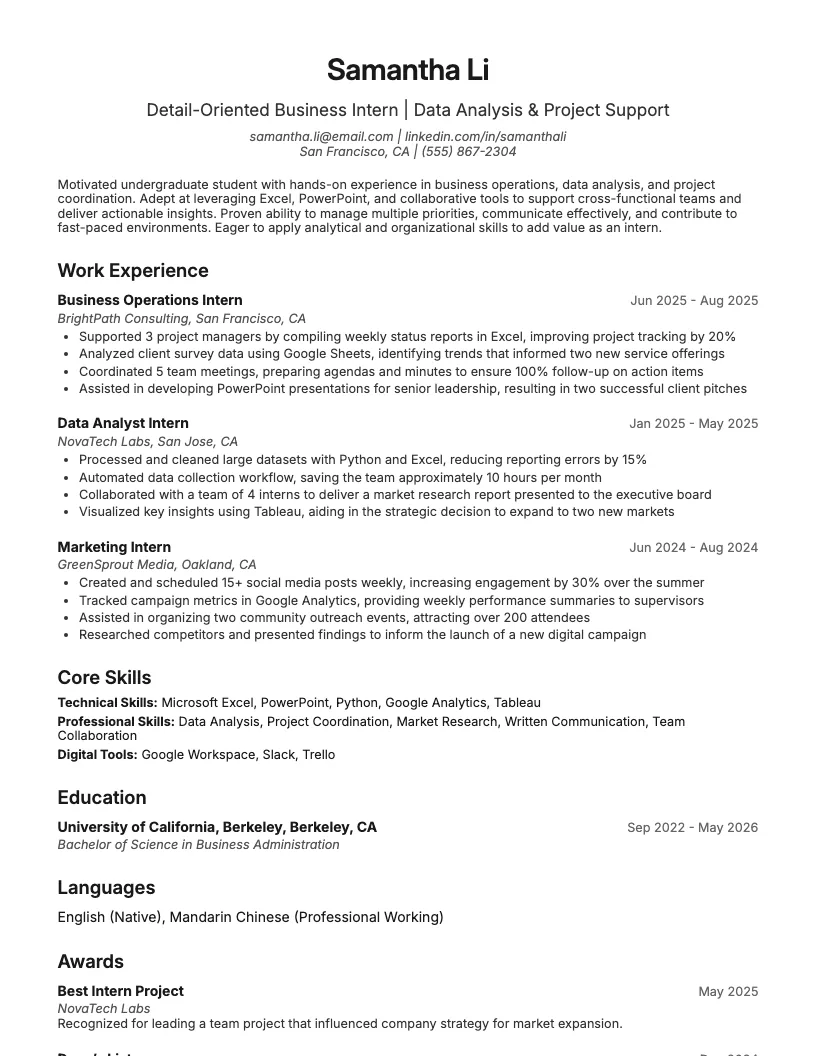
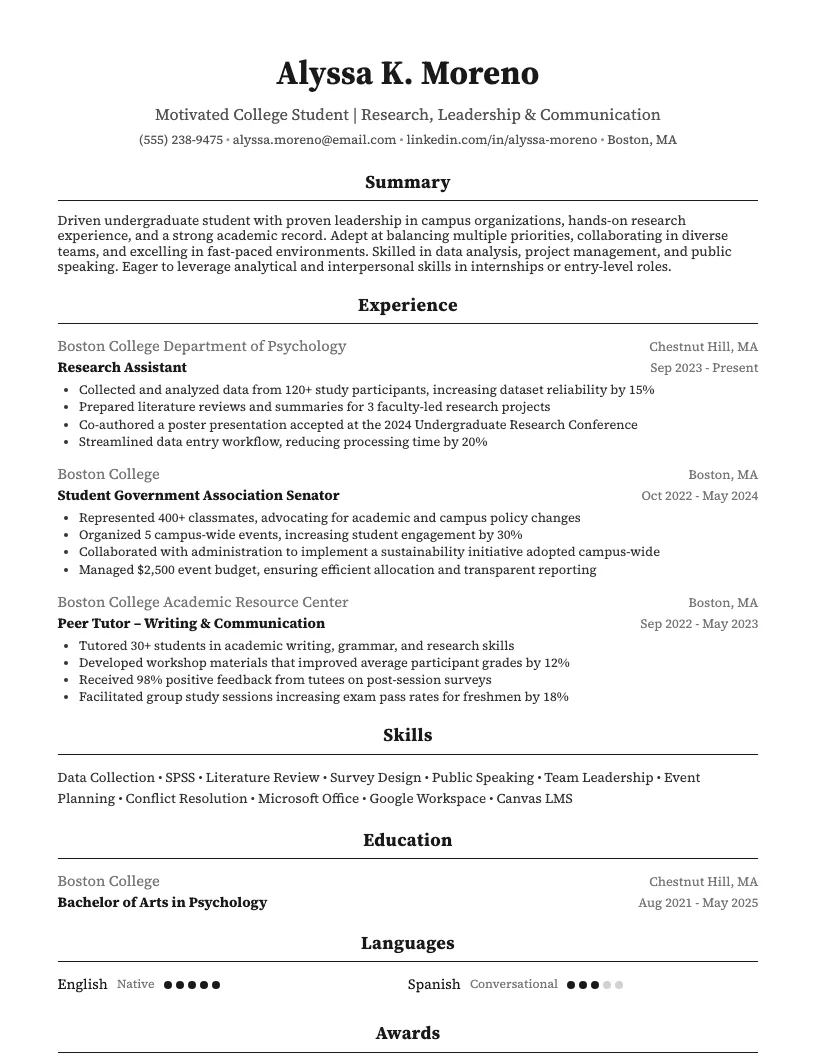
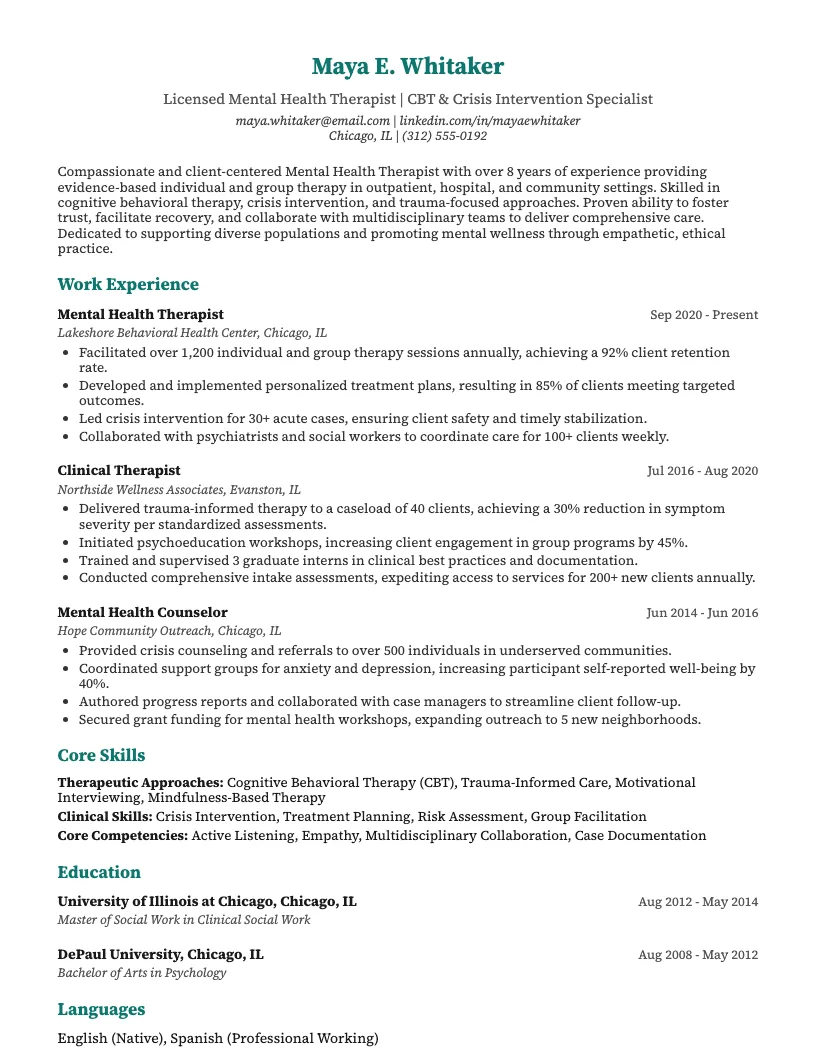
Browse Mental Health Therapist resume examples for related roles. Preview any example, open it in the builder, or read its full guide.
Click to enlarge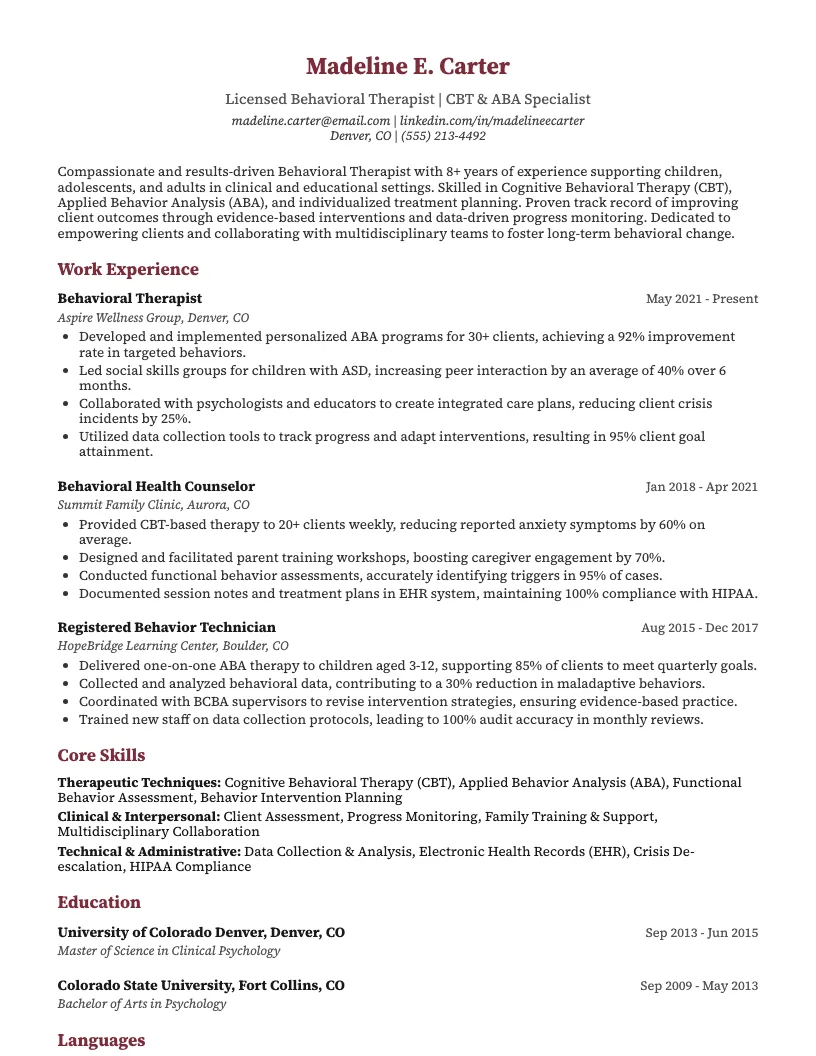 Click to enlarge
 Click to enlarge
 Click to enlarge
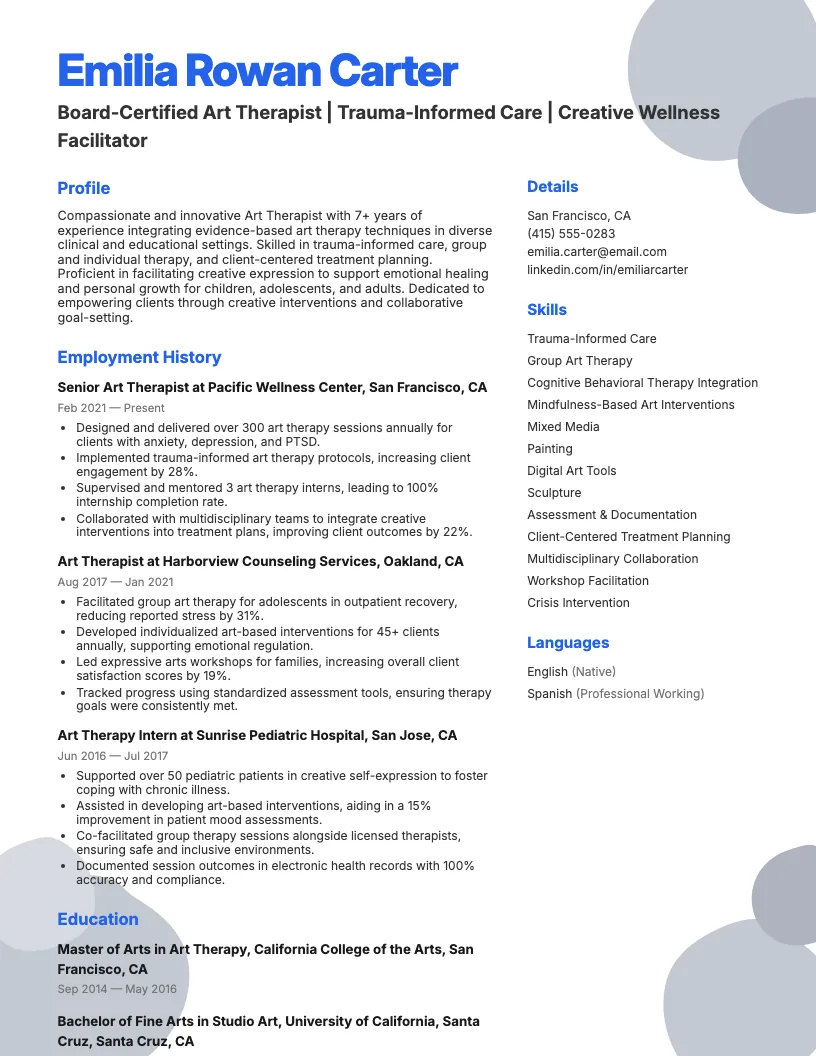 Click to enlarge
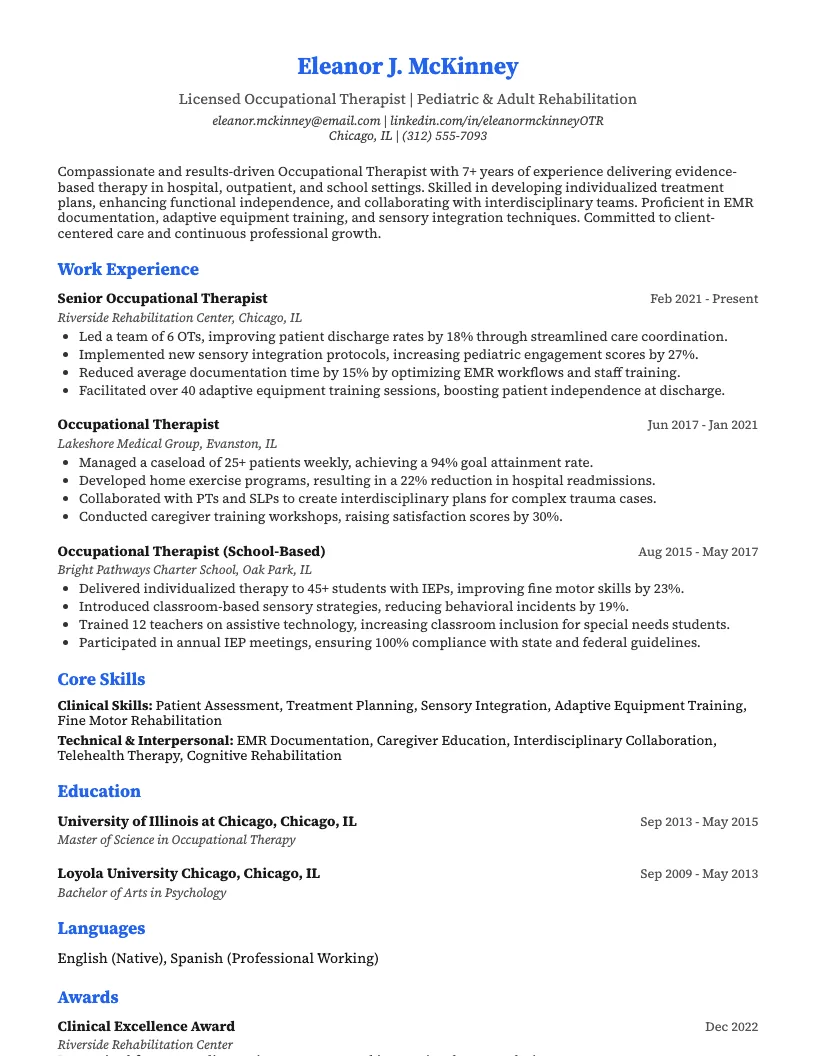 Click to enlarge
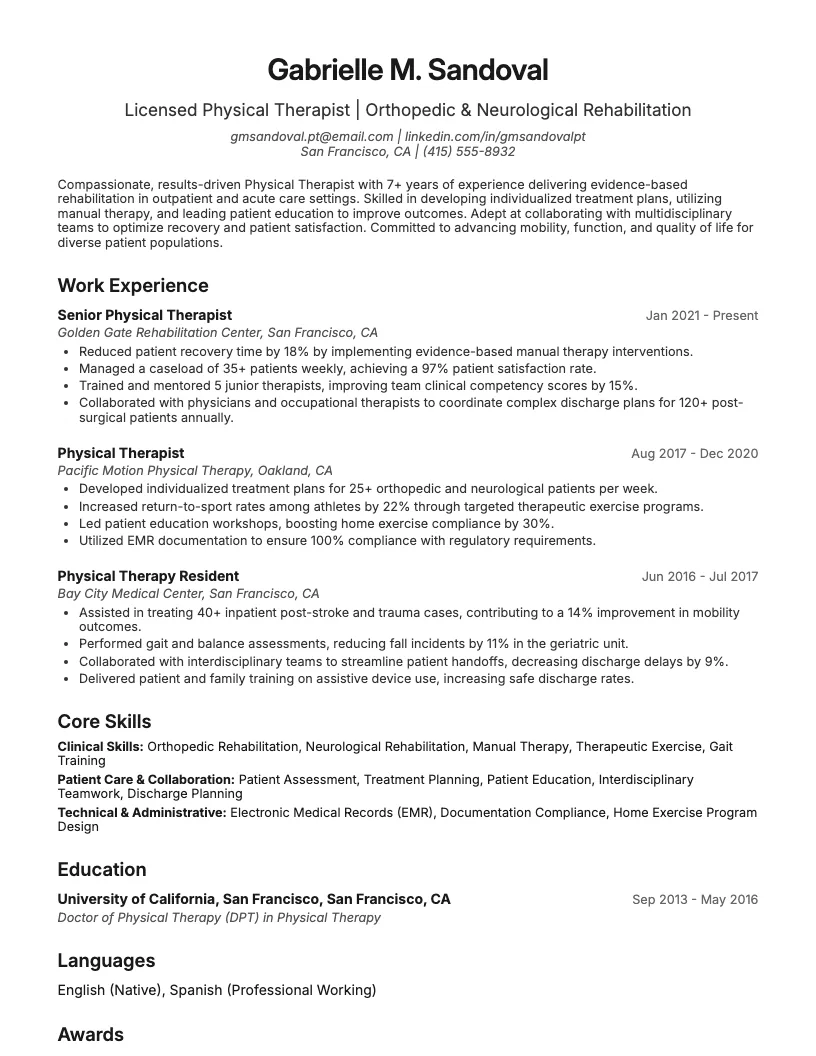 Click to enlarge
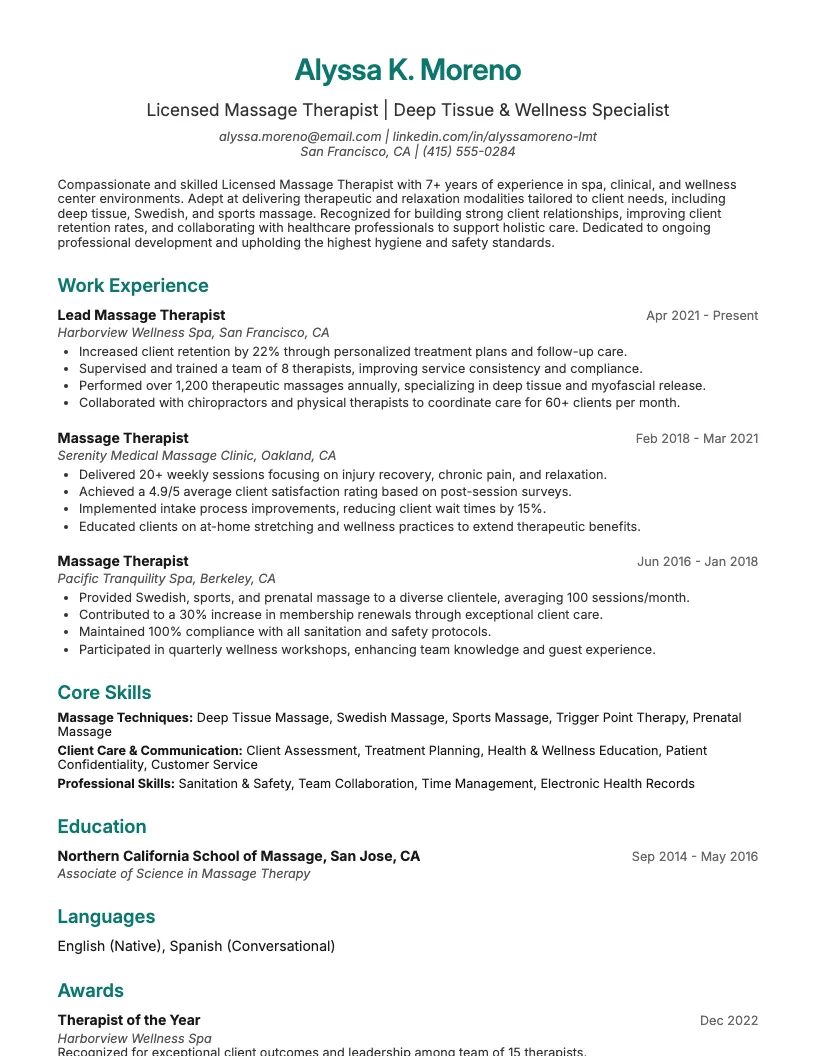 Click to enlarge
 Click to enlarge
Common questions about Mental Health Therapist resumes
A Mental Health Therapist resume template is a pre-designed format tailored for professionals in mental health counseling, making it easy to highlight your clinical skills, credentials, and experience. ResumeJudge offers templates built for this field.
Yes, ResumeJudge templates are ATS-friendly, ensuring your resume passes automated screening systems used by clinics, hospitals, and counseling centers so your application reaches hiring managers.
Use this template if you’re applying for roles in private practices, hospitals, schools, or community agencies. ResumeJudge makes it easy to tailor your resume for various mental health settings.
Absolutely! With ResumeJudge, you can personalize your template by adding your unique experience, certifications, and specialties, helping you stand out to employers.
Mental Health Therapist templates focus on clinical skills, licensure, and therapy techniques, unlike generic templates. ResumeJudge ensures these key areas are front and center for relevant roles.
Aim for one to two pages, focusing on relevant experience and key achievements. ResumeJudge helps you format your resume concisely, making each section impactful.
Focus on active listening, empathy, crisis intervention, and cognitive behavioral therapy. ResumeJudge templates prompt you to showcase these skills effectively for clinical roles.
Yes, ResumeJudge templates work for all experience levels. Highlight internships, practicums, and volunteer work to demonstrate your readiness for entry-level therapist roles.
Yes, ResumeJudge templates feature dedicated sections for your certifications and licenses, ensuring important credentials like LCSW or LPC are clearly visible to employers.
With ResumeJudge, you can easily download your resume as PDF or Word files, making it simple to apply to hospitals, clinics, and telehealth organizations.
Explore more professional resume examples to inspire your job search
Use our AI-powered resume builder to create a professional, ATS-friendly resume in minutes.
Free to use • No credit card required