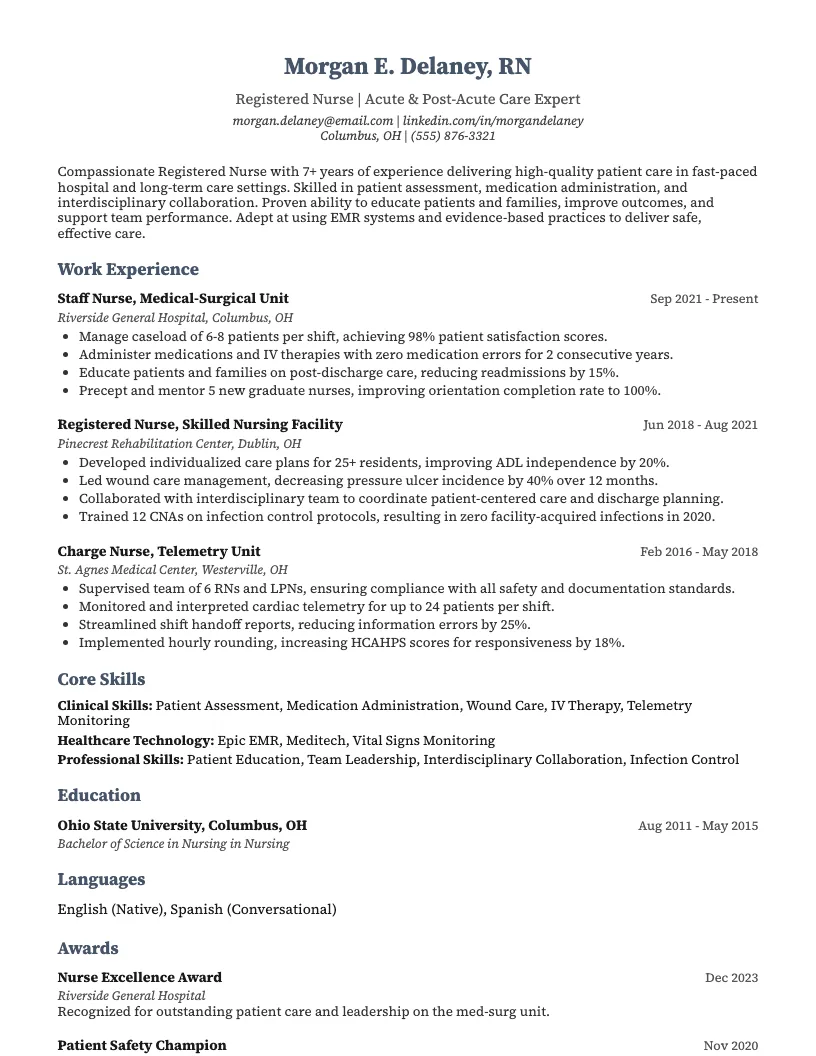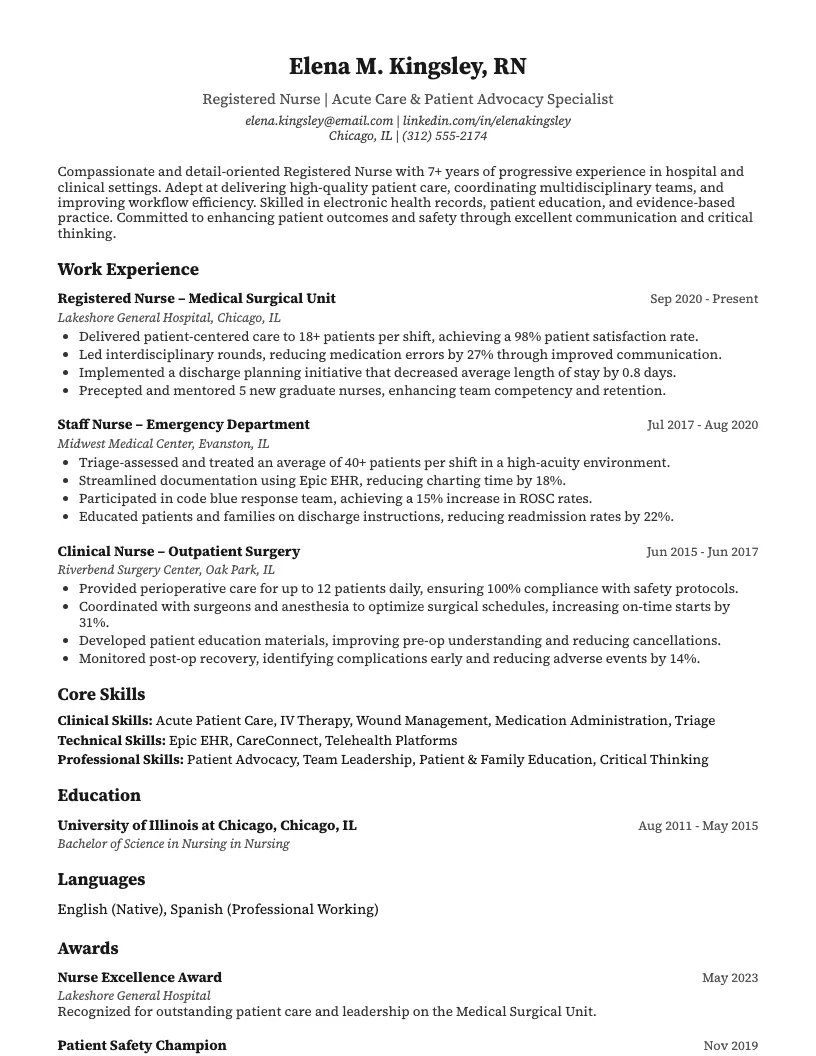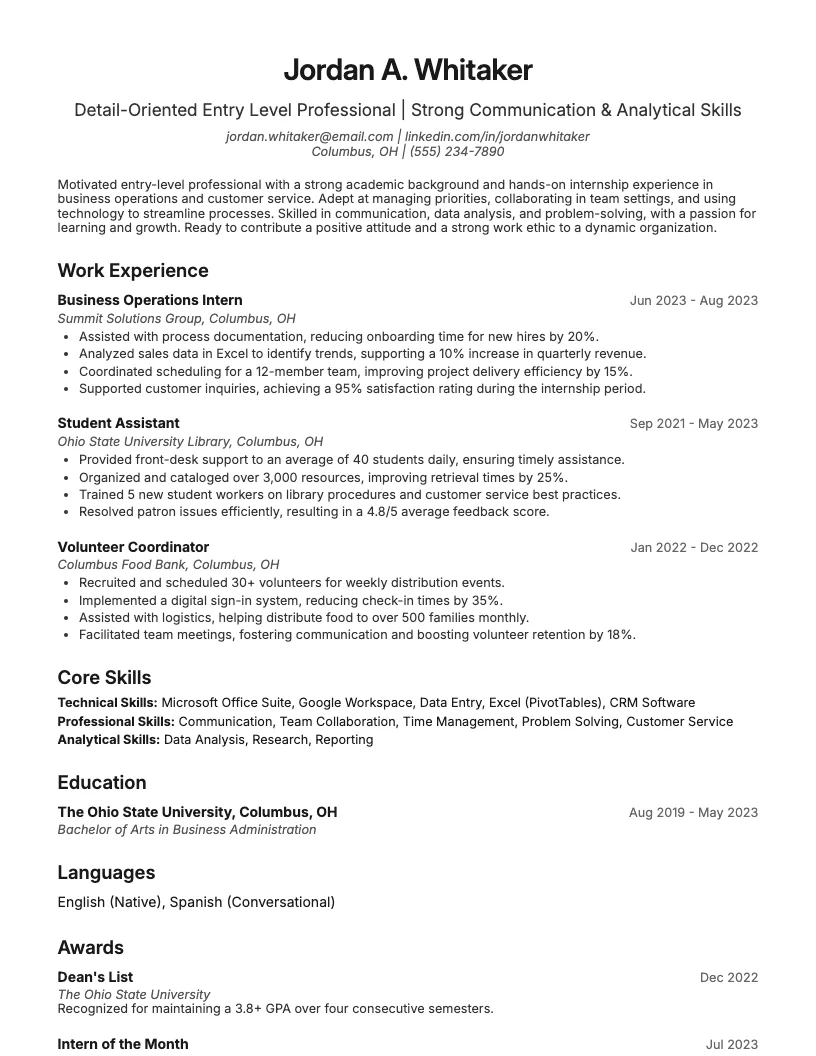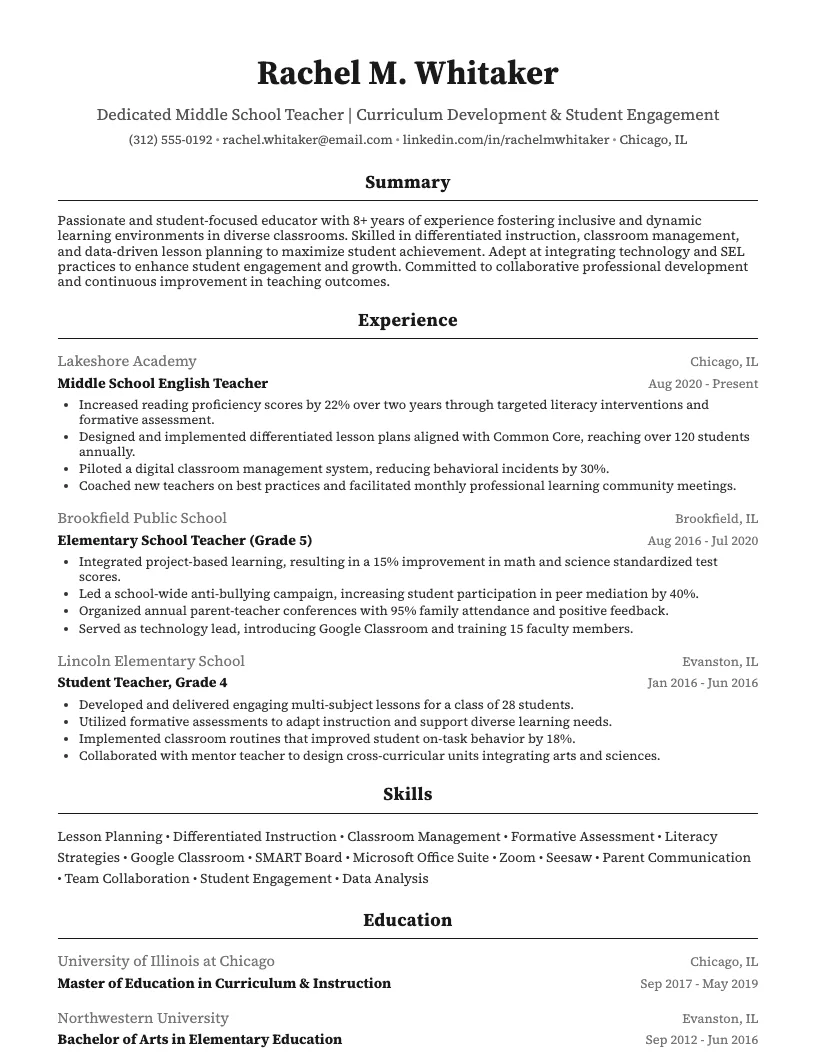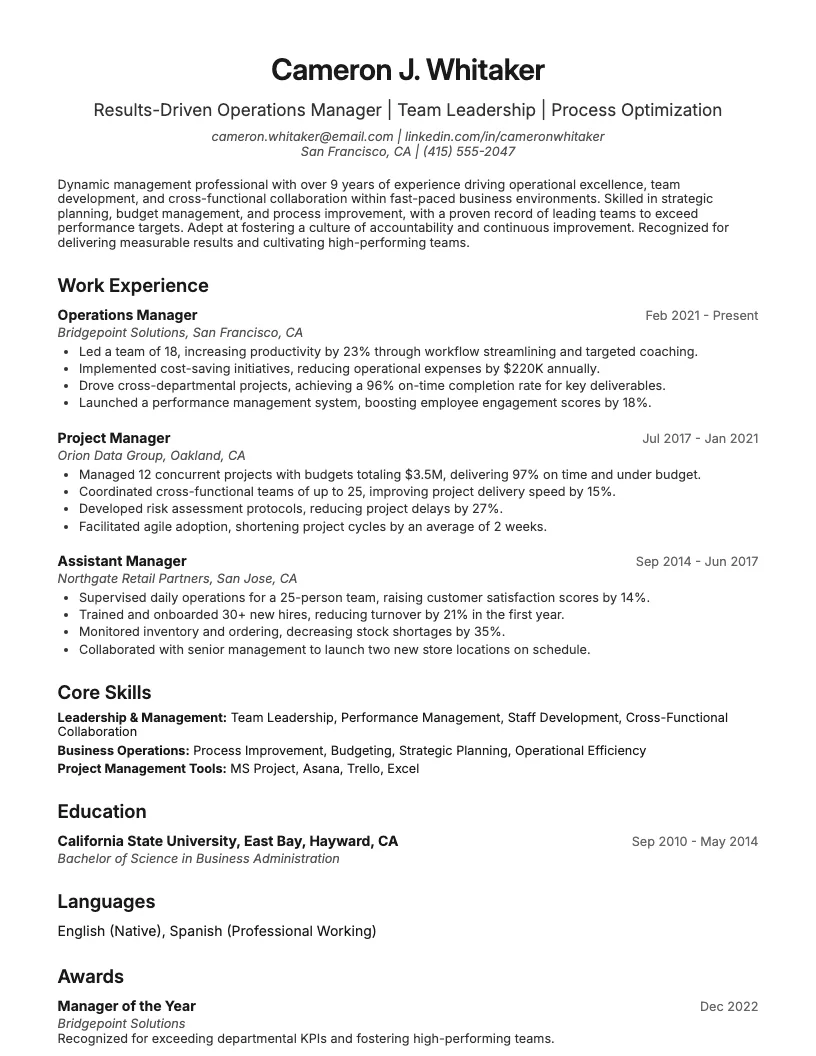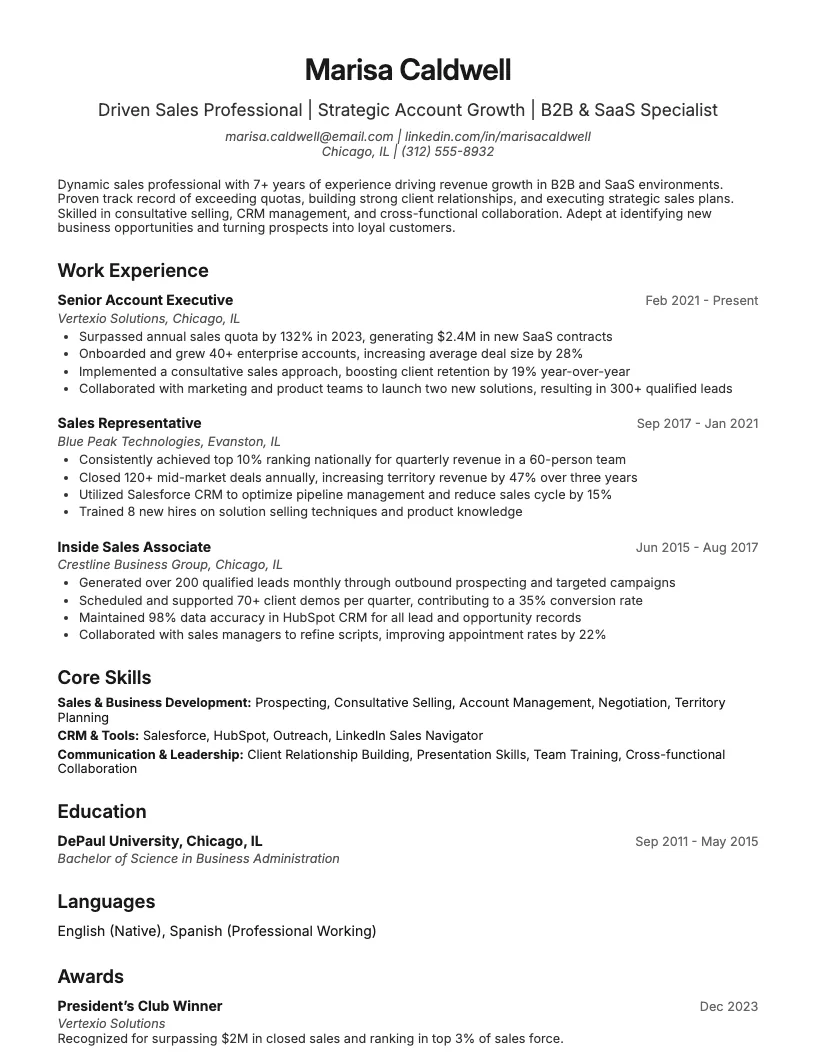
Physical Therapist Resume Example
See full guide on Physical Therapist resumes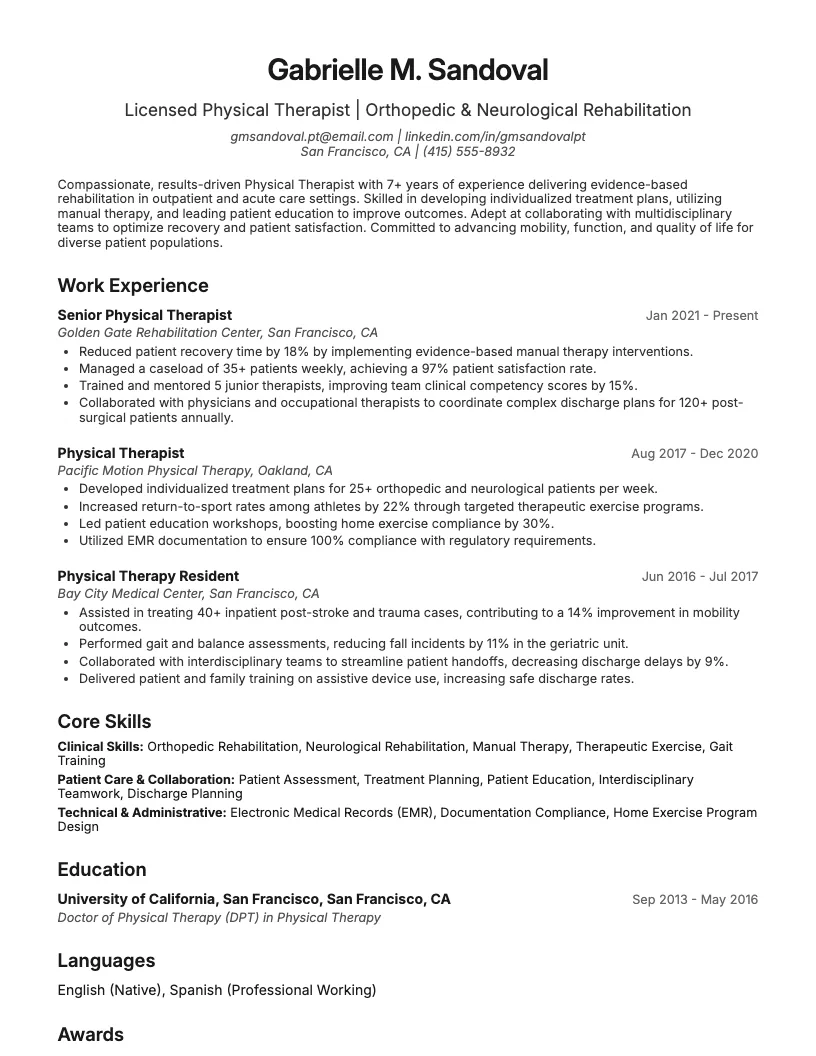 Click to enlarge
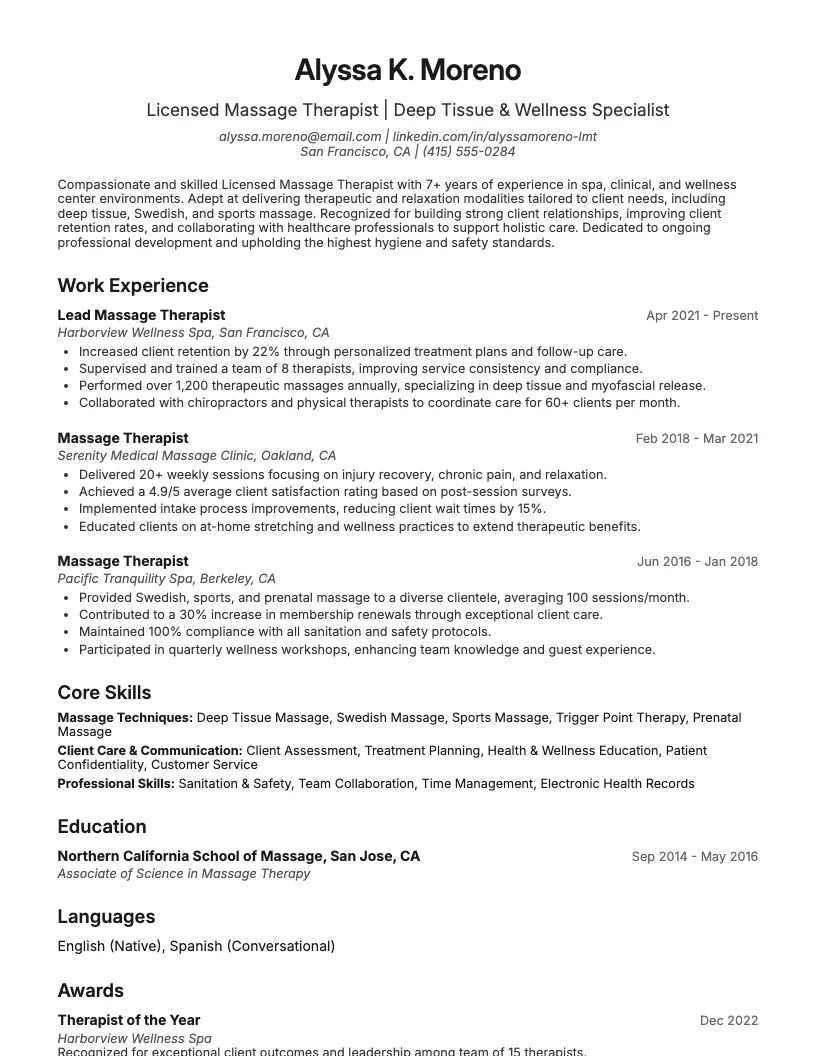 Click to preview

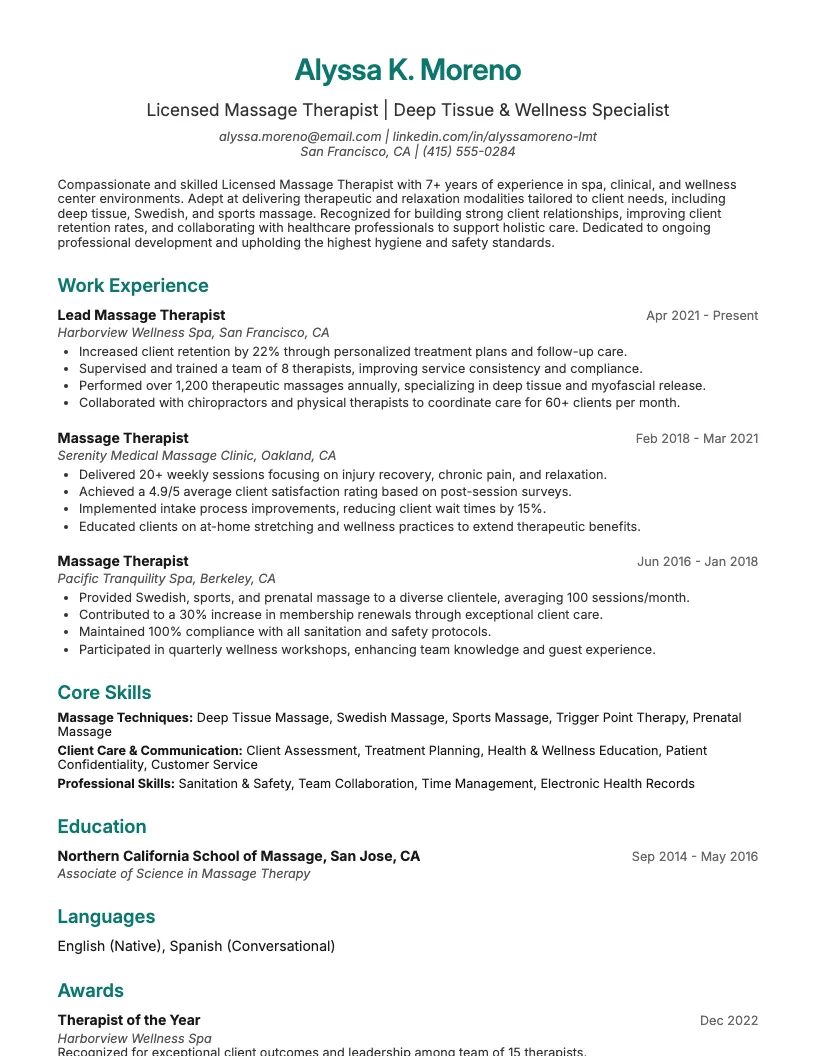
Get inspired by 58+ professional Massage Therapist resume examples, each written by career experts and optimized to pass ATS scans. Pick a proven template, tailor it to your role, and download a polished resume in minutes.
Pick the specialization closest to your target role and start from a proven resume example.
Not sure how to show off your massage therapy skills on a resume? I get it. It can be tough to highlight hands-on work and client results.
Here, I break down real resume examples from massage therapists in different specialties. You’ll see what works, like using numbers and listing your certifications.
You’ll find tips whether you’re new to massage therapy or have years of experience. I cover resumes for spa, medical, sports, and more.
Every massage therapist has a unique focus. You might specialize in sports, prenatal, or medical massage-each requires a different approach on your resume.
I see resumes for deep tissue, cover letter, and even oncology massage roles. Highlighting your area of expertise and certifications helps you stand out to employers.
There are more than 15 common specialties in massage therapy. Listing your specialized skills, like myofascial release or aromatherapy, can boost your job prospects and client trust.
If you're just starting, I keep my resume focused on certifications and training. I highlight any hands-on experience, even if it’s from school clinics or volunteer work.
For mid-level roles, I show measurable results, like increasing client retention by 25%. I list specific techniques, and add numbers to prove growth, such as serving 15 clients per week.
Seasoned therapists should spotlight leadership, advanced specialties, and mentoring. I use quantifiable achievements, like boosting repeat bookings by 30%, to stand out at this level.
If you’re exploring different wellness careers, check out physical therapist, chiropractor, or esthetician resume examples. Each role highlights unique certifications and patient care skills.
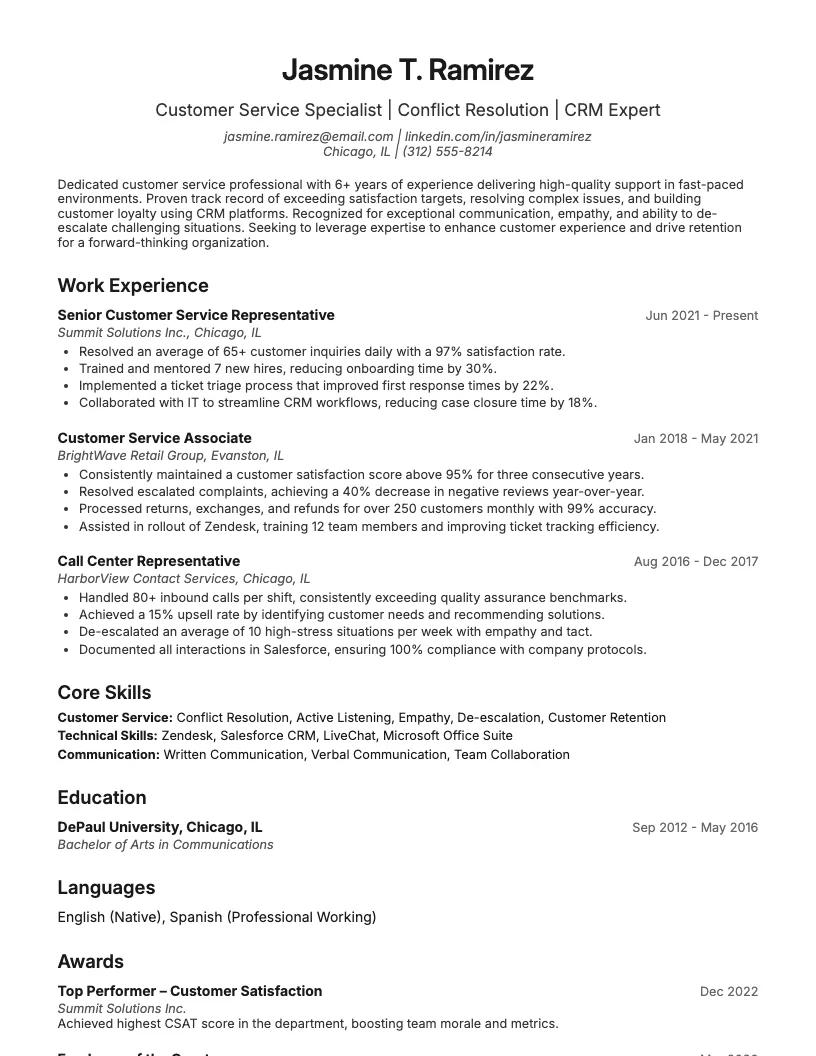
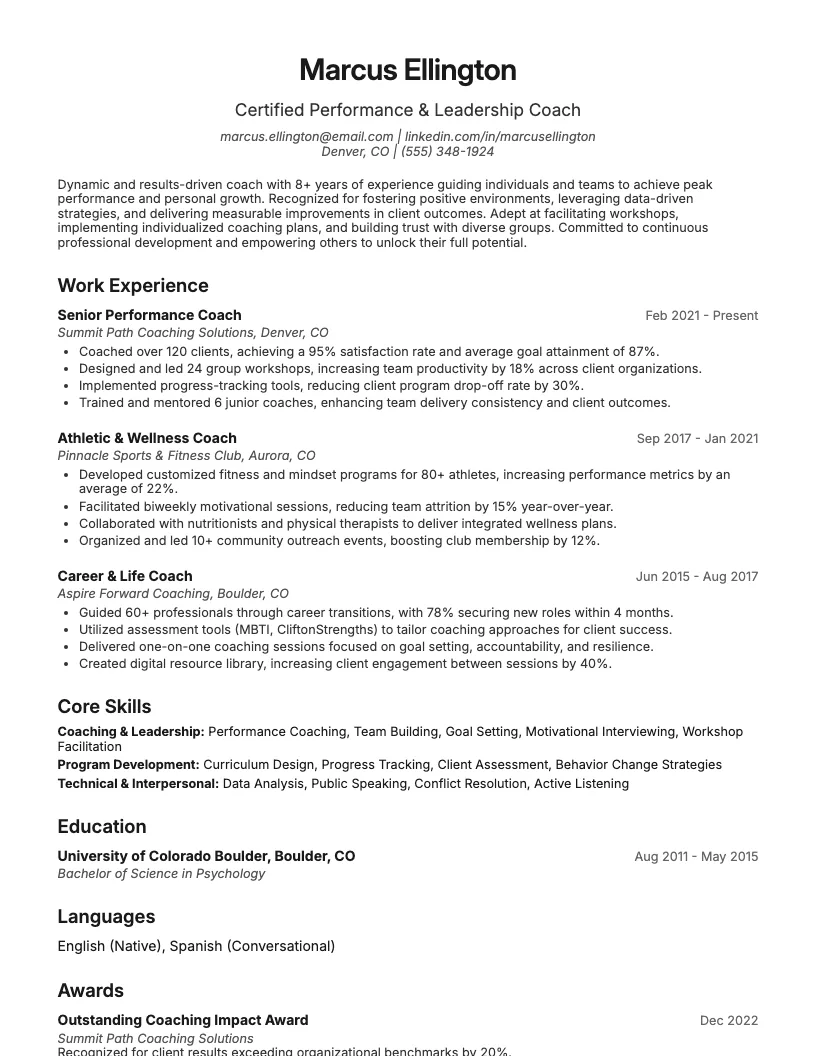
You can also look at fitness trainer or medical assistant resumes. These show how to spotlight practical experience, technical skills, and client results-super useful for your own resume.
Comparing related examples helps you see what employers want. You’ll spot industry trends, like quantifiable achievements or specialized training. This makes your resume stand out in a crowded field.
Massage therapists use hands-on techniques to ease pain, reduce stress, and help people relax. Some work with hot stones or aromatherapy, while others stick to traditional massage.
You might find massage therapists in spas, clinics, gyms, or even running their own practice. There are over 20 types of massage, each with its own focus and benefits.
Each workplace has its own expectations and routines, so your resume should show you’re ready for the environment you want. Let’s look at where massage therapists fit in today’s job market.
The massage therapist job market is booming. The U.S. Bureau of Labor Statistics predicts a 32% job growth from 2020 to 2030. That’s way faster than most jobs out there.
People want more wellness services now. In 2018, clients averaged 4.5 massages per year. That’s up from 3.8 just a year before, according to the AMTA.
If you’re considering this field, focus on flexibility. Jobs pop up in spas, clinics, and health centers. You can even start your own practice if you want more control.

Writing a massage therapist resume means showing your skills, certifications, and real experience. You want everything to fit on one page and look clean.
You need to list your work history, education, and main skills. I always recommend making your contact info and job title clear at the top.
Certifications are huge in this field. Make sure you highlight them, along with any specialized training. This helps employers see your value right away.
I always start by picking the right resume format. For massage therapists, the reverse-chronological format works best. This puts your most recent experience front and center.
You want your layout to look clean and easy to scan. Use clear headings, bullet points, and plenty of white space. Recruiters usually spend under 7 seconds on a first glance.
If you’re just starting out, a functional format can highlight your skills instead. But most employers expect the traditional layout, so I stick with that unless there’s a good reason.
Your resume summary is your chance to grab attention fast. I use two or three sentences to show off my years of experience and unique approach.
Focus on your specialties. If you’ve helped over 300 clients or mastered deep tissue techniques, say it. This helps employers see your value in seconds.
Use keywords from the job description and mention your top achievement. A strong summary sets the tone for the rest of your resume and draws people in.
Showcase your hands-on experience by listing your job roles in reverse-chronological order. Use action verbs like performed, managed, or delivered to keep things engaging.
I always include numbers-like “served 20+ clients weekly” or “maintained a 95% client satisfaction rate.” This helps hiring managers see my actual impact.
Focus on practical outcomes. If you helped reduce workplace injuries or improved client retention, mention it. Specific examples let employers understand your strengths right away.
Your certifications and education matter a lot to employers. List your highest degree first, then add your massage therapy program, school name, location, and graduation year.
I always include my state license and any national certifications, like NCBTMB or AMTA. This shows I meet industry standards and stay up-to-date on regulations.
If you’ve completed extra courses-like prenatal massage or sports therapy-add those. Employers like seeing specialized training because it proves you bring more to the table.
I always include a dedicated skills section. It helps recruiters spot my strengths fast-especially when they scan for keywords from the job posting.
Focus on both technical skills, like Swedish or deep tissue massage, and soft skills, such as communication and empathy. Employers want to see you can handle real client needs.
Add any specialized techniques you use, like trigger point therapy or prenatal massage. If you’re certified in CPR or first aid, list that too-it’s a big plus.
Wrapping up your resume with a strong skills section shows you’re not just qualified, but also well-rounded and ready to step into any massage therapy role.
First impressions count. The right resume format helps show off your skills, experience, and certifications in a way that busy recruiters can spot fast.
I see lots of resumes every week. The ones that stand out always have clean layouts, clear sections, and make it easy to spot key details in seconds.
You want your massage therapist resume to be easy to read, look professional, and highlight the strengths that make you a great hire. Let’s break down what to include, what recruiters expect, and how to make your layout work for you.
When I build a massage therapist resume, I always start with contact info, certifications, and licenses. These sections show recruiters I’m legit and ready to work.
You want to include a skills section. This is where you can highlight your specialized massage techniques, like deep tissue or sports massage, and any unique modalities you offer.
Listing your professional experience is key, and if you’ve worked in a spa, a cover letter can help highlight that background. Focus on recent roles, client volume, and types of environments-spas, clinics, or self-employment. This helps recruiters see your hands-on background fast.
Including client testimonials or feedback-if you have them-really boosts credibility. These show you deliver results and help you stand out from the competition.
Recruiters want to see your current massage therapy license and any relevant certifications. Without these, you won’t get far. List your license number and expiration date right up front.
Hands-on experience matters a lot. Show how many years you’ve worked, the types of settings, and any specialized modalities. Experience with over 500 clients really stands out.
Highlight your knowledge of various massage techniques-Swedish, deep tissue, sports, or prenatal. This shows you’re flexible and can meet different client needs.
Don’t forget to mention client satisfaction. Positive reviews, repeat clientele, or even a 90%+ satisfaction rate helps prove you deliver quality service every time.
I always stick to a clean, easy-to-read layout. Margins of at least one inch give your resume some breathing room and make it look organized.
You want recruiters to find your info fast. Use bold headers for each section, and keep the font size between 10 and 12 points for readability.
A little color is fine, but don’t overdo it. Consistent spacing, clear columns, and plenty of white space help your background stand out-not get lost in clutter.
If you want, add a small, professional photo at the top. Some recruiters like to see a friendly face, especially in client-facing roles like massage therapy.
That’s really it-keep it simple, let your experience shine, and you’ll make a strong impression.
Your experience section is where you show hiring managers what you actually do as a massage therapist. This isn’t just about listing job duties.
You want to show how you work with clients, what techniques you use, and how you make an impact. Numbers and results matter here.
If you’re just starting out or switching careers, don’t worry. There are ways to highlight your strengths, even with little or no direct experience.
When you show your experience as a massage therapist, numbers speak louder than buzzwords. I always include client volume, technique range, and certifications on my resume.
You can list things like average sessions per week, client satisfaction rates, or even years in the field. This helps employers see your real-world results-not just your responsibilities.
Don’t forget to mention any repeat client percentage or specialized therapies you offer. Even small numbers make your impact clearer and your experience stand out.
If you’re new to massage therapy, focus on transferable skills like communication, attention to detail, and empathy. These skills matter just as much as hands-on experience.
Show off your education, licenses, and certifications right up front. Employers want to see you’re qualified, even if you haven’t worked as a massage therapist yet.
List any volunteer work, internships, or related jobs that show you're comfortable working with people. Even one or two relevant examples help your resume stand out.
Highlight memberships in professional organizations or any workshops you’ve attended. This shows you’re serious about learning and growing in the field.
Every massage therapist starts somewhere. If you keep things honest and focus on your strengths, your resume can still make a solid first impression.
Every massage therapist needs a good mix of technical know-how and people skills. These skills help you deliver care and connect with clients every day.
You want to show off both your hard and soft skills. Hiring managers look for specific techniques, but they also notice your communication and customer service abilities.
Hard skills on your massage therapist resume show you know your stuff. These are technical abilities-think massage techniques, anatomy knowledge, and spa tools.
You want to list what you're really good at. Swedish massage, trigger point therapy, and deep tissue techniques are popular. If you know spa software or electronic health records, add those too.
Include certifications and any specialties, like prenatal or sports massage. This helps your resume stand out, especially if you have over 500 hours of training or advanced credentials.
I always focus on communication first. You need to listen and respond so clients feel heard. Empathy plays a huge role-most clients say this builds trust.
Customer service skills matter just as much as technique. When I remember client preferences and respect their privacy, it shows professionalism. This helps boost repeat bookings by up to 60%.
You should manage your time well and handle stress without showing it. Staying organized means I can juggle multiple appointments and keep every client happy. That’s key for any busy practice.
Getting certified is a must for massage therapists. Every state has different rules, so you need to know what your area requires before you start.
Most places want you to complete a training program and pass a licensing exam. You usually need a high school diploma to enroll in these programs.
I always list my certification details clearly, including the name of the certificate and the issuing organization. It helps employers verify my credentials quickly.
If you’ve taken extra courses or earned honors, add those too. It shows you’re serious about keeping your skills sharp and staying up to date.
I see most employers want to see NCBTMB certification or a state-approved license. These show you meet the national or local standards for professional massage therapy.
You can also boost your resume with specialty certs like Certified Lymphedema Therapist (CLT) or Board Certification in Therapeutic Massage and Bodywork (BCTMB). This helps you stand out for specific roles.
If you focus on techniques like myofascial release, look into Certified Myofascial Trigger Point Therapist (CMTPT). Listing these makes your expertise clear and shows your commitment to learning.
Most massage therapists don’t follow the same path. You might have unique skills or experiences that don’t fit into the standard resume sections.
Adding a few extra sections helps you stand out. It shows your commitment to learning and staying active in the industry.
Employers like to see professional memberships, continuing education, or community involvement. These extras can set you apart in a stack of resumes.
When you build your massage therapist resume, focus on clarity and real results. Recruiters spend less than 7 seconds on each resume, so every word counts.
Highlight your certifications, hands-on techniques, and professional achievements. Tailor your details to the job description and meet all local licensing requirements.
If you want to see how other massage therapists present their experience, you’re in the right place. I know seeing real examples can make a big difference.
You can also check out related jobs in wellness and healthcare. This helps you compare what skills and qualifications employers look for across the industry.
I know a cover letter can make or break your application. Massage therapist cover letter examples give you a real sense of what works for this field.
You want to show compassion, skill, and professionalism. There are plenty of effective approaches, but you should always tailor each letter to the job description.
Use examples to highlight hands-on experience, certifications, and communication skills. This helps you stand out, especially since hiring managers might review over 30 applications per opening.
Browse Massage Therapist resume examples for related roles. Preview any example, open it in the builder, or read its full guide.
Click to enlarge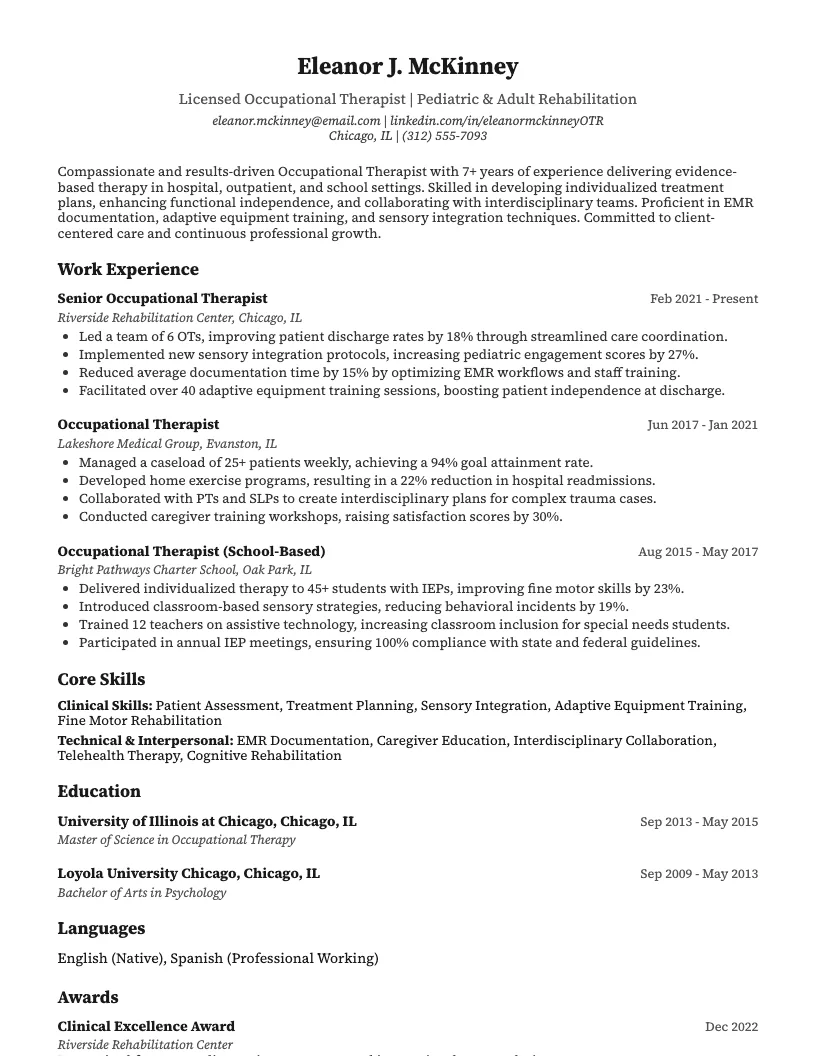 Click to enlarge
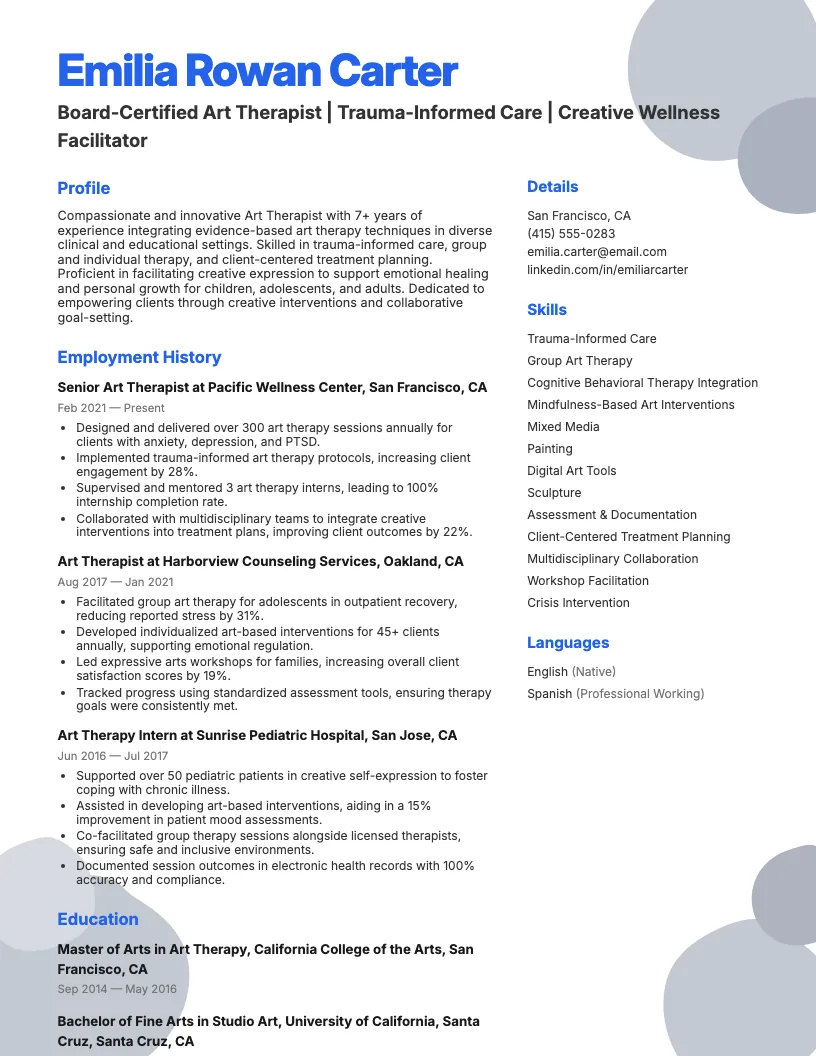 Click to enlarge
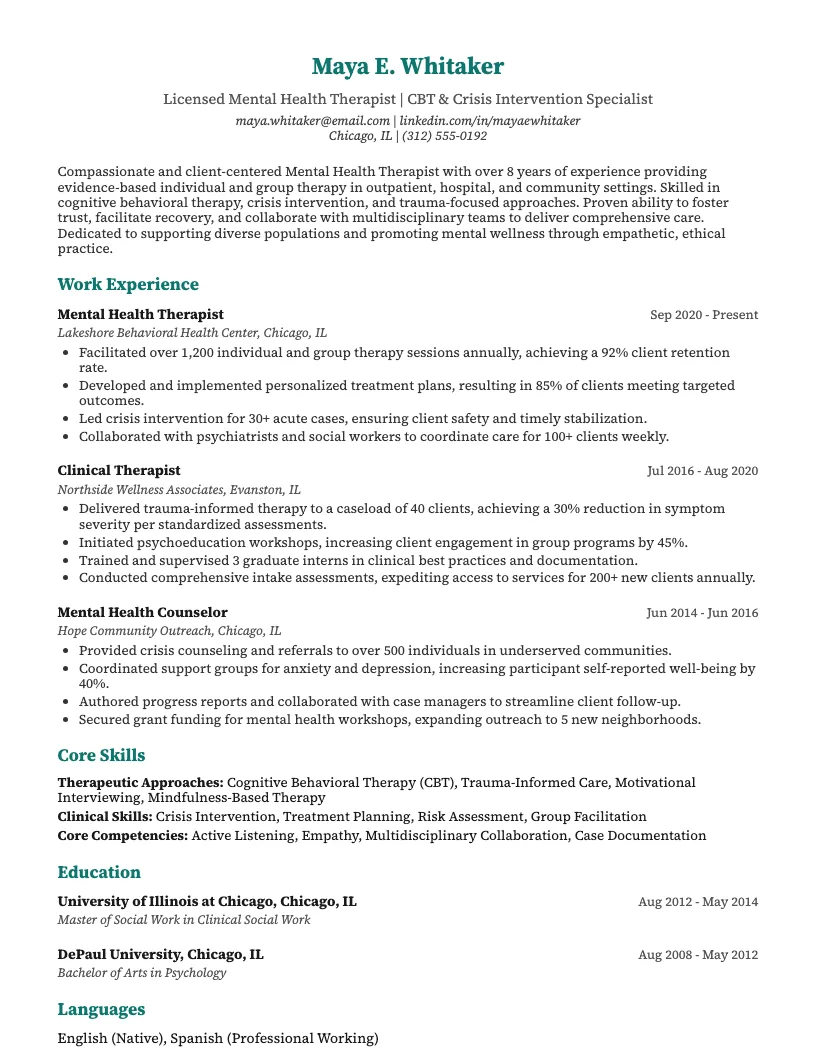 Click to enlarge
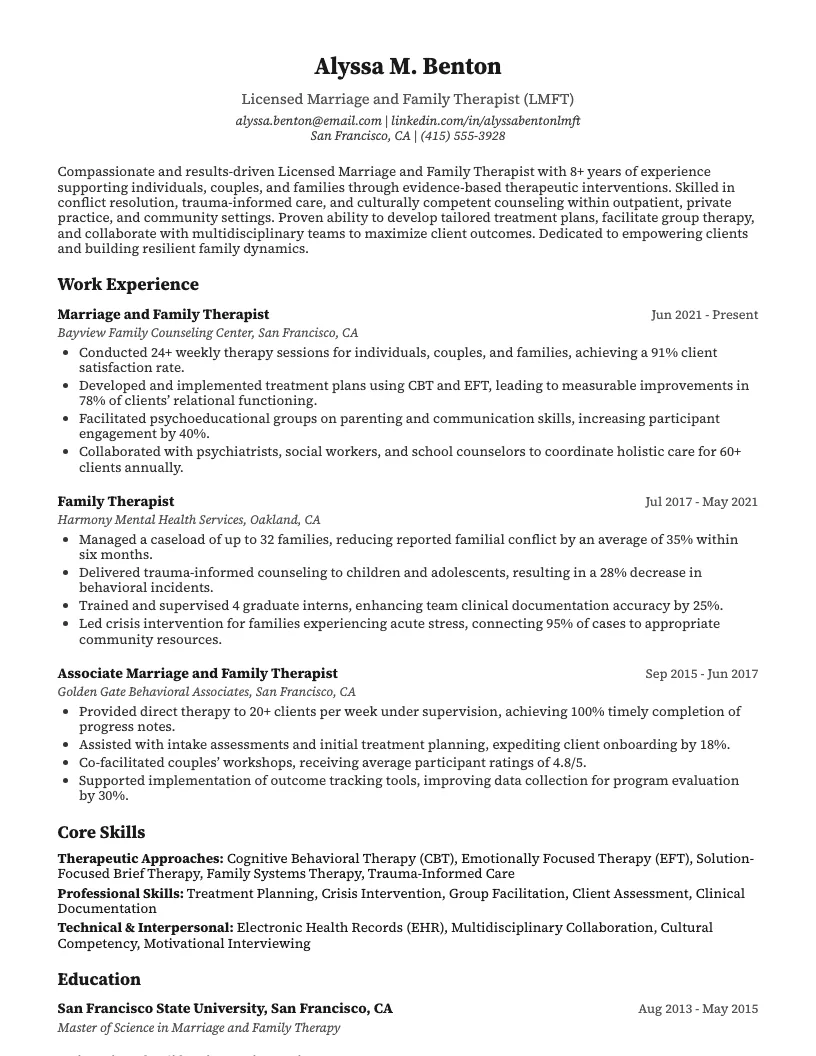 Click to enlarge
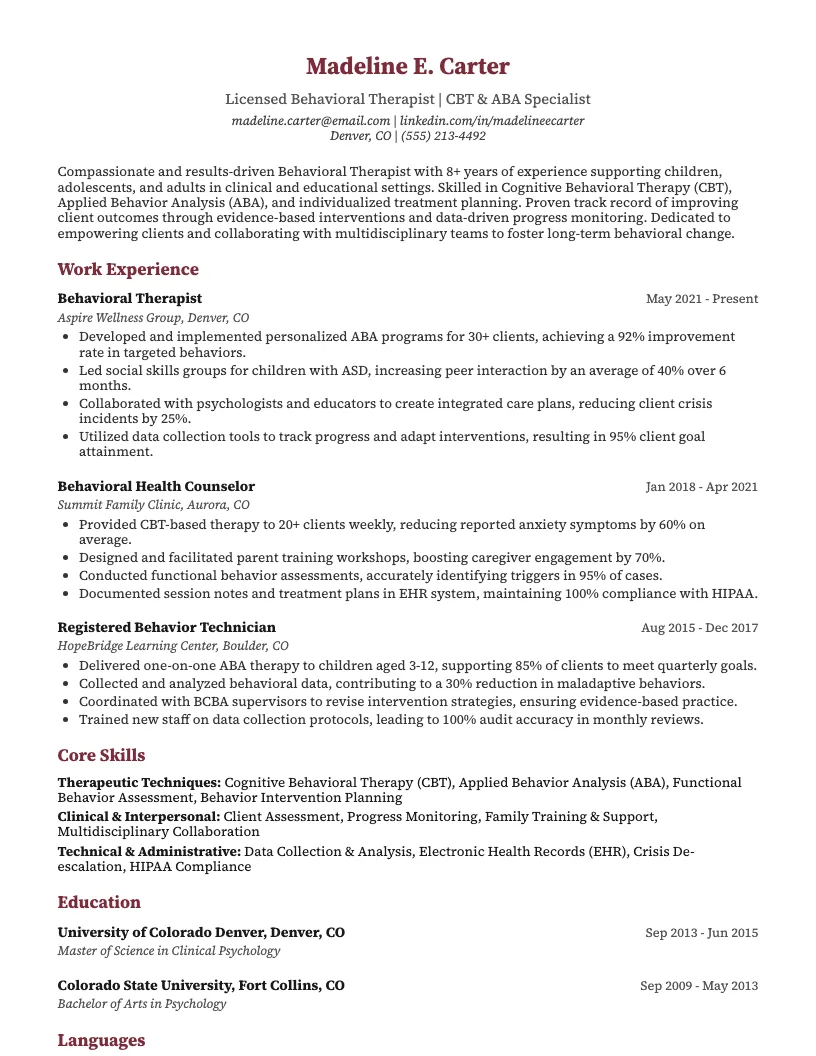 Click to enlarge
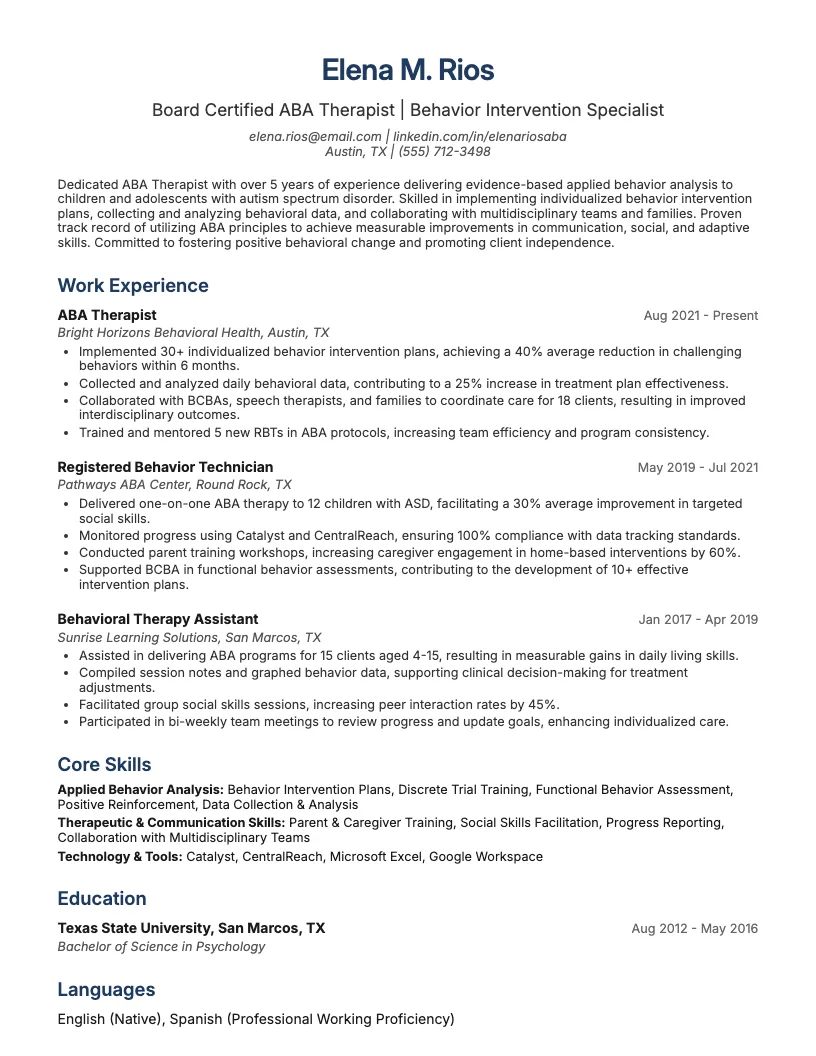 Click to enlarge
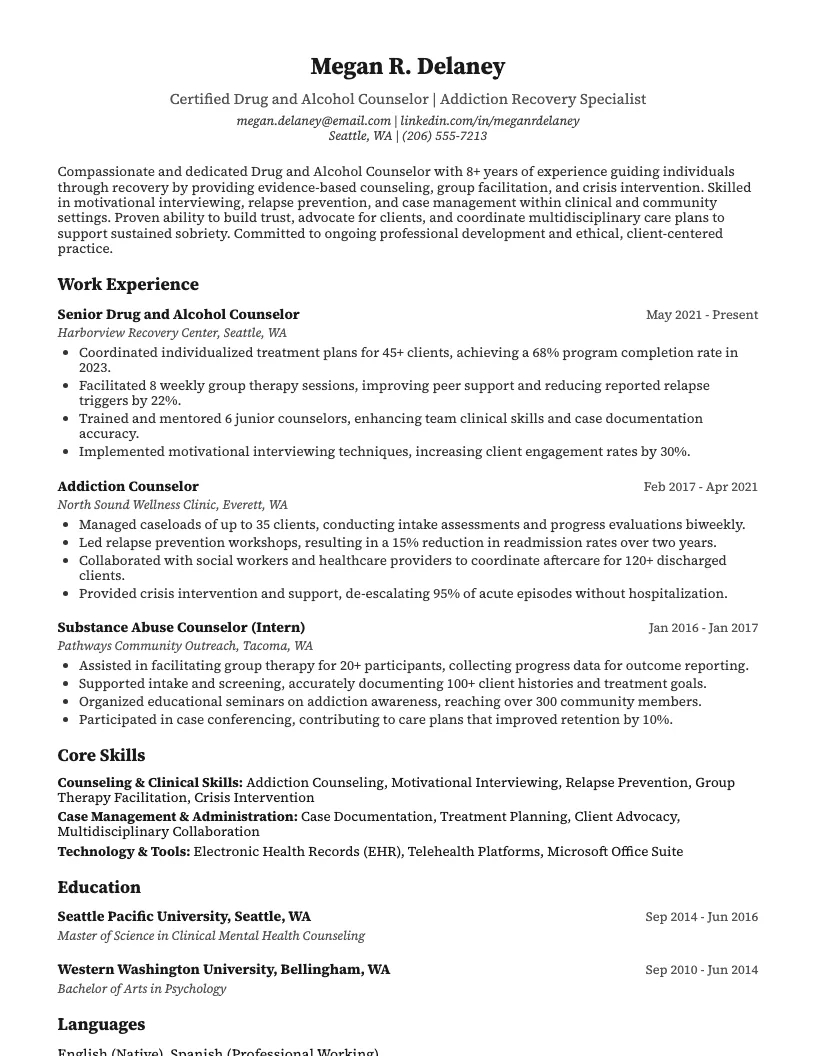 Click to enlarge
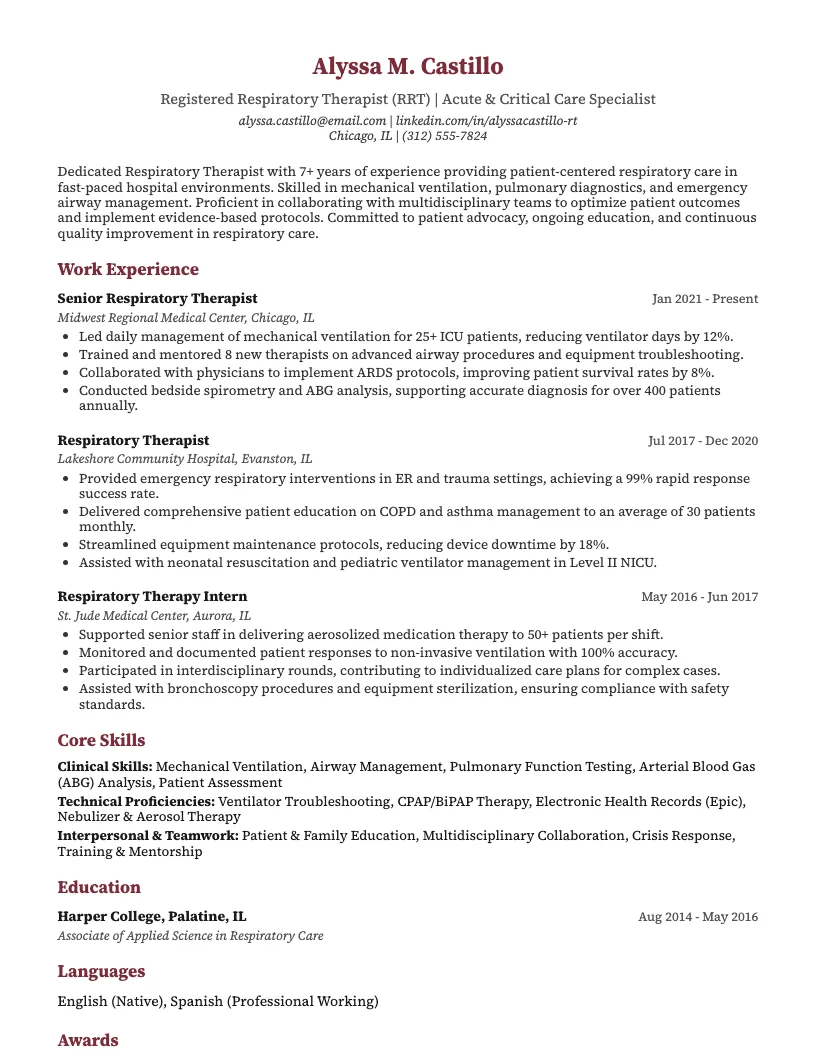 Click to enlarge
Common questions about Massage Therapist resumes
A Massage Therapist resume template is a pre-designed document tailored for massage therapy roles. It highlights relevant skills, certifications, and experience to help you quickly create a professional resume.
Yes, most Massage Therapist resume templates from ResumeJudge are ATS-friendly, ensuring your application passes automated screening. This boosts your chances of landing interviews at spas, clinics, or wellness centers.
Use a Massage Therapist resume template when applying to spas, medical offices, fitness centers, or wellness resorts. It’s ideal for both entry-level and experienced therapists seeking new job opportunities.
Absolutely! ResumeJudge allows you to personalize templates by adding your own skills, certifications, and work history, helping you stand out to employers in various massage therapy specialties.
Massage Therapist templates focus on hands-on skills, licensing, and client care, while other templates highlight different expertise. ResumeJudge makes it easy to tailor your resume to your specific profession.
A Massage Therapist resume should be one page, especially for those with less than 10 years of experience. ResumeJudge’s templates help you keep your information concise and relevant.
Highlight skills like deep tissue massage, Swedish massage, client communication, and knowledge of anatomy. ResumeJudge templates prompt you to add relevant skills that employers seek.
Yes, listing certifications like LMT or state licensure is essential. ResumeJudge templates include dedicated sections to showcase your credentials for compliance and credibility.
Yes, if you’re moving into massage therapy from another field, ResumeJudge templates guide you in highlighting transferable skills, training, and relevant experience to impress employers.
Including a cover letter is recommended, as it lets you explain your passion and relevant experience. ResumeJudge offers cover letter templates to match your Massage Therapist resume for a polished application.
Explore more professional resume examples to inspire your job search
Use our AI-powered resume builder to create a professional, ATS-friendly resume in minutes.
Free to use • No credit card required