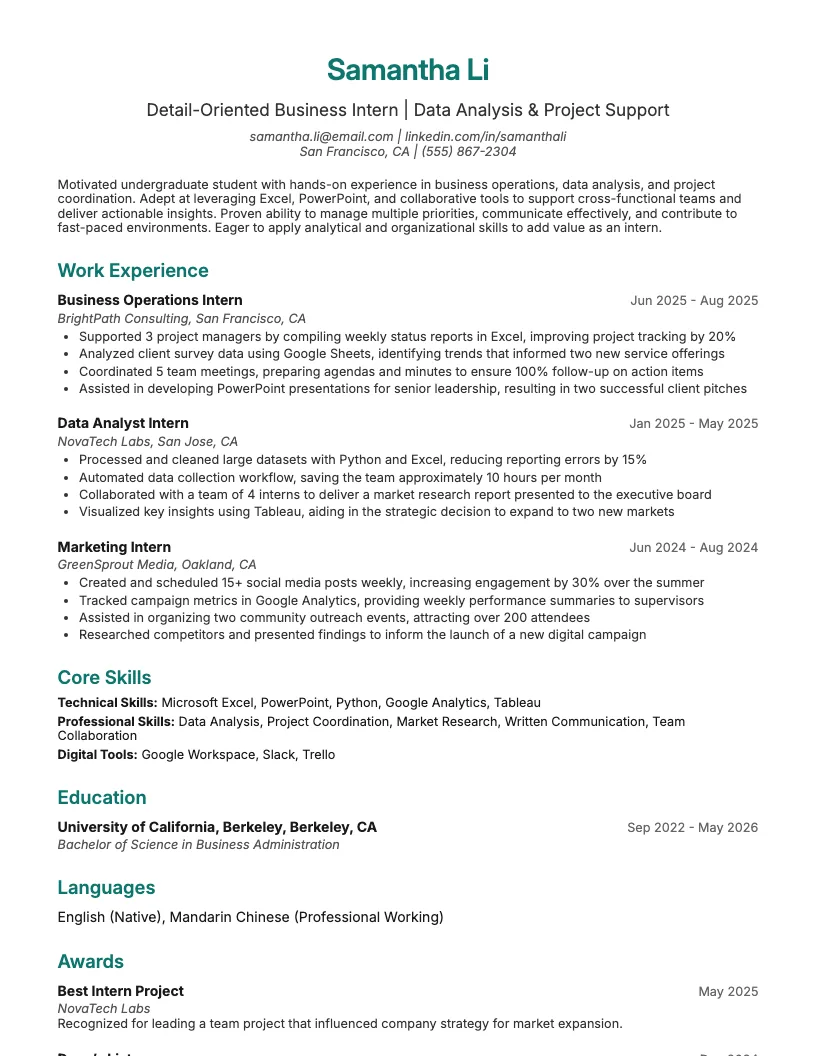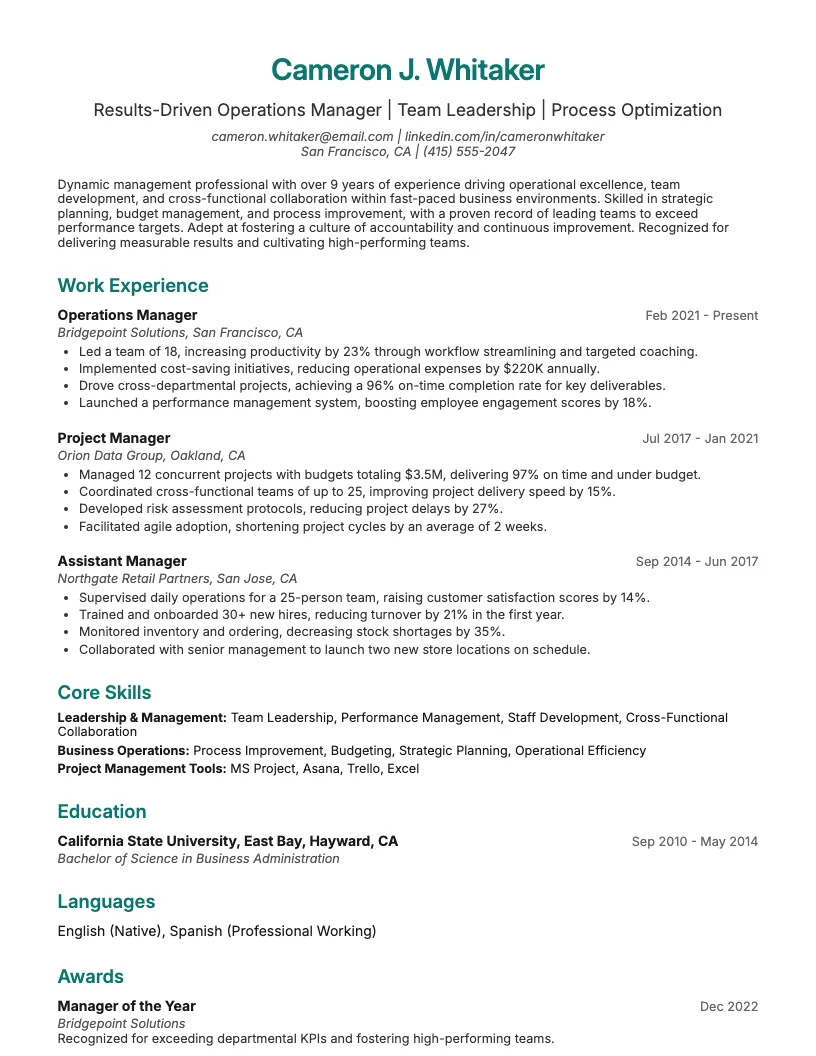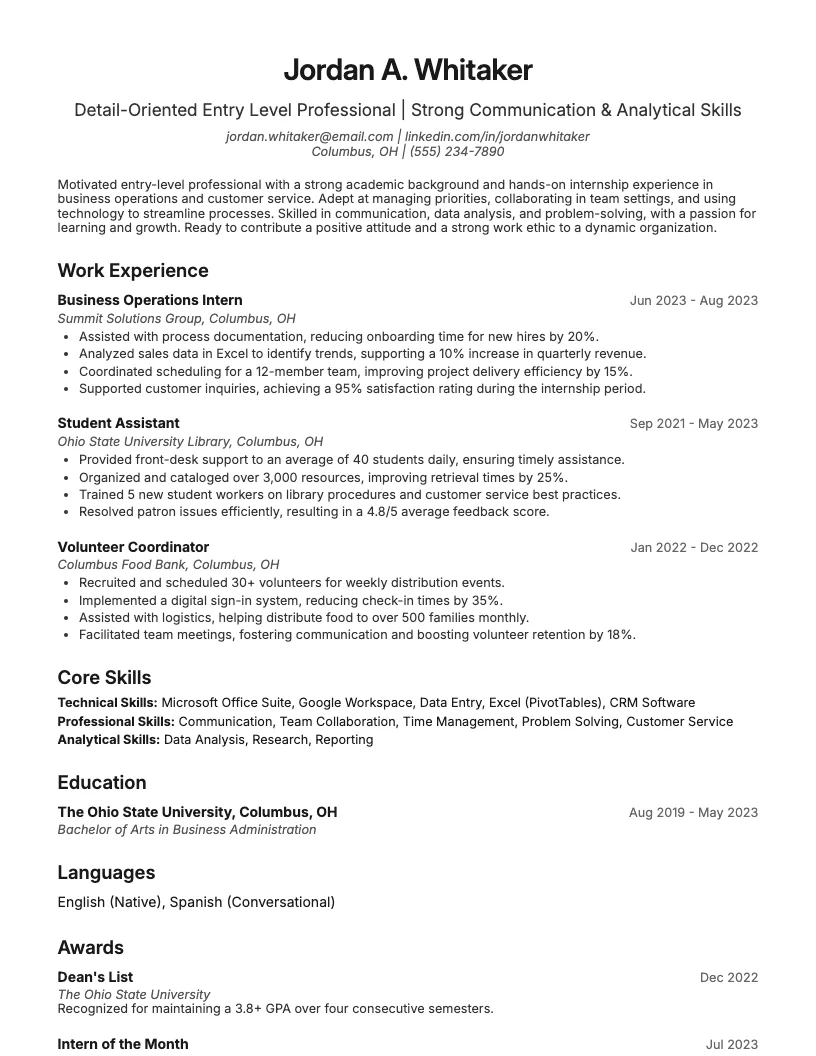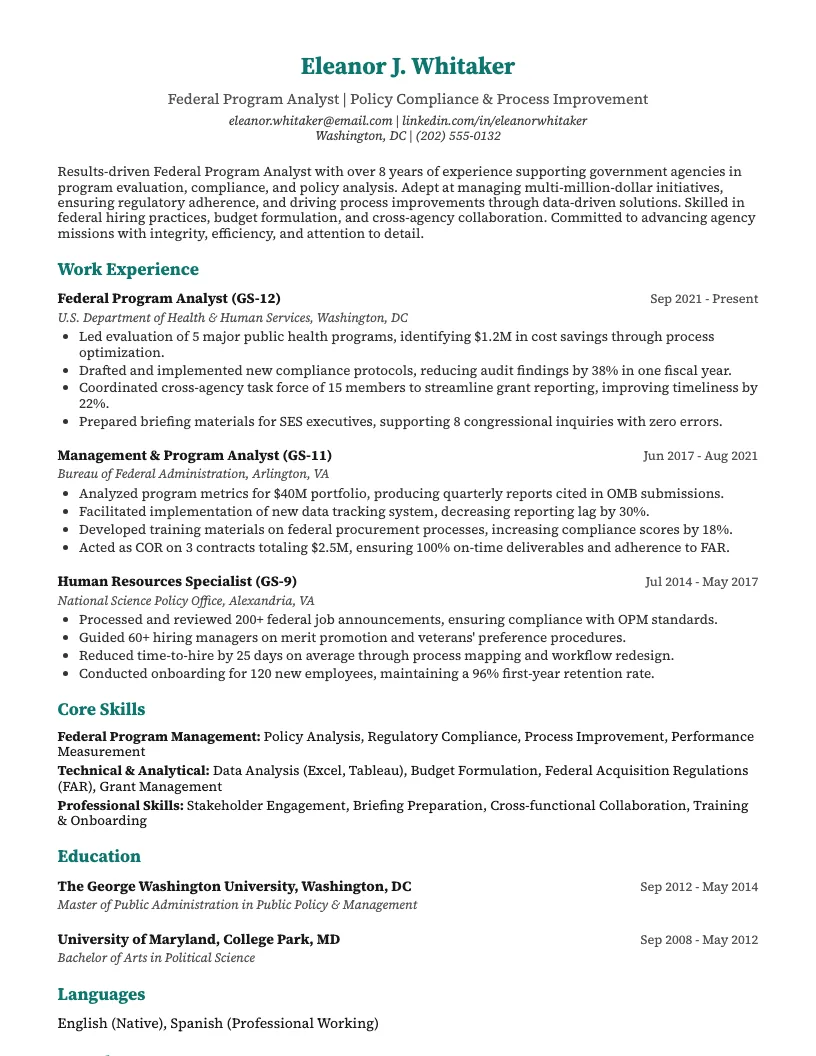
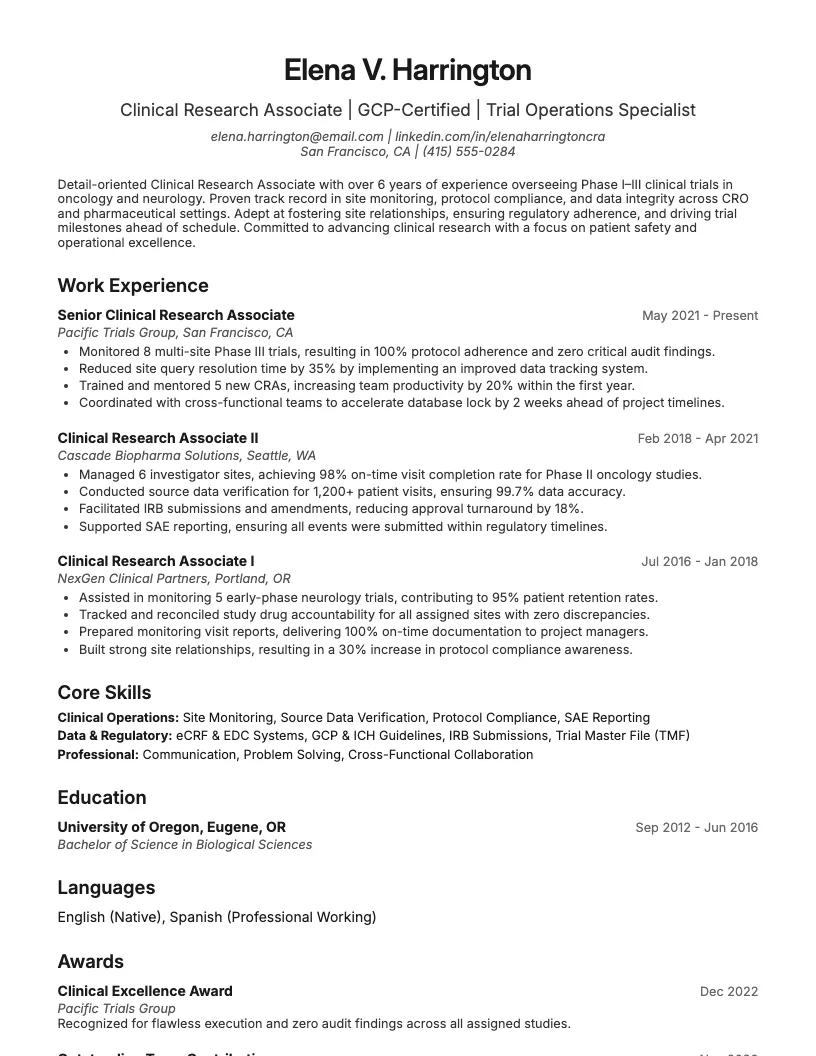
Clinical Research Coordinator Resume Example
See full guide on Clinical Research Coordinator resumes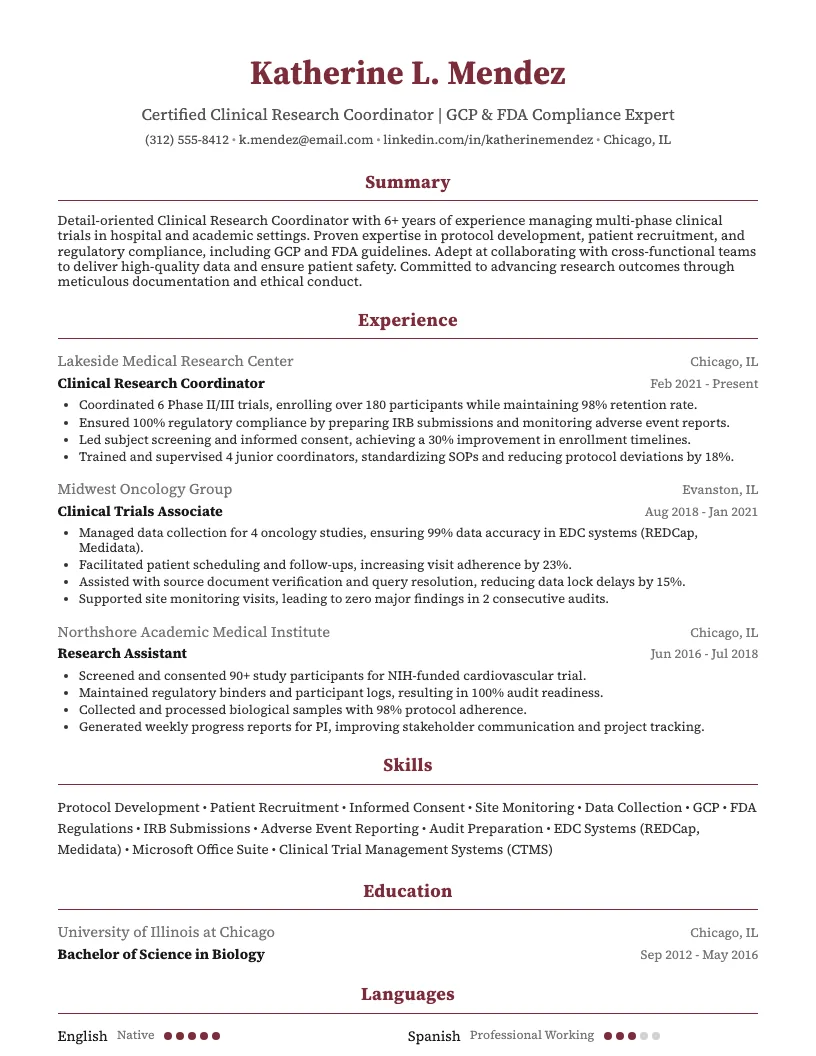 Click to enlarge
 Click to preview

Get inspired by 50+ professional Clinical Research Associate resume examples, each written by career experts and optimized to pass ATS scans. Pick a proven template, tailor it to your role, and download a polished resume in minutes.
Pick the specialization closest to your target role and start from a proven resume example.
Your resume needs to reflect your experience, whether you’re new or have ten years in clinical trials. Employers look for different skills at each stage.
I break down resume examples for entry-level, mid-career, and senior clinical research associates. This way, you can see what works best for your background.
Starting as a Clinical Research Associate with less than two years’ experience? You want to show off your education and any hands-on research or healthcare internships.
Highlight any GCP or ICH training. If you complete a clinical trial assistant role or have exposure to data management, mention it. This helps you stand out.
Quantify achievements wherever you can. For example, “Supported three Phase II studies” or “Tracked compliance for 50+ patient records.” Numbers catch a hiring manager’s eye.
By the time you hit mid-career, you usually handle multiple studies at once. I show off experience monitoring at least 3-5 clinical trials across different phases.
You want to highlight protocol compliance, data accuracy, and regulatory submissions. Numbers matter-track how many sites you manage or audits you support. This helps recruiters see your impact.
It’s smart to mention training junior staff or mentoring new hires. That experience shows leadership and readiness for bigger roles, and a strong cover letter can help you highlight these qualities. Use action verbs and quantifiable results-recruiters love that.
If you’re a senior clinical research associate, your resume needs to highlight leadership, regulatory expertise, and project management. I like to emphasize my experience across multiple phase trials.
Showcase metrics-like managing teams of 10+ or overseeing studies with $5M+ budgets. This helps recruiters see you handle complex projects and drive results across global sites.
At this level, you want to include publications, audits, and compliance achievements. Don’t forget to list certifications like ACRP or SOCRA. That gives your resume extra weight.
Now you’ve seen examples for every career stage. Use these insights to tailor your resume, no matter where you are on the clinical research path.

If you want to work as a clinical research associate, your resume needs to show your knowledge of protocols, compliance, and data accuracy.
You should highlight your hands-on experience, certifications, and research skills. Recruiters look for candidates who manage trials and follow regulations closely.
I always recommend starting with a strong summary and then focusing on your most relevant clinical achievements. Including numbers helps your experience stand out.
I always kick off my resume with a professional summary. This short intro tells hiring managers who I am and why I fit the CRA role.
You want to mention your job title, years of clinical research experience, and a few specialties that match the job posting. Think regulatory compliance or patient engagement.
A strong summary highlights your impact. I focus on collaboration, trial oversight, and data accuracy. This helps you stand out and shows your value right away.
Your clinical experience section needs to show exactly what you do and how you make an impact. I always focus on the outcomes of my work.
Use metrics to back up your achievements-like the number of trials managed, patient recruitment rates, or protocol compliance. This helps you stand out instantly.
Share specific examples of how you solve problems, manage study sites, or streamline trial processes. Recruiters want proof that you can handle real clinical challenges.
I always list my highest degree first-a bachelor’s in life sciences, nursing, or a related field is usually the minimum for CRAs. Advanced degrees can give you a boost.
Certifications like CCRA or CCRP help you stand out. Over 30% of top candidates hold at least one of these, showing your commitment to clinical research standards.
You want to include the full name, issuing body, and year for each certification. This helps recruiters see you meet industry requirements right away.
You want your skills section to stand out and pass ATS filters. I always include both technical and soft skills-that mix helps my resume get noticed.
Think about adding GCP compliance, site monitoring, informed consent, and protocol adherence. I also mention data management and regulatory submission-those keywords show I know my stuff.
Don’t forget teamwork, organization, and problem-solving. These skills matter as much as the clinical ones. A solid mix makes it clear you’re ready for any CRA challenge.
You want to show your attention to detail in clinical trial reporting. I always mention experience with serious adverse event (SAE) reporting-it’s a regulatory must-have.
Highlight your skills in electronic data capture and CTMS tools. These systems are standard now, and recruiters look for candidates who can handle documentation for multiple sites at once.
Clear, accurate reports help keep studies compliant and on schedule. If you’ve worked with audit trails or managed over 100 subject records, include that. It sets you apart.
That’s all you need to wrap up your resume. Keep it focused, factual, and easy for hiring managers to scan.
Picking the right resume template matters if you want recruiters to notice your skills fast. A clean format makes your experience stand out, not flashy graphics or colors.
I see most hiring managers prefer resumes that are easy to scan. Templates with simple layouts and clear sections help you highlight your achievements in seconds.
If you want to branch out in clinical research, you’re not alone. There are over 120,000 clinical research associate roles in the U.S. and plenty of related jobs out there.
I’m going to show you resume examples and real-life resources. You’ll see what works, learn new tips, and find roles that fit your skills.
If you’re looking at clinical research associate roles, it helps to check out similar resumes. I always review options like research associate cover letter or medical assistant examples for fresh ideas.
You can find over 20 different healthcare resume templates out there. These show how others highlight certifications, skills, and hands-on experience-really useful when you want your resume to stand out.
I recommend comparing your resume with examples from related jobs. This gives you a clear picture of what recruiters expect and helps you spot key skills you might want to add.
If you want to stand out as a clinical research associate, I suggest using industry-specific resume tips and templates. This helps you match what recruiters look for.
You can also check out professional organizations like ACRP or SOCRA. They offer certifications, job boards, and networking events to help you move forward in your career.
Looking at recent job postings gives you real insight into what hiring managers want. I always recommend tailoring your resume based on the top skills they mention.
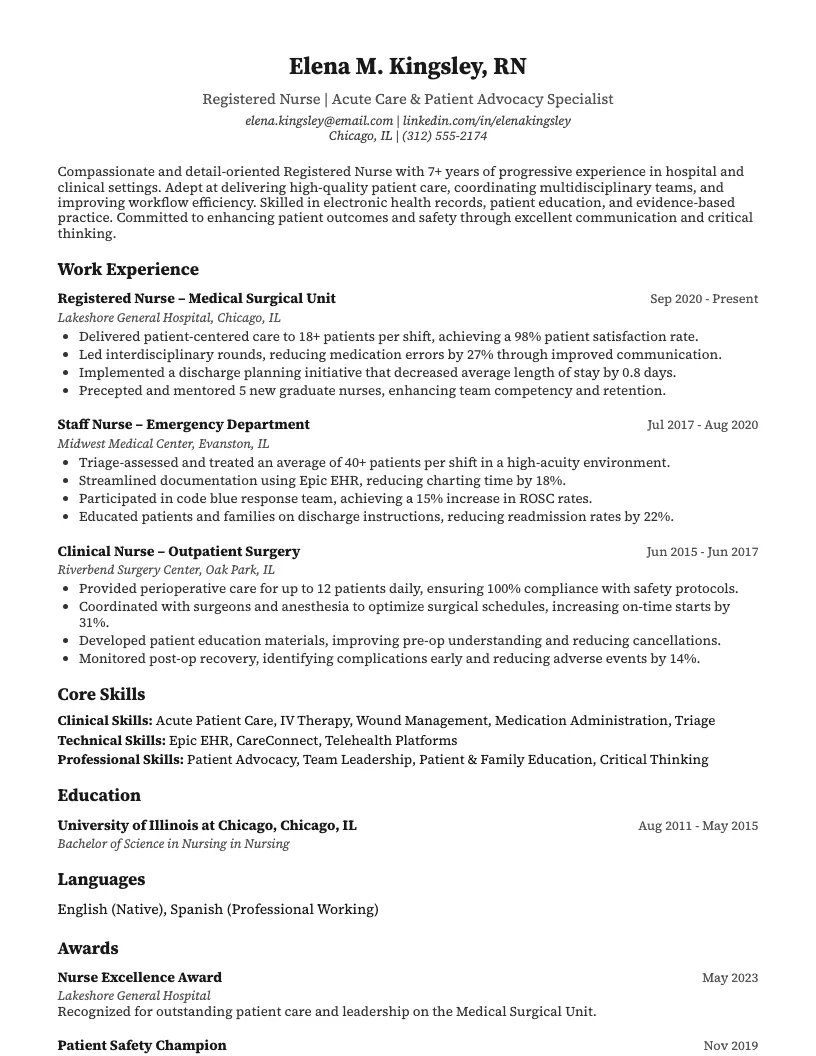
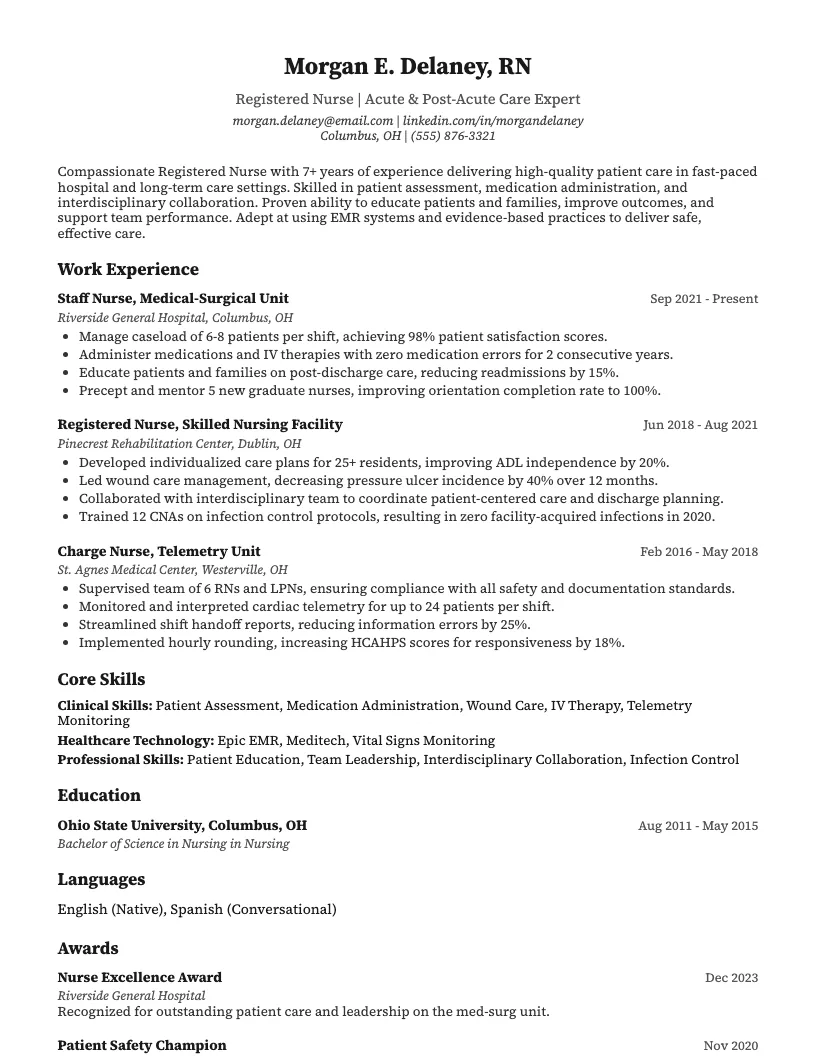
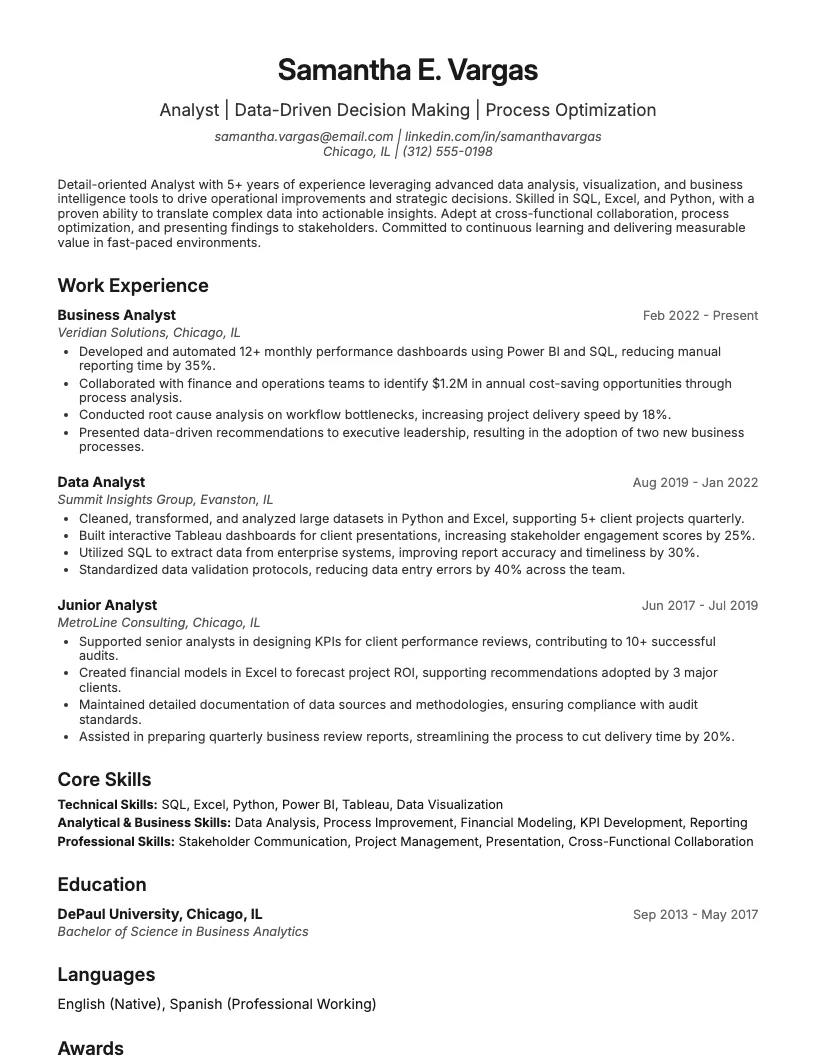
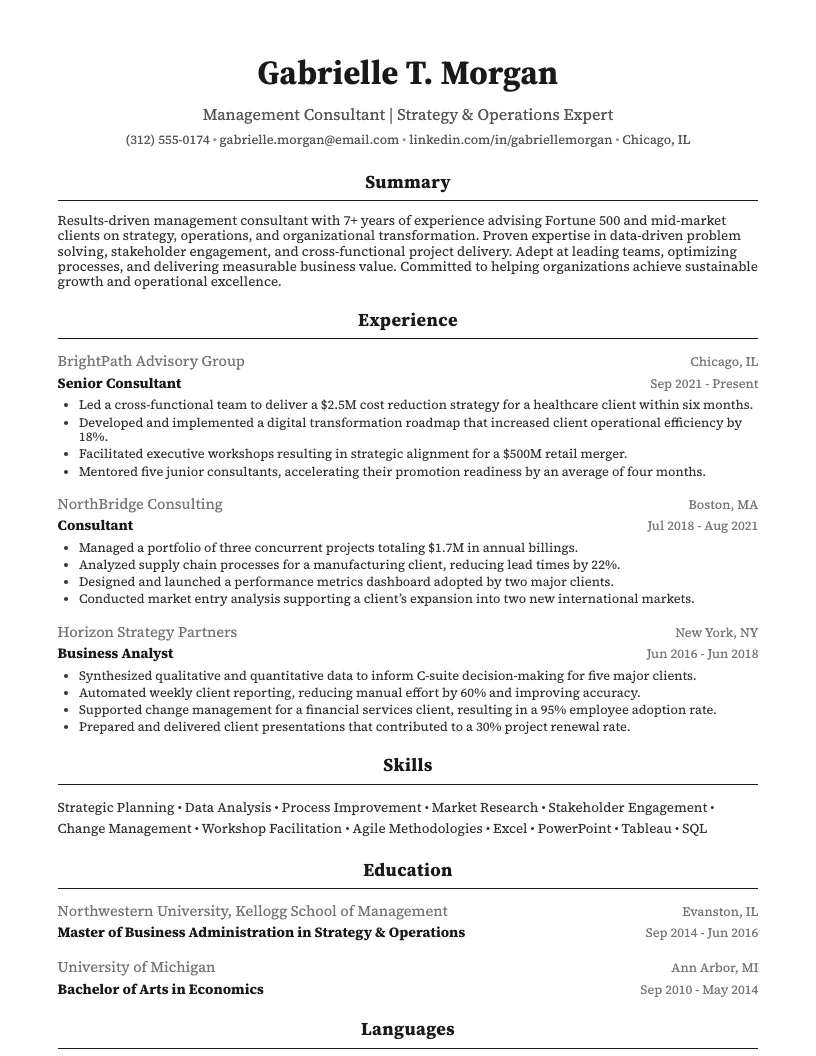
If you're eyeing a clinical research coordinator role, resume examples can make things much clearer. I like to look at real samples to see what recruiters expect.
A strong clinical research coordinator resume highlights project management, regulatory compliance, and patient interaction. You want to show how you handle multiple studies and ensure accurate data.
There are tons of clinical research coordinator cover letter examples online. Reviewing several lets you compare formatting, bullet points, and keywords. This helps you fine-tune your own resume for success.
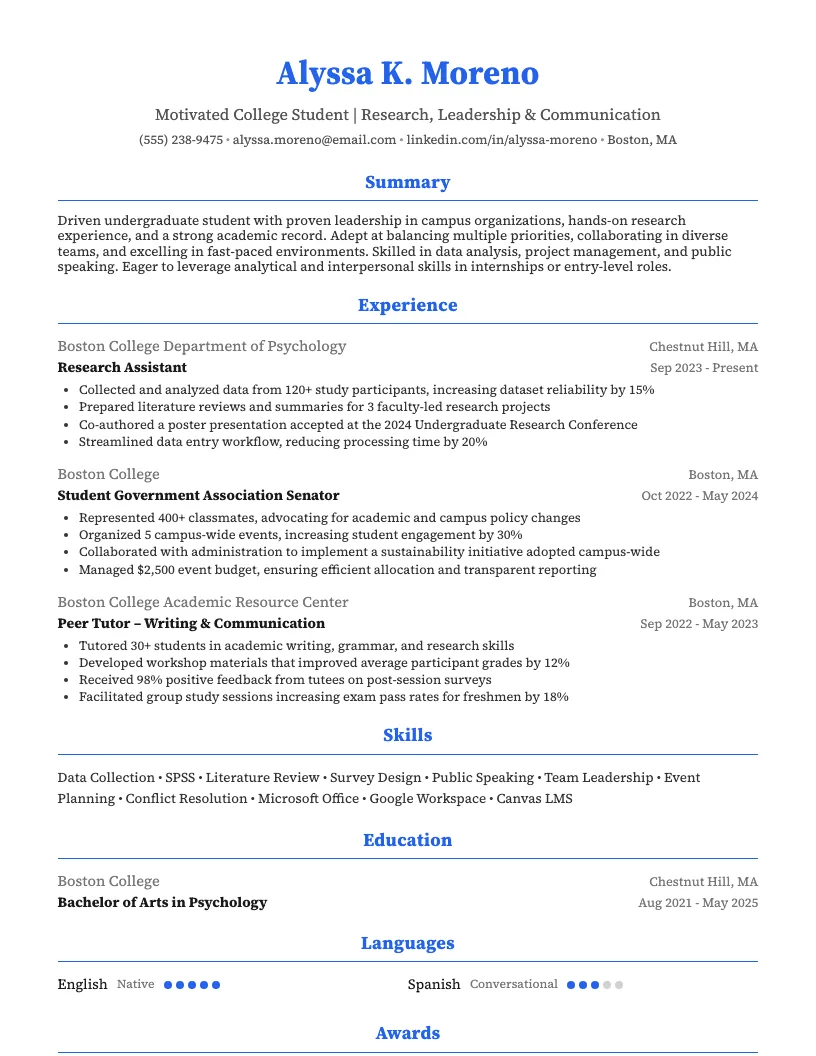
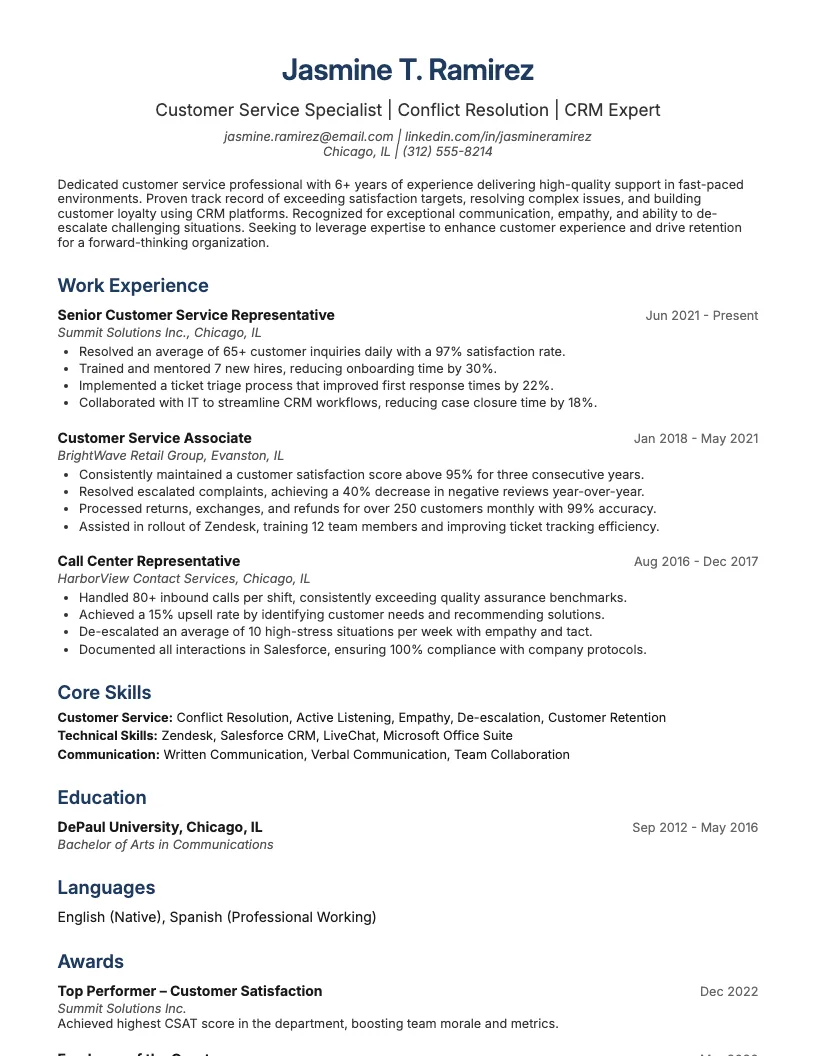
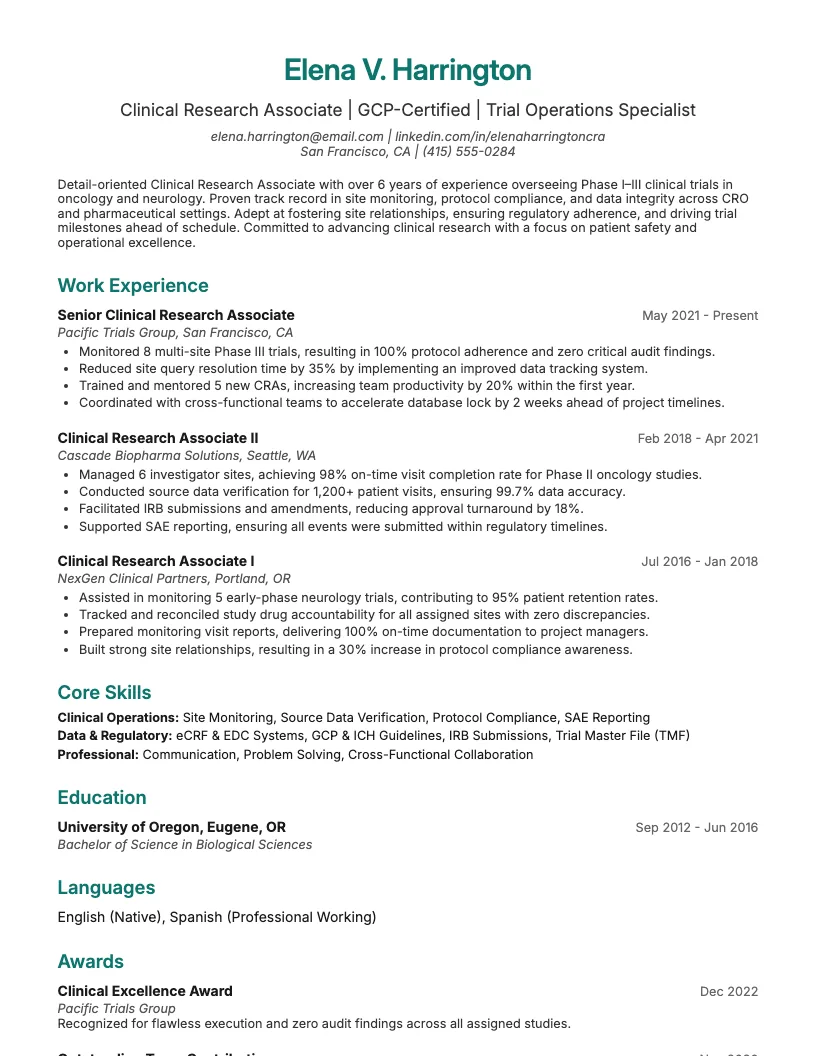
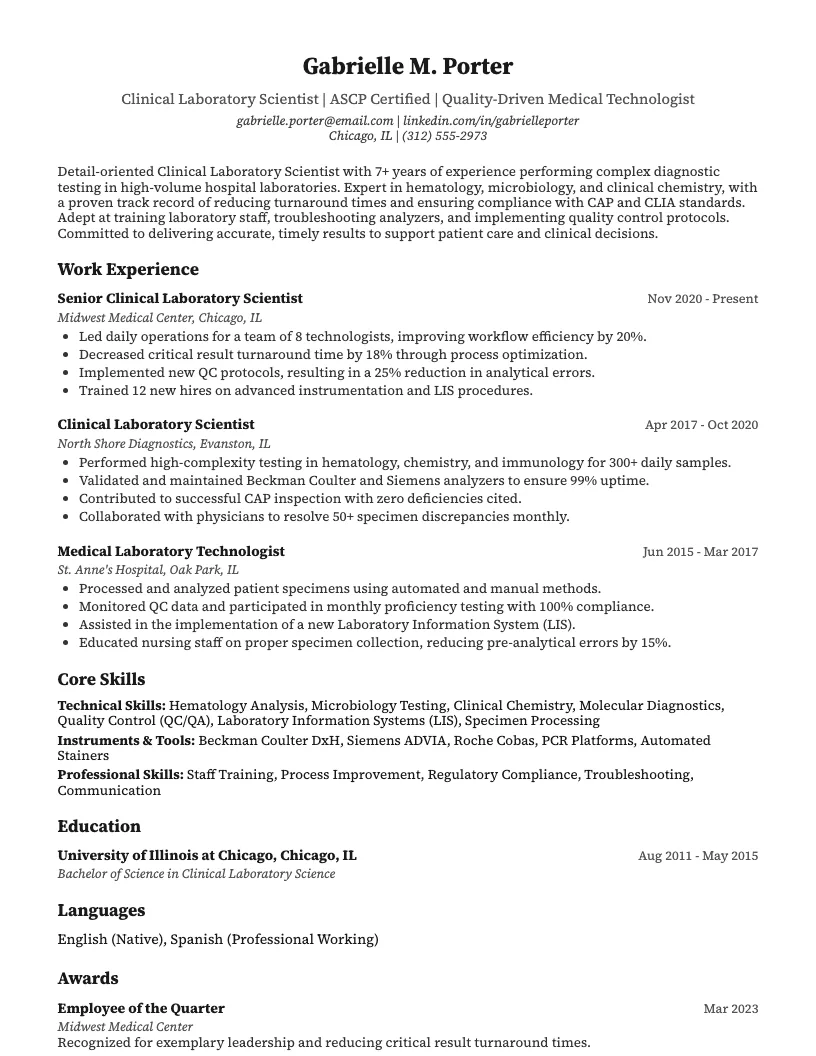
Browse Clinical Research Associate resume examples for related roles. Preview any example, open it in the builder, or read its full guide.
Click to enlarge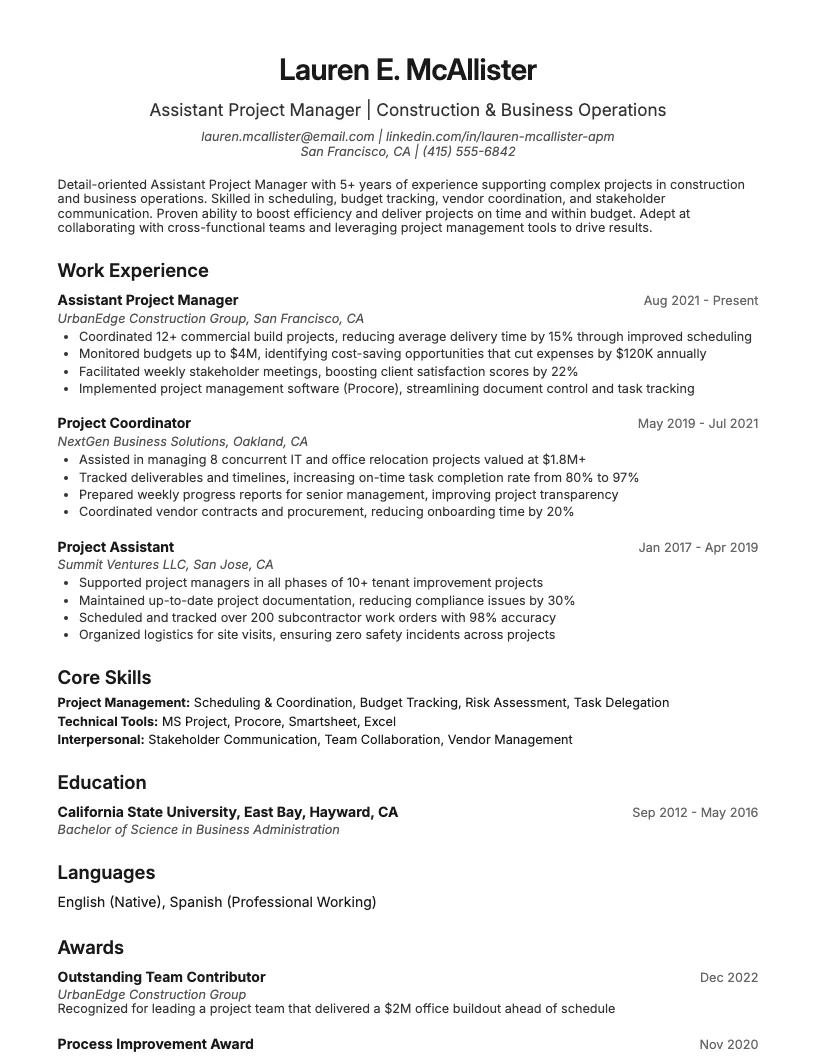 Click to enlarge
 Click to enlarge
Common questions about Clinical Research Associate resumes
A clinical research associate resume template is a pre-designed document tailored for professionals in clinical trials. It highlights skills, certifications, and experience relevant to research roles. ResumeJudge makes it easy to showcase your expertise.
Yes, most clinical research associate resume templates from ResumeJudge are ATS-friendly. They use clear formatting and standard headings so your resume passes software scans and reaches recruiters in pharma, biotech, and healthcare.
Use a clinical research associate resume template when applying for roles in pharmaceuticals, contract research organizations, or hospitals. It helps you tailor your resume for industry expectations and stand out to hiring managers.
Absolutely! You can personalize sections, add certifications, or adjust keywords to fit specific job postings. ResumeJudge templates are easy to edit, so you can highlight your unique strengths and experience.
A clinical research associate template focuses on research protocols, regulatory compliance, and trial management. Other templates may not highlight these skills. ResumeJudge ensures your resume targets the right qualifications.
Aim for a concise one to two-page resume. Focus on relevant experience, certifications, and achievements in clinical research. ResumeJudge helps you format details clearly for hiring managers and ATS systems.
Yes, listing certifications like GCP, SOCRA, or ACRP is essential for clinical research associate roles. ResumeJudge templates have sections to showcase these credentials, making you more attractive to employers.
Highlight skills like clinical trial monitoring, data management, protocol compliance, and communication. ResumeJudge templates guide you to include industry-specific skills that catch recruiters’ attention.
Yes, ResumeJudge offers templates suitable for both entry-level and experienced candidates. You can emphasize education, internships, or research projects to demonstrate your potential to employers.
ResumeJudge provides professional, ATS-friendly templates tailored to clinical research. They save you time, ensure your resume looks polished, and improve your chances of landing interviews in competitive industries.
Explore more professional resume examples to inspire your job search
Use our AI-powered resume builder to create a professional, ATS-friendly resume in minutes.
Free to use • No credit card required