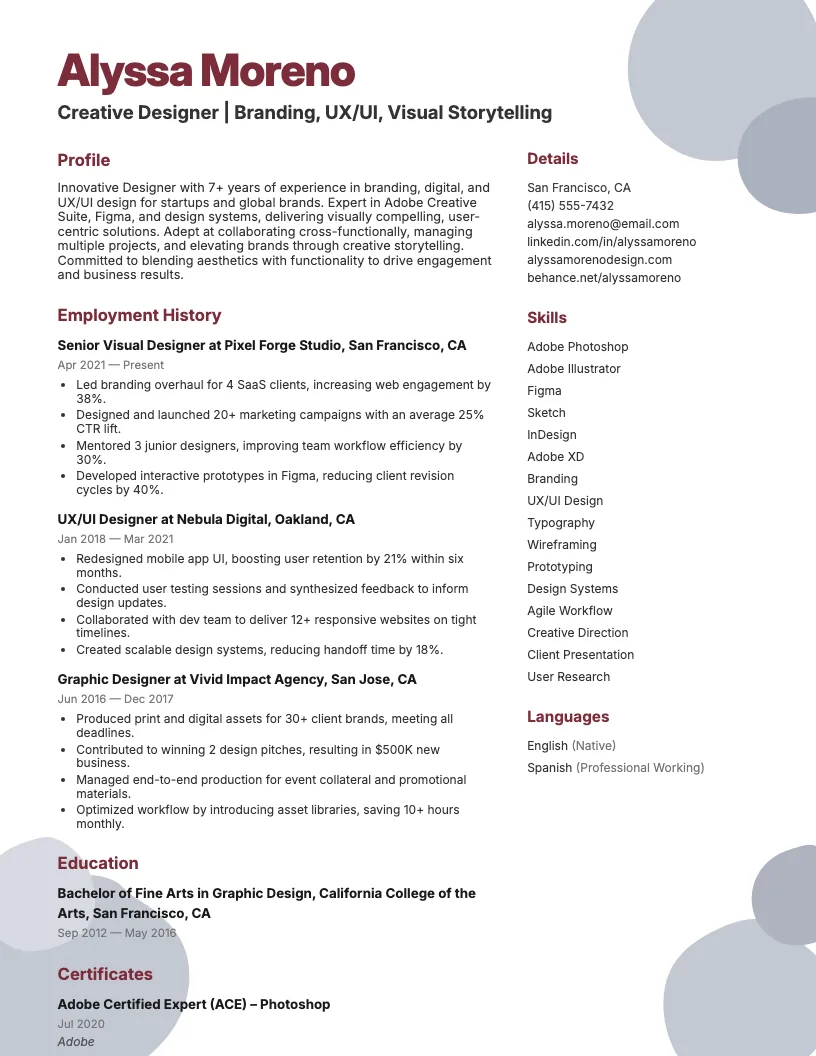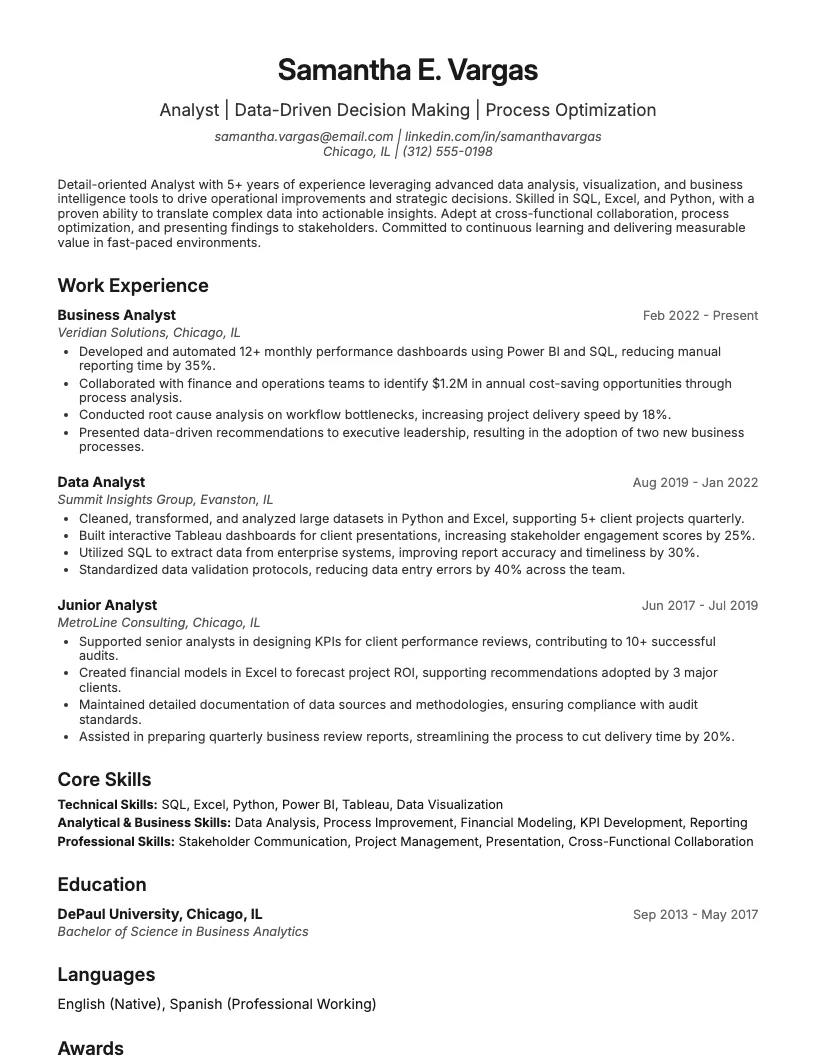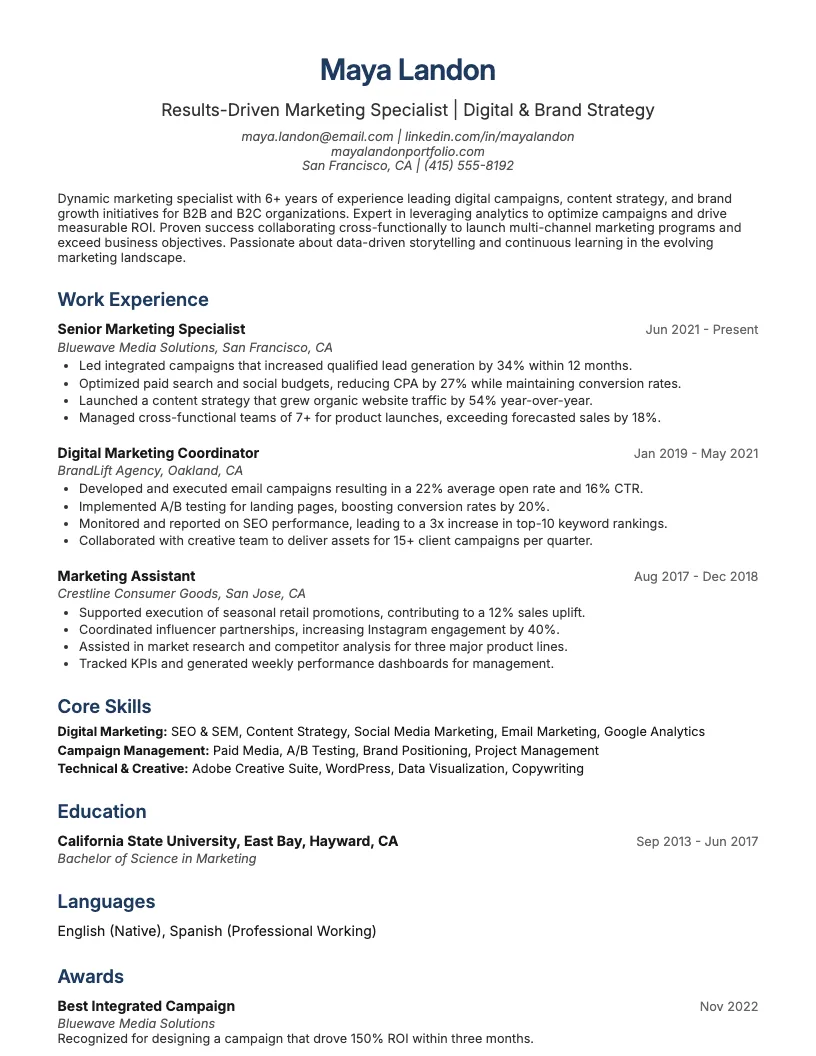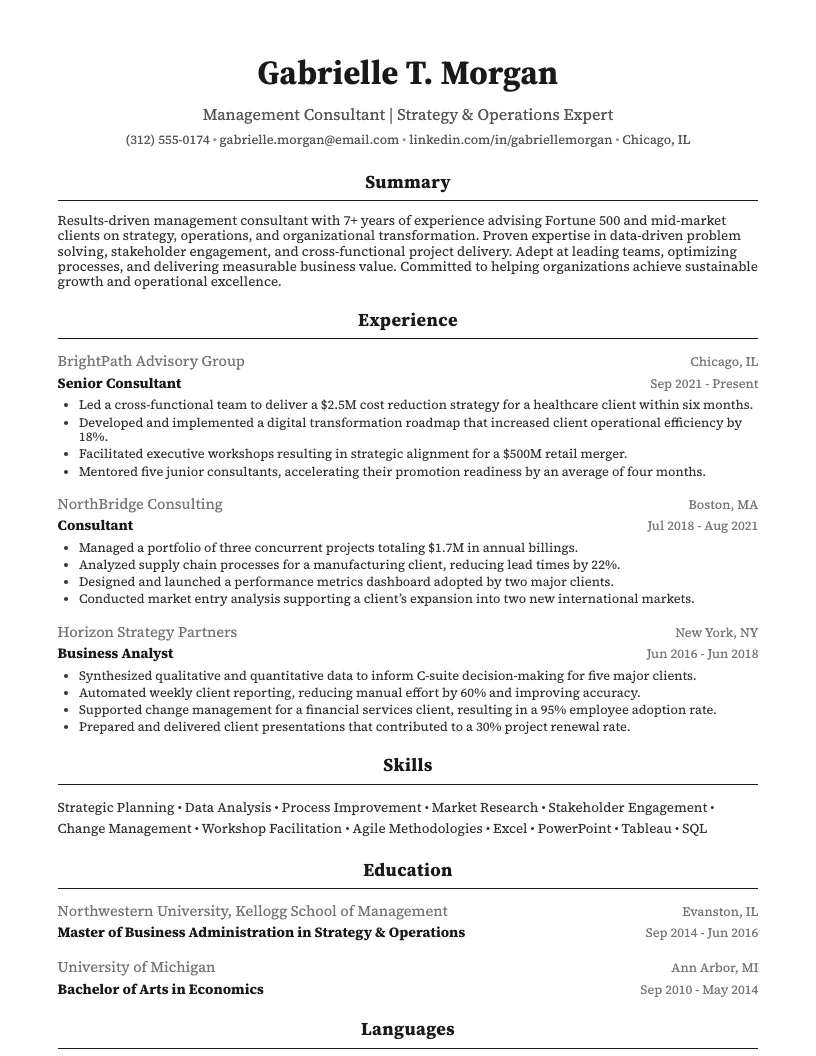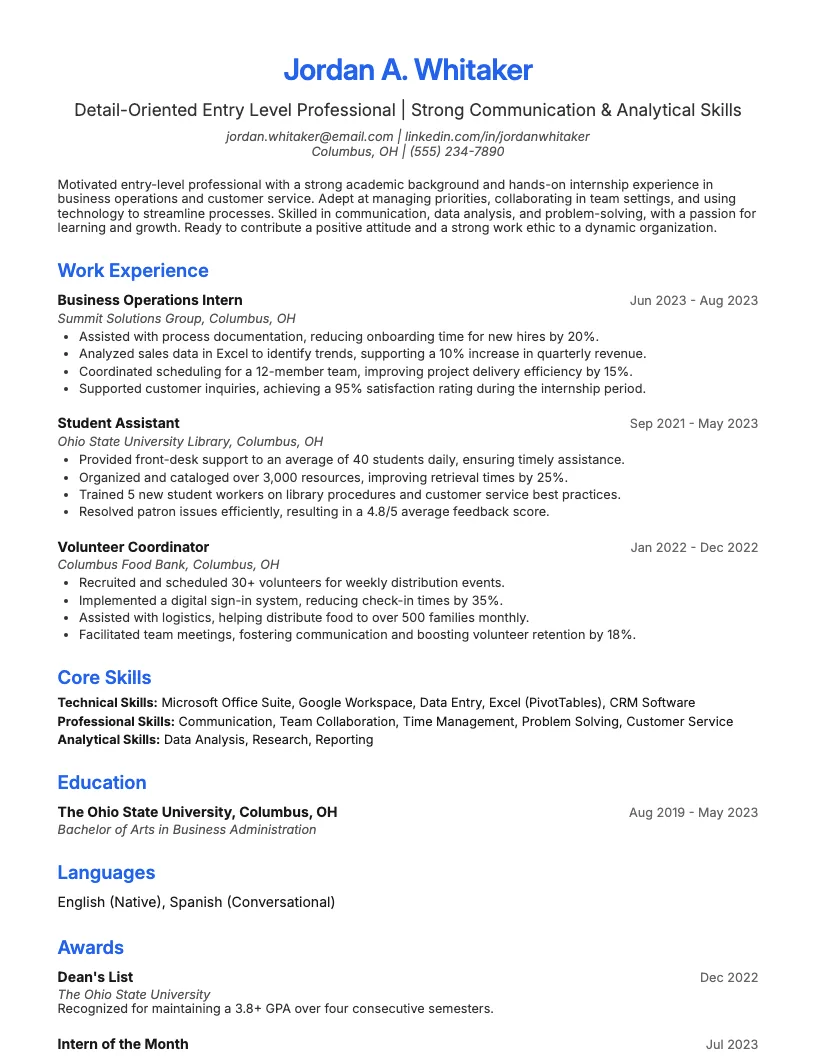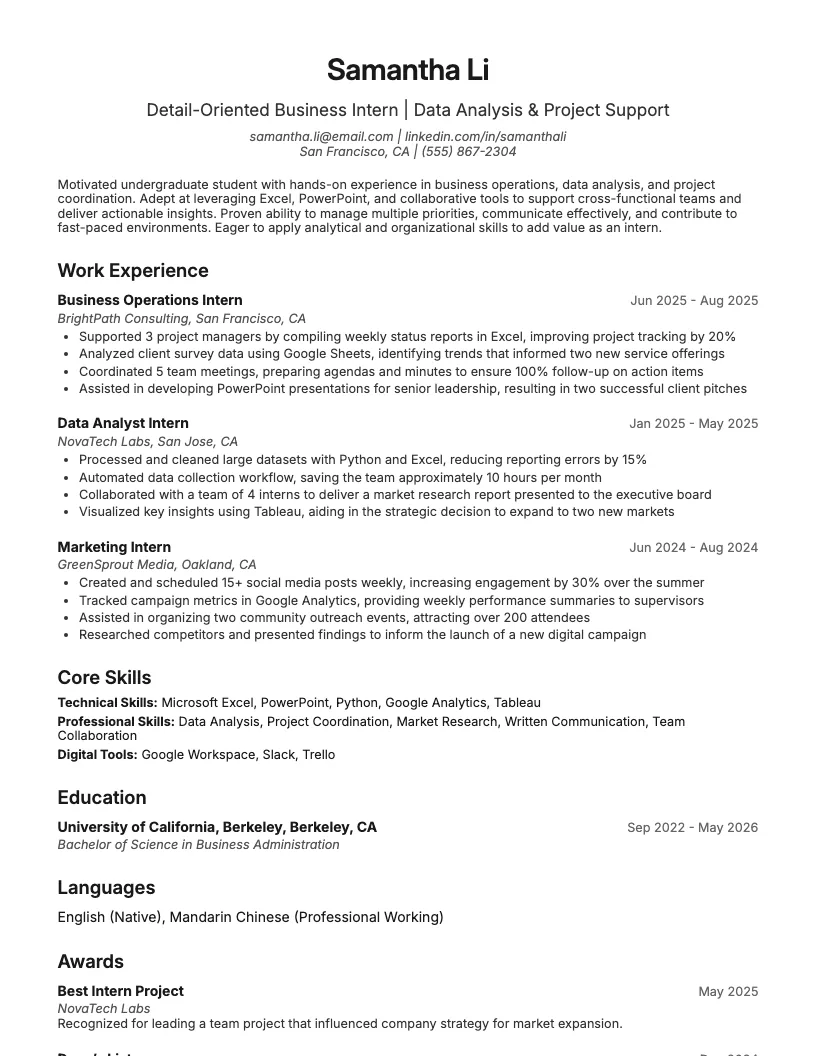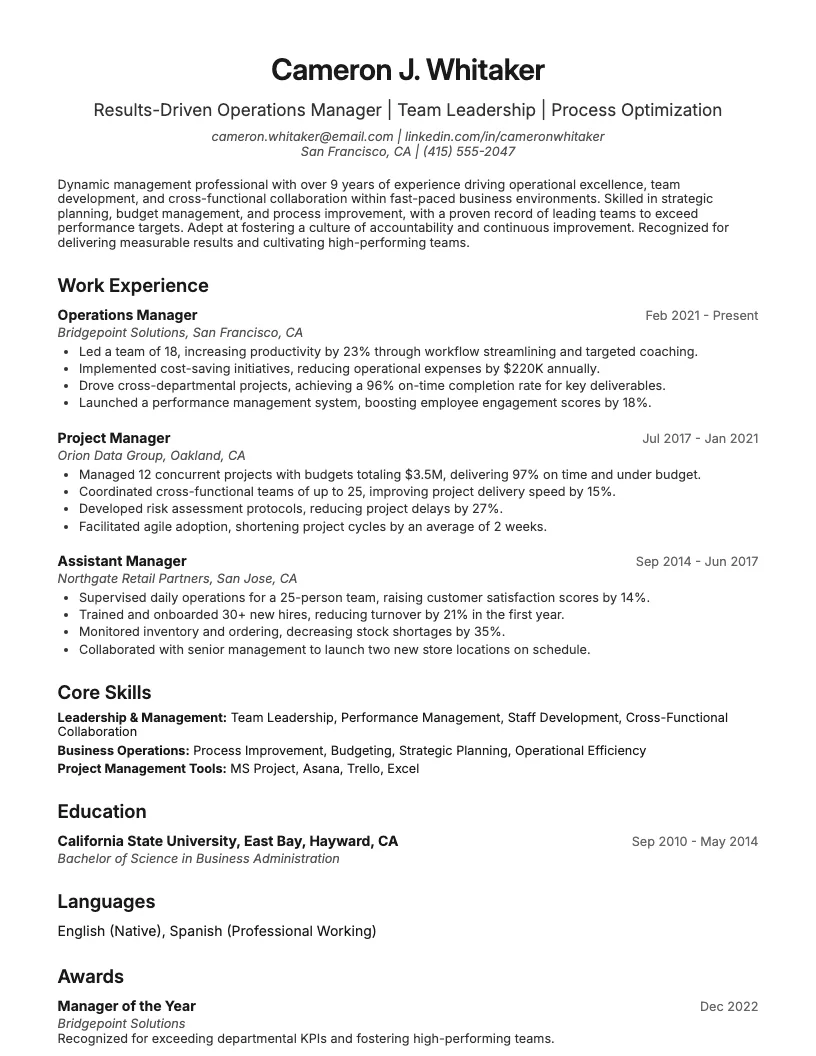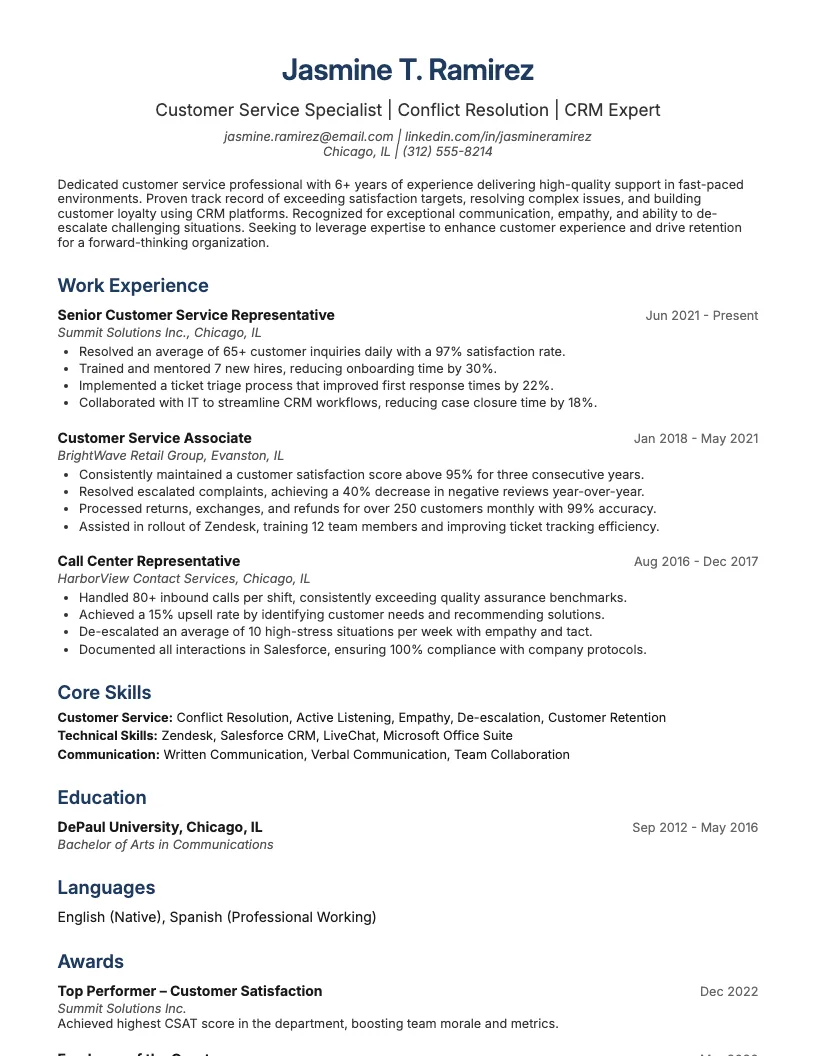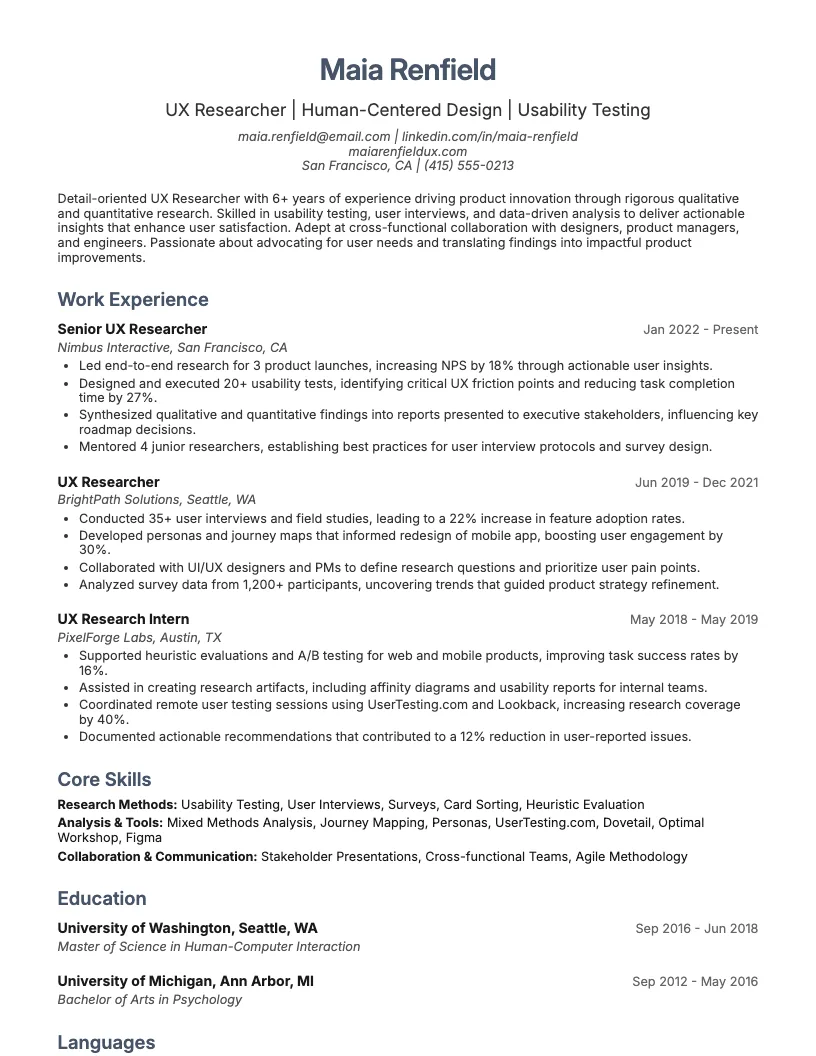
Ux Designer Resume Example
See full guide on Ux Designer resumes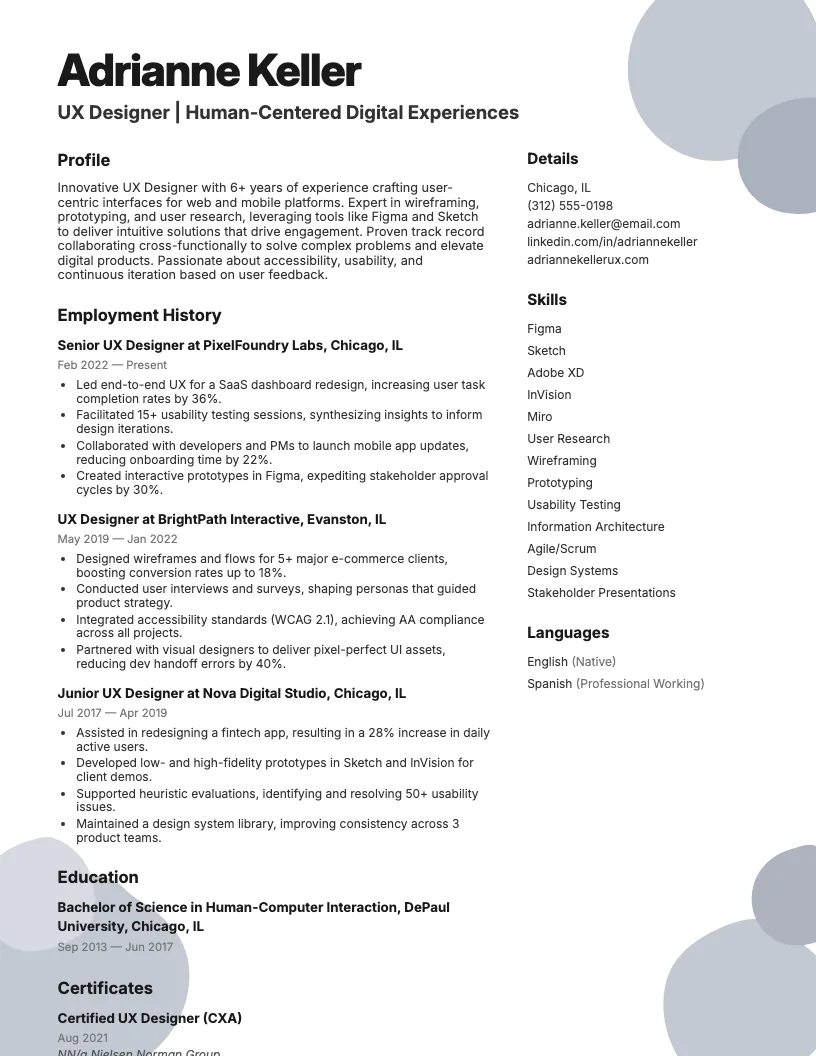 Click to enlarge
 Click to preview

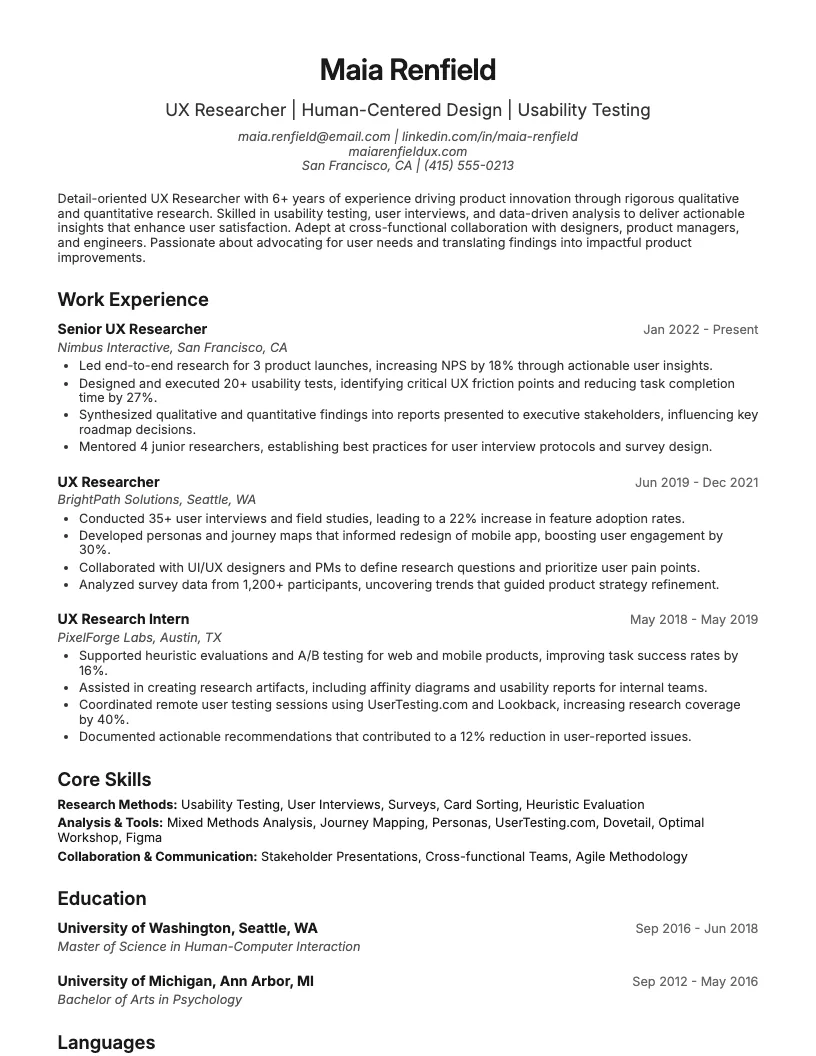
Get inspired by 50+ professional Ux Researcher resume examples, each written by career experts and optimized to pass ATS scans. Pick a proven template, tailor it to your role, and download a polished resume in minutes.
Pick the specialization closest to your target role and start from a proven resume example.

Putting together a UX researcher resume can feel overwhelming. You want to show your skills and experience in a way that makes recruiters actually notice you.
I break down the process into easy steps, from picking the right format to highlighting your strengths. Each section helps you build a resume that gets results.
When I build a UX researcher resume, I always stick to a clear structure. Start with a strong header-include your contact info, a link to your UX portfolio, and a punchy headline.
Keep the format clean. I recommend a reverse-chronological layout, so your most recent roles stand out. This way, recruiters immediately see your career growth and recent experience.
Stick to one or two pages. Highlight only the most relevant details for the role. Saving your resume as a PDF keeps your formatting consistent across all devices, which helps avoid weird layout issues.
Recruiters want to see hands-on experience with diverse UX research methods-think usability testing, interviews, and surveys. Showing at least three methodologies makes your profile stand out.
I always notice when candidates demonstrate strong communication skills. Recruiters care about how clearly you present findings, both in writing and in team settings, and a well-crafted cover letter can help showcase this.
There’s a focus on actionable insights. You need to show you can turn research data into practical recommendations that impact product decisions. This shows you understand the business side, too.
Technical skills matter. If you mention tools like SPSS, R, or Python, or even advanced Excel, it signals you handle data analysis confidently. Recruiters like quantifiable impact, so share those results.
Start strong with a summary at the top of your resume. This grabs attention right away and gives recruiters a quick snapshot of your background.
I include my current job title, years of experience, and a few key specialties-like usability testing, qualitative research, or A/B testing. This helps me stand out fast.
You want to highlight results. Share how your work improved user satisfaction or increased product adoption. Mention collaboration with designers and engineers-cross-functional teamwork is huge in UX research.
I always lead with my most recent UX research roles. I focus on real projects, not just responsibilities, to help recruiters see my impact right away.
You want to quantify your achievements-mention things like "boosted user satisfaction by 25%" or "ran studies involving 100+ participants." This adds real credibility.
There are lots of ways to show your process: explain how you influence product decisions, or how your research shapes team strategy. This helps you stand out as results-driven.
Recruiters usually expect at least a bachelor’s degree in psychology, human-computer interaction, or a related field. If you have a master’s, list it first.
Certifications make a difference. I recommend adding credentials like the Google UX Design Professional Certificate or HFI’s Certified Usability Analyst. These show you’re serious about your craft.
If you’re new to UX research, certifications help fill experience gaps. For experienced folks, advanced training like UX Master or Agile certification adds credibility. Always list completion dates and institutions.
I always list both technical and soft skills on my resume. This shows I’m well-rounded and ready for any challenge a UX project throws at me.
You want to include skills like user interviews, usability testing, wireframing, survey design, and data analysis. Don’t forget about stakeholder communication and collaboration-these really matter.
Tailor your skills to each job description. Using the exact keywords helps you beat the ATS and get your resume seen by real people. This step wraps up your resume and strengthens your application.
The summary or objective at the top of your resume really matters. This is usually the first thing a recruiter reads, so you want it to stand out.
You can use this space to highlight your best achievements or share your career goals. Both approaches work-just make sure you tailor it to the specific UX researcher job.
A strong summary or objective can increase your chances of getting noticed. Next, I’ll break down what makes each one effective with some real examples.
A strong resume summary packs your top achievements, skills, and focus areas into three or four punchy lines. I like to highlight measurable impact, like a 20% boost in retention.
For a resume objective, you want to show your goals and how you plan to add value. Say you’re transitioning from marketing-you’d mention user psychology skills and your aim to drive better user experiences.
Use numbers and specifics wherever possible. For example, “Led research that improved conversion rates by 30%.” This helps you stand out and shows real results.
Hiring managers want proof of your impact. It’s not enough to just list your responsibilities-you need to show real results from your UX research work.
This section helps you highlight your achievements, quantify your impact, and explain your unique skills. I’ll show you how to make your experience stand out, even if you’re just starting out.
I always back up my experience with numbers. For example, I mention if I led 12+ user research projects or ran 40+ interviews. This shows the scope of my work.
You can include metrics like a 20% increase in user satisfaction or a 15% drop in error rates. This helps recruiters see exactly how your research makes a difference.
There are so many ways to quantify your work-think about A/B tests, project counts, or the size of user groups you analyzed. Detailed numbers really boost your credibility.
If you’re just starting out, focus on transferable skills. Communication, teamwork, and problem-solving from school projects or internships all count. Use real numbers or results when possible.
I like to highlight relevant coursework, certifications, or side projects. These show you’re serious about UX research, even if you haven’t held the title yet.
Tailor your resume to the job description. Match your skills and experience to what the company wants. This helps you stand out, even with a short work history.
Getting your skills section right can make a big difference. Recruiters look for both technical knowledge and soft skills when scanning UX researcher resumes.
I always recommend showing a mix of these. You want to show you can handle research tools and communicate findings clearly. That’s what makes you stand out.
Education and certifications matter a lot in UX research. Around 80% of UX jobs ask for a bachelor’s degree or higher, usually in design or psychology.
You also want to show off recent, relevant certificates. These prove you’re keeping up with the field and give you an edge in hiring.
I always recommend adding industry-recognized certifications like NN/g UX Certification or Google UX Design Professional Certificate. These show practical skills and are valued by over 80% of hiring managers.
You can also list specialized certificates in areas like usability testing or accessibility. This helps you stand out, especially if a job ad asks for certain expertise.
If you’re new to UX research, certifications from platforms like Coursera or LinkedIn Learning help prove your commitment. Just make sure you include the certificate name, provider, and completion year.
Sometimes your resume has extra space, and you want to show off more than just the basics. These extra sections can really help your profile stand out.
You can highlight awards, publications, or volunteer work. Recruiters like seeing this because it gives more context about your interests and unique experience.
UX research jobs cover a wide range, from entry-level to senior roles. Each step comes with new expectations and skill requirements.
I see a lot of resumes that miss the mark because they don’t fit the candidate’s experience level. Let’s look at what works for each stage.
You’ll find examples for entry-level, experienced, and senior UX researcher resumes below. Each one highlights the specific skills and achievements that matter most for that level.
Starting out as a UX Researcher? I know it can feel overwhelming. You want your resume to highlight your potential, not just your limited experience.
Focus on transferable skills like communication, empathy, and basic research methods. You don’t need years of work-projects, internships, and even coursework count.
Use quantifiable results wherever you can. For example, mention if your usability tests improved task completion rates by 20%. This helps you stand out right away.
If you’ve got 3-7 years in UX research, your resume should show real impact. I highlight projects where I drive user insights and influence product decisions.
You want to list tools like UserTesting, Lookback, or Optimal Workshop. Quantify results. For example, “Improved conversion by 25% after usability studies.” This shows real business value.
Include cross-functional collaboration. I talk about how I lead workshops or present research to product managers and designers. This helps recruiters see you as a team player with leadership skills.
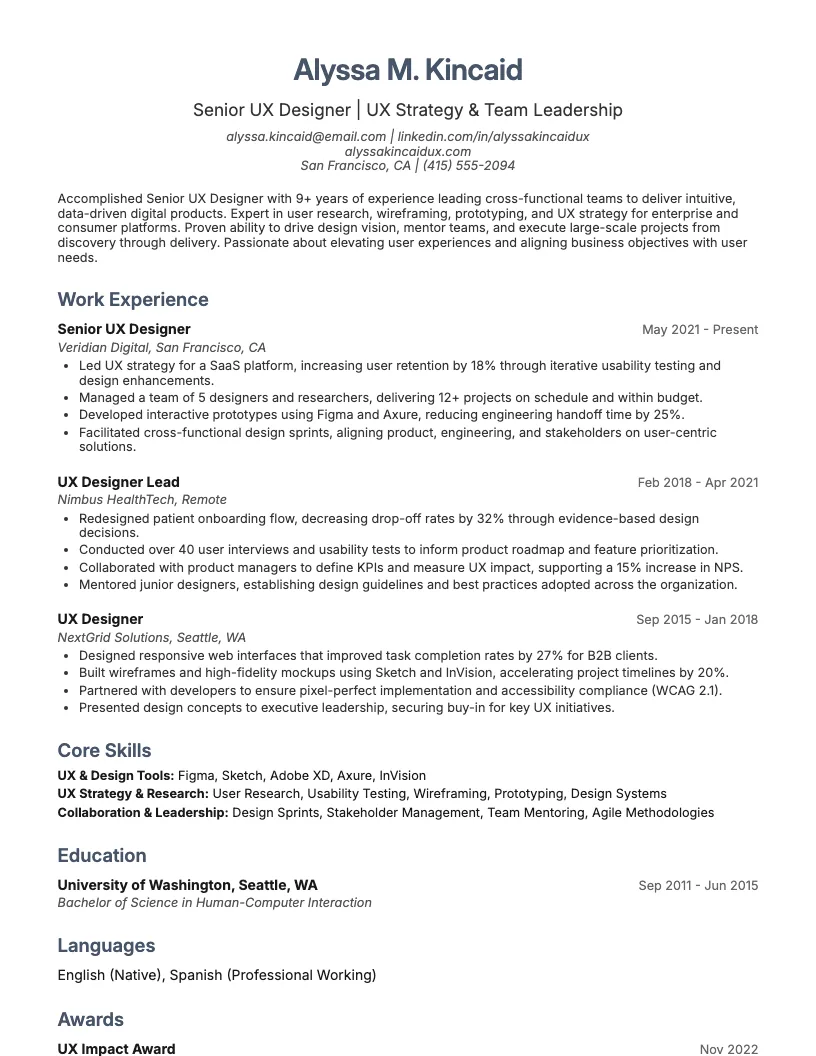
If you’re a senior UX researcher, your resume should highlight team leadership, strategic impact, and large-scale project outcomes. I focus on quantifiable results, like increasing user satisfaction by 25% or leading teams of 10+.
Showcase your experience mentoring juniors, presenting findings to C-level execs, and driving product decisions. You want to prove you influence roadmaps, not just individual features.
Don’t forget to list advanced methods—mixed methods research, cross-functional collaboration, and stakeholder management. This helps your resume stand out for director-level or lead roles, and including a tailored cover letter can make an even stronger impression.
That wraps up these UX researcher resume examples by experience level. Use these tips to tailor your resume to where you are-and where you want to go next.
If you're exploring roles in UX, it's smart to see how different job titles approach their resumes. Each job calls for a unique mix of skills and experience.
I find it helps to look at samples from related fields. You can compare resume formats, bullet points, and how people highlight their impact in UX roles.
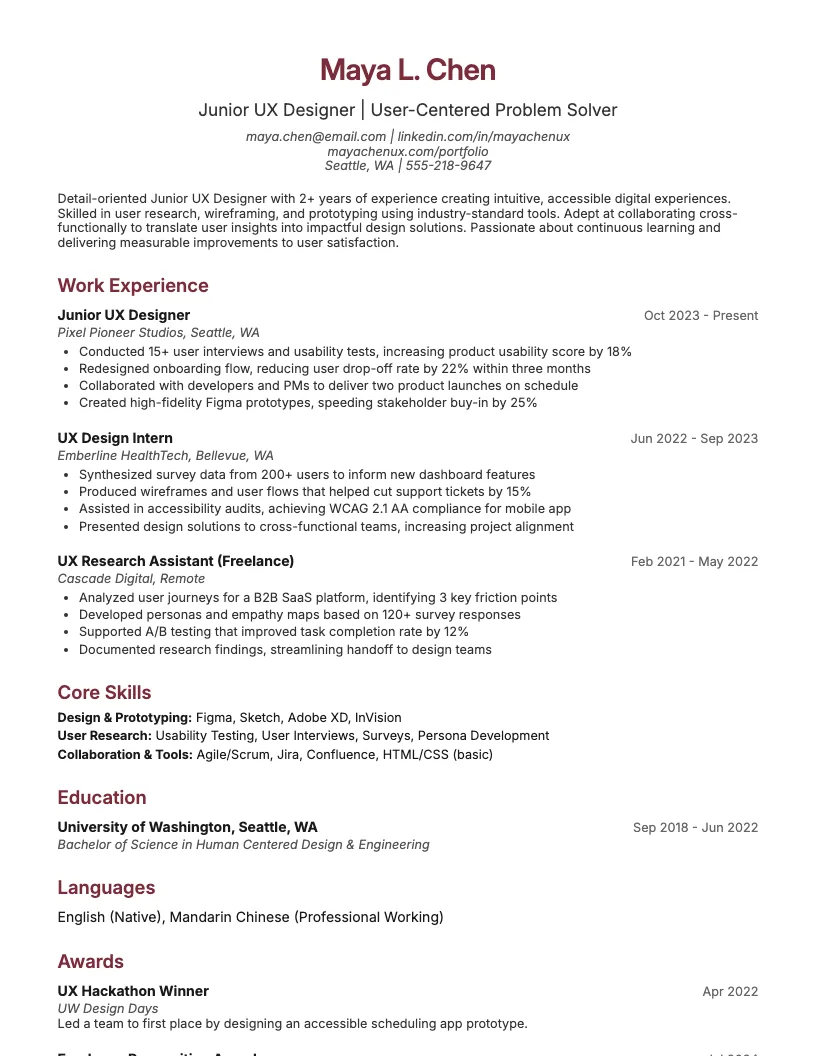
If you're looking for UX designer resume examples, I get it—seeing real samples makes a difference, and pairing them with a strong cover letter can boost your application. Good user experience UX designer resume examples cover research, prototyping, and collaboration.
UX designer resume templates help you skip the formatting headache. There are tons out there, but I suggest picking one that highlights your design skills and measurable impact.
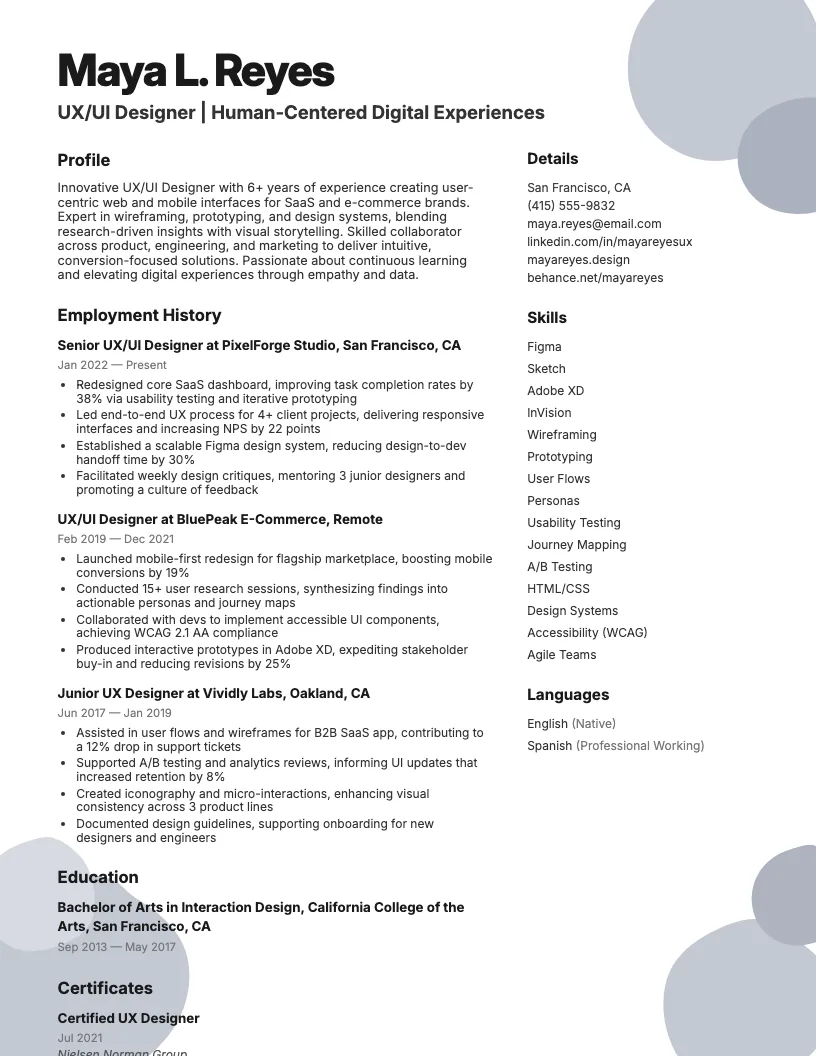
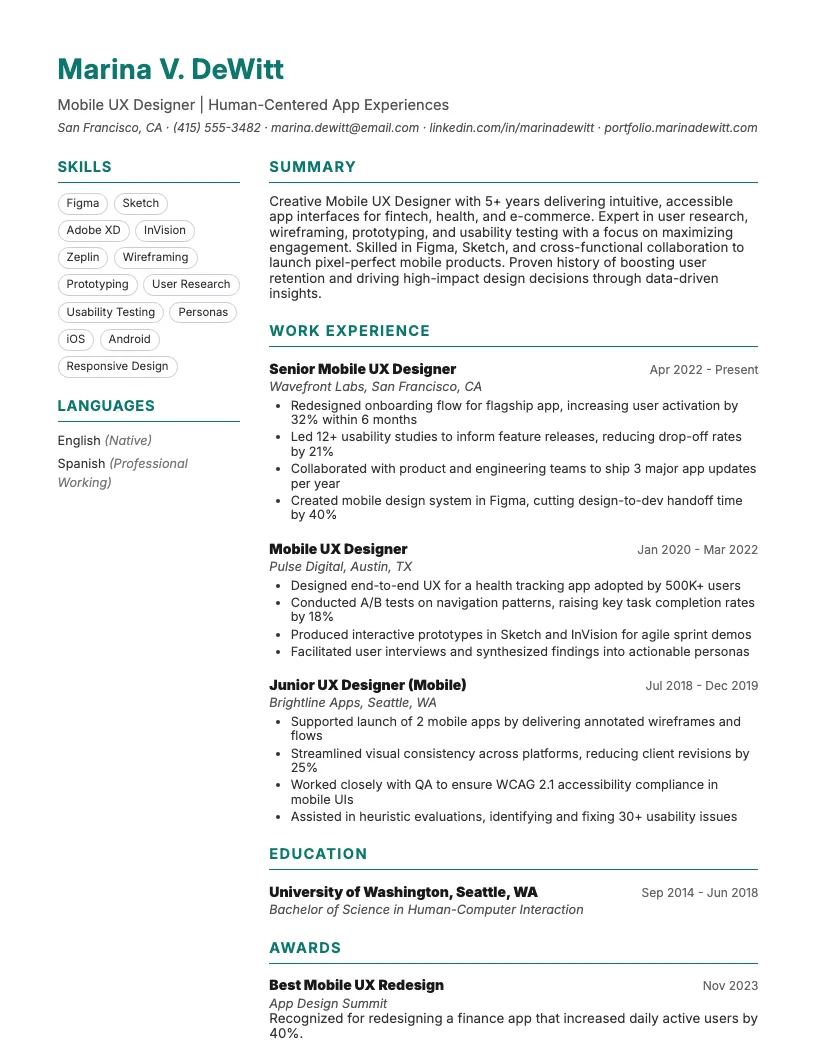
For mobile-focused roles, check out mobile UX designer resume examples. These show how to tailor your UX designer resume sample for projects like app design and mobile interfaces. This helps you stand out to recruiters.
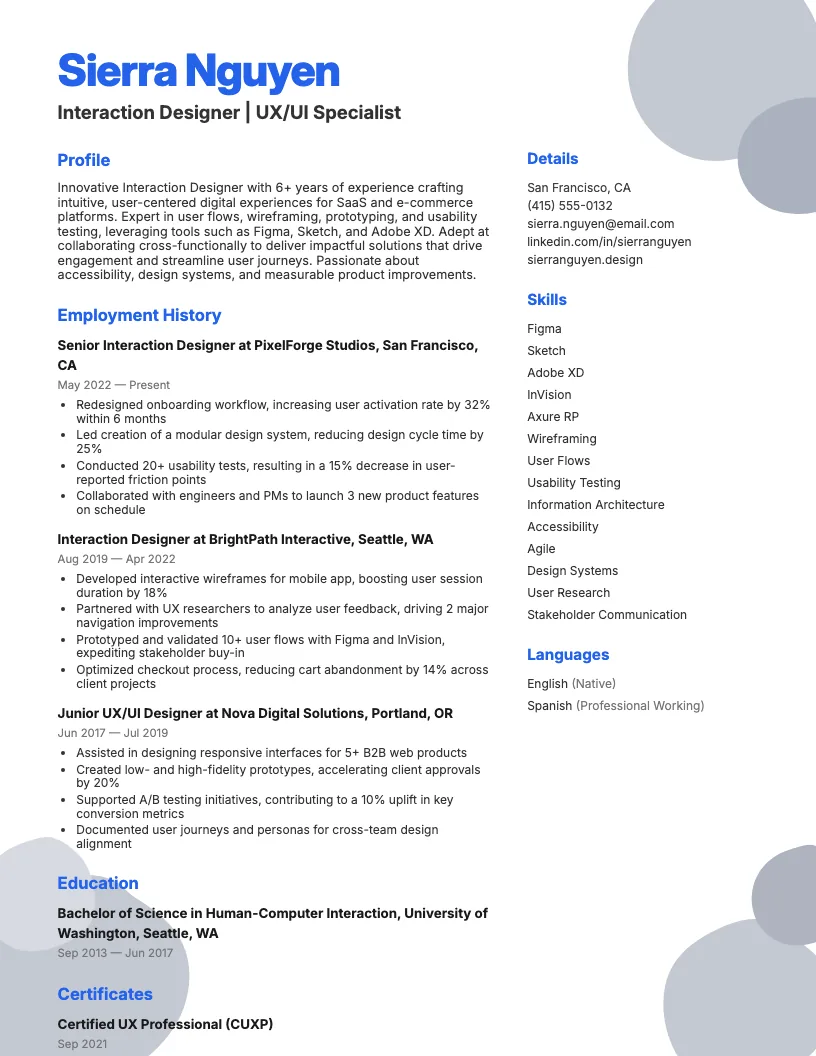
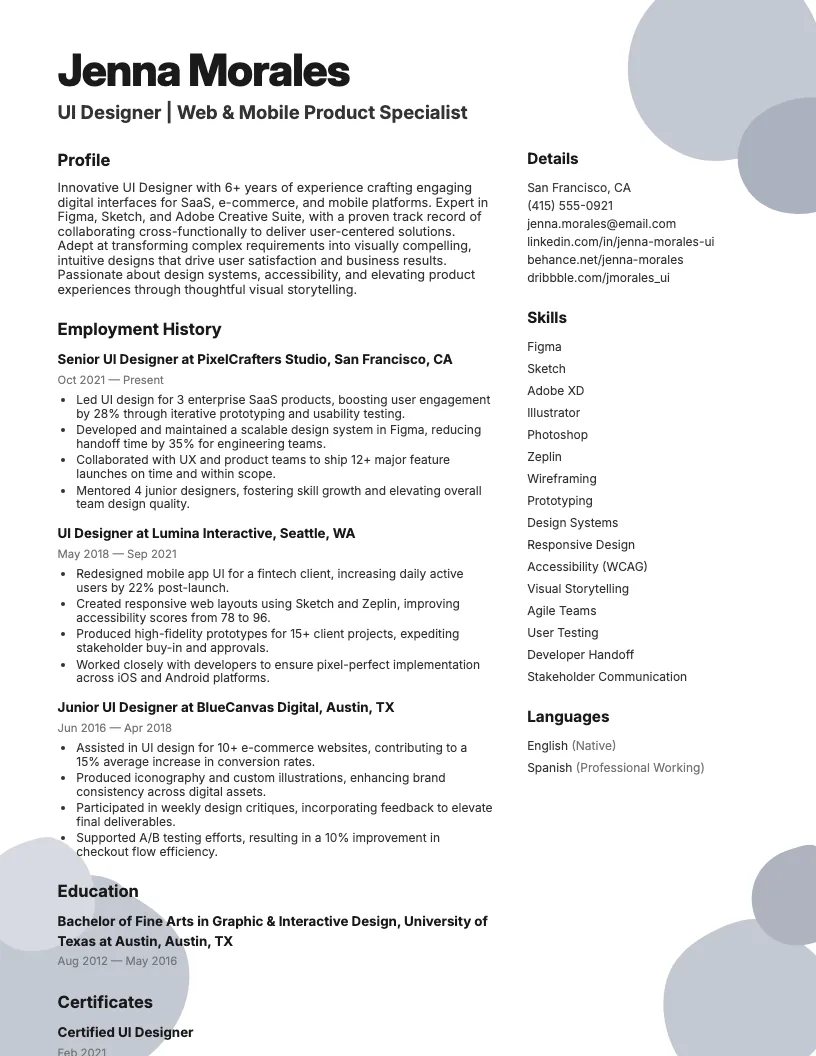
Browse Ux Researcher resume examples for related roles. Preview any example, open it in the builder, or read its full guide.
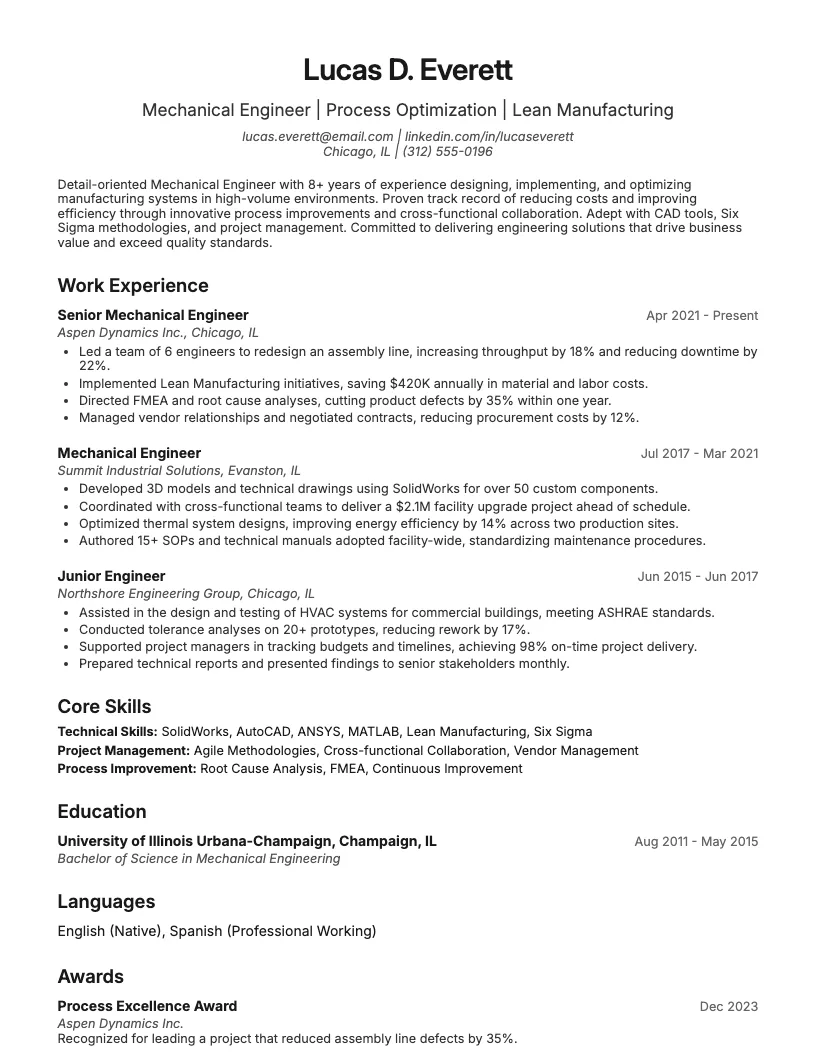
Click to enlarge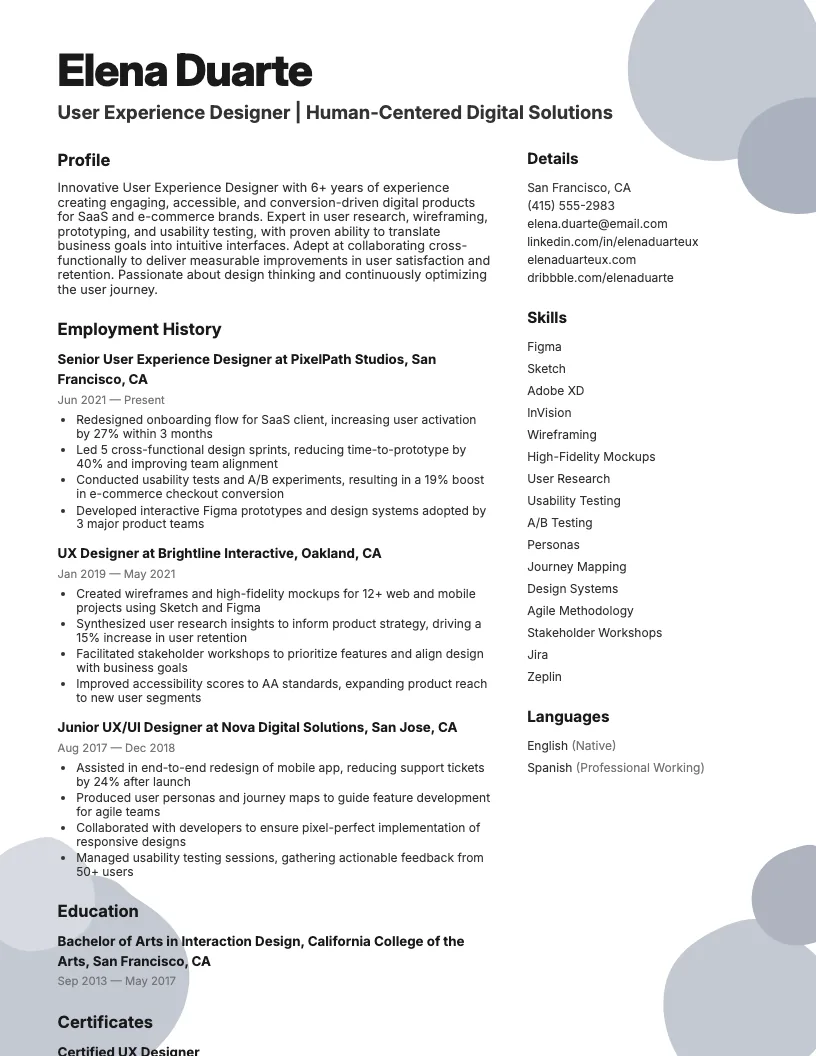 Click to enlarge
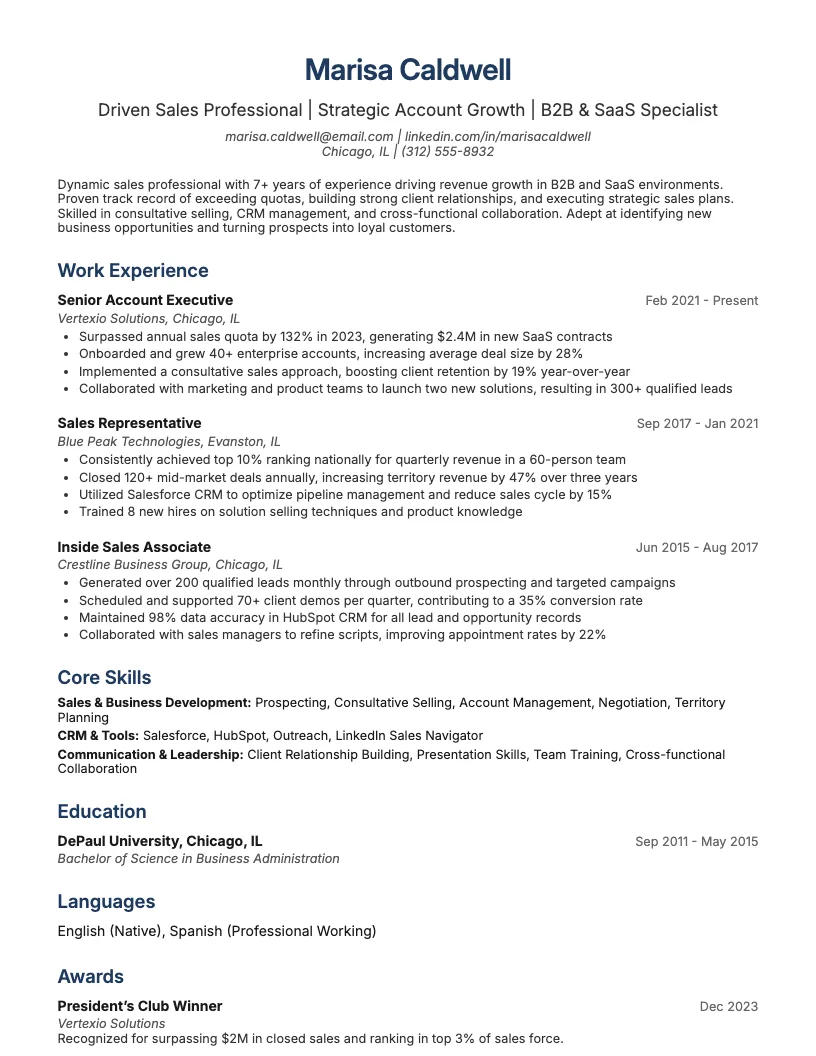
 Click to enlarge
 Click to enlarge
 Click to enlarge
 Click to enlarge
 Click to enlarge
 Click to enlarge
 Click to enlarge
Common questions about Ux Researcher resumes
A Ux Researcher resume template is a pre-designed layout tailored for professionals in UX research. It highlights skills like user testing, data analysis, and collaboration, making your experience stand out.
Yes, ResumeJudge’s templates are ATS-friendly, ensuring your resume passes applicant tracking systems. This increases your chances of landing interviews at tech companies, agencies, or startups.
Use a Ux Researcher resume template when applying for roles in tech, design, healthcare, or finance where understanding user needs is key. ResumeJudge helps you showcase relevant UX skills for these industries.
Absolutely! ResumeJudge allows easy customization so you can add your unique skills, projects, and achievements. Tailor sections like research methods or case studies for each job application.
A Ux Researcher template emphasizes research skills, user insights, and collaboration, unlike generic templates. ResumeJudge’s design ensures your expertise in usability testing stands out to recruiters.
Ideally, keep your Ux Researcher resume to one page, or two if you have extensive experience. ResumeJudge templates help you prioritize relevant content for a concise, effective format.
Yes, ResumeJudge templates include sections for portfolio links. Adding a portfolio lets employers review your case studies and user research work directly.
Highlight skills like usability testing, qualitative research, data analysis, and wireframing. ResumeJudge guides you to showcase both technical and soft skills relevant to UX roles.
Definitely! ResumeJudge’s professional layouts and ATS compatibility help your application catch recruiters’ eyes, especially when applying to competitive tech or design roles.
Yes, ResumeJudge templates are great for entry-level roles. Showcase academic projects, internships, or volunteer work to demonstrate your research skills and passion for UX.
Explore more professional resume examples to inspire your job search
Use our AI-powered resume builder to create a professional, ATS-friendly resume in minutes.
Free to use • No credit card required