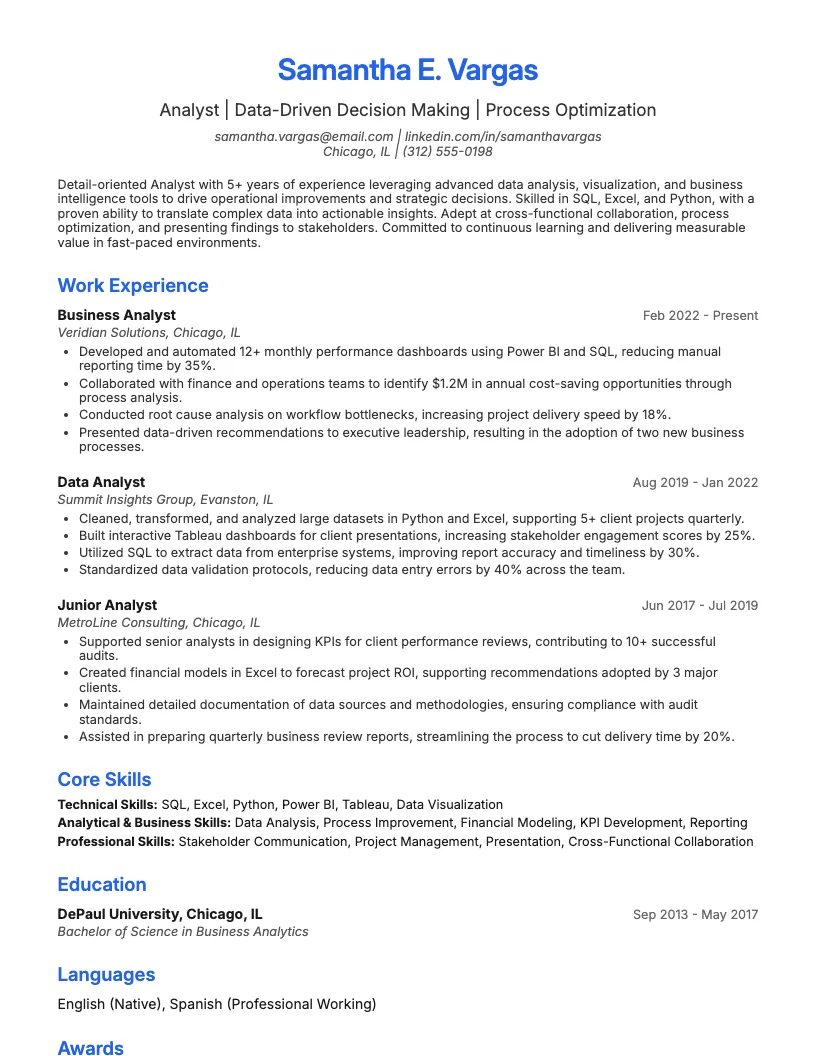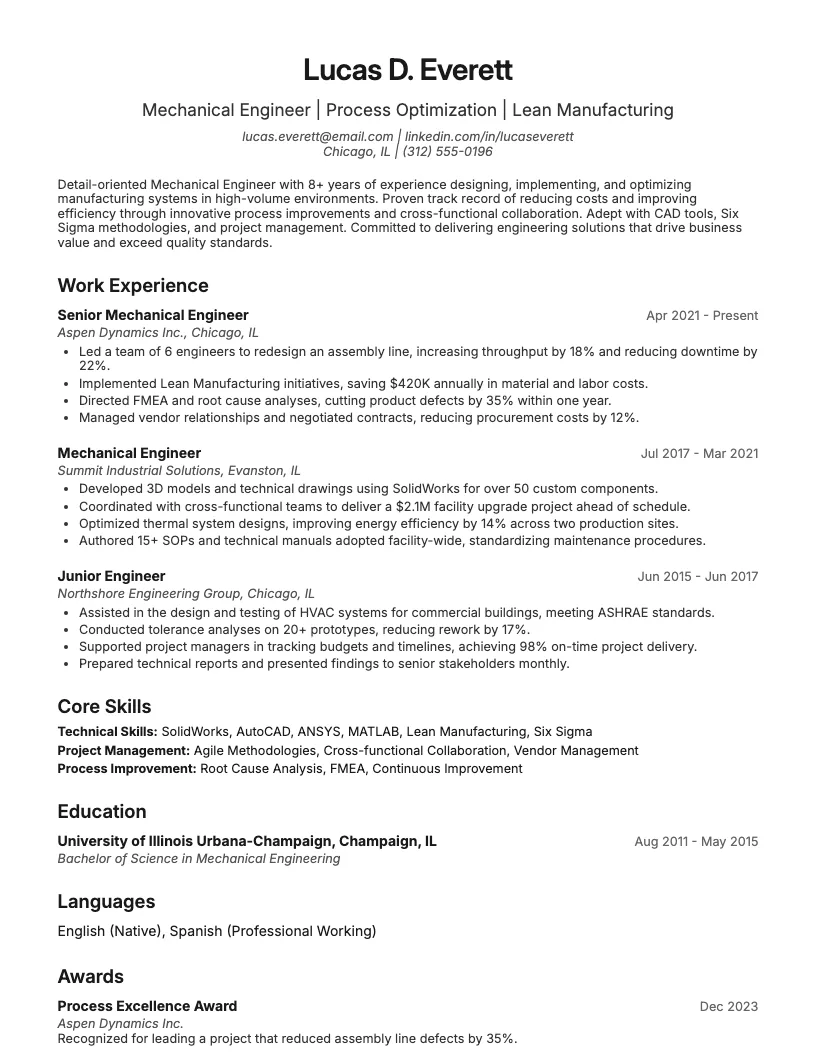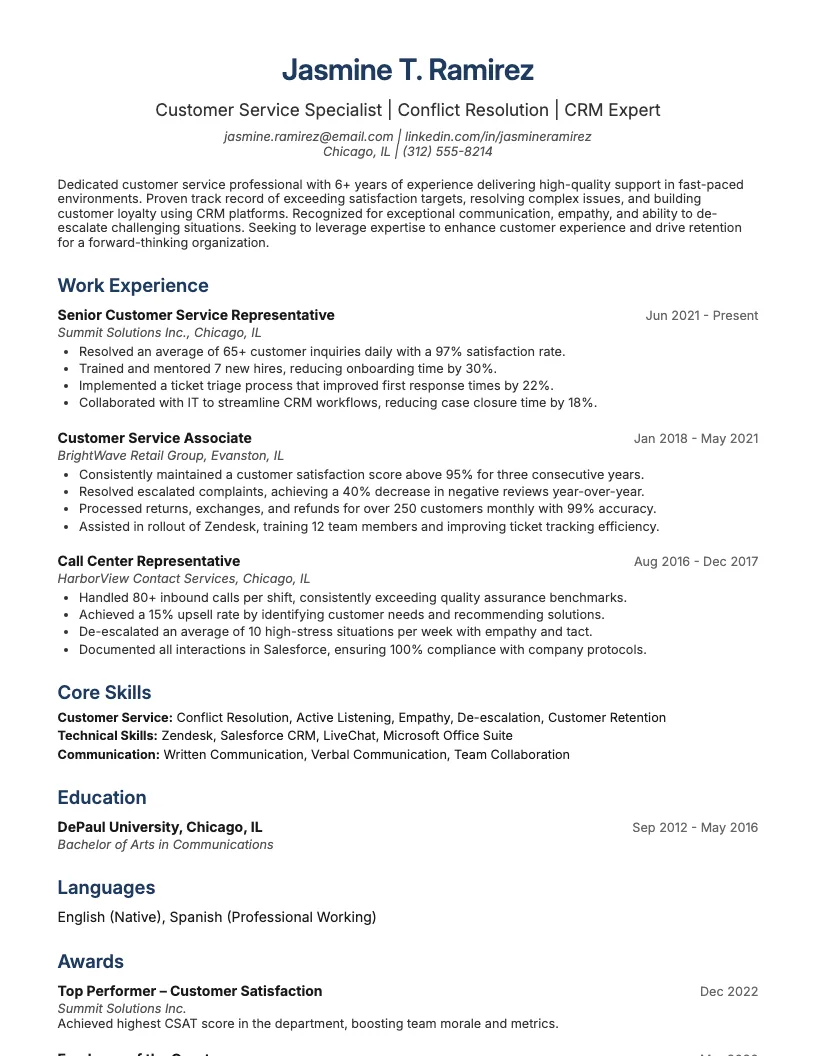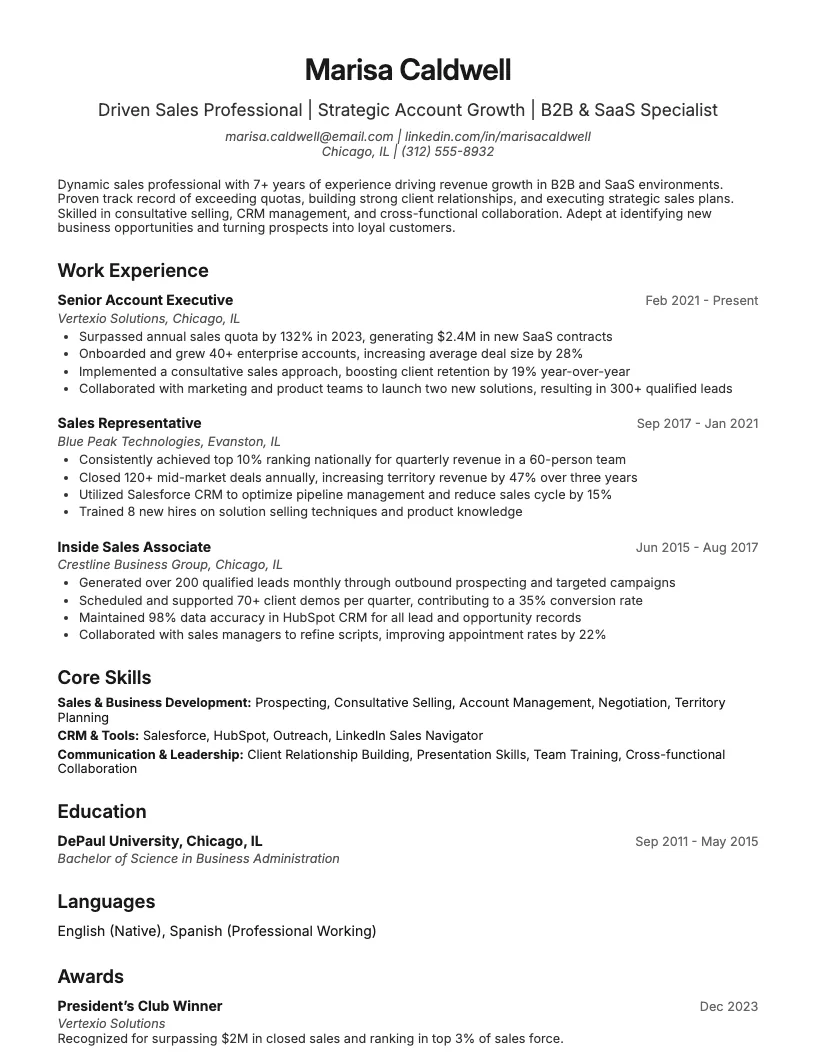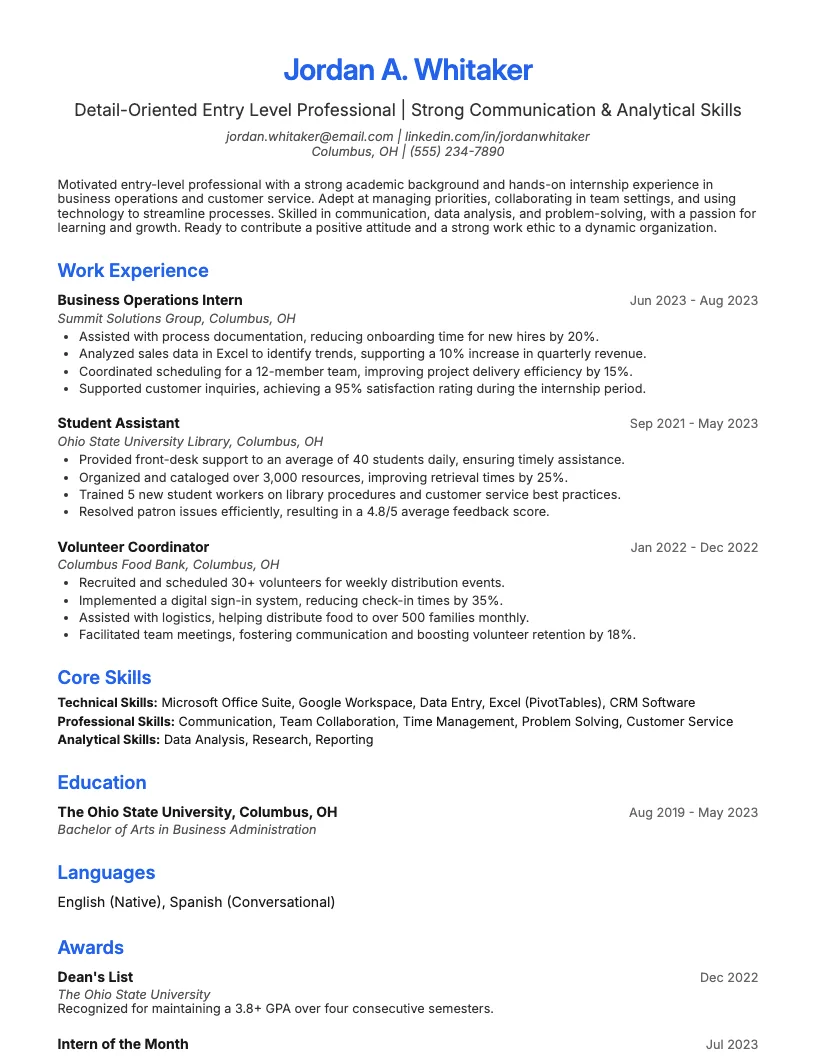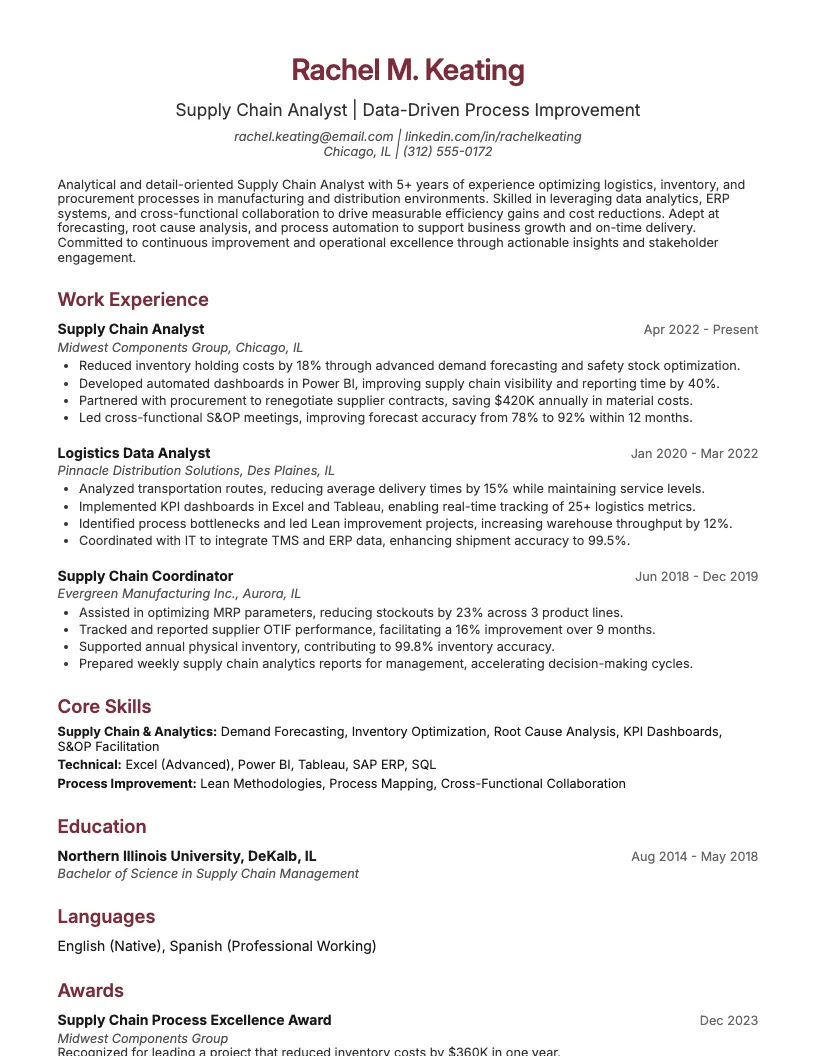
Business Analyst Resume Example
See full guide on Business Analyst resumes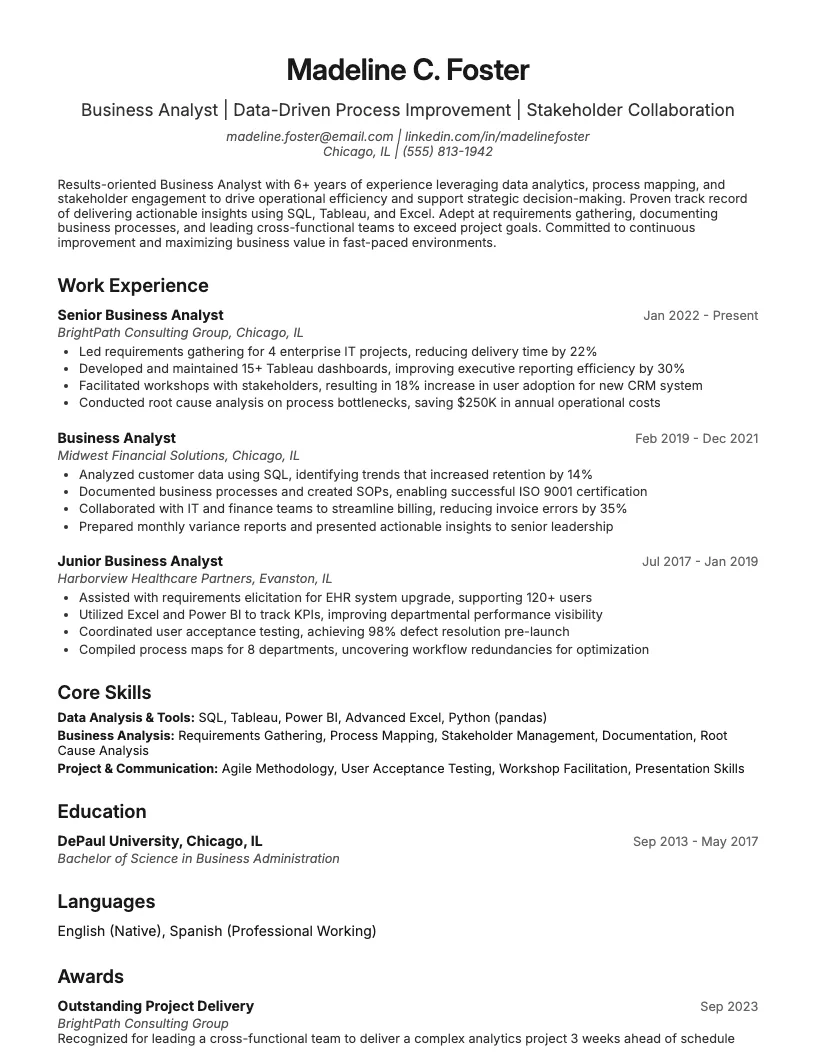 Click to enlarge
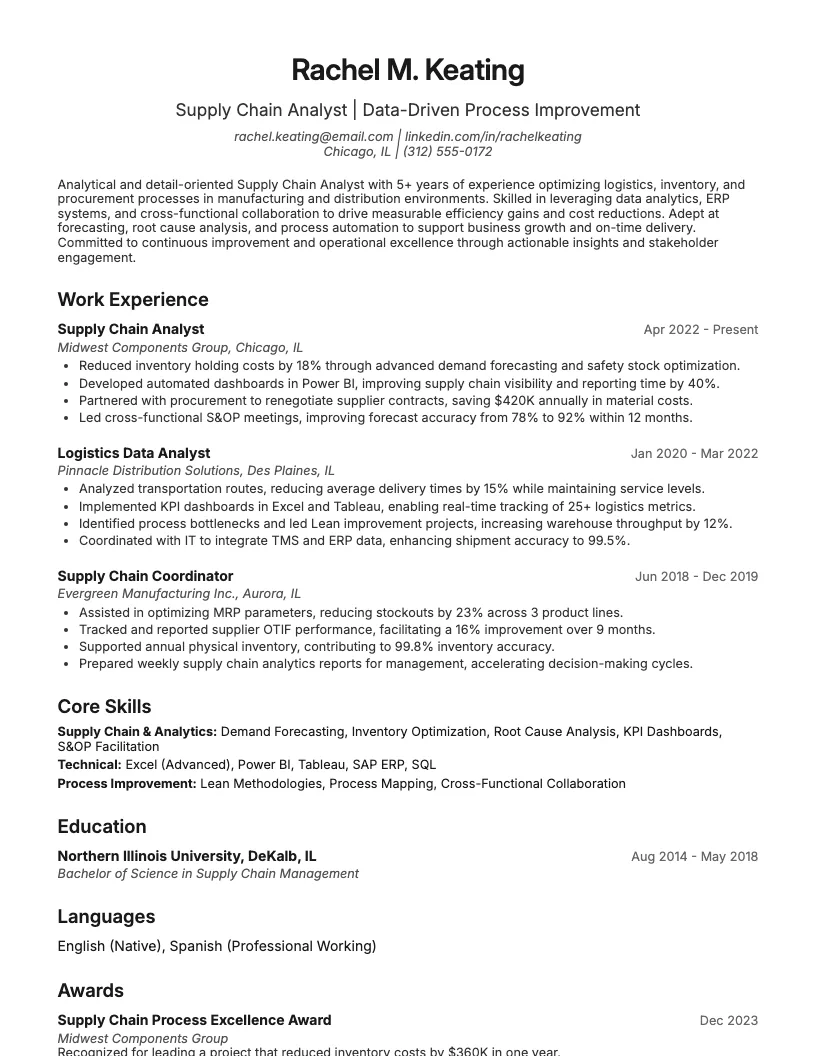 Click to preview

Get inspired by 50+ professional Supply Chain Analyst resume examples, each written by career experts and optimized to pass ATS scans. Pick a proven template, tailor it to your role, and download a polished resume in minutes.
Pick the specialization closest to your target role and start from a proven resume example.
You want a resume that proves your impact, no matter where you are in your supply chain career. I break down examples for every stage and focus.
Each example shows what recruiters want to see. Whether you're entry-level, mid-career, or senior, you’ll find real achievements and numbers that matter.
If you’re just breaking into supply chain analysis, your resume should highlight internships, coursework, and any hands-on projects. I recommend listing tools like Excel, SAP, or Tableau.
Focus on showing analytical thinking and attention to detail. Employers like to see quantifiable achievements-think “reduced shipping errors by 12%” or “analyzed inventory data for 50+ SKUs.”
You don’t need years of experience here. Just demonstrate your ability to learn fast, communicate clearly, and solve problems efficiently. This helps your resume stand out early in your career.
At mid-career, I focus on showing off project leadership and process improvements. I usually highlight how I manage cross-functional teams or cut costs by 10-20%.
You want to mention advanced analytics tools like SAP or Power BI. This shows you handle large-scale data and create insights that boost supply chain efficiency.
Quantify results. For example, I include numbers-like reducing lead times by 15% or increasing on-time delivery rates by 8%. This proves your impact at a glance.
If you’re senior-level, your resume should highlight leadership-think managing multi-million dollar budgets or mentoring teams. I always emphasize cost savings and process improvements with real numbers.
I like to show off cross-functional collaboration. Use action verbs like “direct,” “optimize,” or “implement.” This shows you drive results, not just crunch numbers.
Don’t forget to highlight tools. If you’re using SAP, Oracle, or advanced analytics, list them. Recruiters want proof you’re up to speed with current tech and trends.
There are so many ways to specialize as a supply chain analyst. You might focus on risk, cost, inventory, planning, or even global logistics-each one needs its own resume approach.
If you’re targeting a niche, highlight the exact skills, certifications, and results that matter. For example, mention ERP systems, risk mitigation wins, or global shipment KPIs.
When you tailor your resume for a specialized role, use keywords recruiters scan for. This helps you stand out and shows you know the industry inside out.
That wraps up the different supply chain analyst resume examples. If you need inspiration for your application, check out a cover letter to complement your resume and pick the style and focus that fits your experience and career goals best.

Choosing the right resume format helps you show off your experience and skills fast. Hiring managers spend less than 8 seconds scanning each resume.
If you’ve worked in supply chain before, a reverse-chronological format highlights your recent achievements and growth. If you’re switching fields, a combination format lets you show off transferable skills first.
A clean, organized layout helps you communicate your attention to detail. You want your resume to look professional and easy to read from the start.
You want your resume to cover the basics-fast. I always start with a strong header: name, contact info, and LinkedIn. This makes it easy for recruiters to reach you.
Include a summary or objective next. That’s your shot to quickly highlight your top achievements or goals, especially if you’re switching industries or just starting out.
The experience section is where you dig into your supply chain wins. Use bullet points and numbers-like “reduced costs by 15%”-to show your impact.
Don’t forget a skills section. List both software (like SAP or Excel) and soft skills (like communication or problem-solving). This helps recruiters spot what you bring to the table.
Wrap it up with education and any certifications. Credentials like APICS or a bachelor’s in supply chain management look especially strong here.
I always go for a simple, professional font-think Arial, Calibri, or Lato. Stick to 10-12 pt size so everything’s easy to read.
You want clear section headings and enough white space. This helps recruiters scan your resume in under 30 seconds, which is what most actually do.
Use bullet points instead of big blocks of text. One accent color is enough-too many colors can distract from your achievements.
Always save your resume as a PDF. This keeps your layout intact, no matter what device someone uses to open it.
Recruiters scan hundreds of resumes, so you want to make yours pop in just a few seconds.
You need to show your impact, not just your job duties. Numbers, tools, and real results matter here.
I'll break down how to write a summary, showcase experience, and highlight skills that hiring managers actually care about.
Your resume summary is your opening move. In just a few lines, you want to prove you turn data into action and drive business results.
I always start by stating my job title and years of experience. This gives the reader instant context and credibility-think "Supply Chain Analyst with 5+ years’ experience."
Highlight your core strengths and the tools you use-like SAP, Excel, or Power BI. Companies want to see you’re comfortable with the platforms they use every day.
Include one or two quantified wins, like "Cut costs by 12%" or "Improved order accuracy by 9%." This shows you don’t just analyze-you deliver real impact.
Keep it tailored to the job you want. Your summary should speak to the company’s goals, not just list your responsibilities. This helps you stand out fast.
I always put the most relevant supply chain experience up top. Focus on core functions like forecasting, procurement, logistics, and inventory management in each role.
You want to highlight measurable impact-think cost reductions, lead time improvements, or on-time delivery rates. Numbers like “saved 15% in shipping costs” grab attention.
List the tools and systems you use, like SAP, Tableau, or advanced Excel. This shows you’re equipped for modern supply chain challenges and familiar with industry standards.
I always make sure to list my highest degree first. Most supply chain analyst roles want at least a bachelor’s in business, logistics, or engineering.
Certifications boost credibility. You can include ones like APICS CPIM, CSCP, or Six Sigma Green Belt. These show you’ve got up-to-date, practical knowledge.
Don’t forget to add the year you earned each certification. This helps hiring managers see your expertise is current and relevant.
I always include a skills section that’s tailored to the job description. This helps my resume get past those pesky ATS filters and into human hands.
You want to highlight both technical and analytical skills-think Excel, SQL, SAP, Power BI, and data visualization. Don’t forget soft skills like problem-solving and communication.
Listing around 6-10 core skills keeps things focused. I stick to what I actually use-no filler. This wraps up the essentials for a standout supply chain analyst resume, and you can further strengthen your application with a cover letter tailored to the role.
Your experience section needs to show more than just your daily tasks. You want to highlight impact, results, and the tools you use.
Focus on the numbers-cost savings, efficiency gains, or process improvements. Recruiters want to see exactly how you make a difference.
Up next, I’ll walk you through tailoring your experience and showing off your achievements using real numbers.
If you want your resume to stand out, tailor your experience to the job description. I always match my language to what the company is looking for.
Highlight core supply chain functions-like forecasting, procurement, and logistics. If you use SAP, Excel, or Tableau, mention them up front. This helps recruiters see you have relevant skills.
Focus on teamwork and collaboration. If you work closely with finance or production teams, say so. Global or high-volume experience always grabs attention for supply chain roles.
I always make my results visible by using numbers. Cutting logistics costs by 15% or improving order accuracy by 20% grabs attention and shows my value fast.
You should highlight the size of budgets managed, the number of vendors handled, or the volume of shipments tracked. Concrete stats help recruiters see your direct impact.
There’s no need to overcomplicate it-just back up your work with real data. This helps your supply chain analyst experience stand out and wrap up your story with confidence.
Recruiters look for a strong mix of technical and people skills in supply chain analysts. You need to show you handle data and collaborate with others.
If you highlight both hard and soft skills, you prove you do more than just crunch numbers. You show you solve problems and work well across teams.
I always focus on technical skills that make an impact. Things like SAP ERP, Oracle, and advanced Excel get attention fast. These are core tools for any analyst role.
You want to show you can handle data visualization-think Power BI and Tableau. Recruiters like candidates who can turn raw numbers into clear insights using the latest software.
There are other essentials too-SQL querying, forecasting, procurement, and inventory optimization. Listing these shows you know how to keep supply chains moving efficiently and cost-effectively.
I rely on clear communication to explain data insights to teams and stakeholders. This keeps projects moving and reduces misunderstandings, especially when working with cross-functional groups.
Adaptability is huge in supply chain roles. Things change fast-unexpected disruptions, supplier delays, or new software rollouts. You’ve got to stay flexible and adjust priorities on the fly.
Building strong collaboration skills helps me work well with others, from procurement to logistics. Companies want analysts who can drive process improvements by working side-by-side with different teams.
If you highlight problem-solving and a continuous improvement mindset in your resume, you show you can spot inefficiencies and suggest fixes. That’s what hiring managers love to see.
Certifications and education can really set you apart as a supply chain analyst. Employers look for proof that you’ve built up skills in logistics, data analysis, and operations.
You don’t need one specific degree, but you should highlight anything directly related to supply chain, statistics, or business. Make sure to include your certifications, too.
If you’re still in school, it’s fine to add your expected graduation date. Next up, I’ll break down which certifications make the biggest impact.
You can boost your supply chain analyst resume with certifications like APICS CSCP, CPIM, or CLTD. Employers often look for these specific credentials.
I also see a lot of value in a Lean Six Sigma Green Belt. It shows you understand process improvement, which comes up in almost every supply chain job.
If you want to stand out, add CPSM or an SAP Certified Application Associate in supply chain planning. These highlight your expertise with both strategy and technology.
You don’t need years of experience to build a solid supply chain analyst resume. You can highlight your skills, education, and projects that show your analytical mindset.
Focus on evidence that proves you’re comfortable with data, solving problems, and paying attention to detail. There are plenty of ways to stand out, even without direct experience.
I focus on relevant coursework and academic projects. If you’ve done assignments on logistics, data analysis, or process mapping, highlight those. This shows you understand real supply chain concepts.
You can include internships, part-time jobs, or even volunteer roles that involve teamwork, Excel, or reporting. These experiences prove you can handle tasks a supply chain analyst faces daily.
Listing technical skills-like Excel, SQL, or Tableau-helps. If you’ve led a club, joined a case competition, or finished a certification, that’s worth adding too—especially if you pair these experiences with a cover letter to highlight your fit. It all counts.
You want your supply chain analyst resume to stand out and show off your impact. It's about more than listing tasks-it's about results and real achievements.
I'll share strategies that help you highlight your skills, experience, and value. With the right approach, you can grab a recruiter’s attention in just a few seconds.
First, I like to gather my recent achievements and key skills. This gives me a clear picture of what I want to showcase on my resume.
You want your resume to immediately show your impact. Start with a strong summary and highlight numbers-like cost reductions or efficiency gains-right at the top.
Keep your layout clean and readable. I focus on clear sections, consistent formatting, and concise bullet points. This helps recruiters quickly find what matters most.
Your resume needs to show your impact, not just your daily tasks. Highlight results, like cost savings or efficiency improvements, using real numbers when possible.
Hiring managers want to see your technical and problem-solving skills. Don’t forget to include relevant software, certifications, and examples of how you handle supply chain challenges.
A clear, well-organized layout helps your strengths stand out. Make sure the top section quickly explains who you are and what value you bring.
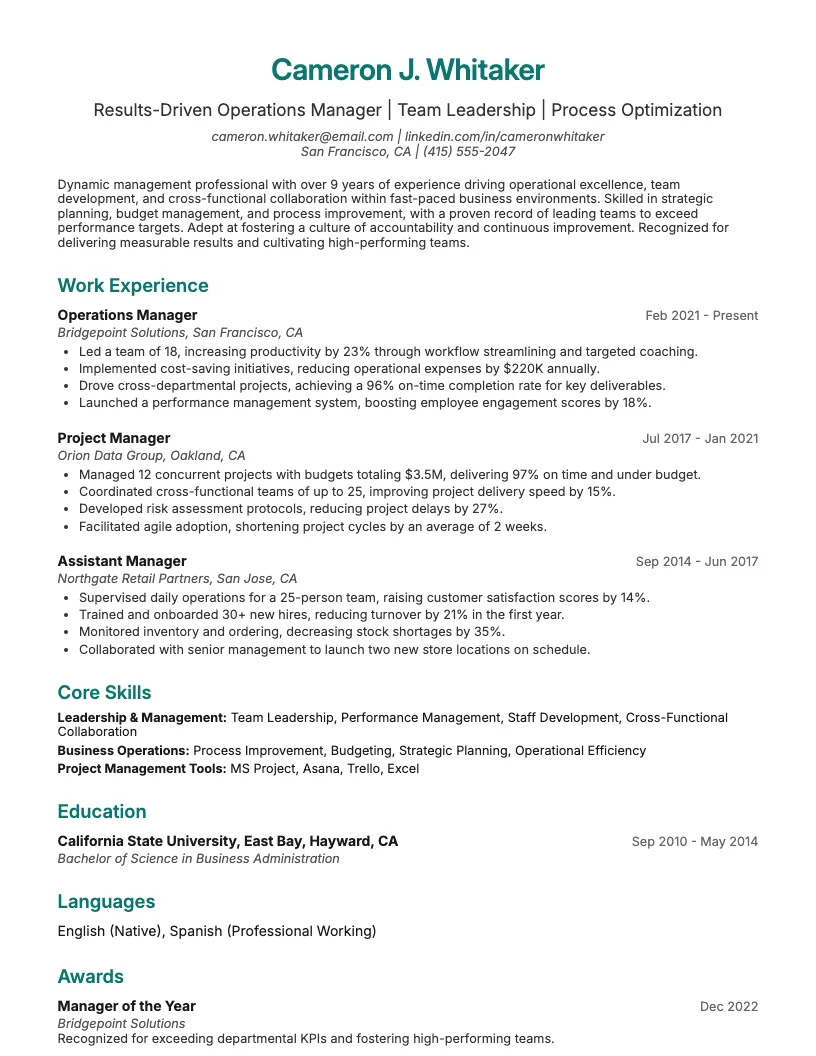
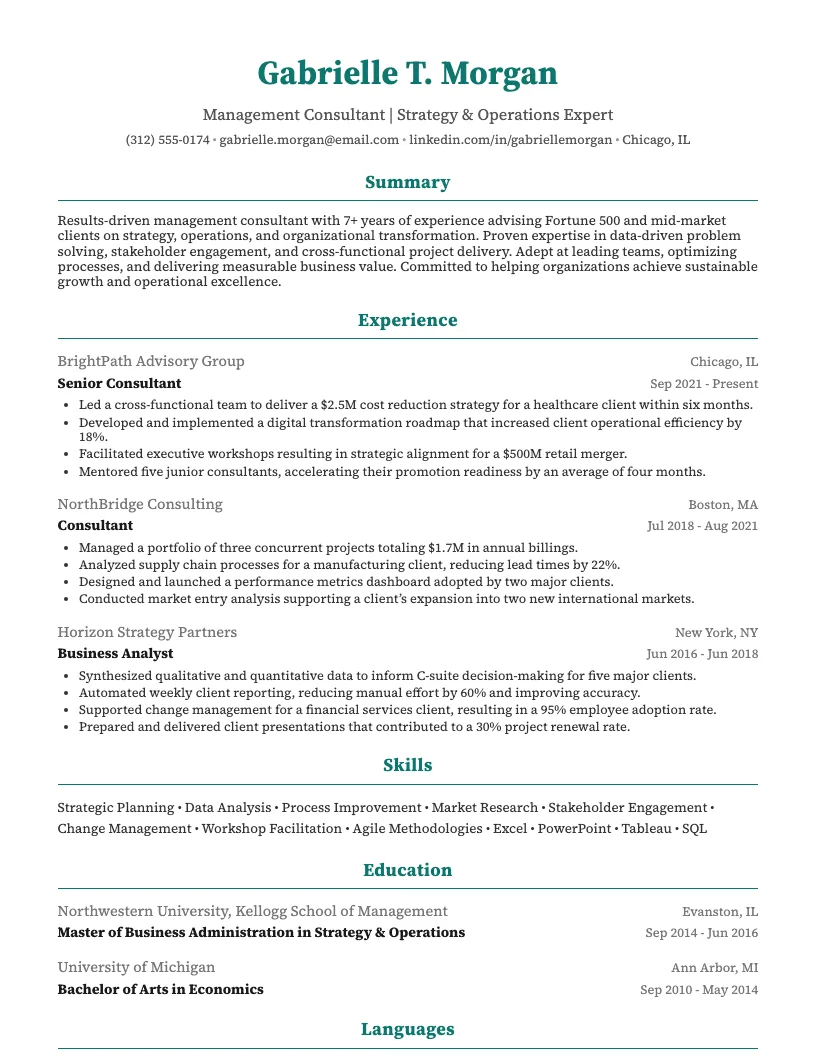
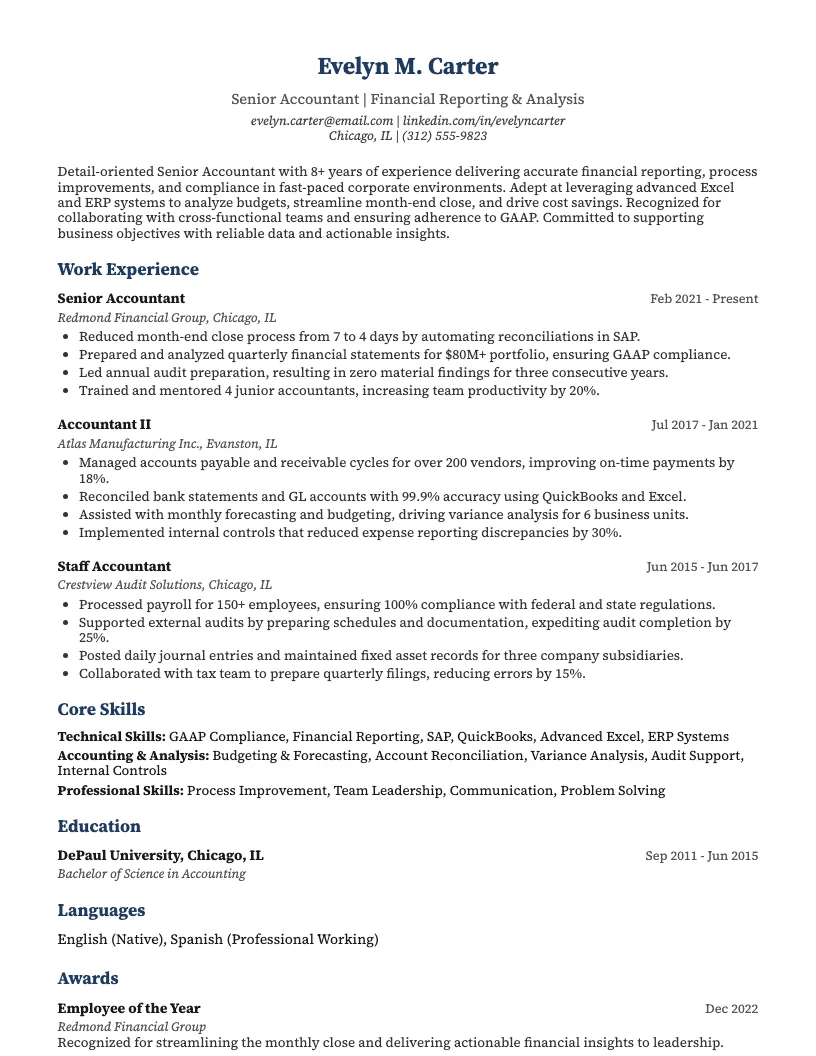
Browse Supply Chain Analyst resume examples for related roles. Preview any example, open it in the builder, or read its full guide.
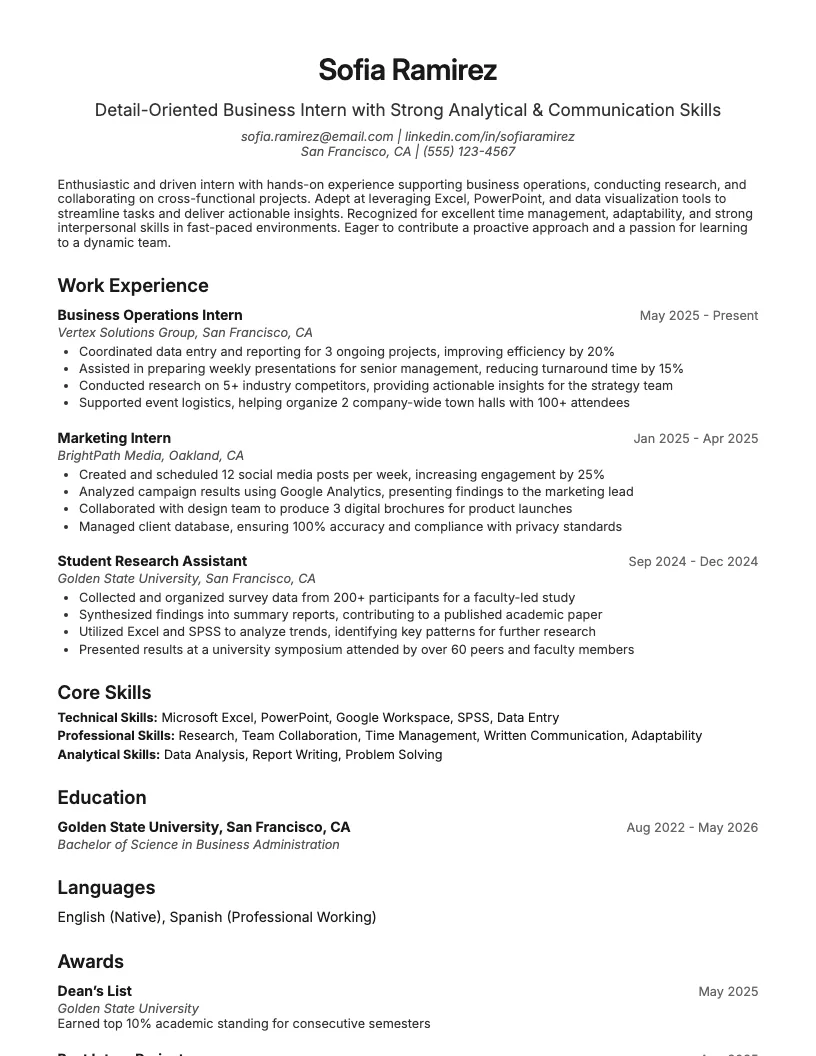
Click to enlarge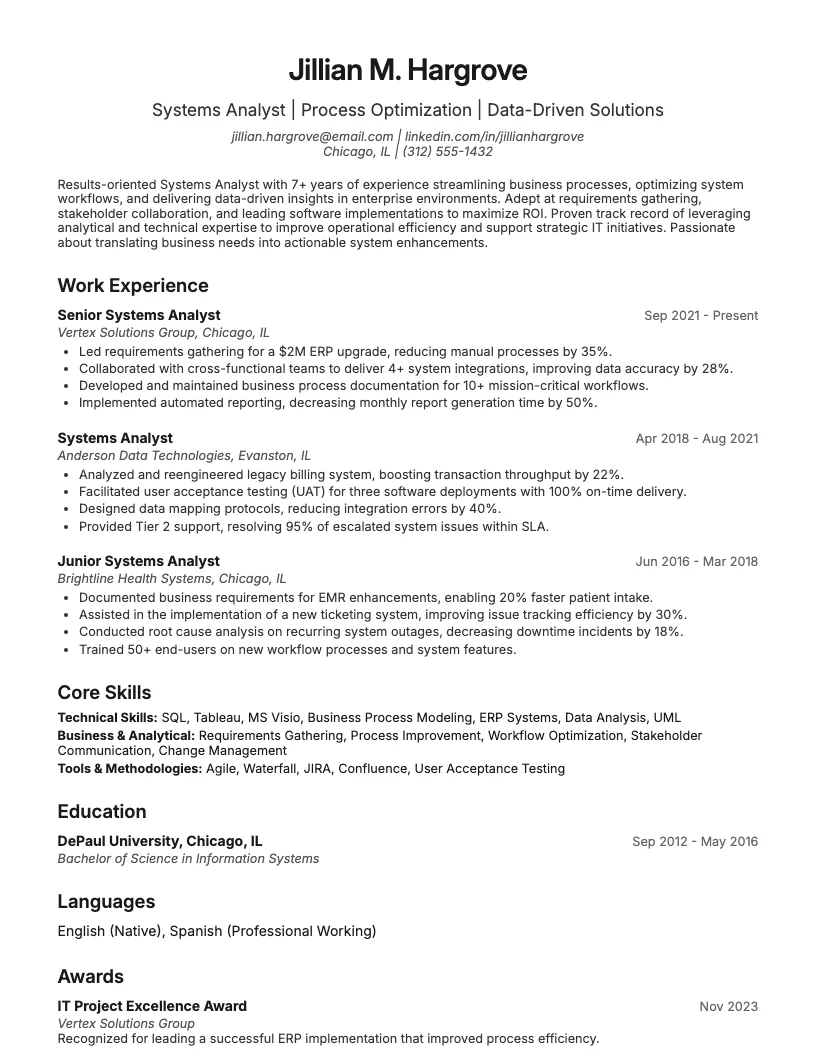 Click to enlarge
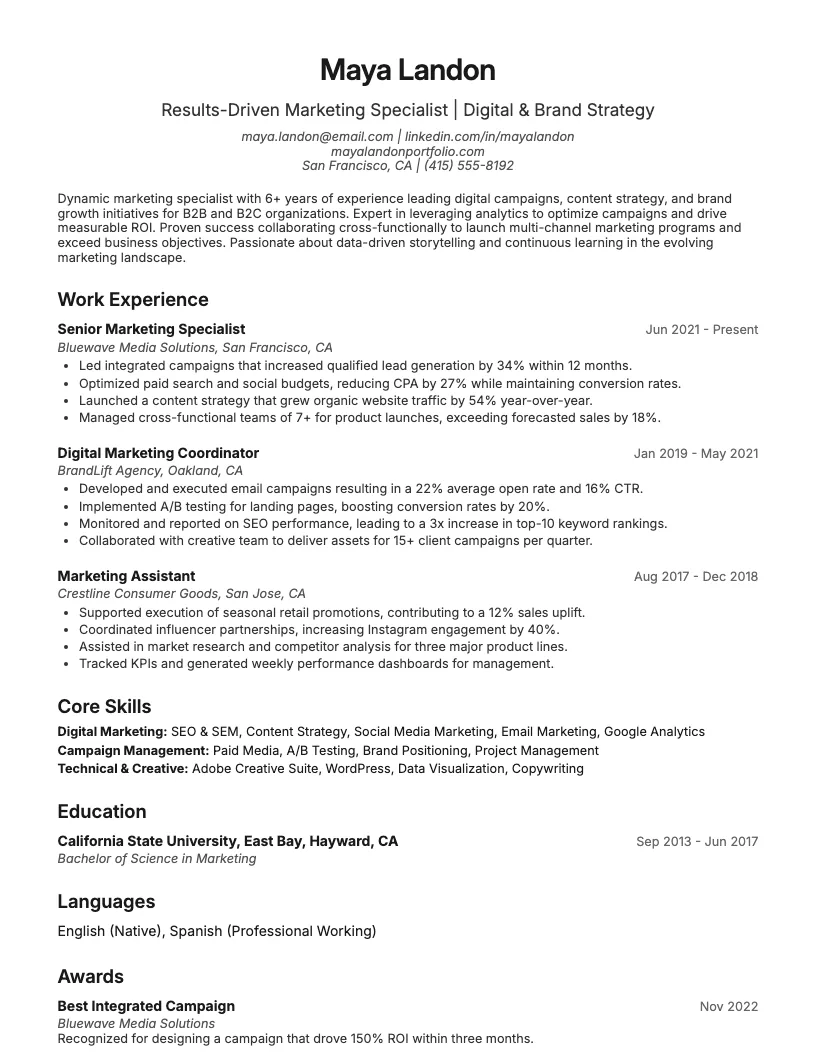
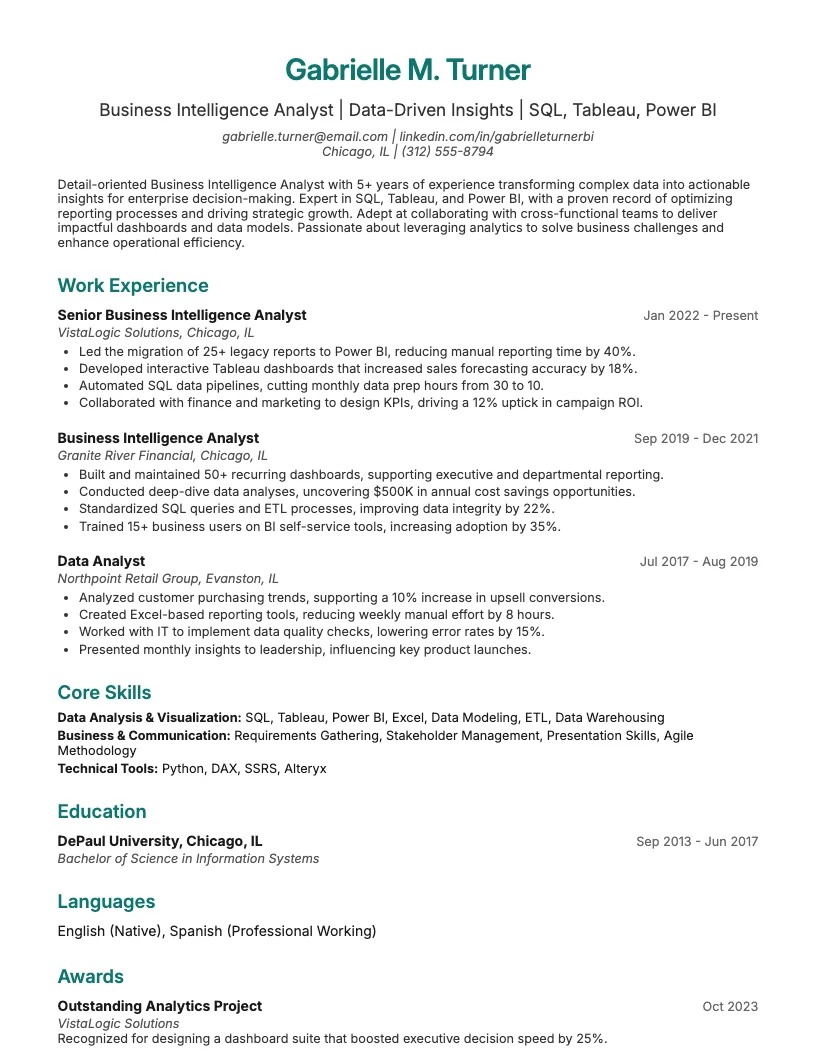 Click to enlarge
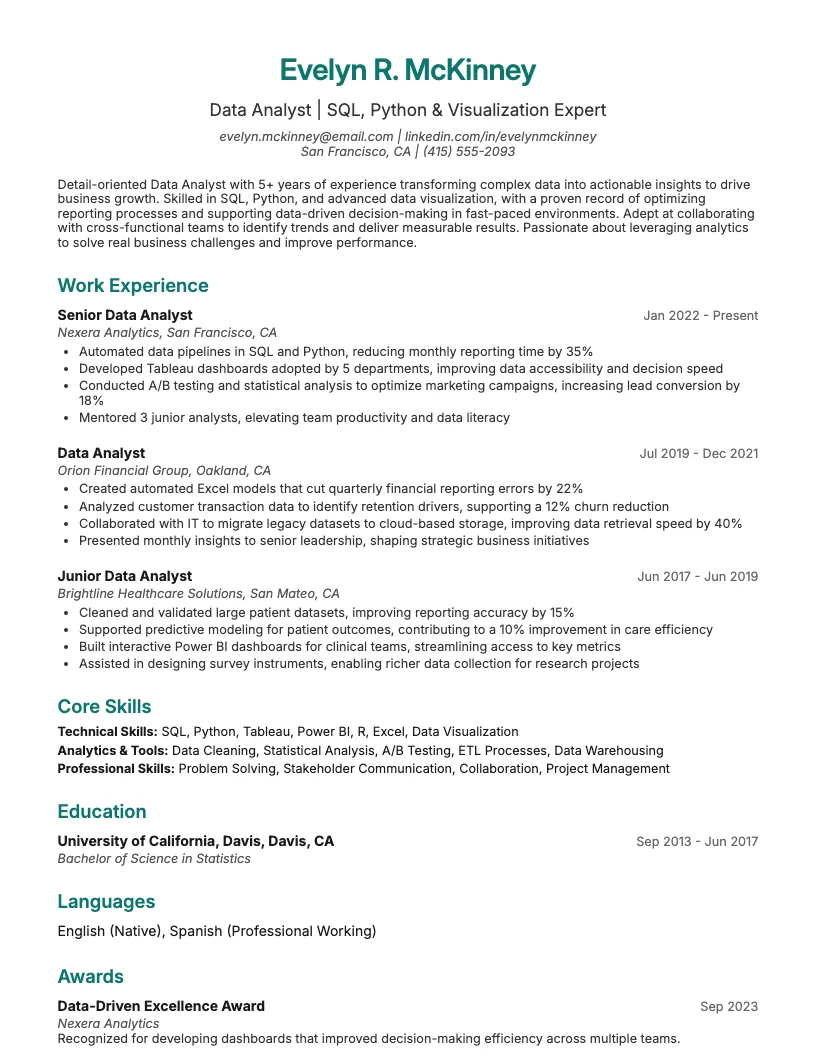 Click to enlarge
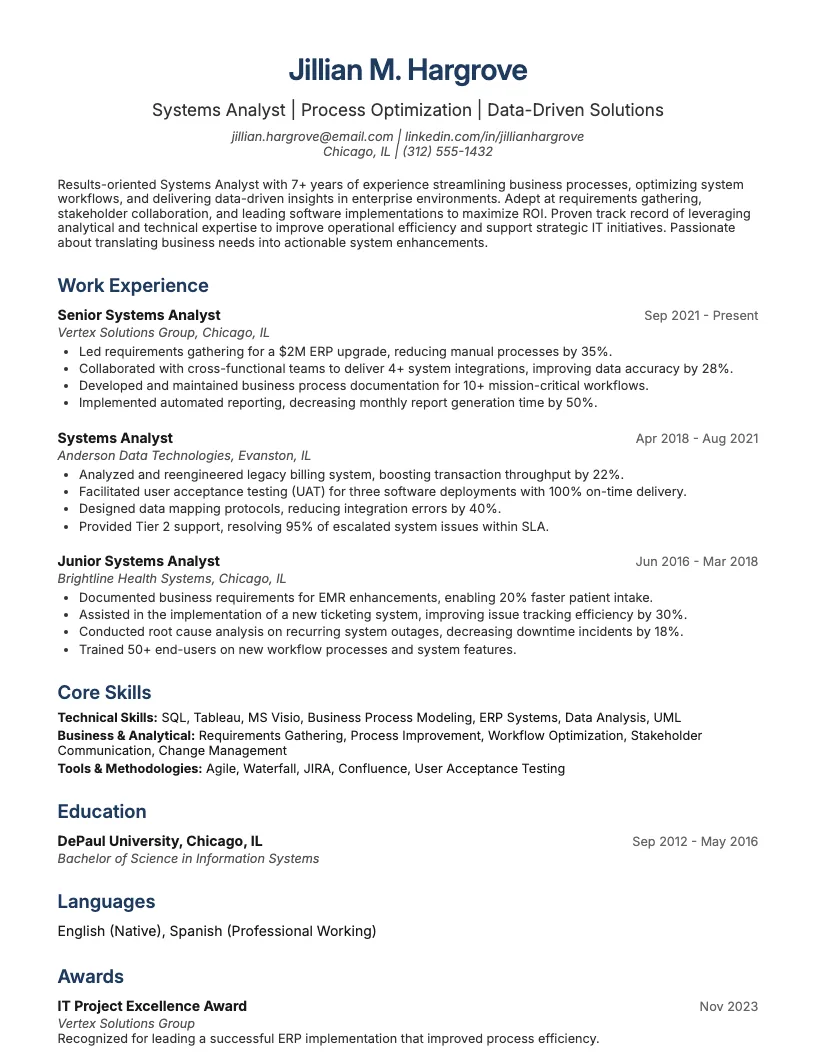 Click to enlarge
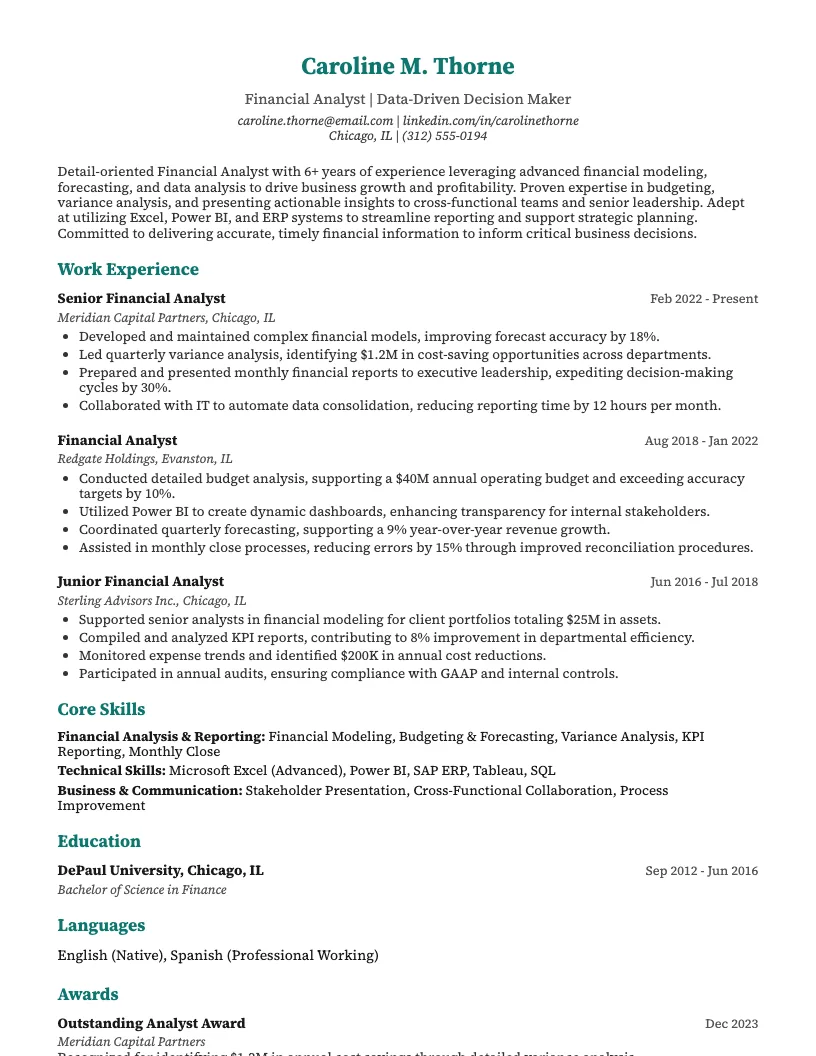 Click to enlarge
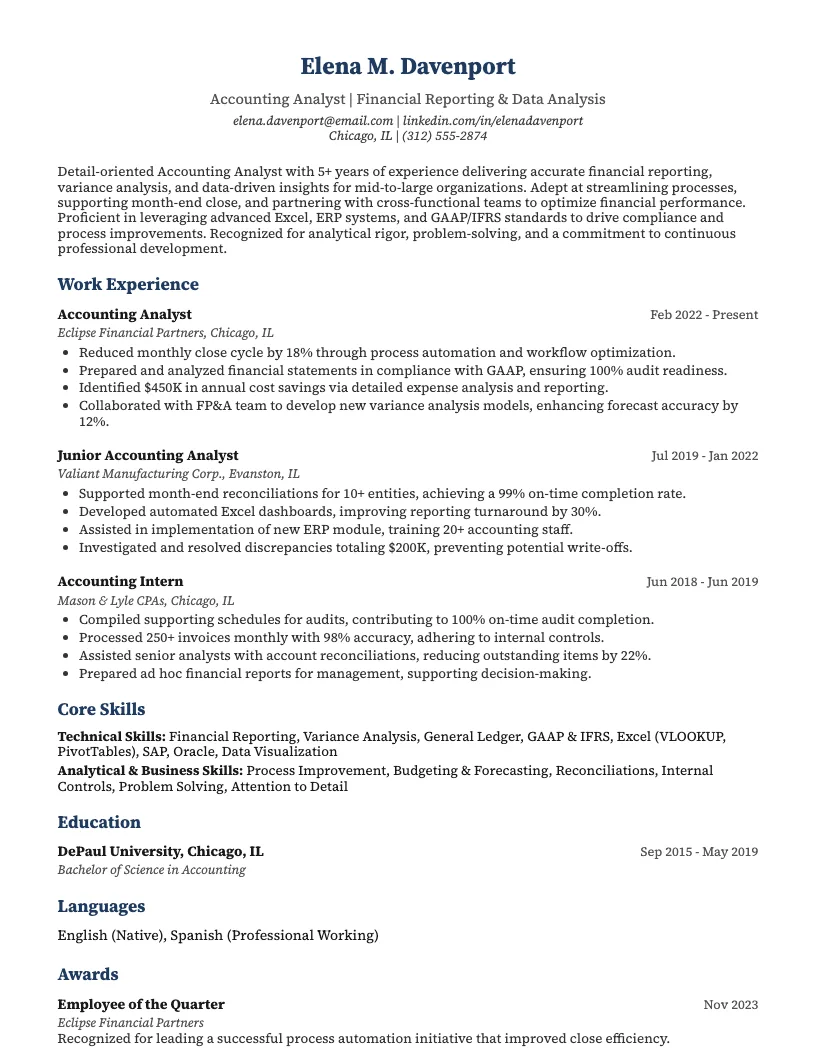 Click to enlarge
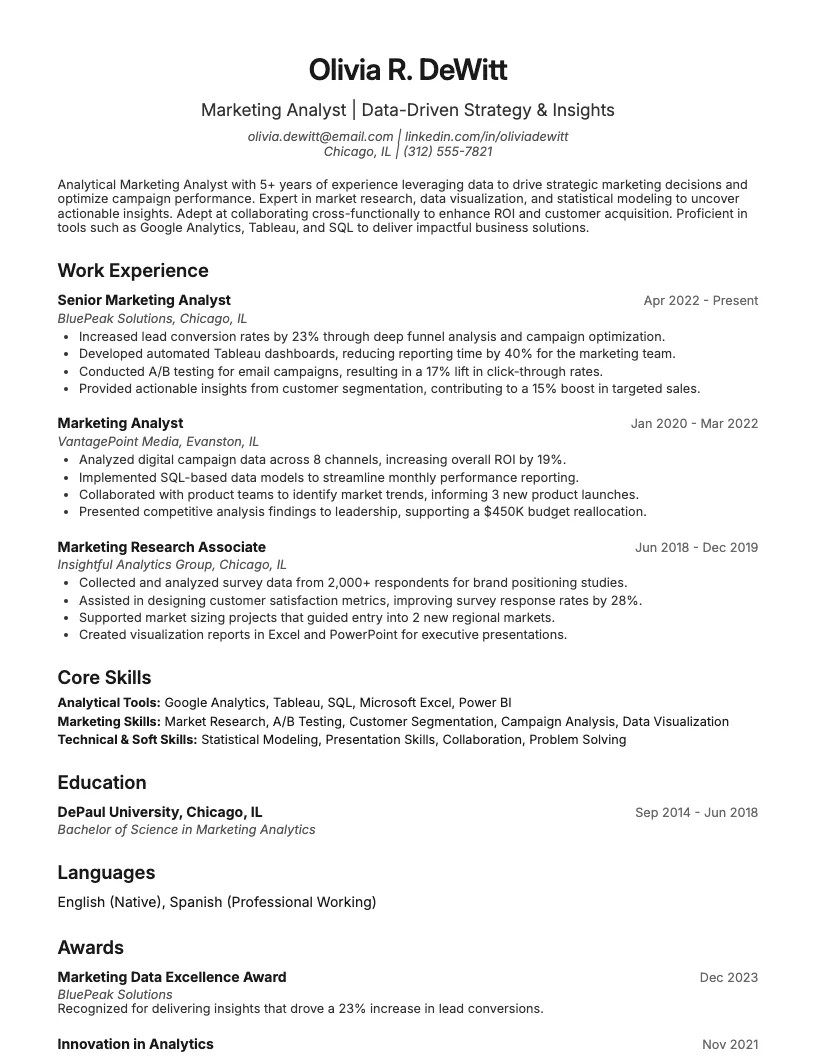 Click to enlarge
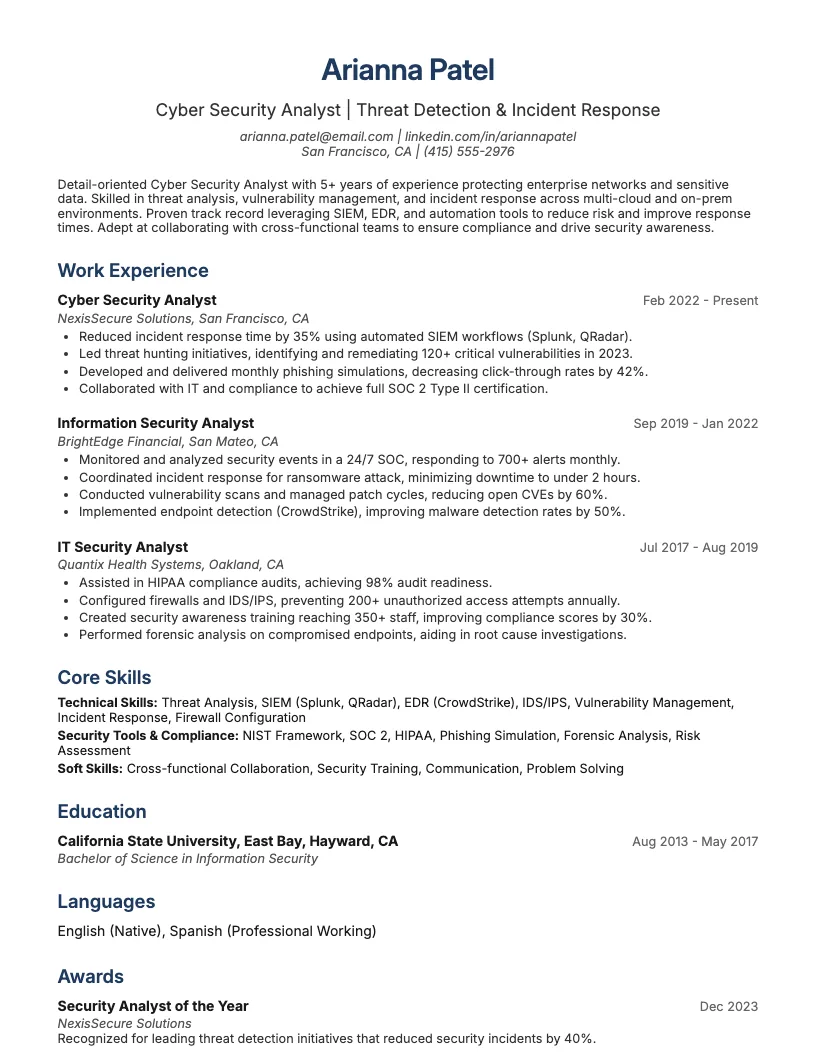 Click to enlarge
Common questions about Supply Chain Analyst resumes
A Supply Chain Analyst resume template is a pre-designed layout tailored for candidates seeking roles in supply chain analysis. It highlights key skills, experience, and tools relevant to the field, making your application stand out.
Yes, most Supply Chain Analyst resume templates from ResumeJudge are ATS-friendly. They use clean formatting and keywords, ensuring your resume passes software scans and reaches hiring managers.
Use a Supply Chain Analyst resume template when applying to logistics, manufacturing, retail, or consulting roles. It's ideal for showcasing analytical experience and industry-specific skills in a clear, professional format.
Absolutely! ResumeJudge templates let you edit sections, skills, and achievements to fit your background. You can add custom projects or software experience to match the job requirements.
Supply Chain Analyst templates emphasize data analysis, process improvement, and ERP tools, unlike generic templates. ResumeJudge designs them for industry relevance, helping you highlight skills employers value most.
Aim for a one-page resume if you have under 10 years of experience, or two pages for more senior roles. ResumeJudge templates help you keep information concise and well-organized.
Include Contact Info, Summary, Experience, Education, Skills, and Certifications. Add sections for projects or technical skills. ResumeJudge templates make it easy to structure these for maximum impact.
Industry experience helps, but transferable skills like data analysis and process optimization are key. ResumeJudge templates let you showcase these strengths, even if you’re switching industries.
Save your resume as PDF with a clear name like FirstnameLastname_SupplyChainAnalyst.pdf. ResumeJudge recommends this to look professional and ensure your file is easily found by recruiters.
ResumeJudge offers tailored supply chain analyst cover letter examples to help you create a strong application. Use these samples to match your skills and achievements to each job posting.
Explore more professional resume examples to inspire your job search
Use our AI-powered resume builder to create a professional, ATS-friendly resume in minutes.
Free to use • No credit card required