Business Analyst Resume Example
See full guide on Business Analyst resumes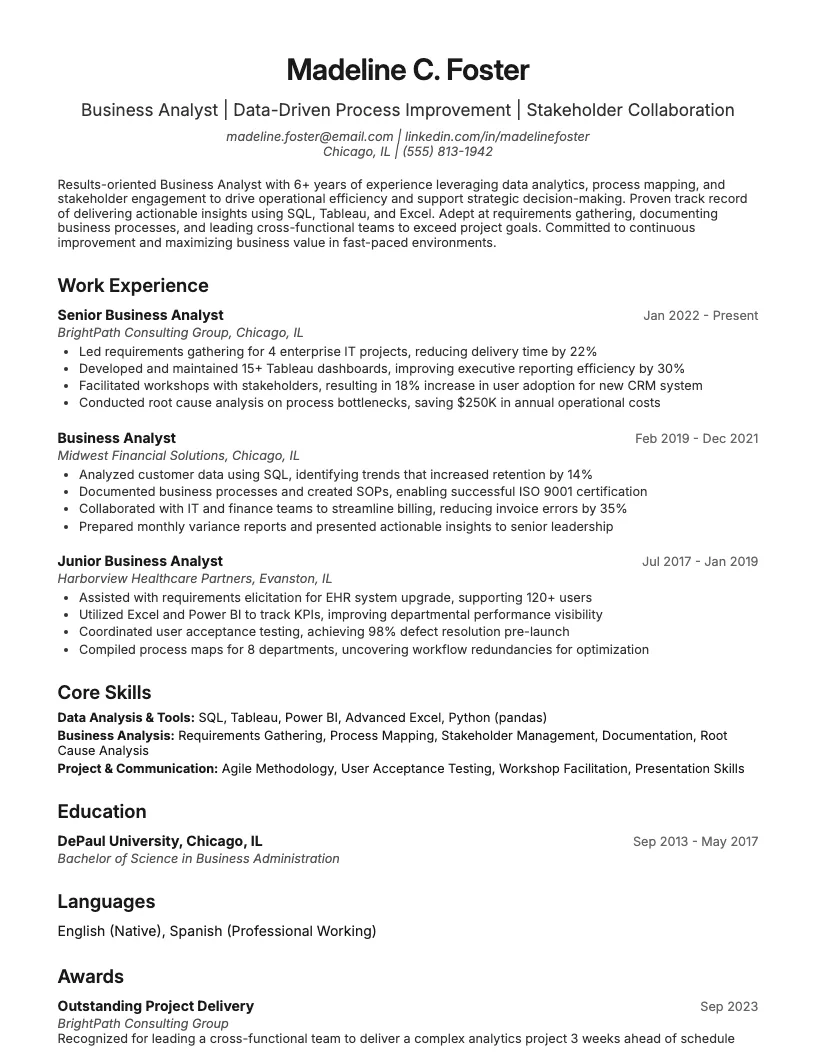 Click to enlarge
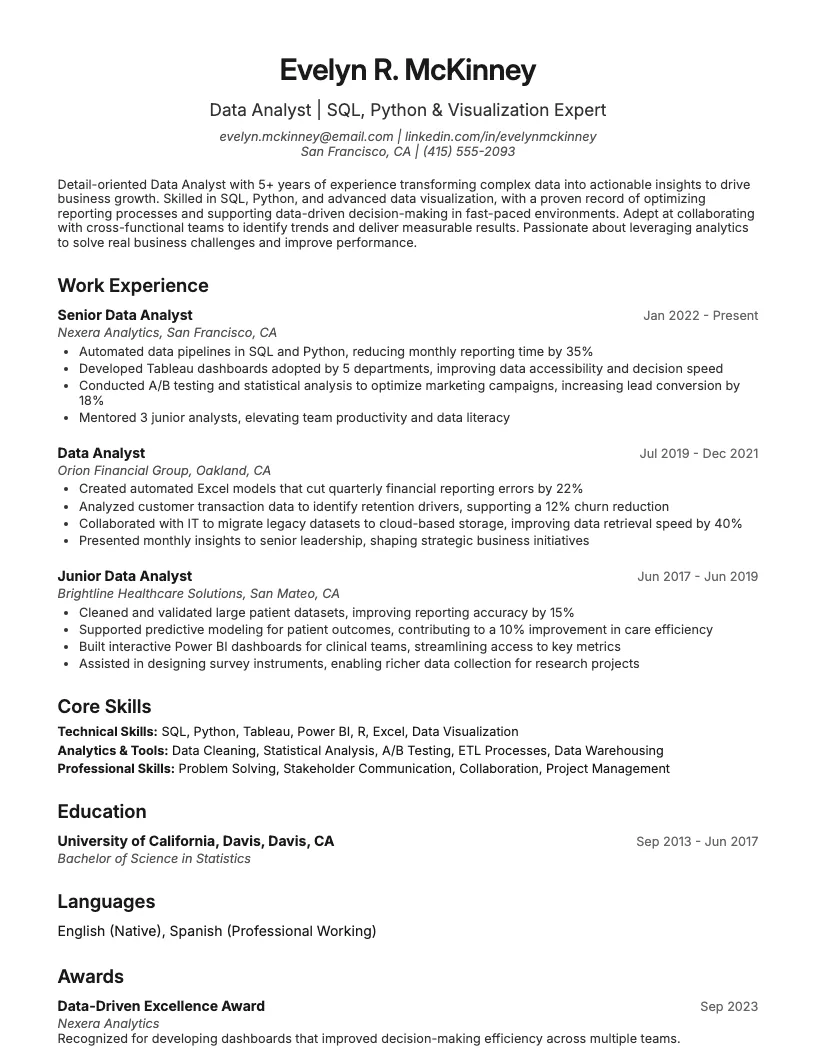 Click to preview

Get inspired by 62+ professional Data Analyst resume examples, each written by career experts and optimized to pass ATS scans. Pick a proven template, tailor it to your role, and download a polished resume in minutes.
Pick the specialization closest to your target role and start from a proven resume example.
If you want to land a job as a data analyst, your resume needs to show off both your technical skills and business impact. Employers look for measurable results.
You need to highlight your experience with data tools, project wins, and industry expertise. Each section on your resume can help you stand out from other applicants.
I’ll walk you through real data analyst resume samples, different experience levels, and specialized examples. You’ll see what recruiters expect in each type of role.
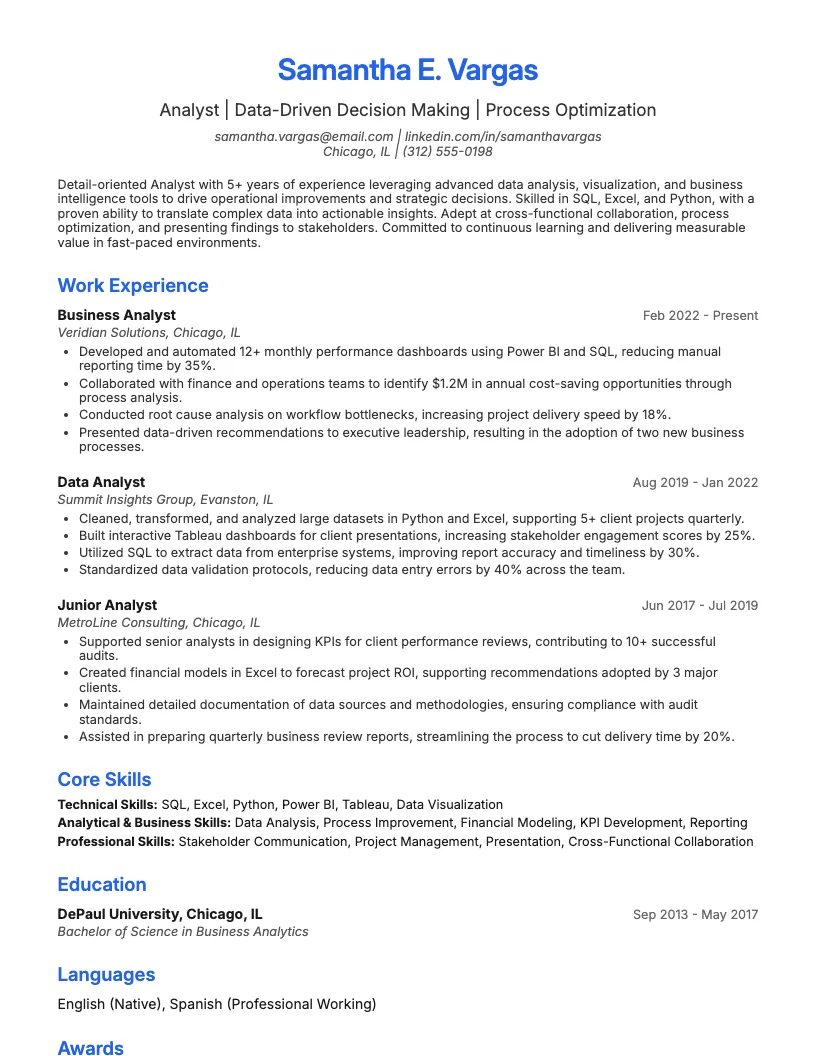
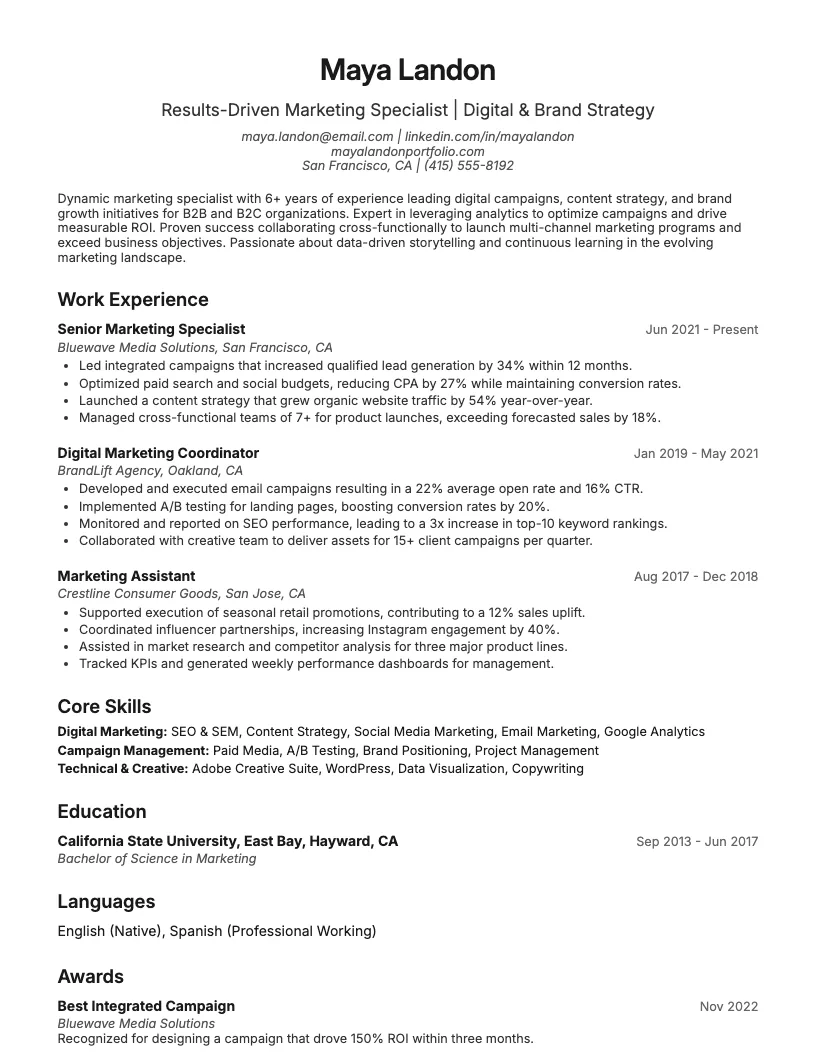
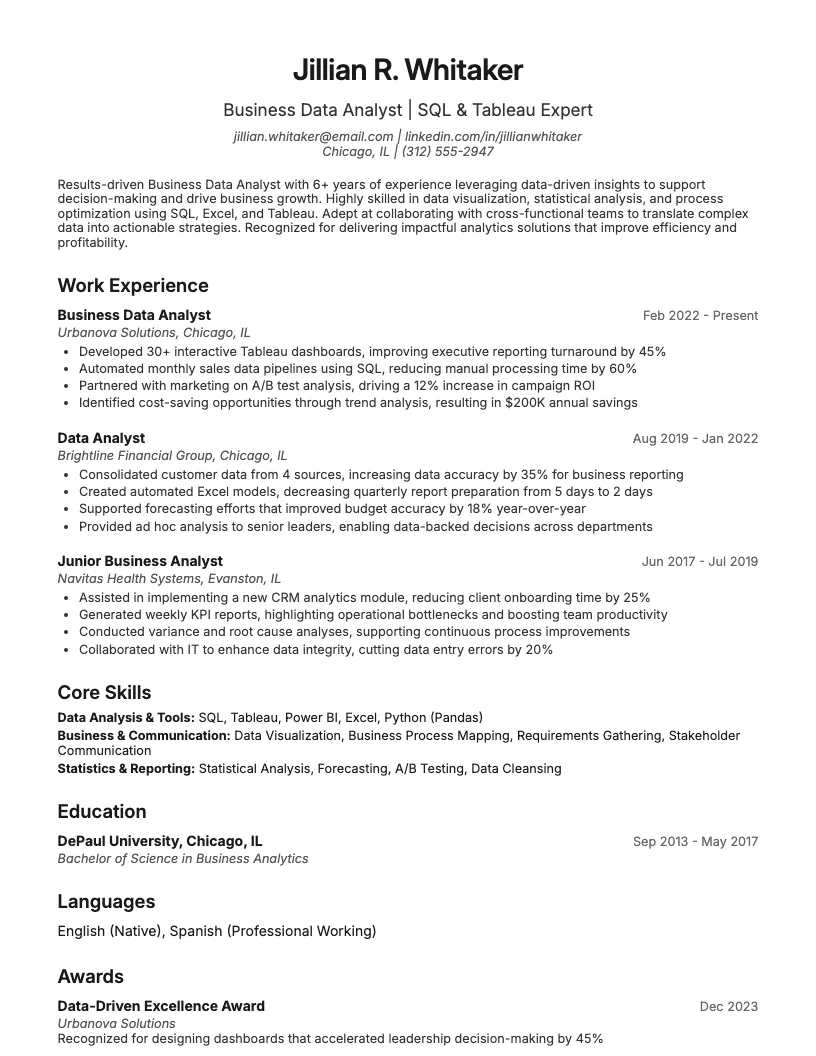
Here's a realistic sample data analyst resume, showing how I might highlight my achievements, technical skills, and impact. Numbers and results always make a difference.
You want your resume to show what you bring to the table. Use action verbs, quantify your results, and mention relevant tools - like SQL, Python, or Tableau.
I focus on what makes me unique, not just listing skills. This helps my resume stand out in a stack of other data analyst applications.
You’ll want your data analyst resume to look different depending on your experience. Entry-level, mid-career, and senior resumes each highlight different skills and achievements.
If you’re just starting out, focus on education, basic projects, and transferable skills. Show off internships or coursework. For mid-level roles, dig into quantifiable impact-think project wins or process improvements.
Senior data analysts really need to highlight leadership, business impact, and advanced tools—qualities you should also emphasize in your cover letter. I see a lot of resumes that showcase managing teams, driving strategy, and successful project outcomes.
Specialized data analyst roles let you play to your strengths. Some industries need niche skills, like healthcare data analysis or financial modeling. These resumes focus on sector-specific achievements.
If you’re targeting a specialized role, highlight your technical tools. For example, mention Epic for healthcare, SQL for finance, or Google Analytics for marketing. That detail shows you know your stuff.
I always list measurable impact. Things like, “improved claim processing accuracy by 15%” or “increased campaign ROI by 10%.” This helps your resume stand out for those specialized jobs.
There are a few standout resume types that employers see all the time. I see healthcare, financial, and marketing data analyst resumes pop up the most in job boards.
You can also find a lot of business data analyst and operations analyst resumes out there, and it's worth pairing your application with a tailored cover letter. These show off strong business acumen and the ability to turn numbers into actionable insights.
When you tailor your resume for a specific field, you instantly increase your chances. Employers like seeing relevant industry terms and project outcomes right up front.
That pretty much covers the big resume types. Pick the one that matches your experience best and highlight your impact. This wraps up our look at data analyst resume examples!
Data analysts work with huge sets of information-sometimes millions of rows at a time. I dig through all that data to find patterns and trends businesses can actually use.
I spend my days collecting, cleaning, and interpreting data. My job is to turn messy numbers into clear insights that guide real decisions.

Building a strong data analyst resume takes more than listing your job titles. You’ve got to show your skills, experience, and results in a way that stands out.
I find it helps to break your resume into clear sections. Start with a summary, then cover your experience, skills, and education. Metrics and industry terms go a long way.
You want hiring managers to see your impact right away. Structuring your resume the right way makes your strengths clear and helps you get past applicant tracking systems.
You want your resume to pop at first glance. I always recommend a reverse-chronological format. This puts your most recent experience right at the top.
Stick to clear section headings, plenty of white space, and bullet points. Recruiters spend less than 7 seconds on a first scan, so make every detail easy to find.
Use a standard font like Arial or Calibri, keep everything between 10-12 points, and save your file as PDF. This helps your resume pass through applicant tracking systems (ATS) with no hiccups.
I always start my resume with a short summary or objective. This section sits right at the top, so it’s the first thing a hiring manager reads.
Your summary should highlight your biggest wins-think quantifiable results, like “improved reporting efficiency by 30%” or “analyzed data sets of over 1 million records.” Numbers grab attention fast.
If you’re new to data analysis, use an objective instead. Focus on your transferable skills, like problem-solving or Excel expertise, and mention your eagerness to grow in the field.
Keep it under four lines. This helps recruiters get a clear snapshot of your value, without wading through fluff or generic statements.
You want your experience section to tell a clear story. I always list my roles in reverse-chronological order, focusing on the most recent and relevant ones.
Use quantifiable details-things like “analyzed 5M+ records” or “improved reporting speed by 30%.” This helps hiring managers see your impact right away.
Call out the tools and methods you use, like SQL, Python, or Tableau. Stick to facts, not fluff. Be specific about the business problems you solve.
I always put my highest degree first-usually a bachelor’s or master’s in statistics, computer science, or math. If you studied something similar, make sure you list that.
You want to add industry-recognized certifications. Stuff like the Google Data Analytics Professional Certificate, Microsoft Certified: Power BI Data Analyst Associate, or CAP can make your resume stand out.
Don’t forget other relevant courses, like SQL, Python bootcamps, or Tableau training. This shows you keep your skills fresh and understand the latest tools in the field.
I always focus on the skills section because it’s a quick way for hiring managers to see if I’m the right fit. ATS filters also scan for these keywords.
Highlight technical tools like SQL, Excel, Python, Tableau, or R. If you know more than five tools, create a separate technical skills section for clarity and impact.
Don’t forget soft skills like communication, teamwork, and problem-solving. You want to show you handle both data and people well. This wraps up your resume’s core sections.
Getting the format right makes your resume stand out. Recruiters spend less than 7 seconds on each resume, so organization matters.
You want your strengths and key projects to jump off the page. I always focus on clear sections and a logical order.
Your experience, skills, and education should be easy to find. The right structure highlights your impact and professionalism. Let’s break down what to include and how to present it.
Every data analyst resume should start with a header-your name, contact info, and a quick intro. This makes it easy for recruiters to reach out right away.
You definitely want a strong experience section. Here, I focus on projects, tools, and specific results. Numbers help-think increases in efficiency or revenue.
Don’t skip a skills section. I list technical skills like SQL, Python, or Excel, but also mention soft skills. Certifications, if you have them, show ongoing learning and commitment.
A short education section is a must, even for folks with years of experience. Relevant coursework or degrees help, especially if you’re entry-level or switching fields.
Recruiters look for hands-on experience with tools like SQL, Python, R, and Excel. If you’ve used Tableau or Power BI, make that obvious-visualization skills matter a lot.
You want to show quantifiable impact. I always highlight numbers: “Improved reporting speed by 25%” or “Analyzed data from 50,000+ users.” This helps recruiters see your value fast.
Don’t forget problem-solving chops and attention to detail. Use specific examples. If you spot data errors or streamline messy datasets, mention it. Recruiters want proof, not buzzwords.
Most data analysts stick with a reverse-chronological format. This puts your latest job and most relevant experience right at the top, where recruiters look first.
If you’re switching careers or have gaps, consider a hybrid format. This lets you show off your skills and quantifiable wins before diving into your job history.
There’s no single “right” format, but your resume should be easy to scan and focused on results. Choose what best shows off your growth and achievements.
Your experience section is the main place to show you actually use data skills on the job. Hiring managers expect to see real results, not just a list of past jobs.
Focus on how you solve problems, use technical tools, and share insights. I always highlight impact with numbers-think percentages, saved hours, or revenue increases.
You don’t need years of experience to make this section stand out. You just need to be clear about your contributions and show how you add value.
I always say numbers tell your story best. When you show exactly how much you improve things, you make your contributions real and credible.
Use percentages, dollar amounts, or timeframes to show what you achieve. For example, “cut data processing time by 30%” or “identified $50K in annual savings.”
This helps recruiters see your value at a glance. If you can, tie your results directly to business goals-like increased revenue or higher customer satisfaction scores.
If you don’t have direct experience, don’t stress. I focus on relevant coursework, personal projects, and certifications to fill the gap. This shows I’m serious about data analysis.
You can highlight transferable skills like Excel, SQL, or problem-solving from other jobs or school projects. Recruiters look for initiative and a knack for learning-show that off.
I always include academic projects, even simple ones. For example, analyzing a dataset for a class using Python or Excel. Numbers matter-mention if you worked with datasets of 1,000+ rows.
There are entry-level data analyst jobs out there. Tailor your resume to the specific role, and don’t forget the basics-concise bullet points and clear formatting always help you stand out.
Hiring managers want to see a balance of hard and soft skills on your resume. Both are key for data analysts.
You need technical skills to analyze data, and soft skills to explain insights. I always suggest showing both clearly.
Up next, I'll break down the best hard skills, soft skills, and keywords you should use.
When you list skills on your data analyst resume, focus on technical tools and methods. Recruiters look for proven expertise, not just a buzzword list.
I always highlight my SQL, Python, and Excel skills. These are essential for data wrangling and analysis, and 90% of analyst job posts mention them.
Data visualization tools like Tableau and Power BI are also crucial. You should show experience creating dashboards, since visual reports drive business decisions.
If you know ETL, machine learning basics, or big data platforms like Spark, mention them. This helps you stand out for roles that require handling large or complex datasets.
You need more than technical chops to stand out. Recruiters look for communication, problem-solving, and adaptability-these help you explain insights clearly and work with different teams.
I always highlight my critical thinking and collaboration skills. Data analysts often juggle multiple projects, so organization and time management are must-haves if you want to hit deadlines.
Showcase emotional intelligence on your resume. This helps you handle feedback, work through tight deadlines, and build trust with coworkers. Employers notice when you can stay calm under pressure.
I notice that business analyst resume keywords like data modeling, stakeholder management, and requirements gathering catch recruiters’ eyes. These terms often match the exact phrases in job postings.
You should always tailor your resume with keywords from the job description. This helps applicant tracking systems (ATS) flag your profile. About 75% of resumes never reach a human because they miss these keywords.
I recommend adding both technical and business-focused terms. Sprinkle in words like process improvement, gap analysis, and KPI reporting. This rounds out your skill set and boosts your chances.
That’s pretty much it for listing the right skills. Get those keywords in, keep it relevant, and you’ll stand out to both bots and real people.
Most data analyst jobs today want at least a bachelor’s in something like statistics, computer science, or math. That’s what I see in almost every job description.
Certifications and short courses matter too. They help you stand out, especially if you’re switching fields or want to show off specific skills. Let’s break down what actually counts.
There are tons of certifications out there for data analysts, but some really stand out. The Google Data Analytics Professional Certificate and Microsoft Certified: Data Analyst Associate are both super popular right now.
I also see a lot of hiring managers looking for the Certified Analytics Professional (CAP) and Tableau Desktop Certified Associate. These prove you know your stuff with analytics and data visualization.
If you want to show off your tech skills, look for vendor-specific certs like AWS Certified Data Analytics - Specialty or Cloudera Certified Associate (CCA) Data Analyst. These help you stand out fast.
You don’t need every cert on the list. Focus on the ones that match your target roles and the tools companies actually use. It’s about quality, not just quantity.
Adding extra sections can help your data analyst resume stand out. Recruiters want to see more than just your work history and education.
Show off your key strengths, projects, awards, or interests. These details give employers a better look at what you bring to the table.
You can highlight unique skills, technical projects, or industry awards. Each section you add gives you another chance to make your resume memorable.
If you want to stand out, a tailored cover letter works wonders. I always customize mine for each role, using real data and results.
There are tons of strong business analyst cover letter examples out there. Look for ones that highlight collaboration, impact, and tech skills-those catch a hiring manager’s eye.
For data analyst cover letter examples, focus on measurable outcomes. Recruiters love seeing how you improve processes or uncover valuable insights-think “increased efficiency by 30%” or “reduced costs by $50K.”
Data scientist cover letter examples should spotlight technical expertise and complex problem-solving. You want to show off your experience with machine learning, big data, or predictive analytics in a clear, accessible way.
Adding a great cover letter helps your resume shine. It’s a simple step, but it really sets you apart from the crowd.
A great data analyst resume does more than list job titles. You want to show real skills, quantifiable results, and industry tools that matter to employers.
Targeted details help you stand out. I focus on tailoring each section to the specific job, from the contact info to project highlights and metrics.
Your contact section is the first thing hiring managers see. I always double-check my phone number and email-one typo and you might miss that interview call.
List your full name, the job title you want, city, and zip code. You don’t need your full address anymore. Make sure your LinkedIn URL is up-to-date and clickable.
If you have a GitHub or portfolio, include those links. About 70% of data analyst resumes now highlight LinkedIn and GitHub. It’s a quick way to show your skills.
If you’re just starting out, strong projects fill the gap for work experience. I always suggest picking projects that actually solve a problem or answer a real question.
Highlight projects where you use SQL, Python, Excel, or Tableau to analyze data, build dashboards, or automate reports. Quantify your impact-like “reduced reporting time by 30%.”
It’s totally fine to use class or personal projects, but self-initiated ones stand out even more. This shows you take initiative and actually enjoy digging into data.
Ready for the next step? Let’s talk about how action verbs can make those projects pop.
I always kick off my bullet points with action verbs. This instantly makes my experience sound more impressive and direct.
You want to show impact, not just list what you did. Use verbs like analyzed, optimized, automated, or implemented. This helps you highlight real contributions.
Recruiters scan for measurable results. So, pair your action verbs with numbers. For example, “Identified key trends, driving a 15% increase in efficiency.” It’s clear and specific.
I always read the job description closely and match my skills to what the employer lists. This helps my resume get past ATS filters and actually catch a hiring manager’s eye.
Highlight the tools and projects mentioned in the posting. If the job asks for SQL and Tableau, I make sure those jump out on my resume, even if it means cutting other tools.
You don’t need a total rewrite. Just tweak your bullets to showcase relevant experience for each job. This small step can boost your interview chances by up to 30%.
I see a lot of folks list responsibilities but skip measurable results. Hiring managers want to see impact-show them outcomes using concrete numbers and clear achievements.
Avoid fancy graphics, tables, or unusual fonts. ATS software often can’t read them, so your resume might not even reach a human. Stick to clean, easy-to-scan formatting.
Typos and inconsistent formatting send the wrong signal. Proofread everything and double-check dates, job titles, and company names. This shows you care about accuracy-a must for any data analyst.
That’s it-keep these common mistakes in mind and you’ll boost your chances of landing interviews for those data analyst roles.
You want your data analyst resume to stand out in a crowded field. Recruiters see hundreds of resumes, so every detail counts.
Focus on clear structure, results-driven achievements, and the right mix of technical and soft skills. Use real numbers to show your impact.
Tailor your resume for each job. Highlight your experience, certifications, and standout projects to show you’re ready for any challenge.
Data analyst roles pop up everywhere, from startups to Fortune 500s. I see job postings for analysts increase by 25% year over year.
You might want to go into business analysis, data science, or aim for a senior data analyst role. I break down resume examples for each path so you find what fits.
If you’re aiming for a business analyst job, your resume needs to show both technical skills and business sense. I always recommend starting with clear, real-world results.
A strong business analyst resume balances hard data-like cost savings or improved efficiency-with communication skills. For example, highlight achievements like “reduced reporting time by 30%” or “led workshops for 15+ users.”
Looking for inspiration? Check out business analyst resume examples that use bullet points, active verbs, and numbers. A solid business analyst resume sample also customizes keywords for each job description.
If you’re looking for entry level business analyst resume examples, focus on skills like Excel, SQL, and clear communication. Employers want to see real data projects-even class assignments count.
For senior business analyst resume examples, highlight complex projects, leadership, and measurable impact. I always show how I improved processes, cut costs, or influenced business decisions-numbers help here.
Tailor your resume for each role. Use keywords from the job post. This boosts your chances with applicant tracking systems and gets your resume seen by real people.
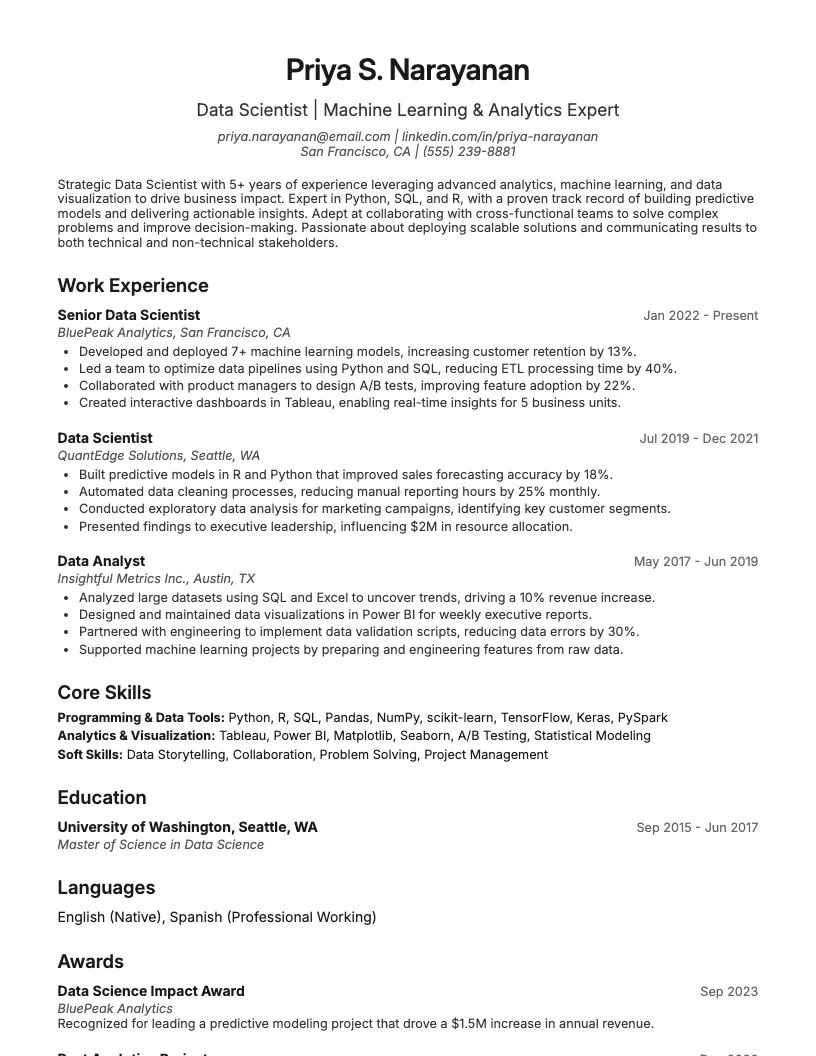
Data scientist resumes focus on technical skills, project impact, and quantifiable results. I see recruiters look for Python, SQL, and machine learning experience right away.
If you want your data scientist resume to stand out, highlight projects with measurable outcomes. For example, “Improved prediction accuracy by 15% using XGBoost” gets attention.
Looking at data scientist resume examples, I notice strong resumes also show collaboration. You should mention cross-functional teamwork, stakeholder engagement, and how you communicate findings to non-technical audiences.
If you're searching for entry level data scientist resume template resume examples, you want layouts that highlight skills over experience. I always suggest a clean, one-page format.
You should call out technical skills up top-think Python, SQL, and Tableau. Show off any coursework, projects, or bootcamps right after your education section.
I find it helps to use numbers wherever possible. For example, “Cleaned and analyzed 10,000+ rows of retail sales data.” This gives your resume credibility and shows impact.
That wraps up these specialized data analyst resume examples. Take what fits your story, and use these tips to stand out in your applications!
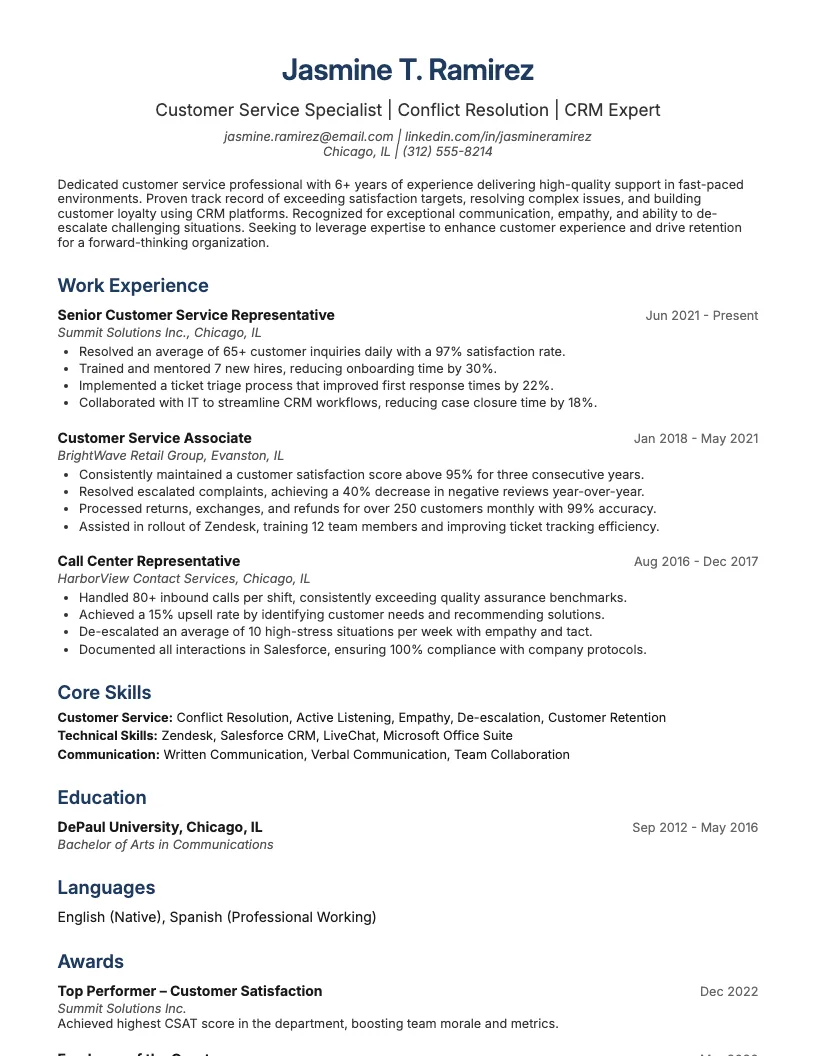
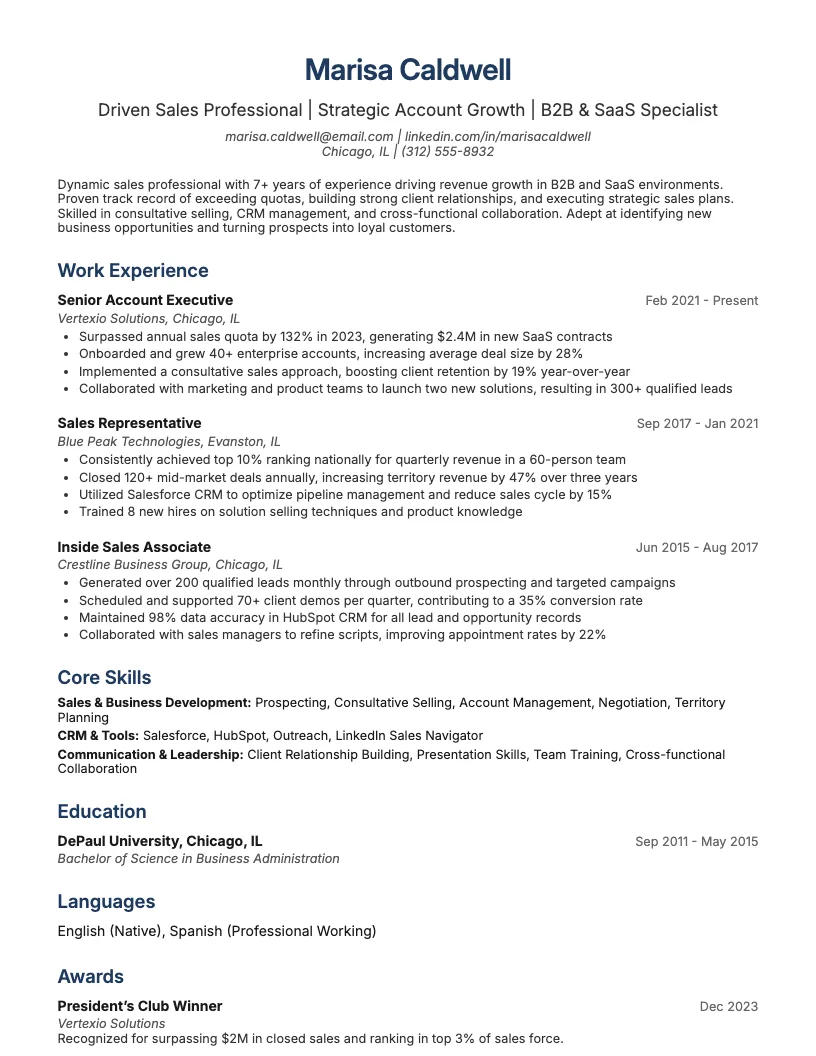
Browse Data Analyst resume examples for related roles. Preview any example, open it in the builder, or read its full guide.
Click to enlarge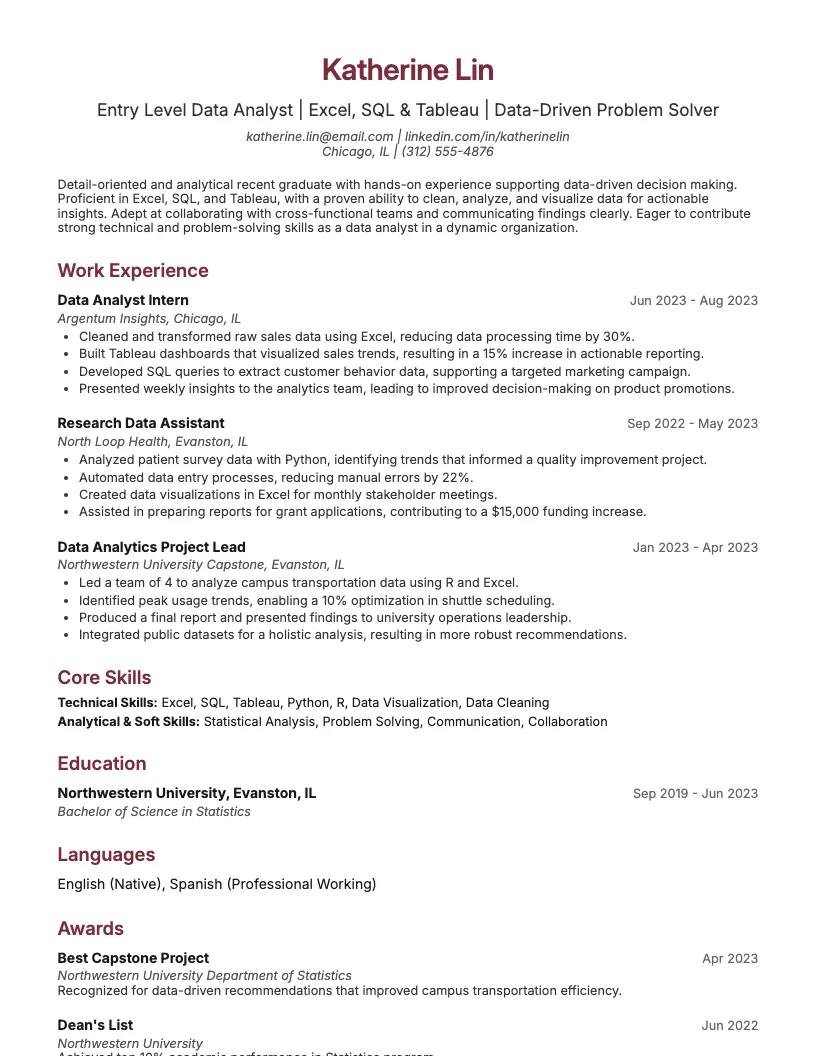 Click to enlarge
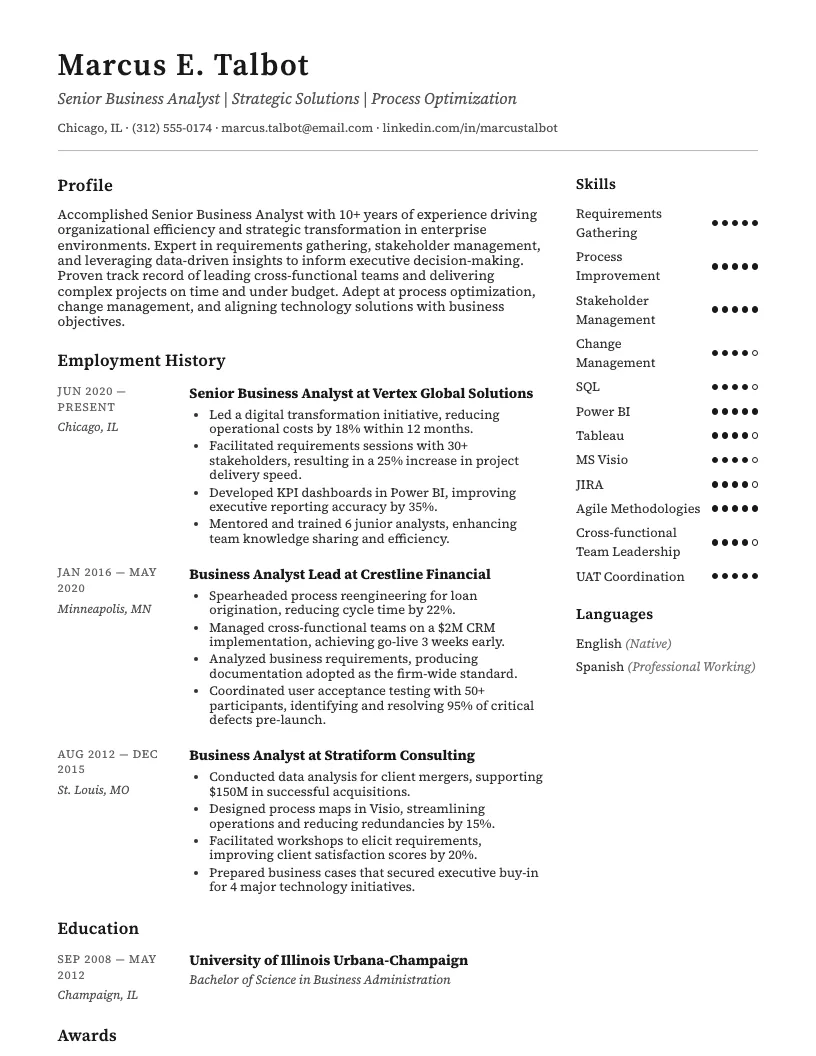 Click to enlarge
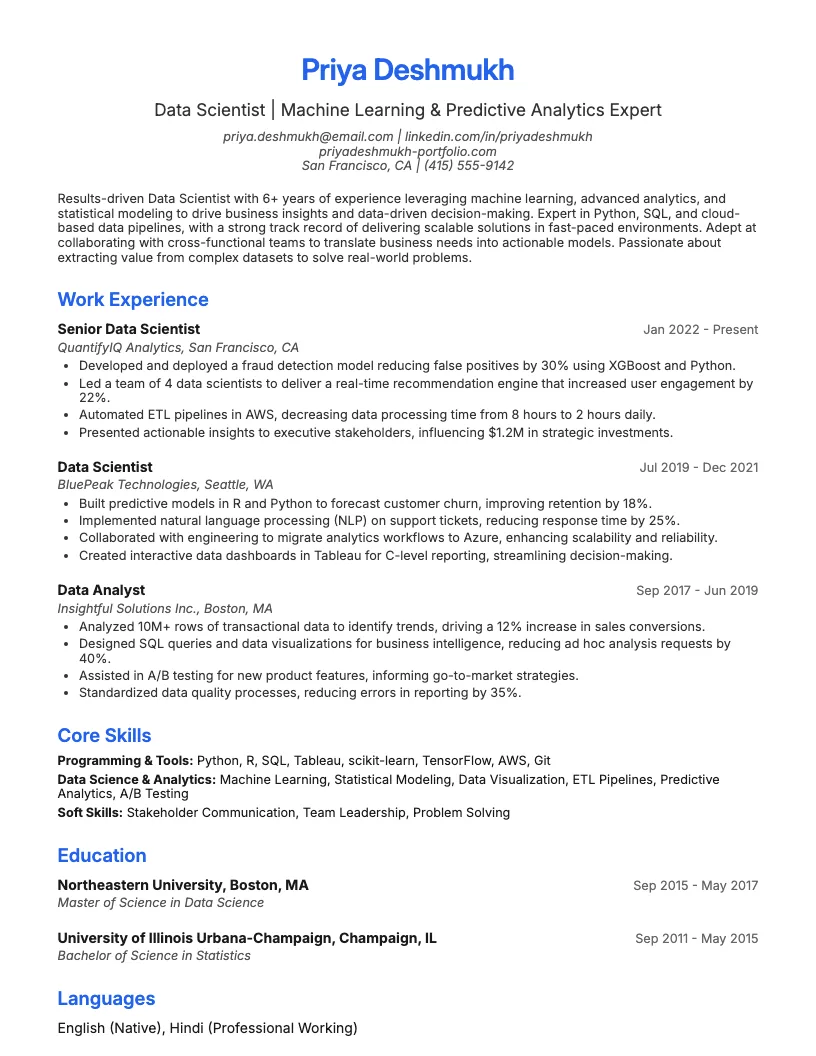 Click to enlarge Click to enlarge
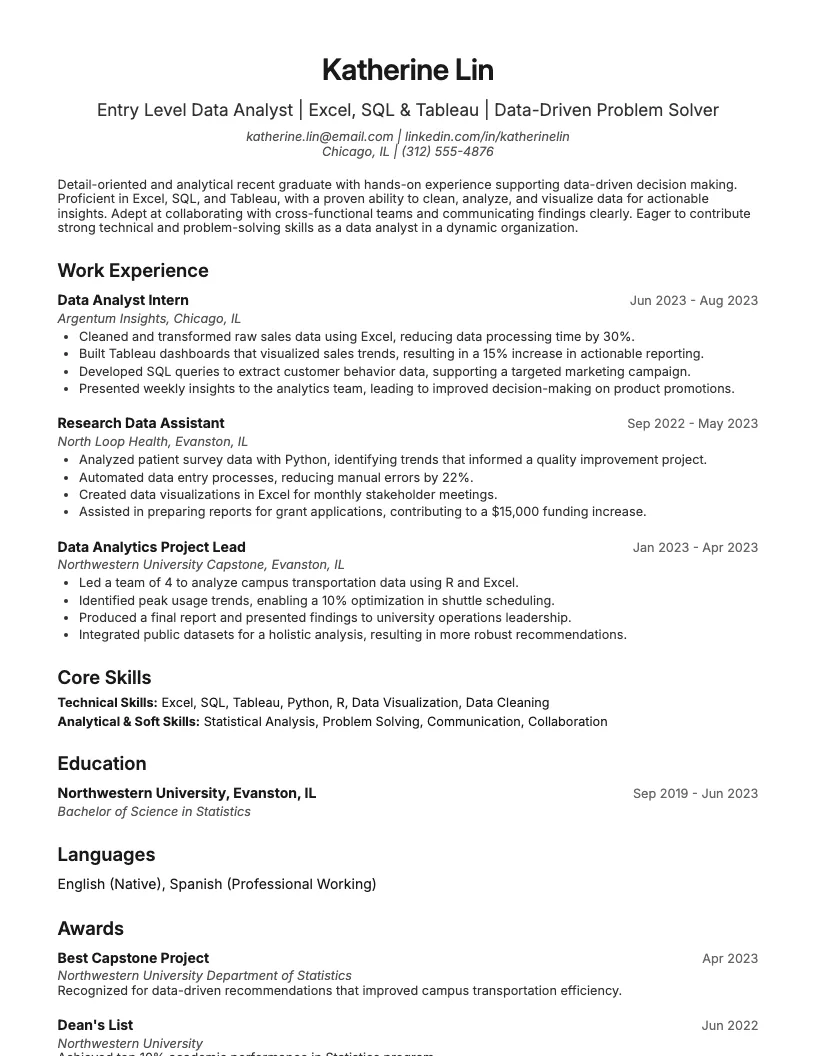 Click to enlarge
 Click to enlarge
 Click to enlarge
Common questions about Data Analyst resumes
A data analyst resume template is a pre-designed format tailored for showcasing analytical skills, technical tools, and relevant experience. ResumeJudge makes it easy to highlight your strengths and land interviews.
Yes, ResumeJudge's data analyst templates are designed to be ATS-friendly, ensuring your resume passes automated screenings. This boosts your chances of getting noticed by recruiters.
Use a data analyst resume template when applying to roles in finance, healthcare, marketing, or tech. It's ideal for both entry-level and experienced analysts who want a polished, professional resume.
Absolutely! ResumeJudge lets you easily customize templates to match your experience, skills, and the specific job description. Tailoring your resume helps you stand out.
Data analyst templates focus on analytical skills, tools like SQL or Python, and quantifiable results, unlike generic templates. ResumeJudge ensures your resume reflects industry-specific needs.
Aim for a one-page resume if you have less than 10 years of experience. ResumeJudge helps you condense your achievements and skills for clear, concise impact.
Include a summary, technical and soft skills, certifications, work experience with results, and tools like Excel or Tableau. ResumeJudge templates ensure you cover all these areas.
Yes, listing relevant certifications like Google Data Analytics or Microsoft Power BI demonstrates expertise. ResumeJudge makes it simple to highlight your credentials.
Yes, ResumeJudge offers templates for entry-level analysts, letting you showcase projects, internships, and transferable skills-even if you have limited work experience.
Definitely! ResumeJudge templates can be tailored for remote, freelance, or contract data analyst positions by highlighting relevant tools, communication skills, and remote work experience.
Explore more professional resume examples to inspire your job search
Use our AI-powered resume builder to create a professional, ATS-friendly resume in minutes.
Free to use • No credit card required