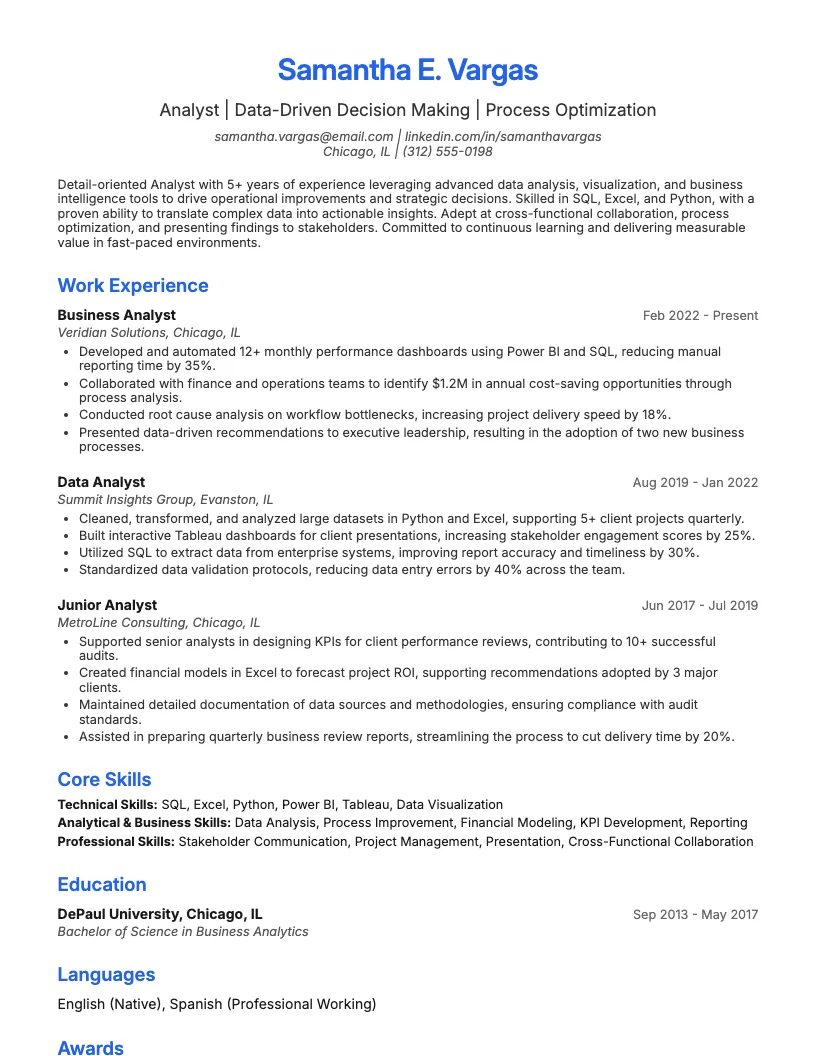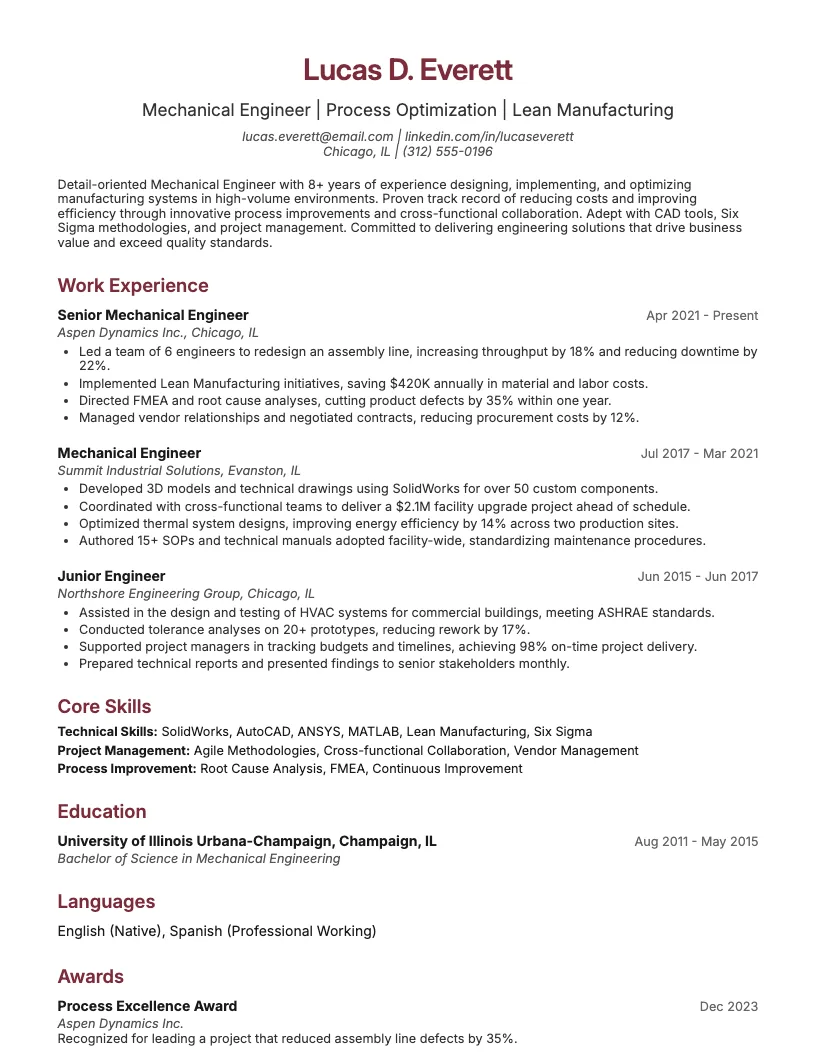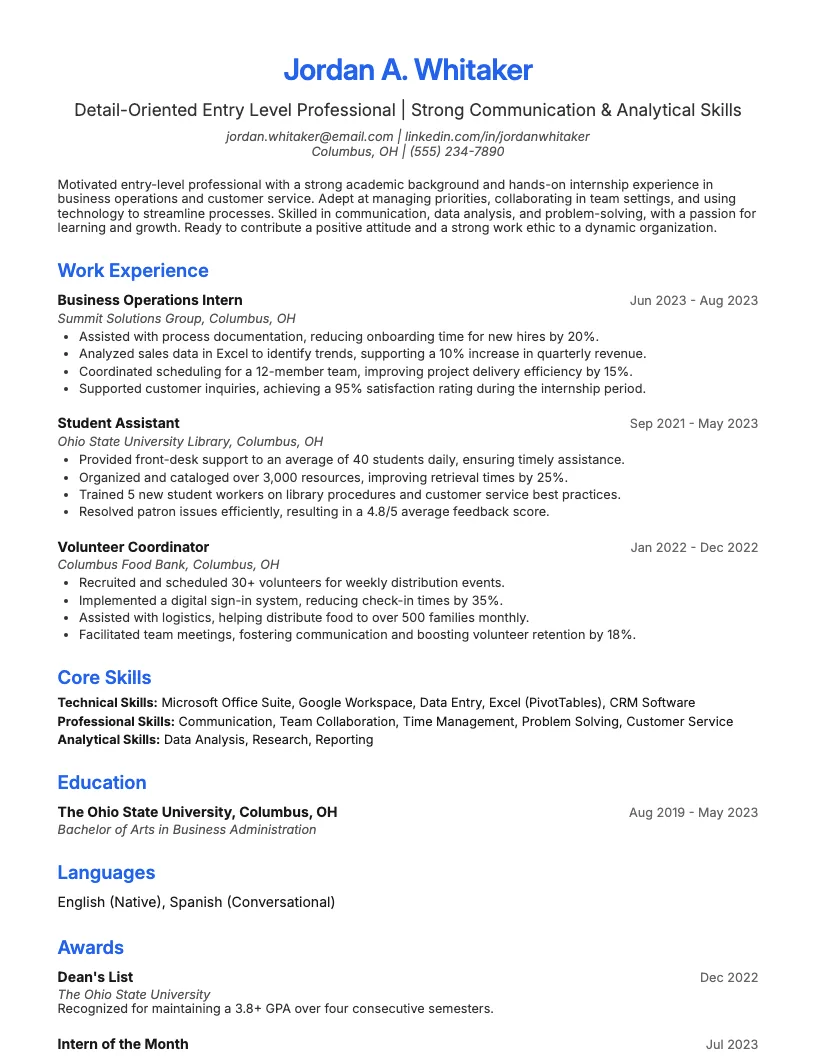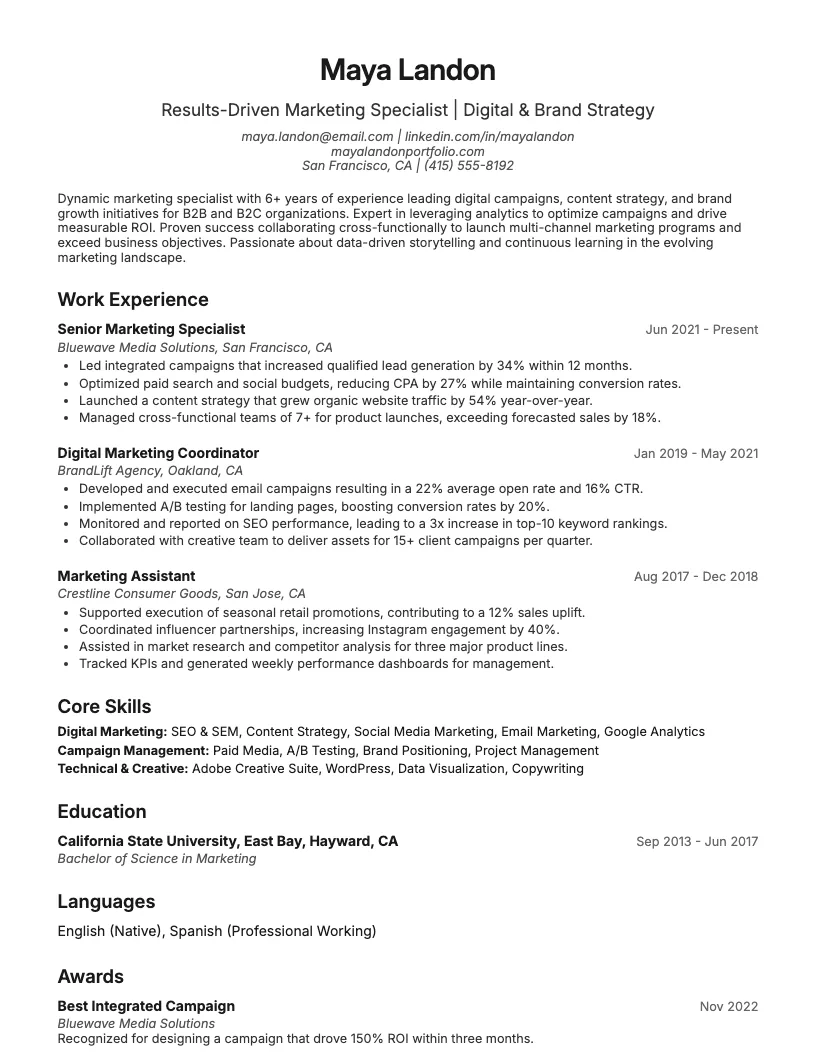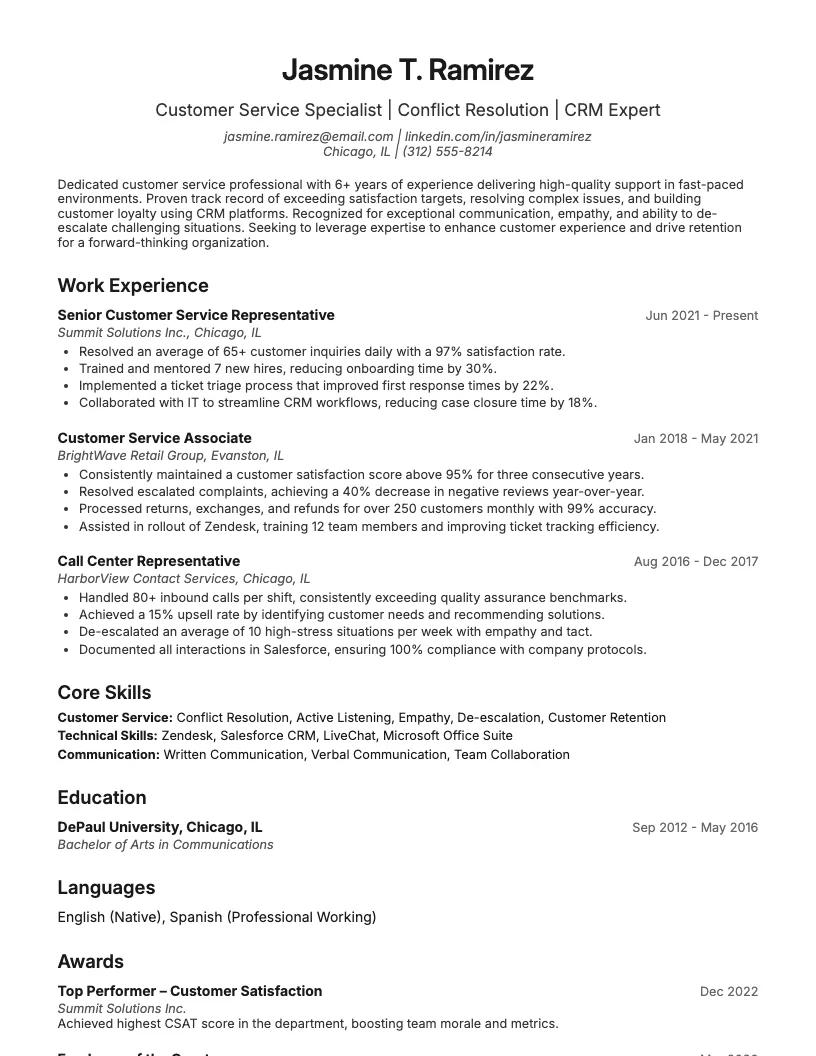
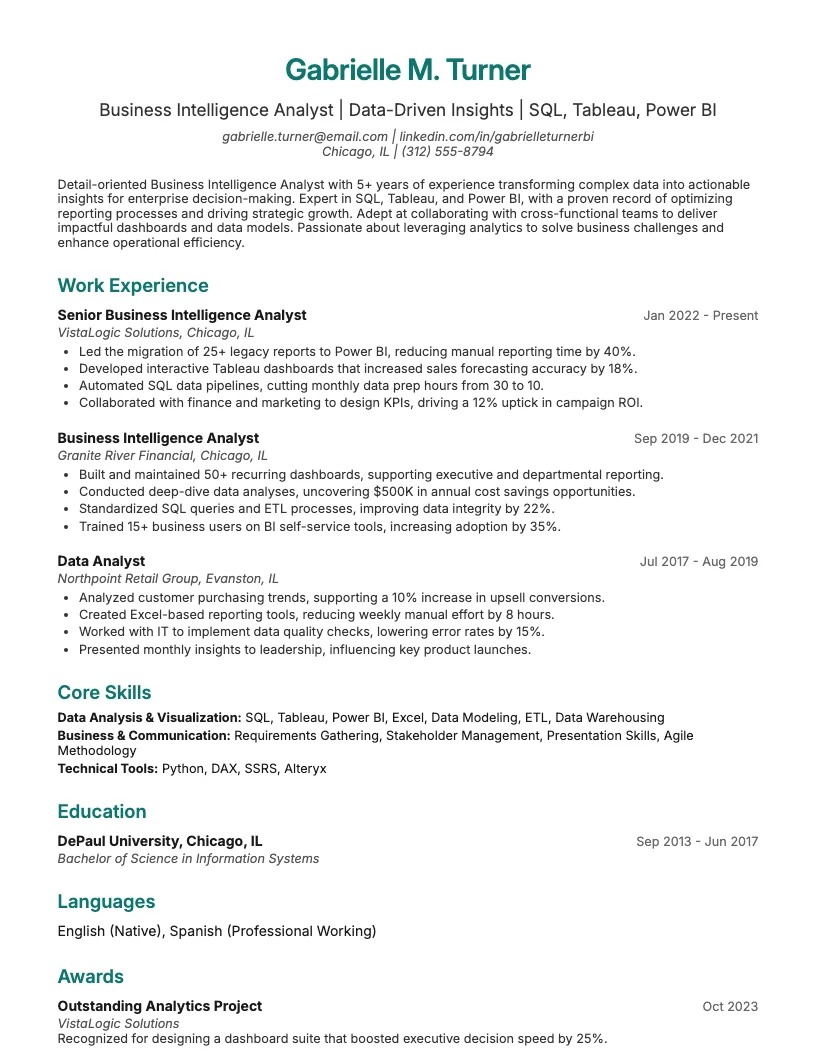
Business Analyst Resume Example
See full guide on Business Analyst resumes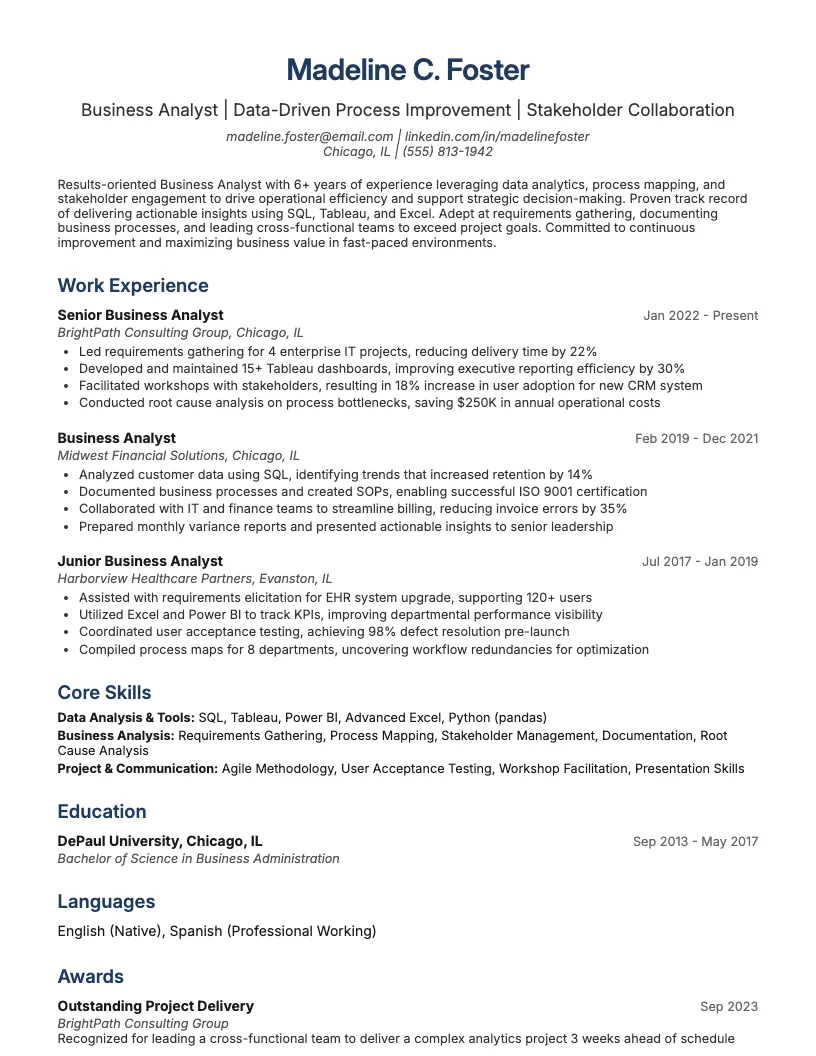 Click to enlarge
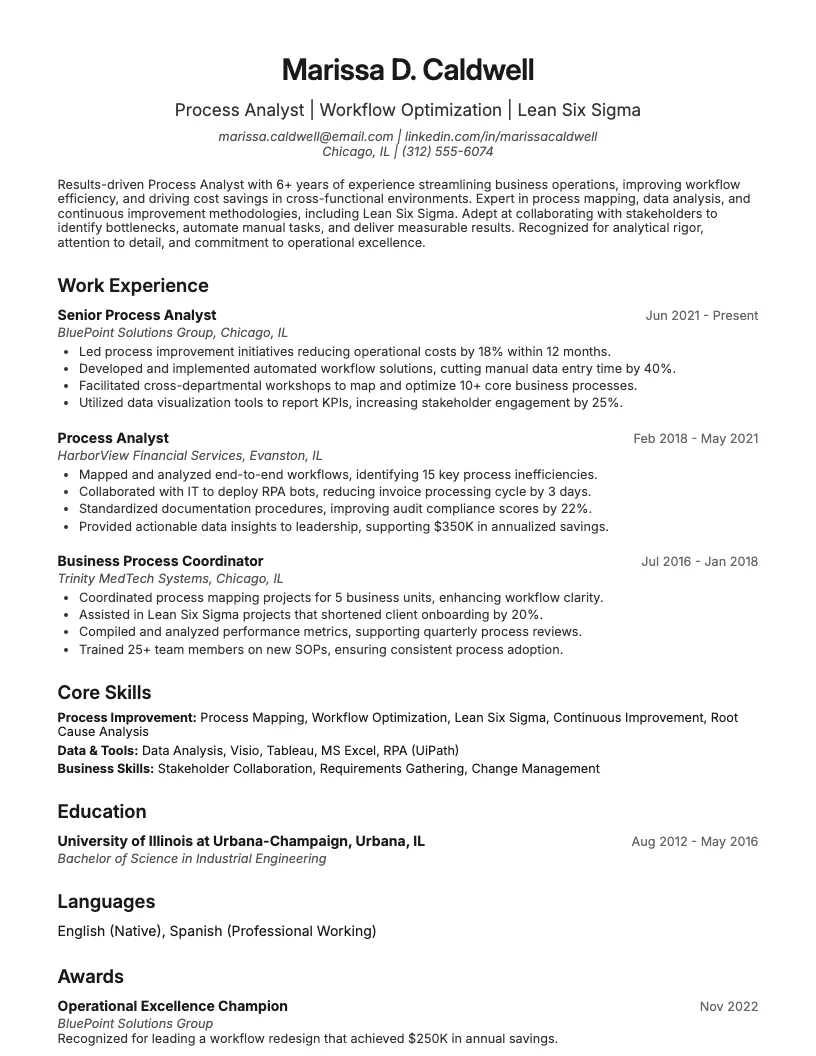 Click to preview

Get inspired by 62+ professional Process Analyst resume examples, each written by career experts and optimized to pass ATS scans. Pick a proven template, tailor it to your role, and download a polished resume in minutes.
Pick the specialization closest to your target role and start from a proven resume example.

Getting your process analyst resume structure right can make or break your chances. Recruiters spend less than 8 seconds on a resume, so you need to stand out fast.
You want a layout that highlights your experience, skills, and achievements. I focus on clear sections and a reverse-chronological order to show my most recent impact first.
It's not just about filling space. Each section should add value, keep things relevant, and make recruiters want to know more. I'll walk you through what to include next.
I always start with a standout header. Include your name, contact details, and a short headline-like "Certified Process Analyst"-to instantly show your focus.
A resume summary comes next. Keep it under 60 words. Highlight your biggest wins or recent achievements. Think of it as your elevator pitch.
You need a detailed experience section. List your roles in reverse-chronological order. Quantify results-like "improved workflow efficiency by 20%." This shows real impact.
Don’t forget skills. Mix technical abilities-like SQL or Lean Six Sigma-with soft skills, such as communication or problem-solving. This helps balance your profile.
Wrap up with education and relevant certifications. I list degrees, then add certifications like "Certified Six Sigma Green Belt" if you have them. Employers notice industry credentials.
Recruiters always scan for quantifiable impact. If you boost efficiency by 15% or automate a core report, that grabs attention fast. Show your numbers wherever you can.
They also expect technical skills-think Excel, SQL, Python, or ERP systems. If you use data to solve problems or streamline a process, mention that directly.
Clear communication counts, too. You need to explain findings in simple terms, even if the data’s complex. That’s how you show you can work with cross-functional teams.
Your experience section is where you show real results. Recruiters want to see numbers, skills, and clear impact from your work.
Focus on how you improve processes, save time, or boost efficiency. Use stats or percentages whenever you can.
If you’re just starting out or have tons of experience, you can still show value. I’ll break down how to make every bullet point count.
When I talk about my experience, I use real numbers-percentages, dollar amounts, and project counts. This instantly makes my impact clear and believable.
You should highlight results like cost savings, process improvements, or the number of reports you manage. For example, "cut processing time by 20%" or "analyzed data for 30+ projects."
Adding these details shows hiring managers that you drive measurable change. It’s not just about what you do, but how much you actually move the needle.
If you don’t have much direct experience, I focus on transferable skills from internships, school projects, or part-time jobs. Recruiters notice problem-solving, teamwork, and attention to detail.
Highlight any data analysis or process improvement projects, even if they’re academic. I mention tools like Excel, SQL, or Tableau to show I’m ready to learn on the job, and I always include a cover letter to further demonstrate my skills.
I list relevant coursework, certifications, or workshops. You can also include volunteer work if it’s process-related. This helps you stand out and keeps your resume focused.
You want your process analyst resume to highlight both technical and personal skills. Hiring managers look for candidates who can analyze data and communicate change.
I always recommend focusing on the requirements you see in the job ad. Prioritize the skills that match what the employer wants and what you do best.
Your education and certifications say a lot about your background as a process analyst. Hiring managers look for proof that you know your stuff.
If you’ve got a degree or certificate that matches the job, make sure it stands out. Don’t forget to include your institution and graduation date.
Relevant certifications like Lean Six Sigma or PMP can really boost your process analyst resume. Stats show over 60% of employers value these for analyst roles.
I always recommend listing certifications that directly match the job requirements. Lean Six Sigma Green Belt, CBAP, or CSCP stand out for process analyst roles.
You can boost your resume with certifications like Certified Business Analysis Professional (CBAP) from IIBA or Lean Six Sigma from ASQ. These show you know industry best practices.
If you work with data, certifications like Tableau Desktop Certified Professional or AWS Certified Data Analytics help. They show you handle analytics tools and big data projects, which you can also emphasize in your cover letter.
The first part of your resume grabs attention fast. Recruiters usually spend less than 10 seconds scanning the top, so you want every word to count.
A summary highlights your best work. An objective shows where you want to go next. Both need to match the process analyst job you’re after.
If you’re not sure which to use, look at what fits your experience best. I’ll break down clear examples so you can see what works.
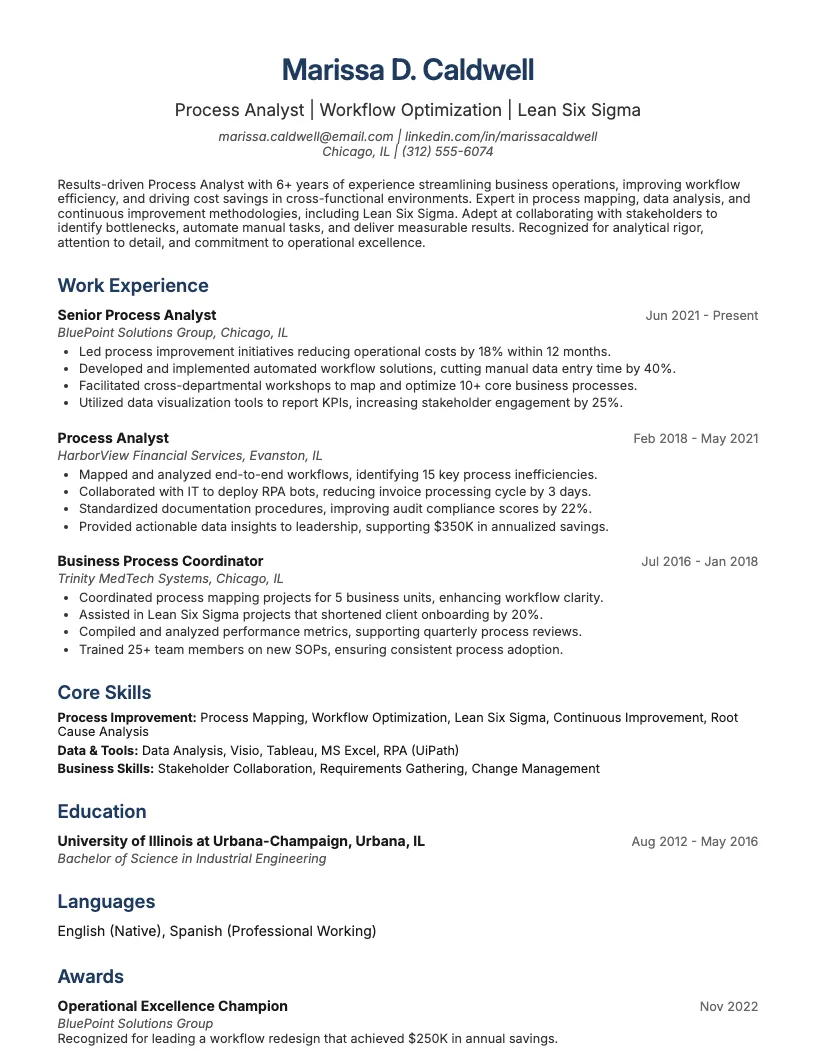
Here are some real-world examples that show how to make your process analyst summary or objective stand out. These pack details, numbers, and a clear focus.
Summary example:
I specialize in process improvement, cutting costs by 18% at Acme Corp using Lean Six Sigma tools. I use data to drive decisions and automate workflows.
Objective example:
Looking to leverage my 3+ years of data analysis experience to boost efficiency at a forward-thinking company. I want to reduce manual processes and support digital transformation.
You want to keep your summary or objective short and punchy. Make sure you highlight quantifiable impact and focus on the skills that matter for the process analyst role.
A strong Process Analyst resume goes beyond just listing jobs and education. Adding extra sections can give recruiters a better sense of your skills and interests.
You can highlight achievements, share side projects, or mention relevant publications. These sections help you stand out, especially when you have numbers or examples to back up your work.
Your resume needs to show how you improve processes and solve problems. Recruiters want to see real examples of what you deliver.
Highlight your technical and people skills equally. I focus on results, not just responsibilities, because numbers make your impact clear.
A strong summary at the top helps employers understand your value right away. Each section should prove you’re a good fit for the role.
I always start by looking at recent job postings. This helps me figure out what skills and tools companies actually want from process analysts right now.
You want to show off your impact with numbers. For example, highlight how you improved efficiency by 15% or automated a process that saved 100+ hours per month.
Make your summary section count. Use it to quickly introduce your experience, focus areas, and what makes you a strong process analyst. This grabs attention from the start.
Browse Process Analyst resume examples for related roles. Preview any example, open it in the builder, or read its full guide.
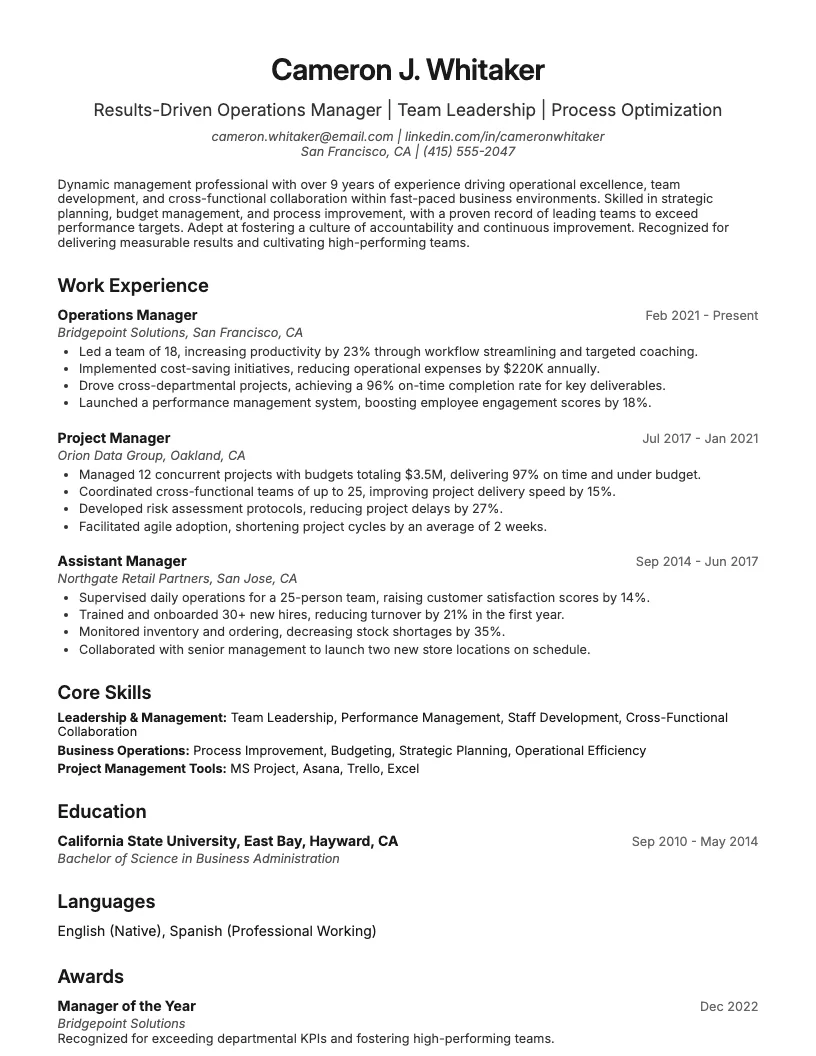
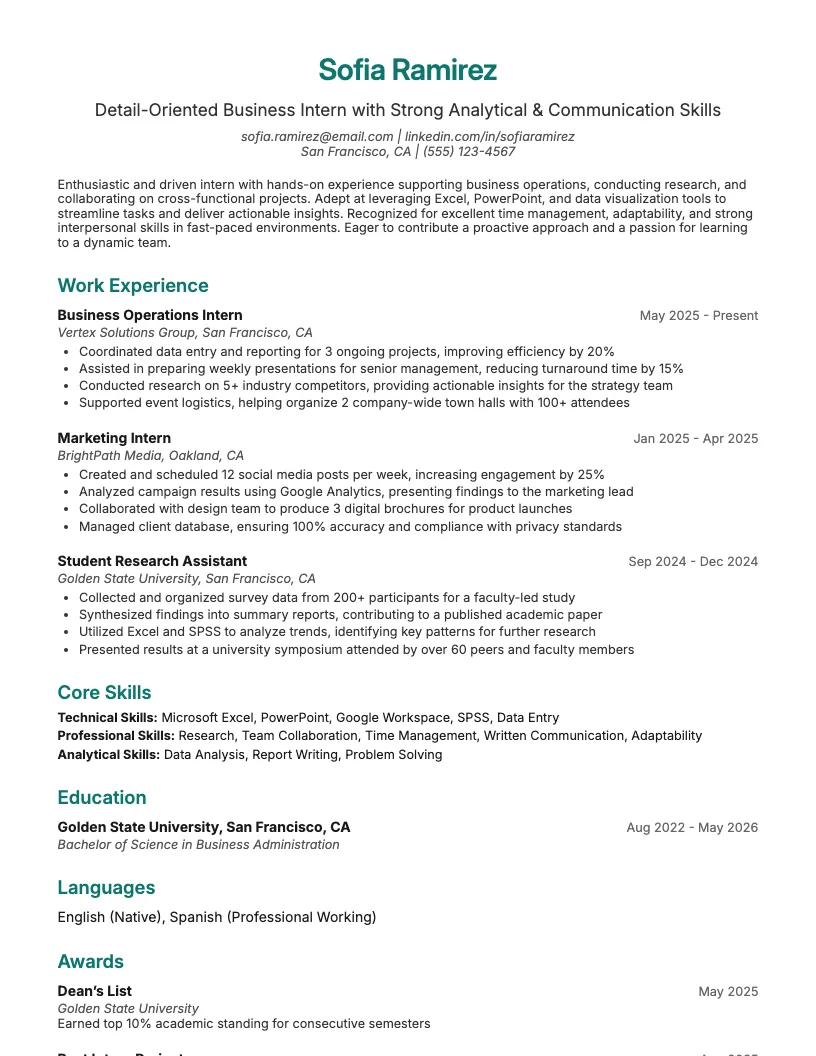
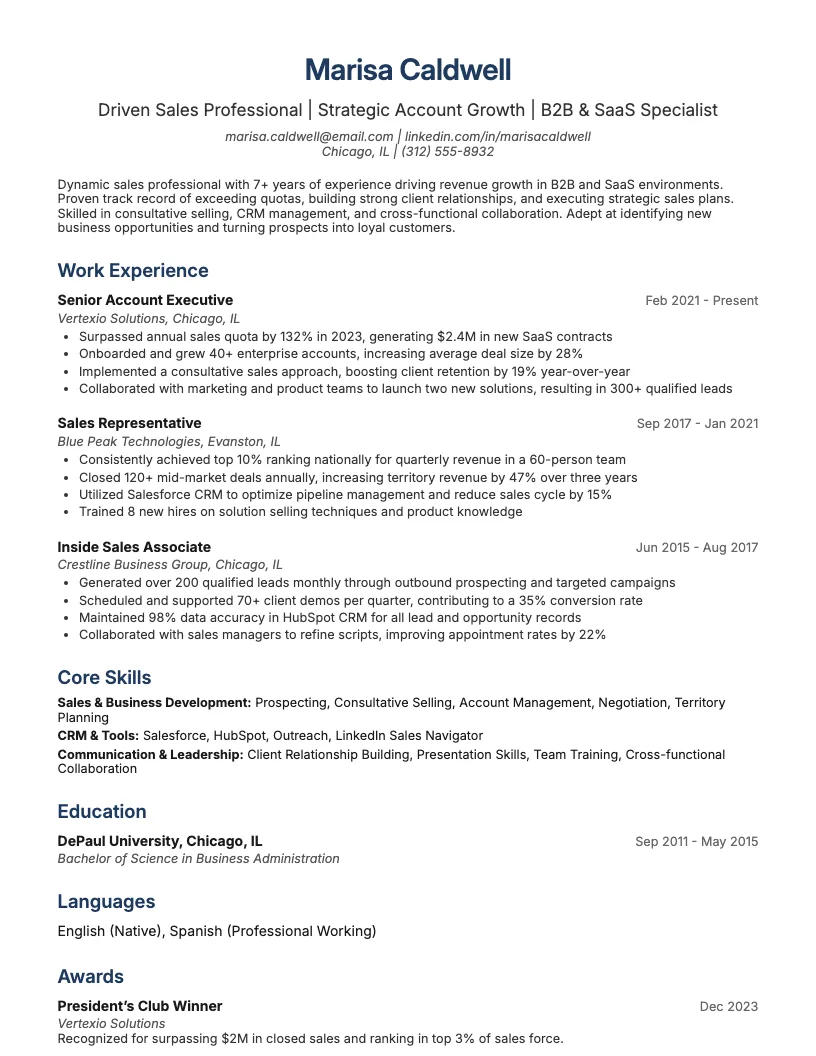
Click to enlarge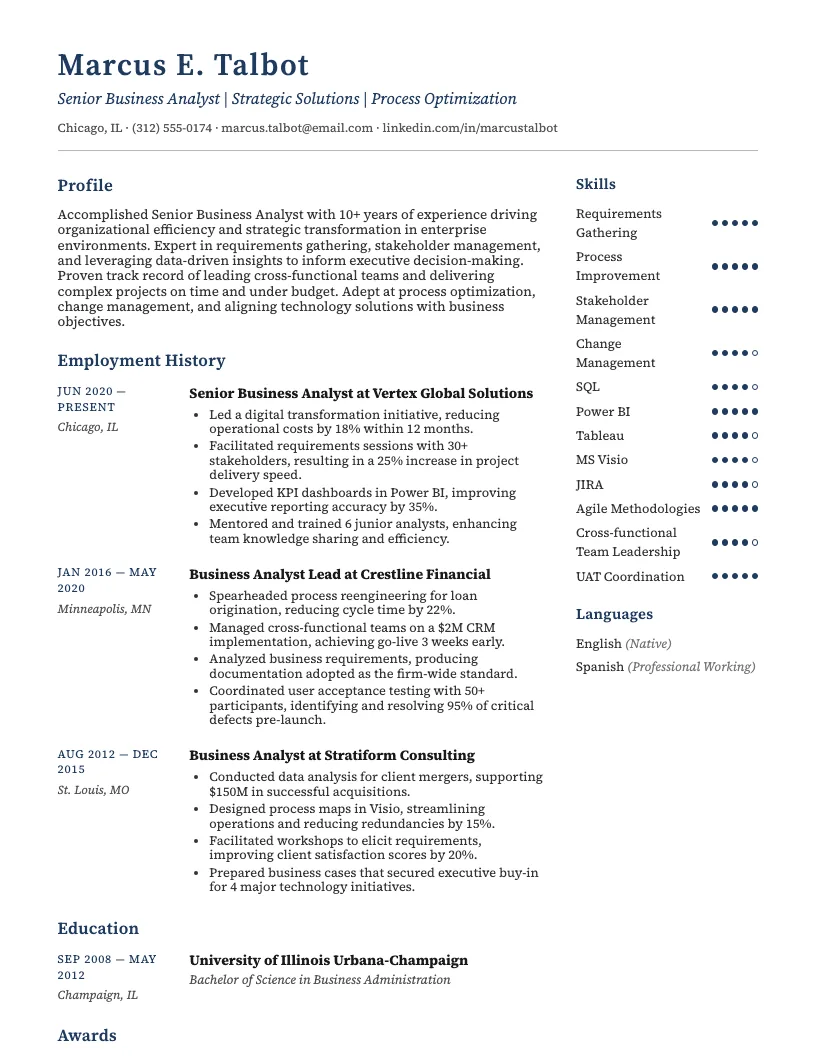 Click to enlarge
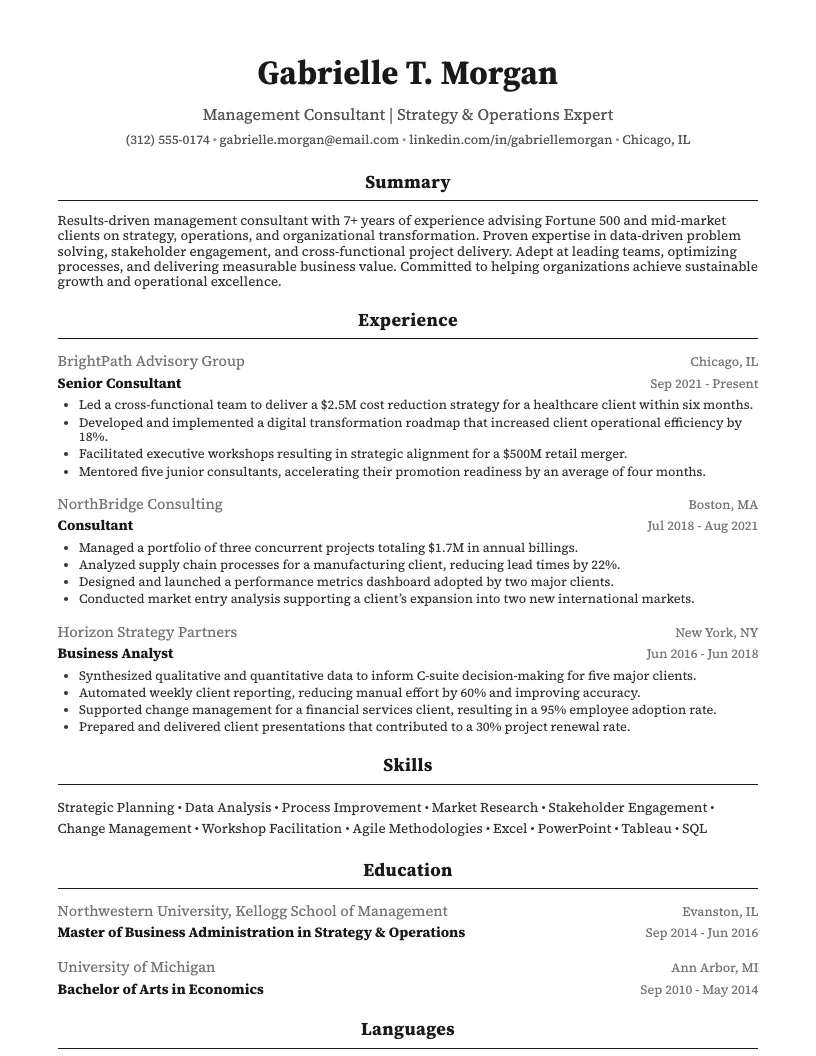
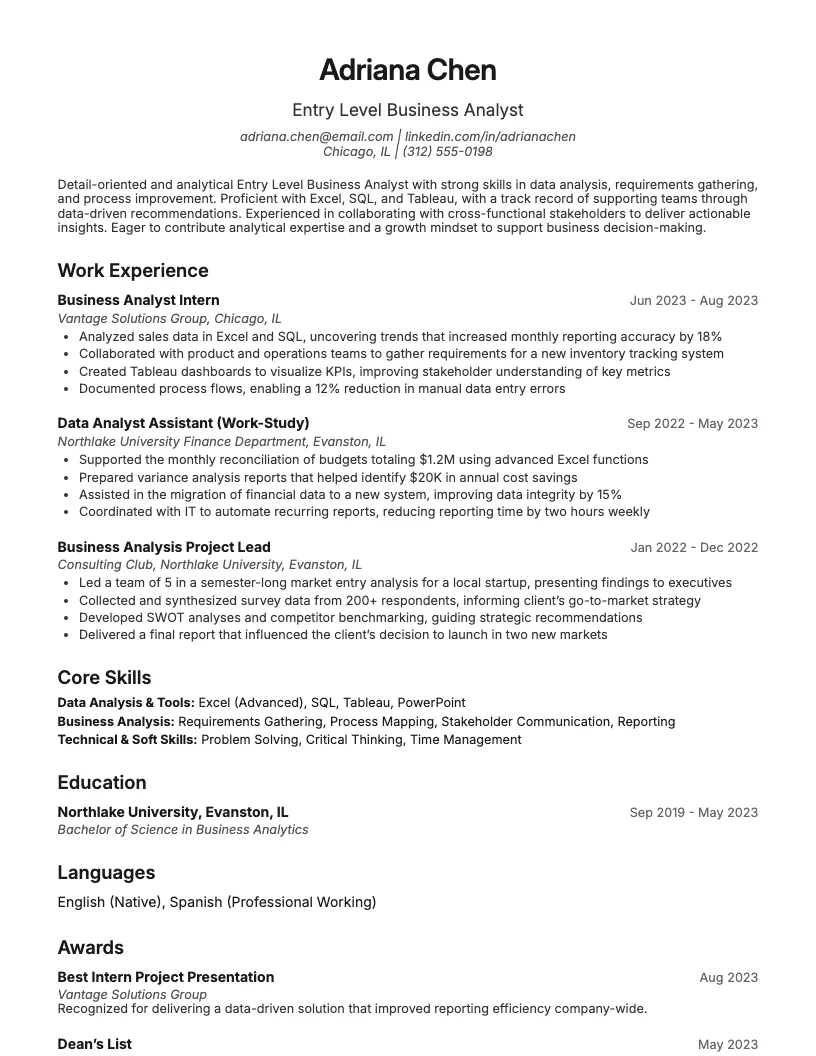 Click to enlarge
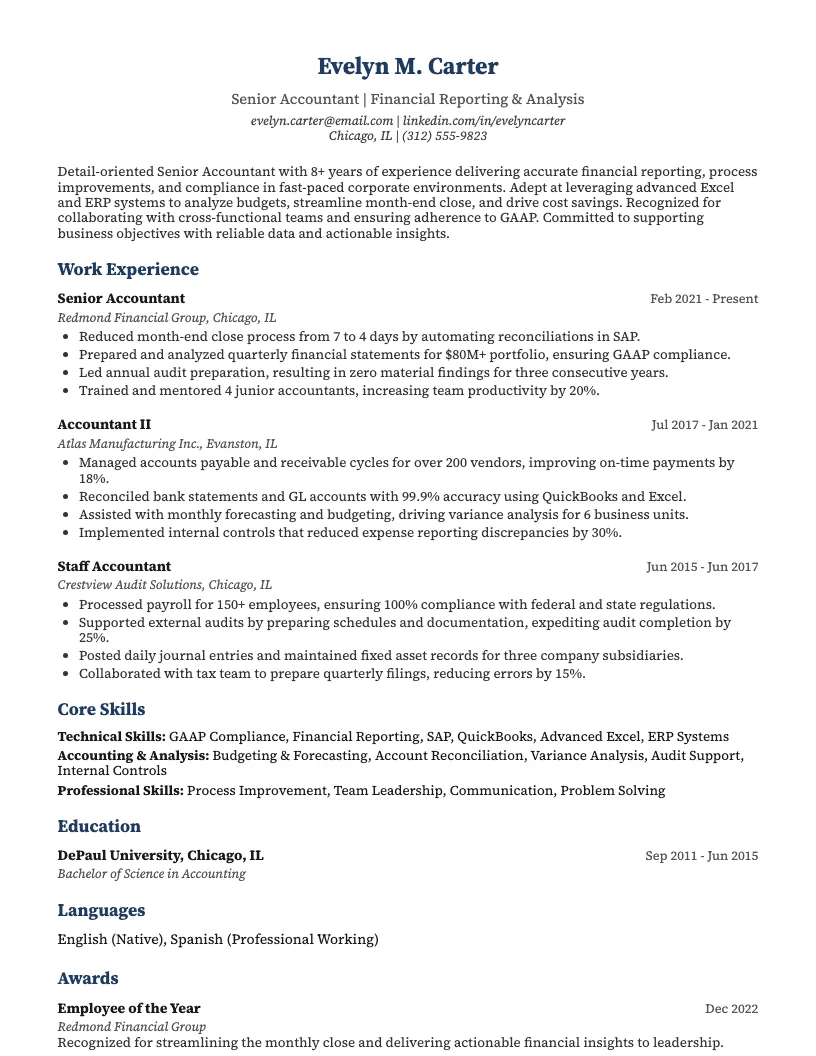
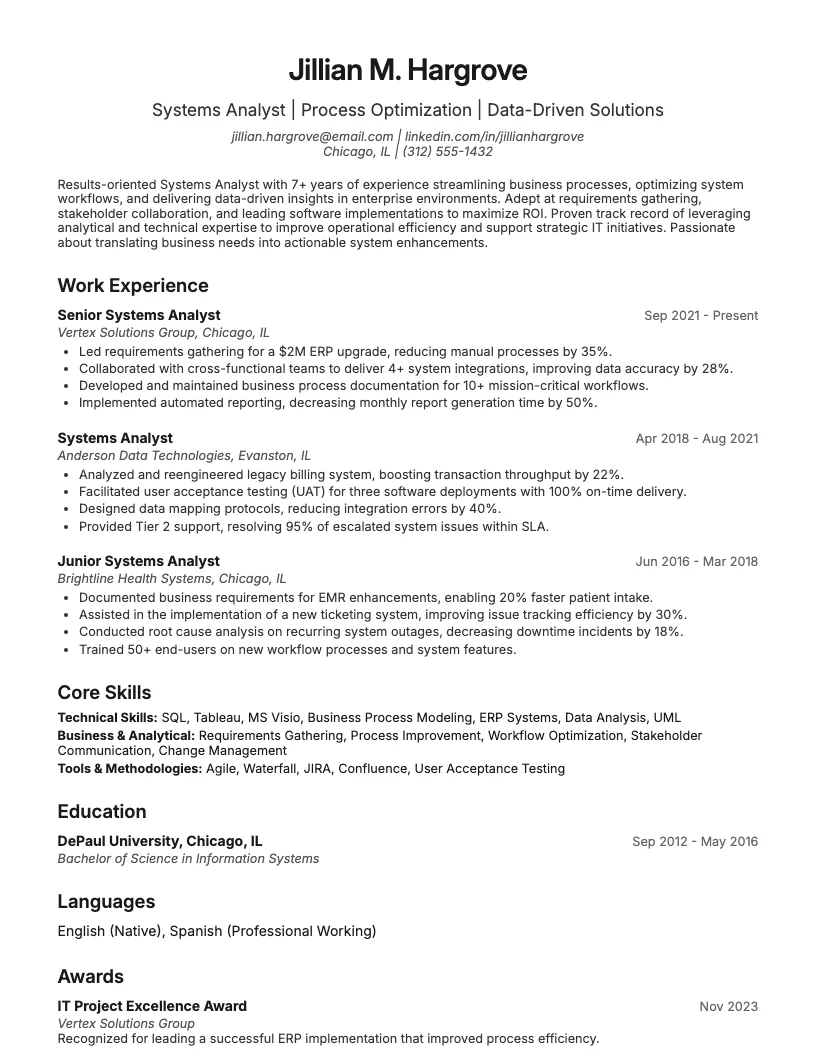 Click to enlarge
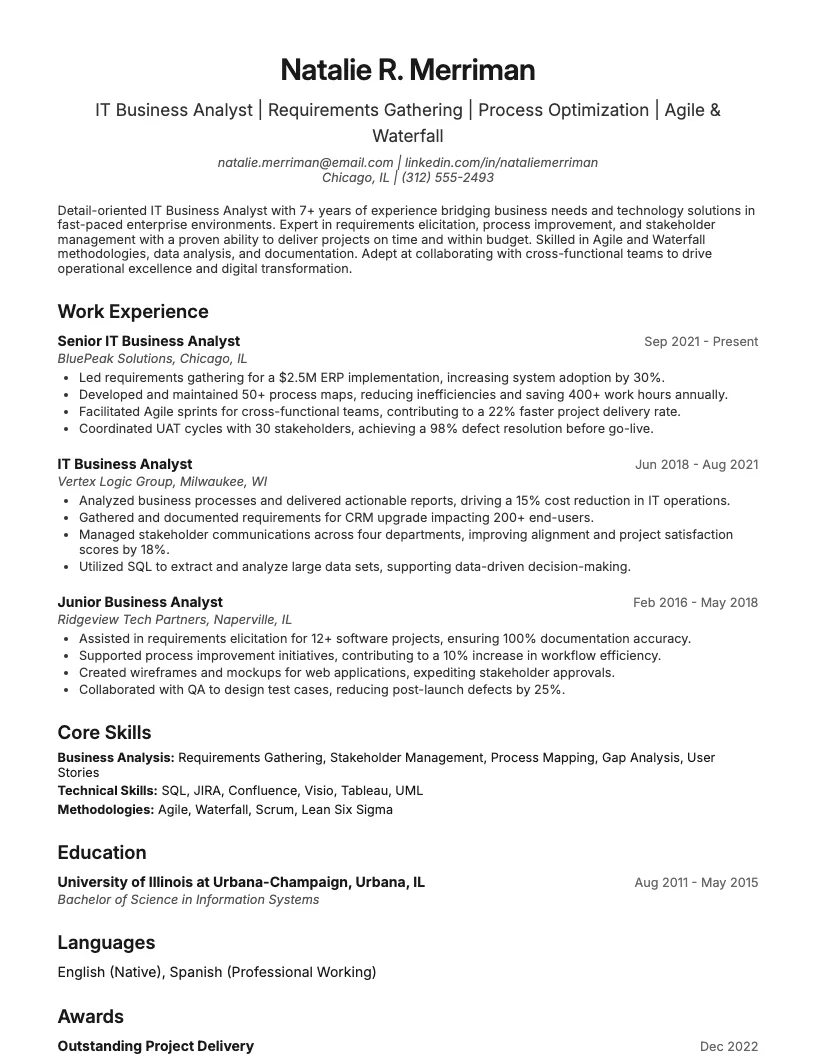 Click to enlarge
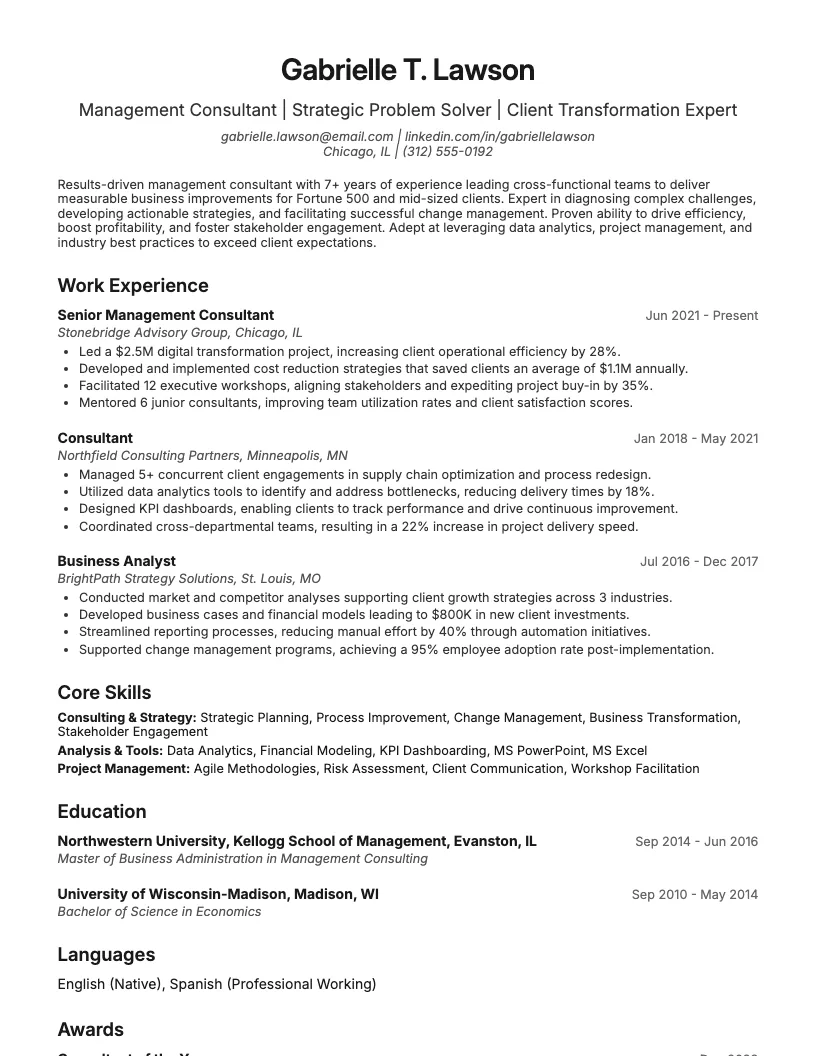 Click to enlarge
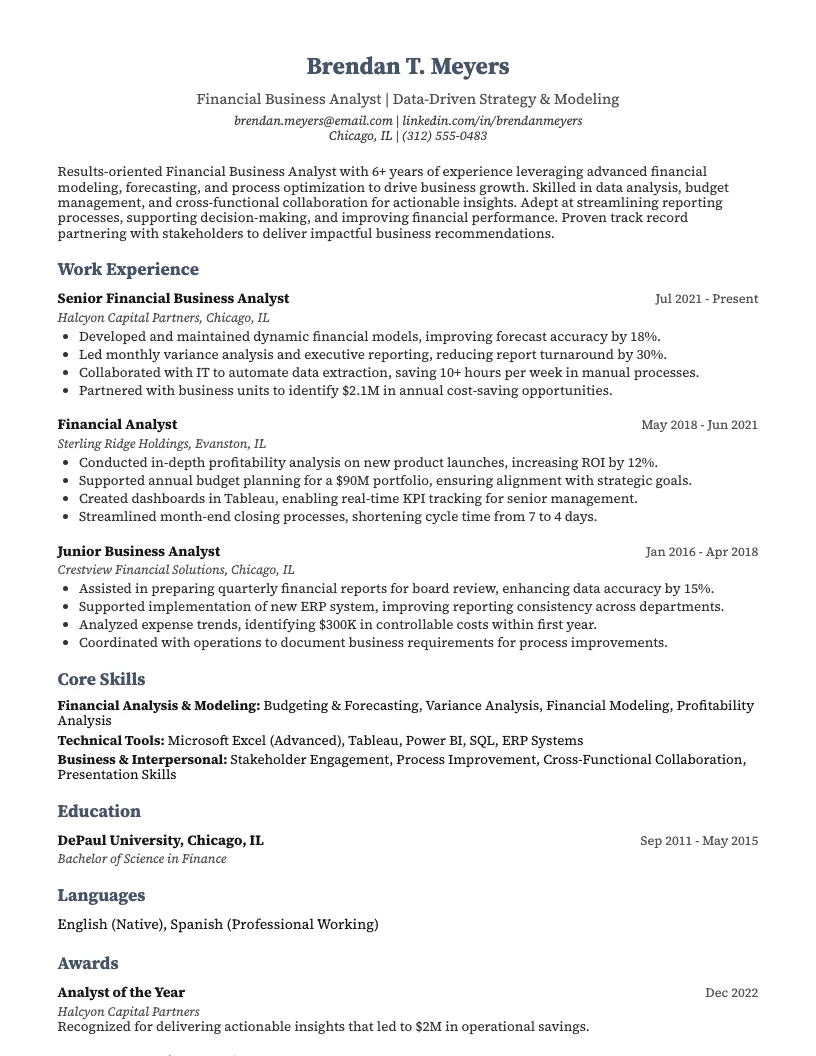 Click to enlarge
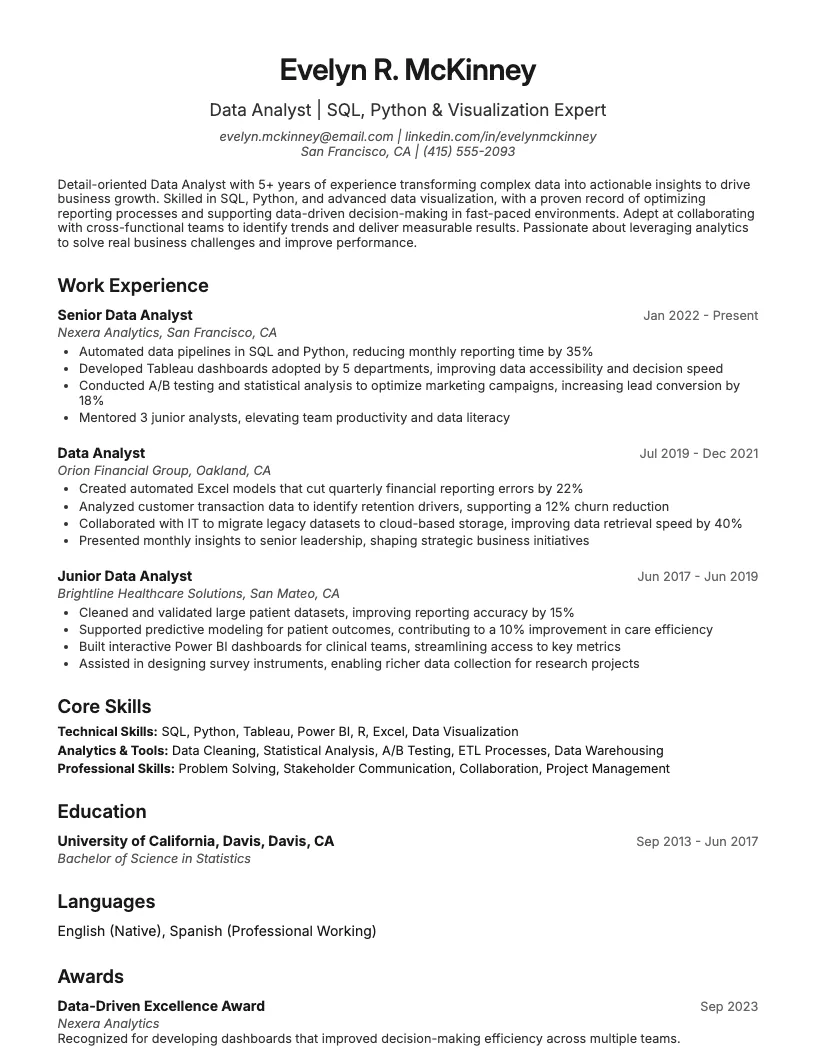 Click to enlarge
 Click to enlarge
Common questions about Process Analyst resumes
A Process Analyst resume template is a pre-designed document tailored for professionals who analyze and improve business processes. It highlights skills in process mapping, data analysis, and workflow optimization. ResumeJudge provides templates to make your resume stand out.
Yes, most Process Analyst resume templates from ResumeJudge are ATS-friendly. They use clear formatting and standard headings, ensuring your resume passes applicant tracking systems used by large companies.
Use a Process Analyst resume template when applying for roles in finance, healthcare, manufacturing, or IT where process improvement skills are needed. ResumeJudge templates suit both entry-level and experienced professionals.
Absolutely! You can update sections, add your achievements, and tailor the template to your experience. ResumeJudge makes customization easy so your resume matches any job description.
A Process Analyst resume template focuses on process mapping, data analysis, and continuous improvement skills, unlike generic templates. ResumeJudge designs templates specifically for your field to highlight relevant expertise.
Ideally, a Process Analyst resume should be one page for early careers and up to two pages for experienced professionals. ResumeJudge templates help you organize content concisely and clearly.
Yes, ResumeJudge offers templates suitable for entry-level Process Analyst roles. These highlight transferable skills and education, helping you break into industries like logistics or consulting.
Definitely! ResumeJudge templates allow you to showcase transferable skills from different fields, making them ideal for those moving into process analysis from project management or operations.
Key sections are summary, skills, professional experience, education, and certifications. ResumeJudge templates ensure you cover all essentials relevant to process improvement roles.
Yes, ResumeJudge templates are flexible and work well for both permanent and contract positions. Highlight your project-based achievements to appeal to employers in consulting or short-term roles.
Explore more professional resume examples to inspire your job search
Use our AI-powered resume builder to create a professional, ATS-friendly resume in minutes.
Free to use • No credit card required