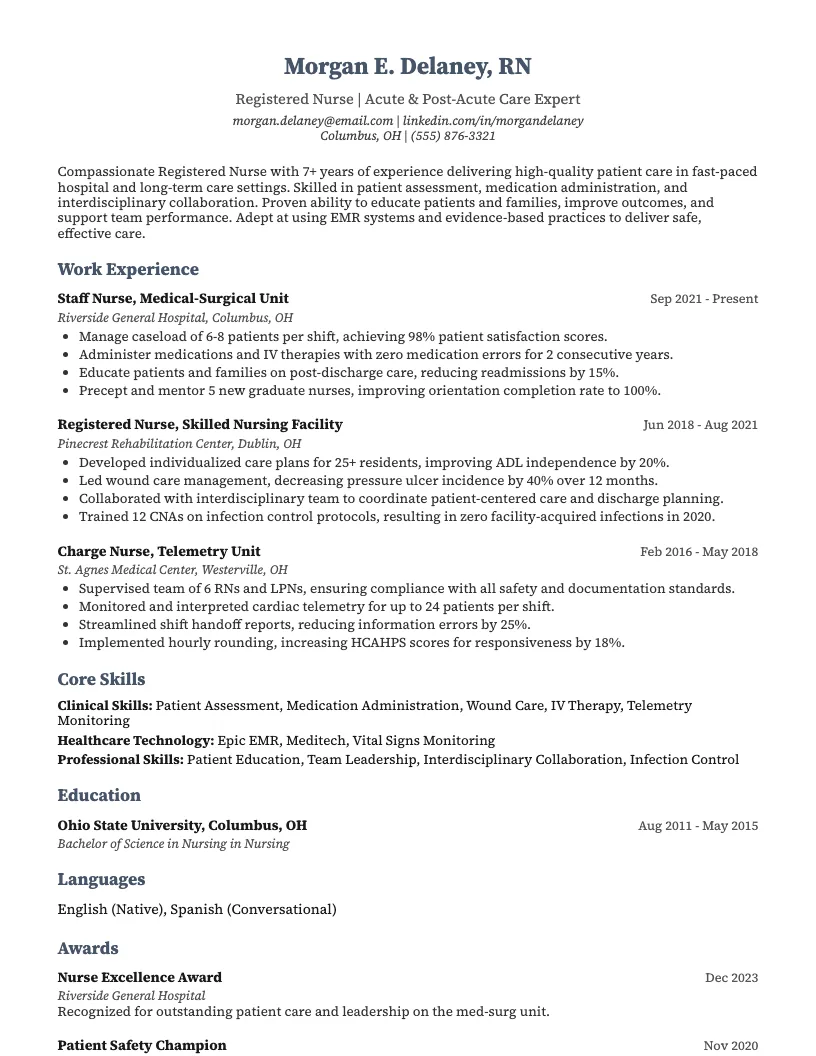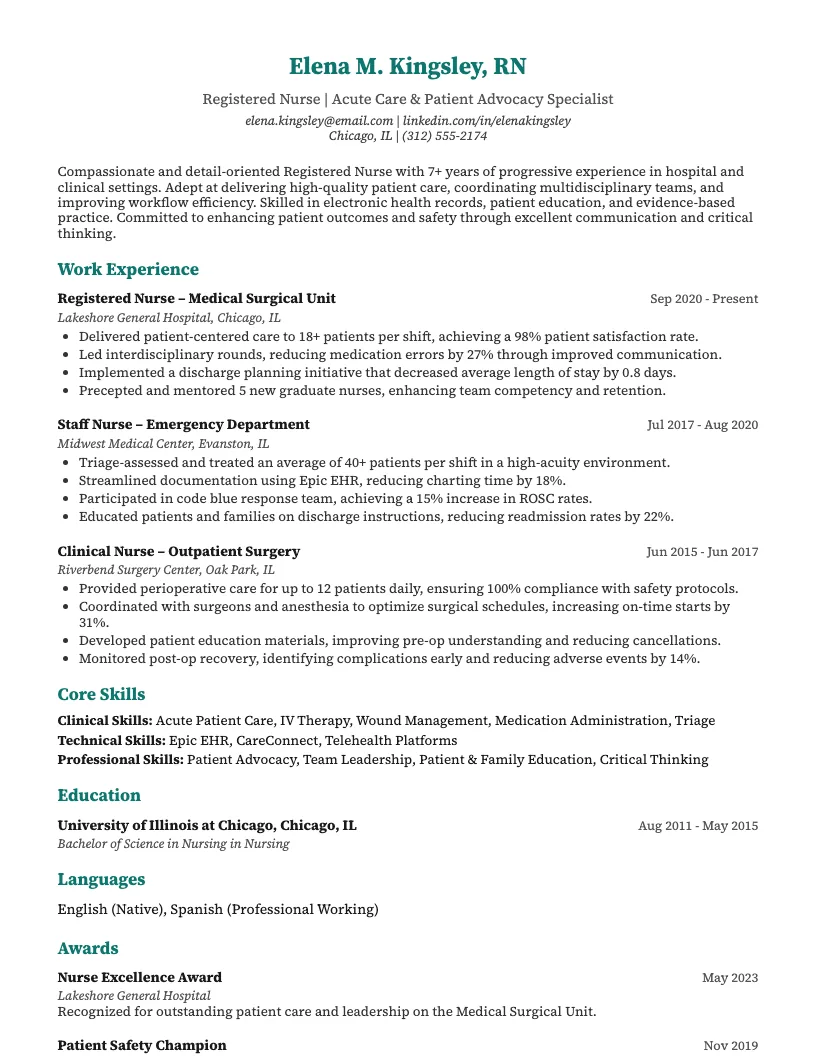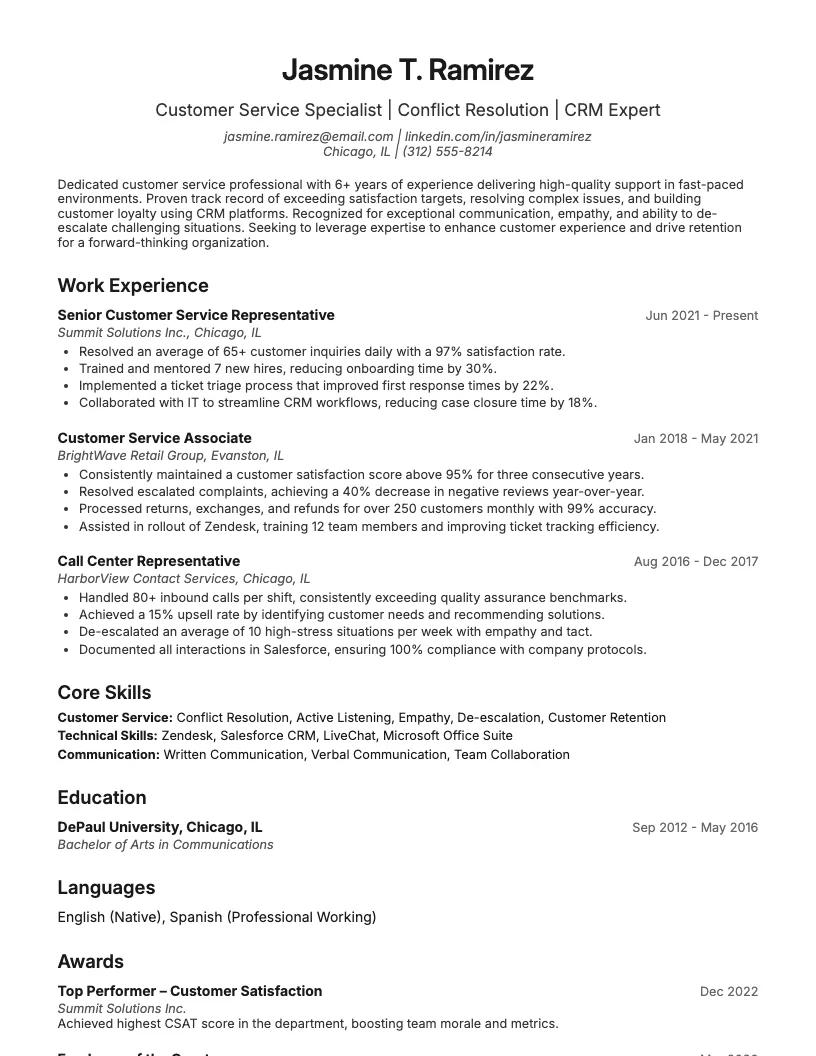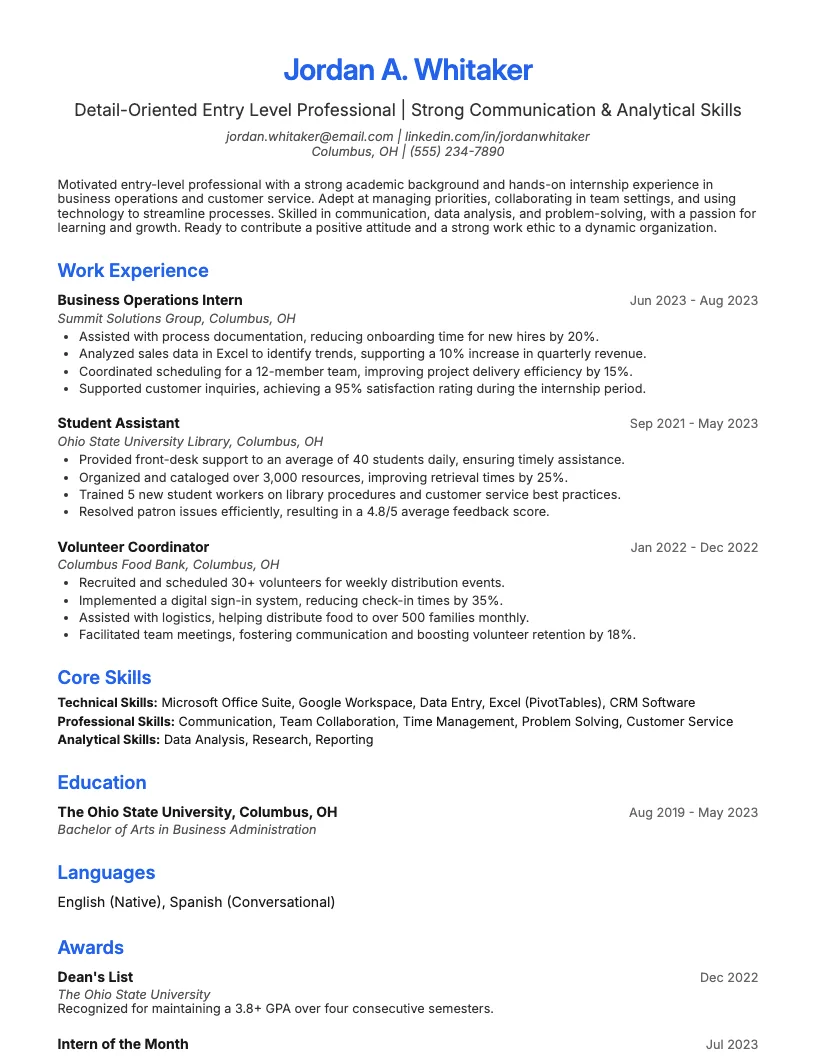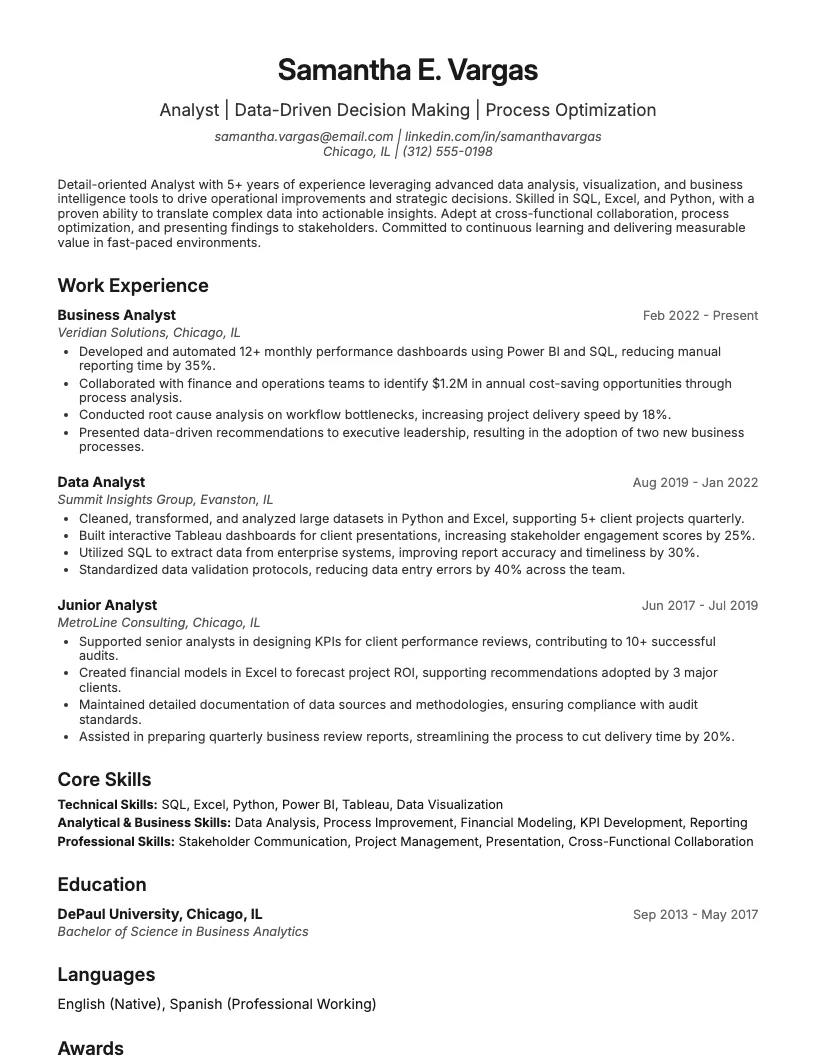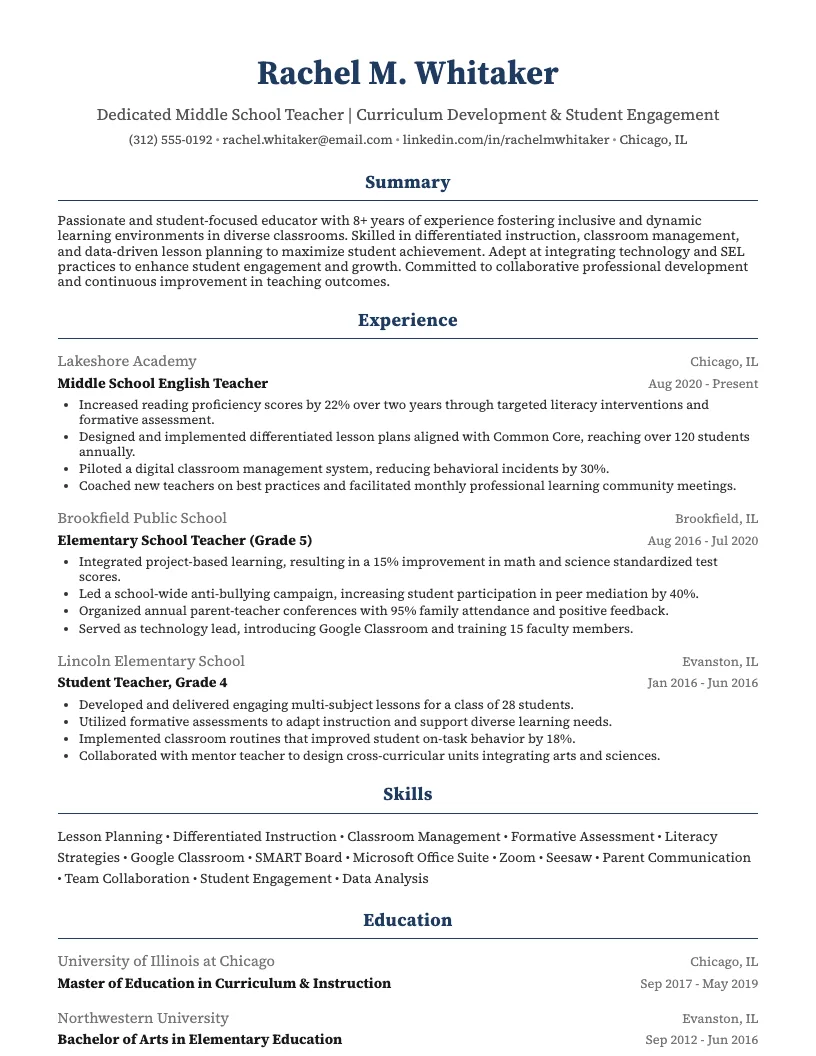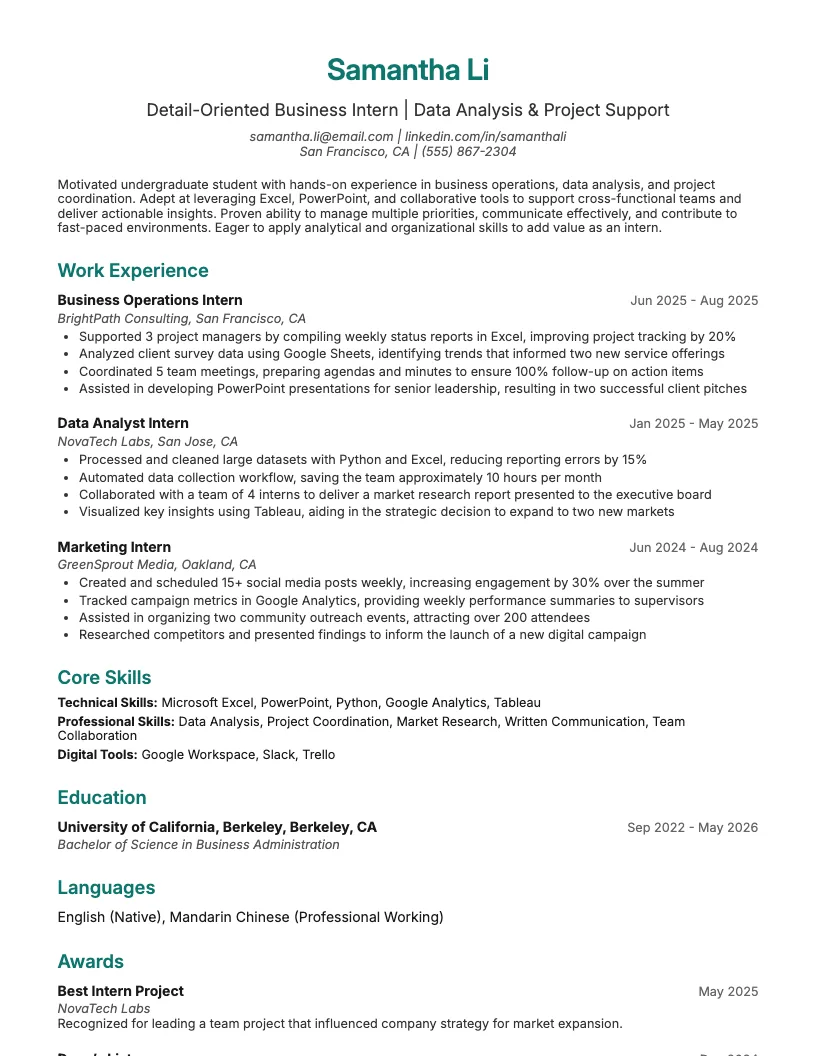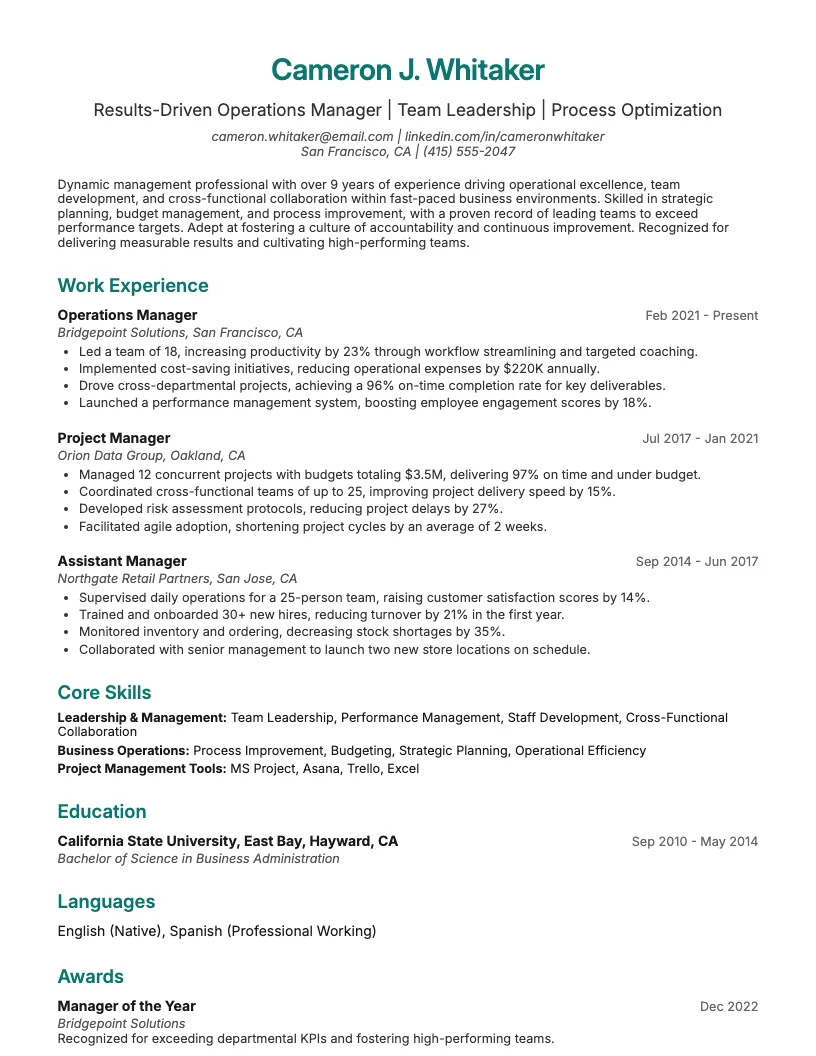
General Transcriptionist Resume Example
See full guide on General Transcriptionist resumes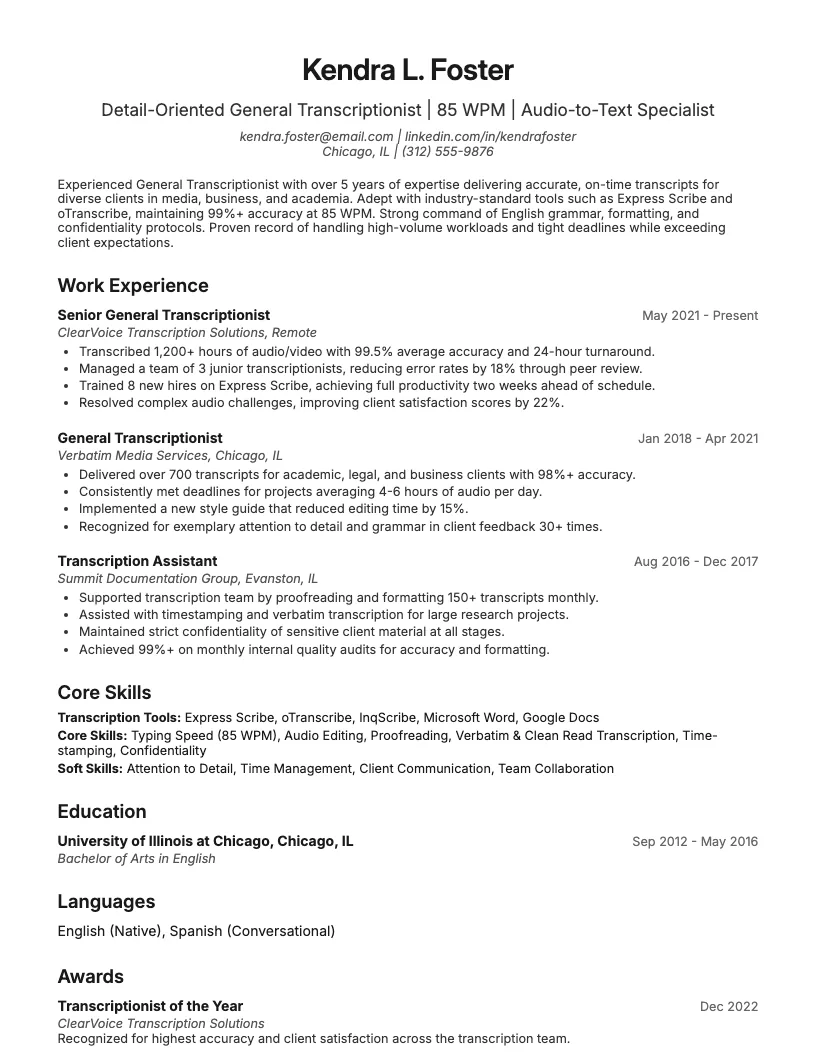 Click to enlarge
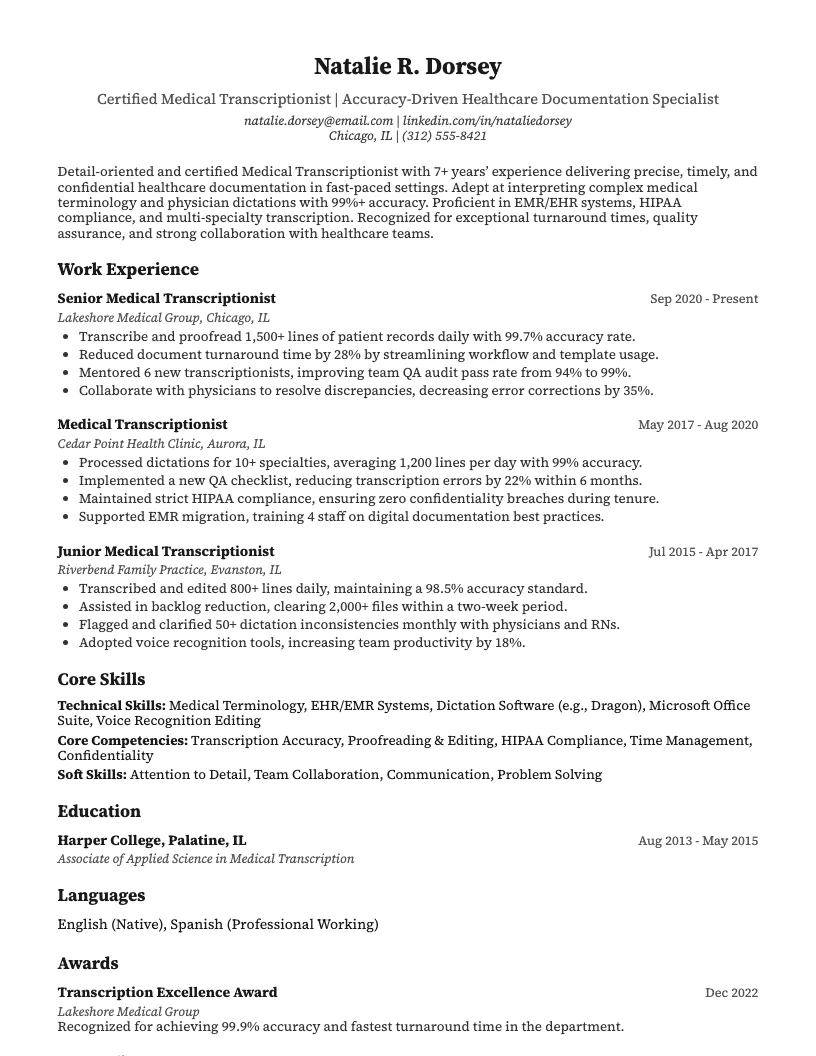 Click to preview

Get inspired by 58+ professional Medical Transcriptionist resume examples, each written by career experts and optimized to pass ATS scans. Pick a proven template, tailor it to your role, and download a polished resume in minutes.
Pick the specialization closest to your target role and start from a proven resume example.
A strong resume helps you stand out in medical transcription, especially with over 50,000 transcriptionists working in the US. I want to show you what works.
Here, I break down a sample resume that highlights real skills, experience, and certifications. You can also find a downloadable template and tips for general transcriptionist roles.
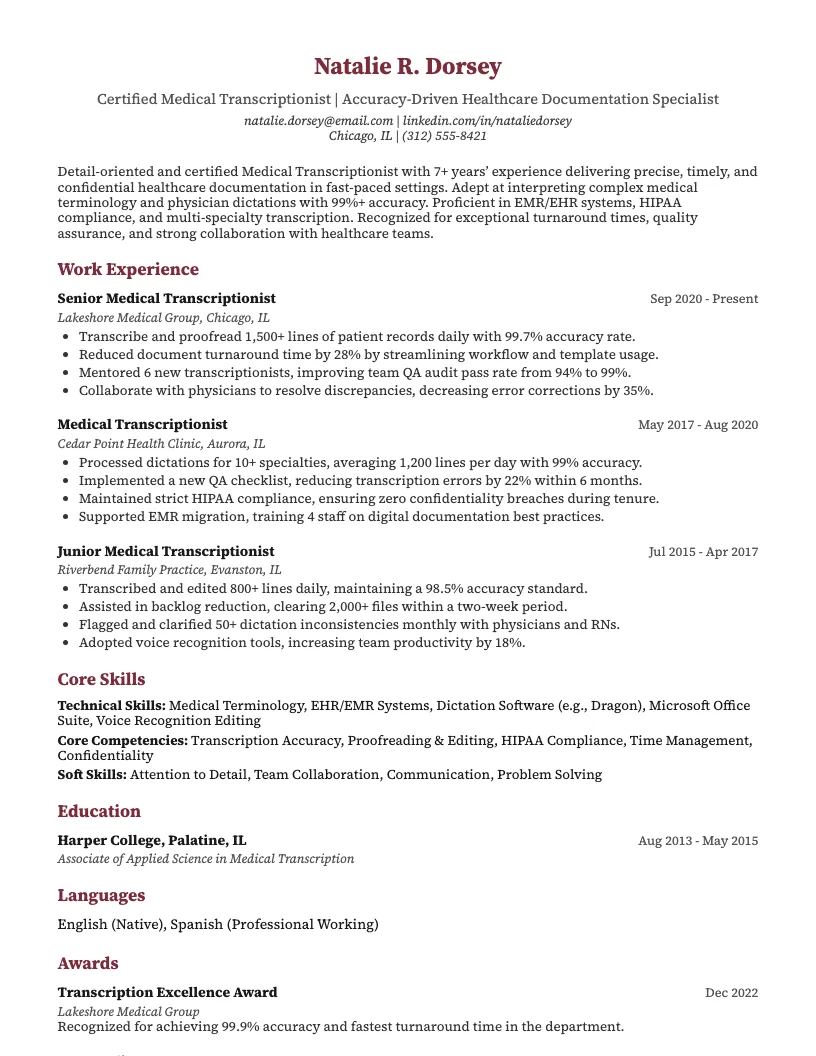
Here’s a real-world example of a medical transcriptionist resume that actually gets interviews. I focus on showcasing skills, experience, and credentials that employers want.
You’ll see how I lay out sections like professional summary, relevant experience, and technical skills. This helps recruiters spot the essentials in seconds.
If you’re not sure what to include on your own resume, you can use this example as a guide—and pair it with a cover letter for a complete application. I keep everything clear, concise, and tailored for healthcare settings.
You can grab a free downloadable medical transcriptionist resume template right here. It’s formatted for ATS and uses keywords that hiring managers like in 2024.
I always tell people to personalize every section. Add your certifications, software skills, and experience. This helps you stand out-especially since over 65% of resumes go through automated screening.
You can edit the template in Word or Google Docs. Make sure you update your contact info, and double-check everything for typos before you send it out.
A general transcriptionist resume sample gives you a solid starting point, especially if you work outside medical fields. You can highlight audio typing, editing, and accuracy skills.
I always include details like typing speed-think 65+ WPM-plus strong attention to detail. Employers love when you show off flexibility with different audio formats.
If you’ve worked with varied clients or industries, mention that. This shows you can handle everything from podcasts to business meetings. It wraps up your skills for any transcription job.

Writing a medical transcriptionist resume isn’t just about listing your jobs. You need to show off your accuracy, speed, and medical knowledge.
I always recommend picking a resume format that matches your experience. Employers want to see your skills first, so highlight those.
Tailoring each resume to the job you want helps you stand out. Over 75% of employers use applicant tracking systems, so keywords really matter.
Picking the right resume format really matters for medical transcriptionist jobs. There are three main styles: chronological, functional, and combination.
If you’ve got steady experience, I usually recommend the chronological format. It shows off your work history and career growth, which a lot of employers want to see.
The functional format is good if you’re new or switching careers. It lets you highlight skills over specific jobs. A combination format blends both, which works well if you have mixed experience.
I always focus on accuracy and speed when describing my work. Most employers want at least 98% accuracy and the ability to transcribe 60-80 words per minute.
Show off your knowledge of medical terminology, HIPAA compliance, and EMR systems. Listing tools like Express Scribe or Dragon can really help you stand out, especially when paired with a strong cover letter.
Don’t just list duties-share real results. For example, “Transcribed 1,200+ patient reports monthly with 99% accuracy.” This helps hiring managers see your impact right away.
I always read the job description closely and tweak my resume for each application. This helps my skills and experience match what the employer wants.
Use keywords from the posting. If a hospital asks for “EMR proficiency,” I make sure that’s on my resume. Little details like this can boost your chances by up to 70%.
It’s worth the extra effort. Customizing your resume for each job shows you care and helps you stand out in a crowded field.
A good medical transcriptionist resume covers more than your typing speed. Employers look for accuracy, medical knowledge, and real job experience.
I always suggest you organize your resume into clear sections. This helps recruiters quickly see your skills, credentials, and what you bring to the table.
A professional summary is your chance to show off your value in just a few lines. I use this section to grab attention right away.
You want to highlight your years of experience, accuracy rates, and specialties like radiology or pathology. This helps hiring managers see what makes you stand out.
Keep it short-about 3-4 sentences. Focus on key achievements or stats, like "98% accuracy" or "10,000+ dictations transcribed." This sets the tone for the rest of your resume.
I focus on accuracy and speed. Most employers ask for 98% accuracy and at least 60 words per minute. Always highlight these numbers on your resume.
You should mention medical terminology, proofreading, and audio transcription. These are key for handling physician notes and complex reports without mistakes.
Strong listening skills and attention to detail make a difference. If you use tools like EHR or speech recognition software, show that off-tech skills boost your value.
In this section, I focus on job titles, employers, and dates worked. I add bullet points for each job, highlighting accuracy rates, turnaround times, and use of EMR systems.
You want to show specific achievements, like maintaining 98% accuracy or transcribing over 1,000 reports monthly. This helps employers see your impact right away.
I always include specialties-cardiology, oncology, or radiology, for example, just as you would highlight in a cover letter for a related role. This makes your experience stand out to hiring managers in those fields.
I always list my highest level of education first, like an Associate’s or Bachelor’s degree. Over 60% of medical transcriptionists have formal postsecondary training in health information or transcription.
If you complete a medical transcription program, mention the school and graduation year. This helps show employers you know medical terminology and healthcare documentation standards.
You can also add relevant coursework or workshops, especially if you’re new to the field. This proves you’re serious about learning and staying current.
Certifications show I take my role as a medical transcriptionist seriously. The Registered Healthcare Documentation Specialist (RHDS) or the Certified Healthcare Documentation Specialist (CHDS) stand out most.
You don’t always need a certification, but many employers prefer it. In 2023, over 60% of job postings for this field mention AHIMA or AHDI credentials.
It’s smart to list when I earned each certification and if I keep them current. This helps hiring managers see I meet industry standards right now.
That wraps up the main sections you need for a solid medical transcriptionist resume. Each section shows your skills, experience, and professionalism in a clear way.
Medical transcription needs a mix of technical know-how, sharp listening, and serious attention to detail. You can’t just type fast-you need the right skills to stand out.
I look for both hard and soft skills in this field. Technical ability matters, but so does understanding medical language and communicating clearly with healthcare teams.
If you want to impress as a medical transcriptionist, strong technical skills matter a lot. I rely on advanced transcription software, foot pedals, and fast typing-think 65+ WPM.
You need to know your way around EHR systems and audio editing tools. This helps you deliver accurate, clean reports every time, even when audio files are tough.
There are always updates in software and technology. Staying current with the latest tools keeps you competitive and efficient in this field.
Strong listening skills are a must. I spend hours each day catching every word, tone, and pause from physicians-accuracy depends on it.
Time management really matters in this job. I juggle multiple files and tight deadlines, so prioritizing helps me meet daily quotas without burning out.
Paying attention to detail is key. Even a small typo in a report can cause major confusion, so I always double-check my work before submitting.
I use medical terminology every day. There are over 20,000 terms in common use, so knowing them helps me transcribe accurately and avoid costly errors.
You want to keep learning. New treatments and procedures pop up all the time, so I always review updates from sources like the AMA and CDC. This keeps my work sharp.
Strong medical vocabulary isn’t just a bonus-it’s essential. It helps me spot inconsistencies, flag mistakes, and deliver transcripts doctors actually trust. That’s what sets a great transcriptionist apart.
Hiring managers read hundreds of resumes. You need yours to stand out right away. I always focus on what makes my skills and results clear.
Highlighting your accuracy and speed is key in this field. You’ll want to show you meet industry benchmarks, like 98% accuracy or 60 words per minute.
The details matter here-even small mistakes can cost you interviews. I always double-check my work for errors and clarity.
Using the right words and numbers helps your resume get noticed. You want to show proof of your abilities, not just list your duties.
I always start my resume bullet points with strong action verbs. This makes my experience sound more dynamic and shows exactly what I do in each role.
You want to say things like transcribe, review, or analyze-not just “responsible for.” Employers like to see clear, direct language that highlights real skills.
There are dozens of action verbs that fit medical transcription. Use ones that match your tasks, like edit, interpret, or verify. This helps your resume stand out instantly.
I always include specific numbers to show my impact. For example, "Transcribed 1,200+ patient reports monthly with 99.5% accuracy" looks much stronger than just saying "transcribed reports."
You can highlight turnaround time, like "Consistently delivered 100% of transcripts within 24 hours." Numbers prove your reliability and attention to detail. This helps your resume stand out.
There are lots of ways to quantify your work-mention error rates, volume, or time saved. Recruiters notice hard data right away.
I always double-check my resume for typos, grammar slips, or formatting issues. Even a single error can make me look careless, especially in medical transcription.
You want to show attention to detail-it’s a top skill for this field. Take a break, then read your resume out loud. This helps you catch mistakes you missed before.
If you can, use free tools like Grammarly or ask a friend to review it. Around 60% of hiring managers say errors are a dealbreaker, so accuracy counts.
This wraps up my top medical transcriptionist resume tips. Follow these, and you’ll stand out for the right reasons.
Browse Medical Transcriptionist resume examples for related roles. Preview any example, open it in the builder, or read its full guide.
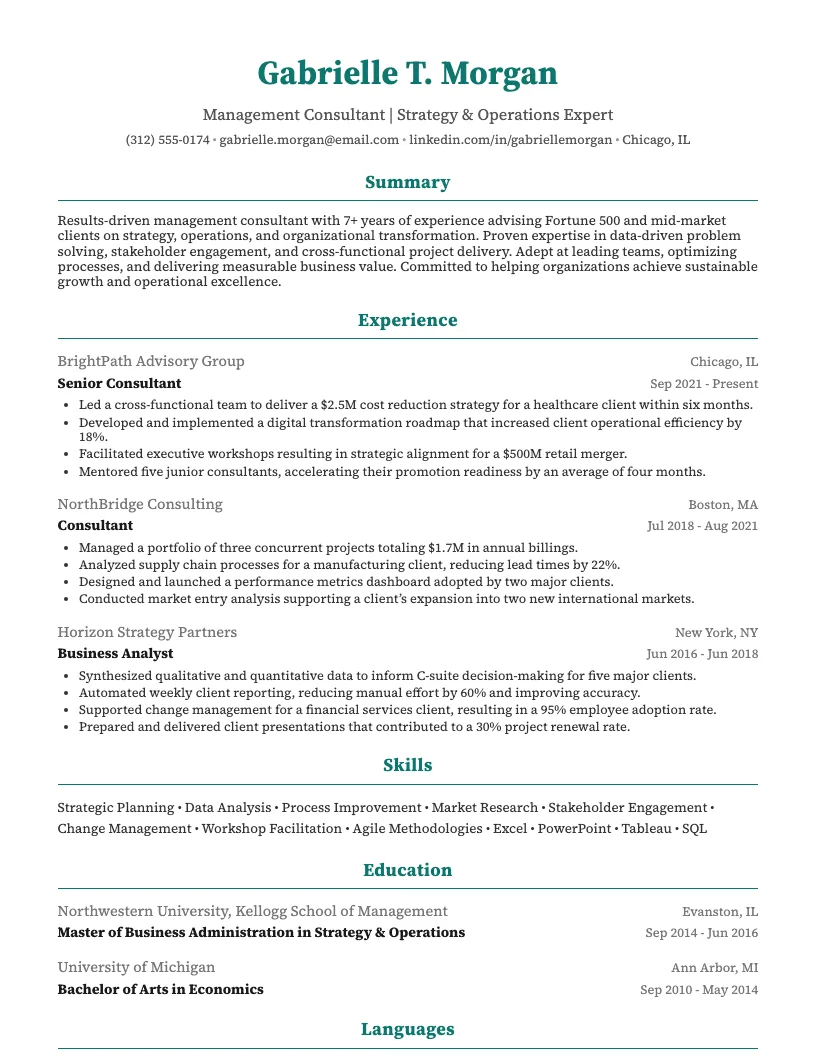
Click to enlarge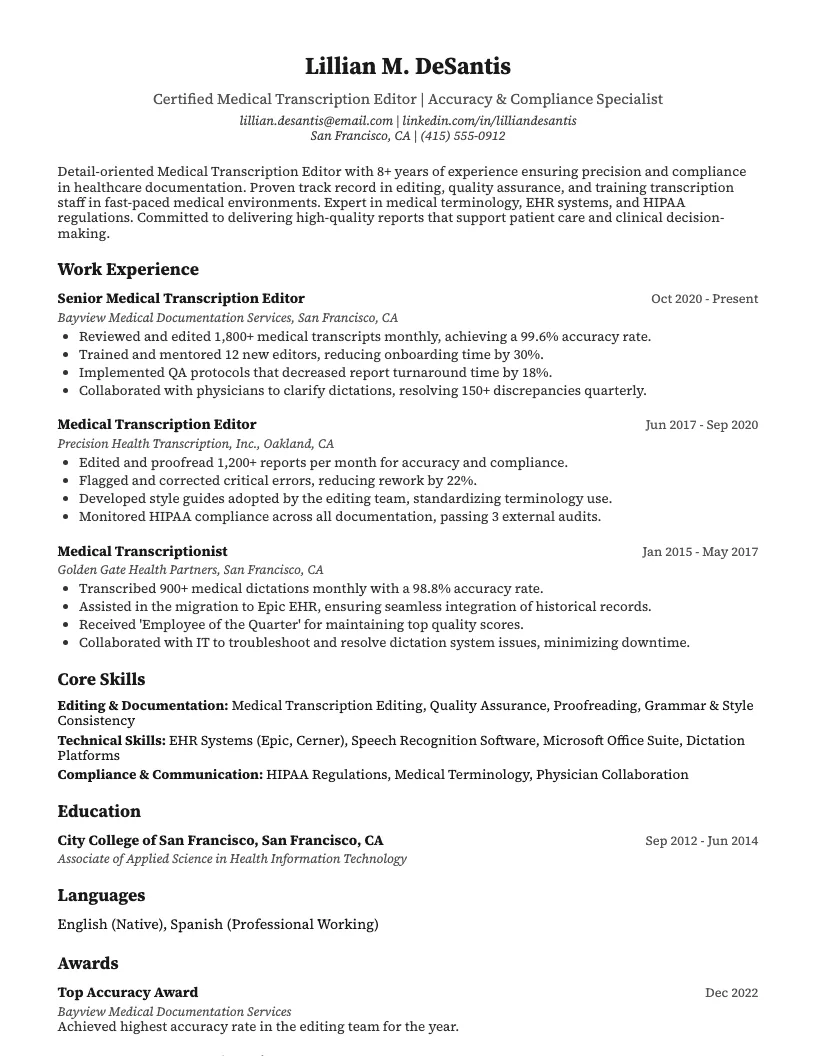 Click to enlarge
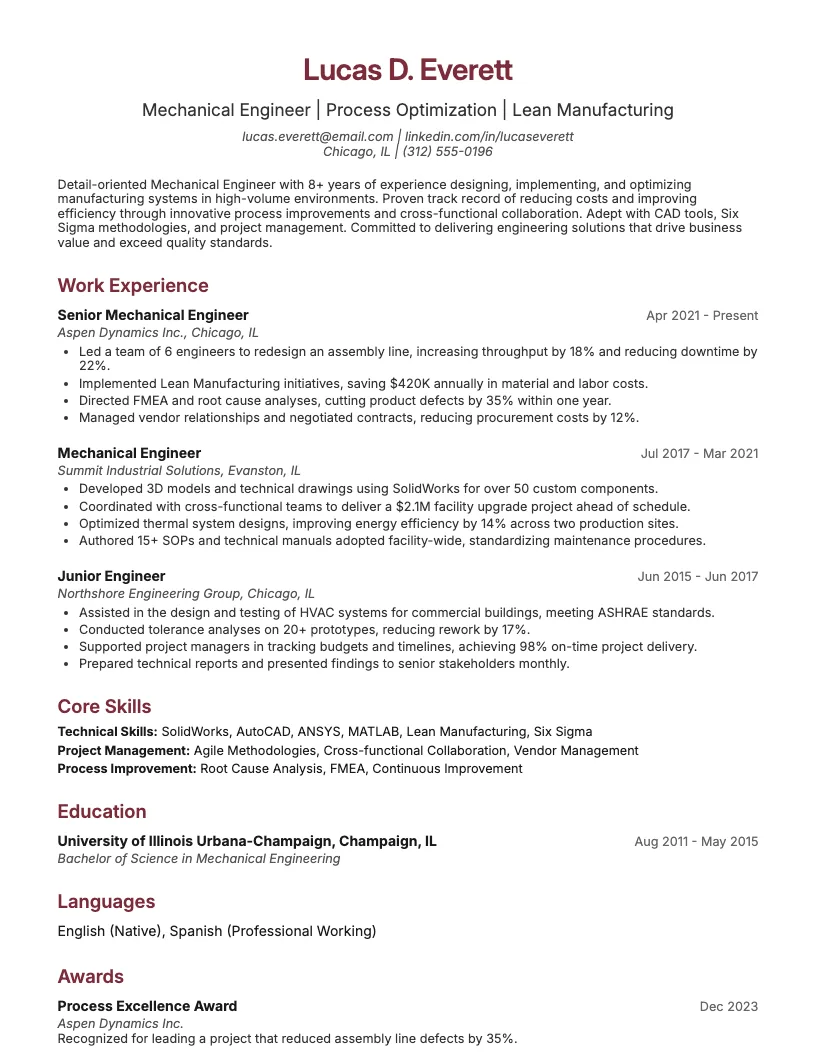
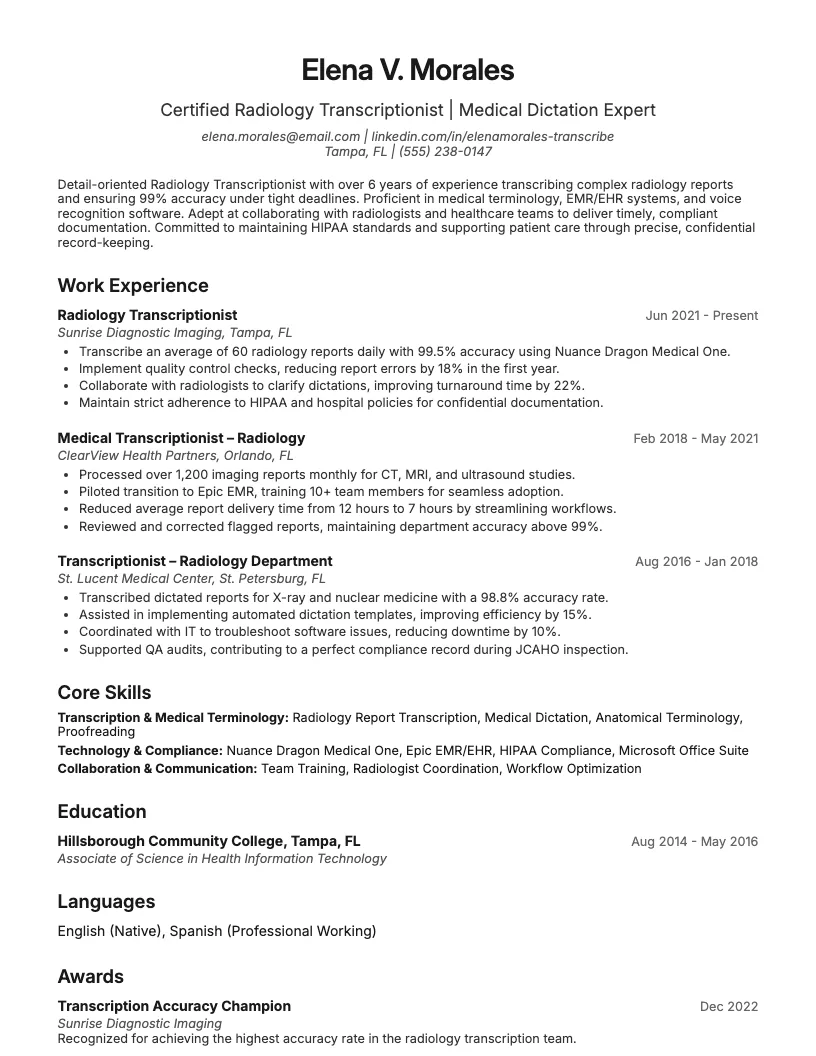 Click to enlarge
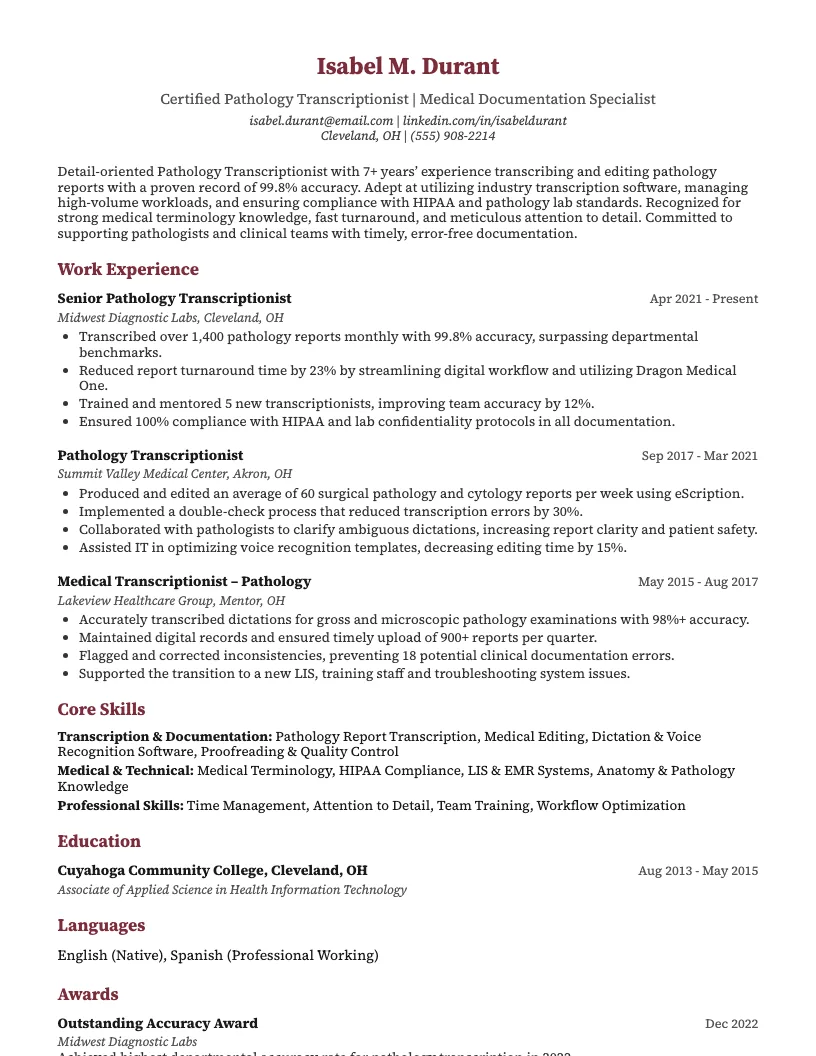 Click to enlarge
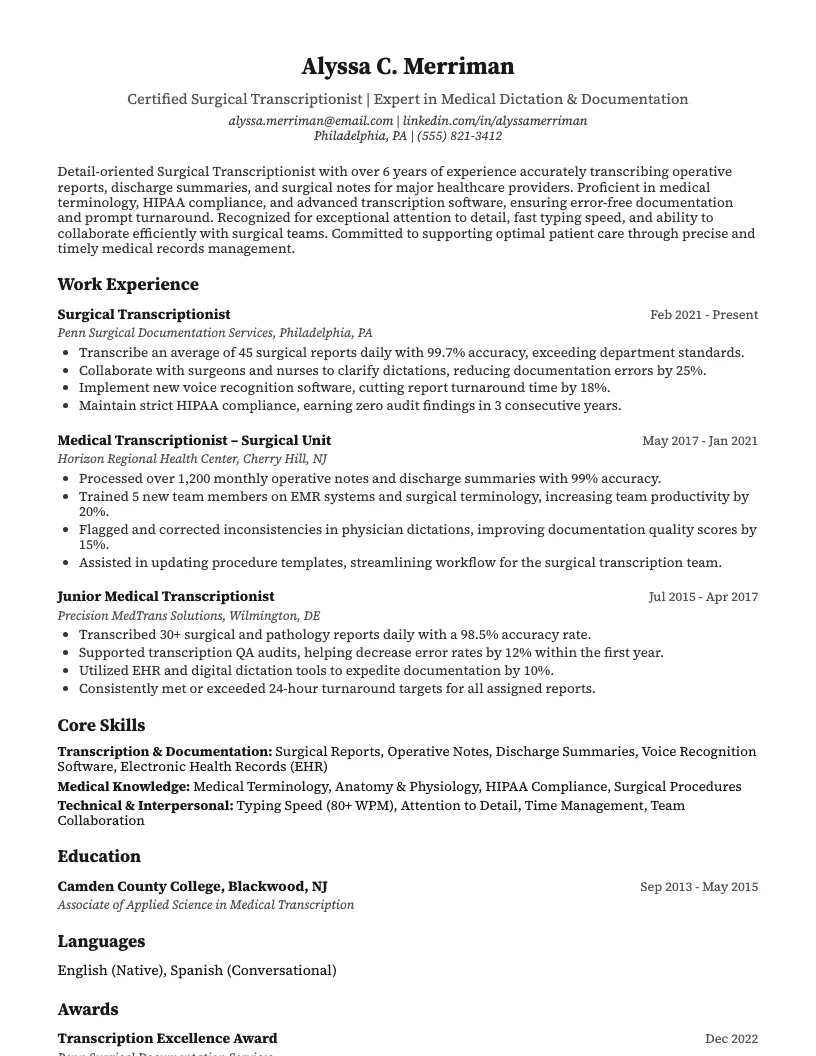 Click to enlarge
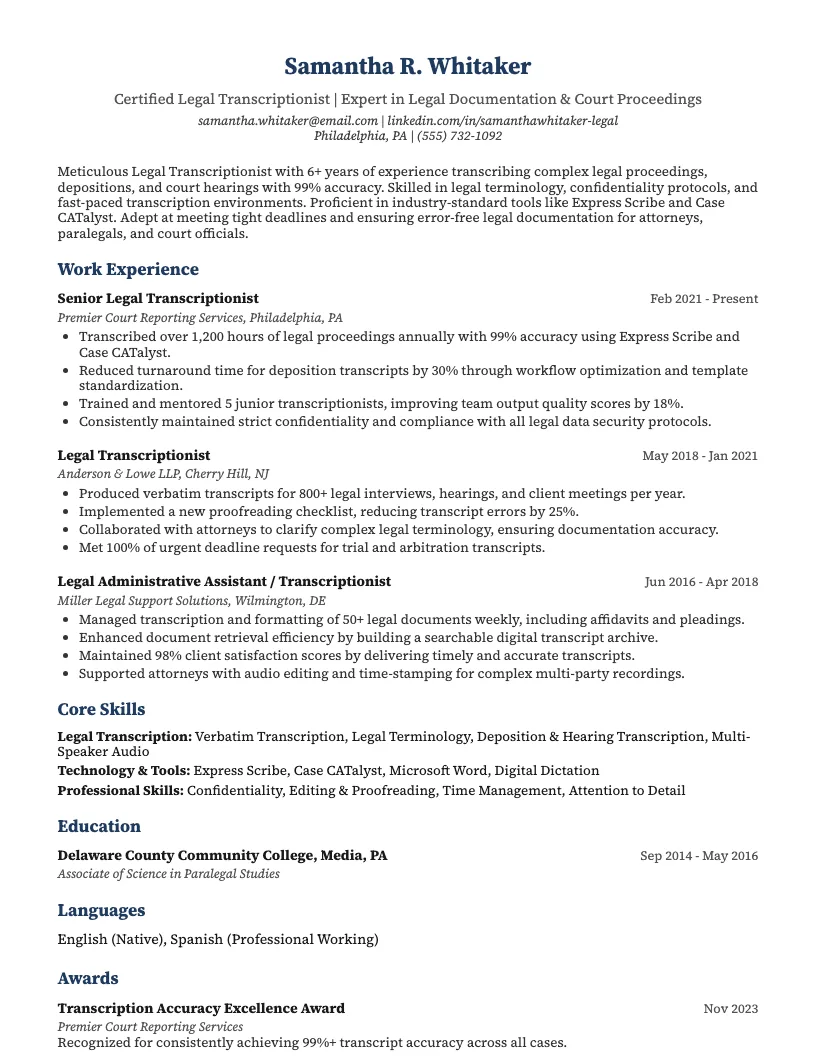 Click to enlarge
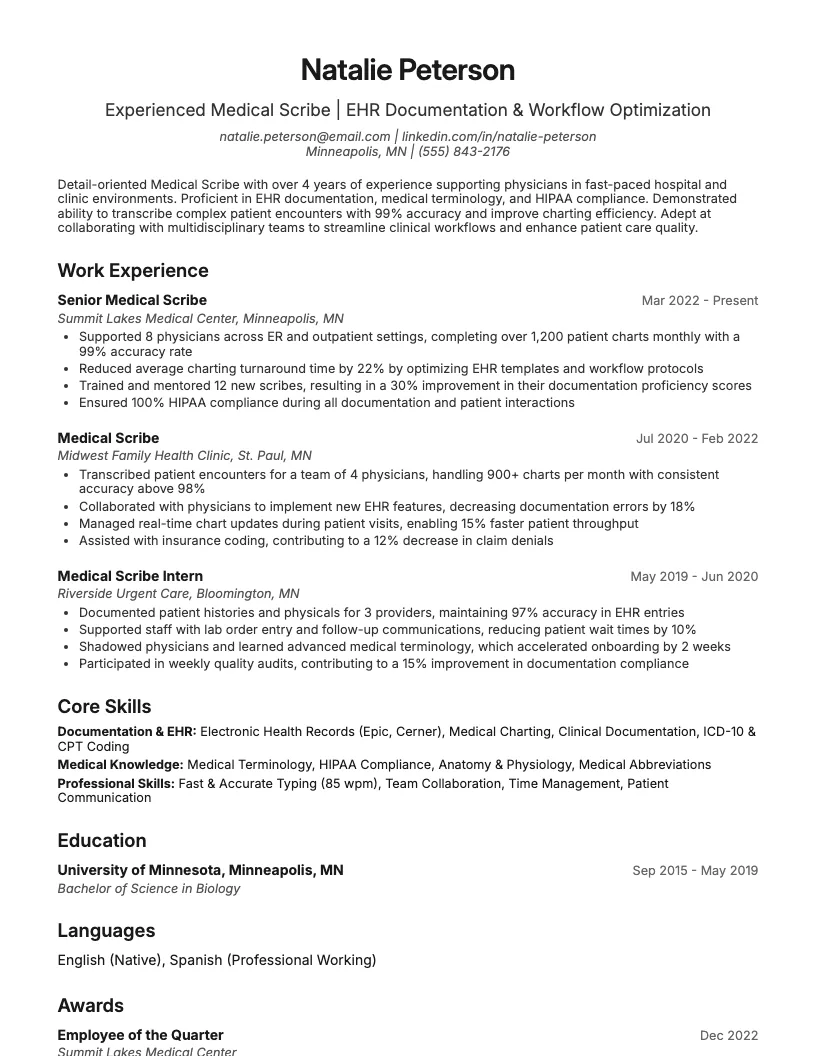 Click to enlarge
Common questions about Medical Transcriptionist resumes
A medical transcriptionist resume template is a pre-designed document tailored to highlight your transcription skills, experience, and certifications for healthcare roles. ResumeJudge offers templates that make resume-building easy and professional.
Yes, most medical transcriptionist resume templates from ResumeJudge are ATS-friendly, meaning they're formatted to pass automated screening systems used by hospitals and clinics.
Use a medical transcriptionist resume template when applying for jobs in hospitals, clinics, or medical offices. It's also great for remote transcription roles in healthcare settings.
Absolutely! ResumeJudge templates are fully customizable, so you can add your own experience, certifications, and specialized skills to match any job description.
Medical transcriptionist templates focus on healthcare-related skills and terminology, while general templates may lack sections for certifications or medical experience. ResumeJudge ensures industry-specific relevance.
Aim for a one-page resume if you have less than 10 years’ experience. For senior roles, two pages are acceptable. ResumeJudge templates help keep your content concise and well-formatted.
Highlight fast and accurate typing, knowledge of medical terminology, confidentiality, and attention to detail. ResumeJudge templates include sections for these important skills.
Yes, ResumeJudge templates feature dedicated sections for certifications like RHDS or CHDS, making it easy to showcase your qualifications to employers.
Yes, these templates work well for entry-level positions. ResumeJudge provides guidance on highlighting education, internships, and transferable skills.
Save your resume as a PDF or Word document for best results. ResumeJudge templates support both formats and ensure your layout stays professional and ATS-compatible.
Explore more professional resume examples to inspire your job search
Use our AI-powered resume builder to create a professional, ATS-friendly resume in minutes.
Free to use • No credit card required