Medical Transcriptionist Resume Example
See full guide on Medical Transcriptionist resumes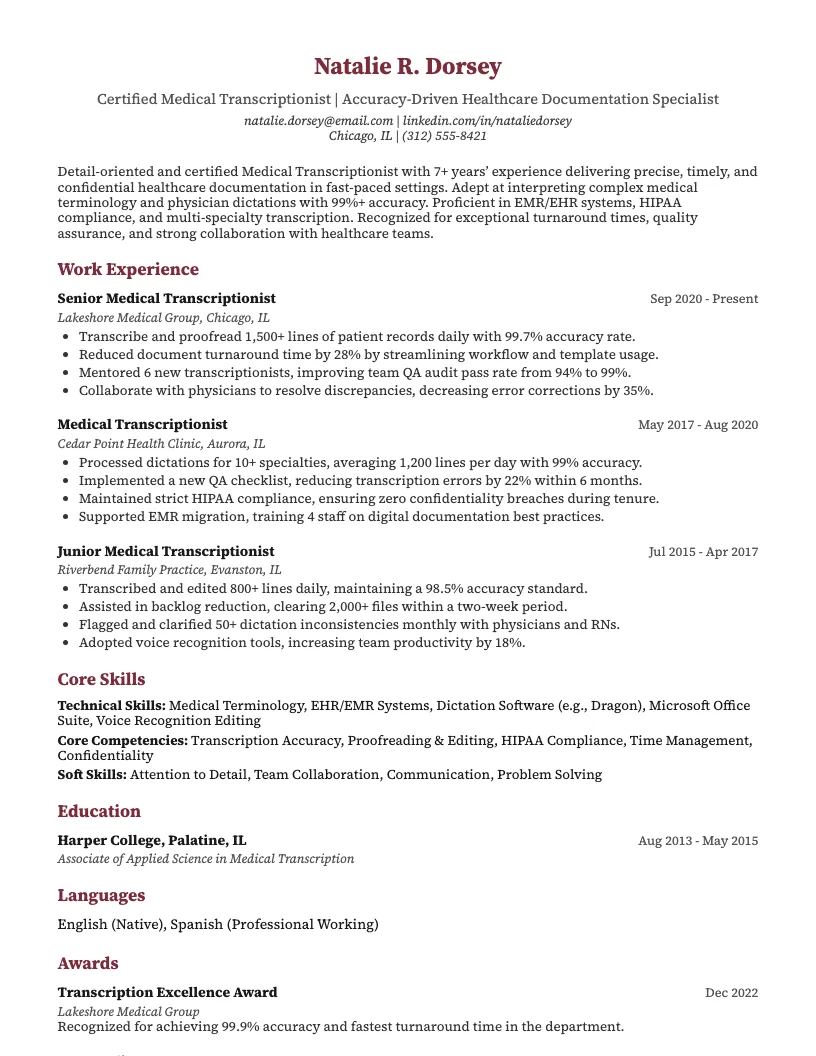 Click to enlarge
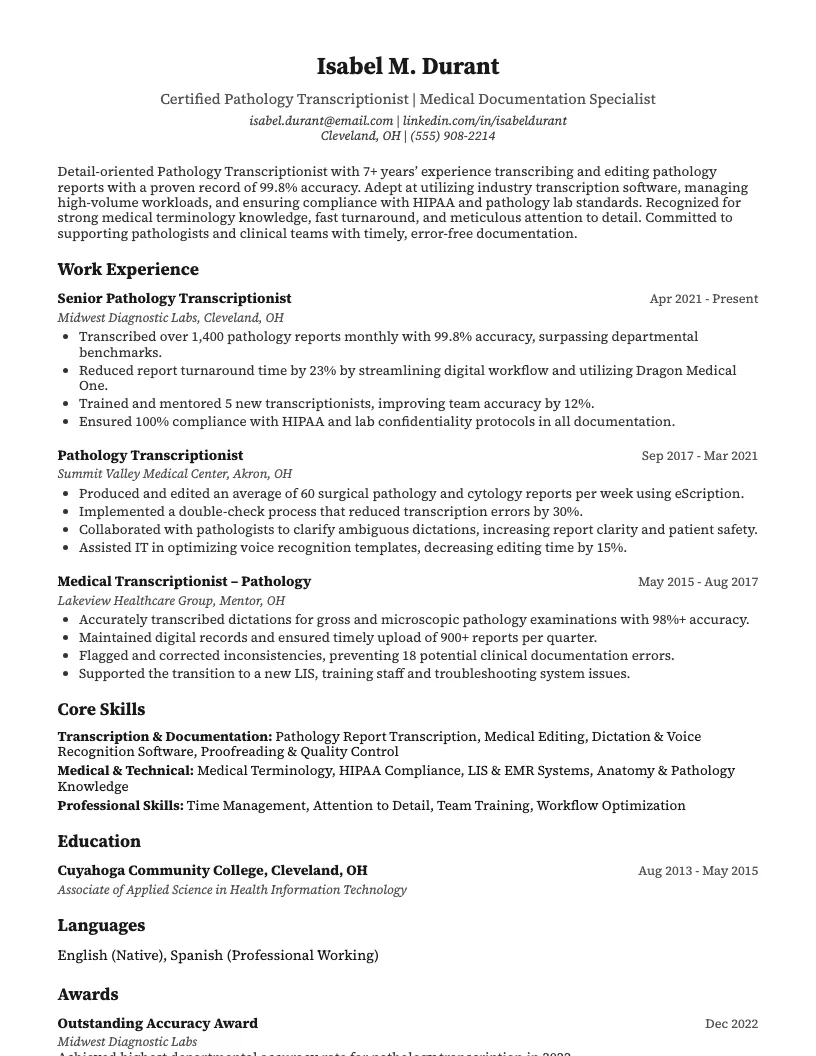 Click to preview

Get inspired by 50+ professional Pathology Transcriptionist resume examples, each written by career experts and optimized to pass ATS scans. Pick a proven template, tailor it to your role, and download a polished resume in minutes.
If you want a job as a pathology transcriptionist, your resume needs to show your accuracy and medical knowledge. I know employers look for both.
This page gives a clear resume example that highlights real job skills. You’ll see what details matter and why each section counts when you apply.
A pathology transcriptionist is someone who listens to audio recordings from pathologists and types them into medical documents. I focus on lab results, autopsy reports, and biopsy findings.
Attention to detail is huge in this job. I deal with medical terminology, so accuracy is everything. Even a small typo can change a diagnosis.
You need solid typing skills-most employers expect at least 60 words per minute. Familiarity with medical software and transcription tools is also a big plus.
I often handle confidential patient data, so understanding HIPAA and privacy rules is essential. This role is all about speed, precision, and reliability.
Sometimes, I get stuck staring at a blank page. Resume examples give me a clear starting point and help me organize my experience in a way that employers expect.
You see, hiring managers look for specific details. A good example shows what skills, certifications, and keywords matter most for a pathology transcriptionist-saving you hours of guesswork.
There are data-backed reasons too. According to Jobscan, resumes with industry keywords get up to 60% more interviews. Using an example helps you hit those marks.
I see a lot of medical transcriptionist resume examples that highlight accuracy, speed, and medical terminology knowledge. These samples often show real stats, like 99% accuracy or 60+ audio minutes transcribed daily.
You might notice strong formatting and clear organization in the best examples. This helps recruiters spot specialized skills-think pathology dictation, EMR systems, and turnaround times under 24 hours.
Using current medical transcriptionist resume examples can help you find keywords and achievements worth including, and reviewing a cover letter can give you ideas for how to present your skills in your application. If you’re updating your resume, this saves time and boosts your chances of landing interviews.

A solid pathology transcriptionist resume highlights accuracy, medical knowledge, and typing speed. Employers look for people who can handle technical terms and meet tight deadlines.
You want your resume to show relevant skills and experience. It’s key to match the job description, pick the right format, and organize your details clearly.
Before you start writing your resume, I always recommend reading the job description closely. Each employer asks for different skills and experience, even for the same title.
Look for keywords like medical terminology, accuracy, and confidentiality. These show up in over 80% of pathology transcriptionist job listings right now.
Pay attention to required certifications, years of experience, and software knowledge. This helps you match your resume to what hiring managers actually want to see.
I usually recommend the reverse-chronological format for pathology transcriptionists. It puts your most recent experience front and center, which hiring managers expect-especially in medical fields.
Some applicants prefer a combination format. This lets you highlight both your skills and work history, which helps if you’re shifting into pathology from another transcription specialty.
Whatever format you choose, keep it clean. Use clear headings, bullet points, and consistent fonts. About 75% of recruiters use automated systems, so simple layouts work best.
I always start my resume with clear contact info, then add a summary that highlights my transcription speed and accuracy. This helps recruiters spot key strengths right away.
You should organize sections like Work Experience, Education, and Certifications in reverse-chronological order. This makes your most recent and relevant skills easy to find.
Bullet points work best for describing your tasks. Stick to short, action-focused phrases-employers read over 50 resumes a day, so clarity really matters.
Every strong pathology transcriptionist resume includes a few must-have sections. These help hiring managers quickly see your background, skills, and experience.
You want your resume to show off your attention to detail, technical skills, and knowledge of medical terminology. Each section supports that goal in its own way.
Your professional summary sits right at the top of your resume. This is where you introduce yourself and highlight your experience as a pathology transcriptionist.
I use this section to show my accuracy, speed, and attention to detail. Good summaries mention years of experience-like “5+ years in medical transcription”-and the types of pathology reports you handle.
Keep it short-three to four sentences max. Focus on your strongest skills and the value you bring. This helps recruiters see your fit at a glance.
I focus on accuracy-over 98% error-free transcription is the norm in this field. Fast typing, usually at least 65 words per minute, keeps workflows smooth.
You really need strong medical terminology knowledge. Understanding clinical and lab vocab helps avoid mistakes and saves a lot of time during editing.
Attention to detail is huge. I always double-check pathology reports for patient names, specimen numbers, and diagnoses. This helps maintain patient safety and compliance.
Here, you want to highlight actual roles and daily tasks. I focus on accurate transcription, managing over 50 pathology reports a day, and maintaining confidentiality.
List your employers, job titles, and dates. Use bullet points to show achievements, like boosting turnaround by 30% or reducing error rates. Numbers make your impact clear.
I always mention any experience with EHR systems or medical terminology. This helps recruiters see I'm ready to hit the ground running.
I always list my highest education first-most pathology transcriptionists have at least a high school diploma. Some jobs prefer an associate degree in health information or medical transcription.
You should add certifications like the Certified Medical Transcriptionist (CMT) or Registered Healthcare Documentation Specialist (RHDS). These show your commitment and can boost your chances by up to 30%.
Continuing education is a plus. If you’ve taken courses in medical terminology or HIPAA compliance, include them. This helps employers see you stay up-to-date.
I always include awards or recognition I receive, like "Employee of the Month" or accuracy contests. These details show I stand out among other pathology transcriptionists.
Professional memberships-like AHDI or local medical transcription networks-boost credibility. Listing these tells employers I stay updated on industry standards and best practices.
You can add volunteer work, conferences, or workshops too. This helps highlight your dedication and shows you’re active in the field beyond your main job.
Pathology transcriptionists need a mix of technical skills, medical knowledge, and attention to detail. I see employers list accuracy, typing speed, and medical terminology in nearly every job posting.
If you want to stand out, focus on both hard and soft skills. Communication, organization, and up-to-date software knowledge really matter in this field. Let’s break down the must-haves next.
Technical skills are a huge part of being a pathology transcriptionist. I use specialized software like Dragon Medical and Microsoft Word every single day.
Typing speed matters a lot. I hit at least 70 words per minute with high accuracy. This helps me keep up with demanding workloads and tight deadlines.
You need to know basic troubleshooting. I often fix minor software glitches myself, which saves time. Familiarity with audio file formats and secure data transfer is essential too.
Strong attention to detail is a must. Even a single typo in a pathology report can cause confusion or delays, and accuracy rates above 98% are standard in this field.
Good time management keeps you ahead of tight deadlines. I juggle multiple cases every day, so staying organized and focused helps me deliver reports on time.
Communication really matters, too. You often clarify terms or request missing info from pathologists. Being clear and professional helps everyone work efficiently.
I need to know medical terminology-especially pathology terms. There are over 30,000 terms used in pathology, so staying updated is key.
Understanding laboratory processes, specimen types, and diagnostic codes helps me produce accurate reports. This means I don’t just type-I actually know what I’m hearing.
You should also stay aware of HIPAA and confidentiality rules. This protects patient data and keeps reports compliant. Mastering these details rounds out my pathology transcription skills.
Your professional summary is the first thing employers read. For pathology transcriptionists, it’s your chance to highlight accuracy, speed, and industry knowledge in just a few lines.
I pay attention to what recruiters want-clear skills, proven experience, and relevant certifications. A strong summary can boost your resume’s success rate by up to 30%.
A strong professional summary gives your resume focus right away. Here are a few examples you can use or tweak for a pathology transcriptionist resume.
Example 1:
I bring 5+ years’ experience in medical transcription, specializing in pathology. Fast, accurate typing-90 WPM-and strong knowledge of medical terminology help me deliver error-free reports.
Example 2:
Detail-oriented pathology transcriptionist with experience in digital dictation, EMR systems, and HIPAA compliance. I handle high-volume workloads while meeting tight deadlines and maintaining 99% accuracy.
Example 3:
You can highlight your ability to work independently, manage sensitive data, and support busy pathology teams. This helps recruiters see your value right away.
I always tailor my summary to match the job posting. Highlight your years of experience and the specific systems or specialties you know, like pathology EMRs or lab report formats.
Use keywords from the job description-terms like “transcription accuracy” or “HIPAA compliance”. This helps your resume pass automated screening tools and catches a hiring manager’s attention.
You can mention specific achievements, like “consistently maintain 99% accuracy,” to show your impact. Customizing this way shows you understand what that employer values most.
If you work as a pathology transcriptionist, you know accuracy and speed matter. Your resume needs to show how well you handle complex reports and medical language.
You want to highlight your daily responsibilities, how you add value, and what sets you apart. I’ll walk you through describing your work, quantifying your achievements, and picking the best examples.
When I list my responsibilities as a pathology transcriptionist, I focus on the core tasks I do every day. This helps recruiters understand my real impact.
You should mention things like accurately transcribing medical reports, managing confidential records, and meeting strict deadlines. Use action verbs like "transcribe," "review," or "format" to keep it clear.
There are lots of ways to show your attention to detail-like catching errors in pathology reports or ensuring compliance with HIPAA. This shows you take accuracy seriously.
I like to back up my experience with hard numbers. For example, I mention, “Transcribed over 1,200 pathology reports monthly with 99% accuracy.” This shows what I actually deliver.
You can highlight turnaround times too. Try something like, “Consistently meet 24-hour deadlines for STAT reports.” Numbers like these help your resume stand out.
There are lots of ways to do this-accuracy rates, productivity stats, or error reduction percentages. Quantifying your work makes your achievements easy to understand and trust.
I always include specific job titles like Pathology Transcriptionist or Medical Transcription Specialist. Listing the actual employer and location helps show credibility.
You might say, “Transcribe 50+ pathology reports per day with 99% accuracy.” This shows you handle a high workload and pay attention to detail.
There are other ways to highlight experience, too. Mention familiar software like Epic or M*Modal. This helps recruiters see your technical skills right up front.
When you share actual tasks-preparing gross descriptions, editing digital voice files, or flagging discrepancies-you make your experience feel real and relevant.
That’s it for showing your experience. Next up, you can focus on other resume sections to round out your story.
Getting into pathology transcription usually means you need some schooling. Most employers ask for a postsecondary certificate or an associate degree.
Certifications matter, too. About 60% of job postings mention them as a plus. I’ll break down what education and certifications help you stand out.
You don’t need a medical degree to work as a pathology transcriptionist, but most employers look for at least a high school diploma or GED.
I usually see people with associate degrees in medical transcription, health information, or a related field get more interviews. This helps you stand out.
Courses in medical terminology, anatomy, and English really help. You learn the language of pathology, which makes the job easier and helps you avoid mistakes.
There are a few certifications that really boost your credibility as a pathology transcriptionist. The Registered Healthcare Documentation Specialist (RHDS) is the most common starting point.
If you already have experience, consider the Certified Healthcare Documentation Specialist (CHDS). About 40% of top employers mention these certifications in job listings.
You can also look into HIPAA training or medical terminology courses. This helps you stay current and shows employers you take compliance and accuracy seriously.
If you want your pathology transcriptionist resume to stand out, you need more than the basics. I see hundreds of resumes that miss out on simple details.
You want to grab attention, get past ATS filters, and show your skills clearly. I’ll share practical tips you can use right now.
The right keywords, clean formatting, and avoiding common mistakes make a huge difference. Even small tweaks can boost your chances of landing interviews.
Most employers use Applicant Tracking Systems (ATS) to filter resumes. You want your resume to pass this first screen. If you skip keywords, your skills might never get seen.
I always use industry-specific terms like pathology reports, medical terminology, transcription accuracy, and HIPAA compliance. These terms help highlight my experience and boost my chances with ATS filters.
You can pull keywords directly from job descriptions. This helps match your resume to what hiring managers want. Over 95% of Fortune 500 companies use ATS, so keywords really matter.
I always stick with a clean, easy-to-read layout. Use consistent font sizes-usually 10-12 pt for body text. Margins should be at least 0.5 inches.
Keep bullet points short and impactful. Hiring managers spend an average of six seconds scanning a resume. Clear sections and bold headers really help them find what they need fast.
You want your resume to look good on any device. Save it as a PDF to keep formatting intact. This avoids weird spacing issues and makes your resume look professional everywhere.
A big mistake I see is leaving out quantifiable results. If you process 100+ reports a week or keep 98% accuracy, mention it. Numbers show your real impact.
You don’t want to overlook specialized skills. There’s a difference between general transcription and pathology. List software, terminology, and security protocols you actually use.
Typos and inconsistent job titles make hiring managers question attention to detail. Double-check everything before you hit send. Accuracy matters in pathology-and in your resume, too.
With these tips, you can avoid the usual pitfalls and make your resume stand out.
You want your pathology transcriptionist resume to stand out and clearly show your experience and skills. I see hiring managers look for accuracy, medical terminology, and speed.
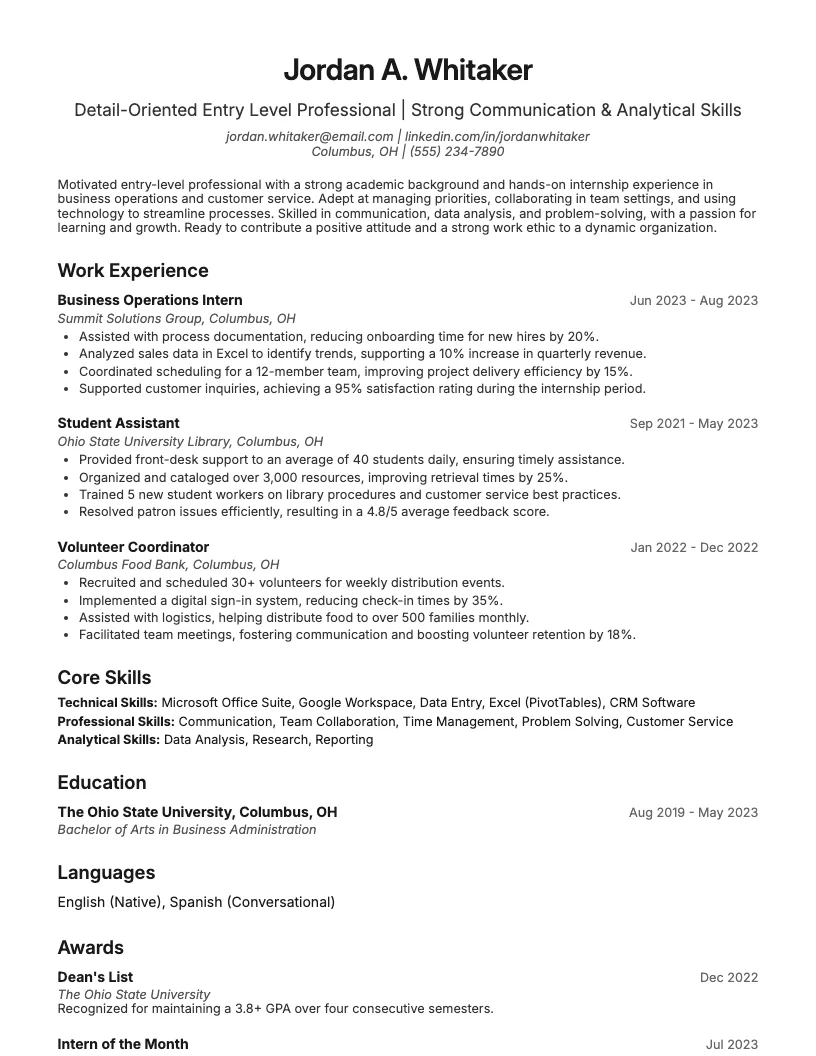
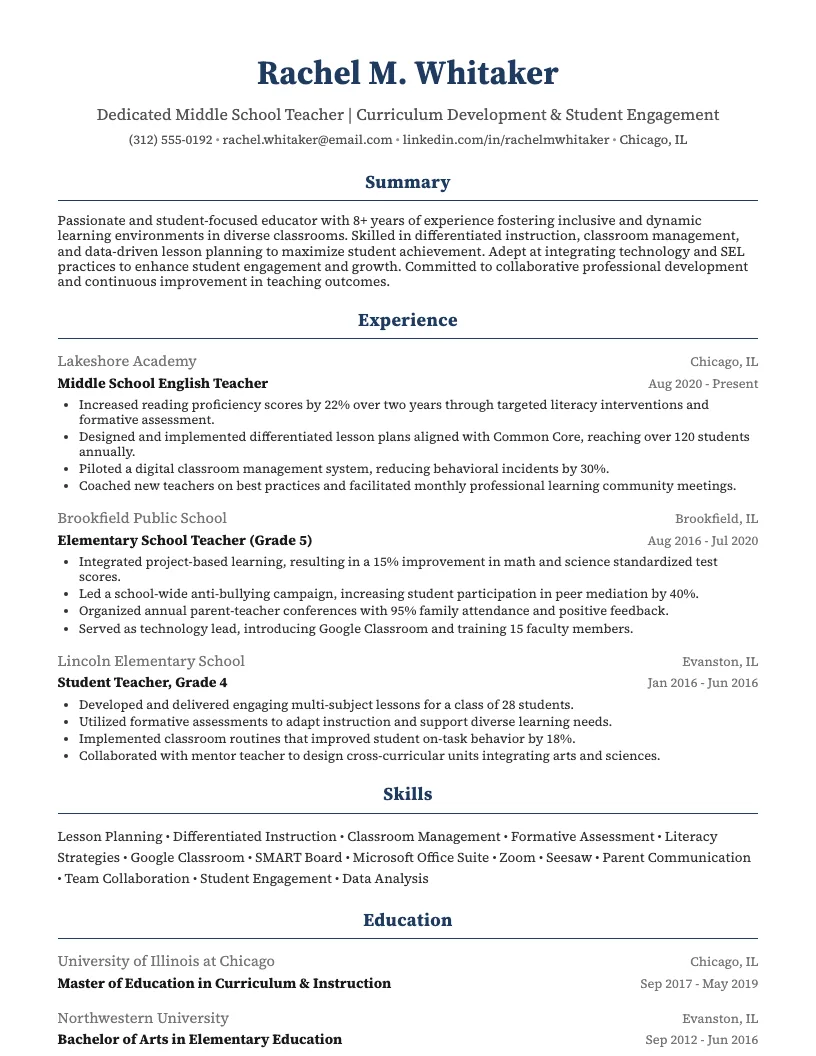
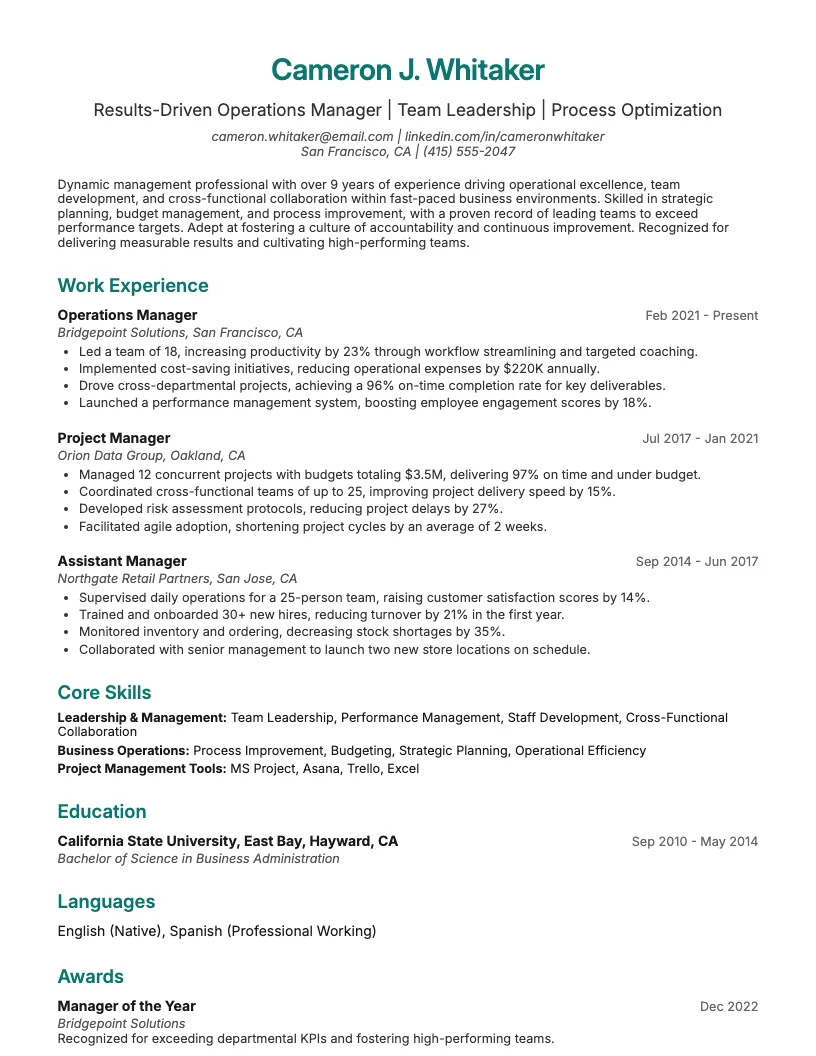
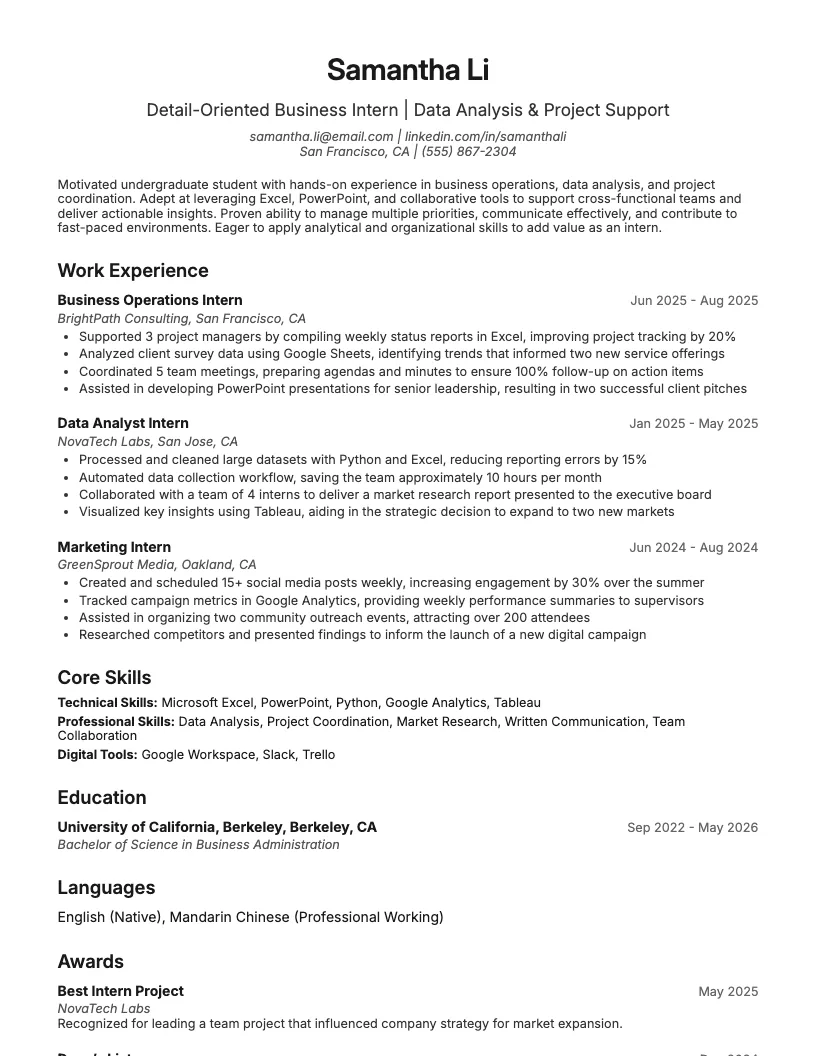
Here, you’ll find a sample resume you can use for inspiration. There’s also a ready-to-download template that makes formatting easy and quick.
Here’s a real-world example of a pathology transcriptionist resume. I lay out the sections recruiters expect, like summary, skills, work experience, and education.
You’ll see how I highlight accuracy, medical terminology, and typing speed-all key for this role. This sample shows how to plug in your own stats and achievements.
Use the format to get noticed by hiring managers. There’s no fluff-just the stuff that proves you know pathology and can handle 99% accuracy rates.
You can grab a downloadable template in both Word and PDF formats. It’s designed for easy editing, so you just swap out the sample details for your own.
I like using a template because it saves time and keeps my formatting consistent. Employers often scan resumes quickly-a clean, organized layout makes a big difference.
If you want to customize, there’s space for your certifications, references, or extra skills. Tweak sections as needed, so you stand out in the pathology transcriptionist job market.
Browse Pathology Transcriptionist resume examples for related roles. Preview any example, open it in the builder, or read its full guide.
Click to enlarge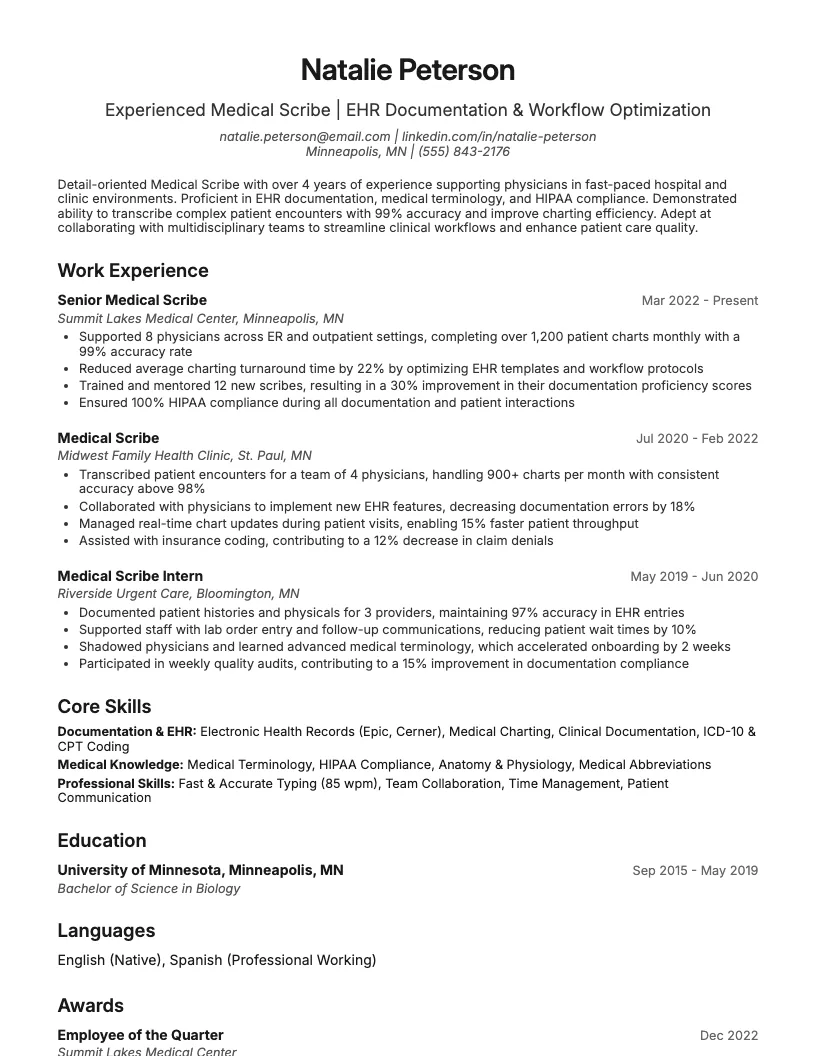 Click to enlarge
Common questions about Pathology Transcriptionist resumes
A Pathology Transcriptionist resume template is a pre-designed document tailored to highlight skills, experience, and certifications specific to pathology transcription. ResumeJudge makes creating a professional resume quick and easy.
Yes, most Pathology Transcriptionist resume templates, especially those from ResumeJudge, are designed to be ATS-friendly, ensuring your resume passes screening software used by hospitals and clinics.
Use this template when applying for transcription roles in pathology labs, hospitals, or diagnostic centers. ResumeJudge templates help you showcase relevant skills and experience professionally.
Absolutely! You can easily edit and personalize the template to match your experience, skills, and career goals. ResumeJudge offers flexible customization options for every applicant.
Pathology Transcriptionist templates focus on medical terminology, accuracy, and transcription tools, unlike generic templates. ResumeJudge ensures your strengths in this field stand out.
Ideally, keep your resume to one page, especially if you have less than 10 years of experience. ResumeJudge helps you organize information concisely for maximum impact.
Include contact info, a summary, work experience, education, and key skills like medical terminology. ResumeJudge templates provide a clear structure for these sections.
Yes, listing certifications like CMT or RMT can boost your credibility. ResumeJudge templates have dedicated sections for highlighting your credentials.
Mention your error-checking process and provide examples of accurate report transcription. ResumeJudge lets you showcase these strengths with targeted bullet points.
Yes, these templates work well for both on-site and remote pathology transcription roles. ResumeJudge makes it easy to highlight remote work skills and relevant software knowledge.
Explore more professional resume examples to inspire your job search
Use our AI-powered resume builder to create a professional, ATS-friendly resume in minutes.
Free to use • No credit card required