Resume Keywords Section: 7 Places to Put 10-20 Keywords
Where keywords actually belong on a resume: the 7 spots that matter, how many times to repeat one, and how to work them into bullets instead of a bare list.


Written by Sarah Chen
Senior Career Strategist & Resume Expert
Updated August 2026
Reviewed by Marcus Rodriguez
Is your resume ATS-friendly?
Drop your resume in and see which of these skills a scanner can actually read, and which ones the job you want is asking for that you have not listed.
PDF or DOCX. Max 2MB.
We never share your resume or use it to train a model.
In This Guide:
Where do keywords go on a resume?
Where do keywords go on a resume?

Short answer: everywhere someone might look. Recruiters and scanning software don't read a resume the way you'd read a letter - they hunt for specific terms in specific spots, and if a keyword only shows up where nobody's looking, it might as well not be there.
The professional summary
This is the first thing anyone reads, human or software, so it's the highest-value real estate on the page.
Put your target job title and your two or three strongest, most relevant terms right in those first two lines. I've reviewed resumes where the summary talked about "a dedicated professional" for three sentences and never once named the role or the skill that mattered - that's a wasted paragraph.
The skills section
Which terms belong here rather than in a bullet is covered in hard skills go in the skills section. The count to aim for is under how many skills to list.
Work experience bullet points
This is where a keyword stops being a word and starts being proof. Anyone can list "project management" in a skills section; showing it inside a real result is what makes a recruiter believe it.
How to build a bullet that way is covered in how do you work a keyword into a bullet point.
Your job titles
Job titles are keywords too, and they're one of the first things a recruiter's search pulls on. If your actual title was unusual or company-specific, it's worth adding the industry-standard version alongside it, in your bullets or a subtitle - not lying about the title itself, just making sure the common term appears somewhere on the page.
Education, certifications and licenses
Which qualifications belong here rather than in a bullet is covered in certifications and degrees go in education, and writing them out in full is covered in spelling out acronyms. If the posting names a specific license, your resume needs that exact wording, not a paraphrase.
Your location and contact line
Easy to overlook, but plenty of searches filter by geography before anything else. Put your city and state clearly in the header, and if you're open to relocating or already work remote, say so in the same line - otherwise a resume that's a perfect fit can get filtered out before anyone reads a word of it.
The top third of page one
Zoom out and all of the above points the same direction: recruiters read top to bottom and often stop scanning long before they hit the bottom of page one, so that top third - your header, your summary, the start of your first job - is the most valuable space you have. If a keyword really matters, it belongs up there, not buried in a bullet three jobs back.
When I'm not sure a resume is hitting the terms a specific posting wants, running it through ResumeJudge against that job description will rewrite the resume to put in what's missing before you submit it, rather than guessing.
Should you have a separate keywords section on your resume?
Short answer: no, not the way most people picture it.
I still see resumes with a block labeled "Keywords" crammed with forty terms in no particular order, and it almost never helps.
What a standalone keyword list looks like
You've probably seen the format: a header that says "Keywords" or "Key Terms," followed by a wall of words separated by commas or pipes, sometimes crushed into 8-point font at the bottom of the page.
It's usually built by pulling every noun out of the job posting and pasting it in, unedited.
Why recruiters skip past a bare list of words
A list of nouns with no context proves nothing.
Anyone can type "leadership, Salesforce, project management" whether or not they've ever touched Salesforce.
Nine times out of ten, a recruiter's eye slides right past it, because it doesn't show scope, tools used, or an outcome - it's a claim with no evidence behind it.
The skills section is the version that works
What actually does the job of a keyword list, without the downsides, is a proper skills section.
Same terms, but structured - a clean set of hard skills the ATS can parse and a hiring manager can scan in three seconds.
Pair it with those terms showing up again in your work experience bullets, where they're attached to something you did, and you get both the scan-friendly match and the proof.
How many skills to list in it
I tell people to land somewhere between 8 and 12.
Fewer than that and the section looks thin next to the rest of the page; more than that and you're padding it with things you'd struggle to speak to in an interview.
Pick the ones the posting actually asks for, not everything you've ever touched.
Grouping skills by category so software can read them
a skills section
Skills: Salesforce, HubSpot, Excel, SQL, Leadership, Photoshop, Project Management, Teamwork
CRM Platforms: Salesforce, HubSpot
Don't dump all 10 skills into one comma-separated line.
Group them - "Technical Skills," "Tools," "Languages" - so both the parsing software and the human reading it can find what they're looking for fast.
A resume with "CRM Platforms: Salesforce, HubSpot" reads as organized; the same two words buried in a 20-item string reads as filler.
What to do with keywords that have no home in the skills list
Not every term from a posting belongs in the skills box. Which type of keyword goes where, and which ones belong in a bullet instead, is covered in how do you decide which keywords to put where.
And if you're not sure which of a posting's terms you're actually missing versus just phrasing differently, running your resume against the job description in ResumeJudge will rewrite it to use the terms the posting actually asks for, instead of leaving you to guess.
How do you work a keyword into a bullet point?
A skills section proves you've touched a keyword. A bullet point proves you can use it.
Recruiters weight the second one higher, so this is where most of your keyword work should actually happen.
Action verb + keyword + result
The formula is that simple: start with what you did, name the tool or skill, then show what happened because of it.
Skip any piece and the bullet goes soft. "Responsible for email campaigns" has no verb doing real work, no result, and barely a keyword.
Fix all three and the same sentence starts pulling weight in both directions - past the scanner and past the person reading after it.
"Managed territory sales" becomes "Drove 18% growth promoting a biologic across 120 HCPs"
a sales bullet
Managed territory sales.
Drove 18% growth promoting a biologic across 120 HCPs.
This is the pharma and medical-device version of the formula, and it's worth calling out because generic sales language is exactly where I see these resumes fall flat.
"Managed territory sales" could describe anyone. "Drove 18% growth promoting a biologic across 120 HCPs" names the therapy type, the audience, and a number - which is what a hiring manager in that field is actually scanning for.
If you've worked with specific disease states, HCPs, KOLs, or formulary committees, those terms belong in the bullet itself, not just floating in your summary.
"Worked on email campaigns" becomes "Managed lifecycle email campaigns using Hubspot and A/B testing to improve retention by 18%"
a marketing bullet
Worked on email campaigns.
Managed lifecycle email campaigns using Hubspot and A/B testing to improve retention by 18%.
Same fix, marketing flavor. "Worked on" tells me nothing - not the tool, not the skill, not the outcome.
Swap it for the platform you used, the method (A/B testing counts as a keyword too), and a retention number, and you've gone from a line a scanner might match on luck to one it matches on purpose.
I'd rather see three bullets built this way than ten written like the original.
"Project management using agile methodologies" becomes "Led cross-functional teams through agile sprints to deliver enterprise-level solutions on schedule"
a project management bullet
Project management using agile methodologies.
Led cross-functional teams through agile sprints to deliver enterprise-level solutions on schedule.
Here's the mistake I see constantly: people take a skill straight off the job posting and paste it in as-is, like "Project management using agile methodologies." That's not a bullet, it's a phrase.
Turn it into something that happened. Who did you lead, through what process, to what end?
"Led cross-functional teams through agile sprints to deliver enterprise-level solutions on schedule" keeps every keyword from the original and reads like an actual accomplishment.
If you're not sure your bullets are landing this way, running them against a real posting will rewrite the ones that still read like a list of duties into ones that lead with results - that's one of the things ResumeJudge does for you.
Putting the strongest keywords in your most recent job
Recruiters read top-down and skim fast, so your most recent role carries more weight than your second or third. Put your best keyword-loaded bullets there first, then let older roles carry lighter, shorter versions.
That's the same reason the top third of page one matters most.
Copying the posting's sentences word for word
Don't paste the job description into your resume. Recruiters read flagged applications by hand, and a sentence lifted straight from their own posting is one of the fastest ways to look like you didn't write your own resume.
Treat the posting as a source of terms, not a script. Pull the recurring words out, then rebuild the sentence around your own experience using synonyms and the language you'd actually use to describe the work.
The keyword survives; the copy-paste doesn't.
How many times should you repeat a keyword?
Why repeating a keyword is not automatically wrong
I get this question in almost every review I do: "won't it look weird if I say 'SQL' more than once?"
No. Not if the resume is telling the truth about your work.
If you used SQL to build reports in one job and to clean data in another, both bullets earn the word. The scanner and the recruiter reading after it both want to see a skill show up where you actually used it, not once and never again.
The advice that a keyword should never appear twice
You'll see this rule stated flatly on forums and even some career sites: never repeat a keyword, it looks like stuffing.
I think that advice mixes up two different things. Repeating a word because you're padding the page is a problem.
Repeating a word because it's genuinely part of three different achievements is not the same act, and treating them the same leads people to cut good, accurate content just to satisfy a rule that was never really about them.
Two or three placements, in different sections
Here's the pattern I actually recommend: a keyword shows up once in your skills section, and once or twice more inside a bullet where it did real work.
So "project management" sits in your skills list, and then again in a bullet like "led project management for a six-person team migrating a client to the new platform." That's not repetition for its own sake.
That's the same fact proven twice, which is a stronger claim than either one alone.
What keyword stuffing actually looks like
Stuffing isn't a word count. It's a word appearing somewhere it has no business being.
I've seen "cross-functional collaboration" wedged into a bullet about running a cash register, and a skills list forty items deep with things the person clearly hadn't touched since a college elective. That's what actually trips scanners and turns off recruiters - not that a term shows up twice, but that it shows up dishonestly or out of context.
If you're not sure whether a term still belongs on your resume, checking it against a real job posting settles it fast - ResumeJudge will flag anything on your resume the posting doesn't actually ask for.
White text and hidden keywords
Some people try to get around all of this by pasting a wall of keywords into the document in white text, invisible on the page but readable to a scanner.
Don't. Most modern systems can detect it, and the ones that can't still leave you exposed the moment a human opens the file and selects all. It's also just a list of skills you may not have - which is its own problem separate from getting caught.
How many keywords a resume ends up with in total
There's no fixed number, but most resumes that pass through a decent tailoring process land around 10 to 20 targeted terms, pulled straight from the posting rather than invented.
That's enough to cover the hard skills, tools, and soft skills a posting asks for without turning every sentence into a term you're reciting. If you want a second opinion on whether you've landed in that range, run the resume against the actual posting and let it show you what's covered and what's still missing.
How do you decide which keywords to put where?
Where each keyword type goes
| Keyword type | Where it goes | Example |
|---|---|---|
| Hard skills | Skills section | Excel, SQL, CPR certification |
| Soft skills | Experience bullets | Leadership, teamwork |
| Tools & software | Skills section and a bullet | Salesforce |
| Certifications & degrees | Education section | CPA, MBA |
| Job titles | Work history and headline | Exact past title, plus the posting's title |
| Acronyms | Spelled out once, usually the degree line | B.A. (Bachelor of Arts) |
The short answer: it depends on what kind of keyword it is. A tool name, a soft skill, and a job title all belong in different spots, and putting all three in the same place is the most common mistake I see on resumes that get filtered out before a person ever reads them.
Pull the terms out of the posting first
Don't start from a generic list of "good resume words." Start from the actual posting in front of you.
Read it twice. The first time, just notice what repeats - if "cross-functional" or "SQL" shows up three times in one posting, that's not an accident, that's the employer telling you what matters to them.
The second pass, pull out five categories: the required skills, the responsibilities, the tools named, any certifications listed, and the job title itself. Everything below in this section is about where each of those five goes once you've got them.
Hard skills go in the skills section
Hard skills are the concrete, provable ones - a language, a certification, a platform. Excel, SQL, CPR certification, forklift operation.
These belong in your skills section, listed plainly, because that's the section a scanner reads fastest and most reliably.
I'd rather see eight honest hard skills in that section than sixteen, because a scanner that finds a term there is far more confident about the match than one that has to infer it from a sentence.
Soft skills go in the experience bullets
Soft skills - communication, leadership, teamwork, problem-solving - are the opposite case. Nobody believes "leadership" sitting alone in a list, and most scanners weight it less than a hard skill anyway.
Prove it inside a bullet instead. "Led a team of five through a product launch" carries the word leadership without ever saying it.
That's the move: let the sentence demonstrate the trait rather than naming it.
Tools and software go in both
Tools are the one category I put in two places on purpose. Name the tool once in your skills section so it's easy to scan, then use it again inside a bullet where it did something - "managed the pipeline in Salesforce" reads very differently from "Salesforce" sitting in a list with nothing attached to it.
This is also where ResumeJudge earns its keep: paste in the posting and it'll rewrite your resume to include the tools it's asking for that yours doesn't mention anywhere yet, so you're not guessing at what's missing.
Certifications and degrees go in education
Keep these in your education section rather than scattering them through your bullets. A CPA, an MBA, a Ph.D., a vocational license - these are checkbox items.
Recruiters and scanners both expect to find them in one predictable place, so don't make anyone hunt.
Job titles go in your work history and your headline
Your actual past titles go in your job titles in the work history, exactly as your employer called them. But the posting's title deserves a second home: your resume's headline, right under your name.
I've seen the data on this one and it's not subtle - candidates whose resume includes the exact job title from the posting are over ten times more likely to land an interview. That's the single highest-leverage keyword move on the whole page.
Spelling out acronyms: "B.A." and "Bachelor of Arts"
a degree line
B.A., Communications
Bachelor of Arts (B.A.), Communications
Don't make a scanner guess whether "B.A." and "Bachelor of Arts" mean the same thing - plenty of them won't connect the two. Put both forms in somewhere, usually your degree line: "Bachelor of Arts (B.A.)."
Same logic for anything with a common short form: "search engine optimization (SEO)," "certified public accountant (CPA)." One extra word now saves you from getting filtered out over a formatting quirk.
Keywords you can't honestly claim
If you can't talk through a keyword for ten minutes in an interview, it doesn't belong on the resume, no matter how well it matches the posting. Placement never fixes a claim you can't back up once someone asks you about it.
Every category above assumes you actually have the thing. If the posting wants five years of a tool you've touched twice, don't force it into your skills section just because it's the right home for that keyword type - placement doesn't fix a claim you can't back up in an interview.
Run the posting against your resume before you send it. ResumeJudge will flag which required keywords are still missing, so you can decide honestly, one by one, which ones you can add and which ones you can't.
Frequently Asked Questions
Should I put keywords in my cover letter too?
Yes, repeat the same core keywords in your cover letter as in your resume. It shows the terms are a real part of your background, not something you dropped in once. Pull them from the job posting the same way you did for your resume, and work them into your explanation of why you fit the role rather than listing them. ResumeJudge can show you which keywords a posting expects before you start writing, so both documents cover the same ground.
Do keywords need to be in the same order as the job posting?
No, order doesn't matter. What matters is that the exact words or phrases show up somewhere in your resume, not that they appear in the sequence the posting listed them. Focus on getting the right terms into the right sections instead of trying to mirror the posting's structure.
Does bolding a keyword help?
Bolding a keyword doesn't help an ATS - the software reads the text, not the formatting, so a bolded word counts the same as a plain one. It can help a human reviewer skim faster if you use it sparingly, on a handful of terms that matter most. Bold too many words and nothing stands out anymore.
Should I change my old job title to match the posting?
Only if the role you held is genuinely equivalent to what the posting calls it - then using the posting's wording instead of your old employer's internal title can help an ATS match you. Don't inflate a title into something you didn't hold, like turning "sales associate" into "sales manager," since that misrepresents your experience and can cause problems if you reach an interview. Keep the change to wording, not seniority.
Do I need to redo placement for every job I apply to?
Yes. Each job posting uses its own mix of keywords, so a placement built for one posting won't match the next one closely. ResumeJudge can score your resume against a new job description and flag which keywords from that posting are missing, so retailoring takes minutes rather than a full rewrite.
Should my LinkedIn profile use the same keywords as my resume?
Yes, keep the same core keywords on your LinkedIn profile as your resume. Recruiters search LinkedIn and ATS databases by keyword, so a profile using different wording than your resume can miss those searches even if you're qualified. Work the terms into your headline, About section, and experience bullets the same way you would in resume bullets.
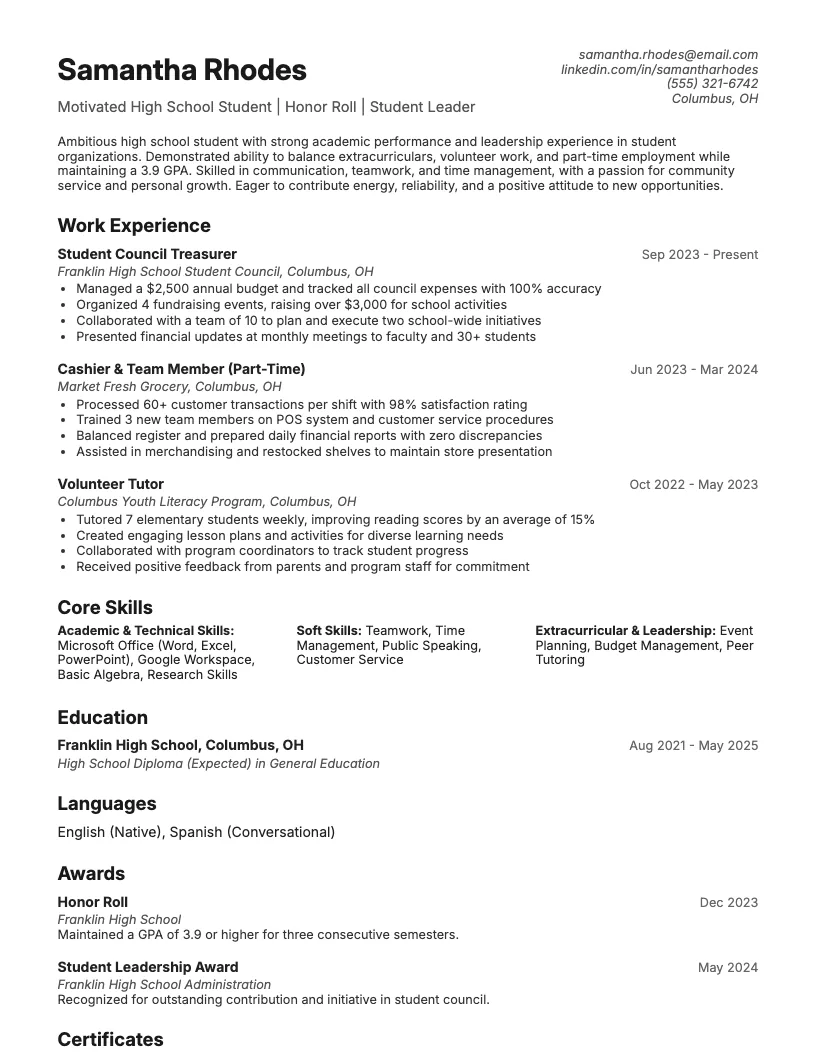
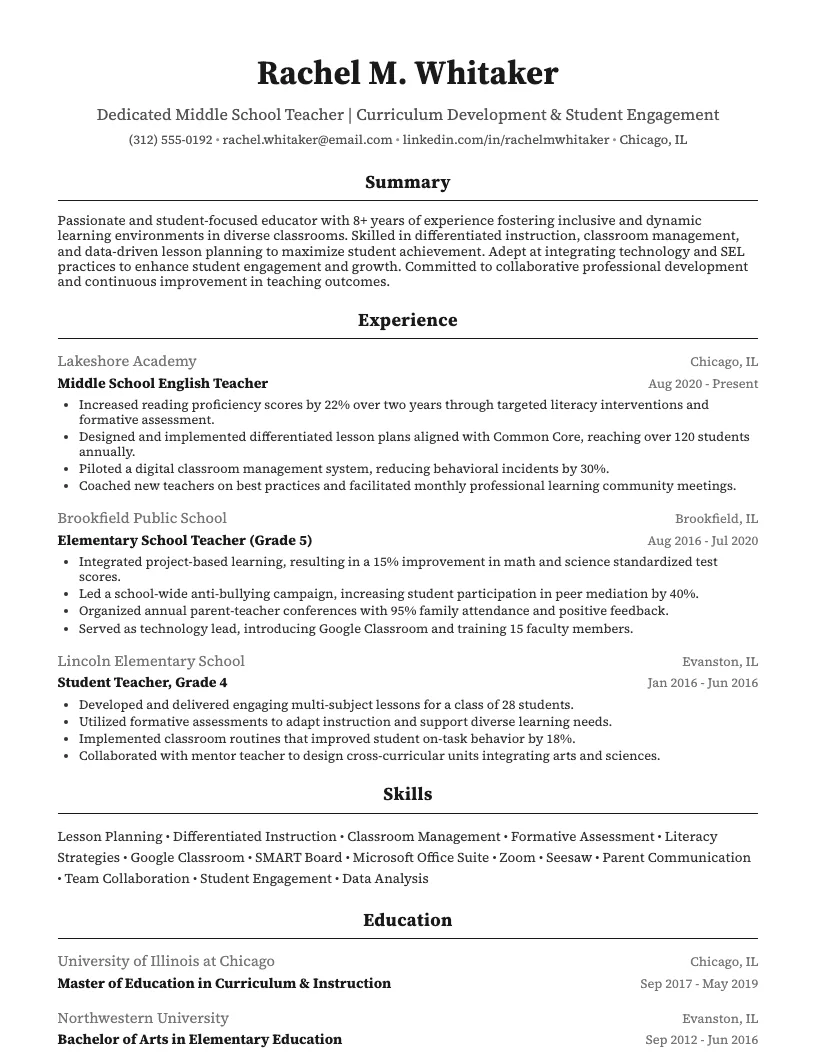
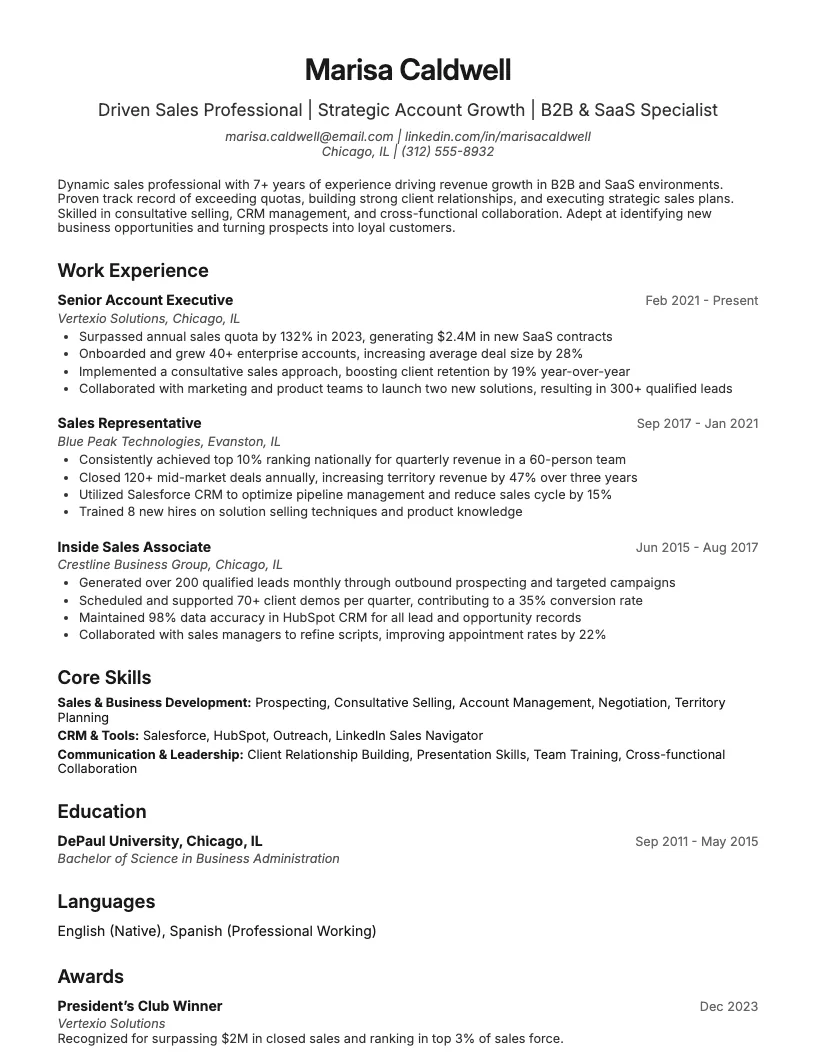
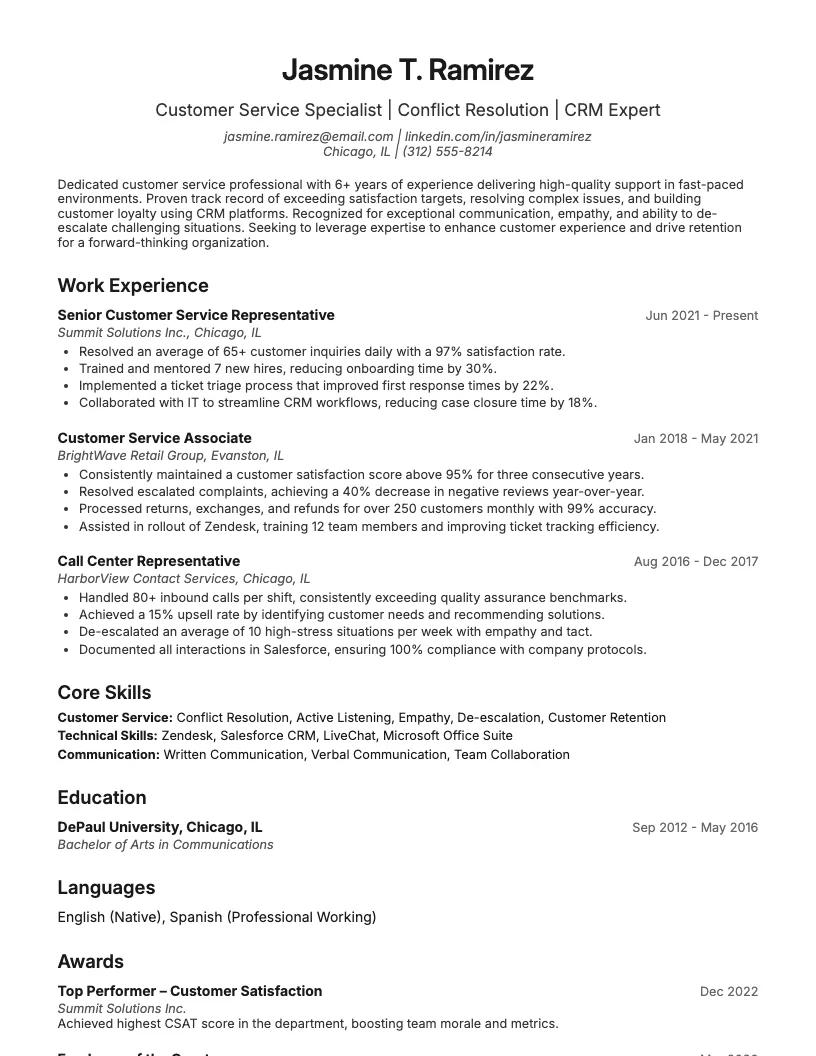
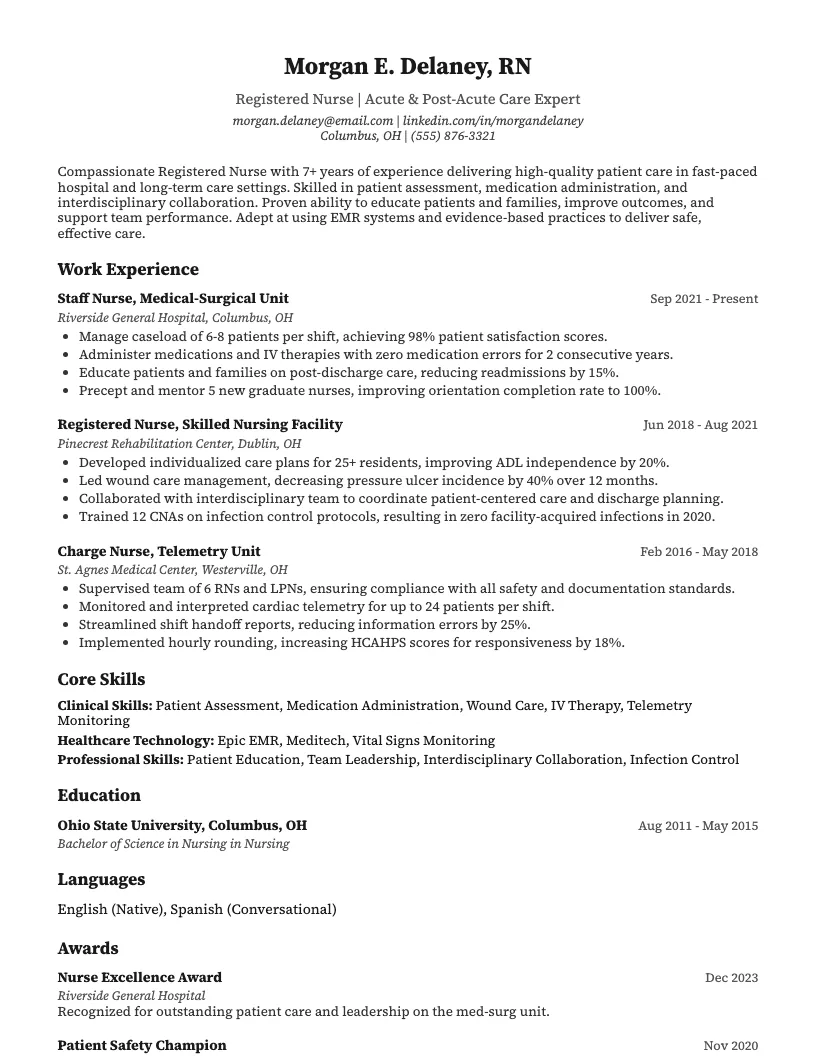
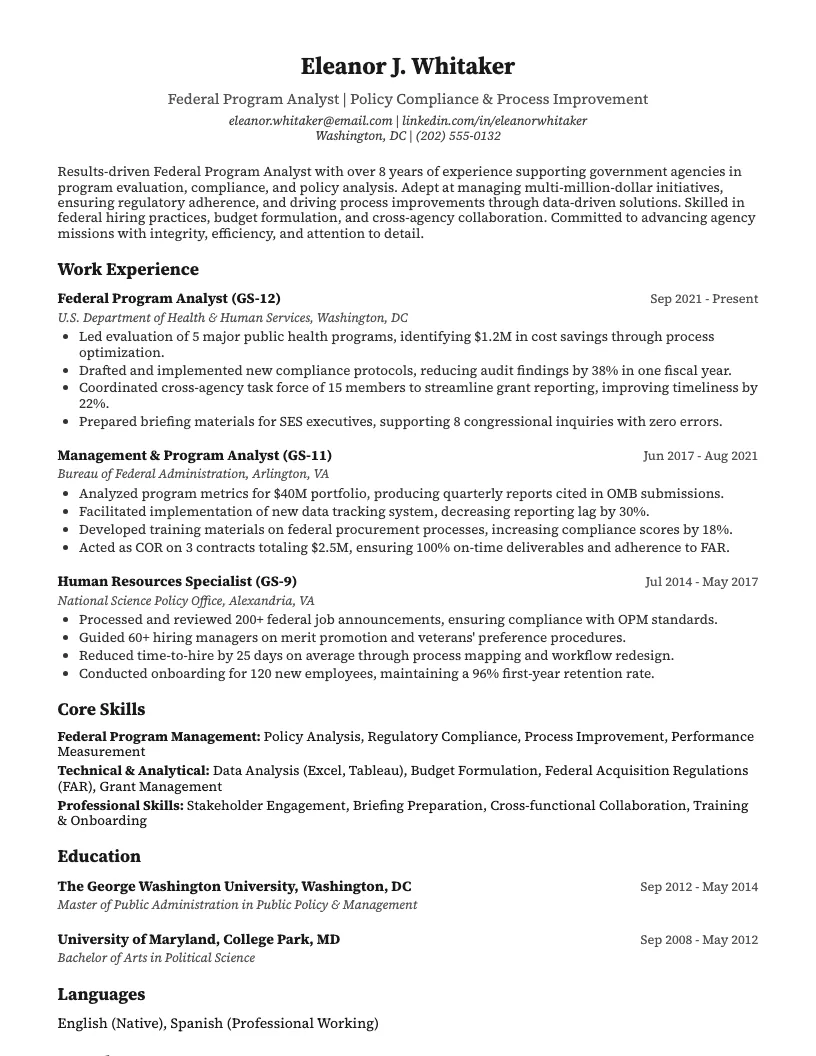
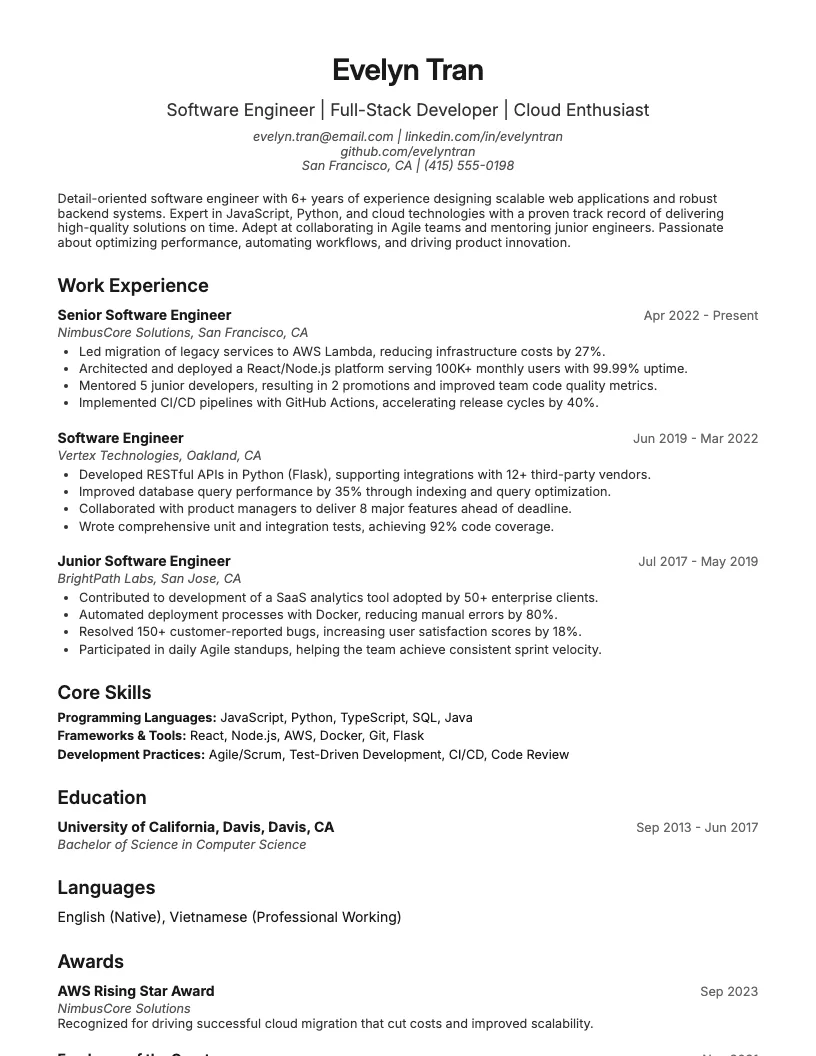
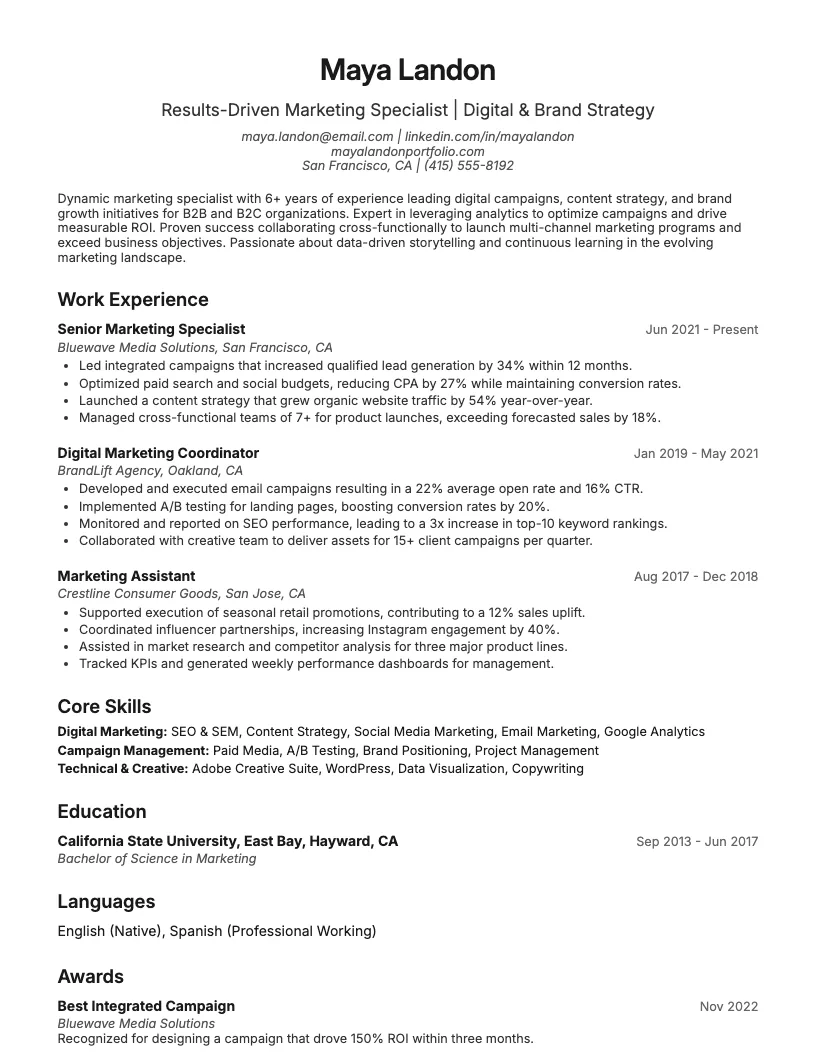
See these skills on a real resume
8 examplesStart from an example that already has them, and swap in your own.
Check your resume against the job you want
Scan your resume, see which skills and keywords the posting asks for that you are missing, and fix them before you apply.
Free to use • No credit card required