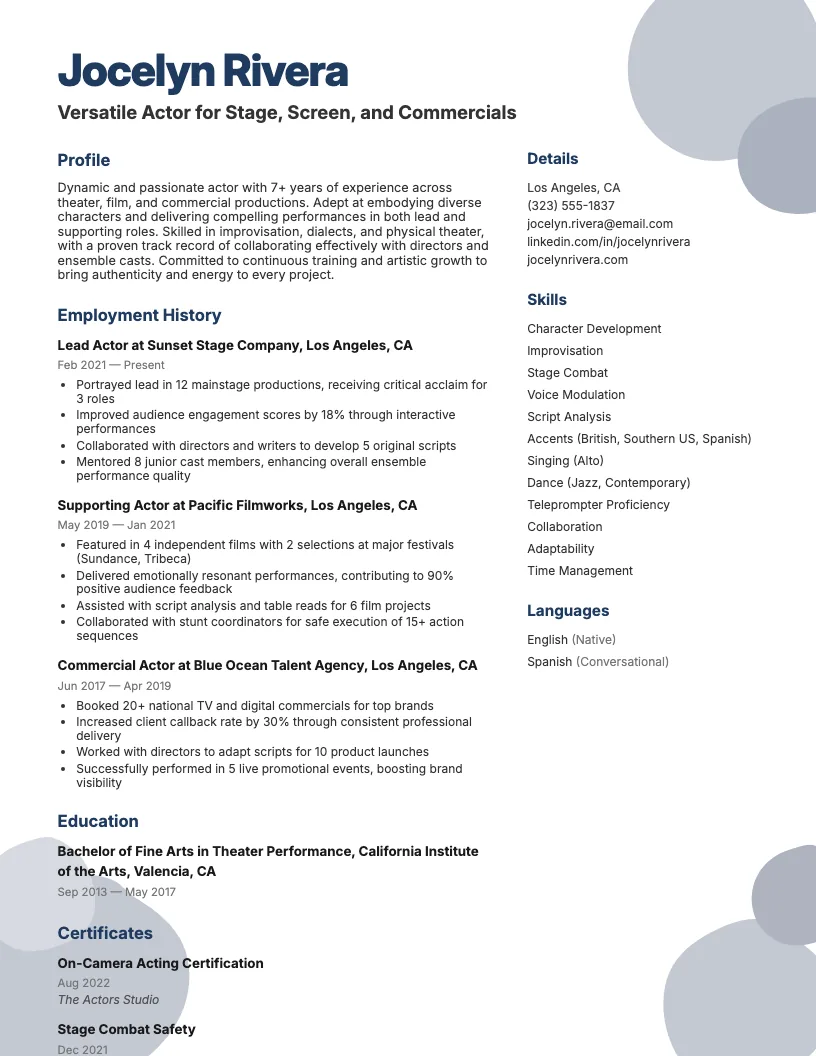
Theater Actor Resume Example
See full guide on Theater Actor resumes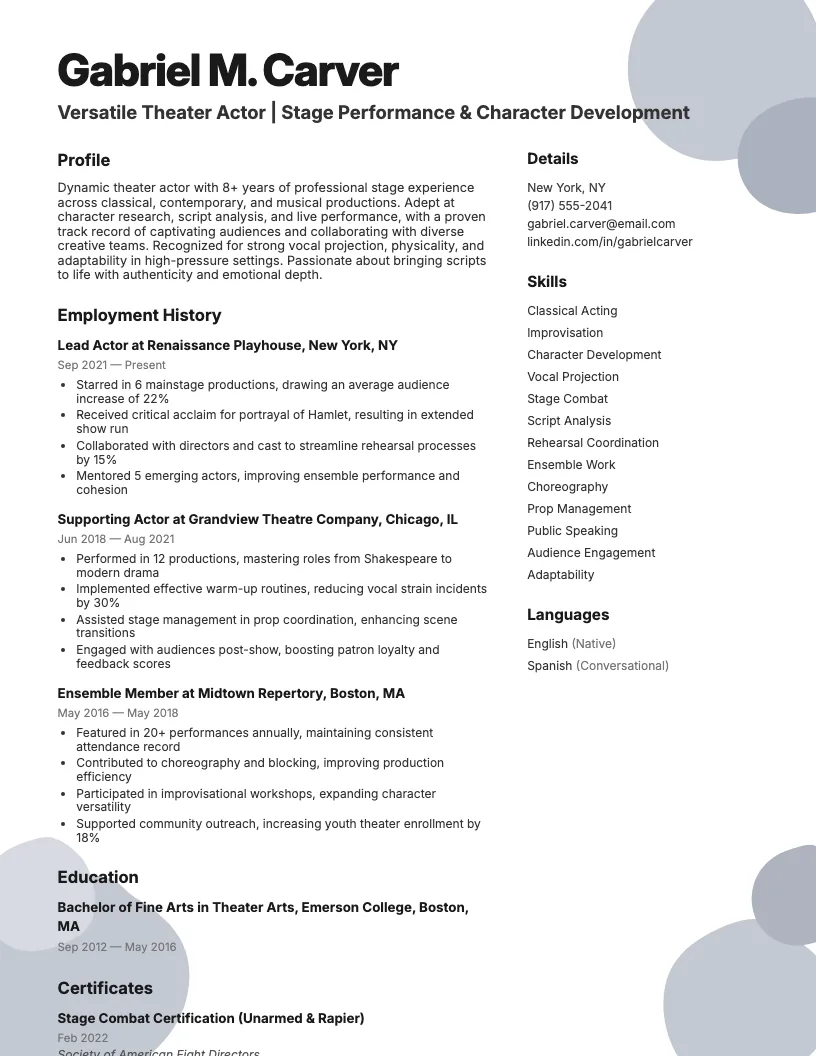 Click to enlarge
 Click to preview

Get inspired by 60+ professional Theater resume examples, each written by career experts and optimized to pass ATS scans. Pick a proven template, tailor it to your role, and download a polished resume in minutes.
Pick the specialization closest to your target role and start from a proven resume example.
Theater draws in all kinds of talent, both on stage and behind the scenes. Every role needs a different resume to highlight the right skills.
I see people in theater jobs ranging from acting to stage management, design, and coordination. Each path has its own resume style and must show off different experience.
You want your resume to match your role, whether you act, sing, build sets, or manage productions. I’ll break down examples that work for each specialty.
If you want to land acting auditions in theater, your resume needs to highlight your skills, experience, and training. I always keep mine to one page.
Casting directors scan resumes in under 10 seconds. Lead with your most recent roles and include the theater company’s name, your character, and the production year.
You want to show your range. List special skills-like dialects, stage combat, or musical talents. This helps you stand out in a crowded field.
Don’t forget your training. I include acting schools, workshops, and any certifications, and I always pair my resume with a cover letter to show commitment and help directors trust your background.
If you love both acting and singing, a musical theater resume is your ticket. List your vocal range, dance skills, and special training up top-casting directors look for this first.
Highlight leading and ensemble roles from productions. I always include the director’s name and the theater, so casting can check my experience. Numbers help-mention cast sizes or audience turnout.
Don’t forget to add workshops, masterclasses, and any choreography experience—these are also great to mention in your cover letter. This helps you stand out from straight theater actors. Keep everything clear and organized.
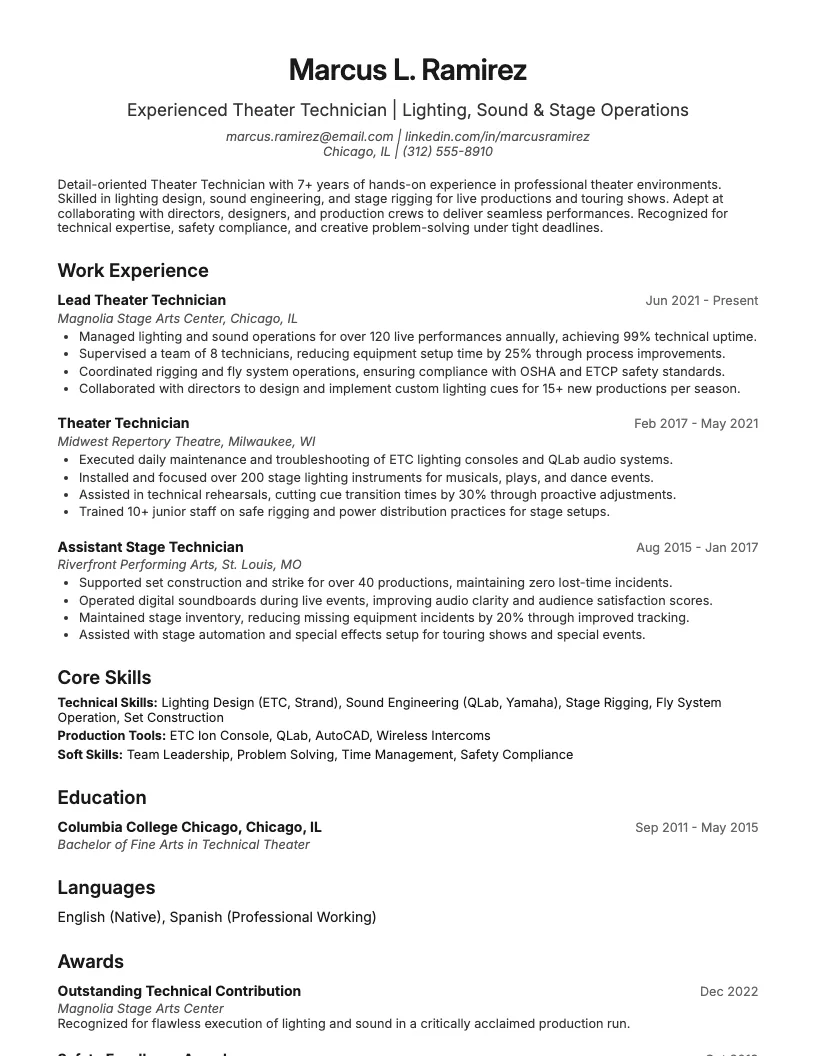
Technical theater covers roles like lighting technician, sound engineer, and stage manager. I see theaters hiring over 30% of their crew for these backstage spots.
You want to highlight specialized skills like rigging, AV systems, or carpentry. Listing certifications-like OSHA or ETCP-gives you a real advantage.
Include production credits, gear you’ve used, and any union memberships. This helps theaters see your experience and trust you with crucial backstage responsibilities.
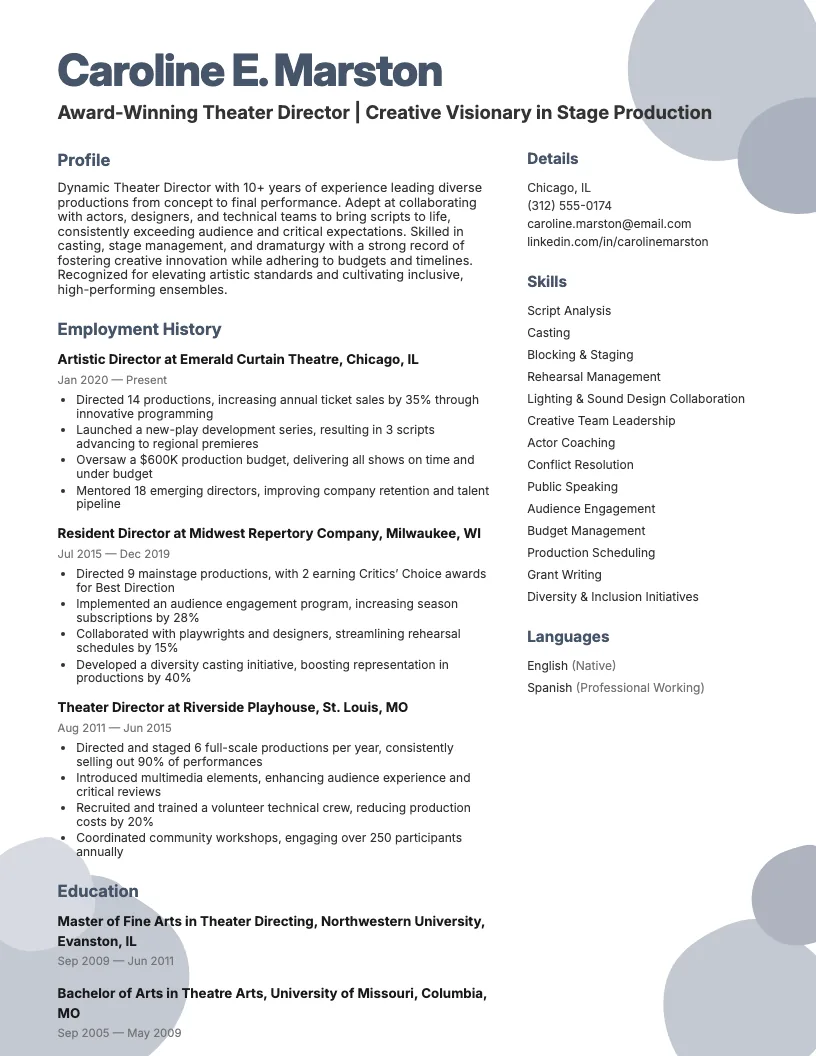
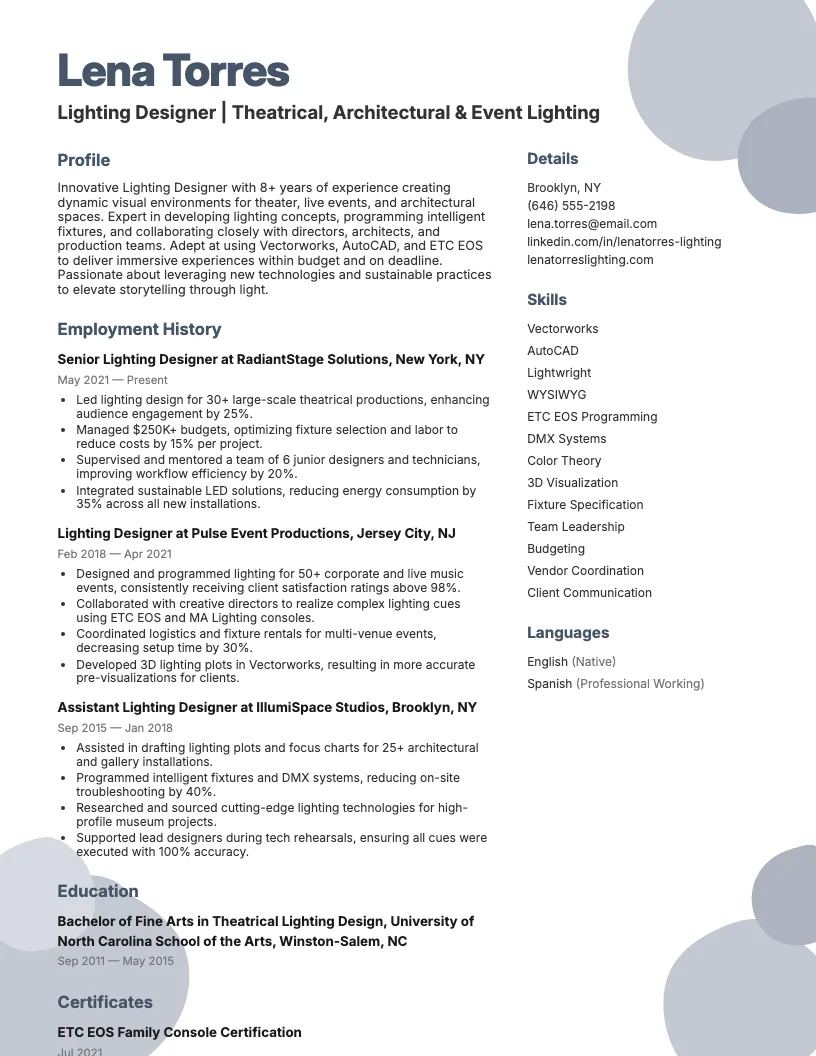
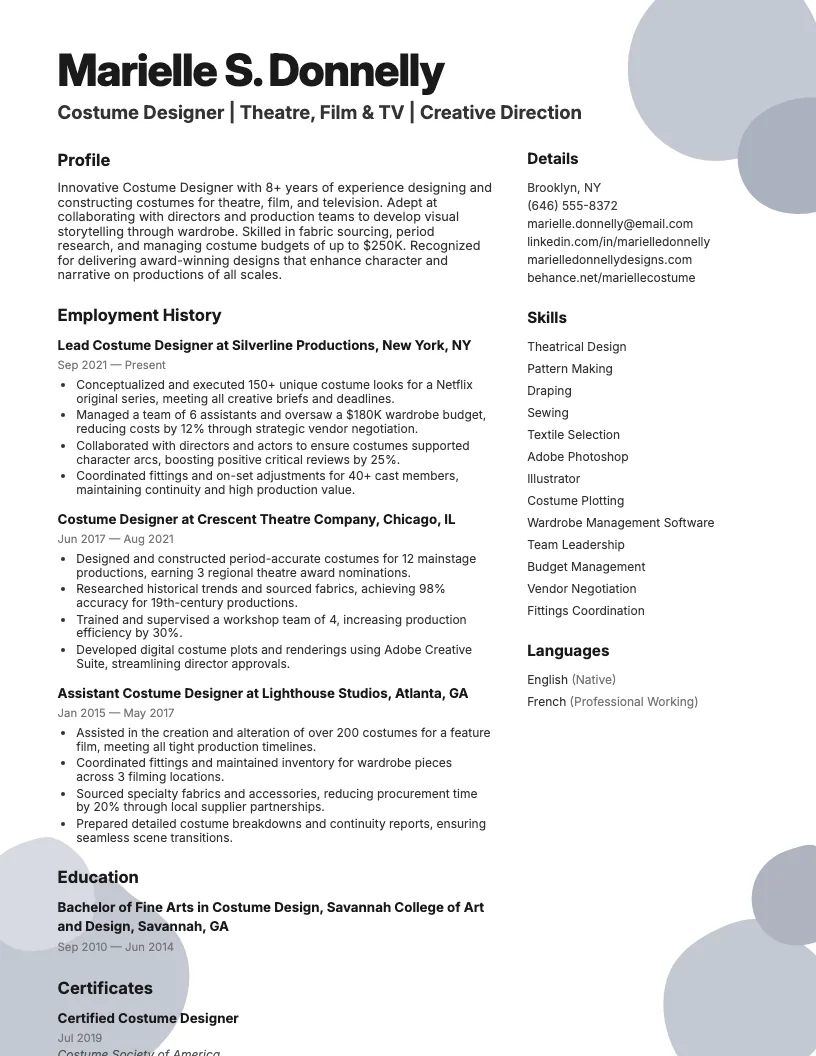
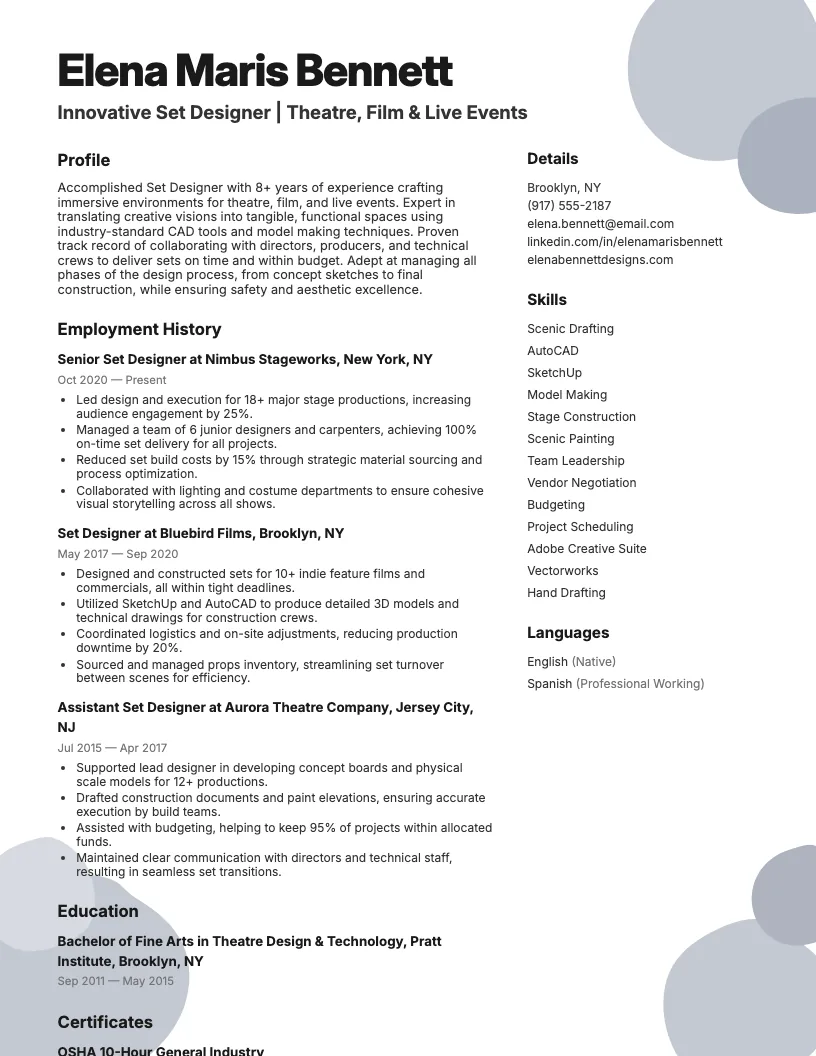
If you work in set design, costume, lighting, or props, your resume needs to show off your creative skills. I always highlight major productions and unique design challenges.
You should include a portfolio link-about 90% of theater designers get asked for one. Detailing tech skills, like CAD or sewing, also helps you stand out.
I like to keep credits specific, listing director names and theater companies. This proves your range and helps directors see exactly what you bring to the table.
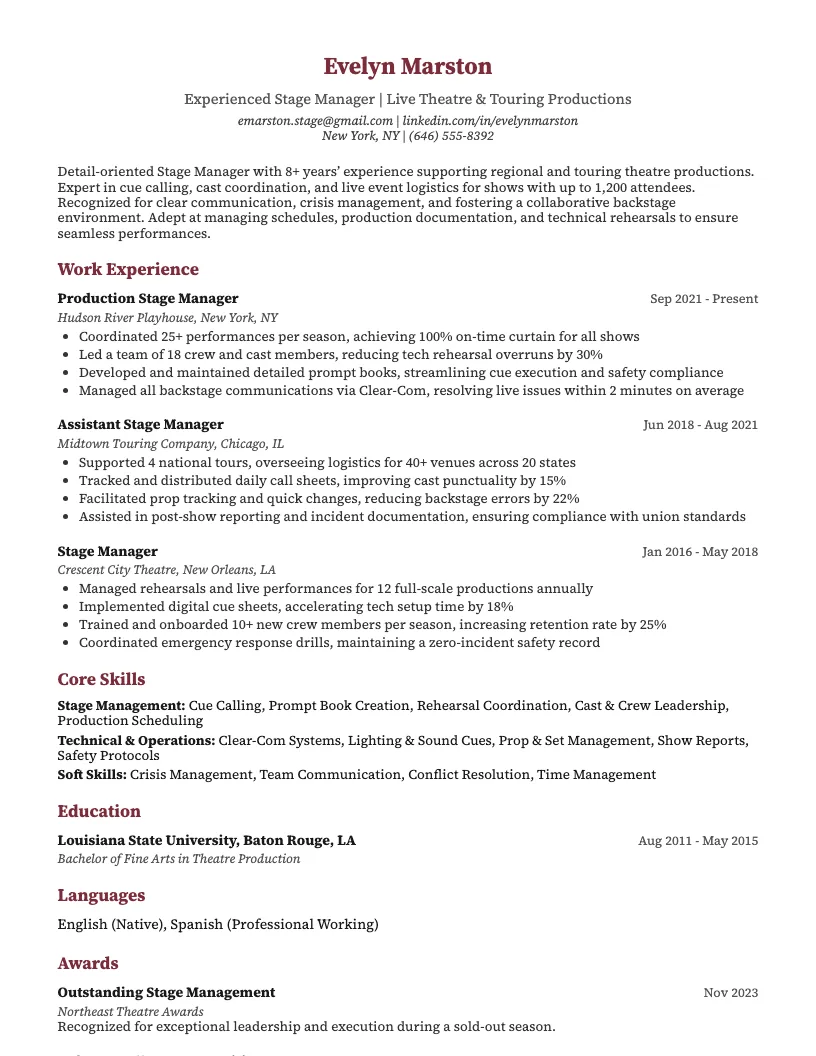
These roles keep everything organized behind the scenes. I always show off things like budget management, scheduling, and vendor coordination right at the top of my resume.
You want to highlight leadership, attention to detail, and project management. Employers look for real results-like coordinating 20+ productions per year or managing teams of 10-50 people.
Production coordinators, stage managers, and company managers all need resumes that show how you keep shows running smoothly. This wraps up all the main theater resume types you might need.

Landing a theater role starts with a sharp resume. Casting directors often review over 100 resumes for one part, so every section counts.
I focus on my unique qualifications, experience, and skills. The right details help you stand out in auditions and callbacks.
A solid theater resume also highlights training, certifications, and technical skills. These sections show you’re serious and prepared for any stage.
Start your theater resume with a strong summary at the top. Use two or three sentences to spotlight your biggest achievements and what makes you unique in the industry.
I always highlight my most notable roles, major awards, or nominations. This gets the attention of casting directors fast and shows that I take my craft seriously.
Include physical stats-like height, eye color, and vocal range-right below your summary. This info matters a lot for casting, so don’t skip it.
This section is where you show off your past roles. I always list every production, the role I played, the theater company, and the date.
You can also add the director’s name. Directors and casting agents often recognize names-this helps you stand out, especially in tight-knit theater communities.
Stick to the essentials here. You don’t need bullet points or extra details-just a clean, detailed list of your on-stage work.
I always include my formal education-bachelor’s, associate’s, or even specialized theater diplomas. This gives casting directors a sense of my technical background.
You should also list workshops, masterclasses, or certifications from reputable programs. Name-drop big institutions or instructors-these details make your training stand out.
If you have awards, nominations, or professional memberships (like SAG-AFTRA), mention them here. This stuff shows your commitment and credibility in the theater world.
I always put my top theater skills front and center. Directors look for versatility-think acting techniques, voice work, dance, and stage combat.
You want to match your skills to the show’s needs. List things like improvisation, dialects, script analysis, or even lighting and sound. This helps you stand out fast.
Highlight both hard and soft skills. Teamwork, adaptability, and communication matter as much as technical ability. This well-rounded approach wraps up your theater resume perfectly.
Picking the right theater resume template makes a big difference. Casting directors often spend less than 10 seconds scanning each resume, so clarity really matters.
You want a layout that puts your roles, training, and awards front and center. Templates with clean sections and consistent formatting work best in this industry.
I always start by picking a theater resume template with clear sections for roles, training, and awards. This makes it easy for casting directors to find what they need fast.
Make sure you use a format that lets you highlight both your stage experience and technical skills. Templates that separate these sections let you show off your range.
There are templates that include space for a headshot, but you can also attach a separate photo. Just keep everything clean and professional-no flashy colors or distracting graphics.
If you want to see what works for theater resumes, you’re in the right spot. I like to check out different examples before I start writing.
You might find resume templates for actors, dancers, or even screenwriters helpful. There are also resources for entertainment jobs that use a lot of the same skills.
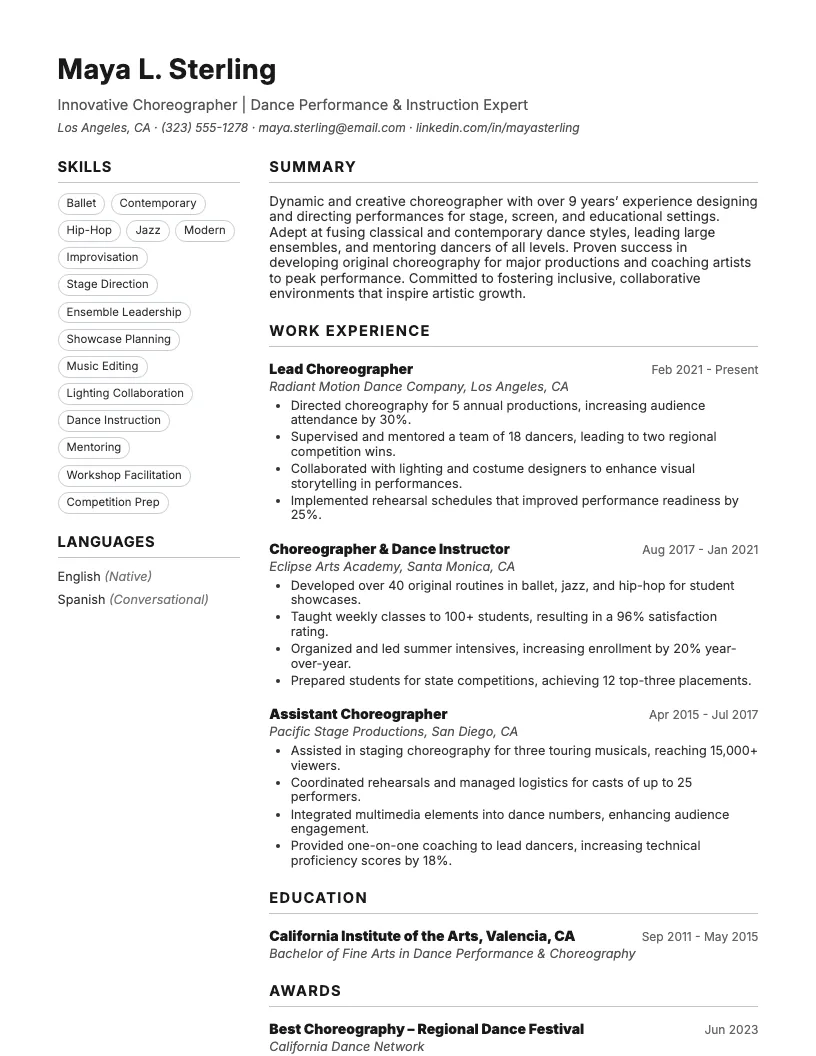
If you want to see how other performers shape their resumes, you’re in luck. There are over 10 targeted examples in related fields like acting, dance, and entertainment.
I always recommend looking at more than one resume style, and reviewing a cover letter for your role. This helps you compare formats, check out bullet points, and find keywords that fit your own experience.
You can explore everything from audio technician templates to coaching resumes. Each example gives you practical ideas to update your own document quickly.
I always check out industry job boards like Backstage and Playbill. Thousands of theater gigs post there every month, from acting to tech.
You can join online theater communities or local groups. This helps you network, get audition tips, and hear about openings before they hit the public boards.
If you want to level up, I recommend online courses from places like StageMilk or MasterClass. They cover resumes, audition prep, and real industry advice.
That’s a solid start for anyone serious about a theater career. Dive into these resources, and you’ll find more opportunities and connections.
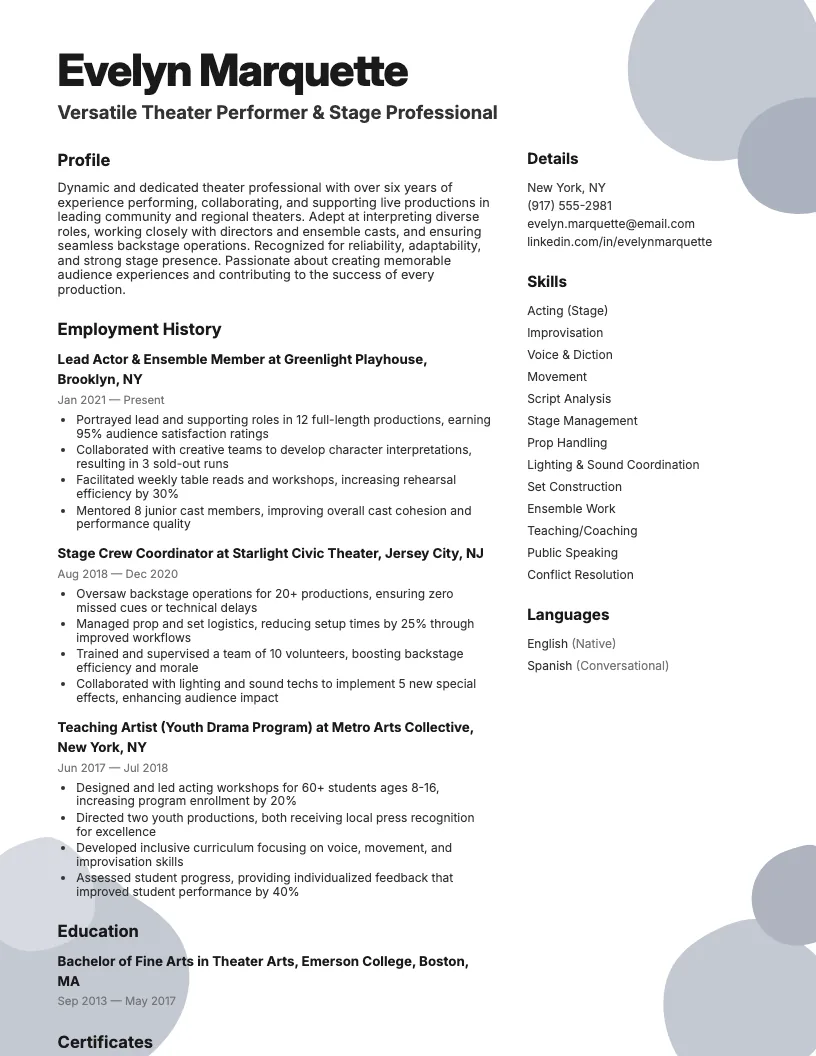
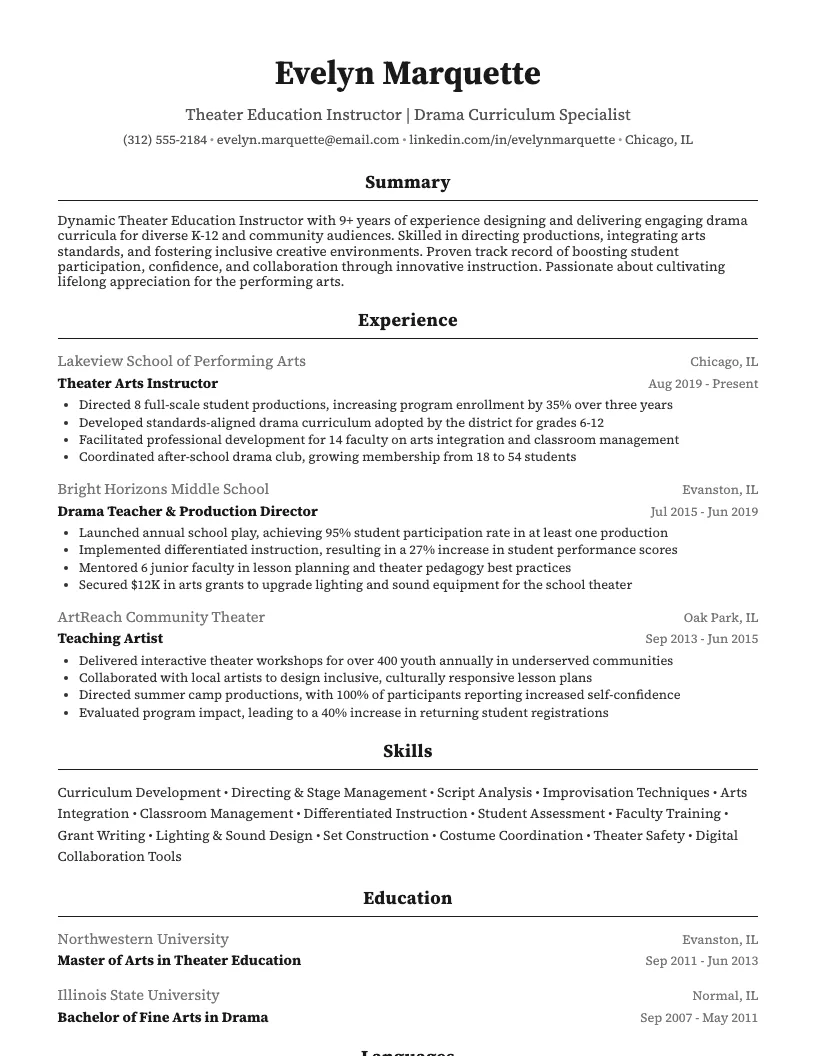
Browse Theater resume examples for related roles. Preview any example, open it in the builder, or read its full guide.
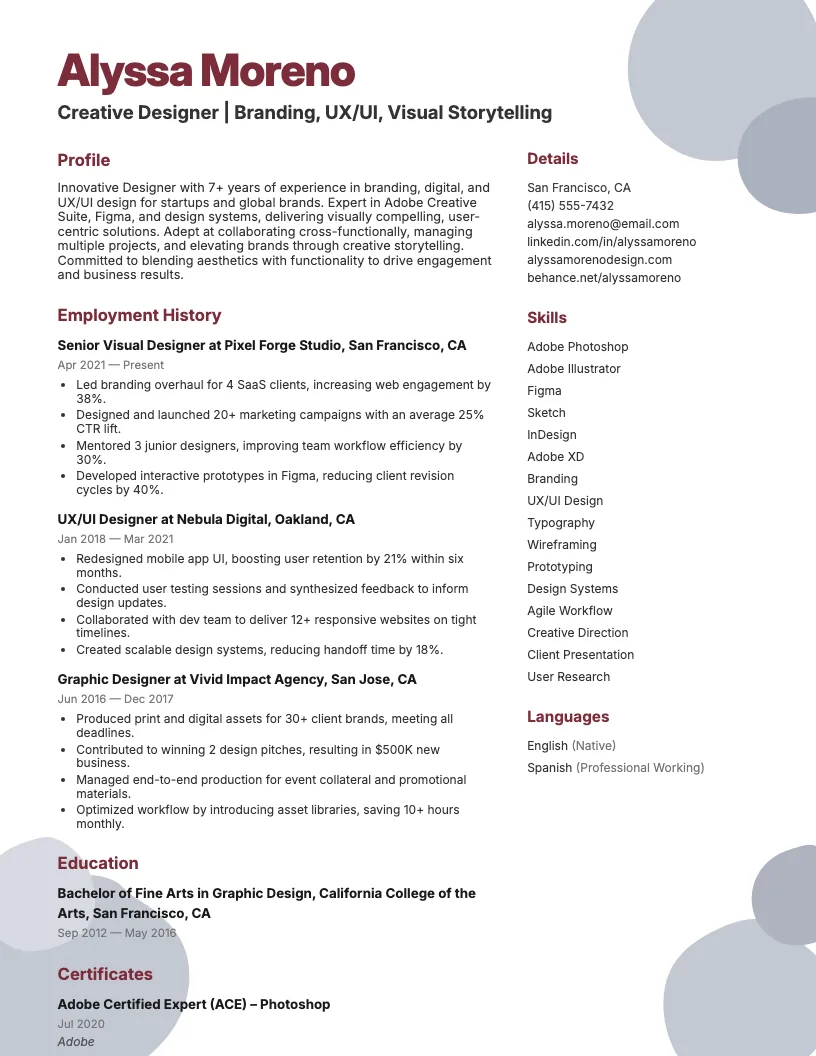
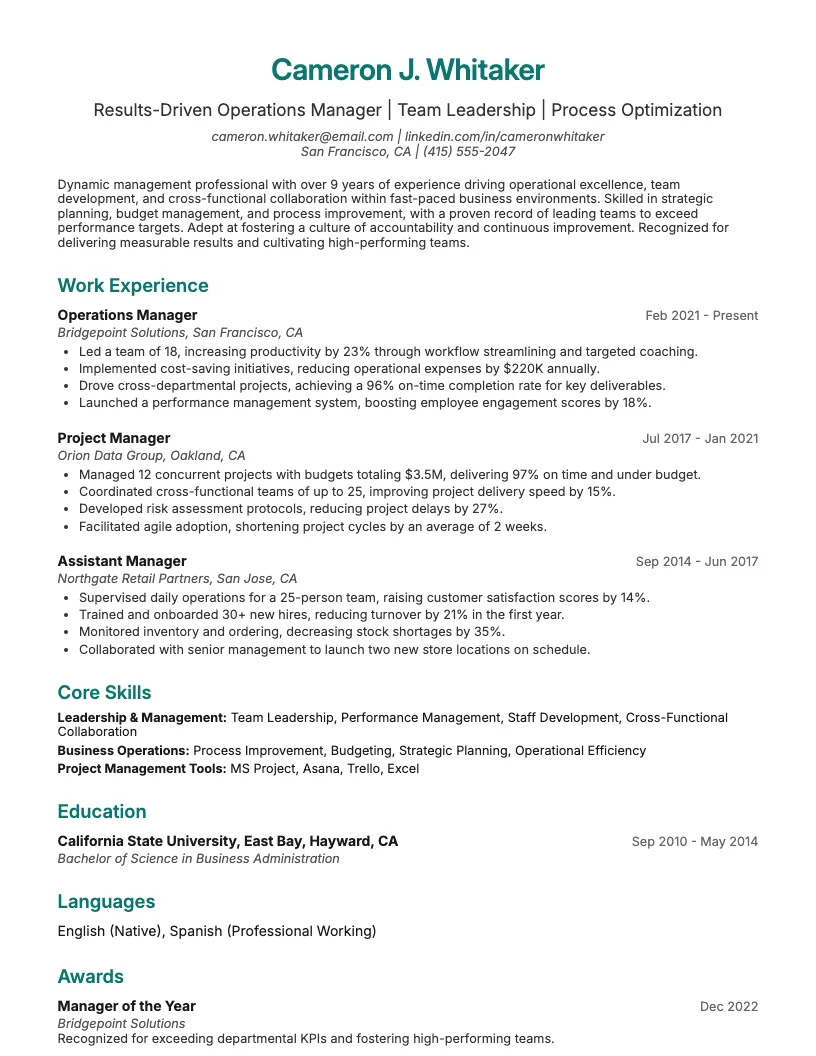
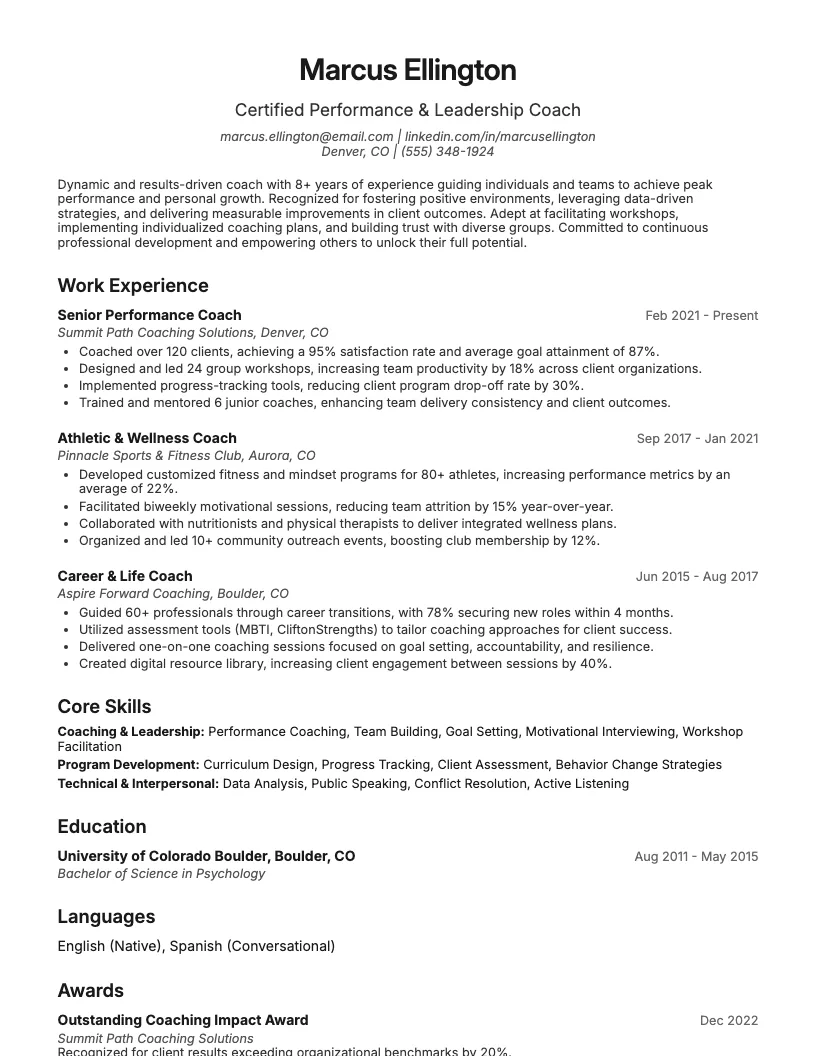
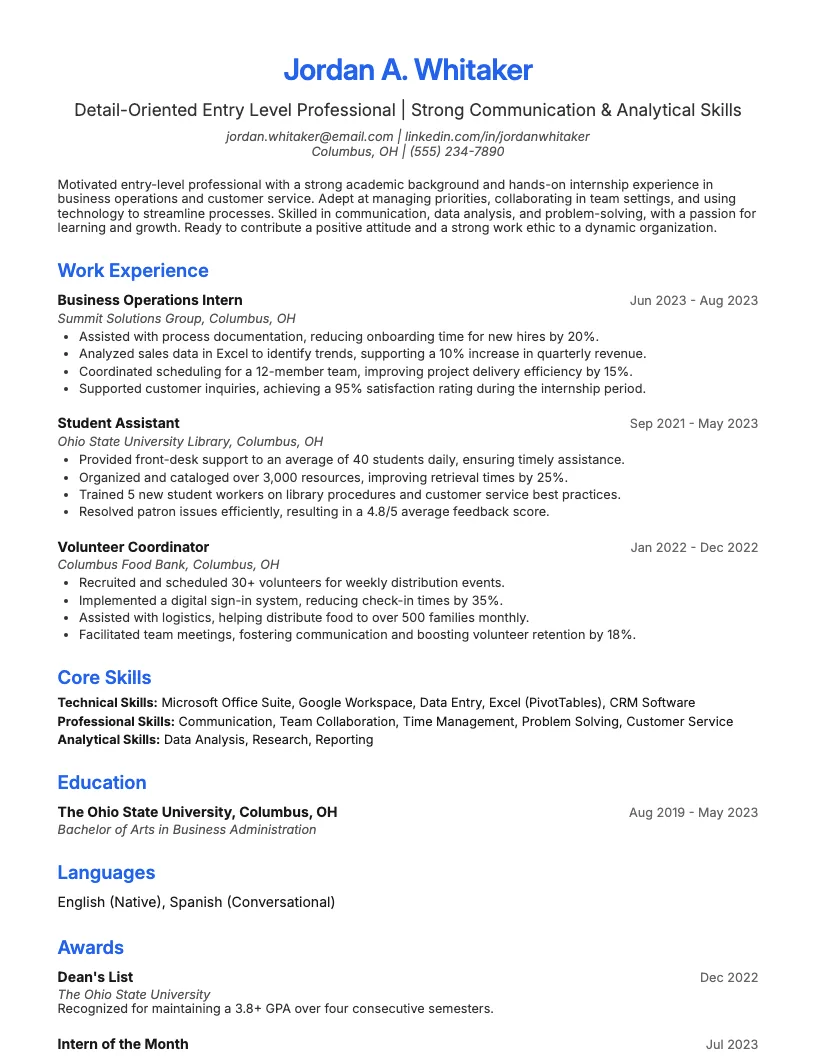
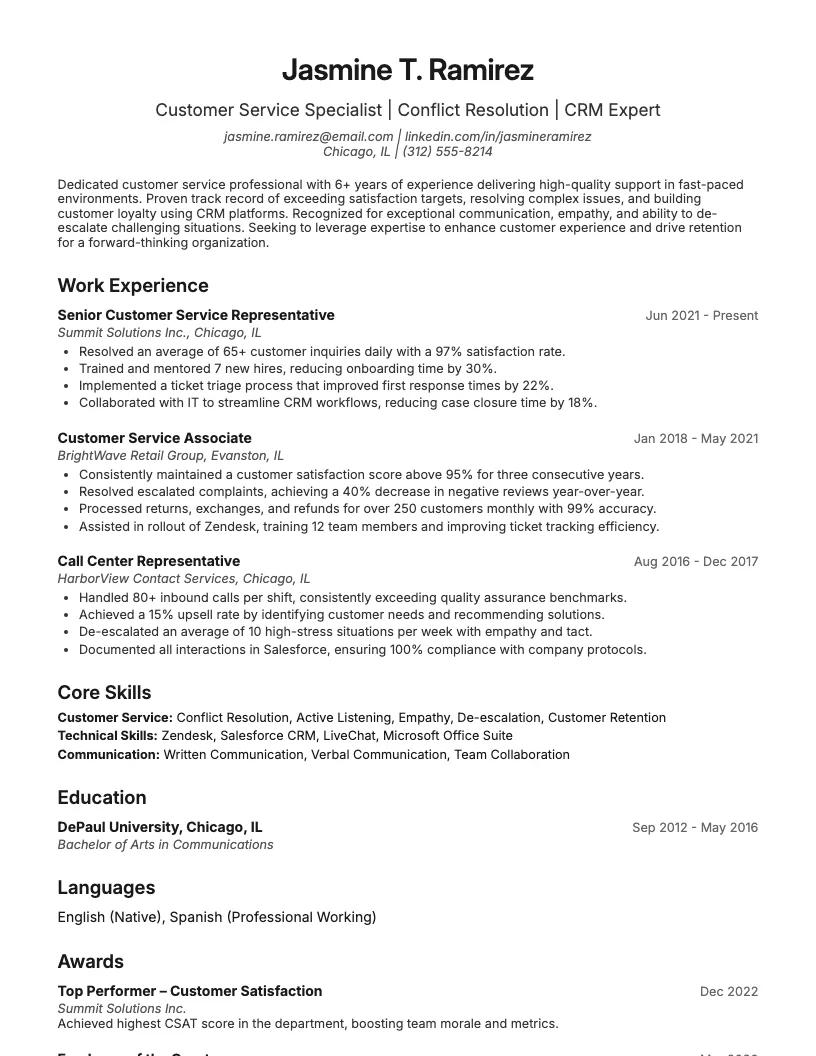
Click to enlarge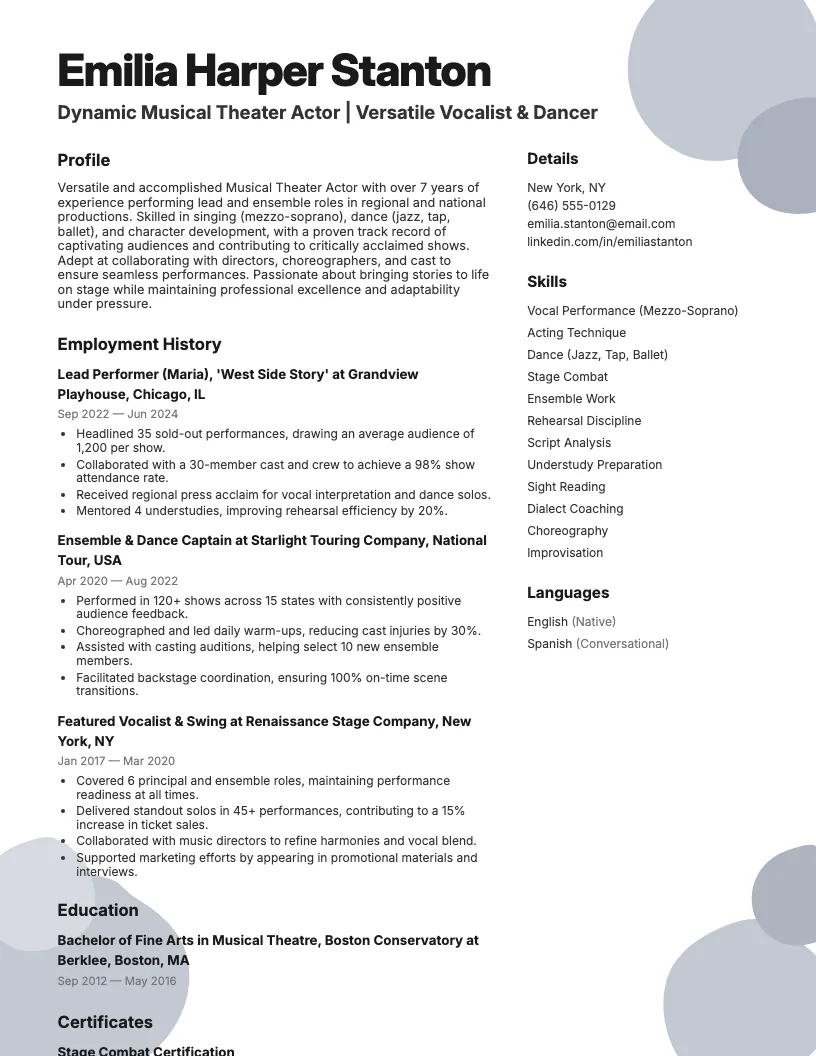 Click to enlarge
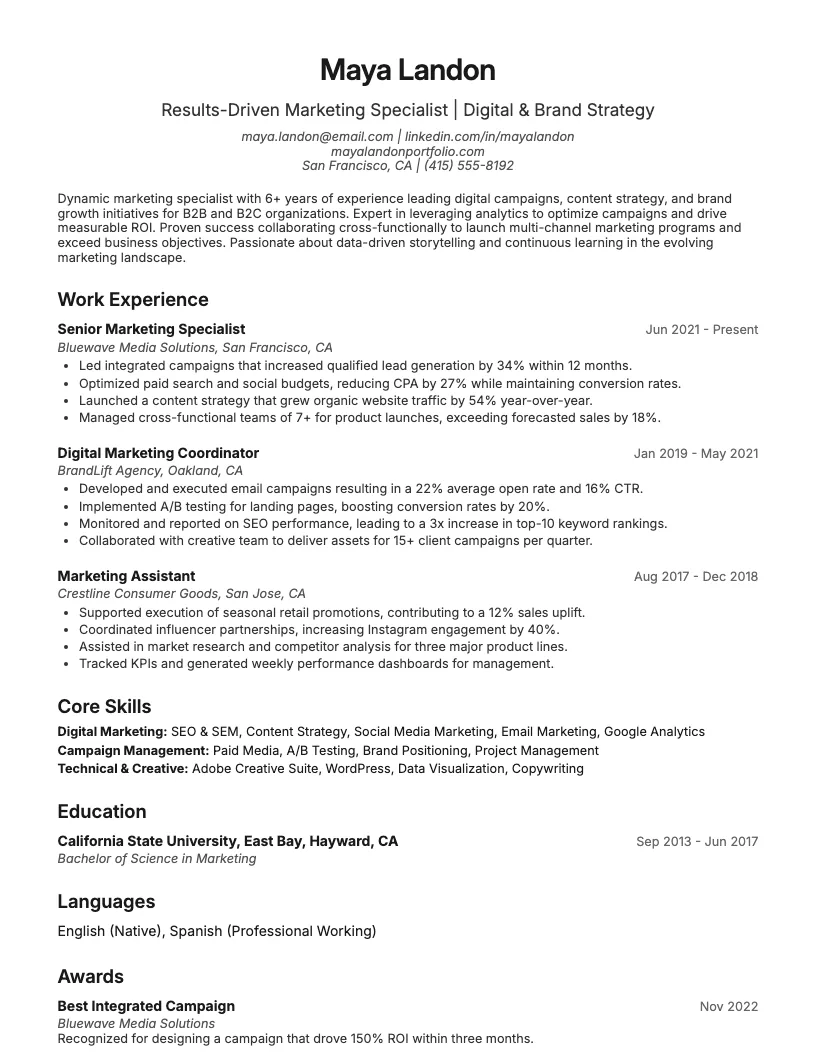
 Click to enlarge
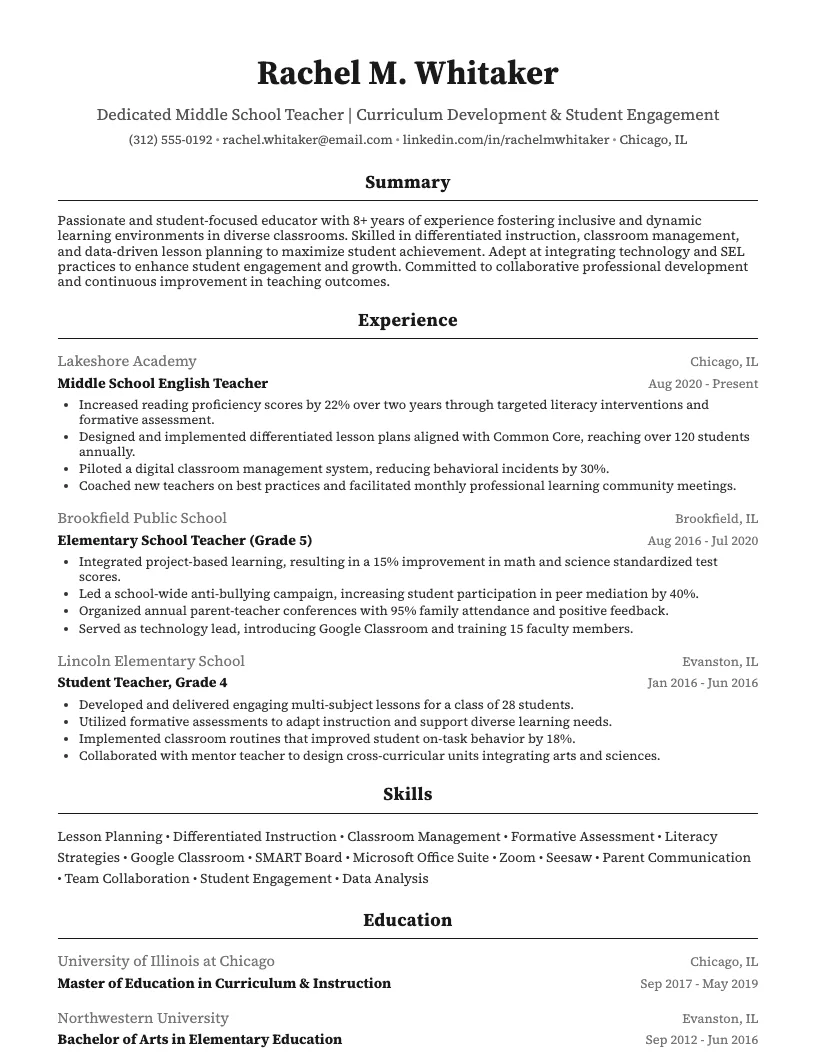
 Click to enlarge
 Click to enlarge
 Click to enlarge
 Click to enlarge
 Click to enlarge
 Click to enlarge
 Click to enlarge
Common questions about Theater resumes
A theater resume template is a specialized layout designed for actors, performers, and theater professionals. It highlights roles, training, and special skills unique to stage work. ResumeJudge makes it easy to showcase your talents professionally.
Yes, many theater resume templates are ATS-friendly, ensuring your resume is readable by casting databases and digital systems. ResumeJudge offers templates optimized for both print and online submissions.
Use a theater resume template when applying for acting roles, stage crew positions, or auditions in theater, musicals, or live performances. ResumeJudge templates are tailored for these creative industries.
Absolutely! You can add or remove sections, update fonts, and tailor your credits. ResumeJudge lets you personalize templates, so your resume matches your style and specific audition needs.
Theater resumes focus on performance credits, special skills, and training, while traditional resumes highlight work history and education. ResumeJudge designs templates specifically for the unique needs of theater professionals.
A theater resume should be one page, listing only your most relevant credits and skills. ResumeJudge helps you keep your resume concise and audition-ready.
Include your contact info, performance credits, training, special skills, and union affiliations. ResumeJudge templates make organizing these sections simple and clear.
While theater resumes differ slightly, you can adapt them for TV or film by adjusting credits and formats. ResumeJudge lets you easily switch between industry styles.
Casting directors appreciate clean, easy-to-read formats that highlight your theater experience. ResumeJudge templates are designed to meet these preferences and improve your chances.
Yes! ResumeJudge offers matching cover letter templates to help you introduce yourself to casting directors and agents, making your application stand out.
Explore more professional resume examples to inspire your job search
Use our AI-powered resume builder to create a professional, ATS-friendly resume in minutes.
Free to use • No credit card required