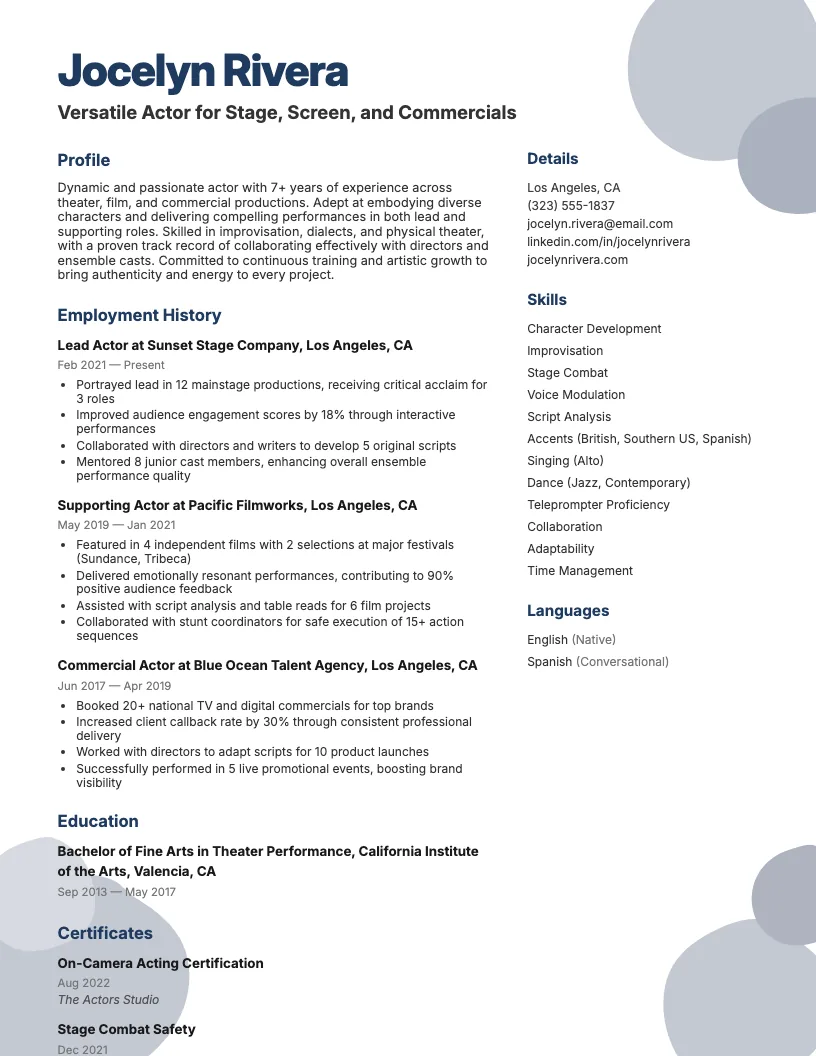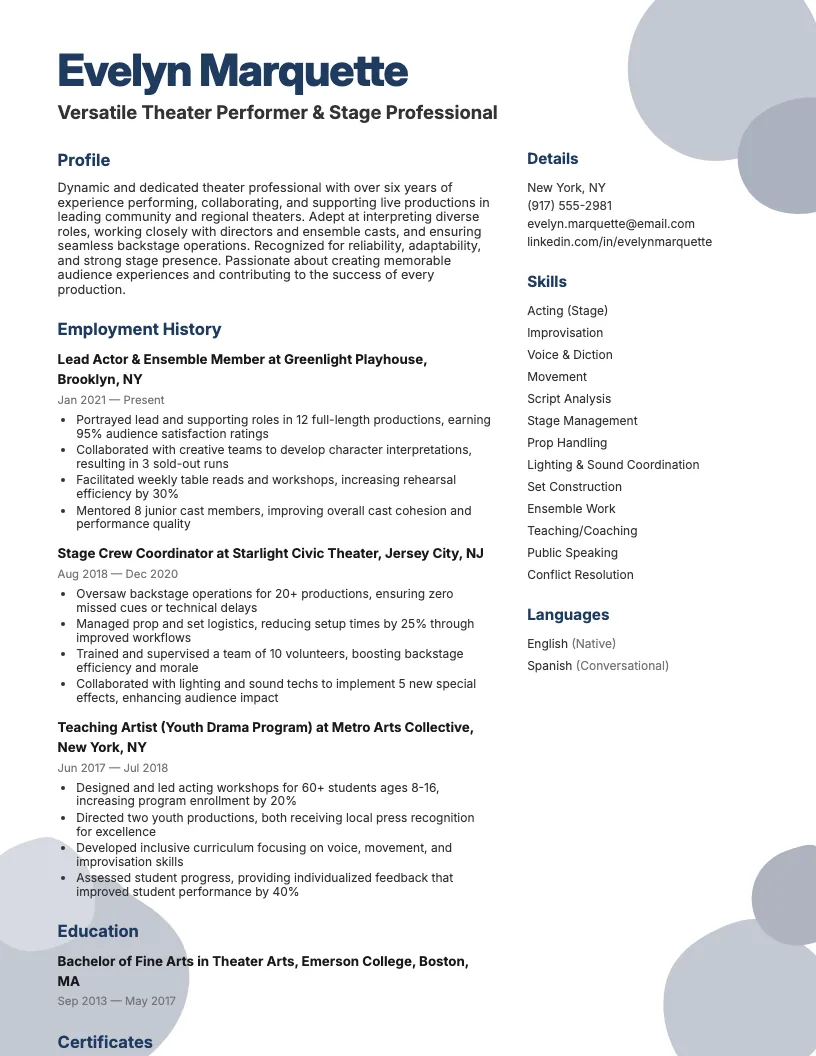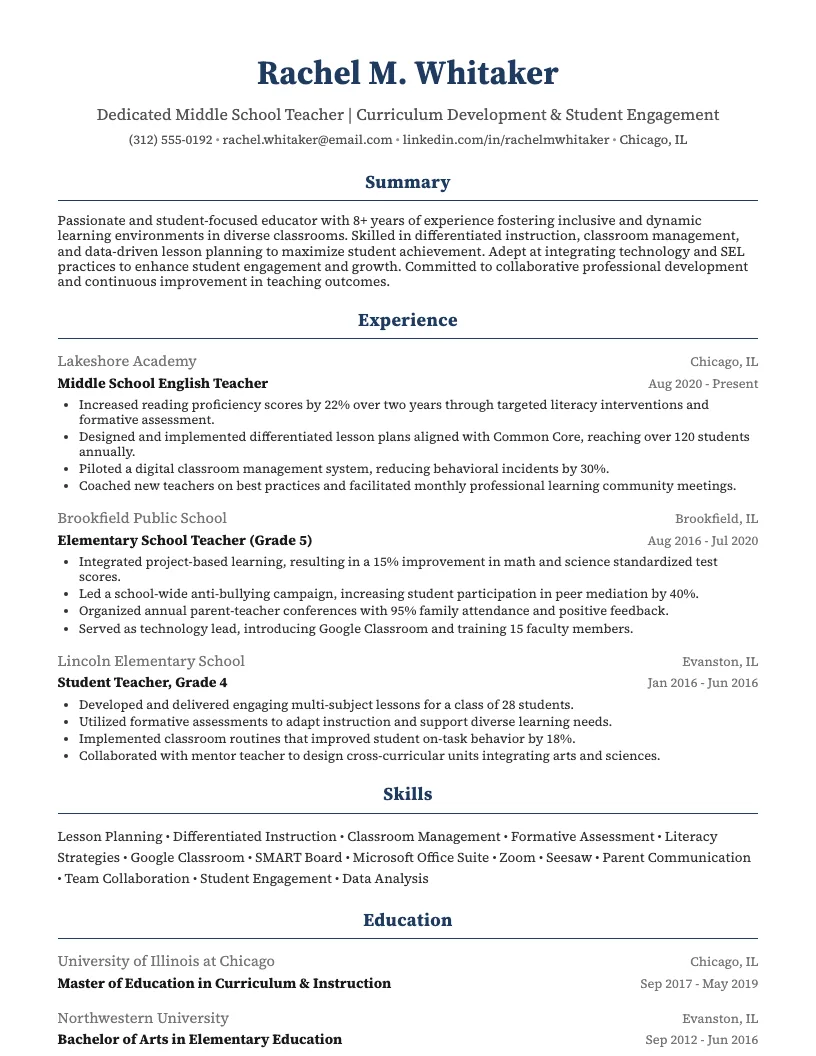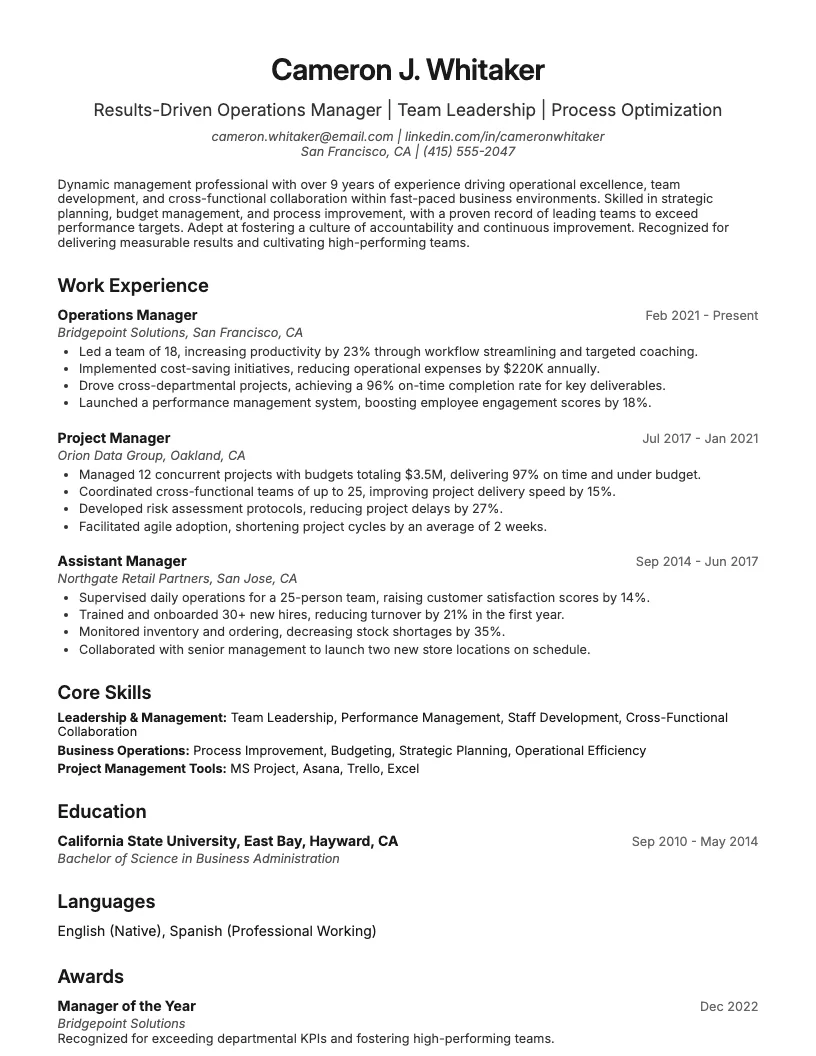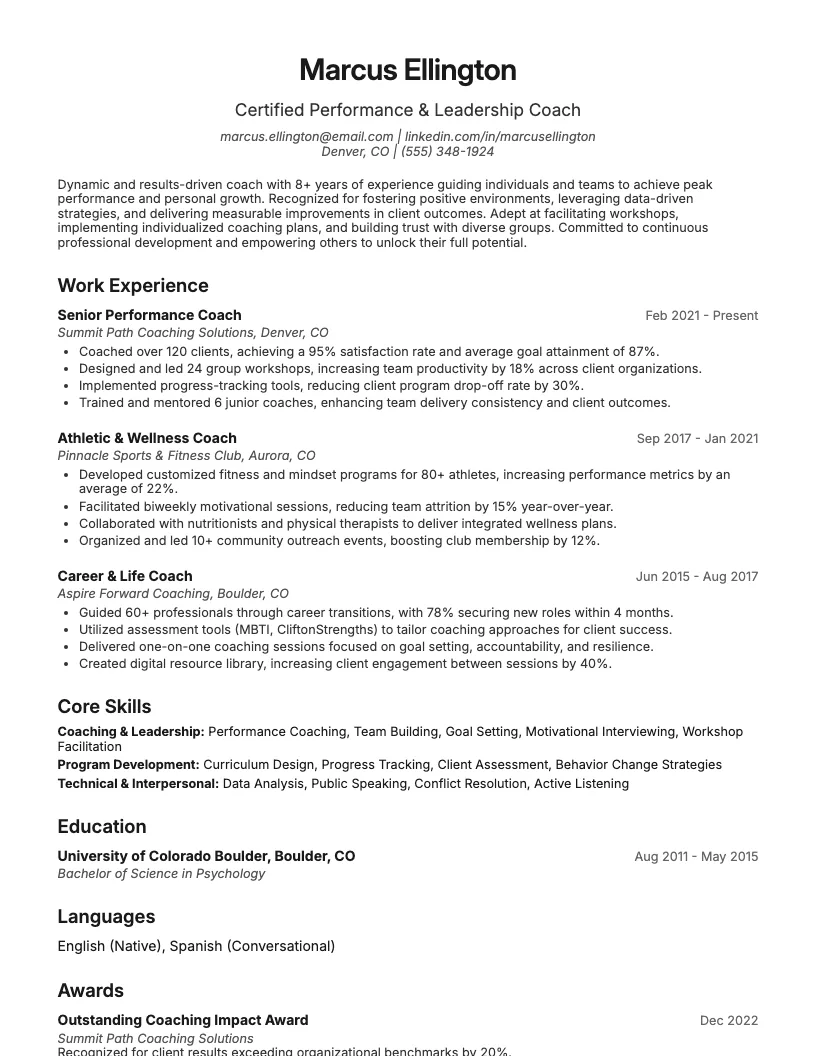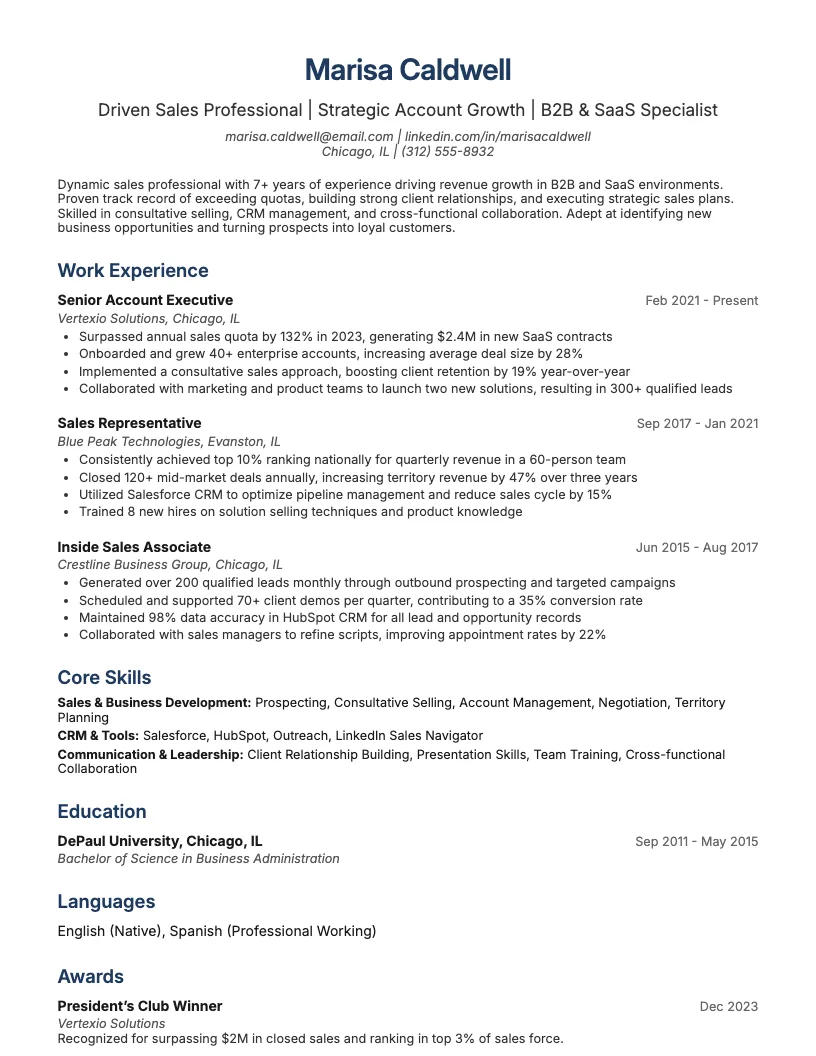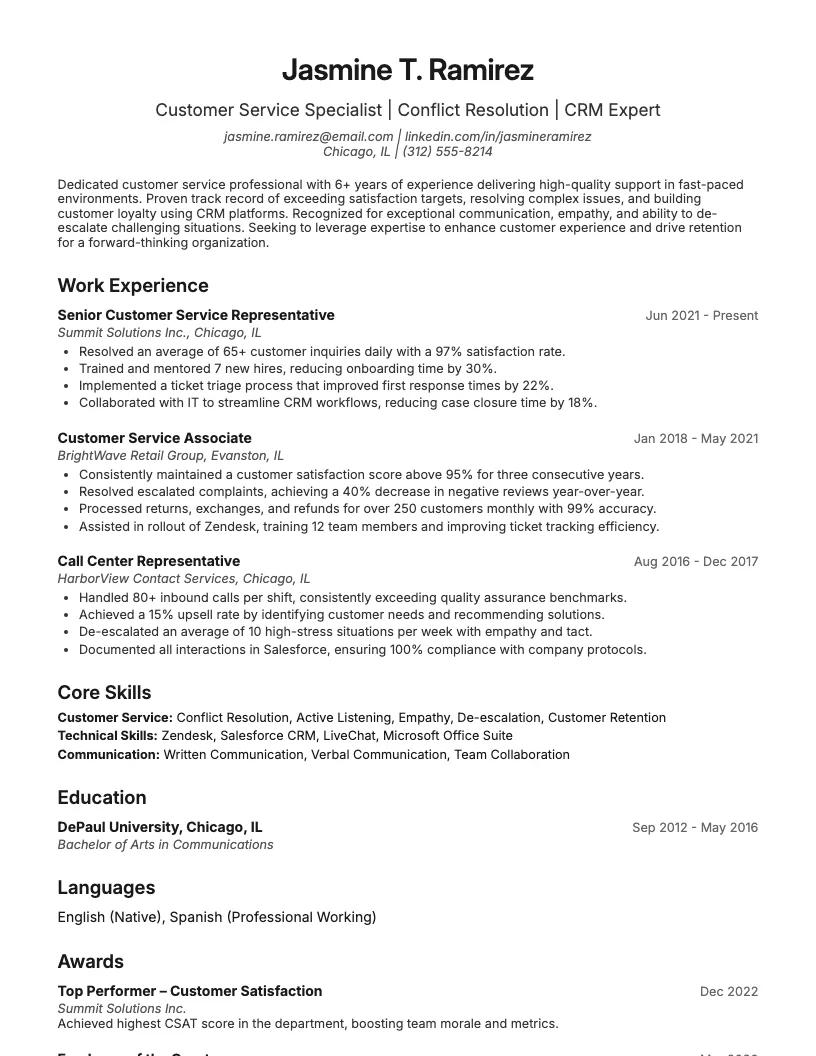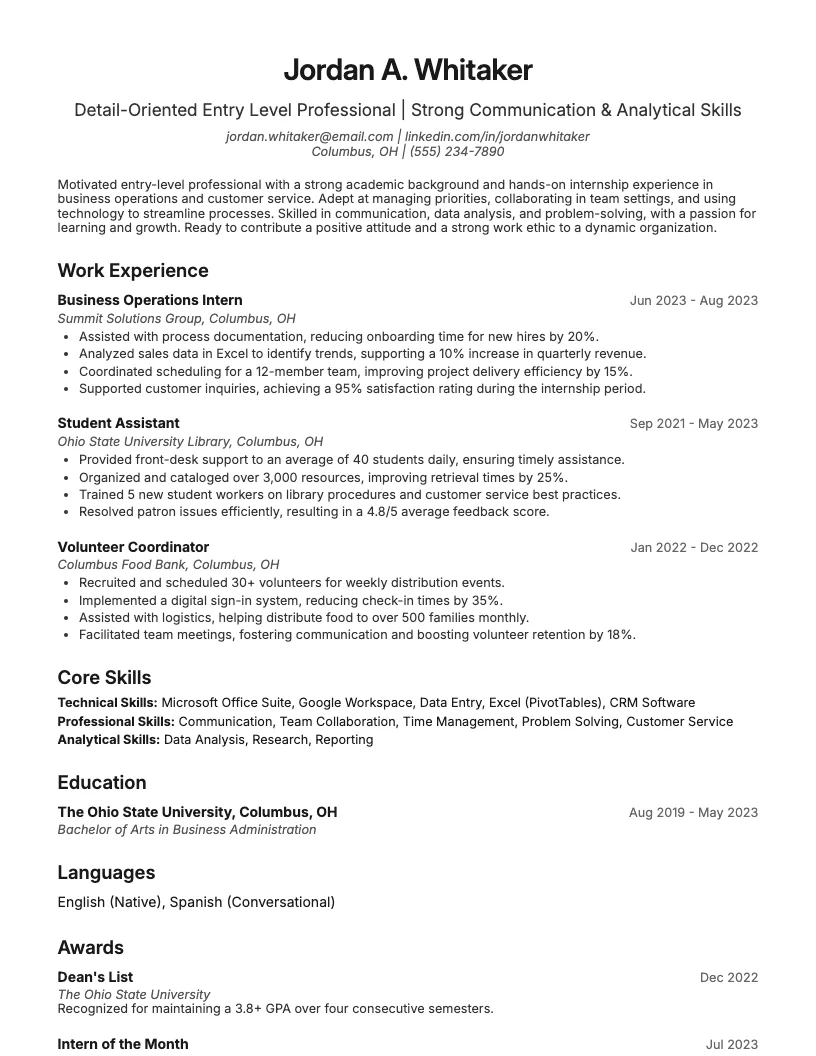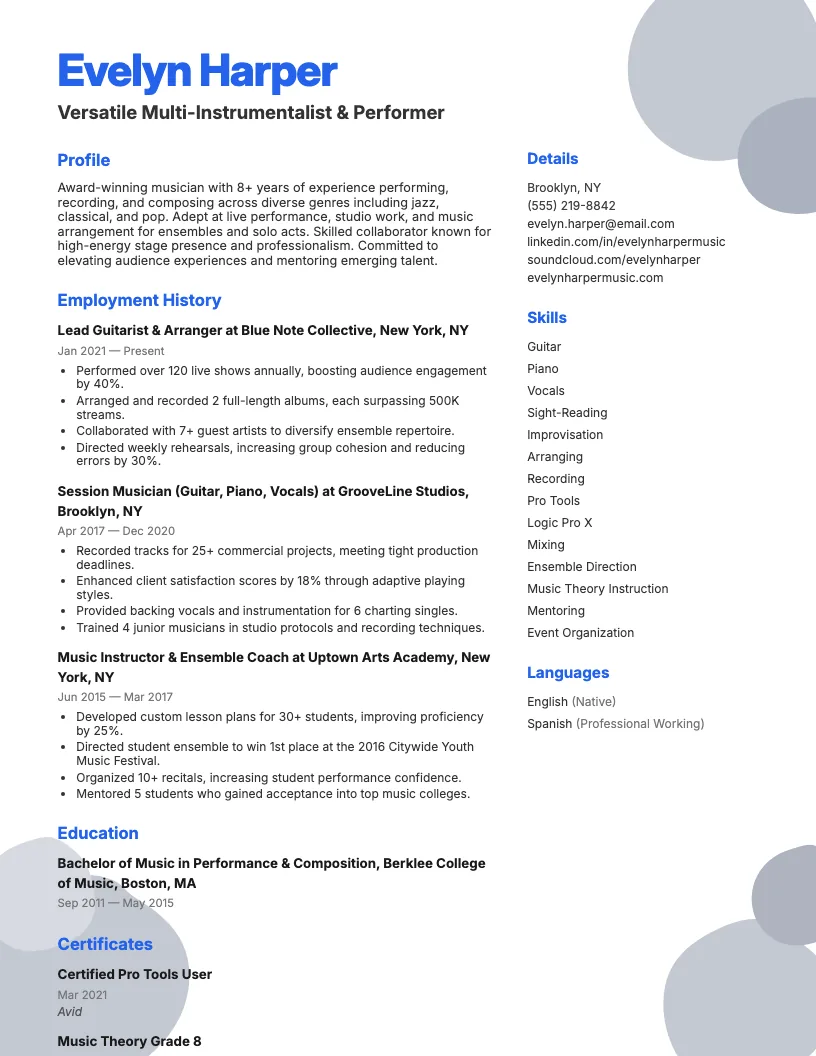
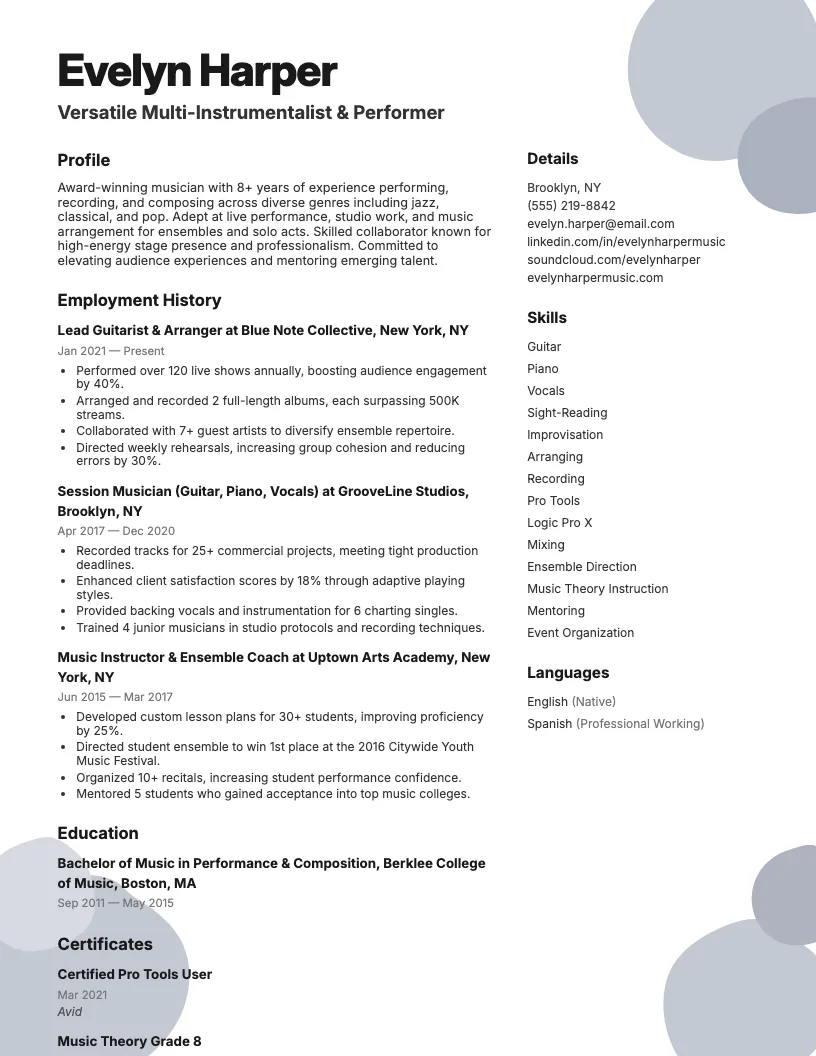
Concert Performer Resume Example
See full guide on Concert Performer resumes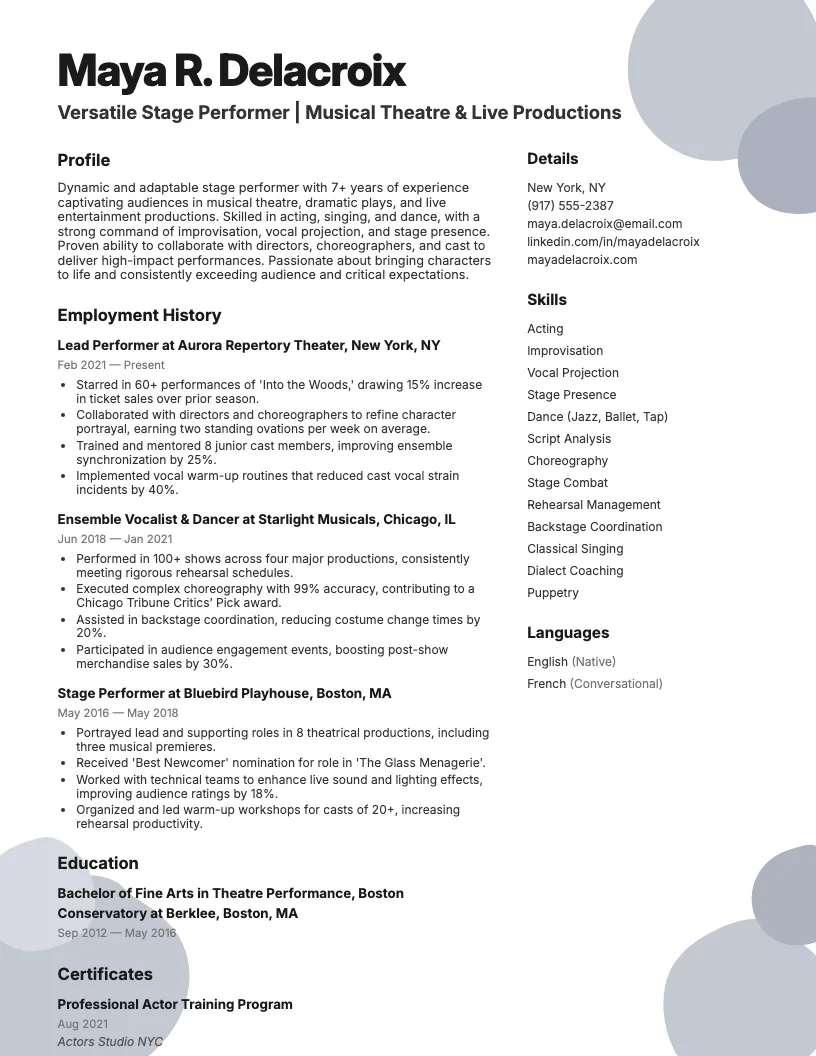 Click to enlarge
 Click to preview

Get inspired by 62+ professional Musician resume examples, each written by career experts and optimized to pass ATS scans. Pick a proven template, tailor it to your role, and download a polished resume in minutes.
Pick the specialization closest to your target role and start from a proven resume example.
If you're a musician looking for your next gig or a full-time job, your resume matters. A strong resume helps highlight your talent, training, and experience.
I see a lot of musicians struggle to showcase their skills on paper. You want to show your creative work and professionalism at the same time.
Here, you’ll find a real-world musician resume example and tips for writing a cover letter that works in the music industry.
Here’s a realistic resume example for a musician-built to help you see what works. I focus on experience, education, and the skills that matter in the music industry.
You’ll notice I put performance credits front and center. This helps since venues and producers want to see your actual gigs, not just your training or influences.
I use numbers where possible-like audience size, years of experience, or number of recorded tracks. This shows your impact, not just your passion for music.
You want your cover letter to stand out just as much as your resume. I always start with a strong intro and mention specific gigs or skills.
There are tons of musician cover letter examples out there. They show how to highlight your unique style, training, and achievements in a few concise paragraphs.
You can mention awards, collaborations, or even your favorite genres. This helps hiring managers get a better feel for your personality and what you bring to the table.
A personalized cover letter boosts your chances by up to 40%. It’s your chance to show passion and professionalism, not just list experience.

Musician resumes look different depending on your role and experience. I see entry-level resumes highlight education and training, while experienced musicians focus on gigs and collaborations.
Specialized roles, like music teachers or composers, show off unique skills and achievements. Your resume should match your career stage and the specific music job you want.
If you’re just starting out or have a few gigs under your belt, entry-level and mid-level musician resumes need a different approach than more established pros.
You want to highlight relevant skills, any formal training, and gigs-even unpaid ones. I always say, include performances, collaborations, or music competitions. This shows real-world experience.
Numbers help. If you played at 12 local venues or collaborated with four other musicians, mention it. This gives your growth concrete proof and helps you stand out.
You don’t need a huge list of credits. Focus on showing initiative, growth, and potential-that’s what gets noticed at this career stage.
If you’re a music director, film composer, or session musician, your resume needs a different touch. I always highlight niche skills like orchestration, MIDI programming, or genre expertise.
You want to show off specific projects, technical proficiencies, and leadership experience. Numbers help-mention the number of scores arranged, albums recorded, or productions led.
Make sure you tailor your resume for each specialized job, and consider checking out a cover letter if you’re targeting musical theater roles. This helps you stand out in a field with over 20,000 film composers and 50,000 session musicians in the U.S. alone.
Musicians wear a lot of hats. I might write, perform, or record music. Sometimes, I teach lessons or compose songs for movies, TV, or video games.
You might play in a band, work solo, or join an orchestra. Some musicians tour, others focus on studio work. There’s no single path in this field.
Genres, skills, and roles vary a lot. I find that musicians often pick up new skills to stay flexible and competitive in a changing job market.
The job market for musicians stays pretty steady, with the U.S. Bureau of Labor Statistics showing about 1% growth through 2032. It’s a competitive space, but not shrinking.
You might find opportunities in live performance, studio work, or even composing for media—and if you’re exploring acting, a cover letter can help you stand out. I see musicians landing gigs in everything from teaching to music therapy or audio production.
You don’t always need a degree to start. Many musicians build careers by networking, self-promotion, and picking up multiple part-time roles. Flexibility really helps you stand out.
Picking the right resume format matters a lot in music. You want your talent and experience to stand out, but your resume should still be easy to read.
I see a lot of musicians who focus only on flashy design. That can work, but employers still want clear details about your skills and gigs.
A good format highlights your experience, education, and portfolio in a way that grabs attention. The right layout can make the difference when you’re competing for auditions or jobs.
I always link to my top three tracks or performances right on my resume. This makes it easy for anyone scanning my experience to hear what I can do.
You should pick samples that fit the style or genre of the job you're after. This shows you actually pay attention to what the gig needs.
There are tons of ways to share your work-YouTube, SoundCloud, or your own website. Just make sure your links work and highlight your most relevant skills.
A good musician resume shows off your talent, experience, and training. You want to keep it clear, simple, and easy to read.
You need sections like your summary, skills, education, and past gigs. Each one helps you highlight what makes you stand out.
I always tailor my resume for each job or audition. That way, I can focus on the skills and achievements the employer wants.
Your profile summary is a quick snapshot of what you bring as a musician. You only get a few lines, so you need to make them count.
Focus on your approach to music and your biggest achievements. Mention any collaboration skills or genres you specialize in.
Tailor your summary for every audition or job. Adjust your highlights based on the opportunity so your profile matches what the employer wants.
Most venues and agencies use ATS to filter musician resumes. I always check the job post for exact skills and keywords before I hit "send."
You want your resume to mention those keywords naturally. If the posting asks for "live performance experience," I include that exact phrase in my summary.
I also list both acronyms and full titles-like "B.A. in Music" and "Bachelor of Arts in Music." This helps the ATS pick up every qualification you’ve got.
Your job history shows the depth of your musical background. It tells hiring managers where you’ve played, taught, or recorded-and how you’ve grown as a musician.
Focus on your most relevant gigs and roles. It’s fine to leave out smaller performances if they don’t add to your story. Tailor this section to fit each job you want.
Every musician needs a mix of technical and personal skills. These help you stand out, whether you’re performing, recording, or working behind the scenes.
I always recommend showing both your musical abilities and your people skills. Employers look for musicians who can adapt, collaborate, and keep learning new things.
The education section matters differently for every musician. Some jobs want official training, others care more about your skills or portfolio.
You don’t always need a music degree, but if you have one, add it here. Any music courses, certifications, or workshops count too.
Crafting a musician resume means balancing creativity with a clean, professional layout. Your experience and skills need to shine, but the basics matter, too.
You want every section to reflect your career goals. I always tailor my resume when I apply for different gigs or roles. This gets real results.
Adding specialized sections helps highlight unique talents. Show off your versatility, but keep everything clear and easy to read.
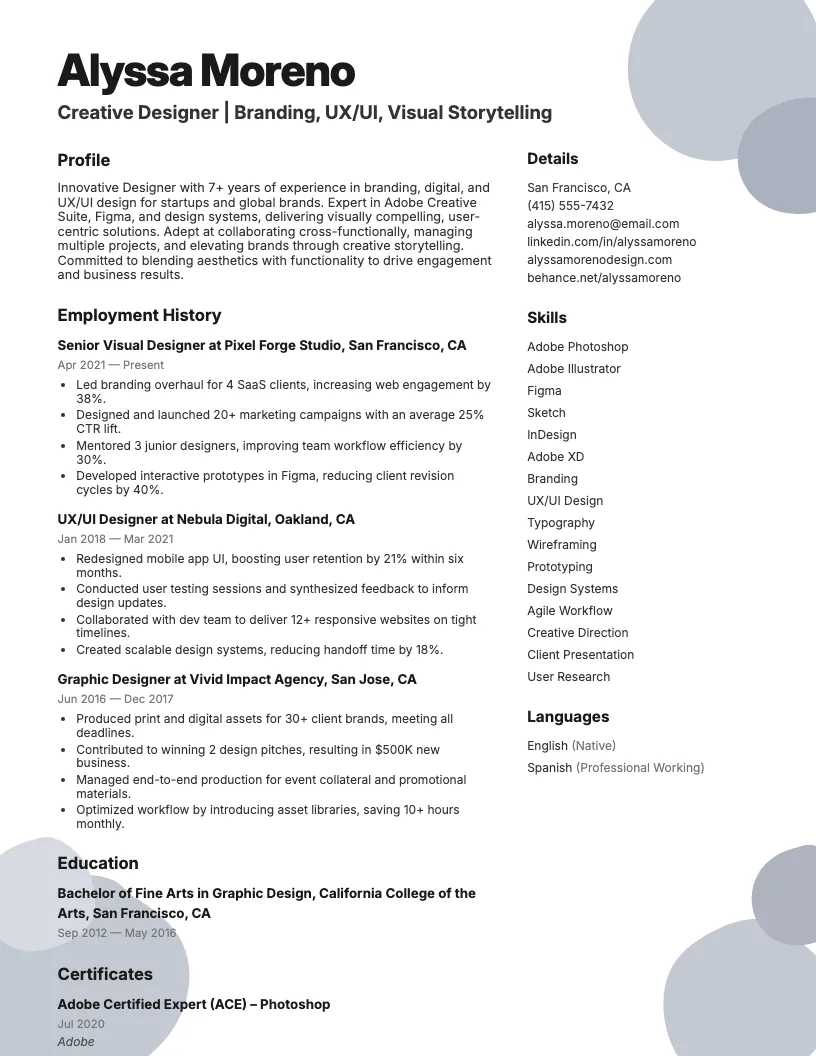
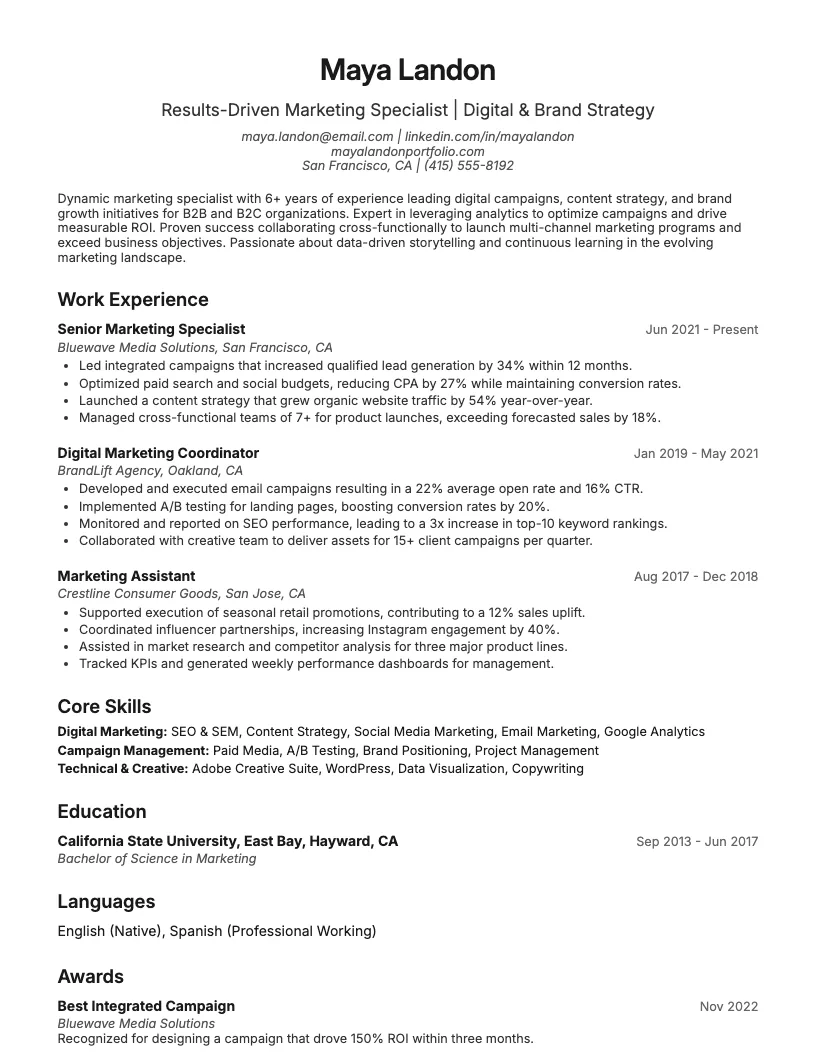
Browse Musician resume examples for related roles. Preview any example, open it in the builder, or read its full guide.
Click to enlargeCommon questions about Musician resumes
A Musician resume template is a professionally designed layout tailored for musicians, highlighting skills, performances, and achievements. ResumeJudge offers templates that help your talent and experience stand out to employers.
Yes, Musician resume templates from ResumeJudge are ATS-friendly, ensuring your resume passes applicant tracking systems used by music schools, orchestras, and production companies.
Use a Musician resume template when applying to music schools, orchestras, bands, teaching positions, or music production roles. ResumeJudge makes it easy to tailor your resume to any music-related job.
Absolutely, you can customize fonts, sections, and colors to match your style or genre. ResumeJudge templates let you personalize details like instruments played and genres to showcase your unique profile.
Musician templates focus on performance experience, instruments, and gigs, while other templates highlight corporate skills. ResumeJudge ensures key musical achievements are front and center for the right audience.
A Musician resume should be 1-2 pages, focusing on relevant experience and achievements. ResumeJudge templates help you organize content efficiently so you stay concise while highlighting your best work.
Yes, Musician resume templates are perfect for music teacher roles at schools, academies, or private lessons. ResumeJudge lets you highlight both your performance and teaching credentials.
Yes, ResumeJudge’s Musician templates include dedicated sections to list gigs, concerts, and recitals, making it easy to showcase your performance history to potential employers.
ResumeJudge offers templates that can be tailored for classical, jazz, rock, or pop musicians. You can easily adjust the layout to match your genre and audience.
Definitely! ResumeJudge templates let you add links to your demo reels, SoundCloud, or website, helping employers quickly access your work and hear your talent.
Explore more professional resume examples to inspire your job search
Use our AI-powered resume builder to create a professional, ATS-friendly resume in minutes.
Free to use • No credit card required