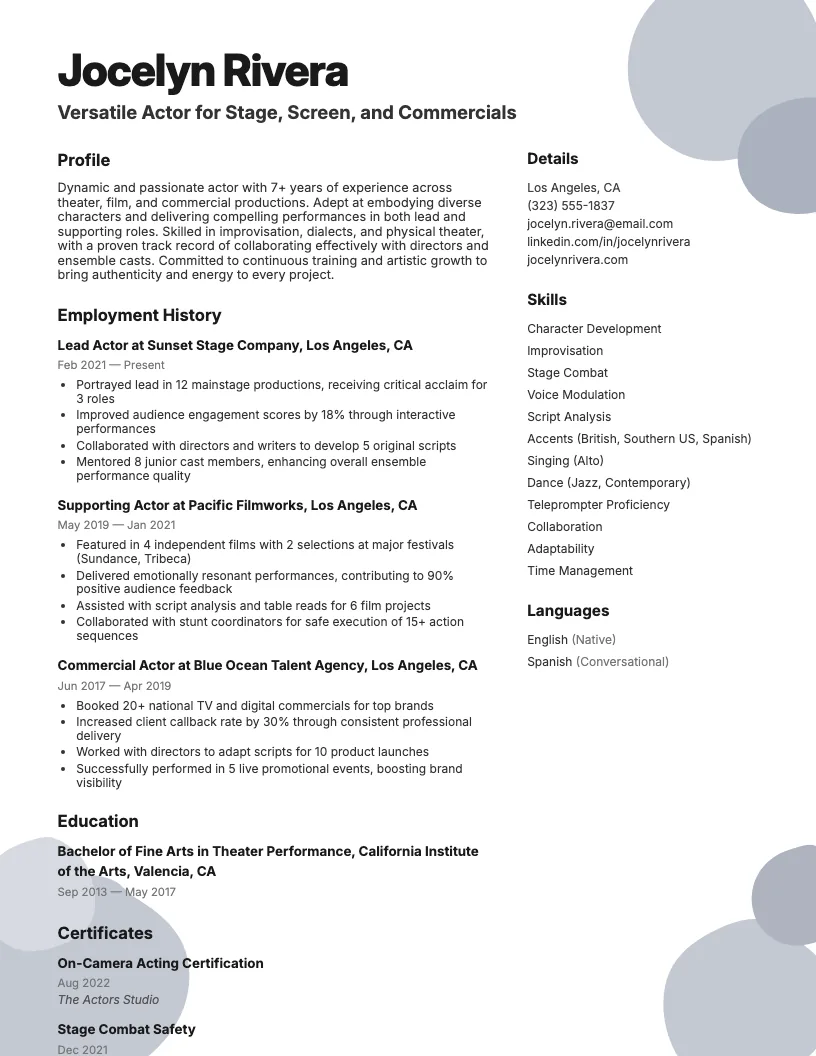
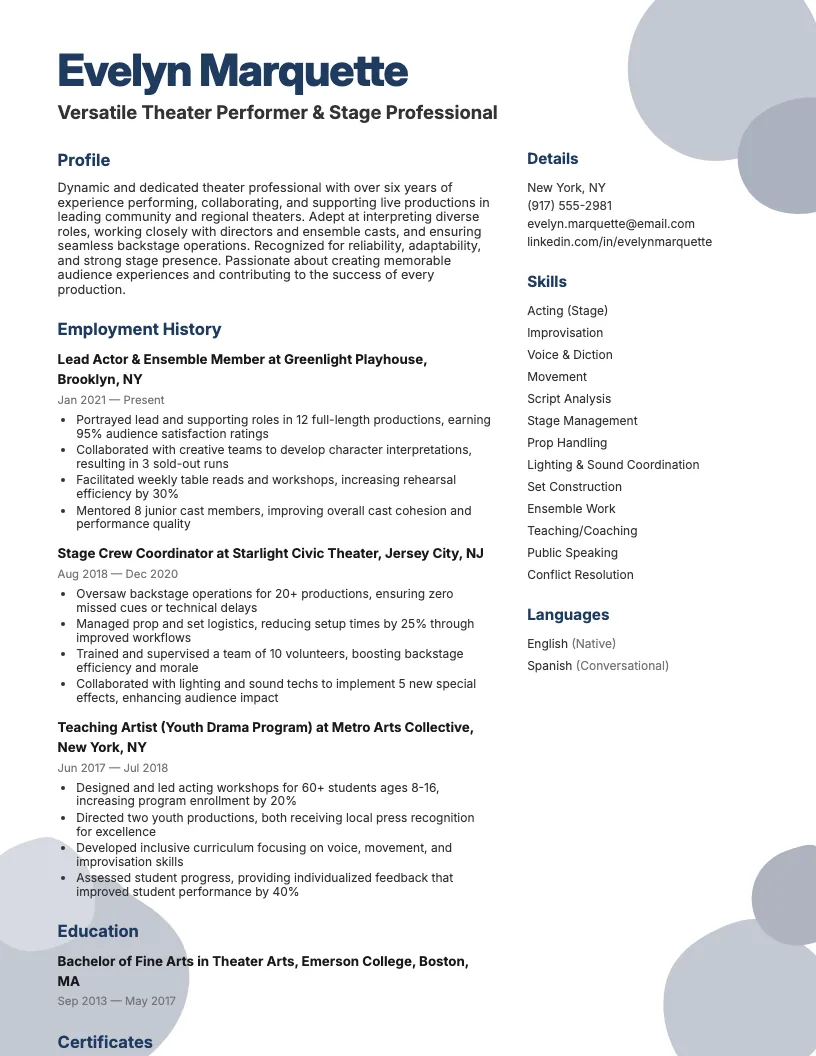
Theater Actor Resume Example
See full guide on Theater Actor resumes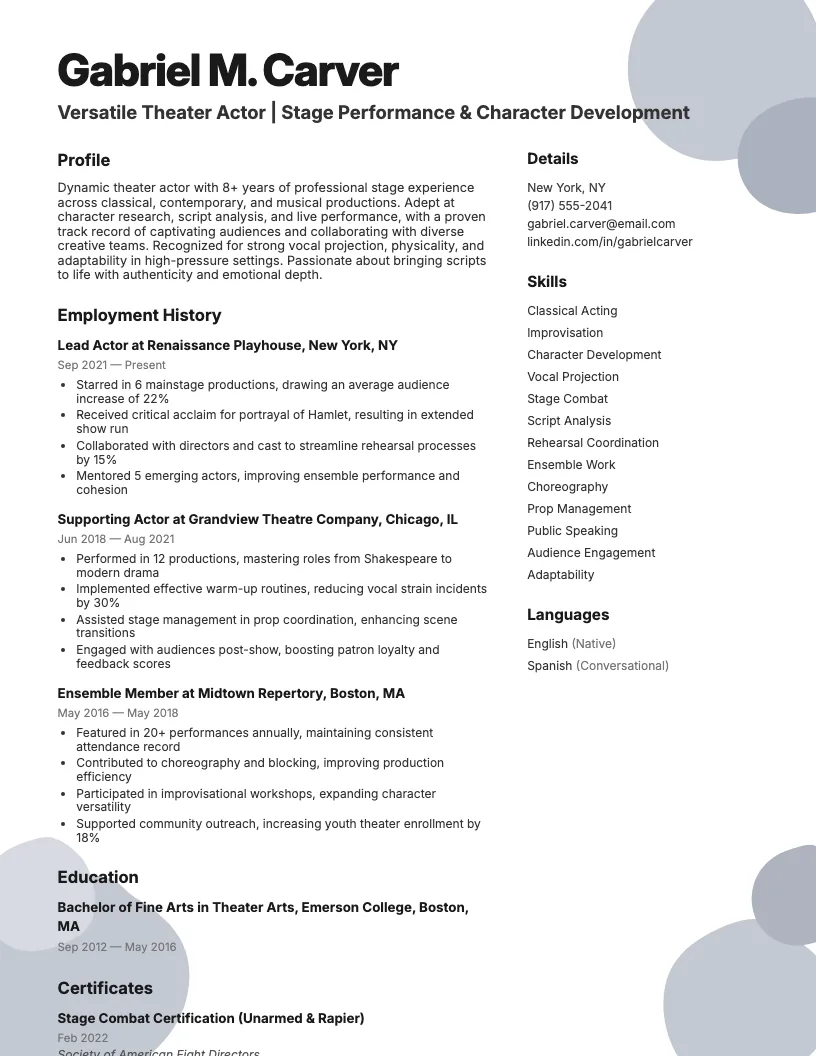 Click to enlarge
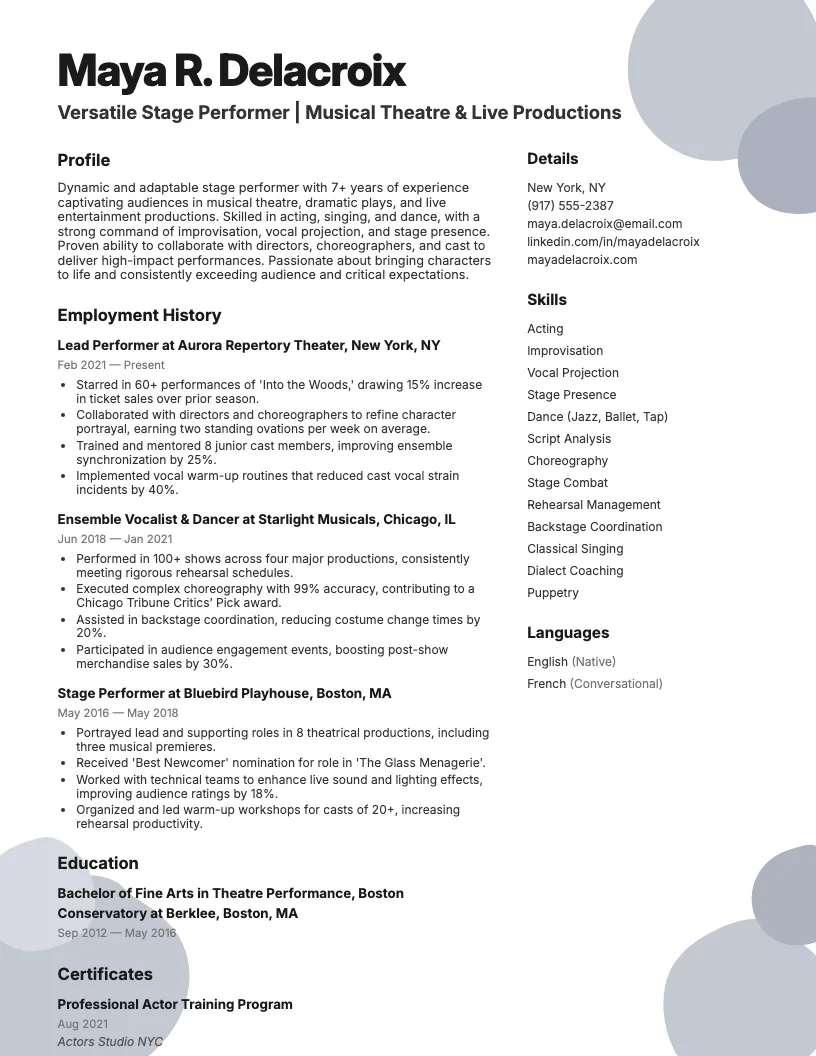 Click to preview

Get inspired by 56+ professional Stage Performer resume examples, each written by career experts and optimized to pass ATS scans. Pick a proven template, tailor it to your role, and download a polished resume in minutes.
Pick the specialization closest to your target role and start from a proven resume example.
Landing gigs as a stage performer means your resume needs to show off your talent, experience, and training. Casting directors look for clear proof of skill.
I see most successful resumes highlight credits, key roles, and performance metrics. You want your unique style to show, but you also need industry basics.

Writing a stage performer resume means showing your range, training, and real experience. Casting directors often spend less than 10 seconds scanning each resume.
You want your resume to spotlight your key skills and credits right away. I find that the right format and details make a big difference.
Let’s break down the main sections, tips for sharing your performance history, and ways to highlight your training.
A solid stage performer resume always starts with contact info, a strong summary, and a clear list of core skills. These basics help casting directors find what they need fast, and pairing them with a strong cover letter can further boost your application.
I also make sure to add a performance credits section. This details roles, productions, and venues. It’s pretty standard, and most directors expect to see at least three to five recent credits.
Don’t forget the special skills section. This is your spot for things like dialects, acrobatics, or instrumental talents. You can list anything relevant that gives you an edge.
List your most notable roles first. I always include the name of the production, my character, and the venue. Adding audience size or run length boosts credibility.
Use action verbs like "starred," "choreographed," or "directed" for each credit. This shows exactly what you contributed, not just what you participated in.
Highlight awards, sold-out shows, and any special skills you used in performances, like improv or singing. Numbers-like "performed in 50+ shows"-grab attention and show your experience level.
I always list formal education, like a Bachelor of Fine Arts or a conservatory diploma. This shows casting directors I have technical skills and discipline.
Include workshops, masterclasses, and private coaching, too. These prove you keep learning and adapting-key in this industry where trends and techniques change fast.
Don’t forget certifications-like stage combat or dialects. I recommend adding dates, instructors’ names, and any notable programs. This helps your training stand out.
Strong training and education sections can boost your credibility, especially if you’re early in your stage career. It rounds out your resume and shows your commitment to growth.
When I put together a stage performer resume, I focus on clarity and structure. A good format helps your skills stand out, especially when recruiters only glance for six seconds.
You want your resume to look clean and easy to read. Consistent headings, clear sections, and the right layout keep your experience front and center for casting directors.
I always recommend sticking to proven formatting rules. This means keeping fonts easy to read, using bullet points, and making sure everything fits on one page if possible.
I always recommend starting your stage performer resume with a clear header. Put your name, contact info, and a professional title right at the top. This keeps things tidy.
Then, use a simple reverse-chronological structure. List your most recent performances, training, and skills first. This layout helps directors scan for fresh, relevant experience.
Keep each section clearly labeled-like Experience, Education, and Skills. Short sections and lots of white space make your resume way easier to read in under 10 seconds.
Use consistent 12-point fonts like Arial or Calibri for easy reading. I stick to 1-inch margins and single line spacing-this keeps everything clean and professional.
Keep bullet points short-under 12 words each-to make your achievements pop. Bold your section headings so casting directors can skim your resume in seconds.
Save your file as a PDF. This preserves your layout across different devices or when printing. Small formatting tweaks can boost your chances of getting noticed.
If you want to stand out as a stage performer, you need the right mix of skills on your resume. Casting directors look for performers who cover both technical and interpersonal bases.
I always focus on highlighting my strongest performance abilities, but I never skip soft skills. You need both to succeed on and off stage. Let’s break down what to include.
If you're a stage performer, your technical and performance skills are front and center on your resume. Directors look for vocal range, dance technique, and stage presence first.
List specific skills, like sight-reading, improvisation, or stage combat—skills you might also highlight in a cover letter. If you master four or more disciplines, mention them to show your versatility. This grabs attention fast.
Don't forget relevant certifications or training, like voice lessons or acting workshops. This helps you stand out and proves you’re serious about your craft.
I always find that adaptability matters on stage. Quick changes, tech issues, or audience reactions can throw you off. Showing flexibility helps directors trust you in any situation.
Communication is key. You need to listen to cues, connect with castmates, and engage the crowd. Many directors say strong communicators get callbacks 30% more often.
Time management really counts, too. You juggle rehearsals, memorization, and self-care. If you stay organized, you deliver your best work-even during a packed performance week.
Confidence and resilience also help you grow in this field. If you can take feedback and bounce back from mistakes, you stand out. This rounds out your resume’s skill section nicely.
Nailing your stage performer resume summary is key. Casting directors usually spend less than 10 seconds on each resume, so you need something that pops right away.
Whether you're just starting or you’ve got years of shows under your belt, the right summary can highlight your unique strengths. I’ll walk you through examples for both situations.
If you’re just starting out in stage performance, your resume summary matters. I always highlight my formal training, school productions, and any related workshops.
You want to show passion and a willingness to learn. Mention skills like memorizing scripts, teamwork, and taking direction. These help you stand out, even with limited experience.
There are ways to add numbers, too. List the number of productions you’ve done or audience sizes-even if it’s only five shows or 100 people. This shows real-world experience.
I bring over 8 years of performing experience in theater, musicals, and live events. I consistently draw crowds of 500+ and receive positive audience feedback.
You want to highlight lead roles, sold-out shows, and collaborations with award-winning directors. This shows you’re reliable and make an impact on stage.
There are ways to stand out-mention international tours, industry awards, and mentoring younger performers. This helps casting directors see your value quickly.
Summing it up, a strong summary puts your range, achievements, and team player mindset front and center.
Your work experience section shows directors and producers what you bring to the stage. It’s where you list shows, tours, and any big roles you’ve taken on.
Directors like to see specifics. If you’ve performed in ten productions or toured nationally, this is where you mention it. The details matter here.
Describing your roles and quantifying your achievements helps your resume stand out. I find it’s easier to get auditions when my experience is clear and measurable.
When I write about my roles, I focus on what I actually do on stage. I mention the type of productions, the size of the audience, and the role itself.
You want to highlight your specific contributions. Did you lead a cast of 10? Did you perform in a touring show across 5 cities? Be clear and detailed.
There are different ways to phrase your involvement. Use action verbs like performed, directed, collaborated, or choreographed to show your impact. This helps your experience stand out.
Numbers catch attention. I always include audience sizes, like performed for 500+ people or sold out 8 consecutive shows-it’s impressive and easy to verify.
You can mention awards, competition placements, or even average ticket sales per event. This helps directors see your impact beyond just performing.
Highlight collaborations with big names or touring across five cities. These details round out your work experience and give a clear picture of your reach and consistency.
Training shapes every stage performer’s career. Whether you’re self-taught or have a degree, your education matters to casting directors and audiences alike.
You can start with a formal degree, but many performers find extra value in workshops and masterclasses. These keep your skills sharp and your resume current.
A degree in theatre, performing arts, or musical theatre gives you a strong foundation. Around 68% of professional stage performers report formal education in these fields.
Certifications like voice training or stage combat show specialized skills. I see casting directors value these extras because they prove you take your craft seriously.
You can also highlight acting diplomas or programs from accredited schools. Listing these on your resume helps you stand out when jobs get competitive.
I always look for workshops and masterclasses that push my craft forward. These short-term, focused sessions give me direct feedback and fresh techniques I can use right away.
You meet pros and peers from all over. In just a weekend, I can learn a new style or pick up audition tips from someone who’s actually on Broadway.
There are usually dozens of in-person and virtual options every month, so it’s easy to fit training into a busy schedule. Staying active like this keeps my skills sharp.
Adding extra sections helps your stage performer resume stand out. These details can show off your commitment, talent, and the respect you earn in the industry.
You want to highlight awards, professional groups, and unique skills. About 70% of casting managers say these extras help them choose between two similar candidates.
I use the awards and recognitions section to highlight what sets me apart in the industry. Listing specific honors shows directors I deliver standout performances.
You can include things like local theater awards, national competitions, or even scholarships. Mention the year and awarding body-this adds credibility and context.
There are hundreds of stage performers out there. Showcasing at least one or two notable awards helps your resume stand out and gives your profile more impact.
Professional affiliations show that I stay connected to the stage community. I list memberships like Actors’ Equity Association or Screen Actors Guild right on my resume.
There are over 50,000 active members in some of these groups. That kind of network can open doors and signal my commitment to the craft.
You can also include local or international organizations. This helps casting directors see you’re serious and always building your industry connections.
This section is where you really show what you bring to the stage. List things like improvisation, dialects, acrobatics, or instrumental ability. These skills set you apart.
I always recommend highlighting any languages you speak, tech skills for sound and lighting, or dance styles you’ve mastered. Producers notice these details-over 60% say unique skills catch their eye.
You can include certifications here too, like stage combat or vocal training. This helps directors see your versatility fast. Finish strong-let your resume reflect your full range.
If you're aiming for stage roles, a strong resume really matters. You want to show your experience, skills, and special training in a clear way.
I break down what to include and how to lay everything out. You’ll see a sample resume that makes it easier to highlight your talents.
Here’s a realistic stage performer resume sample. You see how I highlight professional experience, training, and specific skills right up front.
I always include measurable achievements, like “played 50+ shows annually” or “boosted ticket sales by 30%.” This helps casting directors see real results.
Use clear sections for education, performances, and awards. You want your resume to look organized and easy to scan in under 30 seconds.
Browse Stage Performer resume examples for related roles. Preview any example, open it in the builder, or read its full guide.
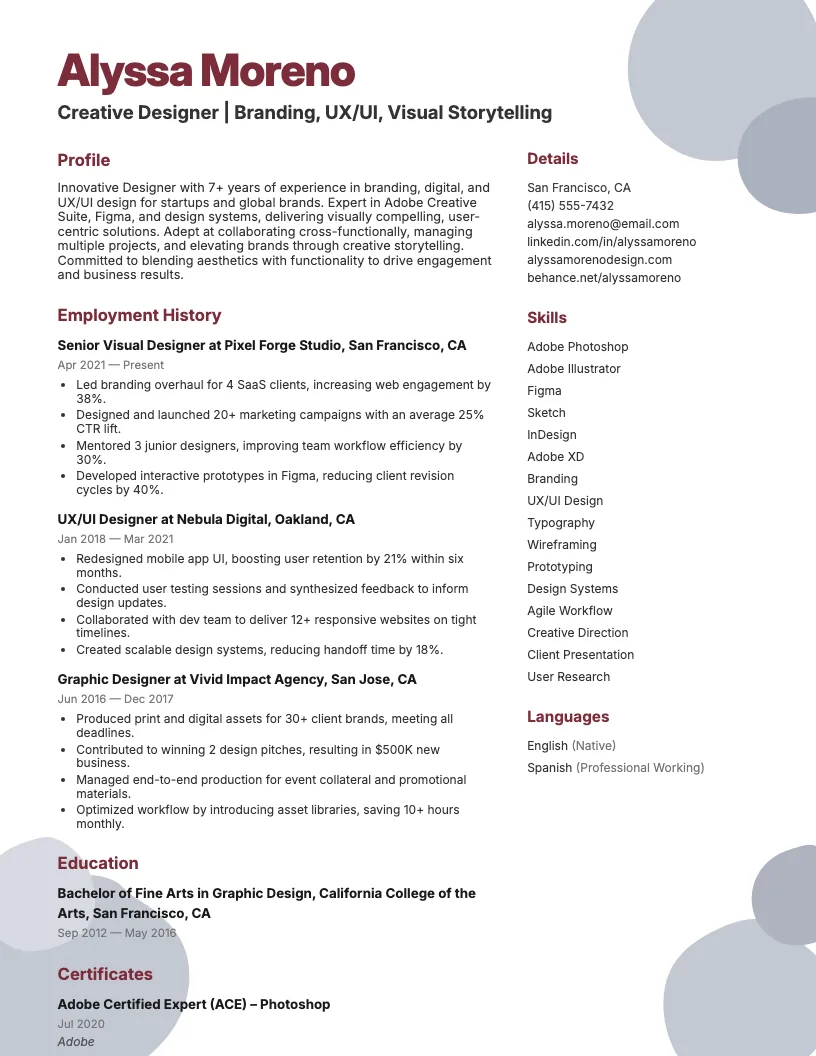
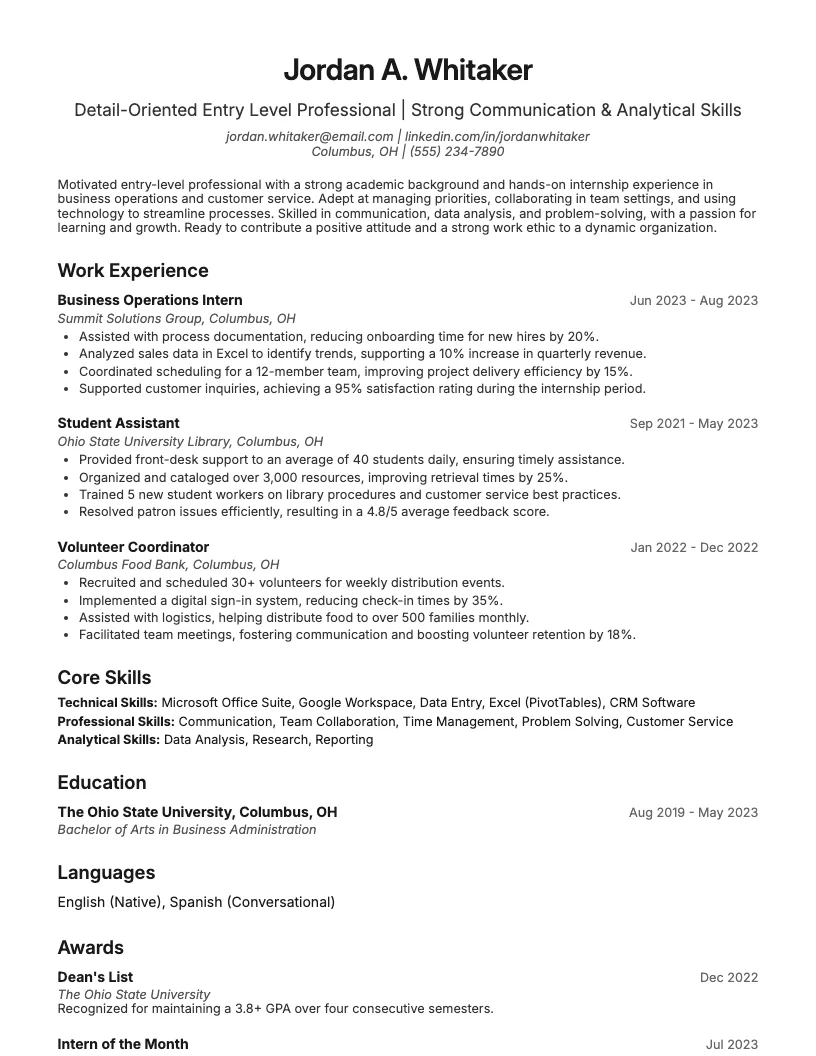
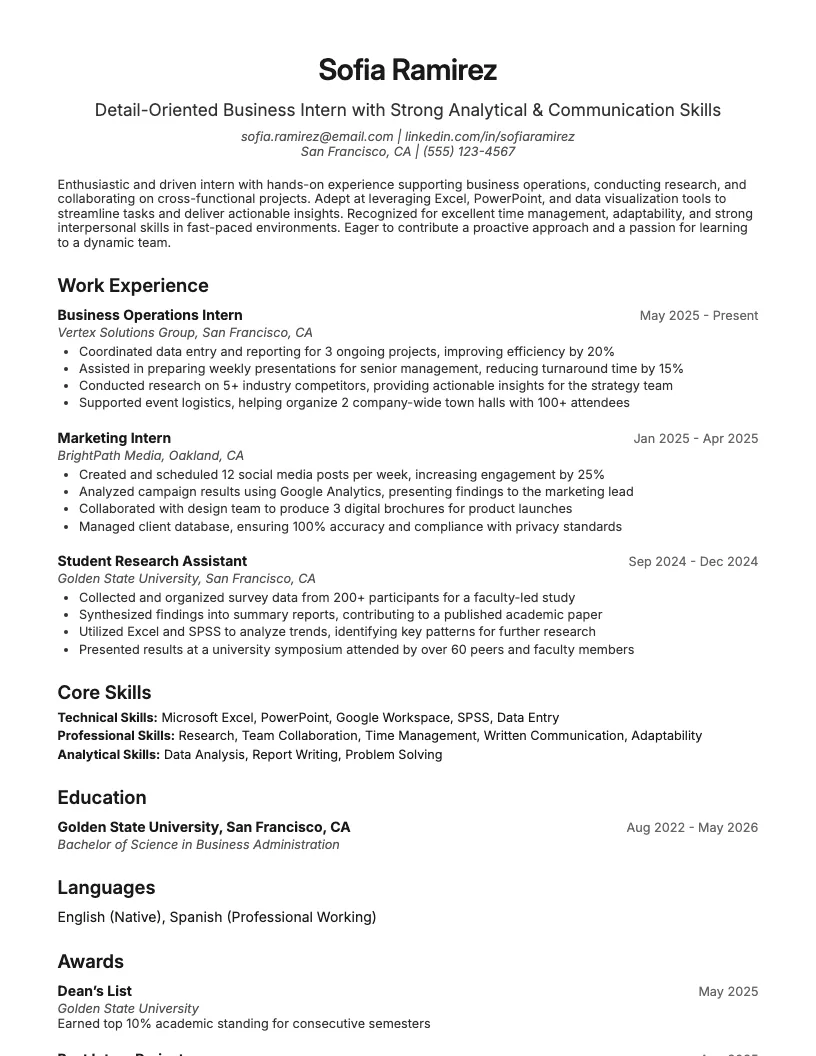
Click to enlarge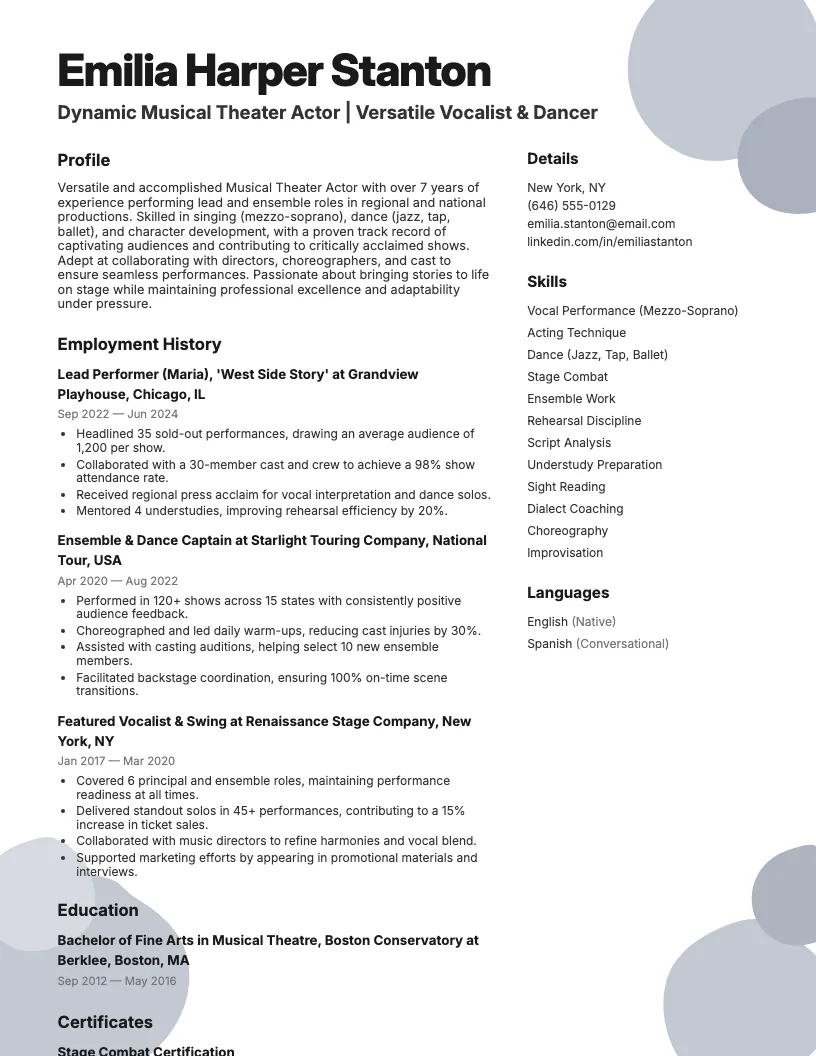 Click to enlarge
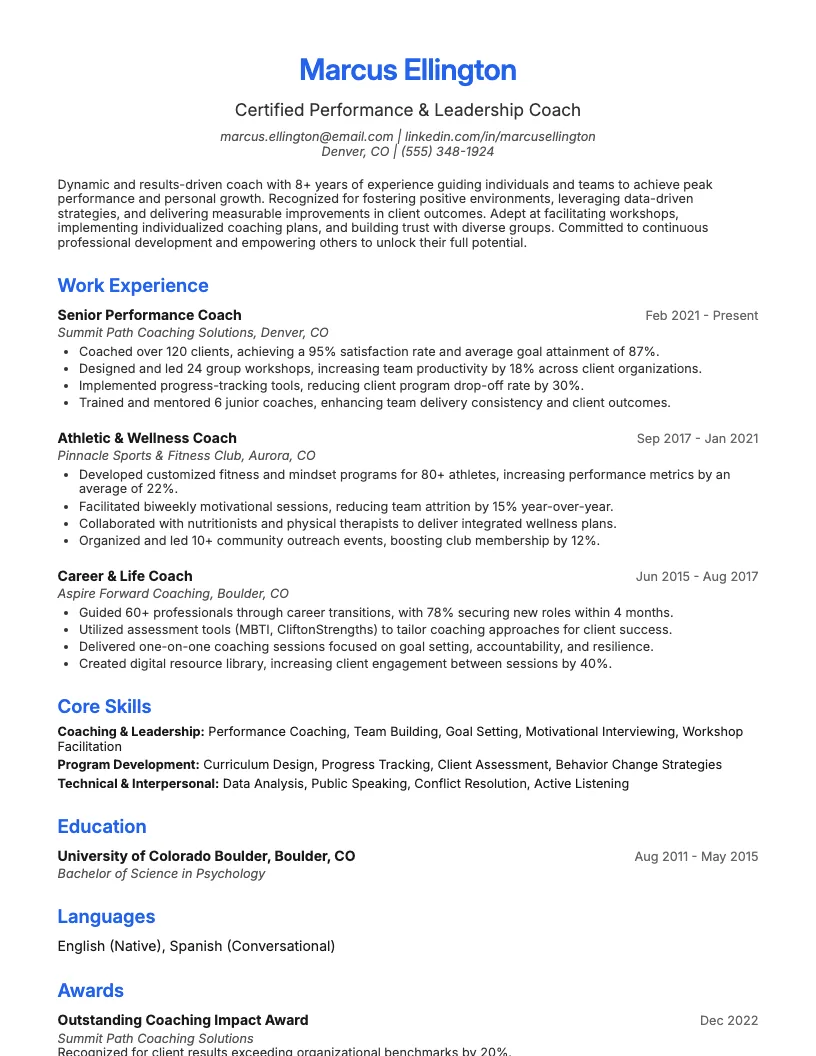
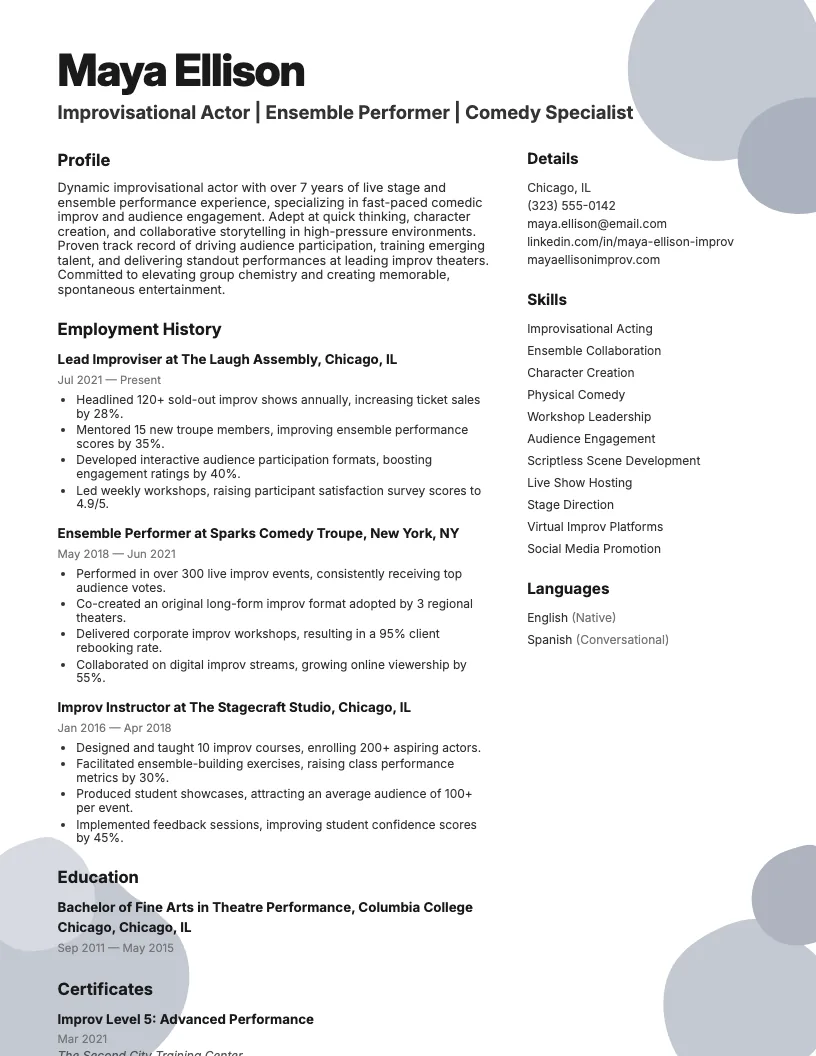 Click to enlarge
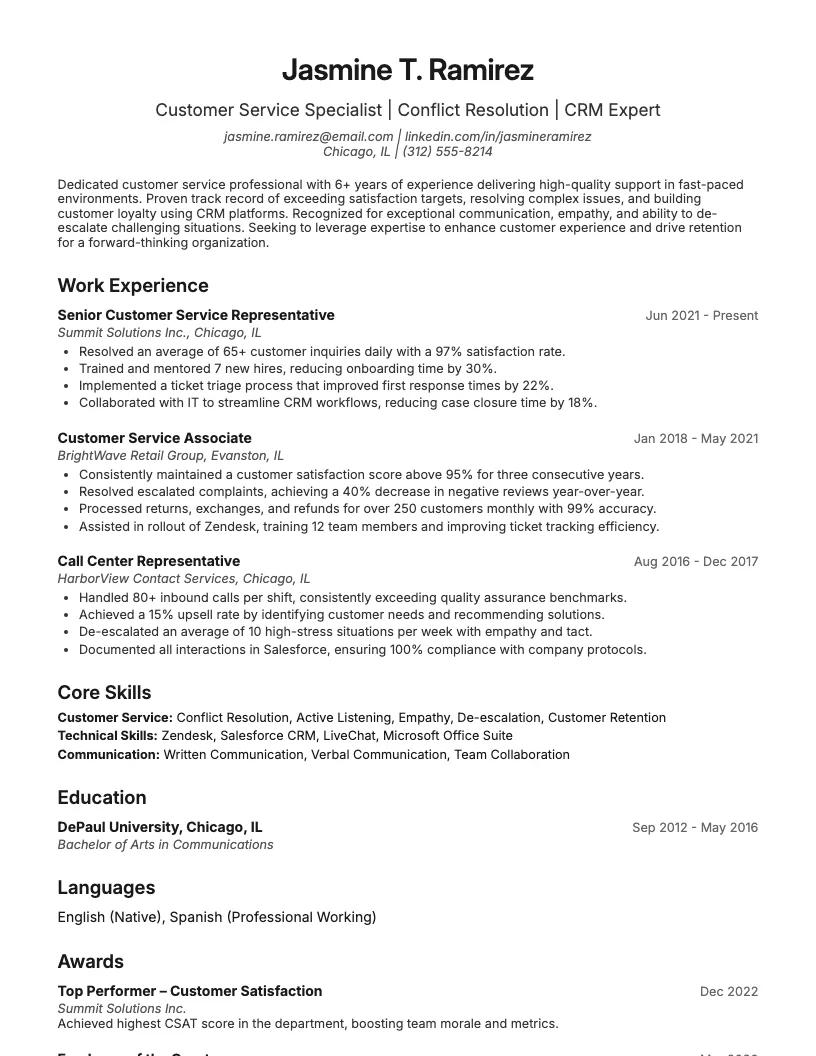
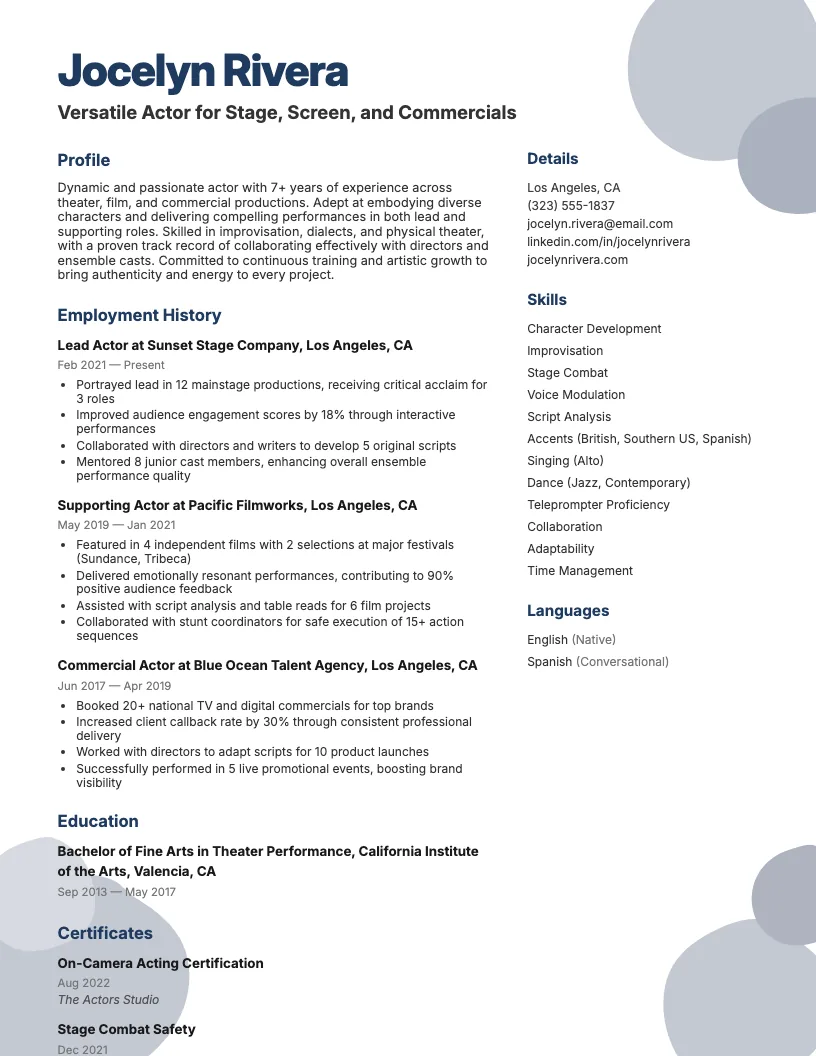 Click to enlarge
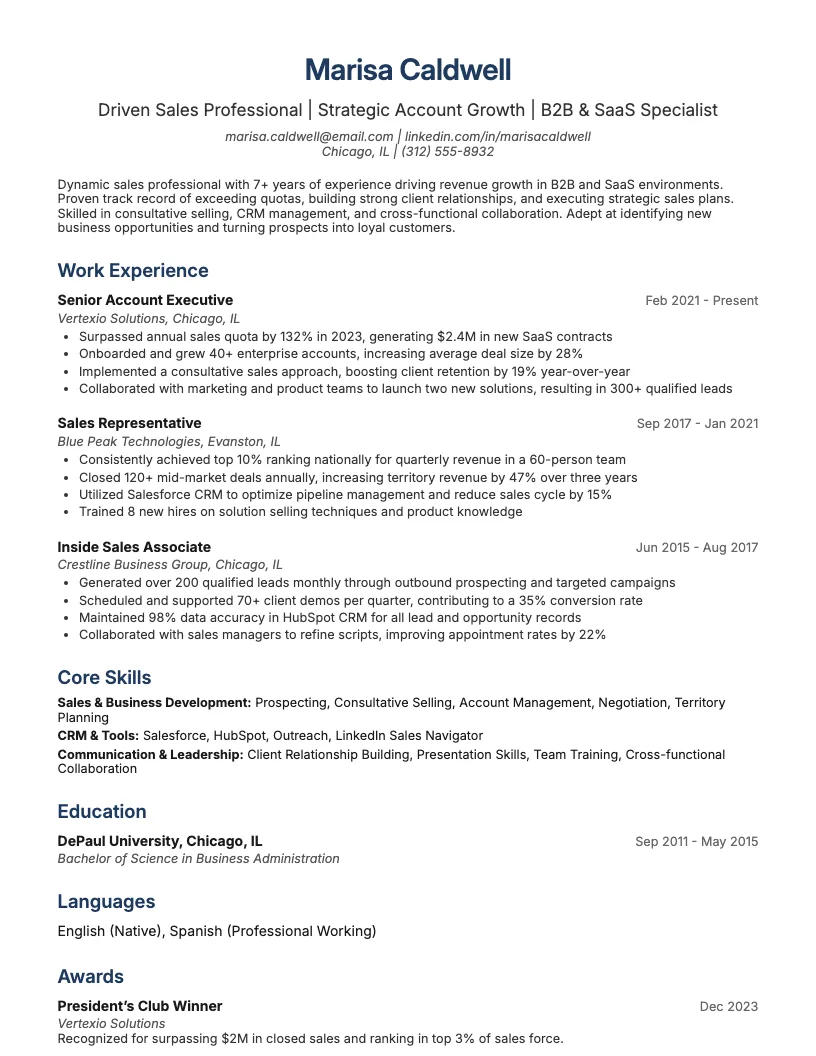
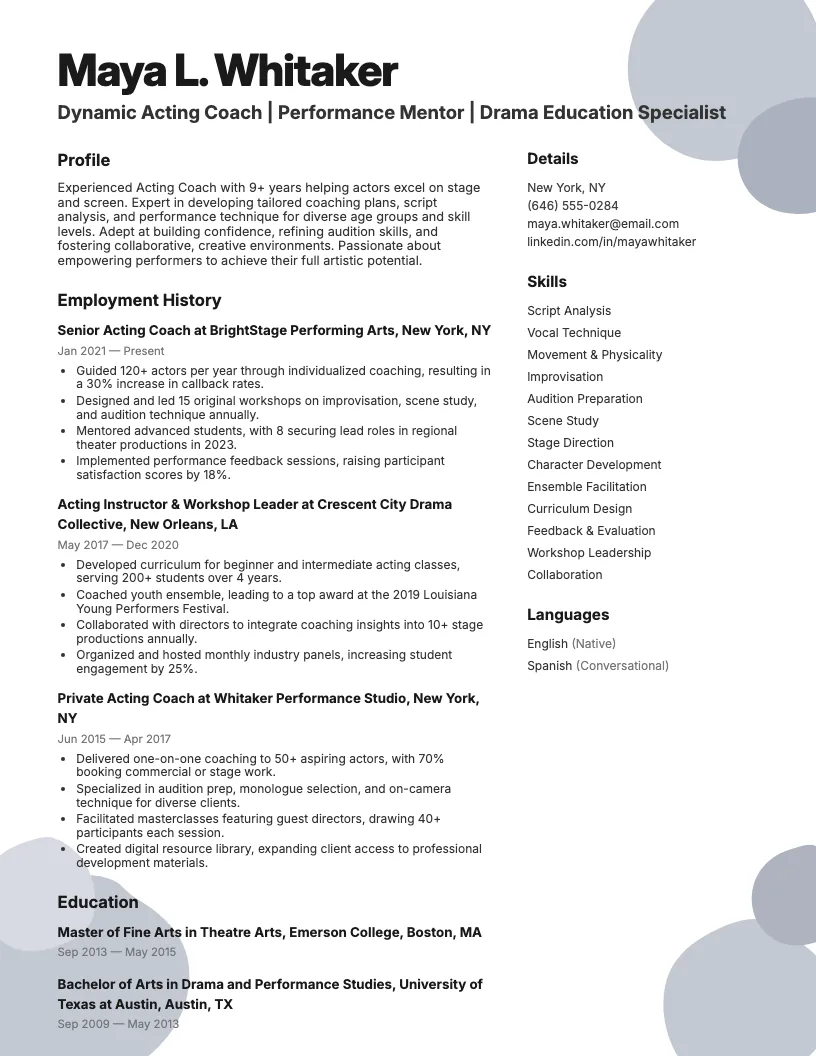 Click to enlarge
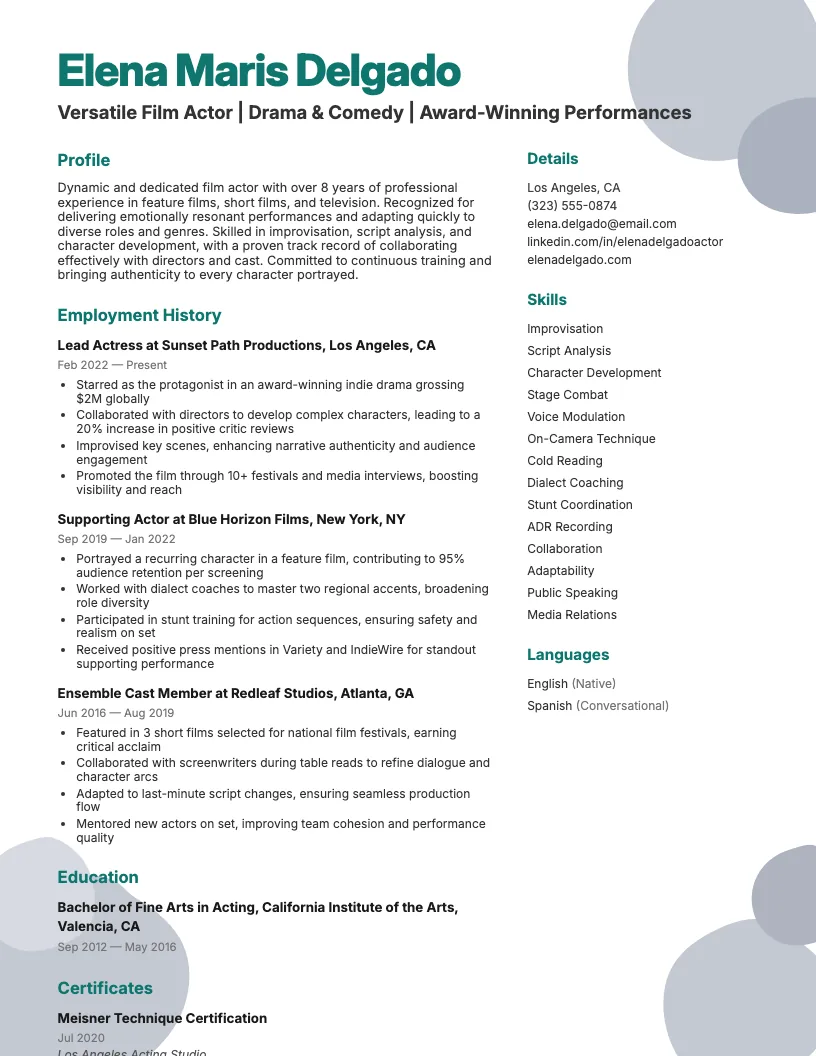 Click to enlarge
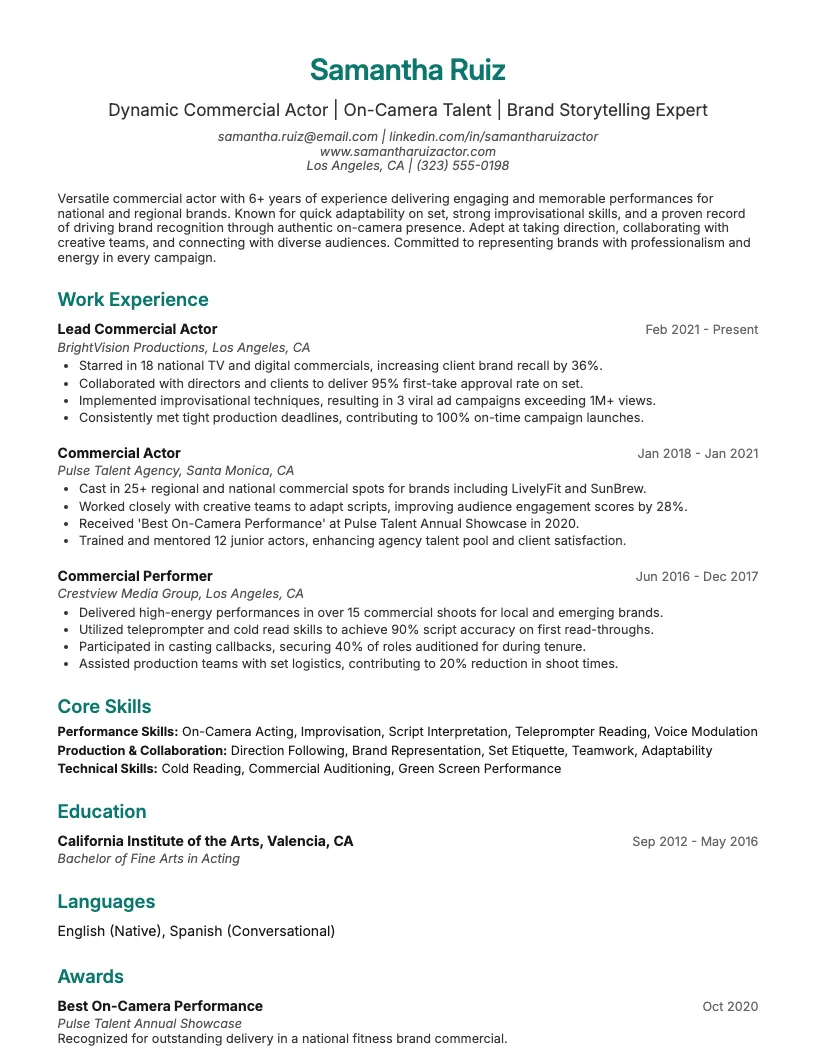 Click to enlarge
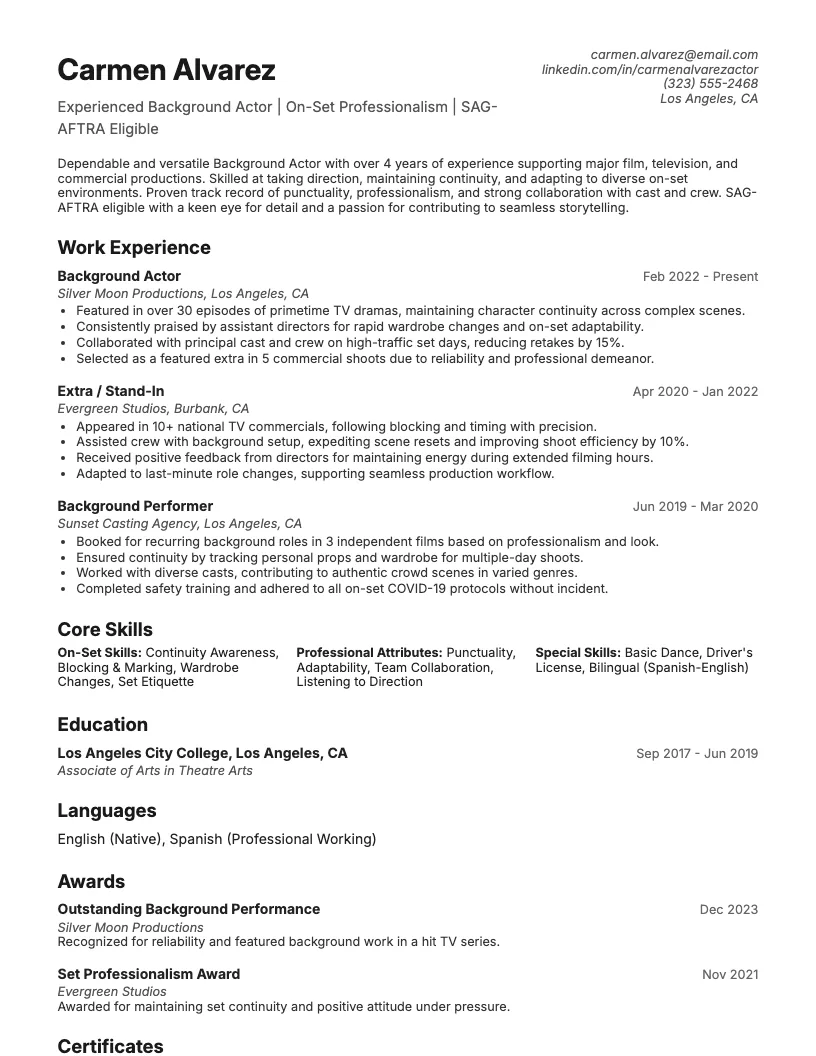 Click to enlarge
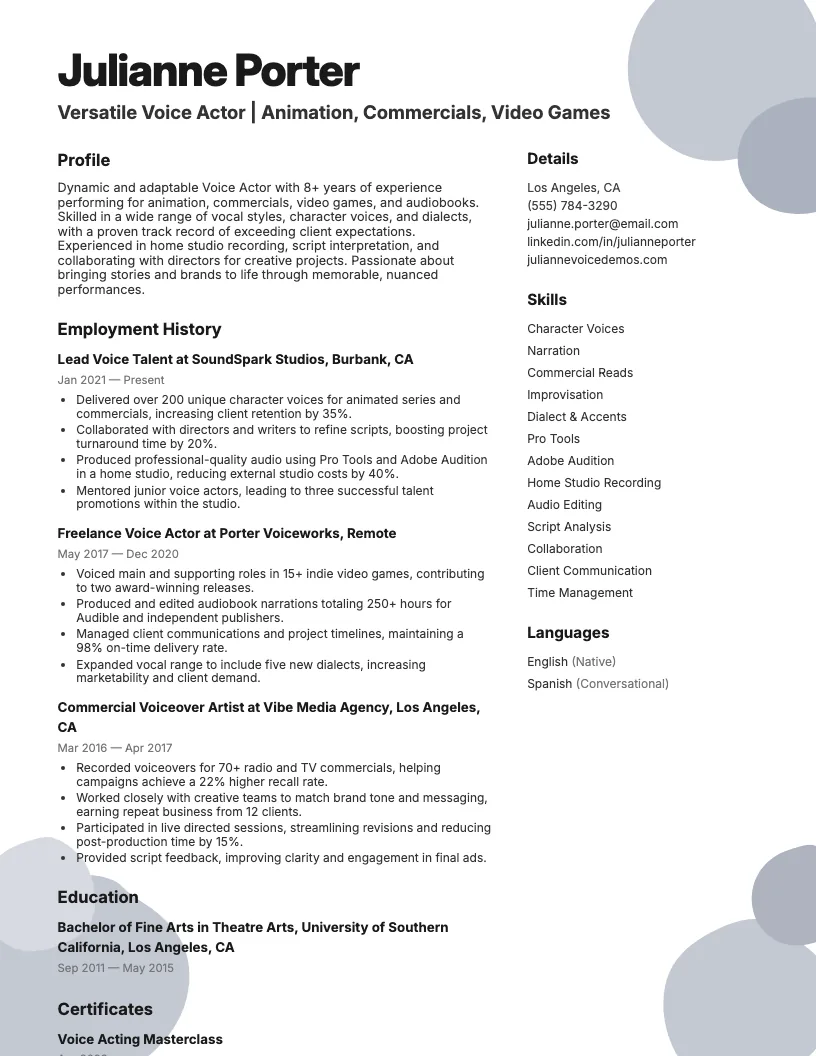 Click to enlarge
Common questions about Stage Performer resumes
A Stage Performer resume template is a pre-designed layout tailored to showcase skills, experience, and achievements in acting, singing, or dancing. ResumeJudge makes it easy to highlight your stage presence and unique talents.
Yes, ResumeJudge's Stage Performer templates are ATS-friendly, ensuring your resume passes automated screening systems used by casting agencies and theaters.
Use a Stage Performer resume template when applying for roles in theater, musicals, live shows, or entertainment venues. It's ideal for actors, dancers, and vocalists.
Absolutely! You can easily tailor ResumeJudge templates to include your headshot, demo links, or special skills, ensuring your resume fits each audition or job opportunity.
Stage Performer templates focus on performance credits, training, and unique talents, unlike general templates. ResumeJudge designs them to highlight your artistic strengths and industry experience.
Ideally, a Stage Performer resume should be one page, focusing on relevant roles, training, and skills. ResumeJudge helps you organize content concisely for quick review by casting directors.
Include sections like performance credits, training, special skills, and contact info. ResumeJudge templates ensure these are clearly presented to showcase your talent.
Yes, you can add links to demo reels or online portfolios. ResumeJudge lets you easily include clickable URLs so casting directors can view your work instantly.
Definitely! ResumeJudge templates help beginners highlight training, workshops, and student productions, making it easier to break into the industry.
Yes, ResumeJudge templates are designed for global use and can be adjusted for different markets, making them suitable for international auditions and casting calls.
Explore more professional resume examples to inspire your job search
Use our AI-powered resume builder to create a professional, ATS-friendly resume in minutes.
Free to use • No credit card required