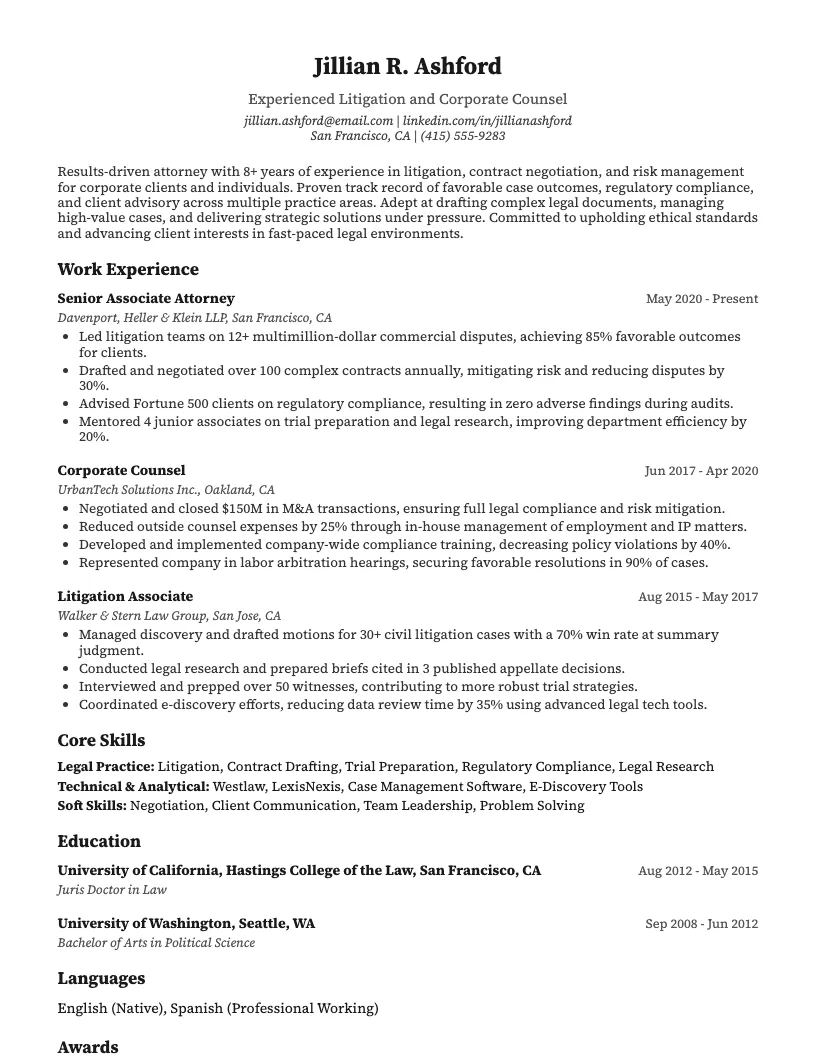
Paralegal Resume Example
See full guide on Paralegal resumes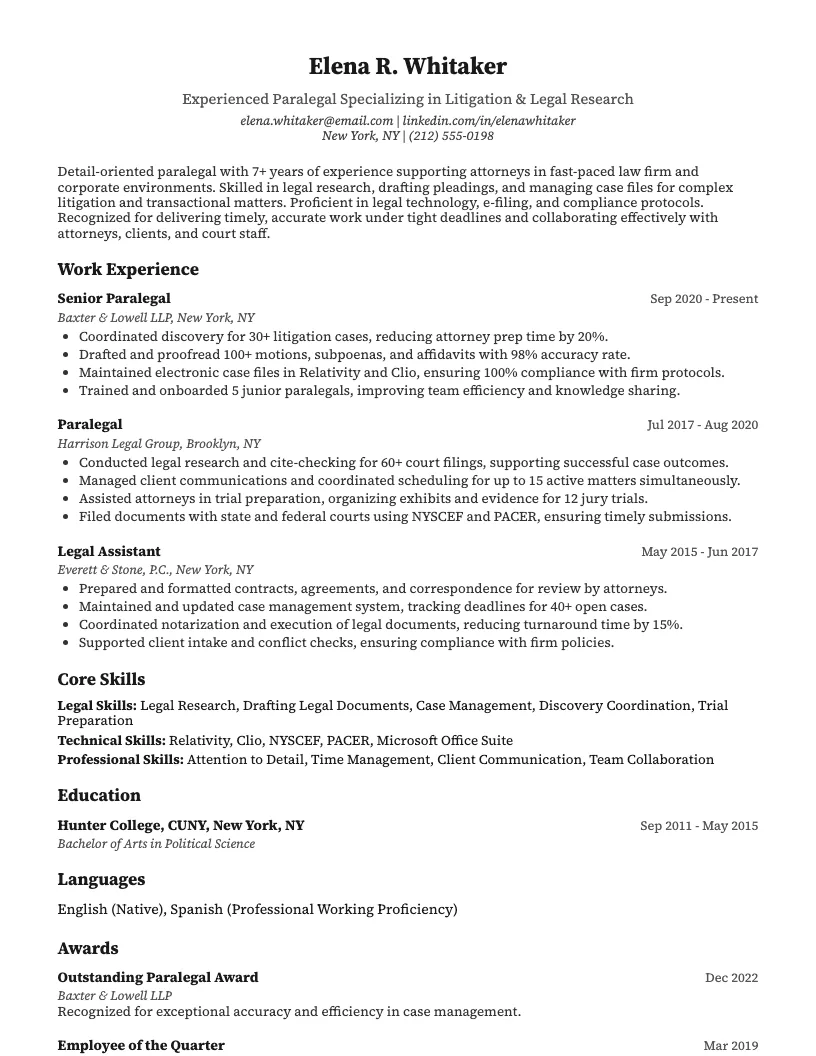 Click to enlarge
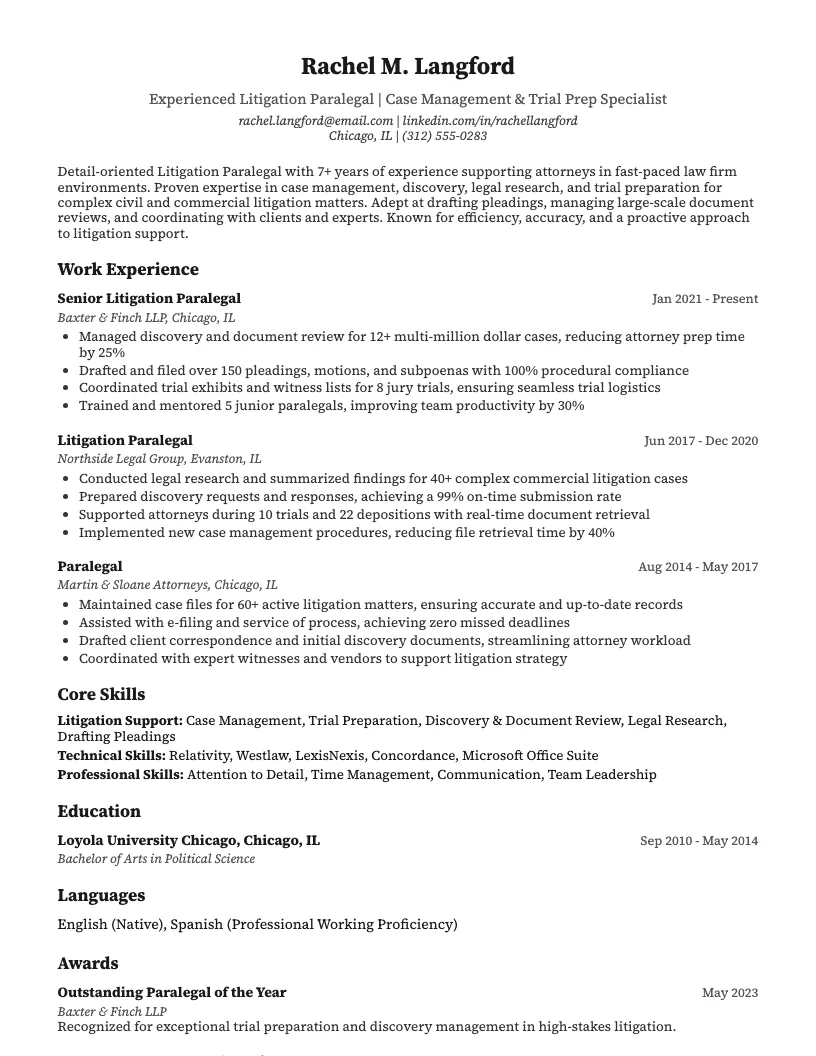 Click to preview

Get inspired by 50+ professional Litigation Paralegal resume examples, each written by career experts and optimized to pass ATS scans. Pick a proven template, tailor it to your role, and download a polished resume in minutes.
Pick the specialization closest to your target role and start from a proven resume example.

Getting your litigation paralegal resume noticed starts with the right structure. Recruiters spend about 7 seconds scanning a resume, so every section counts.
You want your resume to match the job description and highlight your most relevant skills. Clear headers and a logical layout help busy recruiters find what they need fast.
I always suggest keeping your resume to one or two pages. Focus on experience and details that show you’re a strong fit for litigation roles.
Let’s break down which sections to include and what recruiters really want to see in a litigation paralegal resume.
You want your resume to stand out and cover all the bases. I always include these core sections: Contact Information, Professional Summary, Experience, Skills, Education, and Achievements.
Each section serves a clear purpose. For example, your experience should highlight relevant cases and tools you use, while your skills list should match the keywords from the job post.
This structure keeps your resume organized and easy for recruiters to scan. Most hiring managers spend less than 10 seconds on each resume, so clarity matters a lot.
Recruiters want to see real litigation experience. If you’ve supported attorneys through discovery or managed case files, highlight those details clearly. Numbers help-think “supported 30+ cases.”
Legal research skills matter a lot. Show that you know your way around Westlaw, LexisNexis, or similar tools. Listing certifications or search techniques makes your resume stand out.
You should also demonstrate court rules knowledge. Recruiters look for candidates familiar with local, state, and federal procedures-especially if you’ve handled deadlines or filings in different jurisdictions.
Don’t forget tech skills. I always mention my experience with case management or e-discovery platforms. Even basic Excel proficiency helps. Legal tech keeps changing, so ongoing learning looks good too.
If you show these strengths, you make it easier for recruiters to picture you handling the job. That’s your best shot at landing an interview.
A strong summary or objective gets noticed fast. It highlights your top achievements or your career goals in just a few sentences.
You want to keep it short-usually no more than five sentences. Make sure it matches what the job needs and shows off your best moments.
Next, I’ll show you some examples that work well for litigation paralegals.
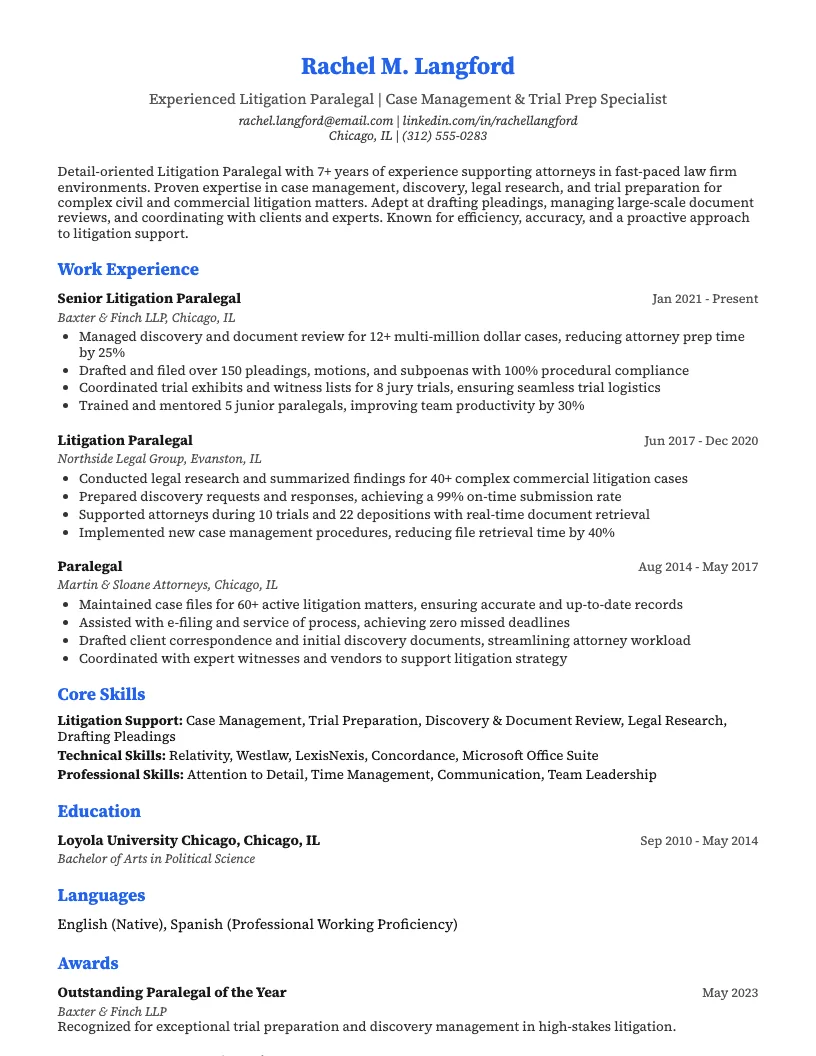
Here are a few real-world summary and objective examples for litigation paralegal resumes. You want to focus on years of experience, key skills, and measurable wins.
I might write, “Detail-oriented litigation paralegal with 5+ years’ experience. Managed discovery for 30+ cases. Reduced case prep time by 20% through streamlined processes.”
If you’re new, try, “Recent paralegal certificate grad seeking to leverage research and case management skills. Passionate about supporting attorneys in fast-paced litigation settings.”
You can mention specific industries, like, “Healthcare paralegal transitioning to litigation. Skilled in compliance, evidence review, and managing confidential records. Ready to add value from day one.”
Keep your summary or objective short-aim for 3-5 sentences. Use action verbs and real numbers to show your impact. This helps recruiters get your value fast.
Your experience shows recruiters what you bring to the table. They look for specific results, not just job duties, so highlight what sets you apart.
Focus on numbers, achievements, and the impact you make. It's not just about listing tasks-it's about showing real value in every role.
When I update my resume, I always throw in numbers-like case volumes or deadlines met. This helps recruiters picture my workload and real contributions.
You can highlight things like cases managed per year, discovery documents processed, or the dollar value of settlements. Numbers make your achievements clear and concrete.
There are also ways to show value with percentages, like success rates or efficiency improvements. Quantifying results helps your experience stand out to law firms scanning dozens of resumes.
If you’re just starting out, don’t stress about experience gaps. I focus on transferable skills-like research, organization, or communication-to show I’m ready for legal work.
You can use a hybrid or skill-based resume format. This helps you highlight coursework, internships, or volunteer projects that prove your value as a litigation paralegal.
Tailor your resume to each job posting. I always pull keywords from the job ad and sprinkle those into my skills, achievements, and objective statement for better results, and I make sure to include a cover letter to strengthen my application.
I also showcase academic projects or mock trial experiences. These count, and they show I’m serious about litigation work, even if my professional background is limited.
Everyone starts somewhere. Keep your achievements factual and specific, and show how you’re ready to contribute. That’s the best way to wrap up your experience section.
Hiring managers care about both your technical and interpersonal strengths. If you want your resume to stand out, you’ve got to show both hard and soft skills.
I always focus on skills that match the job description. This means including software I know, plus things like organization and problem-solving that teams look for in litigation.
Your education and certifications section can make a big difference. Employers check this to see if you meet their basic requirements and bring extra value.
List your degree, school name, and graduation year. If you’re still in school, add your expected graduation date. Only include what’s relevant.
Certifications show you’re committed to your field. I recommend picking ones that actually prove your skillset. Don’t list everything-focus on quality, not quantity.
Next, I’ll break down the most valuable certifications you can add to your litigation paralegal resume.
I see the NALA Certified Paralegal (CP) and NFPA Registered Paralegal (RP) as two top picks. These are recognized by most law firms and boost your credibility.
You should consider specialty certifications in litigation, e-discovery, or trial preparation. Certifications like the NALS Professional Paralegal (PP) show you go beyond the basics.
It helps to list only recent or unique certifications. Outdated or unrelated certificates take up valuable space. I always focus on the ones that match the job description.
If you want your litigation paralegal resume to stand out, extra sections help showcase more of what you offer. These details can show your skills and personality.
You can share awards, volunteer work, or projects you handle outside daily tasks. This stuff gives hiring managers a fuller picture of your experience and interests.
If you’re comparing a litigation paralegal resume to a legal assistant resume, focus on the skills. Litigation paralegals usually highlight case management and trial prep, while legal assistants emphasize administrative support.
Legal assistant resume examples often showcase strong organization and communication. I see a lot of bullet points about scheduling, drafting documents, and supporting attorneys. This helps recruiters spot multitasking skills quickly.
You should tailor your resume to the job description. For legal assistant resume examples—or if you're applying for a real estate paralegal position, check out this cover letter—use clear sections for technical skills, legal software, and client interaction. This makes your experience stand out to hiring managers.
Crafting a strong litigation paralegal resume means focusing on structure and relevance. You want to highlight your legal experience, technical skills, and attention to detail.
Always tailor your resume for each job. Use real numbers and results to show your impact. If you’re new, draw on internships or contract work to fill experience gaps.
I always start by thinking about what makes my experience unique. Think about your own strengths and how they tie to the job description.
You want your resume to show measurable results. For example, mention how you manage over 50 case files or draft dozens of legal documents each month.
Don’t forget to tailor your resume for each job. Keywords from the job posting matter—a lot. Pairing your resume with a strong cover letter helps your application get noticed by both recruiters and applicant tracking systems.
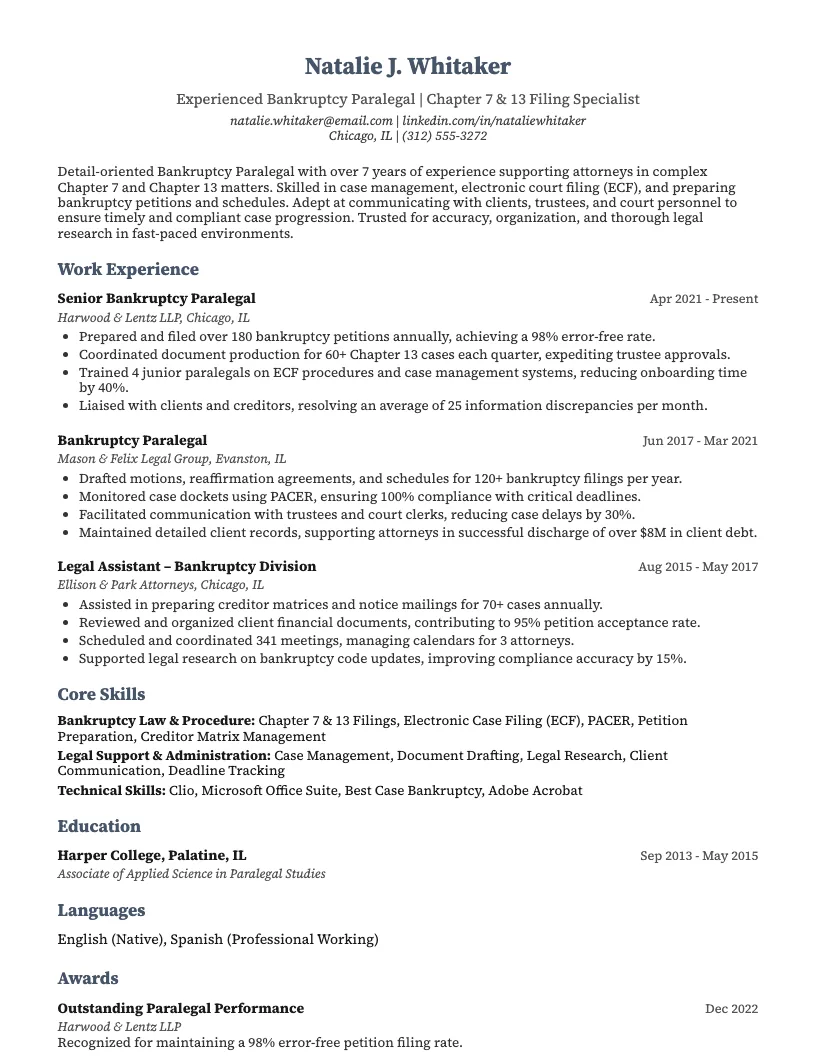
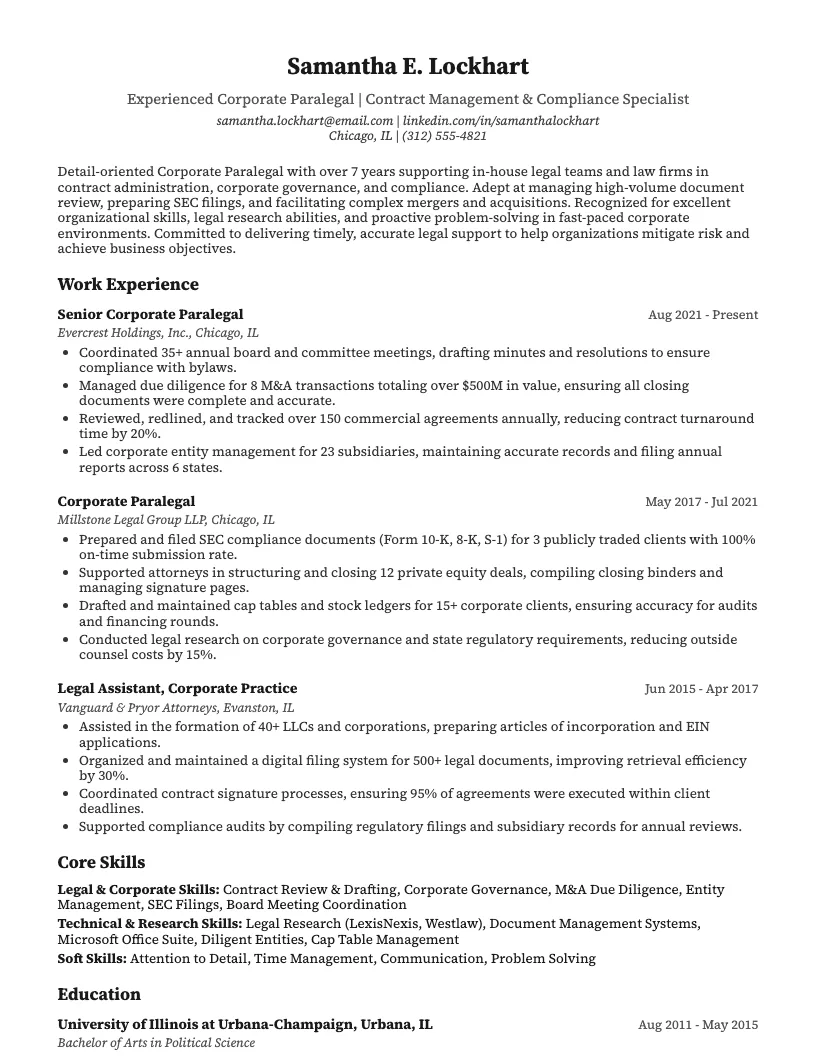
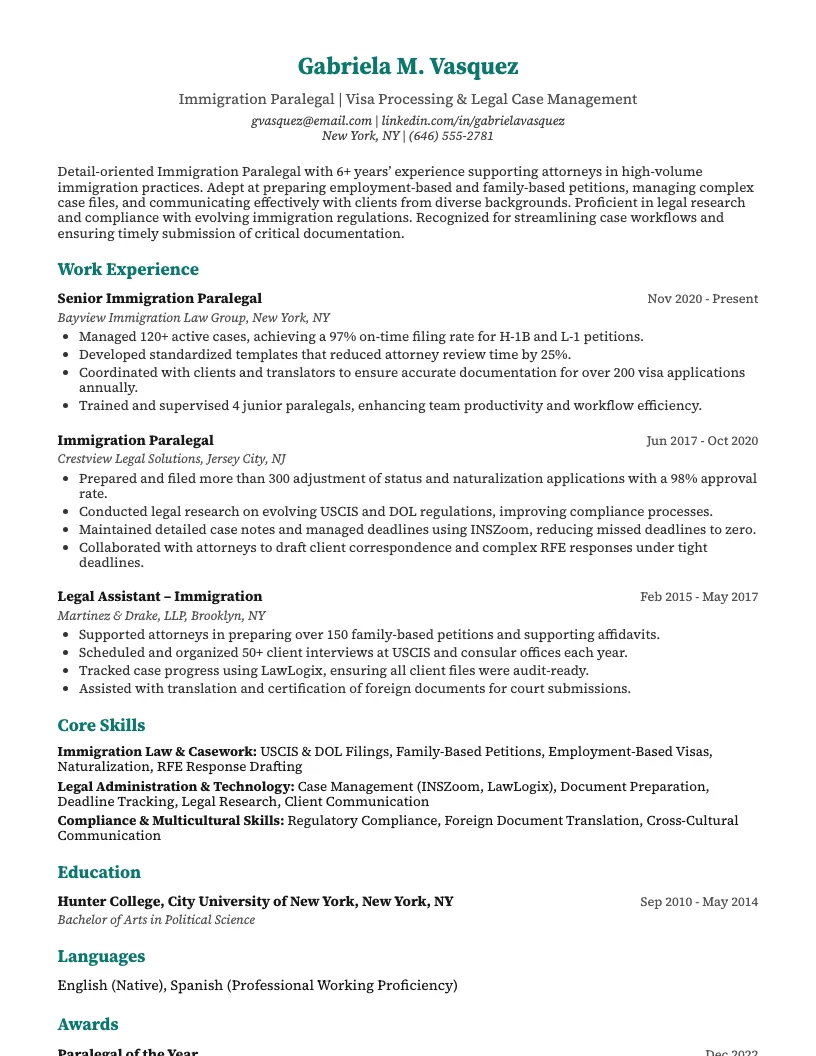
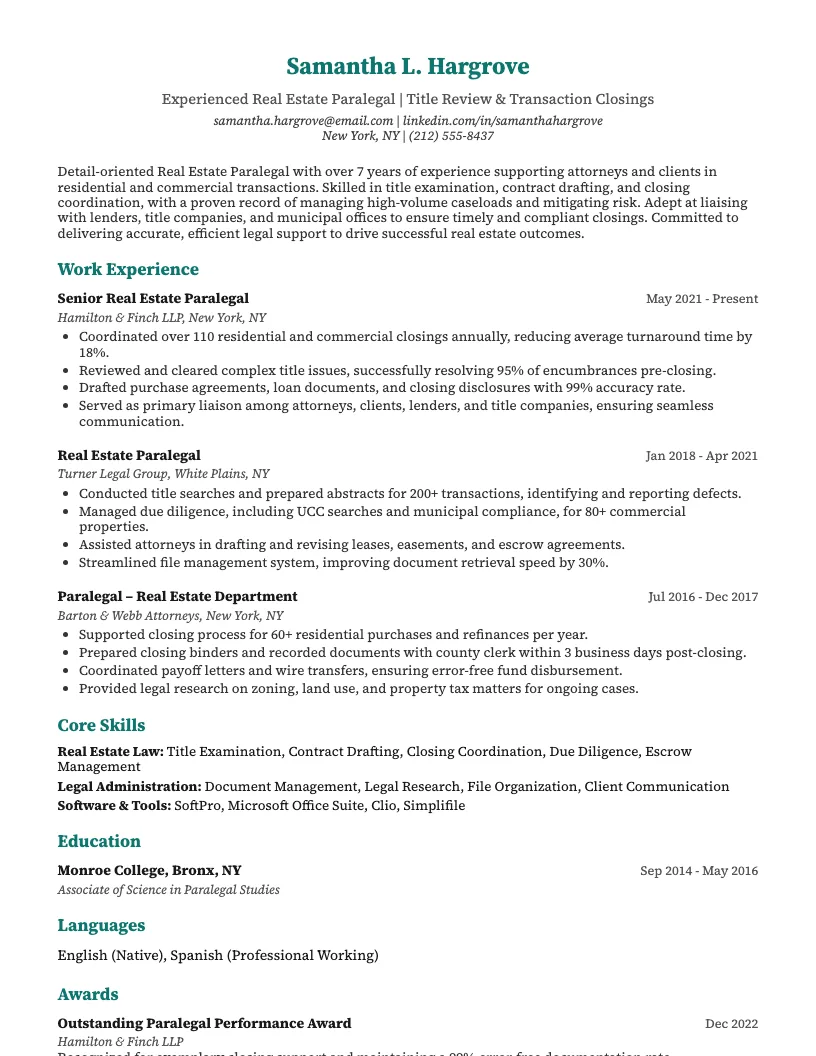
Browse Litigation Paralegal resume examples for related roles. Preview any example, open it in the builder, or read its full guide.
Click to enlarge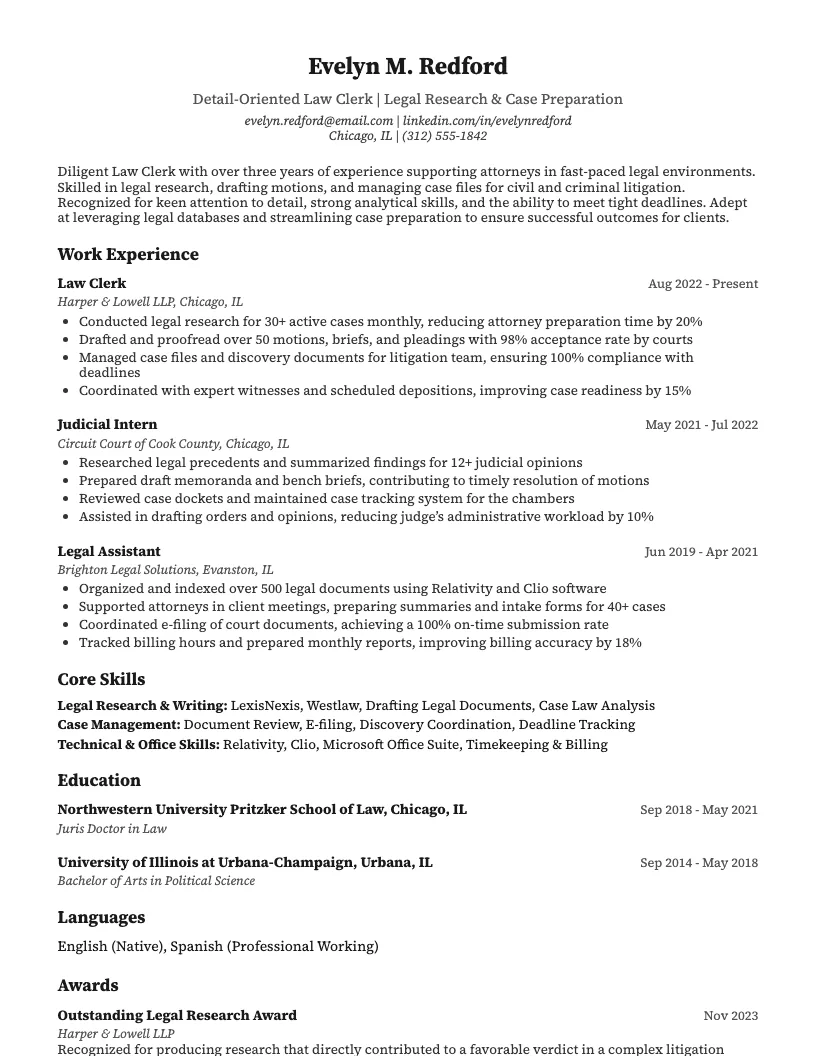 Click to enlarge
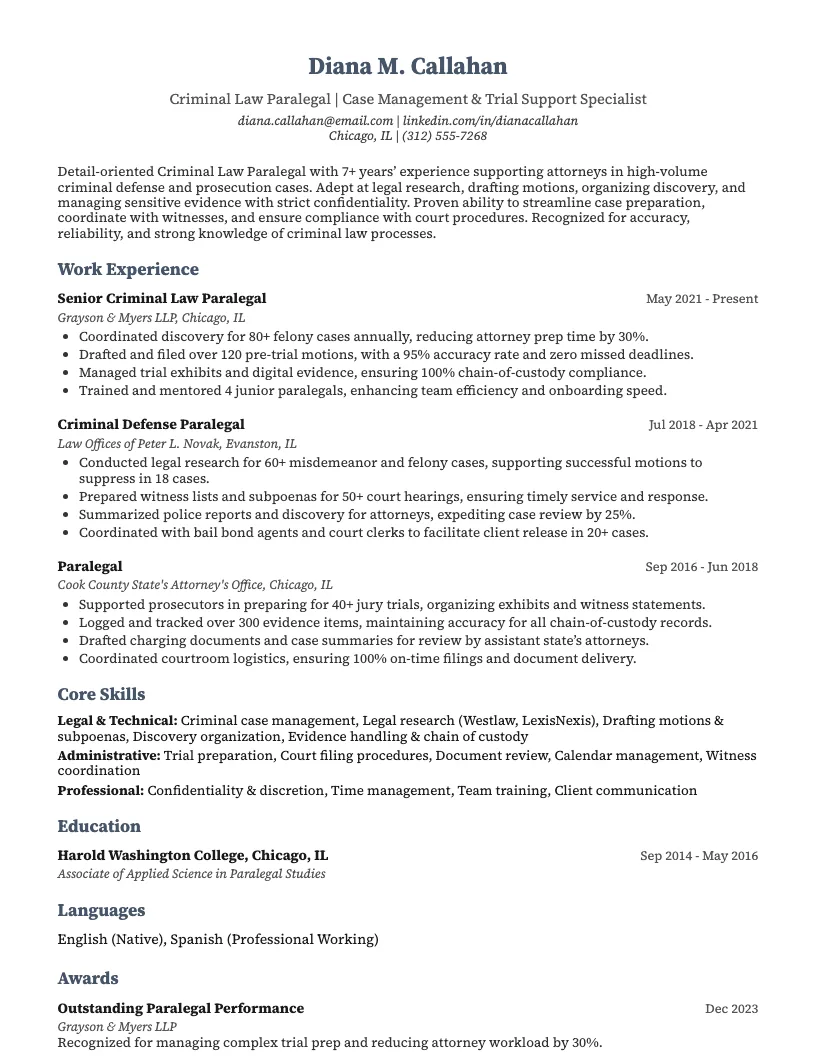 Click to enlarge
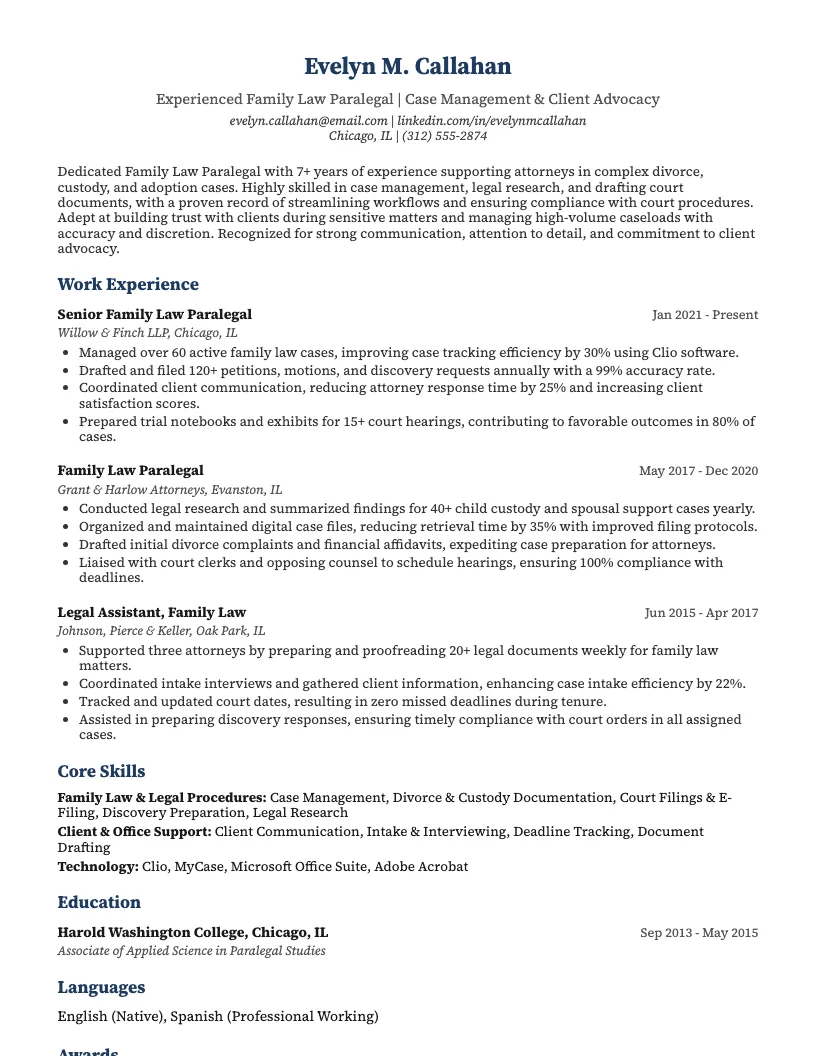 Click to enlarge
 Click to enlarge
 Click to enlarge
 Click to enlarge
 Click to enlarge
Common questions about Litigation Paralegal resumes
A Litigation Paralegal resume template is a pre-formatted document designed to highlight skills, experience, and education specific to litigation support roles. It helps showcase your case management, research, and trial preparation abilities.
Yes, most Litigation Paralegal resume templates, like those from ResumeJudge, are ATS-friendly. They use clean layouts and standard fonts, ensuring your resume passes automated screening systems used by law firms.
Use a Litigation Paralegal resume template when applying to law firms, corporate legal departments, or government agencies. It's ideal for roles focused on litigation support, case research, or document review.
Absolutely! With ResumeJudge, you can easily tailor any Litigation Paralegal resume template to reflect your specific skills, certifications, and case experience, ensuring your application stands out.
Litigation Paralegal templates highlight case management, discovery, and trial prep, while general paralegal templates may focus on broader legal tasks. ResumeJudge offers tailored sections for litigation-specific skills.
Aim for a one-page resume if you have less than 10 years’ experience, or two pages for a more extensive background. ResumeJudge templates help organize your achievements for maximum impact.
Yes, most templates, including ResumeJudge’s, feature dedicated sections for certifications like NALA or NFPA, helping you highlight your credentials to potential employers.
Definitely! These templates are suitable for both experienced and entry-level candidates. ResumeJudge helps you emphasize relevant coursework, internships, and transferable skills.
Focus on skills such as legal research, drafting pleadings, managing case files, and trial preparation. ResumeJudge templates prompt you to add both hard and soft skills valued by employers.
Yes, these templates can be tailored for contract, freelance, or full-time roles. ResumeJudge helps you showcase diverse work experiences and specific litigation projects.
Explore more professional resume examples to inspire your job search
Use our AI-powered resume builder to create a professional, ATS-friendly resume in minutes.
Free to use • No credit card required