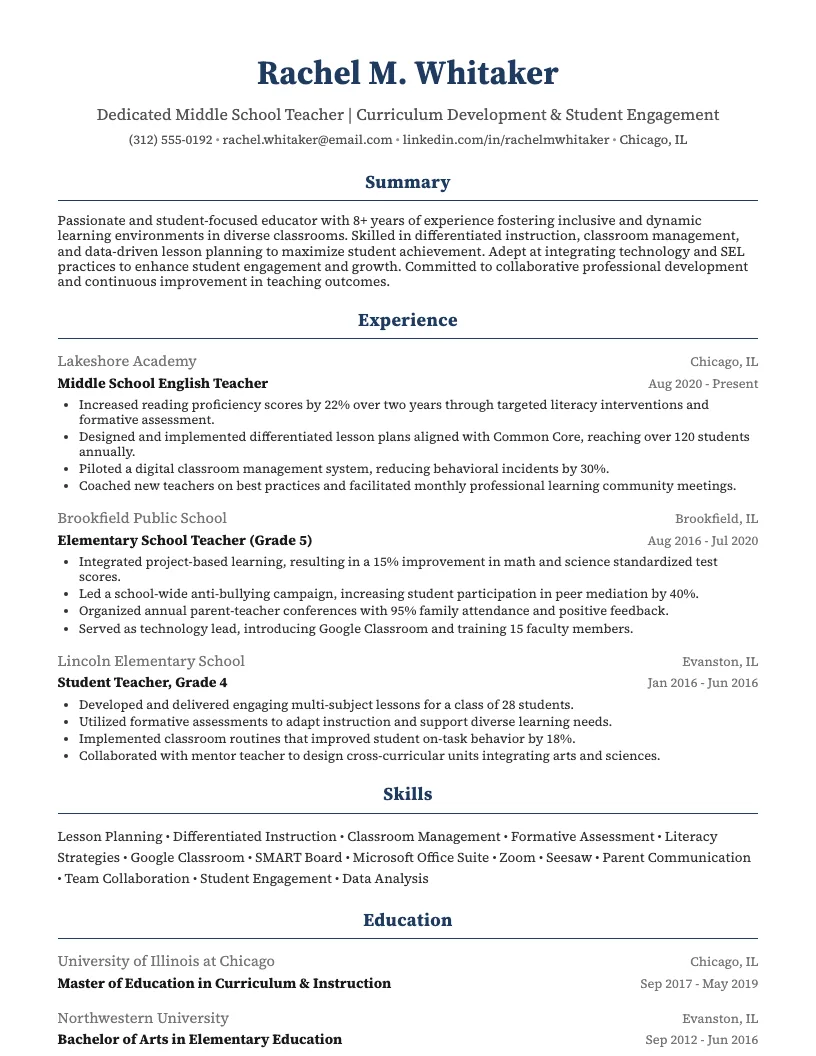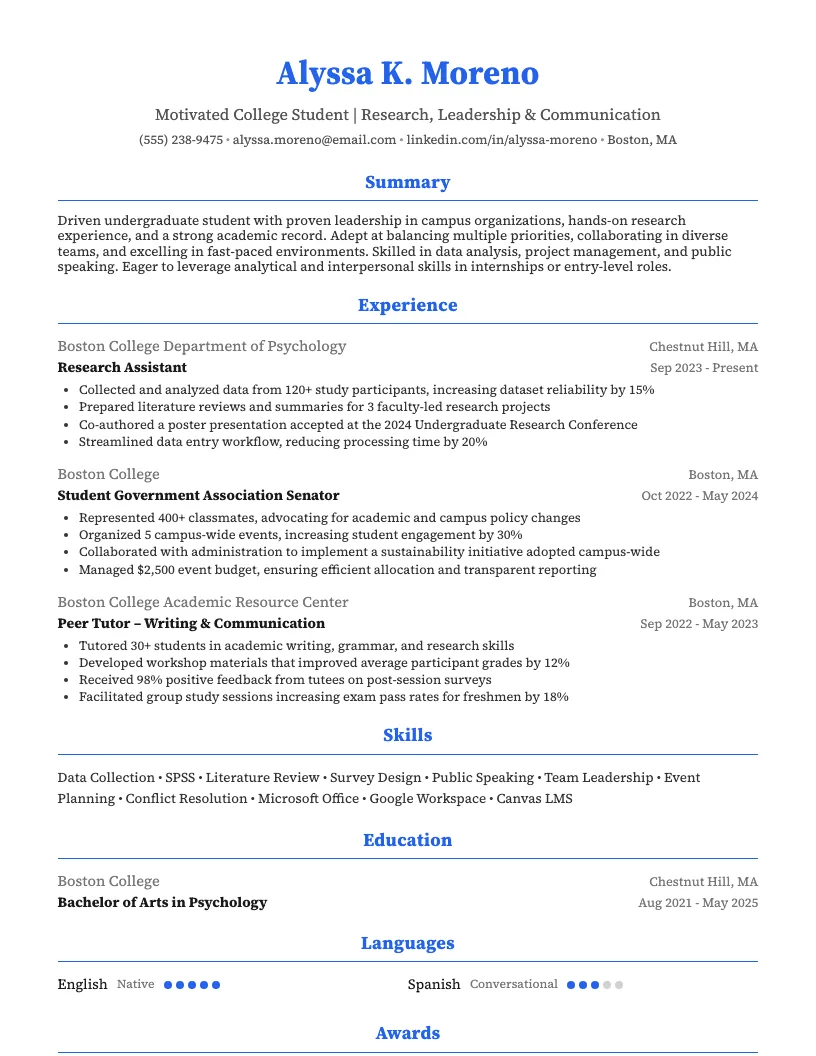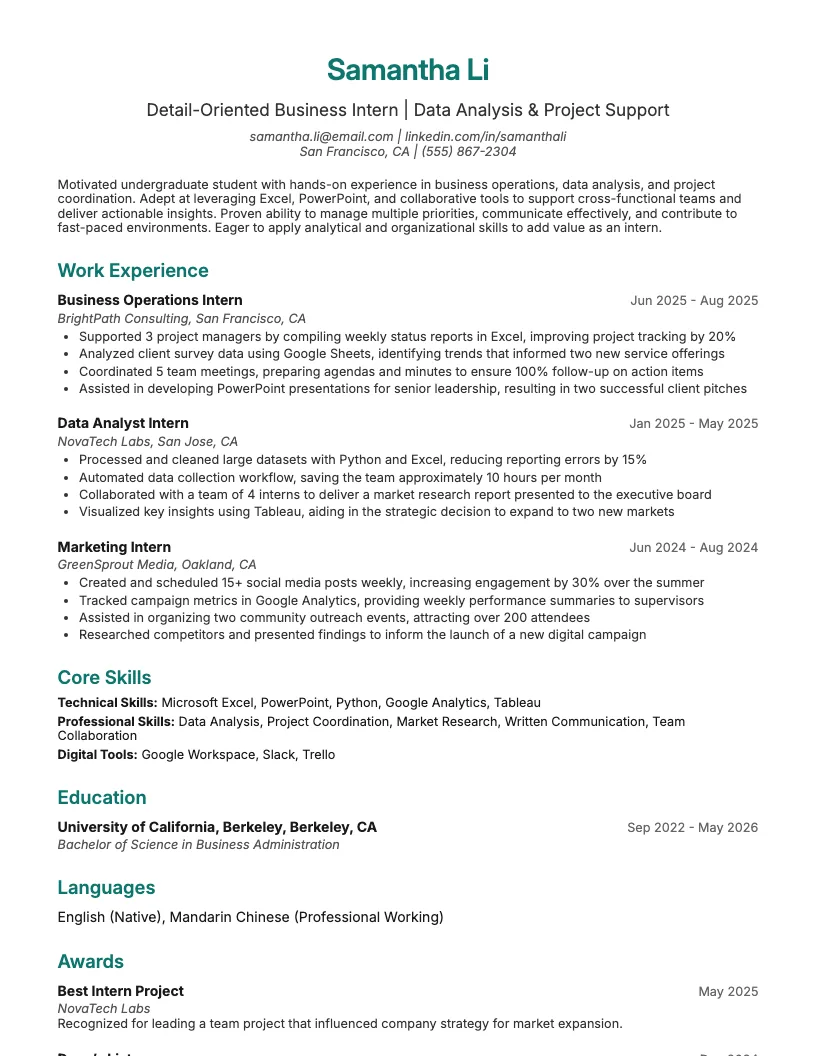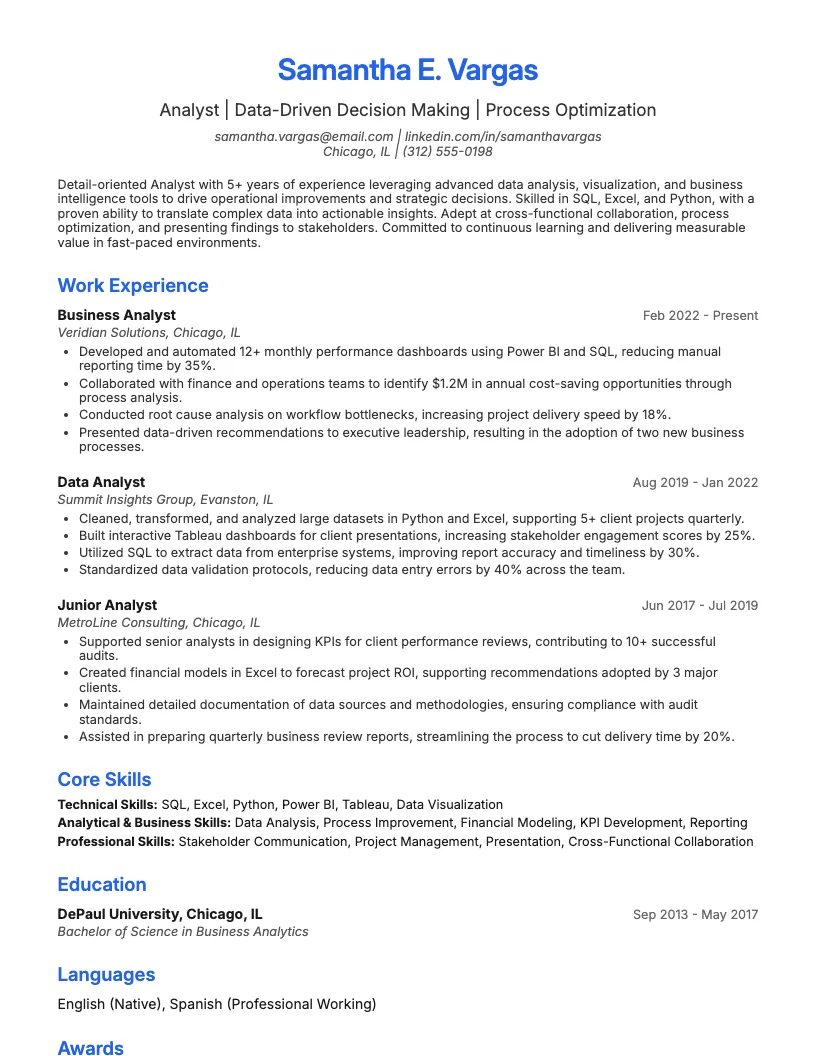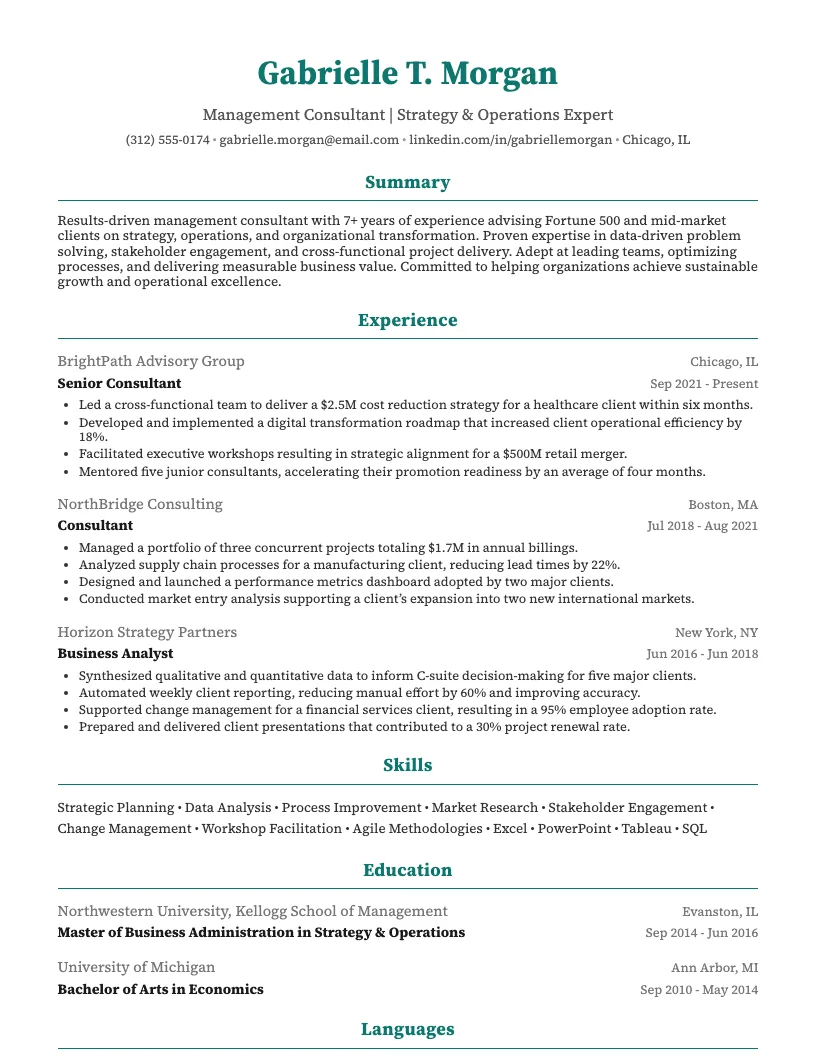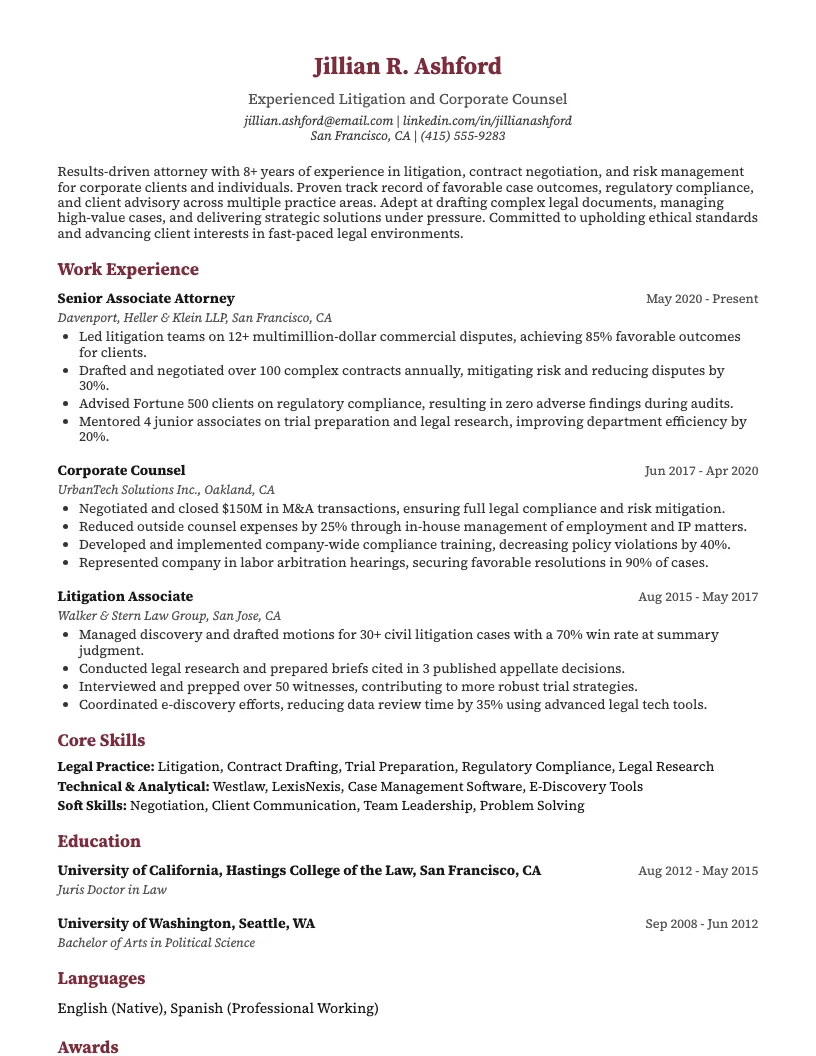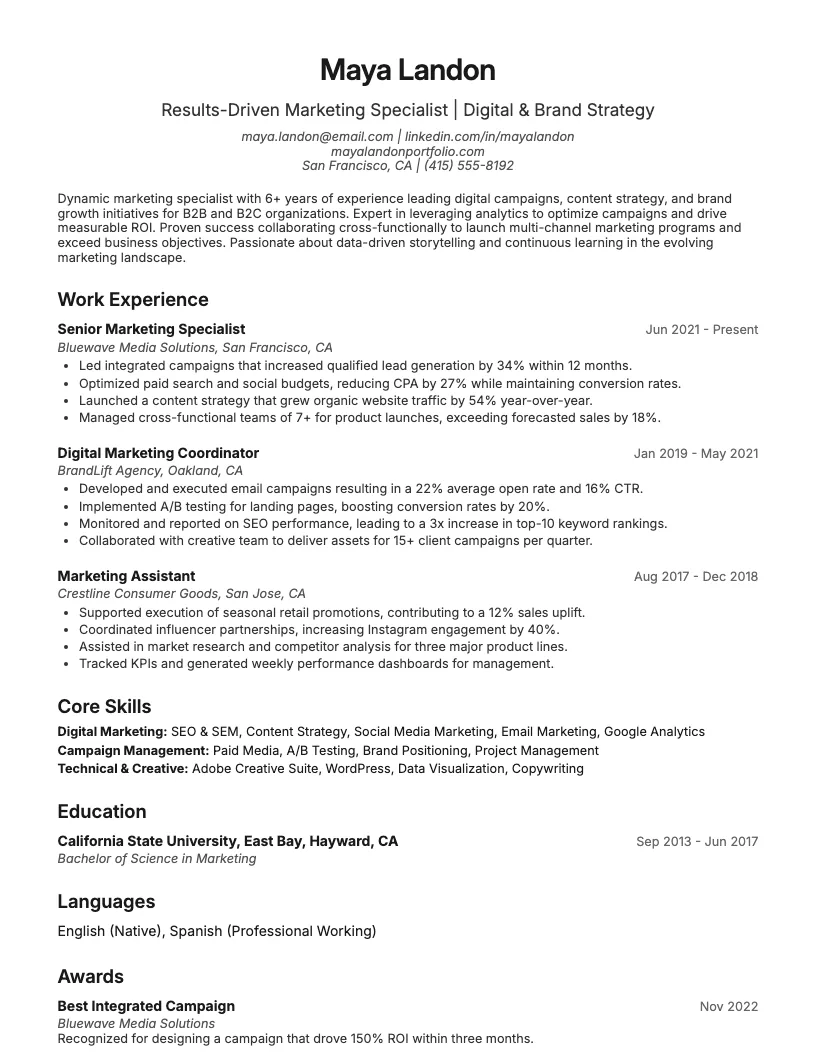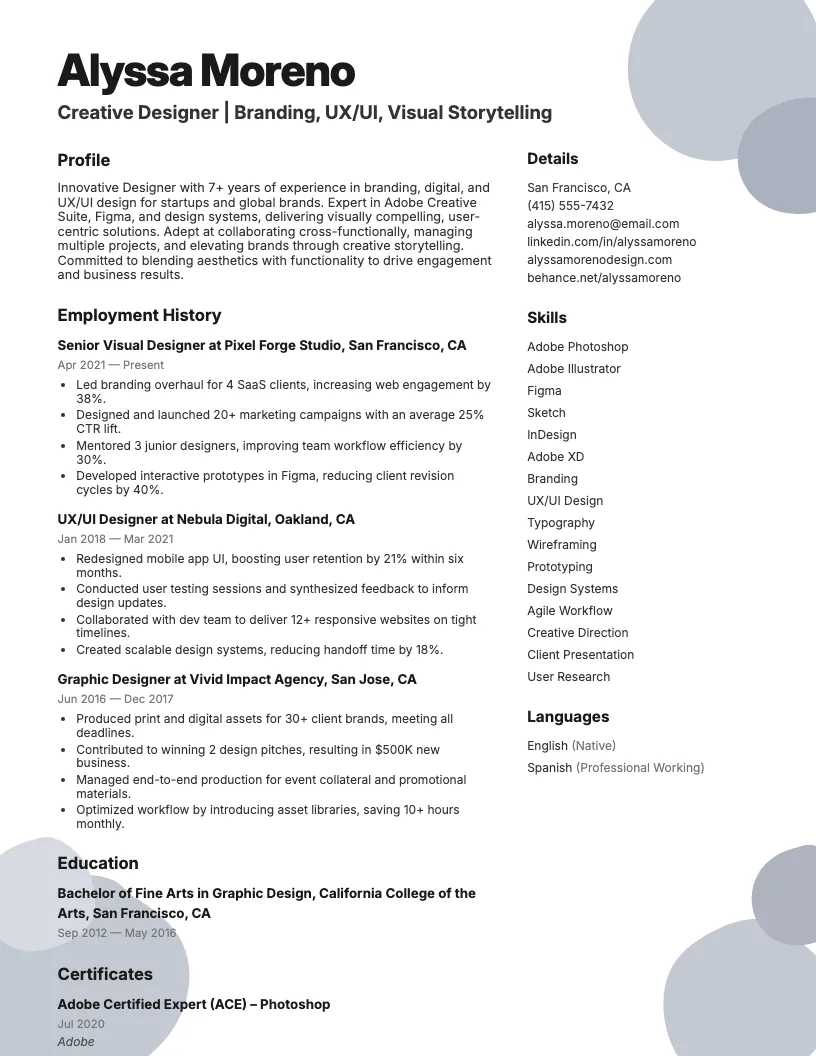
Graduate Fellowship Applicant Resume Example
See full guide on Graduate Fellowship Applicant resumes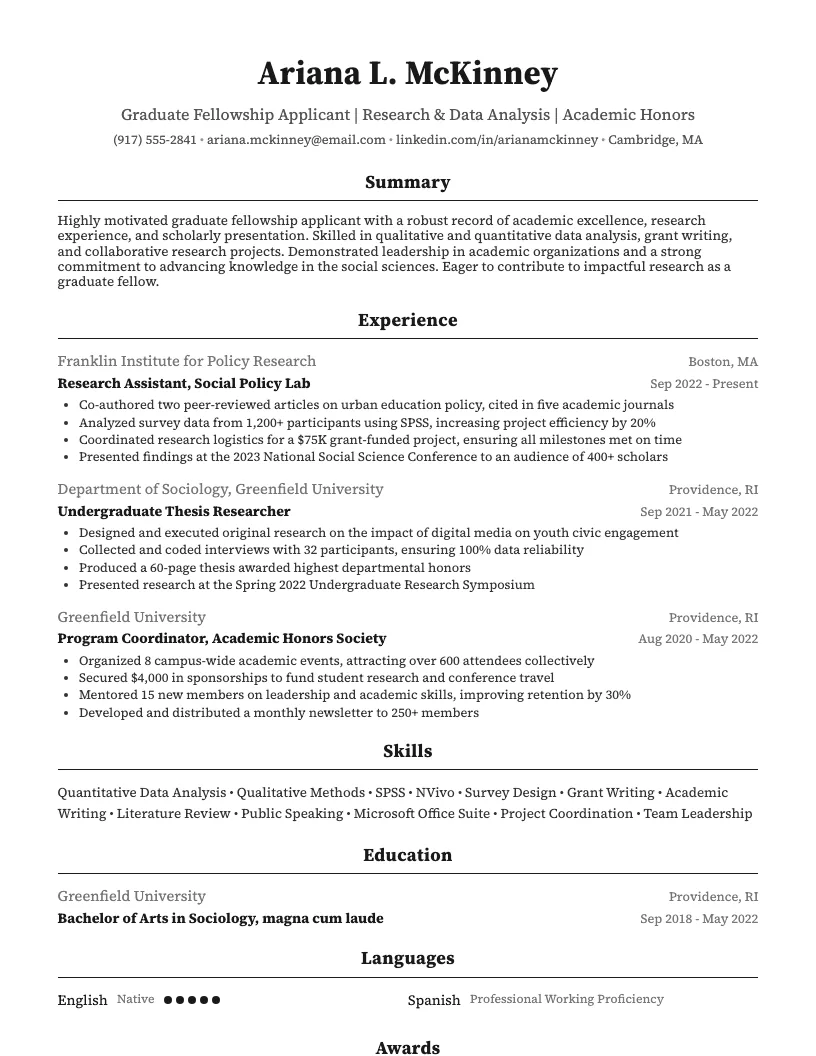 Click to enlarge
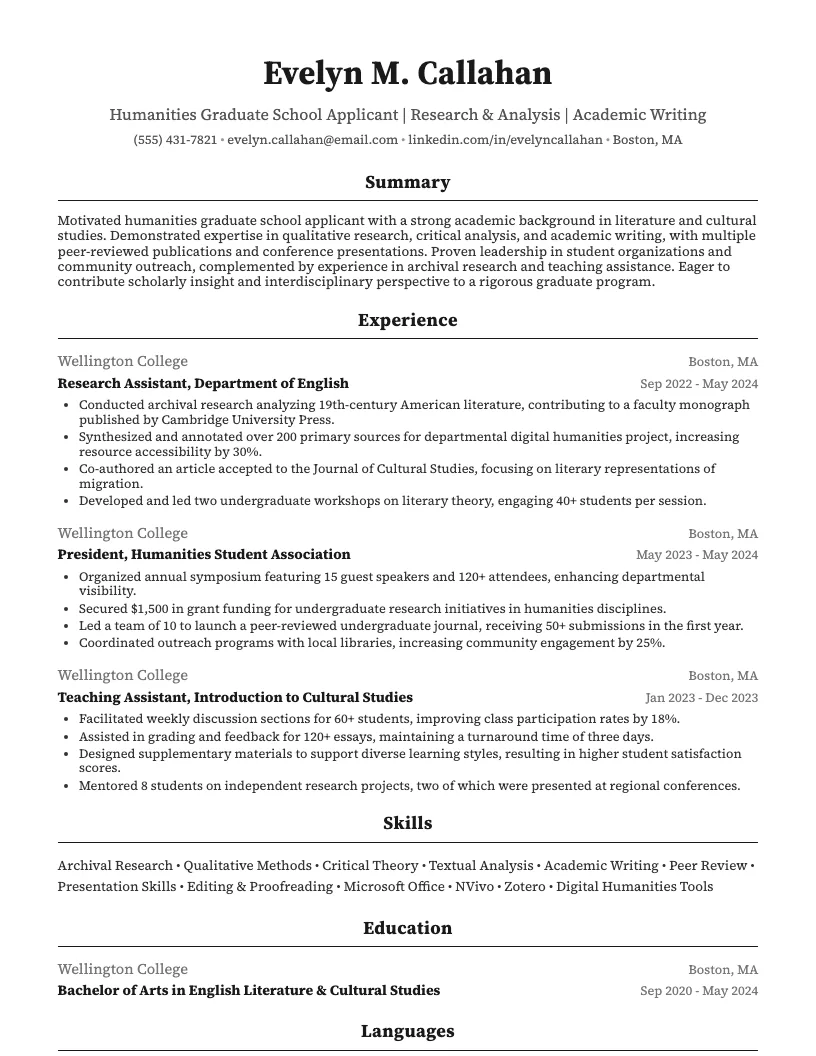 Click to preview

Get inspired by 50+ professional Humanities Graduate School Applicant resume examples, each written by career experts and optimized to pass ATS scans. Pick a proven template, tailor it to your role, and download a polished resume in minutes.
Pick the specialization closest to your target role and start from a proven resume example.
Applying to grad school in the humanities is a big step. I know it can feel overwhelming to get your resume just right for academic programs.
You want your experience and skills to stand out. Grad programs usually get hundreds of applications each cycle, so making your resume clear and focused is key.
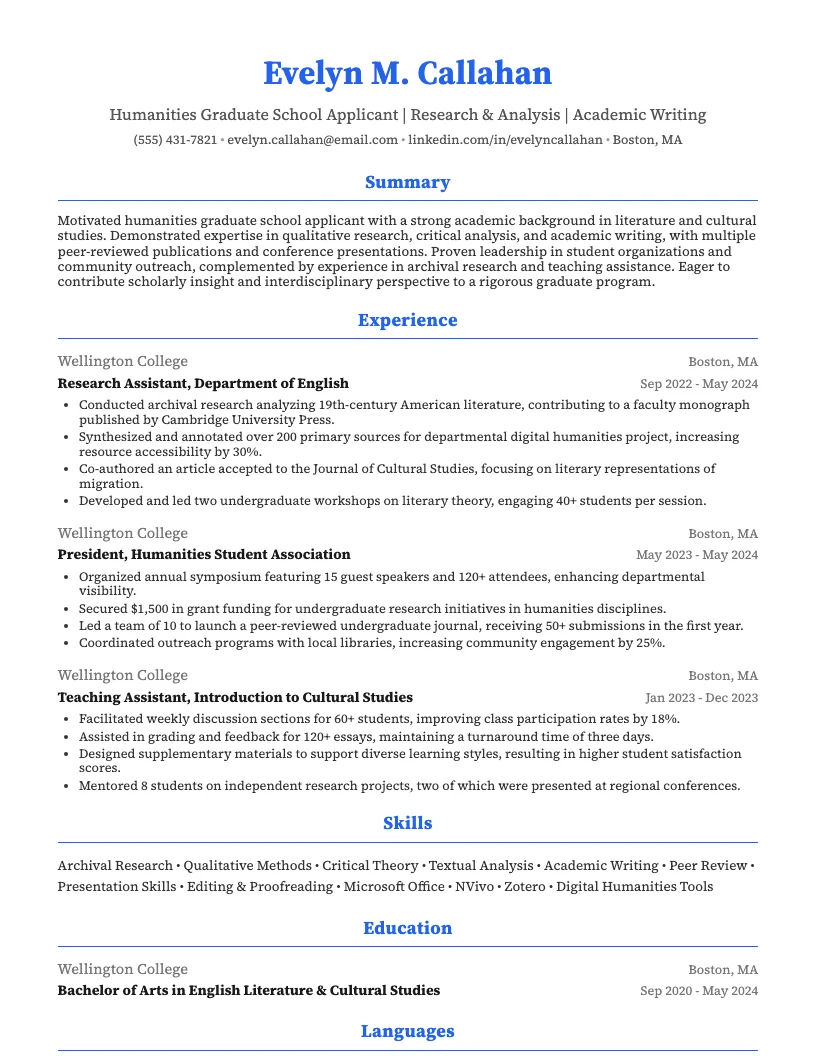
This example shows what an effective humanities grad school resume looks like. I’ll break down who benefits from this template and what details matter most.
If you're applying to graduate programs in the humanities-think English, history, philosophy, or art history-this resume example fits you. I designed it for academic-minded applicants.
You might be a senior undergrad, a recent grad, or someone shifting from another field. It works if you want to highlight research, presentations, or academic writing.
This example helps if you want to show strong academic skills and relevant extracurriculars. About 75% of successful applicants use a similar structure when targeting competitive programs.
You want your resume to showcase both academic skills and real-world experience. Admissions committees scan for strong writing, research, and collaboration-these matter more than job titles.
I always highlight specific accomplishments. Quantify results where you can, like “led a team of 5” or “published 2 articles.” This shows impact, not just participation.
Use clear, simple language. Avoid jargon. Keep it one page if possible-about 60% of programs prefer concise resumes. Proofread for errors. Clean formatting always helps your strengths stand out.
Applying to grad school in the humanities is competitive. Over 50% of applicants have strong resumes, so standing out really matters.
You want your resume to feel clear and professional. Admissions committees look for organization, attention to detail, and evidence of your academic interests.
I always keep my resume to one page. Humanities programs usually prefer concise applications-no one wants to read a novel right now.
Use a clean, professional font-12-point Times New Roman or Arial works well. Margins around 1 inch keep everything readable and not cramped.
Bold your section headings and use italics for titles or roles. This helps admissions folks spot important details fast and makes your resume feel organized.
Stick with reverse-chronological order. Admissions teams want to see your most recent stuff up top, not buried at the bottom.
Admissions committees want to see evidence of intellectual curiosity and critical thinking. Show off your research, analysis, and writing skills from class projects or independent work.
They also value relevant extracurriculars-like student conferences, tutoring, or arts involvement. These show you’re engaged and ready for a rigorous grad program.
Strong recommendations and a clear academic focus really stand out. If you highlight your passion and commitment, your resume tells your story. Always tailor your achievements to each program.
That’s the key to making your humanities grad school resume work for you.

Your resume needs to highlight your academic background and your specific skills. Admissions teams look for clear, organized info about your experience and achievements.
I recommend structuring your resume with sections that showcase what matters most for humanities programs. This keeps your application focused and easy to read.
You want to give a full picture-education, research, teaching, and relevant skills all count. Each section adds to your story as a strong applicant.
I always put my full name, email address, and phone number right at the top. This makes it easy for admissions committees to reach out.
You want to use a professional email address-no nicknames or old handles. Including your LinkedIn or personal website can help showcase your work.
There’s no need to add your full mailing address. City and state are enough on most grad school resumes. This keeps things concise and current.
Your education section goes right up top, usually after your contact info. Admissions committees want to see your academic background clearly and quickly.
List your degree name, major, institution, graduation date, and your GPA if it’s above 3.5. If you have a minor or concentration, add that too.
I include honors, relevant coursework, or study abroad experiences here. This shows off academic strengths and gives context for your research or teaching interests.
This section lets you show off your academic chops. I always highlight any research projects, assistantships, or collaborative work I’ve done-especially if they relate directly to my chosen field.
You want to include project titles, faculty mentors, and dates. If you present findings or use specific methodologies, mention those too. Numbers help-like “analyzed 120+ primary sources” or “led a team of three.”
Admissions folks look for original thought and independence here. Use bullet points if you have multiple projects. This helps them see your skills at a glance before moving on.
This is where I highlight every teaching assistantship, guest lecture, or tutoring gig I take on, and I often refer to a cover letter for a graduate assistant role to guide my application. Even informal mentoring counts-universities want to see communication skills in action.
You want to list course titles, class sizes, and any curriculum design you do. Mention if you use tech tools, grade papers, or lead discussion groups. Numbers help-say “led discussion for 30+ students.”
If you train peers or run writing workshops, include those. This shows leadership and a knack for explaining tough concepts-exactly what grad committees look for before they check out your publications.
Showcasing peer-reviewed articles, book chapters, and conference talks gives admissions committees a clear sense of my scholarly impact. I always list works in reverse chronological order for easy reference.
I include journal names, presentation titles, and dates. If you have publications under review or accepted, note their status. This helps highlight ongoing academic engagement.
Don’t forget to include guest lectures or public talks. Even a single presentation at a national conference shows you’re active in your field.
I always list academic awards, fellowships, or scholarships here. These show selection from a competitive field-like being in the top 10% of my class or winning a departmental prize.
You can include honors societies, conference grants, or essay contests. Admissions committees pay attention to these because they reflect both achievement and recognition by your peers.
Keep the descriptions short. Highlight the award name, date, and why it’s relevant. This section adds proof of your commitment and potential for graduate-level work.
I always list my professional memberships on my resume. Belonging to groups like the Modern Language Association or American Historical Association shows I’m active in my field.
You can include both national and local organizations. If you hold a leadership role, mention it. About 72% of humanities grad applicants mention at least one affiliation.
This section helps committees see your professional engagement beyond coursework and research. It also signals you keep up with trends and discussions in your discipline.
I always list analytical writing, critical reading, and public speaking here. These skills show how I interpret texts, create arguments, and communicate ideas clearly.
Don’t forget foreign language proficiency. If you read French or Spanish at an intermediate or advanced level, mention it. About 30% of humanities programs value language skills.
You can add digital literacy too. Experience with research databases, citation tools, or presenting with PowerPoint-these count. This helps connect traditional skills with today’s academic expectations.
That’s everything for the key sections. Each part works together to give a full picture of your strengths as a humanities grad school applicant.
Crafting a resume for humanities grad school can feel tough. I know the details matter-admissions teams review hundreds of applications every cycle.
You want a layout that highlights your research, writing, and leadership. I’ve pulled together an example and a template you can use right away.
A strong humanities grad school resume highlights academic achievements, research, and relevant experience. I focus on skills like critical thinking, writing, and analysis since these matter most.
You want to show off your GPA and any honors-around 3.5 or higher stands out. I also list research projects, teaching, or publications. This helps committees see your potential.
There are specific sections I always include: education, experience, research, publications, and extracurriculars. This structure keeps everything clear and easy to scan for busy reviewers.
You can grab a free, editable resume template tailored for humanities grad school applications. I like templates that work in Google Docs and Microsoft Word-makes editing super easy.
Customizing the template helps you highlight your research, academic projects, and campus involvement, and you can find inspiration from cover letter examples for UK graduate programs. You can change sections based on your strengths or the program’s requirements.
There are over 60% of grad applicants who say using a professional template saves time and boosts confidence. Download, tweak, and you’re set to go.
Applying to grad school in the humanities can feel overwhelming. Each program values different skills, so your resume needs to reflect what they want.
I focus on making every section count. Customizing your resume for each application helps admissions committees see why you fit their program.
It’s easy to make small mistakes that hurt your chances. Knowing what to avoid can improve your odds of getting noticed.
Every humanities grad program looks for different qualities. I always recommend reading each program's description and faculty interests before you update your resume.
Highlight relevant research, coursework, and experiences for each application, and be sure to include a cover letter tailored to the program. This helps your resume feel more intentional and targeted, which admissions committees appreciate.
I like to use keywords from the program’s website. Around 70% of committees scan for alignment with their focus areas, so this little step can make a real difference.
I see lots of resumes with vague descriptions. Be specific-quantify achievements and highlight unique skills. This helps your application stand out in a stack of 200+.
Don’t forget to proofread. Typos and formatting errors make you look careless. Even one mistake can lower your chances, since 58% of recruiters reject resumes for this reason.
Avoid listing every experience. Focus on what’s most relevant to the program. Admissions teams only spend about 7 seconds on each application, so keep it sharp.
Wrapping up, remember-customization and clarity always beat quantity. Aim for a resume that’s focused, error-free, and easy to read. That’s what gets noticed.
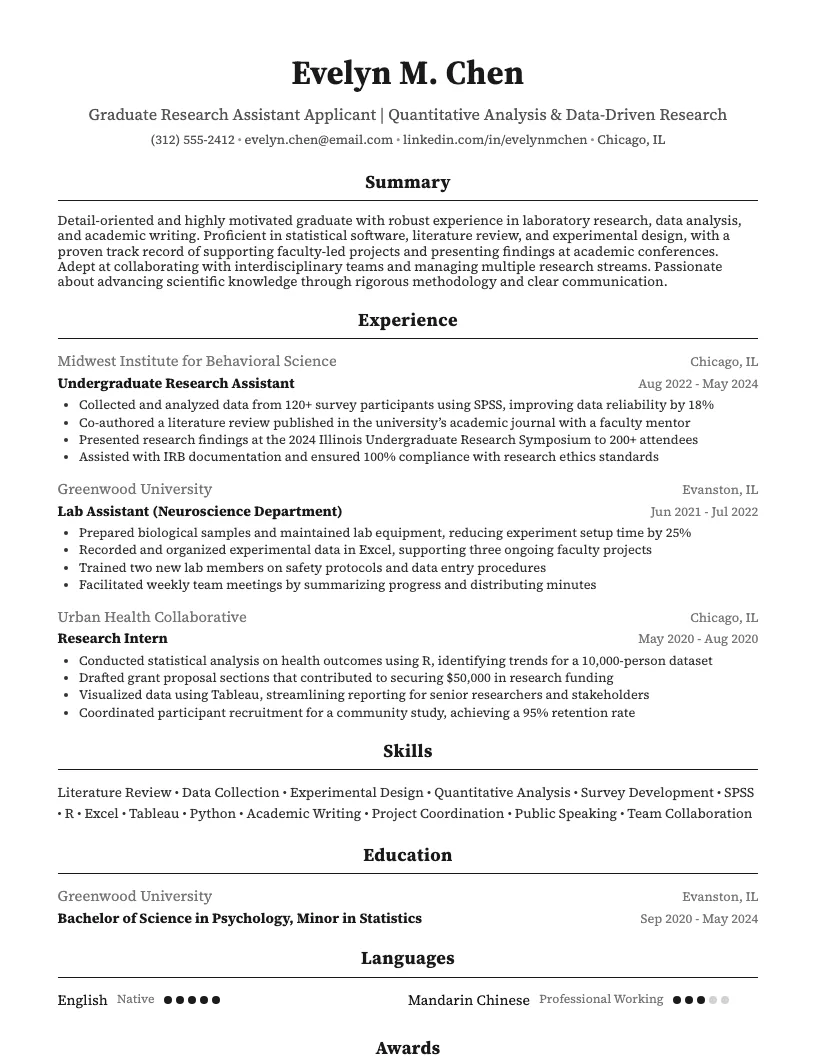
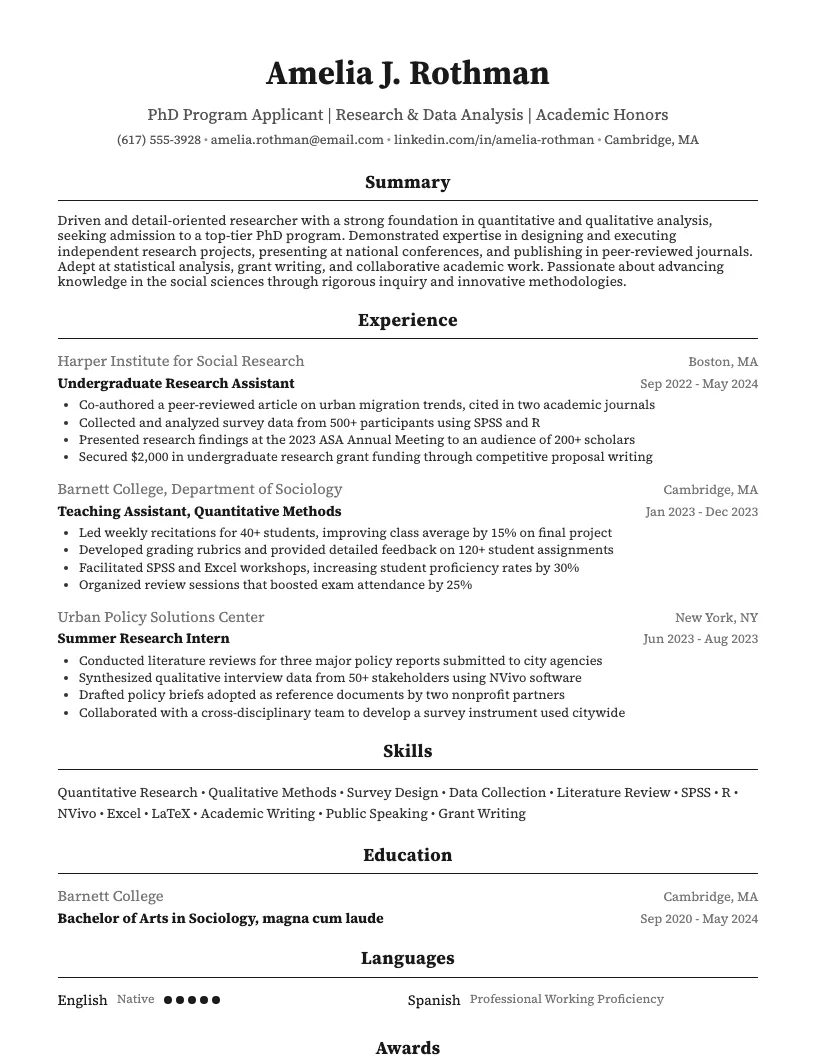
Browse Humanities Graduate School Applicant resume examples for related roles. Preview any example, open it in the builder, or read its full guide.
Click to enlarge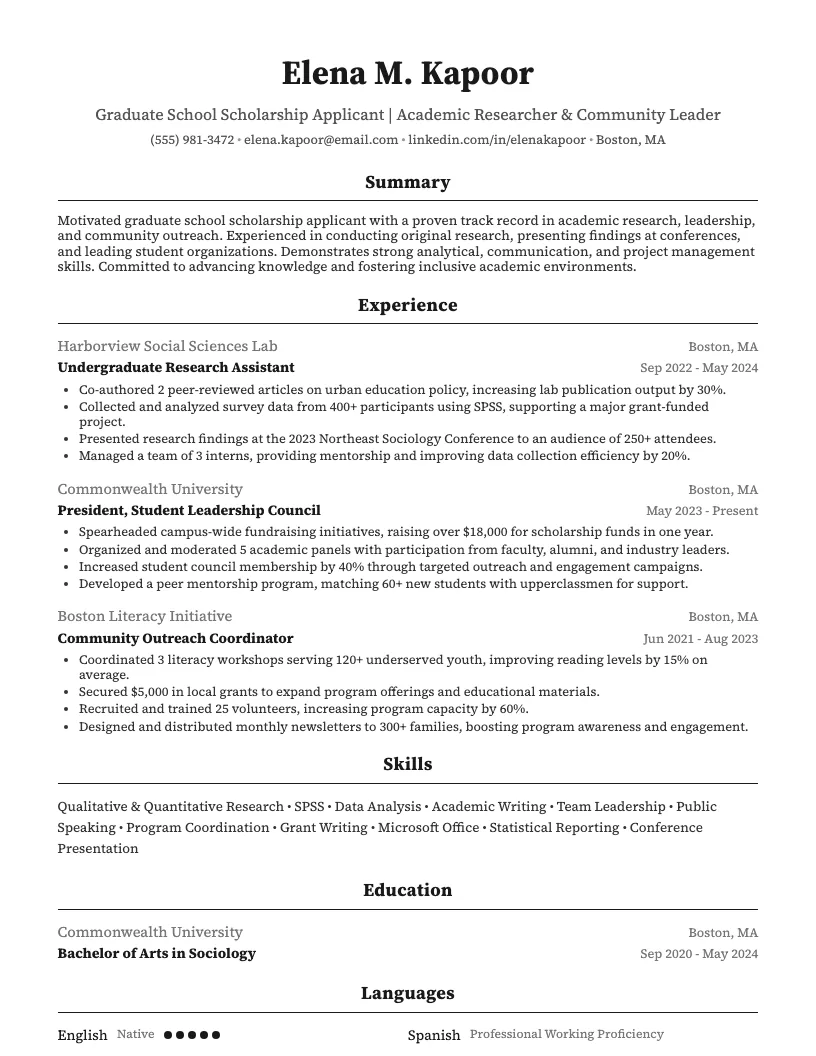 Click to enlarge
 Click to enlarge
 Click to enlarge
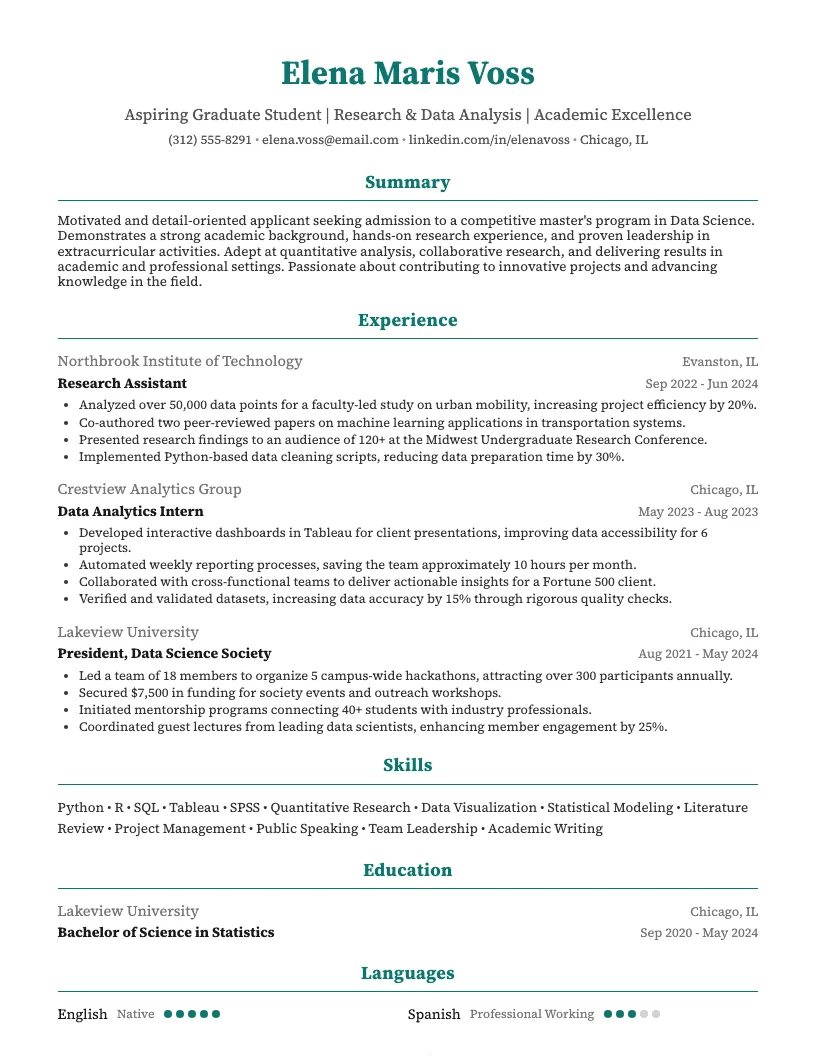 Click to enlarge
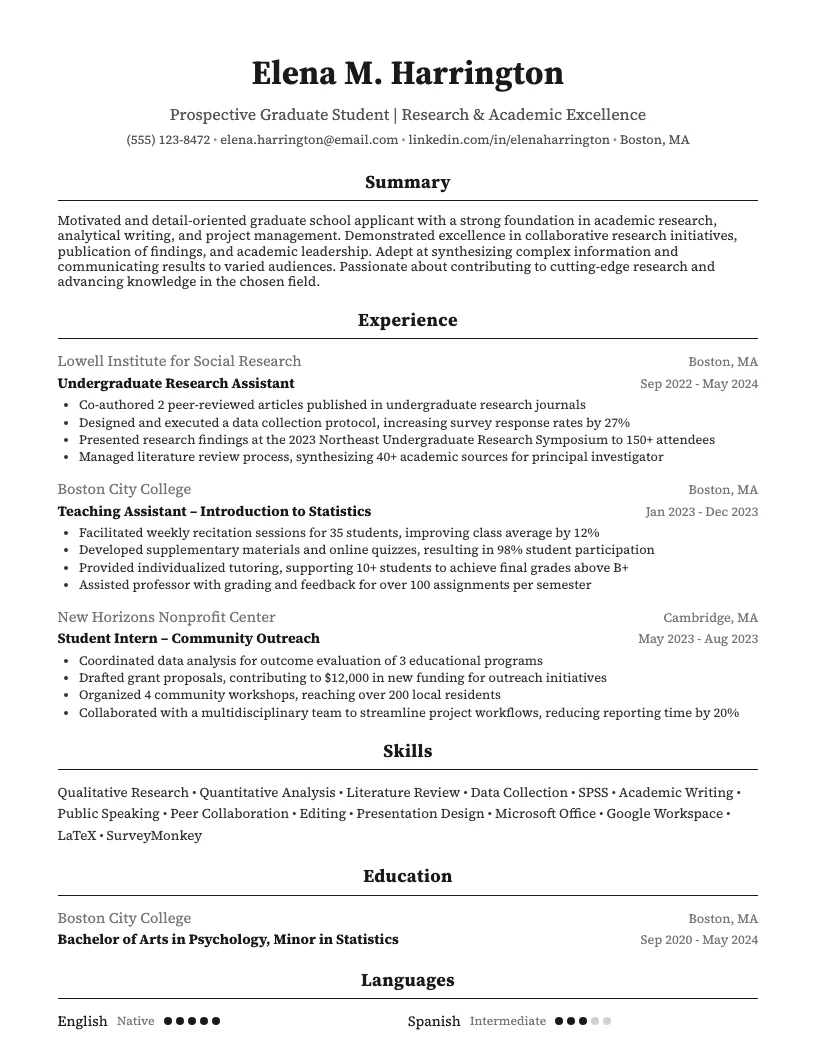 Click to enlarge
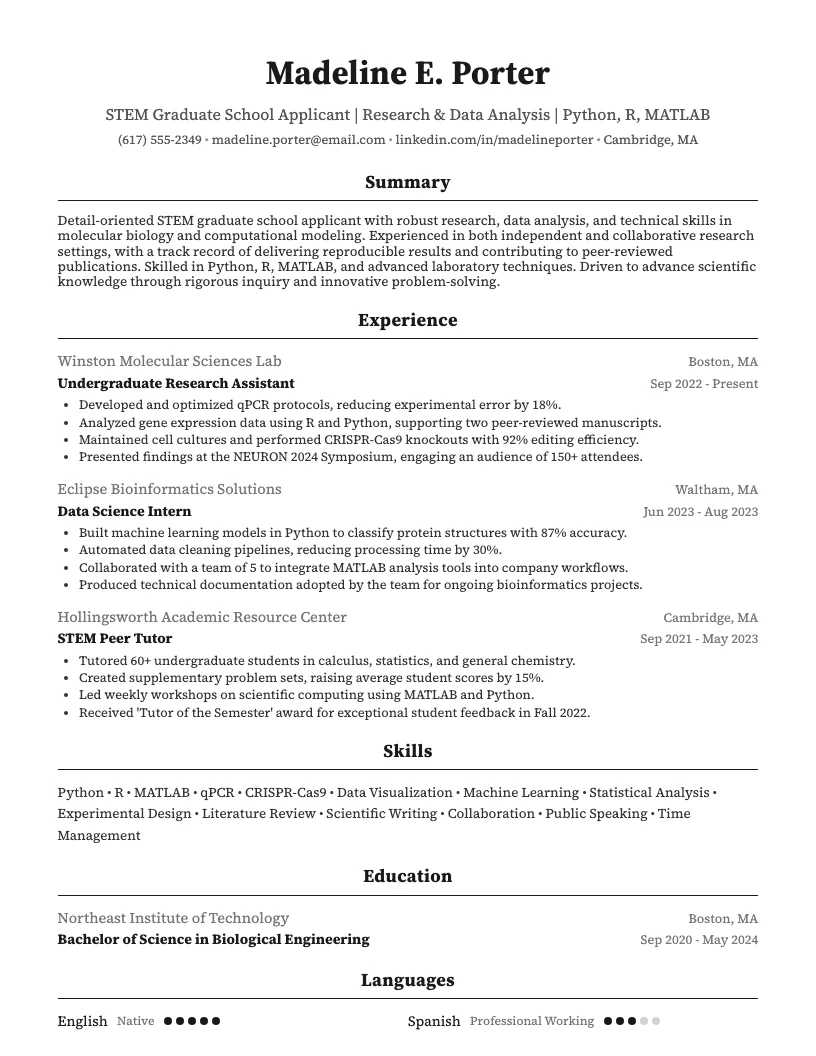 Click to enlarge
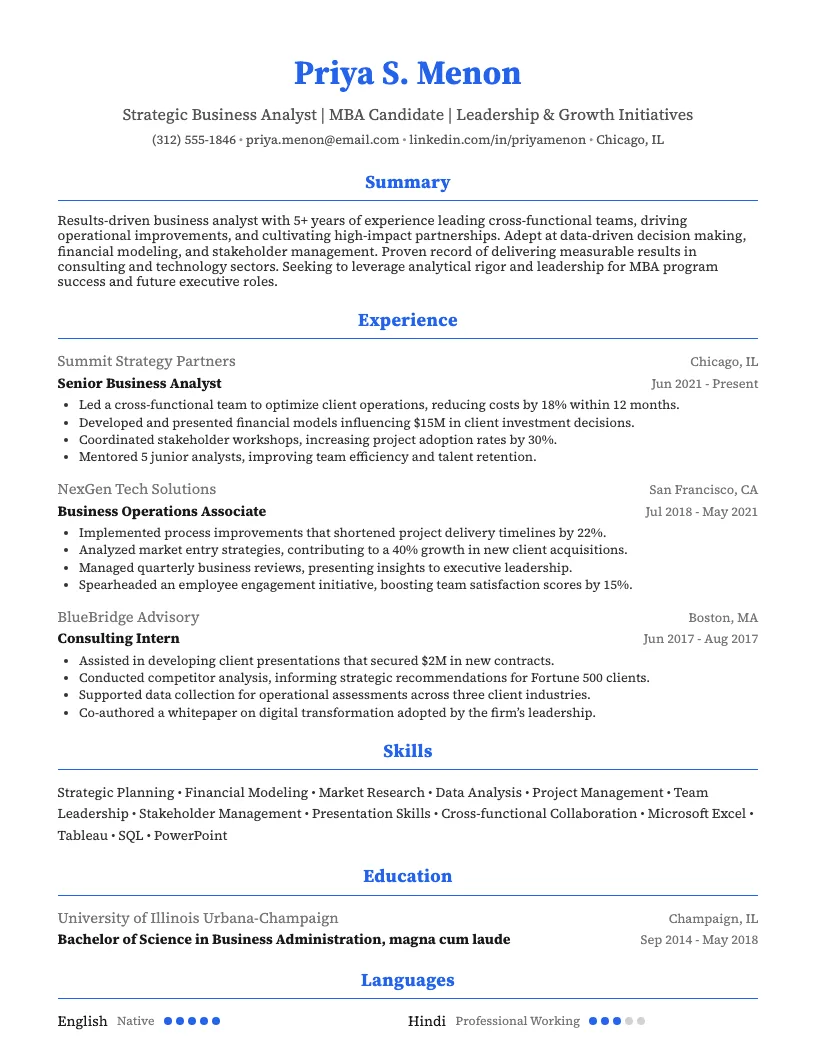 Click to enlarge
Common questions about Humanities Graduate School Applicant resumes
A Humanities Graduate School Applicant resume template is a professionally designed document tailored for students applying to graduate programs in fields like literature, history, or philosophy. It highlights academic achievements and research experience.
Yes, most Humanities Graduate School Applicant resume templates are ATS-friendly, making it easy for admissions systems to scan your information. ResumeJudge ensures your template is optimized for these systems.
Use this template when applying to graduate programs in the humanities, such as English, cultural studies, or linguistics. It's ideal for showcasing academic, research, and extracurricular experience.
Absolutely! You can tailor the template to emphasize your unique skills and experiences. ResumeJudge offers easy customization to fit your specific academic background and goals.
This template focuses on academic achievements, research, and publications, unlike general job templates which highlight work experience. ResumeJudge helps you choose the right format for graduate school applications.
Keep your resume to one or two pages, focusing on relevant academic and extracurricular achievements. ResumeJudge helps you format your resume for clarity and brevity.
Key sections include education, research experience, publications, presentations, honors, and relevant skills. ResumeJudge templates ensure these sections are organized and easy to read.
Yes, include relevant internships, volunteering, or leadership roles that demonstrate transferable skills. ResumeJudge helps you present these experiences effectively.
Most graduate programs require a cover letter or statement of purpose along with your resume. ResumeJudge offers tips and templates for both documents.
List research projects, theses, or publications in a dedicated section. ResumeJudge templates help you clearly showcase your academic contributions to impress admissions committees.
Explore more professional resume examples to inspire your job search
Use our AI-powered resume builder to create a professional, ATS-friendly resume in minutes.
Free to use • No credit card required