Film Producer Resume Example
See full guide on Film Producer resumes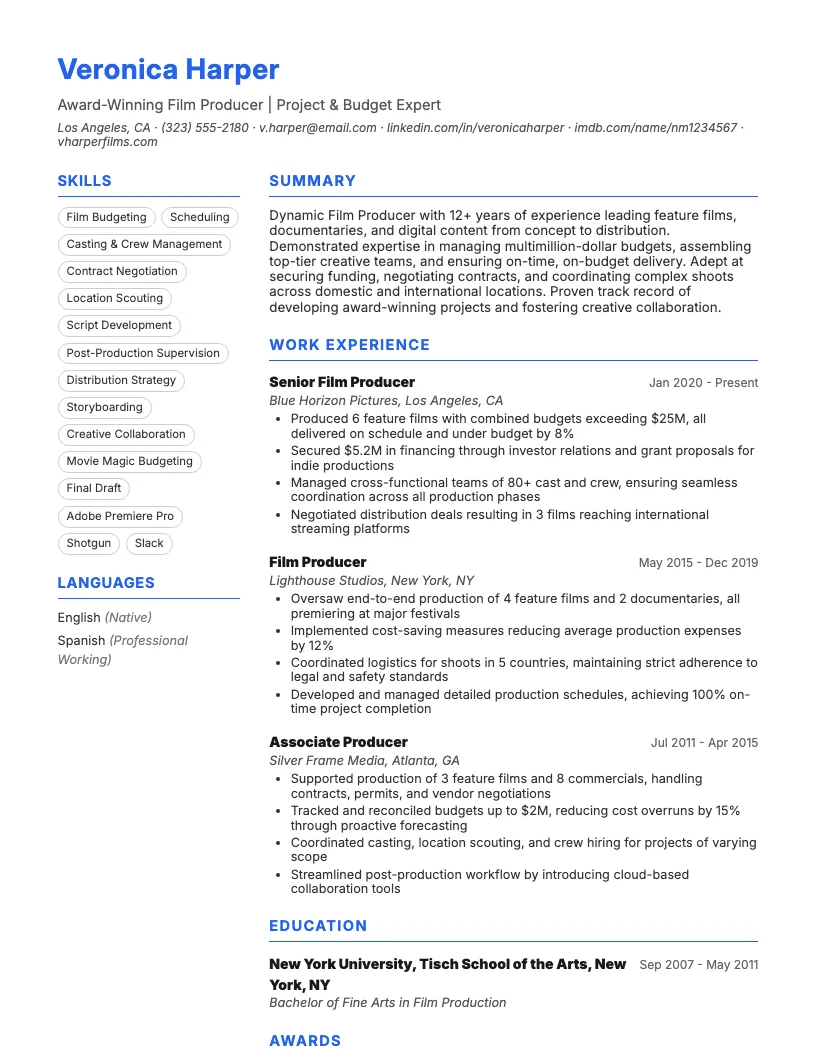 Click to enlarge
 Click to preview

Get inspired by 60+ professional Film Director resume examples, each written by career experts and optimized to pass ATS scans. Pick a proven template, tailor it to your role, and download a polished resume in minutes.
Pick the specialization closest to your target role and start from a proven resume example.
Every film director has a unique path, and your resume should show where you are in your career. I know how much each stage demands.
Whether you're just starting out or have over 10 years on sets, the right resume format helps you stand out. I break down what works for every level.
Starting out as a film director? You don't need dozens of credits. Highlight student projects, short films, or small freelance gigs. Show off your creativity and teamwork.
I always say: quantify your achievements. Did your short film screen at two local festivals? Did you direct a crew of five? List that. Numbers make your impact clear.
Focus on transferable skills. Editing, script analysis, and problem-solving all matter. You can mention collaboration with writers, camera teams, or even actors-every detail counts at this level.
At this point, I usually have at least 5 years in the industry and a few notable projects under my belt. I focus on showing off leadership and creative vision.
You want to highlight films or series that have screened at film festivals, won awards, or hit solid viewer numbers-think 10,000+ streams or a festival shortlist.
It's smart to mention experience leading crews of 10+ people, managing budgets, and collaborating with producers. This helps potential employers see your project management chops.
If you direct feature films, manage teams of 50+ crew, or oversee budgets of over $2M, your resume needs to highlight those numbers. I always list major awards and festival selections.
You want to show evidence of leadership-not just creativity. Use measurable results: box office revenue, streaming numbers, or audience growth. This builds instant credibility.
At this stage, your resume should read like a track record. Focus on legacy projects, high-profile collaborations, and how you develop new talent. This wraps up the section on career-level director resumes.
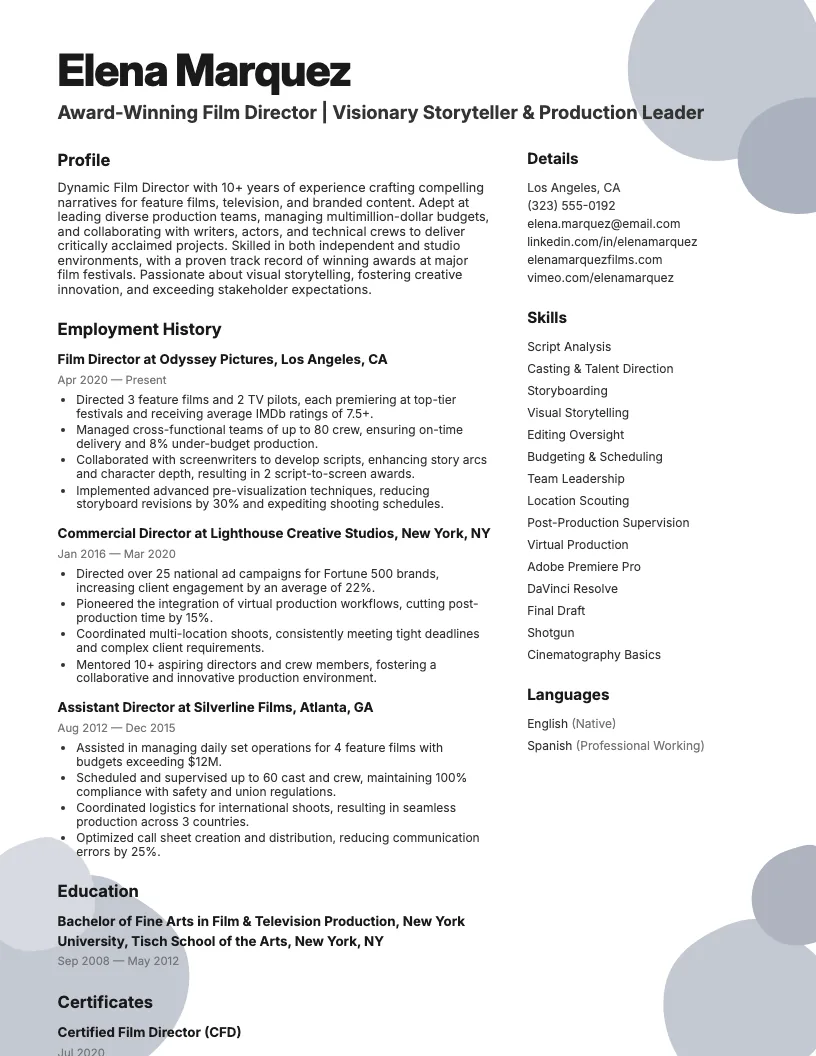
If you want to break into film directing or level up your career, a clear resume helps. I see directors use text-only templates to get noticed by studios and indie producers.
You don’t need flashy graphics for a strong director resume. These samples show how you can highlight storytelling, production, and leadership skills in under two pages.

Building a film director resume takes more than listing movies. You want to show off your creative vision and leadership at every step.
I focus on real results, like awards, box office numbers, and team achievements. Recruiters look for clear proof of success.
Let’s break down each section so you know exactly what to include. This way, you can highlight your best skills and stand out.
Start your resume with a punchy summary section. I usually highlight my job title, years of experience, and any specializations right at the top.
Focus on what sets you apart. Mention industry recognition, notable film genres, or unique directing styles. This helps recruiters quickly see your main strengths.
Keep it short-one or two sentences max. Tailor this summary for each job, making sure your top skills match the job description. This first impression really counts.
This is where I dig into the details of my film directing journey. I focus on accomplishments instead of just listing duties. Numbers matter-think audience reach or crew size.
Quantify your impact. For example, “Directed a 20-person crew,” or “Oversaw a project with a $500,000 budget.” Production companies love seeing hard results and scope.
If you’re starting out, highlight academic projects or indie films. Don’t just list your job titles. Share what you actually achieved in each directing role, and consider including an assistant director cover letter to strengthen your application.
I always list my film degree or any media studies credentials. Employers notice a BFA, MFA, or even an associate degree in film or related fields.
If you have certifications-like Final Cut Pro, Adobe Premiere, or cinematography workshops-add them too. This shows you stay current and serious about your craft.
You don’t need a fancy degree. But showing formal training or industry certifications helps your film director resume stand out, especially for entry-level or indie projects.
You want your skills section to match what studios and producers actually look for. Scan the job posting and use the same keywords-this helps you pass ATS filters.
There are common proficiencies every film director needs: script analysis, shot planning, budget oversight, and editing software like Adobe Premiere or Avid. List these with confidence.
I also include project management and visual storytelling. If you have experience with multi-million dollar budgets or leading crews of 30+ people, mention it. This shows real-world impact.
I always include my most acclaimed films on my resume. I mention any awards, festival selections, or glowing reviews from major outlets like Rotten Tomatoes or Variety.
You should add numbers for box office success. For example, “Grossed $7M opening weekend” or “Reached #1 on Netflix.” This helps show your impact in clear, measurable terms.
There are also audience ratings, critic scores, and streaming rankings. Use these to highlight how audiences and critics respond to your work.
Film directors work with tons of different people-producers, cast, crew, and editors. Show how you lead teams, solve conflicts, and keep everyone moving toward the same goal.
List any big teams you’ve managed. For example, “Directed a crew of 50+ professionals” or “Oversaw three separate departments on set.” Numbers help hiring managers see your real impact.
Highlight moments you fostered collaboration-maybe you ran daily briefings, coordinated cross-functional meetings, or mentored junior team members. This shows you’re not just a boss, but a team player.
Wrap up your resume by showing you inspire trust and creativity. When you make everyone feel valued, the end result is always a stronger film.
If you’re working in film, you know how much your resume matters. I’ve pulled together some related examples and resources to help you stand out.
You’ll find resume tips, job guides, and other creative role examples. Whether you’re a director, producer, or just getting started, there’s something useful for you here.
When you build a resume for creative roles, show off your unique projects. I always list specific films or productions, including budgets, awards, and audience reach.
You want to use action verbs, like "directed," "produced," or "conceptualized." This helps you sound confident and concrete. Numbers, like "led 20+ crew members," add real punch.
Tailor your resume for each job. Highlight skills that match the role-think storytelling, leadership, and technical tools. If you’re applying for a creative leadership position, a creative director cover letter can help you showcase your vision.
If you’re aiming for a film director role, I always check out industry-specific job boards like Mandy, Staff Me Up, and EntertainmentCareers. These list over 8,000+ creative gigs monthly.
Networking really matters in film. You can join groups like the Directors Guild of America or local film meetups. This helps you find mentors, get feedback, and stay updated on trends.
I also recommend using resources like IMDbPro for research and connections. You’ll find crew credits, contact info, and production updates-super useful if you want to pitch yourself.
If you want to highlight leadership and project management in the film industry, film producer resume examples can show you exactly how others structure their achievements.
I see a strong focus on budget management, team leadership, and crediting completed projects. Around 82% of successful producer resumes showcase these skills right at the top.
Don’t forget to list software skills, like Final Draft or Movie Magic. This helps your resume stand out, especially since over 70% of studios use applicant tracking systems now.
If you're looking for filmmaker resume examples, you're in the right spot. I see a lot of resumes that highlight creative work, technical skills, and project leadership.
Good filmmaker resumes show off festival selections, awards, and hands-on experience. If your experience is in animation, referencing an animation director cover letter can help you tailor your materials.
You can check out these examples to get ideas for formatting, keywords, and what details to include. This helps your resume stand out in a competitive industry.
Browse Film Director resume examples for related roles. Preview any example, open it in the builder, or read its full guide.
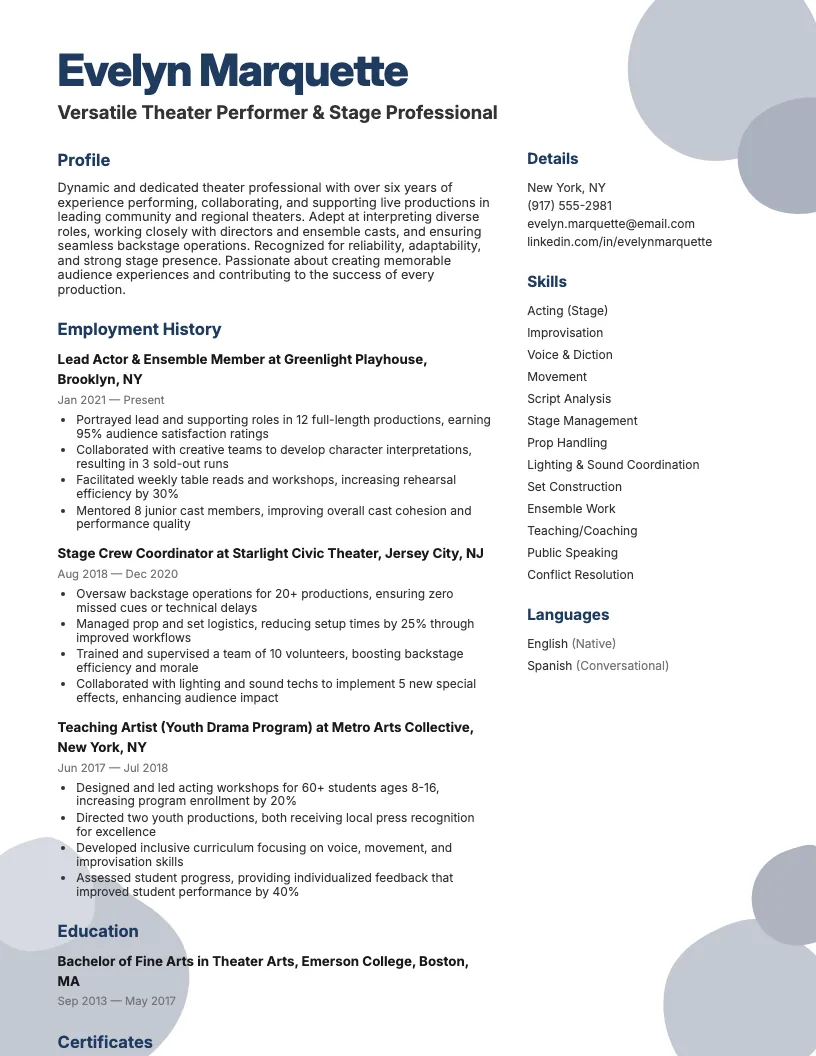
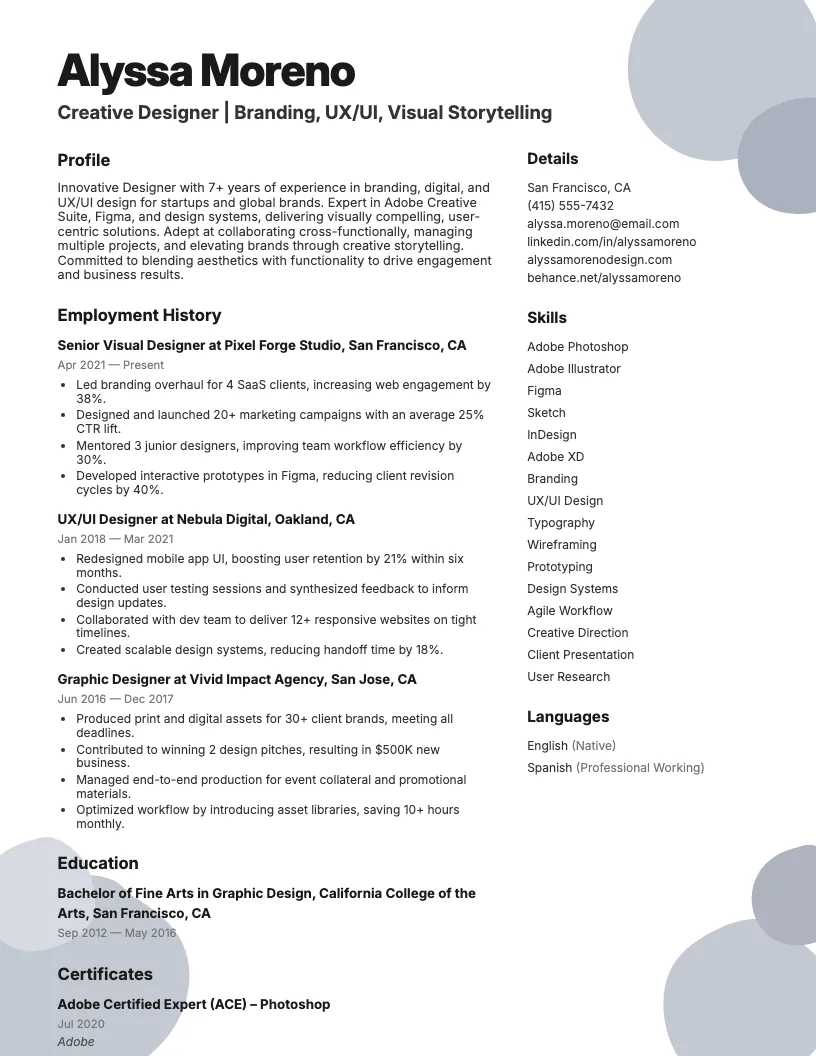
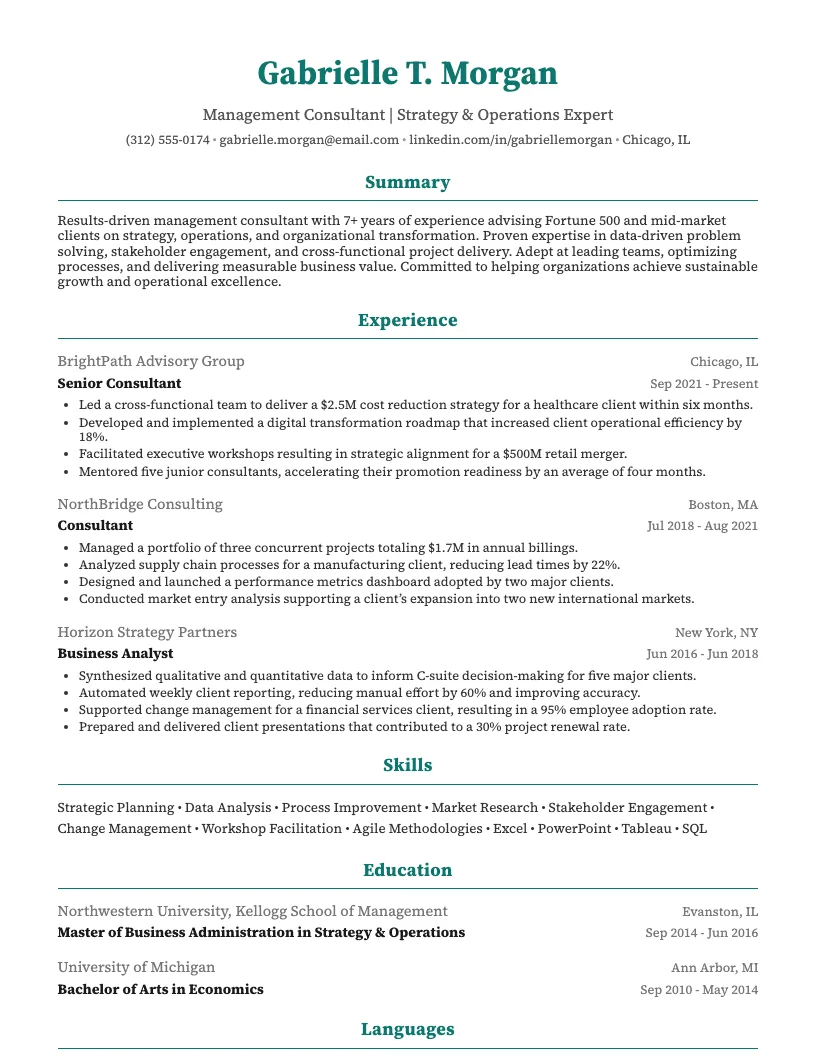
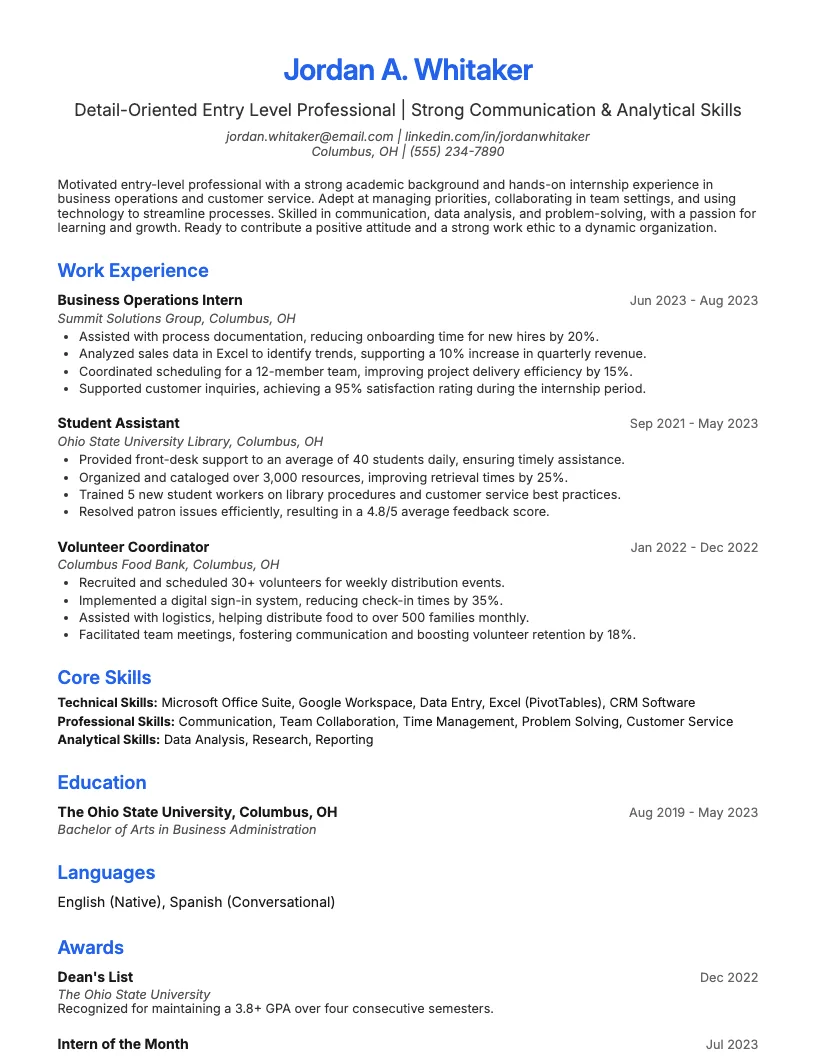
Click to enlarge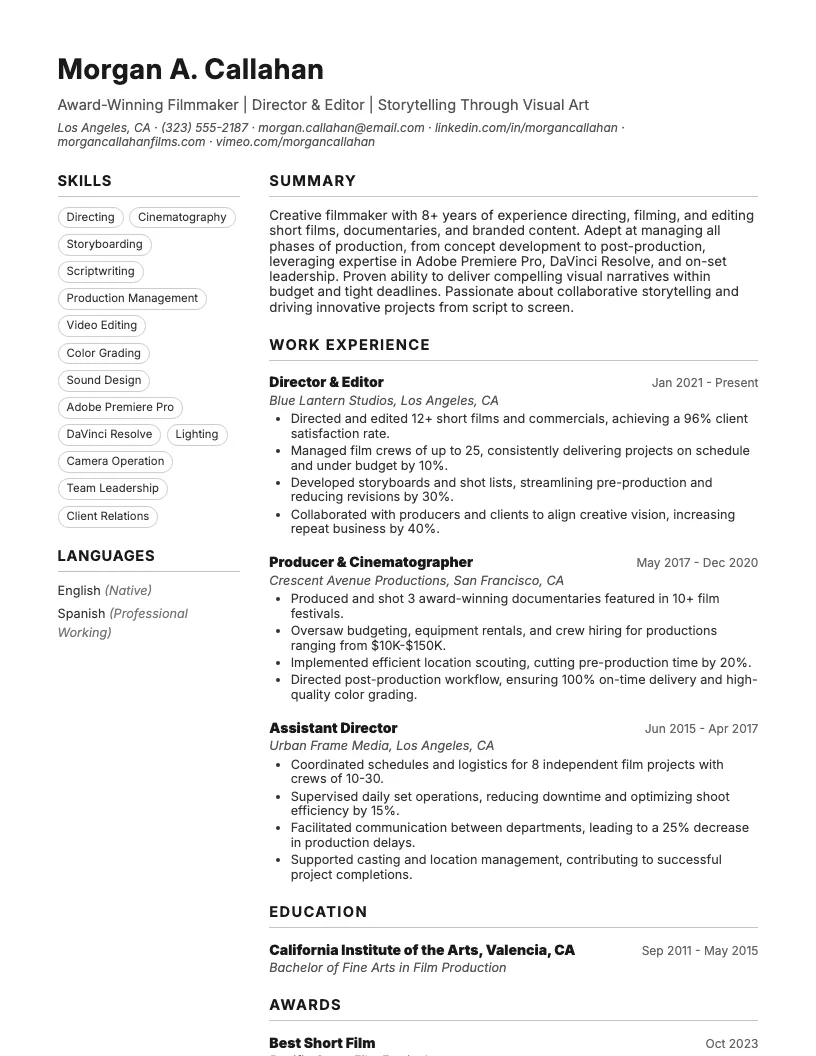 Click to enlarge
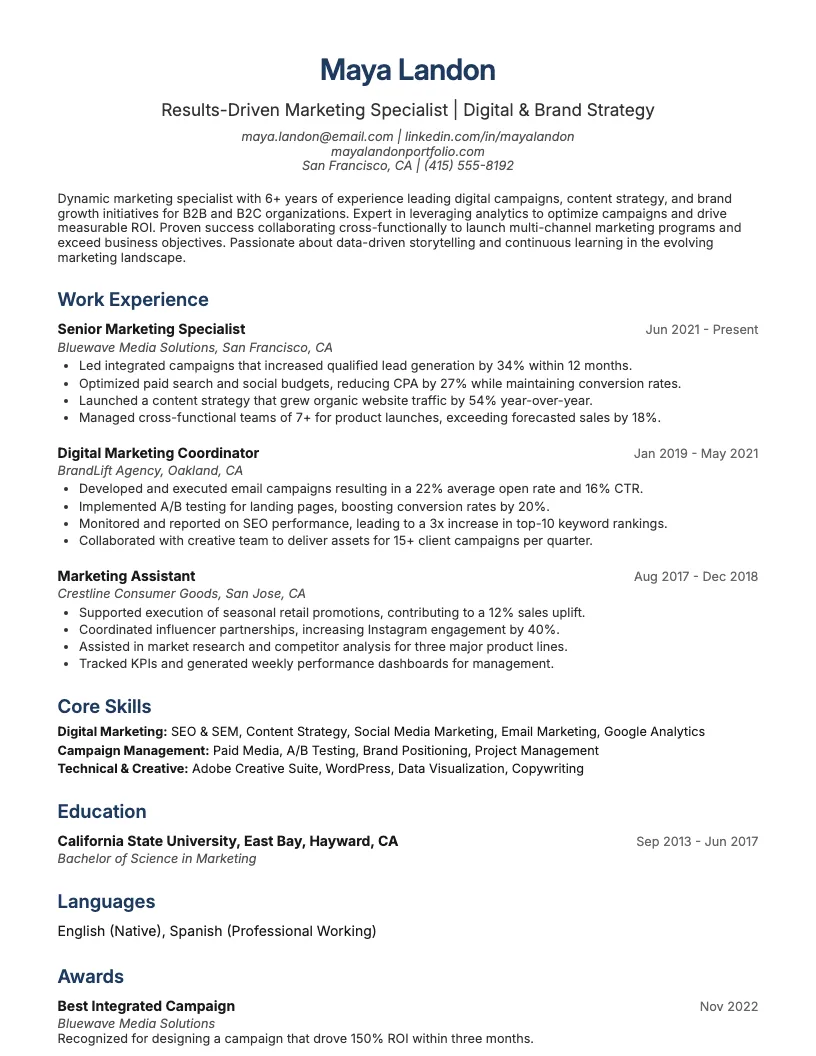
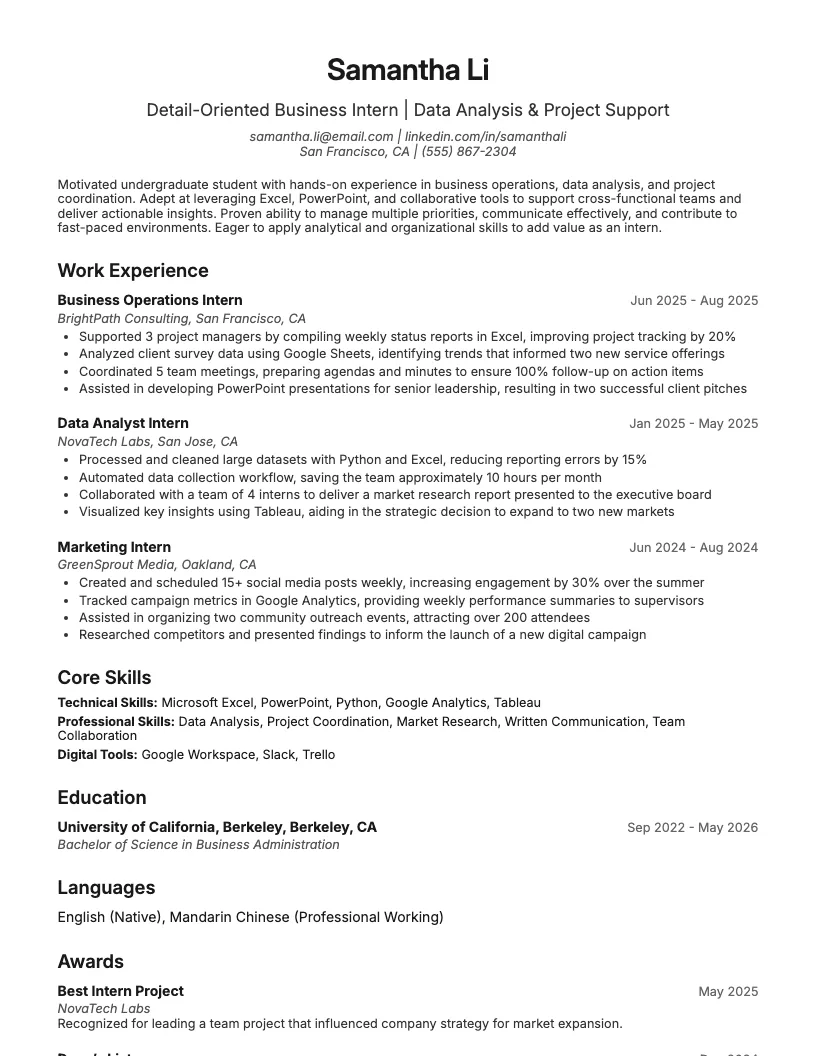
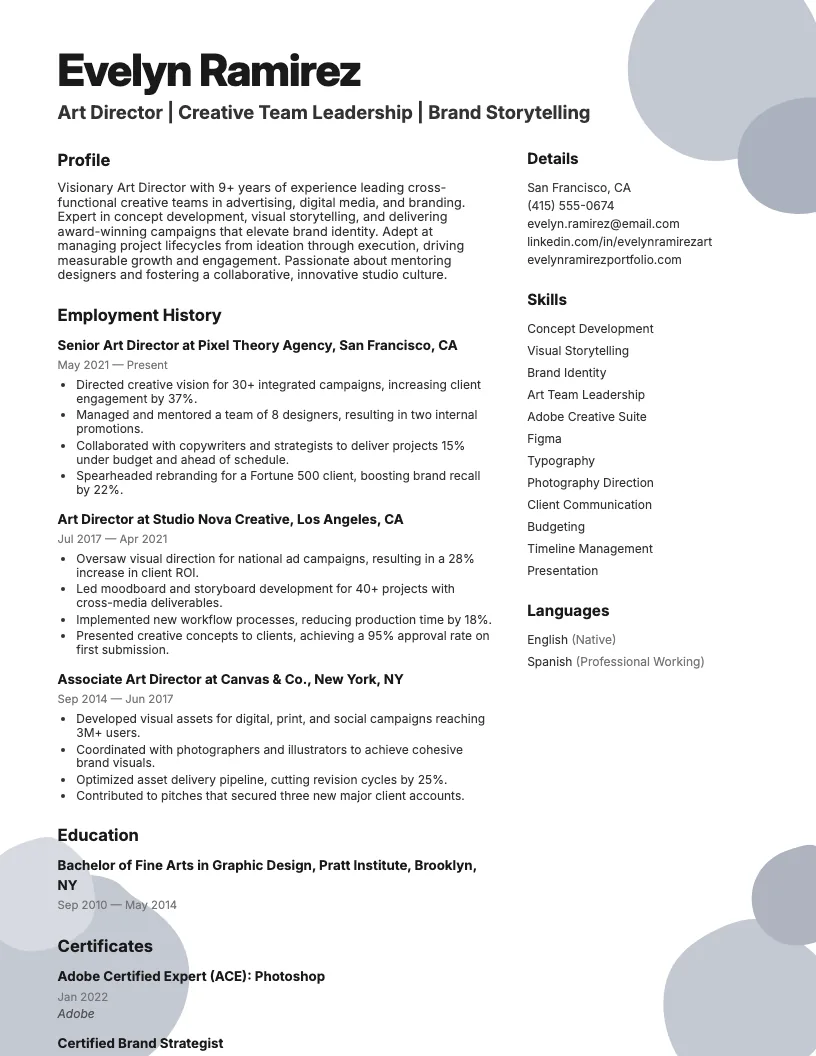 Click to enlarge
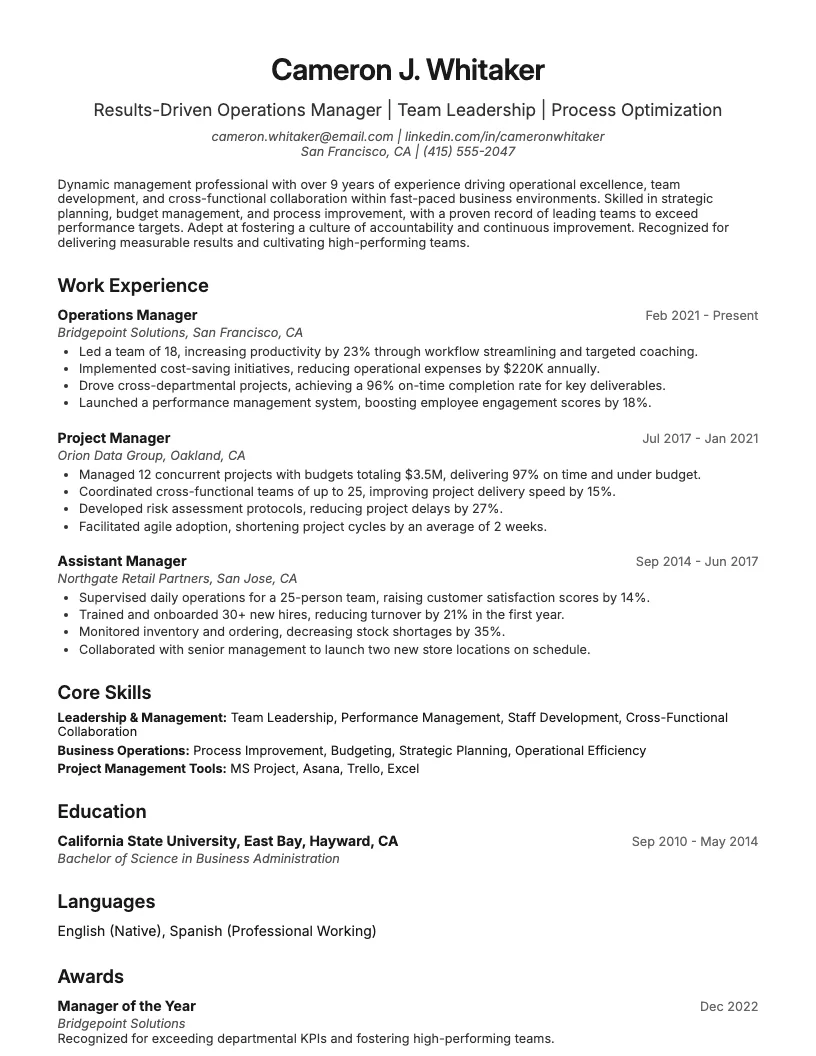
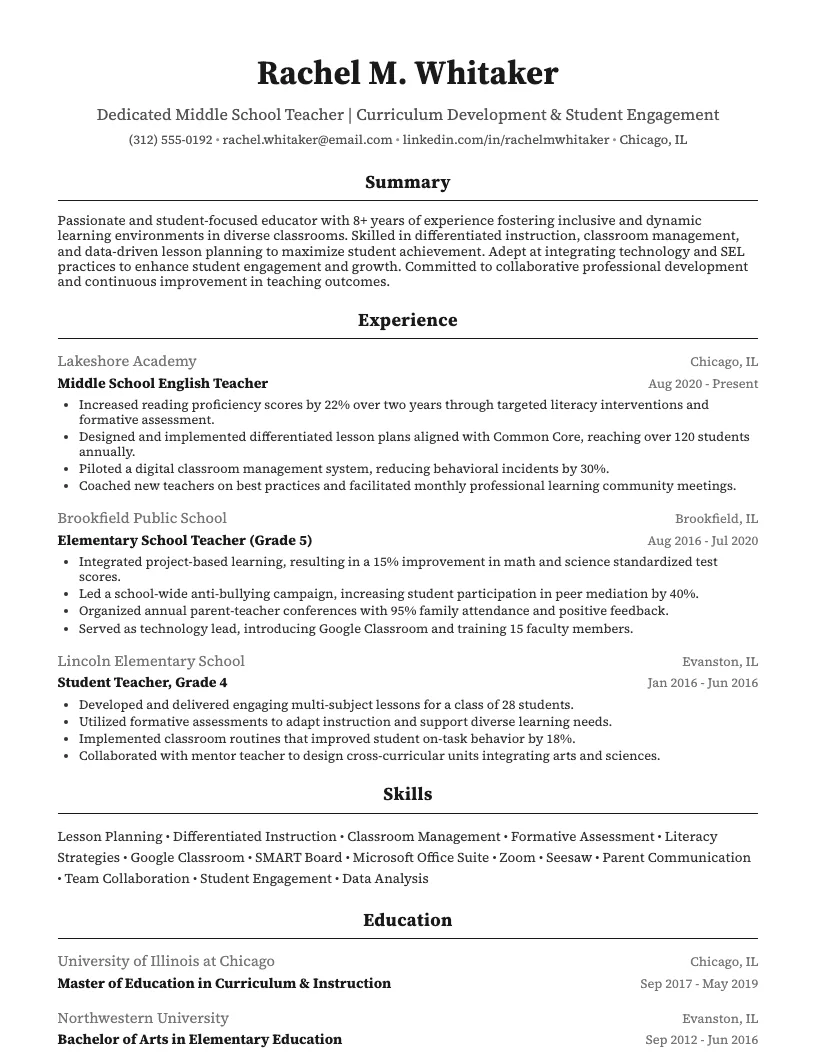
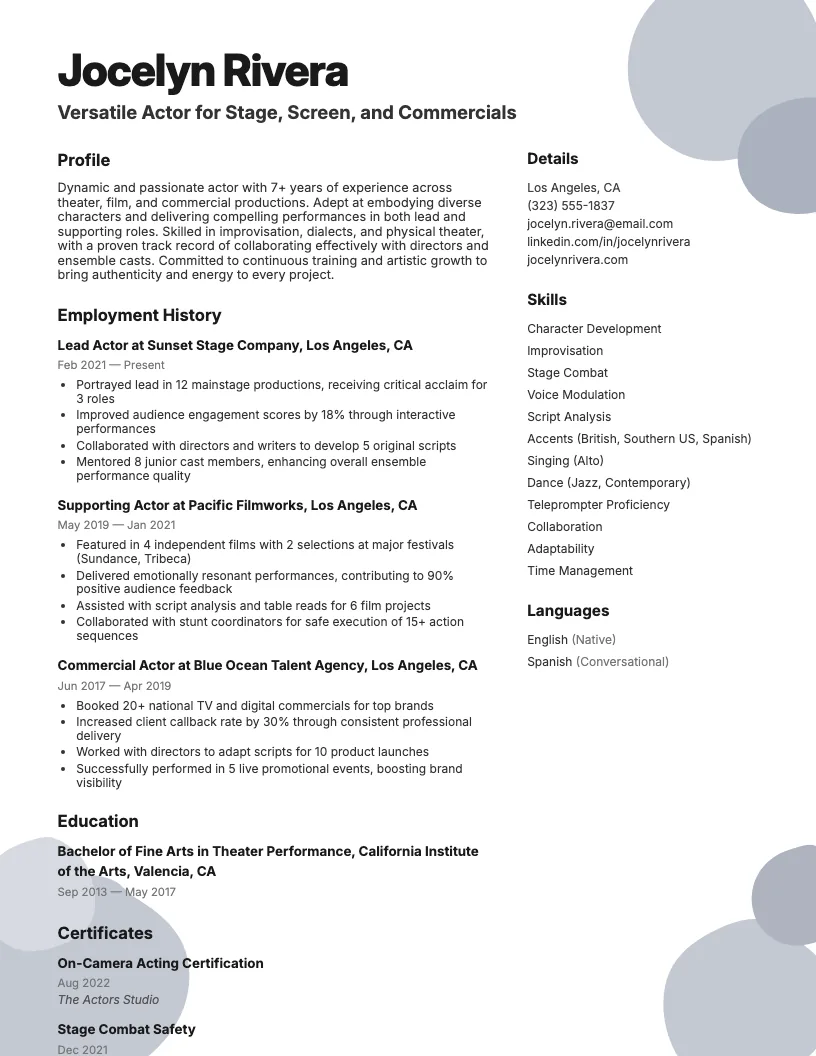 Click to enlarge
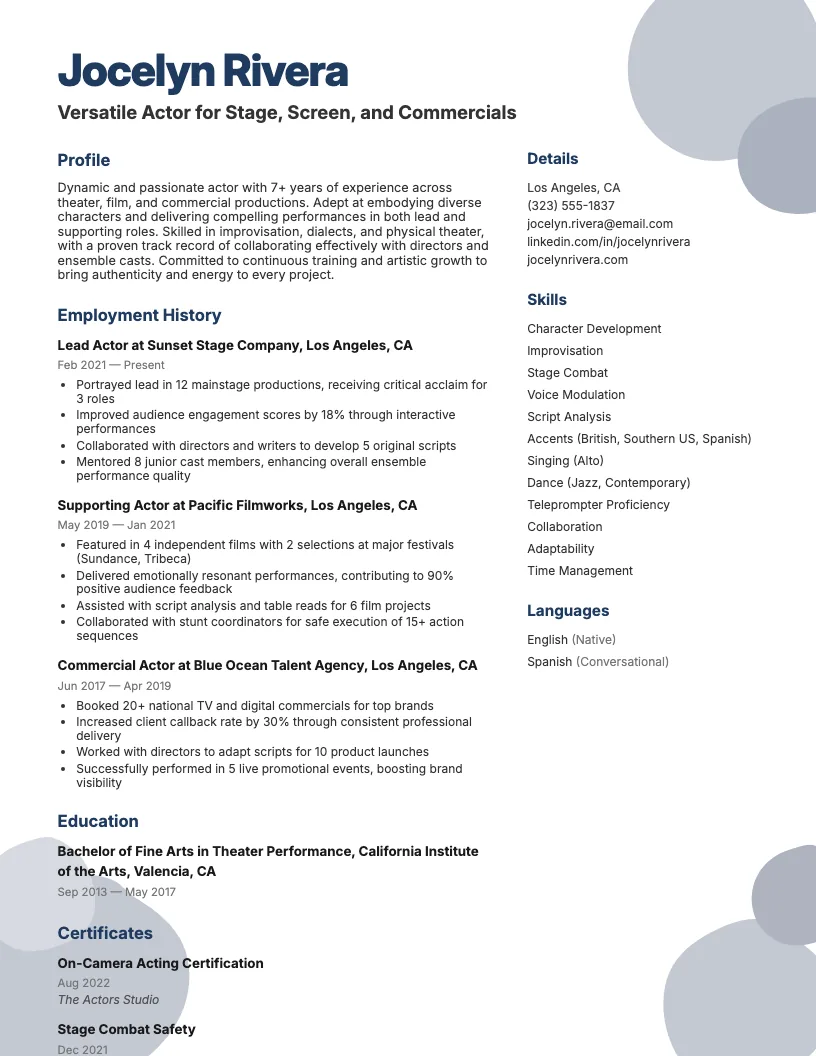 Click to enlarge Click to enlarge Click to enlarge
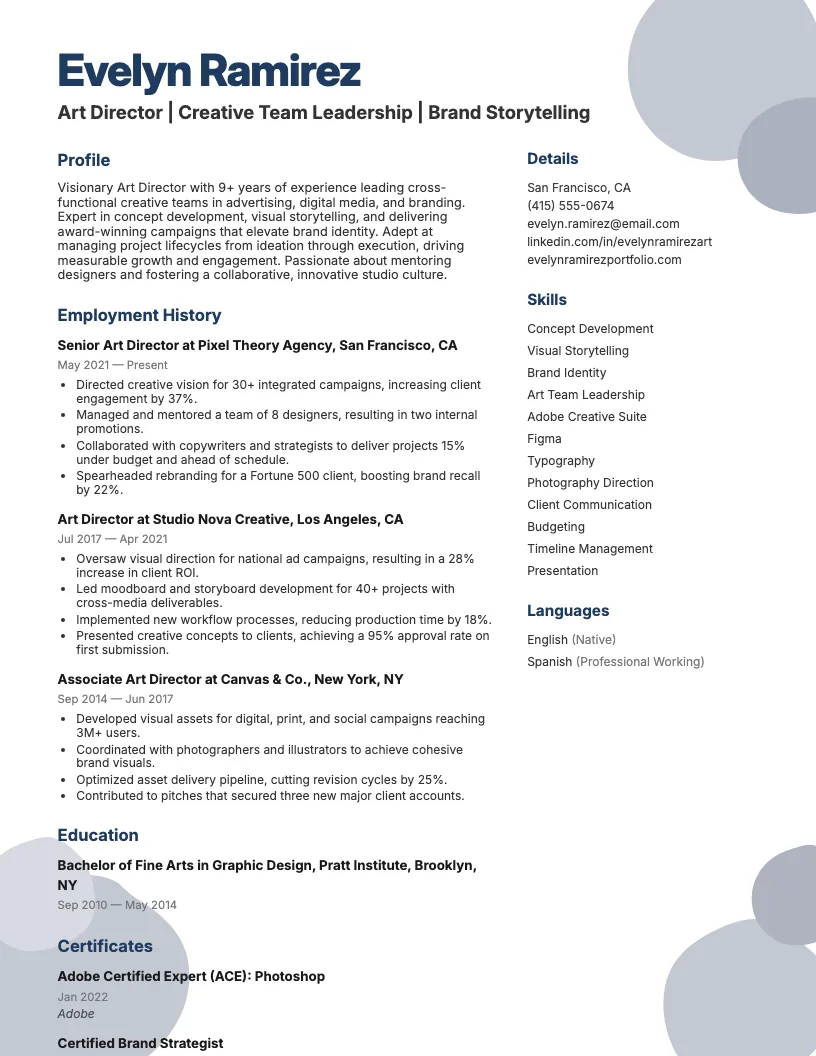 Click to enlarge Click to enlarge
Common questions about Film Director resumes
A film director resume template is a pre-designed layout tailored for showcasing directing experience, film projects, and creative skills. ResumeJudge makes it easy to highlight your unique portfolio for the entertainment industry.
Yes, most film director resume templates from ResumeJudge are ATS-friendly, ensuring your resume passes applicant tracking systems used by studios and production companies.
Use a film director resume template when applying for directing roles in film, TV, commercials, or digital content. It’s perfect for both seasoned directors and those transitioning from assistant or editor roles.
Absolutely! ResumeJudge templates are fully editable, letting you tailor sections like filmography, awards, and technical skills to fit each job or production you apply for.
Film director templates focus on creative achievements, directing credits, and leadership skills, unlike generic templates that may not highlight industry-specific experience. ResumeJudge ensures your creative background stands out.
A film director resume is typically one to two pages, depending on your experience. ResumeJudge templates help you organize credits and skills concisely for easy reading.
Include sections like contact info, professional summary, filmography, awards, relevant skills, and education. ResumeJudge templates come with all these sections pre-formatted for convenience.
Yes! It’s recommended to add a portfolio or showreel link. ResumeJudge templates provide space to include your website or video links, making it easy for employers to view your work.
A cover letter is highly recommended, especially for creative roles. ResumeJudge offers matching cover letter templates to help you introduce your vision and style to potential employers.
No, focus on your most significant or recent projects. ResumeJudge templates make it easy to highlight key films and achievements without overwhelming your resume.
Explore more professional resume examples to inspire your job search
Use our AI-powered resume builder to create a professional, ATS-friendly resume in minutes.
Free to use • No credit card required