Chronic Disease Epidemiologist Resume Example
See full guide on Chronic Disease Epidemiologist resumes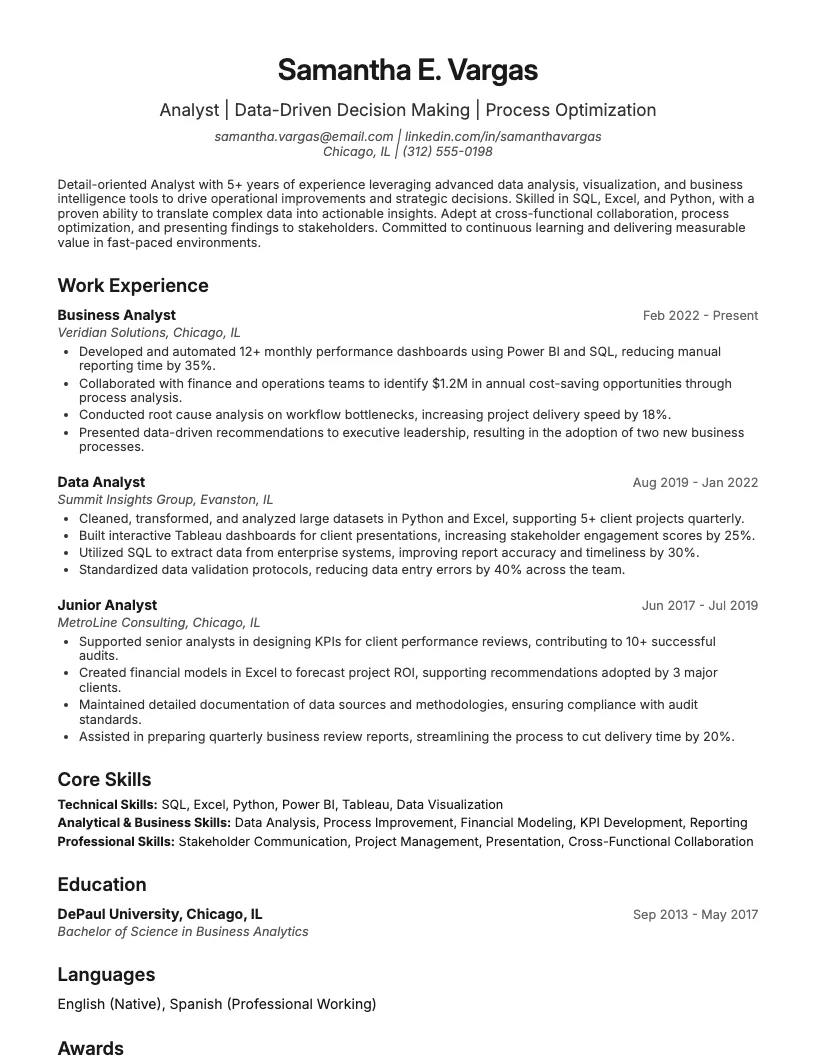 Click to enlarge
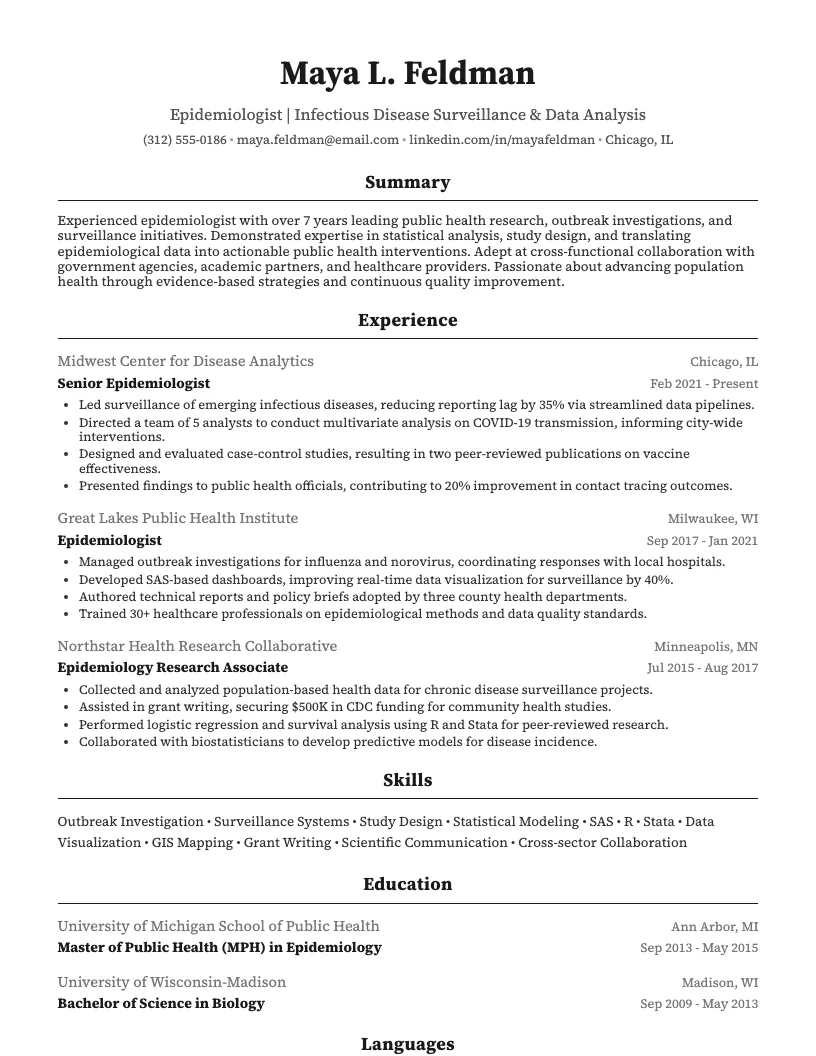 Click to preview

Get inspired by 50+ professional Epidemiologist resume examples, each written by career experts and optimized to pass ATS scans. Pick a proven template, tailor it to your role, and download a polished resume in minutes.
Pick the specialization closest to your target role and start from a proven resume example.
Curious about what makes a strong epidemiologist resume? I’ve seen hundreds, and there are certain skills and experiences that always stand out.
If you want to land interviews, you need to show your impact with clear numbers. Employers look for research experience, analytical skills, and public health knowledge.
Whether you’re just starting out or have years in the field, I’ll break down what you need at each level. Let’s look at real examples next.
I see entry-level epidemiologist resumes focus on coursework, internships, and basic statistical skills. It's common to highlight projects and public health volunteer work.
Mid-level examples usually show project management, data analysis, and collaboration with cross-functional teams. These resumes often list published research or experience with outbreak investigations.
For senior-level roles, I notice resumes emphasize leadership, grant writing, and mentoring. It's smart to showcase major studies led, policy impact, or managing teams of 5-20 people.
Epidemiologists track diseases, analyze data, and help control outbreaks. I often work with public health teams to identify threats and suggest solutions.
Most of my daily tasks involve studying patterns and causes of diseases. I use research, statistics, and public health knowledge to guide policy decisions.
You might see epidemiologists in government agencies, hospitals, or universities. We focus on protecting communities, improving health outcomes, and stopping the spread of illness.
Writing an epidemiologist resume means showing off your education, experience, and data skills. You want to quickly let employers know you have what it takes.
Most hiring managers expect to see a clear, well-organized resume. The right format and layout help your key achievements stand out, even when they have hundreds of applications.
You don't have to reinvent the wheel. I’ll walk you through the formats, layout tips, and what recruiters want to see on an epidemiologist’s resume.
I always start with the reverse chronological format for epidemiologist resumes. This format shows off your most recent experience up front, which employers expect in public health.
You want recruiters to see your progression and relevant roles over the last 10 years. This helps showcase your steady growth and real-world application of your education.
There are other formats, like functional or hybrid, but those work best for career changers or recent grads. For most epidemiologists, reverse chronological is the safest bet.
Keep your layout clean and simple. I recommend using clear headings, bullet points, and at least 10-point font. This makes it easy to scan quickly.
Stick to one page if possible. Two pages are fine if you have 10+ years' experience, but recruiters usually spend under 7 seconds on each resume.
Use consistent spacing and margins. Avoid fancy fonts or graphics-these can distract from your skills. A straightforward, professional look works best in epidemiology.
White space matters. It helps your achievements stand out and keeps the document readable. I always leave enough space between sections for a tidy feel.
That’s it for layout and design. With these basics, your resume looks sharp and stays focused on what matters-your credentials and expertise.

If you want to land a job as an epidemiologist, your resume needs to show what you actually do and know. Each section tells a different part of your story.
I break down the key sections you need: summary, job history, skills, and education. Each one matters if you want to stand out to hiring managers.
Your resume summary is your first impression. I use it to spotlight my biggest wins and showcase the experience that makes me a great fit for epidemiology roles.
Keep this section short-about 3-5 sentences. Highlight years of experience, key specialties, and major achievements. Don’t be shy about your impact or unique skills.
You want to make hiring managers curious enough to keep reading. Focus on real results, like improved disease tracking or successful outbreak responses. Be clear and confident about what you bring.
This section is where I show exactly what I’ve achieved in my roles. I focus on recent positions, usually from the last ten years, to keep things relevant.
You should use action verbs like “analyze,” “design,” or “coordinate” when describing your work. This helps highlight your impact, especially in complex research or outbreak response projects.
I always include concrete examples-like “analyzed infection trends for 12 hospitals” or “supported rapid response during two regional outbreaks.” This proves my experience and keeps the reader interested.
I always focus on data analysis, since 100% of epidemiologist roles need someone who can interpret complex numbers and trends. Statistical software knowledge like SPSS or R stands out.
You want to highlight disease surveillance and outbreak investigation. These skills show you can monitor, track, and respond to public health threats quickly and effectively.
Don’t forget communication and teamwork. You often translate technical findings for different groups and work with people from labs, clinics, and agencies. This helps you drive real-world impact.
I always make sure to list my highest degree first in the education section. For most epidemiologists, that means a master’s or doctorate in public health or epidemiology.
You want to include your degree, the school name, location, and graduation year. Honors or relevant coursework can help if you’re early in your career.
If you’ve got certifications or belong to groups like the Society for Epidemiologic Research, add those here. This helps you stand out and shows you’re active in the field.
If you want more ideas for your resume, I’ve got you covered. There are tons of public health roles with similar skills and backgrounds.
I often look at related jobs to see what works. It helps to compare responsibilities and the ways people highlight results in similar fields.
Epidemiology roles keep growing. You need a resume that proves your skills, experience, and value to public health teams.
Make every section count. I focus on structure, clarity, and measurable impact to stand out.
Browse Epidemiologist resume examples for related roles. Preview any example, open it in the builder, or read its full guide.
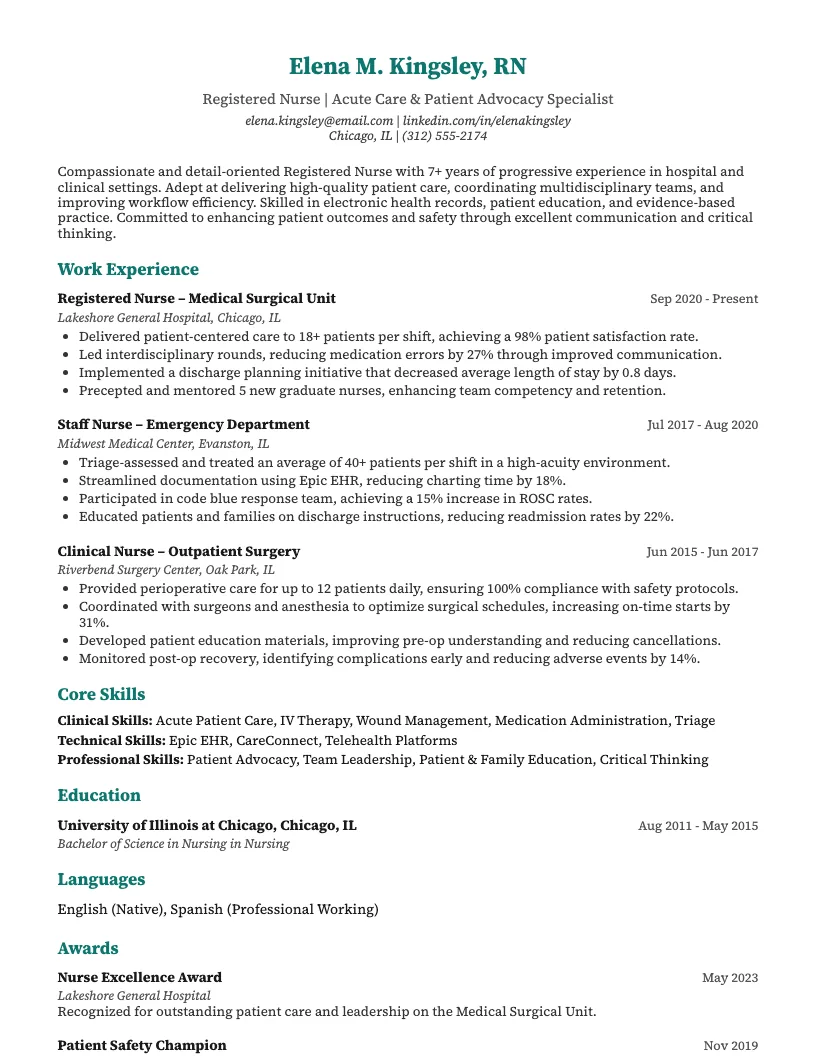
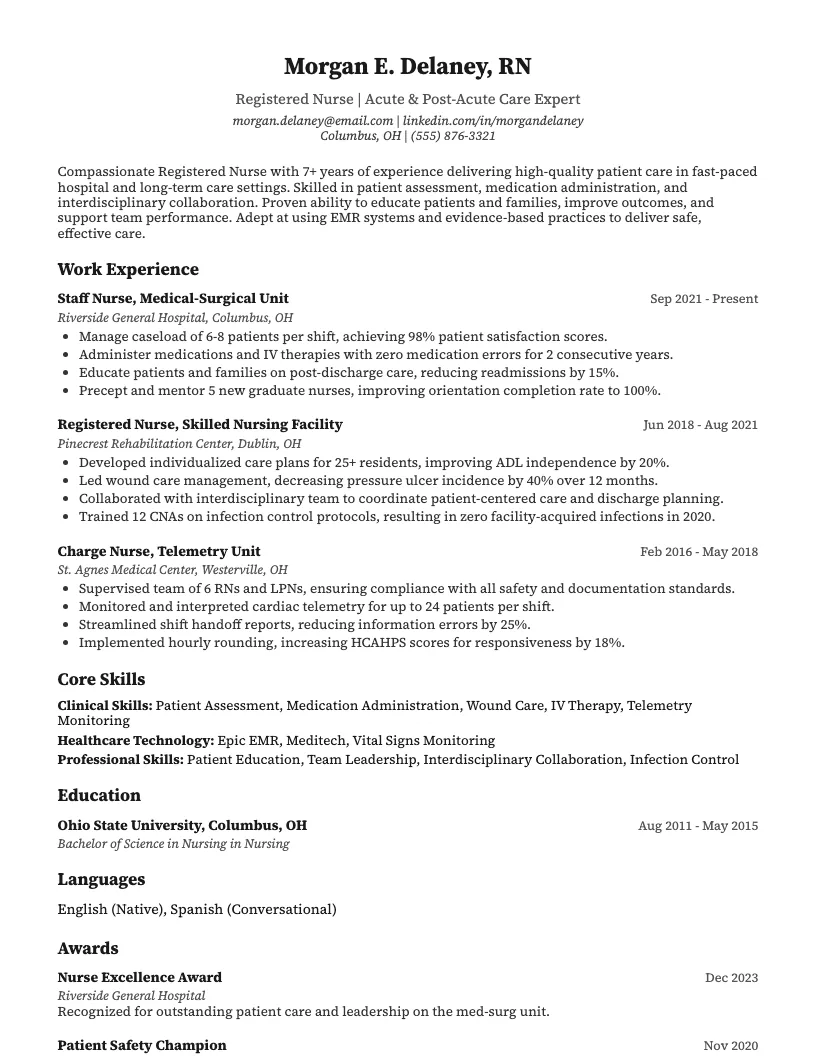
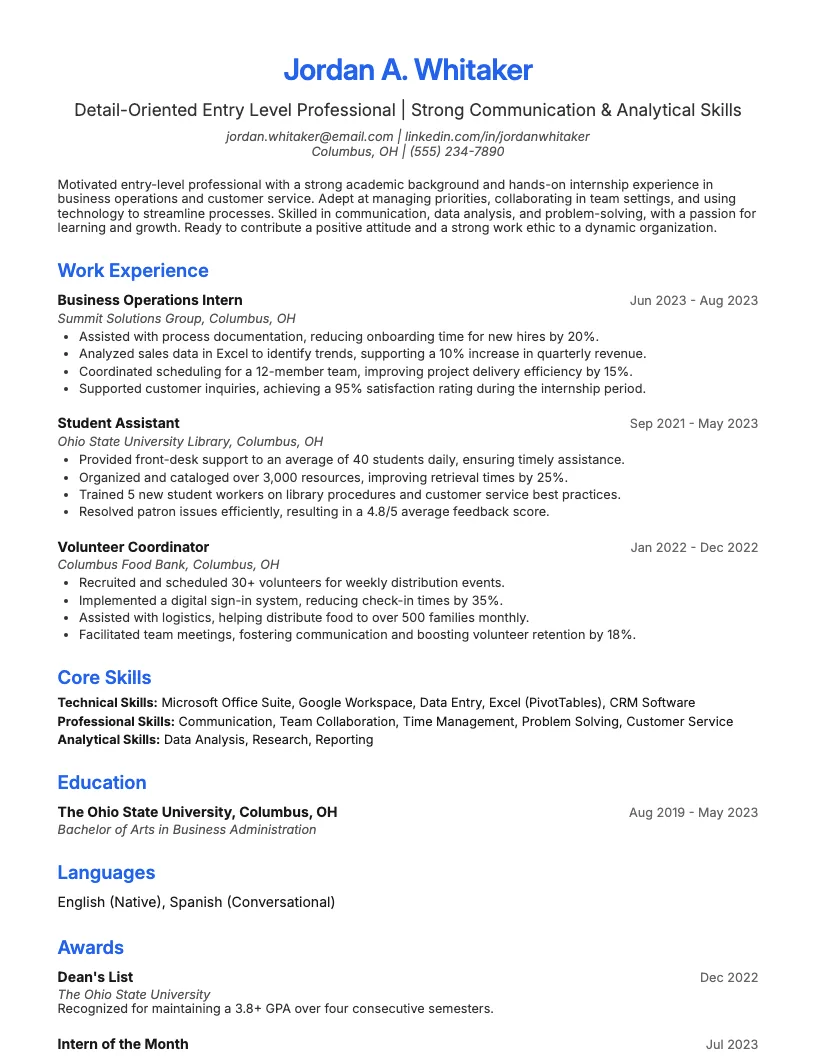
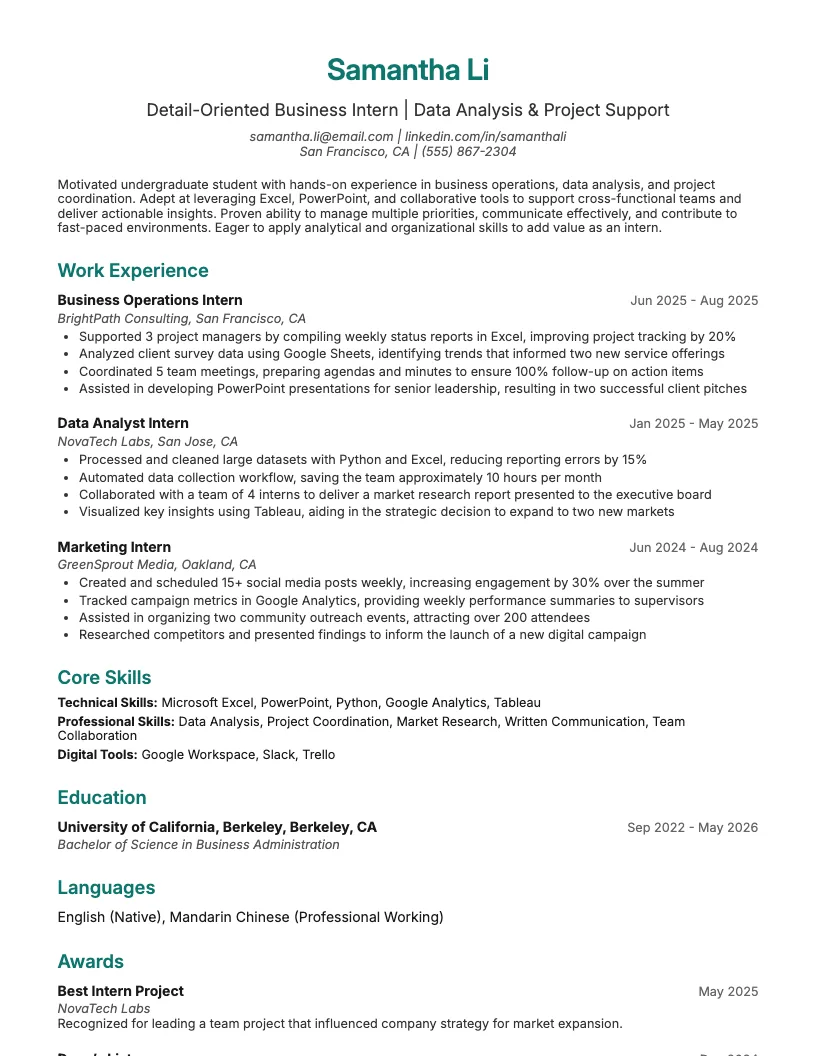
Click to enlarge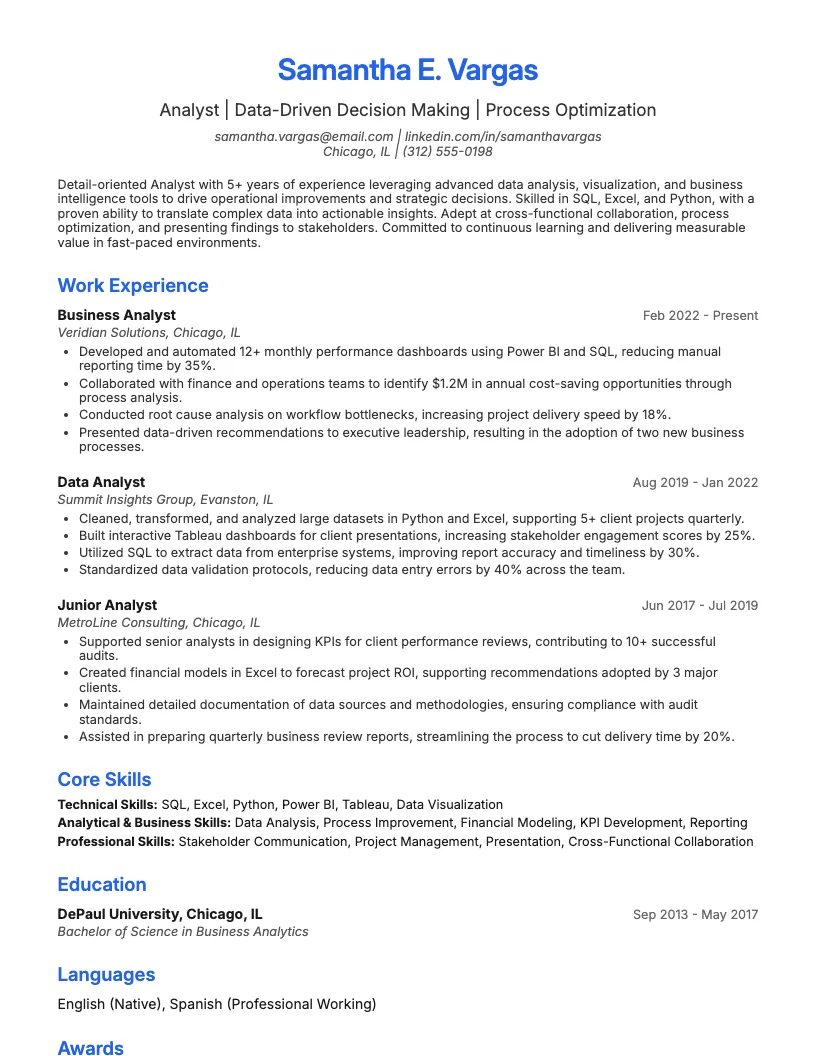 Click to enlarge
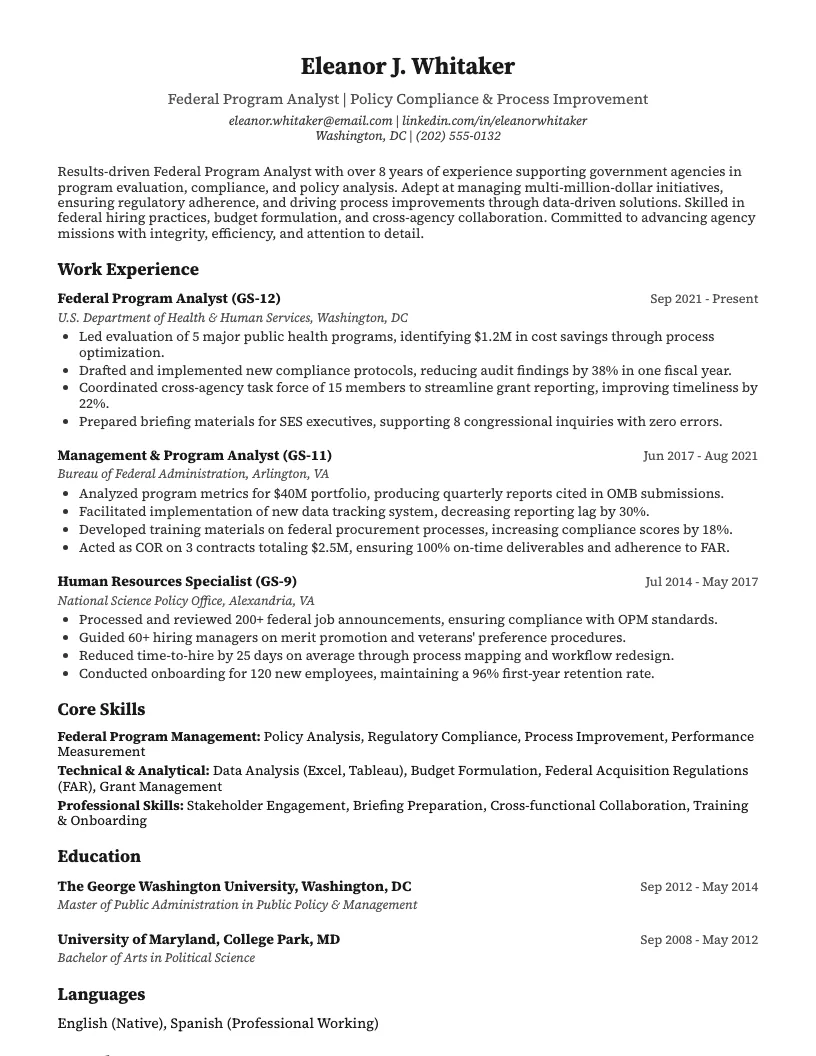
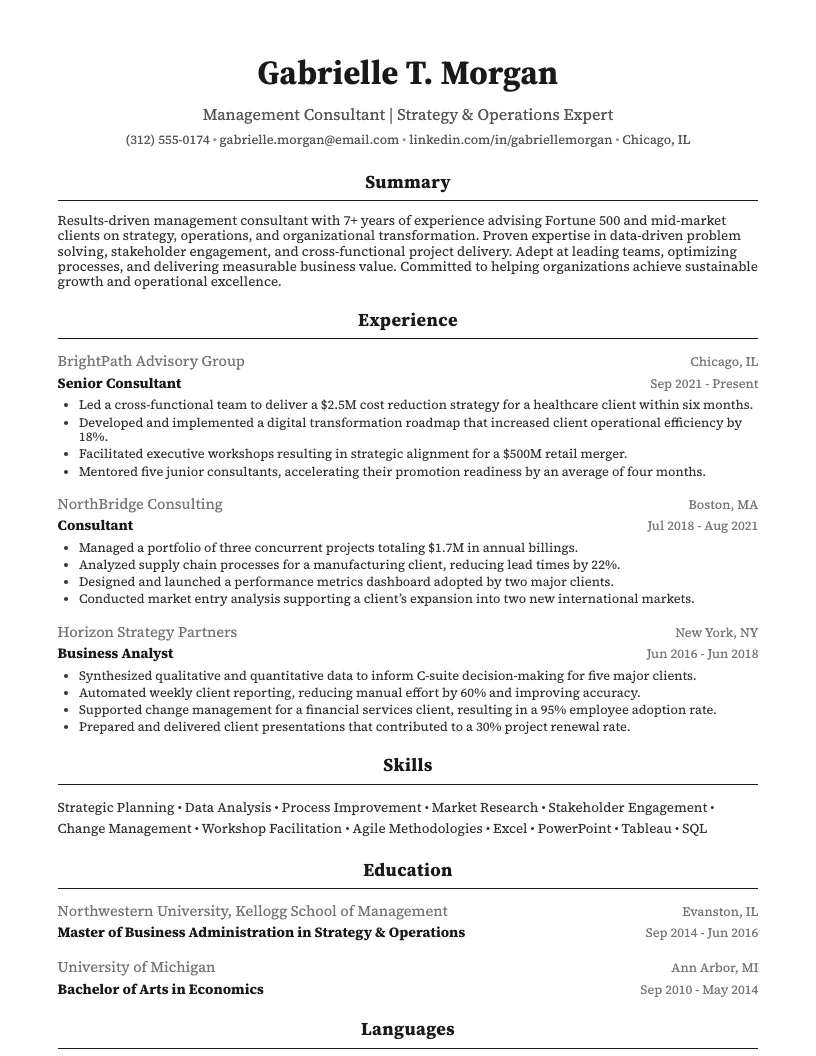
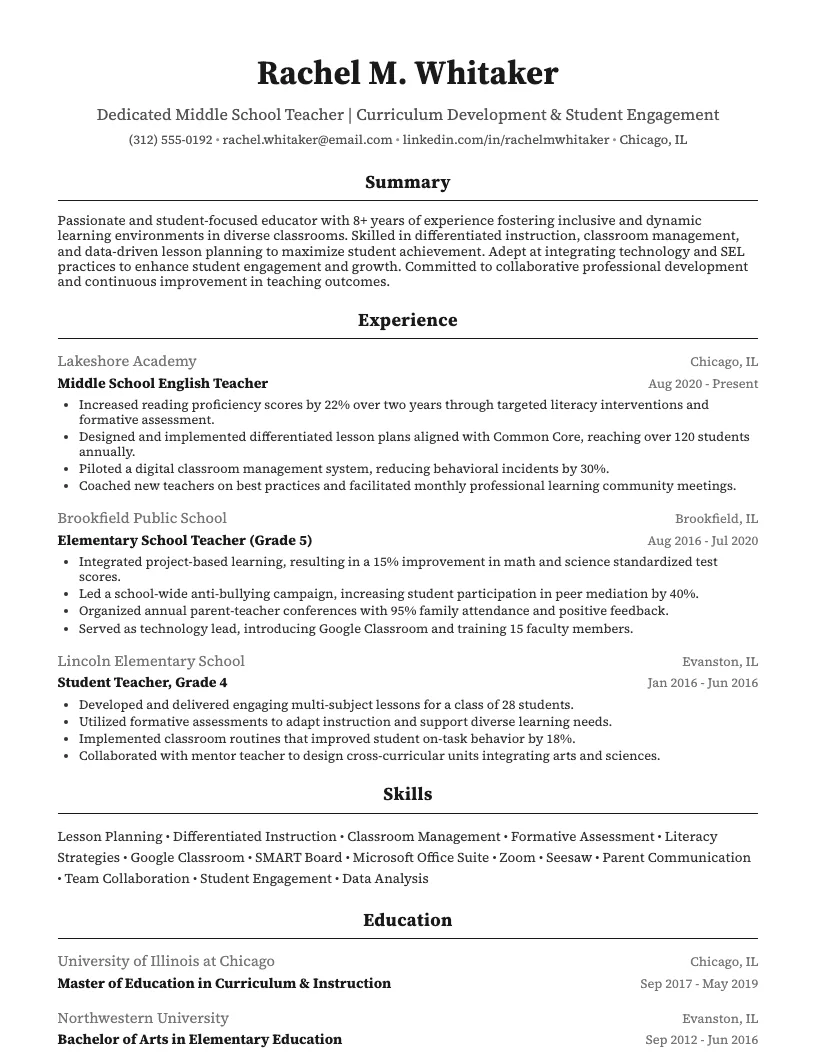
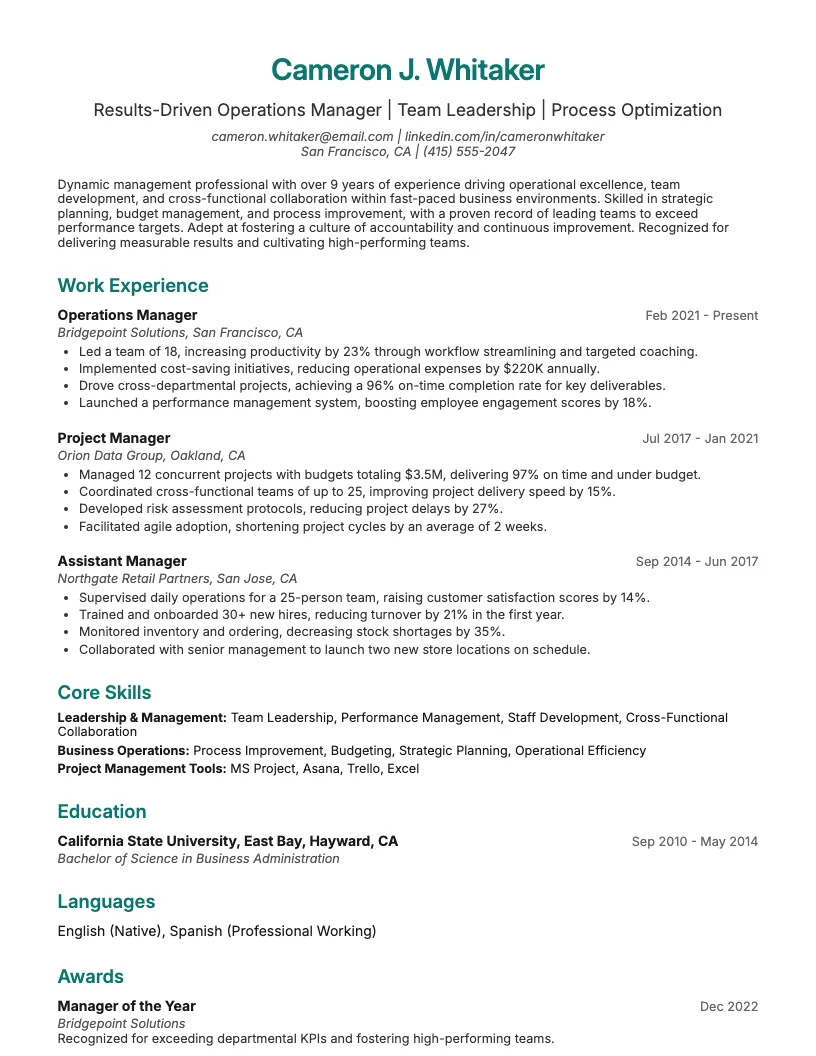
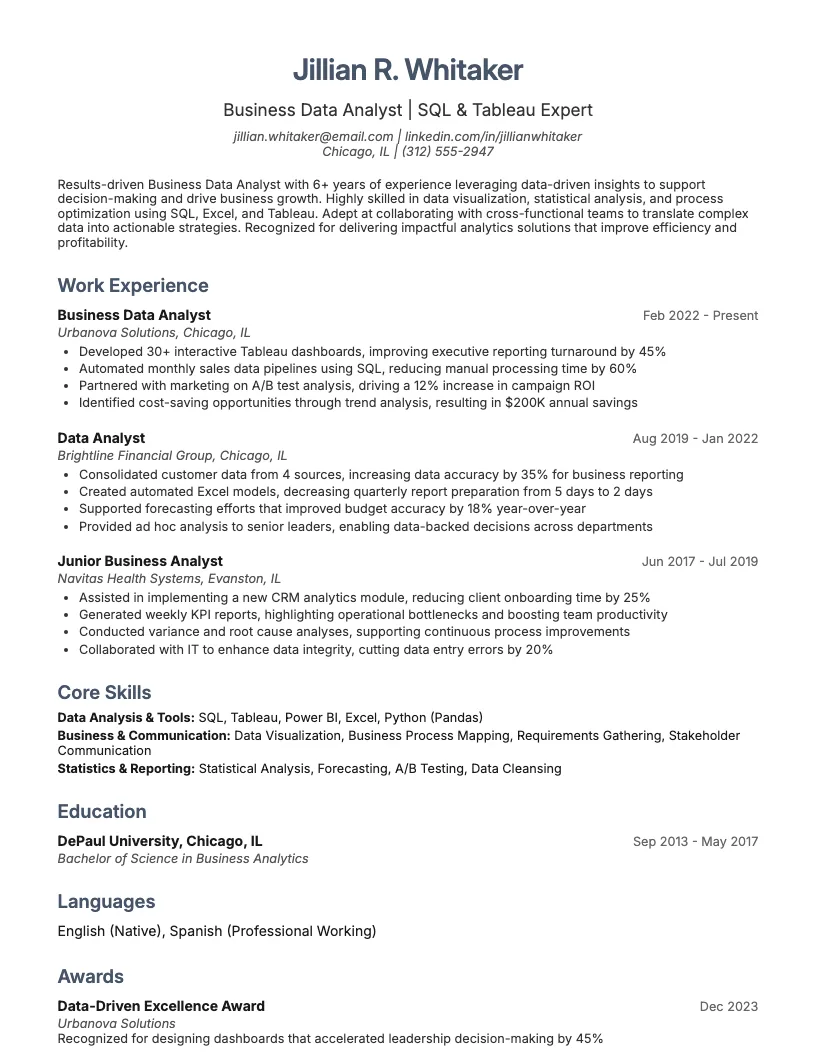 Click to enlarge Click to enlarge Click to enlarge
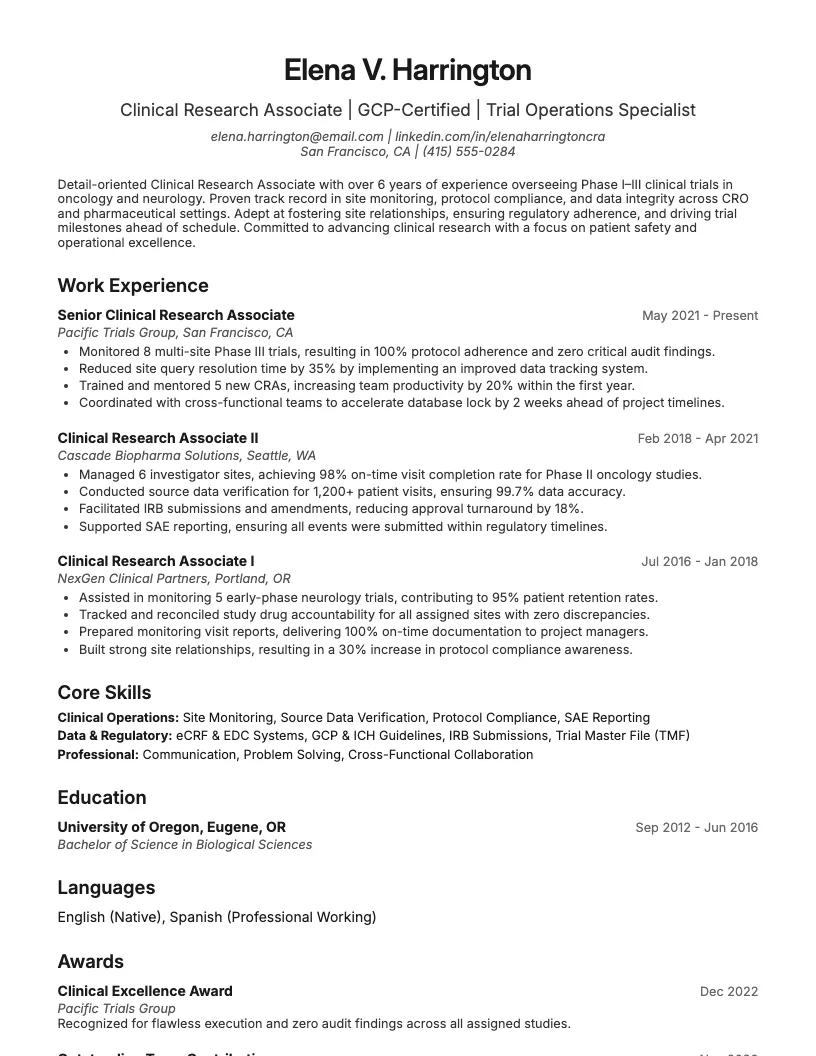 Click to enlarge
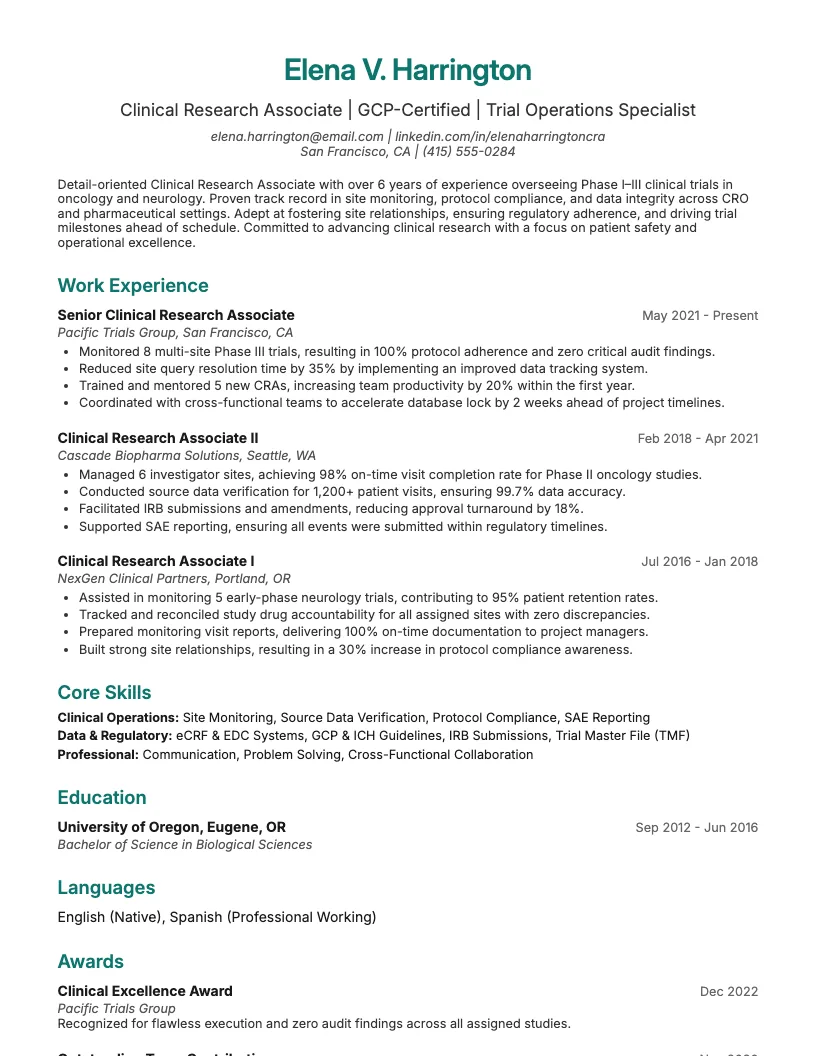 Click to enlarge Click to enlarge
Common questions about Epidemiologist resumes
An epidemiologist resume template is a pre-designed layout tailored for professionals in disease research and public health. It highlights key skills, education, and experience relevant to epidemiology roles.
Yes, most epidemiologist resume templates are ATS-friendly, meaning they pass automated screening systems. ResumeJudge ensures all templates are optimized for ATS compatibility, so your resume reaches recruiters.
Use an epidemiologist resume template when applying to hospitals, research centers, government agencies, or universities. It's ideal for public health specialists, clinical researchers, or biostatisticians.
Absolutely! You can personalize sections, fonts, and colors to match your experiences and the job description. ResumeJudge makes it easy to adjust templates for your career stage and target industry.
Epidemiologist resume templates focus on research, data analysis, and public health experience, while generic templates may lack these features. ResumeJudge provides industry-specific templates for better job targeting.
A typical epidemiologist resume should be one to two pages, focusing on relevant research, education, and technical skills. ResumeJudge helps you keep your resume concise and impactful.
Yes, they emphasize research methodology, data analysis, and publication history. ResumeJudge templates make it easy to showcase these strengths for academic or clinical positions.
Yes, ResumeJudge offers templates for entry-level applicants, highlighting education, internships, and transferable skills suitable for recent graduates or career changers.
Definitely! Epidemiologist resume templates have dedicated sections for certifications like CPH or SAS training. ResumeJudge helps you feature credentials that boost your profile.
Include contact info, a summary, education, research experience, technical skills, and certifications. ResumeJudge templates provide all necessary sections so nothing important gets missed.
Explore more professional resume examples to inspire your job search
Use our AI-powered resume builder to create a professional, ATS-friendly resume in minutes.
Free to use • No credit card required