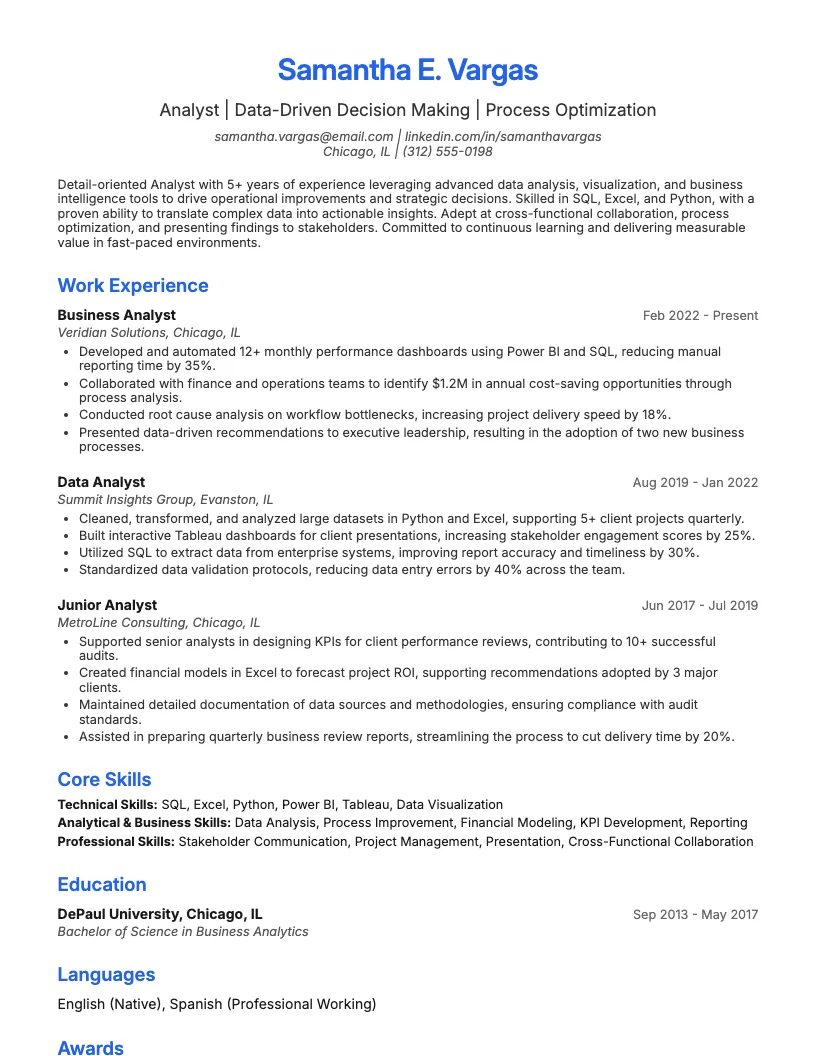
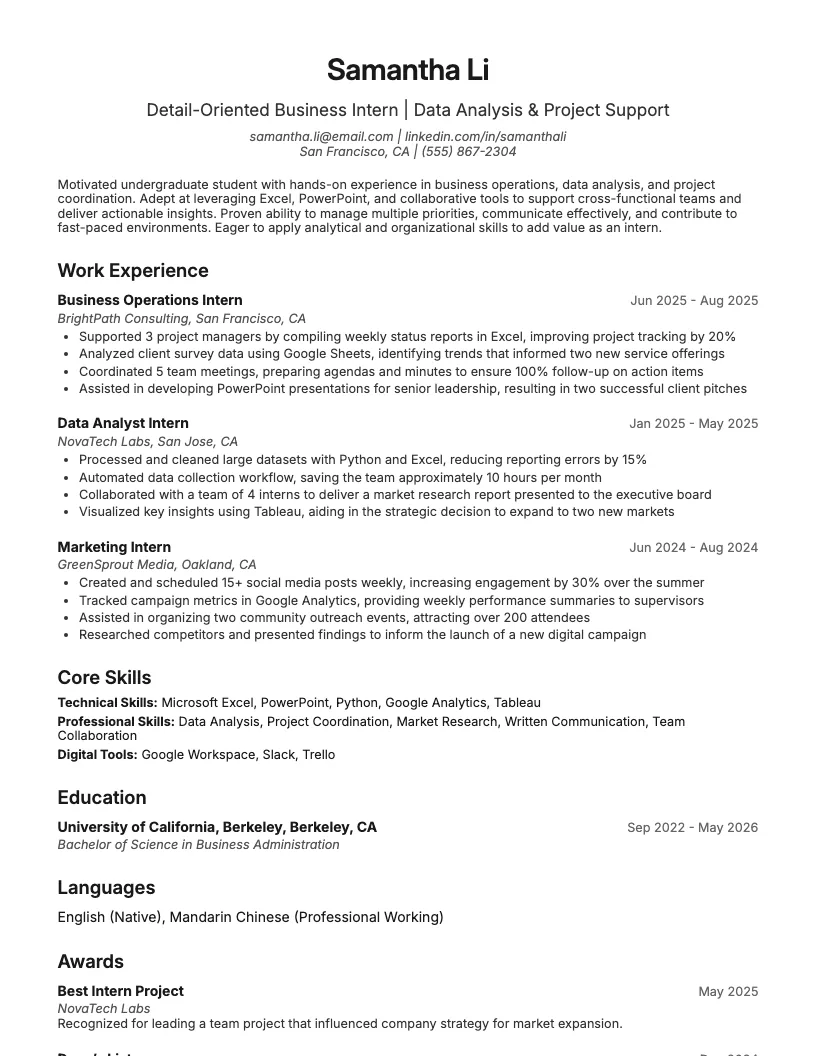
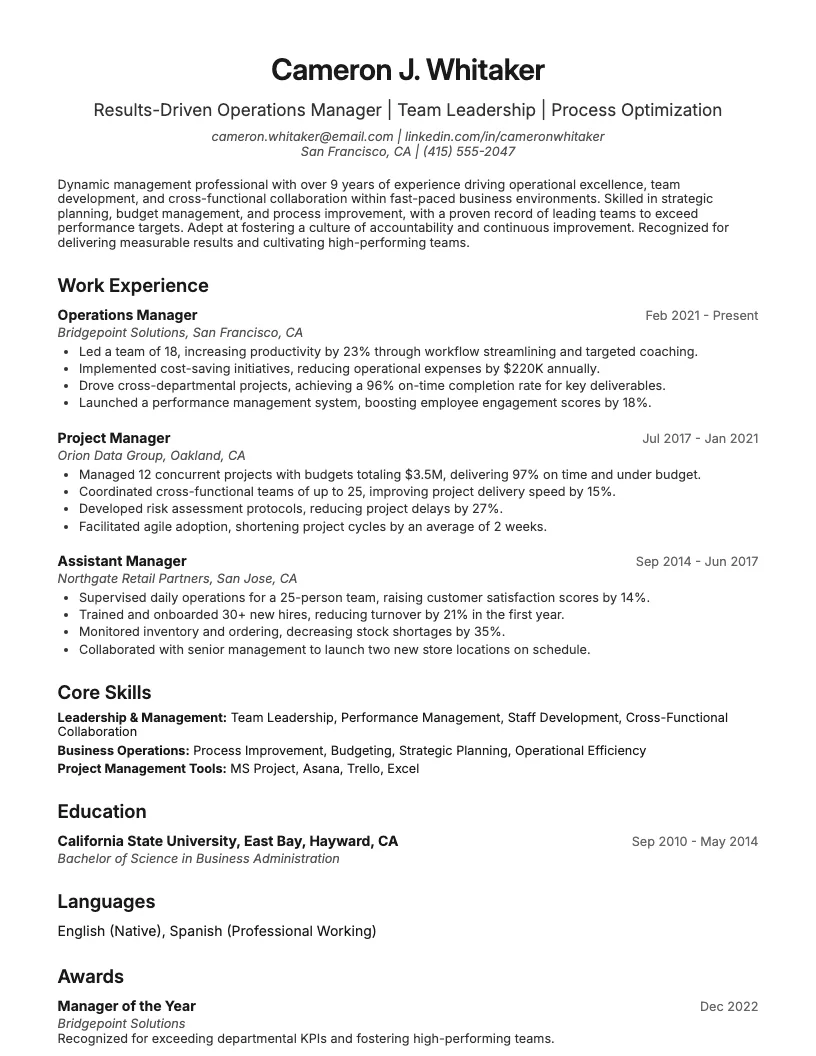
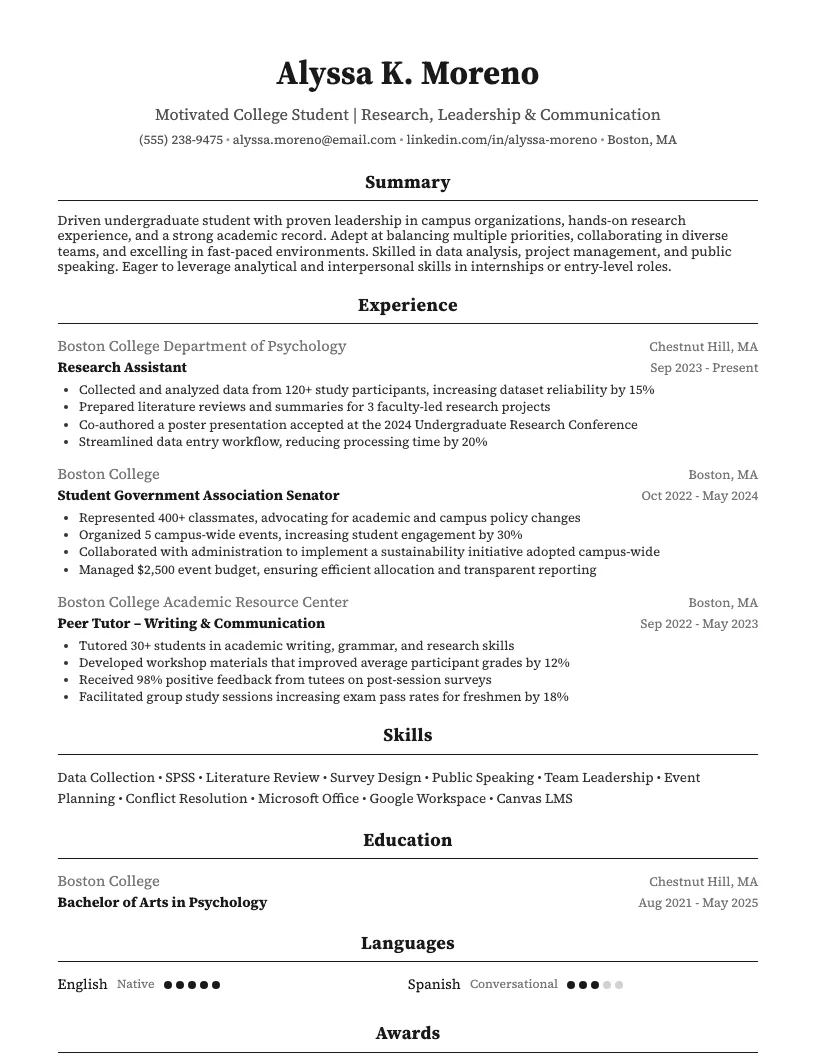
Entry Level Data Analyst Resume Resume Example
See full guide on Entry Level Data Analyst Resume resumes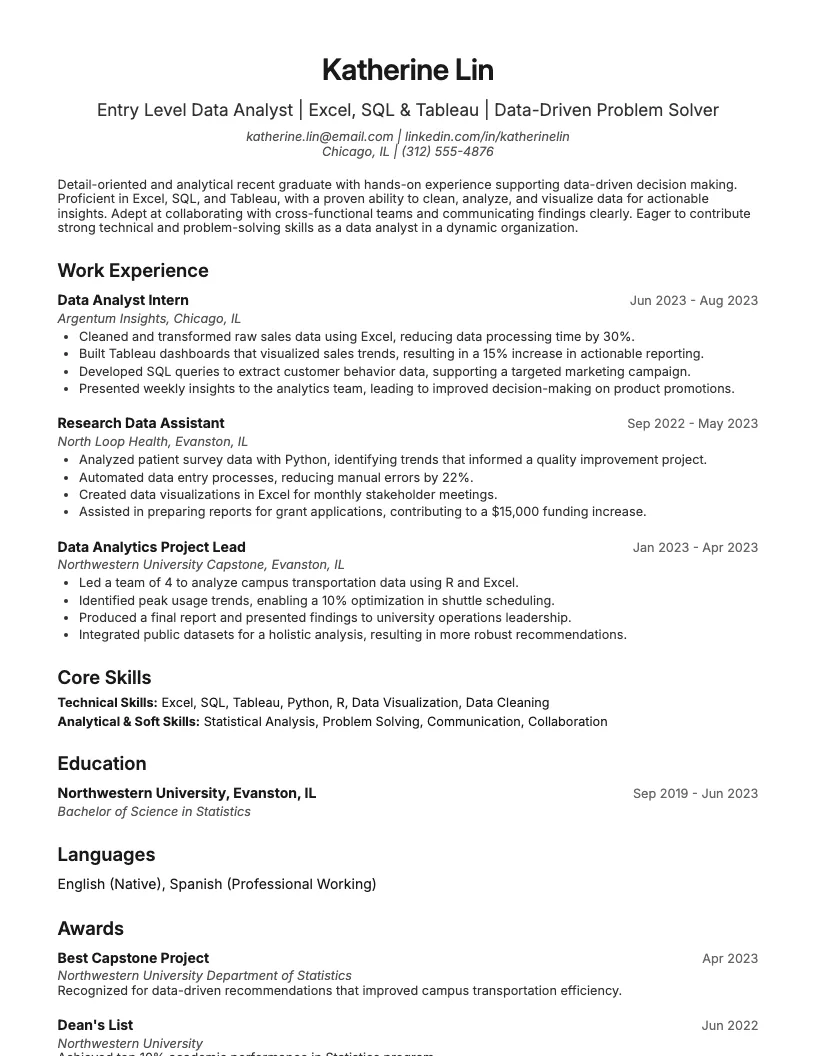 Click to enlarge
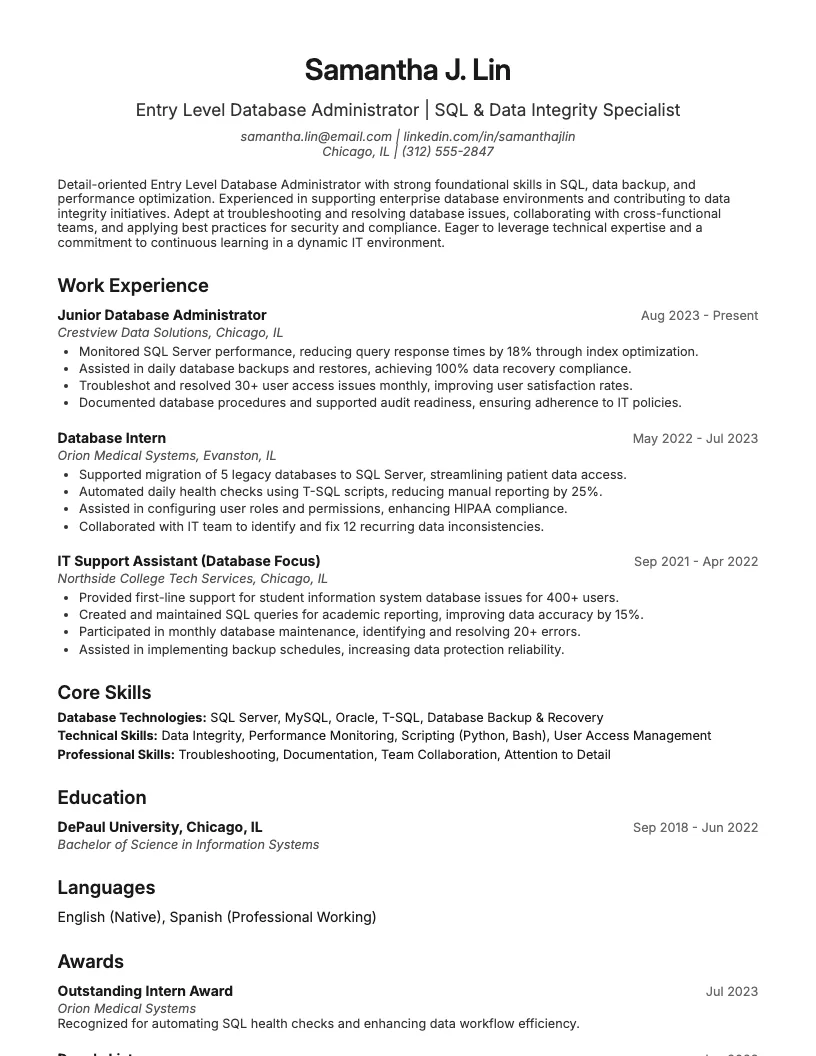 Click to preview

Get inspired by 50+ professional Entry Level Database Administrator resume examples, each written by career experts and optimized to pass ATS scans. Pick a proven template, tailor it to your role, and download a polished resume in minutes.
Pick the specialization closest to your target role and start from a proven resume example.
Starting out as a database administrator can feel overwhelming. I know how tough it is to stand out without years of experience.
A strong resume helps you highlight your technical skills and any hands-on projects. You can show employers what you bring to the table, even at the entry level.
Here, you'll see real examples that focus on relevant experience, certifications, and results. This gives you a good starting point for your own resume.
If you want to land your first Database Administrator job, your resume needs to show off technical skills and any practical experience-even if it's from school projects or internships.
I usually highlight core skills like SQL, Oracle, or MySQL. Employers look for hands-on experience managing real databases, even in academic settings or as a volunteer.
You should include numbers, like the size of a database you supported or how many users you helped. This helps your resume feel concrete and credible right away.
If you’re starting out as a Database Engineer, focus on projects you’ve done at school or internships. I always add details like the number of users or size of database handled.
Highlight familiarity with tools like SQL Server, Oracle, or PostgreSQL. You want to show you can optimize queries, run backups, and keep data secure, even as a beginner.
Don’t forget soft skills. Mention teamwork or problem-solving, especially if you worked with cross-functional teams or managed multiple requests at once. This really helps your resume stand out.

Writing your entry level database administrator resume can feel overwhelming. I get it-there’s a lot to consider, even if you’re just starting out.
You want your skills and education to stand out, even if you don’t have years of experience. Hiring managers look for relevant experience, certifications, and technical strengths.
Most resumes for this role fit on one page and follow a clear, easy-to-read format. I recommend tailoring your details for each job application to get past the ATS.
Next, I’ll break down each section you need to include, from your summary to your skills list. Let’s dive into what actually works.
Your resume starts strong with a professional summary or objective. This is where you introduce yourself and set the tone for the rest of your application.
If you're new to the field, use an objective to show your career goals and what you want to learn. For those with some experience, a summary highlights your top strengths and achievements.
I always mention my title, years of experience, and two or three technical skills-like SQL or data security. This helps recruiters quickly see if I'm a good fit.
Customize this section for each job. Pull keywords from the job description. This makes your resume stand out and gets past applicant tracking systems.
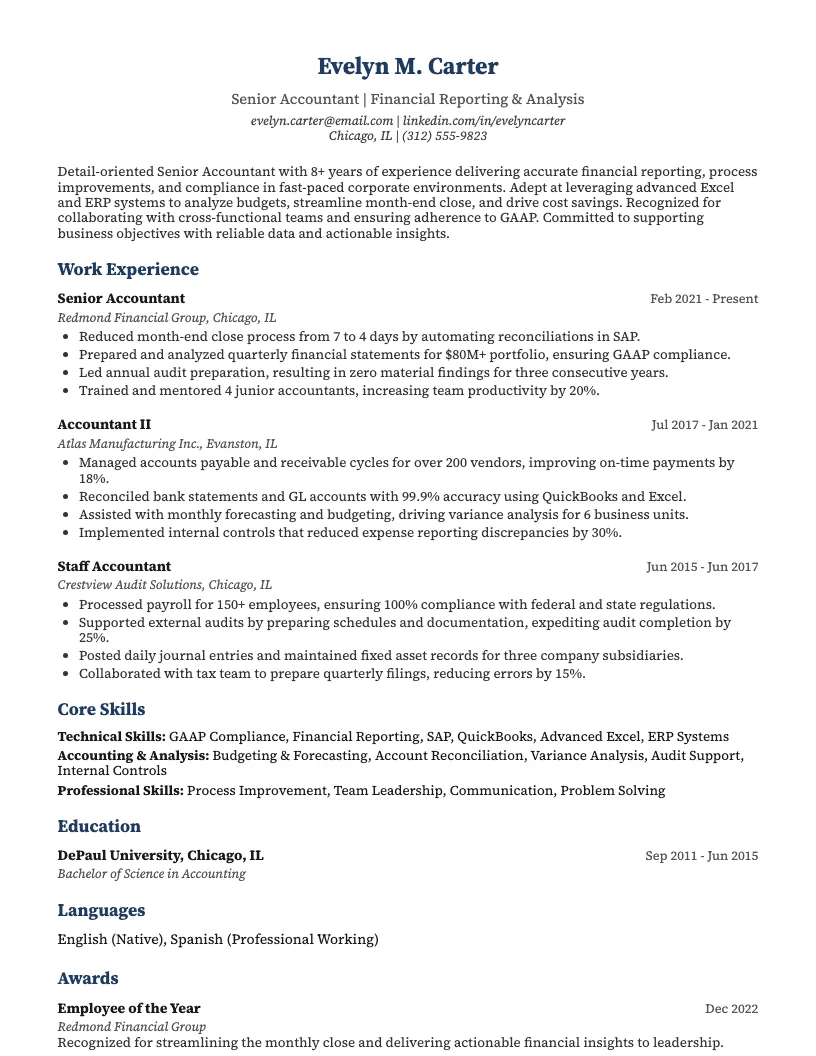
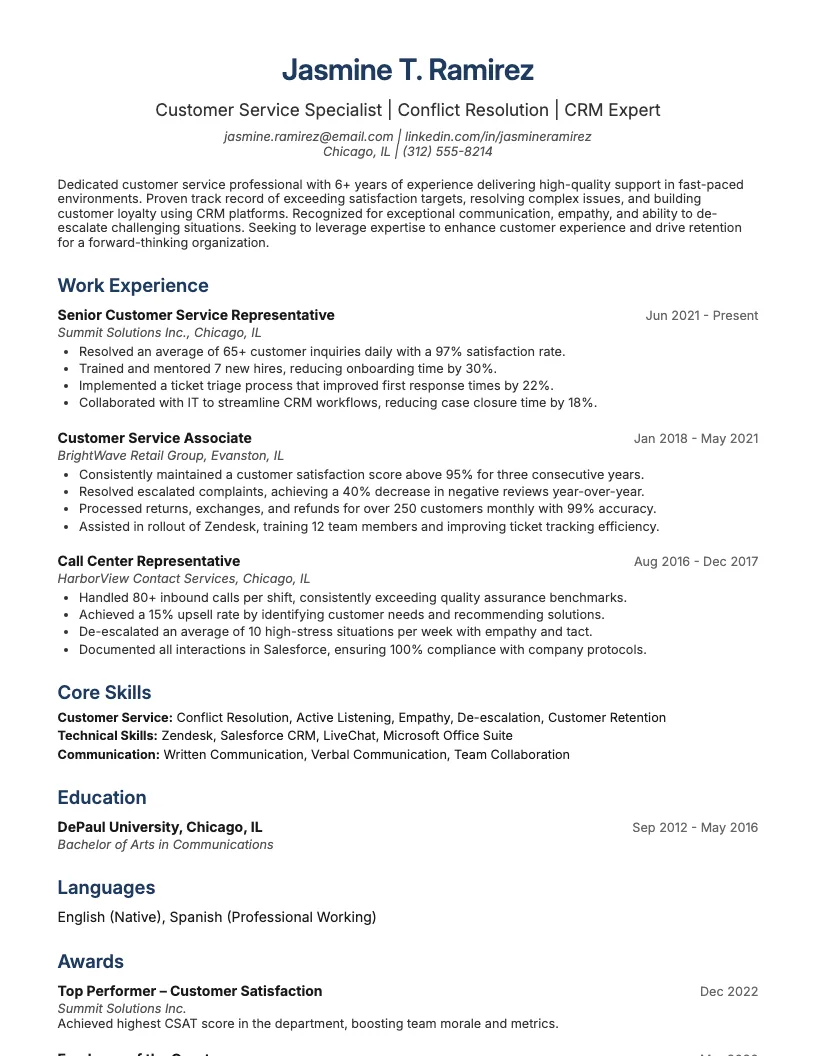
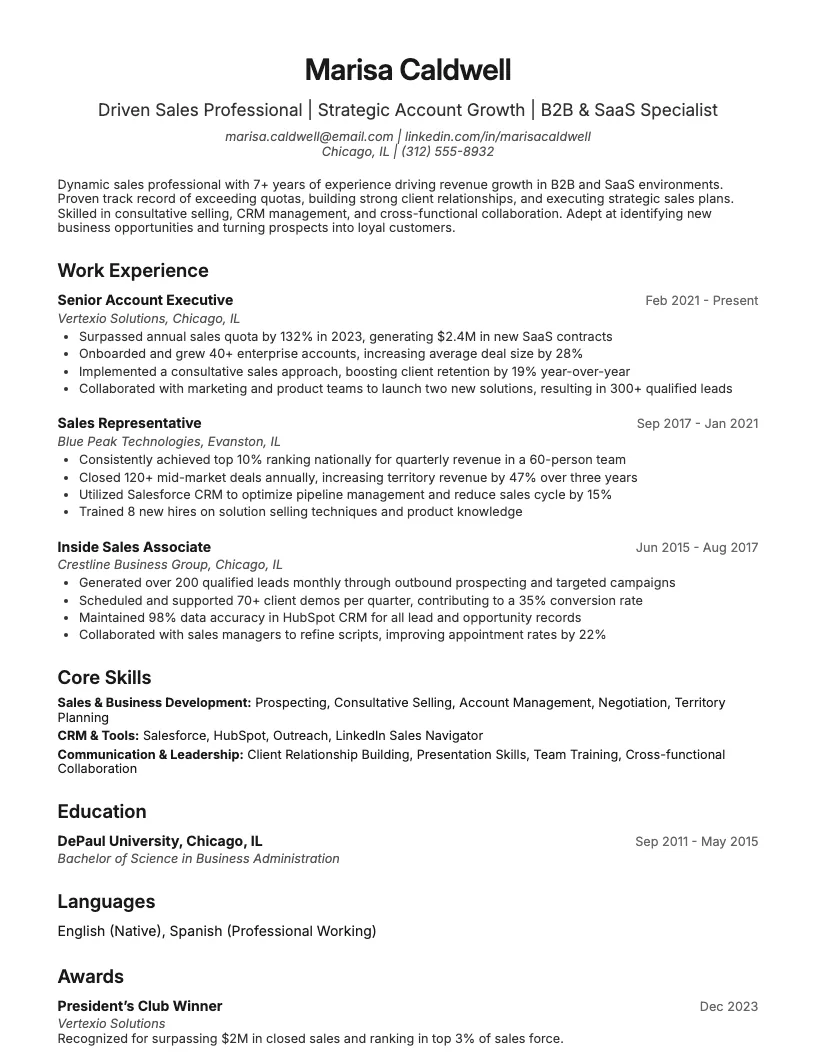
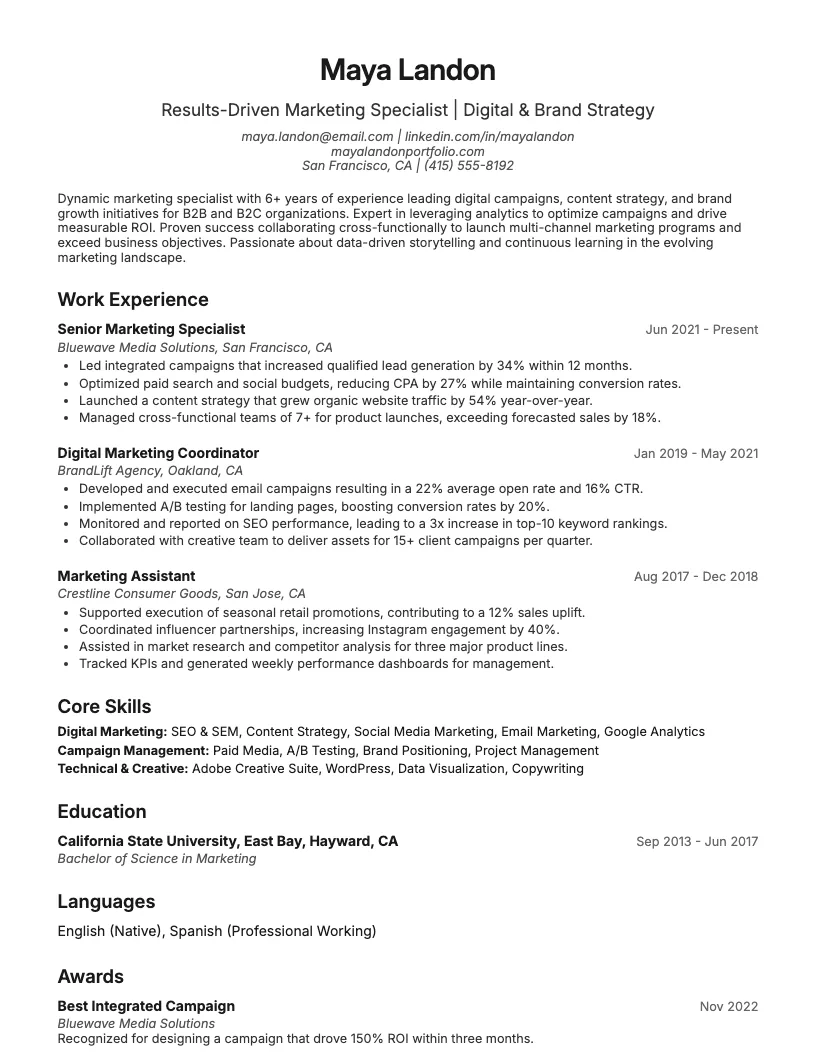
I always stick with a reverse-chronological format for entry-level roles. Recruiters prefer this because it showcases your most recent experience first-super easy for them to scan.
Make sure your contact info is at the top in a clear header. I throw in my LinkedIn or portfolio link if it’s relevant-sometimes, that little extra helps.
Keep your resume layout clean, simple, and under two pages. Avoid fancy graphics or columns. This helps Applicant Tracking Systems (ATS) read your info without trouble.
Save your file as a PDF, unless the job posting asks otherwise. This keeps your format intact, so nothing gets lost or jumbled during upload.
Even at the entry level, you can show impact. Use numbers-like 20% faster query times or 3,000+ records managed-to highlight what you achieved in internships or projects.
I always pull examples from coursework, part-time jobs, or volunteer gigs. For instance, automating reports or supporting 50+ users proves hands-on experience and real results.
Don’t just list tasks. Show how you made things better with data accuracy improvements, reduced errors by 15%, or helped teams work faster. This helps your resume stand out.
Most entry-level DBA jobs want at least a bachelor’s in computer science or a related field. I always put my degree, major, school name, and graduation year front and center.
If you’ve got certifications, list them in their own section. Microsoft, Oracle, AWS, and IBM all offer entry-level database certifications-these stand out to recruiters and help you get noticed.
Sometimes I also add relevant coursework or academic projects. This shows I’ve got hands-on skills, especially if I’m light on real-world experience.
You want hiring managers to quickly spot your technical chops and soft skills. I always use a bulleted list to keep things easy to scan.
Highlight skills like SQL, Oracle, MS SQL Server, and data backup. If you know tools like SSMS or Tableau, add those too. This shows you’re ready to hit the ground running.
Don’t stop at technical stuff-communication, problem-solving, and attention to detail matter a lot. List real examples if you used these in school projects or internships.
Wrap up with the most relevant proficiencies, and keep everything current. This helps your resume feel focused and tailored-exactly what recruiters love to see.
If you want to stand out as an entry level database administrator, you need a mix of technical and personal skills. Both matter a lot in this field.
Recruiters look for people who know their way around SQL, data management, and backup tools. But they also want team players who communicate well and solve problems fast.
Picking the right resume template matters if you want recruiters to focus on your skills. I always go for something clean and simple.
You don’t need flashy graphics or colors. Recruiters spend an average of six seconds on each resume, so clear fonts and organized sections help you stand out.
If you're curious about other paths in database management, you're in the right place. I see a lot of people comparing different roles before choosing a direction.
You might want to look at analyst, architect, or developer roles. Each of these jobs uses overlapping skills but offers a unique focus and growth path.
You can also check out resumes for junior engineers and Oracle specialists. Seeing real examples helps you figure out which skills and experiences are most in demand right now.
If you’re eyeing a role as a Database Analyst, your resume needs to show off skills in data modeling, SQL, and reporting. I always list my experience with tools like Excel, Power BI, or Tableau.
You want to talk about projects where you analyze data trends or help teams make decisions. Quantify your impact-like supporting a team to improve data accuracy by 25% or building reports for 100+ users.
There are lots of entry points here, even if you’re just starting out. Highlight internships, coursework, and any certifications like Microsoft’s DA-100. This helps your application and cover letter stand out.
If you’re aiming for a Database Developer job, your resume should highlight SQL, scripting, and experience with tools like SQL Server or MySQL. Employers want to see real project impact.
I always focus on quantifiable results. For example, mention reducing query time by 20% or automating data imports for five departments. This grabs attention right away.
Don’t just list skills—describe how you use them and consider including a cover letter to further highlight your abilities. There are often opportunities to show how you collaborate with analysts or improve application performance. This helps your resume stand out.
If you want to move beyond database admin tasks, database architect is a solid choice. I focus on designing, building, and optimizing databases from the ground up.
You need to show off skills like data modeling, system integration, and experience with tools like ERwin or Visio. Employers love seeing quantifiable results, like reducing query time by 30%.
Highlight your role in planning database infrastructure and collaborating with developers. This helps recruiters see you’re ready for big-picture projects, not just maintenance.
If you’re aiming for a Junior Database Engineer role, you want to show both tech skills and a problem-solving mindset. I always highlight SQL, Python, and basic data modeling.
Projects matter. List any internships, coursework, or personal projects where you optimized queries or supported data migrations. Recruiters like seeing real results, even if it’s just a 10% speed boost.
Don’t forget teamwork. In this field, junior engineers usually collaborate a lot-mention how you document processes or assist with automation scripts. This helps your resume stand out right away.
If you’re into enterprise-level databases, an Oracle Database Administrator role might be right for you. I focus on SQL tuning, backups, and user management every day.
Highlight Oracle certifications like OCA or OCP. Employers notice them. It helps to mention experience with tools like Oracle Data Pump and RMAN-these show you know real-world admin tasks.
Don’t forget to add problem-solving skills and examples of handling production outages. If you’ve managed databases with over 500 GB of data, call it out.
That wraps up the key database admin resume examples—don’t forget to pair your resume with a strong cover letter. Use these to help tailor your own application and land your next big tech role!
Browse Entry Level Database Administrator resume examples for related roles. Preview any example, open it in the builder, or read its full guide.
Click to enlarge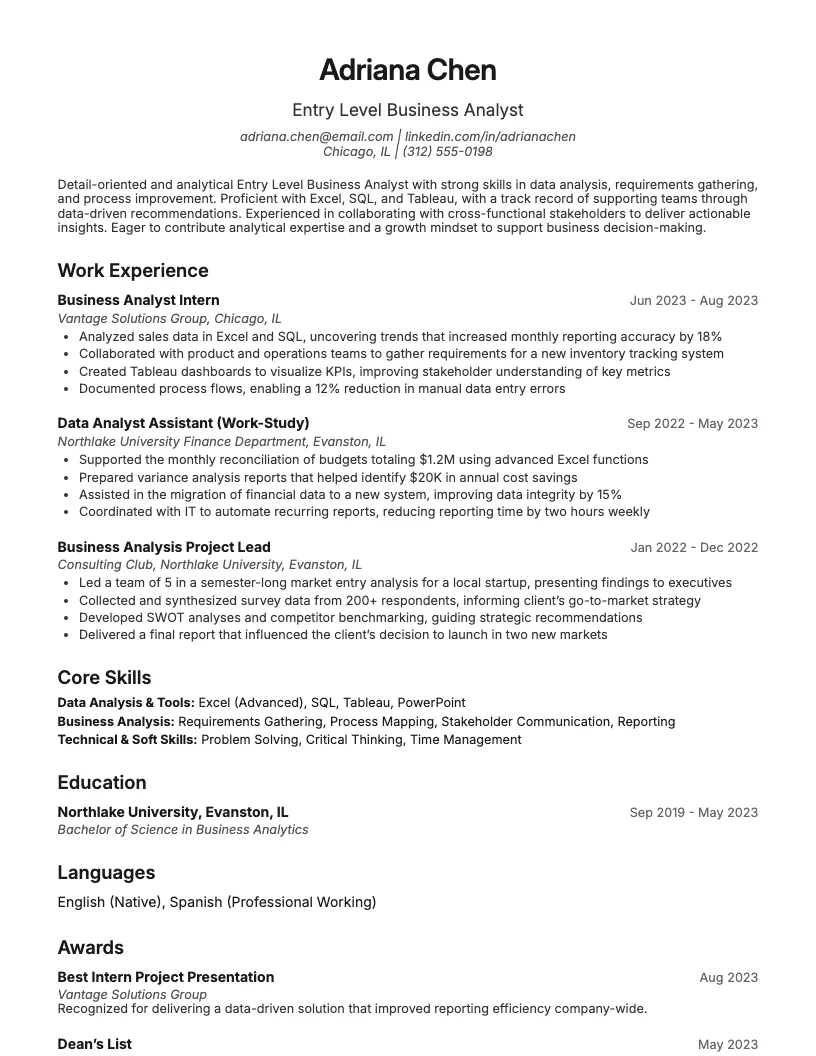 Click to enlarge
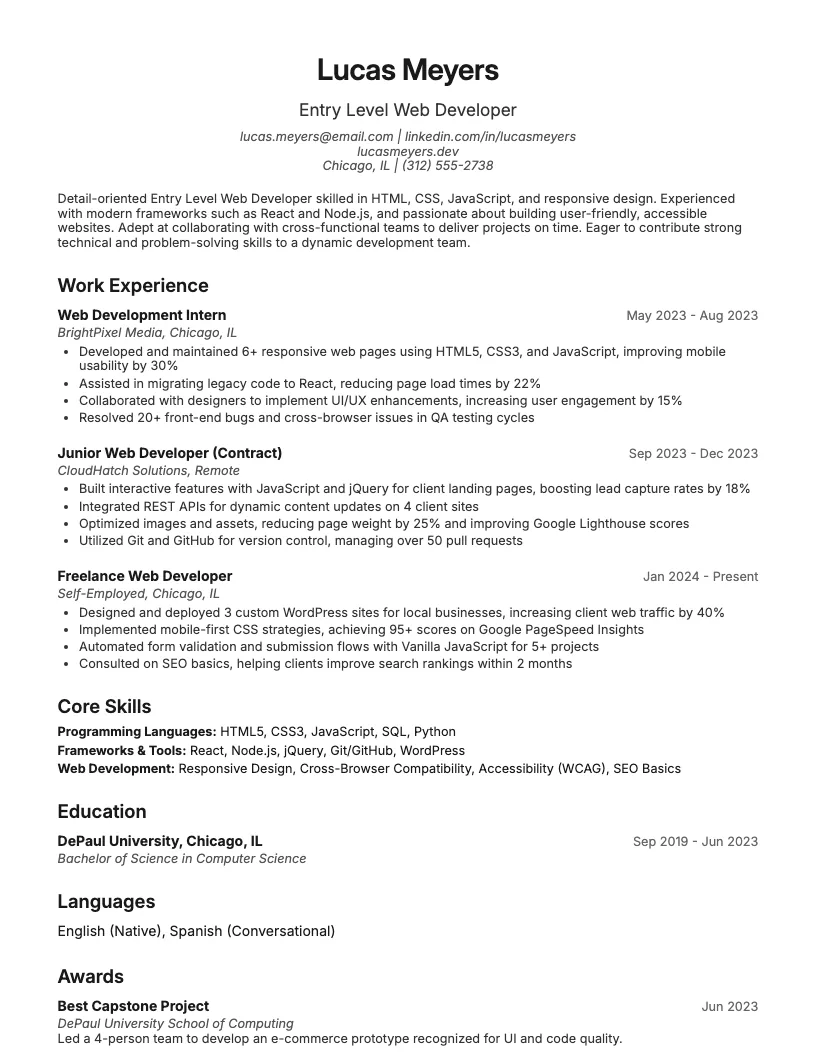 Click to enlarge
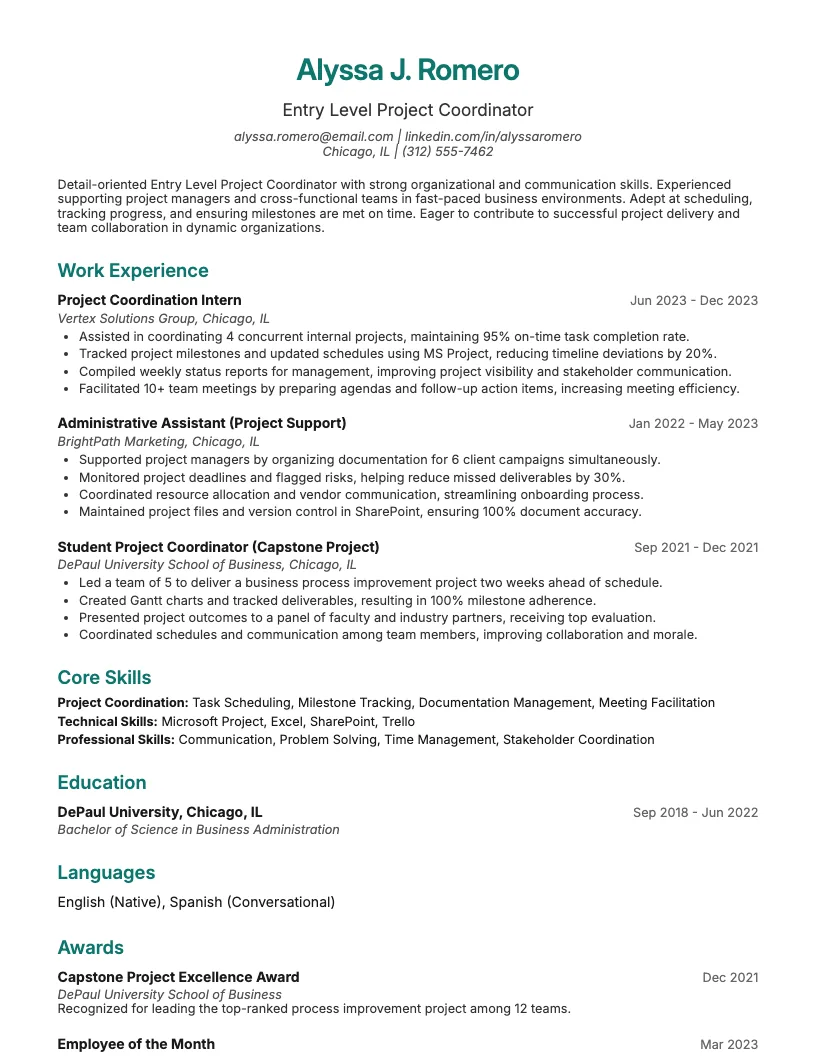 Click to enlarge
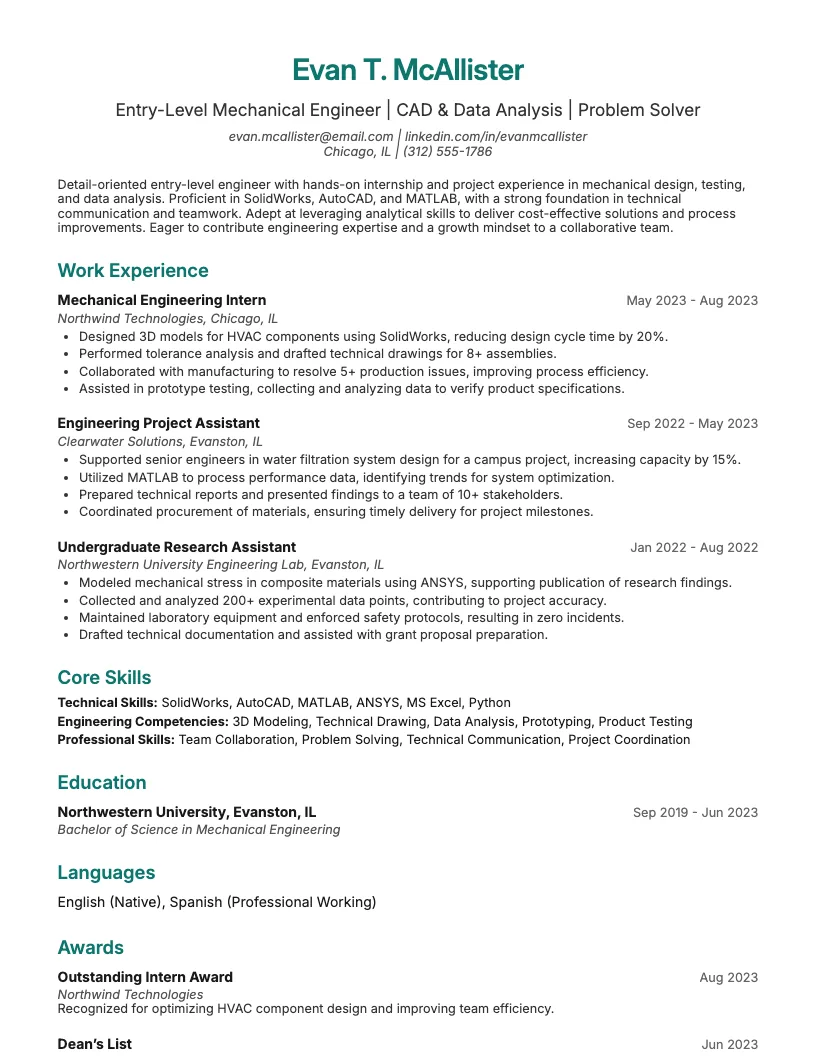 Click to enlarge
 Click to enlarge
 Click to enlarge
 Click to enlarge
 Click to enlarge
Common questions about Entry Level Database Administrator resumes
An Entry Level Database Administrator resume template is a pre-designed layout that highlights relevant skills, education, and projects for those starting in database administration. ResumeJudge makes it easy to showcase your strengths clearly.
Yes, ResumeJudge templates are ATS-friendly, ensuring your resume passes automated screening systems used by tech, healthcare, and finance industries. This boosts your chances of getting noticed.
Use this template when applying for junior database roles in IT, finance, healthcare, or education. It's perfect for those with little experience looking to break into database administration.
Absolutely! ResumeJudge lets you personalize templates by adding your skills, certifications, and achievements to match job requirements in any industry.
This template emphasizes foundational database skills, certifications, and academic projects, unlike general templates. ResumeJudge tailors each section for entry-level database roles.
Keep your resume to one page, focusing on relevant skills, coursework, and internships. ResumeJudge helps you organize everything concisely for maximum impact.
Showcase skills like SQL, data analysis, backup procedures, and familiarity with database systems. ResumeJudge templates guide you on including these effectively.
Yes! List certifications like Microsoft SQL Server or Oracle Database. ResumeJudge templates have dedicated sections for certifications to help you stand out.
Definitely. Including relevant school or personal database projects demonstrates practical experience. ResumeJudge makes it easy to feature these projects.
A cover letter helps explain your motivation and education. ResumeJudge offers tools to build a tailored cover letter, making your application more compelling.
Explore more professional resume examples to inspire your job search
Use our AI-powered resume builder to create a professional, ATS-friendly resume in minutes.
Free to use • No credit card required