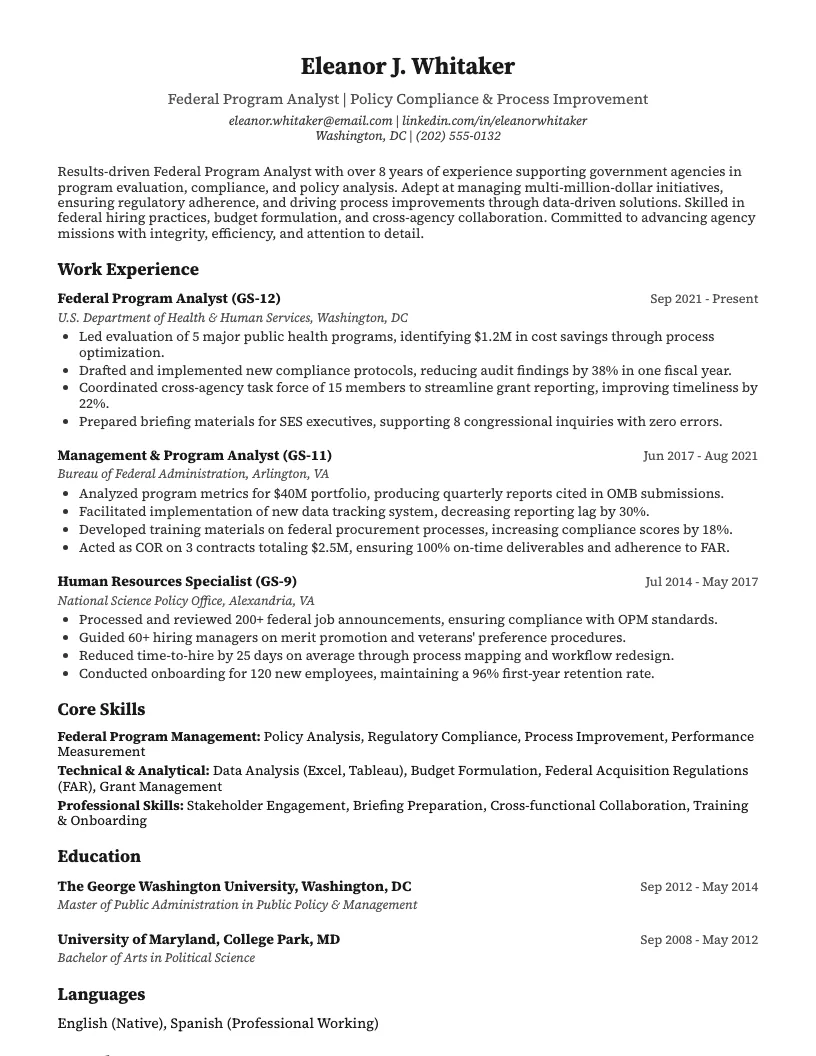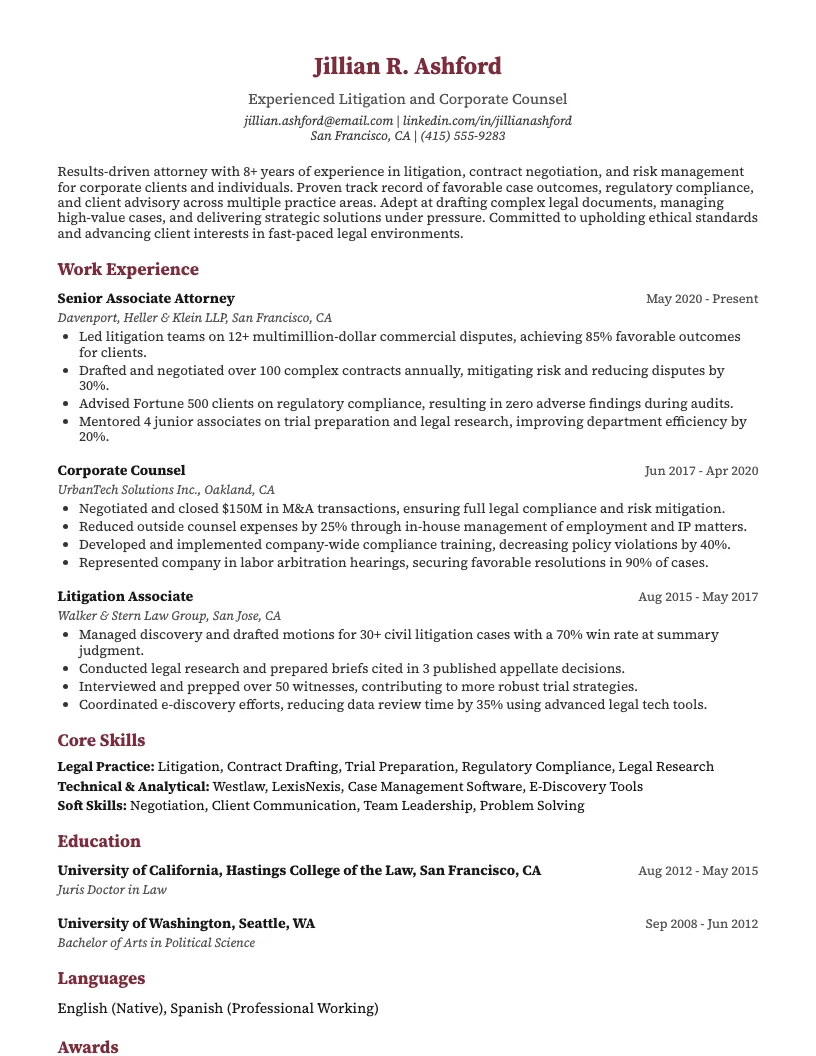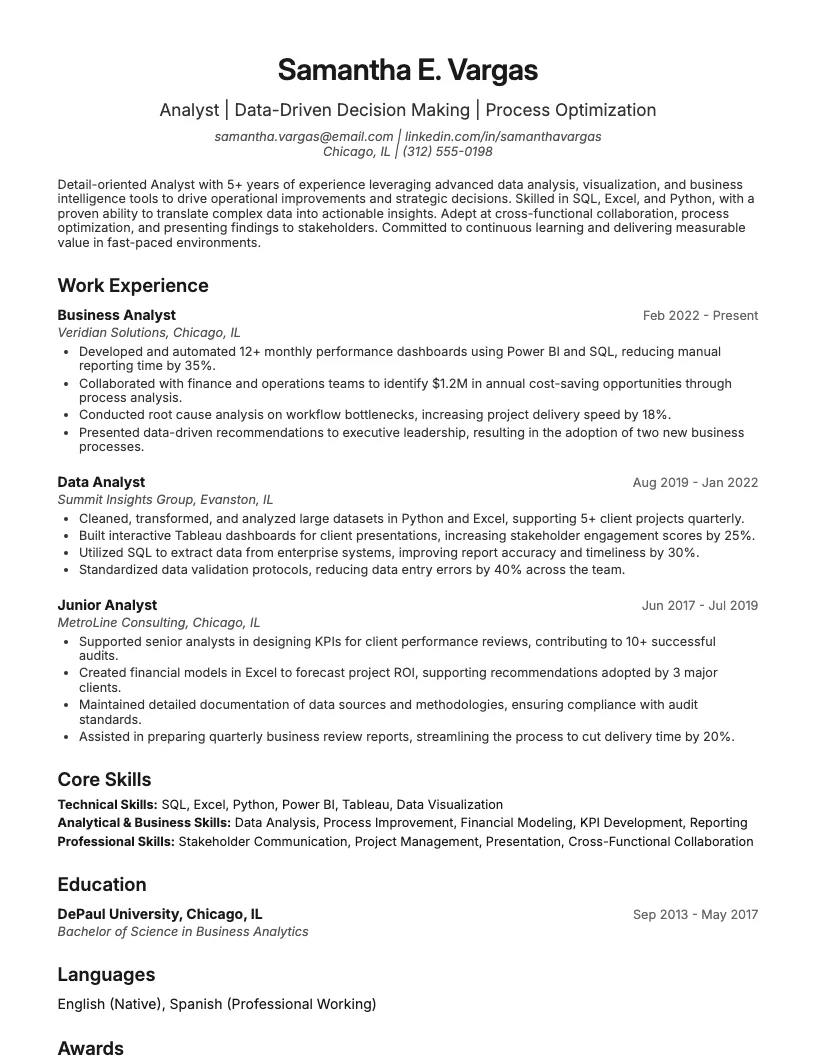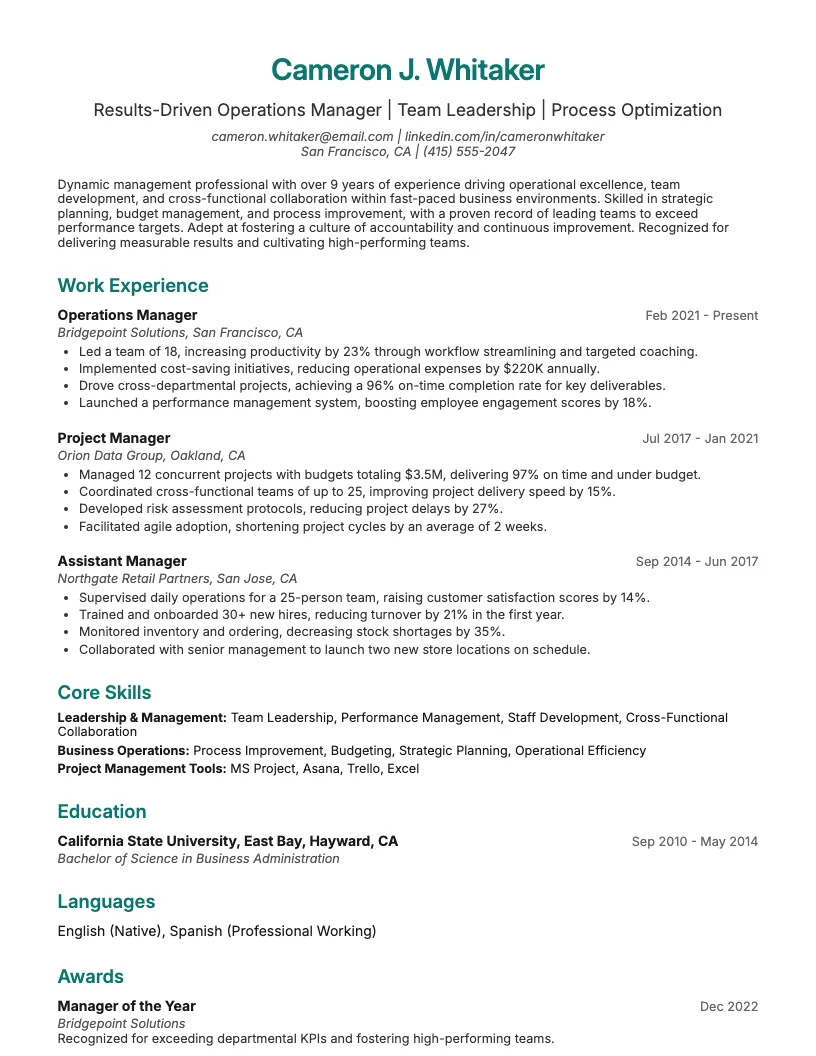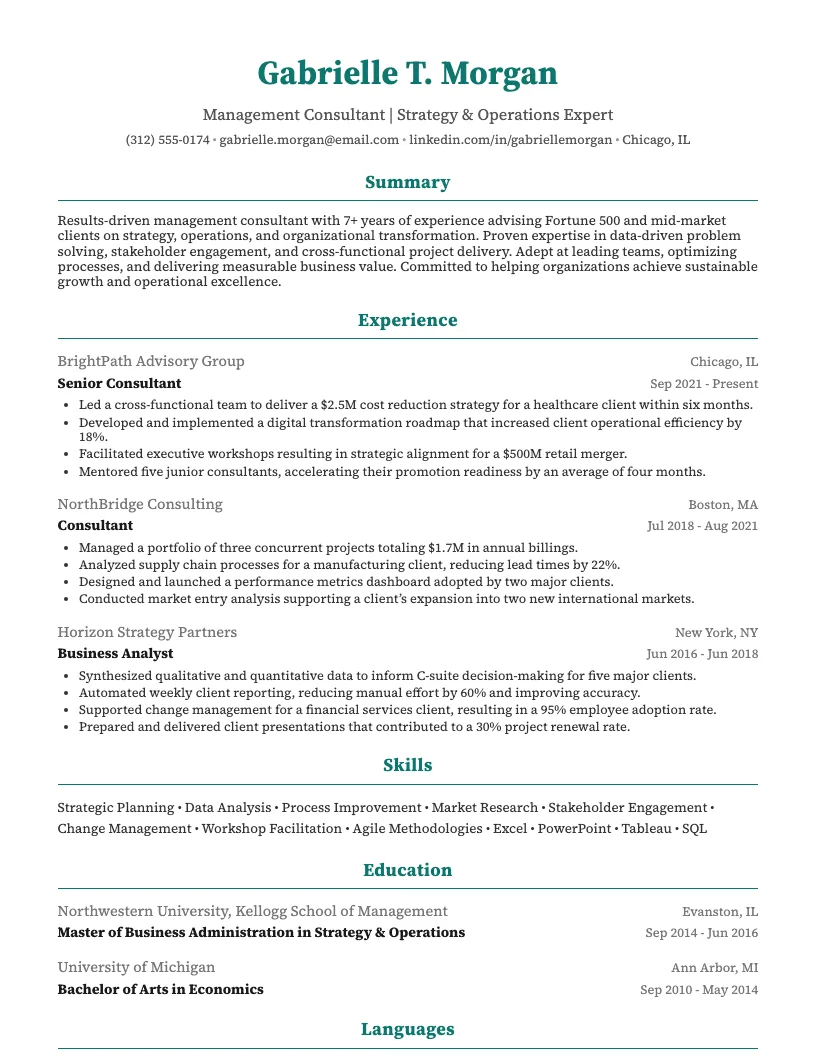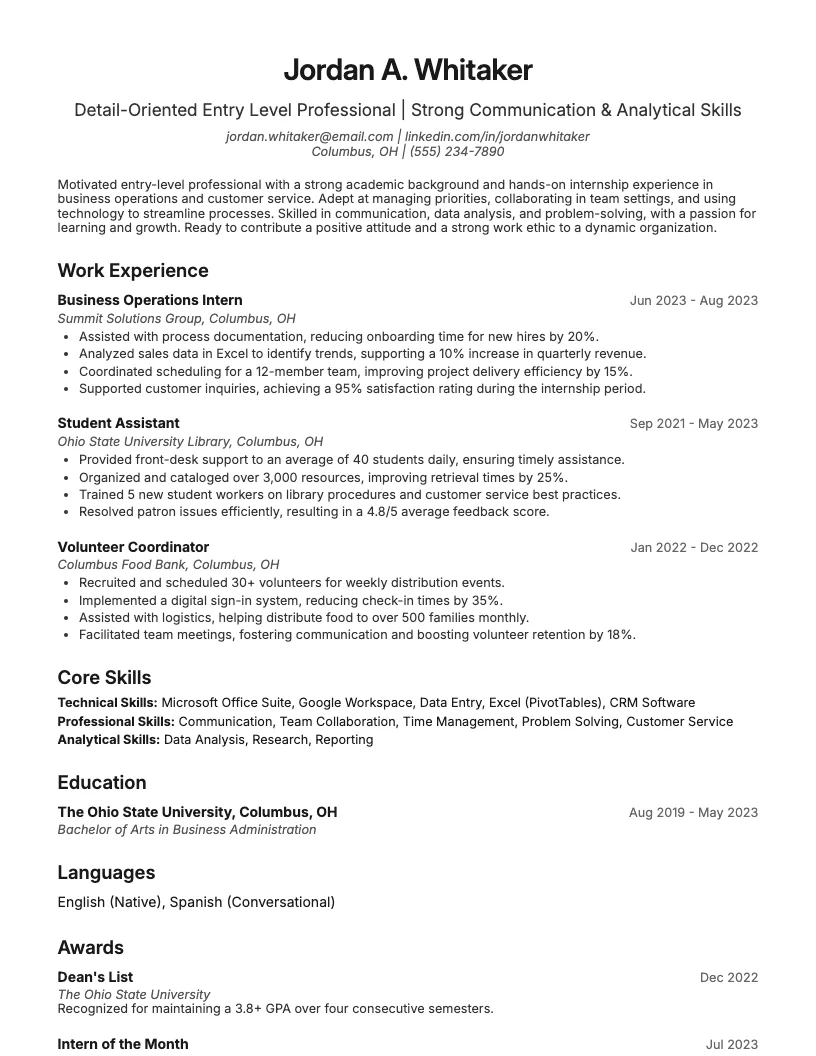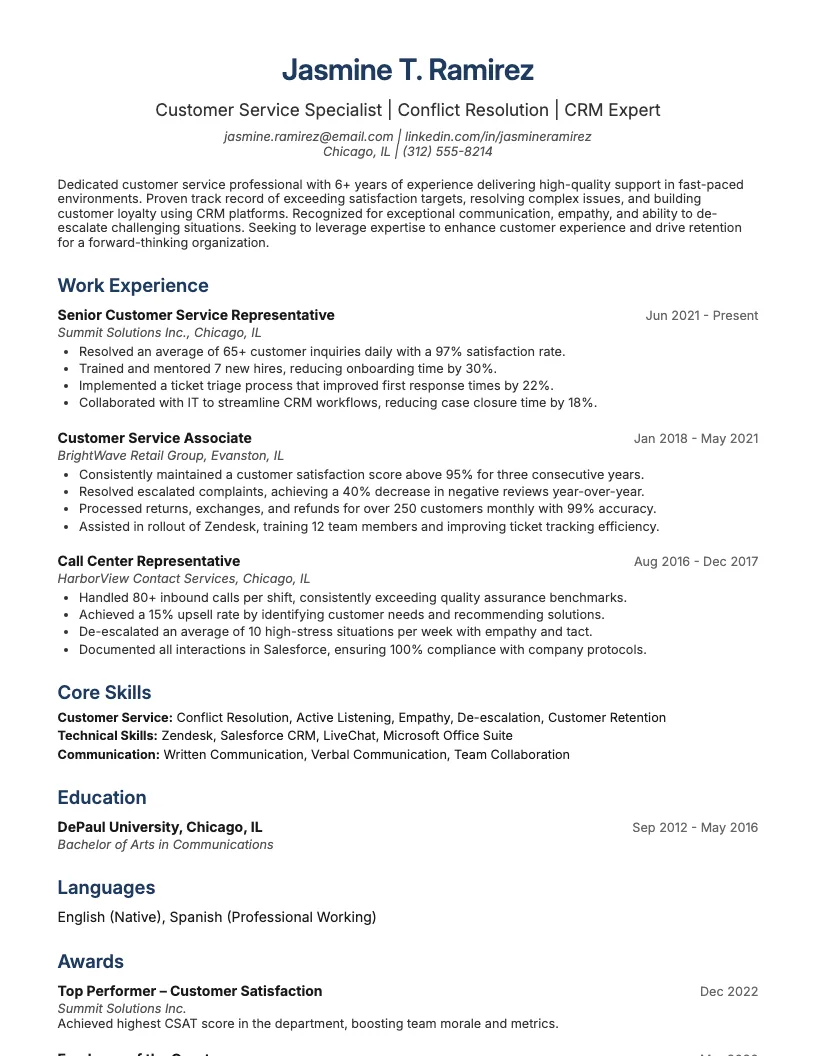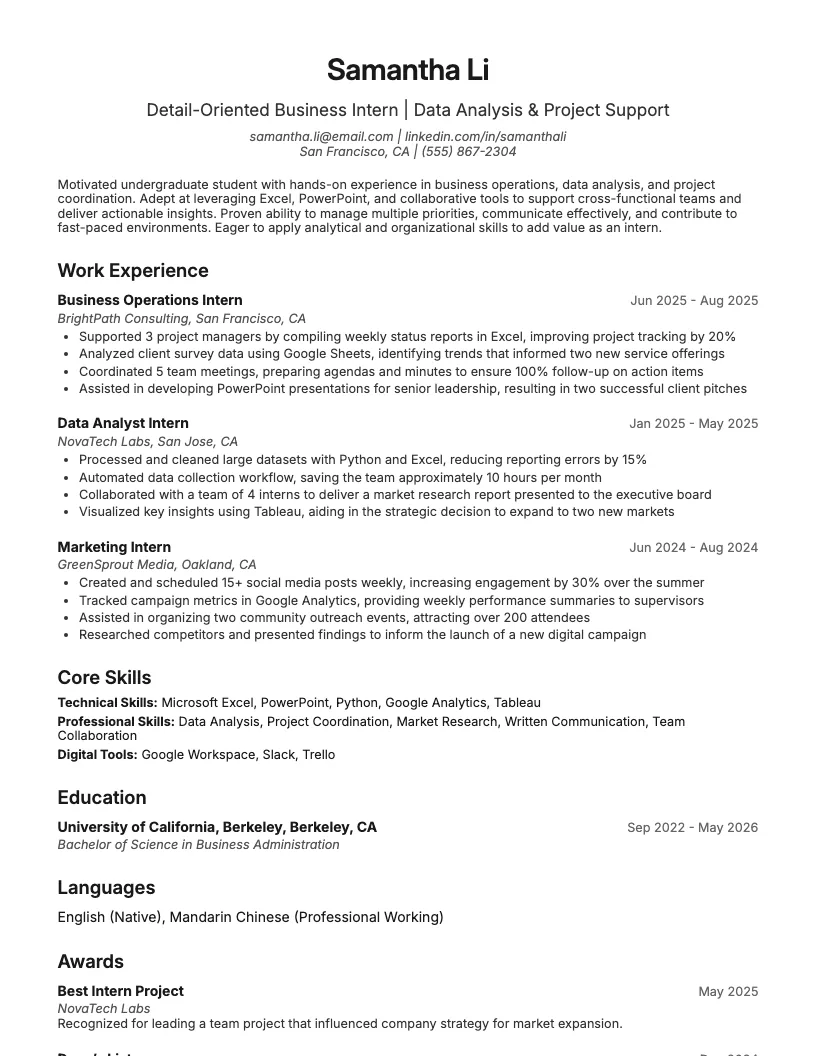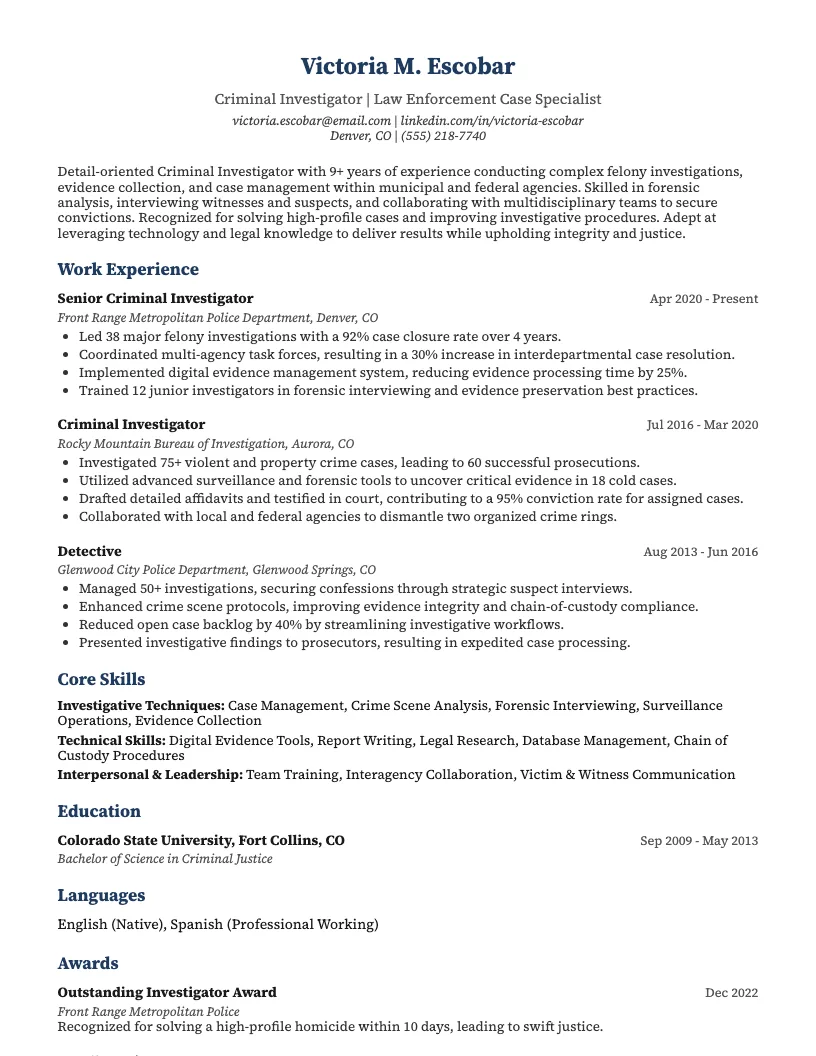
Detective Resume Example
See full guide on Detective resumes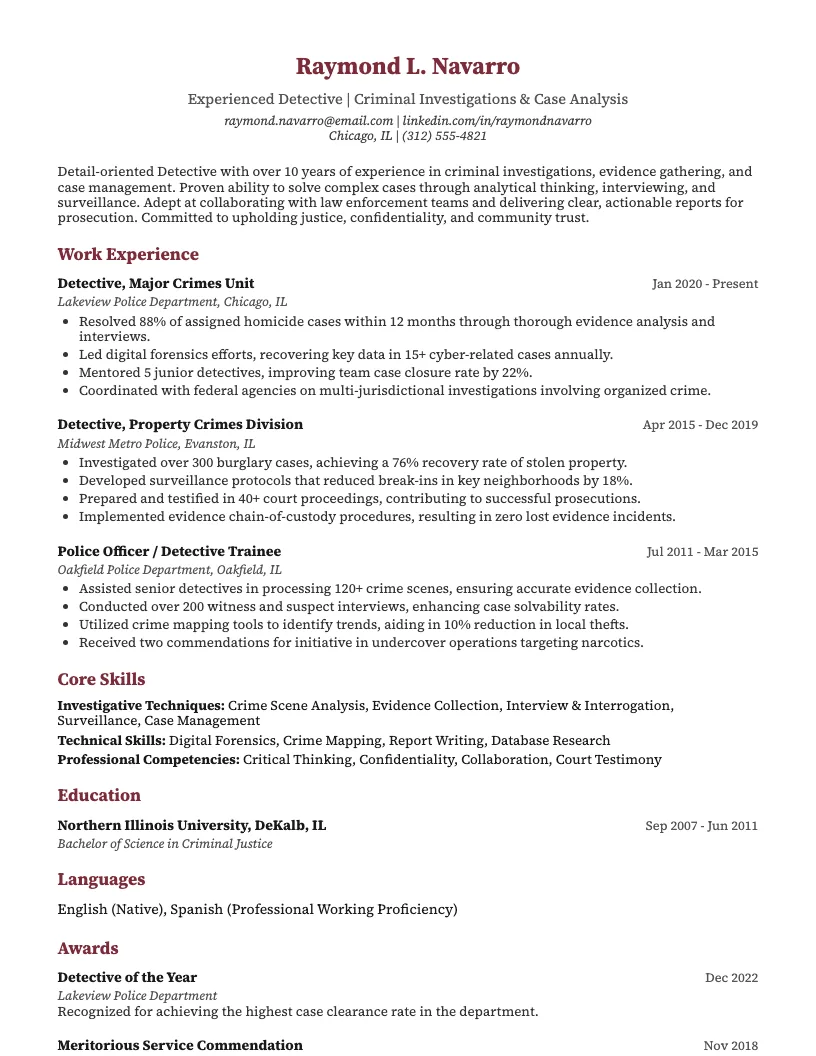 Click to enlarge
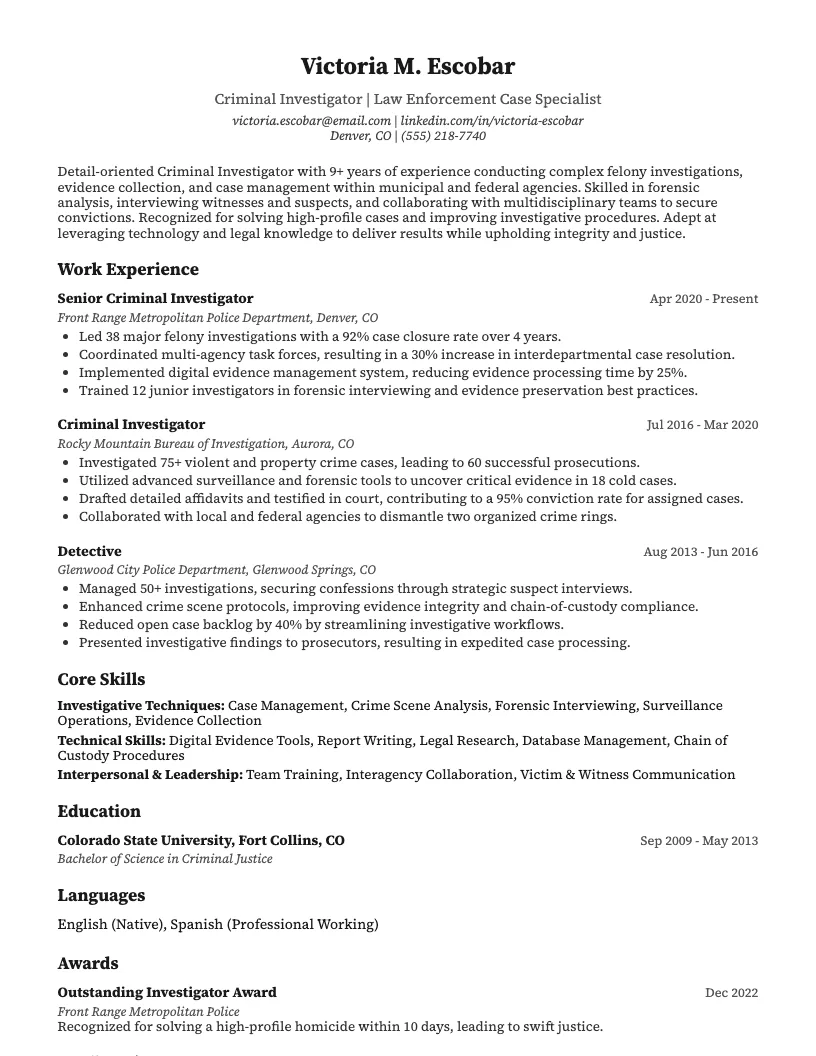 Click to preview

Get inspired by 50+ professional Criminal Investigator resume examples, each written by career experts and optimized to pass ATS scans. Pick a proven template, tailor it to your role, and download a polished resume in minutes.
Pick the specialization closest to your target role and start from a proven resume example.

Getting your criminal investigator resume structure right can make a real difference. Recruiters go through hundreds of resumes, so you want yours to be clear and easy to scan.
You don’t need to overcomplicate things. Stick to a focused format that puts your experience and skills front and center. Most hiring managers spend less than 10 seconds on a first read.
The right sections, order, and layout help you highlight what matters most. Let’s break down which parts to include and what recruiters actually look for.
Your resume needs some core sections to make a real impact. I always start with a clear header-name, contact, and location. This makes your resume instantly scannable.
Next, I add a summary or objective-just a few lines that show what you bring to the table. This helps recruiters quickly see your value.
It’s smart to dedicate space for skills. Use keywords from the job posting and focus on investigative techniques, legal knowledge, or software expertise.
For experience, stick with bullet points and quantify your work. If you solved 30+ cases or improved clearance rates, say so. Numbers always stand out.
Don’t forget an education section. Add any certifications, like Certified Criminal Investigator or relevant degrees, right after your work history. This rounds out your profile.
Recruiters want to see analytical skills front and center. They look for clear examples of problem-solving, like breaking down complex cases or handling evidence.
You should highlight sector-specific experience. Investigators with backgrounds in law enforcement, insurance, or corporate settings usually stand out more. Tailoring your resume makes a big difference.
Show off your tech skills. Recruiters like candidates who use surveillance tools, forensic software, and databases. Mention any certifications or recent tools you know.
Strong communication is a must. You need to show that you write detailed reports and can testify clearly in court. This helps recruiters trust you with high-stakes investigations.
Focus on these points and you'll give your resume the structure recruiters look for. It’s all about matching your real experience to the job requirements.
The experience section is where you show what you actually do as a criminal investigator. It’s all about your daily responsibilities, big wins, and how you solve problems.
If you want your resume to stand out, focus on real results. Use numbers, like cases closed or evidence collected, to back up your achievements.
Next, I’ll talk about how to show your impact, pick strong action verbs, and give tips for entry-level investigators.
When I write my experience section, I focus on numbers. How many cases do I close? How much financial loss do I recover? These details show real results.
You can include percentages to highlight improvements. For example, a 20% drop in incident recurrence after your investigations helps recruiters see your impact.
There are other ways to show value too-like the number of reports you write or the size of the teams you work with. This helps your resume stand out.
Action verbs like investigated, analyzed, and interviewed give your experience section more punch. These words show exactly what I do, not just what I’m responsible for.
I like to use verbs such as uncovered, collaborated, documented, and led when describing specific achievements. This helps recruiters picture my impact right away.
Switching up your verbs keeps things fresh. Try evaluated, coordinated, or testified if those fit. Strong verbs help your experience feel active and results-driven.
If you’re just starting out, focus on transferable skills like research, attention to detail, or teamwork. Employers notice these, especially when you highlight them in your experience section.
Showcase relevant coursework, certifications, or volunteer work. I always add projects or internships where I’ve used analytical skills-even if it’s not from law enforcement.
Tailor your resume to each job ad. Pull keywords straight from the listing and work them into your experience bullets. This helps automated systems flag your application.
Hiring managers look for a strong mix of technical and people skills in criminal investigators. You need to show both on your resume.
You want to highlight your experience with investigations, evidence handling, and communication. Balancing hard and soft skills helps you stand out in a competitive field.
Certifications and education play a big role in a criminal investigator’s resume. Employers often look for proof that you have the right background and up-to-date skills.
You want to show which degrees or certificates you’ve earned, and where you got them. List them clearly, so recruiters can see your commitment to the field right away.
Recent certifications stand out. They show you’re serious about learning new methods and tools. Next, I’ll break down the top certifications that help your resume shine.
I see a lot of hiring managers look for certifications like the Professional Certified Investigator (PCI) from ASIS International or the Certified Fraud Examiner (CFE) credential, and a cover letter can help you showcase these credentials effectively.
If you want to boost your resume, you might also check out the Certified Criminal Investigator (CCI) and the Certified Legal Investigator (CLI). These show real dedication.
You don’t need every certificate, but having one or two from respected organizations really helps. Over 60% of top investigators list at least one of these on their resume.
Your resume summary or objective is the first thing hiring managers read. It needs to grab attention fast and highlight why you fit the criminal investigator role.
I recommend keeping this section to five sentences or less. Focus on your skills, experience, and goals that match the job description.
A good summary or objective shows where you are in your career and what you bring to the table. It also hints at your professional personality.
Next, I’ll show you some real examples so you can see what works best for criminal investigator resumes.
Your resume summary should show real results. For example, “I recover $2 million in stolen assets and close 95% of my cases.” Numbers instantly grab attention.
If you lead high-profile investigations, say so. “I supervise multi-agency teams and resolve complex homicide cases.” This highlights leadership and specialized skills employers want.
You can also mention your areas of expertise. “I focus on digital forensics and cybercrime, with eight years of hands-on experience.” This helps recruiters see your unique value right away.
If you’re eyeing a job as a criminal investigator, local salary ranges matter a lot. Pay changes depending on where you work.
Some states offer higher average salaries than others. I’ll break down the numbers by state so you know what to expect.
You want your criminal investigator resume to stand out. Adding extra sections can show more about your skills, interests, and personality.
I see recruiters pay attention to things like languages, hobbies, and certifications. These details can give you an edge over other candidates.
Including relevant extras helps you show off your professionalism and dedication. The right section can highlight skills that don’t always fit into your work history or education.
Building a criminal investigator resume means you need to highlight your investigative skills, relevant experience, and any certifications you’ve picked up along the way.
You want each section-like your summary, experience, and education-to show how you solve cases, use technology, and stay current with industry standards.
Keep your resume focused and concise. Tailor every detail to the job you want, and back up your achievements with hard facts. This helps your skills stand out to employers.
I know it can feel overwhelming at first, but starting is the hardest part. Focus on what matters for the role-relevant skills, certifications, and measurable achievements.
You don’t need a flashy design. Stick with a clean, simple layout. Recruiters spend less than 7 seconds scanning each resume, so clarity is key.
Highlight any certifications-like a CFE or POST-since those add credibility fast. Make sure each section shows your growth and industry involvement.
Browse Criminal Investigator resume examples for related roles. Preview any example, open it in the builder, or read its full guide.
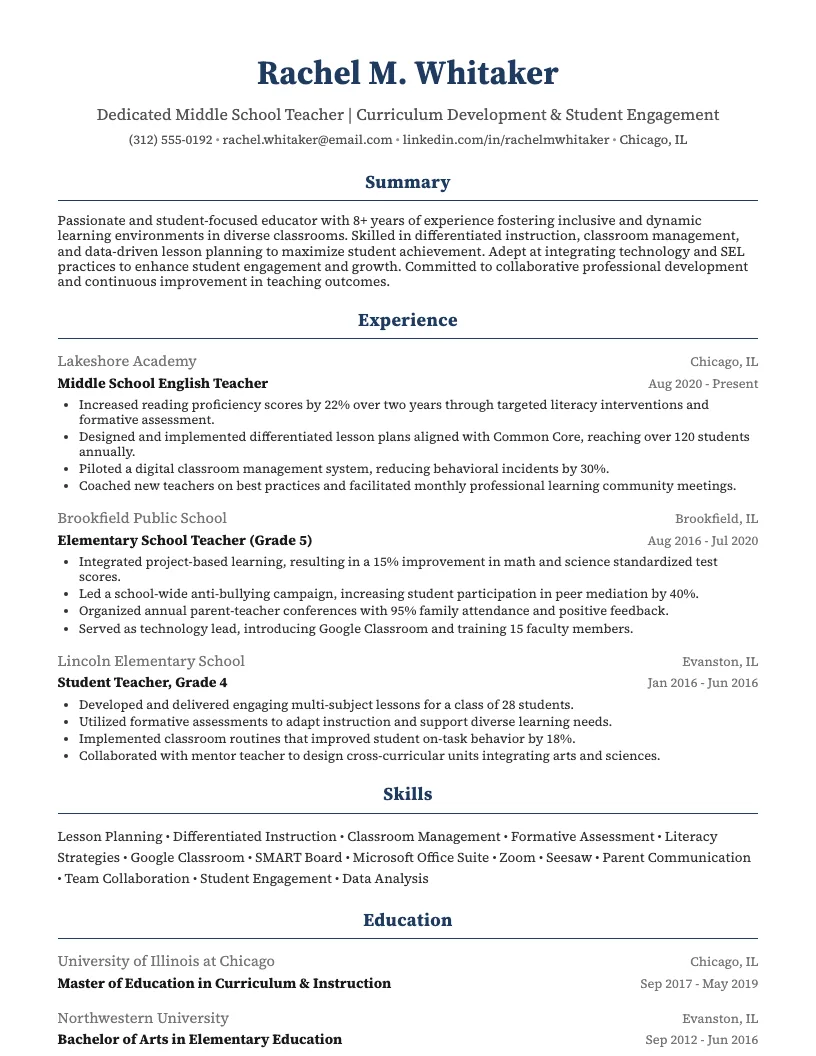
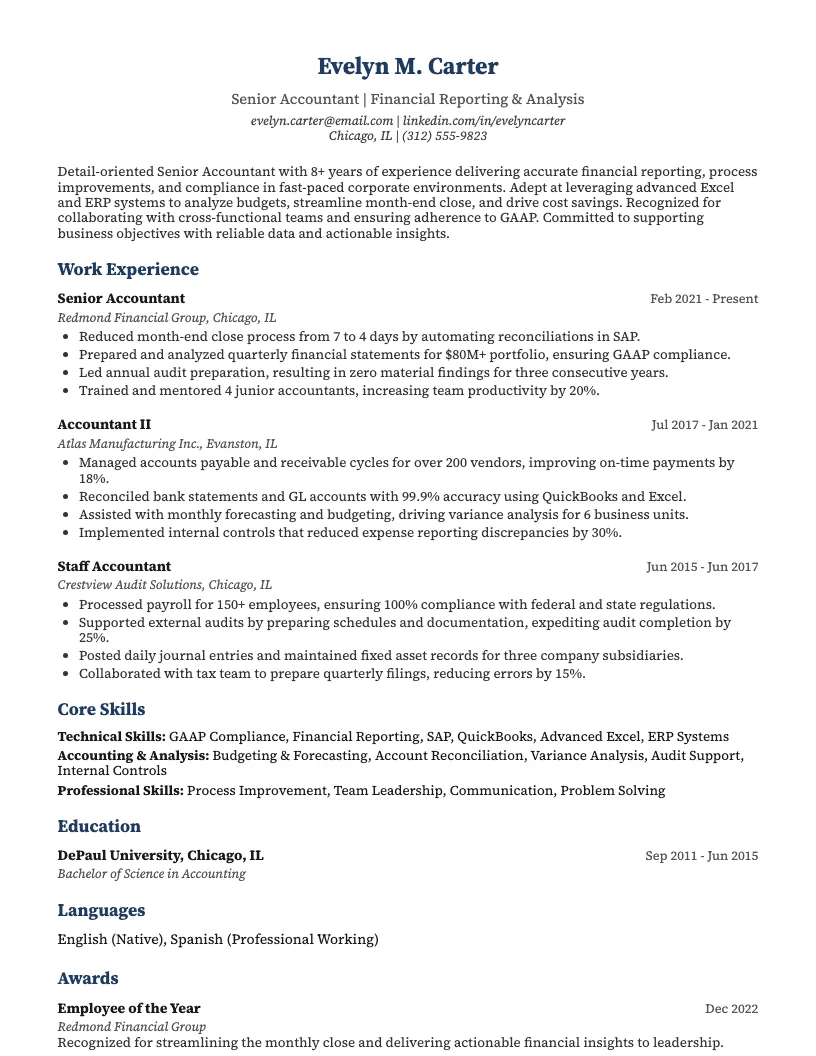
Click to enlarge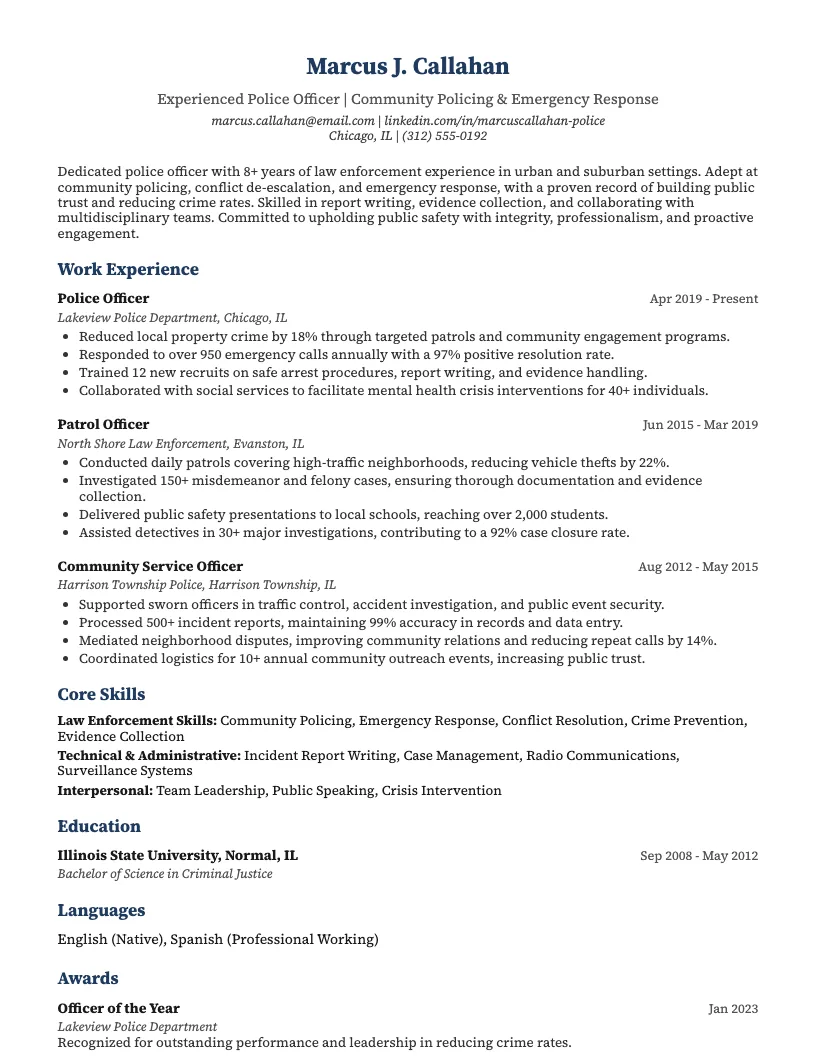 Click to enlarge
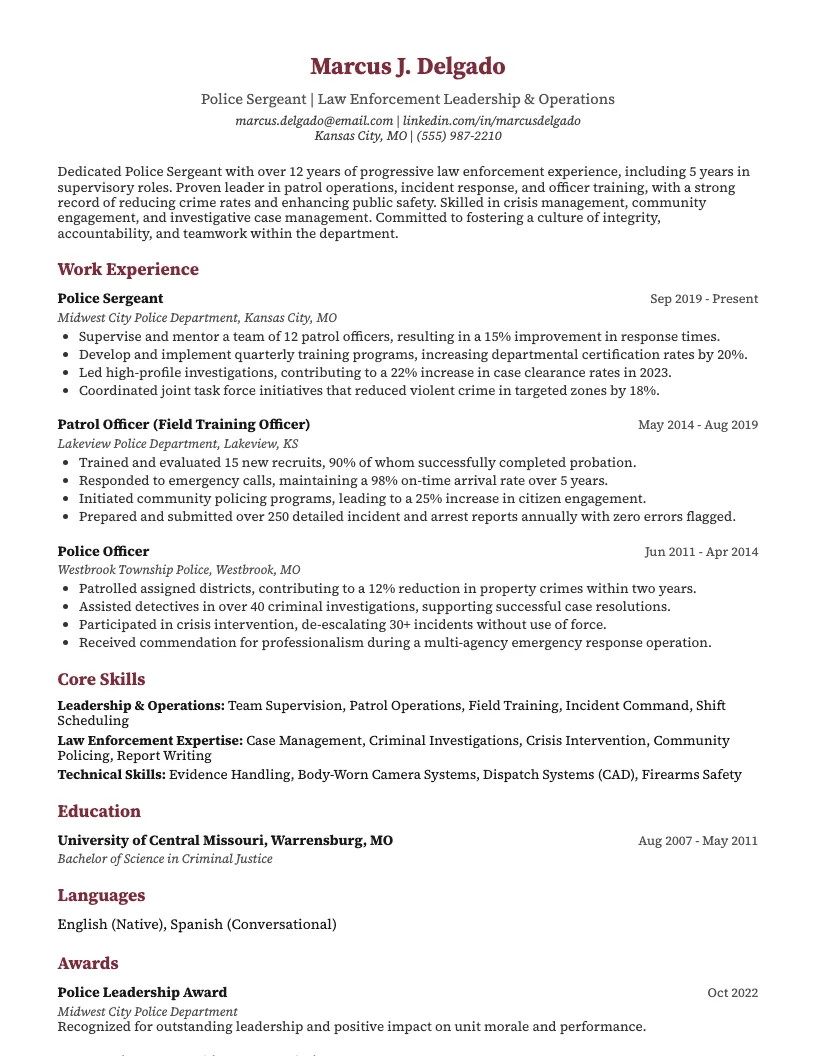 Click to enlarge
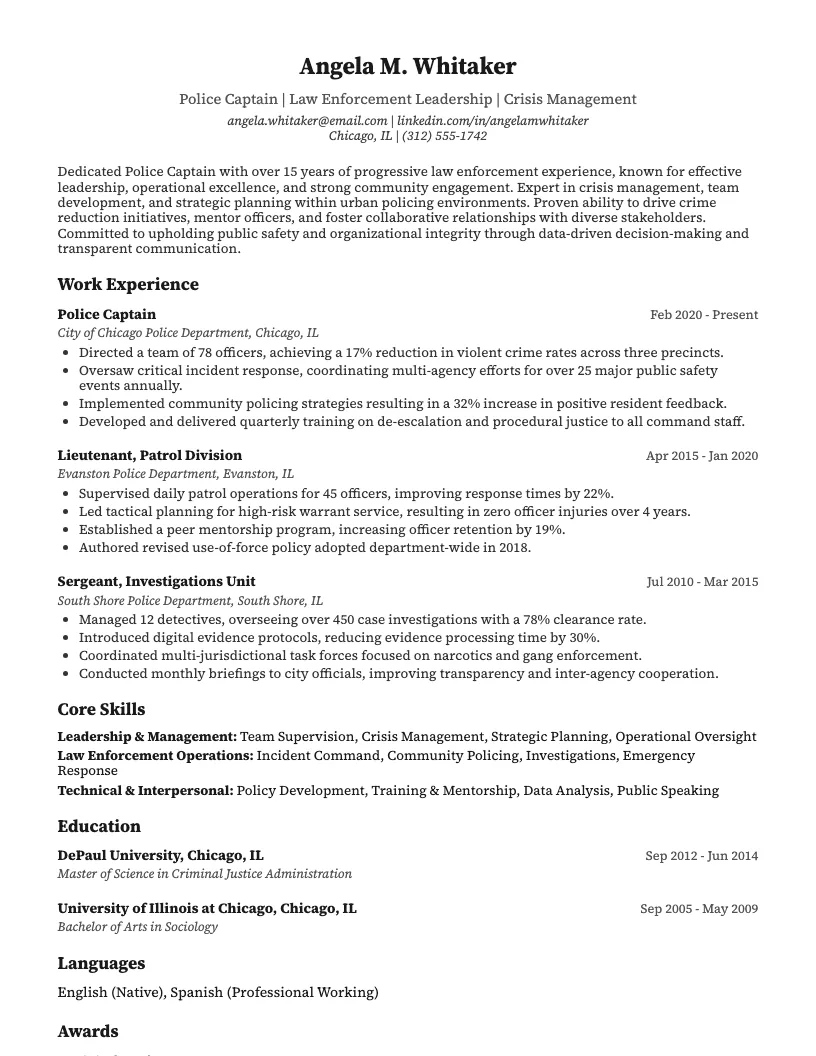 Click to enlarge
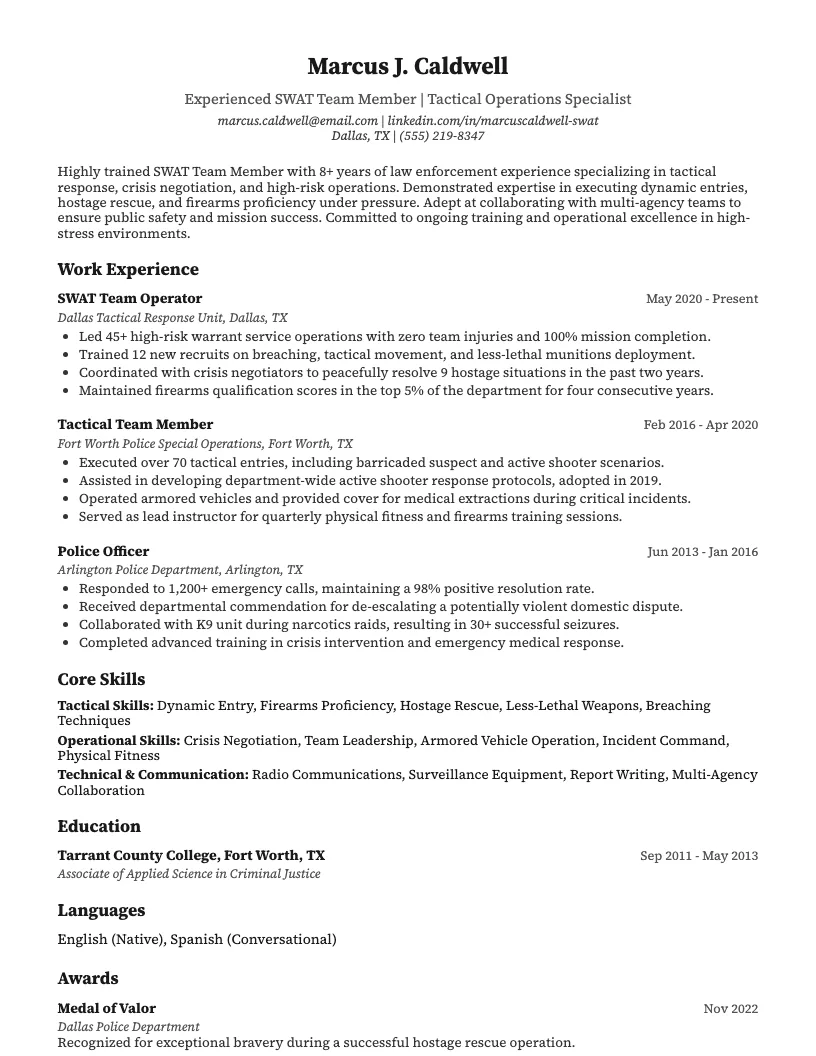 Click to enlarge
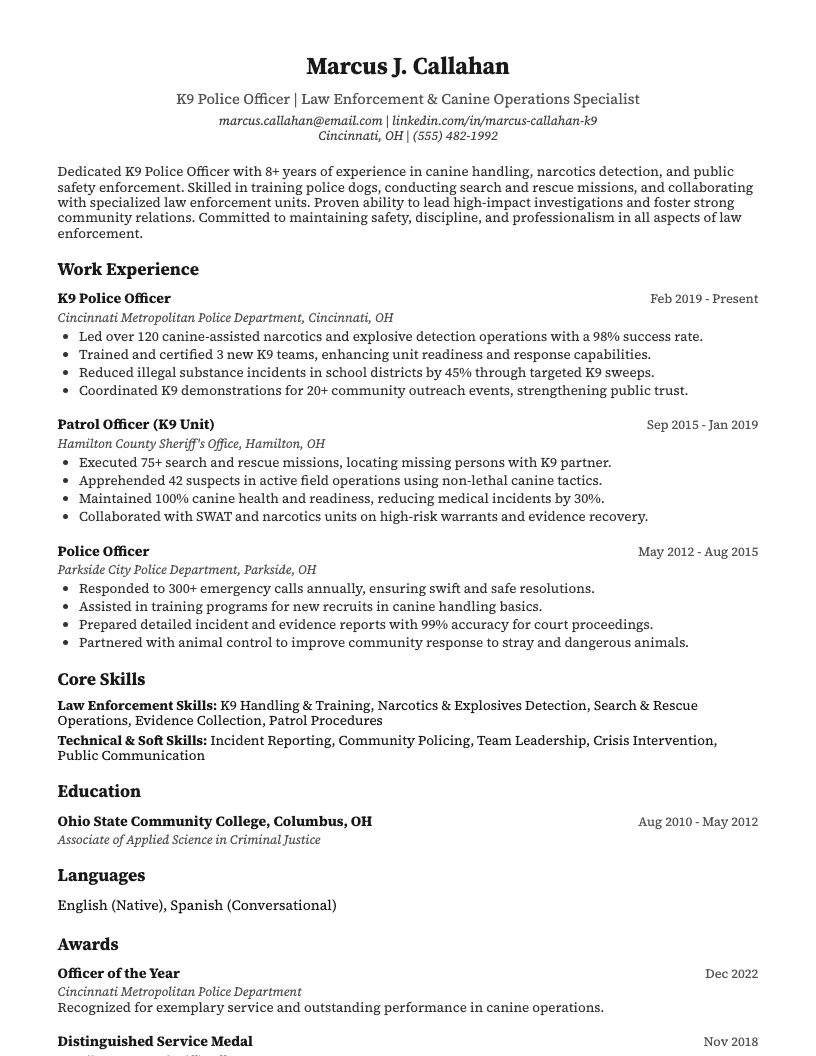 Click to enlarge
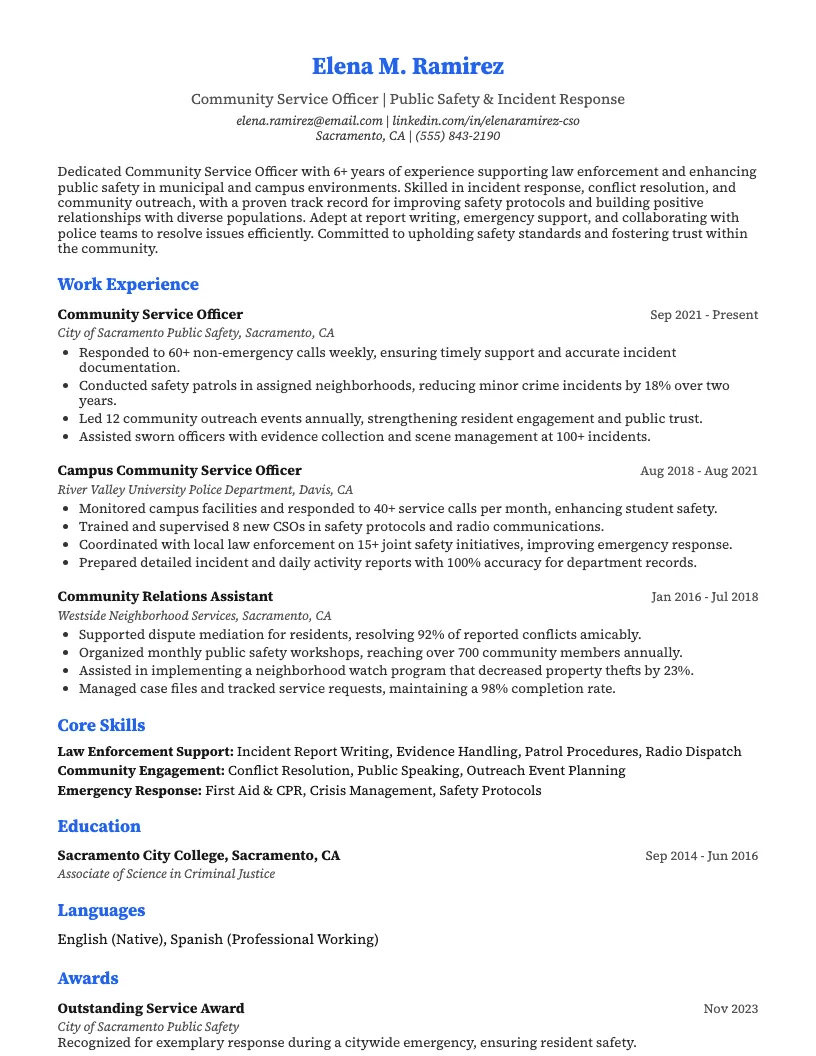 Click to enlarge
Common questions about Criminal Investigator resumes
A Criminal Investigator resume template is a pre-designed layout tailored to showcase skills, experience, and qualifications specific to law enforcement investigations. ResumeJudge makes it easy to highlight achievements relevant to this career.
Yes, most Criminal Investigator resume templates from ResumeJudge are ATS-friendly, ensuring your resume passes automated screenings used by police departments and federal agencies.
Use this template when applying for roles in law enforcement, government agencies, or private investigation. It's ideal for positions like police detective or federal investigator.
Absolutely! ResumeJudge lets you easily edit sections, adjust colors, and add or remove content to fit your unique background and the specific job requirements.
Criminal Investigator templates focus on investigative skills, casework, and law enforcement terminology, unlike generic templates. ResumeJudge ensures relevant sections are highlighted for this field.
Ideally, keep your resume to one or two pages. ResumeJudge’s templates help you organize information concisely, making it easy for hiring managers to review your qualifications.
Key sections are summary, skills, experience, education, and certifications. ResumeJudge templates include all these, plus optional areas for case highlights or awards.
Yes, you can easily add sections for certifications like forensic analysis or criminal justice training. ResumeJudge makes it simple to showcase your specialized credentials.
ResumeJudge templates work for both entry-level and seasoned investigators by offering flexible layouts to emphasize education, internships, or extensive case experience.
Absolutely! ResumeJudge’s templates include dedicated areas for key achievements, solved cases, and quantifiable results, helping you stand out in competitive law enforcement roles.
Explore more professional resume examples to inspire your job search
Use our AI-powered resume builder to create a professional, ATS-friendly resume in minutes.
Free to use • No credit card required