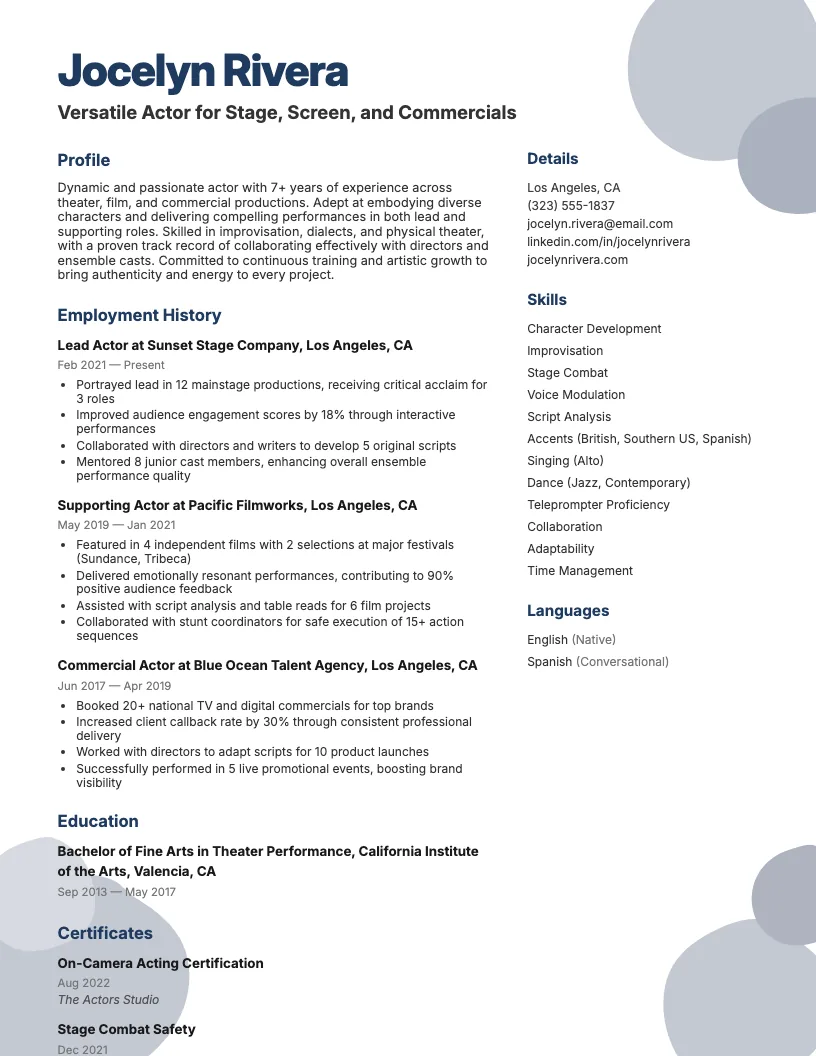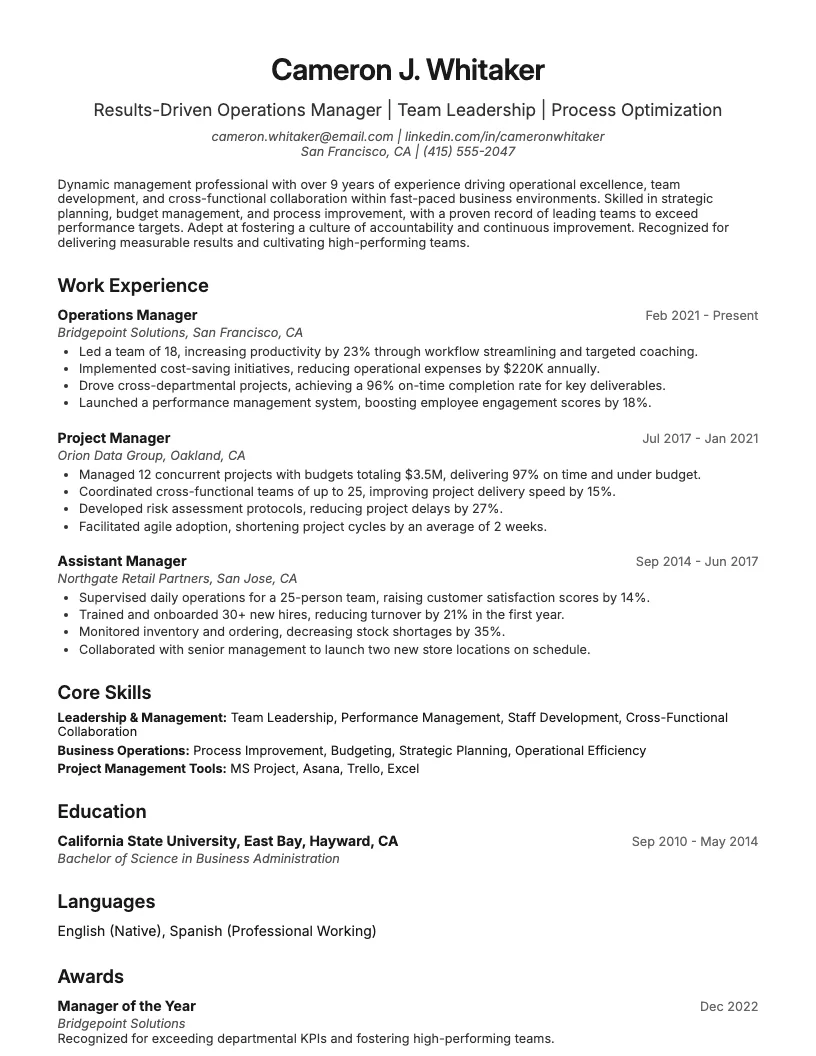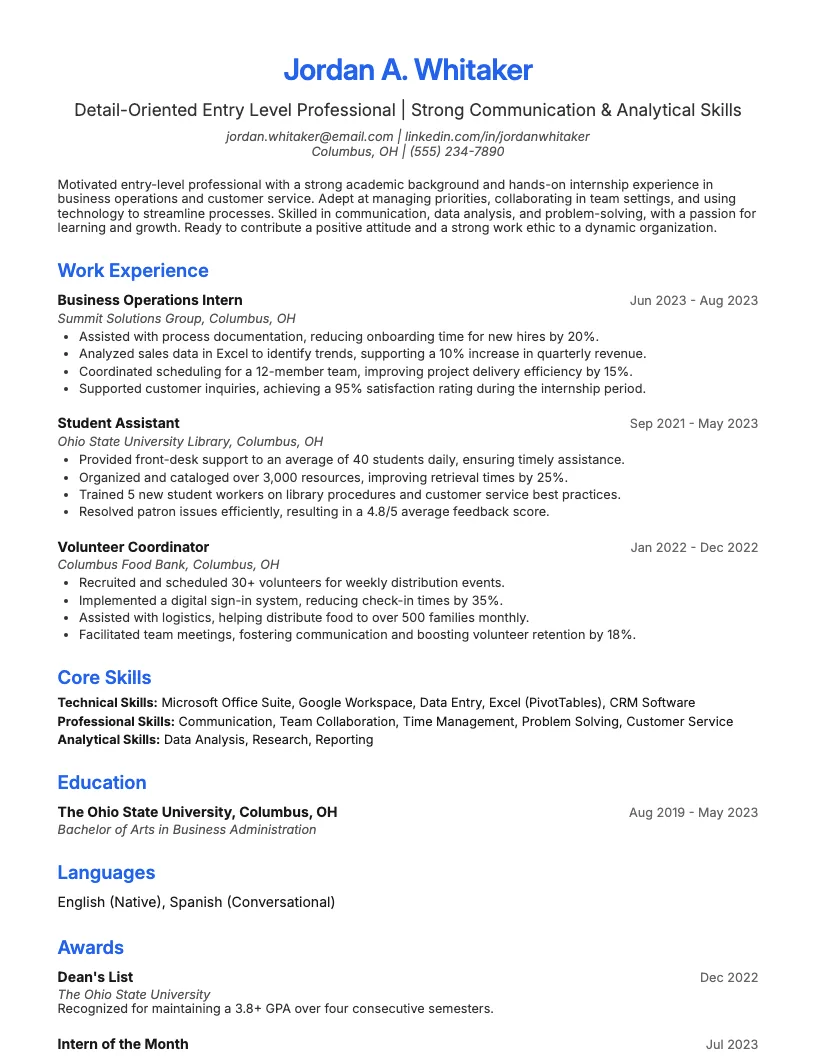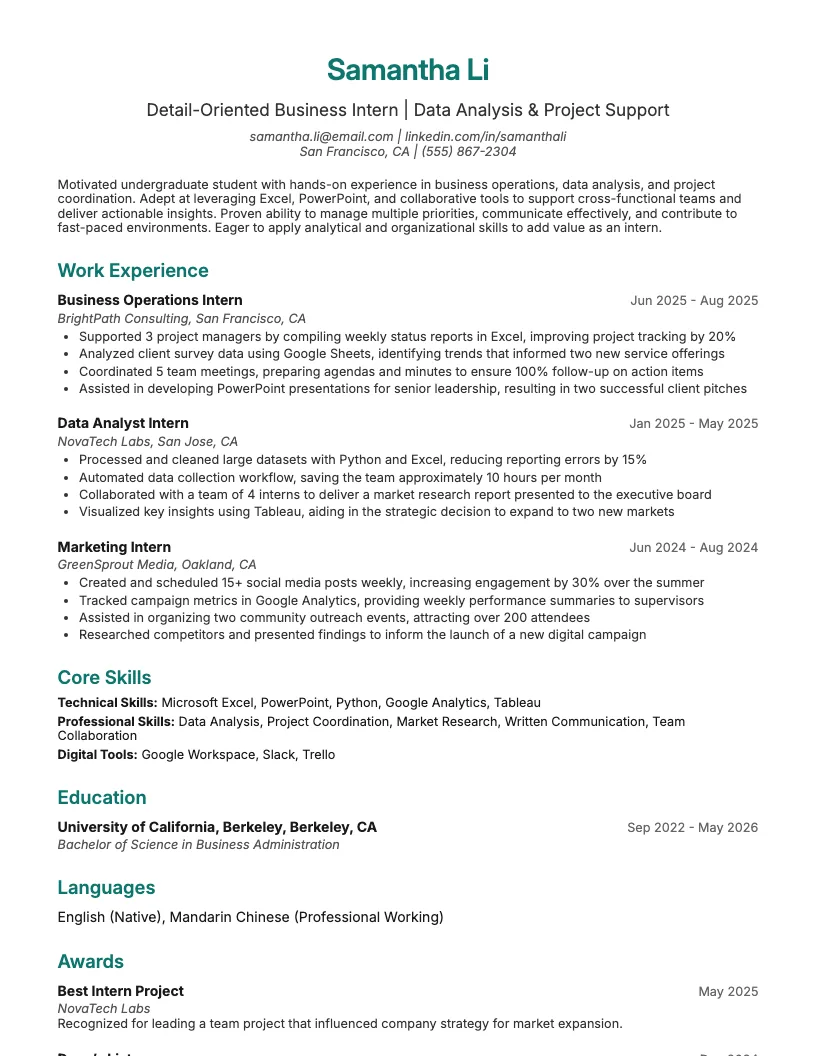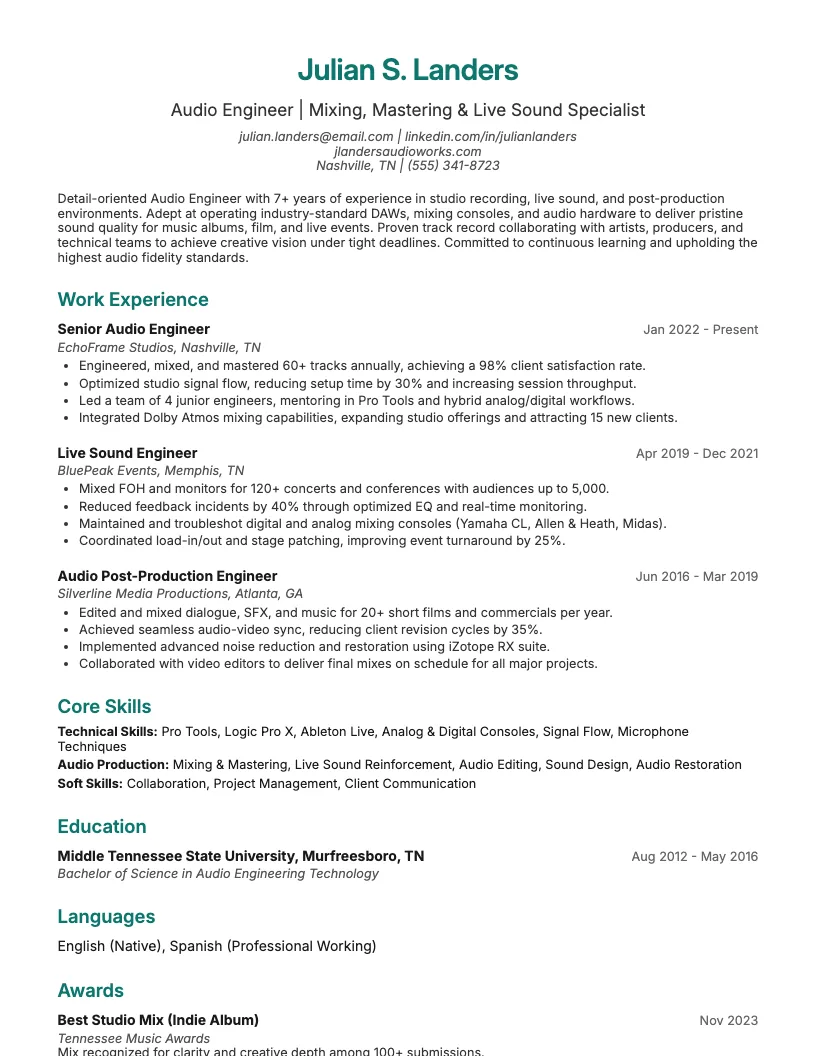
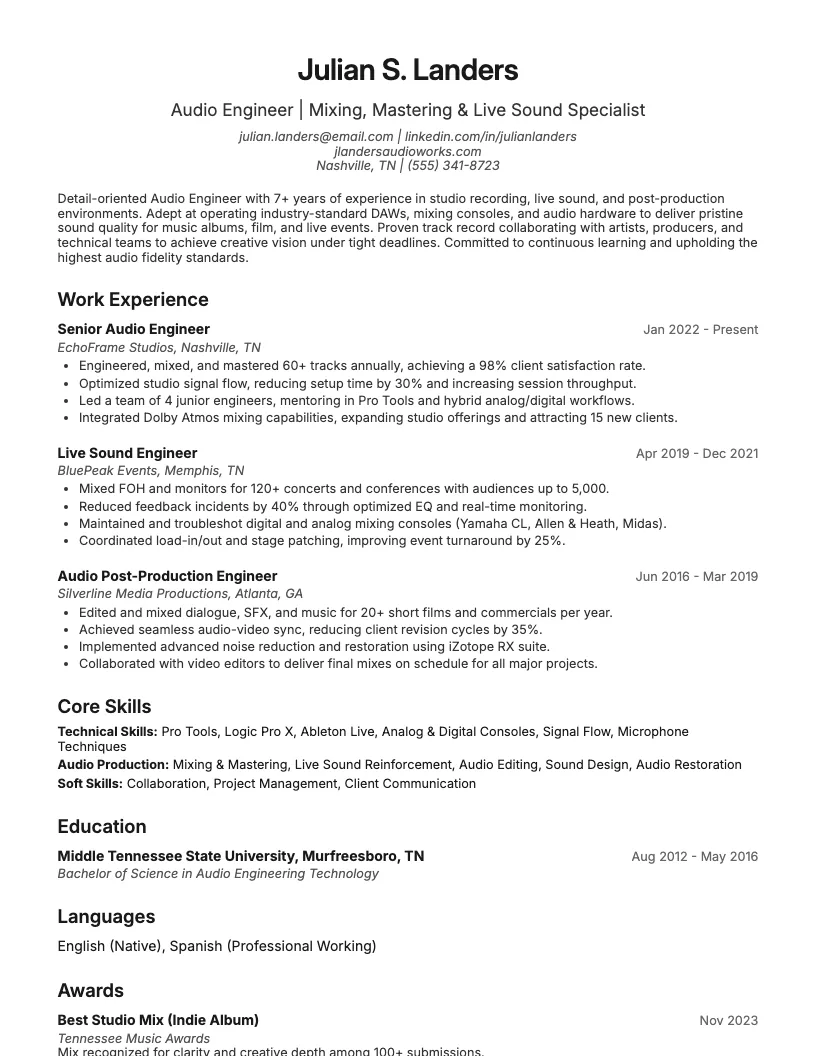
Audio Technician Resume Example
See full guide on Audio Technician resumes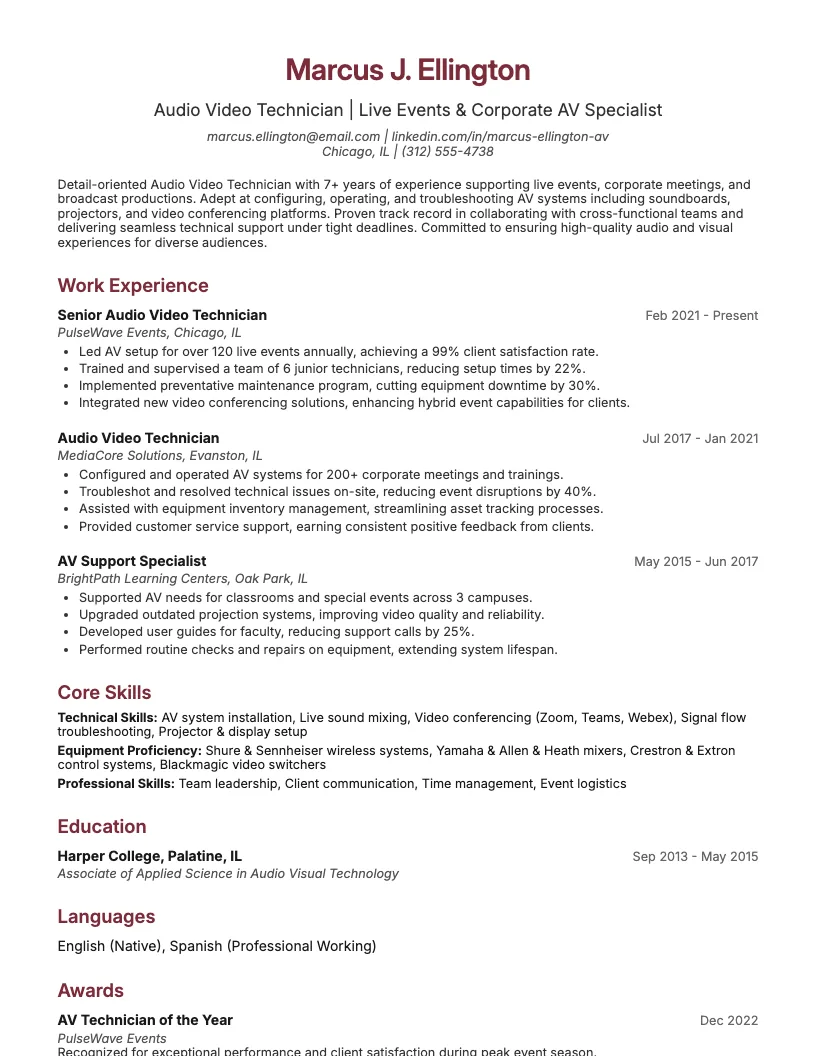 Click to enlarge
 Click to preview

Get inspired by 63+ professional Audio Engineer resume examples, each written by career experts and optimized to pass ATS scans. Pick a proven template, tailor it to your role, and download a polished resume in minutes.
Pick the specialization closest to your target role and start from a proven resume example.
Audio engineering covers a lot, from studio mixing to live sound. Your resume needs to highlight your tech skills and real-world experience, no matter where you are in your career.
Here, I break down sample resumes for different roles and experience levels. You’ll see what works for entry-level jobs, freelance gigs, and more advanced positions.
If you’re a professional audio engineer with a few years under your belt, your resume needs to show off real-world results. I focus on quantifiable achievements and leadership.
You’ll want to highlight sound mixing, project management, and technical troubleshooting-these matter for employers. Listing specific employers and projects, like Warner Bros. or Sony Pictures, helps your resume stand out.
Certifications like Society of Broadcast Engineers or AVIXA add credibility. I always mention advanced degrees or specialty training because hiring managers look for that added expertise at this level.
If you’re just starting out, you want your resume to show off your education, internships, and any hands-on projects. I always highlight software skills and certifications too.
It helps to list specific gear you know, like Pro Tools, Logic Pro, or live mixing boards. Employers like seeing at least one industry certification or relevant coursework.
You don’t need a ton of experience-volunteer gigs, campus productions, or podcast editing count. Focus on measurable results, like reducing noise by 30% or editing 20+ audio tracks per week.
Freelance audio engineers juggle multiple clients and projects. I highlight my adaptability and strong communication skills-these matter when you’re managing deadlines for 10+ clients at once.
You want to showcase a broad skill set: mixing, mastering, field recording, and remote collaboration. List specific gear and software you use, like Pro Tools or Logic Pro X.
It helps to mention client feedback or repeat business. Writing “85% client retention rate” shows you deliver results that people trust and return for.
If I work as a live audio engineer, I focus on mixing sound for concerts, theater, or live events. I highlight experience with FOH (front-of-house) and monitor engineering.
You want to mention specific venues or tours-listing events with over 500+ attendees shows you're used to high-pressure gigs. This builds trust for employers looking for reliable techs.
It's smart to call out fast troubleshooting skills and real-time sound checks. This helps explain how I handle unexpected feedback or equipment failures, which are super common in the field.
With all these resume examples, you can tailor your experience-no matter your background. Pick what matches your skills and let your achievements do the talking!

If you want to land gigs as an audio engineer, your resume needs to show your skills and experience clearly. Employers usually spend less than 10 seconds scanning each resume.
You want to highlight your technical background, hands-on projects, and any industry certifications. A solid resume can help you stand out, even if you’re just starting out.
I always focus on measurable achievements and relevant skills. That makes it easier for hiring managers to see what you bring to the table.
Start your resume with a short, punchy profile. This is your chance to highlight three to five reasons you stand out as an audio engineer.
Focus on your specialties, years of experience, and any unique strengths. For example, mention if you’ve mixed over 200 live shows or worked in broadcast audio.
This profile sets the tone for your resume. Keep it concise and relevant, so hiring managers instantly see why you’re a great fit.
Use your experience section to show exactly what you did. I list my main responsibilities, like mixing, mastering, or running live sound for events with up to 500+ attendees.
I always focus on numbers. For example, I mention, “Edited audio for 20+ podcast episodes per month,” or “Reduced background noise by 40% using advanced EQ techniques.”
Highlight measurable achievements. If you improved workflow, cut editing time, or received positive client feedback, mention it. This helps hiring managers see your impact right away.
I always list my highest degree first, like a bachelor’s in audio engineering or a related field. This gives hiring managers a quick overview of my academic background.
You want to include certifications that actually matter-think Avid Pro Tools Certification or Apple Logic Pro X Certification. These show you know current industry tech.
There’s no need to add high school if you already have a degree. Just focus on what directly supports your audio engineering skills and job goals.
You want your resume to show off your technical skills-think Pro Tools, Logic Pro X, signal flow, and live sound mixing. These are what most employers search for first.
I always add collaboration, problem-solving, and attention to detail to my skills section. These soft skills matter a lot, especially when you work with big teams or tight deadlines.
There are also industry-specific keywords like audio restoration, mastering, RF coordination, or broadcast engineering. Listing these helps you get noticed by applicant tracking systems and hiring managers alike.
Audio engineering covers a lot, from recording to mixing. Employers look for specific skills that show you can handle both the tech and creative sides.
I see job listings always mention things like DAW expertise, problem-solving, and communication. These skills matter whether you’re freelancing or working in a big studio.
If you want your resume to stand out, focus on the abilities that really match what hiring managers want in 2024.
When I look for audio engineer resume templates, I want something clean and easy to read. Most hiring managers spend just 7 seconds scanning each resume.
You don’t need flashy colors or fancy fonts. Simple layouts work best, especially for passing applicant tracking systems. Your experience and skills should stand out, not the design.
If you’re working as an audio engineer, you probably look at similar roles for inspiration. I do the same when I update my own resume.
You might want to see how audio, video, and electronics techs build their resumes. It helps to compare what skills and keywords they list.
I always check out related jobs before I finish my resume. It gives me ideas for skills, tools, and certifications to highlight.
If you’re eyeing an audio video technician role, your resume needs to show both tech skills and real project experience. I always highlight hands-on work and certifications.
There are over 86,000 audio video technicians in the U.S. right now. This field values practical skills more than degrees, so you want to list your equipment knowledge clearly.
Show off any experience with live events, installations, or troubleshooting. You can mention brands, like Shure or Crestron, and certifications, such as AVIXA CTS-these catch a hiring manager’s attention.
Use bullet points to make your experience pop. Focus on results: "Set up 20+ live events monthly" says a lot. Quantify where you can-this helps you stand out.
If you love fixing things and troubleshooting, an electronics technician resume opens a lot of doors. I see this role in studios, theaters, and live event venues.
Highlight your skills with diagnostic equipment and soldering. Employers look for real hands-on experience-list any certifications, like CompTIA A+ or ETA International.
Don’t forget to mention your track record. I suggest you include numbers, like “reduce downtime by 30%” or “repair 10+ audio boards weekly.” This helps your resume stand out.
If you're eyeing creative roles in film, TV, or digital media, a video editor resume is your ticket. I focus on storytelling, technical skills, and software expertise like Adobe Premiere Pro.
Show off tangible results-think project turnaround times or audience growth numbers. You want to highlight your ability to manage deadlines, collaborate, and adapt to new formats or trends.
There are over 55,000 video editor jobs in the U.S. alone. Tailoring your resume for the industry helps you stand out. That wraps up the related resume examples section.
Browse Audio Engineer resume examples for related roles. Preview any example, open it in the builder, or read its full guide.
Click to enlargeCommon questions about Audio Engineer resumes
A audio engineer resume template is a pre-designed document tailored for roles in audio production, mixing, and sound engineering. It highlights relevant skills, experience, and technical expertise for the audio industry.
Yes, ResumeJudge audio engineer templates are designed to be ATS-friendly, ensuring your resume passes automated screening systems used by studios, broadcasters, and production companies.
Use this template when applying for roles in music production, film, radio, podcasting, or live event engineering. ResumeJudge makes it easy to tailor your resume for specific audio-focused positions.
Absolutely! ResumeJudge templates allow you to personalize sections, add your own achievements, and adjust formatting to reflect your unique audio engineering skills and experience.
Audio engineer templates focus on technical audio skills, equipment proficiency, and industry experience, unlike generic templates. ResumeJudge ensures your resume stands out for sound-related jobs.
Aim for a one-page resume if you have less than 10 years of experience, or two pages for extensive careers. ResumeJudge templates help organize your information clearly and concisely.
Include contact info, a professional summary, skills, work experience, education, and certifications. ResumeJudge templates structure these sections for maximum impact.
Yes, you can include links to your portfolio, demo reels, or audio samples. ResumeJudge templates make it easy to showcase your best work directly on your resume.
Definitely! ResumeJudge templates can highlight freelance projects, client work, and contract gigs, making them ideal for both in-house and independent audio professionals.
A professionally designed ResumeJudge template can boost your chances by presenting your skills clearly and passing ATS filters, helping you stand out to hiring managers in the audio field.
Explore more professional resume examples to inspire your job search
Use our AI-powered resume builder to create a professional, ATS-friendly resume in minutes.
Free to use • No credit card required