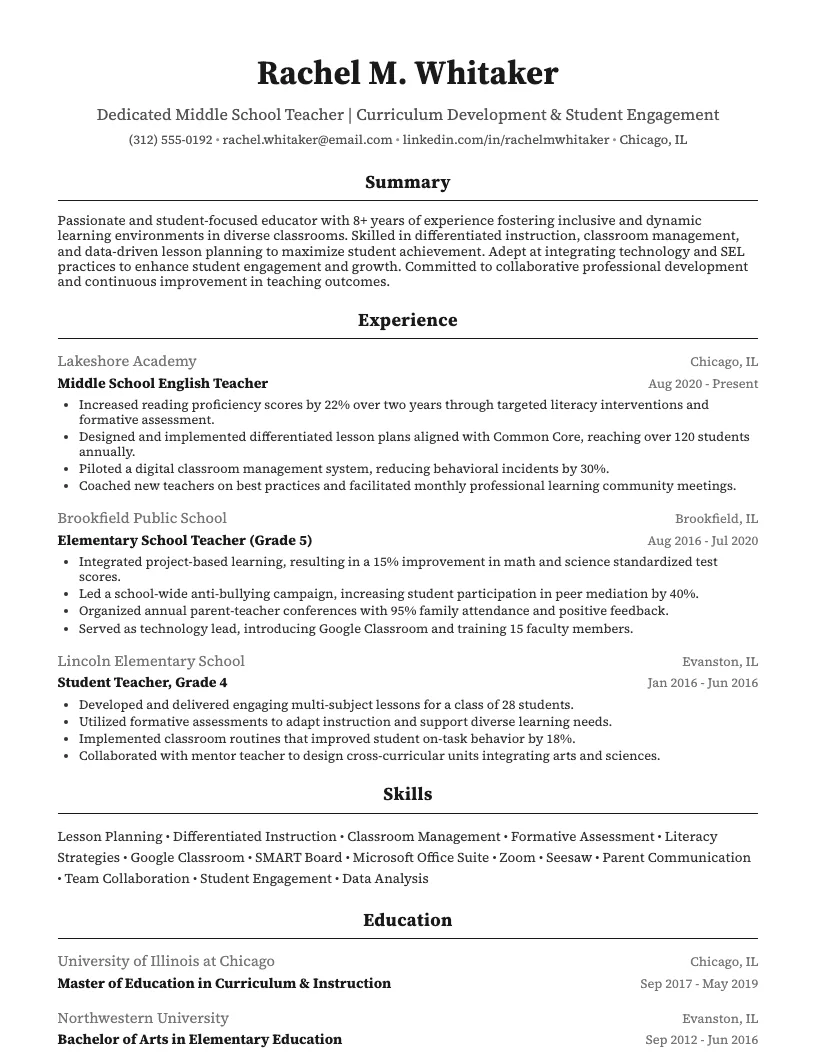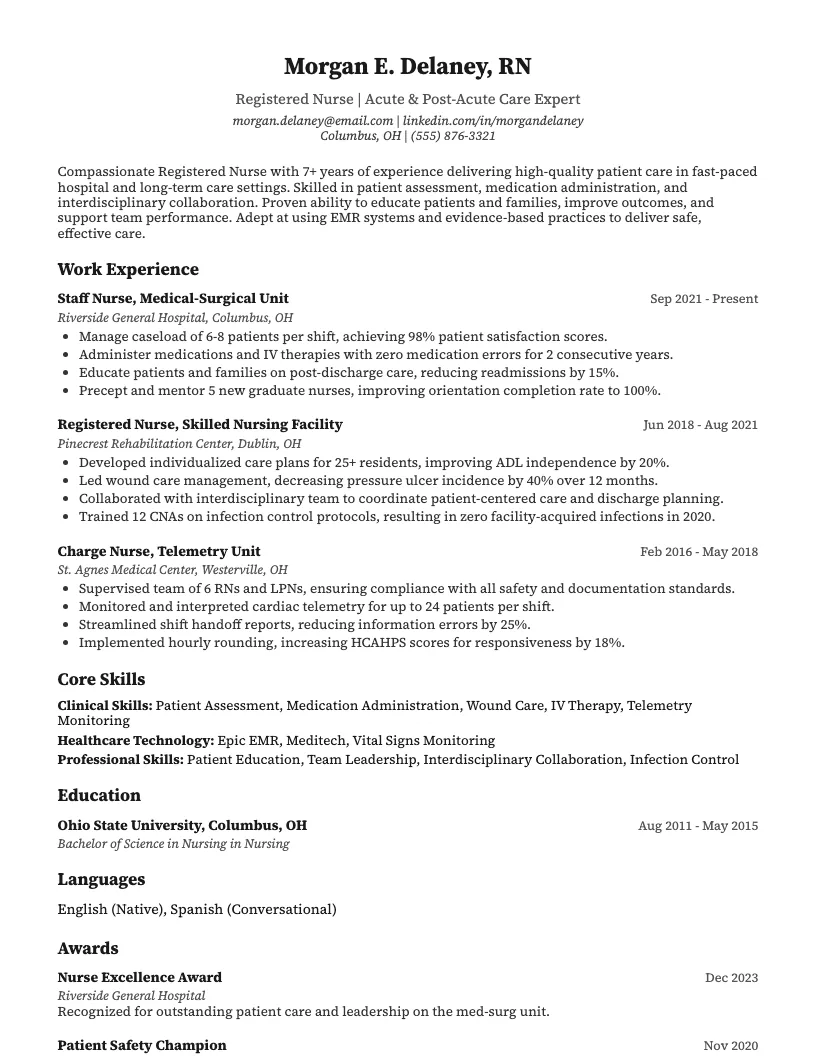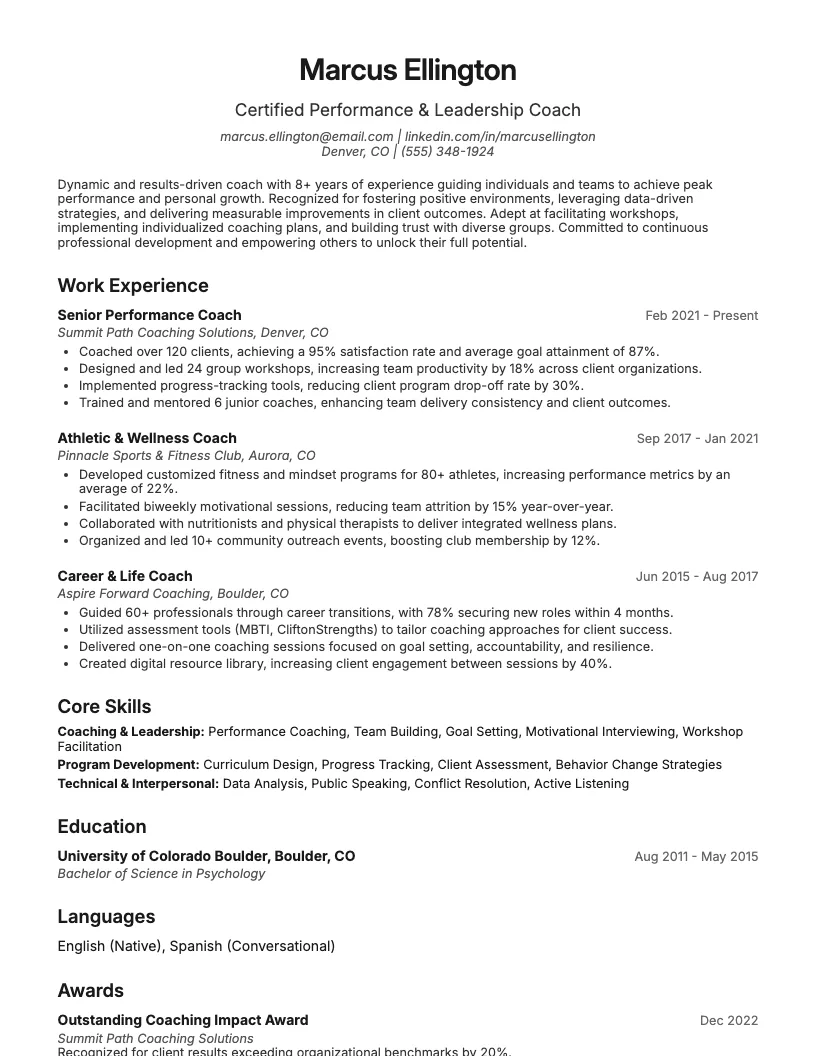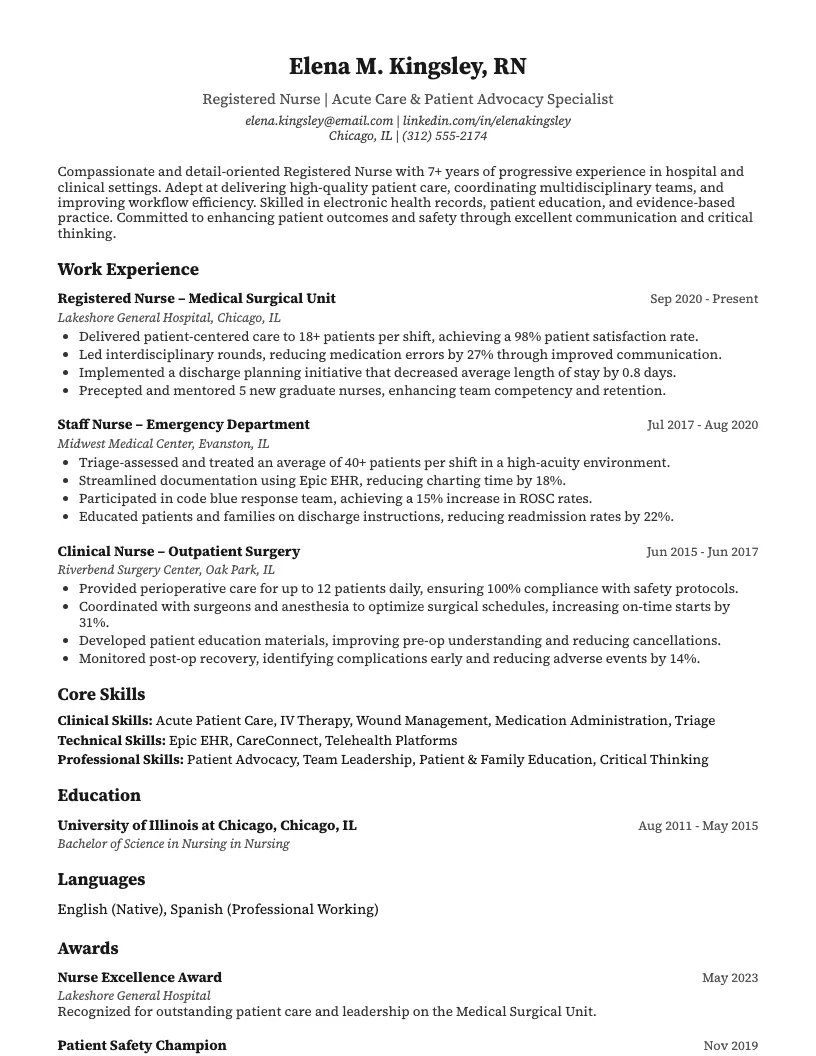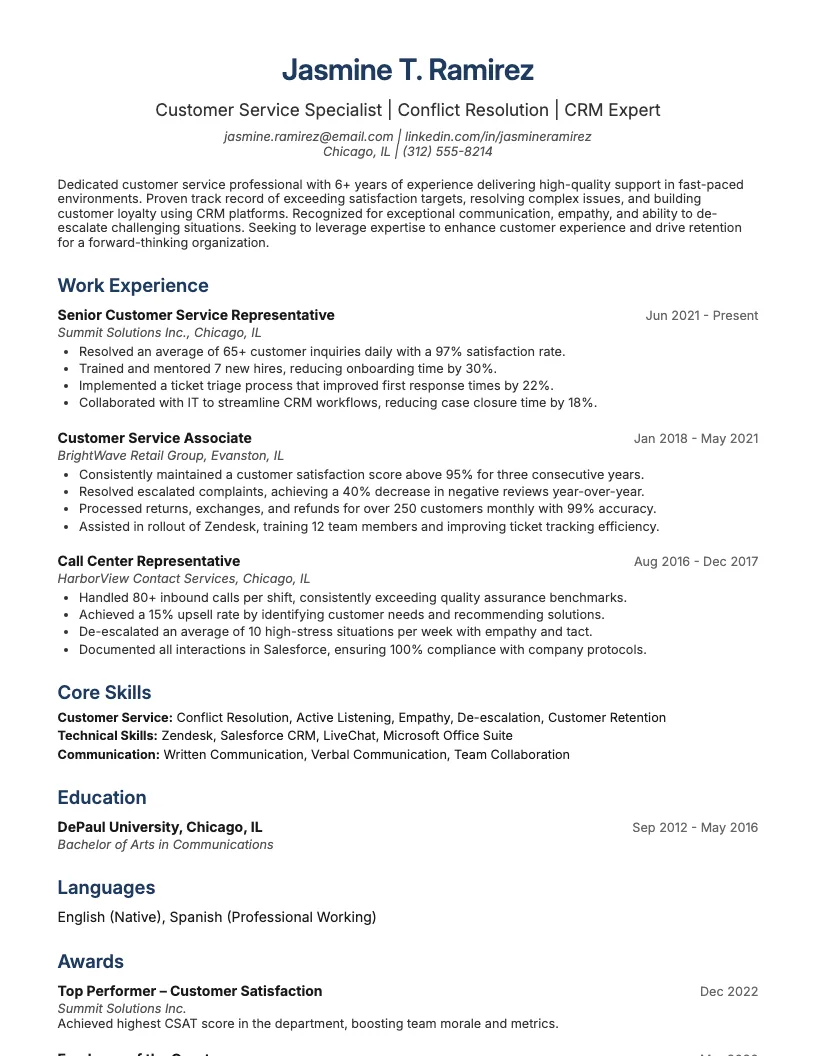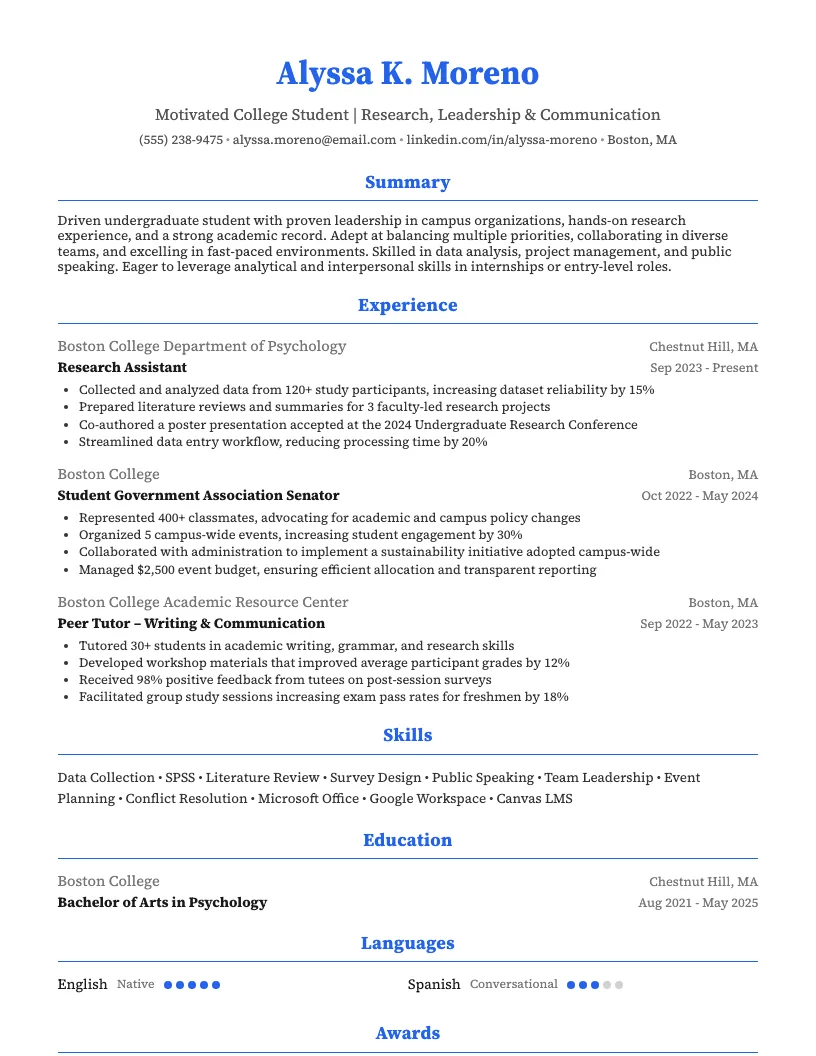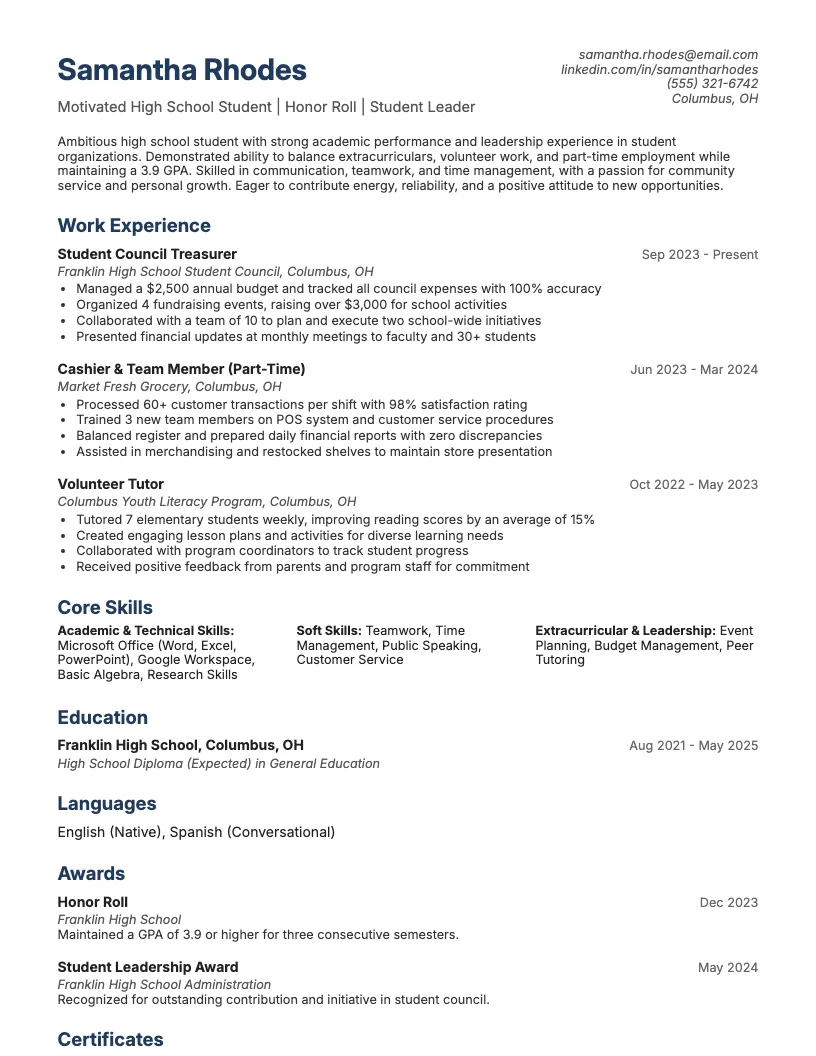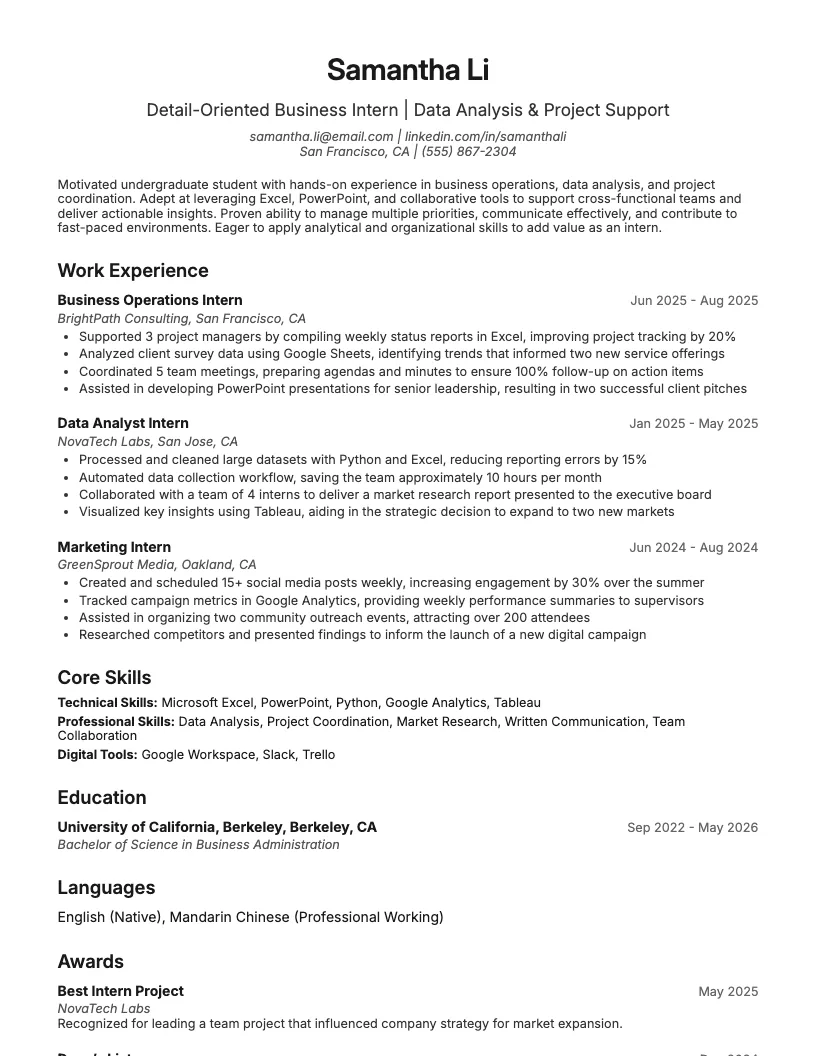
Child And Family Social Worker Resume Example
See full guide on Child And Family Social Worker resumes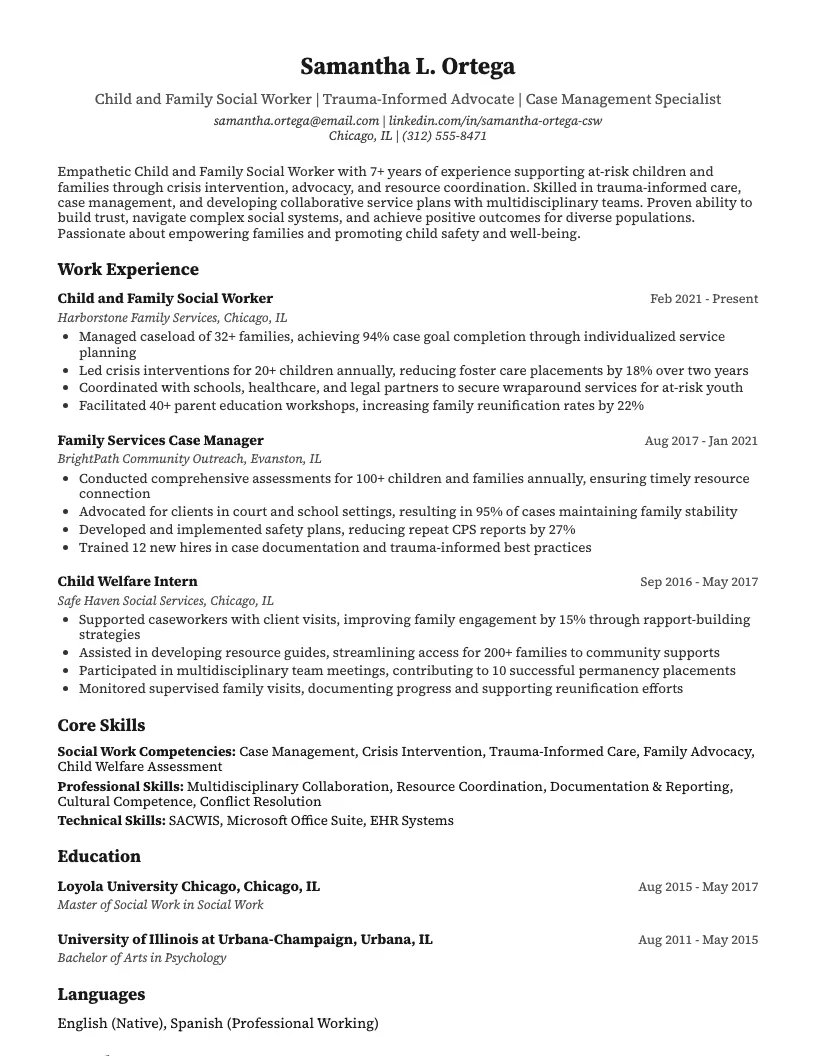 Click to enlarge
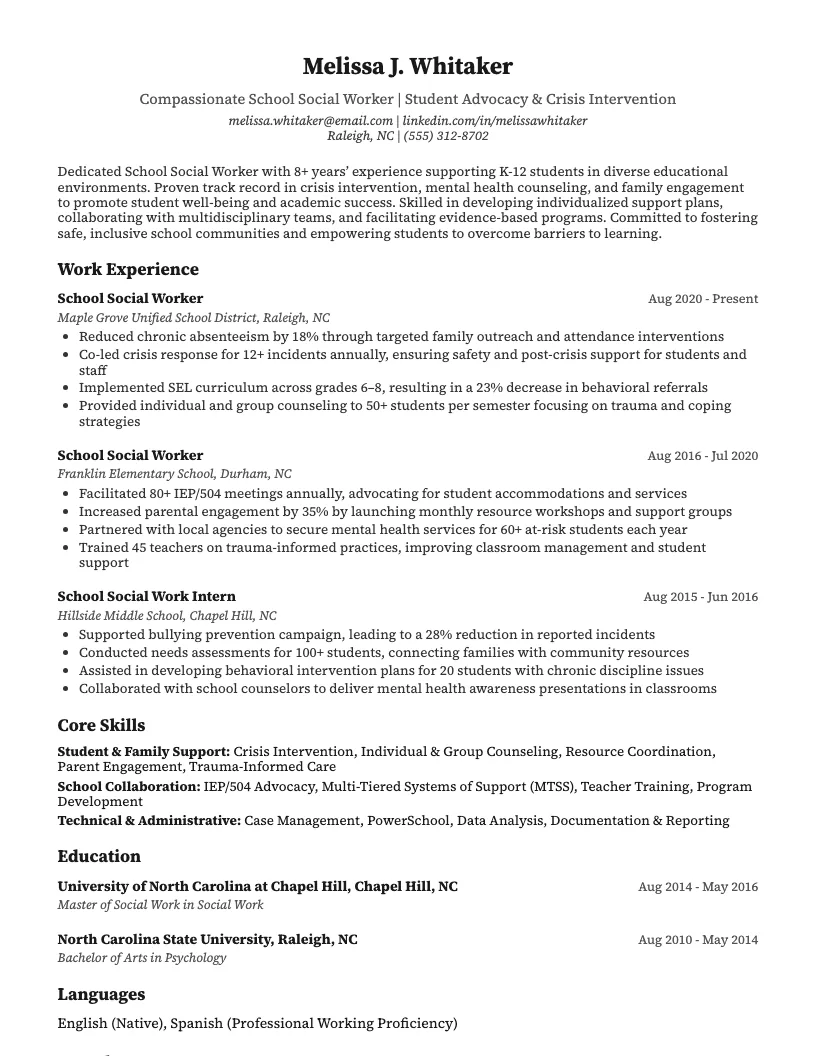 Click to preview

Get inspired by 60+ professional School Social Worker resume examples, each written by career experts and optimized to pass ATS scans. Pick a proven template, tailor it to your role, and download a polished resume in minutes.
Pick the specialization closest to your target role and start from a proven resume example.
A solid school social worker resume shows your impact on students and school communities. You want to highlight your results, certifications, and key skills right up front.
Hiring managers look for clear, focused resumes. I find that tailoring your resume to each job makes a big difference. Show what you’ve achieved, not just what you did.
I always start by reading the job posting carefully. Highlight keywords and required skills. This helps you match your resume content to what schools actually want.
Use clear sections for your experience, education, and certifications. When possible, quantify your impact-like supporting 150+ students or reducing absenteeism by 20%.
Don't forget to show off your technical skills with relevant tools, like PowerSchool or case management software. This shows you’re ready to hit the ground running.

Writing a school social worker resume means showing your impact and experience clearly. I like to keep things organized and use a format that highlights recent roles first.
You want your contact info up top and everything easy to scan. Keep your resume short-two pages max is the sweet spot for most school social worker jobs.
Next, we’ll dive into the key sections you need and what recruiters actually look for in your resume.
When I build a school social worker resume, I make sure to include all the must-have sections. This keeps things clear and organized for recruiters.
Start with a concise header. I always put my name, updated contact info, and a professional link like LinkedIn. This helps hiring teams find me fast.
Next, add a summary or objective. This one or two-liner gives a quick peek at who you are as a professional and what you bring to the table.
The experience section is where you show your impact. List your jobs in reverse-chronological order, focusing on relevant roles and measurable results.
Round things out with skills and education & certifications. These prove you meet the basic requirements and highlight your dedication to the field.
Recruiters look for real-world impact you make with students, families, and staff. They care about outcomes-like attendance boosts, reduced referrals, or successful interventions.
I always highlight communication skills and my ability to build trust. Schools value people who connect well with students, parents, and teachers, especially in tough situations.
Show you know school policies and laws. Being up to speed with FERPA, IDEA, and local regulations helps you stand out and shows you take compliance seriously.
Start your resume with a short, punchy summary. Highlight your job title, years of experience, and standout skills like crisis intervention or group facilitation.
Mention your biggest strengths-maybe you’ve supported over 300 students or led school-wide anti-bullying programs. This helps recruiters see your impact right away.
Use keywords from the job ad. If it’s asking for trauma-informed care or family engagement, work those in. Tailoring makes your summary more relevant and effective.
Highlight direct experience-case management, crisis intervention, or running support groups. Quantify your impact, like “reduced absenteeism by 15%” or “supported 120+ students per year.”
Describe collaboration with teachers, parents, and outside agencies. Recruiters love seeing how you advocate for students and help create positive school climates.
List specific programs or initiatives you lead, like anti-bullying campaigns or mental health workshops. This shows you don’t just follow routines-you drive change where it matters.
I always make sure to highlight my master’s degree in social work (MSW). For most school social worker jobs, this is a must-have.
Include your state licensure and any special certifications, like LCSW or PPSC. This shows you meet legal requirements and stand out from unlicensed applicants.
You should also mention relevant workshops or continuing education. Listing these tells recruiters you stay updated on current practices. This wraps up your core credentials nicely.
Your experience section is where you really show what you bring to the table. It’s not just about listing what you did-it's about showing your impact.
Focus on actual results, like improvements in student well-being or reductions in disciplinary incidents. Use numbers and clear outcomes to back up your work.
This section lets you highlight your unique skills, problem-solving, and the positive feedback you get. It’s your chance to stand out, especially if you tailor your examples to each job.
When I highlight my experience as a school social worker, I focus on the numbers that show my real impact. Recruiters love seeing hard data.
You can mention how many students you’ve counseled, the percentage drop in behavioral incidents, or improvements in attendance. This helps your achievements stand out fast.
Including details like the number of workshops led or grants secured gives a clear picture of your scope and resourcefulness. Specifics always beat general statements.
Start every bullet point with a strong action verb-it makes your impact clear. Words like advocate, facilitate, collaborate, and support work well for school social work.
I like to keep each bullet point focused. Stick to one responsibility or achievement per bullet. This helps your experience look clean and easy to scan.
Use numbers where you can. For example, "Supported 50+ students per semester" or "Reduced absenteeism by 15%." It’s more convincing than just saying you made a difference.
Here are a few real-world work experience bullet points you might use. These show off your skills, impact, and how you help students every day.
You can also mention things like coordinating with community agencies or training staff on trauma-informed practices. Numbers and outcomes always help you stand out.
If you’re just starting out, I recommend putting your education and certifications front and center. Highlight any coursework, practicums, or volunteer work in schools.
You can show off transferable skills-like crisis intervention, active listening, or teamwork, which are also valuable in a cover letter. These matter as much as direct experience, especially in student-focused roles.
Don’t forget a strong resume summary. Use it to share your passion for helping students and your commitment to building a safe, supportive school environment.
This approach keeps your resume focused and relevant, even if your hands-on experience is limited. It helps recruiters see your potential and enthusiasm right away.
If you want to stand out as a school social worker, you need a mix of technical know-how and strong people skills. Each school looks for something a bit different.
You can show your fit by highlighting the right hard and soft skills. Recruiters notice when you match their job ad and use clear, specific keywords.
In the next sections, I’ll walk you through the top skills to include and the nine must-have abilities for school social workers.
When you build your school social worker resume, balance between hard and soft skills is key. Employers want to see you’ve got both the technical know-how and people skills.
Hard skills show you know your stuff-think case management, crisis intervention, or special education law. These are things you learn in school or through hands-on training.
Soft skills are just as important. Empathy, communication, and problem-solving help you connect with students and colleagues. I always recommend listing a mix of both skill types.
I like to highlight 5-6 skills that match the job description. This helps your resume stand out and shows you’re a great fit for the school’s unique needs.
Here are nine skills every school social worker needs: crisis intervention, case management, active listening, cultural competency, counseling, documentation, conflict resolution, advocacy, and collaboration.
You want to show real-world use of these skills. I recommend highlighting specifics-like “crisis intervention for 150+ students” or “managed 30 cases per semester”-right on your resume.
These skills don’t just look good on paper. They help you support students, work with families, and make sure everyone gets what they need. That’s what makes you stand out.
Your education and certifications can make a huge difference when you apply for school social worker jobs. Employers look for degrees and credentials that show you meet their standards.
If you’re working on a degree or certification, mention your expected graduation date. Highlighting up-to-date training shows you stay current in the field.
Listing relevant certifications helps you stand out, especially if you’re newer to the profession. It’s a good way to show you’re serious about your role.
I always suggest listing certifications like the Certified School Social Work Specialist (C-SSWS) from NASW and a state-issued Licensed Clinical Social Worker (LCSW). These stand out to employers.
You might also include the Trauma-Focused Cognitive Behavioral Therapy (TF-CBT) certificate or the National Certified Counselor (NCC). These show up-to-date, relevant expertise in school settings.
If you’re targeting specialized roles, highlight recent or advanced credentials first. Always mention the issuing organization and the year earned to make your resume look current.
The top part of your resume matters most. This section quickly shows who you are as a school social worker and what you bring to the table.
You can use a summary or an objective. A summary highlights your best experience, while an objective focuses on your goals and fit for the job.
Keep it short-stick to four or five sentences. Your wording should match the role you want and speak directly to the needs of the school.
I always start with a succinct summary that highlights years of experience, like “Licensed Social Worker with 8 years in K-12 settings, leading to a 20% boost in student attendance”—and I make sure my cover letter reflects those same strengths.
You can use an objective if you’re newer to the field-something like, “Recent MSW grad passionate about student advocacy, aiming to foster safe, inclusive learning environments through evidence-based interventions.”
There’s no harm in adding numbers, like, “Managed caseloads of 40+ students, implementing support plans that improved behavioral outcomes by 30%.” This helps you stand out right away.
You can boost your school social worker resume by adding extra sections. Highlight your language skills, volunteering, or awards to show a well-rounded profile.
These details help you connect with school communities and hiring teams. Use this space to show your personality and commitment beyond your work experience.
When you’re applying for a school social worker job, a strong cover letter helps you stand out. I always check out a few school counselor cover letter examples for inspiration.
There are dozens of free templates online. Look for ones that highlight empathy, crisis intervention, and cultural awareness. This helps you match your experience to what schools want.
You want to keep your letter short-under 300 words works well. Focus on real numbers, like “helped 150+ students” or “led 5 support groups.” That’s what gets attention.
If you’re not sure what to write, use a cover letter as a guide. Personalize each letter to the school, and always proofread before you send it.
You want your resume to stand out, no matter if you’re just starting or have years of school social work experience.
Here, I break down resume examples for entry-level, mid-career, and senior school social workers. Each one uses real numbers and skills that employers look for.
I also include tips that help you tailor your experience-so you can show off what makes you a great fit for the job.
If you’re searching for school counselor resume examples, focus on real accomplishments. Highlight things like improving student attendance or leading mental health programs-those details really stand out.
Use actual numbers where you can. For example, “supported over 150 students,” or “reduced disciplinary actions by 20%.” This helps your school counselor resume look concrete and credible.
You want your resume to feel personal but professional. List certifications, counseling methods, and collaborative work with teachers or parents. This shows your range as a school counselor.
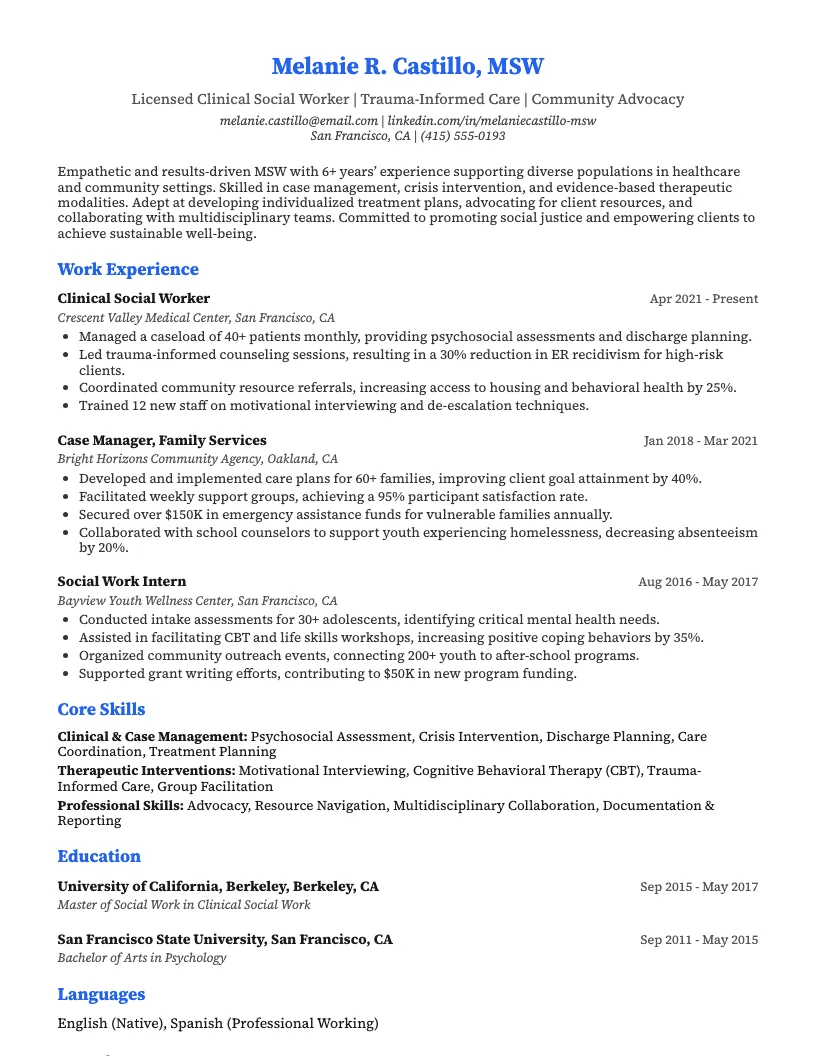
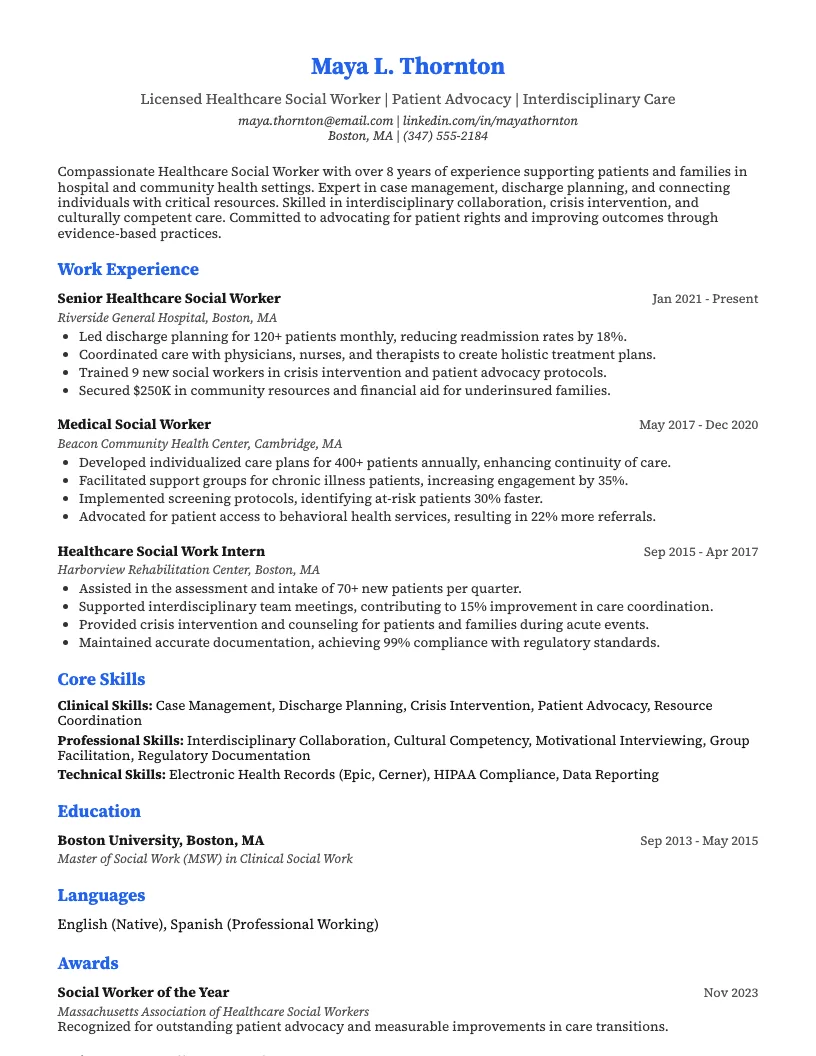
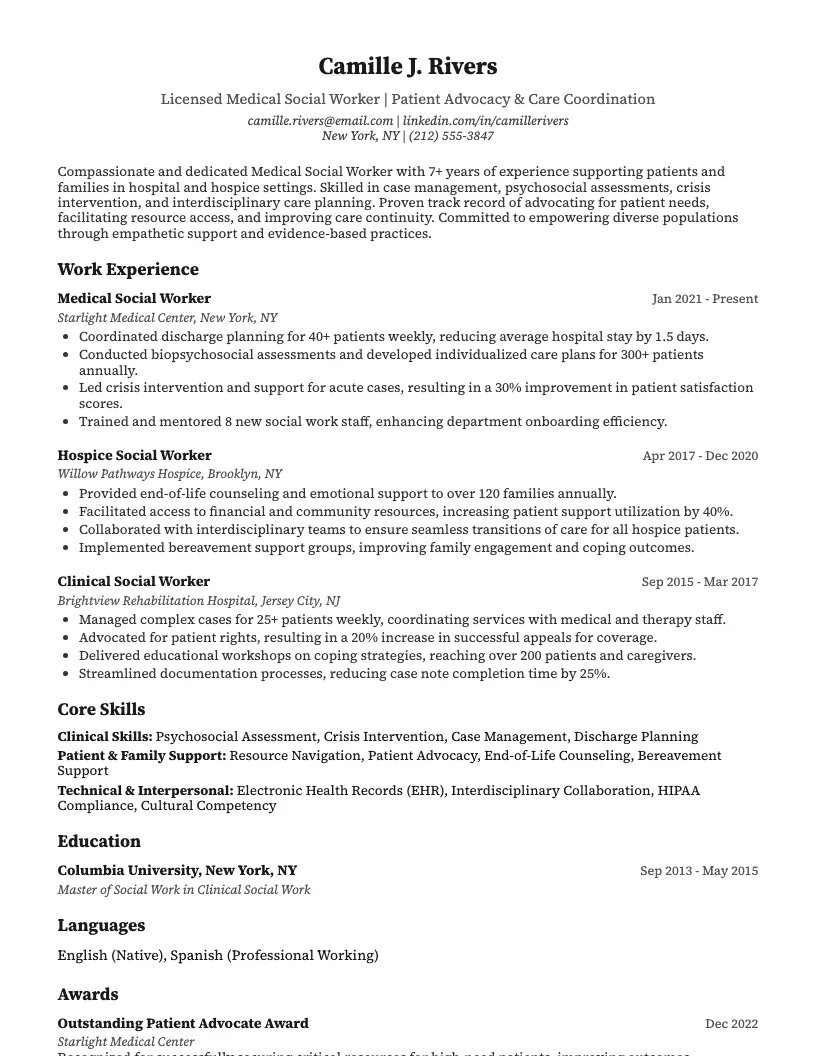
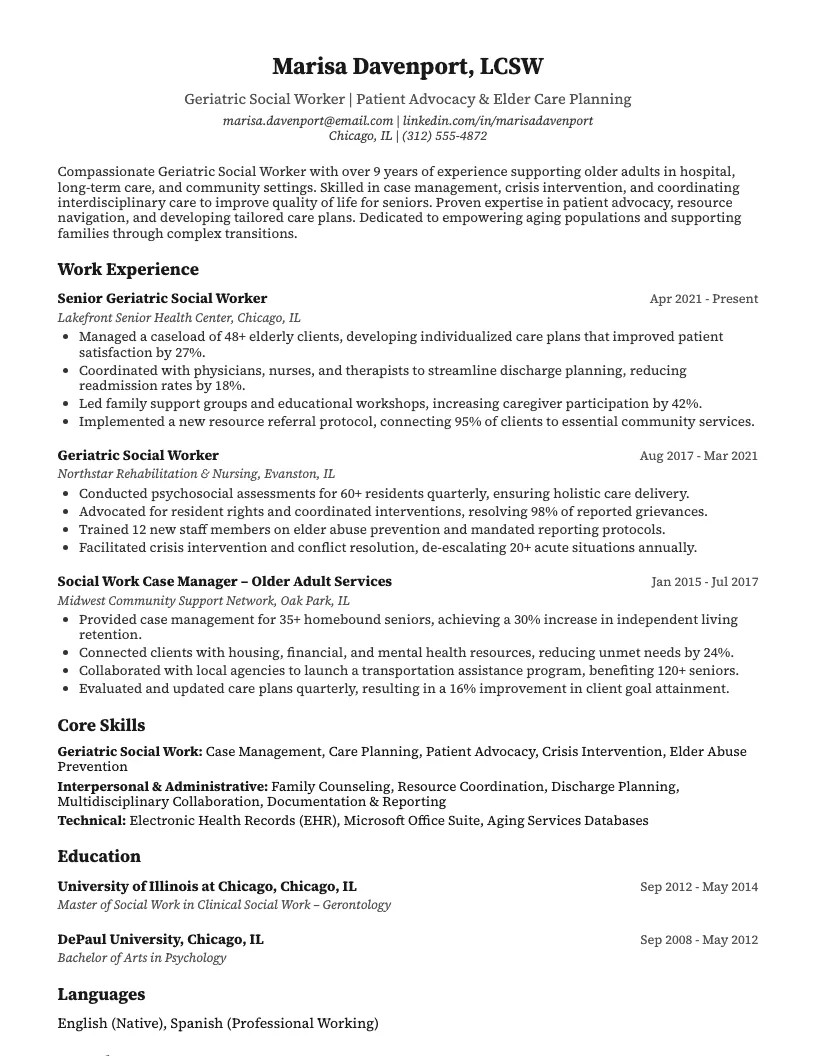
Browse School Social Worker resume examples for related roles. Preview any example, open it in the builder, or read its full guide.
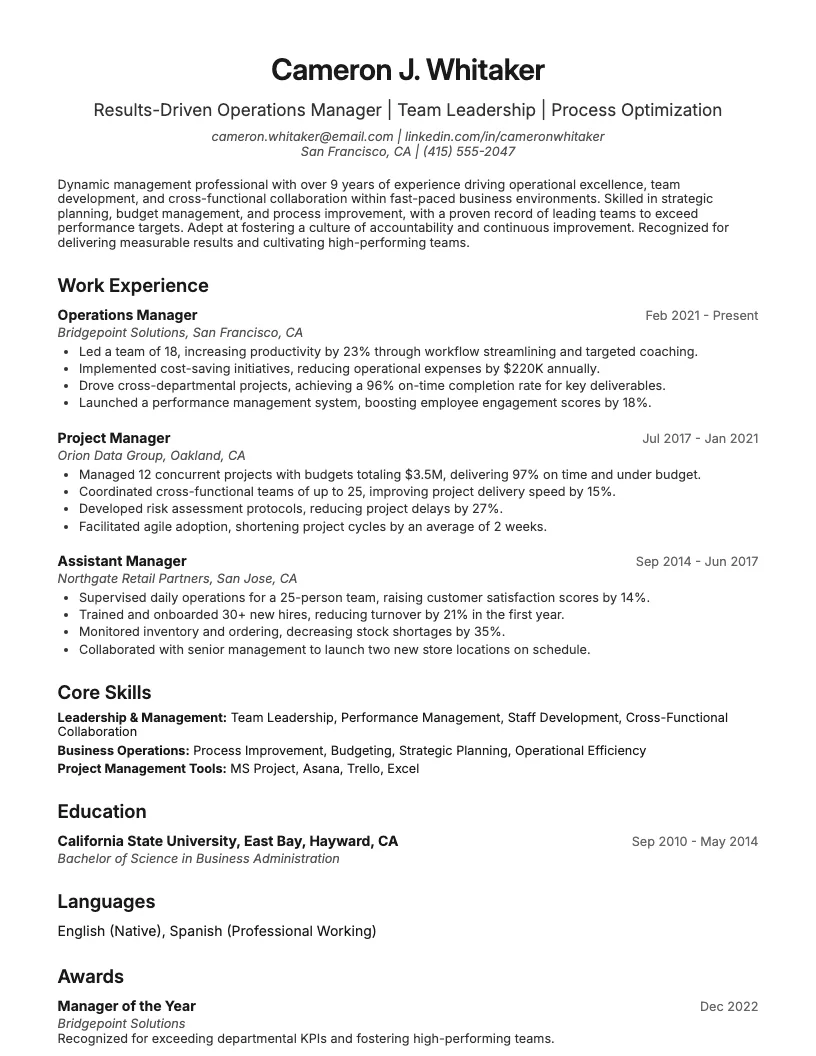
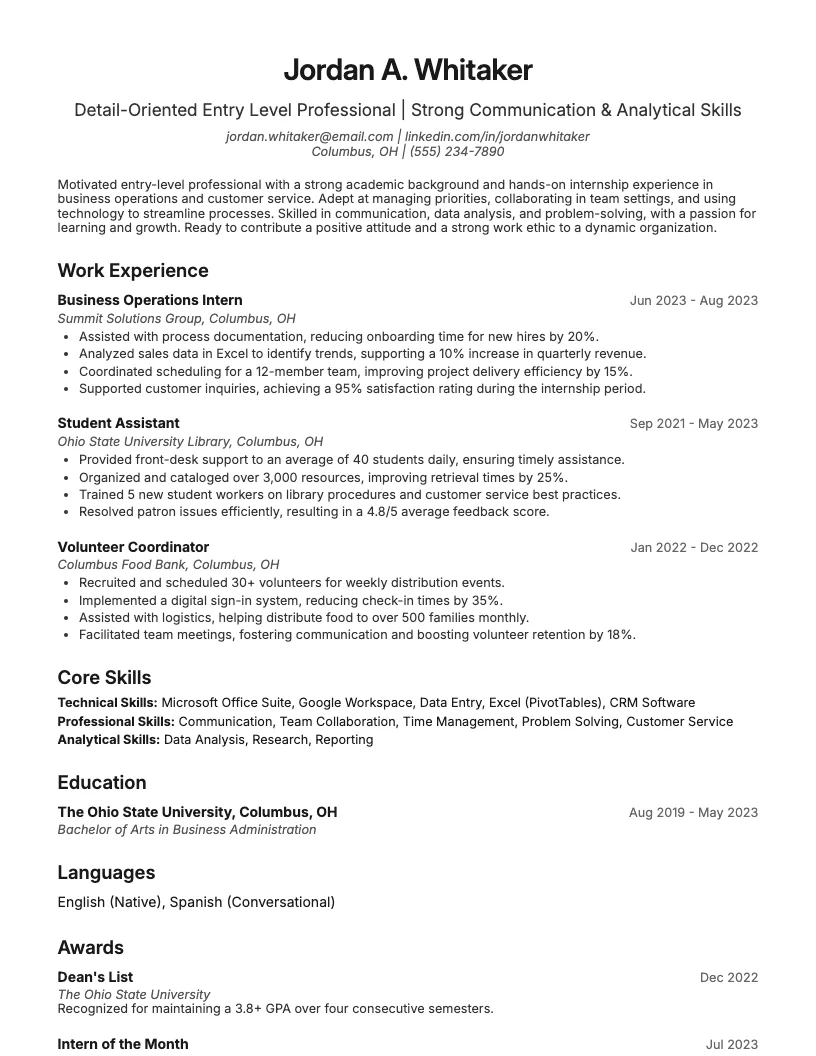
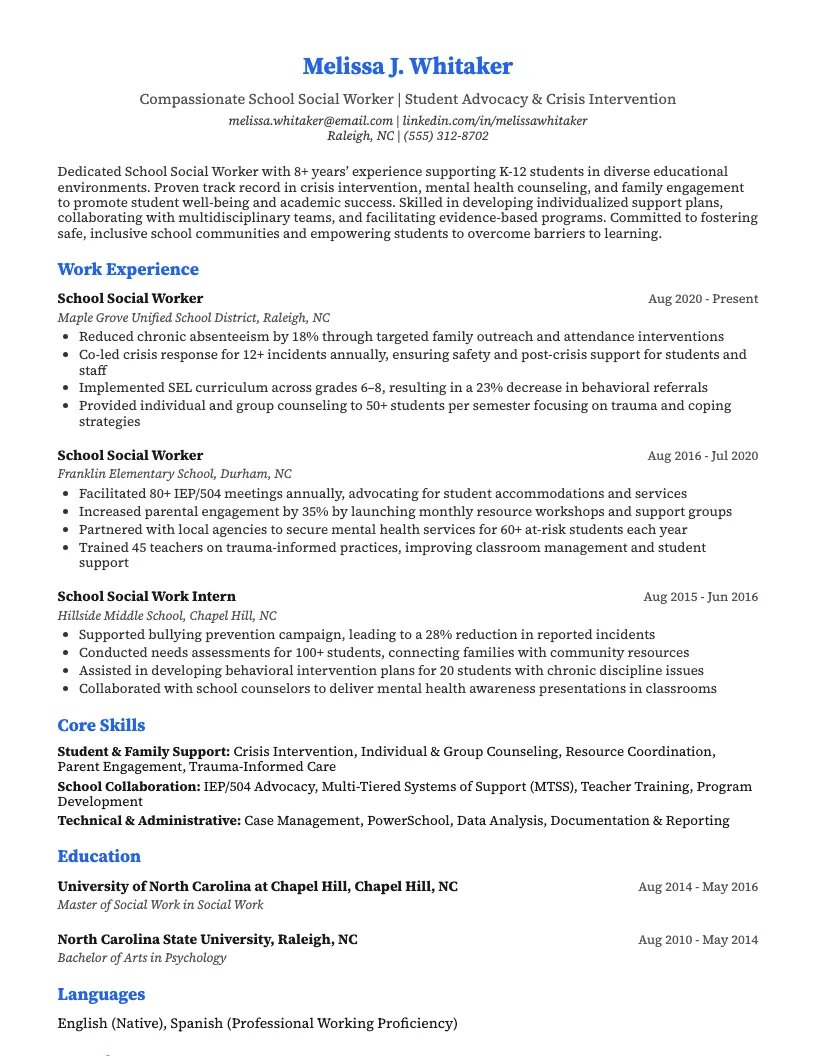
Click to enlarge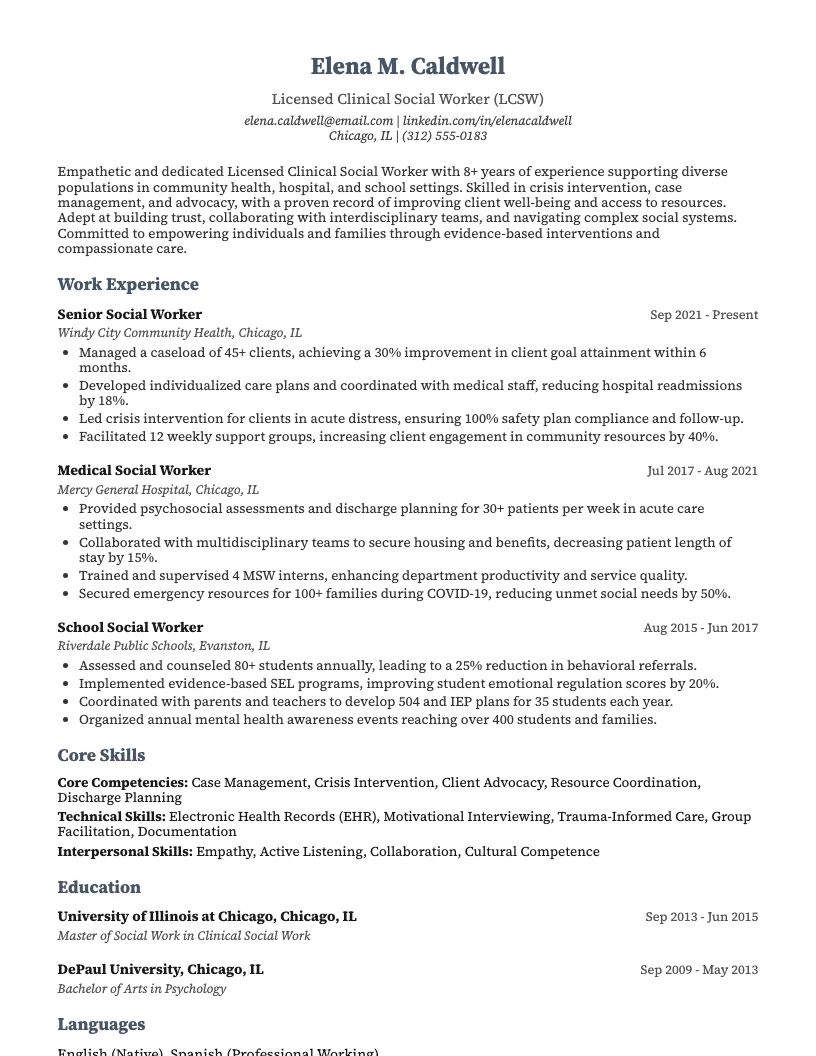 Click to enlarge
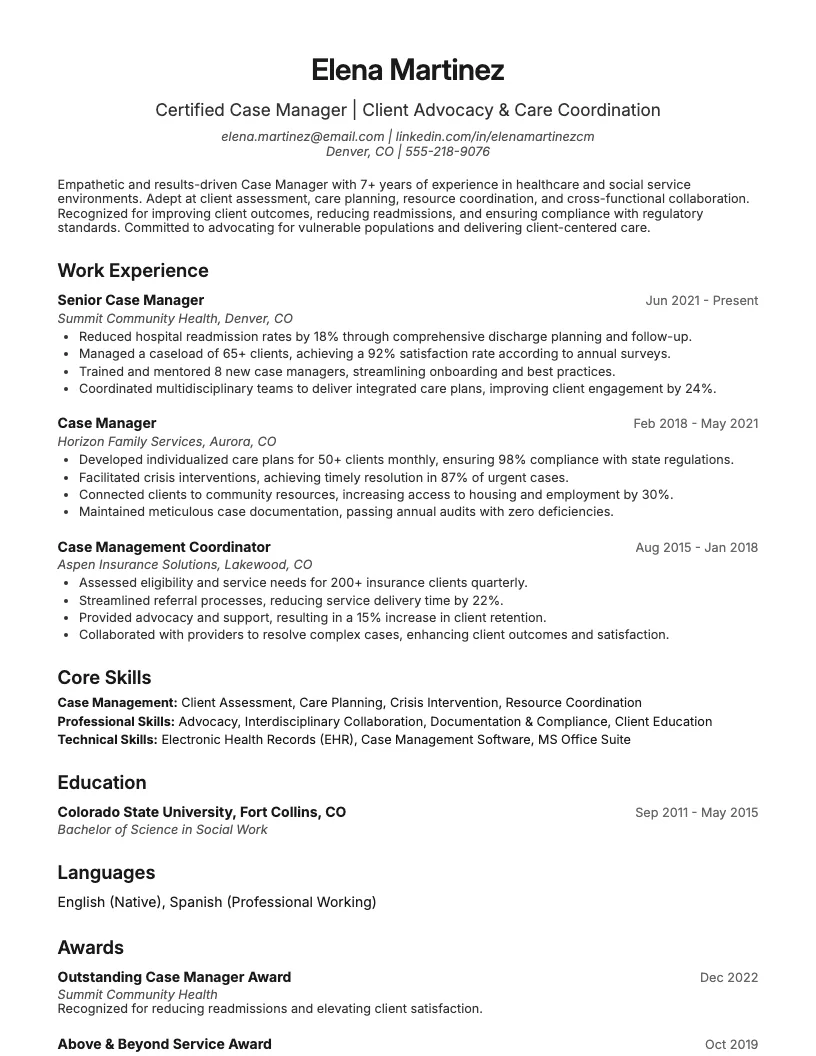 Click to enlarge
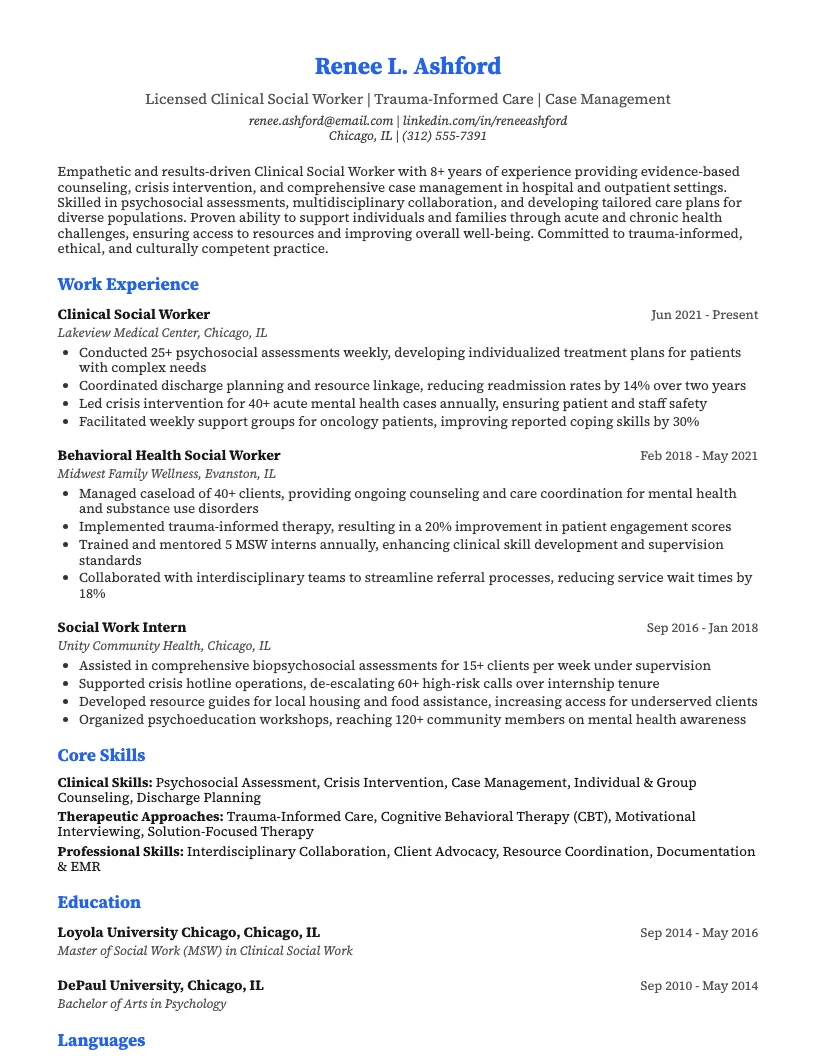 Click to enlarge
 Click to enlarge
 Click to enlarge
 Click to enlarge
 Click to enlarge
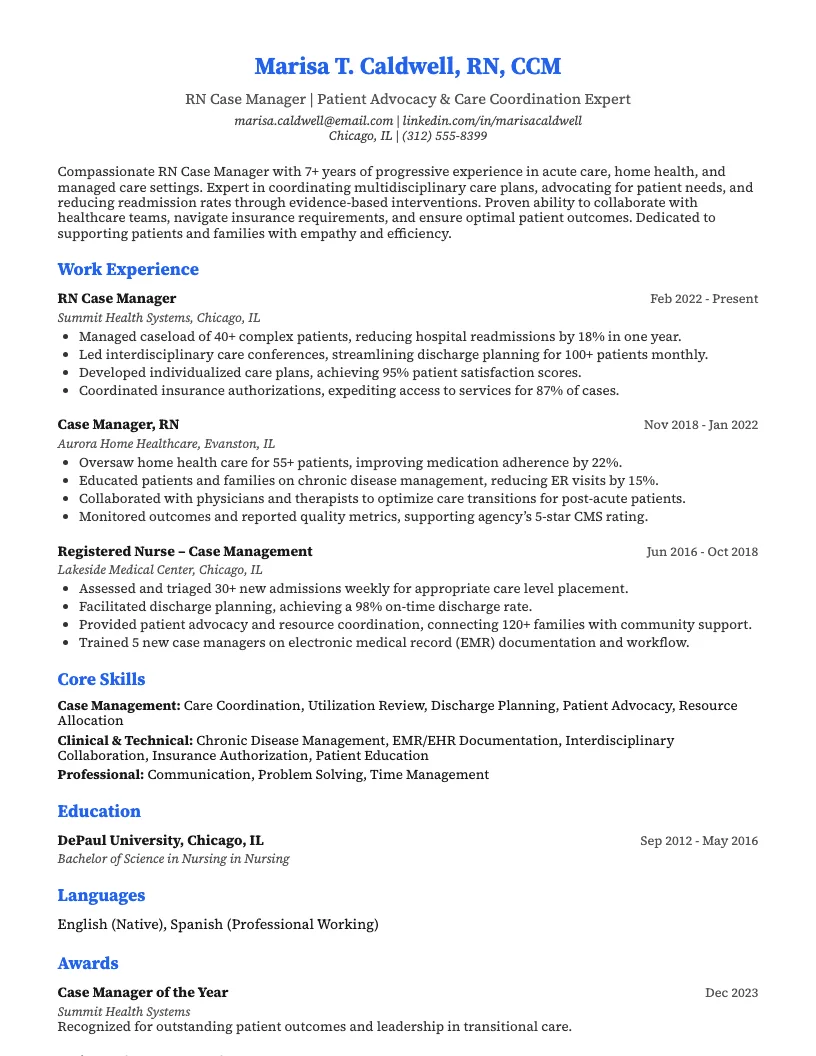 Click to enlarge
Common questions about School Social Worker resumes
A School Social Worker resume template is a pre-formatted document designed to highlight your experience in helping students, families, and school staff. ResumeJudge offers tailored templates to showcase your skills effectively.
Yes, ResumeJudge’s School Social Worker templates are ATS-friendly, meaning they use proper formatting and keywords so your resume passes automated screenings used by most schools and districts.
Use a School Social Worker resume template when applying for roles in K-12 schools, educational agencies, or community programs. ResumeJudge templates help you stand out in these education-focused environments.
Absolutely! ResumeJudge templates are fully customizable, allowing you to add your unique skills, experiences, and certifications to match the specific school or district’s requirements.
School Social Worker templates focus on counseling, crisis intervention, and student advocacy, unlike generic templates. ResumeJudge designs these to highlight education-specific skills and certifications.
Aim for a one-page resume if you’re early in your career, or two pages if you have extensive experience. ResumeJudge formats help you present all key details clearly and concisely.
Include contact info, a summary, education, certifications, work experience, and skills. ResumeJudge templates ensure these sections are organized and easy to read for school administrators.
Use specific examples like improving attendance rates or leading bullying prevention programs. ResumeJudge provides tips and sample bullet points to showcase your achievements.
Yes, especially if you’re new to the field. Listing relevant volunteer work or internships shows your commitment and practical experience-ResumeJudge templates make it easy to feature these sections.
Yes, ResumeJudge lets you download your resume in PDF, Word, or other common formats, making it easy to apply to schools or upload to job boards.
Explore more professional resume examples to inspire your job search
Use our AI-powered resume builder to create a professional, ATS-friendly resume in minutes.
Free to use • No credit card required