Medical Doctor Resume Example
See full guide on Medical Doctor resumes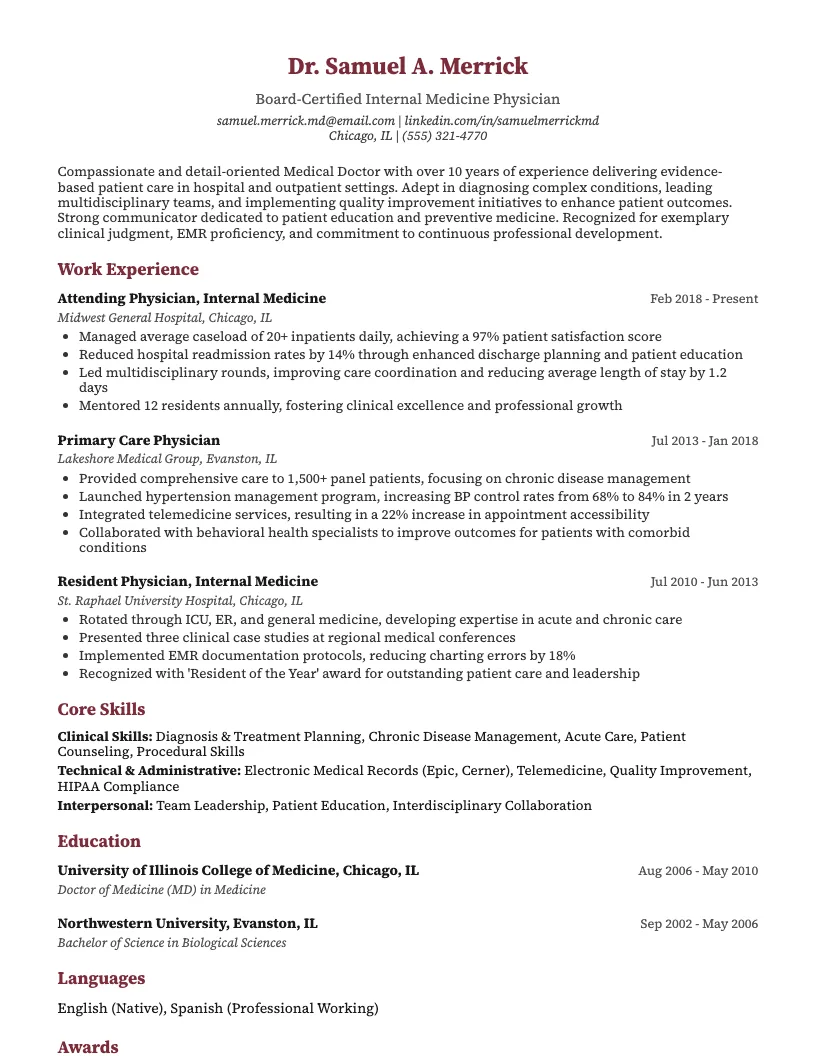 Click to enlarge
 Click to preview
Get inspired by 57+ professional Resident Doctor resume examples, each written by career experts and optimized to pass ATS scans. Pick a proven template, tailor it to your role, and download a polished resume in minutes.
Pick the specialization closest to your target role and start from a proven resume example.
If you’re looking to land a resident doctor position, you need a resume that highlights your clinical skills and training. I know the competition is tough-thousands apply every year.
A strong resume shows your academic background, hands-on experience, and patient care abilities. You also need to show clear communication and teamwork skills.
Below, I’ll break down what a standout resident doctor resume looks like and what hiring managers expect to see.
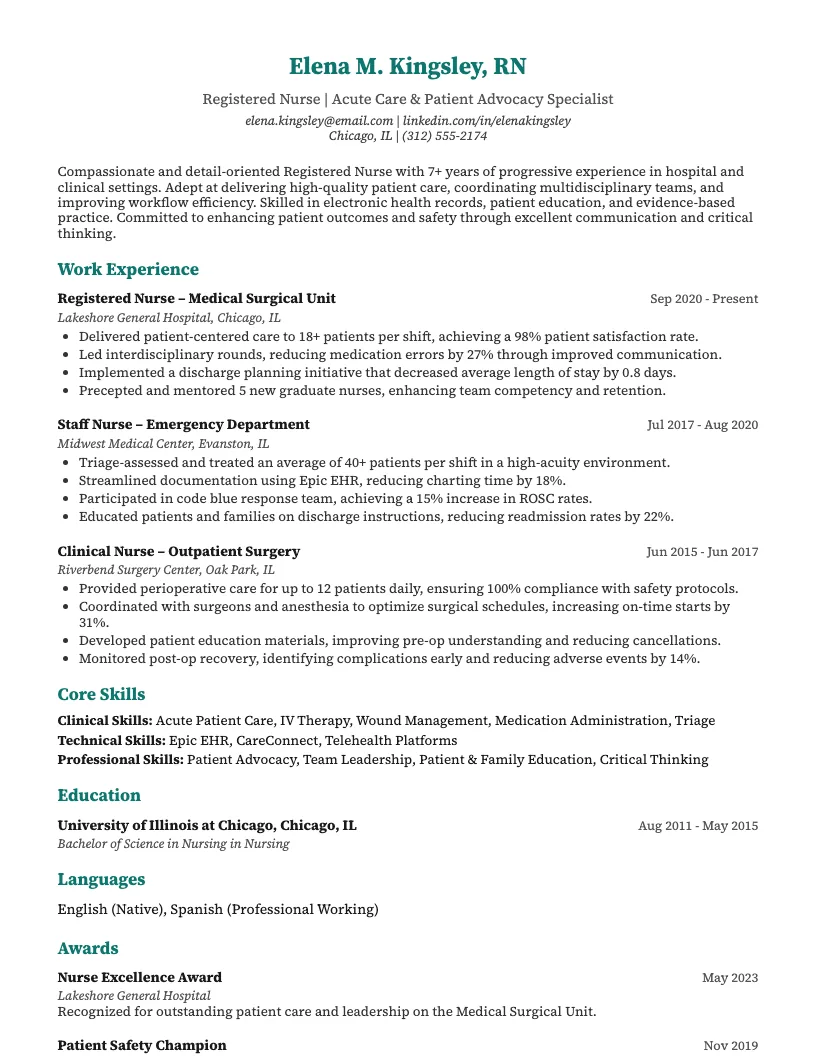
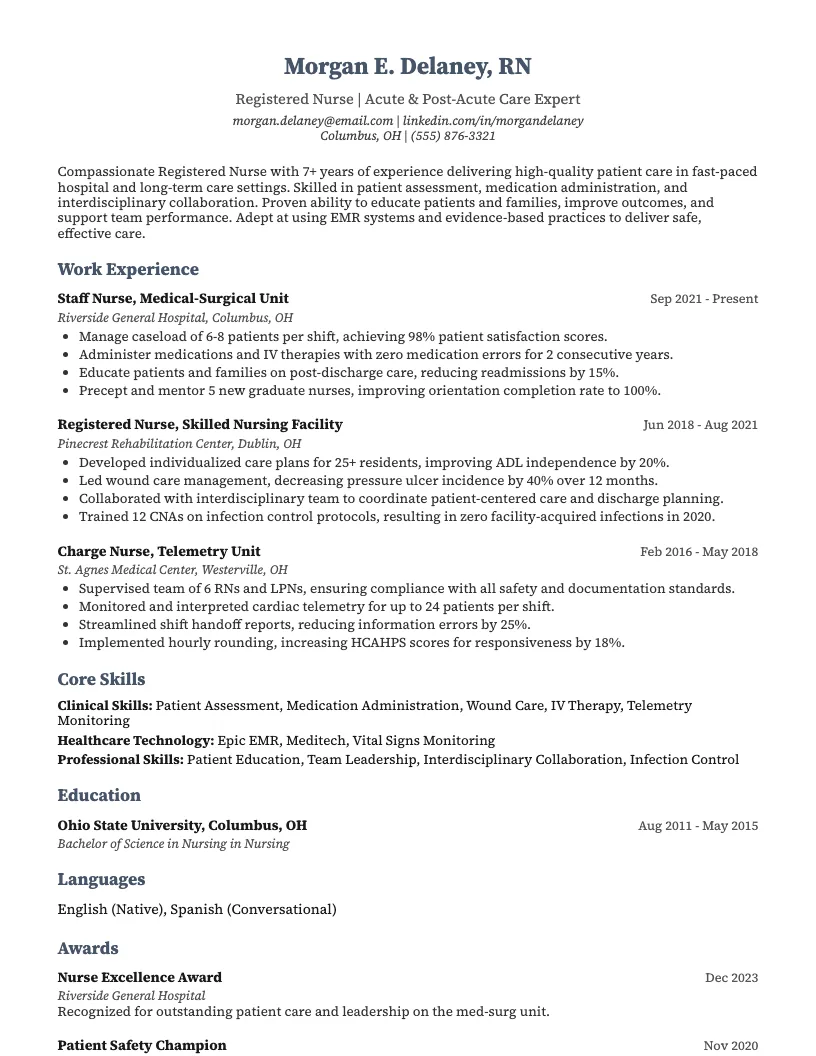
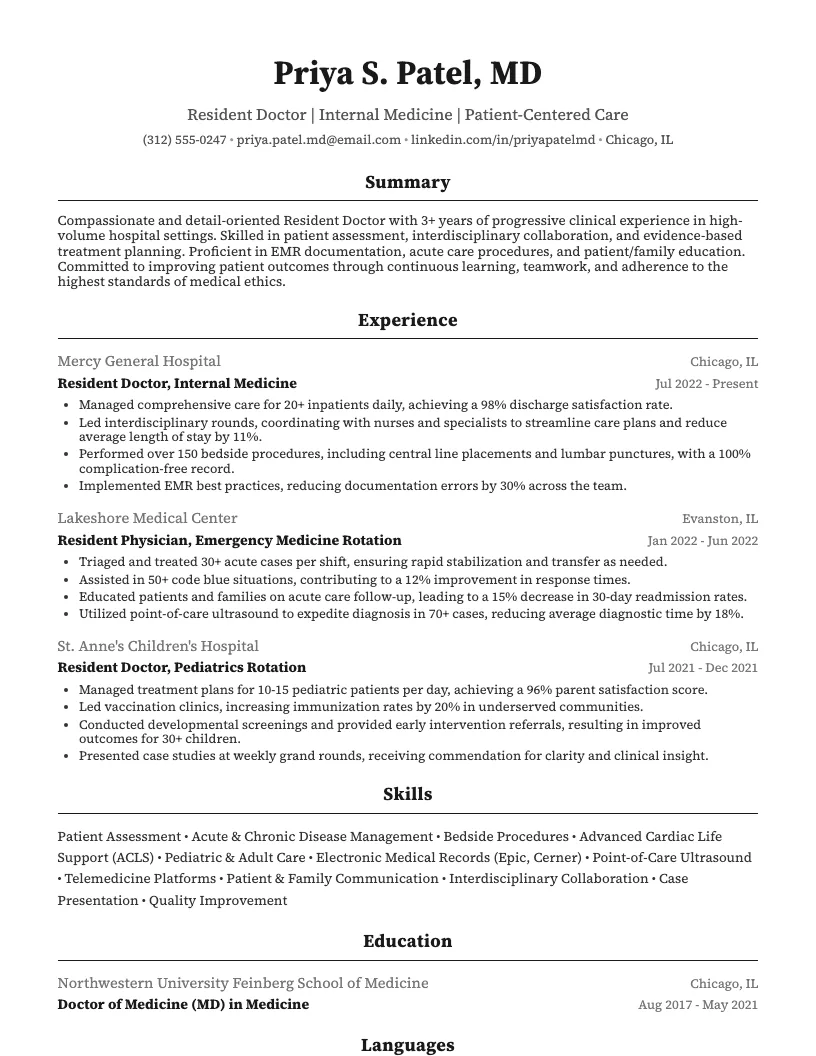
Here’s a realistic sample of a resident doctor resume. I base it on what hiring managers actually want-concise details, clear headings, and quantifiable achievements.
The sample highlights clinical rotations, research projects, and patient care experience. I always add your board exam scores and certifications. This helps show your qualifications at a glance.
You can use this sample to structure your own resume. This way, you make sure you cover all the sections employers expect, and you keep things easy to read.

Writing a resident doctor resume can feel overwhelming. You want to show your clinical skills, education, and teamwork experience clearly.
You need to know what hiring managers look for. Most programs get over 500 applications, so your resume must stand out.
I’ll walk you through the key sections, layout tips, and how to highlight your best achievements. Let’s break it down step by step.
A resident doctor is a medical school graduate who provides patient care under supervision. I usually work 60-80 hours per week across rotations in different specialties.
You handle everything from taking patient histories to performing procedures, writing notes, and making treatment decisions. This role demands strong communication, teamwork, and adaptability.
Residency programs last 3-7 years, depending on the specialty. You learn on the job, manage high-pressure situations, and develop clinical expertise every day.
When I write a resume for this role, I focus on clinical skills, leadership experience, and evidence of continuous learning, and I always pair it with a tailored cover letter. This helps program directors spot strong candidates quickly.
I always start my resume with a clear contact section. This means your name, phone, email, and LinkedIn. Some programs want your AAMC ID or a photo, but not all.
Make your education section super detailed. List your medical degree, graduation year, and school. If you have honors like Alpha Omega Alpha, show them off.
You need a strong work experience section. Focus on your clinical rotations and any hands-on roles. Use numbers-like patient volume or procedures-to show your impact.
Add a skills section. I include EMR systems, languages, and procedures I’m comfortable with. This helps program directors see your fit at a glance.
Include certifications-like ACLS, BLS, or PALS. These are often non-negotiable for resident doctor roles, so listing them saves everyone’s time.
I always keep it clean-one-inch margins, easy-to-read fonts like Arial or Calibri, and size 10-12 text. This makes your resume look professional.
Stick to a reverse chronological layout. Start with your most recent experience. Use clear section headings in bold, so recruiters spot important info right away.
Keep your resume to one or two pages. Medical recruiters often spend less than 10 seconds on a first scan, so you want your qualifications to jump out fast.
Starting out as a resident doctor, you need more than just medical knowledge. Hospitals look for a mix of clinical skills, soft skills, and the right certifications.
You spend long hours working with patients, colleagues, and supervisors. Being well-rounded in both technical and interpersonal areas matters a lot in this role.
As a resident doctor, clinical skills are the backbone of my daily work. I use these skills to diagnose, treat, and manage patient care across various settings.
You need strong history-taking and physical examination abilities. These help you identify symptoms, order relevant tests, and interpret results quickly-sometimes within minutes.
Procedural skills matter, too. I regularly perform tasks like venipuncture, suturing, and managing airways. Staying sharp here means practicing often and asking for feedback from supervisors.
There are always new techniques and protocols. You have to keep learning, stay updated on evidence-based practices, and adapt fast during emergencies or rotations.
Being a resident doctor isn’t just about medical knowledge. I need excellent communication skills to explain diagnoses, listen to patients, and work with diverse teams every day.
Empathy, adaptability, and stress management are crucial. You deal with tough situations, long hours, and emotional conversations. There’s no shortcut-these soft skills directly impact patient trust and team dynamics.
Professionalism also matters a lot. You show up on time, handle feedback, and respect patient confidentiality. Hospitals expect high standards, and it’s these skills that set strong residents apart.
To practice as a resident doctor, I need an active medical license. In the U.S., this usually means passing all three steps of the USMLE.
You might also need Basic Life Support (BLS) and Advanced Cardiovascular Life Support (ACLS) certifications. Hospitals often require these current certificates for all residents on staff.
There are always state-specific requirements. I check with my state’s medical board to stay compliant. Keeping my certifications up-to-date helps prove my commitment and professionalism.
Your experience and education sections give employers a snapshot of your clinical skills and achievements. Recruiters look for real results and specific clinical details.
You want to show the range of your clinical rotations, research, and academic honors. Numbers, locations, and dates help your story stand out.
I always focus on the details that show my growth and skills. That makes my background easier for hiring managers to understand.
When I write my resume, I always start by breaking down my clinical rotations and residency experience clearly. This gives recruiters a solid sense of my hands-on skills.
You want to focus on the number of hours, patient caseload, and specialties. Detailing these specifics-like “completed 1,200+ hours in internal medicine”-shows your real-world experience.
Highlight any leadership roles or teaching moments during rotations, and consider referencing relevant cover letter examples for inspiration. For example, acting as team lead or mentoring new interns stands out as proof of your initiative.
Research and publications show commitment to evidence-based medicine. I list peer-reviewed articles, case reports, or poster presentations, including journal names and dates. This adds credibility to my resume.
You should highlight first-author roles or high-impact journals. Quantify your contributions-like “published three papers” or “presented at two conferences.” This helps programs see your academic strengths fast.
If you have ongoing projects, mention them briefly, and look to this example for how to frame research experience in your application. Just keep it clear and concise. This section bridges your clinical training with your interest in pushing medicine forward.
Highlighting honors, scholarships, or top exam scores shows your commitment early on. Listing awards like Dean’s List or Alpha Omega Alpha makes your dedication clear.
I include leadership roles in student organizations or volunteer groups. If you led a project or organized events, mention the impact-like raising $10,000 for clinics.
Don’t forget special certifications or language skills gained during med school. These set you apart and show extra value to residency programs and employers alike.
Writing a strong summary is the first step to getting noticed as a resident doctor. You only have a few seconds to make your resume stand out.
I see a lot of people struggle with this section. If you get it right, you show hiring managers your skills and impact fast.
Your summary should highlight clinical experience, research, or patient care. It’s smart to mention any leadership roles, publications, or board scores if you have them.
Let’s look at what actually works in a resident doctor summary-and what mistakes to avoid.
A strong resume summary gives recruiters a quick snapshot of your skills and experience. In just 2-3 sentences, I highlight my clinical background and specific accomplishments.
You want to show your medical expertise, patient care skills, and any leadership roles. I like to add quantifiable results, like “managed 30+ acute care cases daily.”
Tailor your summary for each job. This helps your application stand out and signals you understand the employer’s needs. Keep it clear, direct, and relevant.
I see a lot of resident doctor resumes that use generic language like “hard-working” or “team player.” These phrases don’t show your actual clinical impact or skills.
You want to avoid listing too many technical terms without context. Instead, mention specific accomplishments-like the number of patient cases you manage or procedures you assist with.
Don’t forget to tailor your summary for each role. Recruiters spend just 7 seconds scanning resumes, so every word in your summary needs to count.
Choosing the right action verbs and keywords helps your resume get noticed. Hospitals use applicant tracking systems that scan for specific terms linked to medical roles.
I see a big difference when you tailor your language. The right words highlight your clinical skills and leadership abilities, and they improve your chances by up to 70%.
I always start my resident doctor resume with action-packed verbs. It sets the right tone and shows that I take initiative in clinical settings.
There are specific verbs that highlight leadership, collaboration, and technical expertise. Think "diagnose," "coordinate," "administer," or "educate." These words reflect real medical duties.
Using strong action verbs boosts your credibility. Recruiters say resumes with clear, active language get up to 40% more callbacks in healthcare roles.
Applicant Tracking Systems (ATS) look for keywords like patient care, clinical rotations, diagnosis, and EMR proficiency. Using the right terms boosts your chances of getting noticed.
I always recommend pulling keywords straight from the job posting. Around 75% of large hospitals use ATS, so matching your language matters more than you might think.
Don’t just stuff keywords, though. Integrate them naturally in your experience and skills sections. This helps both the bots and actual recruiters see your real strengths.
Finding a solid resident doctor resume template saves time and stress. I know most hiring teams scan resumes in under 7 seconds, so layout and format matter.
Here, you can check out downloadable templates that work well for medical roles. You’ll also get tips to make your resume stand out, even if you’re short on experience.
I see a lot of resident doctors looking for quick, editable templates that fit their clinical background. Having ready-made options saves serious time and stress.
There are templates out there with customizable sections, so you can highlight research, rotations, and procedural skills. Most formats use clear fonts and easy layouts for ATS systems.
You can pick from Word, Google Docs, or PDF templates. Around 80% of employers prefer simple, professional designs-nothing too flashy or complicated.
I always start by updating my contact info and credentials. Double-check your medical license numbers and certifications so everything's up to date and accurate.
Tailor your work experience to fit the specific residency or hospital. Use keywords from the job listing-this helps your resume get past applicant tracking systems.
Highlight your clinical rotations, research, and any leadership roles. I usually keep bullet points short, around 2-3 lines each, to make them easy to scan.
Customizing your template doesn't take long-usually about 20-30 minutes. This small effort really helps your resume stand out to hiring managers.
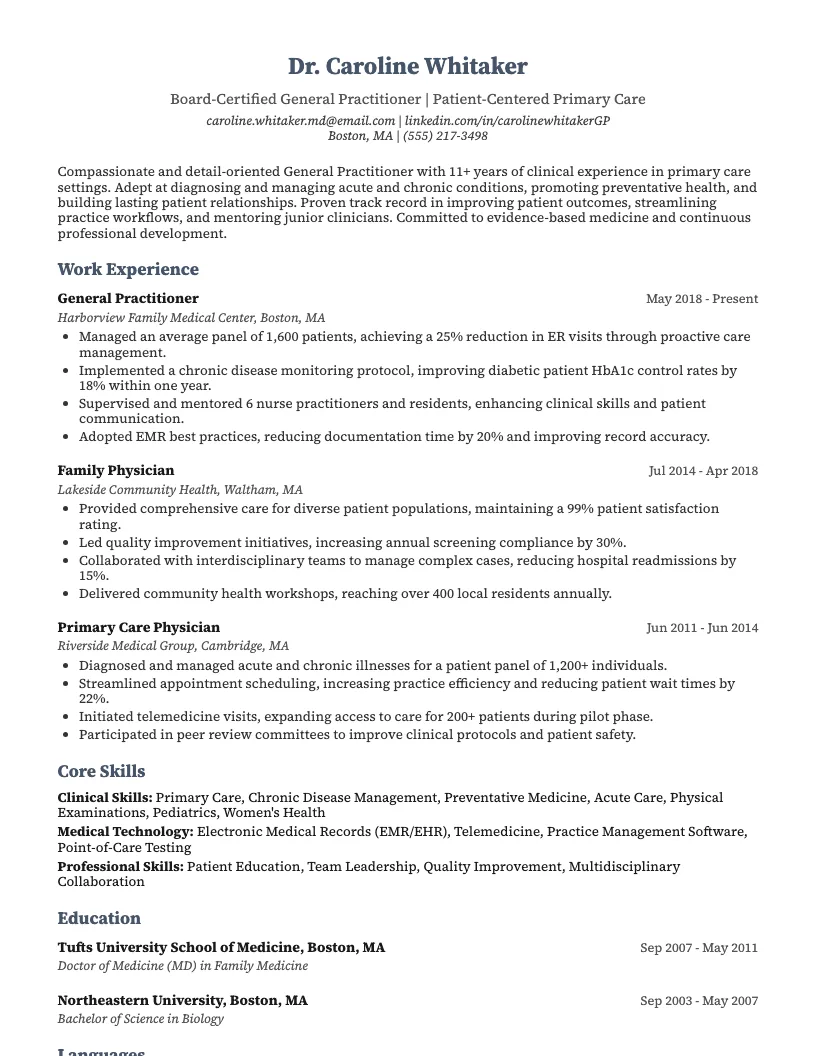
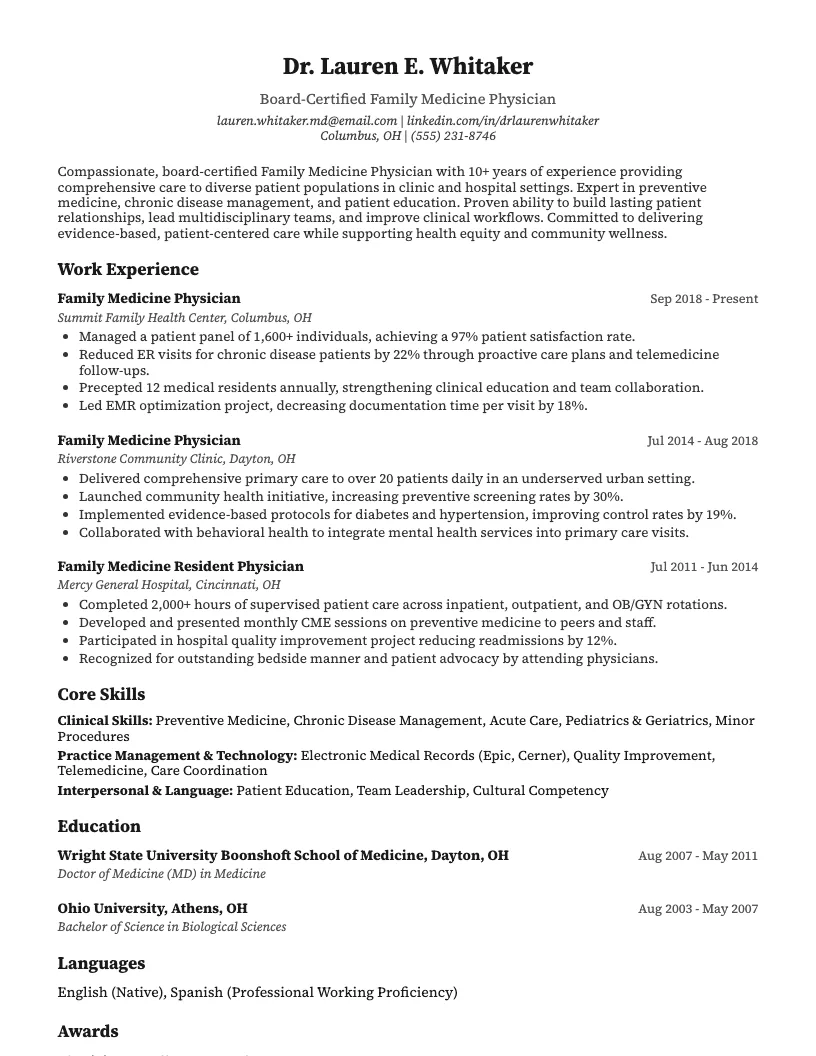
Browse Resident Doctor resume examples for related roles. Preview any example, open it in the builder, or read its full guide.
Click to enlarge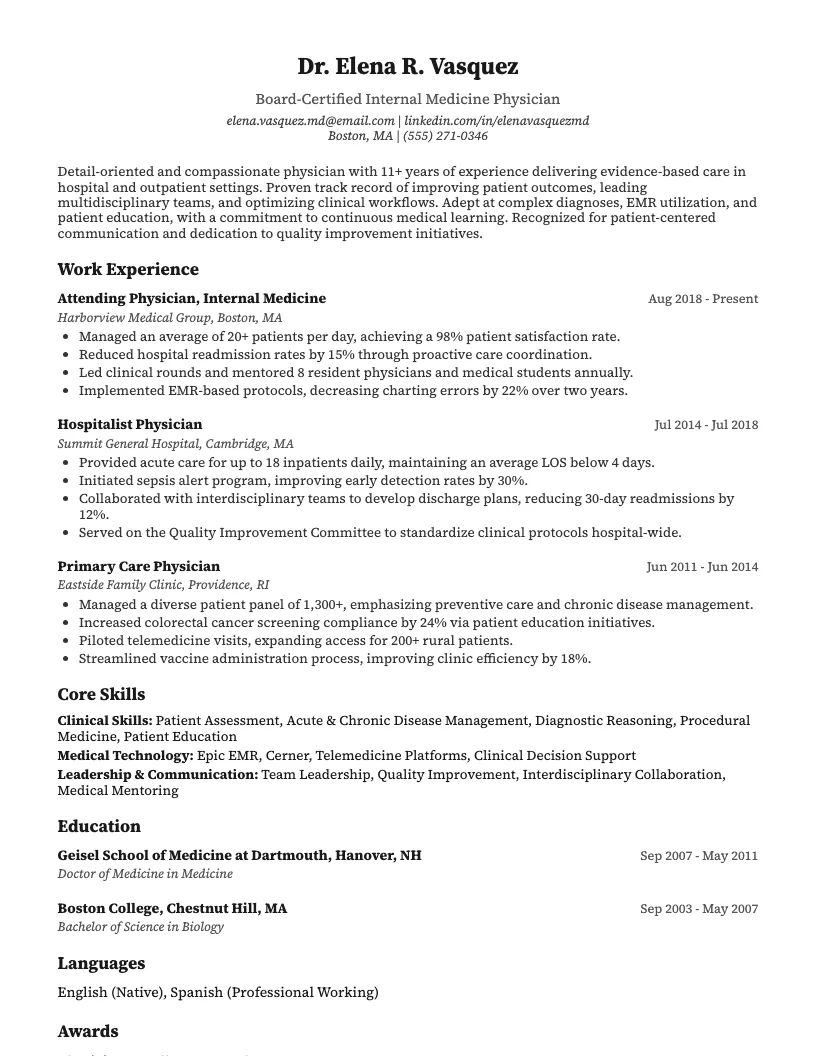 Click to enlarge
 Click to enlarge
 Click to enlarge
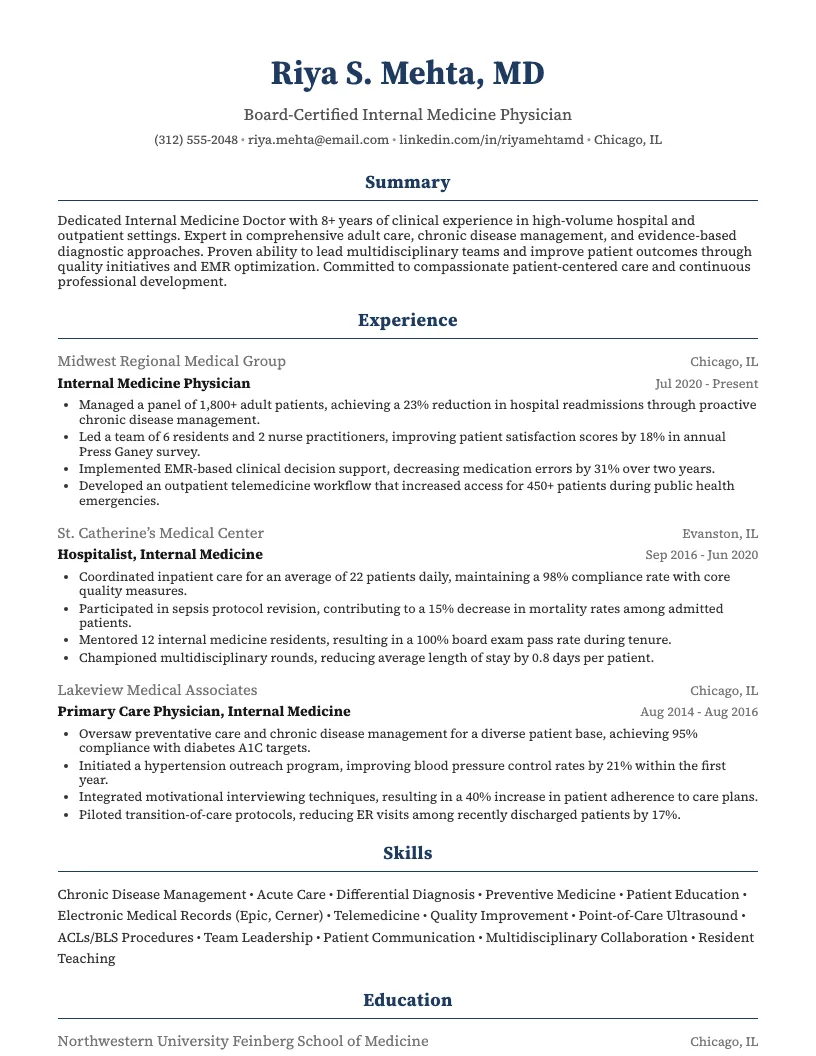 Click to enlarge
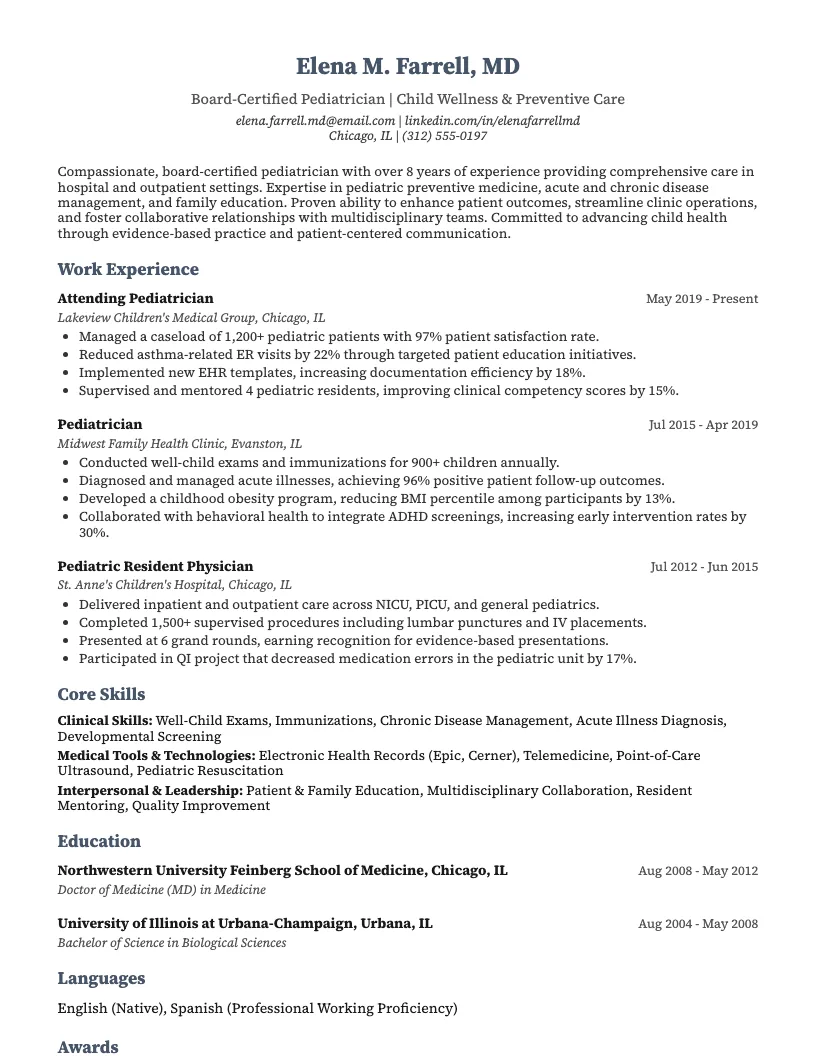 Click to enlarge
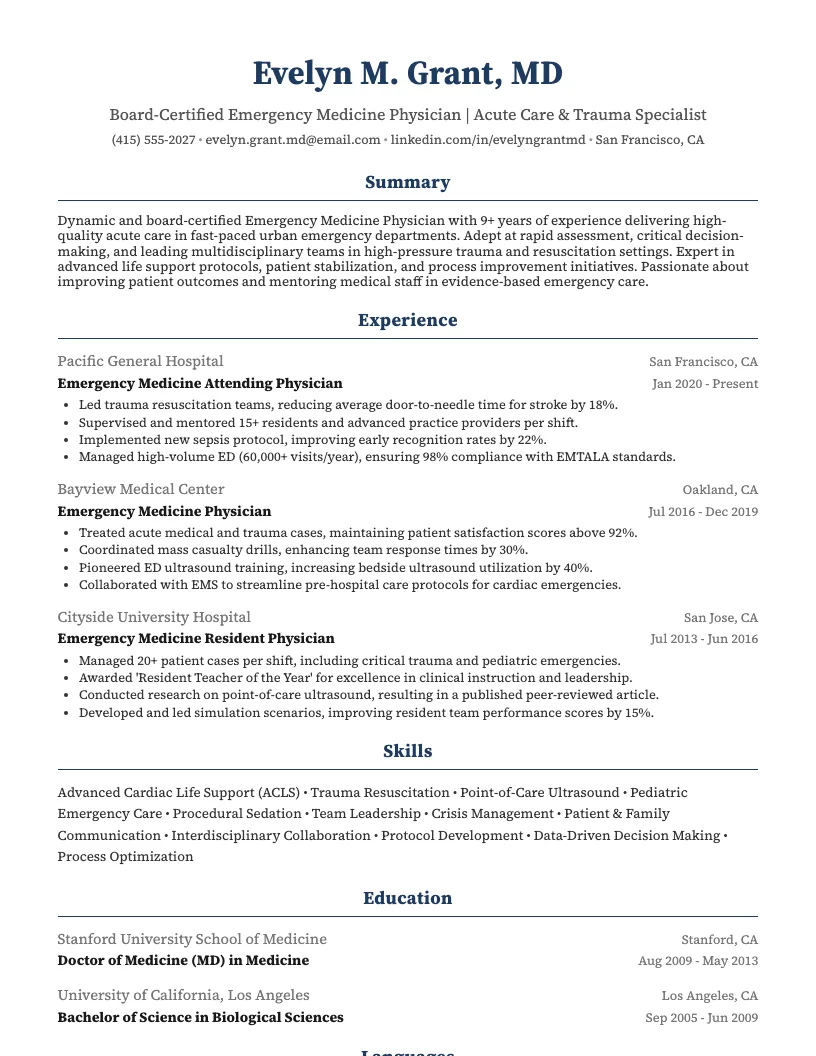 Click to enlarge
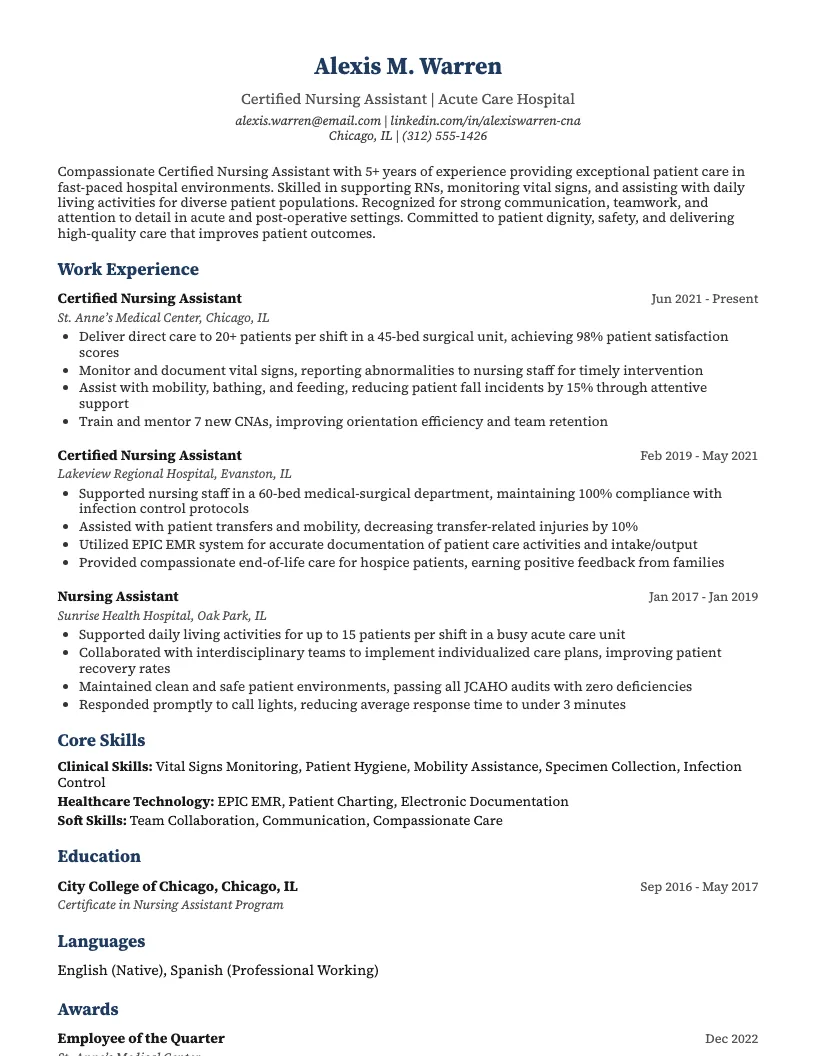 Click to enlarge
Common questions about Resident Doctor resumes
A Resident Doctor resume template is a pre-formatted document tailored for medical graduates in residency. It highlights skills, education, and clinical experience specific to residency programs. ResumeJudge makes creating a polished, targeted resume quick and easy.
Yes, most Resident Doctor resume templates are designed to be ATS-friendly, ensuring your application passes automated screening. ResumeJudge templates use standard formatting and keywords for better compatibility with hospital HR systems.
Use a Resident Doctor resume template when applying for residency programs, fellowships, or hospital positions. It’s ideal for those in internal medicine, surgery, pediatrics, or any medical specialty. ResumeJudge offers templates for every clinical focus.
Absolutely! You can personalize your Resident Doctor resume template by adding rotations, research, or certifications. ResumeJudge makes it simple to tailor sections so your unique experiences stand out to employers.
Resident Doctor templates emphasize medical training, clinical skills, and relevant certifications, unlike general resumes. ResumeJudge designs templates specifically for the healthcare industry, ensuring you include what program directors seek.
A Resident Doctor resume should typically be one to two pages, focusing on recent education, rotations, and research. ResumeJudge helps you keep content concise and relevant, maximizing your impact without excess length.
Include contact info, education, clinical rotations, research, certifications, and skills. ResumeJudge templates pre-fill these sections, so you don’t miss important details that residency programs expect.
Yes, ResumeJudge offers Resident Doctor templates tailored for specialties such as pediatrics, surgery, and internal medicine. These examples help you highlight specialty-specific experience and skills.
Definitely! Resident Doctor templates feature sections for research, publications, and presentations. ResumeJudge makes it easy to showcase your academic achievements alongside clinical experience.
Yes, you can adapt a Resident Doctor resume template for fellowship applications by emphasizing relevant research and clinical skills. ResumeJudge provides editable templates to fit different advanced medical training programs.
Explore more professional resume examples to inspire your job search
Use our AI-powered resume builder to create a professional, ATS-friendly resume in minutes.
Free to use • No credit card required