Clinical Dietitian Resume Example
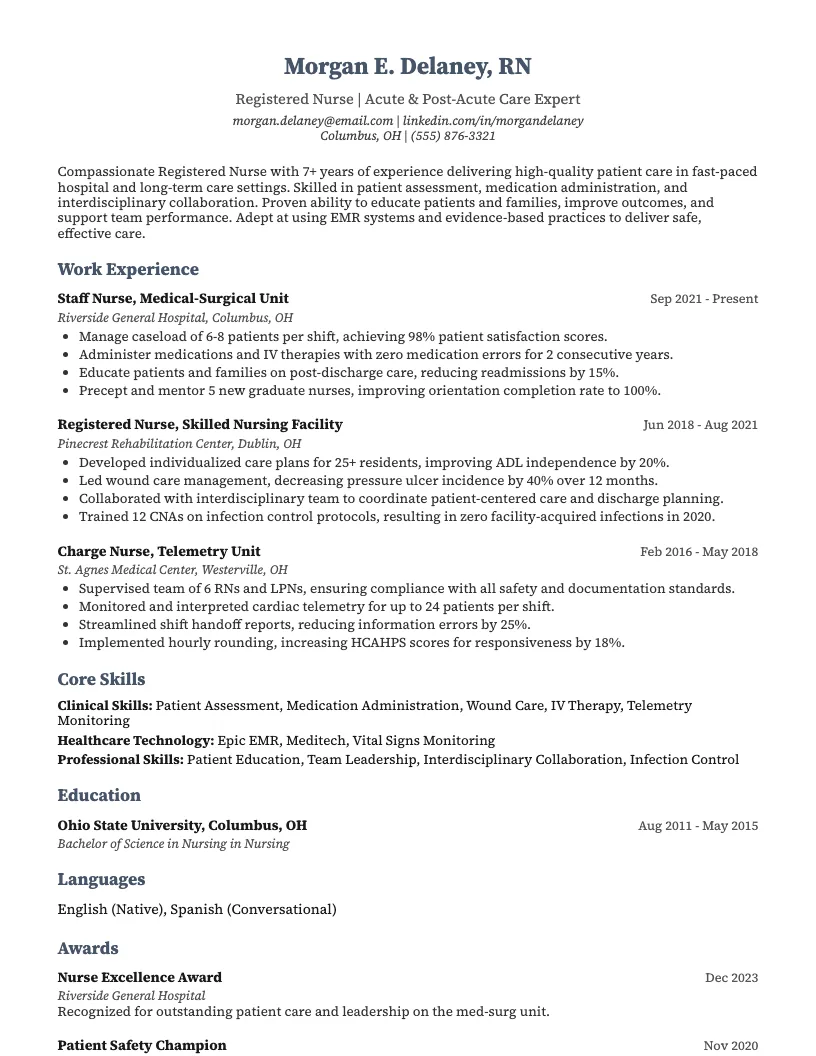
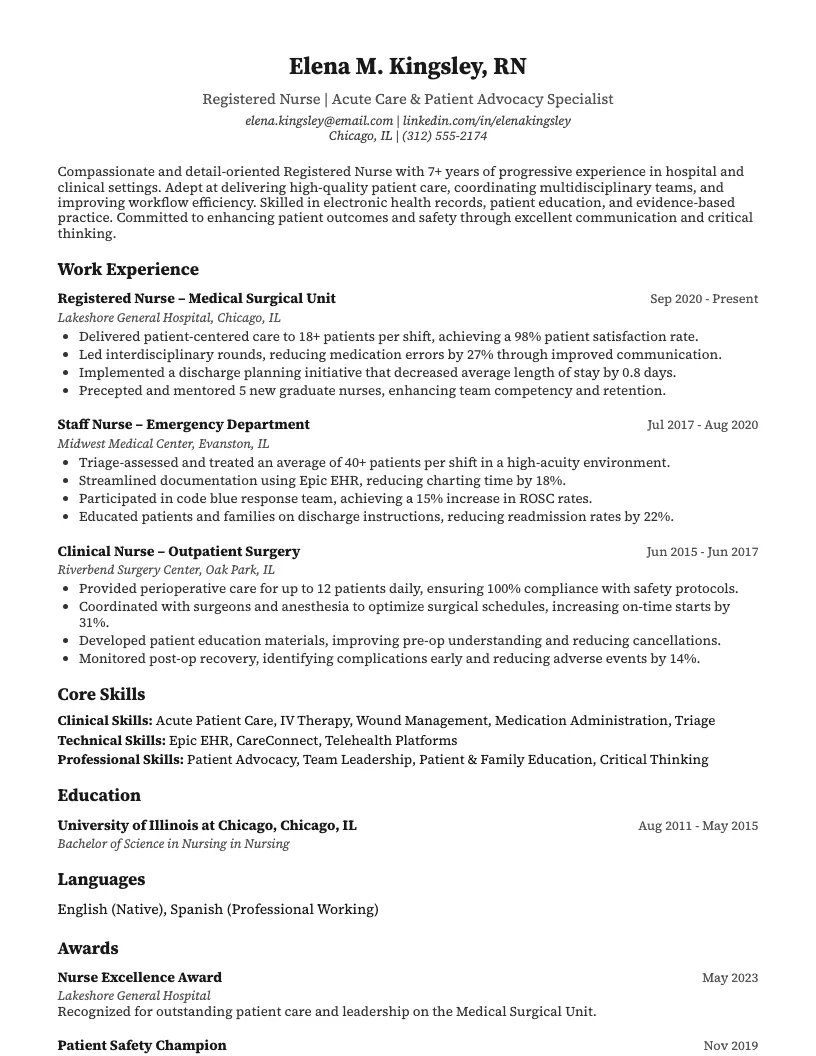
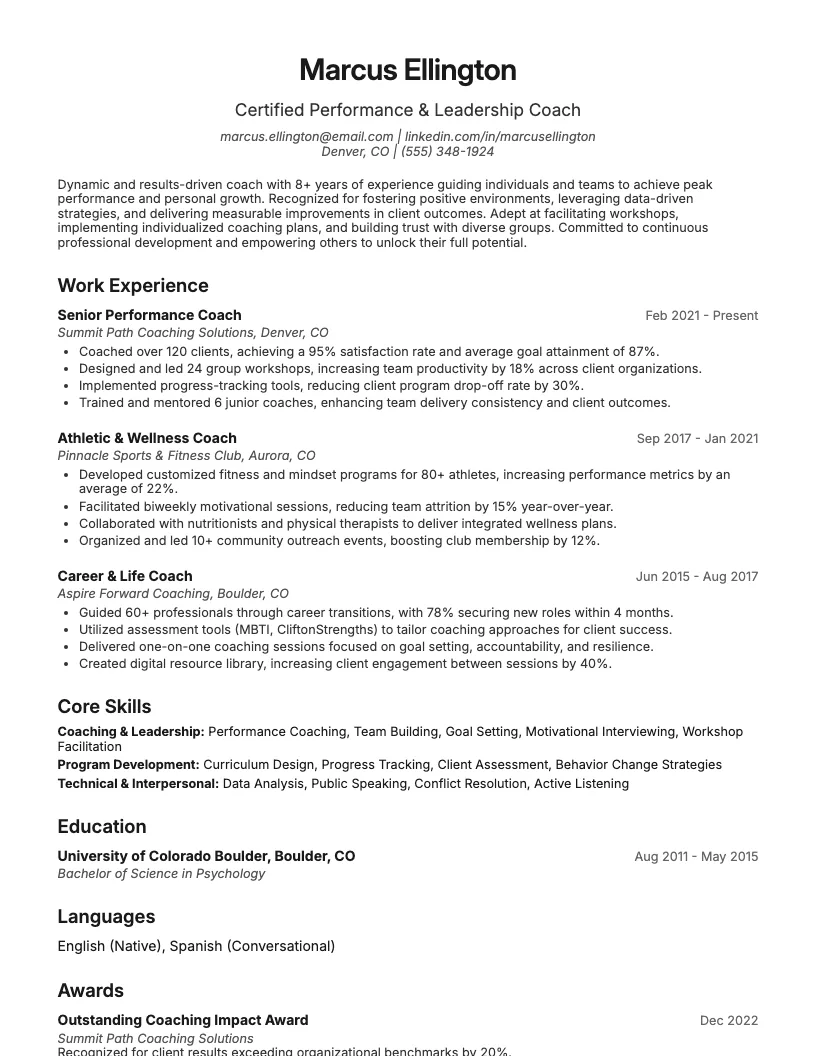
See full guide on Clinical Dietitian resumes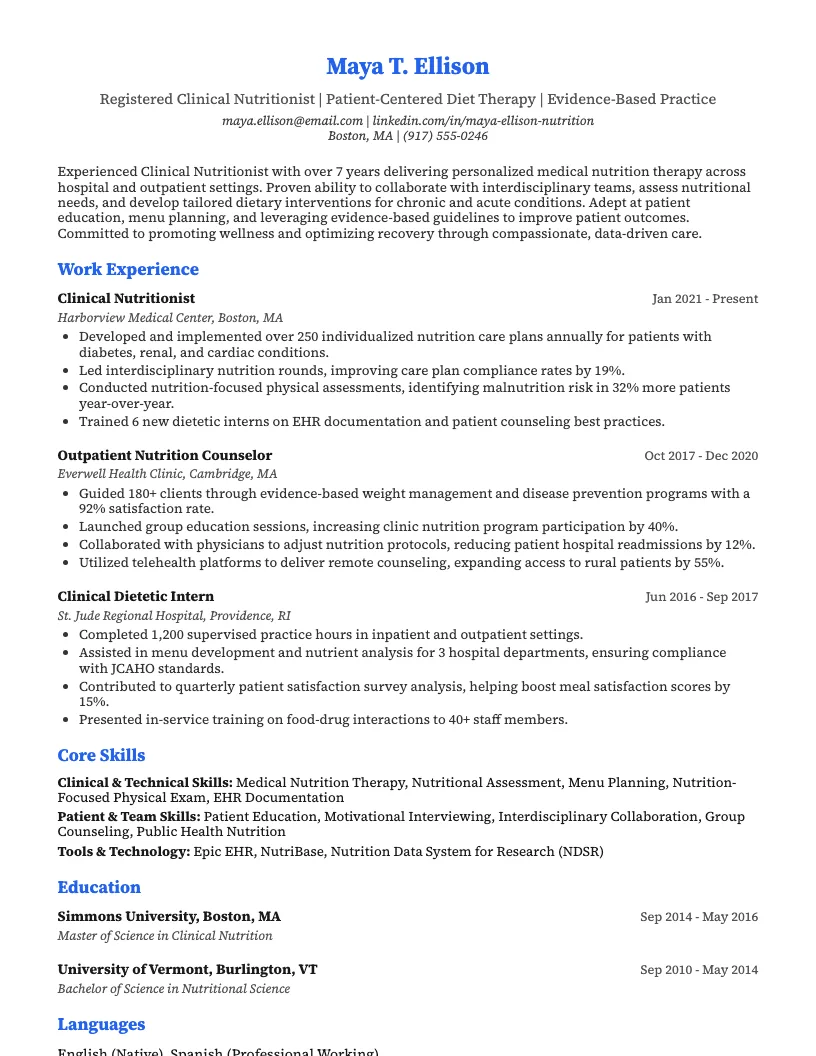 Click to enlarge
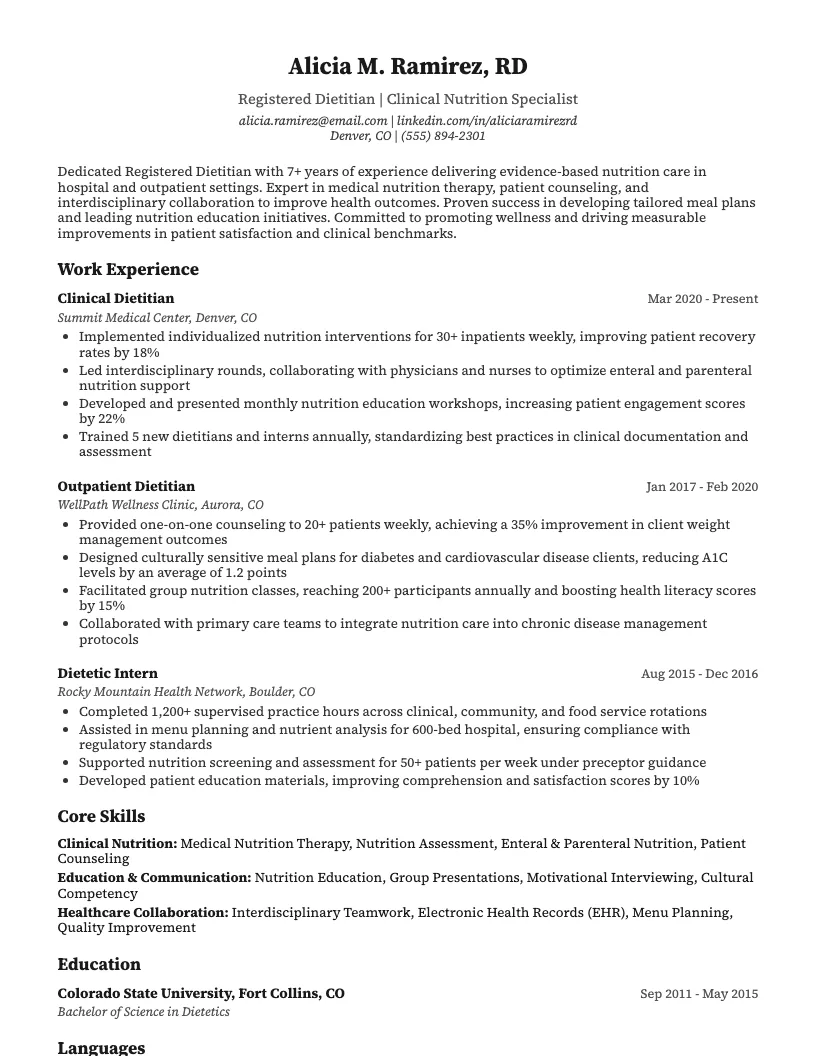 Click to preview

Get inspired by 50+ professional Registered Dietitian resume examples, each written by career experts and optimized to pass ATS scans. Pick a proven template, tailor it to your role, and download a polished resume in minutes.
Pick the specialization closest to your target role and start from a proven resume example.
I know how competitive the registered dietitian field is. Every year, over 5,000 people earn this credential in the U.S. alone.
You need a resume that shows your clinical skills, nutrition expertise, and client impact. I’ll walk you through what works right now.
I compare the registered dietitian resume to other jobs and even top academic samples. That way, you see exactly how you stack up.
If you compare a registered dietitian resume to a security guard resume sample, you’ll notice some major differences in skills and focus. Each highlights unique strengths for the job.
A registered dietitian resume usually shows healthcare knowledge, nutrition planning, and counseling skills. Meanwhile, a security guard resume sample emphasizes vigilance, physical fitness, and emergency response abilities.
Both resumes need clear sections for experience and certifications. I always recommend including quantifiable achievements-like “reduced patient readmissions by 20%” or “patrolled 30,000 sq. ft. facility.” This helps your resume stand out.
When you compare a registered dietitian resume sample to a Harvard resume sample, you see some clear differences in style and structure. Harvard's format is strict-think one-page, clean margins, and no fluff.
A Harvard resume sample usually lists education and honors right at the top. For dietitians, I recommend pushing clinical experience and certifications up front instead. This gets employers' attention fast.
If you're aiming for a healthcare job, skip the ultra-academic tone. Use action words and quantifiable results-like "counseled 80+ patients weekly"-to stand out. This helps you stay professional but relatable.
No matter what template you use, always tailor your resume. Harvard's approach works for some fields, but in nutrition, real-world impact and credentials matter more. Choose the style that fits your goals.

Writing a registered dietitian resume means showing your unique skills, credentials, and experience. This helps you stand out in a field with over 112,000 professionals in the U.S.
You want your resume to look clean, organized, and relevant. Recruiters spend less than 7 seconds scanning each resume, so every detail counts.
You’ll need to highlight your education, licenses, and skills. I also focus on real experience and up-to-date certifications, since employers value hands-on knowledge.
The right resume format makes a huge difference. I usually recommend the reverse-chronological format-it's what 90% of employers prefer. It puts your latest experience front and center.
If you’re a new grad or changing careers, a functional or combination format works too. These focus more on your skills and less on job titles or gaps.
Keep your layout clean and simple. Stick to one page if you have less than 10 years of experience. Use clear section headers, bullet points, and lots of white space.
I always put my degree and accredited program right at the top of my resume. Employers often look for a bachelor’s in dietetics, nutrition, or a related field.
You want to mention your ACEND-accredited program clearly. Over 80% of employers say this is a must-have for registered dietitians.
List your graduation year and include any academic honors, like Dean’s List or GPA above 3.5. This helps you stand out, especially if you’re newer to the field.
Focus on hands-on roles where you deliver nutrition plans, run assessments, or educate clients. Quantify your impact-like “counseled 60+ patients weekly” or “improved patient outcomes by 20%.”
Highlight settings where you work, such as hospitals, clinics, schools, or private practice—if you're applying to clinical settings, consider including a cover letter tailored to that environment. Employers want to see you adapt your skills to different environments and populations.
Use bullet points to show specific achievements. For example, “Developed meal plans for diabetes patients” or “Led group workshops for 100+ participants.” This helps your experience stand out.
You want your skills section to stand out. List both hard skills like meal planning, nutrition counseling, and EHR software, and soft skills like empathy, communication, and teamwork.
I always include data-driven skills. For example, nutrition analysis, patient education, and menu development are huge. Hospitals and clinics look for these on over 70% of job postings.
Highlight your ability to work with diverse populations, manage time, and adapt quickly. Show you know HIPAA and can handle confidential data. This shows you’re ready for real-world practice.
Make sure you list every relevant certification and license. Most employers want to see your Registered Dietitian (RD) or Registered Dietitian Nutritionist (RDN) credential right up front.
Include your state license if you have one. About 47 states require dietitians to be licensed, so it’s a big deal for your resume.
If you have extra certifications, like Certified Diabetes Care and Education Specialist (CDCES) or Board Certified Specialist in Oncology Nutrition (CSO), add them too. This helps your application stand out.
Once you’ve got your credentials and licenses in order, your resume paints a full, professional picture.
A strong summary grabs attention in seconds. You want to show your clinical experience, certifications, and the results you deliver to patients.
I always focus on quantifiable achievements, like patient satisfaction scores or improved health outcomes. Employers look for real impact, not just buzzwords.
The right summary sets you apart in a crowded field. Next, I'll break down what makes a summary effective for entry-level and experienced dietitians.
If you’re applying for a registered dietitian job, you need the right mix of skills. I see employers ask for both clinical experience and strong communication skills.
You want to show you handle patient care, nutrition counseling, and documentation. Employers also like candidates who stay current on research and can work with electronic health records.
Your experience section is the heart of your resume. This is where you show what you actually do as a registered dietitian.
You want to highlight specific job duties and show your impact. Hiring managers look for numbers and clear results.
I always focus on how I describe my daily responsibilities. It helps recruiters understand my role and see my value.
You also want to back up your achievements with hard data. Numbers make your work stand out and build credibility fast.
When I write my professional experience as a dietitian, I focus on what I actually do every day. This shows hiring managers my true impact.
You want to use clear, action-based language-words like “counsel,” “develop,” “educate,” and “monitor.” This helps your resume sound dynamic and specific.
Describe your core duties: conducting assessments, creating nutrition plans, leading group sessions, or collaborating with doctors—these are all responsibilities you can highlight in a cover letter for a renal dietitian role. Mention the types of patients or settings you work in-like hospitals, clinics, or private practice.
If you supervise or train others, state it directly. For example, “I train five interns each semester” or “I lead nutrition workshops for staff.” This adds real context.
Always tailor your descriptions to fit the job you want. Pull keywords from the job description and weave them into your experience section naturally.
I always include numbers in my bullet points. Saying “Educated 120+ clients per month” or “Reduced readmission rates by 18%” instantly makes my impact clear.
You can track outcomes like patient satisfaction scores, weight loss percentages, or improved lab values. This gives your experience weight and shows real proof of your skills.
Even if you’re early in your career, use stats from group classes or food service audits. Specific numbers boost credibility and help your resume stand out.
If you want to become a registered dietitian, you need the right education and credentials. It’s pretty competitive, so having the right background matters.
Most dietitians I know start with a bachelor’s degree in nutrition or dietetics. You also need supervised practice and to pass the national exam.
Certifications can help you stand out, too. Some employers look for specialty credentials or advanced degrees. Let’s break down what’s required and what’s popular in the field.
To kick things off as a registered dietitian, you need at least a bachelor’s degree in dietetics, nutrition, or a related field. Most programs take about four years.
You usually cover subjects like biochemistry, food science, clinical nutrition, and community health. There’s also a supervised practice component-at least 1,000 hours of hands-on training.
I always tell students: pick an ACEND-accredited program. This helps you meet the academic requirements for the dietitian exam and future state licensure.
There are tons of specialty certifications out there, and if you’re targeting sports nutrition, you might also want to check out a cover letter for that specialty. The Certified Diabetes Care and Education Specialist (CDCES) and Board Certified Specialist in Sports Dietetics (CSSD) stand out as top choices.
I see a lot of dietitians pick up the Certified Nutrition Support Clinician (CNSC) or Certified Specialist in Pediatric Nutrition (CSP) if they're focused on clinical practice. This helps you stand out in hospitals.
You don’t need these to become a registered dietitian, but I think they open doors. About 30% of dietitians hold at least one specialist certification, according to the Academy of Nutrition and Dietetics.
I notice many hiring managers look for more than just education and work history. These extra sections can help your resume stand out in a stack of applications.
You can highlight your professional affiliations, volunteer experience, and awards. Each one lets you show your skills, dedication, and recognition in the field.
Listing professional affiliations shows you keep up with industry standards. It highlights your commitment to ongoing education and staying connected with the latest in nutrition.
I recommend including groups like the Academy of Nutrition and Dietetics or your state’s dietetic association. Over 75,000 dietitians in the U.S. belong to these organizations.
This helps employers see that you take your career seriously. You also gain access to resources, job boards, and exclusive events by joining these groups.
Adding volunteer experience shows you apply your nutrition skills outside of paid jobs. I like to highlight my community work, health fairs, or nonprofit projects here.
You can list anything from planning nutrition workshops to supporting local food banks. This helps hiring managers see your dedication and real-world impact.
Be specific. For example, say “Led monthly nutrition classes for 40+ low-income families.” Numbers help your contributions stand out and show measurable value.
Listing awards or honors on your resume shows I stand out in the field. Things like scholarships, research grants, or employee recognition matter to hiring managers.
You can include awards from professional organizations, universities, or your workplace. Even a simple “Employee of the Month” nod counts if it’s relevant.
This section wraps up those extra resume highlights, helping you show off your unique value. It’s a great way to end your additional sections on a strong note.
If you want to stand out as a registered dietitian, your resume needs to highlight your credentials and experience. I know that hiring managers look for specific skills and certifications.
A good resume helps you showcase your work with patients, meal planning, and nutrition programs. I’ll show you templates that employers actually like and real examples that work.
You’ll see how to list your education, clinical hours, and achievements. This makes it easier for recruiters to spot your strengths right away.
Customizing your resume helps you catch a hiring manager’s eye. A tailored resume lands interviews 50% more often than a generic one.
I focus on highlighting skills, certifications, and real results. You want every section to match what employers in healthcare look for right now.
Next, I’ll break down how you can target your experience and make your resume stand out.
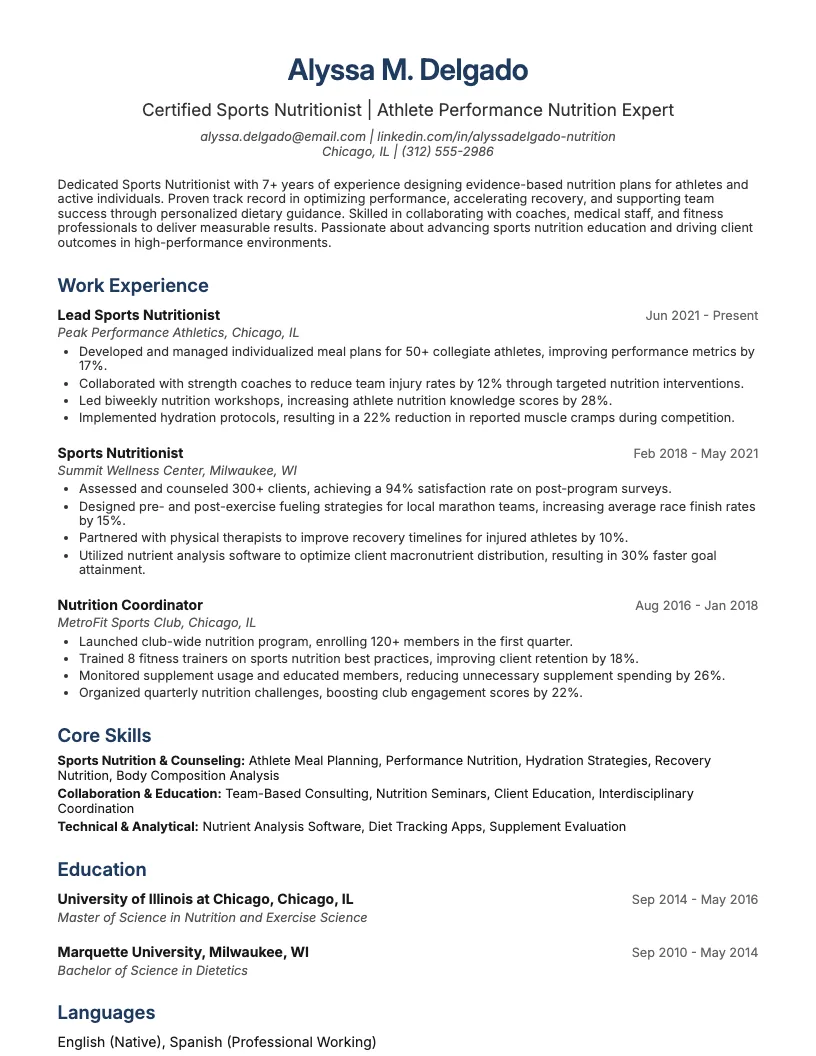
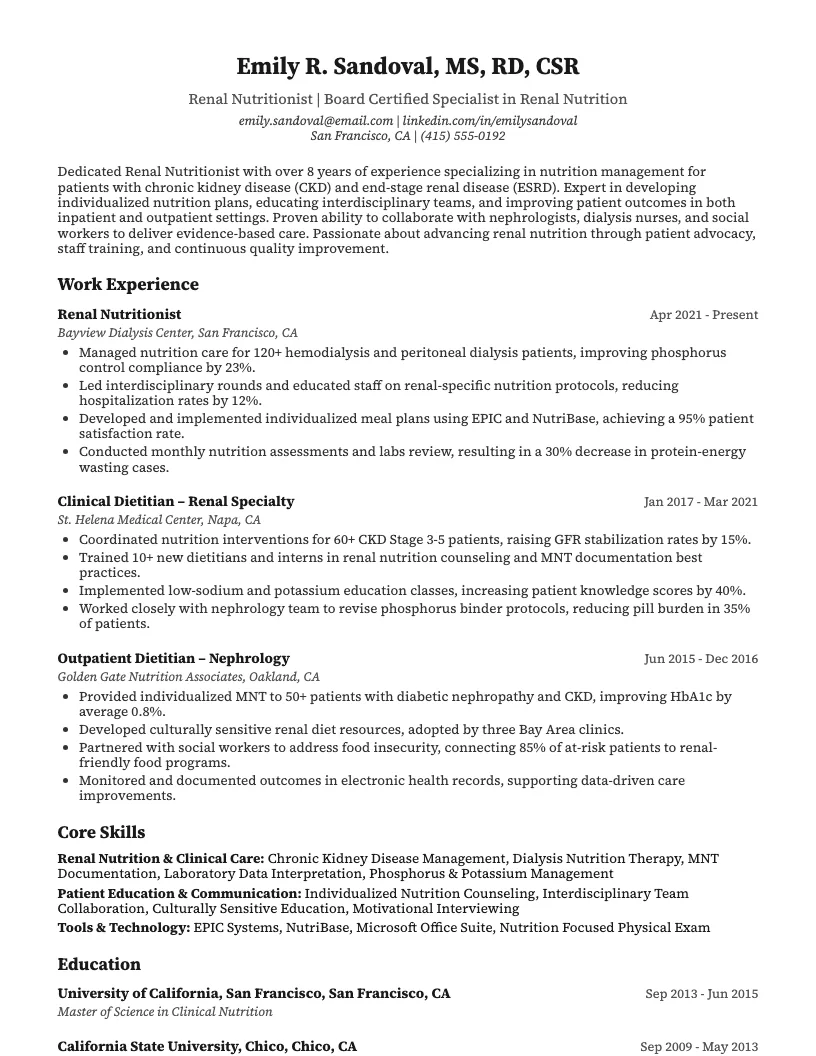
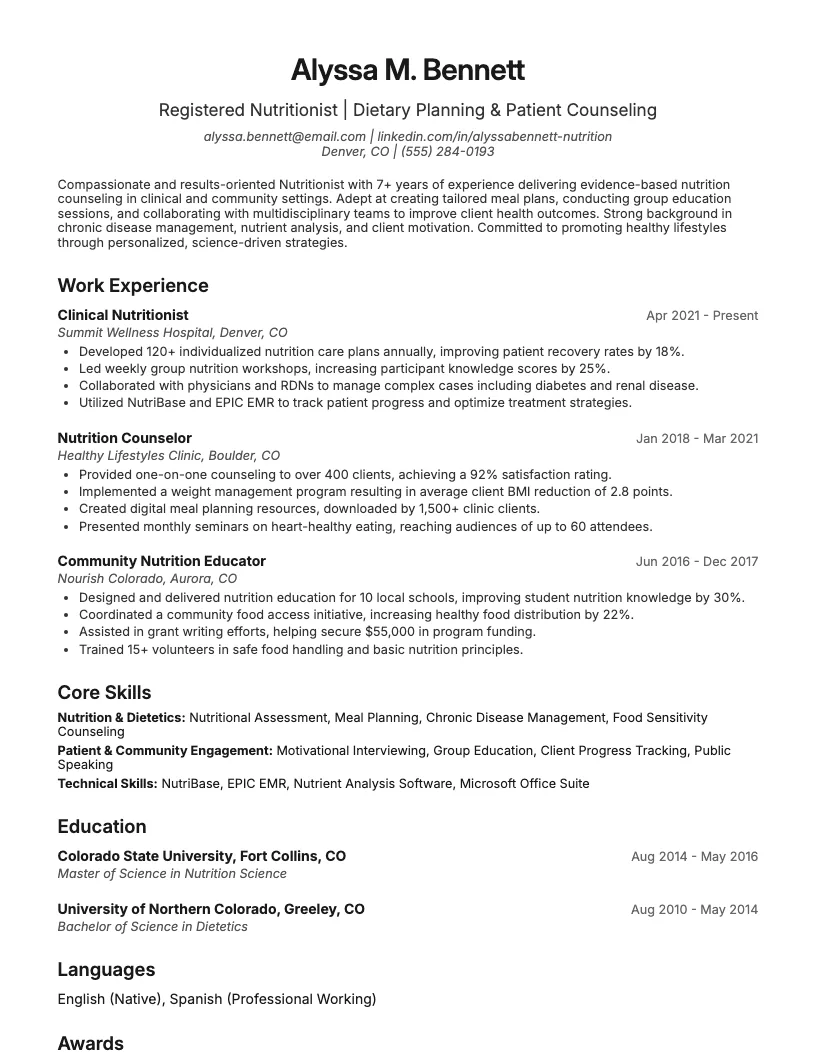
Browse Registered Dietitian resume examples for related roles. Preview any example, open it in the builder, or read its full guide.
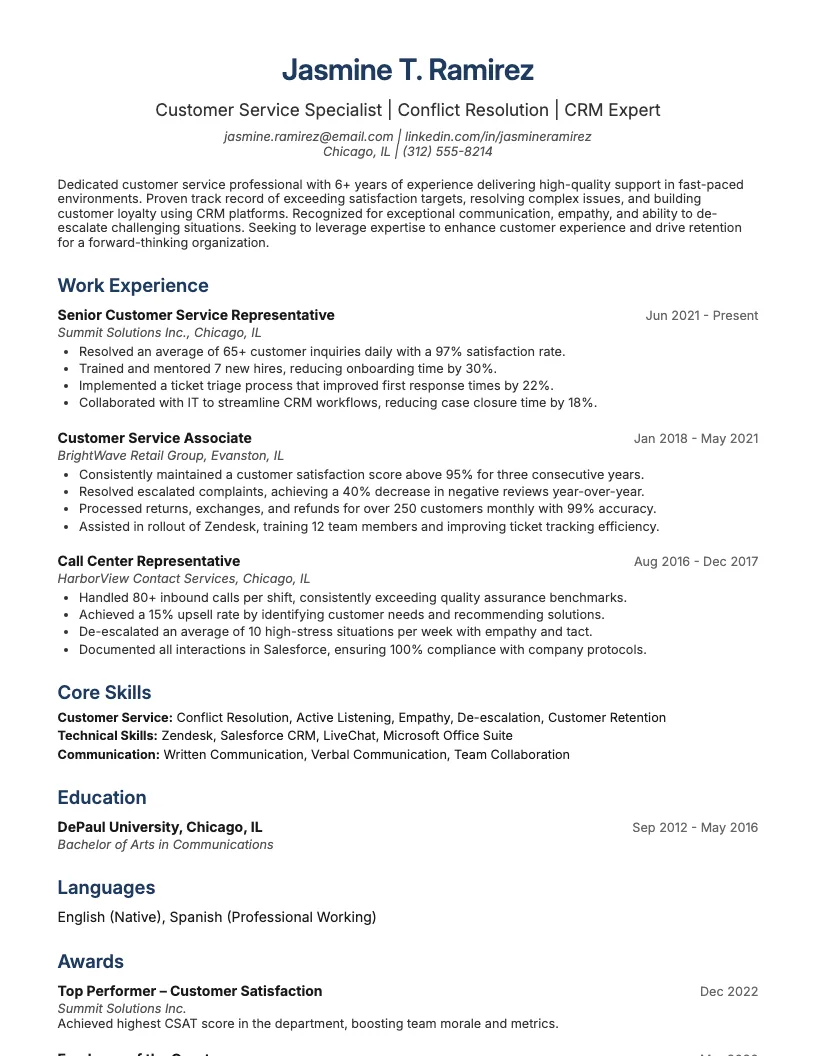
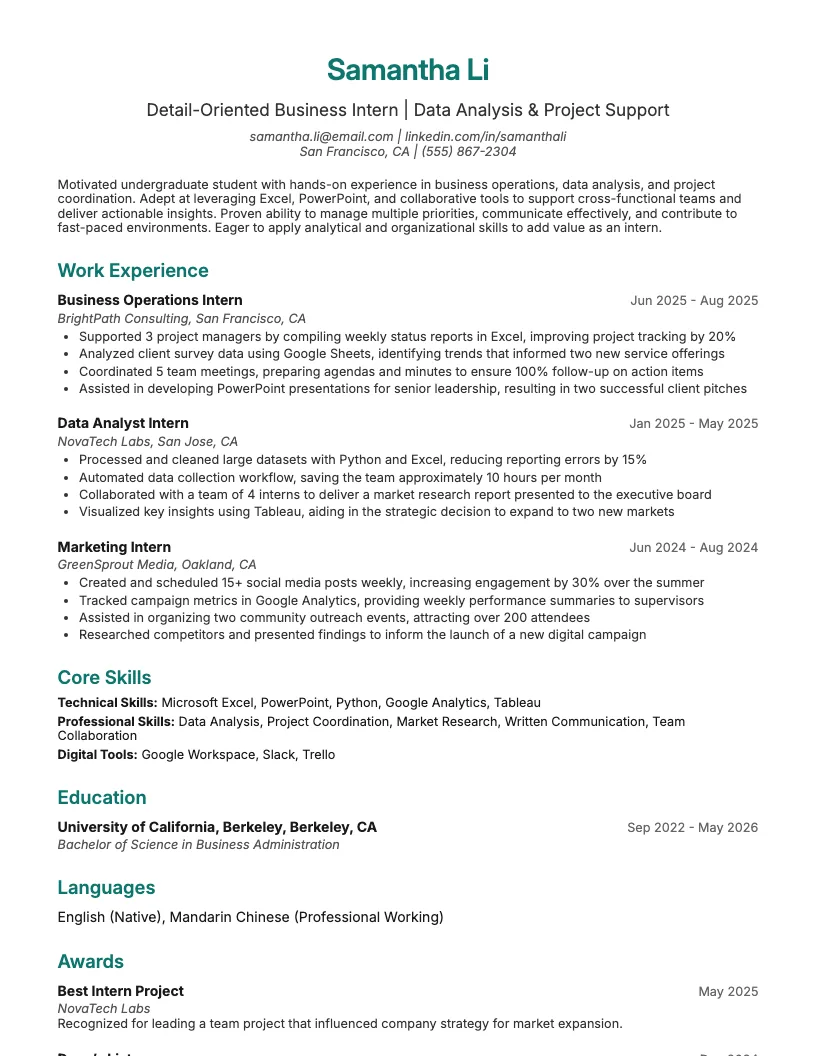
Click to enlarge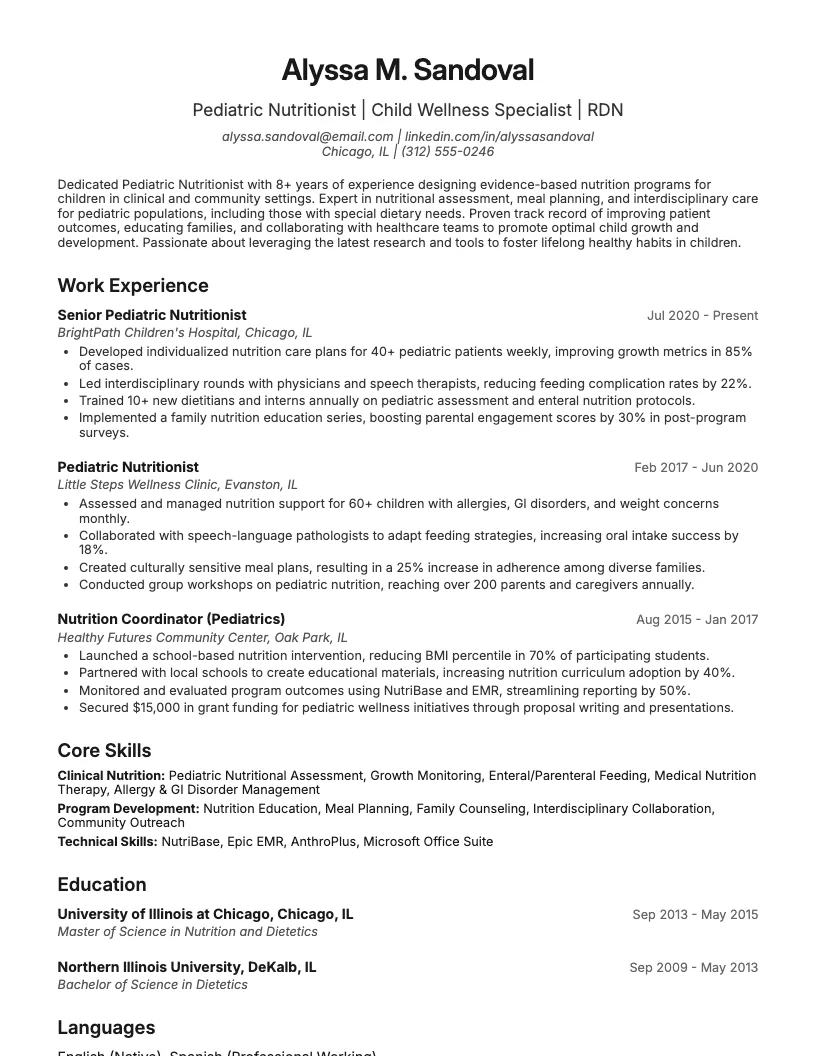 Click to enlarge
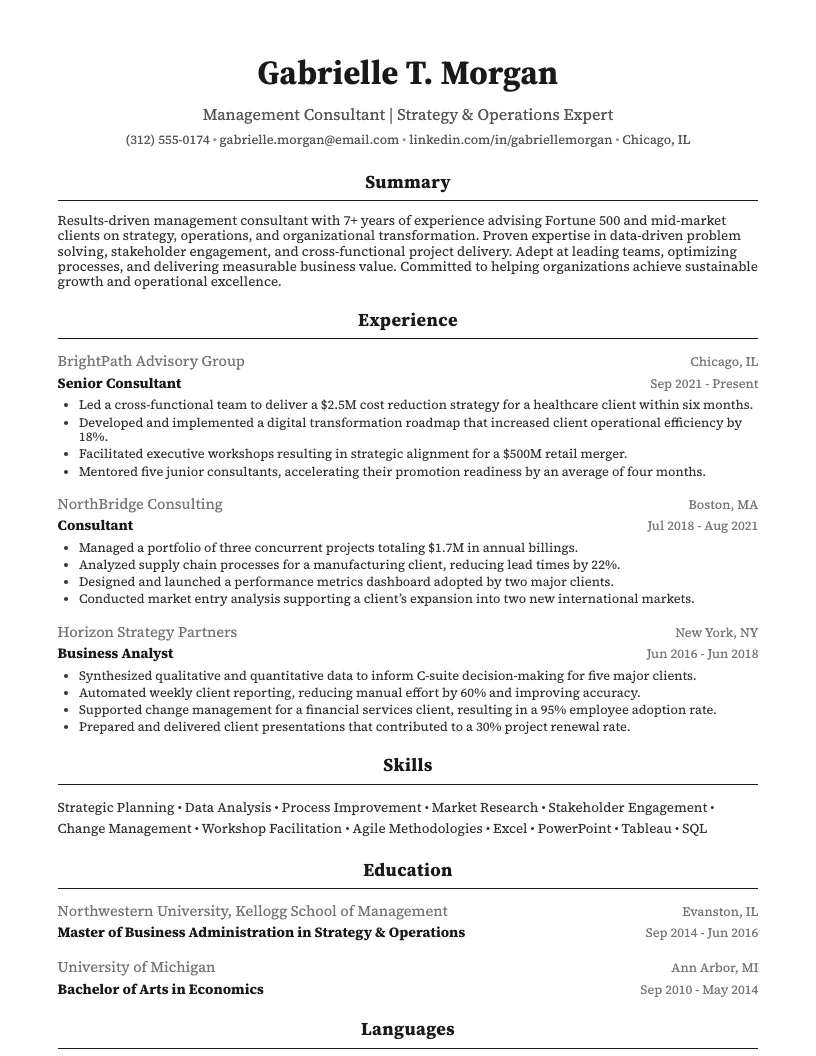
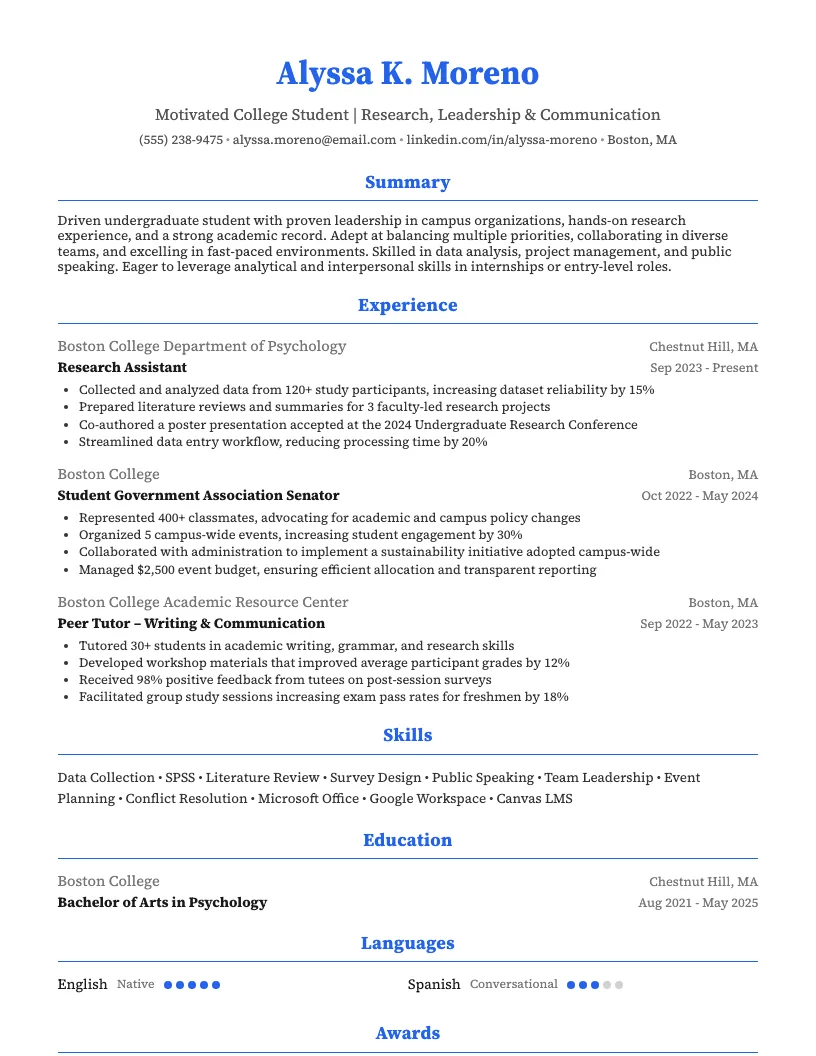
 Click to enlarge
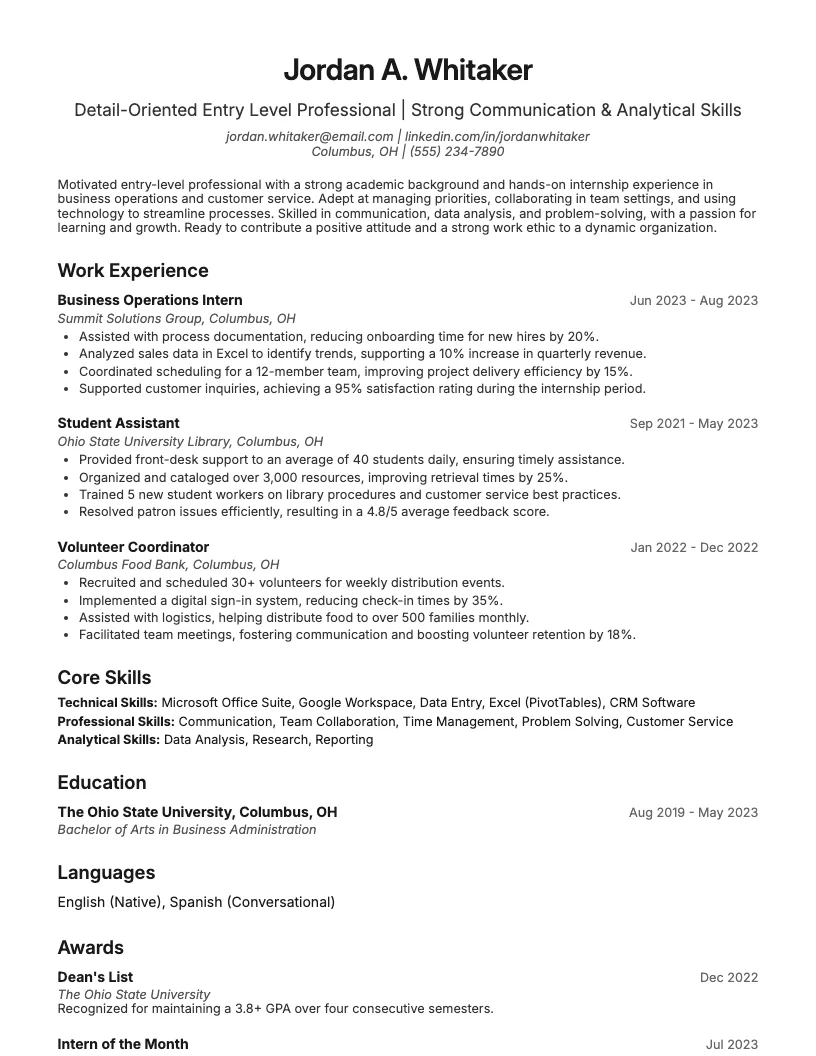
 Click to enlarge
 Click to enlarge
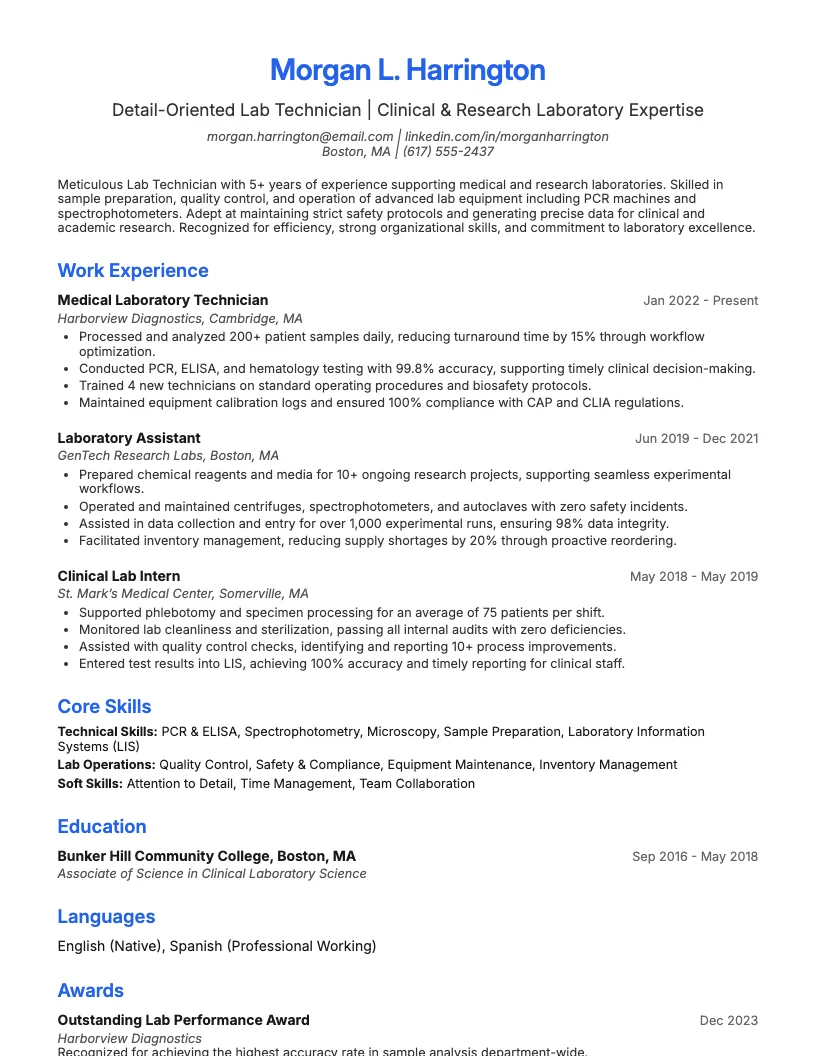 Click to enlarge
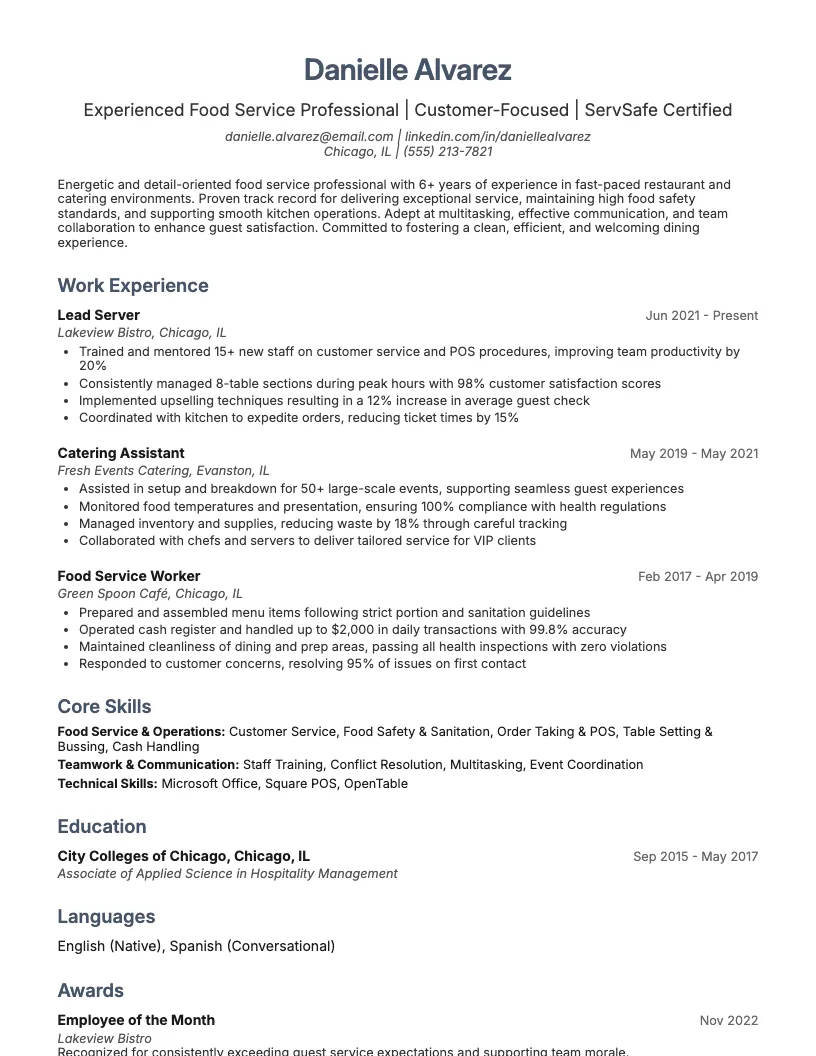 Click to enlarge
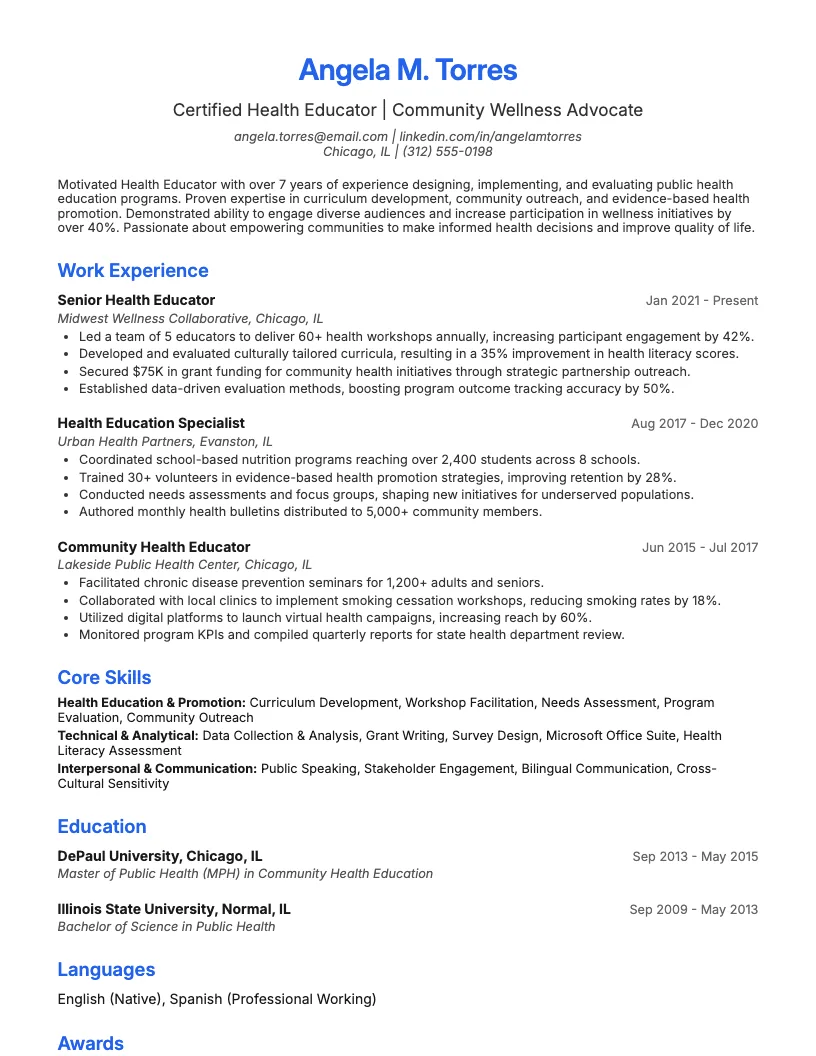 Click to enlarge
Common questions about Registered Dietitian resumes
A Registered Dietitian resume template is a pre-designed layout tailored for nutrition professionals. It highlights skills, certifications, and experience specific to dietetics roles. ResumeJudge makes it easy to showcase your expertise.
Yes, most Registered Dietitian resume templates from ResumeJudge are ATS-friendly. This means they use clean formatting and keywords, so your resume passes automated screenings in hospitals, clinics, and wellness centers.
Use a Registered Dietitian resume template when applying for roles in hospitals, long-term care, public health, or private practice. ResumeJudge templates are ideal for new grads and experienced RDs alike.
Absolutely! You can easily add your credentials, job history, and specialties. With ResumeJudge, you can also personalize sections for clinical, research, or food service roles.
Registered Dietitian templates emphasize credentials like RD/RDN, licensure, and nutrition skills. ResumeJudge templates include sections for patient counseling and menu planning, unlike generic templates.
A Registered Dietitian resume should be one page for new grads or up to two pages for experienced professionals. ResumeJudge templates help you keep your layout concise and organized.
Yes, a specialized template highlights your expertise and credentials, making your application more appealing to employers. ResumeJudge ensures your resume looks professional and tailored.
Yes, ResumeJudge templates have dedicated sections for credentials like RD, RDN, or CDE. You can also list specialty certifications relevant to clinical or community nutrition roles.
Definitely! ResumeJudge templates allow you to add internships, supervised practice, or volunteer experience, which is valuable for entry-level applicants or career changers.
Yes, ResumeJudge offers templates tailored to clinical, community, food service, or research dietitian roles. You can highlight experience relevant to your target job sector.
Explore more professional resume examples to inspire your job search
Use our AI-powered resume builder to create a professional, ATS-friendly resume in minutes.
Free to use • No credit card required