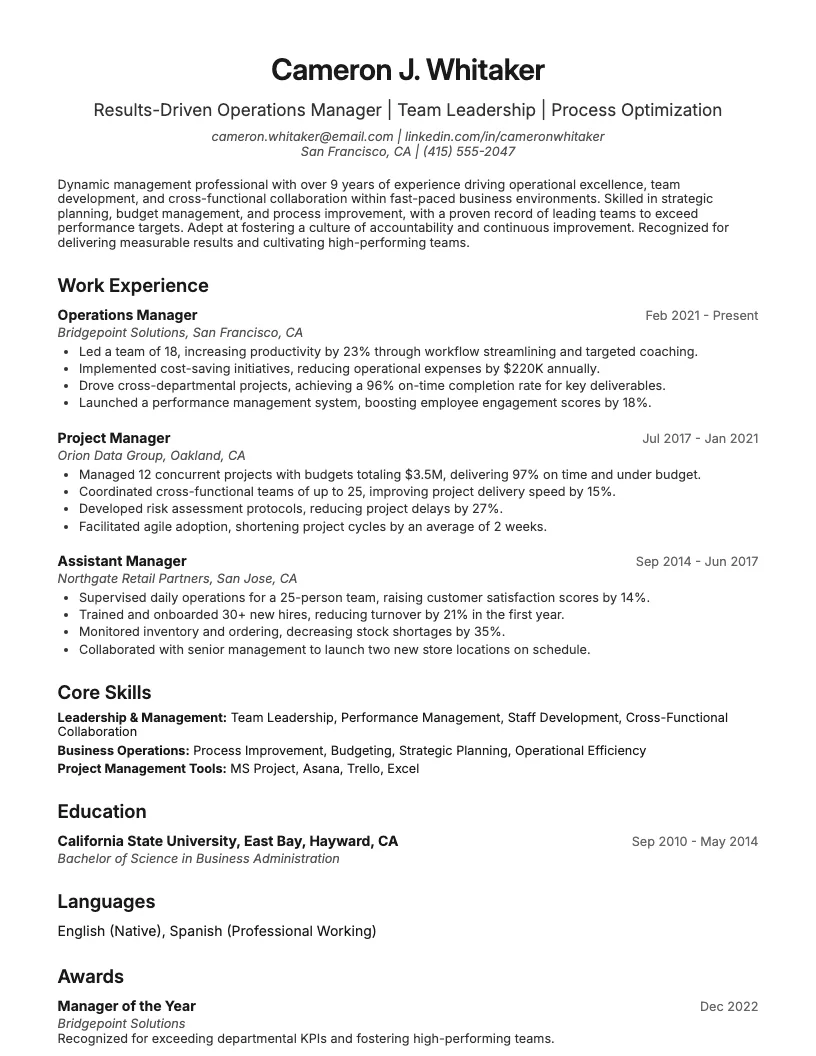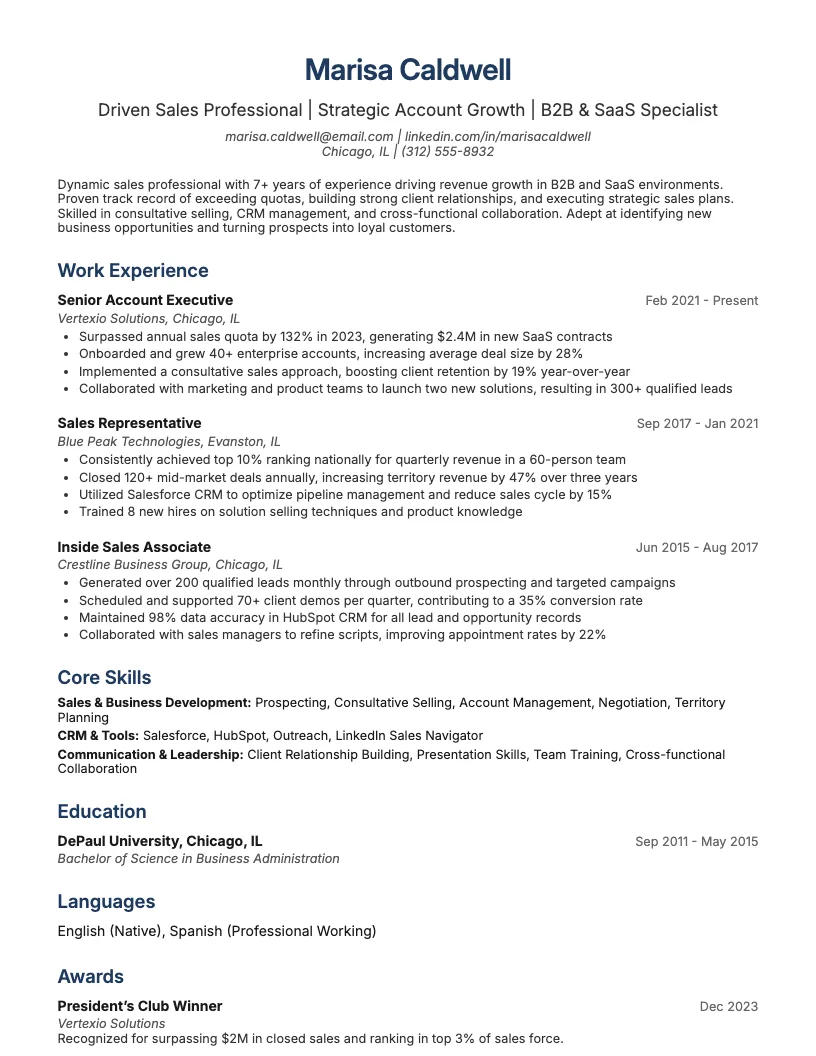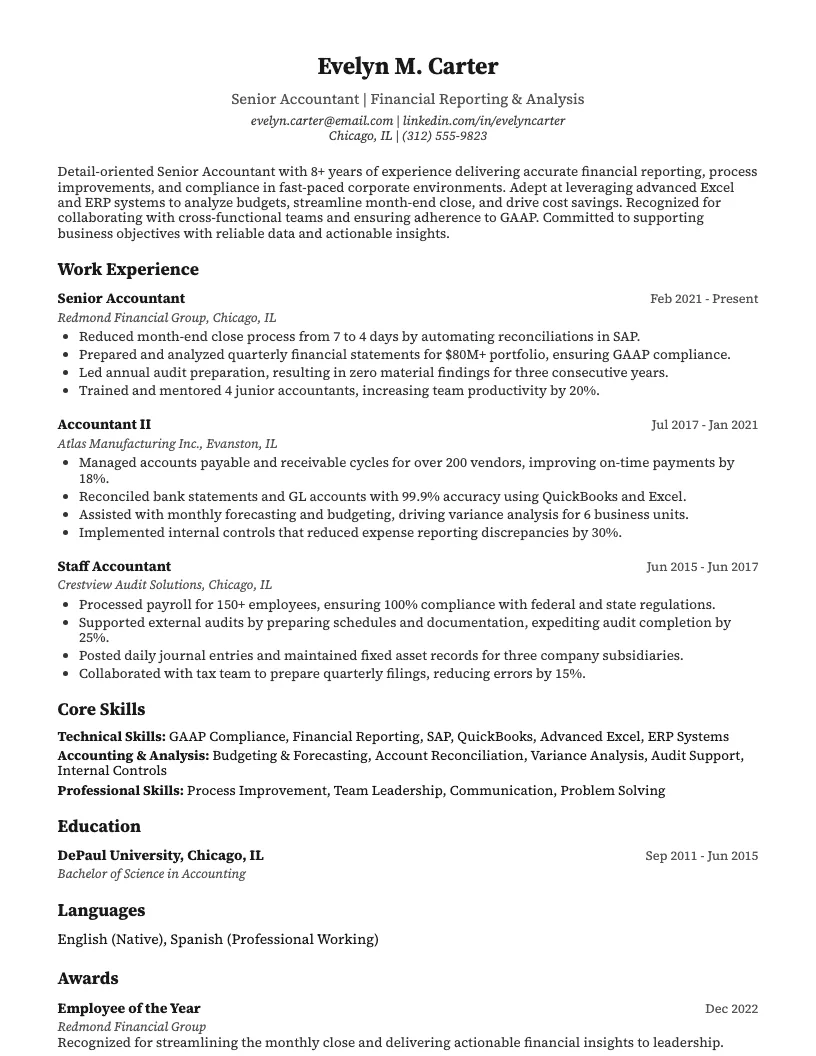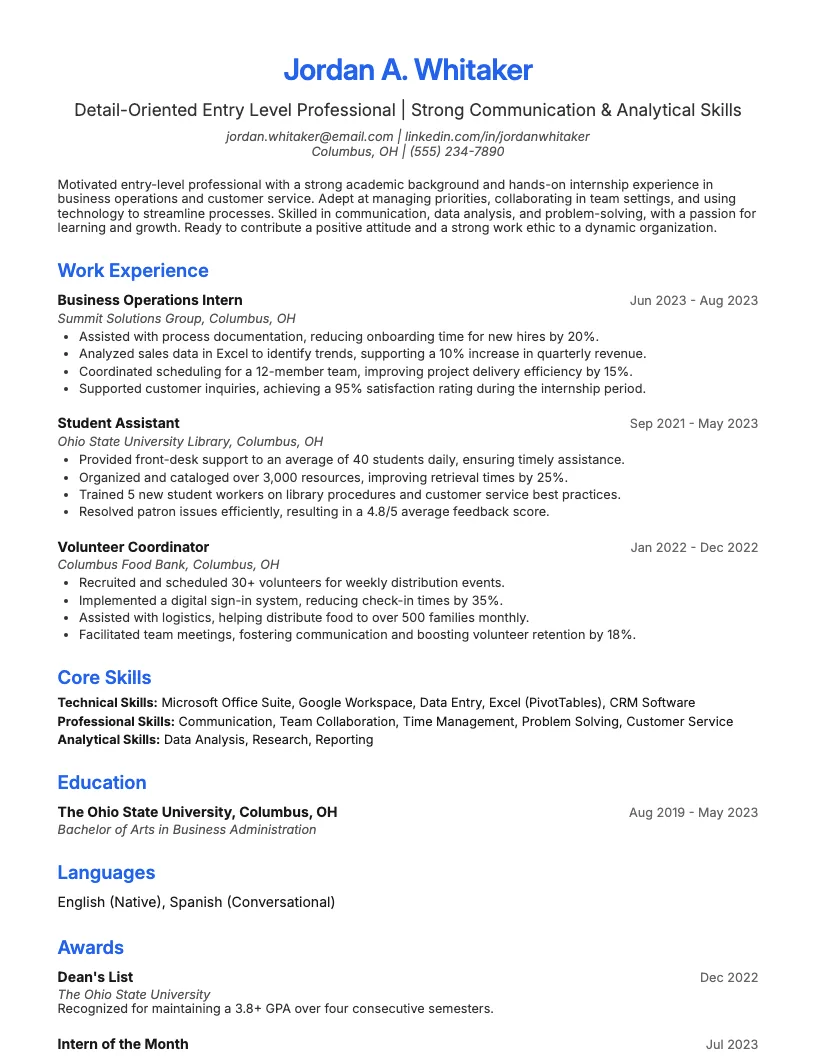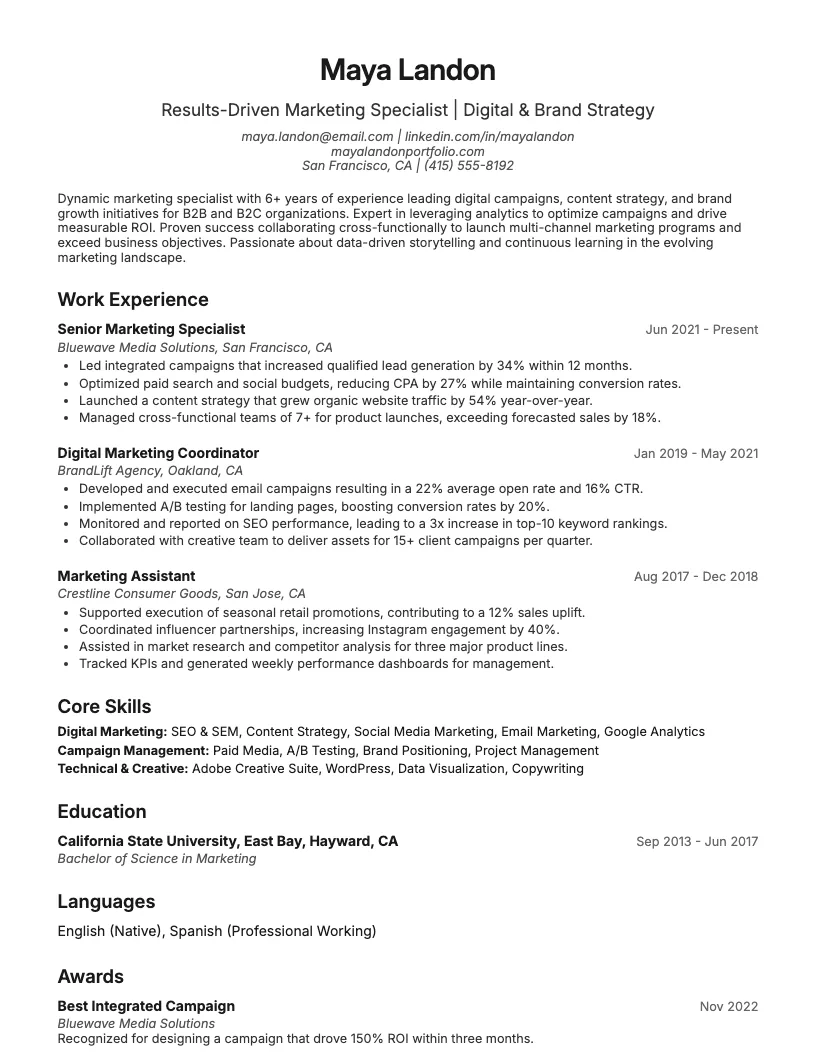
Team Lead Resume Example
See full guide on Team Lead resumes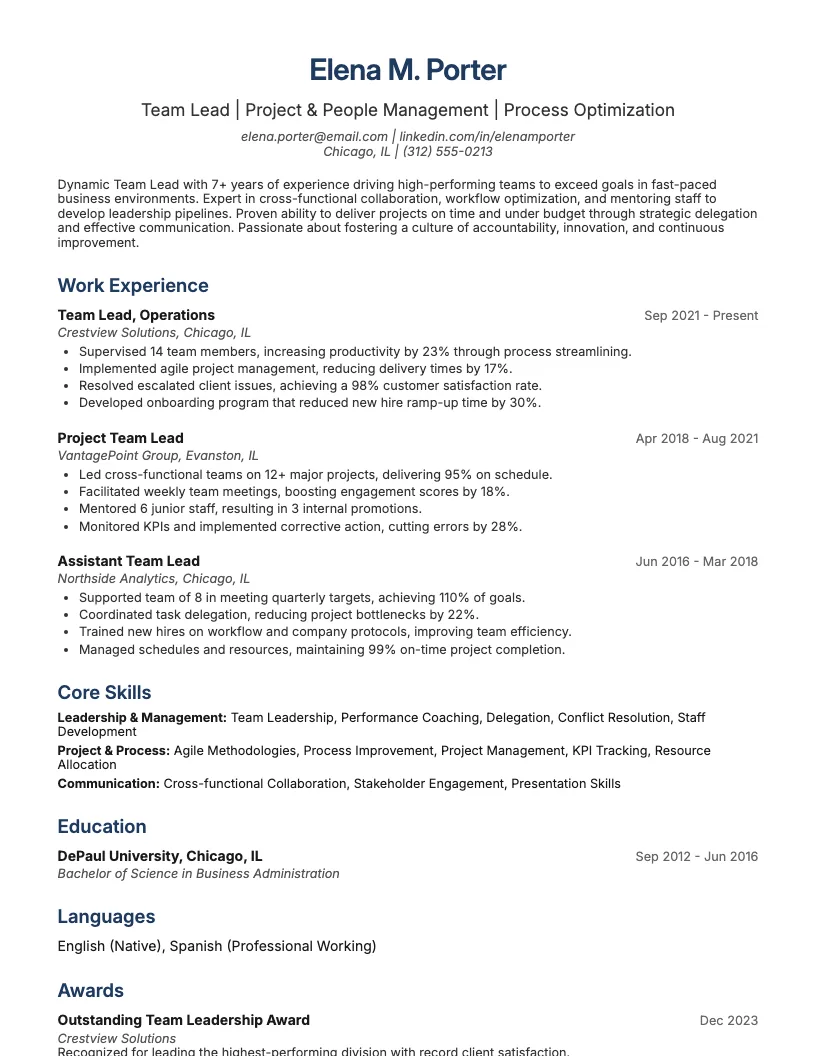 Click to enlarge
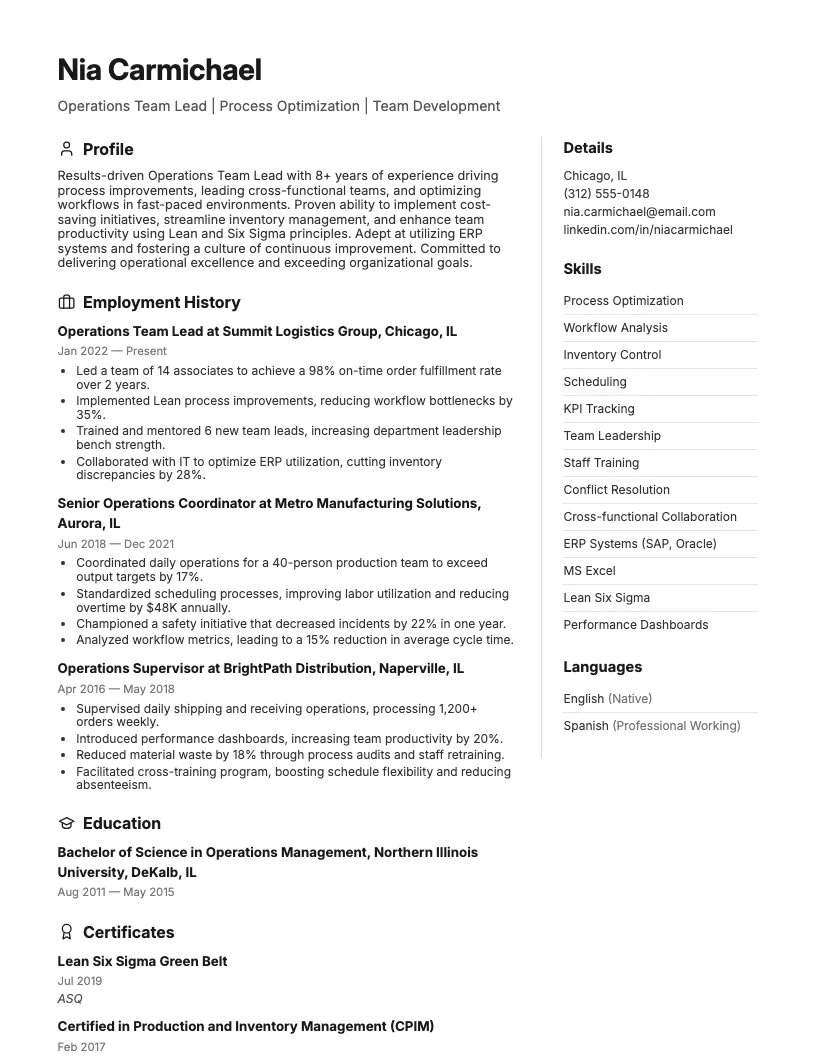 Click to preview

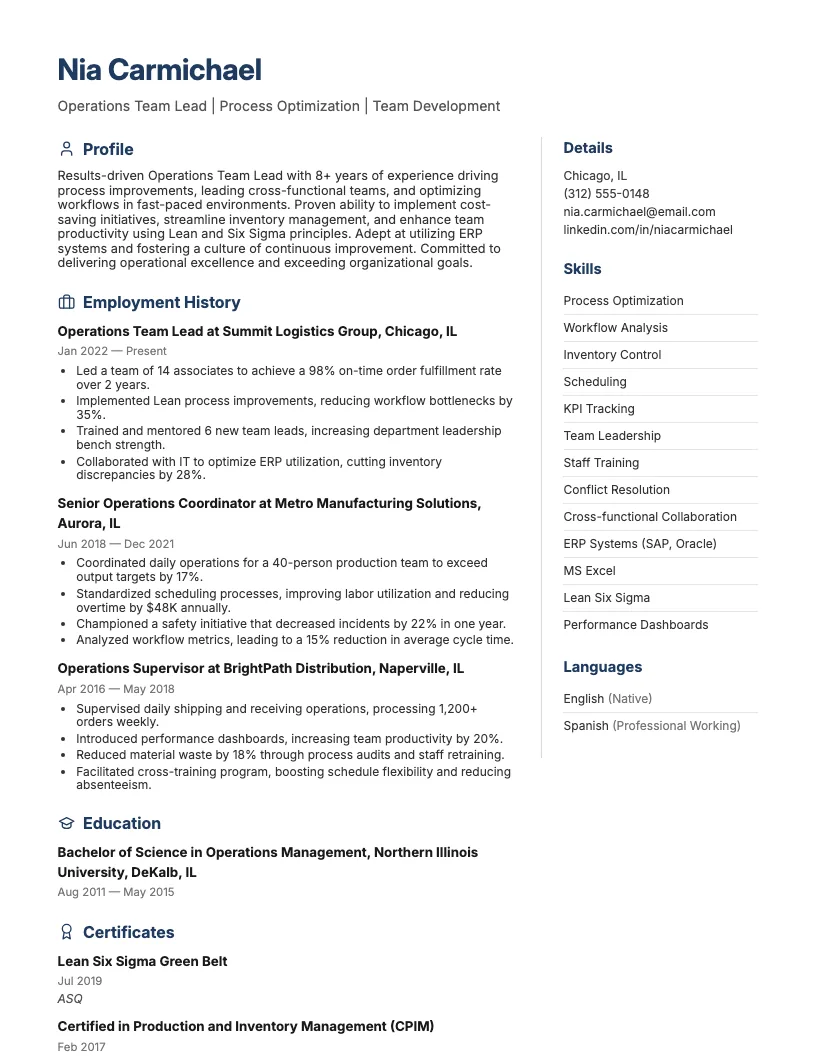
Get inspired by 50+ professional Operations Team Lead resume examples, each written by career experts and optimized to pass ATS scans. Pick a proven template, tailor it to your role, and download a polished resume in minutes.
Pick the specialization closest to your target role and start from a proven resume example.
An impressive Operations Team Lead resume shows your impact on efficiency, team performance, and cost savings. You want to highlight results, not just responsibilities.
You need to show how you motivate teams, solve problems, and improve daily operations. Data-driven achievements and clear skills make your resume stand out.
I’ll break down what this role actually involves and how you can build a strong resume for it.
An Operations Team Lead manages daily workflows, coordinates teams, and ensures targets get met. I oversee schedules, troubleshoot issues, and keep things running smoothly behind the scenes.
You’ll usually juggle people management, process improvement, and performance tracking. That means assigning tasks, coaching team members, and reporting results-often in fast-paced environments.
There’s a big focus on efficiency. I look for ways to streamline operations, cut costs, and boost productivity. Strong communication and a knack for problem-solving are key in this role.
Start by showing measurable achievements. For example, highlight process improvements, cost reductions, or team projects. Numbers-like saving 15% on expenses-make your impact clear.
Use a clean, easy-to-read format. Hiring managers spend about 7 seconds scanning each resume. Prioritize key skills and results, not just daily duties.
Tailor your resume for each job. This helps you stand out and shows you understand the company’s needs. Small tweaks make a big difference in getting noticed.

Getting the structure right can make or break your resume. You want hiring managers to spot your impact, skills, and experience fast.
I see a lot of resumes that miss key sections or get lost in details. A clear structure helps you stand out, no matter your background.
Let’s break down the essential sections and find the best format for Operations Team Leads. This will help you showcase your results and leadership strengths.
Start with a clear header. I always put my name, phone, email, and LinkedIn link right at the top, so managers can reach out easily.
Next, add a summary or objective. This part lets you highlight your key wins-think team leadership, cost savings, or hitting a 98% on-time delivery rate.
Your experience section really matters. I focus on results-projects completed, teams managed, and KPIs improved-all using numbers. This helps your impact stand out fast.
Don't forget a skills section. List technical skills, like ERP systems, and people skills, like conflict resolution. This shows you match the job’s must-haves.
Wrap up with education and certifications. If you’ve got Lean Six Sigma, put it here-recruiters love seeing industry-specific credentials.
I always recommend the reverse-chronological format if you’ve got solid, relevant experience. It puts your latest wins front and center-hiring managers love skimming for recent results.
If you’re changing industries or your work history is less traditional, try a hybrid format. This lets you push key skills and leadership strengths up top, before you dive into job titles.
No matter the format, keep things clean and easy to follow. Bulleted lists work well for achievements, and white space makes your resume less of a chore to read.
Your resume summary or objective is the first thing recruiters see. It needs to grab attention fast-most spend under 10 seconds scanning each resume.
Use this space to highlight your years in operations, leadership wins, and specific skills. Back it up with numbers or results when you can.
Keep it short-three to five sentences works best. Focus on what makes you a strong operations team lead right from the start.
Getting your summary or objective right is key if you want your resume to pop. You want to show your impact fast-usually in three to five punchy sentences.
For an Operations Team Lead, I focus on years of experience, the size of teams managed, and any measurable improvements I’ve driven-like cutting costs by 12% or boosting efficiency.
You can use numbers to add credibility. Mention Lean Six Sigma, ERP systems, or big wins in process improvement. This helps recruiters see your value at a glance.
You want your summary to show off your real operations know-how. Name-drop key systems, like ERP or Lean Six Sigma, if you actually use them every day.
I always mention process improvements I lead-like cutting costs by 20% or boosting team output by 30%. Numbers make your leadership impact obvious to anyone scanning your resume.
Make it clear how you handle unique challenges in your industry. If you excel at cross-departmental projects or remote team management, call that out. This helps your resume stand out.
Your experience section is where you prove you can lead a team and deliver real results. Hiring managers want to see impact, not just a list of daily tasks.
Highlight your career journey as an Operations Team Lead. Focus on outcomes, numbers, and the skills that set you apart from other candidates.
If you don’t have direct experience, that’s okay. You can still show you’re ready for the role by connecting your background to what operations teams need.
The experience section is where you actually prove your impact as an Operations Team Lead. This is what recruiters really focus on when scanning your resume.
I always make sure to list my job title, company name, and dates for each role. Then, I use up to six bullet points to highlight what I actually did.
Show real outcomes-not just tasks. Recruiters want to see numbers, like how many people you led or what percentage you improved efficiency by, as you would in a cover letter. This helps them trust your skills.
Use active verbs like "led," "optimized," or "implemented" to show ownership. Keep your language direct and make each bullet about your actual results, not just your responsibilities.
I always focus on numbers because they make your impact real. I include the size of teams I lead, budgets I manage, and specific cost reductions I deliver.
You can tailor your experience by matching your bullet points to the job description. If the posting asks for process improvements, I highlight a 15% efficiency gain I drove.
There are lots of ways to quantify achievements: mention KPIs, order accuracy rates, or how you shorten lead times. This helps recruiters see value-fast and clear.
No direct Operations Team Lead experience? No problem. I always spotlight transferable skills like project management, process improvements, or cross-functional teamwork from other roles.
You can highlight certifications, relevant coursework, or even side projects. These show you’re serious about operations and bring practical knowledge-sometimes more than two years in a similar role.
I focus on tangible results. For example, “Reduced customer wait times by 25% through new scheduling system” or “Led a team project that improved workflow efficiency by 10%.”
Wrap it up by sharing what you want to learn and how you’ll grow in an operations setting. This helps show your proactive mindset and commitment to the team.
Operations team leads need a mix of technical know-how and people skills. You want to show both on your resume to stand out.
Employers look for hard skills like workflow optimization, data analysis, and team management. They also value soft skills such as communication and adaptability.
I always suggest matching your resume skills to the job description. This makes it easy for recruiters to see you fit the role.
You need a balanced mix of hard and soft skills. Recruiters want to see if you can handle technical tasks while also leading a team smoothly.
I usually highlight process optimization, inventory management, and data analysis as hard skills. These directly impact cost savings and productivity-two things every employer tracks.
Don’t forget soft skills like problem-solving, communication, and adaptability. These help you lead teams through daily challenges and unexpected changes, which happen a lot in operations.
Try to match your skills with what the job ad asks for. I recommend listing five or six of your strongest skills as keywords to make your resume pop.
I use cloud-based ERP systems like SAP and Oracle daily. These help manage inventory, scheduling, and procurement across teams. Over 60% of large operations teams depend on these platforms.
You’ll often see workflow automation tools like Asana, Trello, or Monday.com on resumes. These boost productivity and help track team progress in real time.
Business intelligence dashboards-think Power BI or Tableau-are also key. These let you visualize KPIs, spot trends, and make decisions based on hard data. That’s what hiring managers want.
Recruiters scan resumes for operations manager resume keywords like process improvement, cost reduction, and team leadership. I always add any industry-specific terms from the job description, too.
You want to include high-impact phrases such as KPI tracking, inventory control, and cross-functional team management. This helps automated systems and hiring managers find your resume.
I also recommend working in results-focused keywords, like revenue growth or efficiency increase. Use numbers-for example, "reduced costs by 15%"-to make your achievements stand out.
That’s pretty much it for skills and keywords. Next up, I’d focus on how you show those skills throughout your work history and achievements.
If you’re aiming for an operations team lead role, your education and certifications can really help you stand out. Most employers look for at least a bachelor’s degree.
Certifications show that you’re serious about your career and willing to keep learning. You don’t need a long list-just the most relevant and up-to-date ones.
I always make sure to list the school, degree, and any important dates. If I’m working on a certification, I add the expected finish date to stay transparent.
I always start with my highest degree, listing the degree title, major, university name, and graduation year. This gives recruiters a clear view of my academic foundation.
For certifications, I list the full name, issuing body, and completion date. If I’m still working on a certification, I mention the expected completion date to stay transparent.
You want everything easy to scan-no clutter. Use bullet points or simple formatting. Focus on what’s most relevant to operations leadership roles, not every course or seminar.
There are some standout certifications for operations roles. APICS CPIM, CSCP, and CLTD are popular. They show expertise in inventory, supply chain, and logistics.
I also look for a Lean Six Sigma certification-Green Belt or Black Belt. These prove you know process improvement. Project Management Professional (PMP) is another strong option.
You can boost credibility by adding industry-specific certs, like Certified Quality Auditor (CQA). Make sure everything listed is current. This helps hiring managers see your commitment to continuous learning.
If you want your Operations Team Lead resume to stand out, you can add a few extra sections. These can help show more about your skills and personality.
I see a lot of resumes miss this step. Even one extra section can highlight your achievements or interests beyond daily tasks. It’s worth the effort.
If you want your resume to pop, think about adding sections like Professional Affiliations, Volunteer Work, or Language Skills. These show more than just your day-to-day work.
I like to include projects outside my main job, especially if they show leadership or problem-solving. This helps hiring managers see me as a well-rounded candidate.
You can also mention publications, industry awards, or even hobbies that relate to operations. These extras can set you apart, especially if you’re targeting a competitive role.
I see a lot of resumes that just list tasks. Skip the basics. Focus on real results-use numbers to prove you improved efficiency, cut costs, or boosted team performance.
Don't be too generic. Saying “managed a team” doesn’t cut it. Name the industry, team size, and what changed under your lead. Specifics help you stand out.
Leave out buzzwords and dense paragraphs. Use clear bullet points and keep formatting clean. Recruiters spend less than 7 seconds on a first scan, so make it easy to read.
Operations team lead roles attract people from all kinds of backgrounds. Some start in logistics or customer service, while others move up from entry-level operations.
I know it’s not always clear what to put on your resume if you’re new or experienced. Let’s break down real examples for both situations.
Just starting out as an Operations Team Lead? I know it can feel tough to show off your potential when you don’t have years of experience.
You want to highlight transferable skills from roles in logistics, customer service, or admin, as seen in this cover letter. This shows hiring managers you’re ready for leadership, even if it’s your first time.
A short, focused resume objective helps you stand out. Explain why you want to lead operations. This tells people you’re intentional, not just applying everywhere.
Show measurable results from your past jobs. For example, “Cut response times by 20%” or “Led a project with 5 teammates.” Numbers give your resume real weight.
If you’ve got a few years in operations, your resume should focus on measurable impact. I like to mention how many people I lead or what percentage I improve processes.
You can showcase leadership in cross-functional teams or highlight big wins, like reducing costs by 15% or cutting order errors by half. Numbers always help.
Don’t forget to mention tech skills, certifications, and continuous improvement projects. This shows you stay current and actively drive results as shown in this cover letter.
If you’re looking for more examples in operations leadership, you’re in the right place. These roles often overlap and require similar skill sets.
I see a lot of people move between team lead, manager, or even regional operations roles. Each one needs a different focus on strategy, logistics, or people management.
If you’re aiming for an Operations Manager role, your resume needs to highlight leadership, process improvement, and cross-functional collaboration. I focus on metrics to prove impact.
You want to show how you drive results. For example, mention how you manage teams of 10-50 people or boost efficiency by 15% through workflow changes.
Recruiters look for strong problem-solving skills. It helps to give real examples, like cutting costs by $200K annually or improving on-time delivery rates by 20%.
Tailor your resume to each application. Use keywords from the job description. This gets you past automated screens and in front of real people.
If you’re eyeing an Assistant Operations Manager role, focus on showing how you support daily operations and help drive team productivity. Highlight collaboration and problem-solving skills.
I always include numbers-like reducing process delays by 15% or training 10+ team members-in my resume. This helps recruiters see the real impact I make on the ground.
You want your resume to show how you take direction from senior managers but also step up to lead projects when needed. Mention how you handle scheduling, performance tracking, or process improvements.
Being proactive is key. I suggest adding examples of how you identify workflow bottlenecks and recommend solutions. This shows you’re not just following orders-you’re making things better.
If you’re aiming for a Regional Operations Manager job, you’ll want to highlight leadership over multiple sites. I always show how I manage teams in several locations at once.
Focus on numbers-mention how many direct reports you have, regional budgets you oversee, or percentage improvements you’ve driven. This helps you stand out right away.
You should also spotlight skills like cross-functional collaboration, cost control, and multi-site process optimization. Recruiters look for people who can juggle priorities and deliver consistent results across regions.
If you want to show off your logistics skills, focus on tracking shipments, optimizing costs, and managing teams of 10 to 100+. I always highlight inventory accuracy and on-time delivery rates.
You should include numbers-like reducing transportation costs by 15% or boosting order fulfillment speed. This makes your impact clear. Use action verbs to keep your bullet points strong and direct.
There are lots of tech tools in logistics now, so mention any WMS or TMS systems you use. Employers look for people who streamline processes and solve problems fast.
If you’re aiming for a Retail Operations Manager role, highlight your skills in inventory control, team training, and store performance. I always keep metrics front and center-sales targets, shrink rates, and employee retention matter.
Point out your experience with multi-store management or high-traffic locations. Employers look for proven results, like improving conversion rates by 10% or reducing costs by 15%. Use those numbers.
Don’t forget to mention tech skills-POS systems, scheduling apps, or analytics tools. This shows you’re ready for the fast-paced retail world. That wraps up the examples for operations leadership resumes.
Browse Operations Team Lead resume examples for related roles. Preview any example, open it in the builder, or read its full guide.
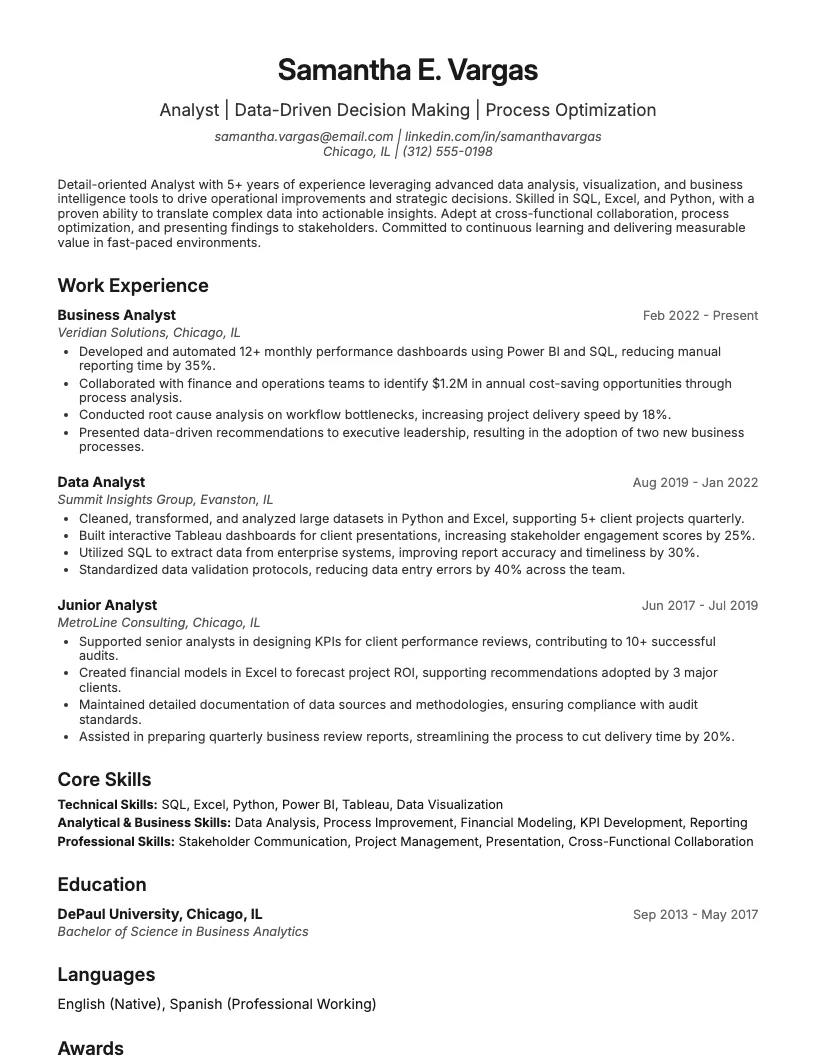
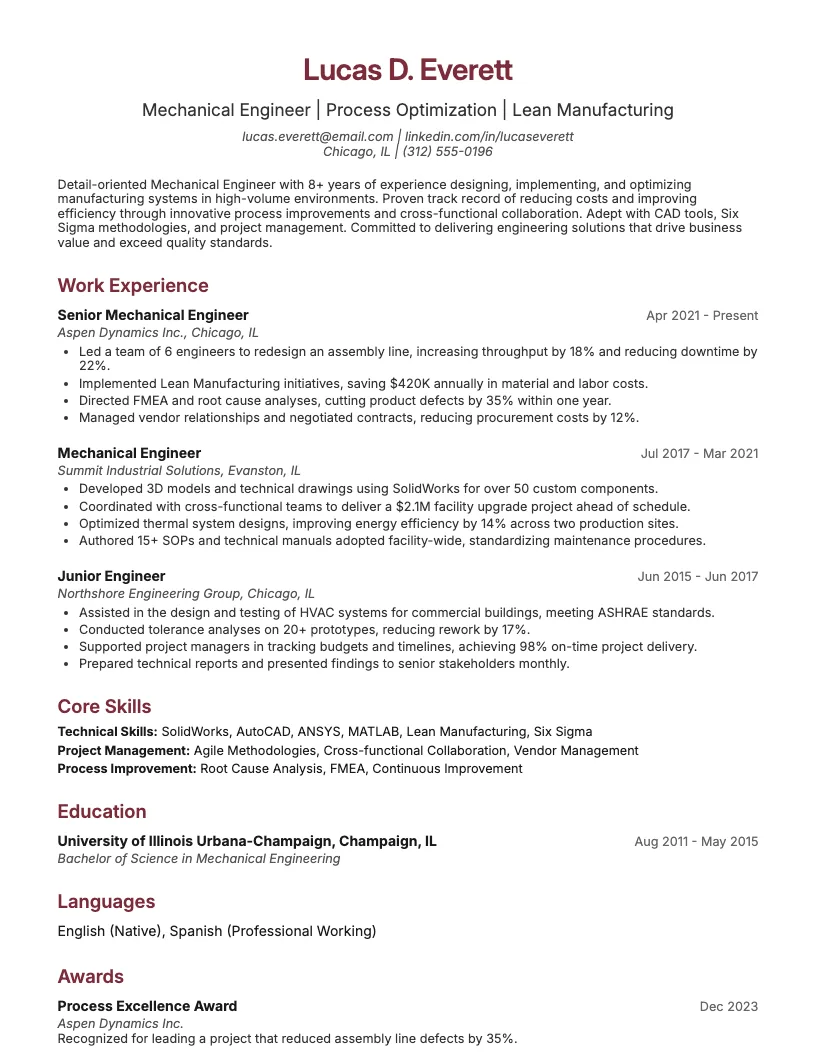
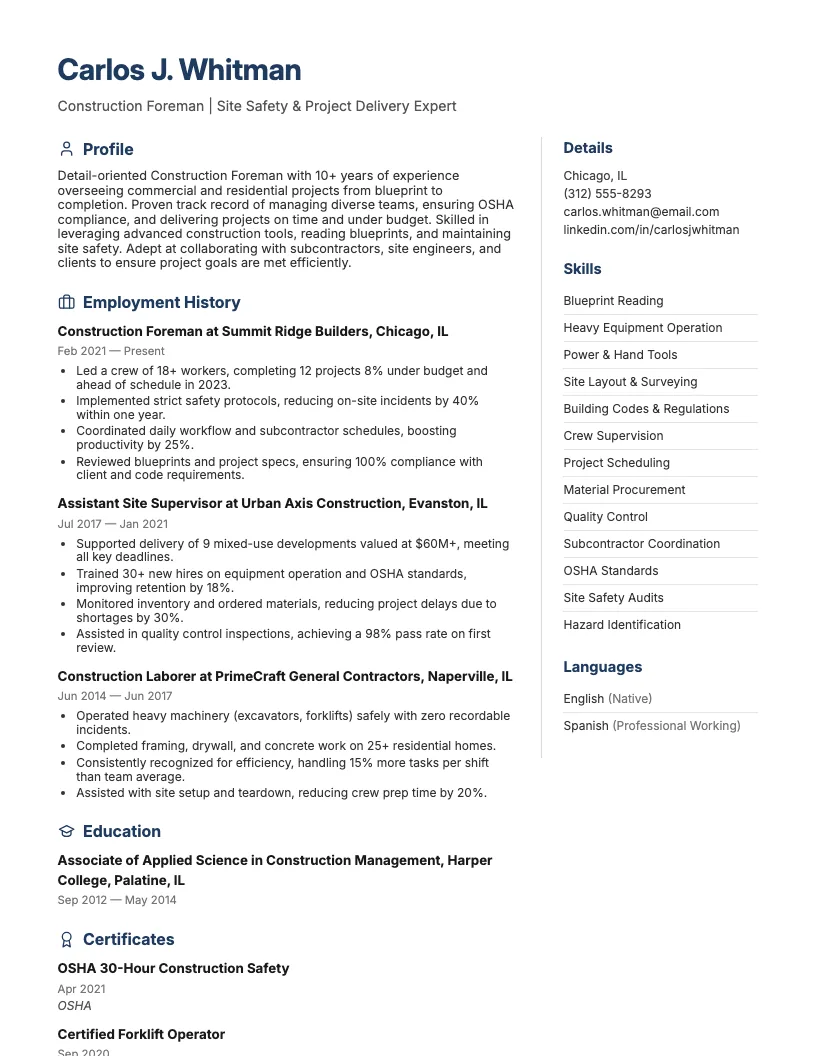
Click to enlarge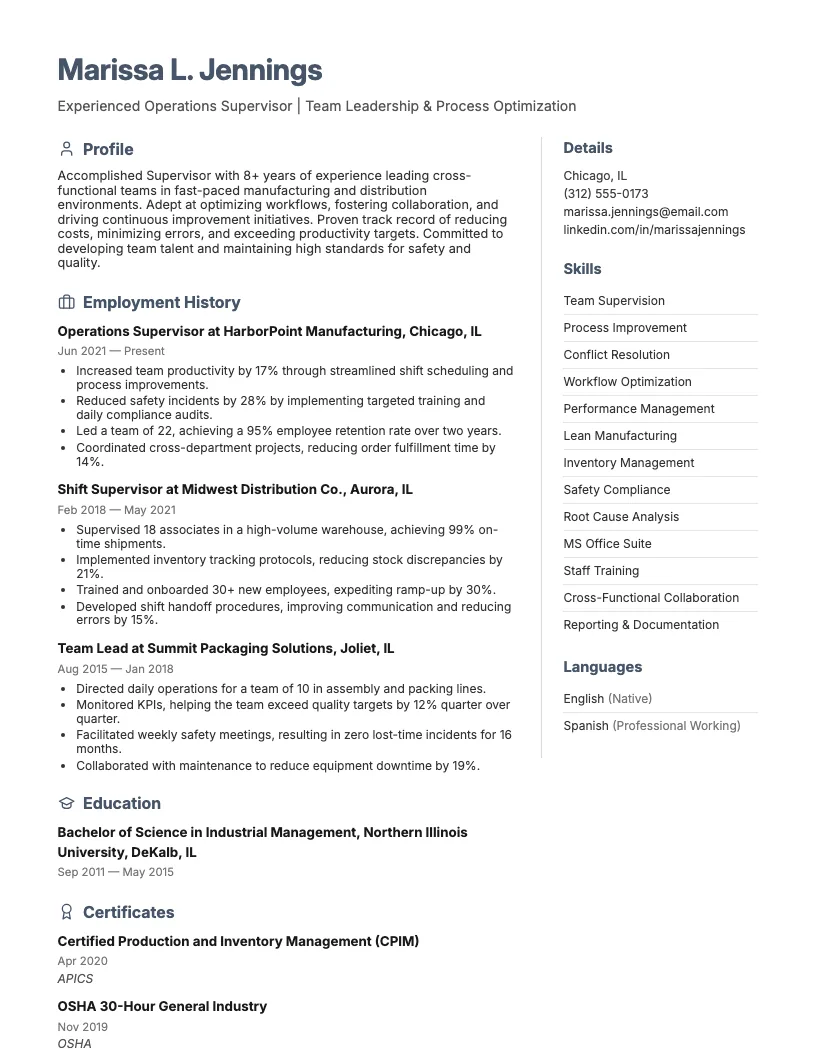 Click to enlarge
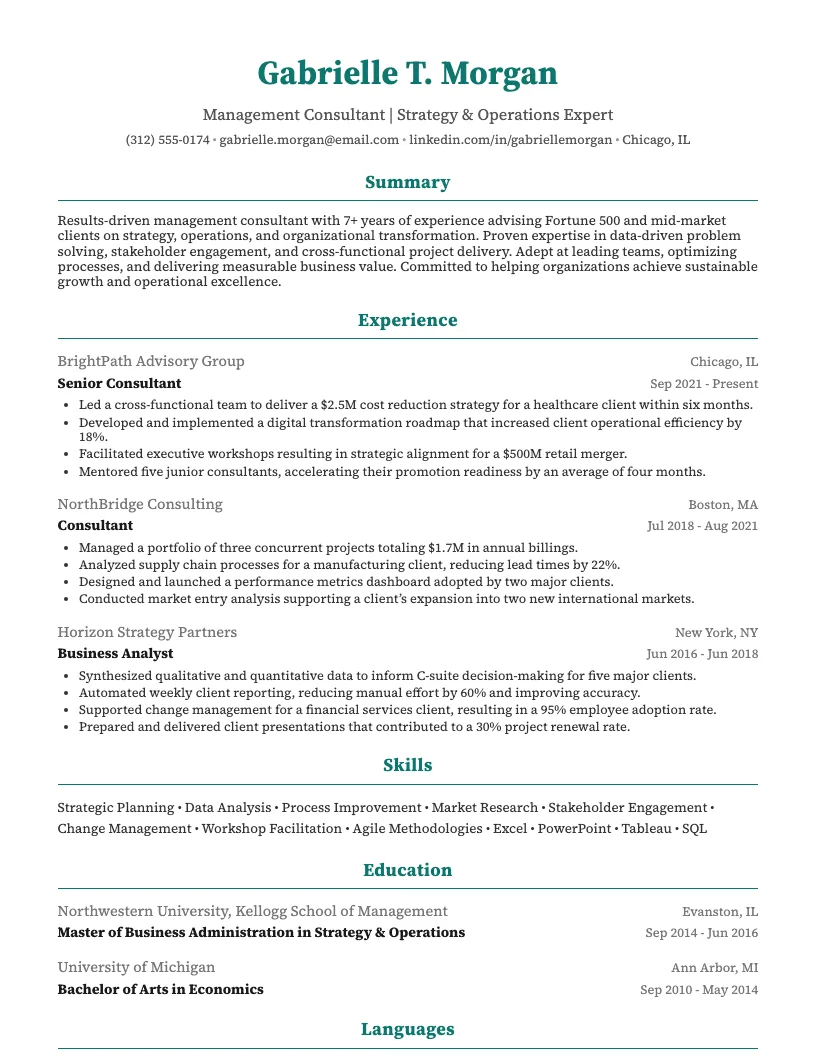
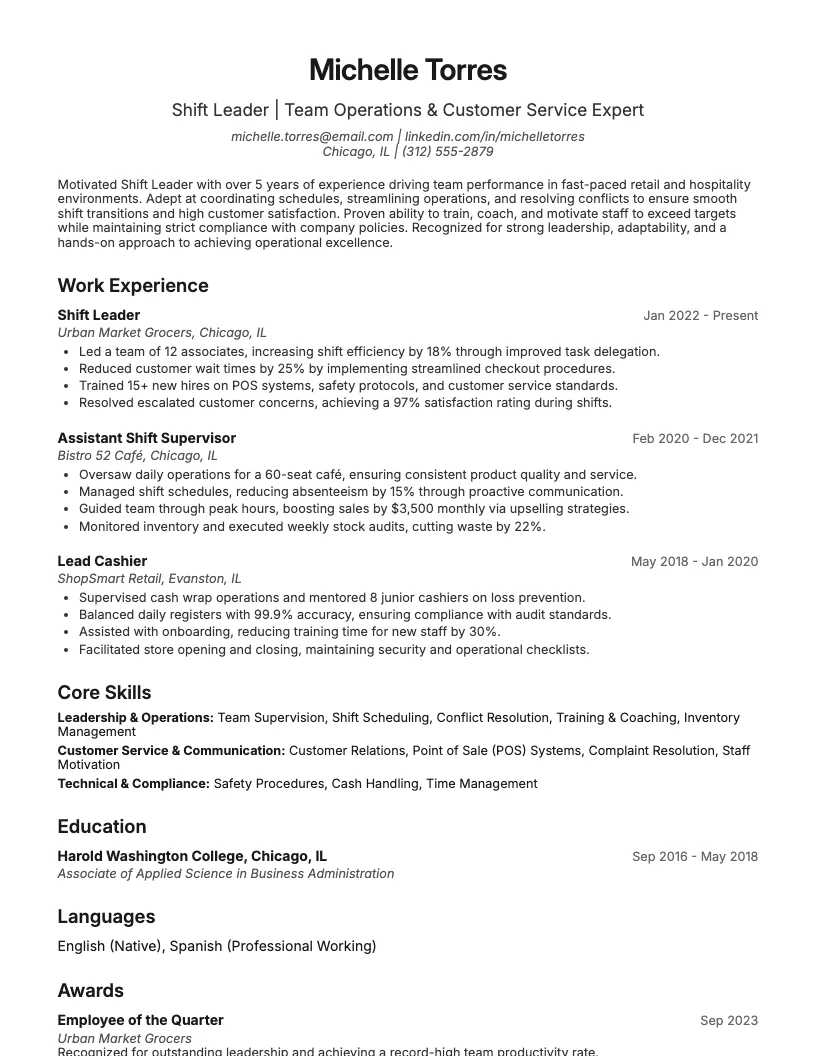 Click to enlarge
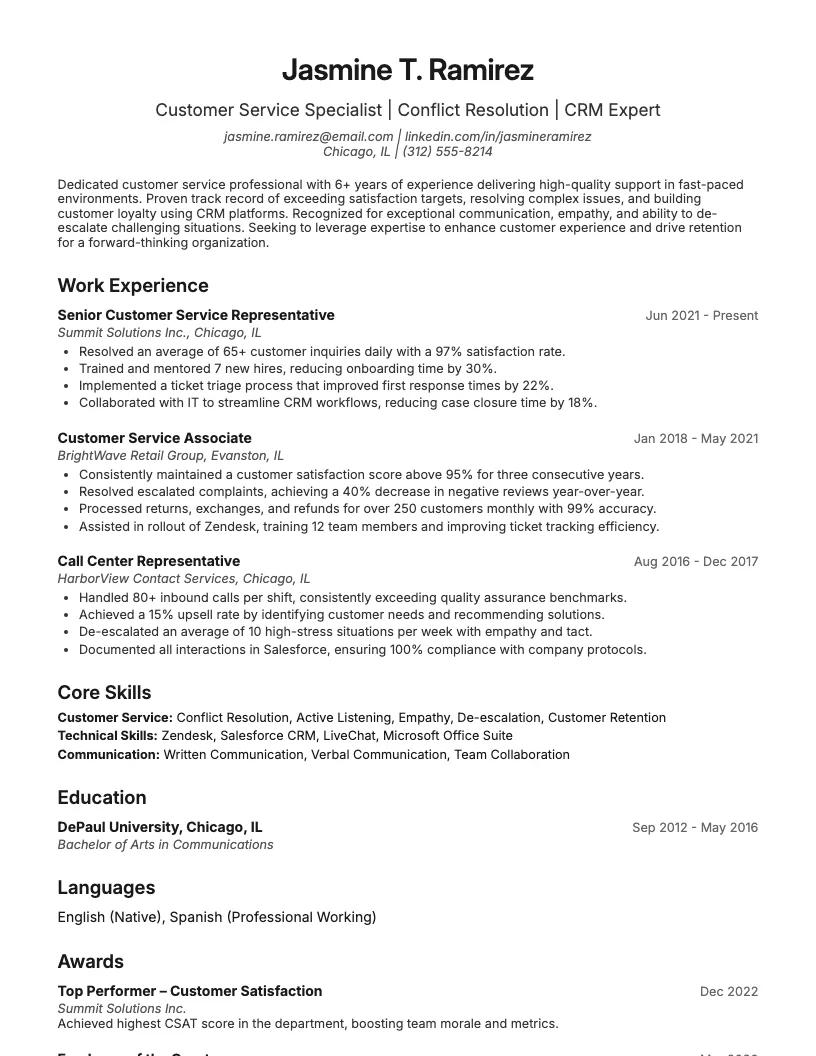
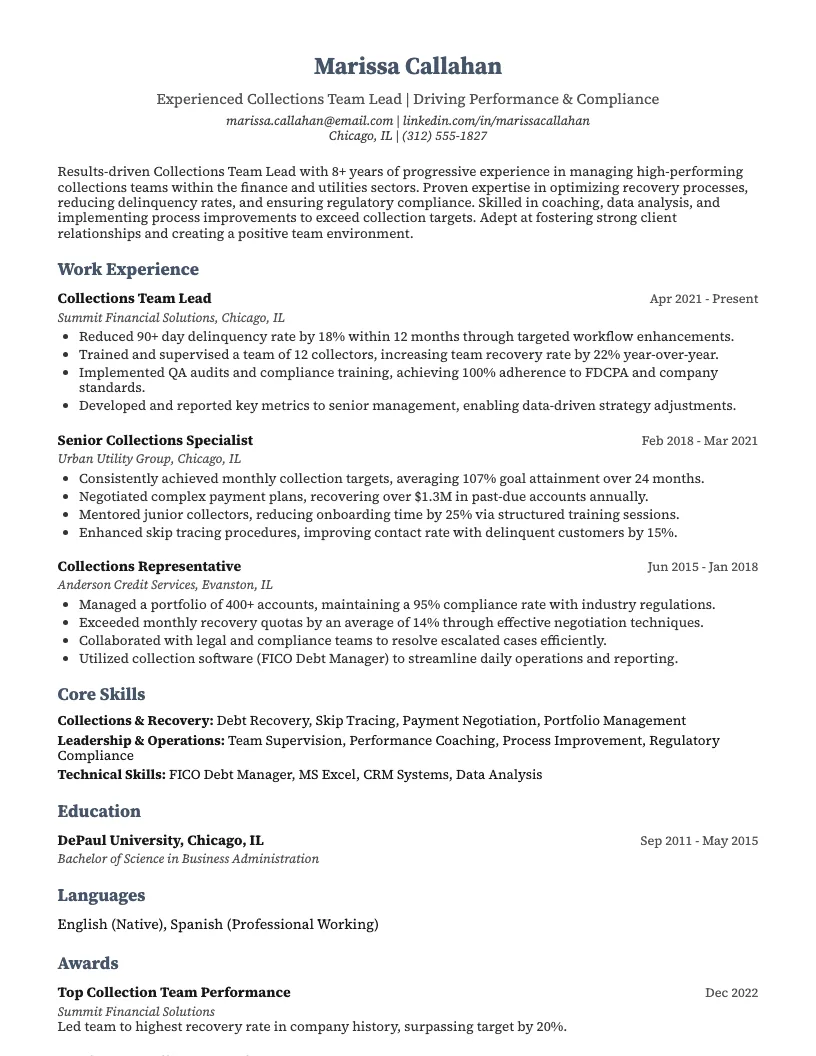 Click to enlarge
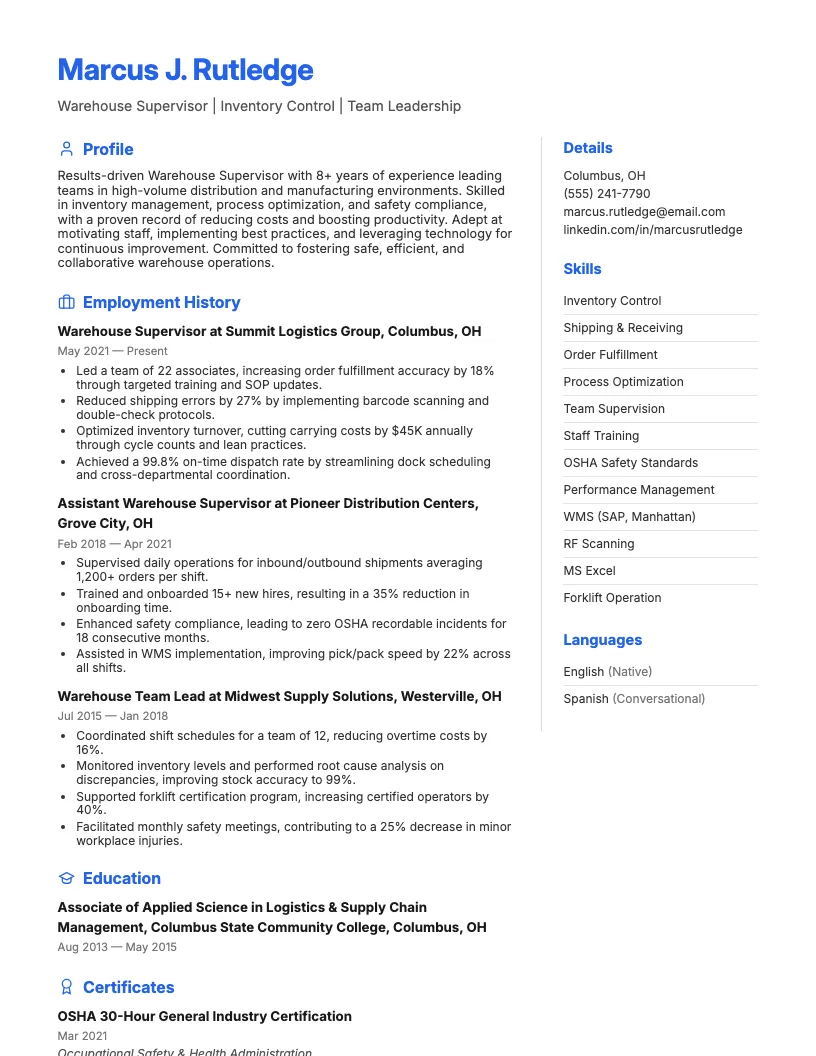 Click to enlarge
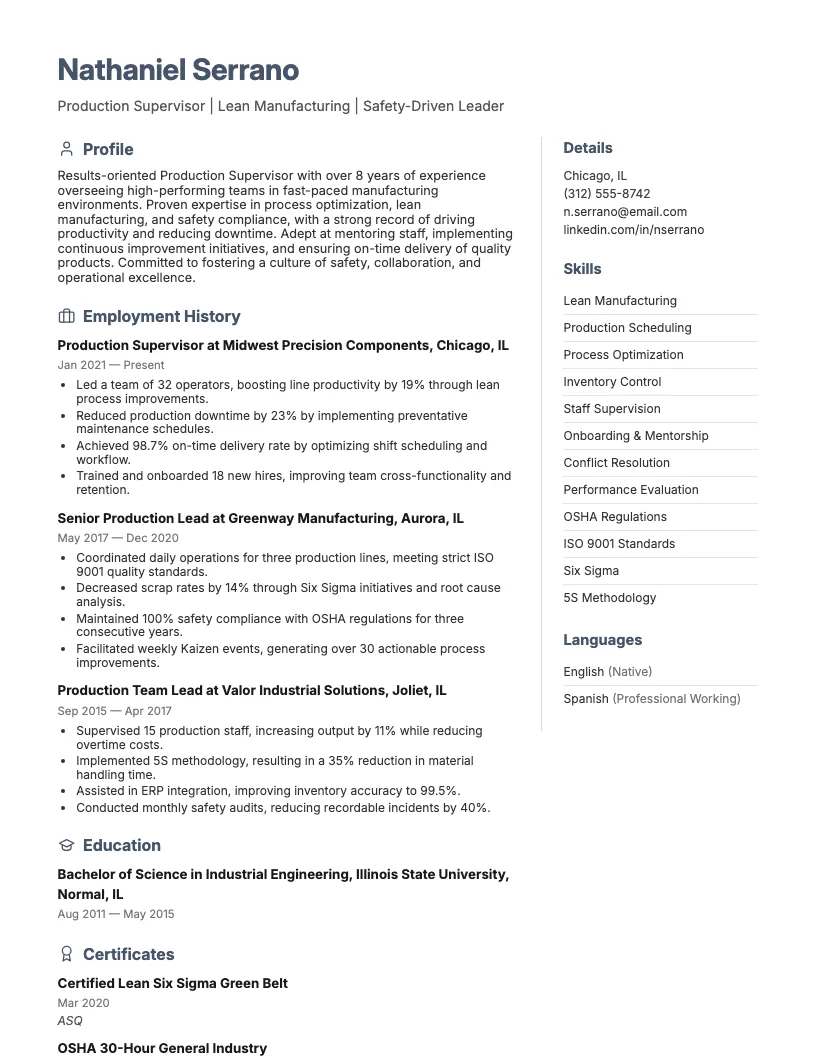 Click to enlarge
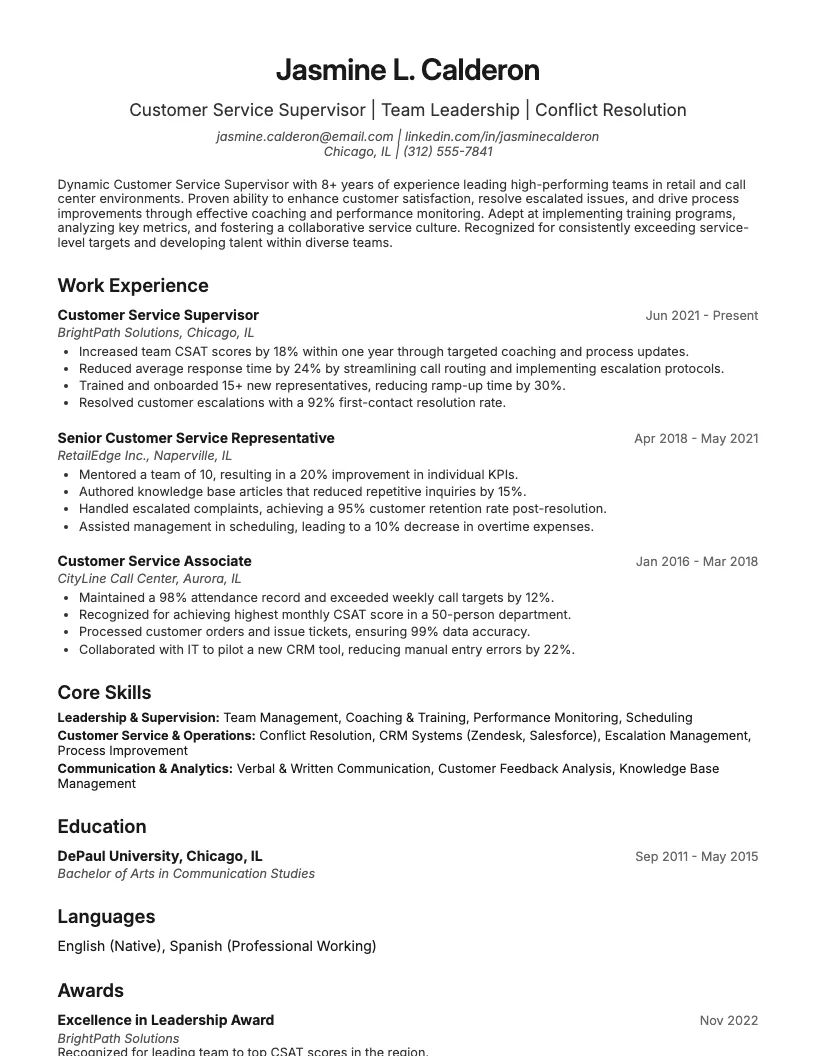 Click to enlarge
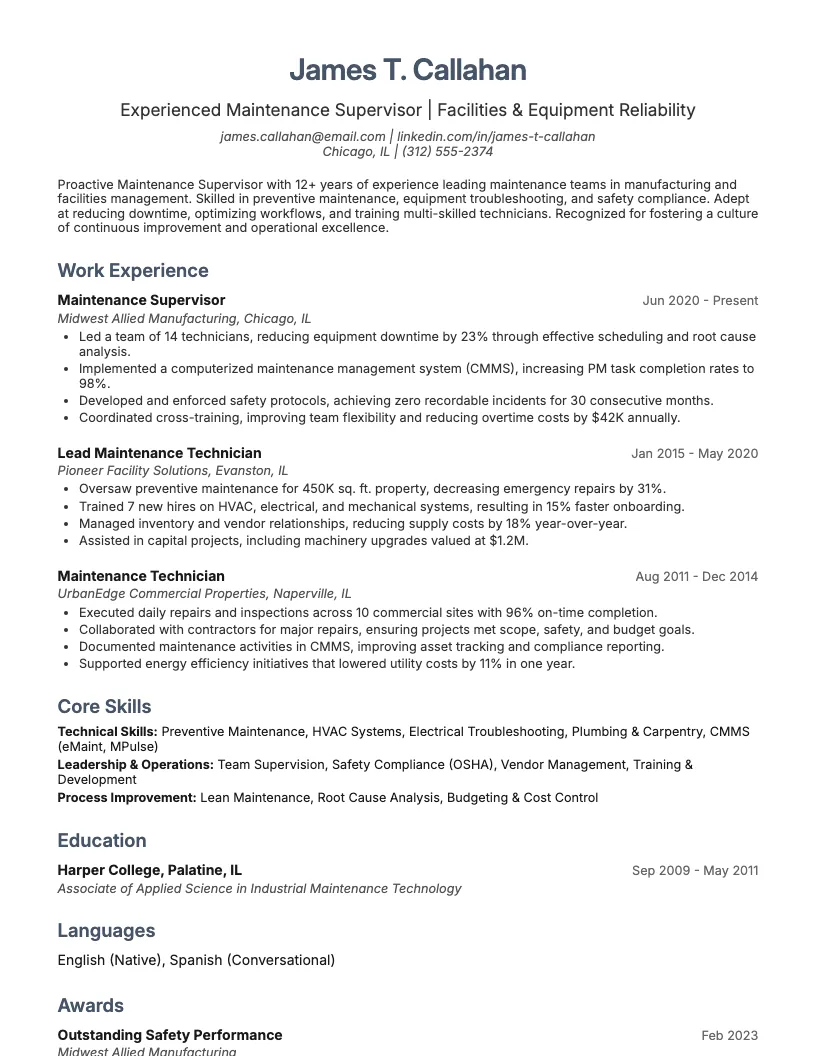 Click to enlarge
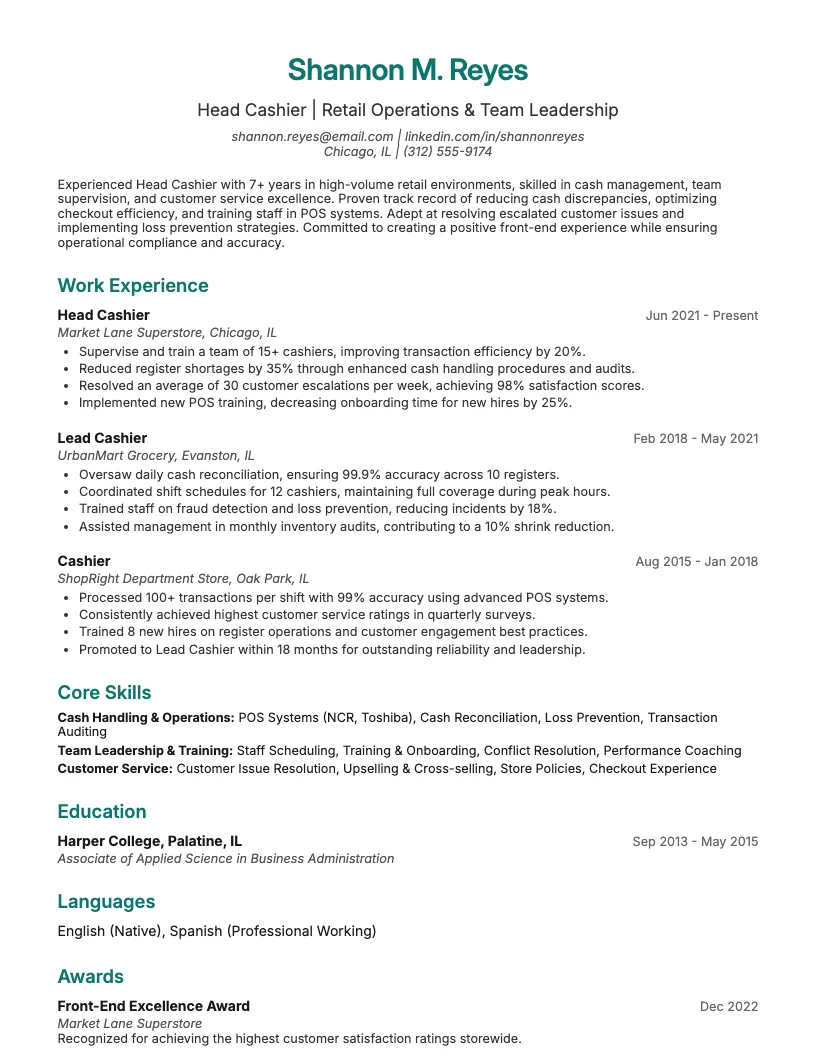 Click to enlarge
Common questions about Operations Team Lead resumes
An Operations Team Lead resume template is a pre-formatted document designed to highlight leadership, process optimization, and team management skills for operations roles. ResumeJudge makes it easy to showcase your achievements professionally.
Yes, most Operations Team Lead resume templates from ResumeJudge are ATS-friendly, ensuring your resume passes automated screening systems and reaches recruiters.
Use this template when applying for supervisory roles in industries like logistics, manufacturing, retail, or corporate operations. ResumeJudge helps you tailor your experience for these fields.
Absolutely! ResumeJudge templates are fully customizable, allowing you to edit sections, add achievements, and adjust the layout to match your unique background and target role.
Operations Team Lead templates emphasize leadership, process improvement, and team coordination, unlike generic templates. ResumeJudge highlights role-specific skills to help you stand out.
Aim for a concise 1-page resume if you have under 10 years of experience. ResumeJudge helps structure your content efficiently, but a 2-page format is fine for extensive experience.
Include skills like team leadership, workflow optimization, scheduling, and problem-solving. Experience with ERP or inventory systems is also valuable-ResumeJudge offers sections for these skills.
Yes, a tailored cover letter helps explain your leadership style and motivation. ResumeJudge provides templates and examples to help you create an impactful cover letter.
Definitely! ResumeJudge templates can be adapted to highlight transferable skills for new industries, making your transition smoother and more convincing to employers.
Save your resume as a PDF to preserve formatting and ensure ATS compatibility. ResumeJudge makes downloading your finished resume in multiple formats easy.
Explore more professional resume examples to inspire your job search
Use our AI-powered resume builder to create a professional, ATS-friendly resume in minutes.
Free to use • No credit card required