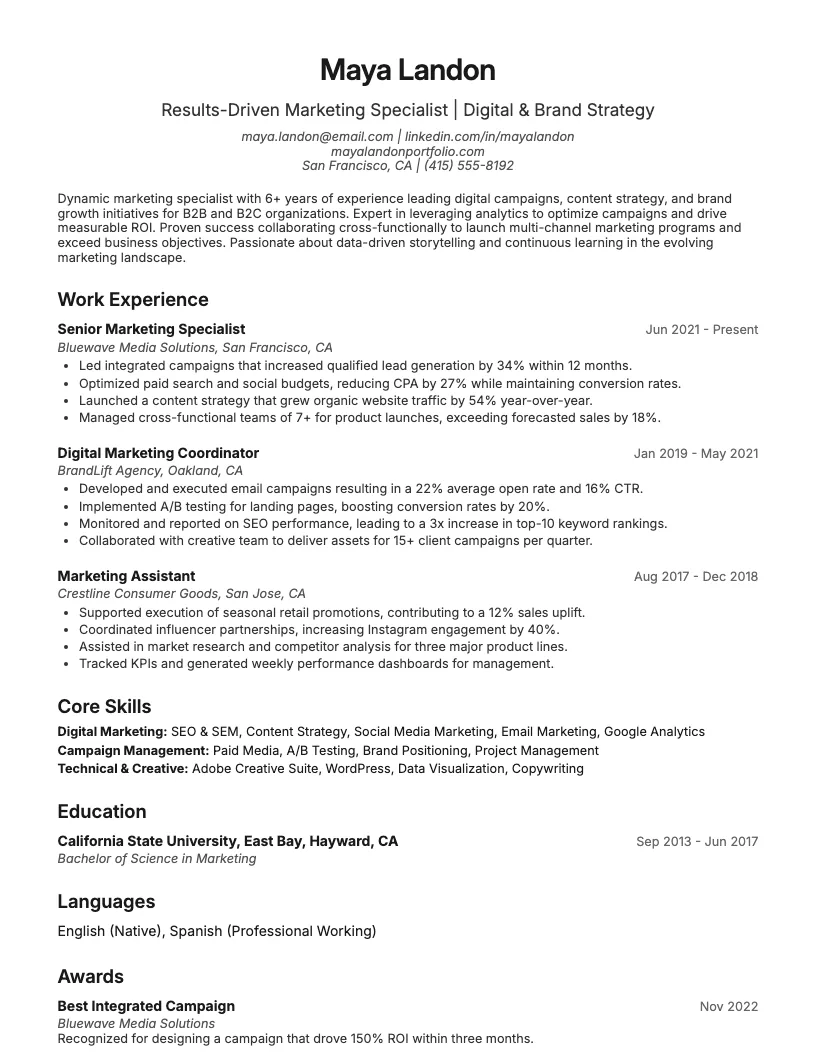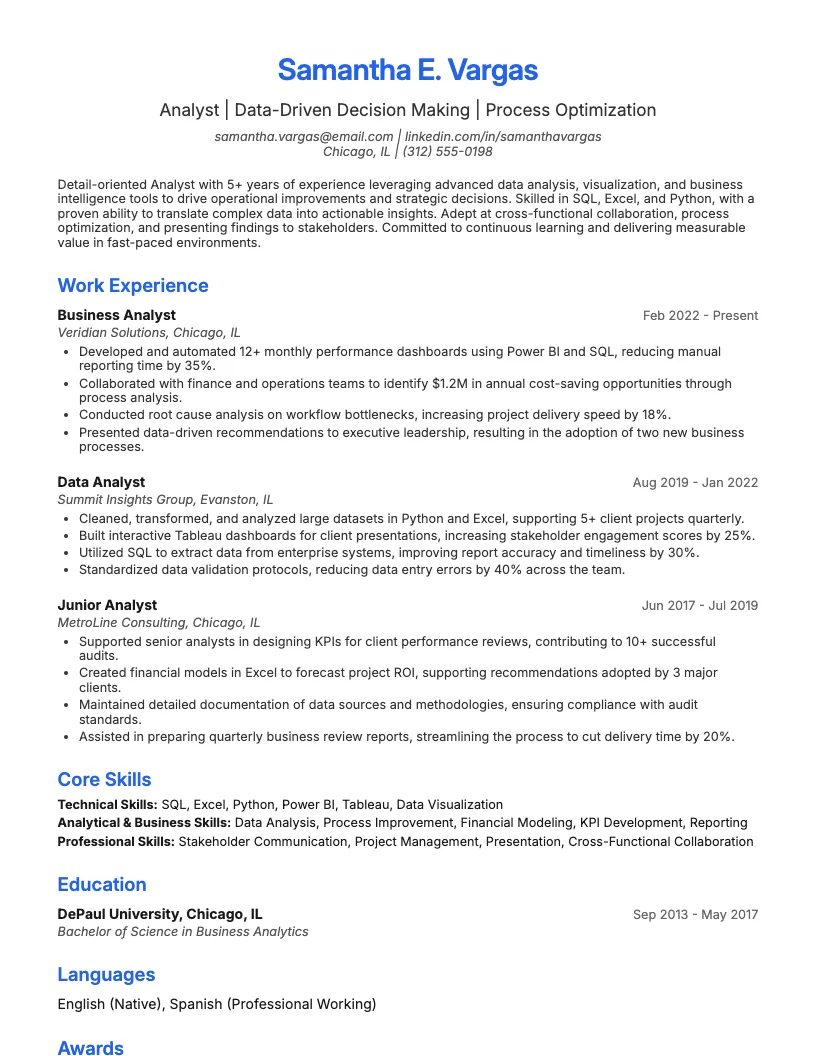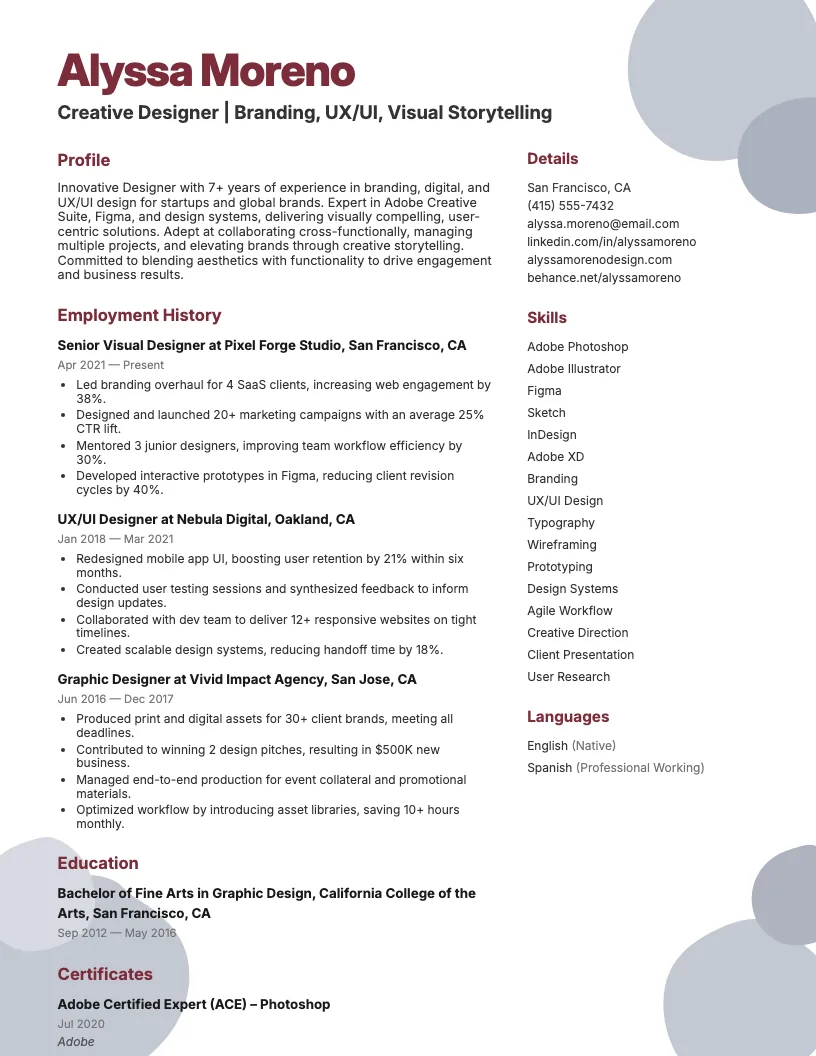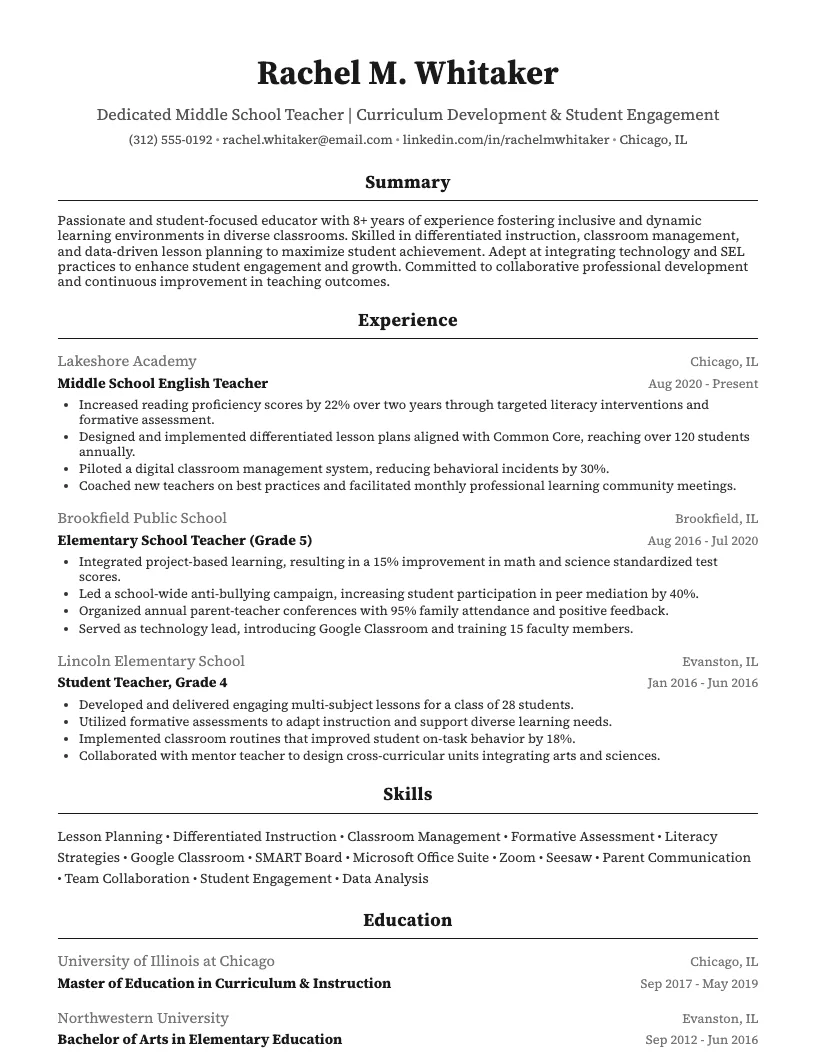
Editor Resume Example
See full guide on Editor resumes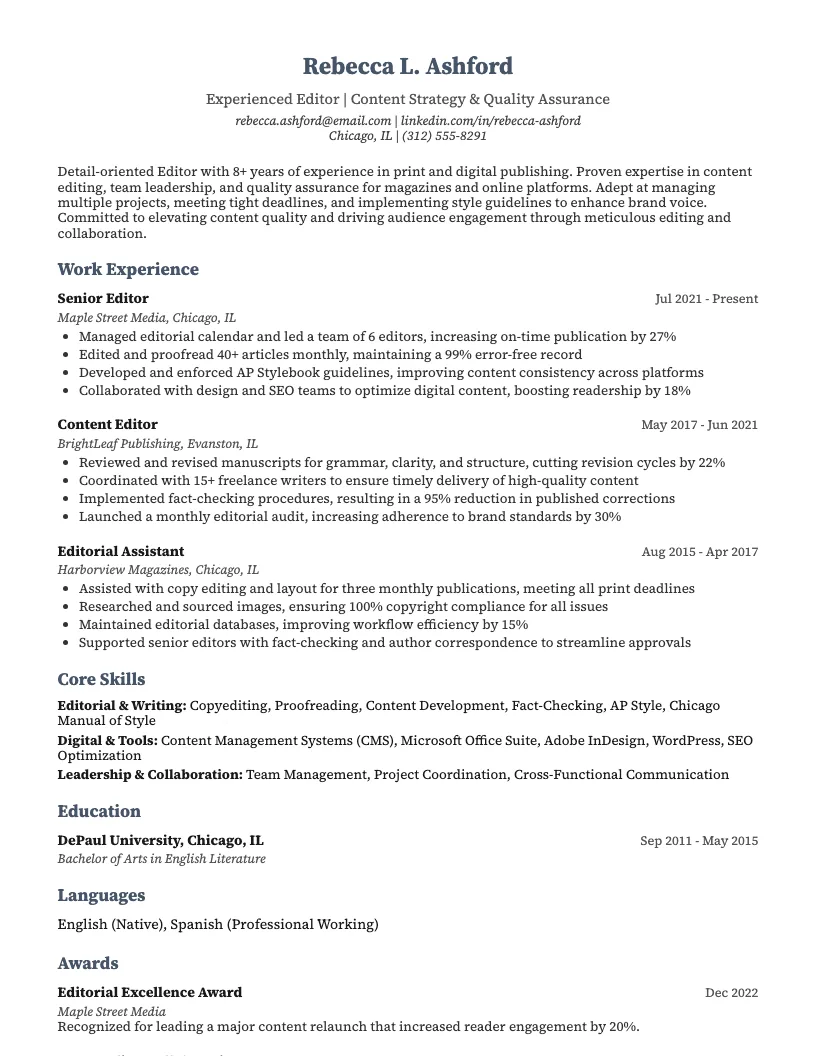 Click to enlarge
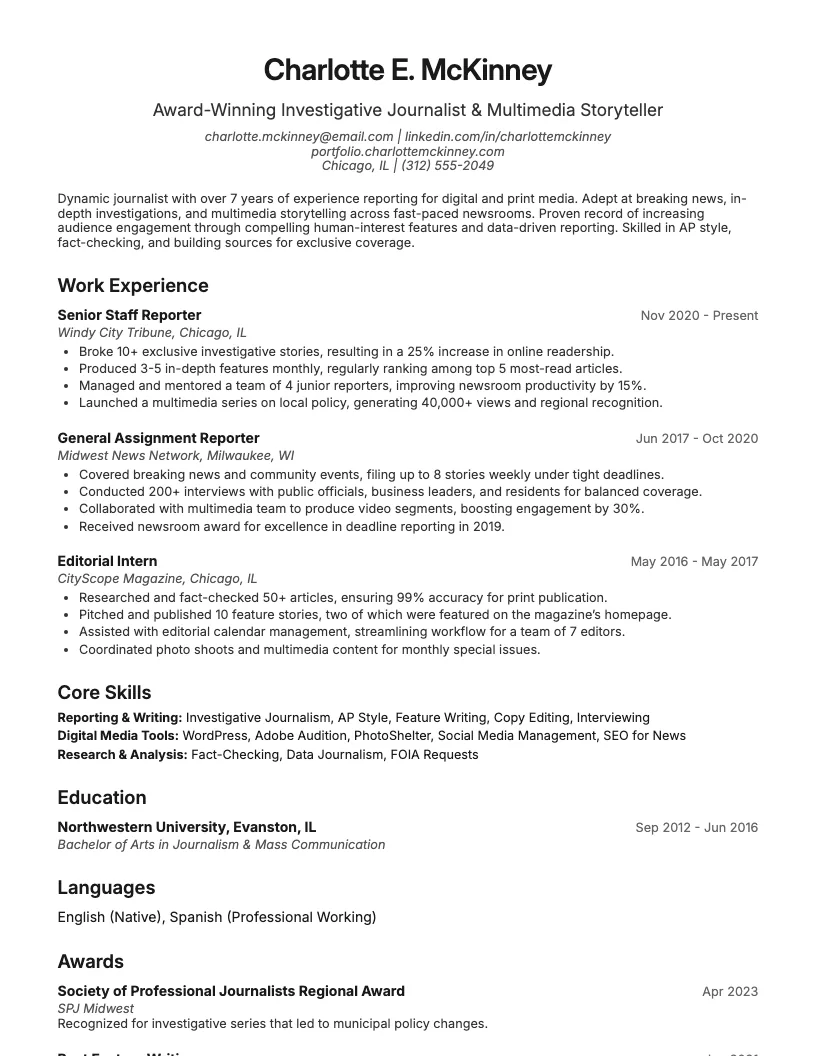 Click to preview
Get inspired by 58+ professional Journalist resume examples, each written by career experts and optimized to pass ATS scans. Pick a proven template, tailor it to your role, and download a polished resume in minutes.
Pick the specialization closest to your target role and start from a proven resume example.
Journalists dig up stories, verify facts, and share news across print, TV, radio, and online platforms. Every day looks different depending on the assignment.
You might cover politics, sports, business, or local news. Some journalists specialize, while others handle a bit of everything.
Editing, interviewing, and even photography can be part of the job. Journalists need strong research and communication skills to keep up with fast-paced news cycles.

You only need one page to make your journalist resume stand out. Make every word count, and keep your layout clean and easy to read.
I always double-check for any errors-accuracy matters in journalism. A well-formatted, keyword-rich resume helps you pass ATS filters and land interviews. Let’s break down each step.
I always start with the format. Reverse-chronological is the go-to for most journalists. It puts your most recent experience right at the top-editors love that.
If you’ve got a steady work history, this format works best. But, if you freelance or have gaps, a functional format lets you group projects or skills instead.
Whatever you pick, keep your resume to one page. Recruiters spend about 7 seconds on a resume, so you want every section easy to scan.
I always stick to 1-inch margins and a clean, professional font-Arial, Lato, or Rubik-sized at 10 to 12 points. This keeps everything readable.
Keep it to one page if you have less than 10 years of experience. Two pages max if you’ve got a long journalism history.
Save your resume as a PDF unless the listing says otherwise. Name it clearly, like “JaneDoe_Journalist_Resume.pdf.” This helps recruiters find you fast.
Start your resume with your full name, phone number, and a professional email address. Double-check for typos-editors notice details like this.
I always include a link to my updated LinkedIn profile and a portfolio showing my best work. This helps editors check my stories, published articles, and connections.
Skip the photo-most U.S. newsrooms prefer resumes without one to reduce bias. Stick to the facts, highlight your skills, and keep your contact info easy to find.
Your resume summary is the first thing recruiters read, so you want it to pack a punch. This is your snapshot-your skills, experience, and biggest wins, all in a few lines.
Focus on your years in journalism, core strengths, and any standout results. Mention your expertise with tools or platforms, but keep it to 3-5 sentences max.
You want to show impact. Think about achievements like increasing readership or breaking exclusive stories. Numbers help prove your value right away.
Your experience section matters. Editors want to see the real impact you make, not just your daily tasks.
Focus on results. Use facts, numbers, and stories from your work. This helps your achievements stand out.
When I write my journalist resume, I always start by reading the job description closely. This helps me figure out which skills and experiences the publication actually values.
Highlight your most relevant reporting, investigative, or multimedia work. If the job asks for digital content experience, mention hits, shares, or audience growth from your previous roles.
Focus on keywords they use-like breaking news, feature writing, or social media. Matching your language to theirs shows you get what they’re looking for and makes your resume stand out.
I always try to use specific numbers in my resume. For example, "I boosted monthly readership by 25%" or "My articles reached 70,000+ views in one week."
You can highlight things like audience growth, social engagement, or publication frequency. This helps editors see the real impact you bring to the newsroom.
Don’t forget to mention deadlines met or projects managed. Numbers like “20+ stories published monthly” or “100% on-time submissions” show your consistency and reliability.
Starting out in journalism without experience feels tough, but you’ve got options. You can build a resume that highlights your skills, training, and real interest in the field.
Focus on what you’ve already done-school papers, blogs, freelance work, or even relevant classes. These things show your writing chops and your dedication to journalism.
A resume objective helps editors see your passion for journalism right away. It’s your shot to show off your enthusiasm and commitment-even if you don’t have newsroom experience yet.
Keep your objective short, around two to three sentences. Mention what you want to achieve, like building skills in digital reporting or learning more about investigative work.
Highlight one or two standout strengths. Maybe you’re bilingual, great at research, or have a knack for storytelling. This helps your resume stand out and feels more personal.
Your skills section can make or break your journalist resume. Editors look for both hard and soft skills that match the job description.
If you highlight the right mix of skills, you show you know the industry and what’s expected. This is your chance to stand out from other candidates.
When I want my resume to stand out, I always focus on hard skills first. Editors look for these technical abilities because they show I can handle the nuts and bolts of the job.
There are a few must-haves here-investigative reporting, fact-checking, and comfort with content management systems. Around 85% of top journalist resumes mention at least one digital skill.
You want to include video editing, social media management, and basic data analysis. This helps you cover all the platforms newsrooms use today, from Instagram to podcasts.
I always add real examples-like “Published 50+ stories using WordPress” or “Edited weekly news segments with Adobe Premiere.” Numbers make your skills way more convincing.
Strong communication skills help me connect with sources and audiences. Editors look for candidates who explain complex topics clearly, even under tight deadlines or high-pressure situations.
Adaptability is key. The media landscape changes fast, so I constantly learn new platforms and adjust my approach. This helps me stay relevant and competitive in the field.
Collaboration matters too. Journalists often work in teams, so being open to feedback and supporting colleagues makes daily work smoother. You should always highlight these soft skills on your resume.
Most journalist jobs expect at least a bachelor’s degree in journalism, communications, or a related field. Some roles might look for a master’s or extra certifications.
I always list my degree, school, graduation year, and any relevant coursework or honors. Certifications in digital media or investigative reporting add extra value and show I keep my skills up to date.
In the next part, I’ll break down the top certifications you might want to include.
There are some certifications that really boost a journalist’s resume. Digital Journalism Certification or Mobile Journalism (MoJo) Certification show your tech skills and adaptability in a fast-changing media world.
I always mention Investigative Reporters and Editors (IRE) Certification if I have it. Employers recognize this as proof you can handle investigative work and ethical reporting standards.
You can also add Media Law Essentials (NCTJ) or SEO for Journalists if relevant. These show you understand legal boundaries and digital strategy-skills many editors want right now.
Sometimes, your core experience alone doesn’t show the full picture. You can use extra sections to highlight what makes you unique as a journalist.
If you have space, add things like professional associations or language skills. These details can set you apart from other candidates and show what you bring to the newsroom.
Journalism covers dozens of roles, from entry-level writers to chief editors. I see resumes in this field look very different depending on your specialty and years of experience.
If you’re starting out or aiming for a senior role, your resume should match your goals. Specialty journalists and editors also use different formats, skills, and achievements to stand out.
If you’re just starting out in journalism, your resume needs to highlight internships, campus media, and freelance gigs. That shows real experience, even if it’s not full-time.
I always suggest adding hard numbers-like “wrote 25 articles for the student newspaper”-because recruiters love specifics. Even volunteer roles count if you’ve created content or managed deadlines.
Focus on your research, writing, and digital skills. Employers look for social media savvy and the ability to work fast. Tailor your resume to each job description for better results.
When you move beyond entry-level, you want your resume to emphasize leadership, big stories, and impact. I always list metrics-like audience growth or awards-to show real results.
For senior and chief journalist roles, I highlight experience managing teams or budgets. It helps to mention coverage of national events, investigative projects, or mentorship, since these show you’re ready for bigger challenges.
There are usually more applicants at this level, so I make every section count. Use action verbs, add links to published work, and keep it concise-two pages max is ideal.
Specialty journalists cover niche topics like broadcast, data, sports, or science. These roles need unique skills-think multimedia editing, data visualization, or deep subject expertise.
I always highlight platform experience (TV, radio, podcast, or digital), since 70% of newsrooms want candidates who know multiple formats. Show off software skills like Adobe Premiere or Tableau.
You want to quantify impact-mention viewership ratings, engagement stats, or exclusive scoops. This helps your resume stand out in a crowded field of specialists.
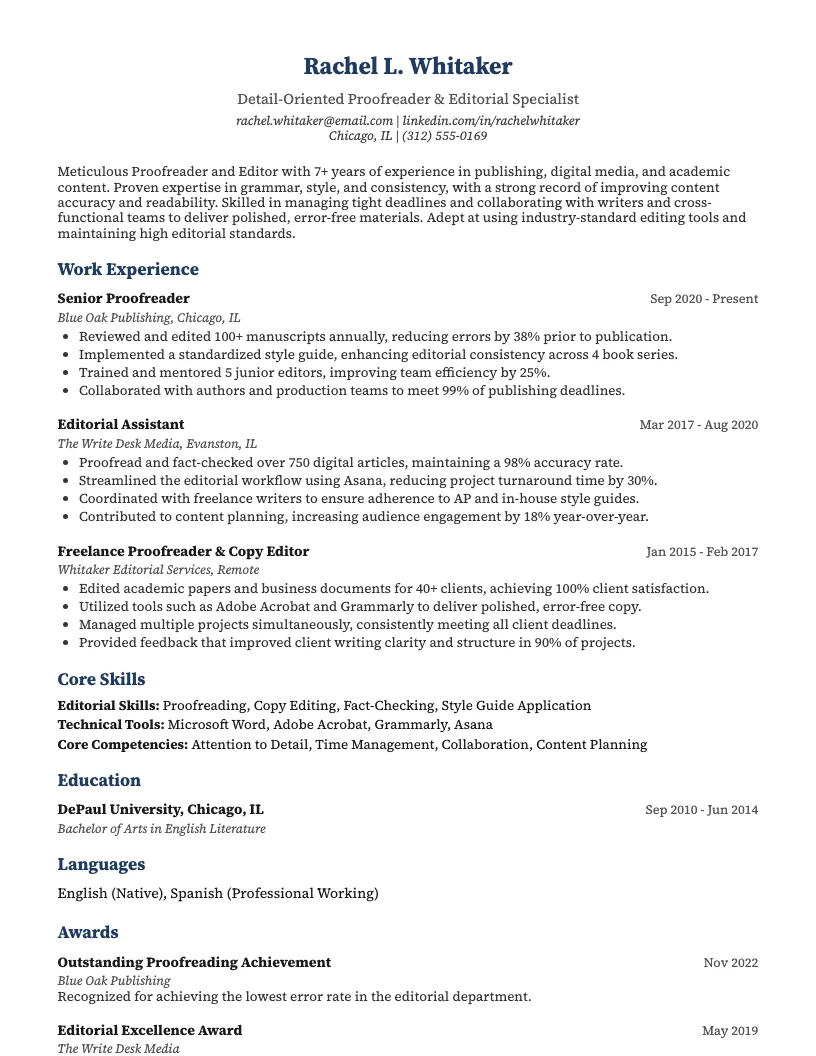
If you’re searching for editor resume examples, you’re in the right spot. I see a lot of demand for magazine editor resume examples, video editor resume examples, and even proofreader editor resume examples.
For film and video editor resume examples, highlight technical skills and portfolio links. Employers want to see software proficiency, like Adobe Premiere or Final Cut, and proof of successful projects.
Magazine editor resume examples focus on leadership, content strategy, and teamwork. Show your impact with numbers: “Boosted reader engagement by 30%” or “Managed a team of 10 writers.”
Proofreader editor resume examples need attention to detail and speed. Mention error rates, deadlines met, or high-volume projects. This shows you can handle the fast-paced world of editing.
Video editor resume examples often include creative storytelling and collaboration with directors. If you’ve improved viewer retention or cut production times, mention those results.
That wraps up this section on editor resume examples. Each path has its own key skills and achievements, so tailor your resume to your specialty.
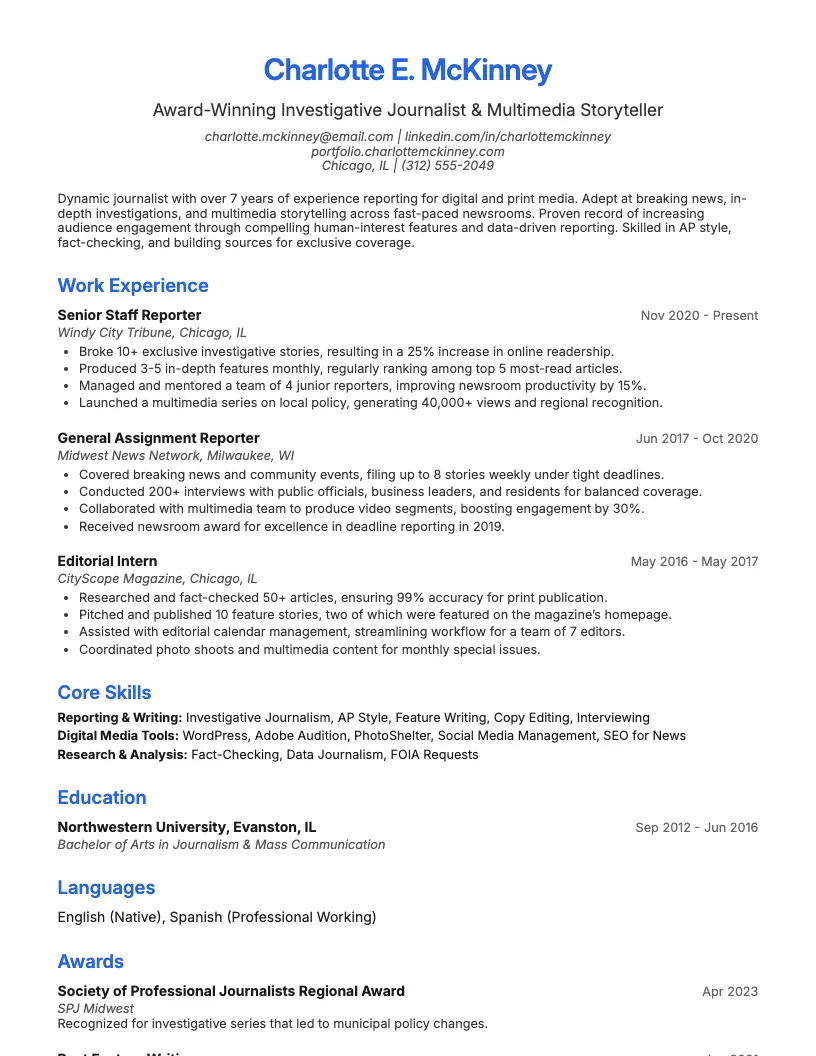
Your journalist resume needs to show off your writing, editing, and research skills in a clear way. Every section should highlight the value you bring.
Focus on real achievements, not just daily tasks. Tailor your resume for each job to make your strongest qualifications stand out. This helps you grab attention fast.
Browse Journalist resume examples for related roles. Preview any example, open it in the builder, or read its full guide.
Click to enlarge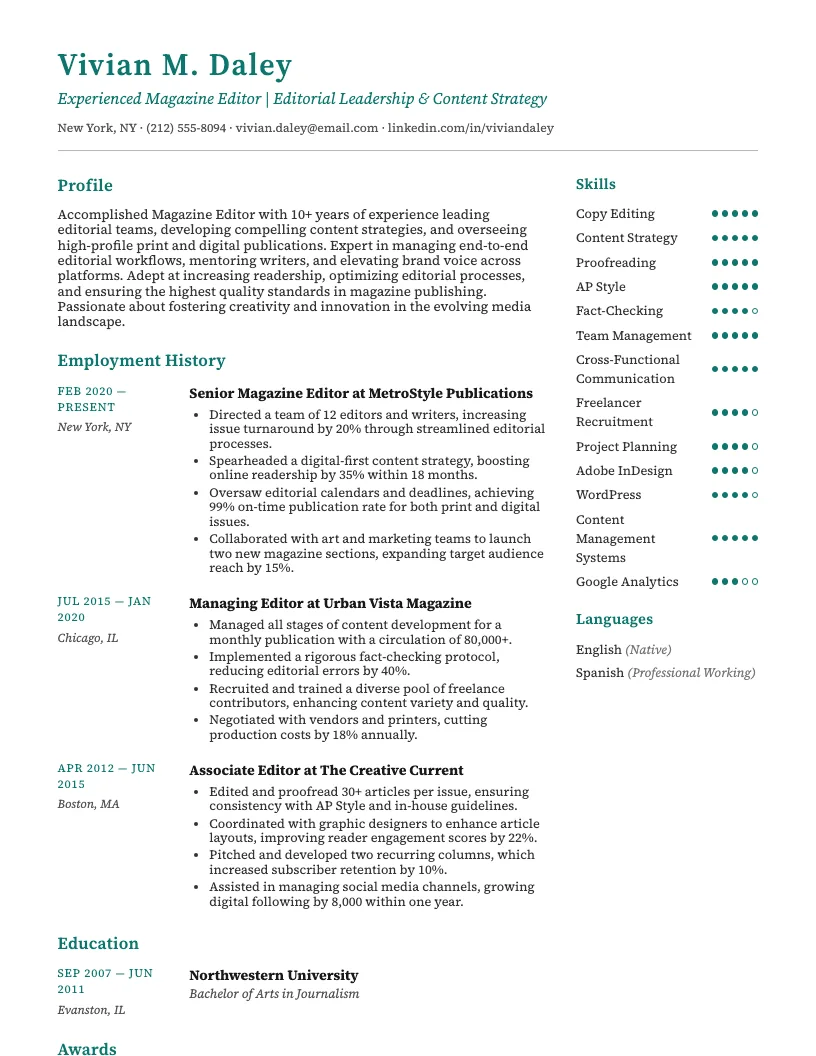 Click to enlarge
 Click to enlarge
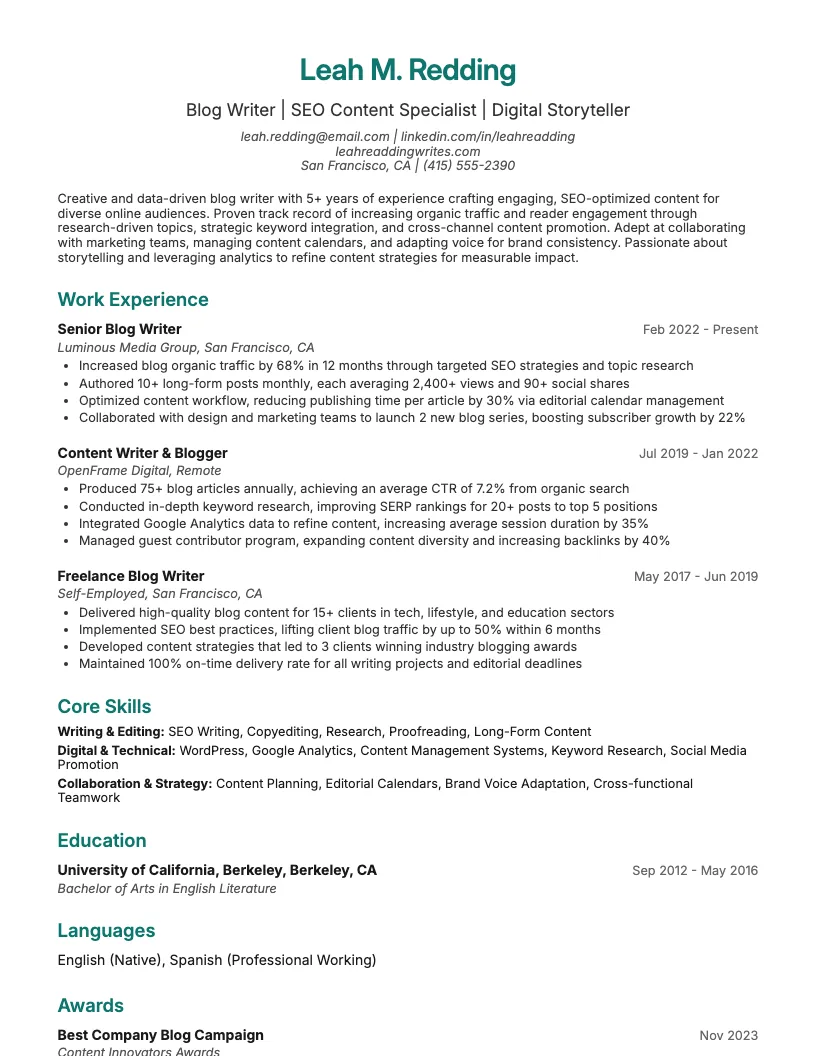 Click to enlarge
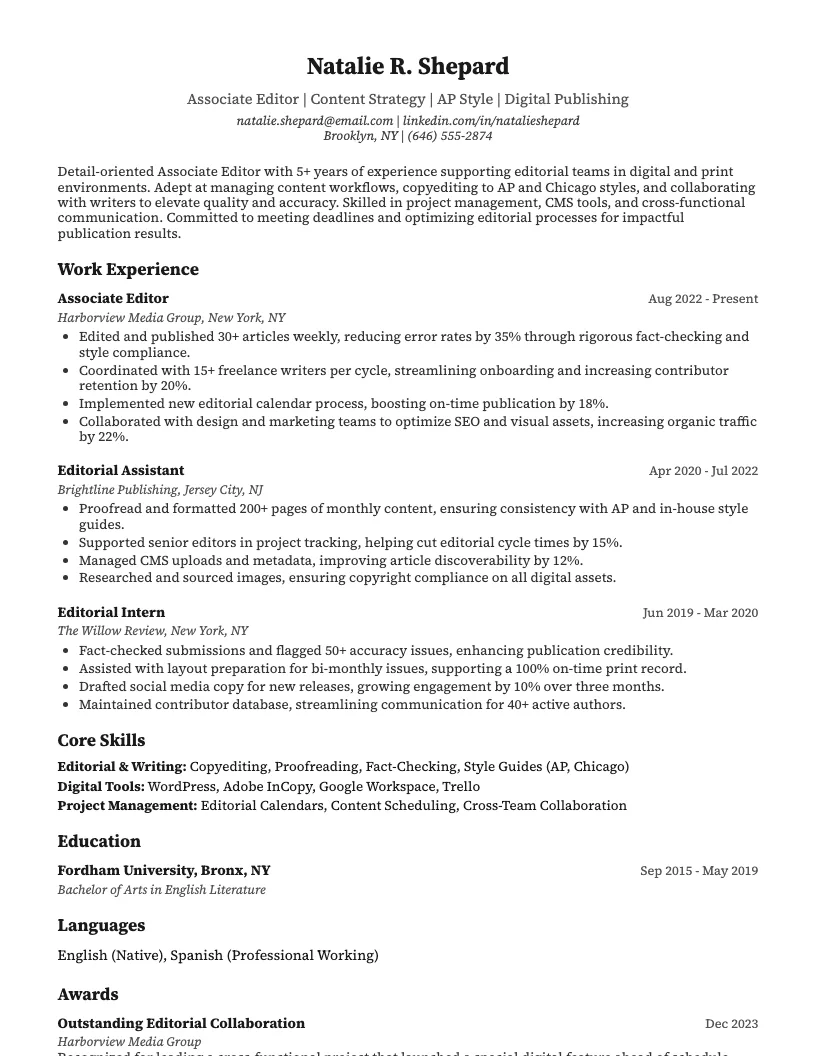 Click to enlarge
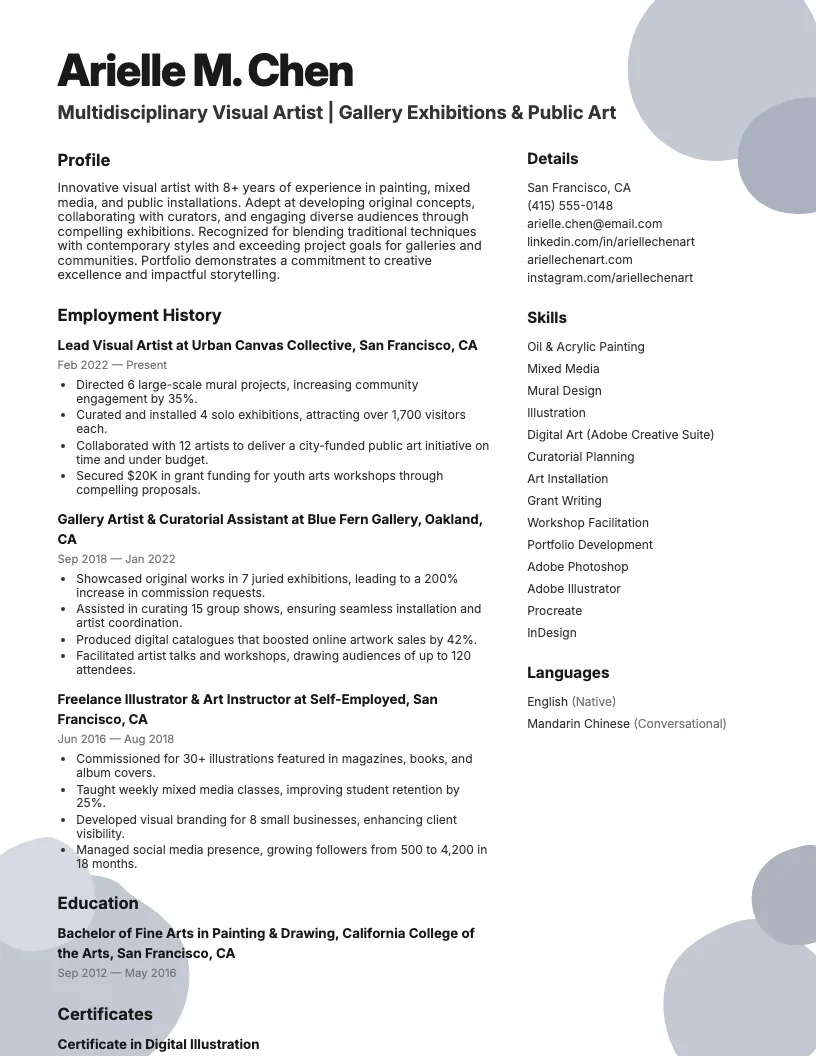 Click to enlarge
Common questions about Journalist resumes
A journalist resume template is a pre-designed format tailored for reporting, writing, and media roles. It highlights skills like writing, research, and interviewing. ResumeJudge makes it easy to build an impressive, industry-focused resume.
Yes, most journalist resume templates from ResumeJudge are ATS-friendly. They use clean layouts and standard fonts, ensuring your resume passes through applicant tracking systems used by newsrooms and media companies.
Use a journalist resume template when applying for roles in news organizations, magazines, digital media, or PR agencies. It's also great for freelance writers and broadcast reporters. ResumeJudge helps you tailor it for each job.
Absolutely! You can edit sections, add your own achievements, and highlight specific beats or media skills. ResumeJudge templates are fully customizable to fit your unique experience and career goals.
Journalist templates focus on storytelling, writing skills, and published work, while other templates may highlight technical or business skills. ResumeJudge offers field-specific templates to showcase your strongest assets.
A journalist resume is usually one page, especially for early-career professionals. More experienced journalists may use two pages. ResumeJudge templates help you keep information concise and relevant.
Key sections are contact info, a summary, work experience, education, skills, and published work or portfolio links. ResumeJudge templates ensure you don’t miss important details.
Yes, most journalist resume templates allow you to add links to online articles, portfolios, or video clips. ResumeJudge makes it easy to showcase your work with clickable links.
A cover letter is highly recommended for journalist roles, as it lets you highlight your storytelling style and passion. ResumeJudge can help you craft a strong cover letter to match your resume.
Yes, ResumeJudge templates work great for freelancers. You can feature varied projects, published work, and diverse media clients, making your resume appealing to editors and agencies.
Explore more professional resume examples to inspire your job search
Use our AI-powered resume builder to create a professional, ATS-friendly resume in minutes.
Free to use • No credit card required