Interior Designer Resume Example
See full guide on Interior Designer resumes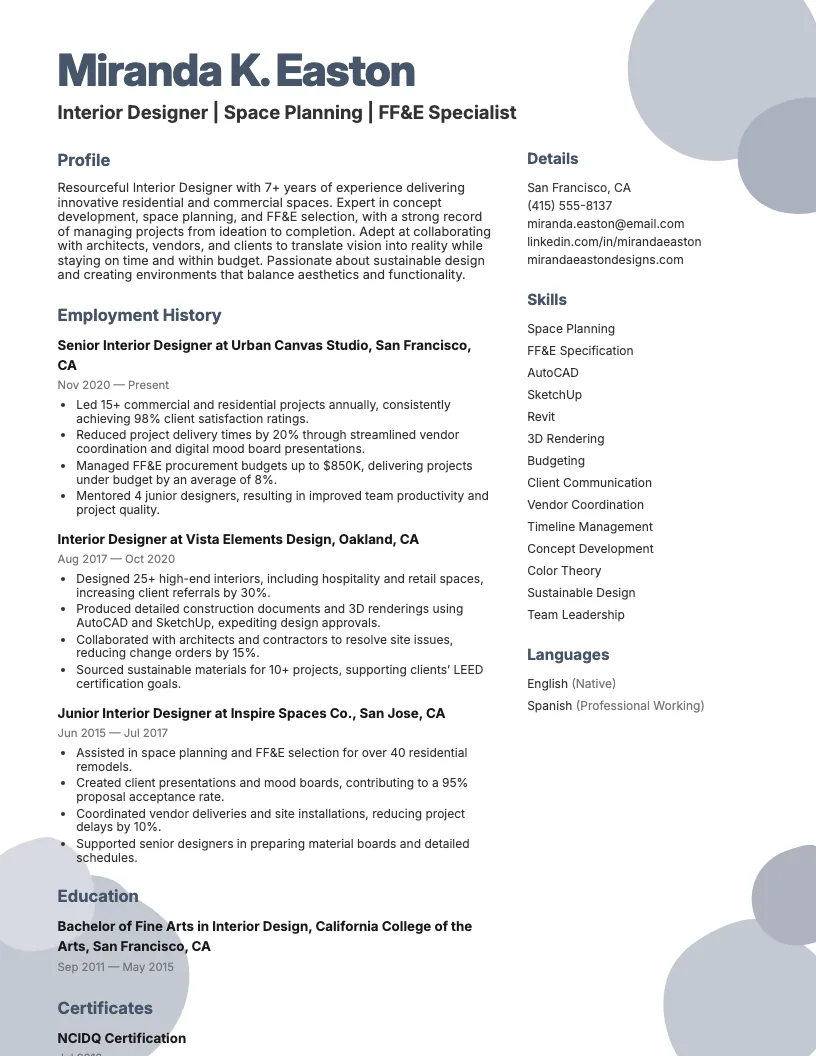 Click to enlarge
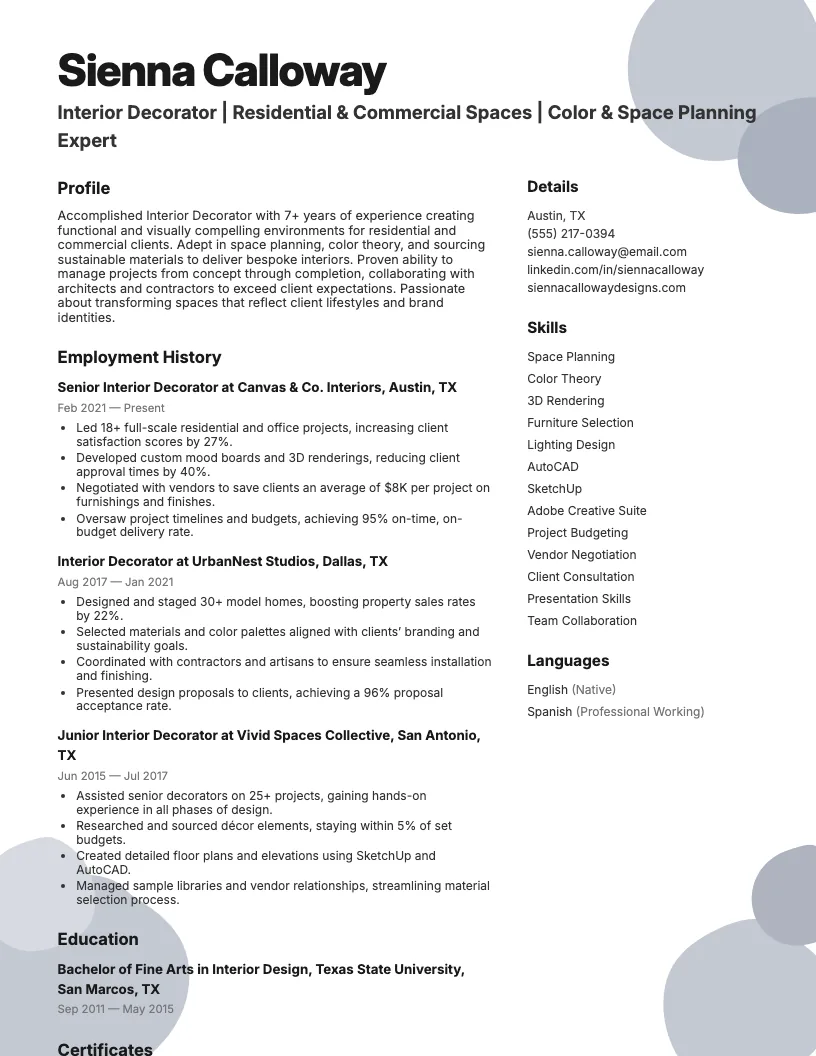 Click to preview

Get inspired by 62+ professional Interior Decorator resume examples, each written by career experts and optimized to pass ATS scans. Pick a proven template, tailor it to your role, and download a polished resume in minutes.
Pick the specialization closest to your target role and start from a proven resume example.
If you want to land interior decorator jobs, a sharp resume helps. A good one shows off your creativity and project results fast.
I break down what hiring managers want to see. You’ll find tips, proven examples, and what skills matter most in 2024.
Landing interior decorator roles looks different at every stage of your career. I see hiring managers expect different skills and results from entry-level to senior experts.
Here, you’ll find resume samples for each experience level. These examples highlight what you need at every stage, whether you’re just starting or you’ve been in the industry for years.

Getting your interior decorator resume right is key. Hiring managers look for creativity, project results, and relevant skills in seconds-usually less than 10.
You want your resume to show your eye for design, your communication skills, and your hands-on experience. I’ll walk you through each section step-by-step.
Whether you’re new or have 10+ years in the field, these tips help you stand out and get noticed. Let’s dive in.
Your professional profile is the first thing recruiters see. It’s a quick intro, usually 3-4 lines, that shows your experience, personality, and style as an interior decorator—just like you would in a cover letter.
I use this section to mention my design strengths and highlight my ability to work with clients. If you have a certification or a signature project, mention it here.
Focus on your creative approach, people skills, and how you make spaces both beautiful and functional. Keep it short-around 100 words works best for most resumes.
When you list your employment history, start with your most recent role. I always use reverse chronological order so hiring managers see my latest experience first.
Use bullet points for each job. Focus on what you achieve-not just the tasks you do. For example, "Increased client satisfaction by 25% through personalized design consultations."
Include numbers where you can. Things like budget managed, rooms decorated, or client ratings help your experience stand out. This shows you add real value to every project.
Keep each entry clear and concise. You want your work history to look organized and easy to scan, so recruiters spot your best moments right away.
I always list my highest degree first-usually a bachelor’s in interior design or a related field. You don’t need to add high school if you have a degree above that.
If you’ve got certifications, like a decorator certificate or NCIDQ credential, add those too—these are also valuable to mention in your interior architect cover letter. This helps show you’re serious about your skillset and industry standards.
Don’t forget to include honors, distinctions, or relevant coursework. If you have several awards or memberships, consider giving them their own section for extra visibility.
I always keep my resume layout clean and simple. White space matters-it helps hiring managers scan your info in under 10 seconds.
Use bold section headings and a clear font. I like to highlight my contact info and portfolio link right at the top.
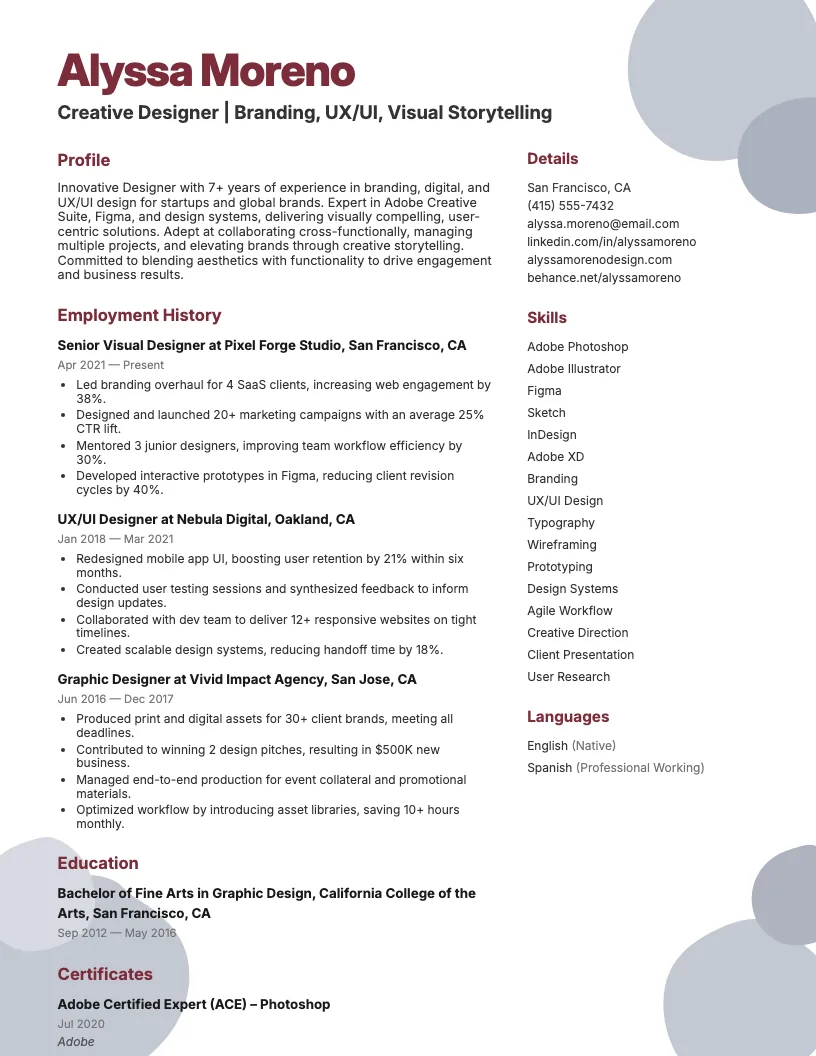
You can add a pop of color, but stick to one or two accent shades. This shows off your style without distracting from your experience.
Consistent formatting is key. Align your dates, use bullet points, and keep your margins even. This helps your resume look polished and professional-just like your design projects.
If you’re into interior decorating, you probably want to see how your skills stack up against related roles. I find that looking at similar resumes helps me spot trends.
You get a clearer idea of what hiring managers expect. Over 60% of design jobs ask for overlapping skills, so checking out related examples is pretty useful.
If you want your interior designer resume to stand out, focus on real project results. Hiring managers like to see numbers-think square footage managed or budgets handled.
Check out these interior designer resume examples for ideas, and consider reviewing an interior designer cover letter to strengthen your application. I always include certifications, software skills, and a few lines on client satisfaction. This helps your experience look concrete and impressive.
You can highlight teamwork, client communication, and technical skills. If you use tools like AutoCAD or SketchUp, mention them. This keeps your resume current and relevant.
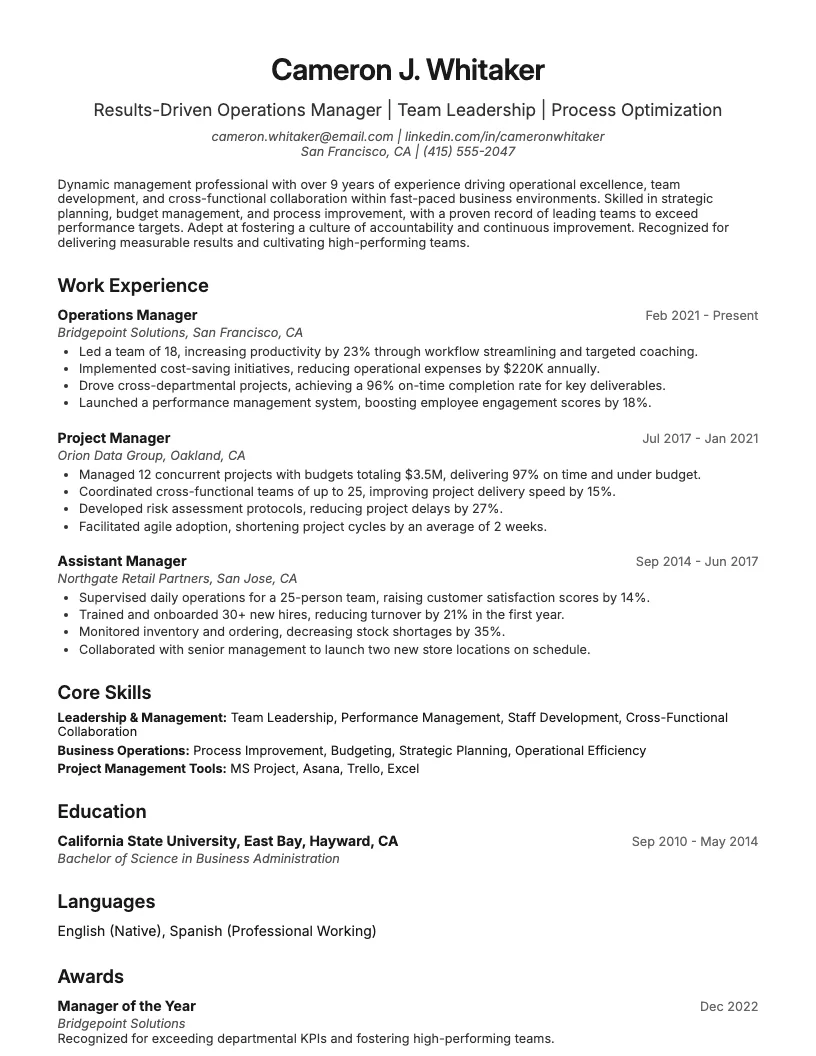
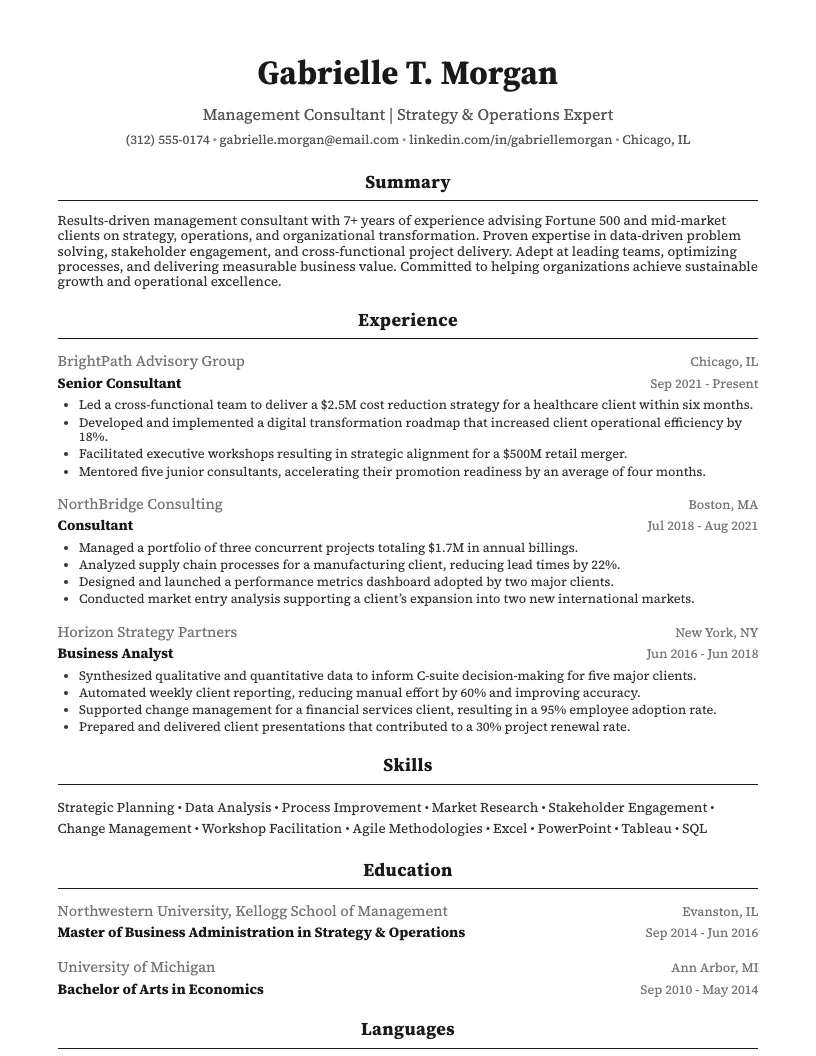
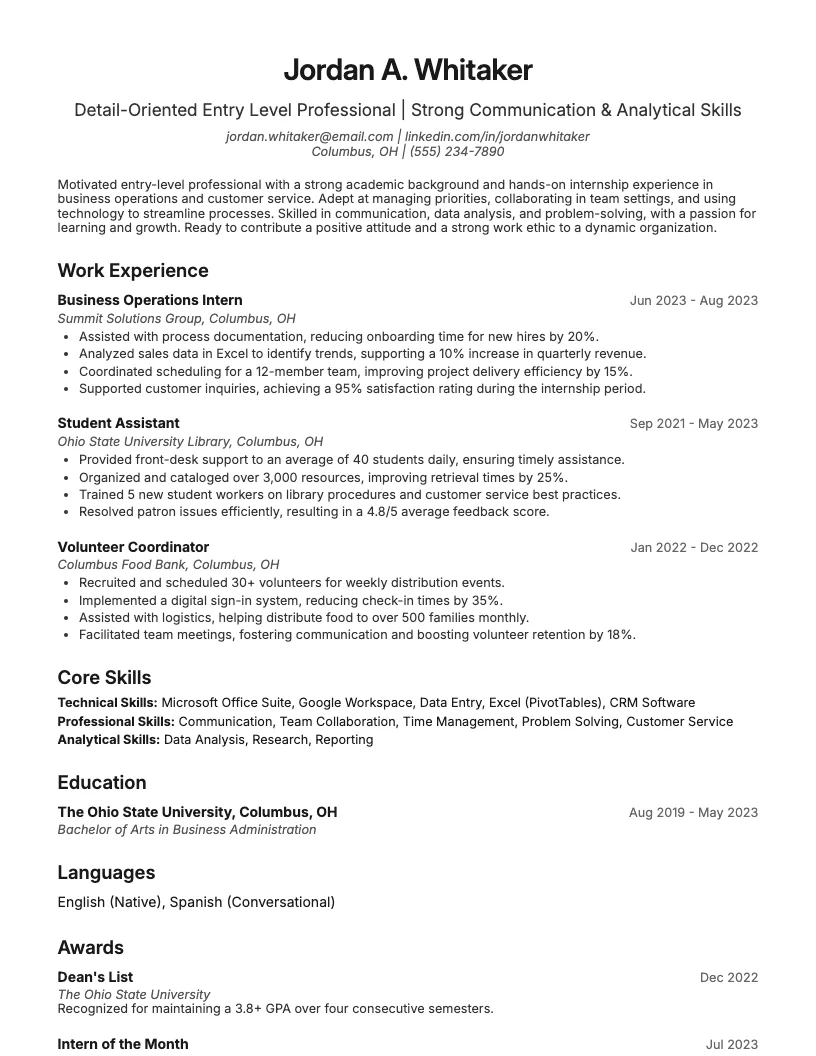
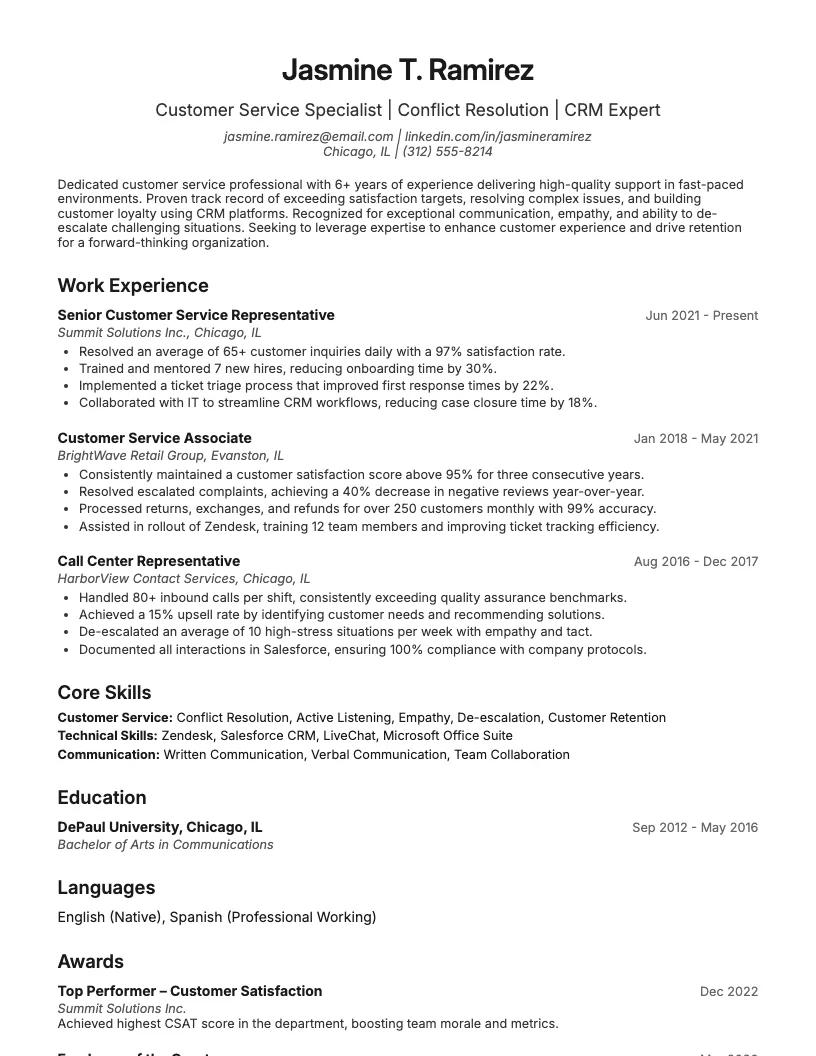
Browse Interior Decorator resume examples for related roles. Preview any example, open it in the builder, or read its full guide.
Click to enlarge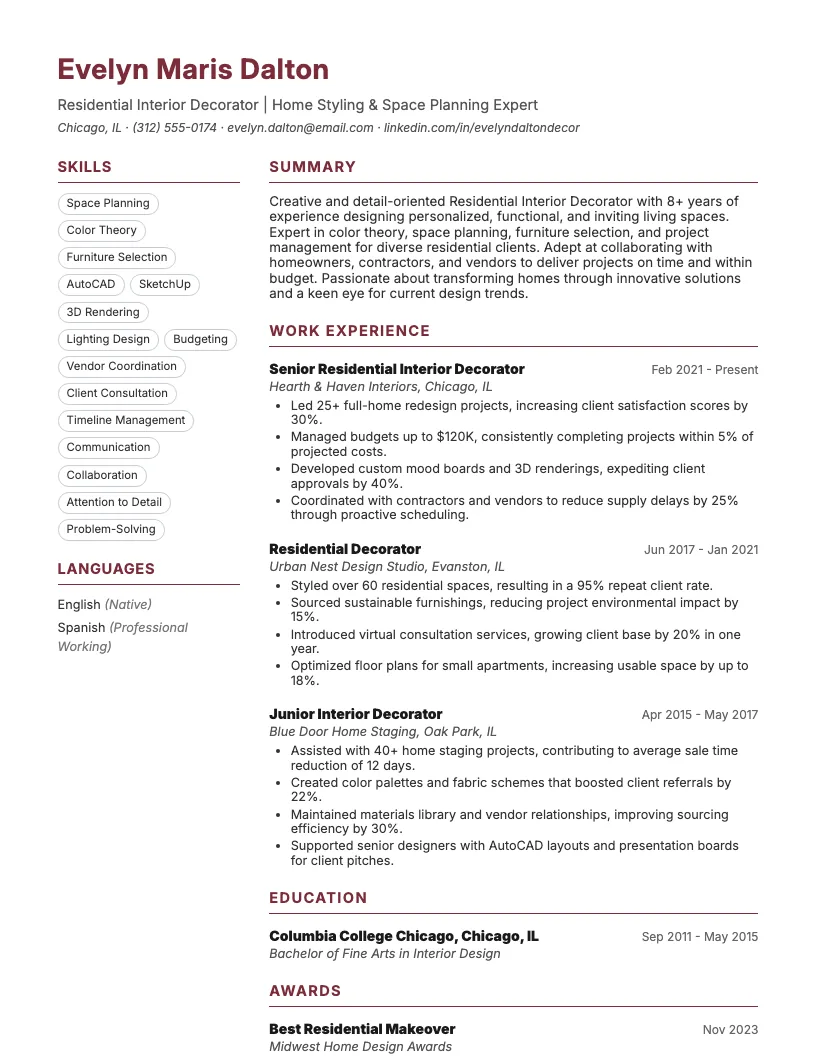 Click to enlarge
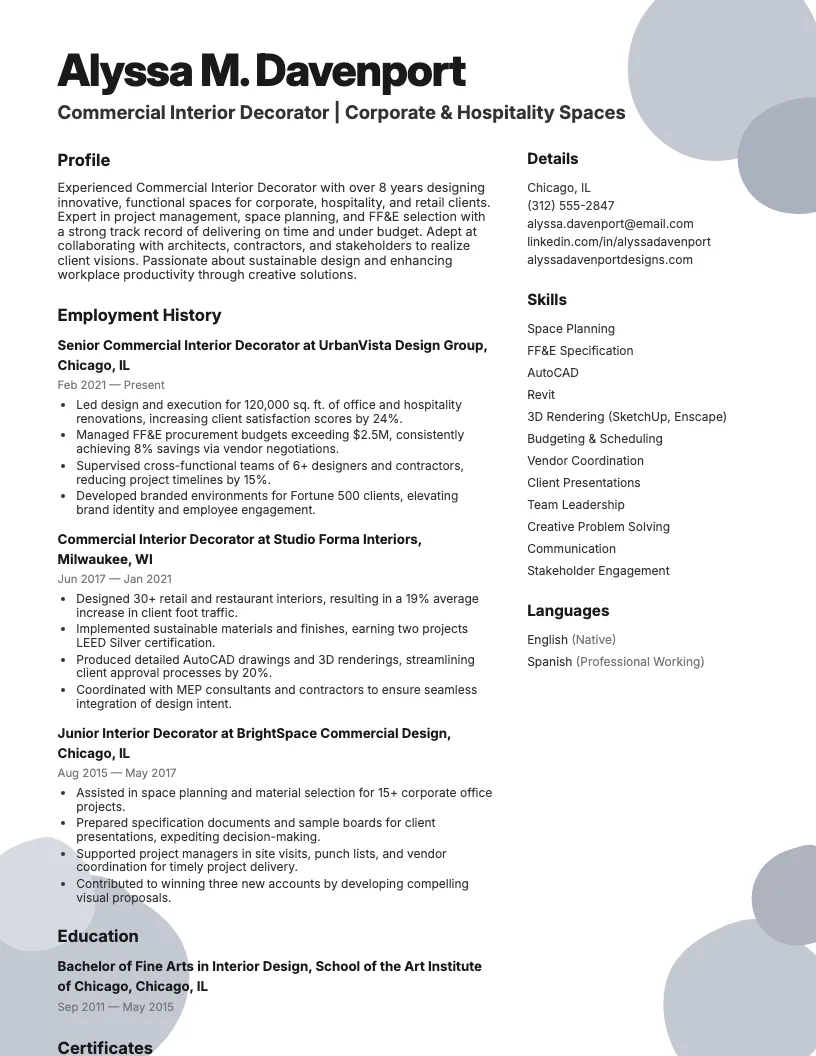 Click to enlarge
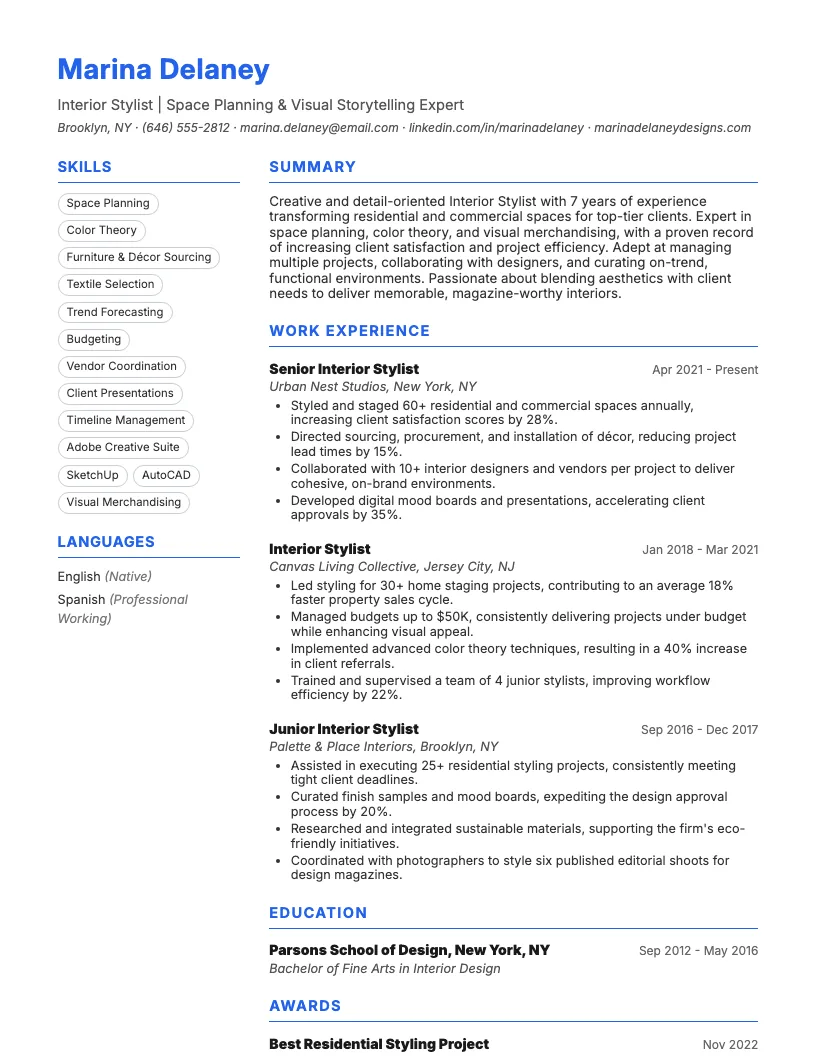 Click to enlarge
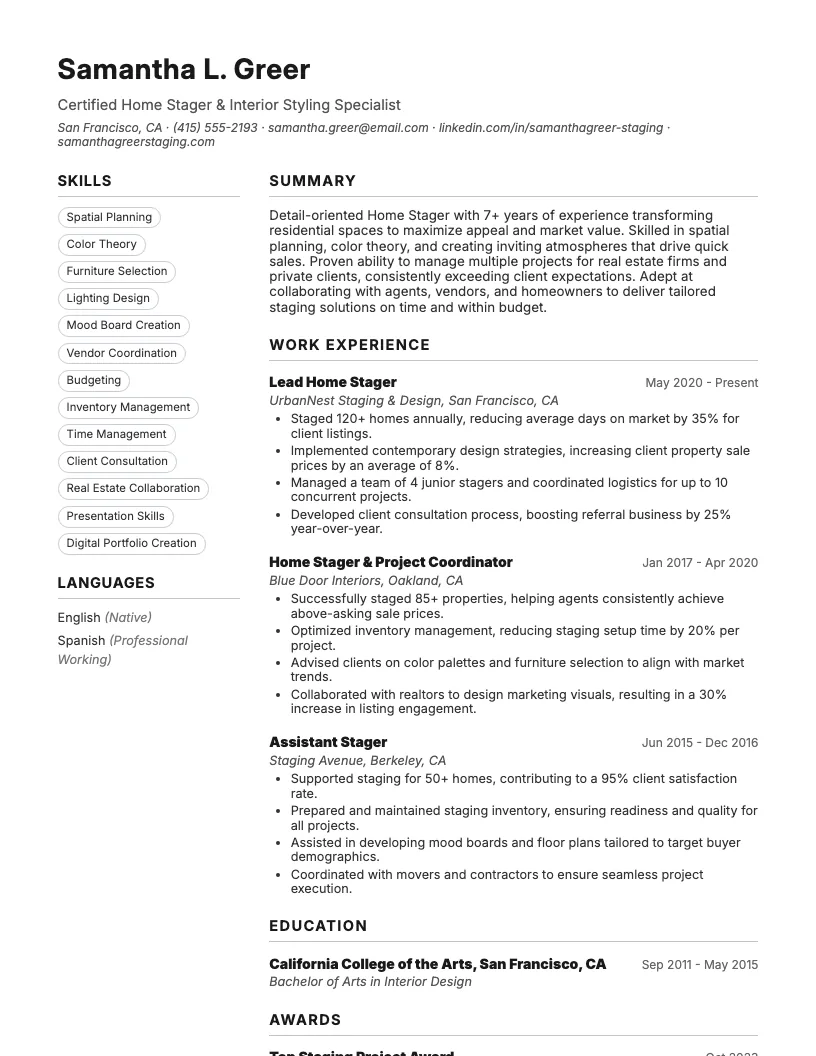 Click to enlarge
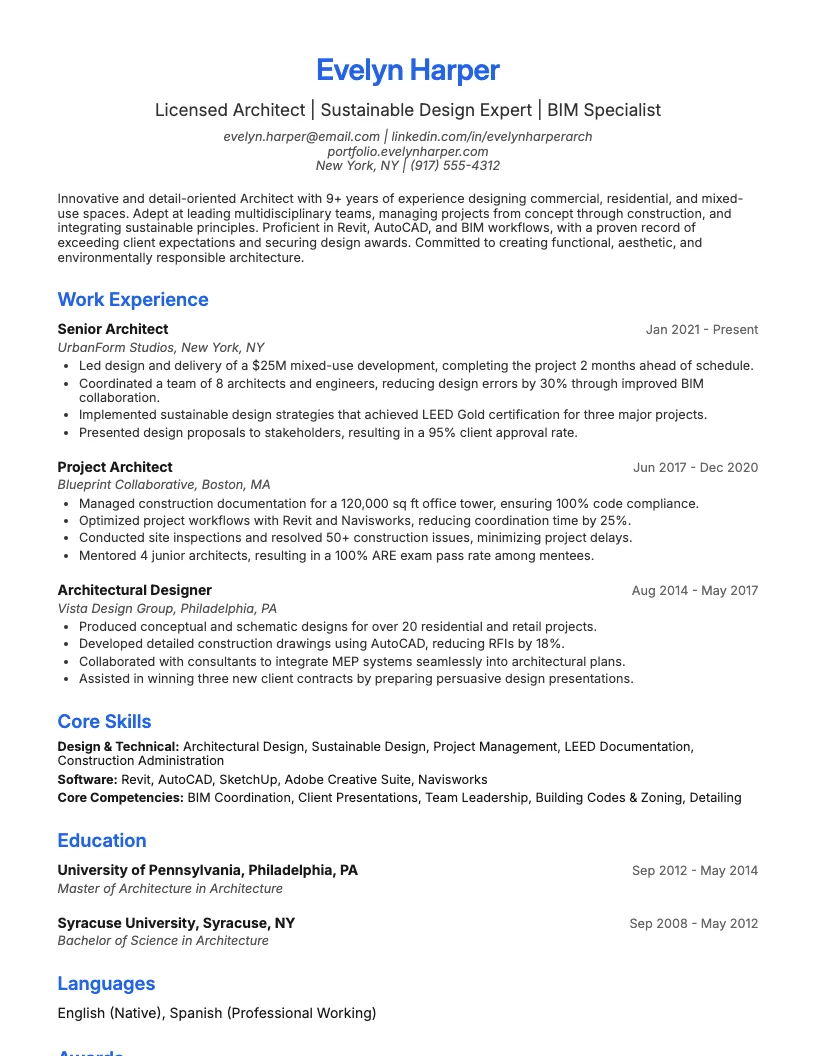 Click to enlarge
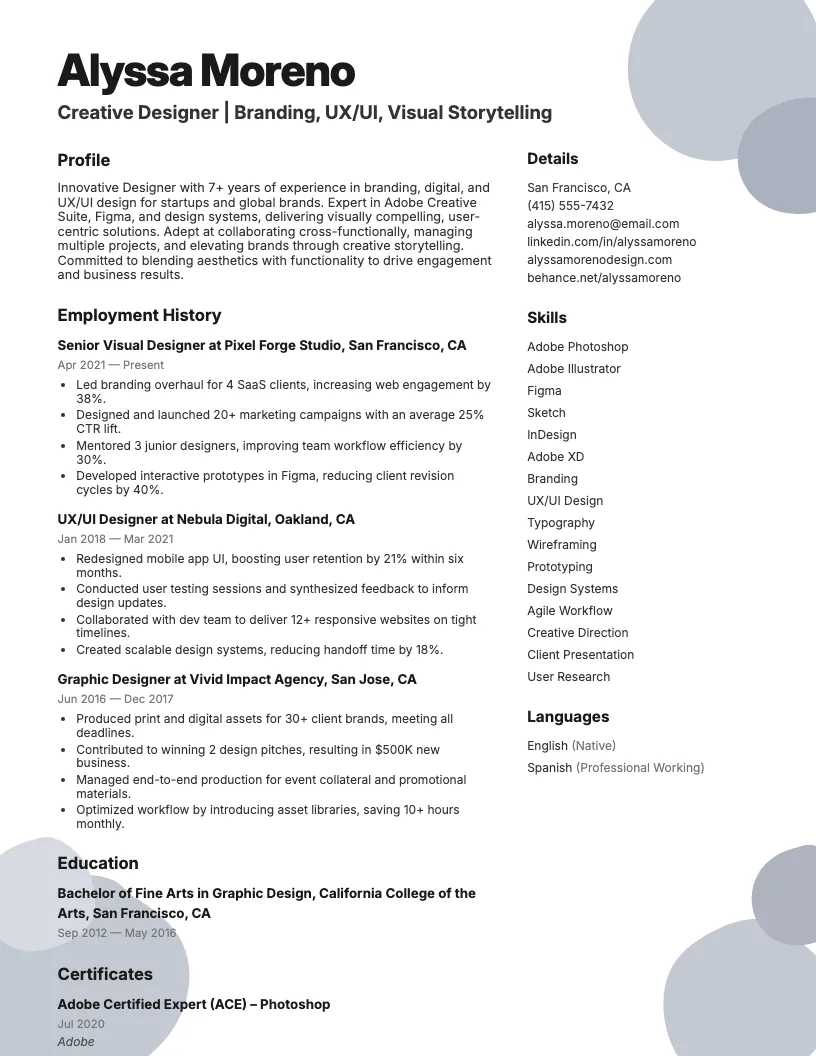 Click to enlarge
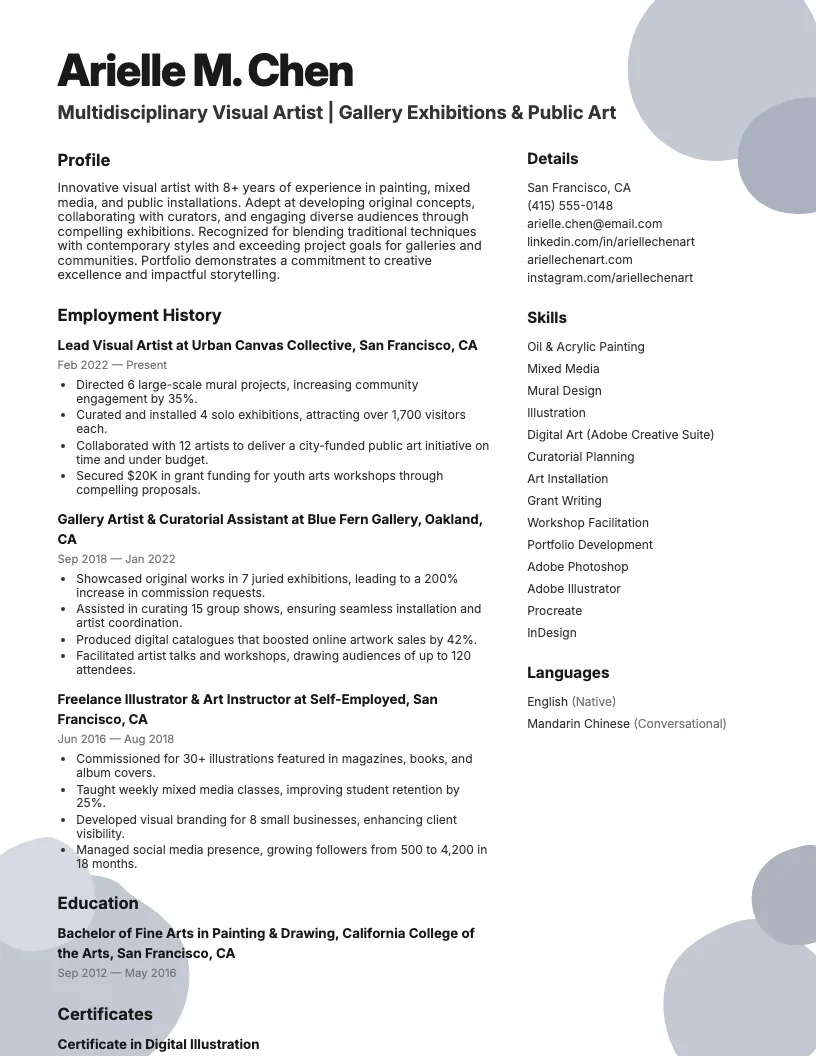 Click to enlarge
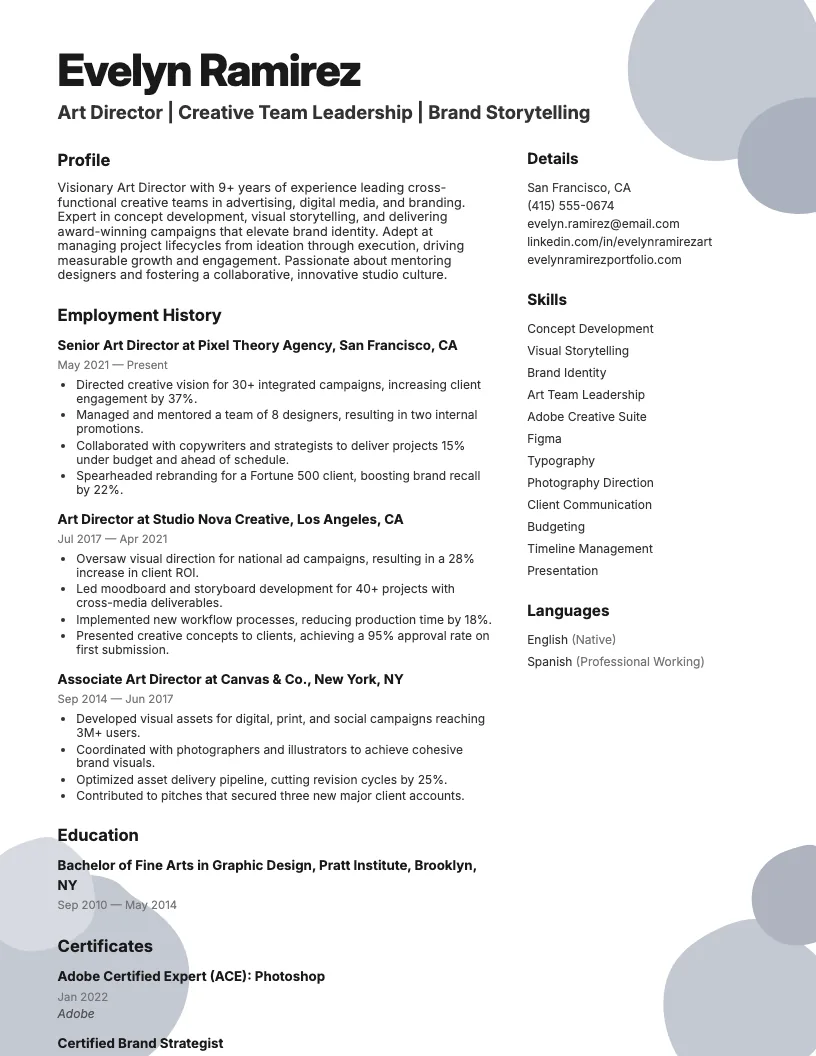 Click to enlarge Click to enlarge
Common questions about Interior Decorator resumes
A interior decorator resume template is a pre-designed layout tailored for professionals in interior design. It highlights design skills, project experience, and creative achievements. Using ResumeJudge ensures your resume looks polished and job-ready.
Yes, most interior decorator resume templates from ResumeJudge are ATS-friendly. They use clear formatting and keywords relevant to design roles, making sure your resume passes automated screenings.
Use an interior decorator resume template when applying for jobs in home design, commercial spaces, or staging roles. It's ideal for both beginners and experienced decorators looking to showcase their creative work.
Absolutely! ResumeJudge templates are fully customizable, letting you adjust colors, fonts, and sections. This helps you reflect your unique style and highlight your most relevant projects.
Interior decorator templates emphasize creative skills, portfolios, and design software expertise. Unlike generic templates, ResumeJudge's versions focus on visuals and project highlights, tailored for the design industry.
Aim for a one-page resume if you're early in your career, or up to two pages if you have extensive experience. ResumeJudge templates help keep your information concise and well-organized.
Yes, a well-designed template from ResumeJudge highlights your creativity and professionalism. It makes your resume visually appealing, helping you stand out in competitive interior design roles.
Including a portfolio or project section is highly recommended. ResumeJudge templates often feature dedicated sections for links and project highlights, making it easy to showcase your best work.
Essential sections are contact info, summary, skills, experience, education, and portfolio. ResumeJudge templates come pre-structured with these sections to save you time and effort.
Definitely. ResumeJudge templates work well for freelancers and contractors, allowing you to showcase varied projects, clients, and skills relevant to both commercial and residential design.
Explore more professional resume examples to inspire your job search
Use our AI-powered resume builder to create a professional, ATS-friendly resume in minutes.
Free to use • No credit card required