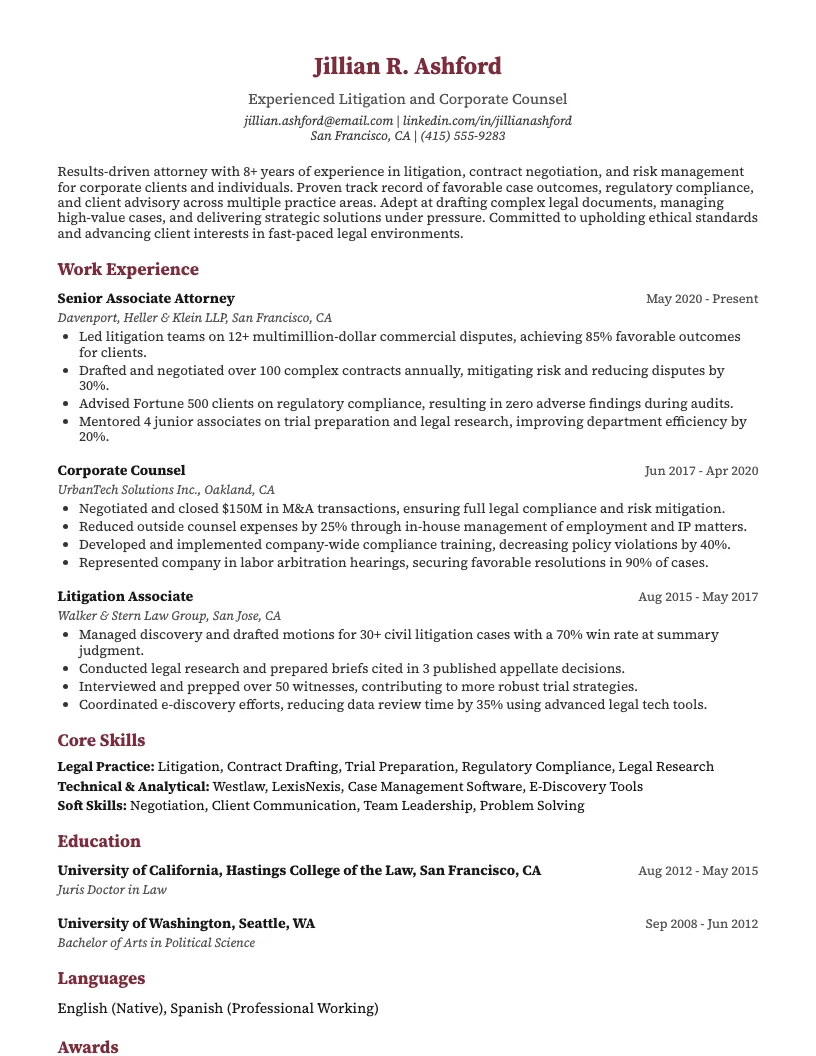
Lawyer Resume Example
See full guide on Lawyer resumes Click to enlarge
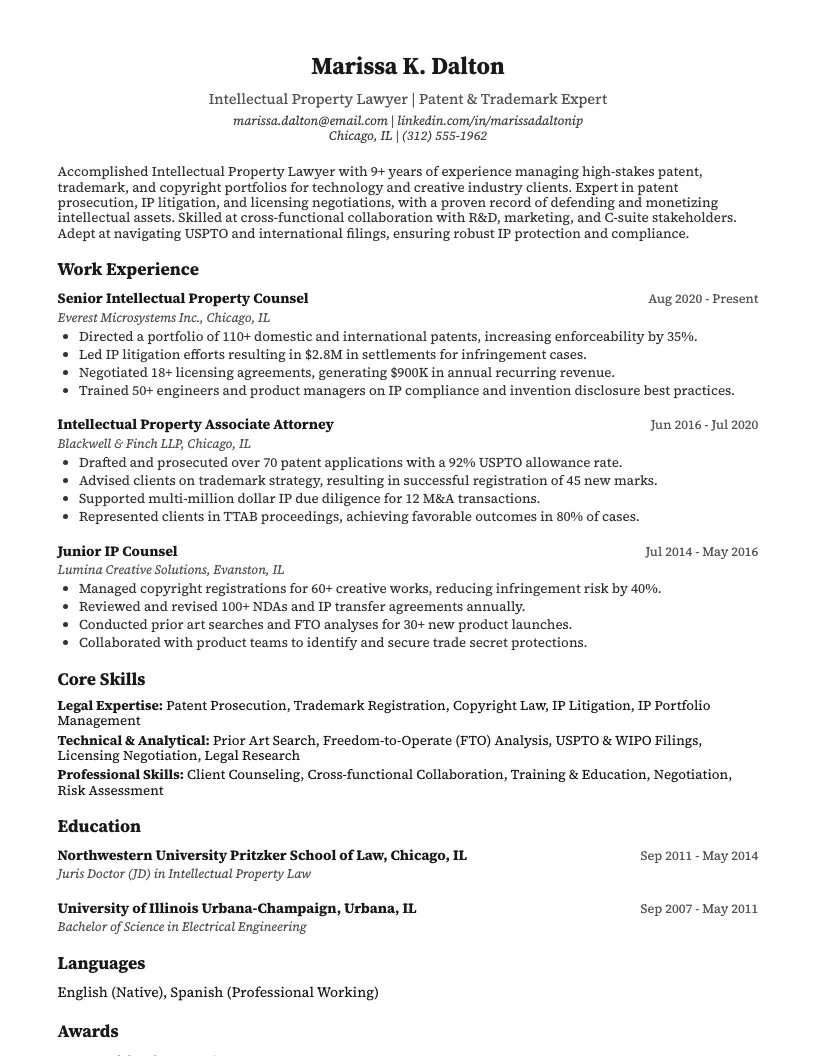 Click to preview

Get inspired by 50+ professional Intellectual Property Lawyer resume examples, each written by career experts and optimized to pass ATS scans. Pick a proven template, tailor it to your role, and download a polished resume in minutes.
Pick the specialization closest to your target role and start from a proven resume example.

When you write your resume, the layout matters a lot. I always go for a clear, reverse-chronological format because recruiters look at your work history first.
You want your resume to be easy for ATS software to scan. Keep it under two pages and use a PDF unless a job post says otherwise.
I focus on getting the sections right and making sure each part is relevant. Up next, I’ll talk about what you absolutely need to include.
When I put together an intellectual property lawyer resume, I make sure to hit the basics first. There are five main sections every recruiter expects to see.
Start with a header that clearly lists your name, contact info, and your job title or a headline. This helps you get past the ATS.
Add a summary or objective statement. Two to three sentences on how your experience fits the role and what you bring to the table really helps.
Your professional experience comes next. Use bullet points to show off achievements, not just duties. Quantifying with numbers-like “managed 30+ patent applications”-gives your work impact.
Include a skills section that covers both technical and soft skills. I like to blend in things like “USPTO filings” and “client negotiation.”
Don’t forget education and certifications. List your degrees, bar admissions, and any extra credentials, like a Certified Information Privacy Professional if you have it.
Recruiters want to see clear proof of your legal expertise. Show admissions, like your state bar and USPTO registration, right up top-these are must-haves for most IP roles.
Highlight your technical pedigree if you have one. Degrees in engineering, science, or tech fields make a big difference since about 70% of IP roles prefer them.
You should also list specific wins-think successful patent filings, high-value licensing deals, or litigation outcomes. Recruiters like numbers and concrete results, not just responsibilities.
Strong communication and client management skills matter too. Point out times you made complex ideas simple for clients or led negotiations. This helps your resume stand out.
When you focus on these details, you show you’re ready for the specialized demands of IP law, just as you would in a cover letter for a related legal specialty. That’s what recruiters are hunting for.
You want your resume’s first few lines to make a strong impression. That’s where a professional summary or objective comes in for intellectual property lawyers.
If you’re just starting out, an objective helps highlight your career goals and passion for IP law. A summary, on the other hand, spotlights your key achievements and legal experience.
Both approaches have their place. The right choice depends on your experience and what you want recruiters to notice first. Let’s look at what actually works.
A strong summary highlights years of experience, areas of expertise, and key wins. For example, "Intellectual property lawyer with 12+ years in trademark litigation and portfolio management. Regularly secures favorable outcomes for tech clients."
You can also mention specific industries, like pharmaceuticals or entertainment, and major results. "I lead global IP strategy for Fortune 100 companies, negotiating licensing deals worth over $25 million."
If you're early in your career, focus on your skills and ambitions. "Recent law graduate with deep interest in patent law. I bring strong research skills and a drive to help startups secure their IP."
This is where you show hiring managers you know your stuff. Highlight your top achievements, focus on results, and use numbers whenever you can.
Tailor your experience to the job ad. Use keywords from the posting and give real examples of how you make an impact as an intellectual property lawyer.
I always use numbers to prove my value as an intellectual property lawyer. This means tracking how many patent applications, disputes, or licensing deals I handle.
You can mention the dollar value of settlements, number of jurisdictions covered, or even the percentage of cases won. These details help recruiters see actual results.
There’s no rule saying you can’t show off with client training sessions or portfolio sizes either. The more specific you get, the stronger your resume looks.
Start your bullet points with strong action verbs like drafted, negotiated, advised, or enforced. These words show you take charge and get results in real legal situations.
I like to use verbs such as protected, secured, litigated, or analyzed. They help me highlight my direct role in winning cases, managing portfolios, or closing licensing deals.
You can boost your credibility with verbs like filed over 120 patents, counseled tech startups, or resolved IP disputes. This helps recruiters see your expertise at a glance.
If you're just starting out or switching fields, focus on transferable skills. Highlight research, negotiation, or communication experience-these matter in intellectual property law.
Show off any coursework, certifications, or projects related to IP. Even a single internship, moot court, or pro bono case can set you apart. Use numbers, like “drafted 5+ legal briefs”.
Don’t ignore your personal qualities. Persistence, attention to detail, or fast learning often impress hiring managers. This helps show why you’ll thrive in an IP law environment.
Wrap it up by making your story cohesive, and reinforce your narrative with a strong cover letter. Every detail should support why you’re a strong fit for an IP lawyer role, even if your path looks different.
I see that IP law jobs always want a mix of technical know-how and top-notch communication. You need to show both hard and soft skills right on your resume.
If you focus only on legal jargon, you might miss out. Employers look for people who can solve problems, work with inventors, and handle tough negotiations.
Fact: Over 70% of IP lawyer job ads list “analytical skills” and “attention to detail” as must-haves. Tailoring your resume to these skills can really boost your chances.
A strong education section shows you’ve got the foundation for IP law. Most firms want to see a J.D. from an accredited law school.
Relevant certifications really help you stand out. I always recommend listing only those that actually add value to your IP expertise.
I always recommend the USPTO Registered Patent Attorney credential if you want to stand out in the U.S. Over 48,000 lawyers hold this, and it’s instantly recognizable.
You can also go for the Certified Licensing Professional (CLP) from LES. This one proves you know licensing and tech transfer-skills that are huge in IP law right now.
If you’re eyeing international work, the European Qualifying Examination (EQE) and the WIPO Academy’s PCT Practitioner Certificate both add global credibility to your resume.
You can boost your intellectual property lawyer resume by adding more than just the basics. These extra sections help show your unique skills and achievements in the legal field.
Think about including awards, language abilities, or relevant publications. I find that these details make your application stand out and show your expertise to employers.
A solid intellectual property lawyer resume shows your experience, technical skills, and results. Hiring managers look for evidence you protect assets, manage disputes, and understand legal trends.
You want your resume to highlight exactly why you fit the job-think specific certifications, key wins, and software knowledge. Every detail should support your legal expertise and attention to detail.
I know putting together a resume feels overwhelming, but you’ve got this. Start by focusing on what actually matters for intellectual property law roles.
Highlight your real numbers-cases won, patents filed, or trademarks secured. Recruiters love seeing concrete results, not just buzzwords or vague descriptions.
Don’t forget to mention any specialized certifications or technical skills, and consider including a tailored cover letter with your application. This helps you stand out and shows you’re serious about your legal expertise.
Browse Intellectual Property Lawyer resume examples for related roles. Preview any example, open it in the builder, or read its full guide.
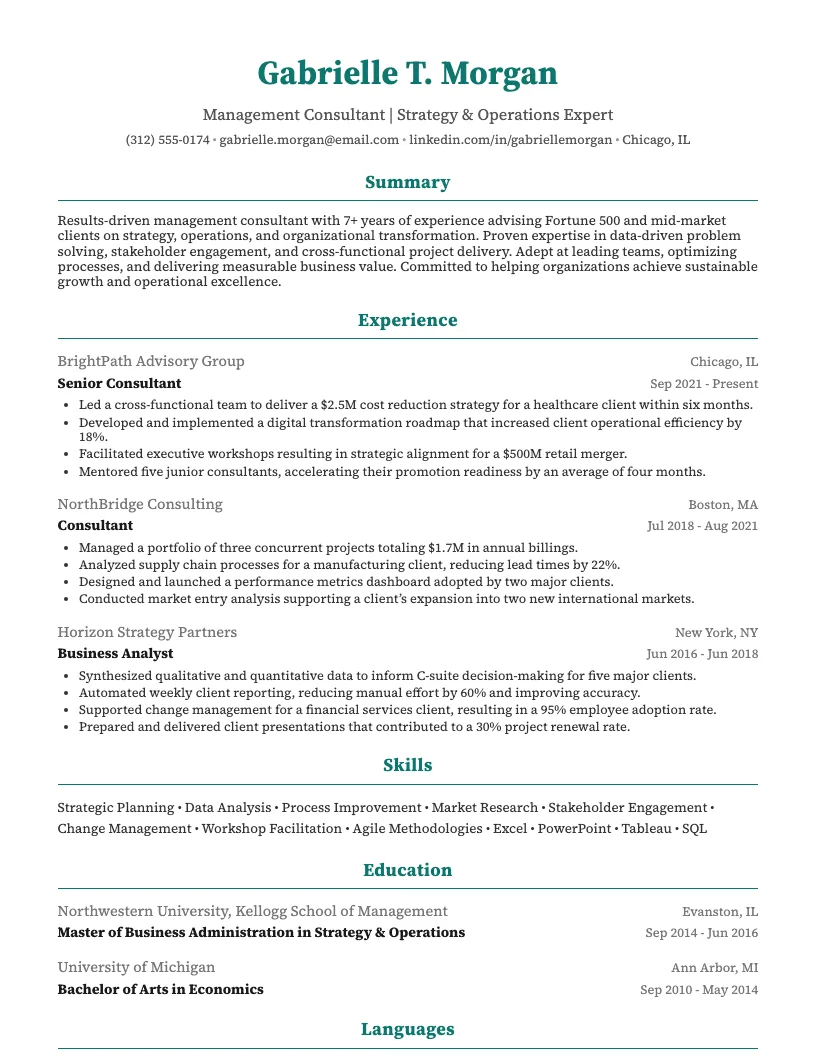
Click to enlarge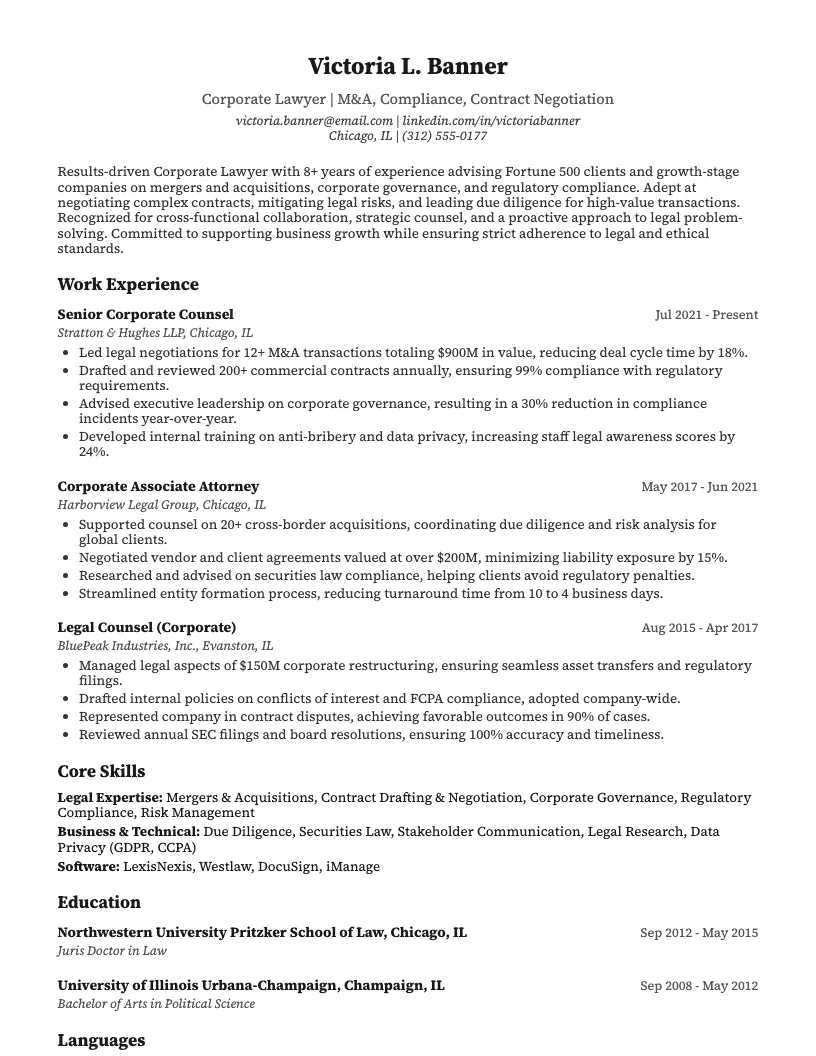 Click to enlarge
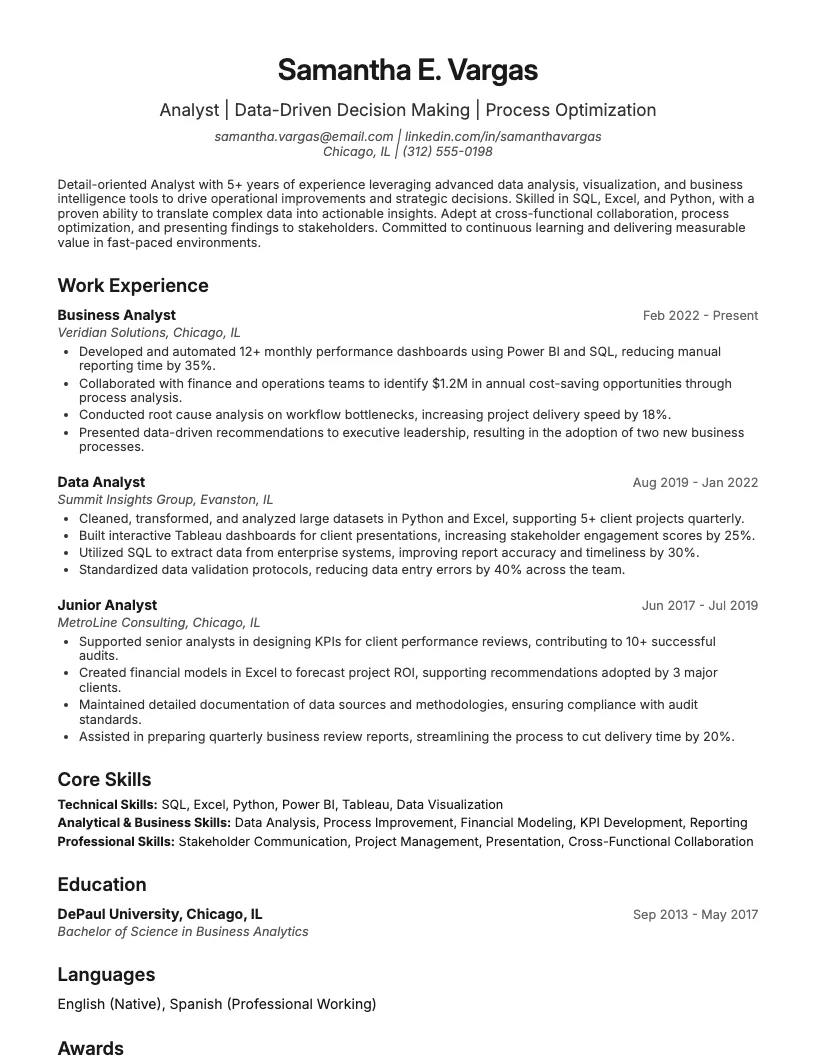
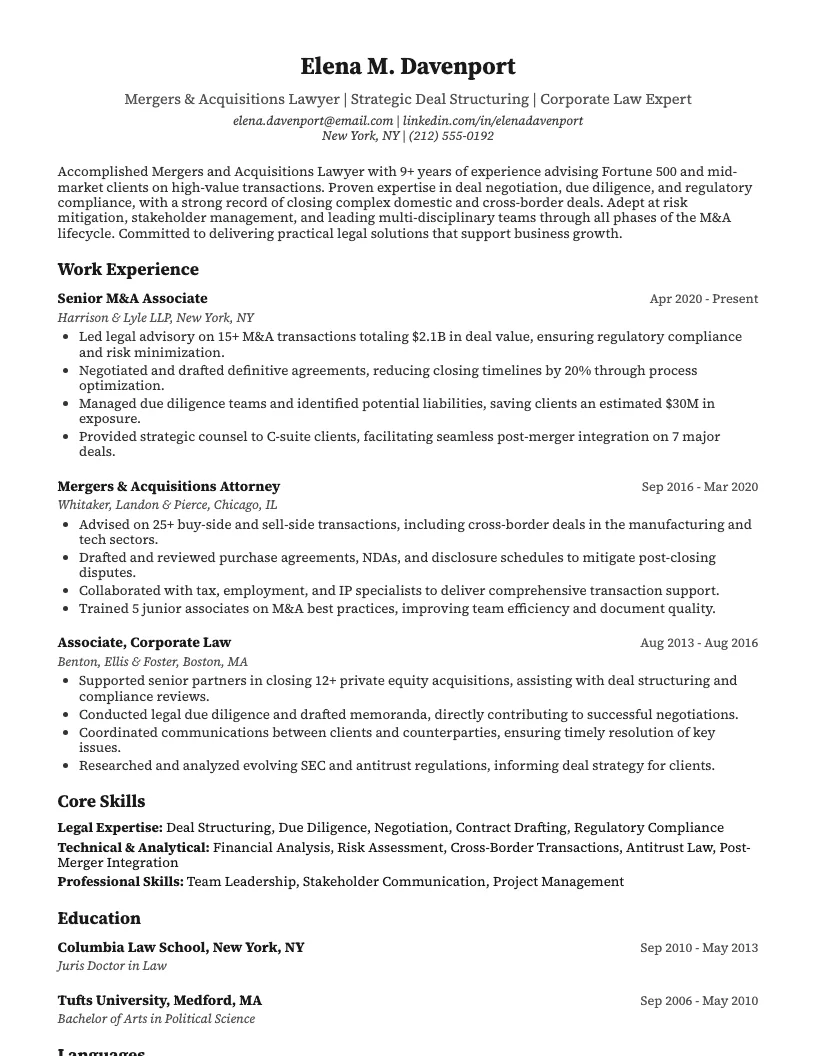 Click to enlarge
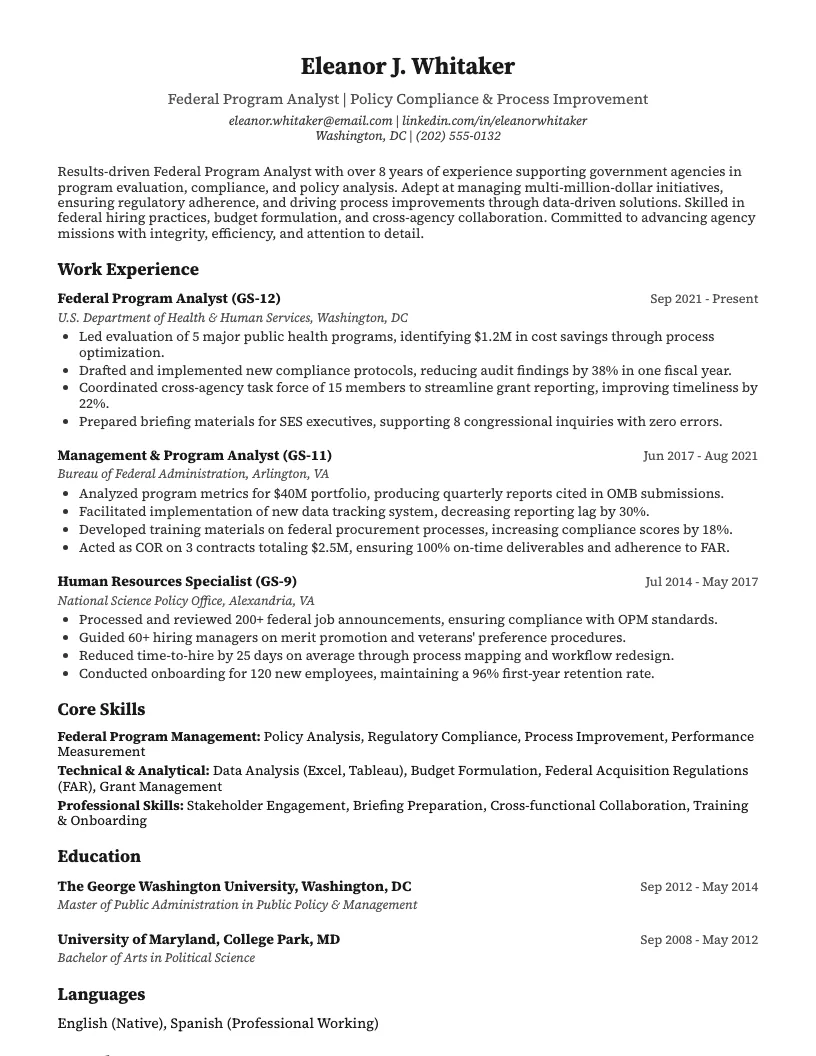
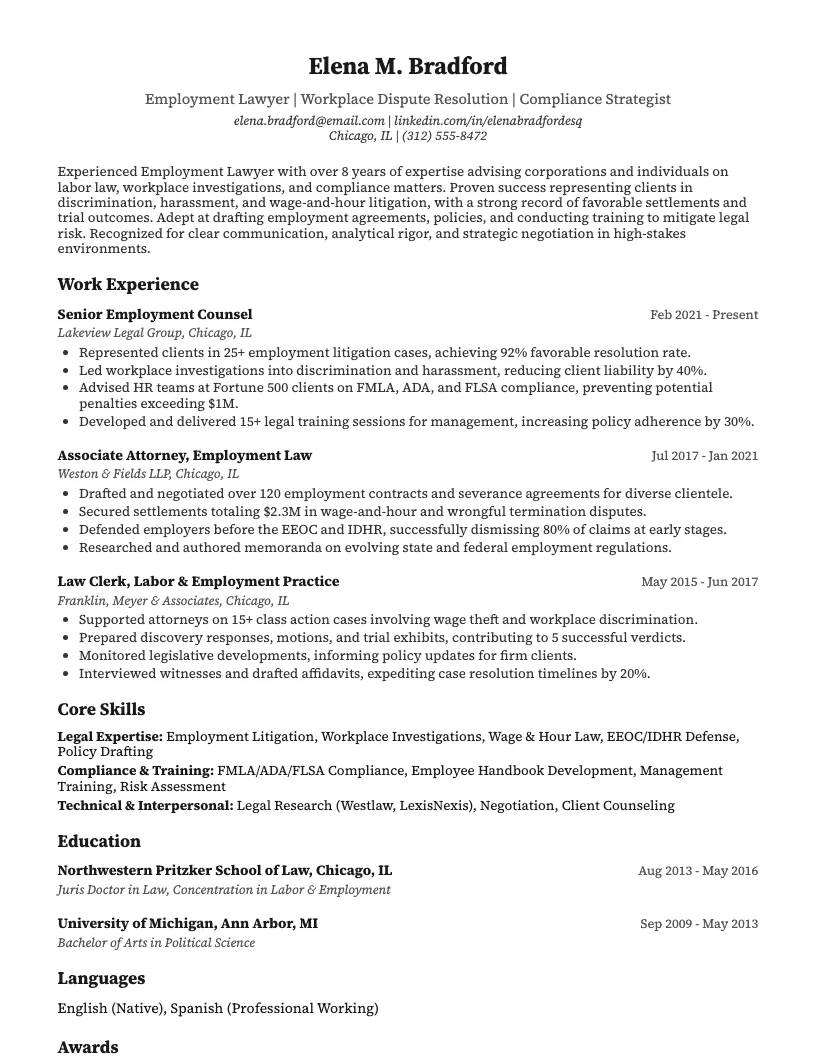 Click to enlarge
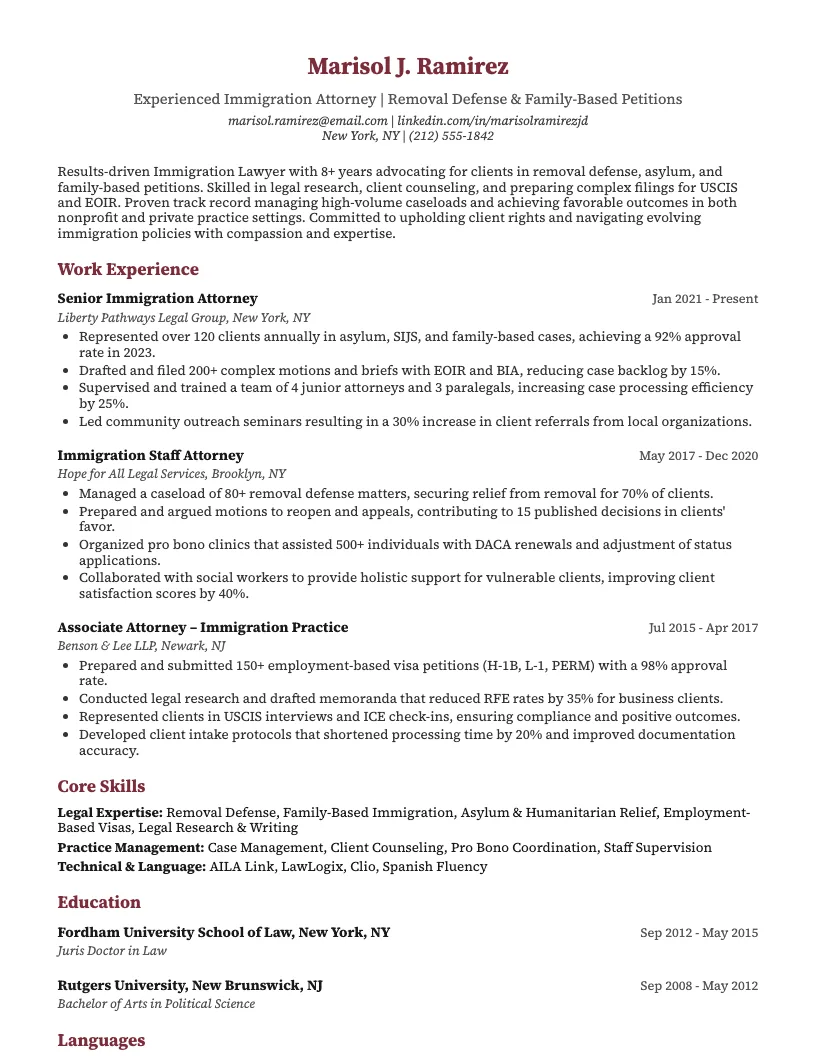 Click to enlarge
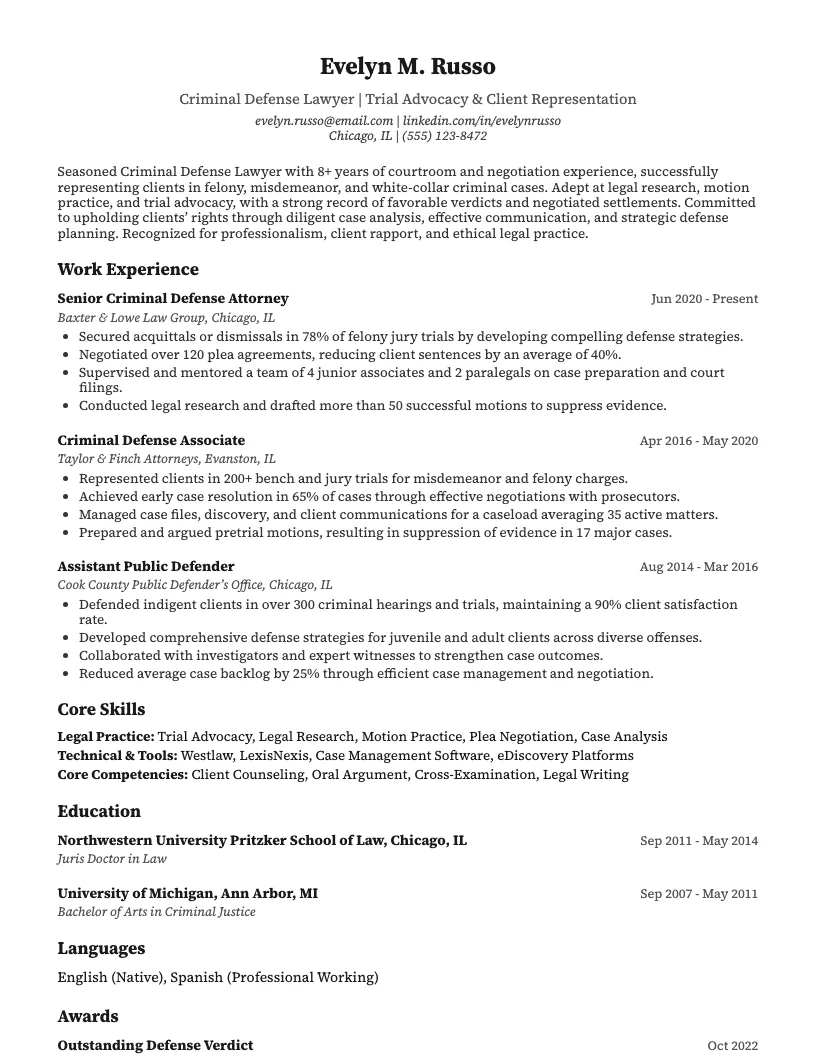 Click to enlarge
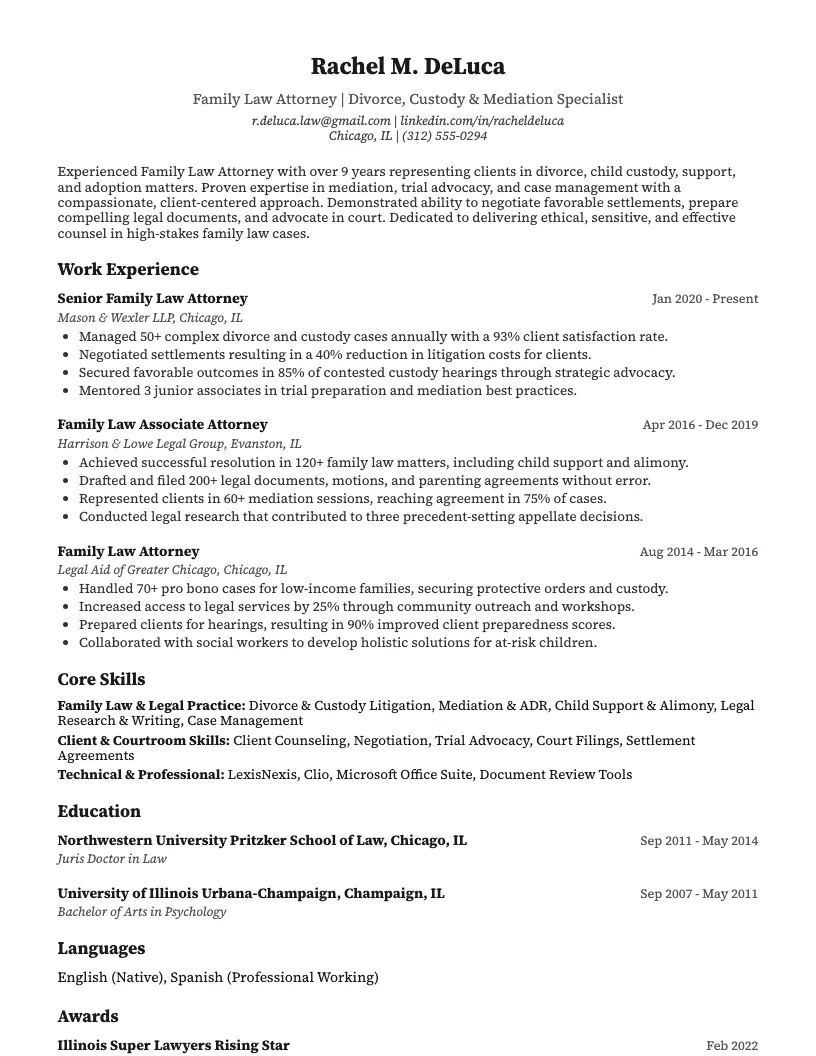 Click to enlarge
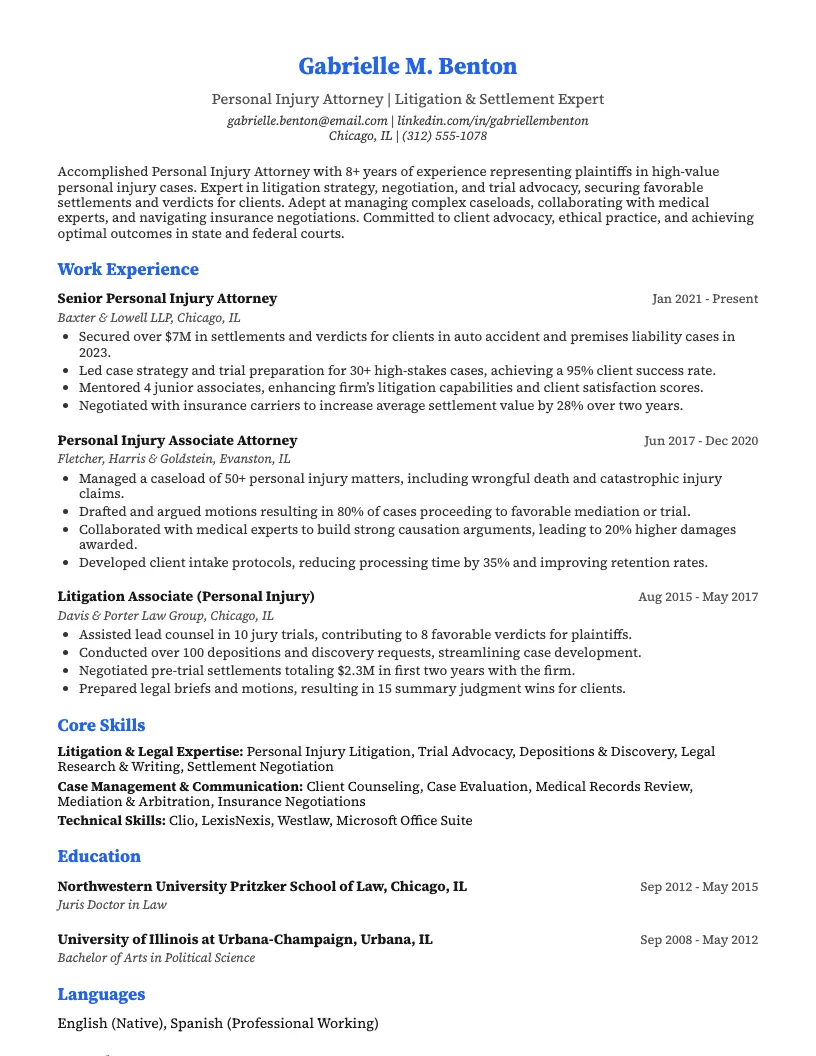 Click to enlarge
Common questions about Intellectual Property Lawyer resumes
An Intellectual Property Lawyer resume template is a pre-designed document tailored to highlight legal expertise in patents, trademarks, and copyrights. It helps you present your credentials clearly and professionally.
Yes, most Intellectual Property Lawyer resume templates, like those from ResumeJudge, are ATS-friendly. They use clean layouts and keywords that help your resume pass applicant tracking systems used by law firms and corporations.
Use this template when applying to roles in IP law at law firms, tech companies, or creative industries. It's great for positions like patent attorney, trademark counsel, or legal advisor in intellectual property.
Absolutely! ResumeJudge templates are easy to edit, letting you tailor sections for your unique skills, certifications, and case experience. You can adjust details to match each job application perfectly.
Intellectual Property Lawyer templates focus on IP law skills, relevant cases, and certifications, unlike general legal resumes. ResumeJudge templates emphasize technical expertise and industry-specific achievements.
Aim for 1-2 pages, focusing on your most relevant IP law experience and certifications. ResumeJudge templates help keep content concise and well-organized for quick review by employers.
Yes, these templates usually have dedicated sections for bar admissions and legal licenses. ResumeJudge templates make it easy to highlight your qualifications and credentials.
Definitely! Adding skills like patent prosecution or litigation is encouraged. ResumeJudge templates offer flexible skill sections, making it easy to showcase your specialized expertise.
Yes, ResumeJudge templates work for all experience levels. They help recent graduates highlight education and internships, while seasoned lawyers can emphasize casework and industry impact.
Roles like patent attorney, trademark specialist, in-house IP counsel, and legal consultants in tech, pharma, or entertainment industries all benefit from using these targeted ResumeJudge templates.
Explore more professional resume examples to inspire your job search
Use our AI-powered resume builder to create a professional, ATS-friendly resume in minutes.
Free to use • No credit card required