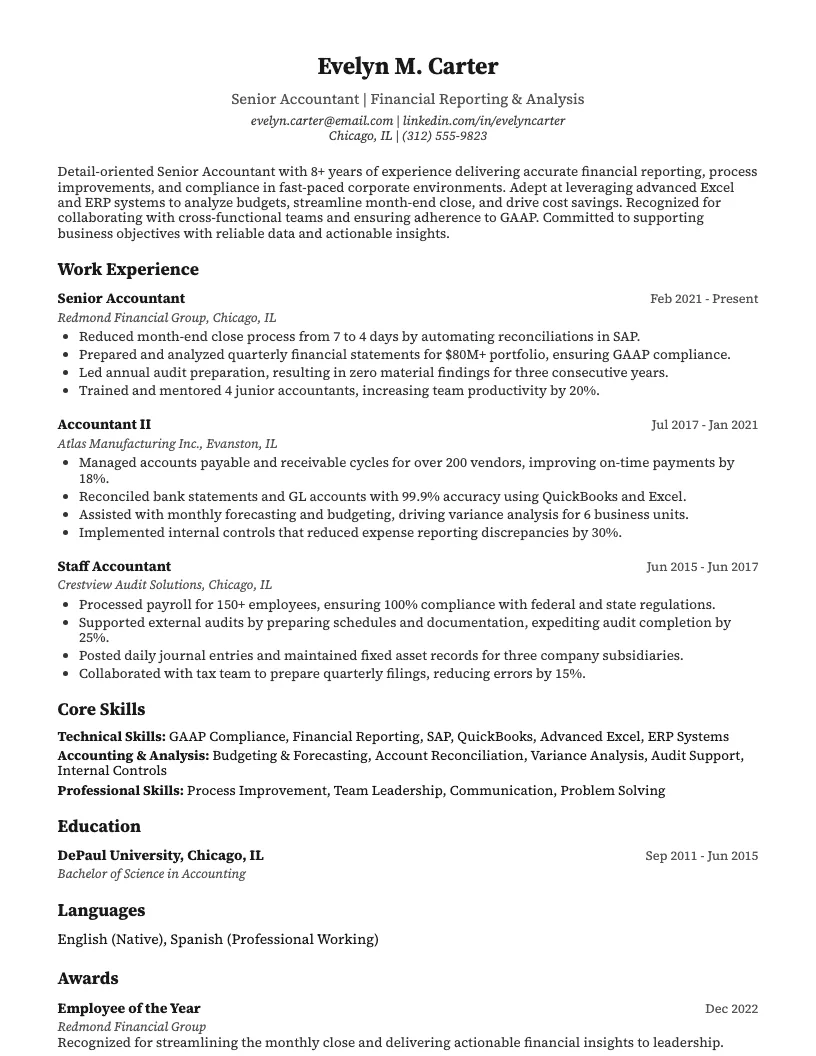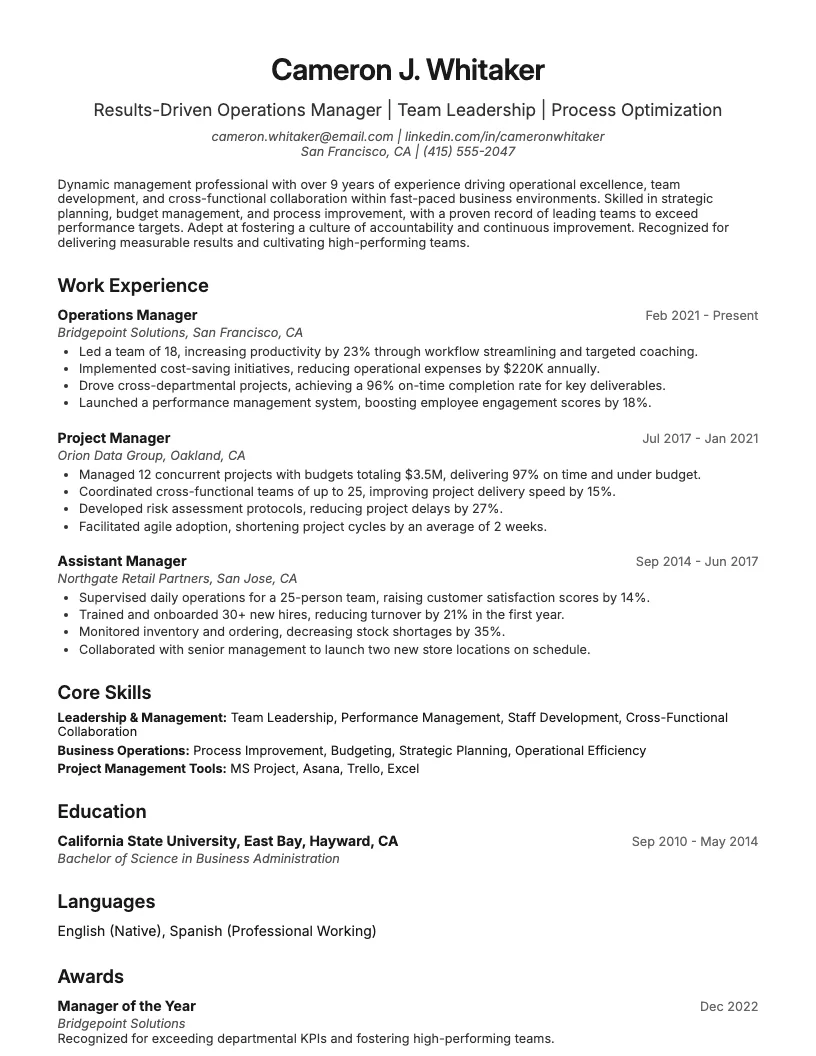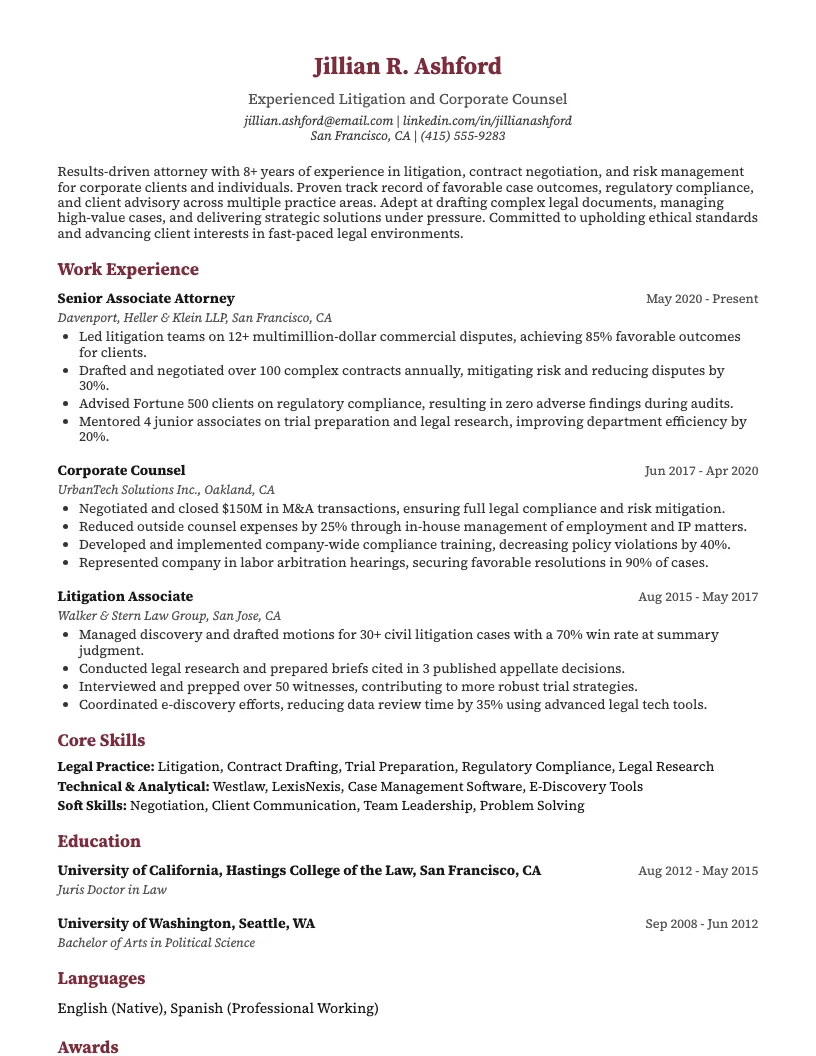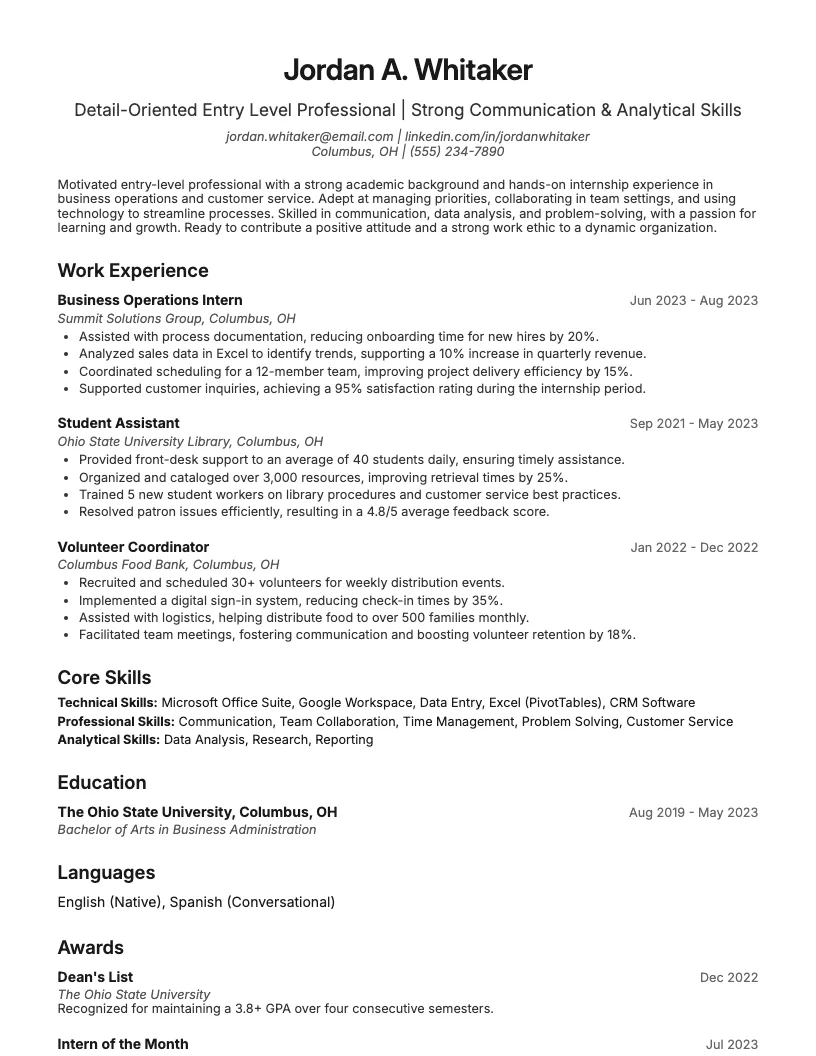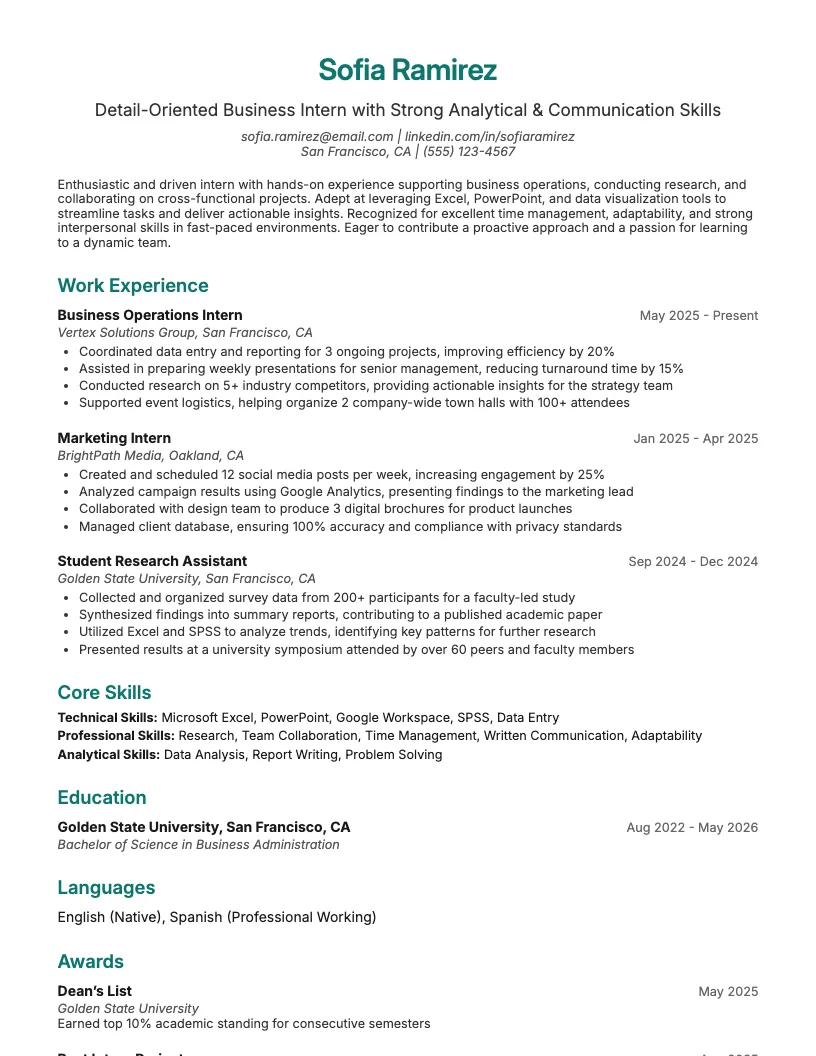
Certified Public Accountant Cpa Resume Example
See full guide on Certified Public Accountant Cpa resumes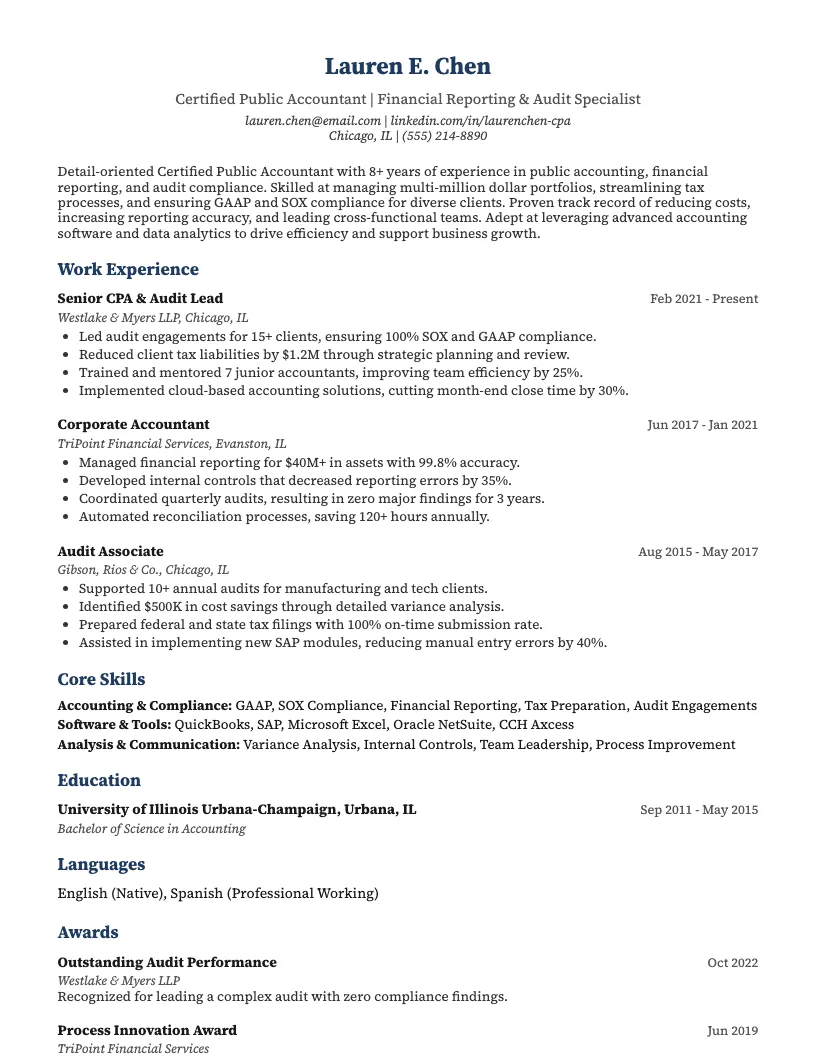 Click to enlarge
 Click to preview

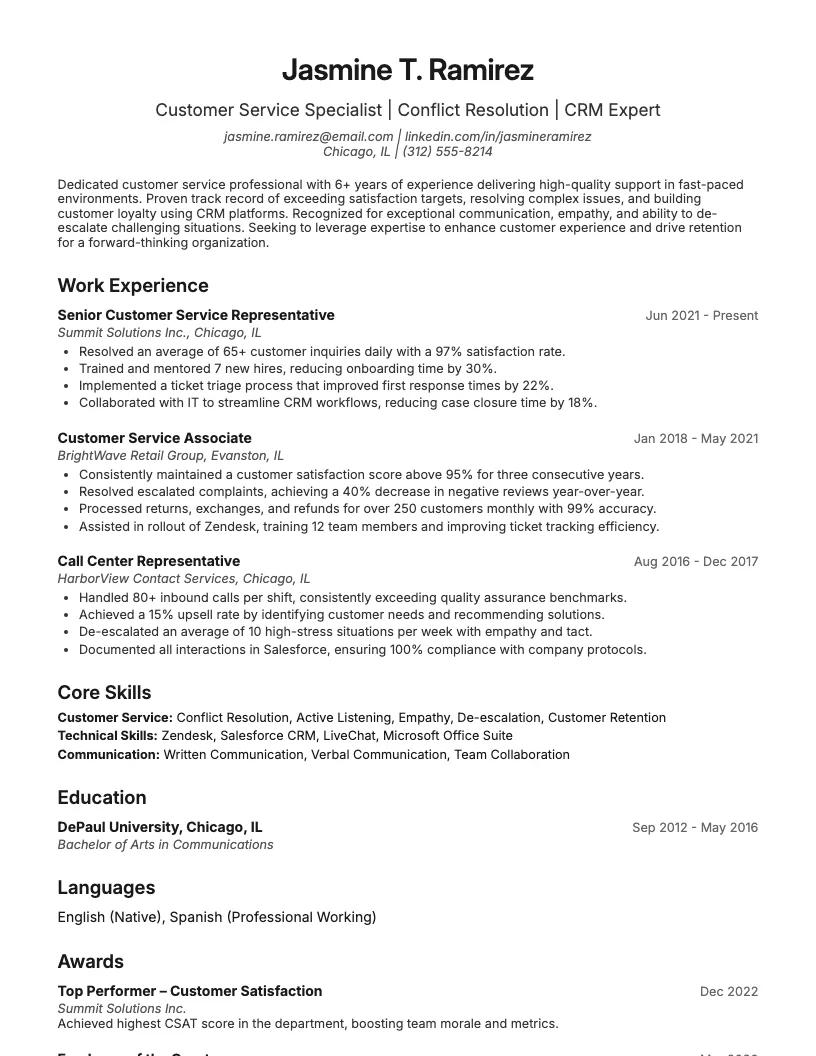
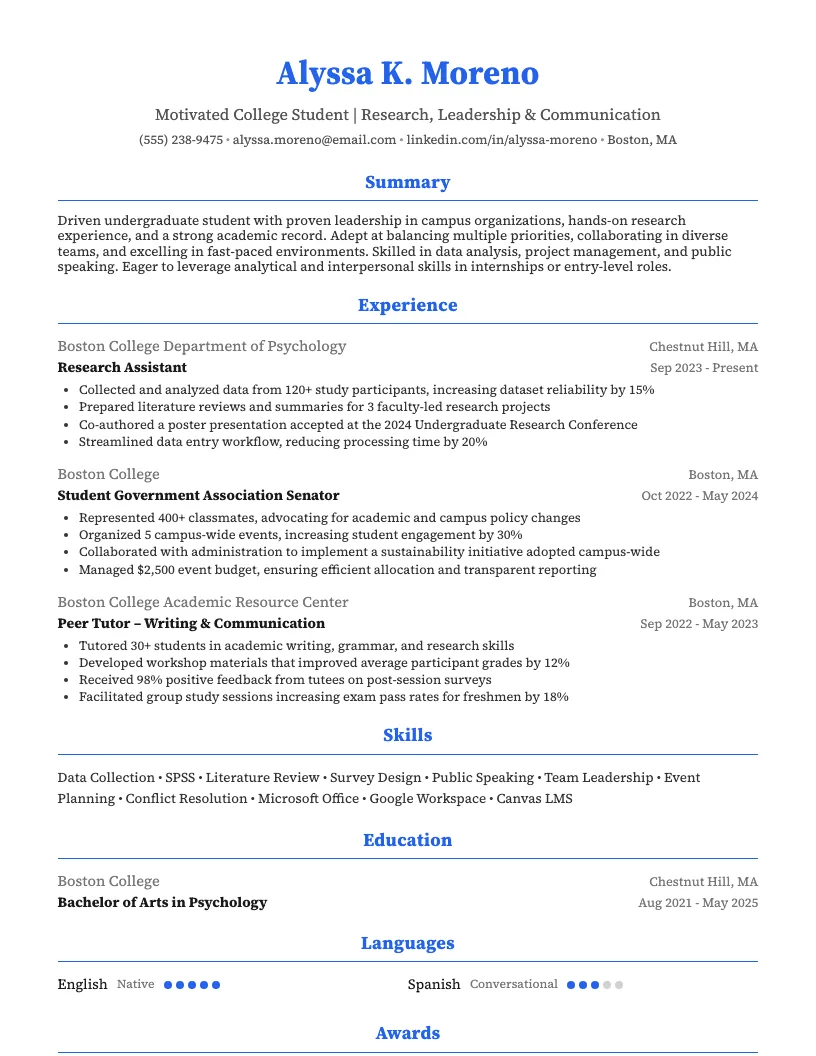
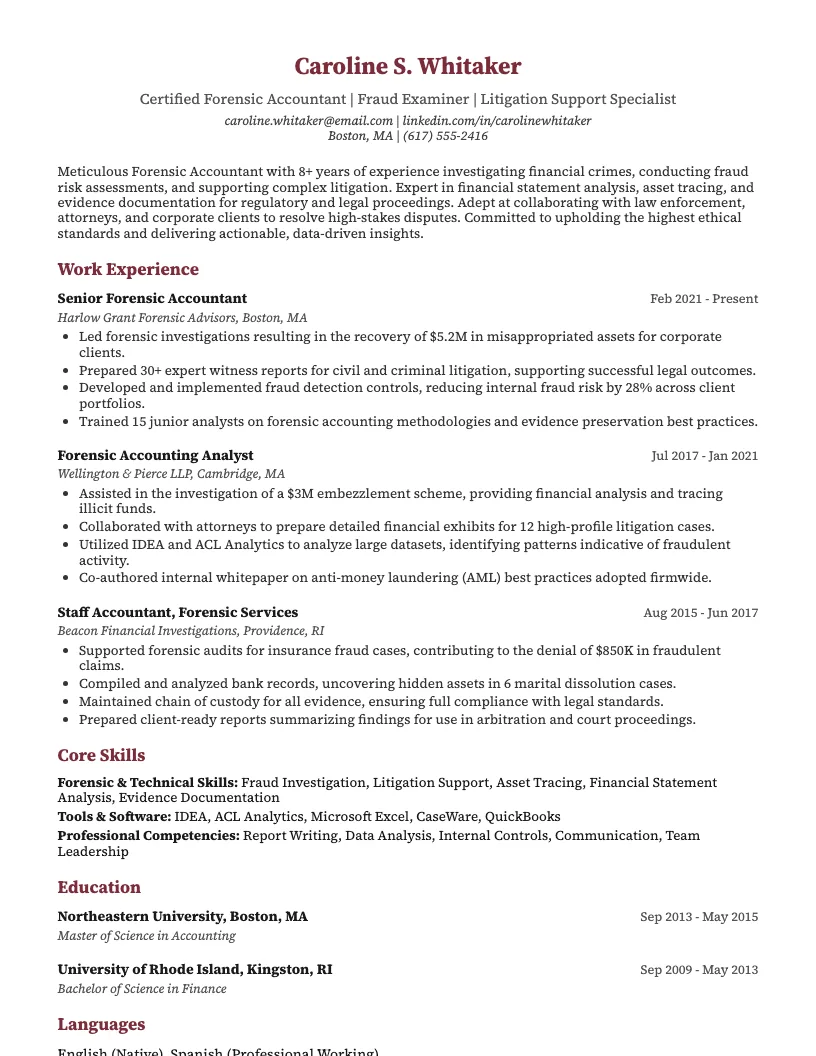
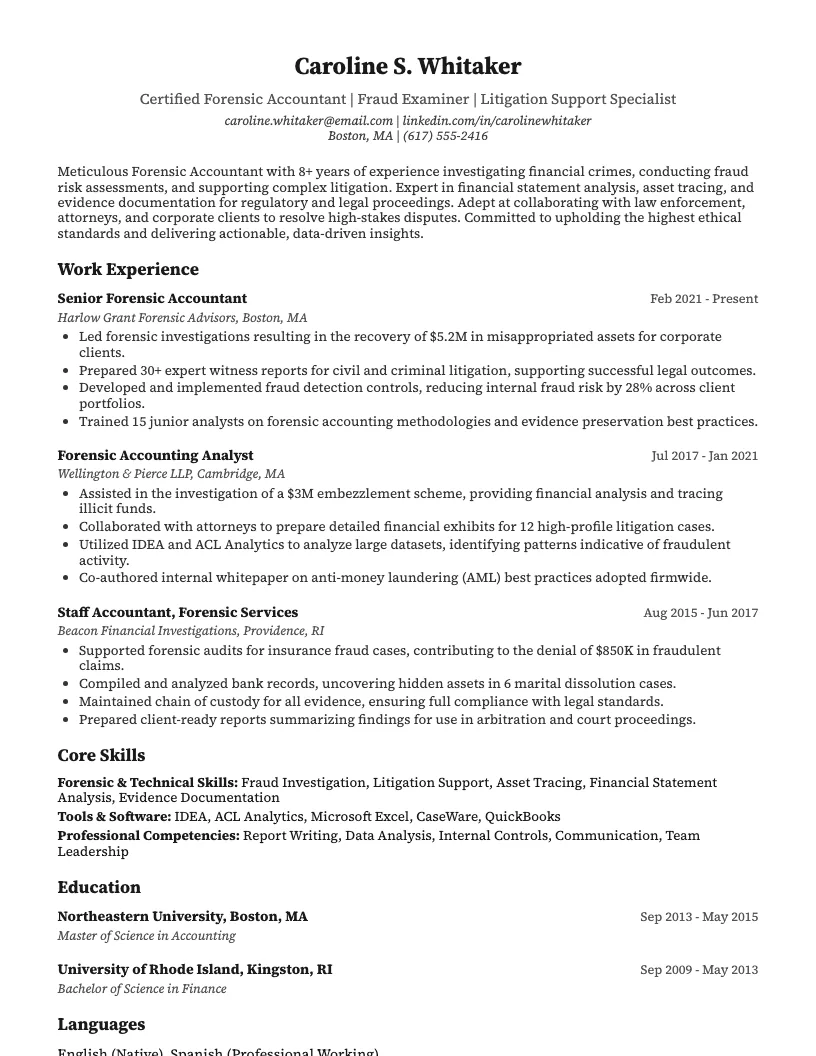
Get inspired by 56+ professional Forensic Accountant resume examples, each written by career experts and optimized to pass ATS scans. Pick a proven template, tailor it to your role, and download a polished resume in minutes.
Pick the specialization closest to your target role and start from a proven resume example.
If you want a job in forensic accounting, your resume needs to show your investigative skills and financial expertise. Employers look for detail, accuracy, and relevant experience.
I’ll walk you through a forensic accountant resume example. You’ll see how to highlight your skills, certifications, and achievements in this field.
With the right layout and focus, you can show you’re ready to handle financial investigations and complex cases.

Formatting your forensic accountant resume the right way makes a big difference. Recruiters spend about 7 seconds on each resume, so clarity really matters.
You have a few solid layout options, but some formats work better than others for forensic accounting. I’ll break down what recruiters expect and why it matters.
Next, I’ll walk you through choosing a design, adding your contact info, and saving your file in the best format. Let’s make each section count.
When I format a forensic accountant resume, I stick to clean, professional layouts. Consistent margins-typically around 1 inch-help everything look tidy and readable.
You want your font simple and easy on the eyes. I like sans-serif options, sized between 10 and 12 points. Subtle color accents can make key skills stand out.
If you’ve got less than 10 years of experience, keep it to one page. More senior? Two pages is fine. Recruiters appreciate concise, focused content.
Always start your forensic accountant resume with your full name and job title. Consistency matters-use the same name spelling across all your documents.
Add your professional email address and current phone number. I also include my LinkedIn profile if it’s updated. Around 87% of recruiters check LinkedIn profiles.
Skip adding a photo. In the US, photos increase bias risks and most employers don’t want them. Stick to contact basics and keep it professional.
I always save my resume as a PDF. It keeps the formatting clean and professional, no matter what device or software the recruiter uses.
PDFs also work well with Applicant Tracking Systems (ATS). Around 98% of Fortune 500 companies use ATS, so choosing PDF boosts your chances.
Only use Word files if a job posting asks for it. Otherwise, stick with a PDF and use a clear file name like FirstName_LastName_ForensicAccountant.pdf.
That’s everything on formatting. Once you choose the right file type, you’re all set to move on to the content of your forensic accountant resume.
Your resume summary is the first thing a hiring manager reads. It’s your chance to make a strong first impression.
Focus on your years of experience and any standout achievements. Mention your key forensic accounting skills or certifications up front.
Use numbers to prove your impact. Tailor each summary to match the job description and show why you’re the right fit.
Listing your forensic accounting experience shows you can handle real-world investigations, financial analysis, and fraud detection. Recruiters want to see concrete examples of your impact.
Use your resume to highlight results that matter-like uncovering fraud, recovering lost assets, or saving costs. Clear numbers and specific achievements make a big difference.
If you want your forensic accounting resume to stand out, you need to customize it for each job. I always check the job ad line by line.
Look for key skills, certifications, and tools the employer wants. You can then highlight those same keywords throughout your experience section. This helps your resume get noticed.
I focus on matching my past roles and responsibilities to what the company needs. Forensic accounting jobs often ask for specific software skills or investigation experience. Show them you have it.
You don’t need to start from scratch every time. Just tweak your bullet points and job titles so they really fit the job description. Recruiters spot a tailored resume right away.
I always show exact numbers in my forensic accounting resume. Instead of just saying I "improved processes," I highlight how I reduced fraud cases by 20% or recovered $350,000.
You want to list metrics like dollar amounts, percentages, or case volumes. For example, "Led investigations for over 50 cases annually," or "Identified accounting discrepancies worth $1.2M."
Using these specifics makes your impact real and measurable. This helps recruiters see your value right away and signals that you really understand the business side of forensic accounting.
Landing your first forensic accounting job with no experience feels tough, but it’s doable. You just need to know which strengths and skills to highlight.
Focus on your education, technical skills, and any hands-on experience-even if it’s from internships or part-time jobs. Recruiters pay attention to potential as much as experience.
Your resume objective is your first shot to explain why you want forensic accounting. Use it to show your passion, career goals, and how you fit the company’s needs.
Stick to a short and clear statement. Mention the specific role, highlight key skills like attention to detail, and point to your academic strengths or technical training.
Tailor your objective for every job. Pull keywords from the job ad and focus on what you can offer. If you're applying for internships, consider including a cover letter to further highlight your motivation, even with no experience.
Hiring managers look for both hard and soft skills when they scan forensic accountant resumes. You need to show you’ve got technical expertise and can work well with others.
I always focus on the skills that matter most for the job. Technical know-how and people skills both make a big difference in landing interviews. Let’s break down what’s important.
If you’re building a strong forensic accountant resume, hard skills are your foundation. I always highlight what I can actually do, not just what I know.
There are a few must-haves here: data analysis, financial reporting, and fraud detection. You want to show you can handle large datasets and catch discrepancies worth thousands.
Proficiency in tools like Excel, QuickBooks, or forensic software like IDEA is huge. Listing certifications, like CFE or CPA, also adds credibility to your skillset.
Communication is huge in forensic accounting. I break down complex financial data for clients, attorneys, or law enforcement. Clear, concise emails and reports make a real difference.
Attention to detail matters. You spot errors others miss, which helps catch fraud early. About 73% of forensic accountants say this skill helps them deliver accurate results.
You need strong problem-solving skills, too. Every case brings new challenges. Staying patient and analytical helps you connect the dots and find the facts.
If you want to stand out, show off your teamwork skills. Many investigations involve collaborating with legal teams or other accountants, so highlighting these skills in your cover letter can make your application stand out. Being easy to work with makes projects smoother.
Soft skills help balance out your technical know-how. Focusing on these in your resume shows you’re well-rounded and ready for the unique demands of forensic accounting.
Your education and certifications really matter if you want to work as a forensic accountant. Employers look for specific degrees and credentials before they even consider your experience.
A bachelor's degree in accounting or a related field is usually a must. Most job listings mention it right away. Some roles even prefer a master's degree.
Certifications like CPA or CFE boost your profile. I see employers often list these as requirements, not just nice-to-haves.
If you want to stand out, you should know which certifications matter most in forensic accounting. I’ll break those down next.
I always see the Certified Public Accountant (CPA) credential at the top of job listings. About 75% of forensic accountants hold a CPA, so it’s a must-have for credibility.
You can also look at certifications like Certified Fraud Examiner (CFE) and Certified in Financial Forensics (CFF). These boost your profile and show you know your way around fraud investigations.
If you want to stand out, combine a CPA with a CFE or CFF. This helps you meet most employer requirements and proves your expertise in forensic accounting.
A strong forensic accountant resume goes beyond just work experience and education. You want to give hiring managers a full picture of what you bring to the table.
Extra sections help you highlight certifications, language skills, or community involvement. These details can set you apart from other candidates with similar backgrounds.
You don’t have to include everything, but picking one or two extra sections can boost your credibility. It shows your commitment to the field and your unique strengths.
Building a forensic accountant resume looks different at every stage. Whether you’re new or have 10+ years in the field, your approach shifts as you gain experience.
I break down real-world resume examples for entry-level, senior, and analyst roles. These examples help you see what works and what hiring managers expect right now.
Jumping into forensic accounting at the entry level can feel overwhelming. I know it helps to see a real resume example to understand what actually works.
If you’re just starting out, focus on relevant coursework, internships, and any analytical skills you picked up. Employers look for attention to detail and integrity over years of experience.
Highlight the numbers-like a 3.5+ GPA, or how you saved a student organization 10% on their budget. This shows you’re already making an impact, even early in your career.
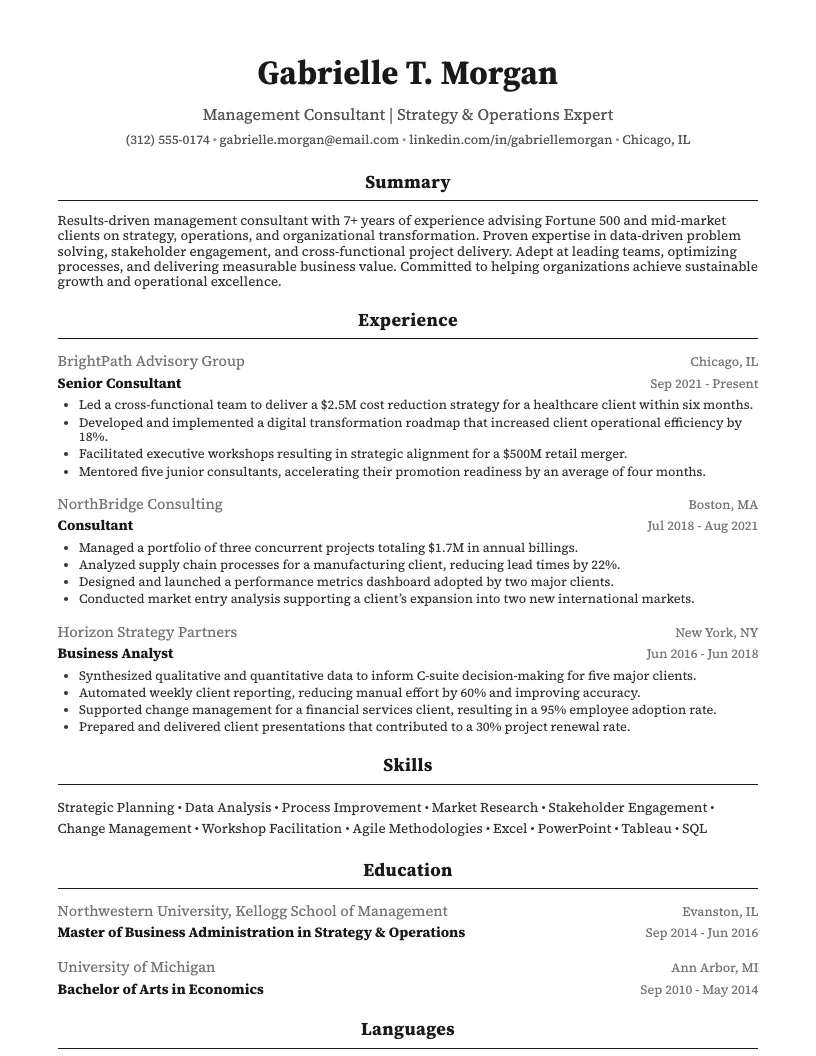
If you’re gunning for a senior forensic accountant role, you need to show leadership. I highlight experience managing teams, leading investigations, and handling high-stakes cases-think $10M+ in fraud.
You want to bring out your skills in litigation support, regulatory compliance, and expert testimony—skills you can also emphasize in a cover letter. Quantify impact: “Led forensic reviews for 20+ clients” or “Uncovered $5M in asset misappropriation.”
List certifications like CPA or CFE right up top. This instantly boosts your credibility. Tailor your resume with keywords like “complex audits,” “internal controls,” and “financial crime detection.”
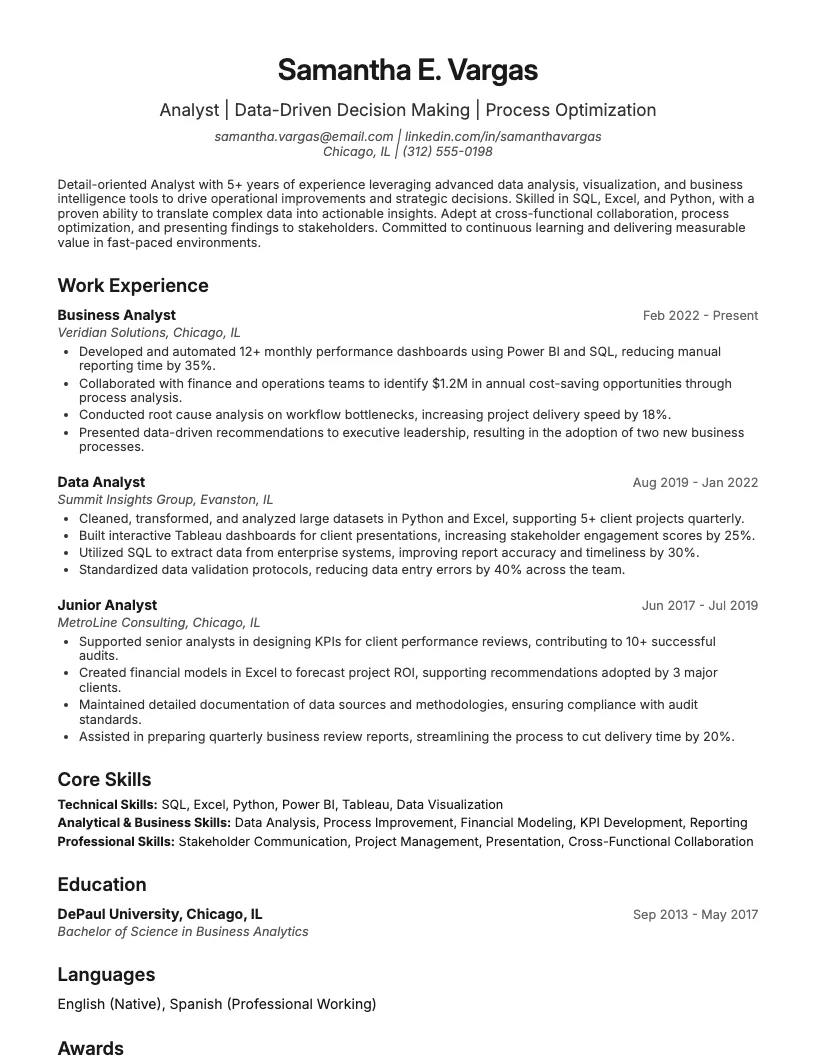
I focus on roles where I analyze financial data, spot trends, and flag irregularities. A typical forensic accounting analyst resume highlights data analytics, Excel, and experience with fraud detection software.
You want to show off certifications like Certified Fraud Examiner (CFE) or CPA. Listing tools like ACL, IDEA, or SQL gives your resume an edge, especially for mid-level roles.
Quantify your impact: "I reviewed over 1,000 transactions monthly, uncovering $300K in discrepancies." Numbers like that help hiring managers see real results.
This wraps up the different forensic accounting resume examples. No matter your level, tailoring your resume to the job makes a difference.
You’ve seen what a strong forensic accountant resume looks like. Now, it’s time to take action and put these details to work for you.
Focus on highlighting your skills and experience clearly. Use real numbers-like how much money you’ve recovered or how many cases you’ve worked on-to stand out.
Next, I’ll walk you through practical steps to refine your resume, boost your job search, and prep for interviews.
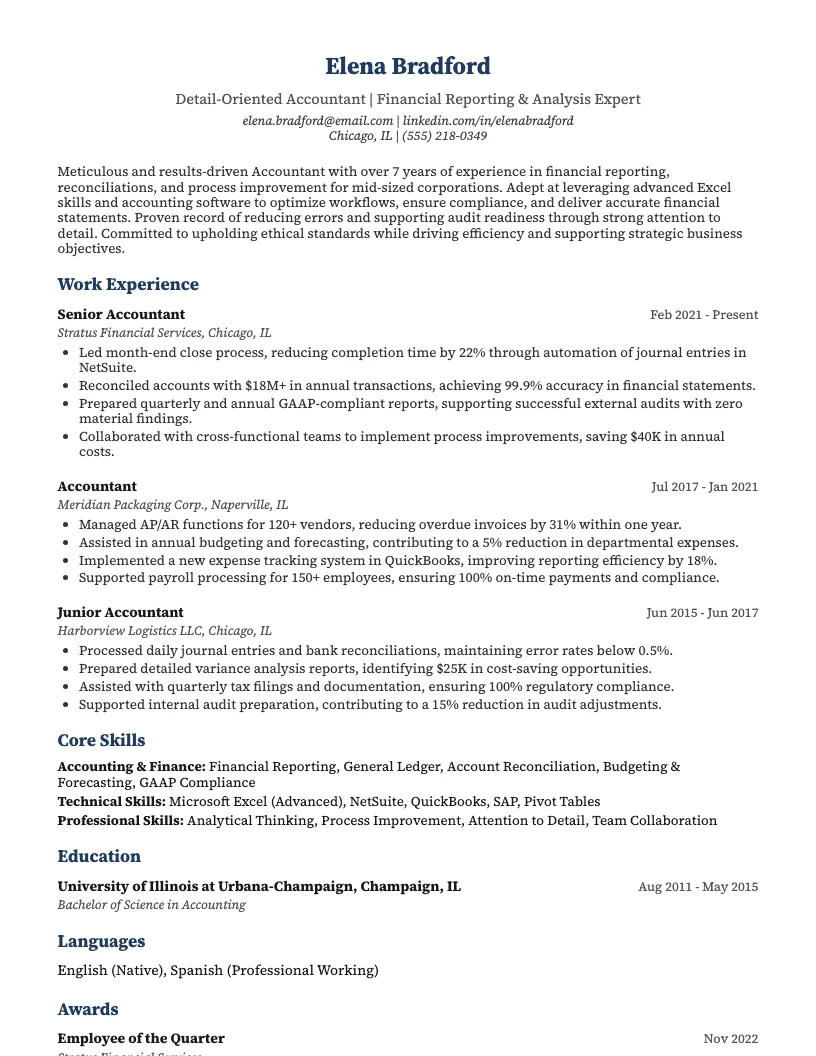
Browse Forensic Accountant resume examples for related roles. Preview any example, open it in the builder, or read its full guide.
Click to enlarge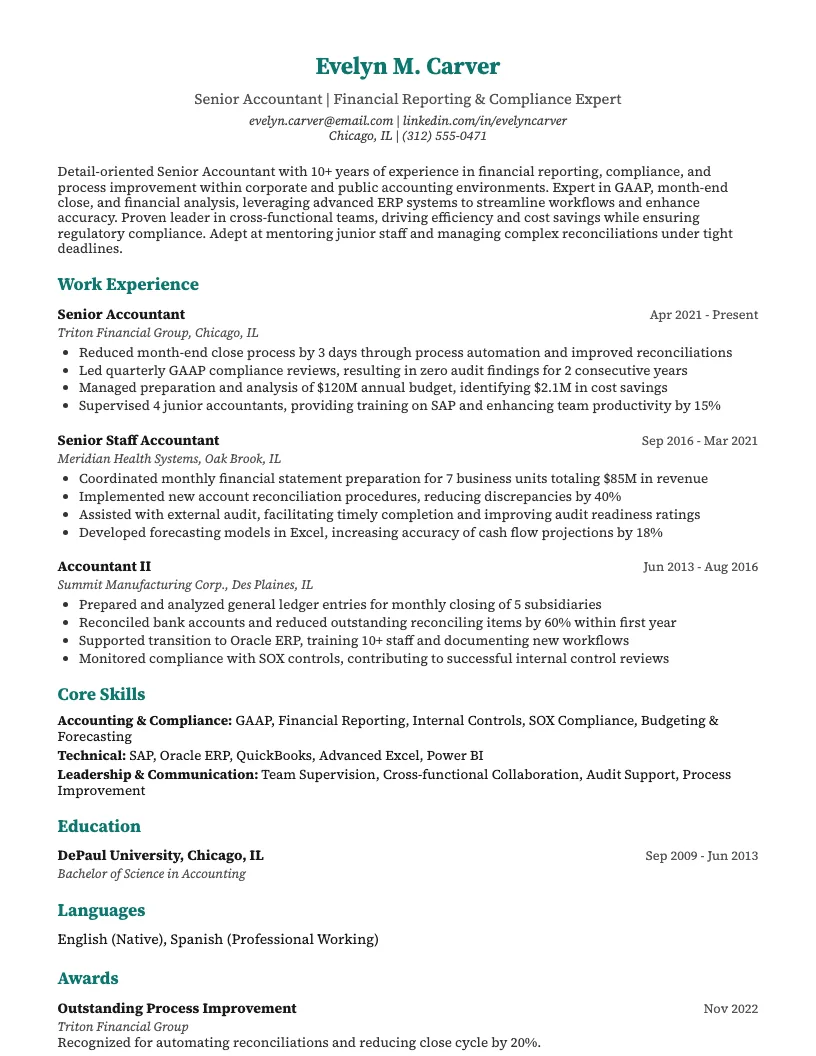 Click to enlarge
 Click to enlarge
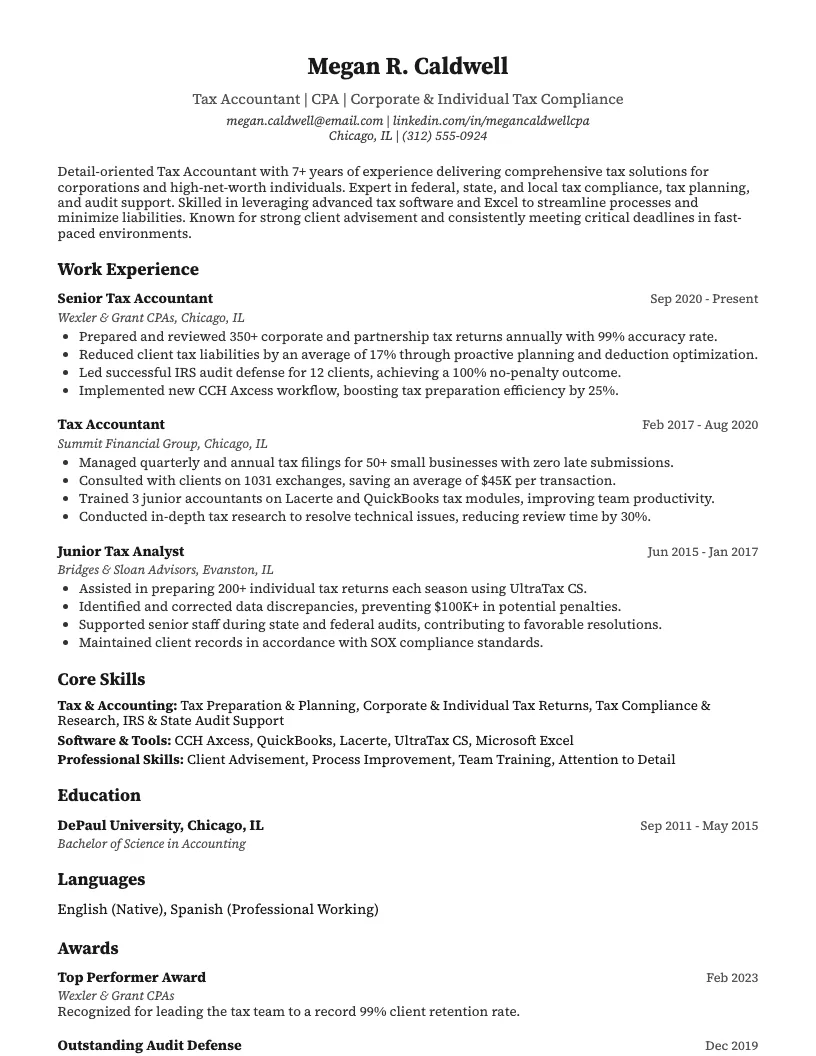 Click to enlarge
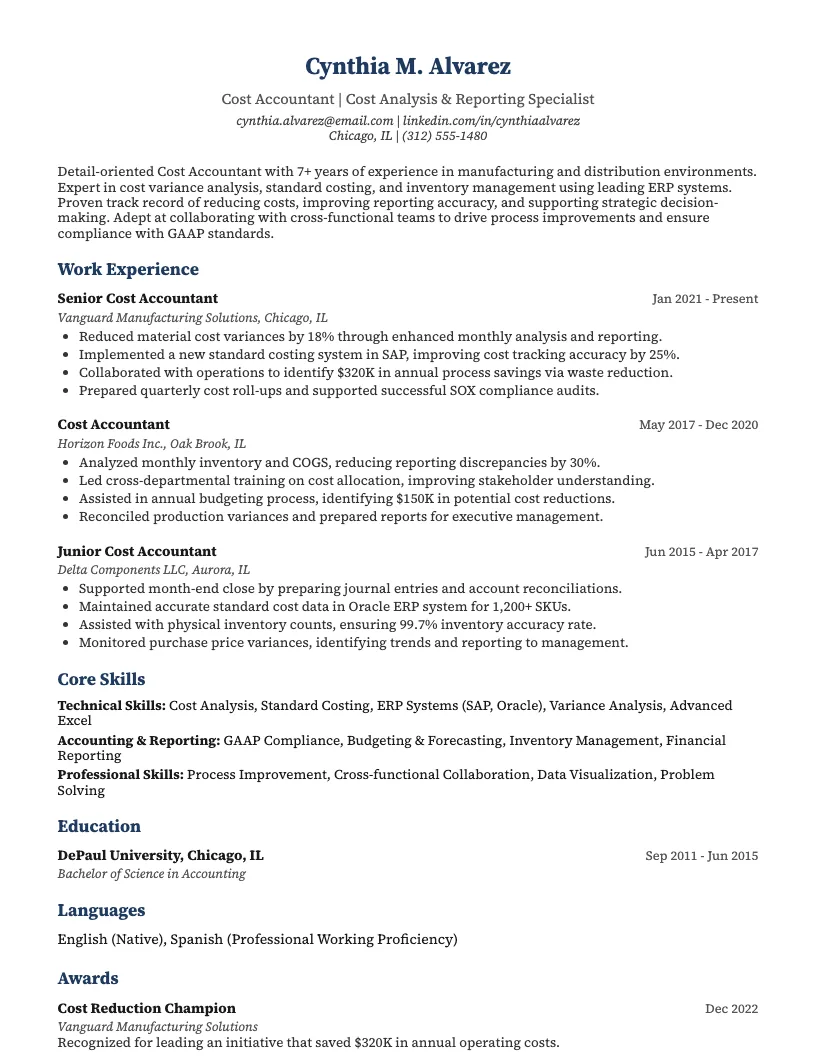 Click to enlarge
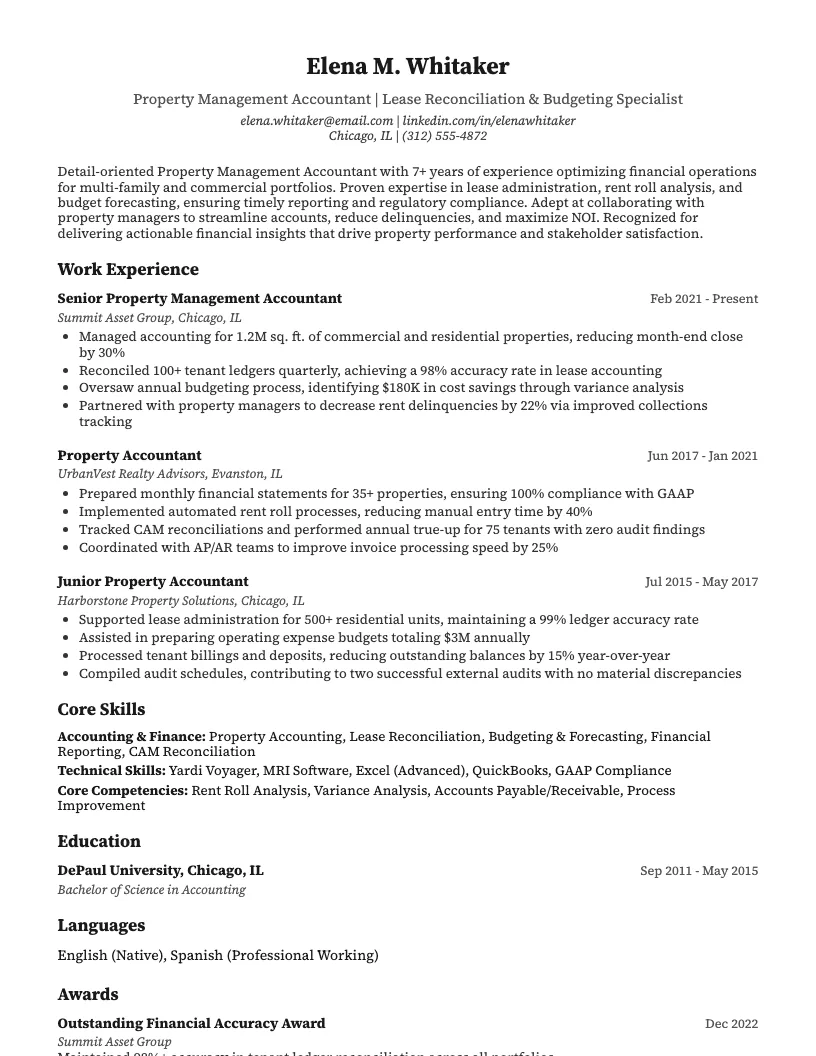 Click to enlarge
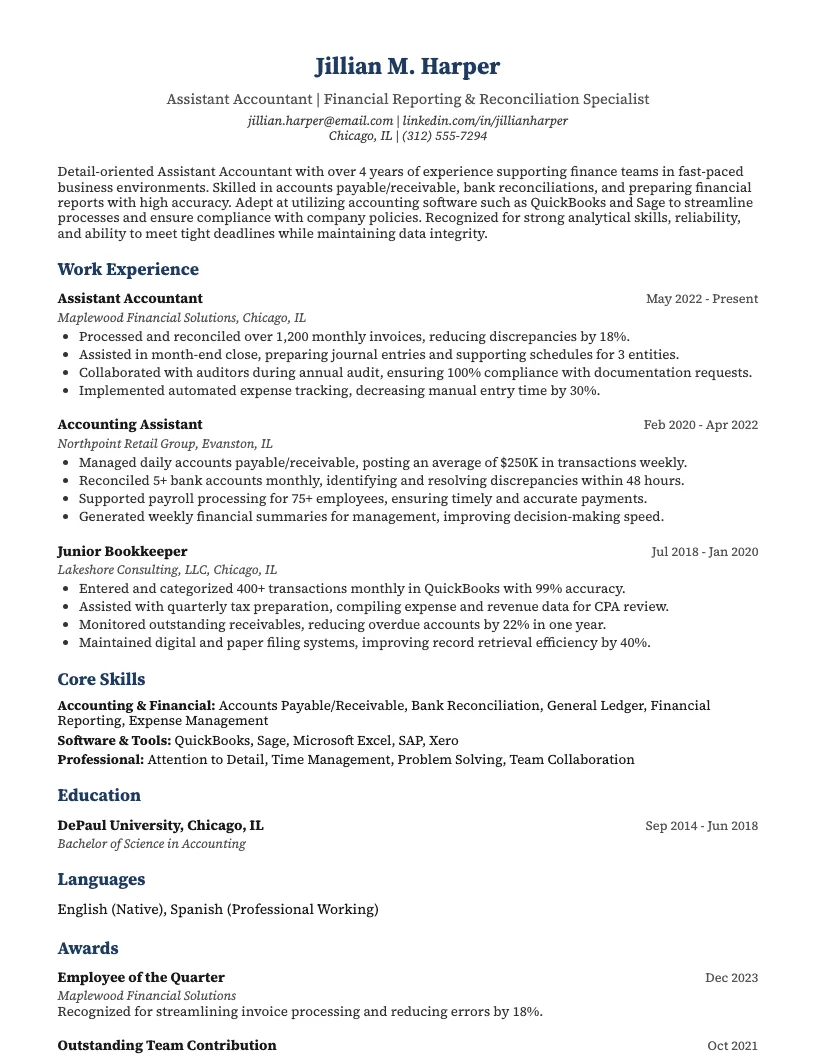 Click to enlarge
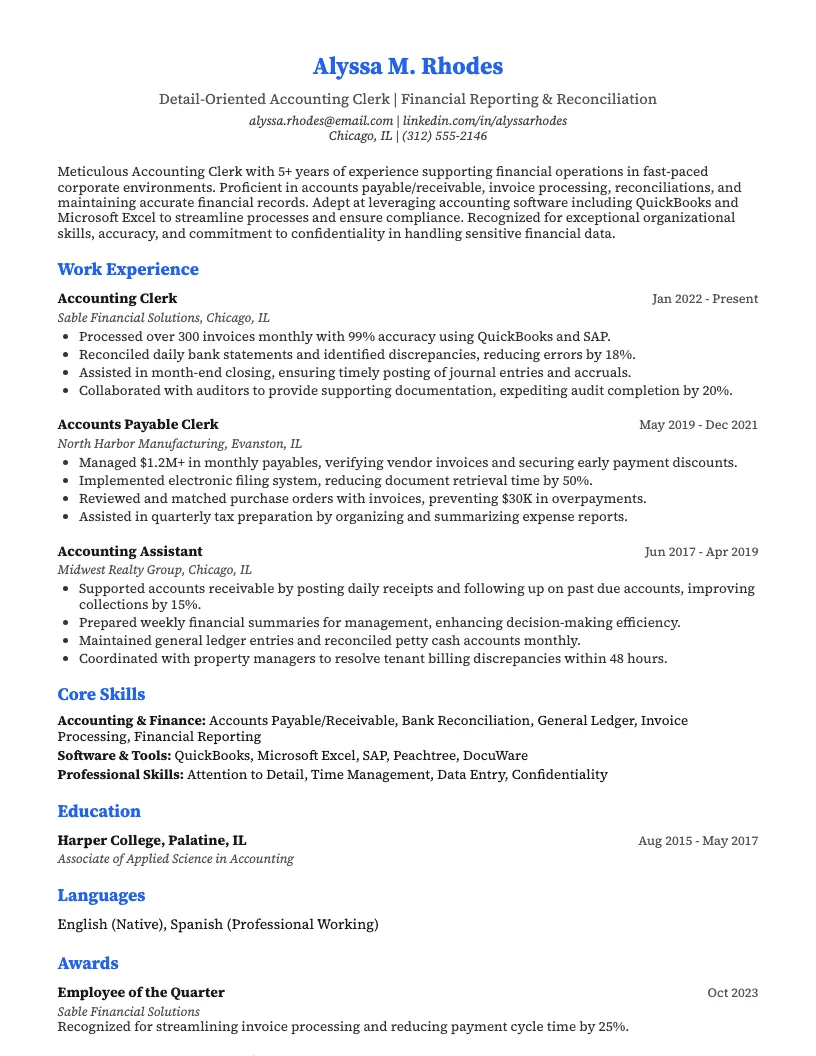 Click to enlarge
Common questions about Forensic Accountant resumes
A Forensic Accountant resume template is a pre-designed document tailored to highlight skills, experience, and credentials in forensic accounting. It helps you present your expertise clearly to potential employers.
Yes, most Forensic Accountant resume templates, like those from ResumeJudge, are ATS-friendly. They use clean layouts and relevant keywords to ensure your resume passes automated screening systems.
Use a Forensic Accountant resume template when applying to roles in legal firms, government agencies, or consulting companies. It's ideal for jobs where financial investigation skills are key.
Absolutely! You can easily tailor ResumeJudge templates by adding your certifications, specific case experience, or software skills to match each job you're applying for.
Forensic Accountant templates focus on investigation, litigation support, and fraud detection skills, while general accounting templates highlight broader financial duties. ResumeJudge ensures your resume matches the specialized field.
Aim for 1-2 pages, focusing on relevant experience and achievements. ResumeJudge templates help you organize key details concisely, making your resume easy to read for hiring managers.
Emphasize skills like fraud detection, data analysis, report writing, and litigation support. ResumeJudge templates include sections for technical and analytical competencies.
Yes, ResumeJudge templates are adaptable for both entry-level and experienced professionals. Just focus on relevant coursework, internships, or transferable skills if you're new to the field.
Most templates, especially from ResumeJudge, have dedicated sections for certifications like CFE or CPA. This helps your resume stand out in specialized forensic roles.
Use quantifiable achievements and highlight unique case work or software expertise. ResumeJudge templates make it easy to showcase what sets you apart in forensic accounting.
Explore more professional resume examples to inspire your job search
Use our AI-powered resume builder to create a professional, ATS-friendly resume in minutes.
Free to use • No credit card required