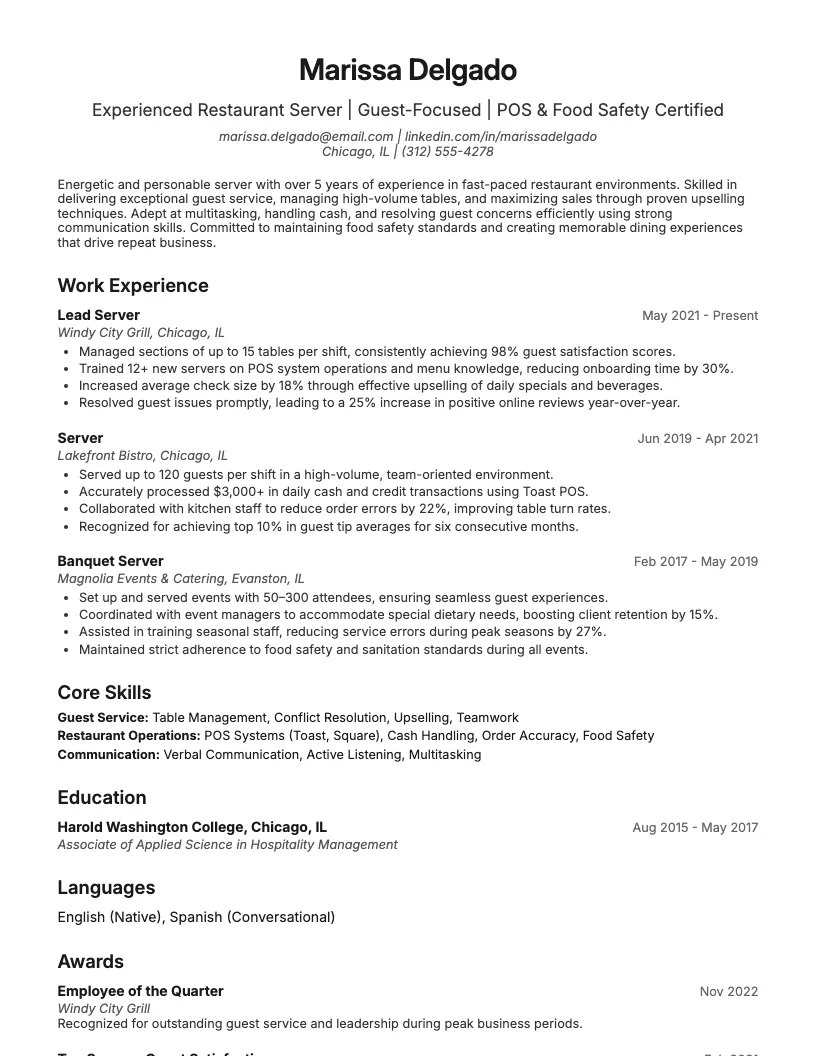
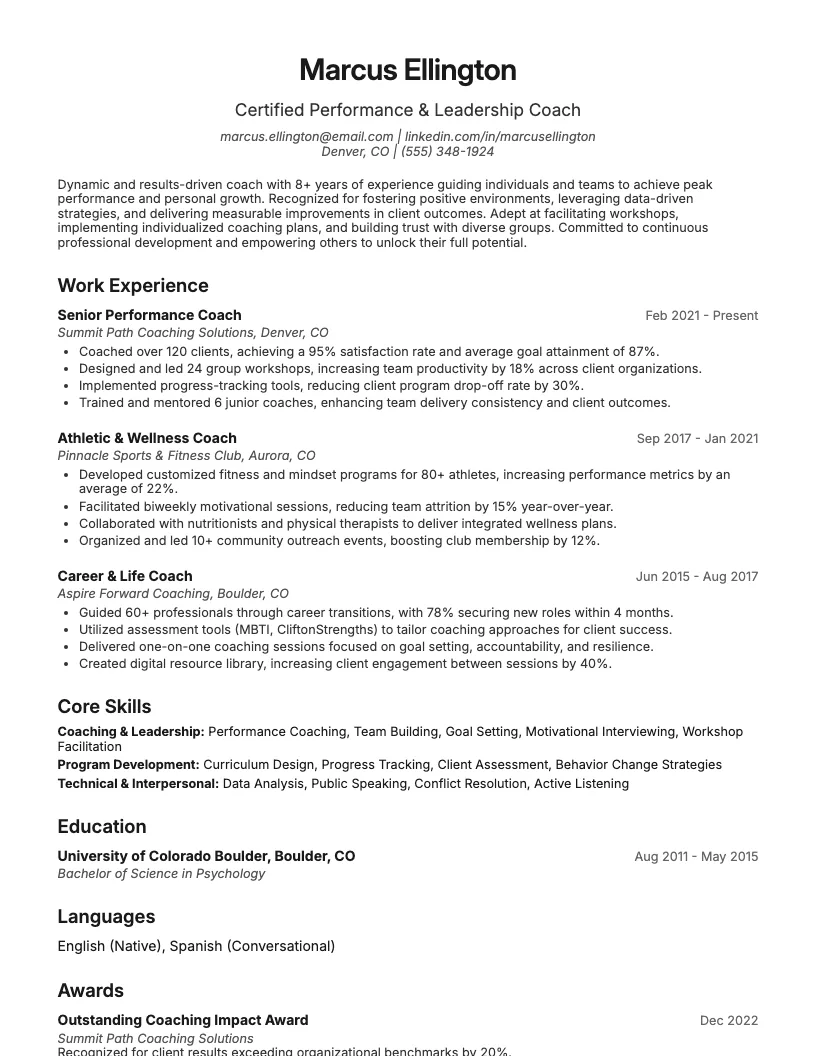
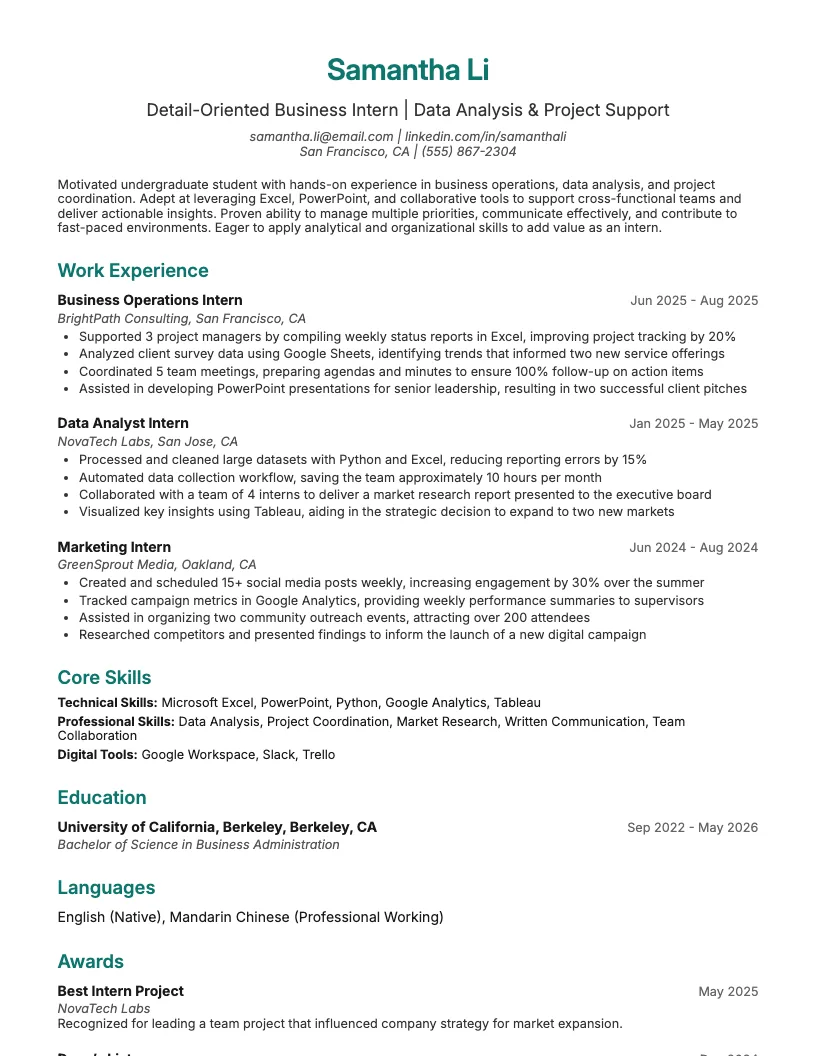
Restaurant Manager Resume Example
See full guide on Restaurant Manager resumes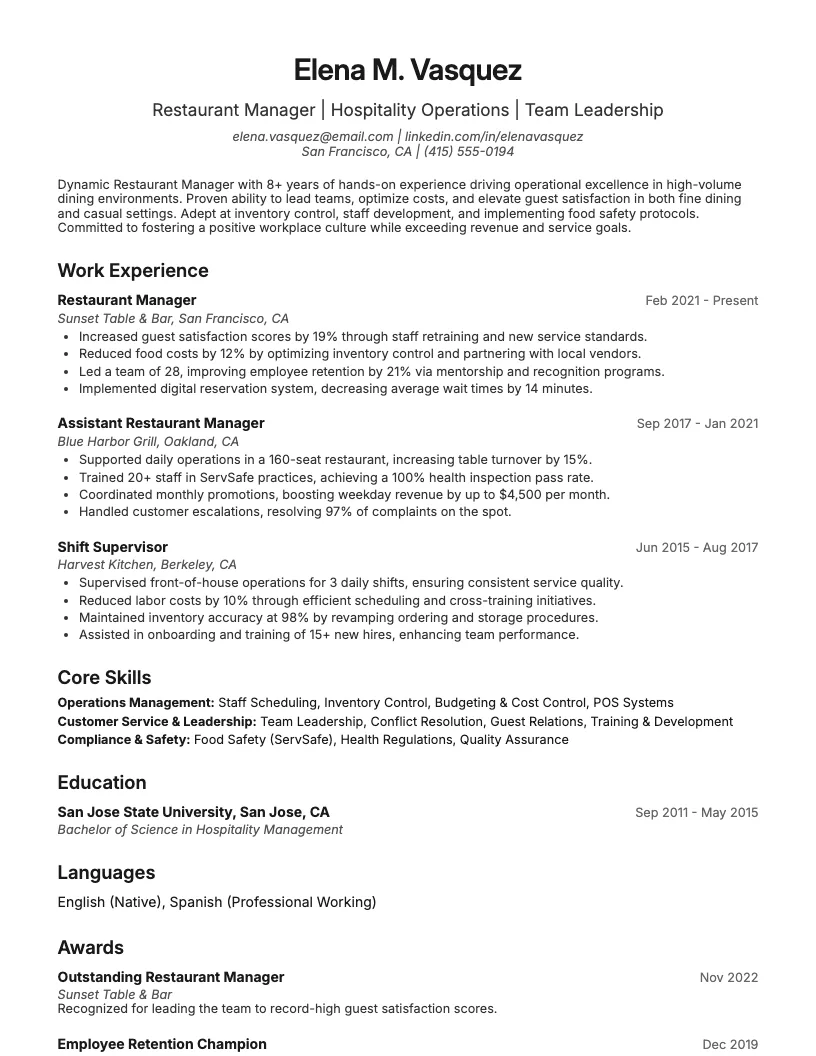 Click to enlarge
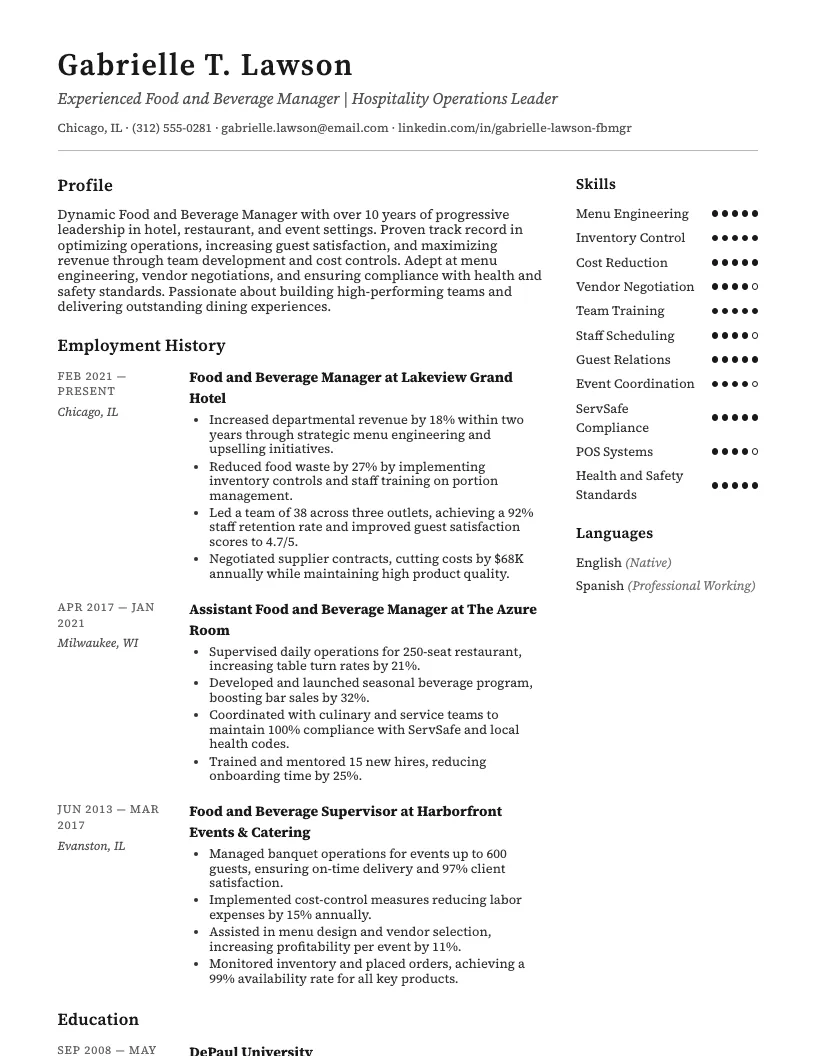 Click to preview

Get inspired by 50+ professional Food And Beverage Manager resume examples, each written by career experts and optimized to pass ATS scans. Pick a proven template, tailor it to your role, and download a polished resume in minutes.
Pick the specialization closest to your target role and start from a proven resume example.

A well-formatted resume helps you stand out. Most recruiters spend less than 7 seconds on a first read, so your layout really matters.
You want your experience and skills to pop right away. Using a reverse-chronological format usually works best for this role.
Keep your resume under two pages. Cut any irrelevant experience and stick to the details that show your impact.
Up next, I'll break down the essential sections and what recruiters actually look for in a food and beverage manager resume.
Every food and beverage manager resume needs a few core sections. I always start with a header that shows my name, phone number, email, and a LinkedIn or portfolio link.
Next, drop in a short summary or objective. This helps recruiters see what you’re about in just a few lines. Keep it tailored to the job.
Highlight your work experience in reverse-chronological order. Use bullet points to show real achievements-think numbers, budgets managed, or team size. This keeps things clear and to the point.
List your skills-both hard and soft. I like grouping things like inventory management, team leadership, and budgeting. This gives recruiters quick proof I know my stuff.
Don’t forget education and certifications. Degrees, food safety certificates, and management training all add credibility. If you have extras, like language skills, include them at the end.
Recruiters want to see proven results-show stats like “cut costs by 15%” or “improved guest satisfaction scores.” Numbers make your impact super clear.
Highlight your leadership experience. Mention how you hire, train, and motivate teams. If you’ve managed 10+ staff or boosted retention, say it right up front.
Show you know your stuff with food safety, inventory control, and compliance. If you handle budgets, menu planning, or big events, include specifics. This helps your resume stand out.
Your resume summary or objective is the first thing recruiters see. It’s your shot to highlight your experience or career goals in just a few lines.
If you’ve got strong results, use a summary. Quantify achievements-like boosting sales by 15% or managing teams of 20. Numbers catch attention fast.
If you’re newer to the industry, go with an objective. Show your drive and mention past wins, even if they’re from other fields. Make every word count.
Highlight your biggest wins right at the top. For example, I mention leading a team of 20, cutting costs by 18%, and boosting guest satisfaction scores.
You can show off unique skills, too, and reinforce them in your cover letter. Maybe you have expertise in wine pairings or multicultural cuisine. These details make your summary stand out instantly.
If you’re switching careers, focus on transferable skills. I talk about my supply chain experience and how I manage logistics for large events. This helps recruiters see your potential.
Your experience section is where you prove you can handle a fast-paced, numbers-driven environment. Recruiters want to see real achievements, not just a list of duties.
Highlight how you’ve improved service, managed teams, or boosted sales. Use numbers to back up your impact and keep your examples relevant to the roles you want.
Up next, I’ll show you how to quantify your achievements, pick strong action verbs, and tackle this section even if you’re just starting out.
Numbers tell your story fast. I always show exactly how much I improved guest satisfaction, boosted revenue, or cut costs. This helps recruiters see my real impact.
You want to highlight actual percentages, dollar amounts, or headcounts. For example, “Increased sales by 18% in one year” or “Reduced food waste by 25%” looks way stronger than just “improved sales.”
There are so many ways to measure success-think about budget size, team growth, or even online review ratings. The more specific, the better. It’s hard to argue with hard data.
Strong action verbs make your experience pop. I like verbs like led, optimized, streamlined, and boosted. These show you take charge and drive results.
You can also use implemented, coordinated, and improved when describing projects. These words help highlight your hands-on role and real impact on food and beverage operations.
If you managed teams, try words like supervised or mentored, and consider highlighting this in your cover letter. This signals leadership. Mixing up your verbs keeps your resume fresh and engaging for the reader.
If you don’t have direct food and beverage manager experience, highlight transferable skills. Think customer service, teamwork, or any leadership moments you’ve had in other jobs.
Showcase your education, certifications, or trainings that relate to hospitality. Even a short course or relevant workshop can make your resume stand out.
Don’t forget internships, volunteering, or part-time gigs. I focus on anything that proves I can handle responsibility, solve problems, or work under pressure. That’s what recruiters want to see.
If you want to stand out as a food and beverage manager, your resume needs the right mix of technical skills and people skills. Both matter to hiring managers.
You deal with everything from budgeting to staff training every day. You also handle guest complaints, manage vendors, and keep up with health regulations-so your skills list should reflect all that.
Most job postings mention leadership, communication, and cost control. I always look for real numbers and examples to back up these skills.
Hiring managers look for job-specific certifications and education on every food and beverage manager resume. Listing the right ones helps you stand out, especially in competitive roles.
If you’re new to management or want to show off recent skills, highlight the most relevant and recent credentials. Keep the details simple-just the essentials.
Some roles even require specific certificates or degrees by name. So, it’s worth double-checking job ads to make sure you’re covered.
I see a lot of hiring managers look for the ServSafe Food Protection Manager certification. Over 5 million professionals hold this credential, making it a must-have on your resume.
Another big one is the Certified Food and Beverage Executive (CFBE). This is recognized by top hotels and shows you’ve got serious management chops in the industry.
If you want to stand out, look at the Certified Foodservice Manager (CFM) or the Certified Professional - Food Safety (CP-FS). These show you’re focused on safety and compliance.
You don’t need all of these, but having at least one certification helps you meet job requirements and prove your expertise to employers.
You can make your food and beverage manager resume stand out with a few extra sections. These help show off more of your skills and personality.
Including things like languages, awards, and projects gives hiring managers a fuller picture of what you bring. It’s your chance to highlight what makes you unique.
Food and Beverage Manager salaries change a lot depending on where you work. Some states pay more, while others offer less but better benefits or lower living costs.
If you want to see where your experience pays off most, salary data helps. I always check local trends before updating my resume or applying for jobs.
I see a lot of restaurant manager resume examples that highlight team leadership, budgeting, and customer service. You want to show measurable results, like boosting sales by 15% or reducing costs.
A strong restaurant manager resume sample often includes certifications, such as ServSafe, and software skills in POS systems. This helps you stand out in states with higher salary ranges.
If you’re unsure where to start, look at a few restaurant manager resume templates online. These give you ideas for formatting and what achievements to feature for your location.
If you want your resume to grab attention, you need to show off both your management experience and your technical skills. Clear structure always helps.
Recruiters look for measurable achievements, specific responsibilities, and relevant certifications. Highlighting your personal strengths and industry knowledge makes a big difference.
I always start by thinking about what matters most to hiring managers. They want to see clear results-like boosting revenue or cutting waste by 15% or more.
You want your resume to feel personal. Show off what makes you stand out, whether it's leading teams of 25 or rolling out new menus that drive up guest satisfaction.
Don't forget to weave in certifications, any awards, and a cover letter. This helps your resume pop and signals you’re serious about your skills in food safety or cost control.
Browse Food And Beverage Manager resume examples for related roles. Preview any example, open it in the builder, or read its full guide.
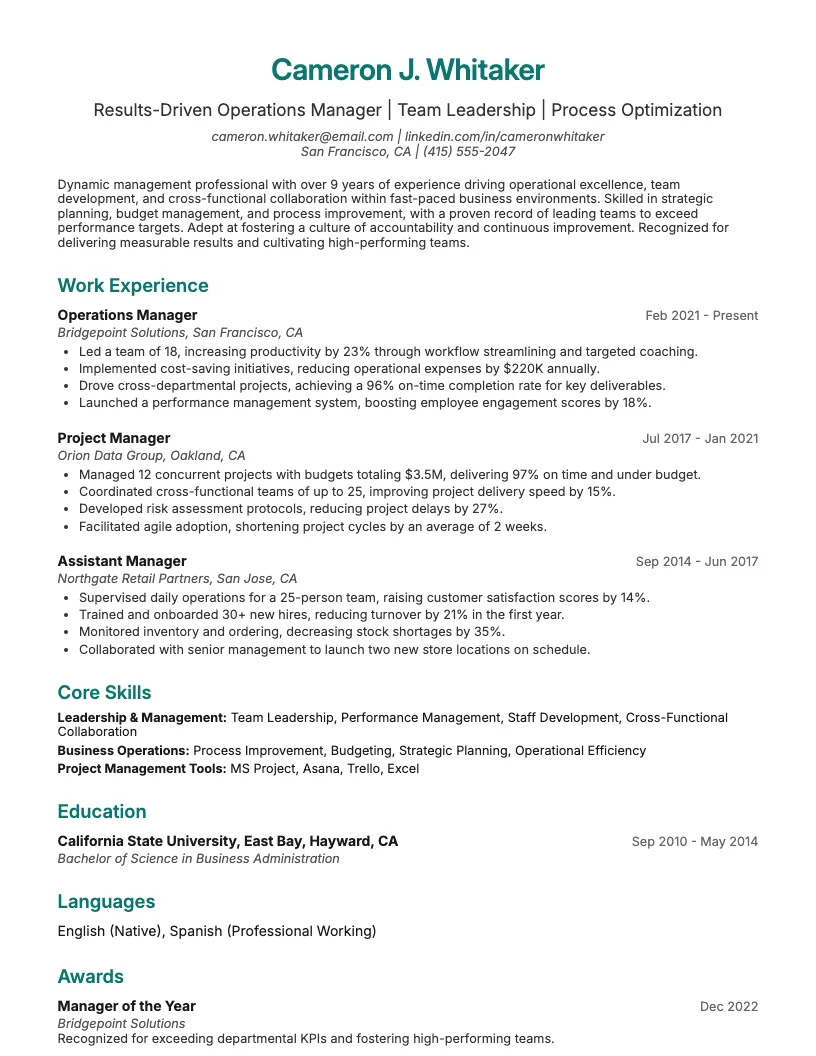
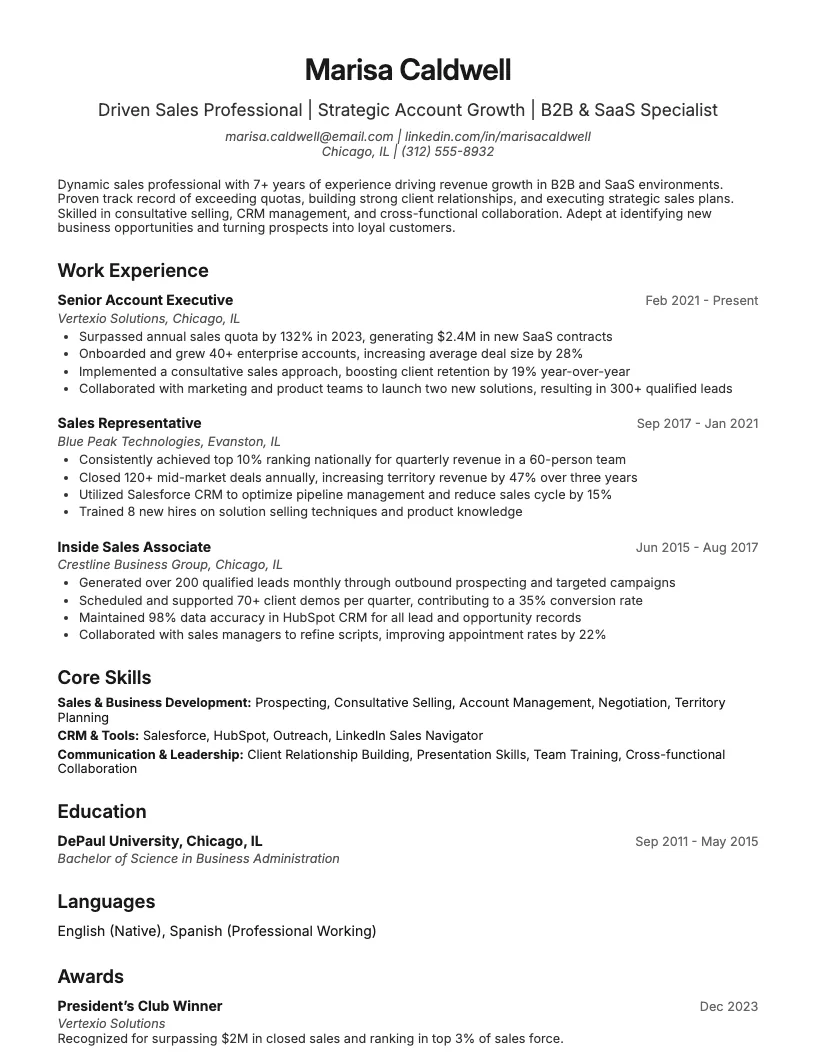
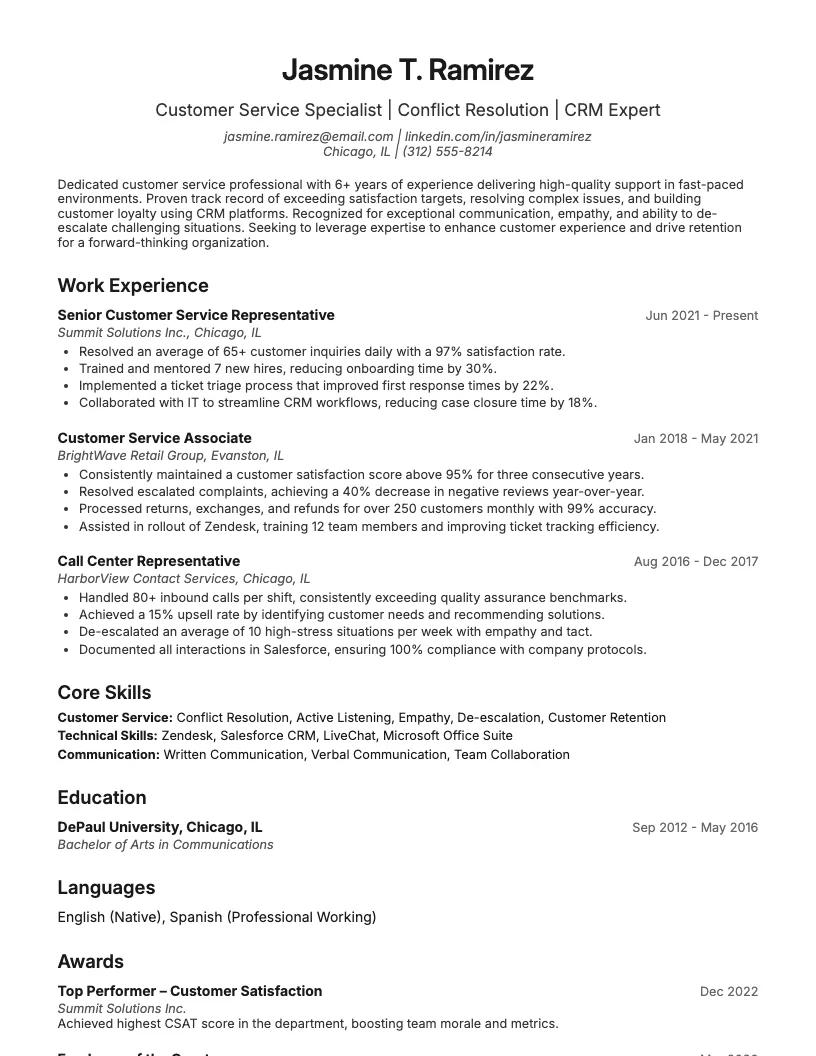
Click to enlarge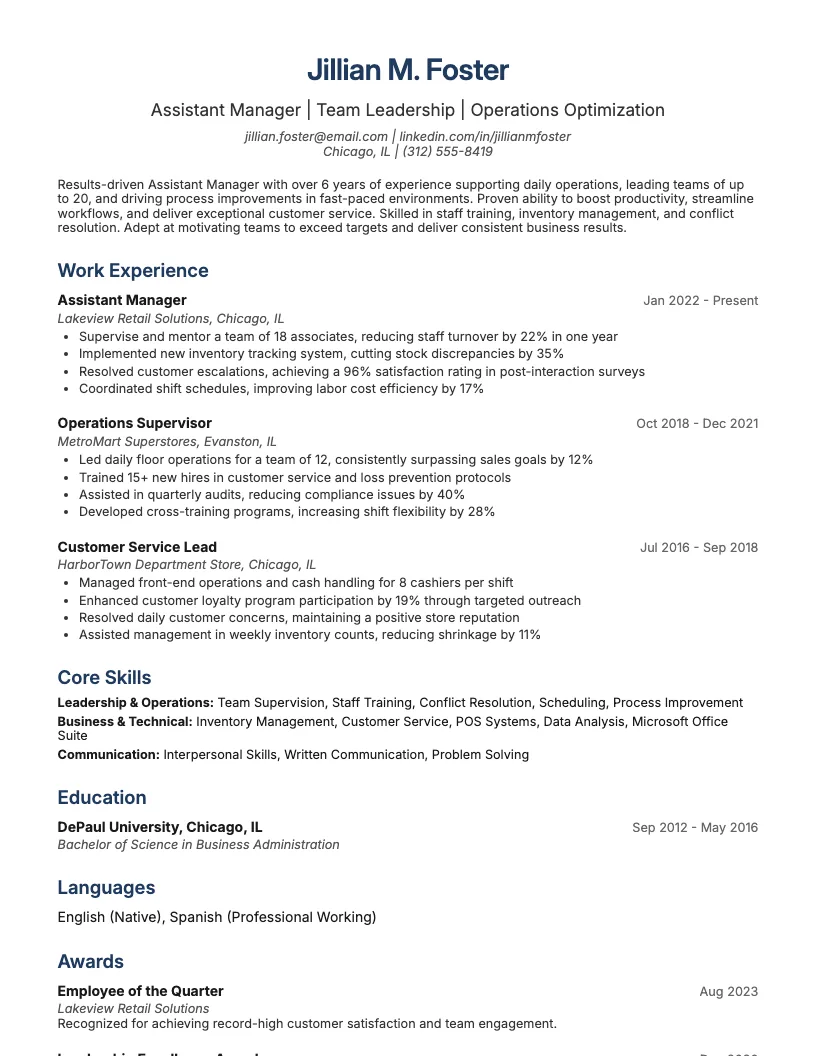 Click to enlarge Click to enlarge
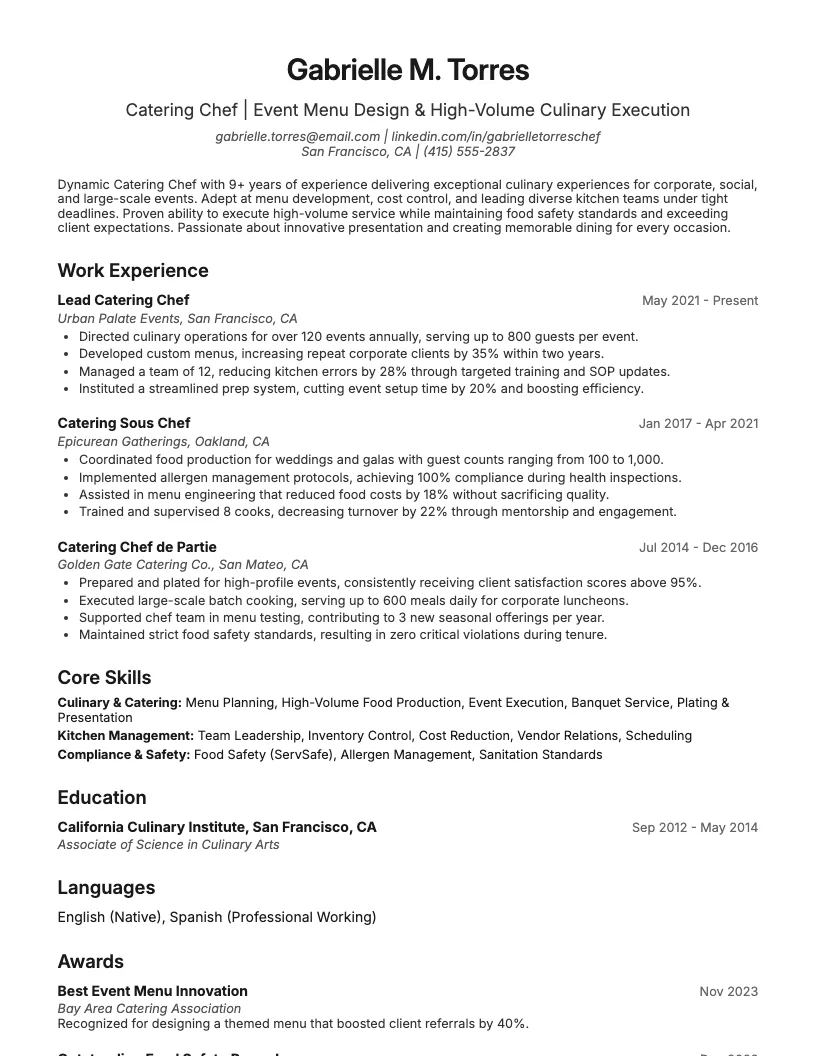 Click to enlarge
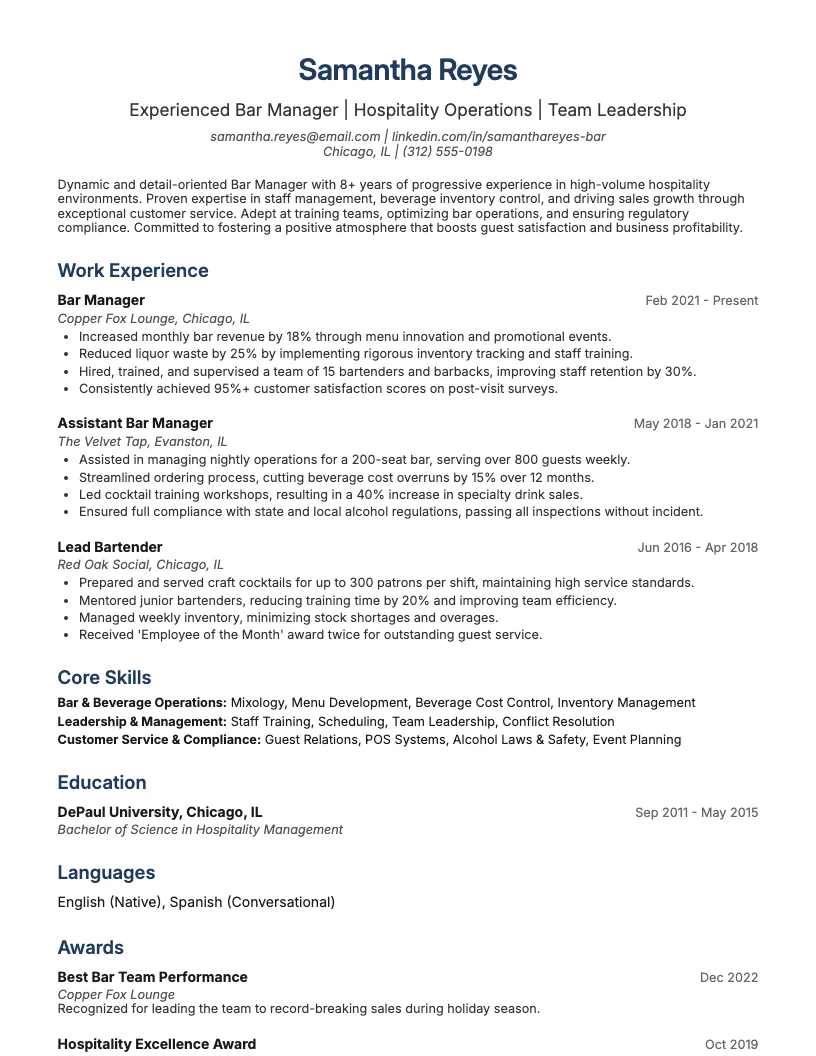 Click to enlarge
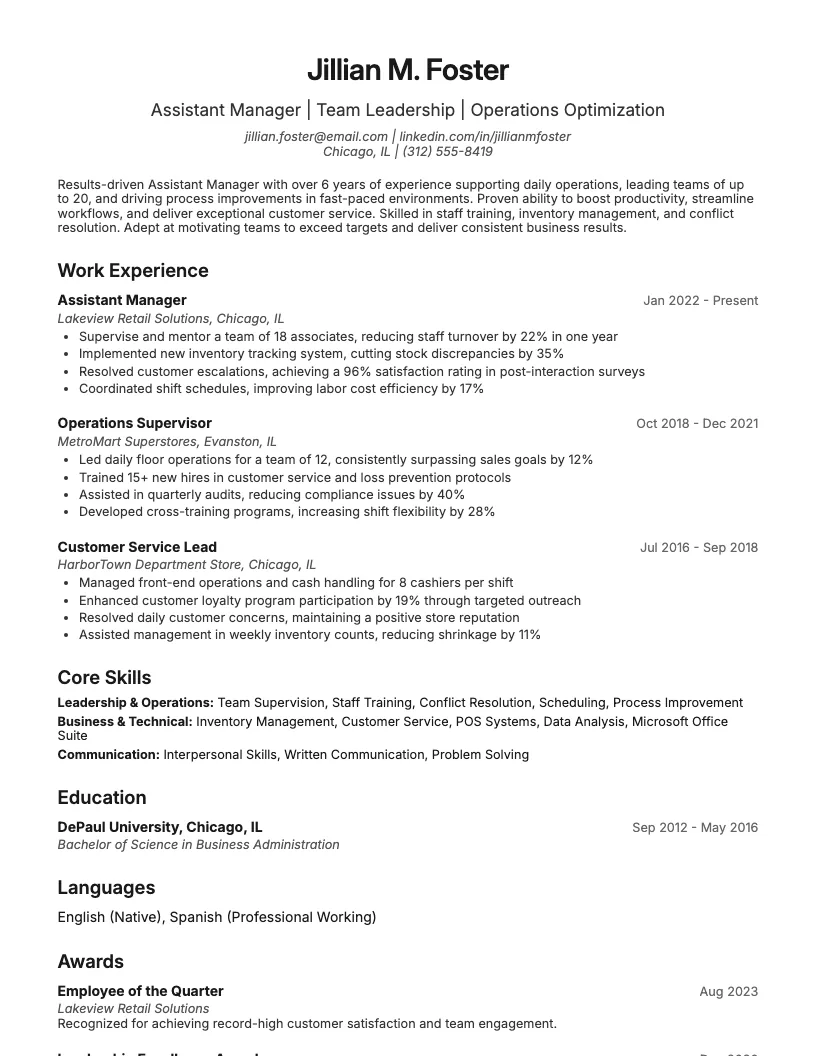 Click to enlarge Click to enlarge Click to enlarge Click to enlarge Click to enlarge
Common questions about Food And Beverage Manager resumes
A food and beverage manager resume template is a pre-designed document tailored to highlight hospitality skills, management experience, and industry certifications. ResumeJudge offers templates that make creating a professional resume easy.
Yes, most food and beverage manager resume templates from ResumeJudge are ATS-friendly, meaning they use simple formatting so applicant tracking systems can scan your resume without errors. This boosts your chances in hospitality job searches.
Use a food and beverage manager resume template when applying to hotels, restaurants, resorts, or catering companies. ResumeJudge templates are perfect for showcasing your leadership in any hospitality setting.
Absolutely! You can easily add your own work history, achievements, and certifications to ResumeJudge templates. This lets you tailor your resume for each specific job or employer.
Food and beverage manager templates focus on hospitality skills, team leadership, and service excellence, unlike general templates. ResumeJudge designs each template to highlight your expertise in food service management.
Typically, your resume should be one to two pages. ResumeJudge templates help you organize key details concisely, so your experience stands out to hospitality recruiters.
Include sections for a summary, work experience, education, certifications, and key skills. ResumeJudge templates ensure all essential sections are covered for roles in hotels, restaurants, and catering.
Yes, listing certifications like ServSafe or beverage management is important. ResumeJudge templates have dedicated sections for certifications, making your qualifications easy to spot.
Yes, just highlight transferable skills and any relevant hospitality experience. ResumeJudge templates are flexible enough for both seasoned managers and newcomers to the industry.
A template saves time and ensures a professional layout that grabs employers’ attention. ResumeJudge templates are designed to make your application stand out in competitive hospitality roles.
Explore more professional resume examples to inspire your job search
Use our AI-powered resume builder to create a professional, ATS-friendly resume in minutes.
Free to use • No credit card required