Banquet Chef Resume Example
See full guide on Banquet Chef resumes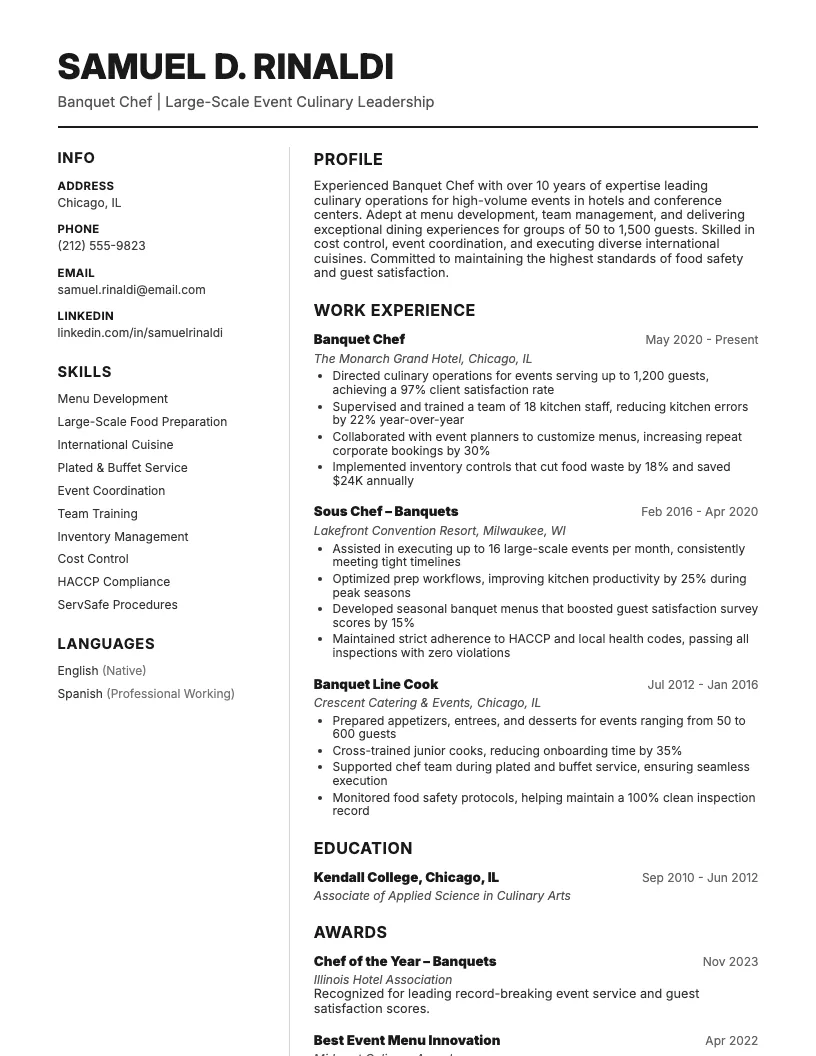 Click to enlarge
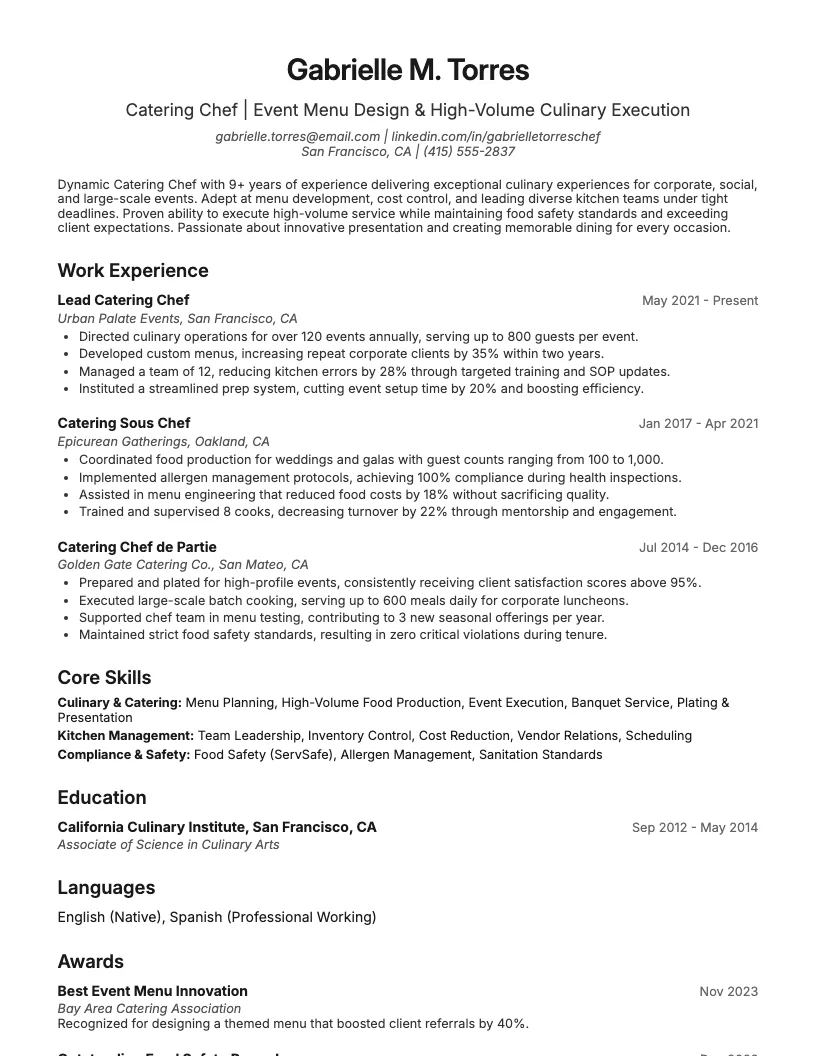 Click to preview

Get inspired by 62+ professional Catering Chef resume examples, each written by career experts and optimized to pass ATS scans. Pick a proven template, tailor it to your role, and download a polished resume in minutes.
Pick the specialization closest to your target role and start from a proven resume example.
If you’re aiming for a catering chef role, your resume needs to highlight your culinary skills, event experience, and leadership. Employers look for proof you can handle big events.
I focus on showing results, like managing teams of 10+ or serving over 500 guests. You want your resume to stand out with clear numbers and achievements.
This example breaks down what hiring managers want to see. I’ll walk you through the key sections and tips to help you get noticed.

Writing a catering chef resume means showing off both your cooking skills and your event experience. Employers want to see how you handle food, people, and tight deadlines.
You need to highlight specific skills, like menu planning and food safety. I always suggest using numbers-like how many events you’ve handled or team members you’ve led.
Choosing the right format makes a huge difference. You want your experience to stand out and match what employers in catering look for right now.
A catering chef handles food prep, menu planning, and kitchen management for events. I often juggle multiple menus and timelines, serving anywhere from 20 to 2,000 guests.
You need to coordinate staff, manage supply orders, and keep food safe. This role requires flexibility-events can run early mornings or late nights, indoors or outdoors.
I make sure everything looks and tastes great under tight deadlines. A strong catering chef adapts fast, solves problems on the fly, and keeps clients happy, no matter the event size.
Employers want catering chefs who can handle high volumes-think 100+ guests-without sacrificing quality. I focus on time management, multitasking, and menu flexibility to keep everyone happy.
You need solid leadership skills. Most catering roles expect you to manage a team of 5-15 people, delegate tasks, and keep the kitchen organized. This helps avoid chaos during busy events.
Attention to detail is huge. Food safety, presentation, and special dietary requests matter. I always highlight my ServSafe certification and my ability to accommodate gluten-free or vegan menus.
I always tell people-pick a format that highlights your strongest features. For most catering chefs, a reverse-chronological format works best. It shows off recent roles and growth.
If you’re changing careers or have gaps, a functional or combination format can help, and pairing it with a tailored cover letter makes your application even stronger. These focus on your skills and relevant experience, not just job titles or dates.
Make sure your resume looks clean and organized. Consistent fonts, clear headings, and plenty of white space make it easy to scan. This helps recruiters spot your best stuff quickly.
When you build a catering chef resume, the right sections help you stand out. I always focus on real experience, skills, and credentials companies want.
You want each section to highlight your expertise, organization, and ability to handle events of any size. Hiring managers scan for key details fast, so clear structure matters.
This is the first section employers read, so make it count. I always keep it short-three to four lines max. Focus on your unique catering strengths.
Highlight your experience, signature cuisines, and key achievements. For example, mention years in the field or number of successful events managed. This helps you stand out fast.
Use strong action words like lead, create, and deliver. Show your passion for catering and your ability to handle high-volume events or tight deadlines. Keep it direct and personal.
This section is where I list my most recent and relevant catering jobs. I always include the company name, my job title, and the dates I worked there.
You want to focus on real results here. I mention how many events I manage, the size of the teams I lead, and any cost savings I achieve.
It helps to highlight special projects, like handling a 500-guest wedding or introducing a new menu that boosted customer satisfaction by 15%. Quantifiable achievements make a big impact.
I always list my formal culinary education first. If you have a Culinary Arts degree or a certificate from a recognized school, put it right after your name and contact details, especially if you’re applying for roles in specialty areas like pastry or want your cover letter to stand out.
Certifications like ServSafe Food Handler or Certified Executive Chef (CEC) stand out. These show you know industry standards and safety rules. Around 70% of catering jobs want at least a food safety certificate.
Include the year you earned each credential and the issuing body. This helps hiring managers quickly check your qualifications and see how current they are.
When I put together a catering chef resume, I highlight technical and soft skills. Things like menu planning, staff management, and food safety certifications matter a lot.
You should also show off your ability to handle high volume events, multitask, and communicate clearly. Listing food cost control or client relations experience helps your resume stand out.
There are always new techniques trending in catering, so I mention any recent training or specialty skills. This shows I stay current and flexible in fast-paced environments.
I always include awards and recognition at the end of my resume. Things like “Best Catered Event 2023” or local culinary competitions show real impact.
If you speak more than one language, add that here. Bilingual chefs support diverse clients and teams. Even conversational skills in Spanish or French can make a difference.
You can also throw in memberships to professional groups, published recipes, or volunteer work. These extras round out your profile and help you stand out.
Looking for a catering chef job means your resume needs to stand out. You want to show off your experience, skills, and training right away.
I see hiring managers scan resumes for leadership, menu planning, and event coordination. Numbers and results matter, so showing how you impact events helps.
This page breaks down what works in a catering chef resume. You’ll find tips and examples to help you highlight your strengths and land interviews.
A strong catering chef resume grabs attention fast. You need to show hiring managers you can handle events, manage teams, and deliver great food every time.
Recruiters spend an average of 7 seconds on a resume. Make yours count by focusing on the right details and using powerful language.
It’s all about making your experience and skills match what the job posting asks for. Quantifiable achievements help you stand out in a busy field.
Every catering chef job is different, so I always read the job description closely. I focus on the skills and experience the employer lists as must-haves.
You want your resume to match those requirements. For example, if they want large-event experience, I mention how many guests I’ve served or managed-like 500+ at a corporate event.
Customizing your resume shows you’re serious about the job. This helps you stand out and increases your chances of getting an interview.
I always start my resume bullets with strong action verbs like designed, executed, or led. This helps me sound confident and highlights my direct impact on each event.
You want to include numbers whenever possible. For example, “Managed catering for 200+ guests” or “Reduced food waste by 20%.” This gives real proof of your work.
There are plenty of ways to show value. Highlight how you increased customer satisfaction ratings or cut costs-specific stats make your achievements stand out instantly.
I always double-check for spelling and grammar errors. One typo can make you look careless, especially in the food industry where attention to detail matters.
Don’t cram your resume with irrelevant experience. Focus on catering roles, culinary certifications, and food safety training. This helps the right skills stand out in seconds.
You should keep your resume under two pages. Most hiring managers spend just 6-8 seconds on their first scan, so keep it tight and easy to read.
Making your resume clear and concise shows you respect the recruiter’s time. If you avoid these mistakes, your catering chef resume has a better shot at getting noticed.
When you build your catering chef resume, your work experience section matters most. Recruiters want to see real numbers and strong results.
I focus on what I achieve at each event. Instead of listing duties, I show how I run kitchens, lead teams, and keep clients happy.
You want your achievements to stand out. Highlighting specific catering wins and client feedback helps your resume get noticed.
Here are realistic bullet points you might find on a catering chef resume. I focus on actions, results, and numbers-this gets noticed.
You want to show off how many events you handle, how big the teams are, and improvements you drive. Numbers like "served 250+ guests" or "cut food costs by 15%" work well.
Always lead with strong verbs. For example, "Design custom menus," "Manage food prep for 10+ events weekly," or "Train 8 kitchen staff." This helps your experience stand out.
I like to show off results in my work experience. For example, I mention how I managed events for over 200 guests or improved food quality scores by 15%.
You want to highlight things that matter in catering-like on-time event delivery, client satisfaction rates, or menu customization. Numbers and clear outcomes make your achievements pop.
Mention unique catering challenges you tackle, such as adapting menus for dietary needs or reducing food waste by 20%. This helps employers see your impact at a glance.
Catering chefs need more than just cooking skills. I work under pressure, manage tight deadlines, and juggle multiple events at once.
You need technical culinary skills, but leadership and teamwork matter just as much. Event planning is also key, especially when you’re handling gatherings with 50 or even 500 guests.
Every catering chef needs serious technical skills. I’m talking about knife work, food safety, plating, and menu development. These skills set the foundation for everything else.
You want to master batch cooking and timing. I handle dozens, sometimes hundreds, of servings at once. Precise measurements and quick adjustments keep the food top-notch.
Certifications matter. A ServSafe certificate, for example, shows you know food safety inside out. This protects clients and keeps your reputation strong.
I often manage teams of 5 to 20 kitchen staff during events, so I highlight leadership experience in my resume and cover letter. Strong leadership means keeping everyone on task and motivated, even when the kitchen gets hectic.
You need to communicate clearly and handle conflicts fast. This keeps the workflow smooth and the food consistent, no matter how big the event.
I rely on teamwork to get large orders out on time. If you support your crew, they’ll support you-this helps deliver better service and boosts staff retention by up to 30%.
I juggle menus, logistics, and timing for events with 20 to over 500 guests. It’s about anticipating needs and handling last-minute changes with zero drama.
Communication with clients, vendors, and staff keeps everything on track. If you map out every step, you avoid surprises and deliver a smooth event.
There’s no one-size-fits-all approach. I customize plans for each client so the food, service, and setup match their vision. That’s what makes catering really stand out.
When you write a catering chef resume, your summary or objective statement should grab attention fast. These few lines can show off your experience and unique skills.
A strong summary highlights your leadership, event experience, and creativity. If you’re new or switching careers, an objective statement can focus on your goals and passion for food service.
If you want your Catering Chef resume to stand out, you need a strong professional summary. This is the first thing recruiters see, so make every word count.
There are ways to show your experience fast. Mention years in the industry, types of cuisines, and event sizes. If you manage teams or budgets, add that too.
You can highlight achievements with numbers. For example, "I oversee catering for 200+ events a year" or "I lead a team of 10 chefs." This helps you look results-driven and reliable.
When you write an objective statement, focus on your career goals and how you help clients or teams. Keep it short, usually one or two sentences.
You can mention years of experience, key skills, and the type of catering roles you want. For example: "I bring 5+ years of event catering experience and want to lead culinary teams for large-scale events."
This helps recruiters see your direction right away. If you’re new to catering, highlight your enthusiasm and willingness to learn. Tailor every objective to the job posting for better results.
If you want to work as a catering chef, your education and certifications matter a lot. Most employers look for formal culinary training or equivalent experience.
Degrees like an associate’s or bachelor’s in culinary arts help you stand out. Industry certifications show you keep your skills up to date and follow food safety rules.
Let’s break down which degrees and certifications work best for catering chefs.
A formal culinary degree shows you’ve got solid training. Employers like to see an associate or bachelor’s degree from a culinary school on your catering chef resume.
I see a lot of catering chefs with degrees from schools like the Culinary Institute of America or Johnson & Wales. These programs often take two to four years to complete.
You don’t have to go to a top school, but having any accredited culinary degree gives you an edge. This helps prove your skills in food safety, menu planning, and kitchen management.
Certifications like ServSafe Food Handler or Certified Professional Food Manager show I know food safety rules. Over 90% of catering jobs want at least one food safety certification.
You can also get the Certified Culinarian (CC) from the American Culinary Federation. This tells clients and employers you take your culinary career seriously.
If you want to stand out, add certifications for alcohol service or event planning. These extras make your resume stronger and help you land bigger catering gigs.
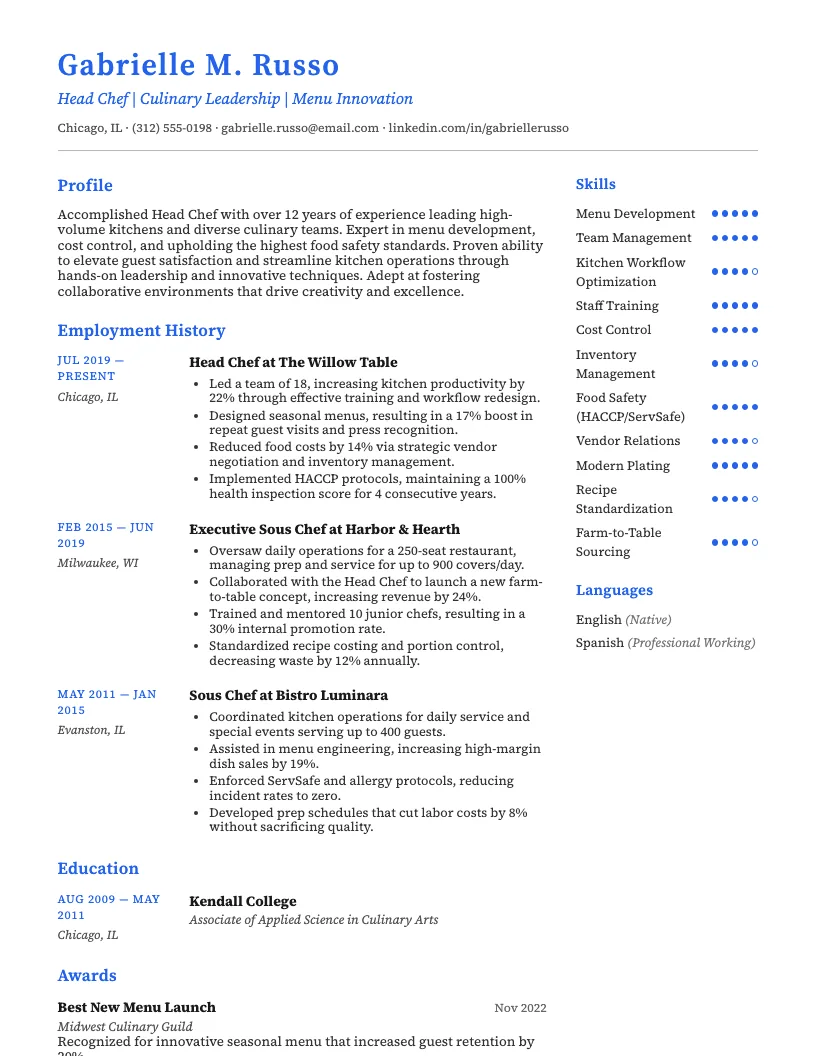
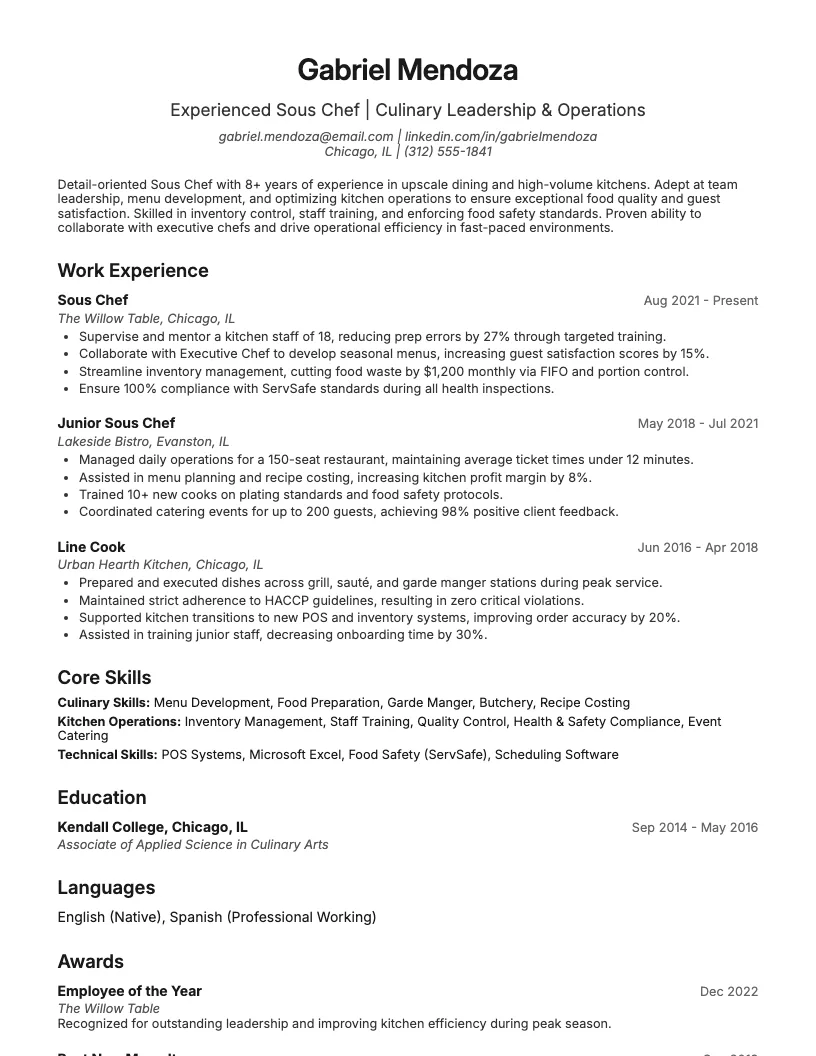
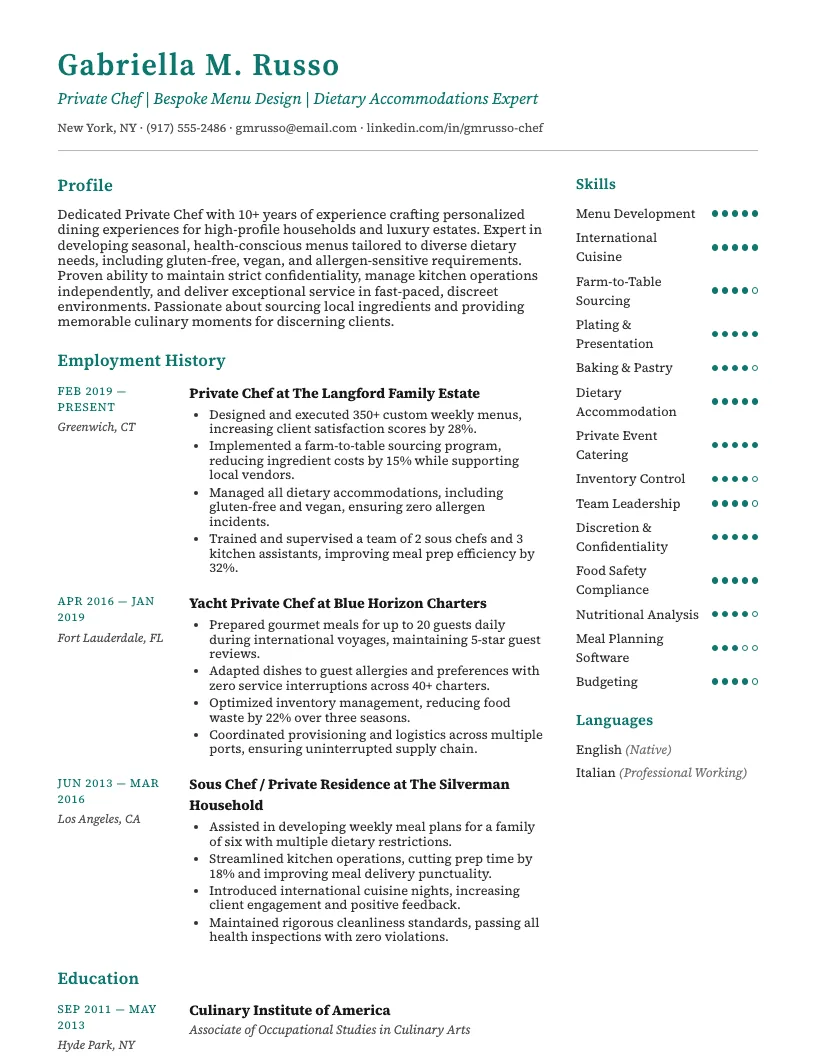
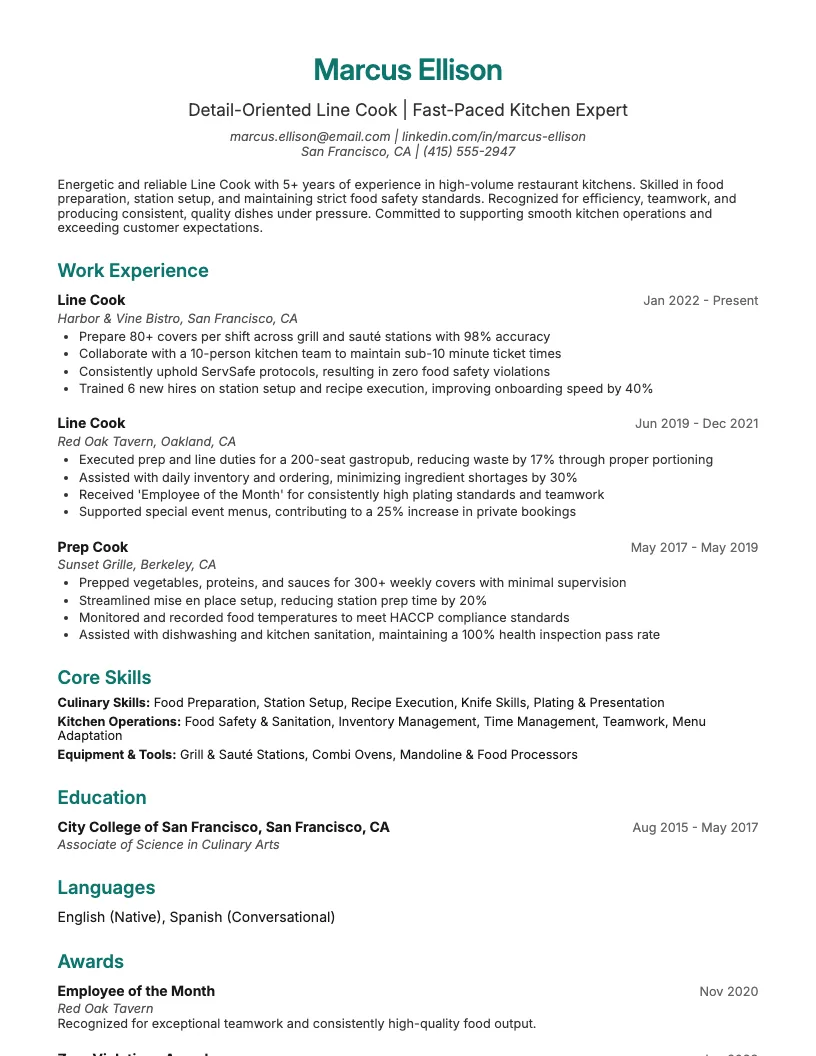
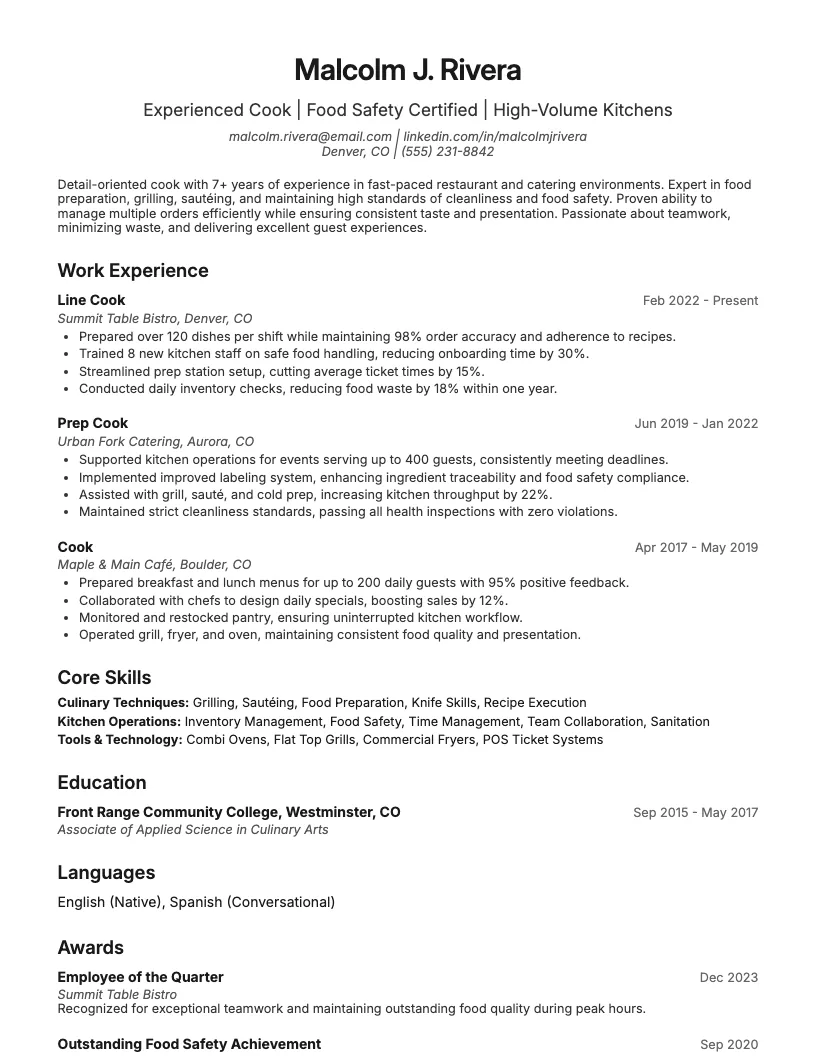
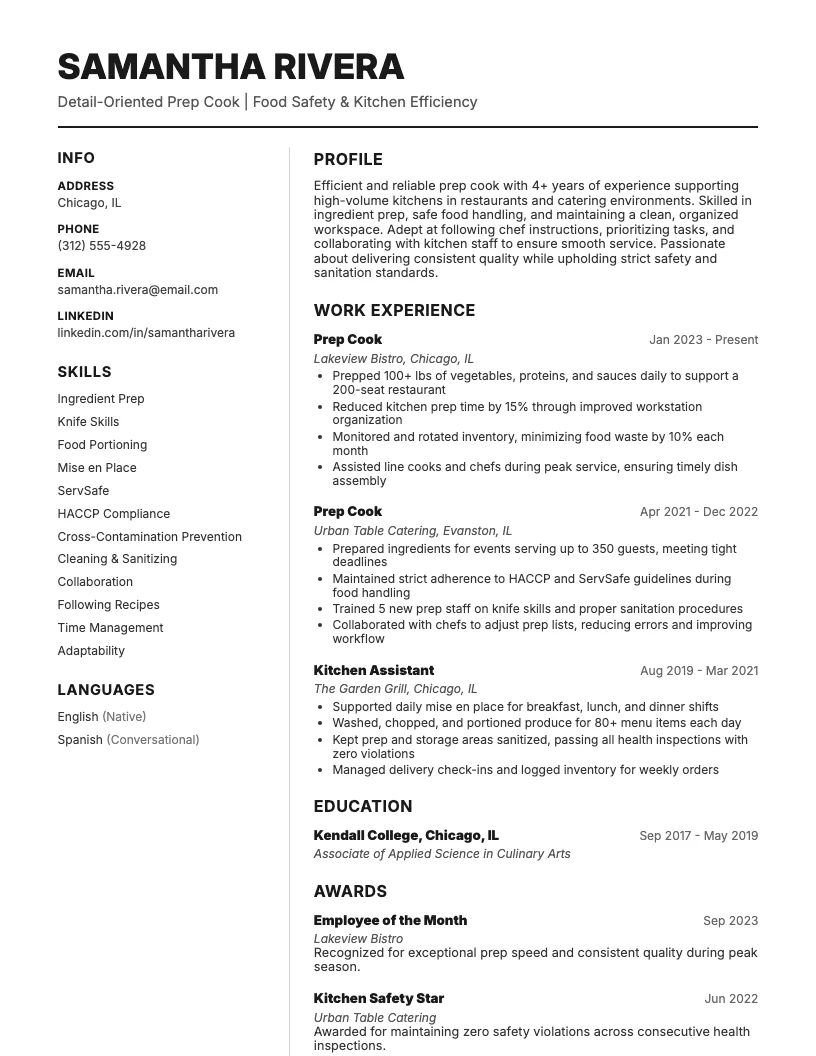
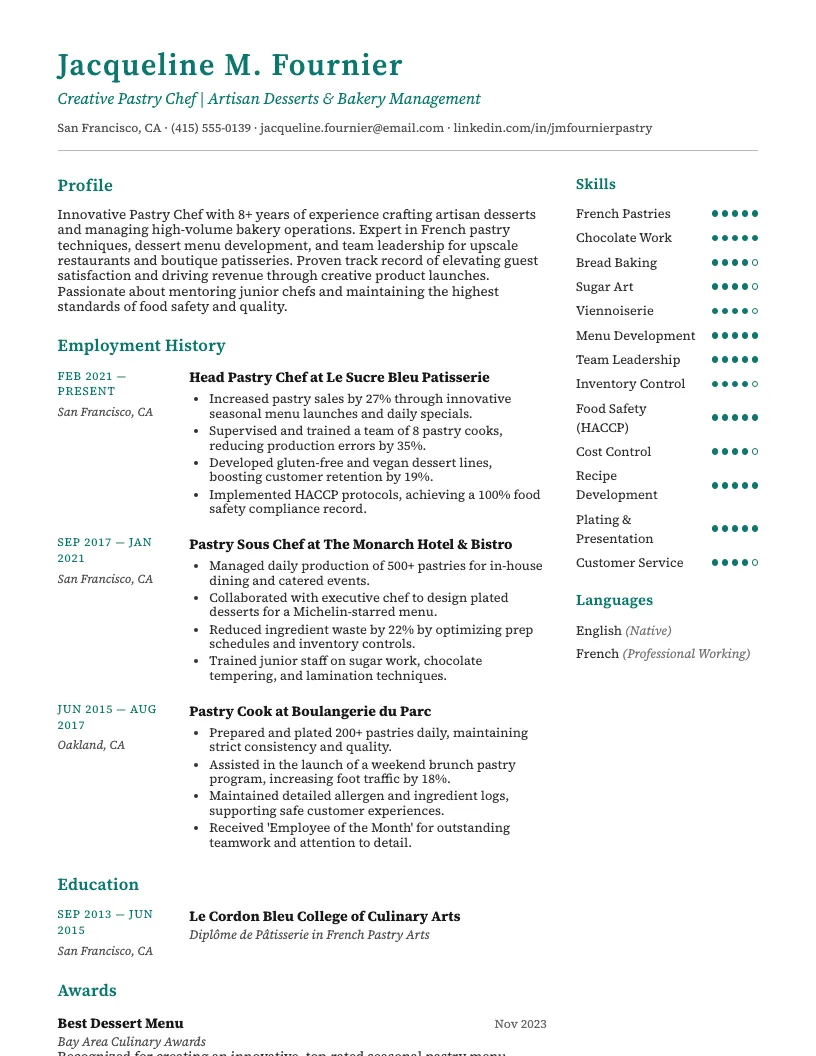
Browse Catering Chef resume examples for related roles. Preview any example, open it in the builder, or read its full guide.
Click to enlarge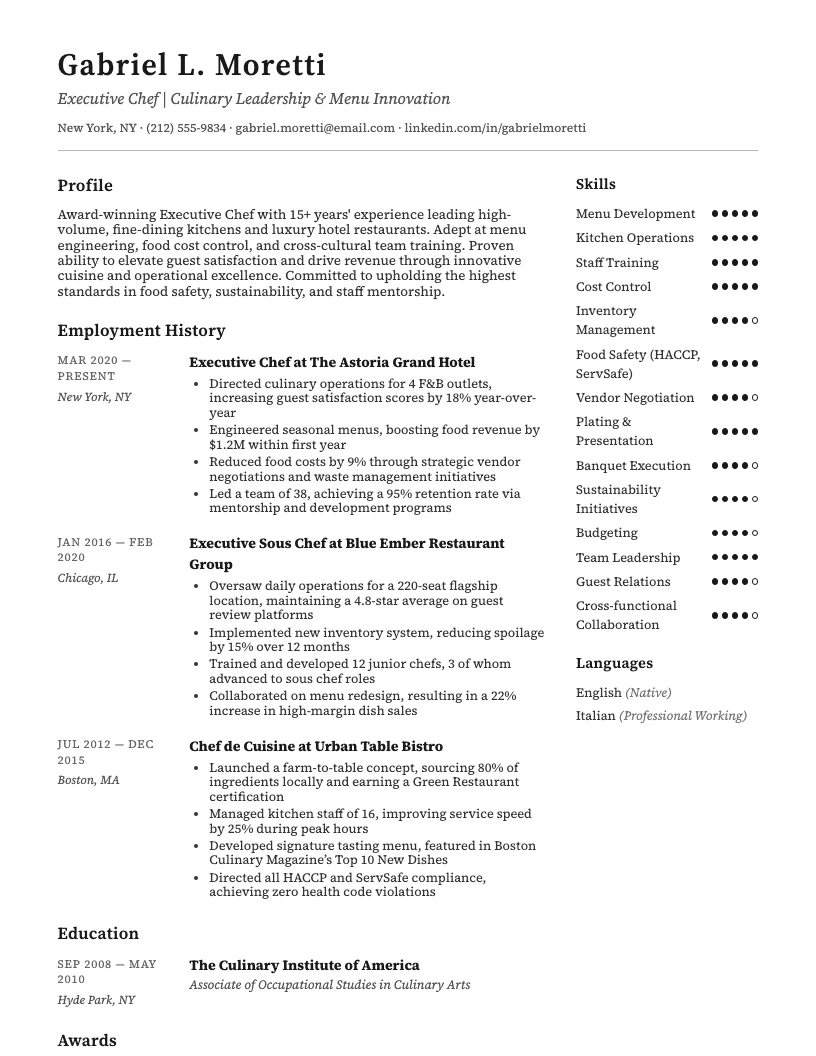 Click to enlarge
 Click to enlarge
 Click to enlarge
 Click to enlarge
 Click to enlarge
 Click to enlarge
 Click to enlarge
 Click to enlarge
Common questions about Catering Chef resumes
A Catering Chef resume template is a pre-designed document tailored for chefs specializing in catering. It highlights relevant skills, experience, and achievements to make your job application stand out. ResumeJudge offers easy-to-use templates for this role.
Yes, most Catering Chef resume templates from ResumeJudge are ATS-friendly, ensuring your resume passes screening software. This boosts your chances of landing interviews in hotels, event planning, or catering companies.
Use a Catering Chef resume template when applying for jobs in catering companies, event services, hotels, or large-scale food production. ResumeJudge templates are ideal for showcasing your event planning and culinary skills.
Absolutely! ResumeJudge templates are fully customizable, so you can add your unique experience, specialties, and certifications. This helps reflect your personal brand and fit different job requirements.
Catering Chef templates focus on event-specific culinary skills, menu planning, and large-scale food preparation. ResumeJudge designs these to highlight teamwork and organizational strengths needed for catering roles.
A Catering Chef resume should be one to two pages, highlighting your most relevant experience and skills. ResumeJudge helps you organize content efficiently to keep your resume concise and impactful.
Yes, ResumeJudge provides professionally formatted templates specifically for Catering Chefs. This ensures your resume looks polished and meets industry standards, making a great first impression.
Include sections like work experience, skills, certifications, and education. ResumeJudge templates guide you to feature catering achievements and specialties, such as menu creation or event management.
Yes, using keywords like 'event catering,' 'menu planning,' and 'food safety' can help your resume get noticed. ResumeJudge suggests relevant keywords to improve ATS compatibility and employer visibility.
Definitely! ResumeJudge offers templates suitable for entry-level Catering Chefs. You can highlight transferable skills, training, and internships to appeal to employers in catering and hospitality fields.
Explore more professional resume examples to inspire your job search
Use our AI-powered resume builder to create a professional, ATS-friendly resume in minutes.
Free to use • No credit card required