Registered Nurse Resume Example
See full guide on Registered Nurse resumes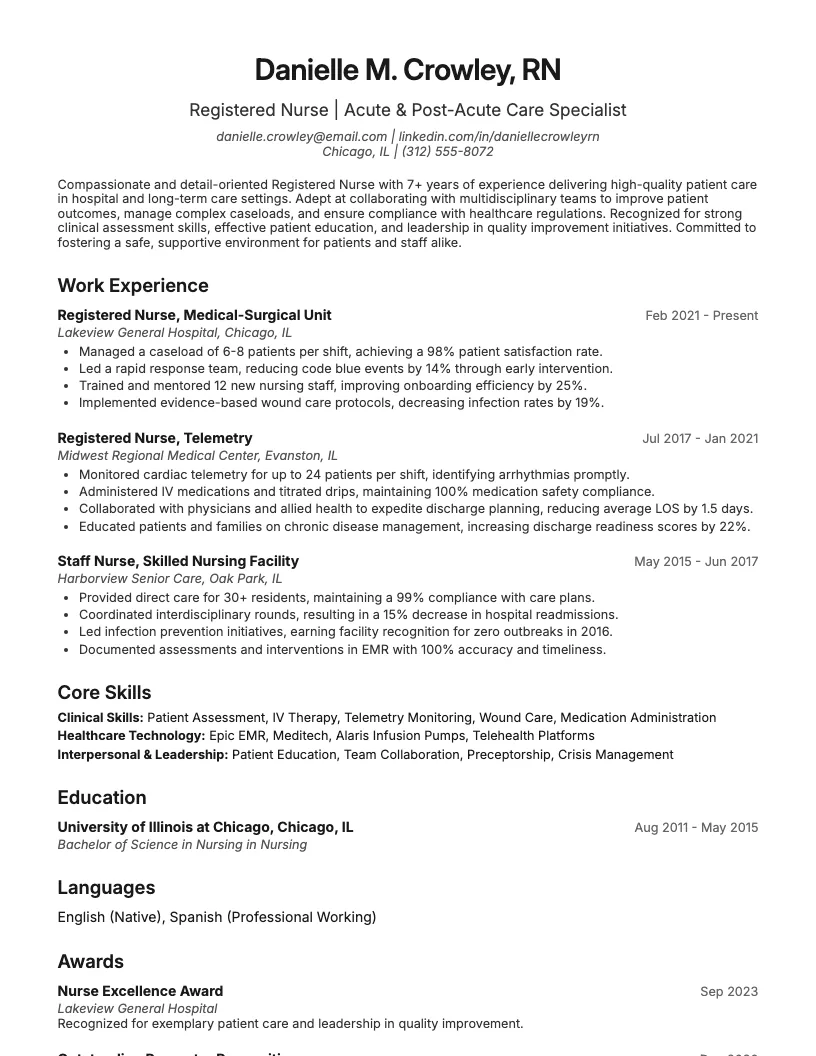 Click to enlarge
 Click to preview

Get inspired by 50+ professional Experienced Nurse resume examples, each written by career experts and optimized to pass ATS scans. Pick a proven template, tailor it to your role, and download a polished resume in minutes.
Pick the specialization closest to your target role and start from a proven resume example.
If you’re an experienced nurse, you know your resume needs to show your skills, certifications, and impact. Hospitals and clinics get hundreds of applications for every open role.
I’ve seen how a strong resume highlights years of hands-on patient care, leadership, and continuing education. Let’s look at examples that help you stand out in today’s job market.
Modern resume examples for nurses use clean layouts, clear headings, and bullet points. This helps recruiters scan for key qualifications and certifications in under 10 seconds.
I always recommend adding quantifiable achievements, like "improved patient satisfaction by 20%." These details grab attention and show real impact in a fast-paced healthcare setting.
You should highlight current skills, like EMR proficiency or telehealth experience. Modern resume examples show these up front, making your expertise obvious to any hiring manager.

Writing a resume as an experienced nurse means showing off your skills, clinical background, and certifications. You want to stand out to recruiters and hiring managers fast.
I focus on what matters most-years of nursing experience, specialized skills, and professional accomplishments. It’s all about making your strengths clear from the start.
You need the right format, strong experience details, and the latest credentials. I’ll walk you through every step so your resume gets noticed.
Picking the right resume format is your first big step. For most experienced nurses, I recommend a reverse-chronological format. Recruiters like this because it’s fast to scan.
Functional formats focus on skills over job history. These can work if you have employment gaps or switch specialties, but hospitals still prefer clear timelines.
Your format needs to highlight your experience level. Make sure your most recent-and relevant-roles show up at the top. This helps hiring managers spot your growth right away.
Start this section strong by listing your most recent and relevant nursing roles. I always focus on job titles, employers, and clear dates for each position.
Use bullet points under each job. Describe your daily duties, patient loads, and any areas of specialty. Numbers help-like "cared for 30+ patients per shift" or "managed a 12-bed ICU."
Don’t just list tasks-share your impact. Did you reduce patient wait times? Train new nurses? These details show how you add value in high-pressure environments.
List your clinical skills front and center. Use bullet points or a separate section. Hiring managers spend less than 8 seconds scanning for core competencies.
Include certifications like BLS, ACLS, PALS, or any specialty credentials. These show you meet industry standards and can handle advanced patient care.
Tailor your skills to match the job description. If you use EMR systems, IV therapy, or wound care daily, say so. This helps your resume stand out.
List your highest nursing degree first. Include the school name, graduation year, and location. This helps recruiters quickly see you meet the baseline for experienced roles.
Don’t forget your RN license details-state, license number, and expiration, and consider including a cover letter to further support your application. If you’ve got multiple state licenses or a compact license, show that clearly for more flexibility.
Add advanced credentials like BSN, MSN, or a DNP if you have them. These can boost your application, especially for leadership or specialized positions.
I always highlight professional achievements like “Nurse of the Year” or awards for patient care. This helps my resume stand out and shows I go beyond day-to-day duties.
You can list things like DAISY Awards, leadership recognitions, or quality improvement contributions, and highlight them in your cover letter. Use numbers if possible-“Reduced infection rates by 15%” grabs attention and proves your impact.
There are so many ways to show value beyond clinical skills. Showcasing achievements wraps up your resume and gives employers a reason to remember you.
If you’re an experienced nurse, your resume needs to highlight your expertise and dedication. Recruiters look for details that show your growth and impact over time.
You want each section to clearly show your skills, certifications, and hands-on experience. I find that focusing on the essentials helps you stand out in a crowded field.
Your professional summary sits right at the top of your resume. It’s your quick intro, usually two to three sentences, that tells employers who you are as a nurse.
I use this section to highlight my years of experience, specific clinical areas, and standout achievements. For example, “RN with 12+ years in acute care, specializing in cardiac nursing.”
There are stats to back it up-recruiters spend less than 8 seconds scanning a resume. A clear, targeted summary helps you stand out fast.
You want to keep it direct. Focus on your core strengths and what you bring to the table, not your job duties. Use quantifiable results wherever possible.
This is where you really show your impact. List every nursing job you’ve held, focusing on recent and relevant roles. I always use bullet points to keep things clear.
Highlight what you actually do-not just your daily tasks, but your real achievements. For example, “Managed care for 25+ post-op patients per shift” or “Trained and mentored 8 new RNs last year.”
Use action verbs and numbers where you can. This helps nursing managers see your experience at a glance and understand the scope of your work.
I always highlight my top clinical and interpersonal skills. For experienced nurses, this usually means things like patient assessment, wound care, IV therapy, and team leadership.
You want your resume to show both hard and soft skills. Include things like EMR proficiency, patient education, and critical thinking. These skills matter in every healthcare setting.
There are over 4 million registered nurses in the U.S., so you should be specific. List any specialties, languages, or tech skills that set you apart. This helps recruiters spot your strengths fast.
You want to list every active nursing license here. Include your RN or LPN/LVN license with the state, license number, and expiration date. This makes verification easy.
I always add advanced certifications like ACLS, BLS, or PALS. Over 70% of hospitals require these for staff nurses. List the certifying body and valid dates.
There are specialty certifications too-CCRN, CEN, or ONC show your advanced skills. If you have more than one, put the most relevant one first.
Your education section shows your nursing foundation. I usually list my highest degree first, like BSN or ADN. Include your graduation date and school name.
If you’ve completed extra coursework or specialized training, add those details. Around 80% of employers want to see ongoing learning-so mention any relevant workshops or seminars.
Wrapping up your education helps hiring managers see your qualifications at a glance. Keep it clear and simple to make your resume easy to scan.
If you have years of nursing experience, you need a resume that shows your skills and achievements clearly. Employers look for real results, not just job titles.
I show you how to highlight your experience, education, and certifications. Use proven examples to get noticed by hiring managers in busy healthcare settings.
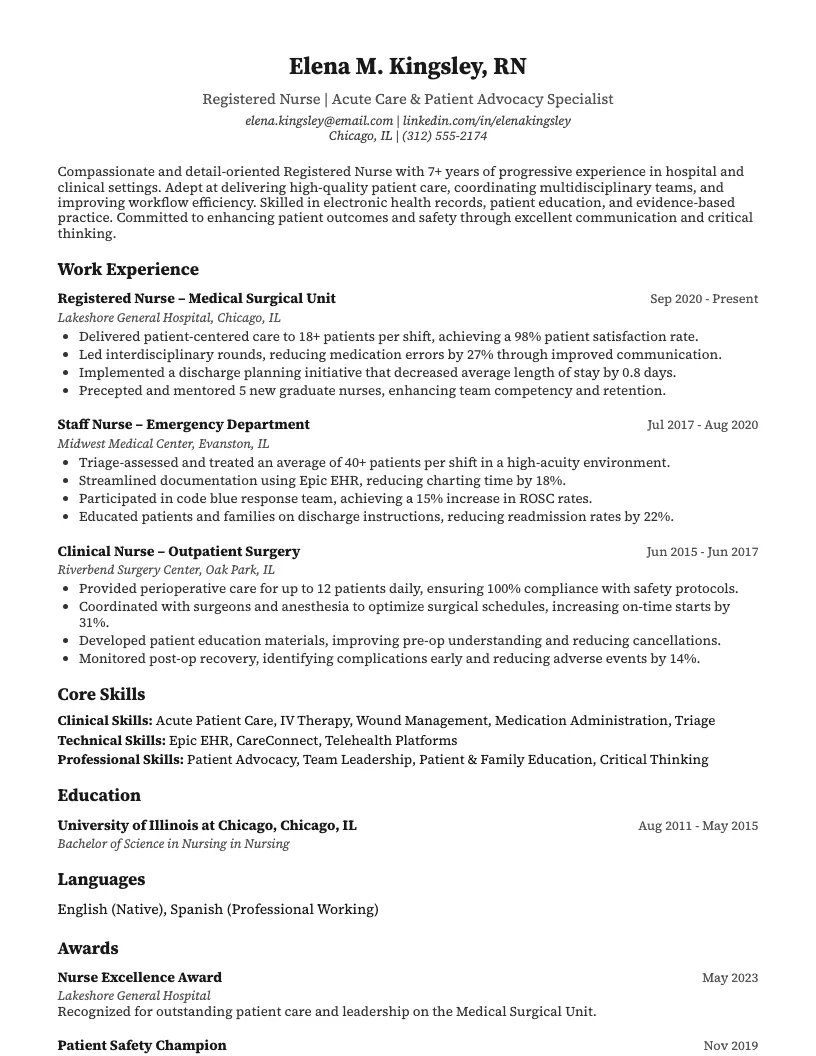
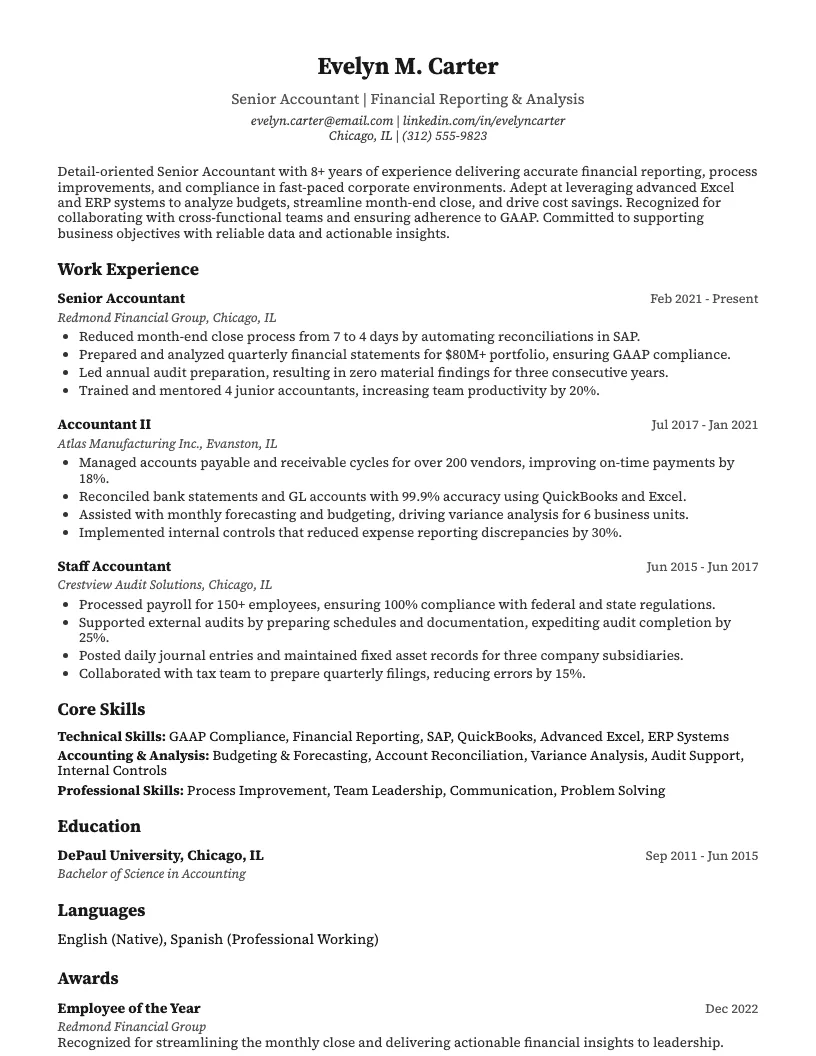
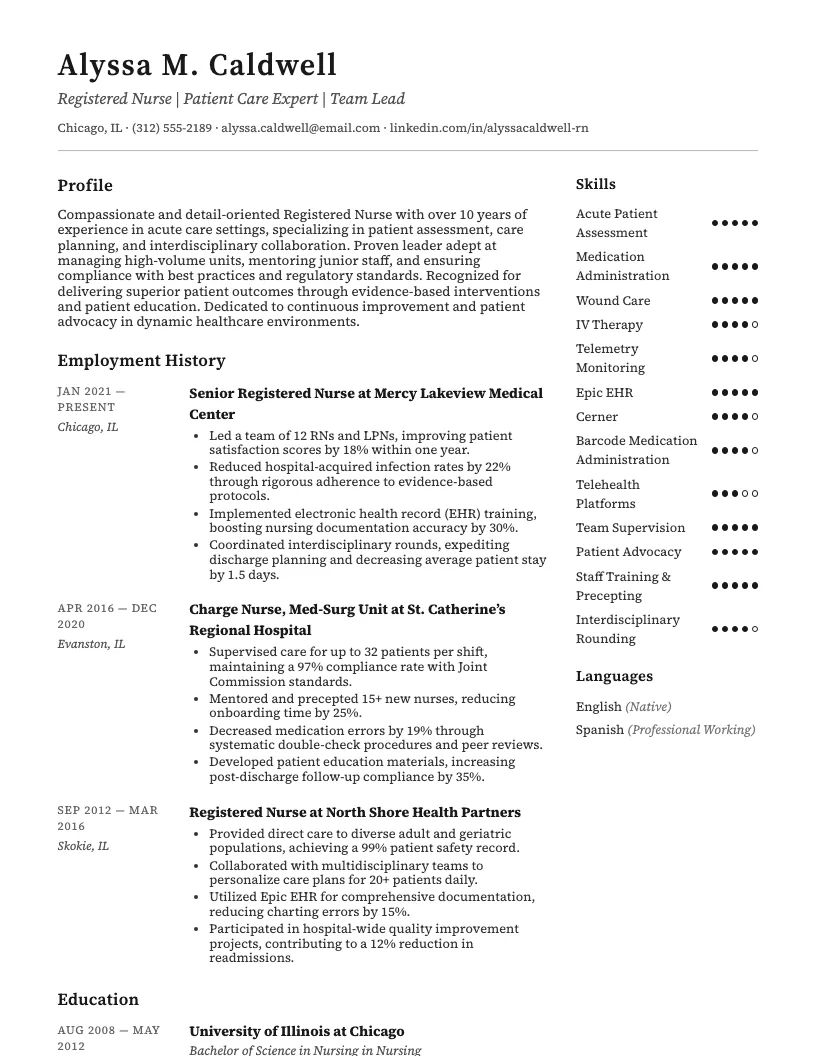
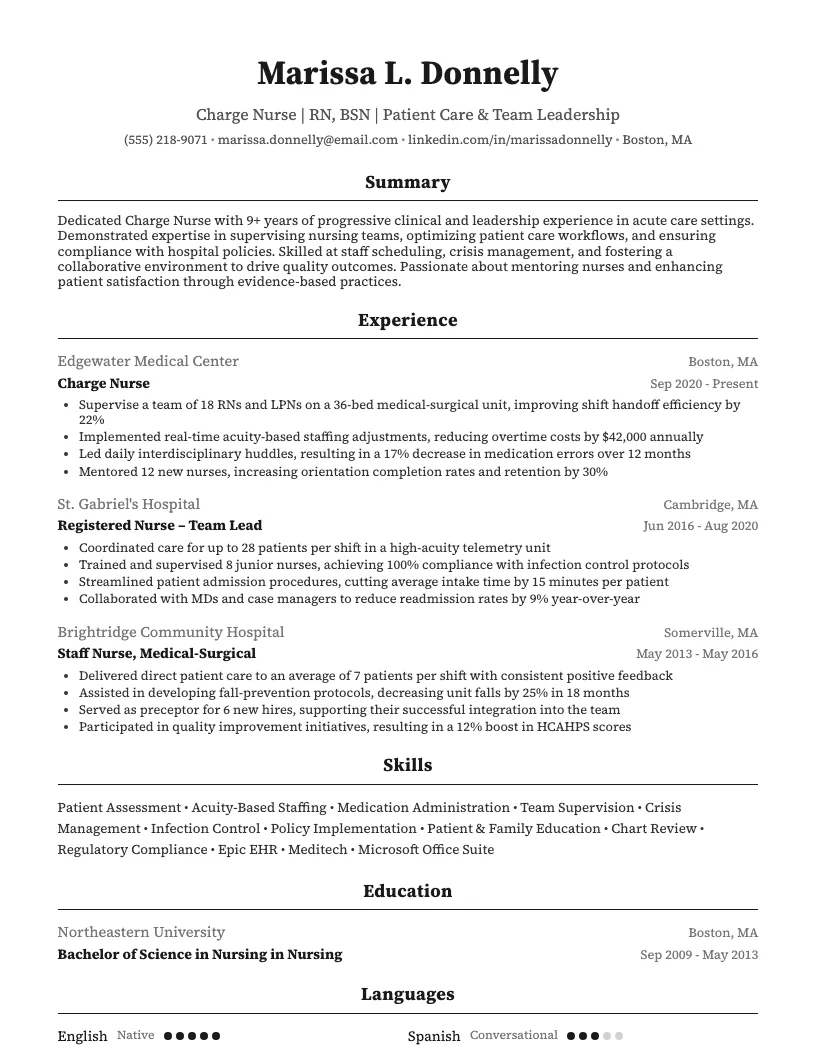
Here’s a realistic example of what a strong experienced nurse resume can look like. I focus on clear, concise sections that highlight both clinical skills and leadership.
You’ll notice I include years of experience, specific patient care stats, and certifications like ACLS or BLS. This helps show exactly what I bring to the table.
I recommend you use bullet points for responsibilities and achievements. Recruiters say this makes it easier to scan-most spend less than 10 seconds on a first look!
Hiring managers often review hundreds of nurse resumes for one job. You want yours to grab attention in just a few seconds.
I notice that small changes-like using the right action verbs and numbers-make a big difference. It shows your impact quickly.
You also need to tweak your resume for each job. Customizing your content helps you match what each employer wants to see.
Finally, avoiding common mistakes keeps your resume professional and clear. It’s easy to overlook errors when you’re busy, but they really matter.
I always start with strong action verbs like led, coordinated, or implemented. This helps hiring managers see I take initiative and get results.
You should highlight your impact using numbers. For example, “Reduced patient wait times by 30%” or “Trained 15 new nurses.” Concrete data makes your achievements stand out.
There are tons of ways to show your value. Focus on things like patient satisfaction scores, team size, or specific improvements you made. This gives your experience real context.
Every hospital or clinic looks for something specific. I always read the job description carefully and match my skills to what the employer wants.
You want your resume to highlight the certifications, procedures, and experience they mention. For example, if they want ICU experience, I make sure that's easy to spot and reference it in my cover letter.
This helps recruiters see you’re a great fit-fast. Customizing your resume for each job takes a little extra time, but it really boosts your interview chances.
Typos and grammar errors can kill your chances fast. I always use a spell checker and read my resume out loud. This simple step catches mistakes every time.
Don’t cram everything onto one page. Experienced nurses usually need two pages. Keep it clean, organized, and easy to scan-hiring managers spend less than 10 seconds on a first read.
I recommend double-checking your contact info. Wrong phone numbers or outdated emails happen more than you think. One small slip, and you might miss an interview.
Everyone’s internship journey looks a bit different. I see all kinds of intern resume examples out there, each tailored for specific industries and roles.
If you’re searching for software engineer intern resume examples, data science intern resume examples, or even marketing intern resume examples, you’re in the right place.
You get a big advantage by comparing real examples. These resumes show what actually works for full stack developer, finance, and software development intern roles.
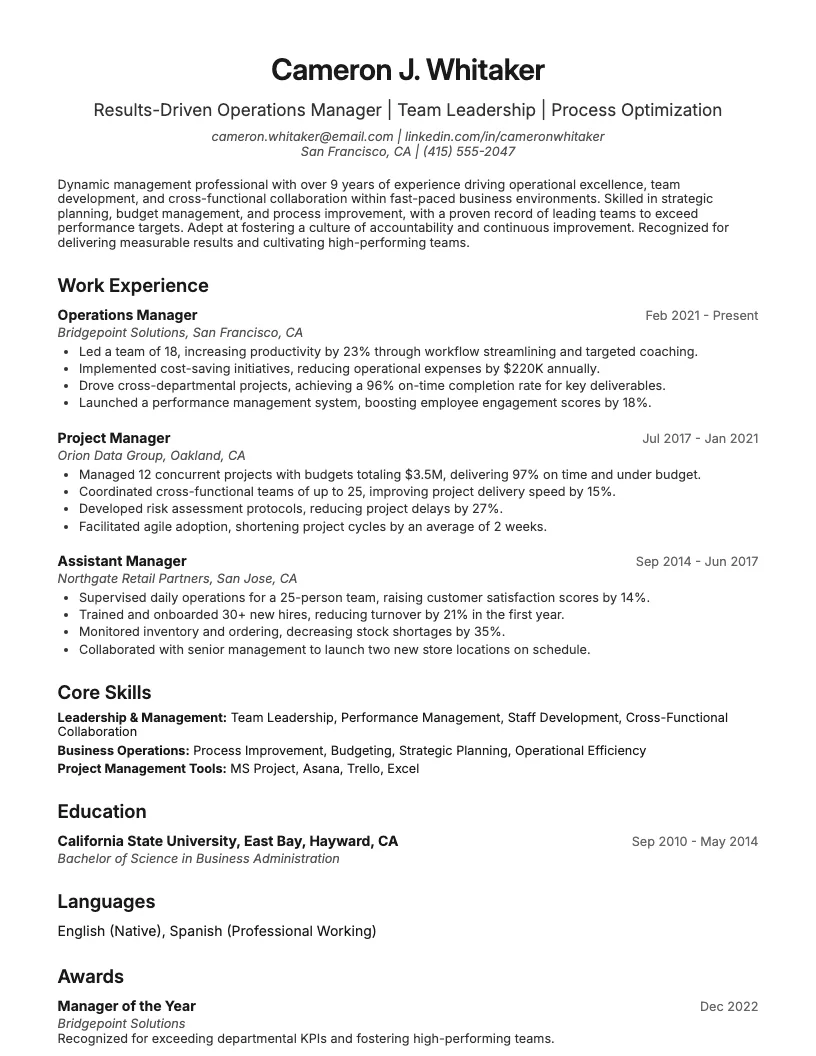
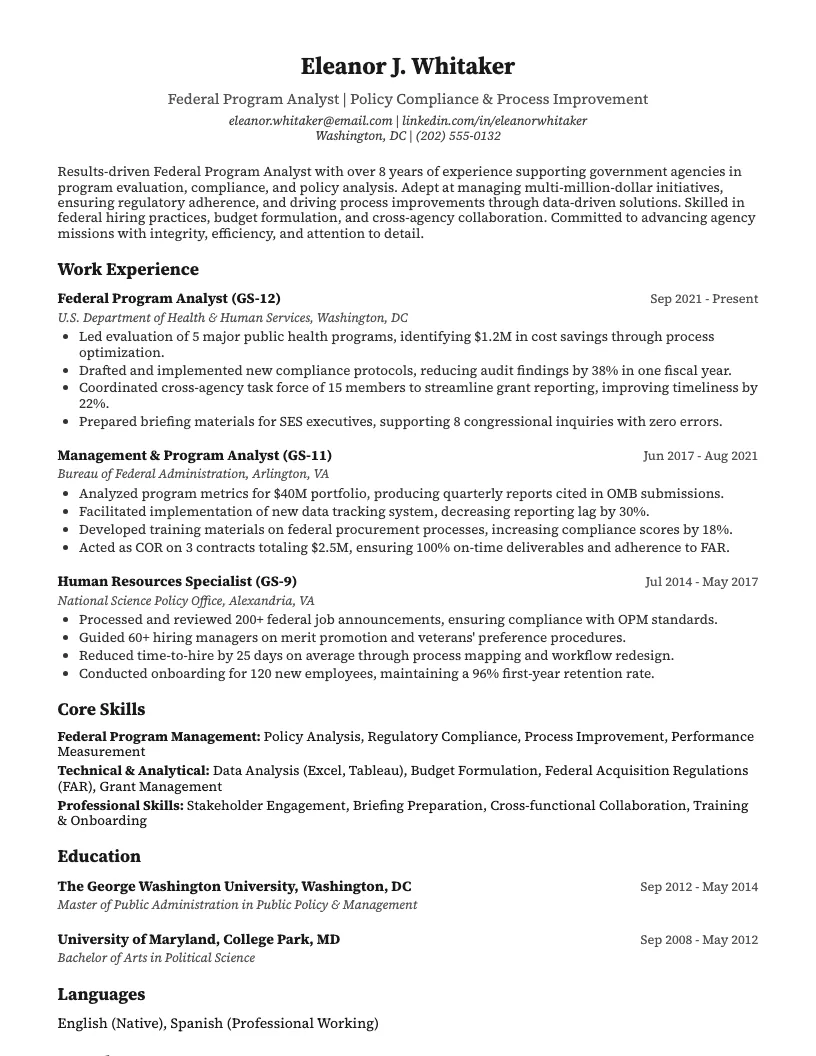
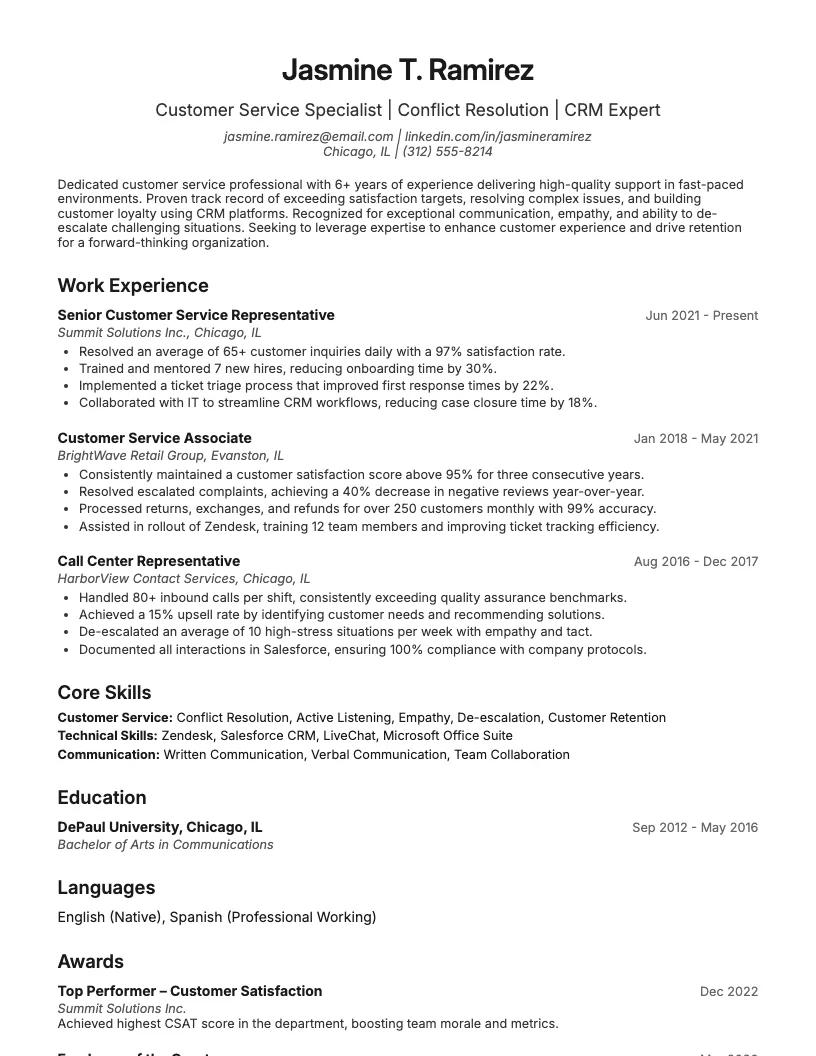
Browse Experienced Nurse resume examples for related roles. Preview any example, open it in the builder, or read its full guide.
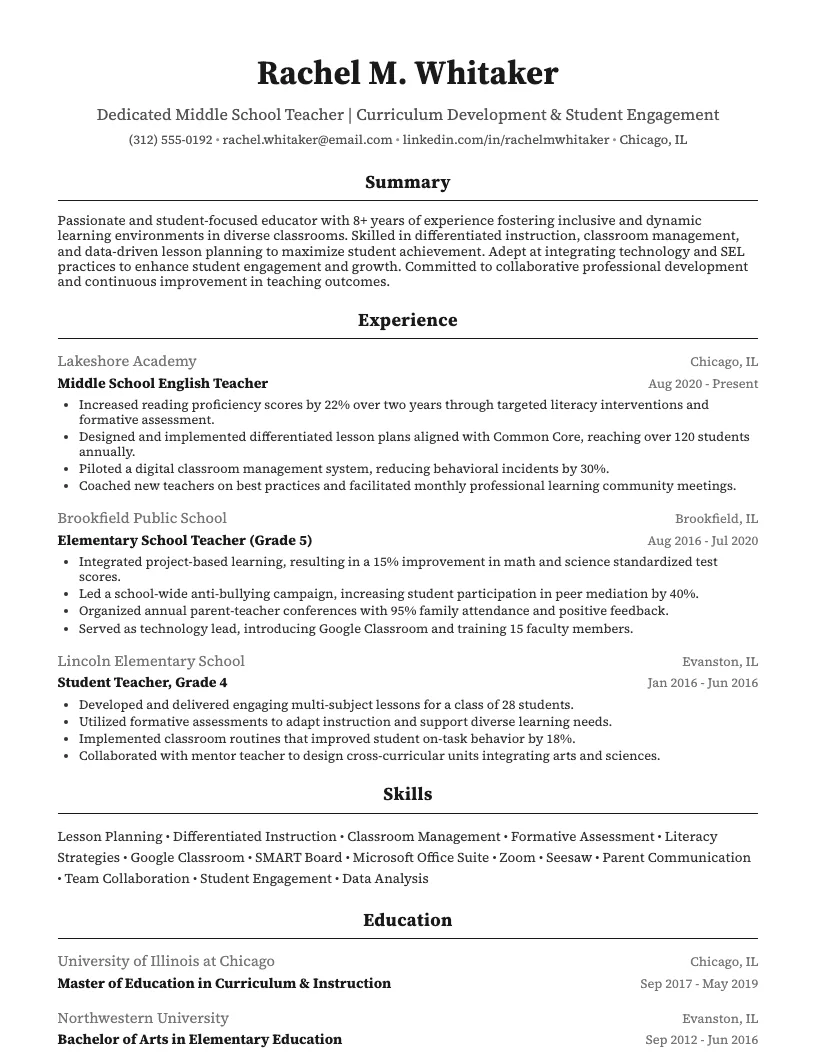
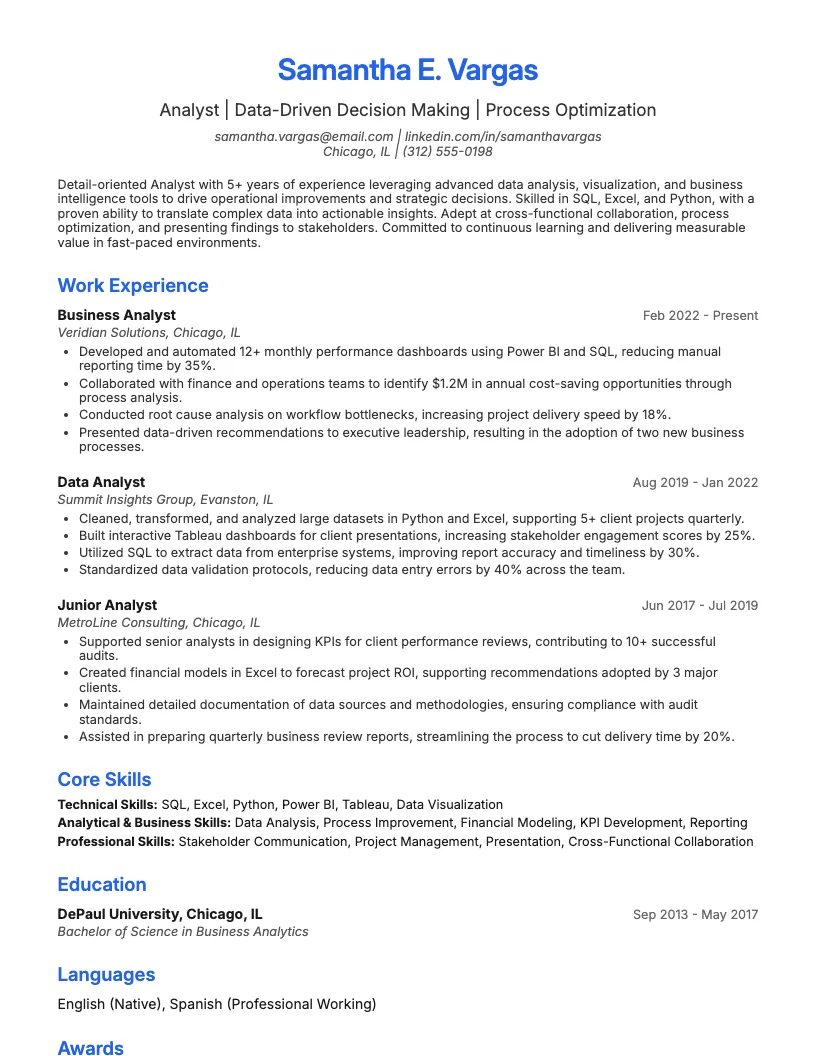
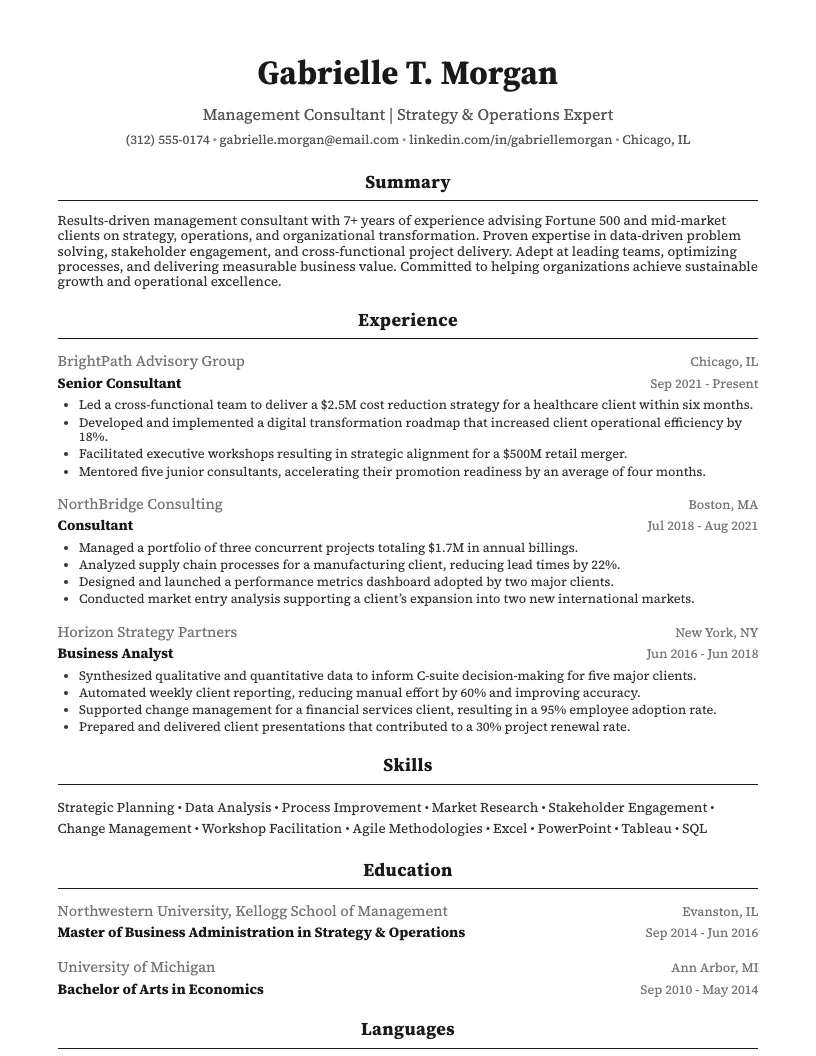
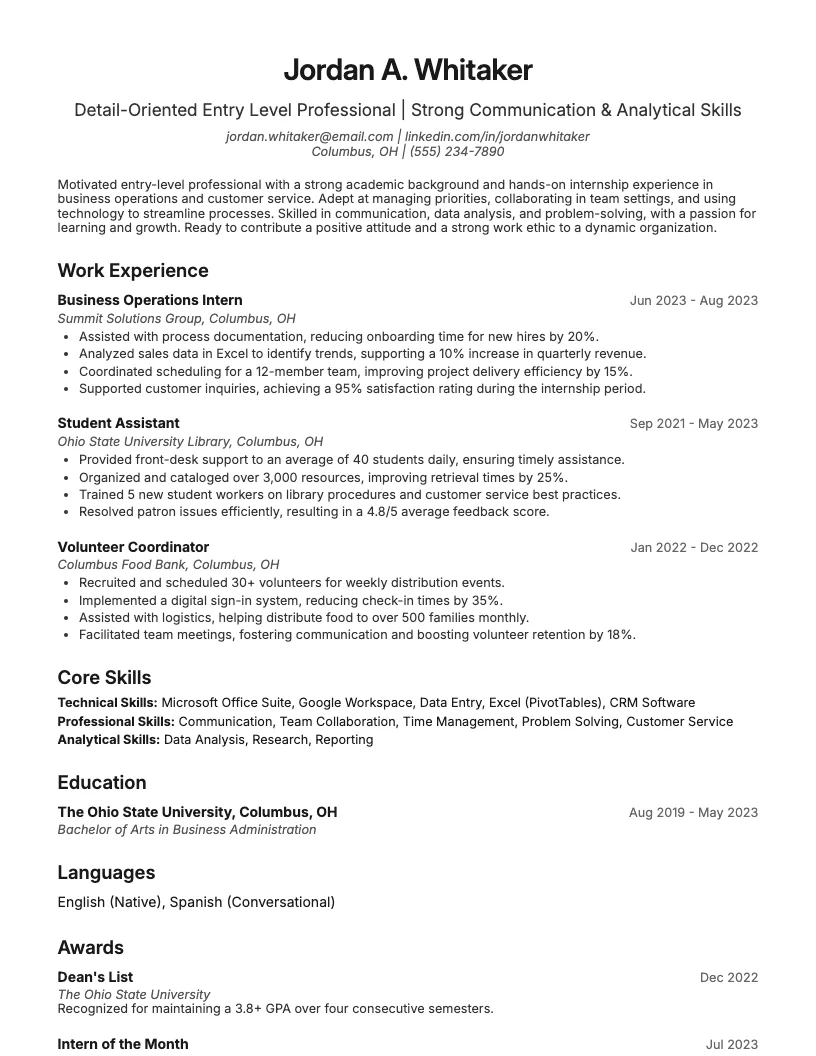
Click to enlarge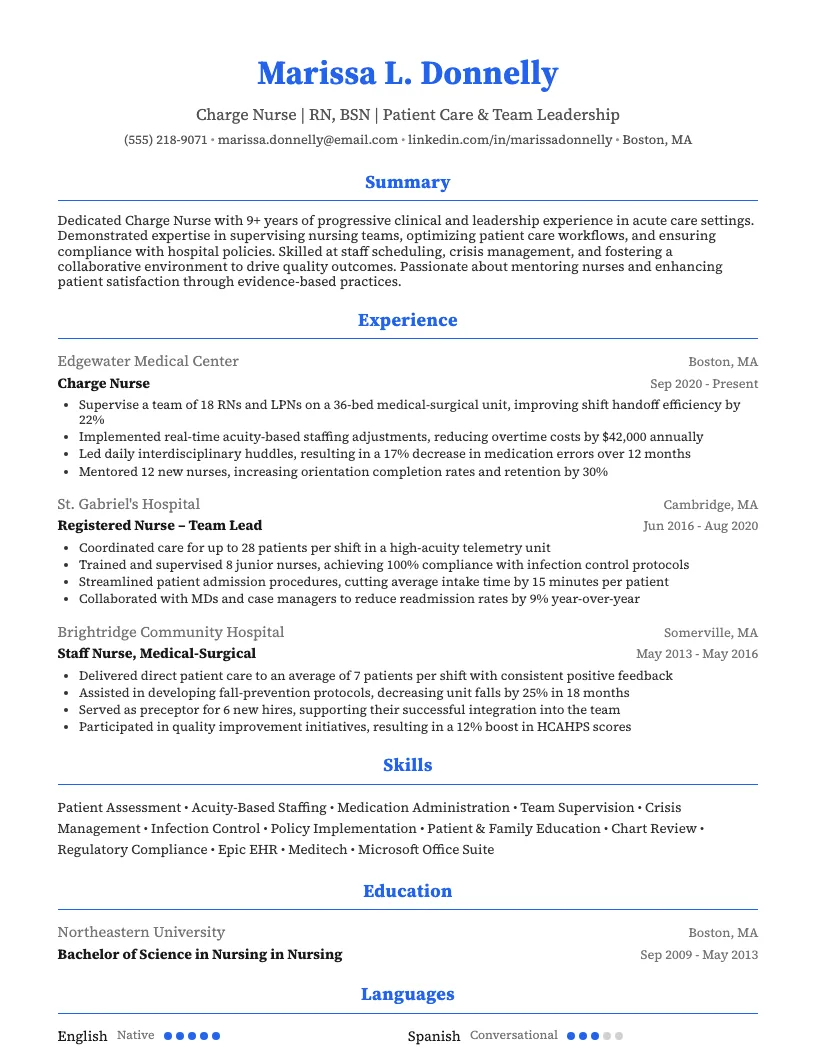 Click to enlarge
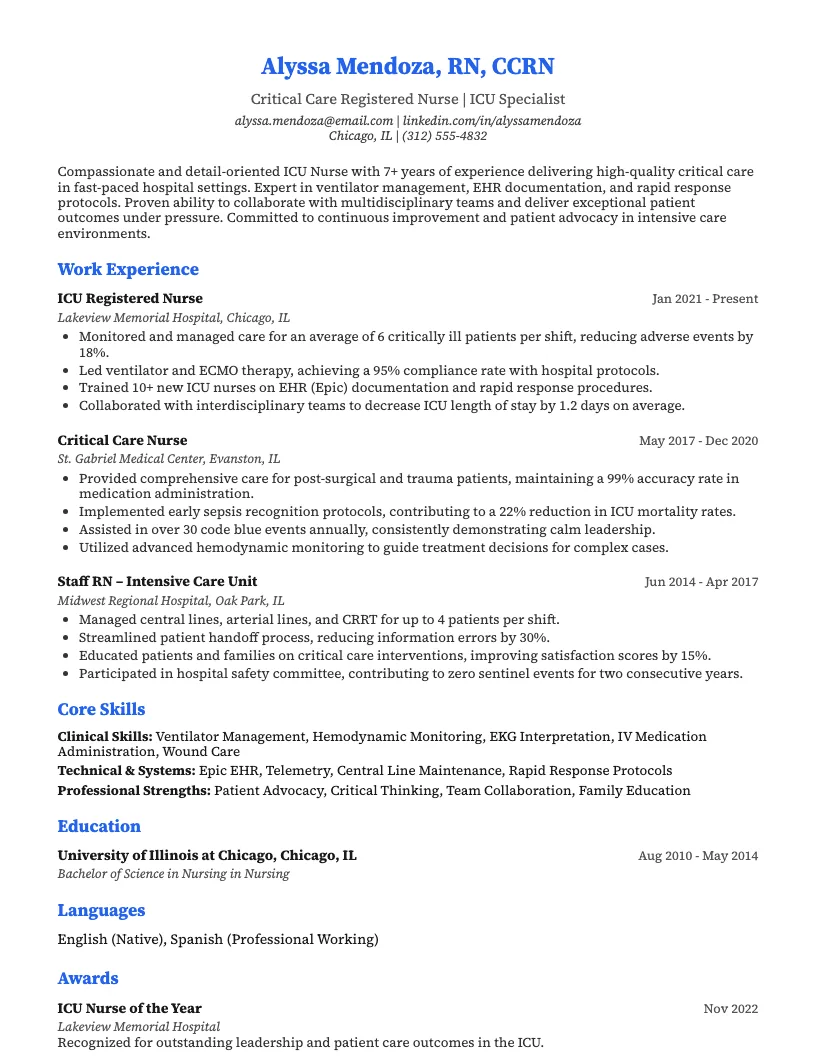 Click to enlarge
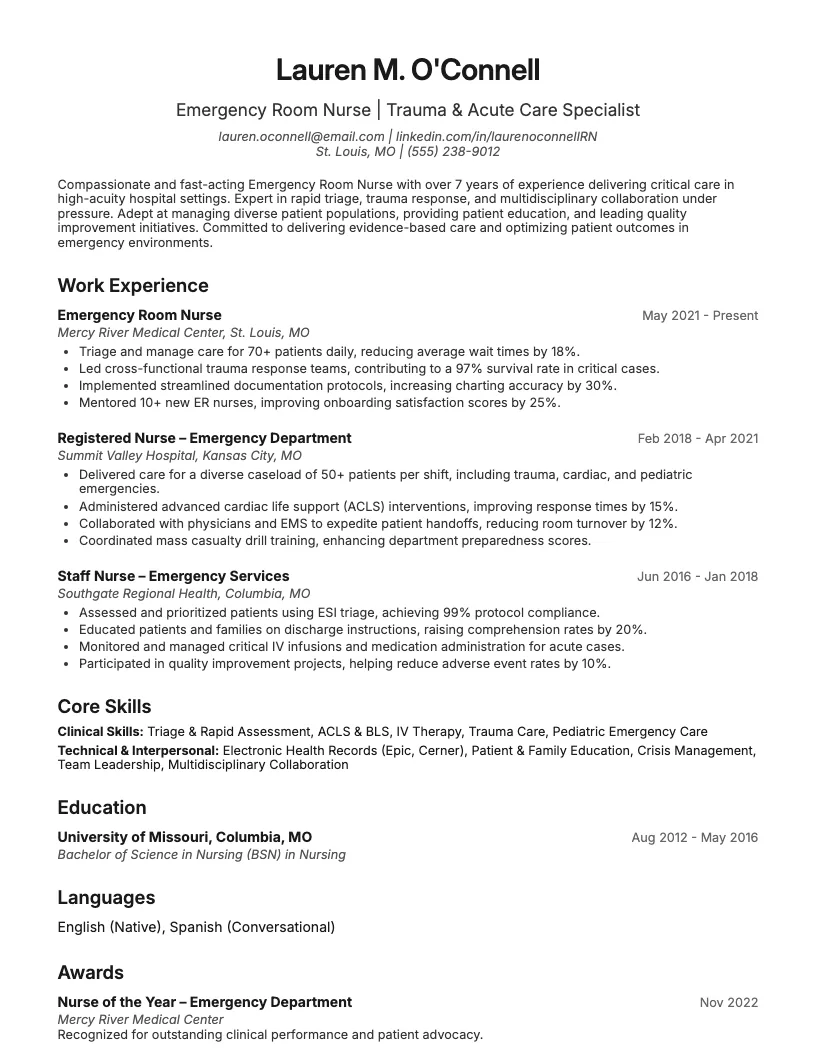 Click to enlarge
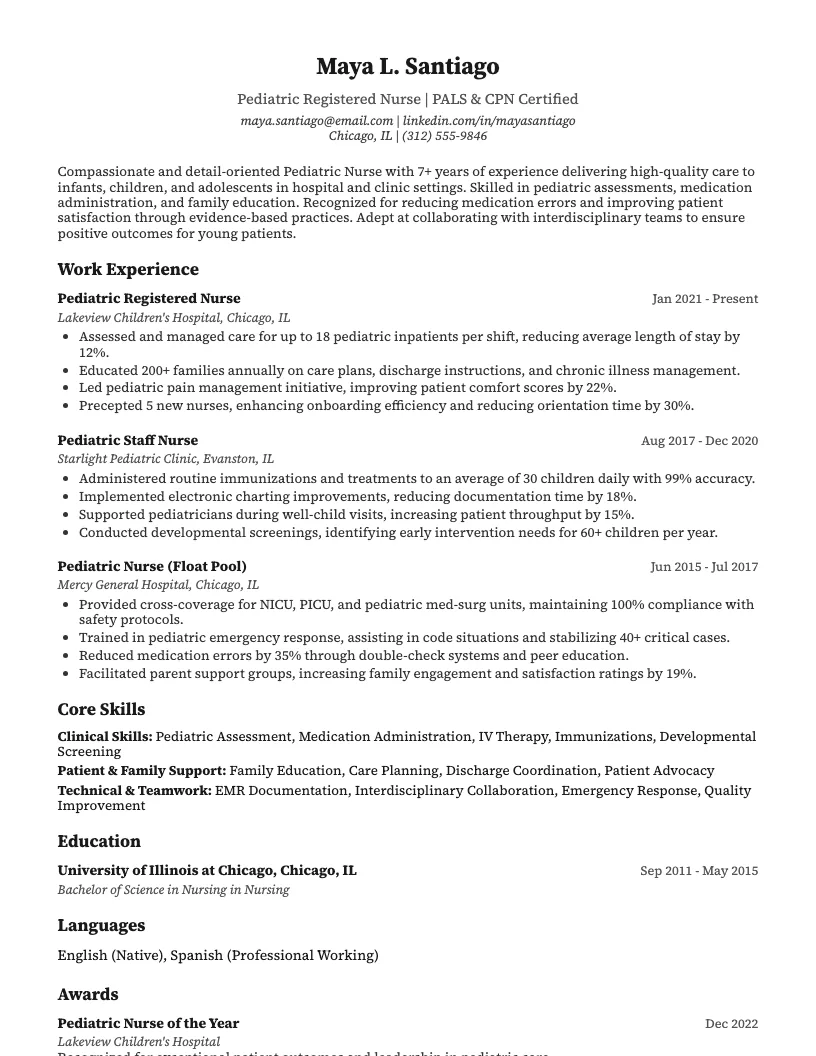 Click to enlarge
 Click to enlarge Click to enlarge Click to enlarge Click to enlarge
 Click to enlarge
Common questions about Experienced Nurse resumes
A experienced nurse resume template is a pre-designed format tailored for nurses with several years of experience. It highlights skills, certifications, and advanced roles. ResumeJudge offers templates that align with industry standards.
Yes, many experienced nurse resume templates are ATS-friendly, ensuring your resume passes automated screening. ResumeJudge templates are optimized for ATS compatibility, helping your application reach recruiters.
Use an experienced nurse resume template when applying for senior nursing roles, such as charge nurse or nurse manager. It's ideal for hospitals, clinics, and specialty facilities. ResumeJudge provides suitable templates for these positions.
Absolutely! You can personalize sections like work history, skills, and certifications. ResumeJudge templates are easy to edit, letting you tailor your resume to fit specific job requirements.
Experienced nurse templates focus on advanced skills, leadership, and certifications, unlike entry-level templates. ResumeJudge highlights your expertise, making your resume stand out for senior roles.
An experienced nurse resume is typically 1-2 pages, depending on your work history and credentials. ResumeJudge formats help you present information concisely while showcasing your expertise.
Yes! ResumeJudge templates can be adapted for ER, ICU, pediatric, or surgical nurses. Just update your specialty, skills, and certifications in the template to reflect your expertise.
Definitely. Most are designed to highlight certifications like ACLS, BLS, and specialty credentials. ResumeJudge makes it easy to showcase your qualifications prominently.
ResumeJudge templates use clean layouts and industry keywords, making your experience and skills stand out to both ATS and hiring managers in healthcare settings.
Yes, ResumeJudge templates are versatile and work for applications to hospitals, private clinics, nursing homes, and specialty practices. Customize details to match your target employer.
Explore more professional resume examples to inspire your job search
Use our AI-powered resume builder to create a professional, ATS-friendly resume in minutes.
Free to use • No credit card required