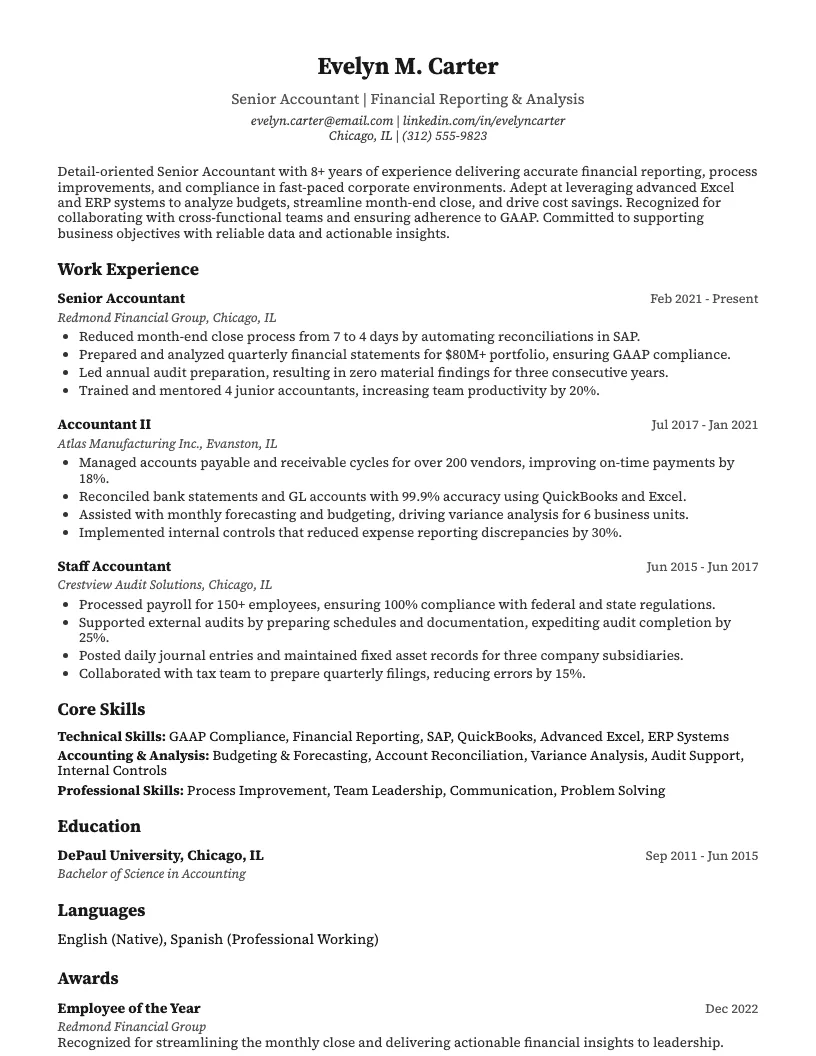
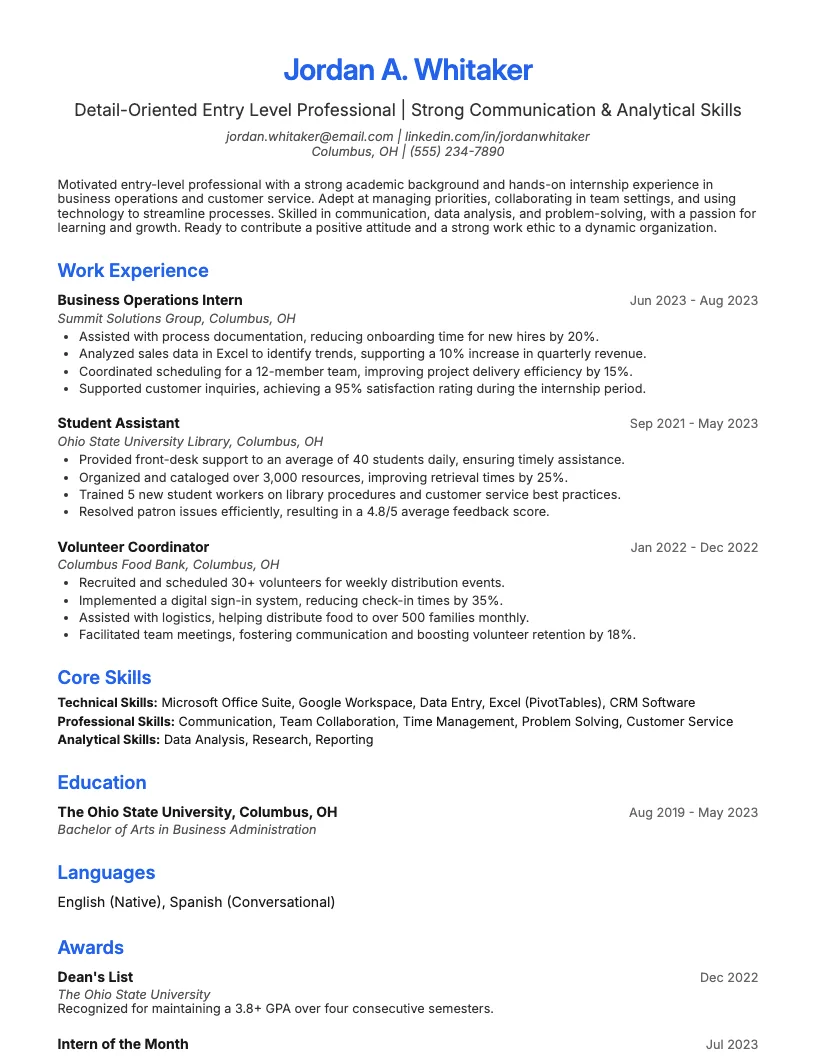
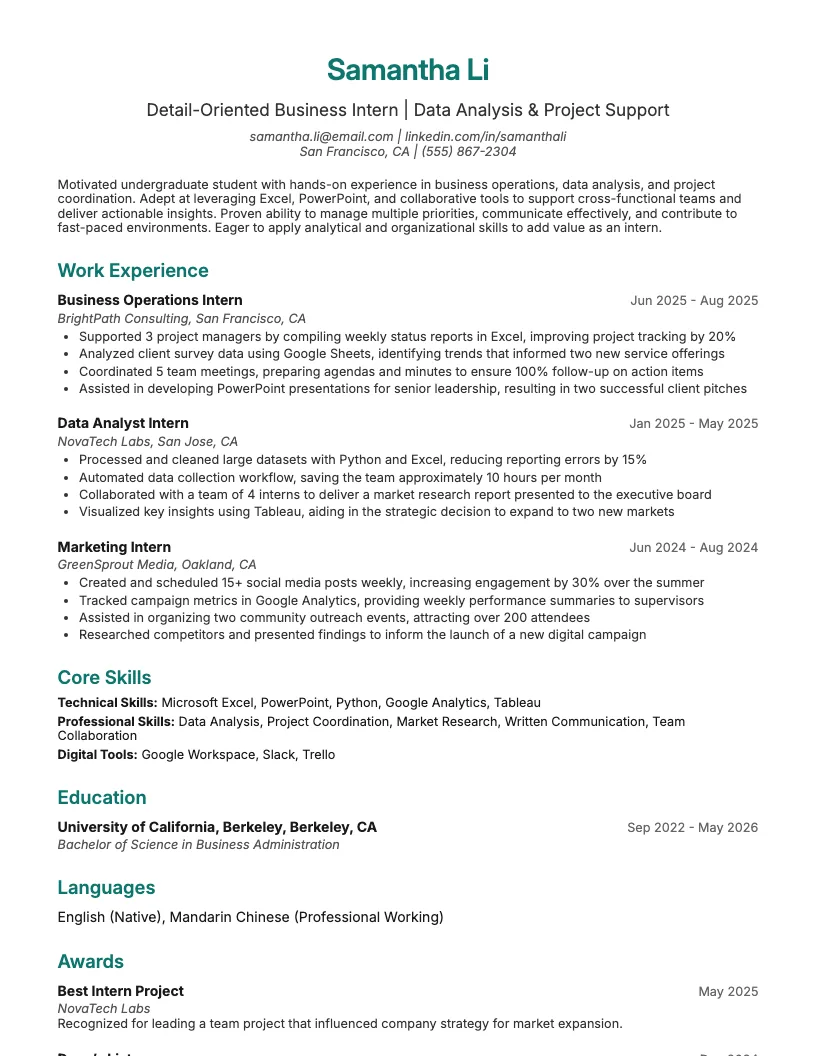
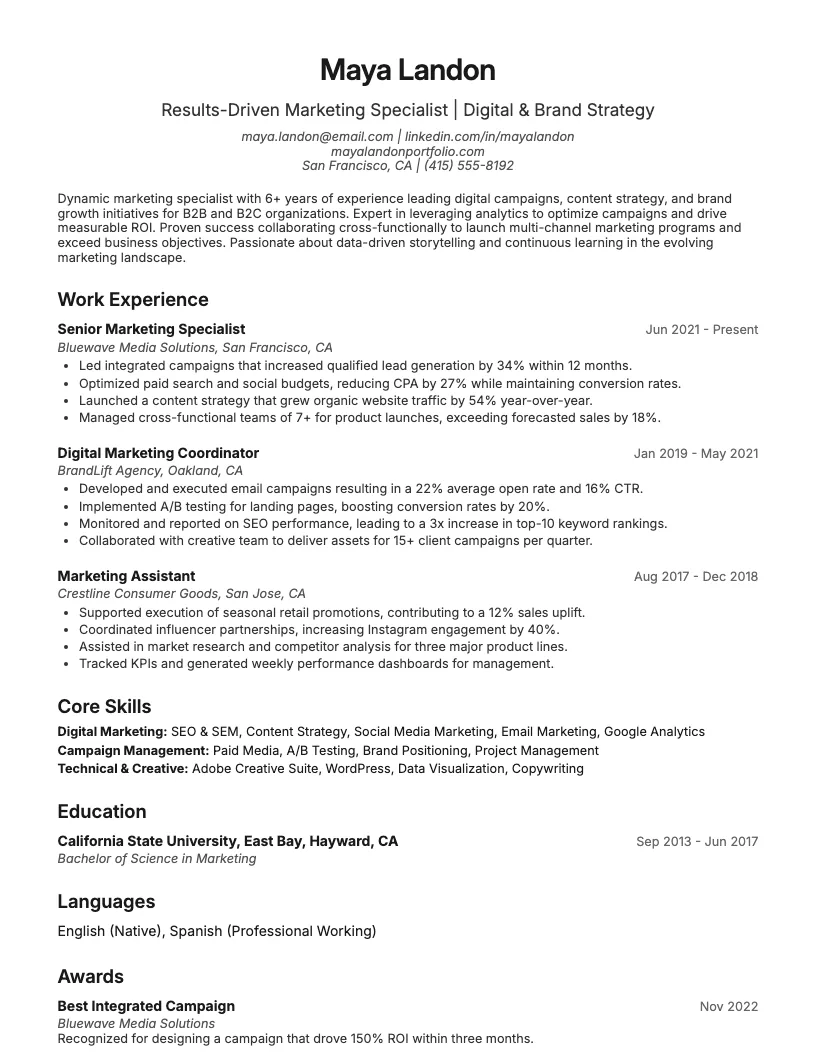
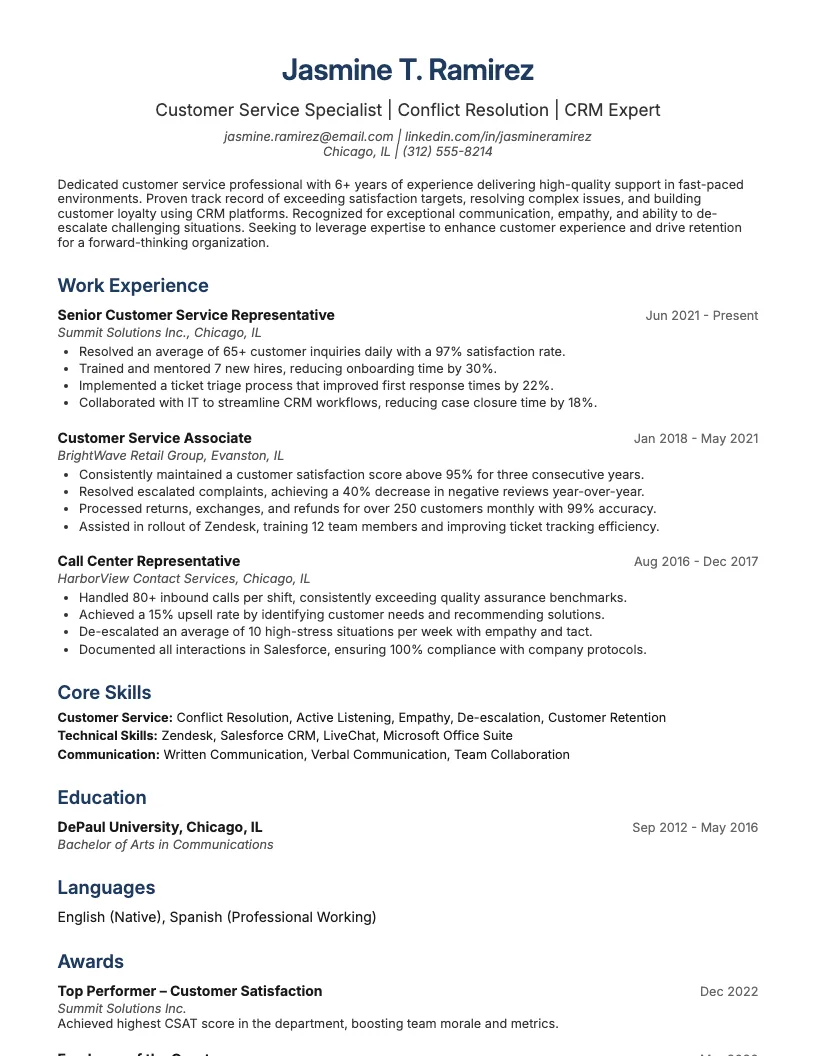
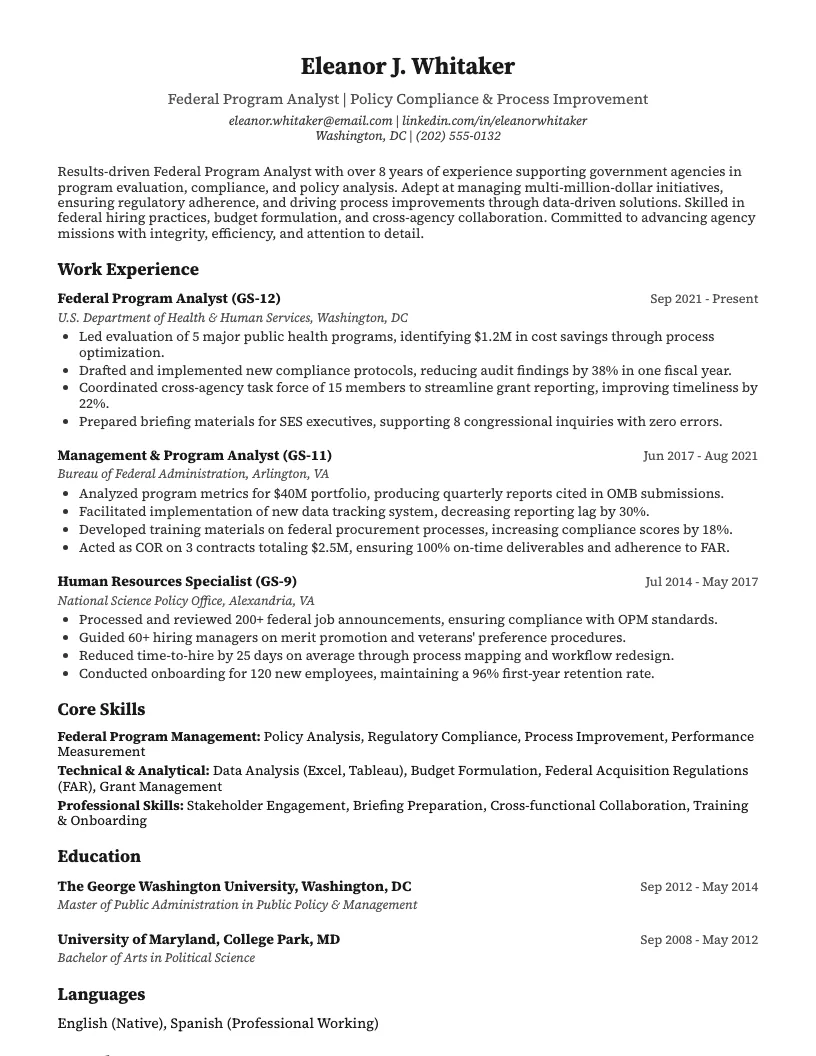
Senior Credit Analyst Resume Example
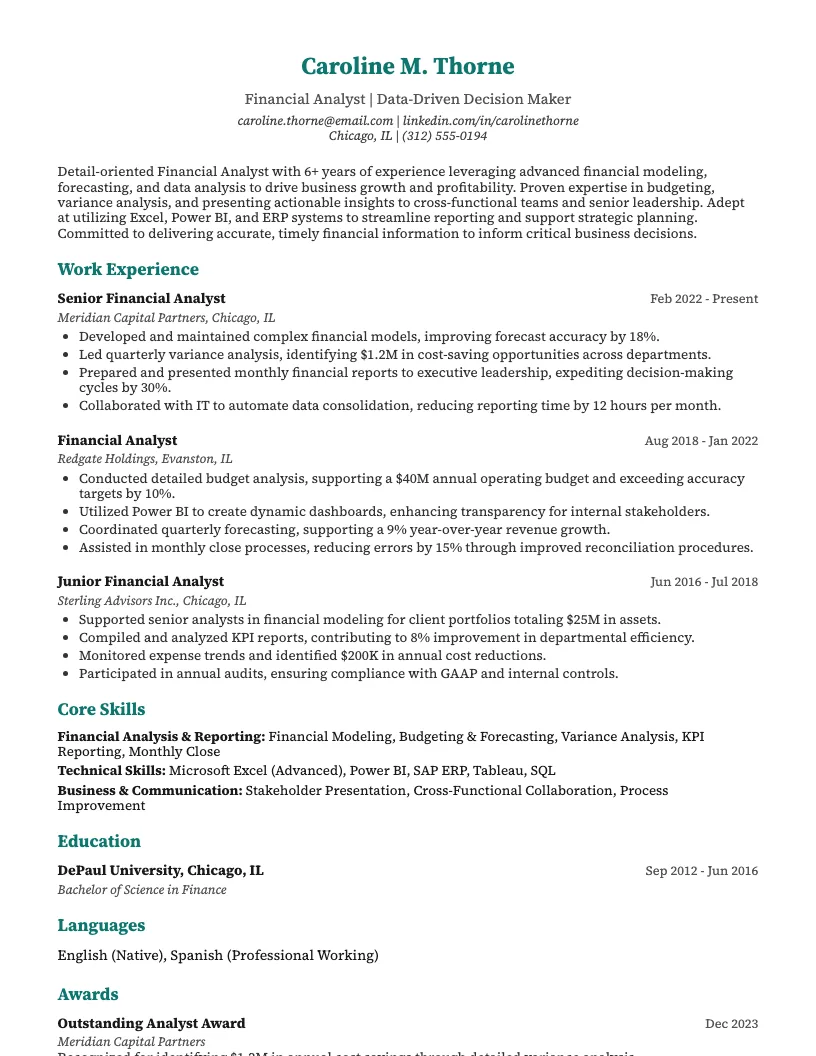
See full guide on Senior Credit Analyst resumes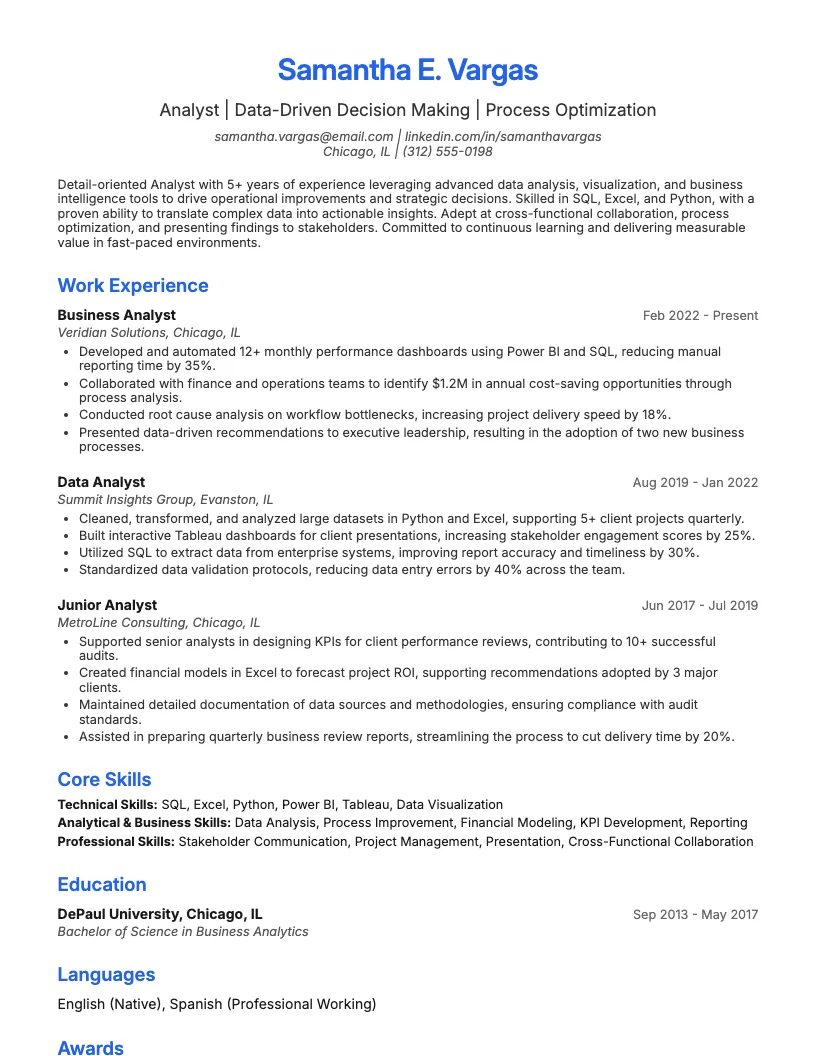 Click to enlarge
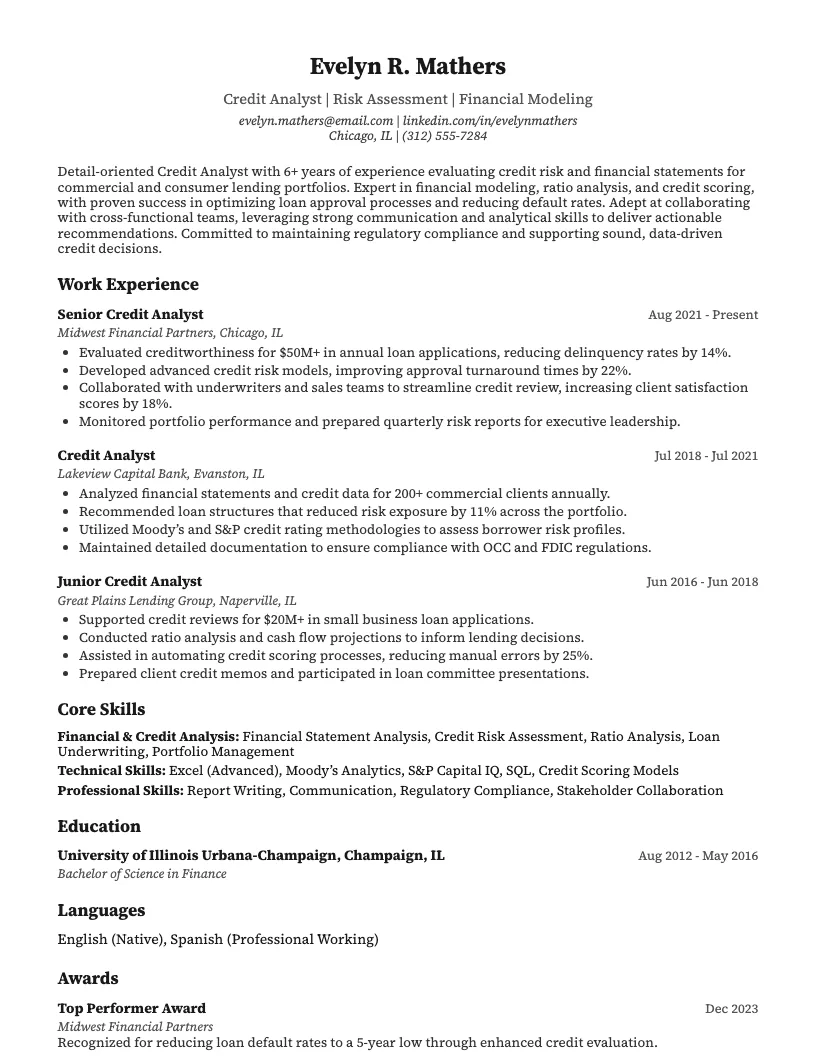 Click to preview

Get inspired by 62+ professional Credit Analyst resume examples, each written by career experts and optimized to pass ATS scans. Pick a proven template, tailor it to your role, and download a polished resume in minutes.
Pick the specialization closest to your target role and start from a proven resume example.

If you want your credit analyst resume to stand out, focus on structure and clarity. Hiring managers usually scan resumes for less than 7 seconds.
Keep your resume under two pages and stick to the reverse-chronological format. Make your contact info and LinkedIn profile easy to find.
Every section should show your impact with clear results. Next, I’ll walk you through which sections to include and what recruiters really want to see.
A standout credit analyst resume always covers the basics-contact info, a solid summary, detailed work experience, skills, and your education. These are non-negotiable.
I always start with my most recent job in the experience section. This shows my career progress and makes it easy for recruiters to spot relevant roles fast.
You want to highlight certifications, like CFA Level I or II, and include any quantitative skills or software expertise. This helps you stand out from other candidates.
Recruiters zero in on quantifiable credit analysis experience. You want to show off how you analyze financial statements, spot risk, and use data to make smart lending decisions.
They look for technical know-how. Proficiency in Excel, financial modeling, or even Python can set you apart. If you know industry regulations, highlight that-it's a big plus.
Strong communication skills matter. You should explain complex credit issues to both clients and teams. Recruiters want to see clear, concise writing and confident presentation skills.
That’s really what makes a credit analyst resume stand out. Nail these points, and you’re giving yourself the best shot.
The first few lines of your resume matter. Recruiters spend less than 7 seconds glancing at the top section, so you want it to stand out.
Your summary or objective sets the tone. It highlights your experience, skills, and goals in one tight spot. Getting this part right makes a real difference.
I find that a good summary or objective, tailored to the job, can boost your chances. Let’s look at some examples that actually work.
A strong summary shows your experience, technical skills, and key wins. I like to highlight things like reducing credit risks by 20% or managing portfolios worth $5M+.
For an objective, focus on what you want and what you offer. You might say, "I aim to leverage 4 years in financial analysis to drive smart credit decisions at XYZ Bank."
You don’t have to sound robotic-make it personal and clear. Use job-specific keywords like risk assessment, financial modeling, or loan underwriting to catch recruiters’ attention.
Hiring managers want to see clear results and specific achievements. I always focus on the impact I make, not just my daily tasks.
You can stand out by quantifying your work and showing how you add value. Even if you lack direct experience, there are ways to highlight relevant skills.
If I want my resume to stand out, I always put numbers to my achievements. This helps hiring managers see my real impact at a glance.
You can start by mentioning how many credit assessments you handle each month. Tracking the total loan volume you manage or underwrite is another strong metric.
There are other ways to show value too. I use percentages for things like reducing default rates or improving approval times. Specific stats make your experience tangible and credible.
If I don't have direct credit analyst experience, I focus on transferable skills. Analytical abilities, attention to detail, and Excel know-how all translate well into this field.
You can highlight relevant coursework, volunteer work, or side projects, and reference a cover letter for inspiration on how to present these experiences. For example, analyzing budget reports or leading group financial projects shows initiative and quantitative skills.
There are resume formats that help, too. A functional or hybrid layout lets you put skills and achievements front and center, instead of just listing past job titles.
Your skills section grabs attention fast. Recruiters scan for both technical know-how and strong people skills.
If you want to stand out, highlight the specific abilities that match the job description. Keep your list focused and relevant.
Hiring managers look for credit analysts with relevant degrees and certifications. Your education and credentials help show you’ve got the skills they need.
I always focus on including degrees, graduation dates, and standout certifications. Only list what actually relates to credit analysis. If something boosts your chances, it belongs on your resume.
I always see the Chartered Financial Analyst (CFA) as a top pick. Over 190,000 professionals hold this. It shows deep knowledge of financial analysis and credit risk.
The Financial Risk Manager (FRM) certification is another strong option. It’s globally recognized and focuses on risk assessment. Employers value this credential for credit analyst roles.
You might also consider Energy Risk Professional (ERP) if you’re in energy finance. This niche certification helps you stand out in specialized industries.
Only add certifications that actually apply to the job you want. This helps recruiters see your focused expertise, not just a list of random achievements.
If you want your credit analyst resume to catch attention, extra sections help. Recruiters look for more than just work history and education.
You can include projects, awards, languages, or interests. These added details often show off skills and personality that basic sections miss.
Landing a credit analyst job takes more than listing skills. Your experience level shapes what recruiters want to see on your resume.
I show you resume examples for new grads, mid-career pros, and senior analysts. Each one highlights the key details hiring managers look for at every stage.
If you’re checking out financial analyst resume examples, you’re probably aiming to stand out in a crowded field. You want your skills and impact front and center.
I always recommend highlighting your analytical results, like cost savings or revenue growth. Recruiters love to see hard numbers-think “reduced bad debt by 15%” or “analyzed portfolios worth $5M.”
Tailor your resume to the specific job, and don’t forget to include a cover letter that highlights your most relevant experience. Use keywords from the job description. This helps your application pass through applicant tracking systems and get noticed by real people.
Starting out as a credit analyst? Entry level financial analyst resume examples show how to highlight internships, coursework, or volunteer work. This helps when you don’t have direct experience yet.
You want to focus on technical skills, like Excel and financial modeling. I also recommend mentioning any achievements with numbers-think “analyzed 20+ accounts” or “reduced reporting errors by 15%.”
Don’t forget to include soft skills. Employers look for strong communication, attention to detail, and teamwork, even in entry-level roles. Show how you’ve used these skills in school or part-time jobs.
If you’re looking for senior financial analyst resume examples, you probably have at least 5 years of experience and lead complex projects. Highlight that expertise and your leadership impact.
I focus on metrics-showing how I improved forecasting accuracy by 20% or helped cut costs by $500K. Recruiters want numbers, not just buzzwords.
You should also list the software and modeling tools you use daily. Employers care if you’re fluent in SAP, SQL, or Power BI. That credibility helps your resume stand out.
That wraps up my breakdown of credit analyst resume examples by experience level. Tailor your resume to your career stage, and you’ll get more interviews.
A strong credit analyst resume highlights both technical skills and real results. You want to show hiring managers how you add value right away.
Tailor your resume for each job. Use relevant experience from internships, contract work, or similar roles, especially if you're just starting out.
Focus on results and skills that match the requirements. The right structure and details make you stand out to recruiters.
Ready to try building your own credit analyst resume?
Start by picking a resume format that highlights your strengths. I usually recommend reverse-chronological if you’ve got solid experience, but functional works if you’re pivoting careers.
Focus on concrete achievements, not just tasks. For example, “reduced loan default rates by 15%” stands out way more than “reviewed loan applications.” Numbers matter.
Always match your skills and keywords to each job posting, and make sure your application includes a tailored cover letter. This helps your resume get noticed by both recruiters and applicant tracking systems. Small tweaks make a big difference!
Browse Credit Analyst resume examples for related roles. Preview any example, open it in the builder, or read its full guide.
Click to enlarge Click to enlarge Click to enlarge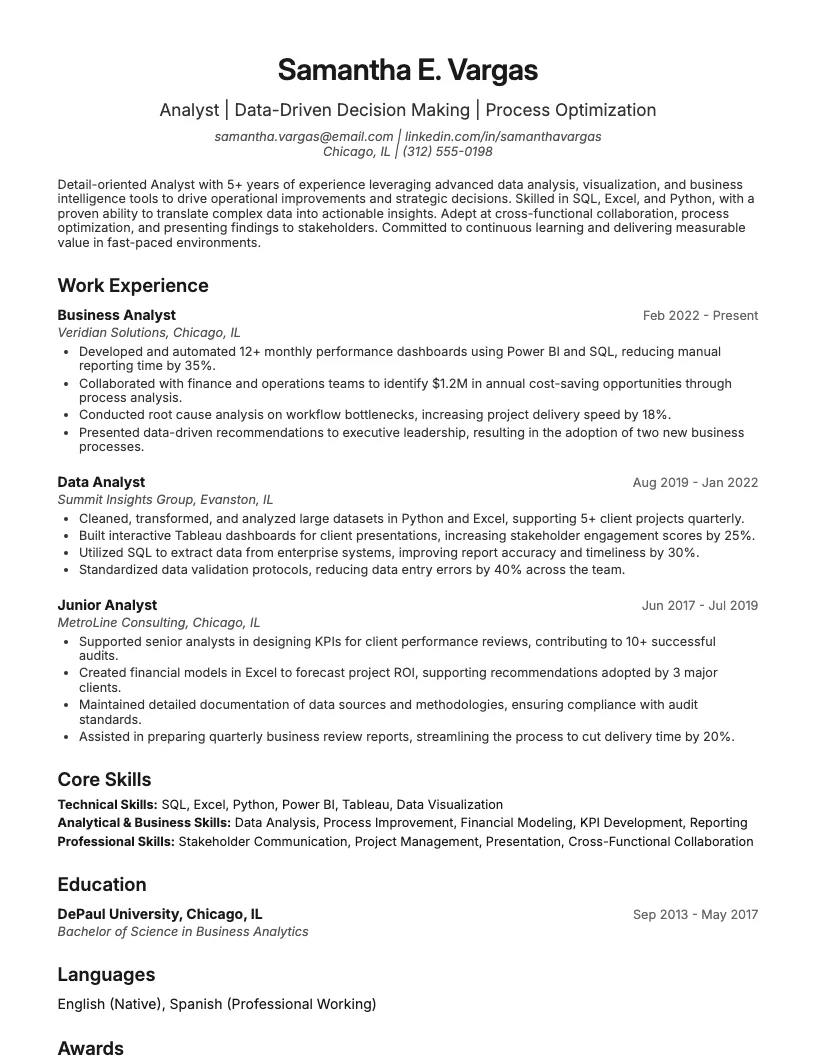 Click to enlarge
 Click to enlarge Click to enlarge Click to enlarge Click to enlarge Click to enlarge
Common questions about Credit Analyst resumes
A credit analyst resume template is a pre-designed layout tailored for professionals assessing credit risk. It highlights analytical skills, financial expertise, and relevant experience, making your application stand out. ResumeJudge offers optimized templates for this role.
Many credit analyst resume templates, like those from ResumeJudge, are ATS-friendly. This means they use clean formatting and relevant keywords, helping your resume get noticed by automated hiring systems.
Use a credit analyst resume template when applying to banks, financial institutions, or credit agencies. It's ideal for roles in commercial banking, corporate finance, or risk analysis. ResumeJudge templates make tailoring easy for each job.
Yes, you can fully customize a credit analyst resume template by editing sections, adding skills, or adjusting formatting. ResumeJudge makes it simple to personalize your resume to fit your unique experience and target job.
Credit analyst templates focus on financial analysis, risk assessment, and quantitative skills. Other templates may highlight different skills based on the profession. ResumeJudge ensures each template suits the specific role.
A credit analyst resume should typically be one page, especially for early-career professionals, or two pages for those with extensive experience. ResumeJudge templates help you organize key information concisely.
Absolutely! ResumeJudge offers credit analyst templates tailored for both entry-level and experienced applicants, helping you highlight internships, education, and transferable skills effectively.
You can adapt a credit analyst resume template for related finance roles like loan officer or risk analyst. Just customize the skills and experiences section using ResumeJudge’s flexible templates.
A good credit analyst resume should include a summary, skills, work experience, education, and certifications. ResumeJudge templates ensure all essential sections are easy to fill in and ATS-ready.
Using a professional, ATS-friendly template from ResumeJudge increases your chances of passing initial screenings, letting recruiters quickly see your relevant skills and experience. This can help speed up the interview process.
Explore more professional resume examples to inspire your job search
Use our AI-powered resume builder to create a professional, ATS-friendly resume in minutes.
Free to use • No credit card required