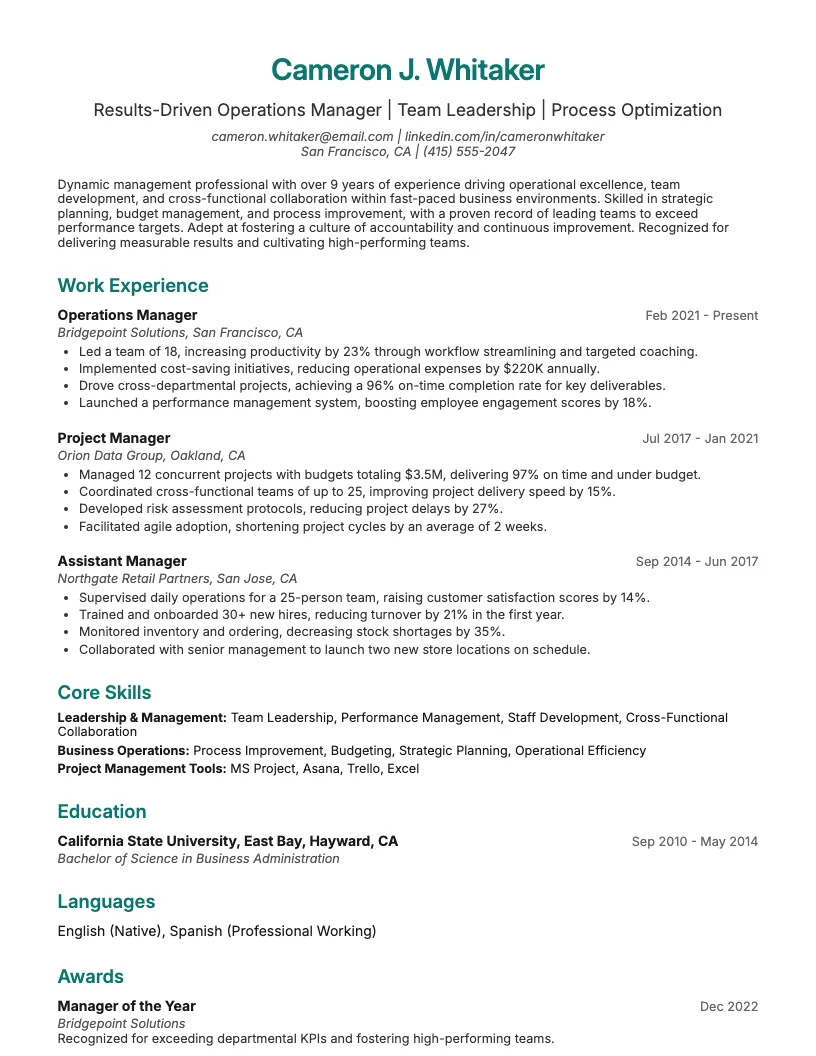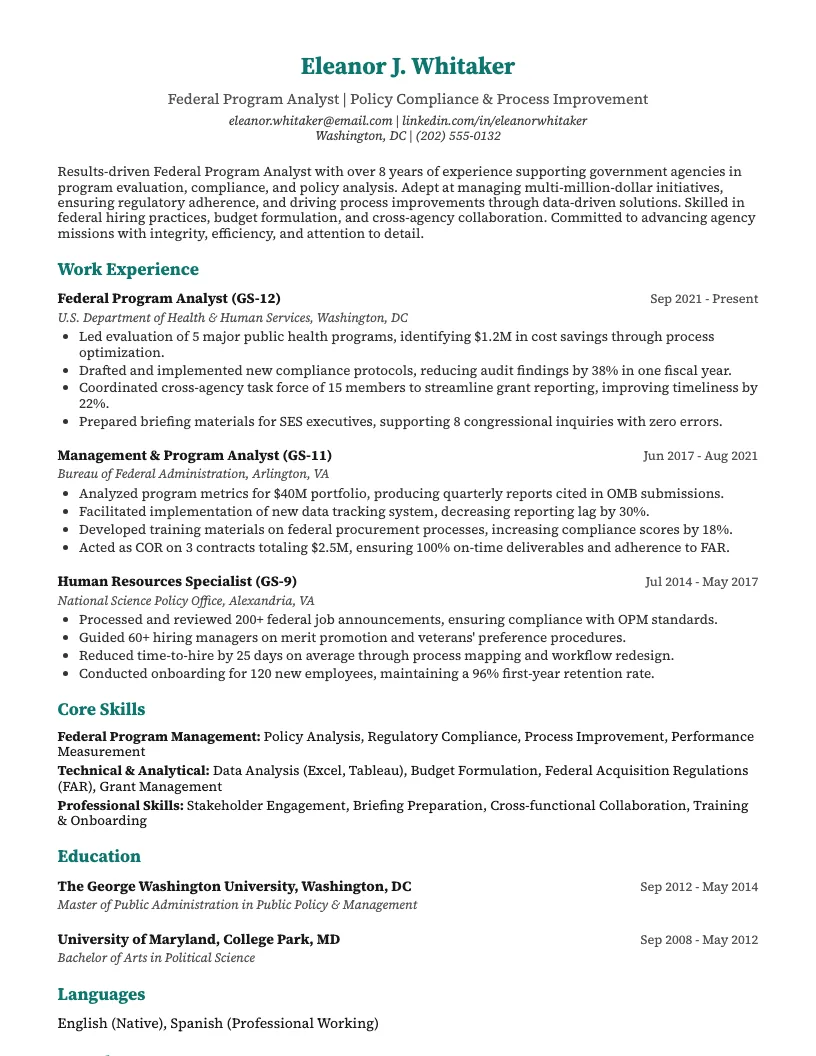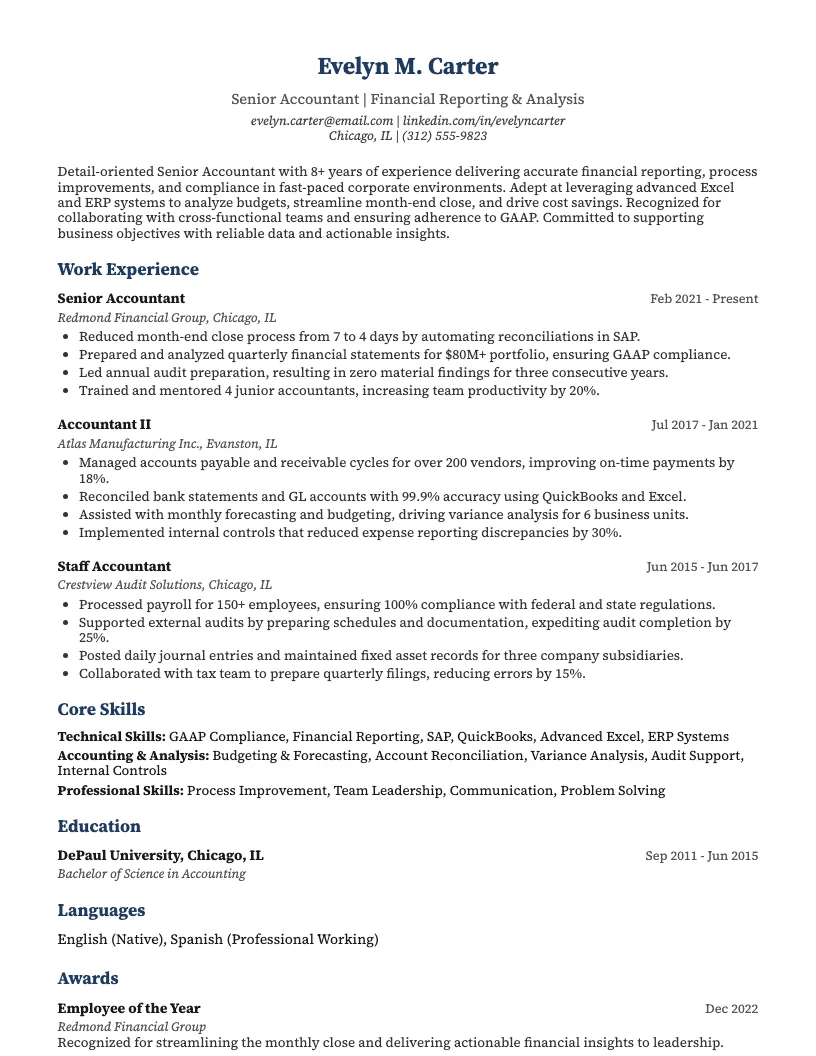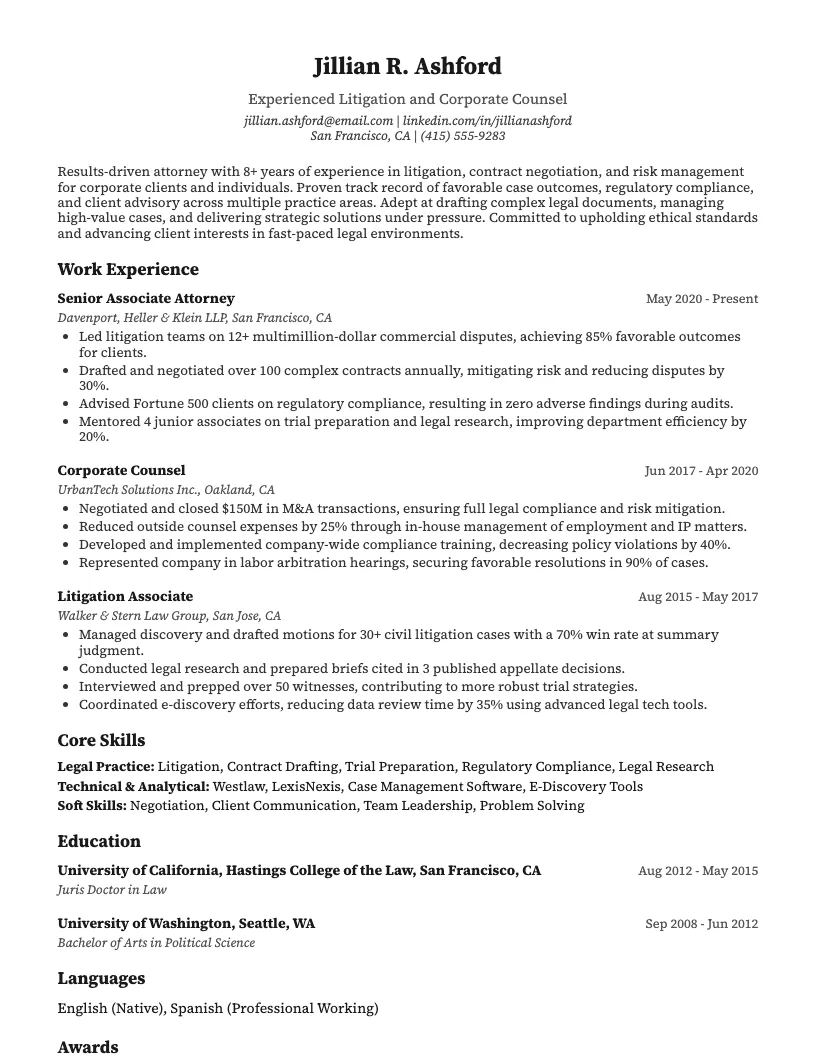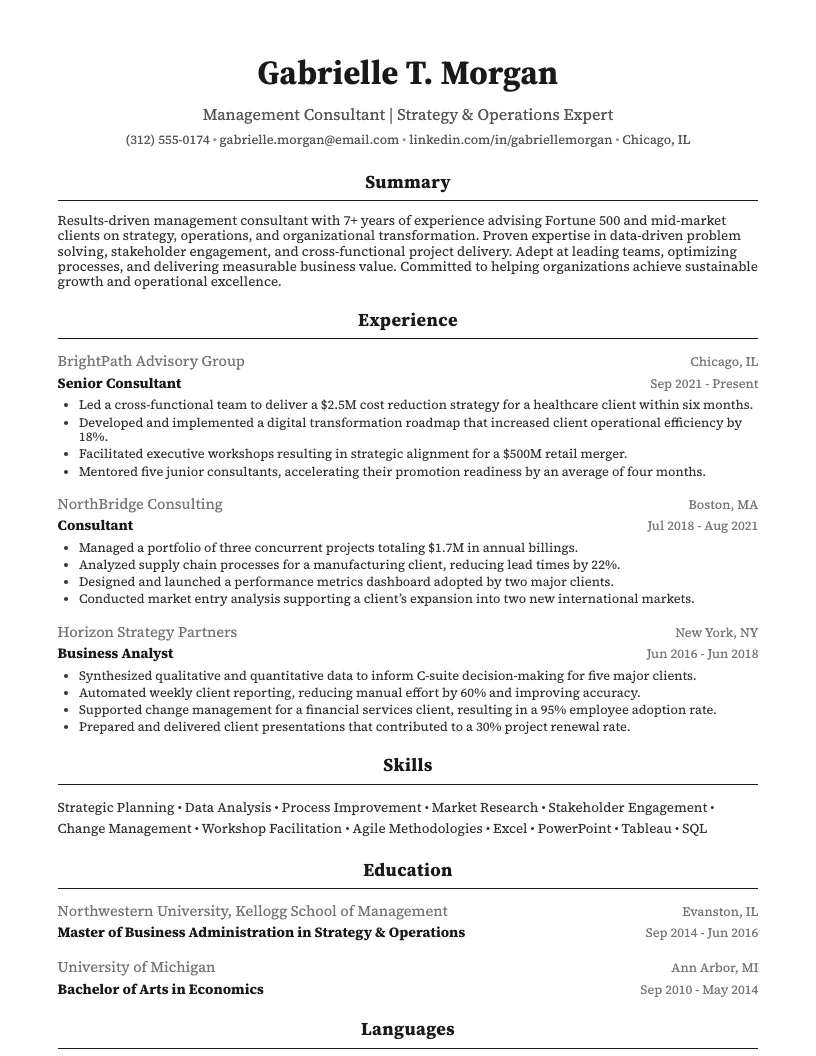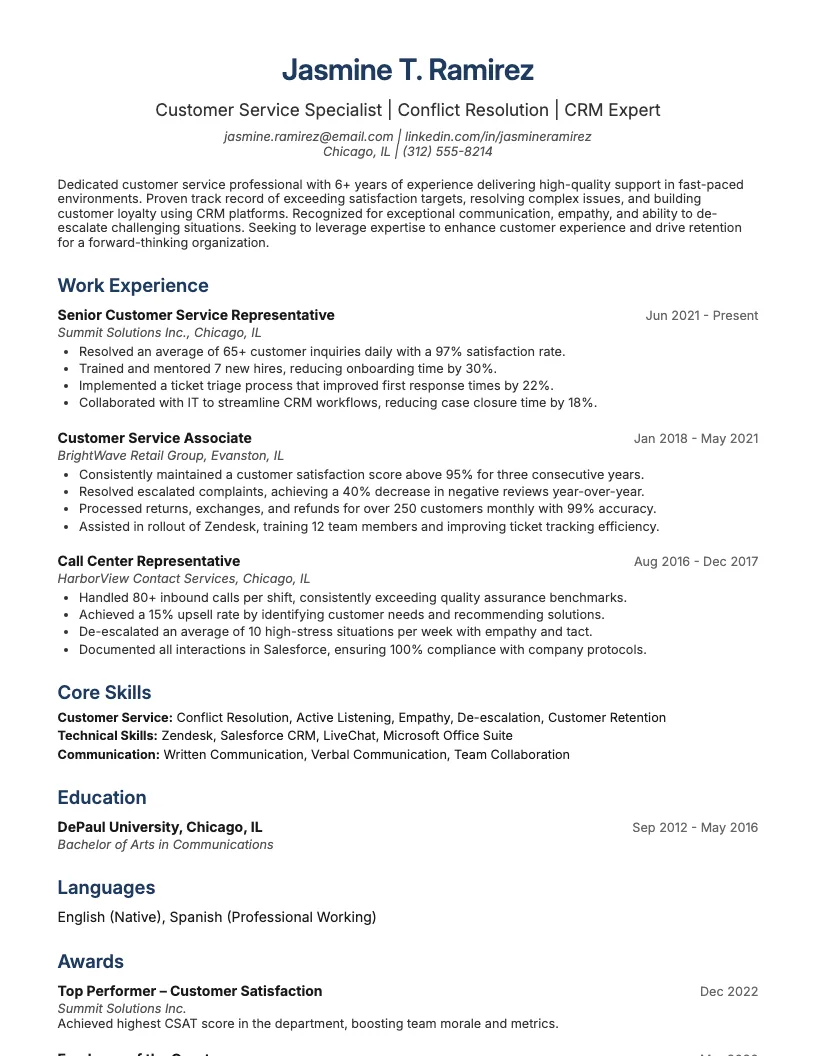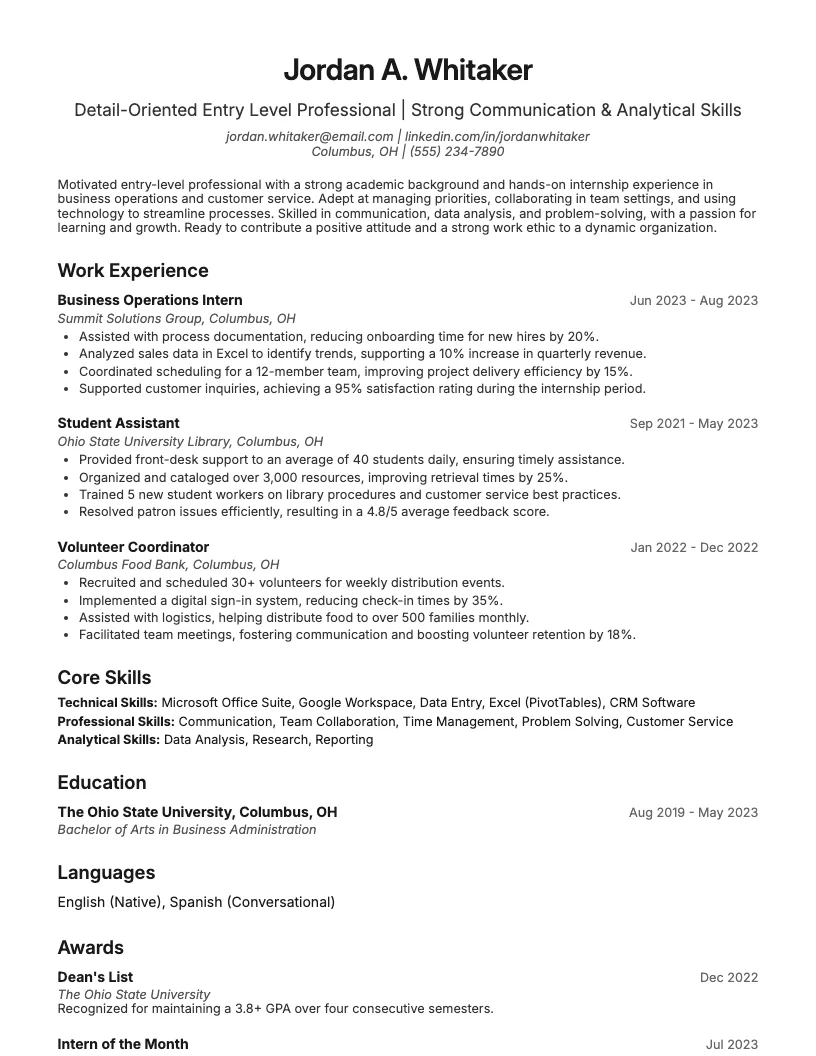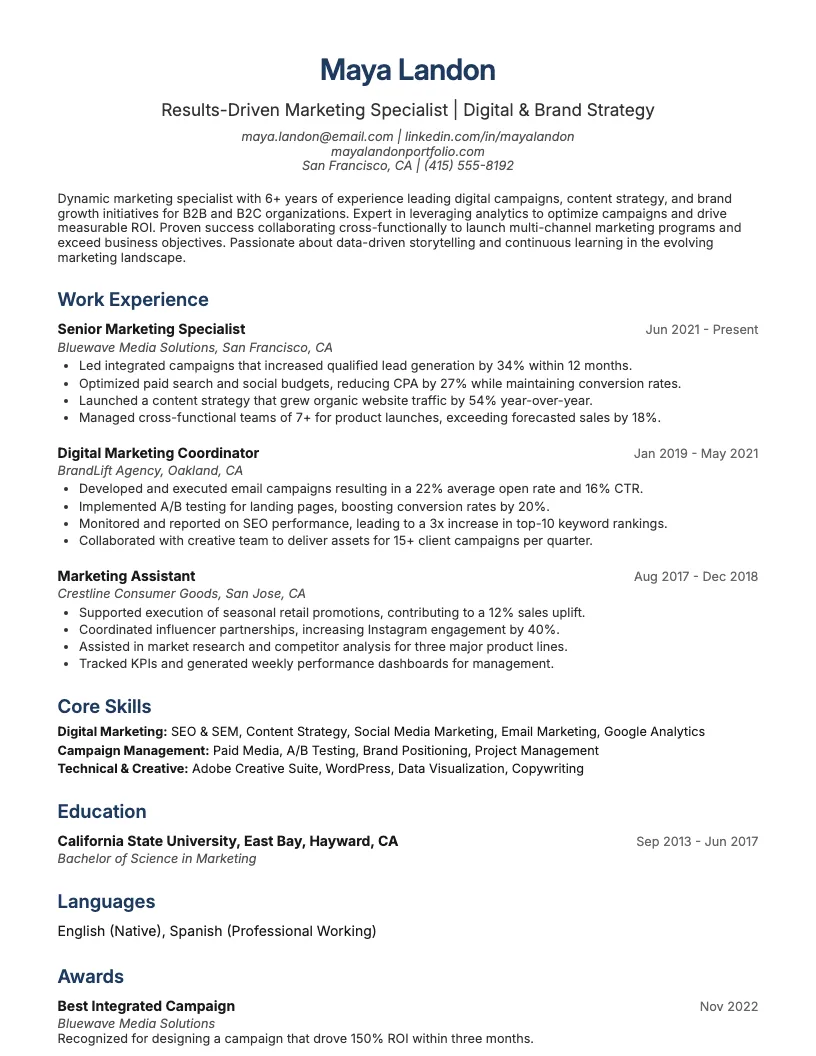
Regulatory Compliance Specialist Resume Example
See full guide on Regulatory Compliance Specialist resumes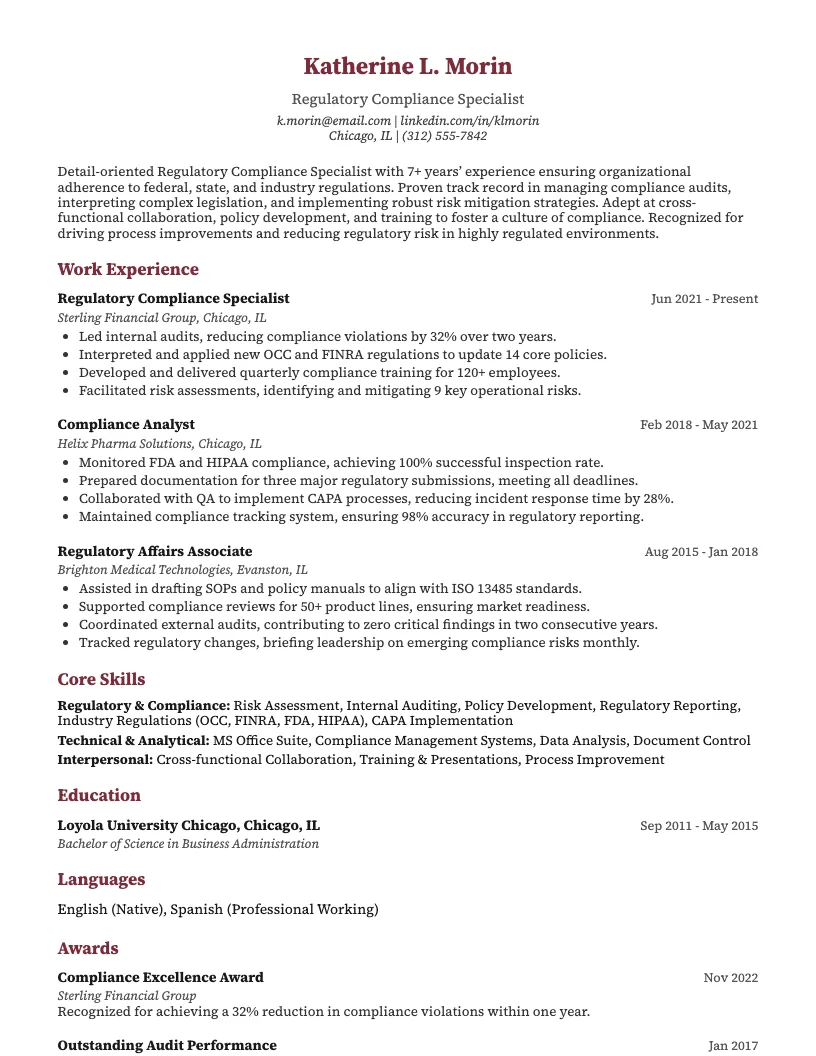 Click to enlarge
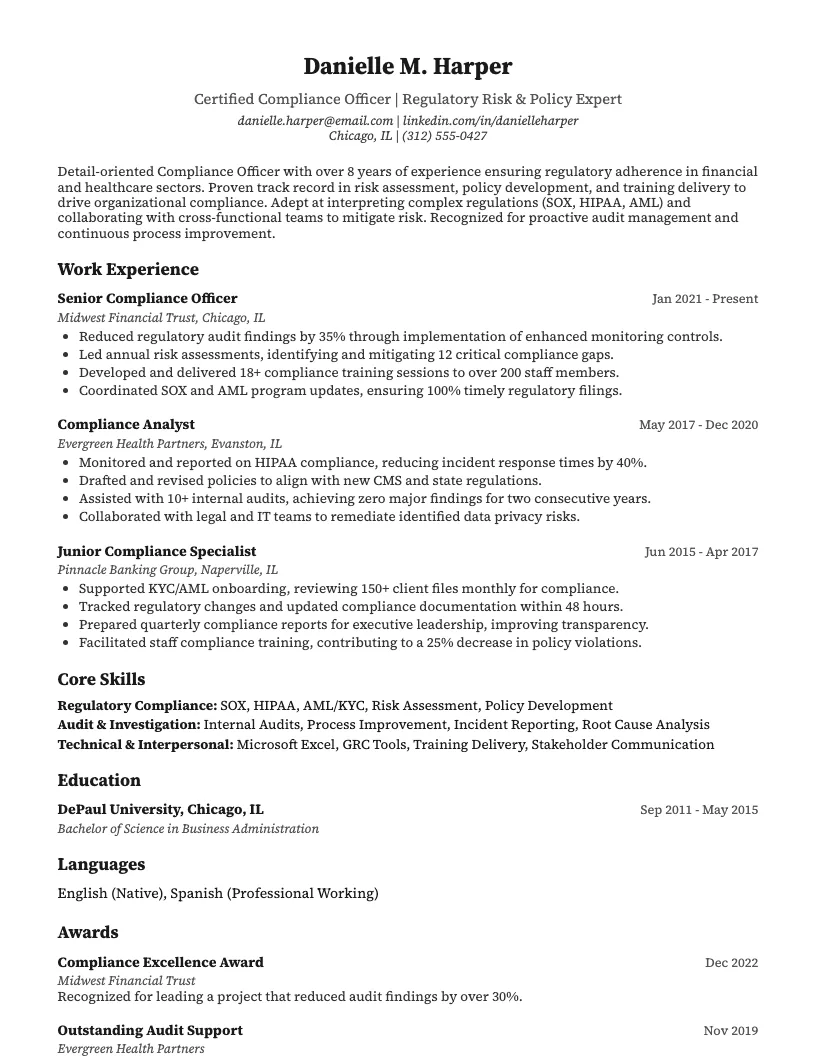 Click to preview

Get inspired by 63+ professional Compliance Officer resume examples, each written by career experts and optimized to pass ATS scans. Pick a proven template, tailor it to your role, and download a polished resume in minutes.
Pick the specialization closest to your target role and start from a proven resume example.

Writing a compliance officer resume means balancing job-specific skills with clear details about your qualifications. You want your experience, training, and certifications to stand out.
You’ll need the right format and sections to impress hiring managers. Recruiters look for accuracy and attention to detail, so every part counts. Let’s break down what works.
You want your resume to look sharp and make sense at a glance. I always start with a clear header-name, contact info, and sometimes a LinkedIn link, and I make sure to include a cover letter with my application.
After that, add a professional summary. This quick intro highlights your compliance expertise, top achievements, and what makes you unique. Keep it under 3-4 lines.
Include a skills section that matches the job ad. List both soft skills like communication and hard skills like regulatory research. Use bullet points for readability.
Your experience section should show quantifiable results-think “reduced compliance violations by 30%.” Each entry needs a job title, company, dates, and a couple of key wins.
Don’t forget your education and certifications. List degrees, relevant coursework, and any compliance credentials, like CAMS or CRCM. This shows you’re serious about the field.
Recruiters want to see deep knowledge of regulations. If you show experience with specific laws or industry standards, it’s a huge plus. Numbers help-cite audits passed or policies implemented.
Communication skills matter a lot. You need to explain complex compliance stuff to everyone, not just legal teams. Clear, concise language on your resume shows you can do this.
Demonstrate your ability to spot and handle risks. If you’ve identified gaps or led investigations, mention them. Recruiters love seeing real-world examples, not just buzzwords.
Wrap up strong by showing you’re proactive. Include any process improvements or training you’ve led. This helps you stand out as someone who doesn’t just follow rules, but drives change.
The top part of your resume matters a lot. Recruiters spend about 7 seconds scanning, so your summary or objective should grab attention fast.
If you have years of compliance experience, use a summary to quickly show your impact. If you’re just starting out, an objective helps highlight your motivation and career goals.
Choosing the right approach sets the tone for everything that follows. Let’s look at some real examples to see what works best.
If you’ve got years in compliance, your summary can highlight achievements. I’d mention regulatory expertise, leadership, or any measurable impact-like reducing audit findings by 25%.
For those just starting out, your objective can focus on growth and learning. Say you’re eager to build skills in risk management or policy implementation.
Either way, use numbers when possible. Hiring managers like seeing you led 15+ compliance reviews or helped cut non-compliance incidents by a third. It’s clear and impressive.
Your experience section does most of the heavy lifting on a compliance officer resume. It’s where you show how you tackle regulations, audits, and risk.
I focus on quantifiable achievements-things like improving compliance rates by 20% or reducing violations by 15%. Numbers help hiring managers see your real impact.
If you don’t have direct compliance experience, don’t worry. You can highlight transferable skills and the results you’ve delivered in past roles.
I always make my experience stand out by attaching numbers to my achievements. Metrics-like percentages or dollar amounts-show recruiters the real impact I bring.
You can highlight how many audits you conducted or the percentage drop in compliance violations. This kind of data paints a clear picture of your value.
There are other ways too-mention how many policies you rolled out or the size of the teams you trained. Specifics make your experience more convincing.
You don’t need direct compliance experience to stand out. I highlight transferable skills like attention to detail, communication, and risk assessment from other jobs or volunteer work.
I use a skills-based resume format instead of a chronological one. This brings my relevant strengths-not just my job titles-to the front for recruiters to see quickly.
It helps to include an objective statement with your motivations and unique value. Show how your background prepares you for the compliance world, even if it’s a different industry.
Don’t forget to mention any certifications, online courses, or workshops related to compliance or regulations. This proves you’re serious and already building the right knowledge base.
Recruiters want to see a mix of hard and soft skills on your compliance officer resume. Both are key if you want to stand out in this field.
You need to show you understand regulations and tech, but people skills matter just as much. I always pay attention to both when building a resume.
Certifications and education can make or break your compliance officer resume. Employers look for proof you know the rules, so your formal background really matters here.
You want to highlight any degrees, diplomas, or certifications that relate directly to compliance. Include graduation dates, institutions, and details that show your dedication to the field.
I see that certifications instantly boost your credibility. Certified Compliance & Ethics Professional (CCEP) and Certified Information Systems Auditor (CISA) are two of the most recognized options.
You can also look at the Certification in Risk Management Assurance (CRMA) or Financial Risk Manager (FRM). These show you know your stuff about risk, which is huge in compliance.
I always suggest listing the full name, issuing body, and dates. This helps recruiters verify your expertise and see your commitment to staying current in the field.
If you have extra space on your resume, you can make it count by adding more sections. These sections show off your skills and interests beyond your work history.
You might highlight awards, certifications, or even volunteer gigs. I find these extras can set you apart from other candidates, especially in compliance roles.
Every compliance officer role asks for something different, depending on your experience. Entry-level, mid-level, and senior resumes need a unique approach.
I see a lot of resumes-some highlight technical skills, others focus on regulatory achievements. Knowing what hiring managers expect at each stage can give you a real edge.
Building a strong compliance officer resume means including the right sections and details. I want to help you highlight your experience, education, and skills in a way that stands out.
You’ll see examples for each key section below. These samples show what recruiters look for, based on current industry standards and proven resume formats.
Your profile summary sits right at the top of your resume, so it needs to grab attention fast. I usually keep mine under 70 words.
Focus on your top achievements, years of experience, and key skills. For example, highlight how you ensure regulatory compliance or lead audits across multiple departments.
Use strong action words like implement, oversee, or enforce. Numbers help-maybe you reduced compliance incidents by 15% or led training for 200+ employees. This builds credibility right away.
I like to focus my employment history on roles with compliance, risk management, or audit, and I reference a cover letter for inspiration when describing relevant experience. You want to highlight jobs where you interpret regulations or coordinate with regulators.
Use bullet points to show impact-like “reduced audit findings by 20%” or “trained 50+ staff on policy updates.” This helps your experience stand out.
It’s good to include action verbs like develop, monitor, or enforce. If you supervise teams or lead projects, mention that. Numbers always add credibility here.
I always list my highest degree first, along with the school, graduation year, and location. For compliance roles, a bachelor’s in business, finance, or law works best.
You should mention any relevant certifications like CCEP, CRCM, or CAMS. If you have honors or distinctions, add those too-it shows you go the extra mile.
There’s no need to include high school if you’ve got a degree above it. Keeping this section clean and factual helps recruiters see your qualifications fast.
I always list regulatory knowledge, risk assessment, and policy drafting right at the top. These skills catch a hiring manager's eye in seconds.
You want to balance soft skills like communication and critical thinking with hard skills such as data analysis and compliance auditing. This shows you can tackle real-world scenarios.
There are usually 8-10 skills on a strong compliance officer resume. Pick ones that match the job description and highlight any certifications you hold, like CAMS or CRCMP.
I make sure a company follows all laws, regulations, and internal policies. This means I keep up with local, national, and even global requirements that affect the business.
You’ll monitor risk, investigate potential violations, and report issues directly to management. I also help design and update compliance programs that prevent costly mistakes.
There’s a lot of employee training involved. I often lead sessions so everyone knows what’s expected. This helps reduce legal risks and maintains the company’s reputation.
That wraps up the key resume sections for a compliance officer—if you’re targeting a leadership path, you might also want to check out an audit and compliance manager cover letter. If you’re aiming for one of these roles, knowing what’s expected sets you up for success.
If you’re aiming for a compliance officer job, it helps to see how others shape their resumes. I often check examples to spot trends and standout skills.
Looking at similar roles lets you compare job duties and keywords. These examples can show what hiring managers expect in related compliance positions.
Your resume needs to show that you understand compliance from both a legal and practical angle. Make sure your top skills and experience are front and center.
Highlight any certifications, like CCEP or CRCM, and show the impact you’ve had-think numbers, process improvements, or risk reduction.
Tailor your resume for each job. Focus on achievements and tools you actually use, like compliance software or audit systems.
Start by reviewing real job descriptions and identify the top five skills they ask for. This helps you focus your resume on what actually matters.
I always recommend using numbers and specific results. For example, mention how you reduced compliance issues by 15% or implemented new audit processes.
Don’t forget to show your certifications and key software skills. Employers want to see proof that you handle industry requirements and tools like AML platforms or regulatory databases.
Browse Compliance Officer resume examples for related roles. Preview any example, open it in the builder, or read its full guide.
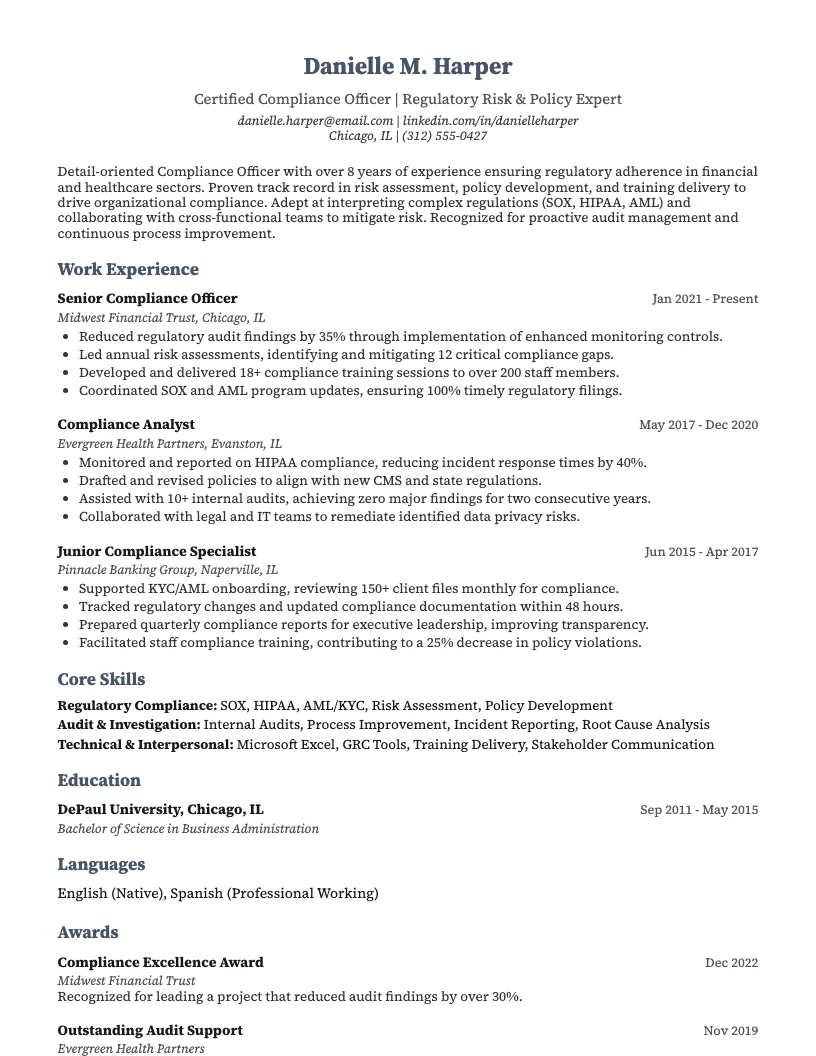
Click to enlarge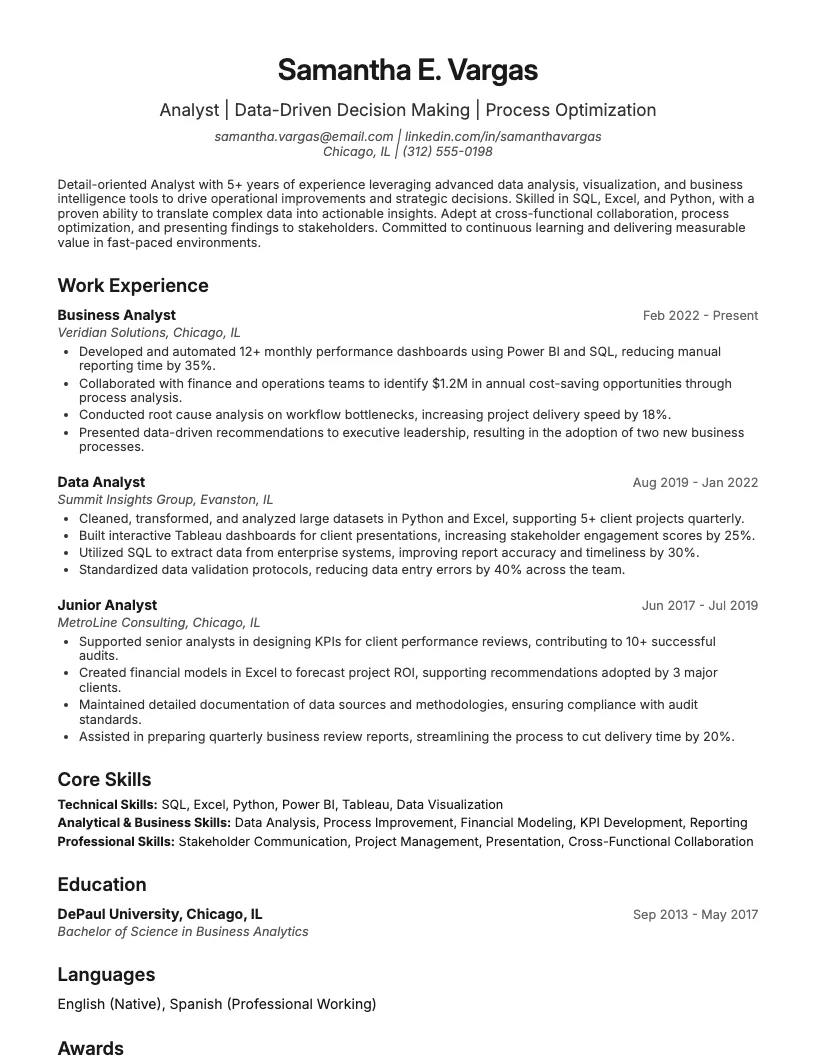 Click to enlarge
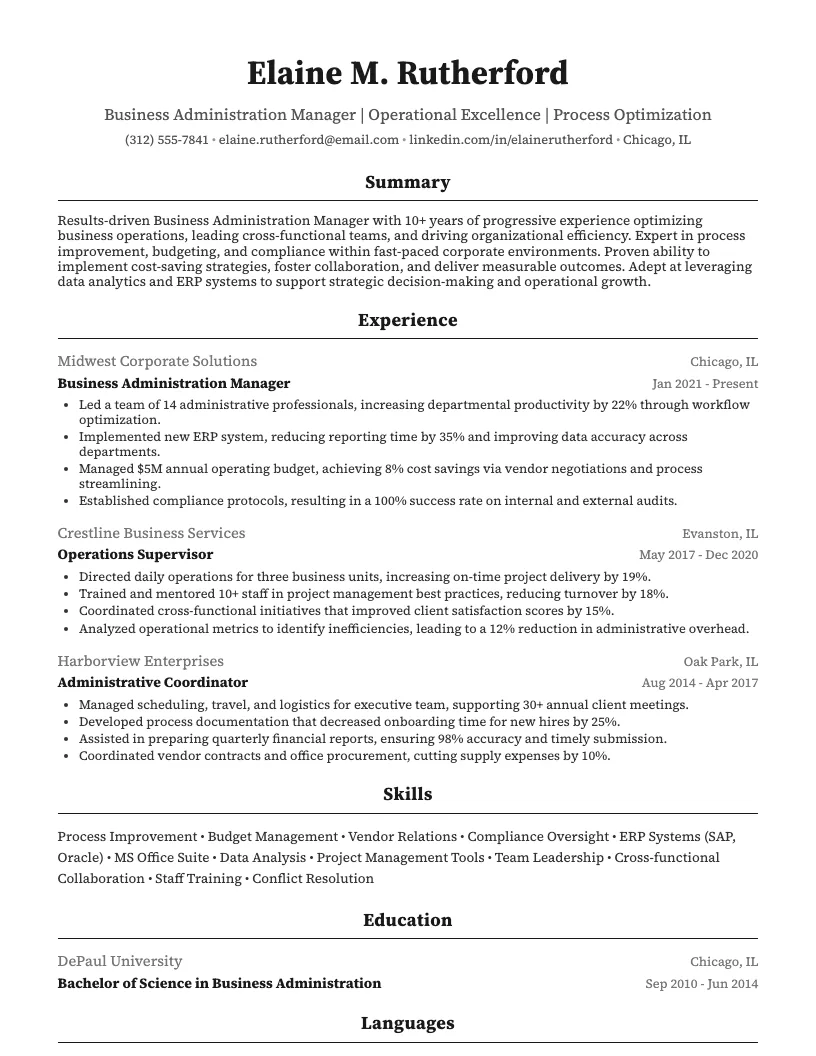 Click to enlarge Click to enlarge
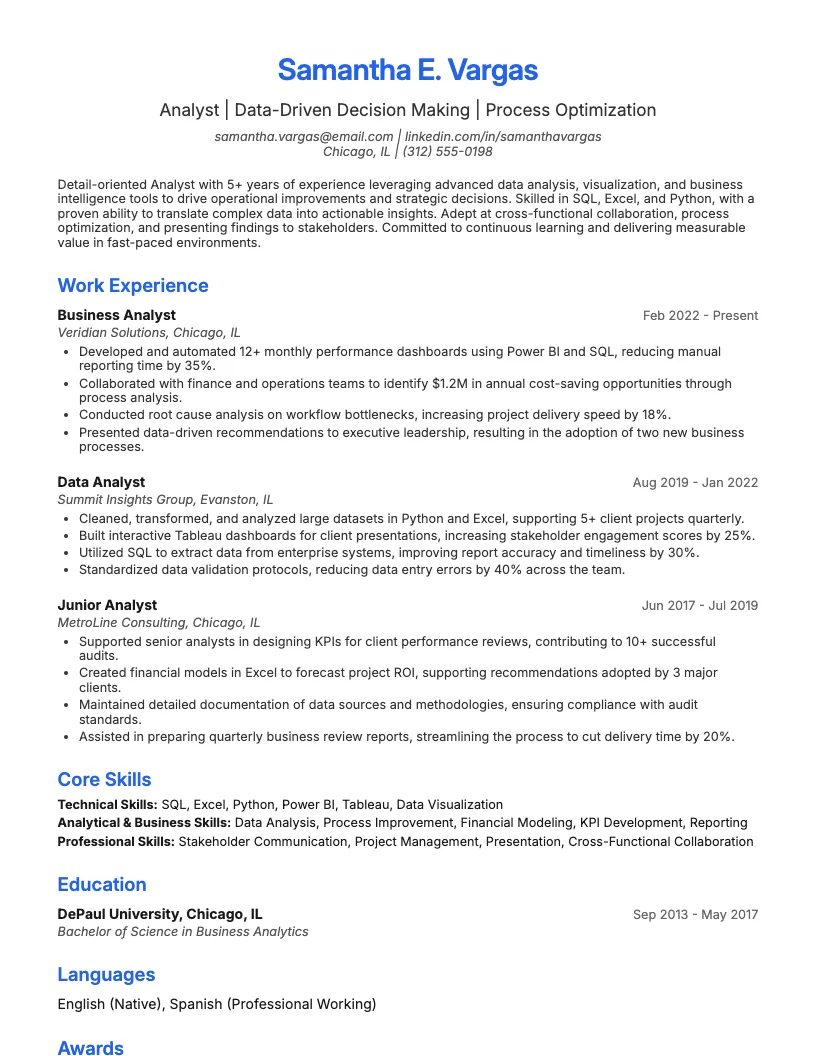 Click to enlarge Click to enlarge Click to enlarge Click to enlarge
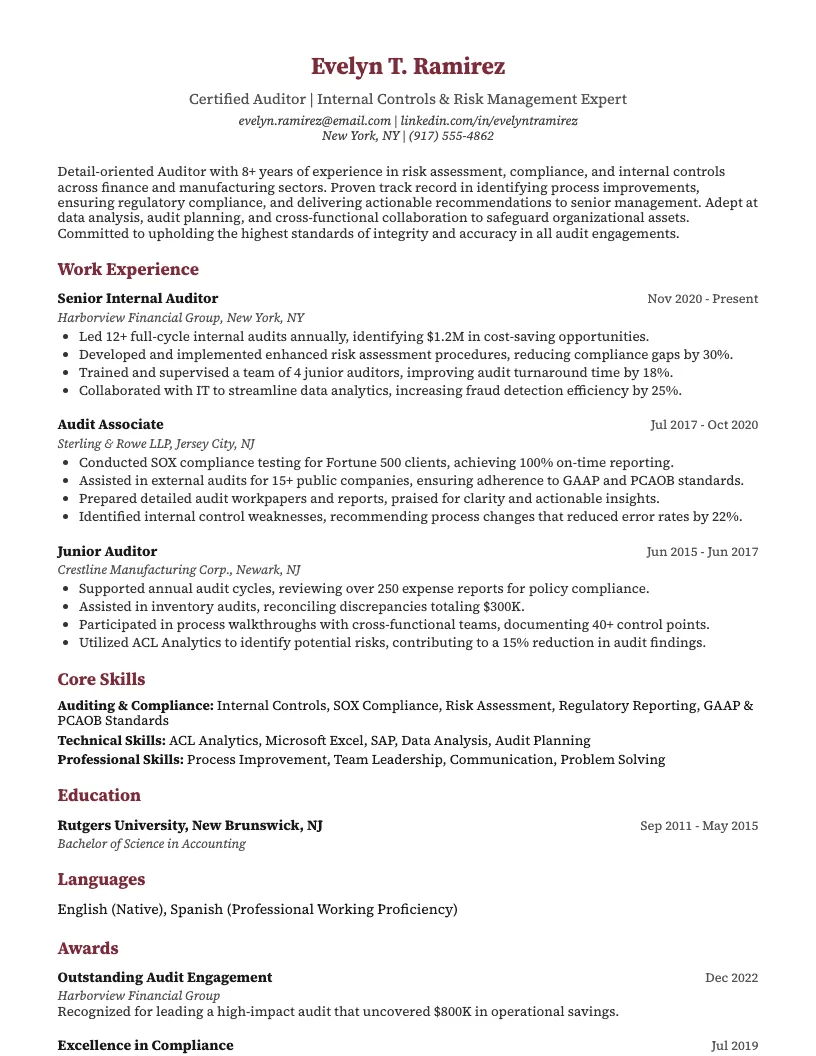 Click to enlarge
Common questions about Compliance Officer resumes
A compliance officer resume template is a pre-designed document tailored for professionals ensuring organizational regulations are met. It highlights relevant skills, certifications, and experience. ResumeJudge helps you showcase your compliance expertise effectively.
Yes, most compliance officer resume templates from ResumeJudge are ATS-friendly, ensuring your resume passes automated screenings. This boosts your chances in industries like finance, healthcare, and government.
Use a compliance officer resume template when applying for roles in finance, healthcare, legal, or government sectors. It's ideal whenever you need to emphasize regulatory skills and experience.
Absolutely! You can tailor the template to your unique experience, certifications, and achievements. ResumeJudge makes it easy to add or edit sections for your specific job target.
Compliance officer templates focus on regulatory knowledge, risk management, and policy enforcement, unlike general templates. ResumeJudge highlights these crucial skills for roles in regulated industries.
Ideally, a compliance officer resume should be one page for early-career roles and up to two pages for experienced professionals. ResumeJudge helps you keep your content concise and relevant.
Include sections like summary, skills, certifications, experience, and education. ResumeJudge templates ensure all essential sections are covered for compliance roles.
Yes, ResumeJudge templates offer dedicated sections for certifications like CCEP or CRCM, which are highly valued in compliance-focused jobs.
Definitely! ResumeJudge provides templates for both entry-level and experienced compliance professionals, letting you highlight internships, coursework, or transferable skills.
With ResumeJudge, you can easily download your resume as a PDF, Word document, or plain text, making it simple to apply across various online job portals.
Explore more professional resume examples to inspire your job search
Use our AI-powered resume builder to create a professional, ATS-friendly resume in minutes.
Free to use • No credit card required