Estate Sale Coordinator Resume Example
See full guide on Estate Sale Coordinator resumes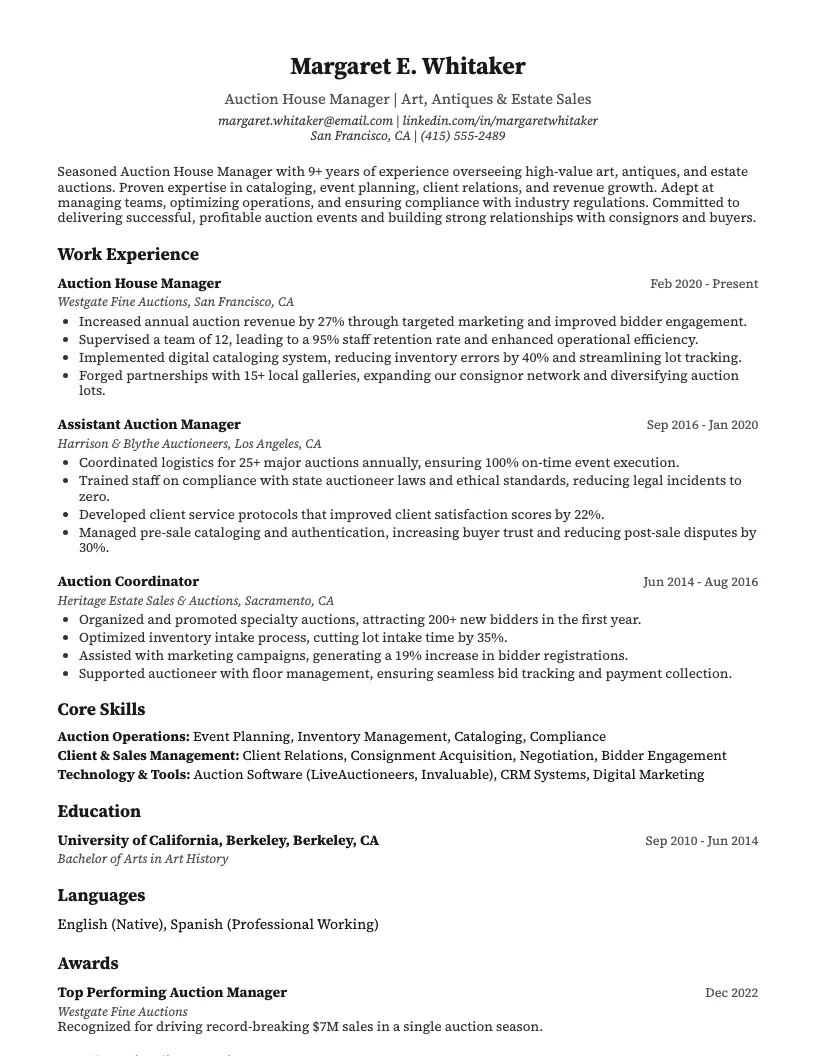 Click to enlarge
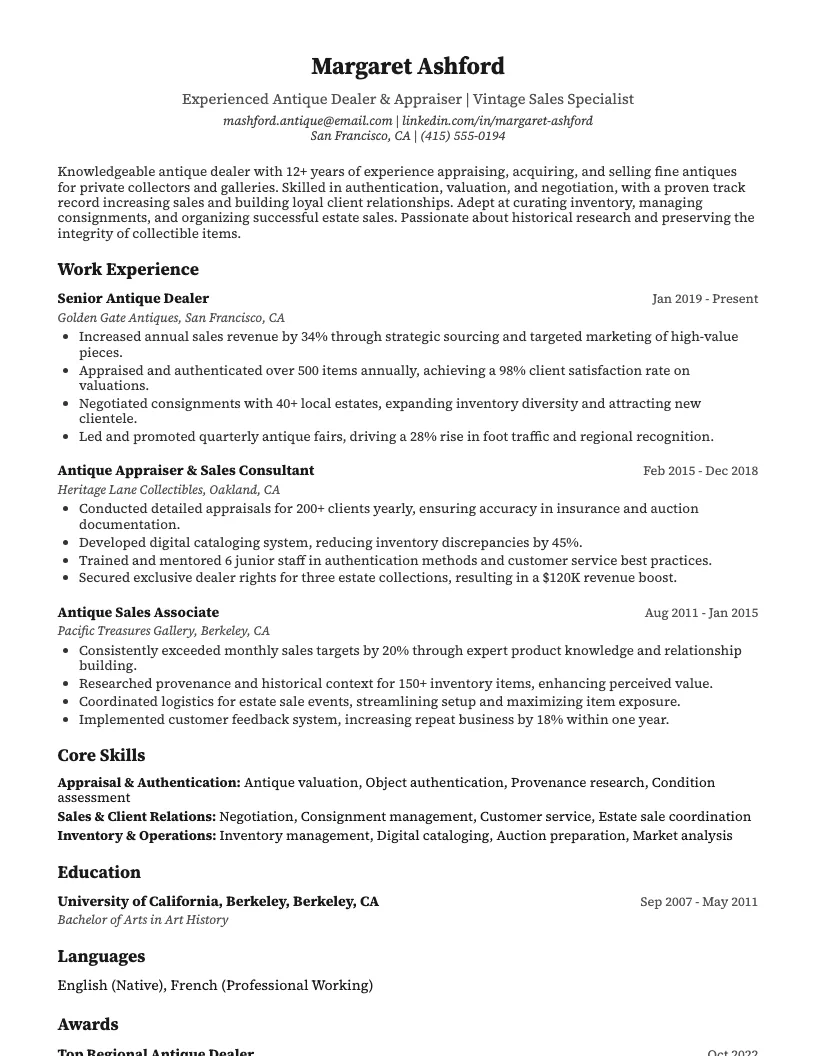 Click to preview

Get inspired by 50+ professional Antique Dealer resume examples, each written by career experts and optimized to pass ATS scans. Pick a proven template, tailor it to your role, and download a polished resume in minutes.
Pick the specialization closest to your target role and start from a proven resume example.
If you’re aiming for a job as an antique dealer, you need a resume that highlights your expertise and unique skills. I know employers look for more than just a love for antiques.
You want to show your sales experience, negotiation skills, and knowledge of historical periods. It helps if your resume shows tangible results, like increasing sales or growing collections.
Whether you’re new to the field or have decades behind the counter, I’ve seen resumes stand out when they’re tailored by experience level. Let’s look at some strong examples.
Entry-level antique dealer resumes focus on skills like customer service, basic inventory management, and any hands-on sales experience. You want to highlight your willingness to learn.
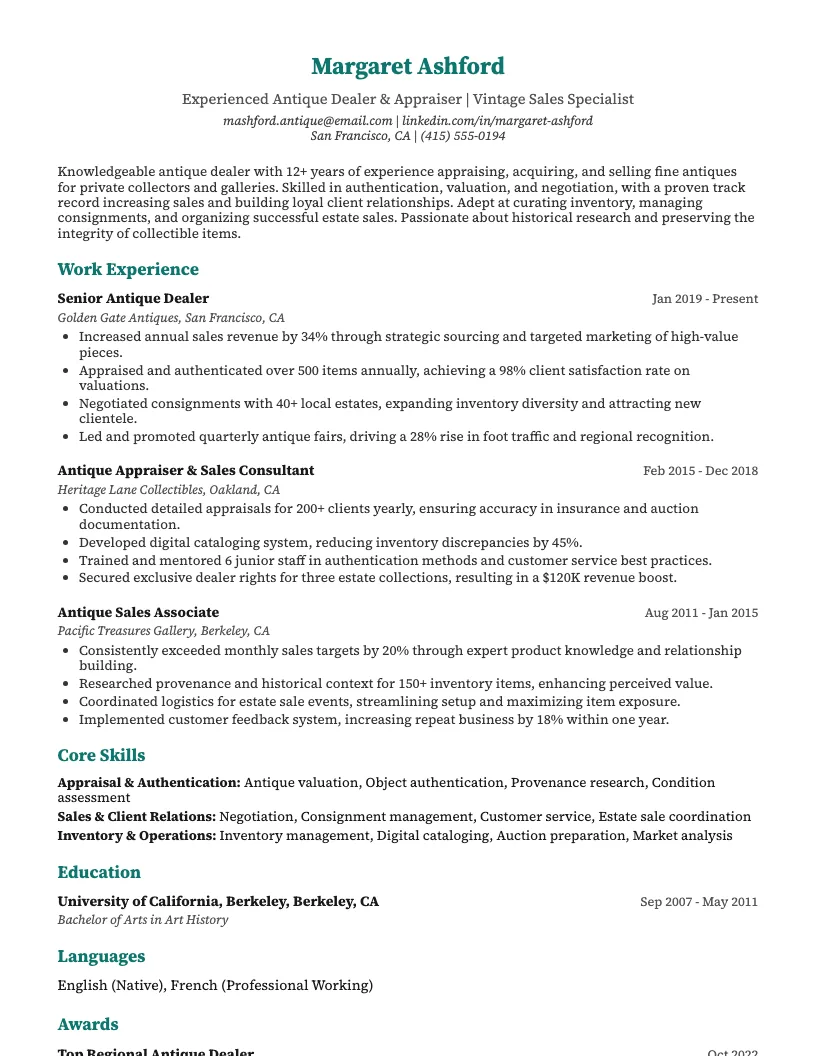
Mid-level resumes show more independence. I recommend listing achievements like growing sales by 15% or sourcing rare items. Employers want to see initiative and results.
For senior antique dealers, leadership stands out. You should mention team management, auction planning, and profit growth. Quantify success whenever possible-managing $250K in annual sales grabs attention.
Antique dealers buy, sell, and appraise unique items. Some work for auction houses, but many run their own businesses. Every day looks a little different.
You might focus on specific eras or types of pieces. Research and networking are huge parts of the job. Building trust with buyers and sellers is key.
Income can vary a lot from year to year. Your reputation and expertise make a big difference in your success.

A strong antique dealer resume helps you stand out to recruiters and pass applicant tracking systems. You need a clear structure and the right information in every section.
I always start by choosing a format that matches my experience. Then I focus on adding the details hiring managers want, from my skills to my work history.
Next, I make sure each section highlights what makes me a great fit for the role. This helps my resume feel personal and relevant for each job.
Picking the right resume format is key for antique dealers. I usually recommend the reverse chronological format because recruiters prefer it, and so do most Applicant Tracking Systems.
You start with your most recent job and work backward. This makes your experience easy to follow and shows your career growth over time.
If you’re brand new or have a non-traditional path, the functional or hybrid formats might suit you better. These highlight your skills, not just your work history.
You want your resume to be easy for recruiters to scan. I always include a summary, work history, skills list, and education-these are the essentials.
Your summary quickly highlights your expertise and passion for antiques. This section should be short and punchy-think three to five sentences max.
For work history, list recent roles first. Focus on results: "Boosted sales by 30%" or "Appraised over 200 items yearly." Numbers grab attention.
The skills section helps you stand out. Include things like negotiation, market research, and authenticity verification. These matter in the antiques world.
Don’t forget education. Even if you’re self-taught, mention relevant certifications or workshops. This shows you’re serious about growing in the field.
Your resume summary is your first shot to show why you stand out as an antique dealer. This is where you tell your story in just a few lines.
Highlight your years of experience, any niche expertise, and what makes you good at spotting value. Show your personality and work style right from the start.
Hiring managers want someone who knows their stuff and connects well with clients. Use this space to prove you’re that person.
Your experience as an antique dealer matters most to employers. They want to see how you add value and what results you deliver.
Highlight your specialty, top achievements, and the ways you boost sales or improve collections. Use details and numbers to show your impact.
I always start with my most recent role and work backwards. This way, hiring managers see my latest achievements right up front.
You want bullet points that focus on results, not just day-to-day tasks. For example, “Increased monthly sales by 25% by sourcing rare Victorian jewelry.”
Add numbers whenever you can. Details like “Managed inventory of 500+ antiques” or “Negotiated 15% better prices with suppliers” show you’re results-driven and serious.
If you want to stand out as an antique dealer, your resume needs the right mix of business know-how and a good eye for details.
You should highlight both your technical skills, like appraisals or sales, and your people skills. Employers scan for these right away.
I always make sure my resume speaks to what employers want and covers industry keywords. That’s the best way to get past resume filters and catch a recruiter’s eye.
Your education can show your knowledge of art, history, or business. There’s no set degree for antique dealers, so any relevant coursework helps.
List your highest completed degree first. If you have industry awards or special affiliations, you can add those too. This section highlights your unique background.
First impressions matter a lot in the antique business. Your resume layout should look clean and professional, but still let your personality show through.
You want recruiters to see your eye for detail right away. Keep things simple and readable. A cluttered design can turn people off fast.
If you want to highlight your style, make sure it doesn’t distract from the actual info. Clear headings and consistent fonts work best for most people.
I find that sticking to a straightforward layout helps your experience stand out. You don’t need fancy graphics-just good organization and a touch of finesse.
Your resume needs to show both your eye for antiques and your business skills. You want to highlight what makes you a strong candidate for each job.
I see hiring managers look for a mix of experience, sales results, and deep knowledge of collectibles. Customizing your resume for every position makes a real difference.
If you like working with antiques, you probably have skills that transfer to other jobs. I see a lot of overlap in customer service, sales, and curation roles.
You might find inspiration in related resume examples. These show different ways to highlight expertise in negotiation, research, and inventory management.
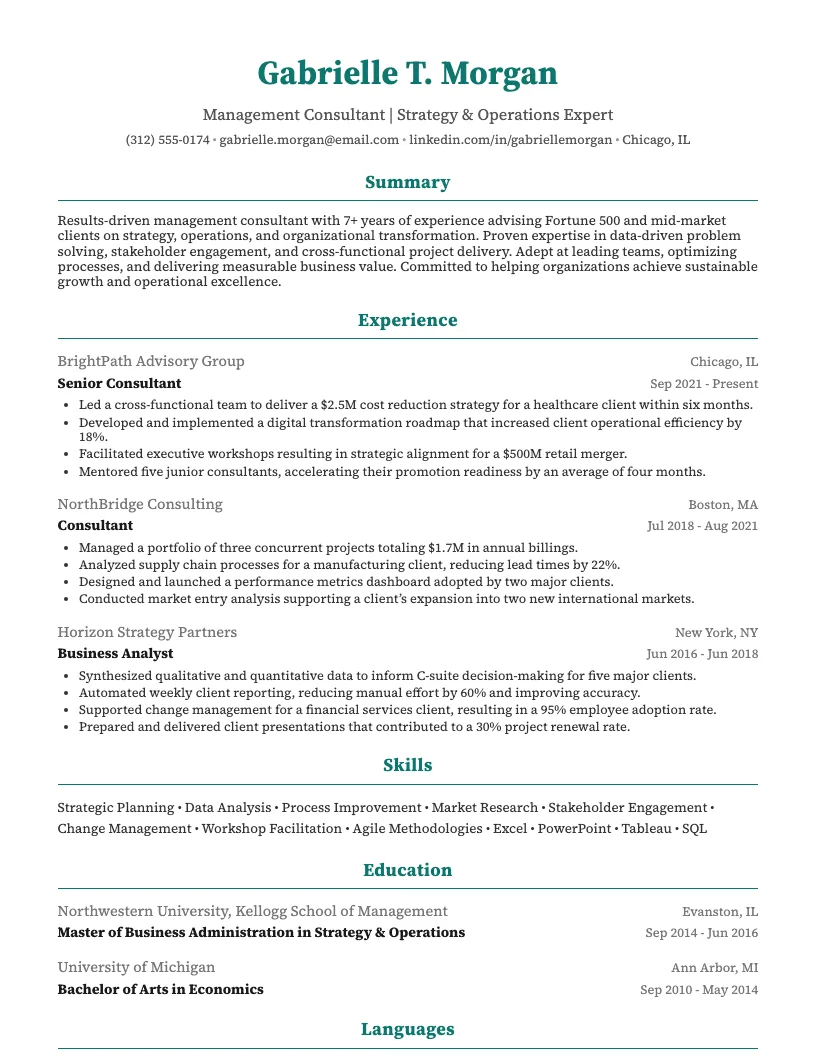
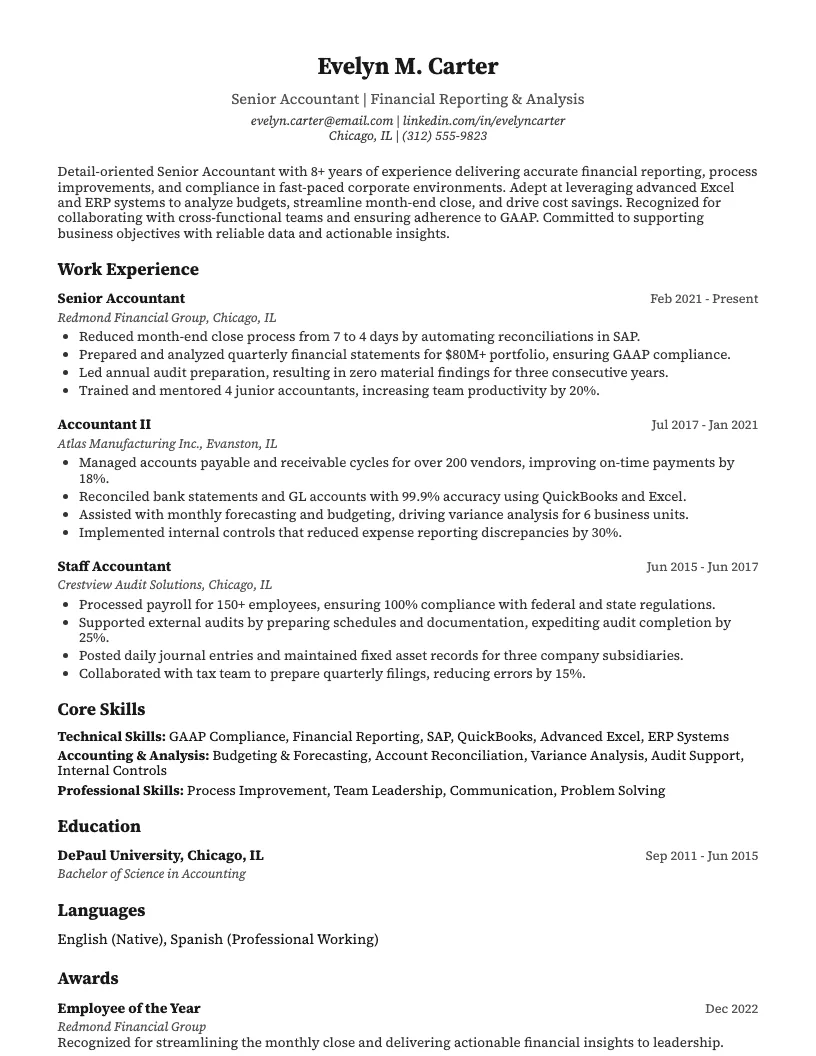
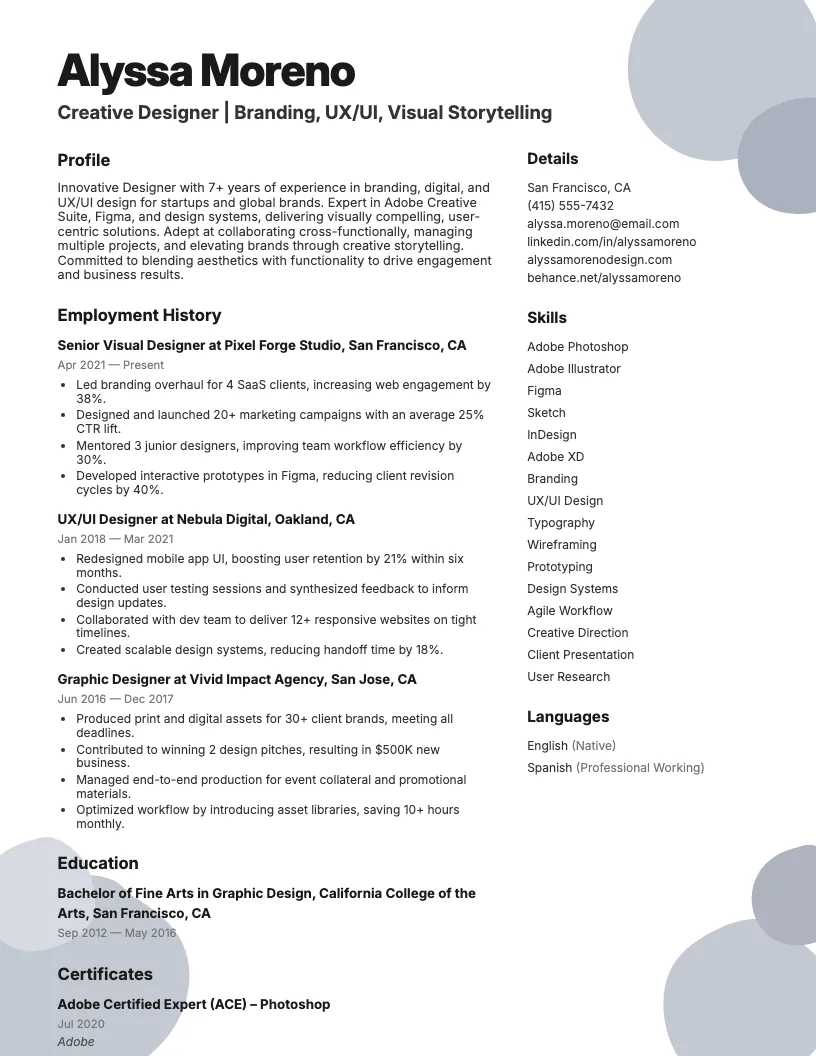
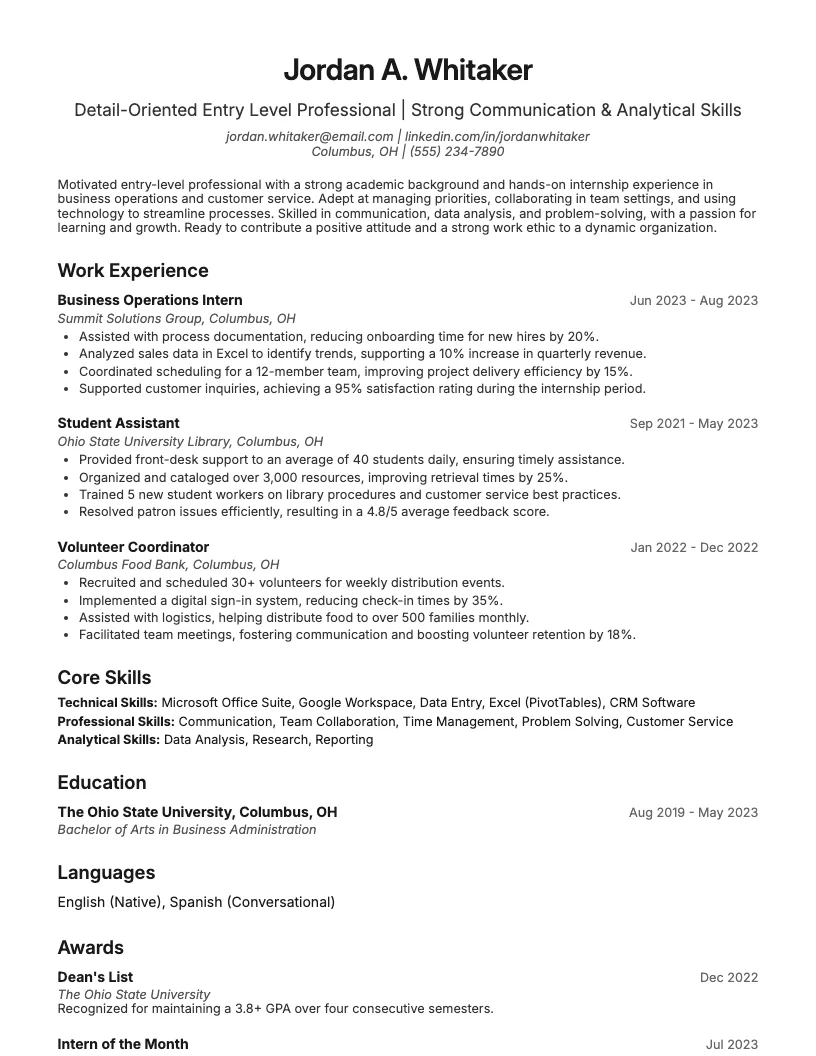
Browse Antique Dealer resume examples for related roles. Preview any example, open it in the builder, or read its full guide.
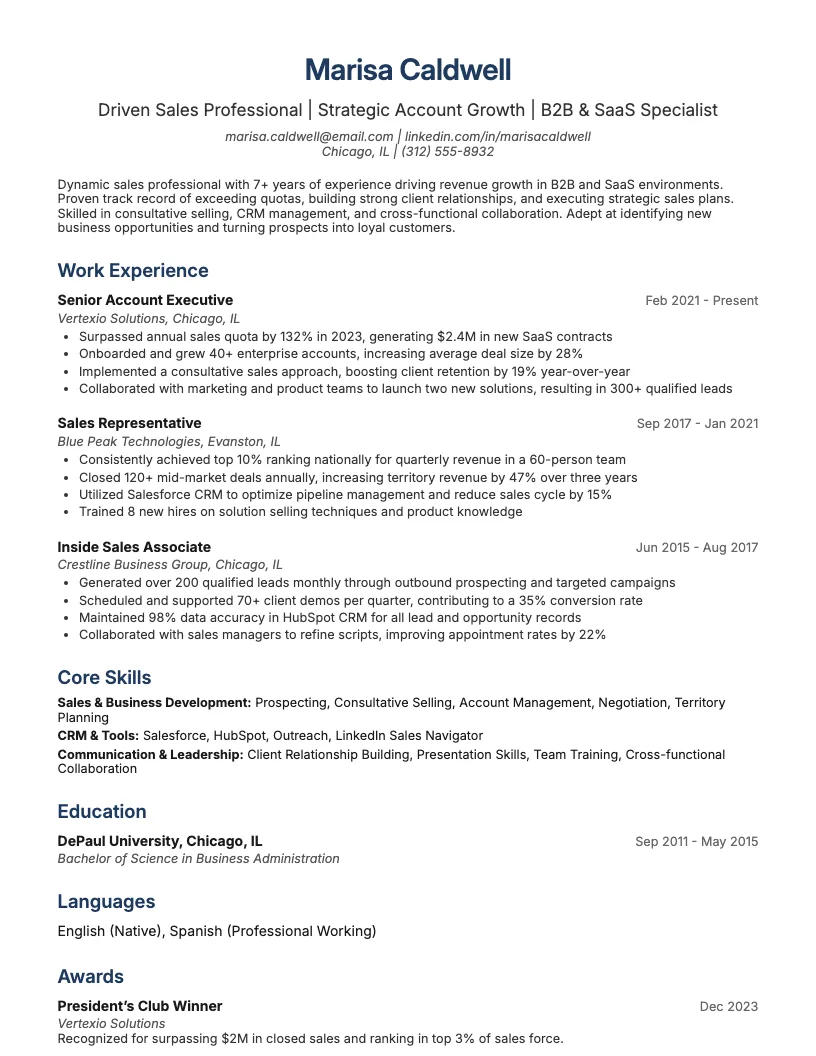
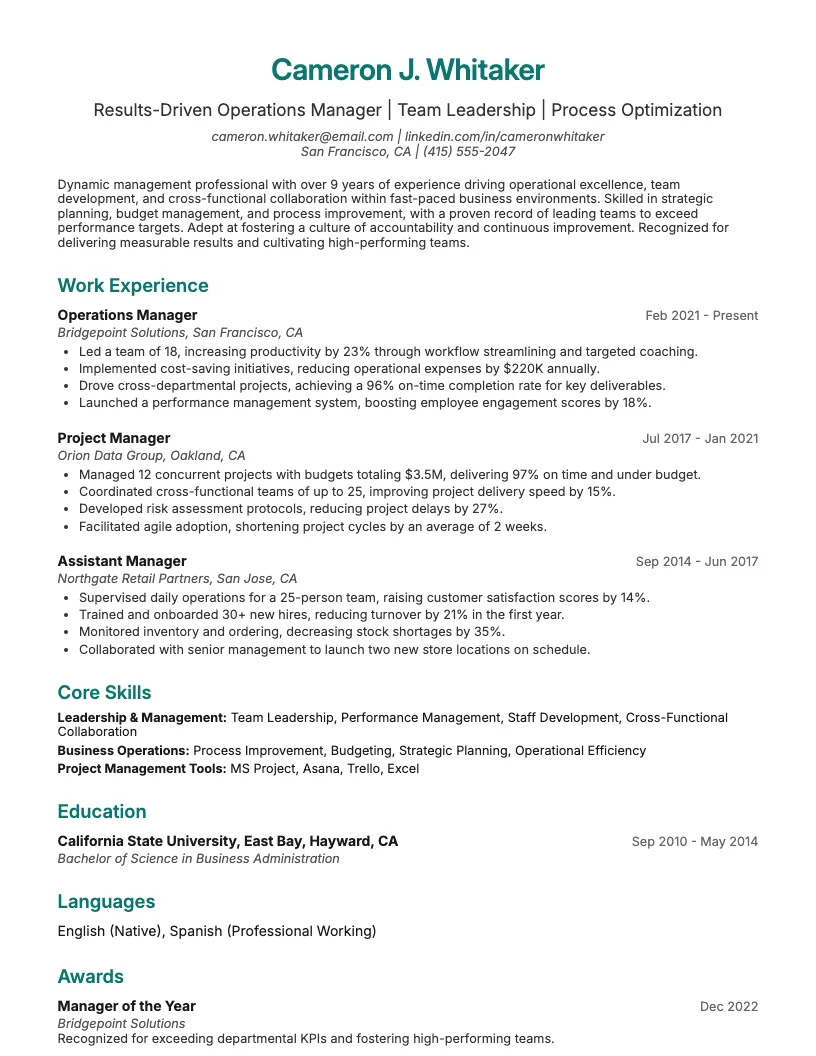
Click to enlarge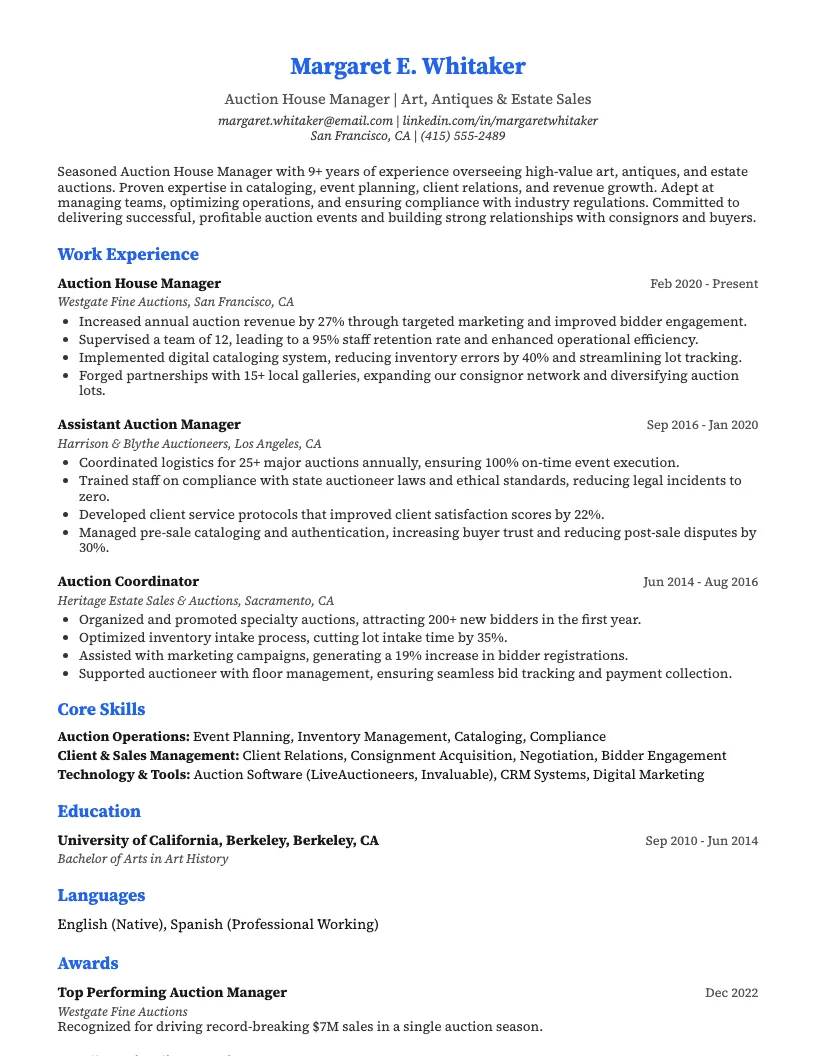 Click to enlarge
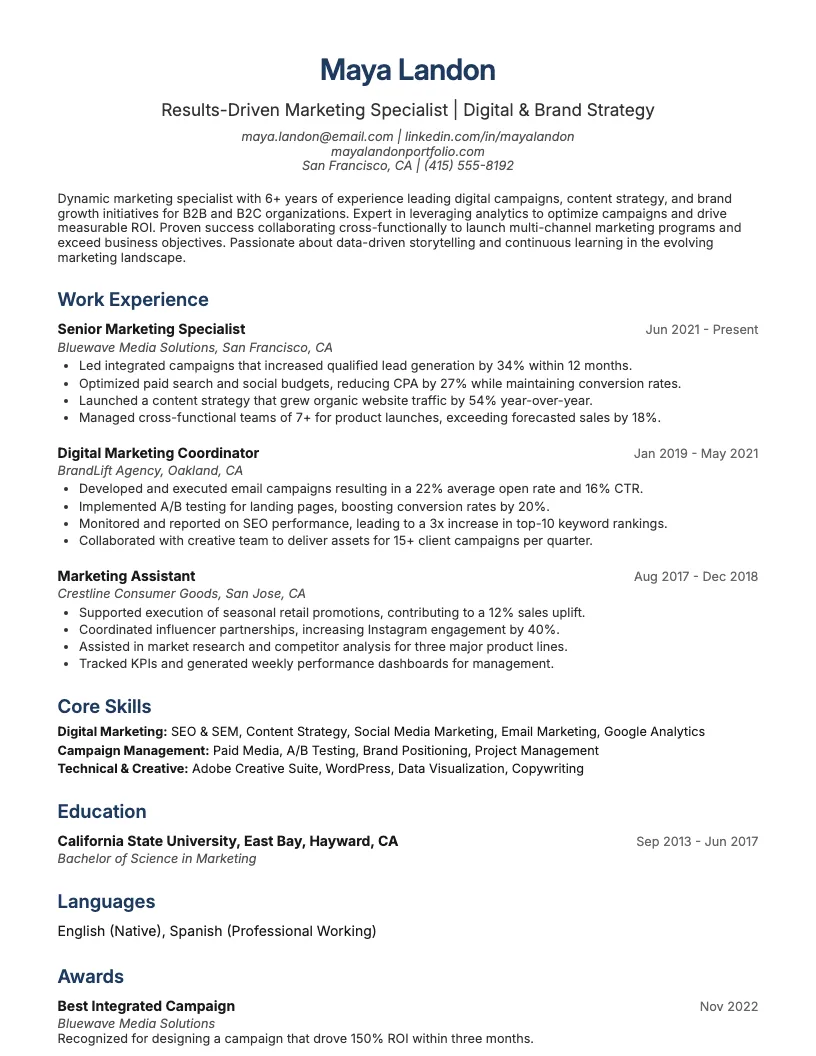
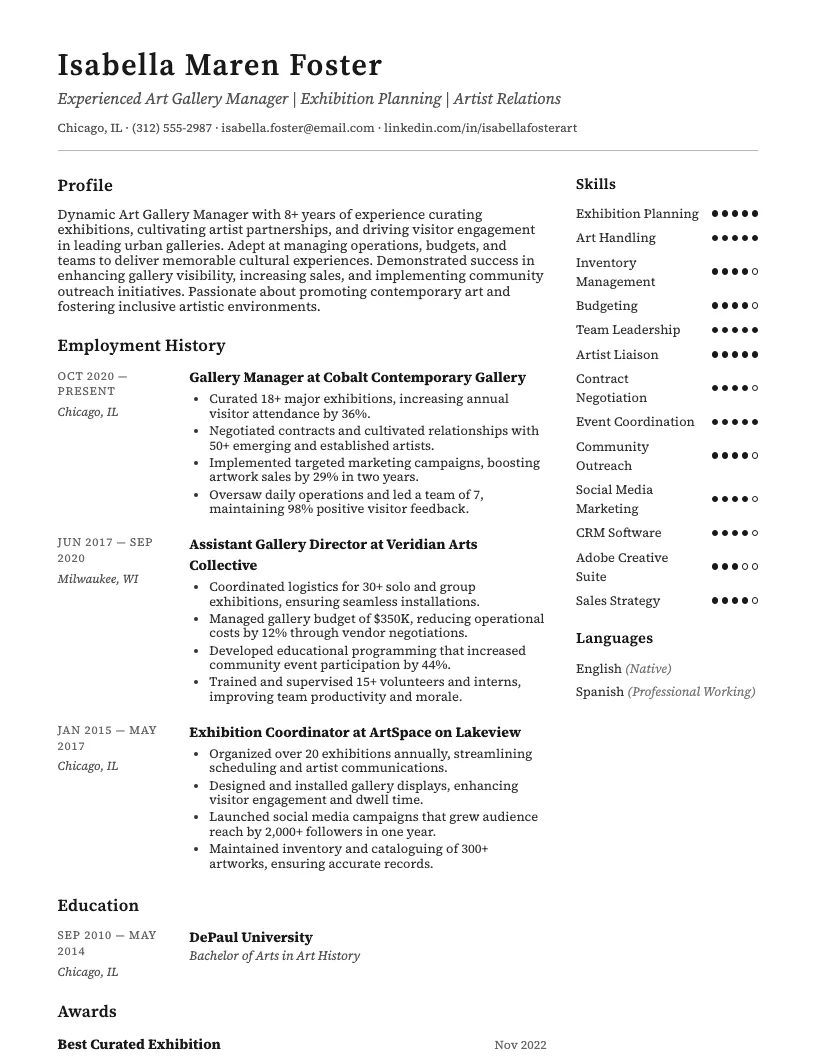 Click to enlarge
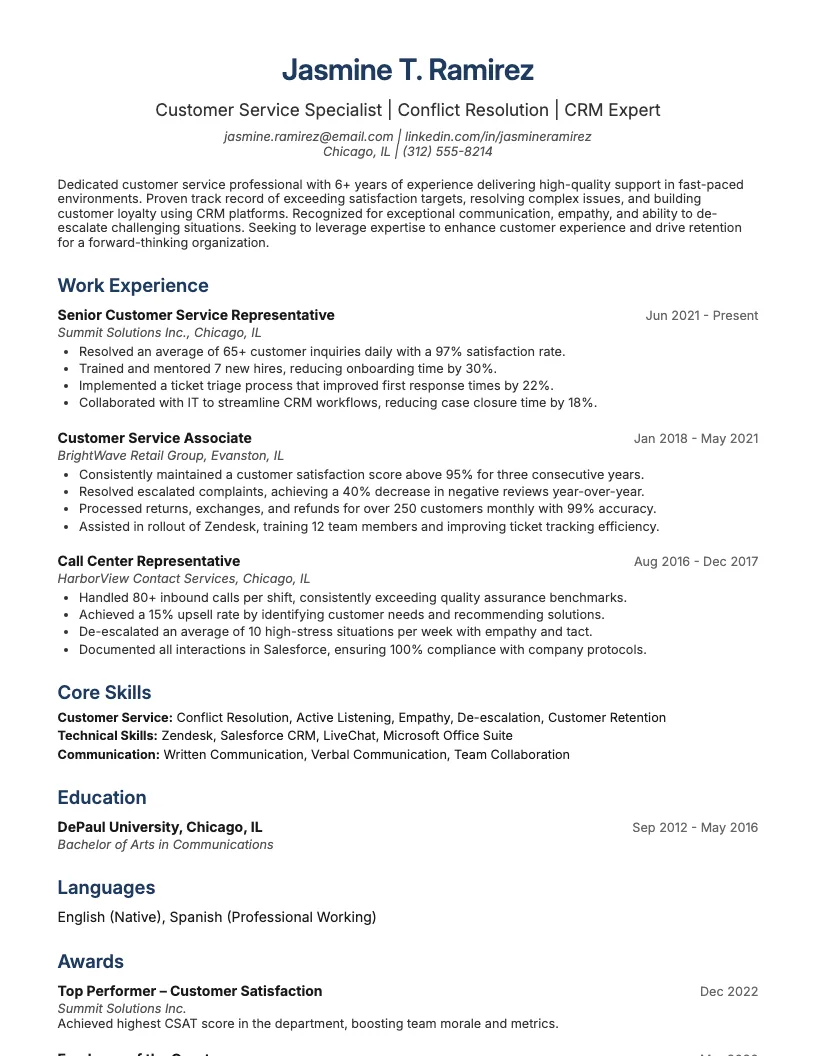
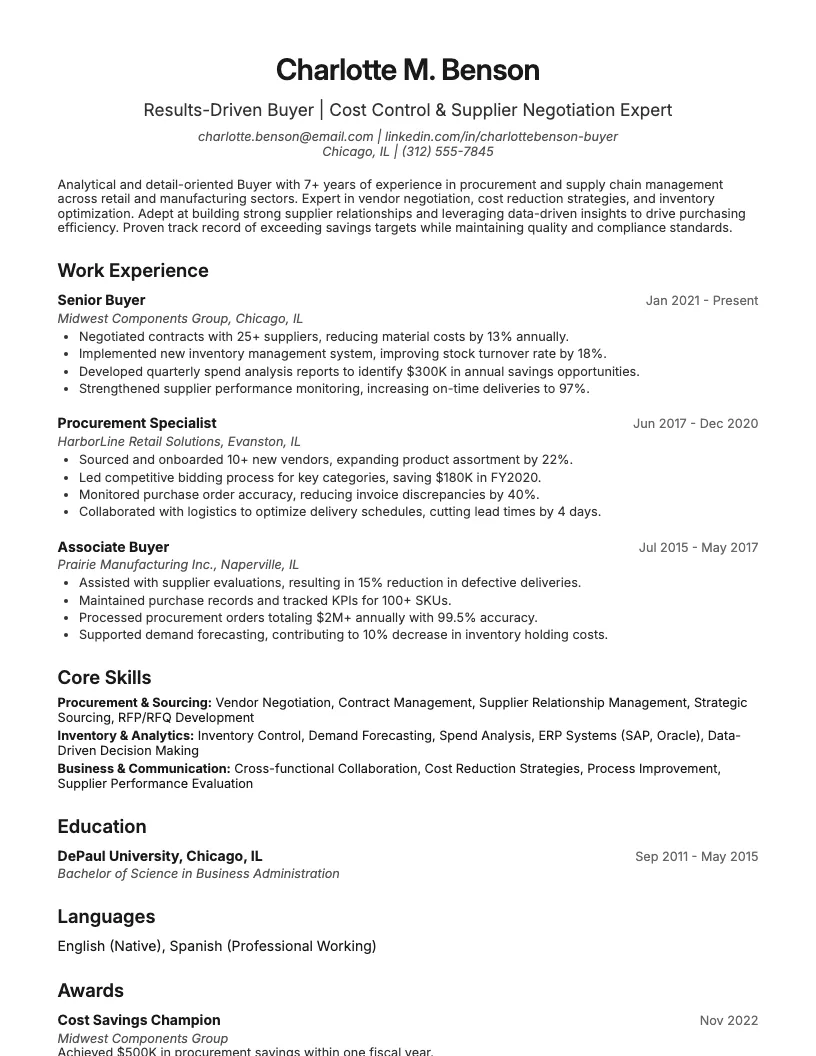 Click to enlarge
Common questions about Antique Dealer resumes
An antique dealer resume template is a pre-designed format tailored for showcasing experience in buying, selling, and appraising antiques. It highlights relevant skills and credentials, making your application stand out in the antique industry.
Many antique dealer resume templates, like those from ResumeJudge, are ATS-friendly. They use clean layouts and standard headings, ensuring your resume gets noticed by employers and passes automated screening systems.
Use an antique dealer resume template when applying for jobs in antique shops, auction houses, galleries, or estate sales. It's perfect for roles that require expertise in valuing, restoring, and selling collectible items.
Yes, you can easily customize these templates to match your unique skills and experiences. ResumeJudge offers editable templates, letting you add sections for certifications, specialties, or notable sales.
Antique dealer resume templates emphasize knowledge of antiques, negotiation, and authentication skills. They differ from general templates by focusing on industry-specific achievements and experiences.
Ideally, your antique dealer resume should be one page if you have less than 10 years of experience, or up to two pages for extensive backgrounds. ResumeJudge templates help keep content concise and relevant.
Yes, these templates work well for career changers by allowing you to highlight transferable skills like sales, customer service, and appraisal. ResumeJudge makes it easy to showcase relevant experience.
Absolutely! These templates suit both brick-and-mortar and online antique businesses. Highlight e-commerce skills, digital marketing, and online sales experience to appeal to modern employers.
Key sections include a summary, experience, education, skills, and certifications. ResumeJudge templates also let you add sections for notable appraisals or specialty collections you've handled.
Most templates offer a section for references or a statement like 'Available upon request.' With ResumeJudge, you can easily add or remove this section based on your preference.
Explore more professional resume examples to inspire your job search
Use our AI-powered resume builder to create a professional, ATS-friendly resume in minutes.
Free to use • No credit card required