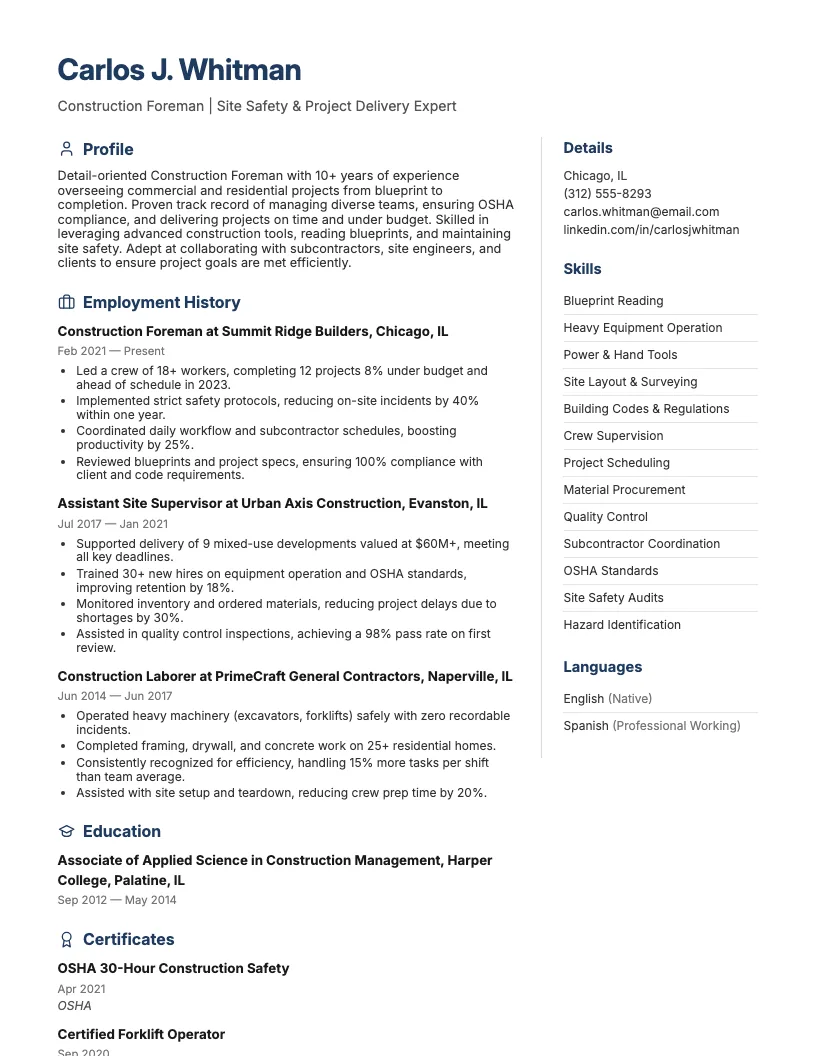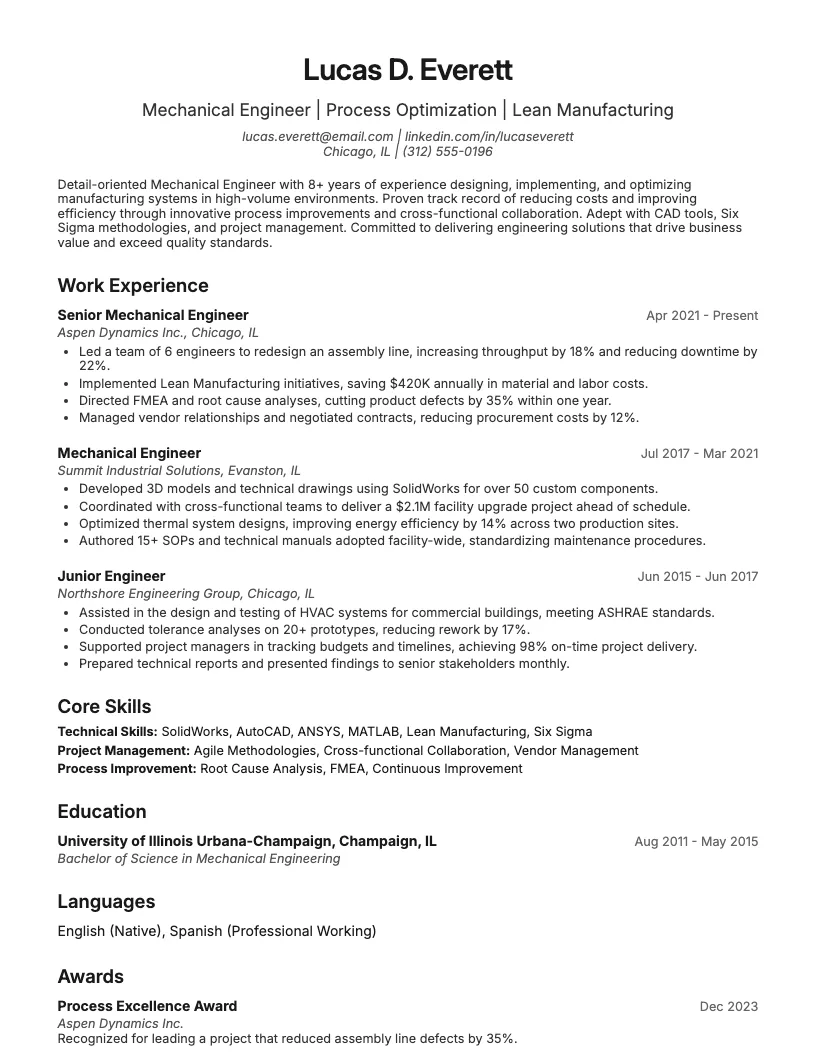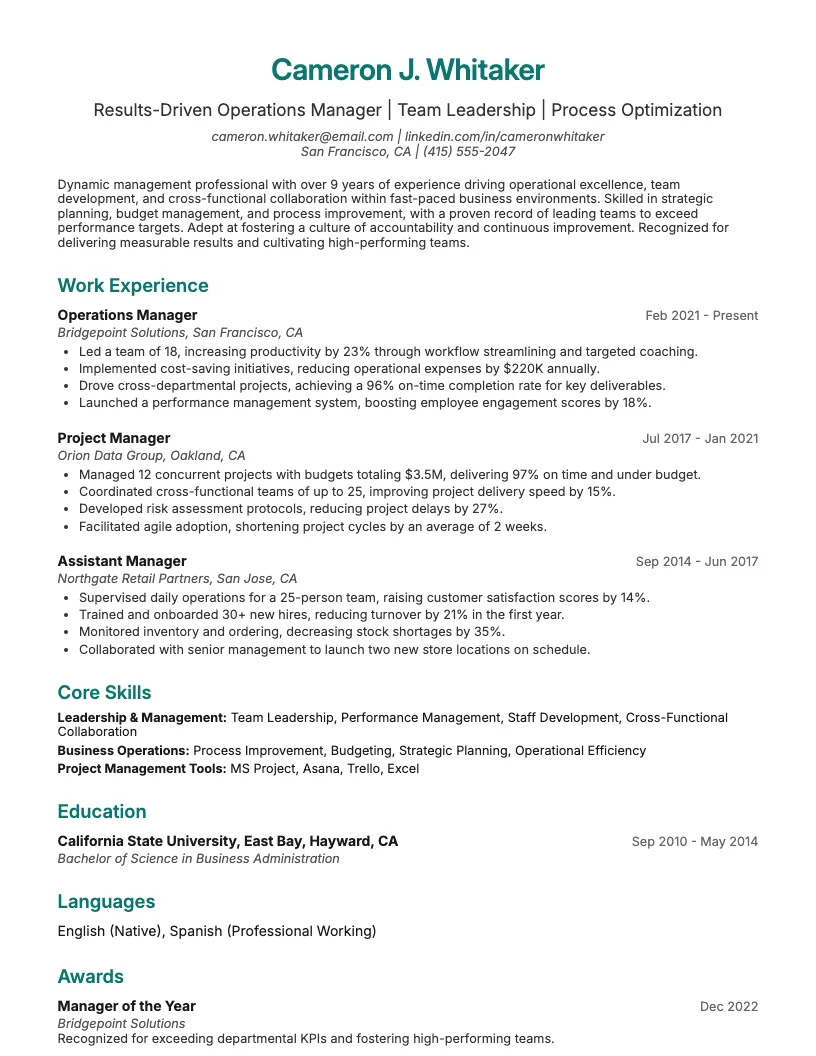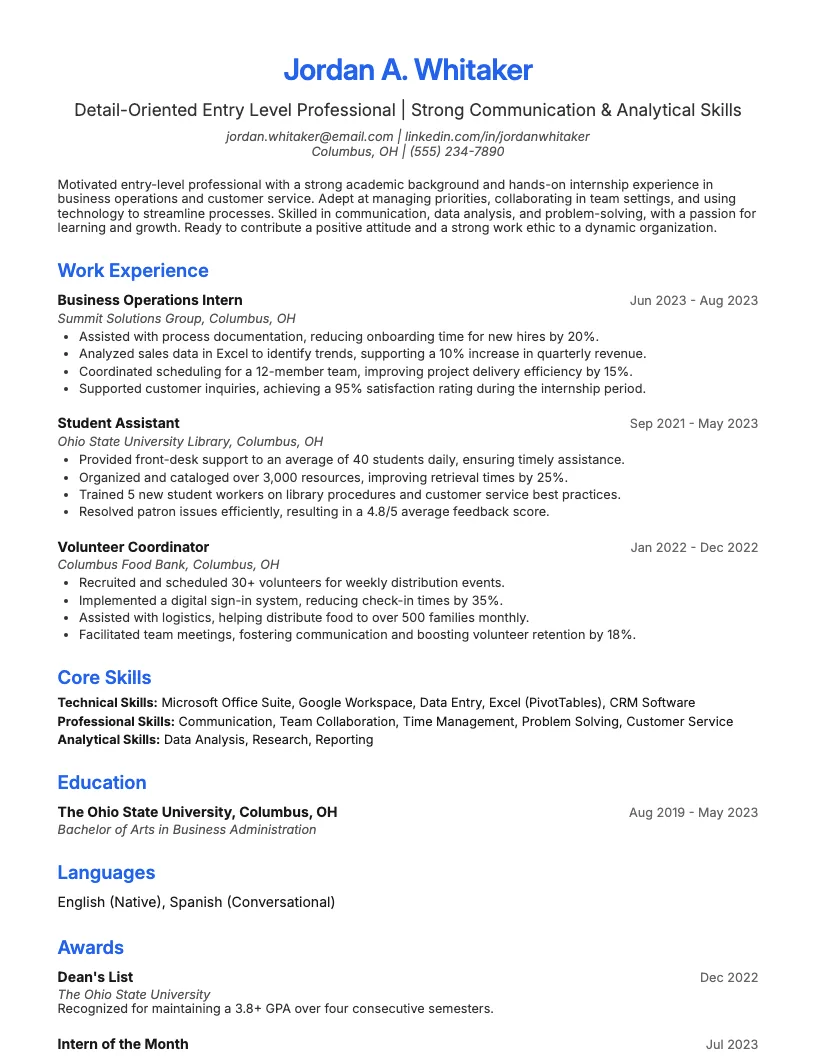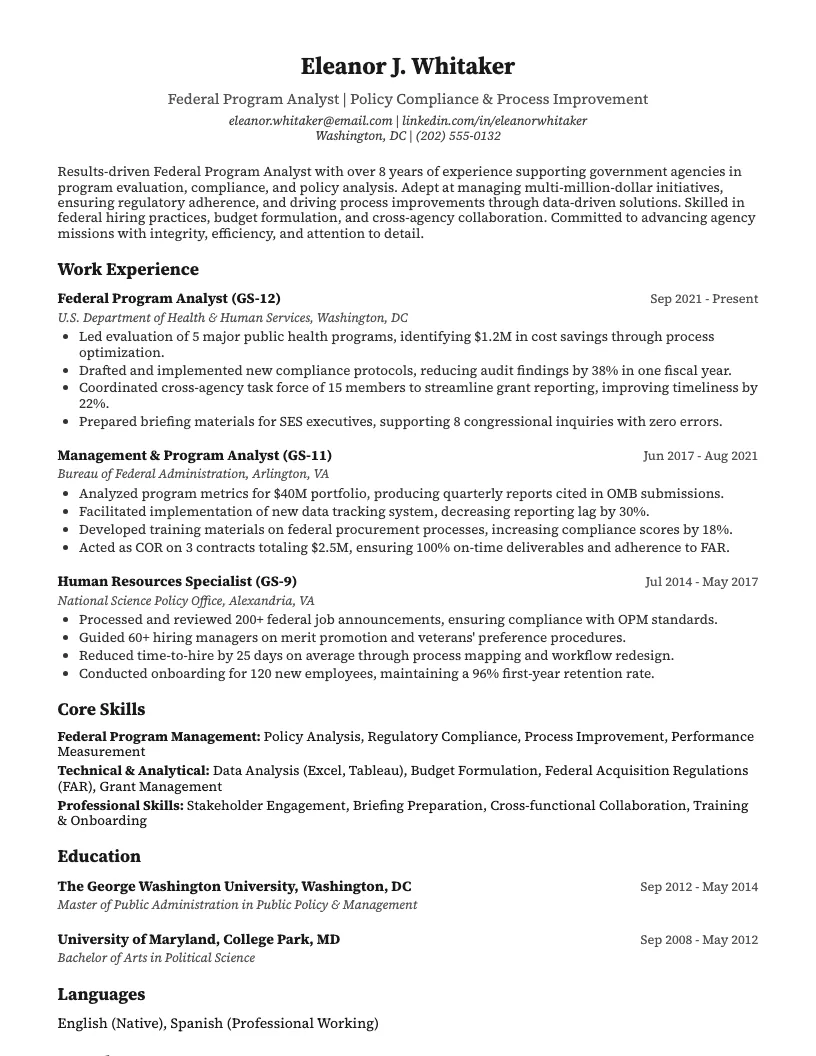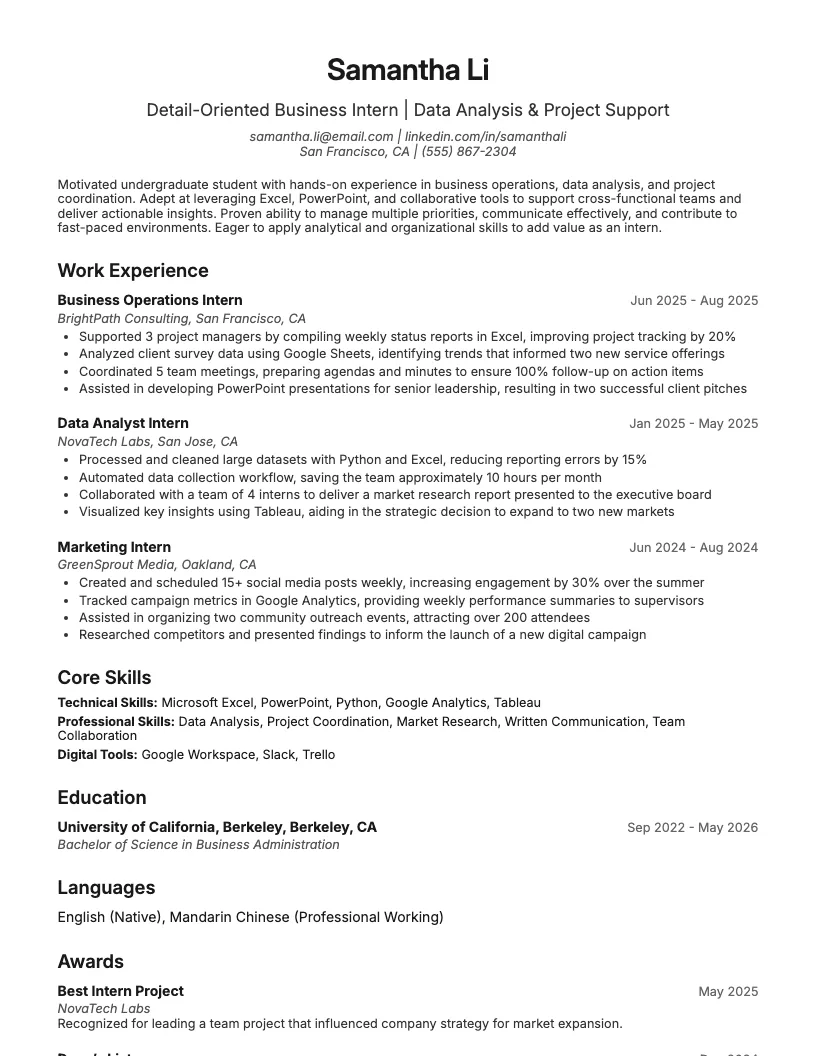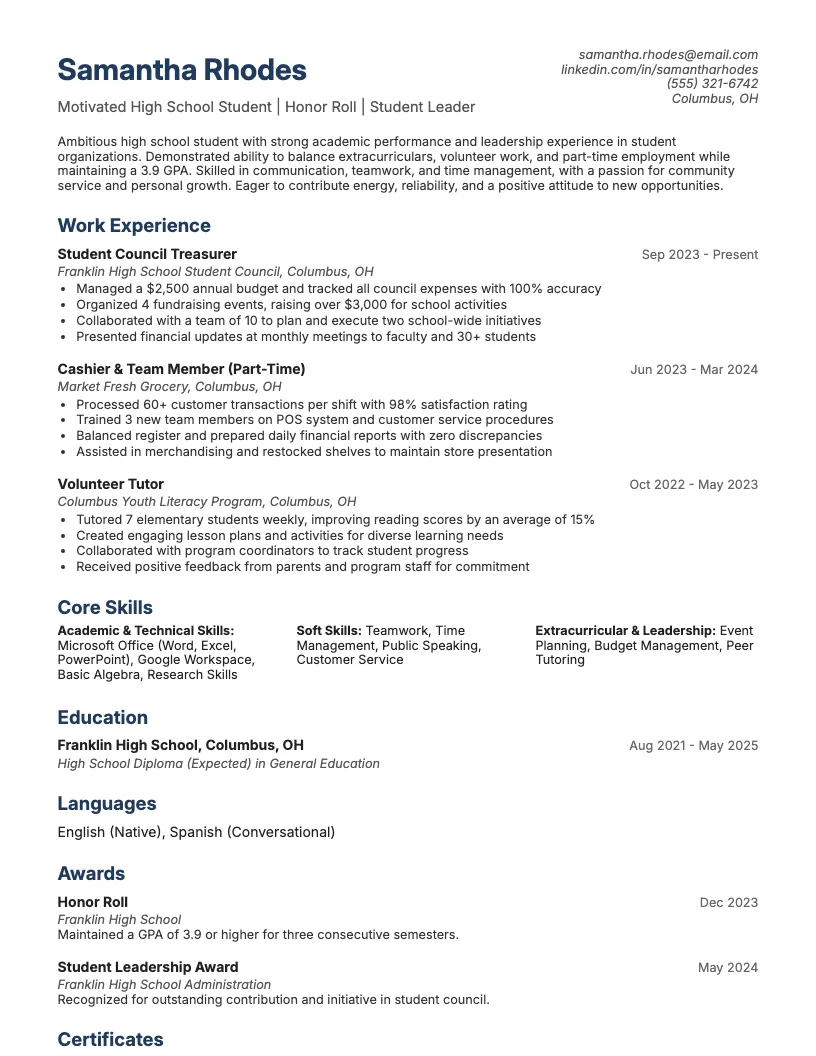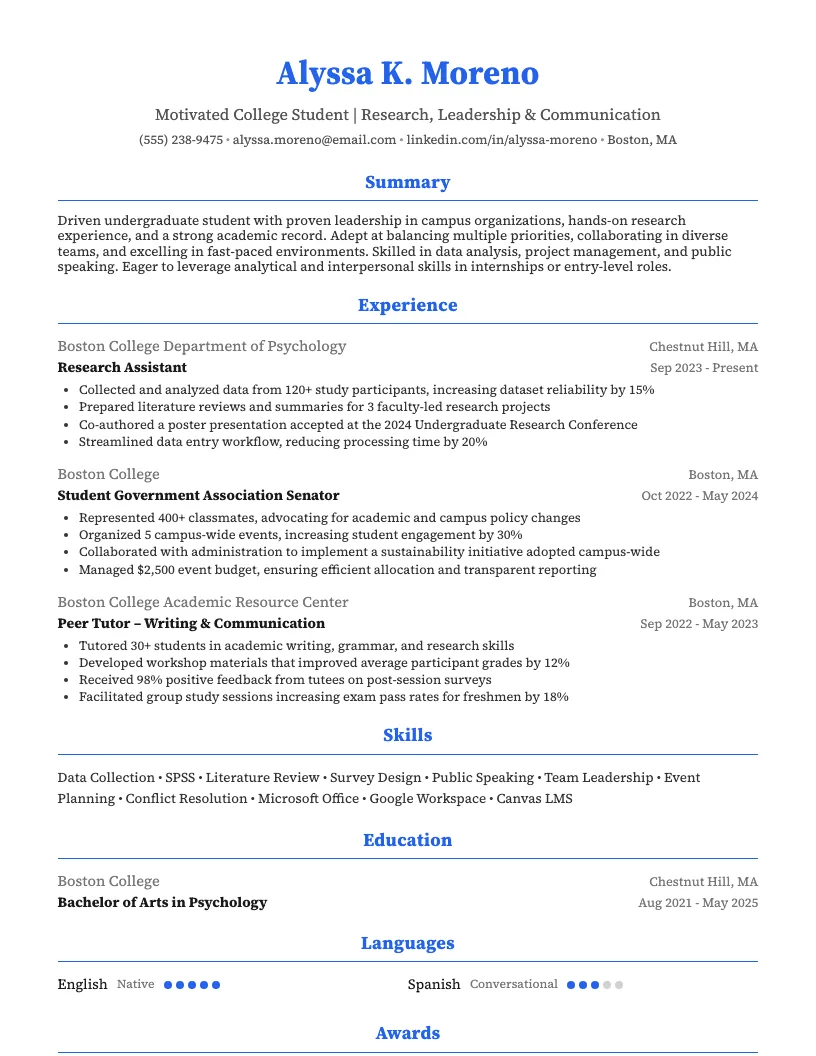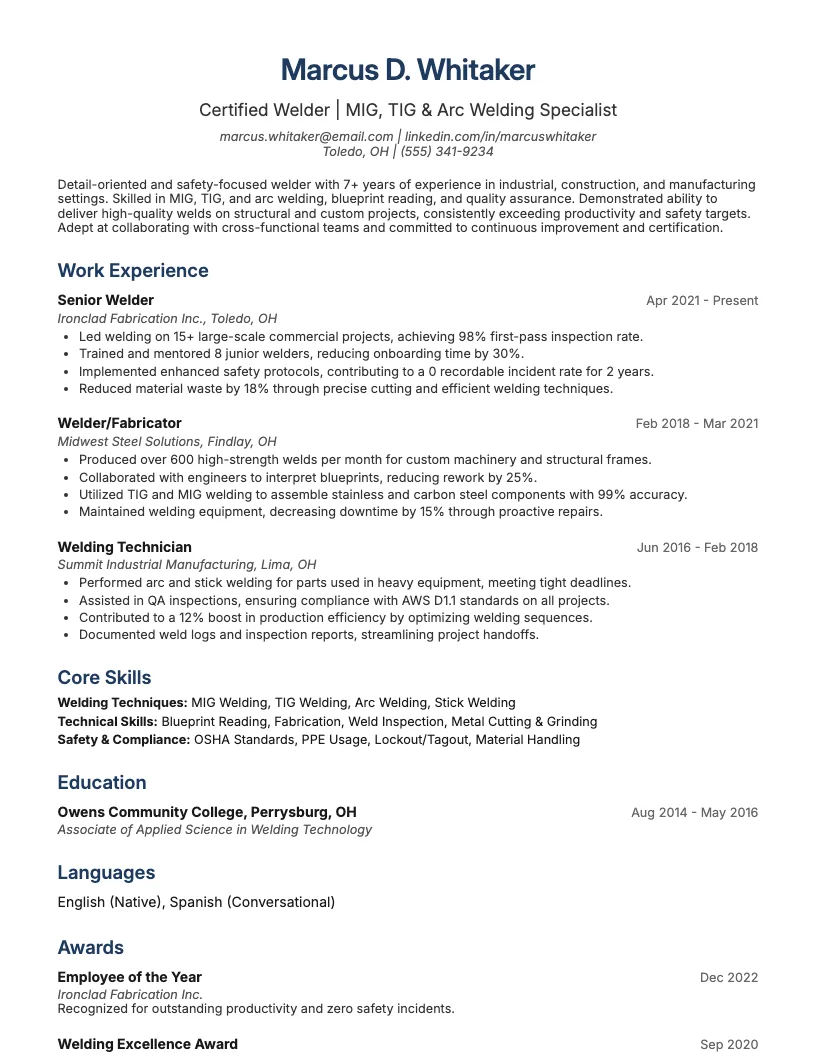
MIG Welder Resume Example
See full guide on MIG Welder resumes Click to enlarge
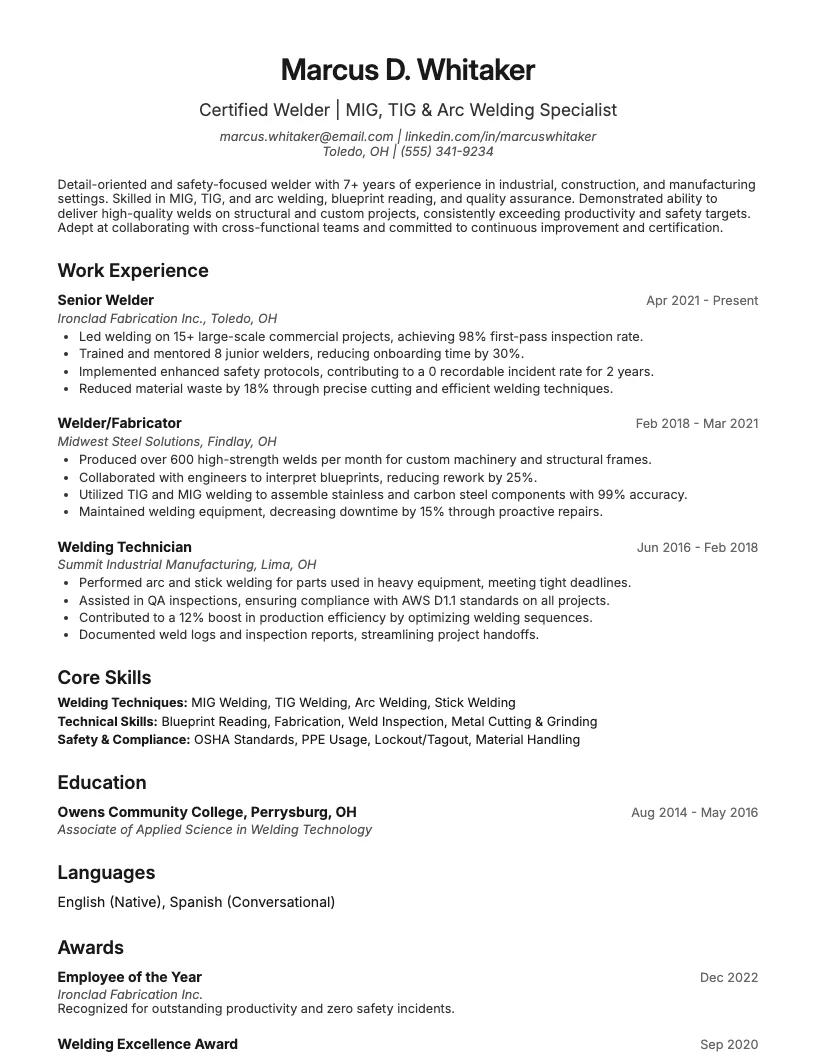 Click to preview

Get inspired by 50+ professional Welder resume examples, each written by career experts and optimized to pass ATS scans. Pick a proven template, tailor it to your role, and download a polished resume in minutes.
Pick the specialization closest to your target role and start from a proven resume example.
I know welding covers a ton of specialties, and your experience level shapes your resume. Companies want to see the right skills up front.
Whether you’re just starting or have years under your belt, your resume matters. I’ll break down entry-level, experienced, and specialized welder resume examples next.
If you’re new to welding, you don’t need years of experience to land your first job. You can focus on certifications, technical skills, and hands-on training.
I like to highlight practical coursework and any internships. Most entry-level welders mention their AWS certification and safety knowledge - that’s what hiring managers look for.
Showcase relevant skills like MIG, TIG, and stick welding. Even if your experience is from school or a side project, include it. This helps your resume stand out right away.
If you’ve got 5+ years in welding, your resume should highlight advanced skills, leadership, and big projects. I focus on quantifiable results-think reduced error rates or projects completed ahead of deadlines.
You want to show progression. List certifications like AWS Certified Welder or experience with robotic welding. Mention training junior staff, managing safety protocols, and working with blueprints and schematics.
Tailor your resume to each job. This means using keywords like MIG, TIG, arc, and specific materials. This helps your application pass applicant tracking systems and gets you noticed by hiring managers.
There are a ton of welder specializations-fabricator, pipe, structural, TIG, MIG, underwater, and more. Each one takes different skills and certifications.
If you want to stand out, highlight your specialization right at the top of your resume. This helps recruiters pinpoint your fit for their projects fast.
I always mention specific certifications, like AWS D1.1 Structural Welding or ASME Pipe Welding. Numbers matter, too-say how many years you’ve worked in your specialty.
Tailor your experience to the job. If you’re a pipe welder, focus on your X-ray test pass rate or your work with stainless steel. This shows real-world results.
Whichever specialization you pick, make your resume reflect what you do best. That’s how you get noticed in a crowded field.
Welders use specialized equipment to join metal parts for construction, manufacturing, or repairs. You see welders in industries like automotive, shipbuilding, and infrastructure.
If you're thinking about a welding career, it's good to know the job outlook and what hiring managers want to see on your resume.
Welding is a steady field. The Bureau of Labor Statistics says welder jobs grow about 3% from 2019 to 2029. That’s just a bit slower than average.
You see more openings in construction, manufacturing, and repair. Demand keeps up thanks to aging infrastructure and ongoing industrial projects across the U.S.
Pay varies a lot. Median annual wage for welders is $44,190. Entry-level jobs pay less, but skilled welders in certain industries make over $66,000 a year.
If you’re willing to travel or train in new tech, you boost your job chances. I always recommend staying updated with the latest welding certifications.
When I write a welder job description for resume sections, I always start with core tasks. You want to mention things like reading blueprints, operating welding equipment, and inspecting finished welds.
You should highlight safety compliance and list the welding techniques you use-like MIG, TIG, or stick welding. Employers love to see specific numbers, so mention how many projects you handle a week.
If you work with different metals or materials, call that out. Being able to follow detailed instructions and meet tight deadlines also makes a big difference.
Wrap it up with any certifications or specialized equipment experience. This helps your resume stand out to hiring managers looking for skilled welders.

If you’re building a welder resume, you want each part to show off your skills and experience. I always focus on what employers actually ask for.
You need a summary, experience, education, and a clear list of welding skills. Each section matters if you want to land interviews.
Tailor your resume for every job. Don’t send the same version twice. I find that customizing helps you stand out to hiring managers.
Start your resume with a summary that quickly shows who you are as a welder. Focus on your job title, years of experience, and top skills.
I always mention the types of welding I do best-like MIG, TIG, or stick welding. This helps employers see right away if I fit their needs.
Keep it short, about 3-4 lines. Use numbers when possible, like “5+ years in fabrication.” Tailor this section for every job you apply to.
When I describe my welding jobs, I focus on scope and results. I name the types of projects, materials, and industries-like pipelines, automotive, or structural steel-so hiring managers get a clear picture.
I use numbers whenever I can. For example, I mention “completed 50+ pipe welds per week” or “reduced rework by 20%.” This helps show my impact, not just my daily tasks.
You want to highlight any leadership or teamwork moments too. If you trained new welders or led safety checks, say so. This makes your experience section stand out.
I always list my highest level of education first, even if it’s just a high school diploma or GED. This sets a solid foundation for my technical training.
Most welding jobs want to see industry certifications-think AWS Certified Welder or CWI. These credentials prove I know specific welding processes and safety protocols.
If I’ve taken specialized training-like blueprint reading or OSHA 10-I include it here. This helps show employers I’m committed to learning and staying current in the field.
When I list my welding skills, I get specific. I mention processes like MIG, TIG, Stick, and Flux-cored Arc Welding. This tells employers I know the industry standards.
You should also list the materials you work with-like stainless steel, aluminum, or carbon steel. Employers want to see exactly what you handle on the job.
Don’t forget to include technical proficiencies like reading blueprints, operating plasma cutters, or using calipers. These details help your resume stand out to both hiring managers and applicant tracking systems.
That’s it-keep this section targeted and relevant, and your skills will do the talking.
Choosing the right resume format makes a big difference. For most welders, a clear layout helps your skills and experience stand out fast.
You want hiring managers to see your strengths right away. A simple, organized design works best, no matter your background or experience level.
Your resume summary is your first shot at showing what makes you a standout welder. It highlights your experience, skills, and certifications in just a few focused lines.
A strong summary quickly tells hiring managers what you bring to the table. You want to show your technical know-how, safety record, and any specialties right up front.
Your work history is where you show off your real welding skills. This is your chance to prove what you can actually do on the job.
Focus on the impact you make, not just your daily tasks. Employers want clear results, numbers, and specific achievements, not just a job description.
You don’t always need a college degree to land a welding job, but employers do look for proof of training and skills.
Most welders start with a high school diploma or GED. Some jobs want technical school or certification, especially for specialized work.
If you’ve taken welding courses, finished an apprenticeship, or earned a credential, highlight that here. Certifications can show you’re ready for more responsibility or higher pay.
Hiring managers look for welders who show both technical skill and reliability. Listing the right skills helps your resume get noticed, especially by automated systems.
You want to focus on skills that match the job description. Tailoring your resume for each welding job increases your chances of landing an interview.
Think about your hands-on experience, certifications, and any safety training. Soft skills, like teamwork and communication, matter just as much as technical abilities.
A strong welder resume gets you noticed, especially since there are about 400,000 welding jobs in the U.S. right now. Competition is tough, so every detail matters.
You want your resume to show off your skills, certifications, and key experience. Customizing each application helps you stand out and pass those automated screening systems.
Browse Welder resume examples for related roles. Preview any example, open it in the builder, or read its full guide.
Click to enlarge Click to enlarge Click to enlarge Click to enlarge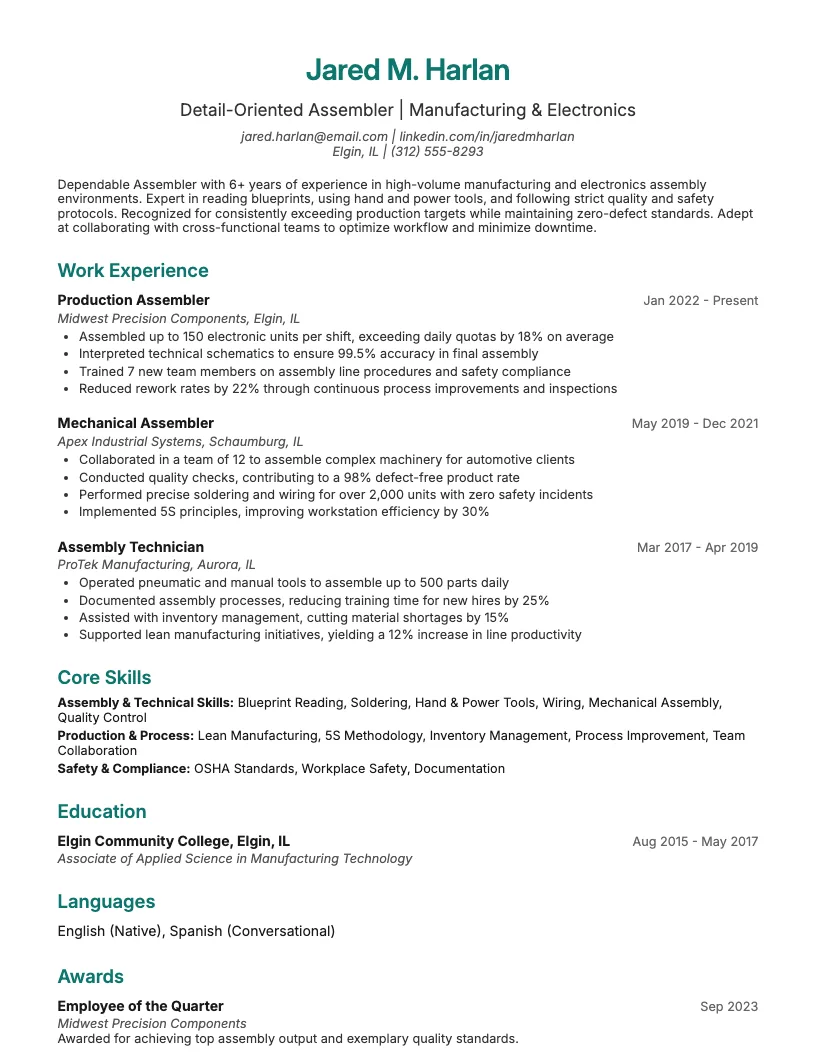 Click to enlarge Click to enlarge Click to enlarge Click to enlarge Click to enlarge
Common questions about Welder resumes
A welder resume template is a pre-designed document tailored for welding professionals to highlight relevant skills, certifications, and experience. ResumeJudge makes it easy to showcase your qualifications quickly and professionally.
Yes, welder resume templates from ResumeJudge are ATS-friendly, ensuring your application passes automated screening. This increases your chances of getting noticed by employers in manufacturing, construction, and more.
Use a welder resume template when applying for jobs in construction, automotive, shipbuilding, or manufacturing. ResumeJudge helps you target your resume for each industry and job type efficiently.
Absolutely! ResumeJudge lets you personalize welder resume templates to match your unique skills, experiences, and certifications. You can easily add or remove sections to fit your needs.
Welder resume templates focus on technical skills, safety training, and certifications specific to welding. ResumeJudge designs these templates to highlight practical experience, unlike generic templates.
A welder resume should typically be one page, especially for entry-level roles. ResumeJudge formats your resume for clarity, ensuring the most important details stand out.
Yes, listing welding certifications like AWS or OSHA is important. ResumeJudge helps you highlight these credentials so employers can quickly see your qualifications.
While not always required, a cover letter can help for senior or specialized welder roles. ResumeJudge offers guidance on crafting a cover letter that matches your resume.
A welder resume should emphasize skills like MIG/TIG welding, blueprint reading, and safety awareness. ResumeJudge templates help you organize these skills for maximum impact.
Yes, the template works well for entry-level jobs and apprenticeships. ResumeJudge helps you focus on relevant training and hands-on experience, even if you're new to the field.
Explore more professional resume examples to inspire your job search
Use our AI-powered resume builder to create a professional, ATS-friendly resume in minutes.
Free to use • No credit card required