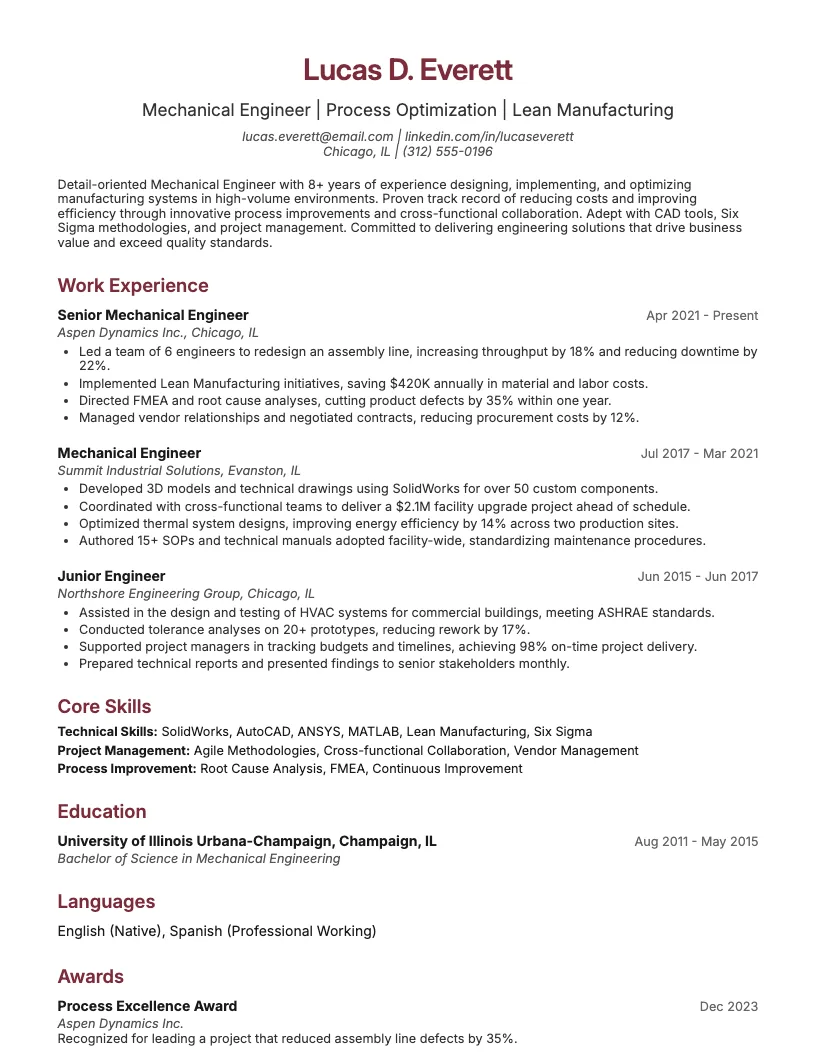
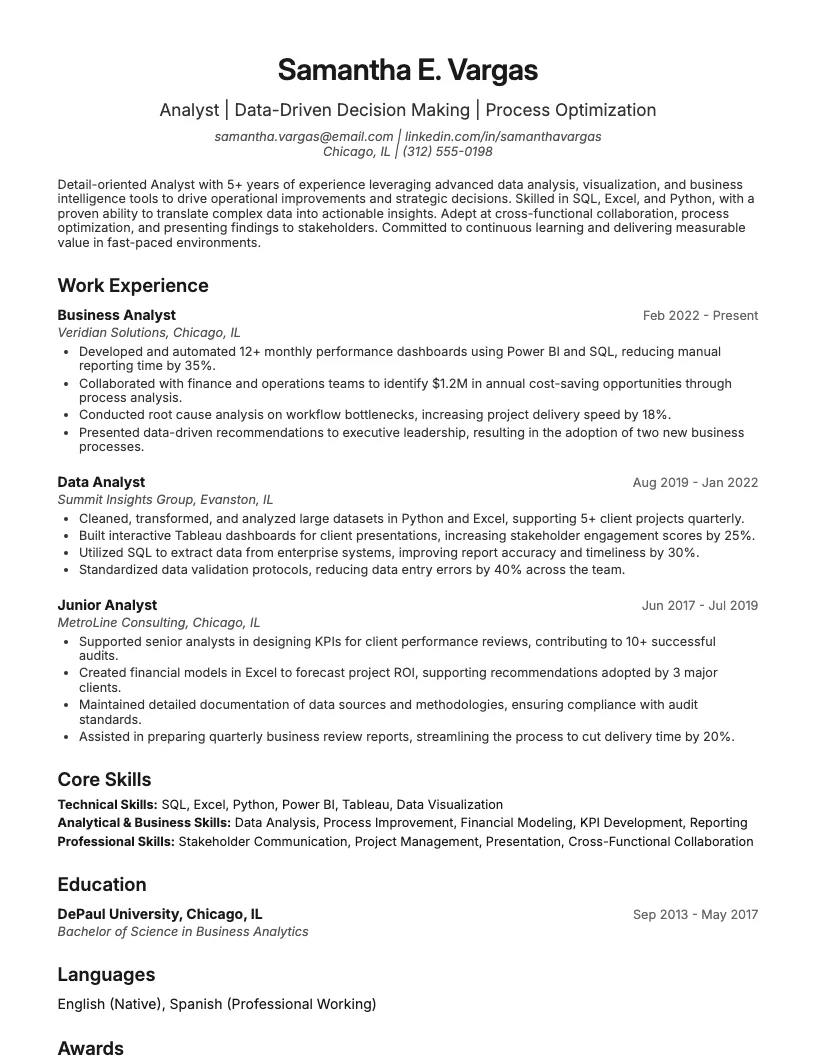
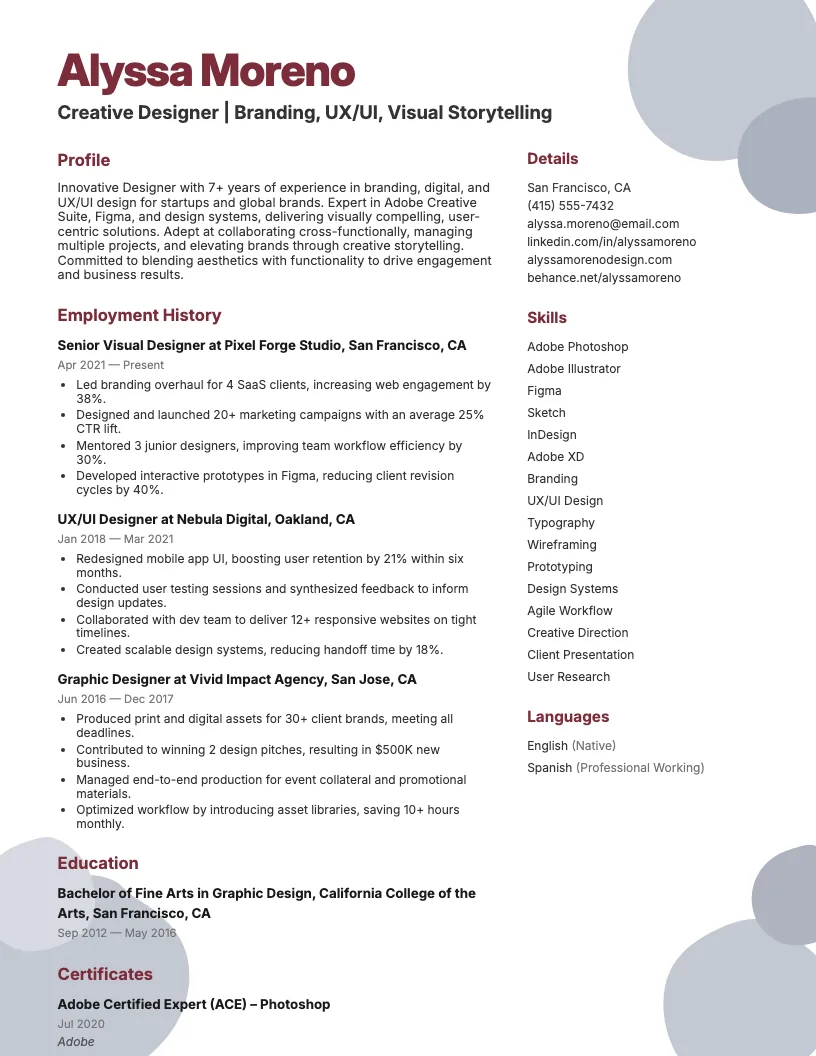
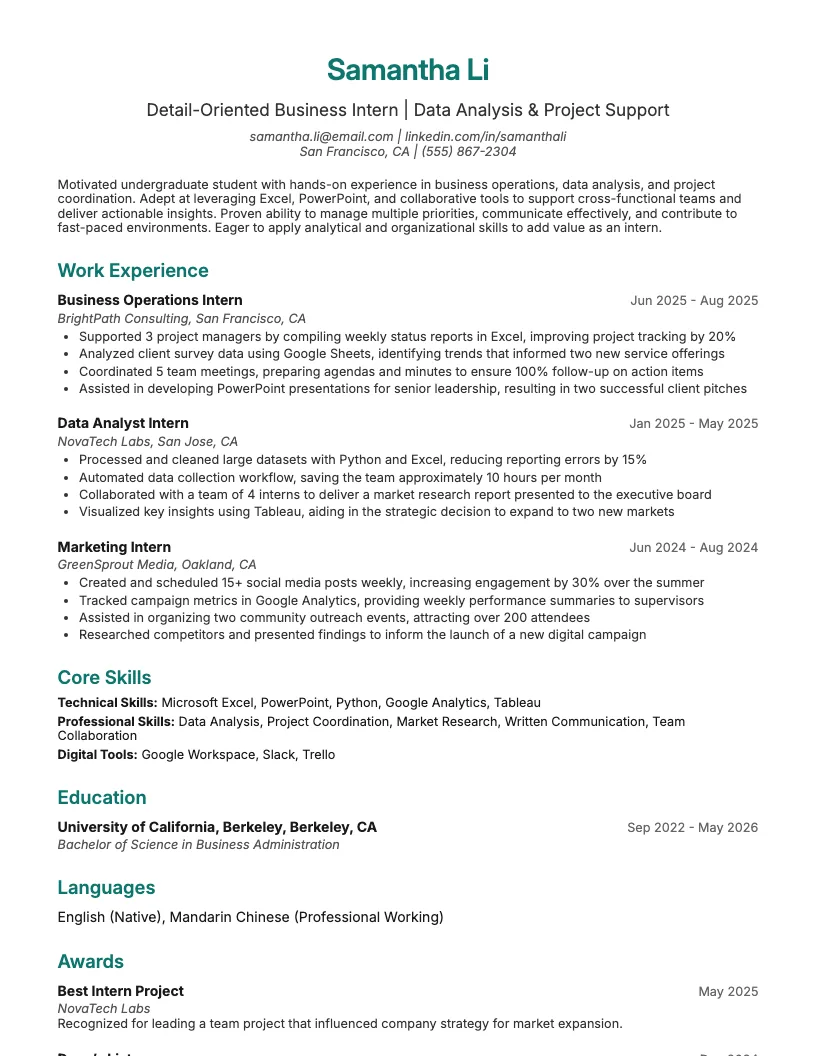
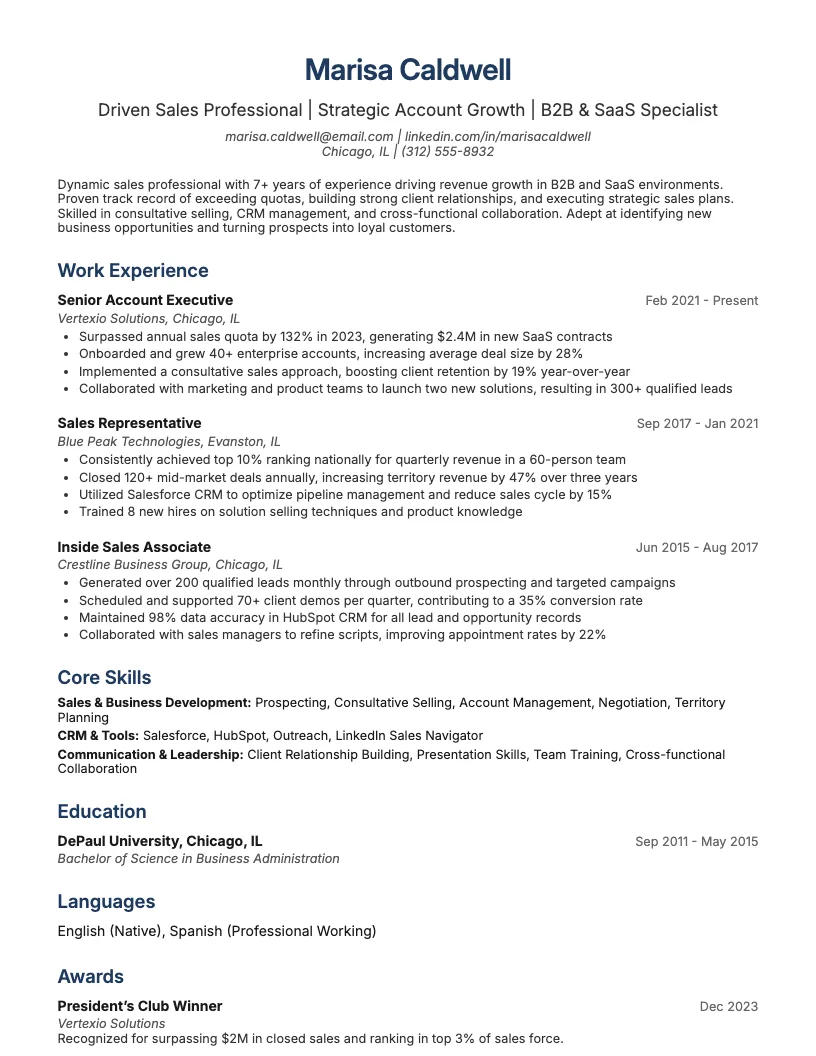
Frontend Developer Resume Example
See full guide on Frontend Developer resumes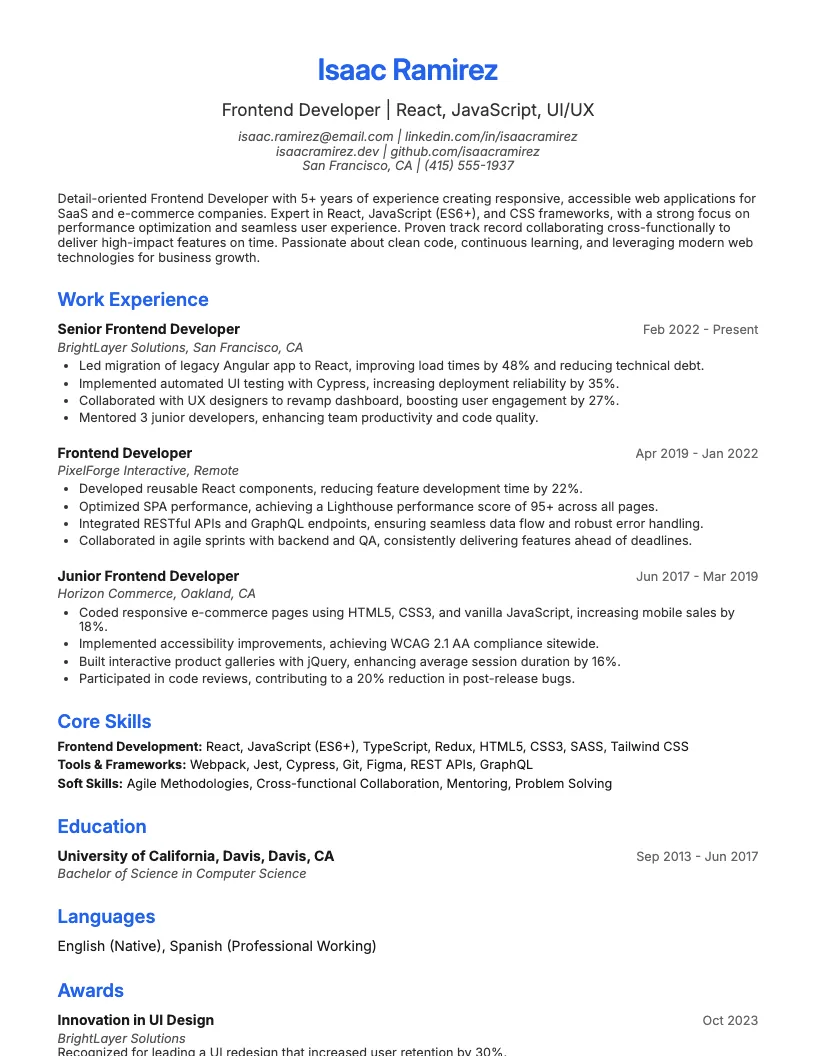 Click to enlarge
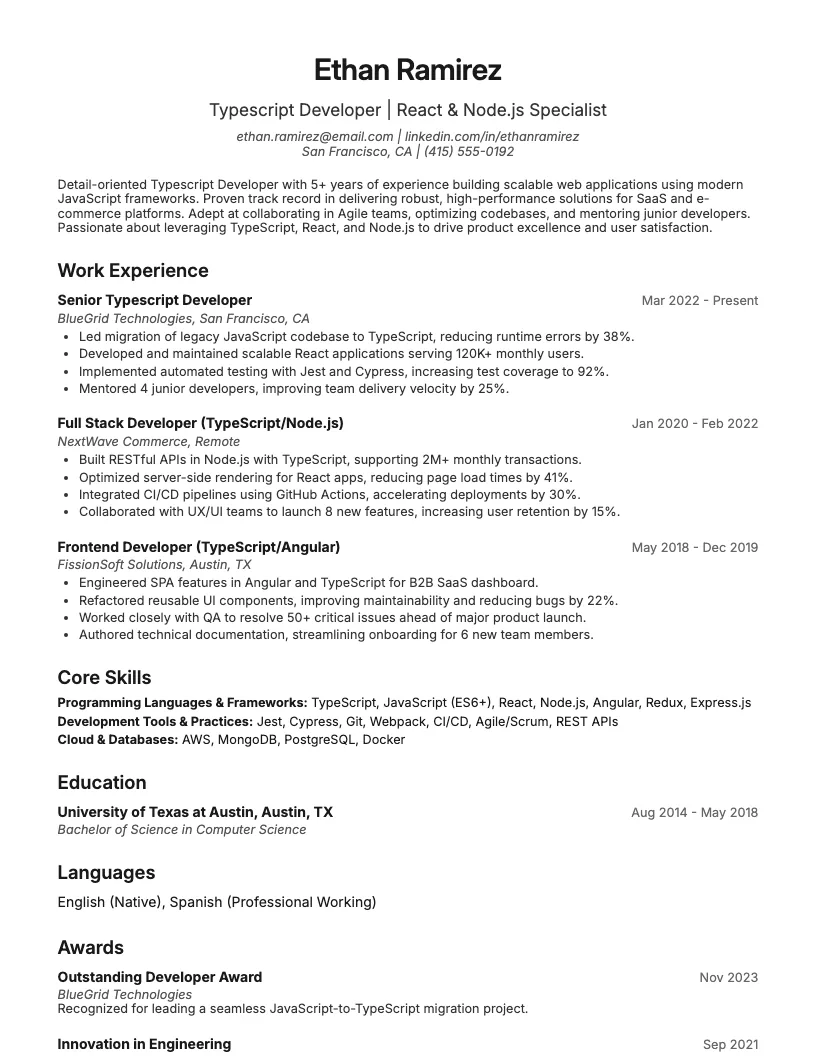 Click to preview

Get inspired by 68+ professional Typescript Developer resume examples, each written by career experts and optimized to pass ATS scans. Pick a proven template, tailor it to your role, and download a polished resume in minutes.
Pick the specialization closest to your target role and start from a proven resume example.
If you want to land a Typescript developer job, your resume needs to show your skills clearly. I see companies get over 200 applications for a single developer opening.
You need a resume that highlights your experience with Typescript, JavaScript, and frameworks like React or Node.js. I’m here to help you get started.
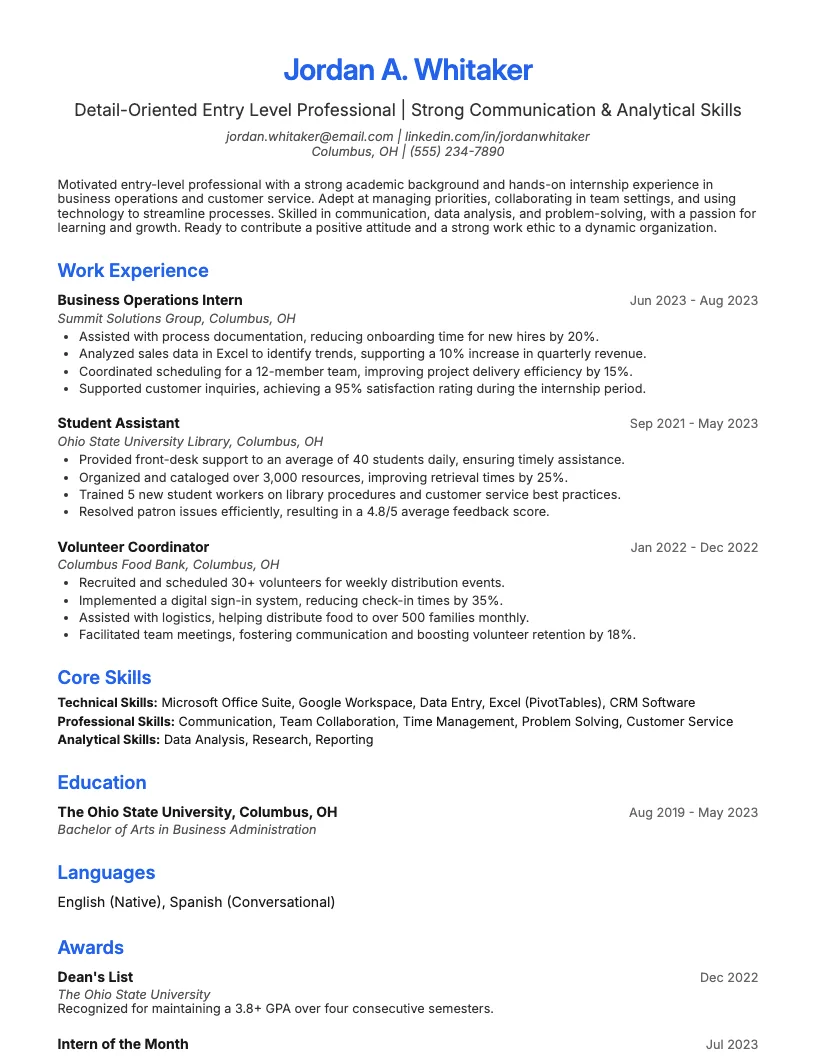
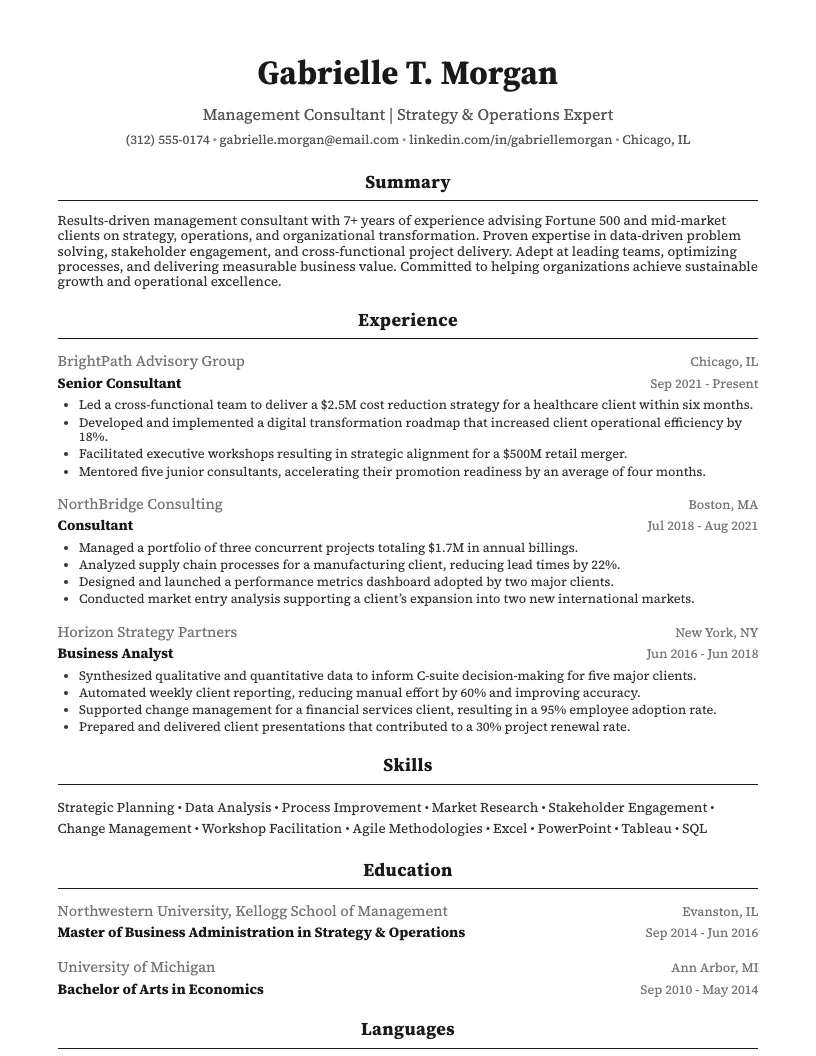
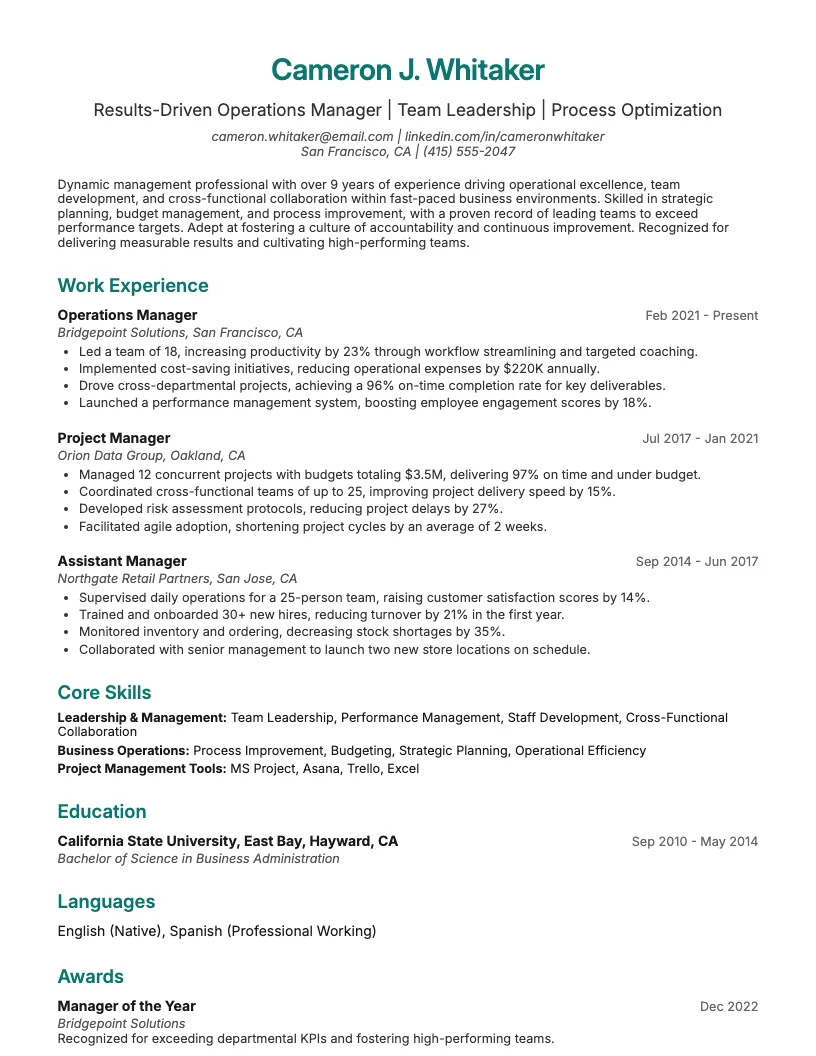
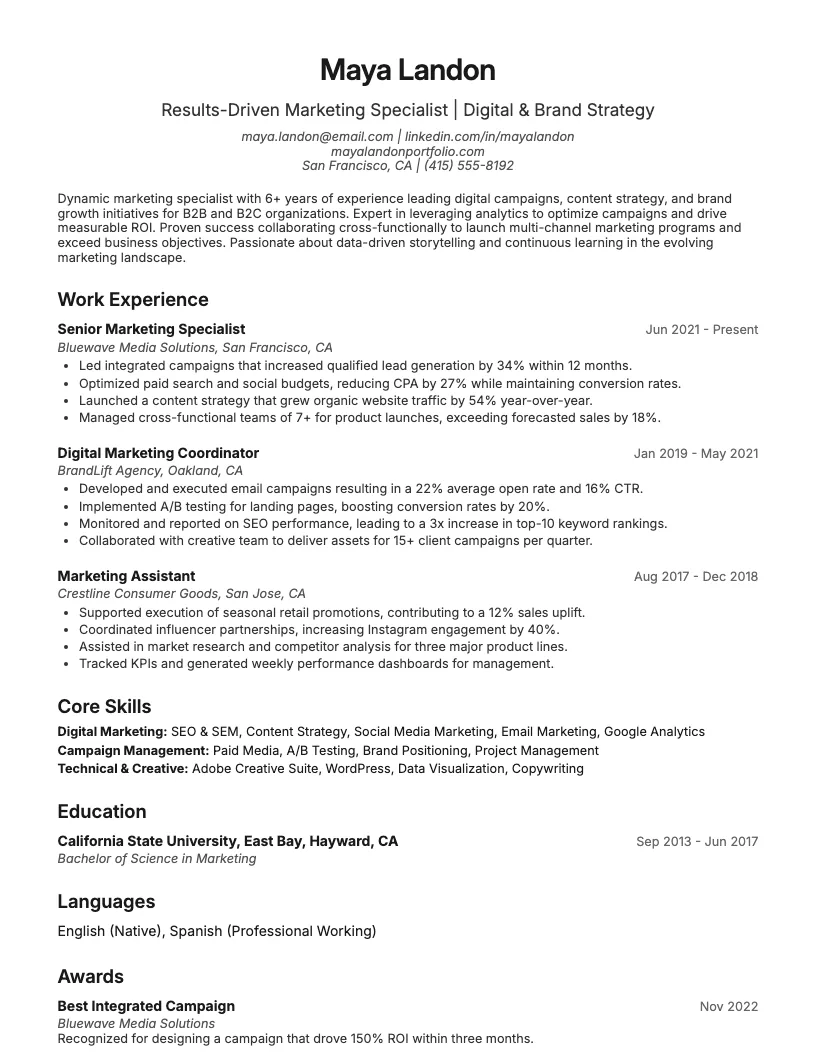
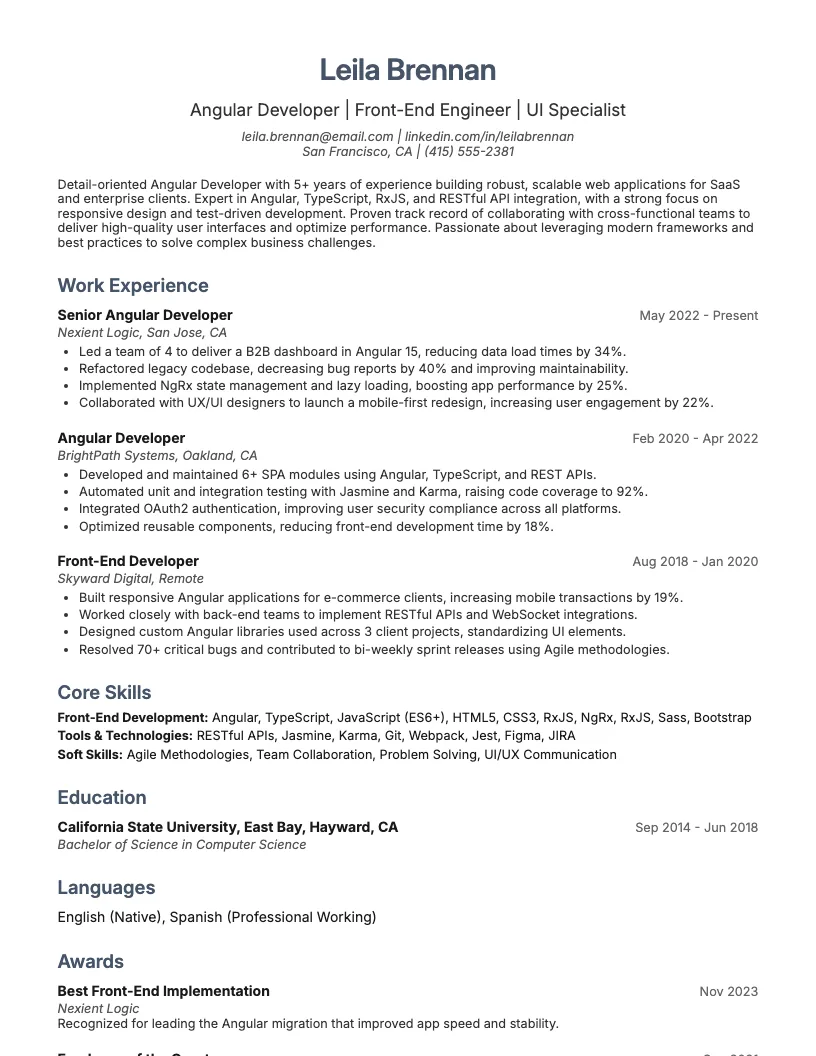
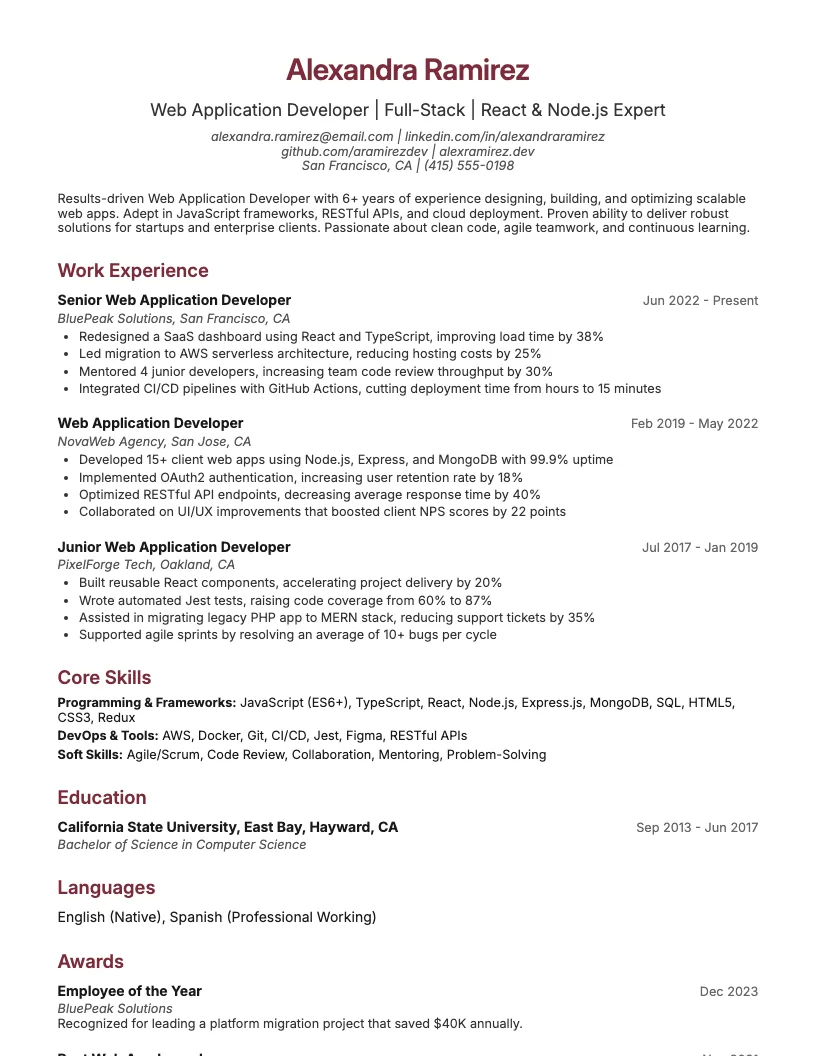
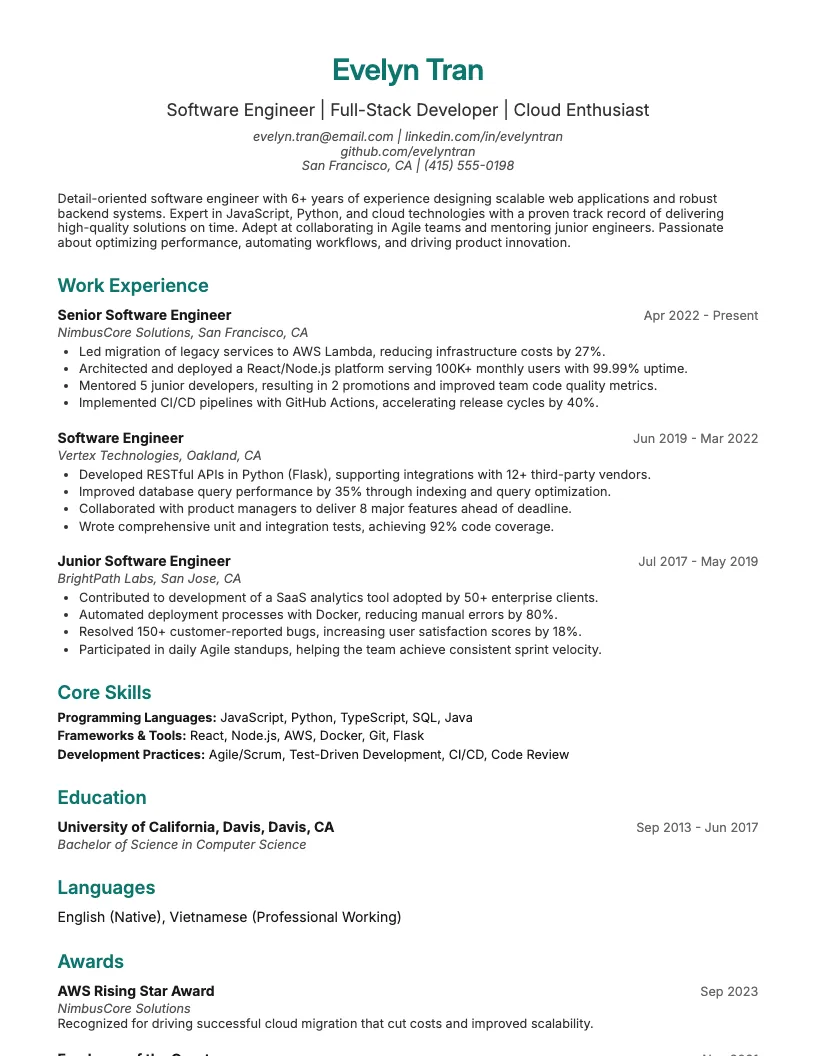
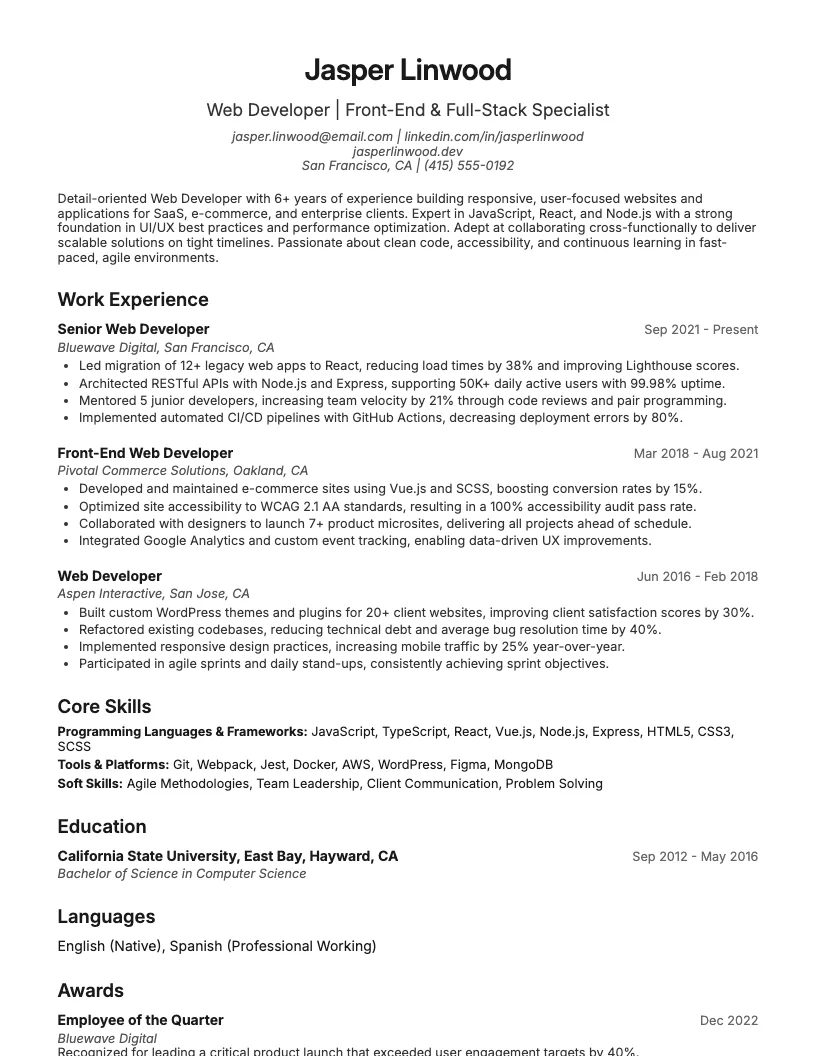
I’m going to show you a sample resume and a PDF template you can download. These examples follow what hiring managers actually want to see.
If you want your Typescript developer resume to stand out, you need a layout that’s clear, modern, and easy to scan. I keep things simple and focused.
You want to highlight skills, projects, and measurable results. I usually lead with a short summary, then show off technical skills, experience, and education.
Adding specific numbers-like “cut deployment times by 30%” or “built features used by 10,000+ users”-helps your resume pack more punch. Recruiters like clear impact.
You can grab a free, downloadable PDF of a Typescript Developer resume. This gives you a real sense of layout, formatting, and what recruiters expect.
I always recommend downloading a sample before you start. It helps you visualize your own skills, and you can compare your experience with real-world examples.
Feel free to use the PDF as a reference, but make sure you customize your content. Recruiters spot generic resumes quickly, so always keep it personal and relevant.
If you want to land a Typescript developer job, your resume needs to show your technical skills and real project experience right away. Recruiters spend about 7 seconds scanning each resume.
You need the right format and layout to stand out. I’ll break down what works best for a Typescript developer resume and why it matters.
First impressions matter. I always keep my resume clean and easy to scan. Recruiters spend about 7 seconds on a resume, so clarity really counts.
Stick to a standard font like Calibri or Arial in 10-12pt size. Margins should be at least 0.5 inches. This keeps everything neat and readable.
Use bold for section headings and bullets for achievements. You can add a bit of color, but keep it subtle. This helps your skills and experience pop.
I always start by picking a layout that matches my experience level. For junior roles, a reverse-chronological format works best-hiring managers prefer seeing recent work first.
If you’ve got gaps or lots of projects, try a combination layout. This highlights both your skills and work history, which is great for freelance or contract Typescript developers.
Keep your resume layout clean and scannable. Recruiters spend about 6 seconds on an initial scan, so clear headings and bullet points make you stand out fast.
No matter what, I stick to one page if I’ve got under 10 years of experience. It keeps everything focused and easy for anyone to read.

Every Typescript developer resume needs the right sections to show off your skills. Recruiters spend about 7 seconds scanning each resume, so you want to get this right.
I focus on sections that highlight both technical expertise and real-world experience. These key areas help you stand out for roles at top tech companies.
The professional summary is your first impression. I use this section to quickly show off my Typescript expertise, years of experience, and the industries I work in.
You want to keep it short-2-4 sentences. Focus on your most relevant strengths, like scalable app development or modern JavaScript frameworks. Mention years of experience if you have over three.
Highlight your impact with numbers when you can. For example, “I build and maintain web apps used by over 50,000 users.” This helps recruiters spot your value fast.
I always put my key technical skills front and center. For a Typescript Developer, this means listing Typescript itself, plus JavaScript, React, Node.js, and REST APIs.
You want to include frameworks, testing tools, and version control systems. Think Redux, Jest, Git, and Docker. Don’t forget cloud platforms like AWS or Azure if you use them a lot.
There are usually 3-6 main tech skills on a resume. This helps recruiters quickly spot if you’re a fit. Keep it clear and up-to-date with what you use daily.
I focus on showing hands-on Typescript projects, frameworks, and team sizes. Listing past roles with measurable achievements-like reducing bugs by 30% or launching apps with 10k+ users-makes an impact.
You should highlight collaboration with designers, testers, and backend devs. This shows you can work across teams, not just code in a silo.
There are extra points for mentioning agile sprints, code reviews, and mentoring newer devs. It proves you contribute to a healthy, productive team environment.
I always include my highest degree-usually a bachelor’s in Computer Science, Software Engineering, or something tech-focused. This shows I’ve got a solid academic foundation.
If you’ve completed relevant coursework like Web Development, Data Structures, or Algorithms, definitely highlight that. It shows you’re serious about the technical side of things.
You don’t need a master’s or PhD for most TypeScript roles, but adding them can help. If you learned TypeScript through a bootcamp or online courses, list those too.
I list relevant certifications like Microsoft Certified: Azure Developer Associate or AWS Certified Developer. These show I keep up with current tech and best practices.
You should add open-source projects or personal apps built with TypeScript. This gives real proof of your skills and hands-on experience beyond a job title.
Highlight projects with clear outcomes-like user stats or code contributions. This helps hiring managers see what you actually deliver, not just what you know.
Your summary is the first thing a recruiter reads. It’s your quick pitch, so it needs to show your impact right away.
I see hiring managers look for clear results, tech stacks, and years of experience. Short, direct statements work best here.
If you want to stand out, you need to highlight your TypeScript expertise and the business value you bring. Let’s check out some examples.
Hiring managers look for a solid mix of technical and soft skills on a Typescript Developer resume.
I focus on both, since 90% of tech job postings mention teamwork and communication alongside coding expertise.
Technical skills get you noticed, but soft skills help you fit into a team. You want your resume to show both.
Technical chops matter most for a TypeScript developer. You want to show off your TypeScript expertise, plus how you use JavaScript, Node.js, and frameworks like React or Angular, and you can reference a cover letter for ideas on how to present these skills.
I always highlight my understanding of type systems, ES6+ features, and testing frameworks like Jest or Mocha. Employers love to see experience with REST APIs, Git, and CI/CD pipelines.
You can bump your resume by listing tools you actually use-like Webpack, Docker, or GraphQL. Numbers help: mention project sizes, user counts, or codebase scale where you can.
I always highlight communication on my resume. Teams need clear updates, and I find that direct feedback helps avoid misunderstandings-especially when collaborating with designers or backend devs.
You should show problem-solving skills, too. Hiring managers like developers who break down issues and suggest practical fixes. About 73% of tech managers say this is a top priority.
Adaptability matters. Tech stacks change, and I keep learning new frameworks. If you show you embrace change, you’ll stand out in any Typescript developer role.
Strong time management is a must. I juggle multiple projects, so I use task boards and set strict deadlines. This keeps me on track and reduces stress.
When I write a resume as a Typescript Developer, I focus on clear, real-world impact. Employers want to see how I solve problems and drive projects.
You want your experience to show technical skills and teamwork. It doesn’t matter if you’re entry-level or senior-results and growth speak loudest.
In the next sections, I’ll break down what strong work experience looks like at different career stages. Let’s dive in.
Starting out as a Typescript Developer means showing off your foundational skills, and looking at a cover letter can help you frame your academic projects, internships, or freelance gigs using Typescript.
You want to mention things like basic app development, bug fixes, or collaborating on small team projects. Recruiters look for hands-on experience, even if it’s just 3-6 months.
Focus on how you use Typescript for cleaner code, catching errors early, and working in agile teams. This helps show you know the core benefits of the language.
If you contribute to GitHub or open-source, call that out. Concrete numbers-like “reduced bugs by 20%”-make your experience stand out.
At the mid-level, I usually manage more complex projects and help mentor junior devs. I work with REST APIs, unit testing, and integrate TypeScript with frameworks like React or Node.js.
You want to highlight your impact-mention specific features you build, bugs you resolve, and how you optimize code. I always quantify results, like boosting app performance by 30% or reducing bugs by 15%.
It helps to show you work well with cross-functional teams. I often collaborate with designers, QA, and DevOps to deliver releases on time. This teamwork matters at this stage.
As a senior Typescript developer, I lead teams of 5-10 engineers, oversee code reviews, and shape architecture decisions for enterprise-scale apps handling millions of users.
I highlight achievements like reducing deployment times by 30%, mentoring junior devs, and implementing testing strategies that cut bugs by 40%. This shows strong impact beyond just coding.
You want to show leadership, cross-team collaboration, and the ability to drive projects from concept to delivery. This helps recruiters see you as a strategic technical partner, not just a coder.
Picking the right action verbs and keywords can boost your resume’s visibility. Recruiters and applicant tracking systems (ATS) look for specific skills and tech terms.
I always focus on verbs that highlight problem-solving, coding, and collaboration. These words show what you actually do and help your experience stand out.
Recruiters spend less than 7 seconds on each resume. You want yours to grab attention right away with clear skills and relevant experience.
A tailored resume shows you understand the job. Small details, like keywords and formatting, make a big difference in your chances.
When I apply for Typescript Developer roles, I always tailor my resume and cover letter for each position. This helps me highlight the skills and experience each company actually wants.
You should read the job description carefully and match your keywords. Around 75% of big companies use Applicant Tracking Systems, so this step makes a real difference.
Focus on projects, frameworks, or achievements that match the employer's needs. Customizing your resume shows you care about the role and boosts your chances of getting noticed.
Lots of Developers forget to quantify their impact. Instead of just saying “built features,” mention how many users benefited or which metrics improved.
I see people overlook technical keywords. ATS software screens out over 75% of resumes without the right terms. Always include tools like React, Node.js, and REST APIs if you use them.
Typos and inconsistent formatting hurt your credibility. Double-check for errors, and keep your layout clean and simple. This helps hiring managers read your resume faster.
Wrapping up, small details matter. Show your skills, use numbers, and keep it easy to scan. This helps your resume stand out every time.
Browse Typescript Developer resume examples for related roles. Preview any example, open it in the builder, or read its full guide.
Click to enlarge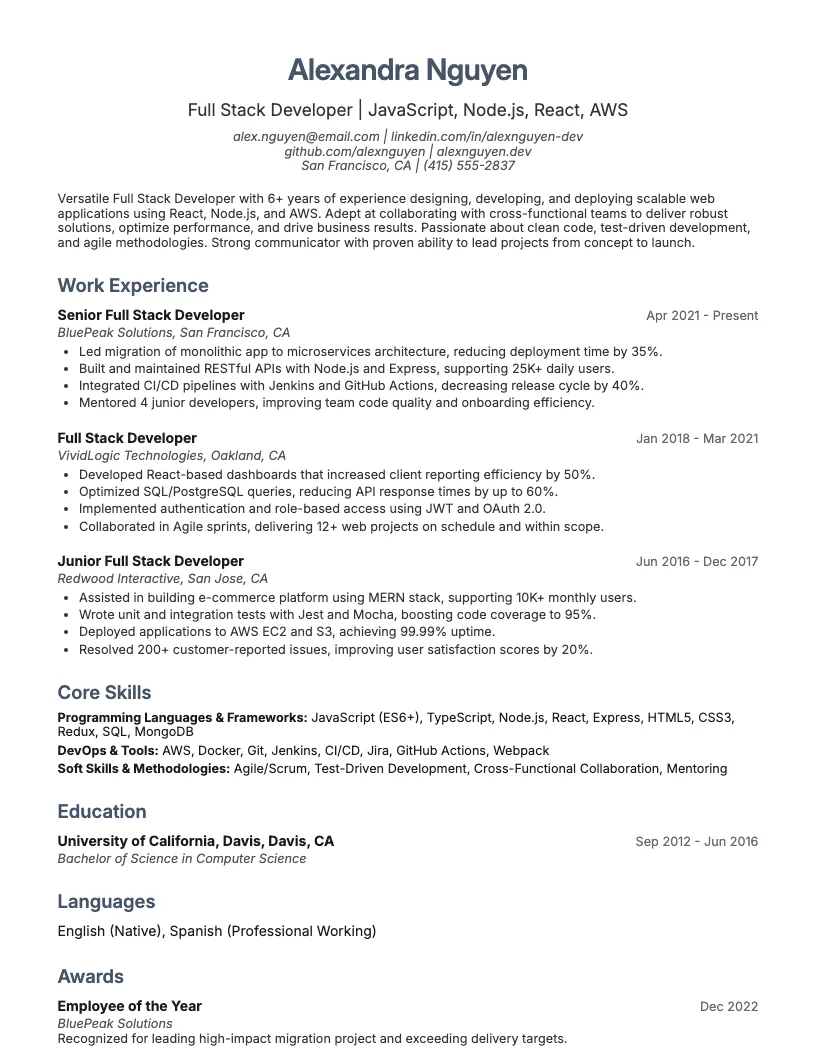 Click to enlarge
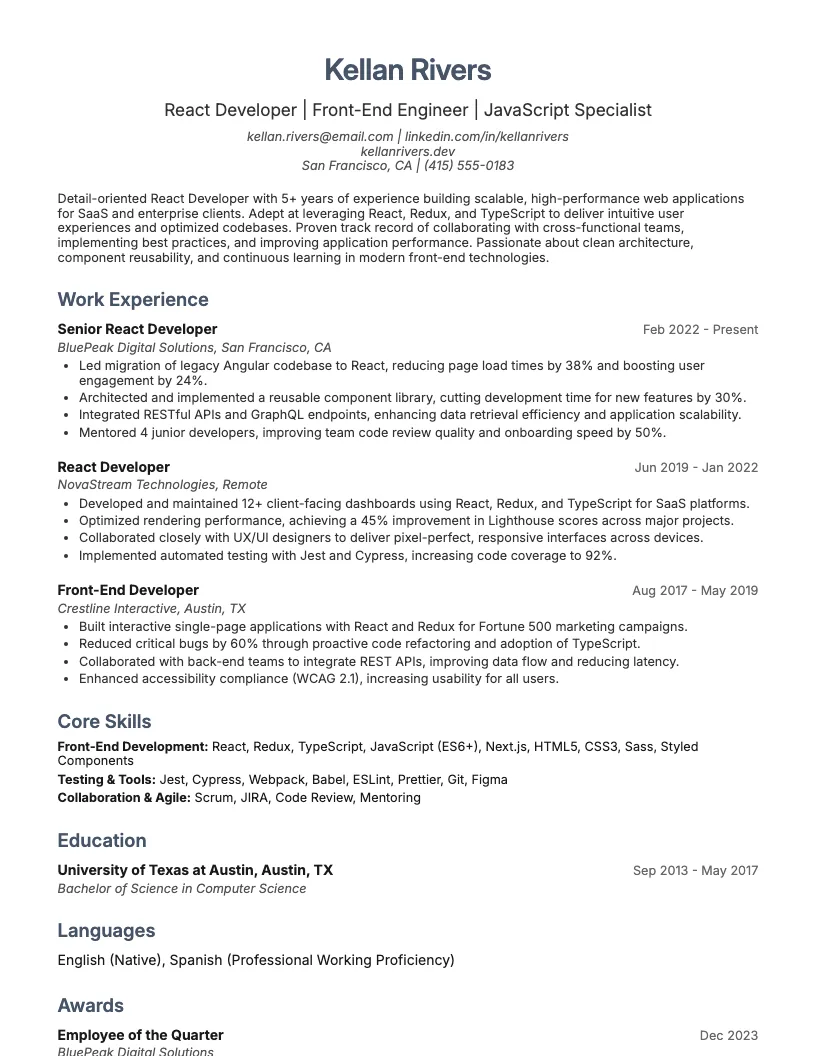 Click to enlarge
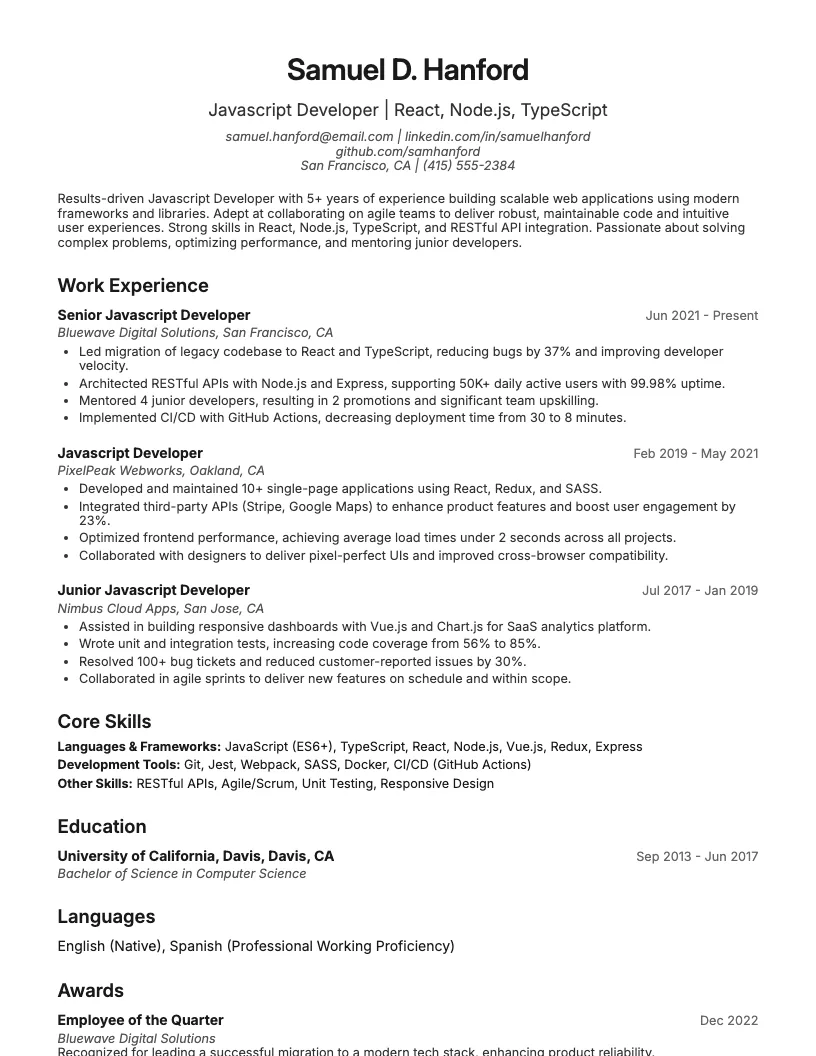 Click to enlarge
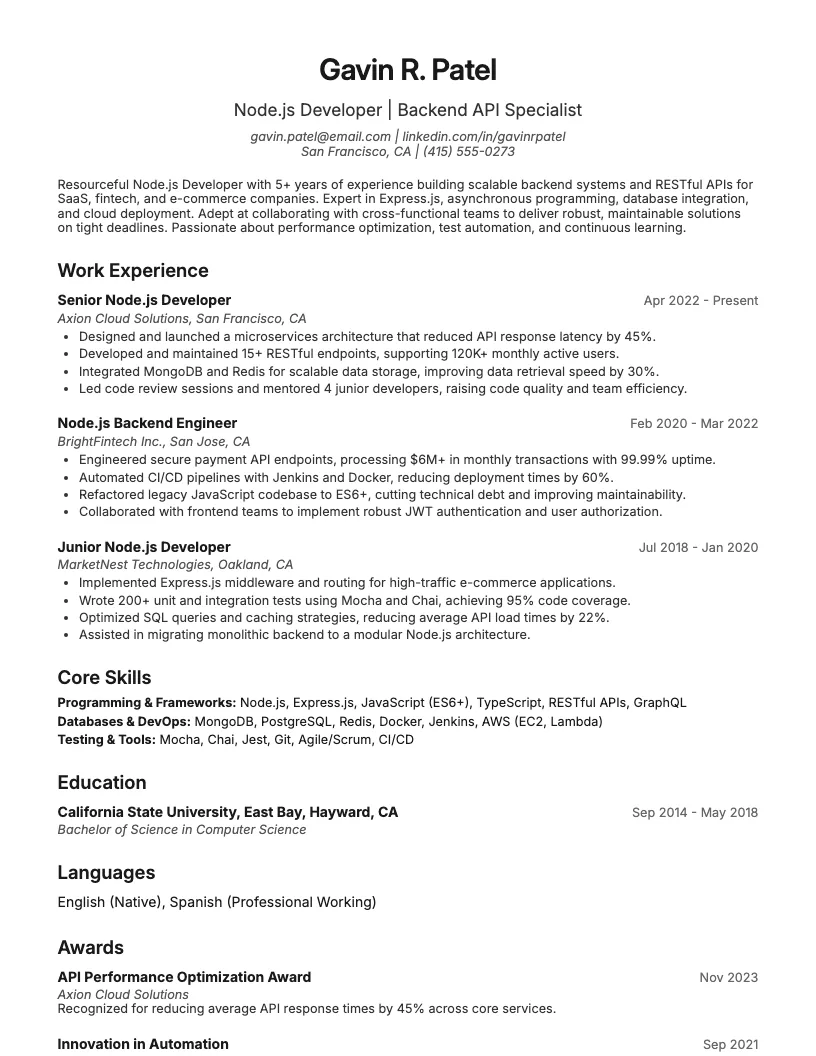 Click to enlarge
 Click to enlarge
 Click to enlarge
 Click to enlarge Click to enlarge
 Click to enlarge
Common questions about Typescript Developer resumes
A Typescript Developer resume template is a pre-formatted document designed to showcase your skills, projects, and experience in Typescript development. It highlights relevant technical expertise for roles in web and software development.
Yes, most Typescript Developer resume templates, especially those from ResumeJudge, are ATS-friendly. They use clean formatting and standard headings, making them easy for applicant tracking systems to read and process.
Use a Typescript Developer resume template when applying for front-end, full-stack, or software engineering roles at tech companies, startups, or agencies looking for strong Typescript skills.
Absolutely! Templates from ResumeJudge are fully customizable. You can easily edit sections to highlight your unique projects, certifications, and professional achievements.
Typescript Developer templates focus on relevant tech skills, frameworks, and projects, unlike generic templates. They help you showcase expertise in Typescript, making your application stand out in technical hiring.
Ideally, your resume should be one page, especially if you have under 10 years of experience. Use concise bullet points to highlight key skills and achievements, as shown in ResumeJudge templates.
Yes, including personal or open-source projects is highly recommended. ResumeJudge templates feature dedicated sections for projects, helping you showcase hands-on experience and initiative.
Yes, ResumeJudge offers templates tailored for industries like fintech, e-commerce, and SaaS. These templates emphasize relevant tools and frameworks for each sector.
Every ResumeJudge Typescript Developer template includes a skills section to highlight your proficiency in Typescript, JavaScript, Angular, React, and more. This helps recruiters quickly spot your technical strengths.
Include a dedicated certifications section in your resume. ResumeJudge templates make it easy to showcase certifications like Microsoft Certified: Azure Developer or relevant online course completions.
Explore more professional resume examples to inspire your job search
Use our AI-powered resume builder to create a professional, ATS-friendly resume in minutes.
Free to use • No credit card required