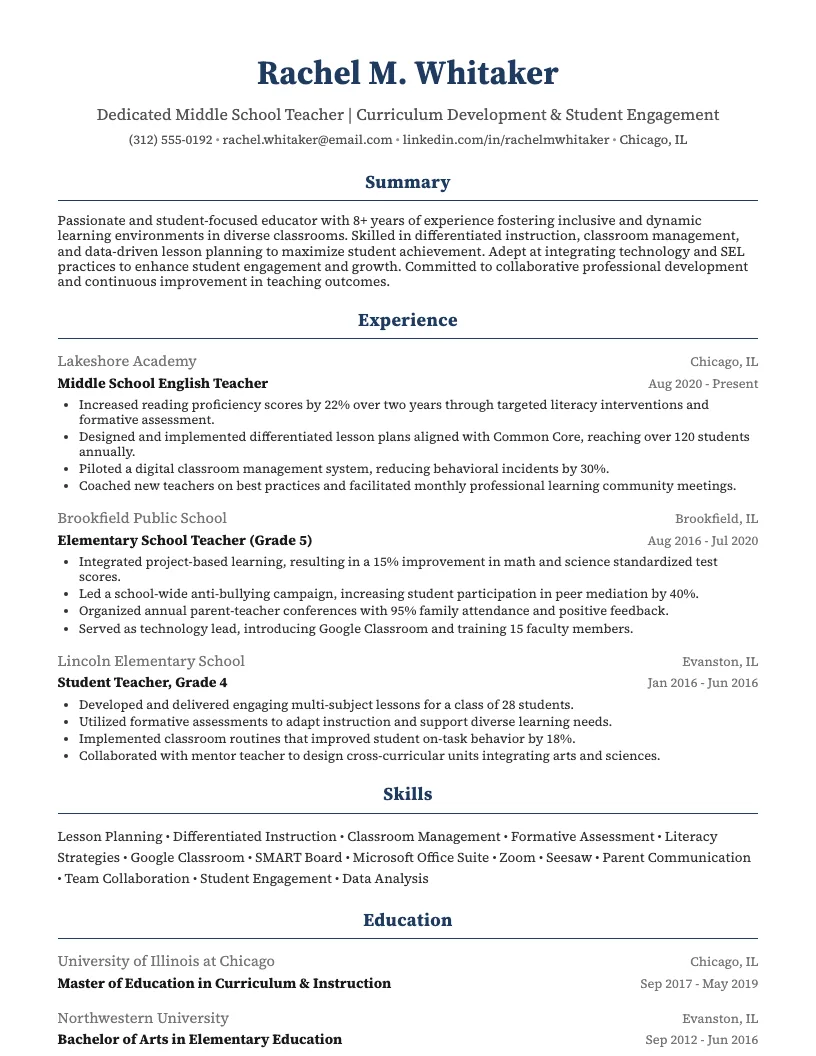
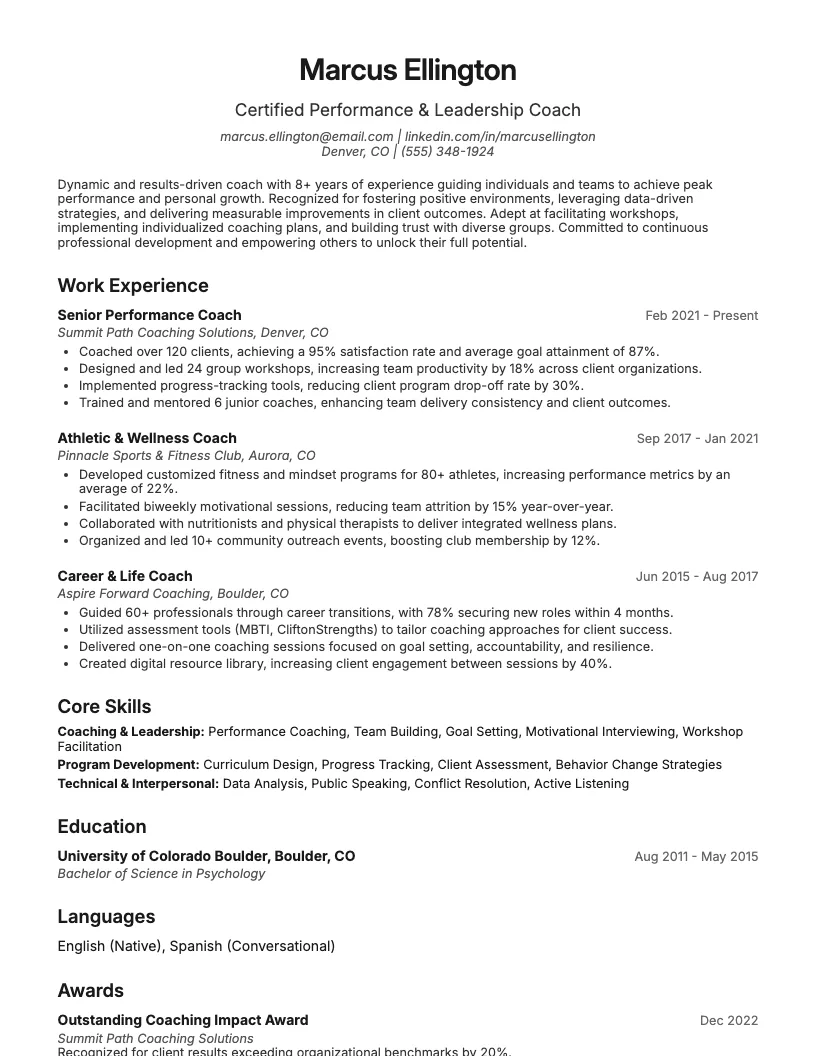
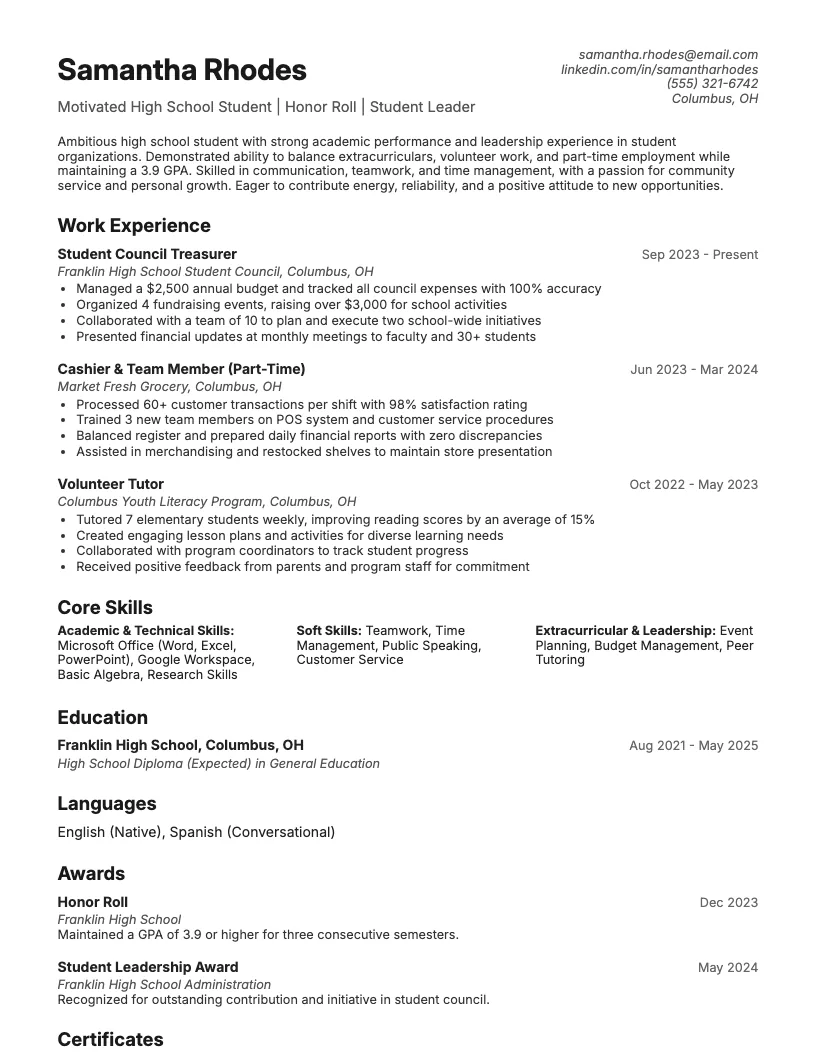
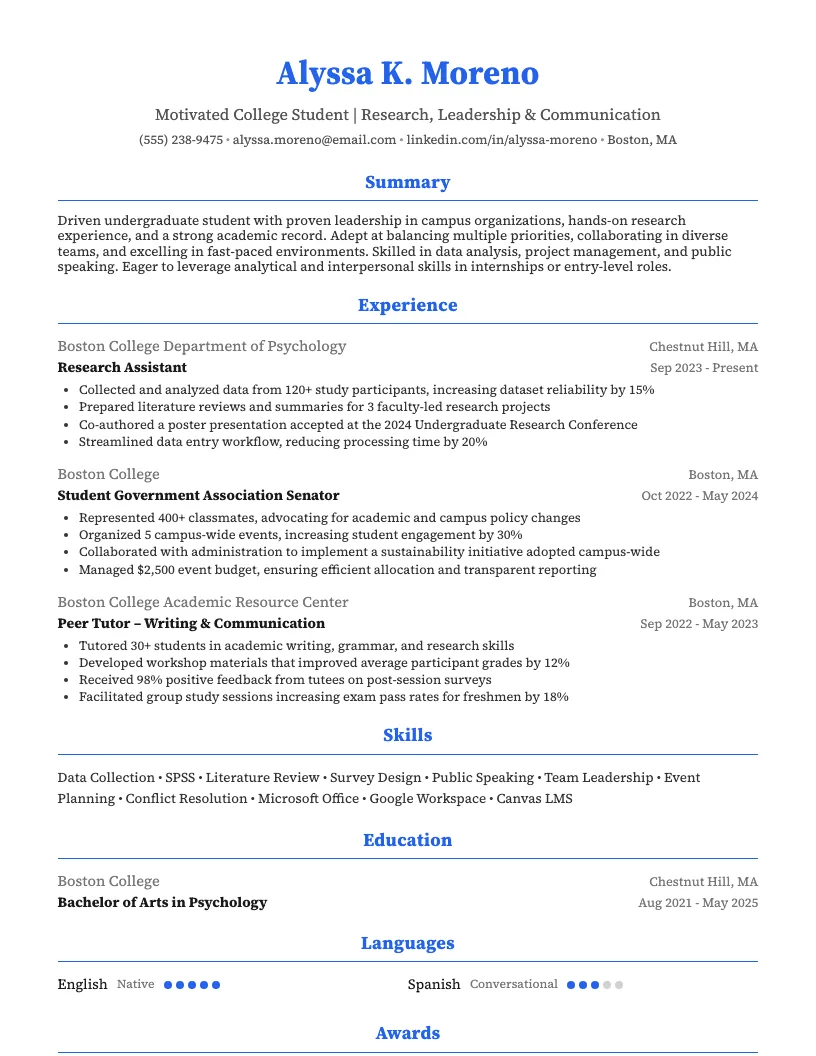
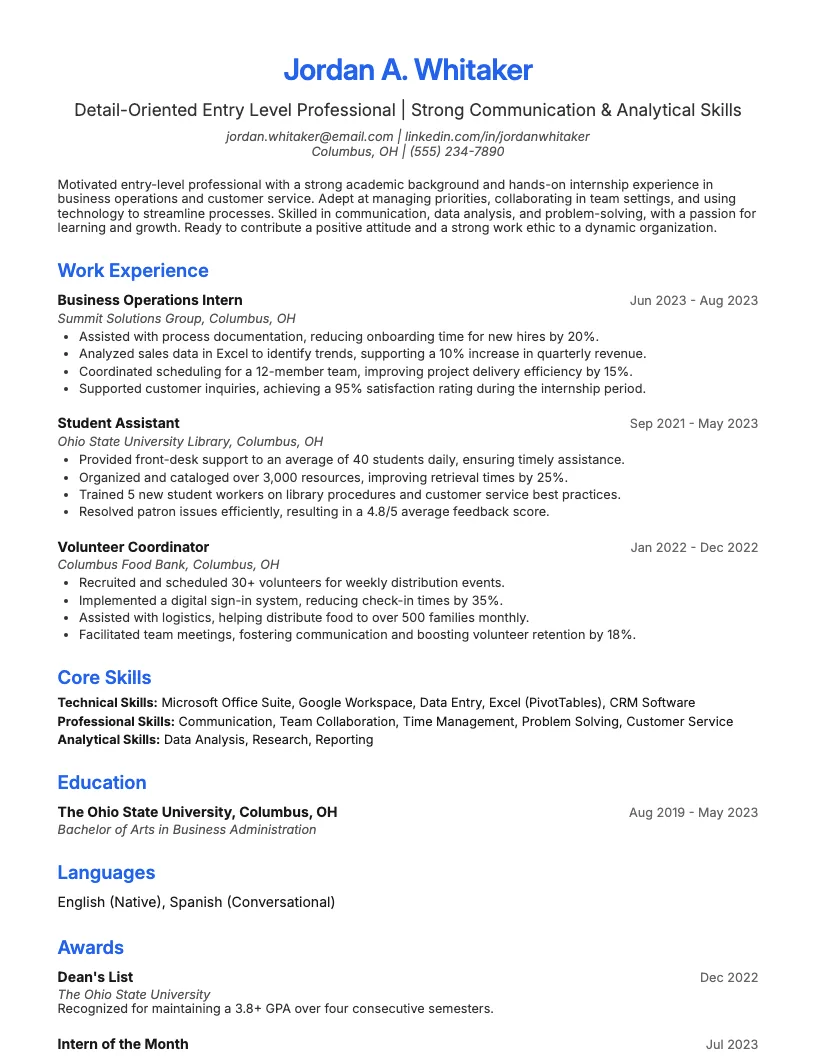
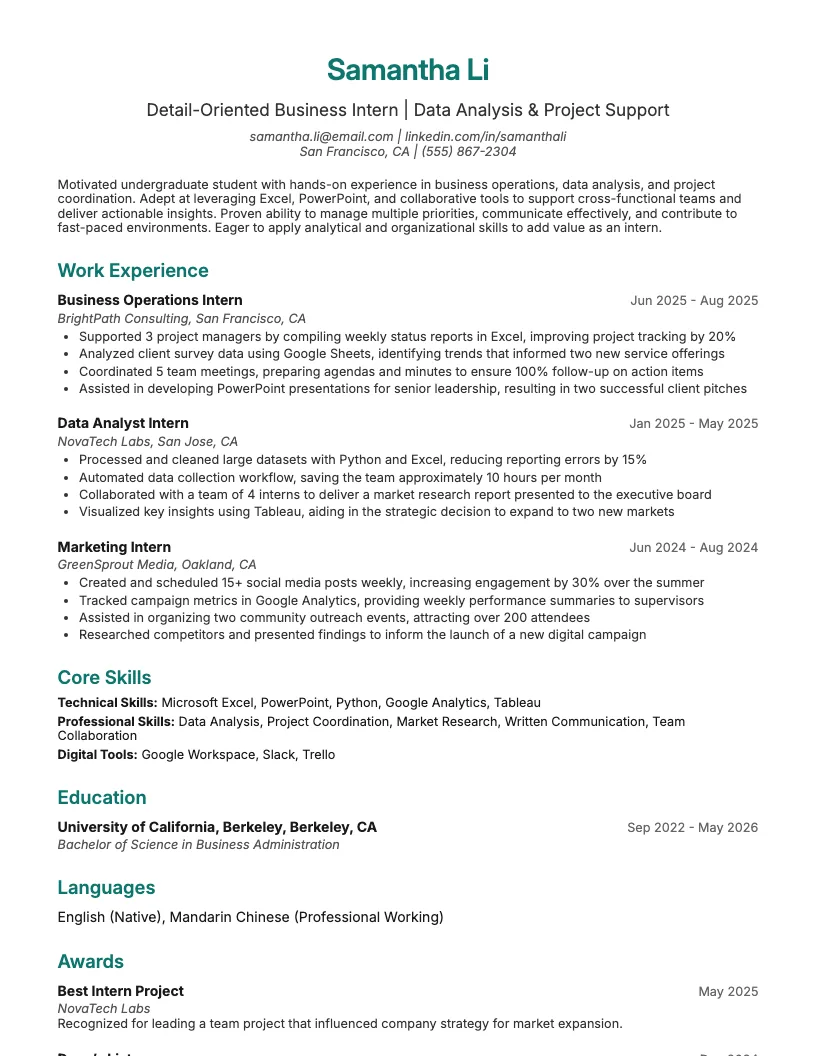
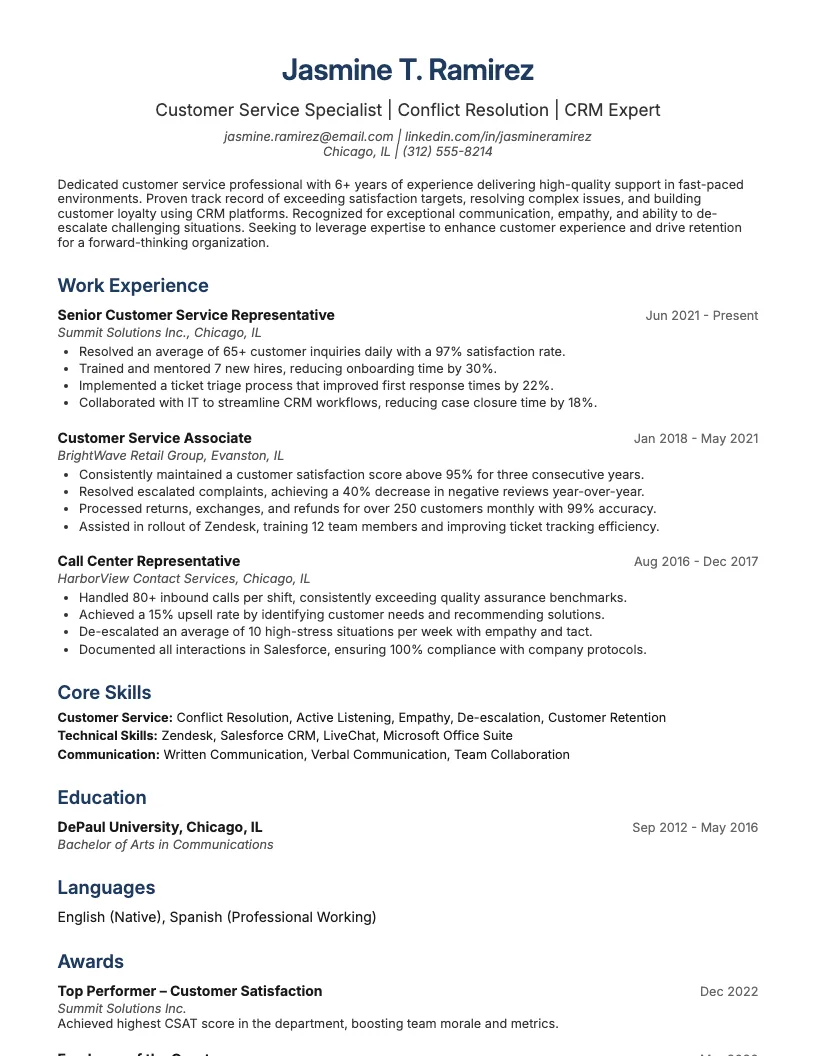
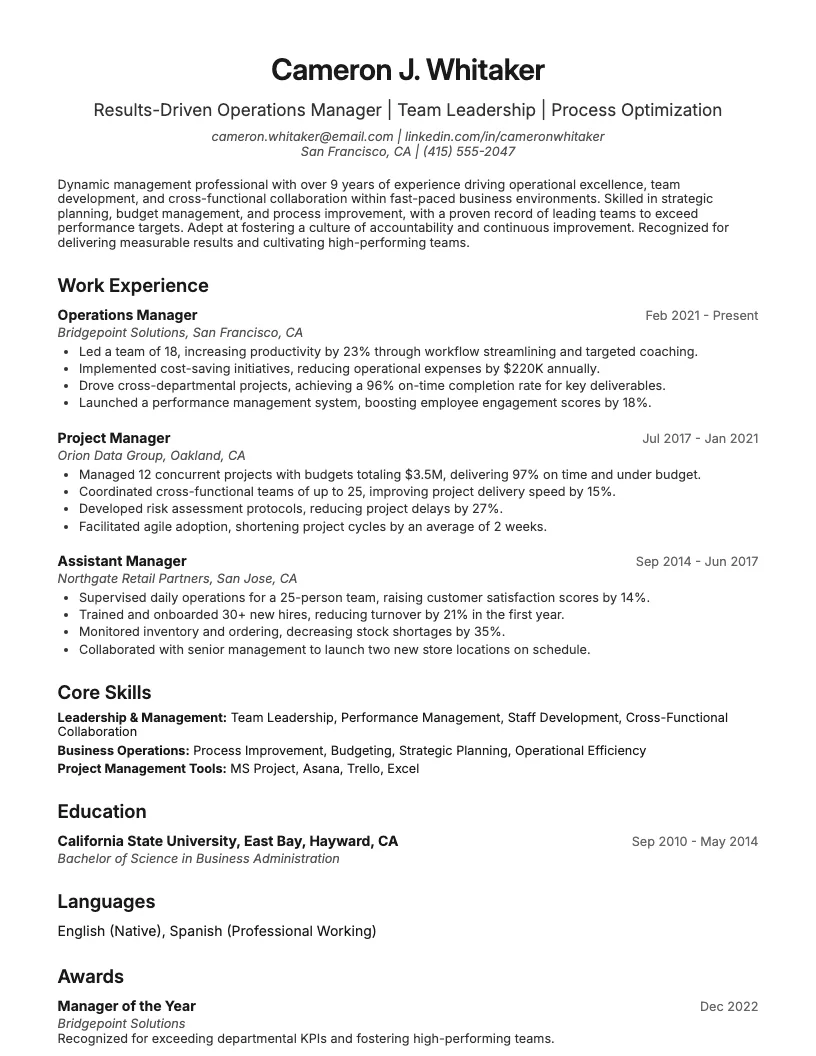
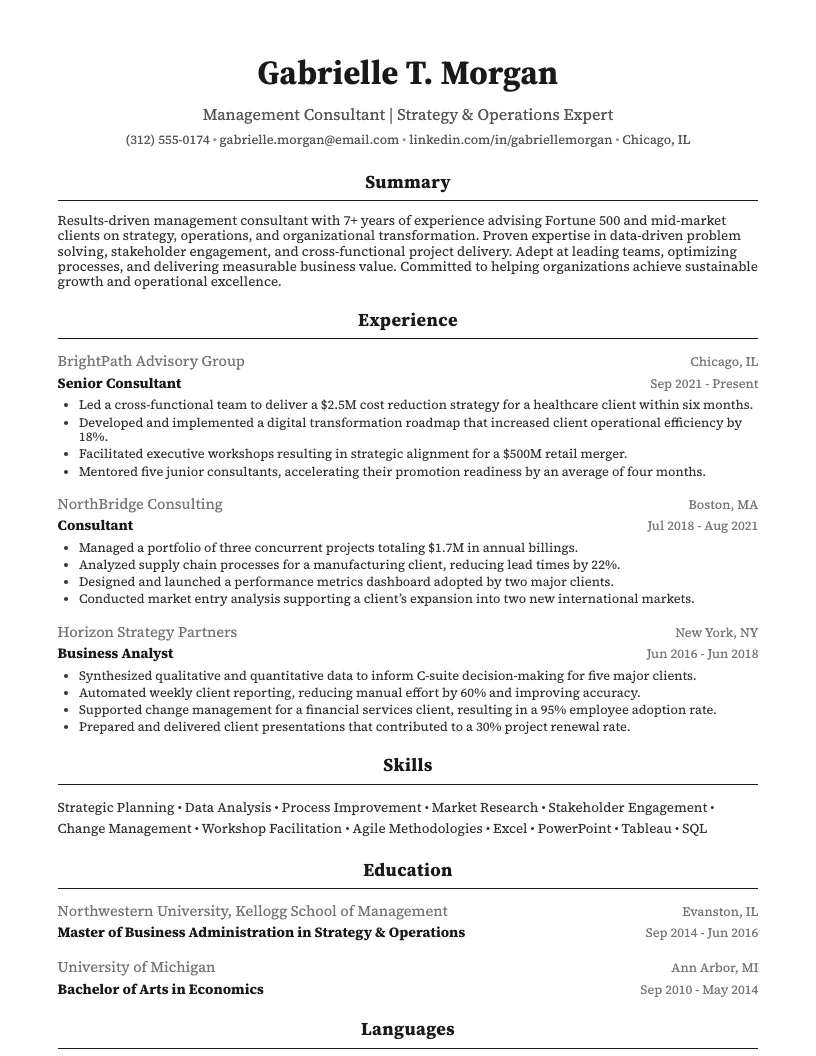
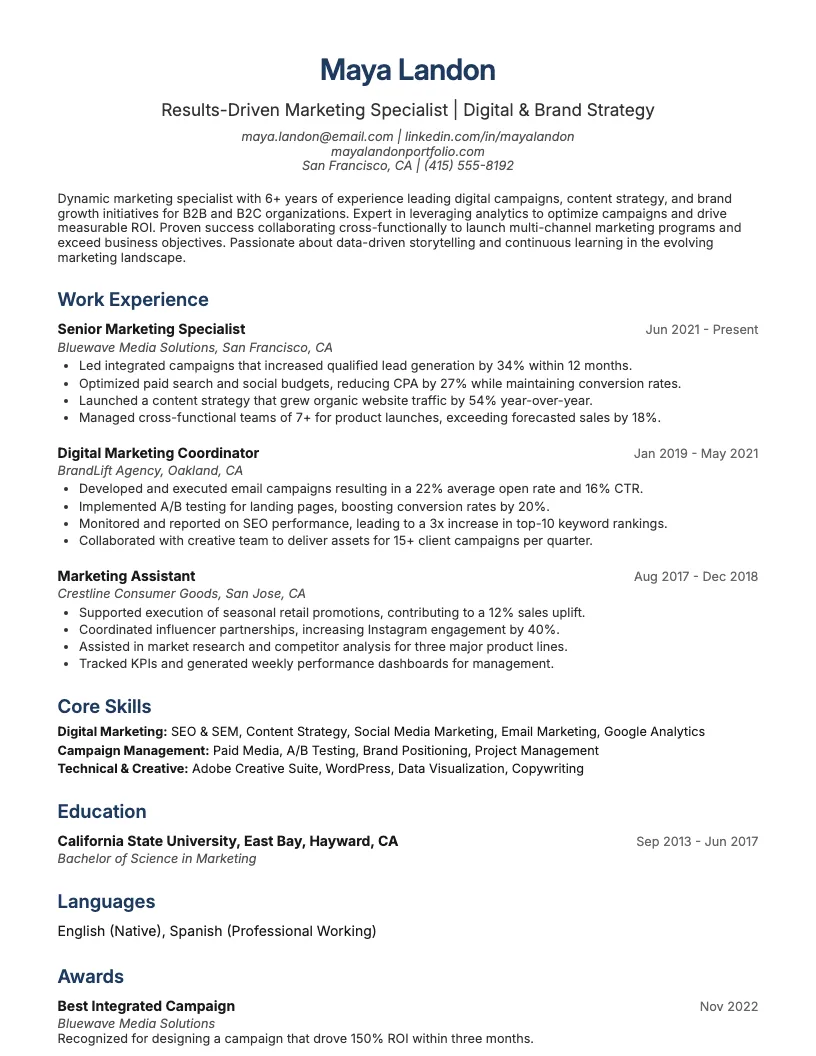
Academic Tutor Resume Example
See full guide on Academic Tutor resumes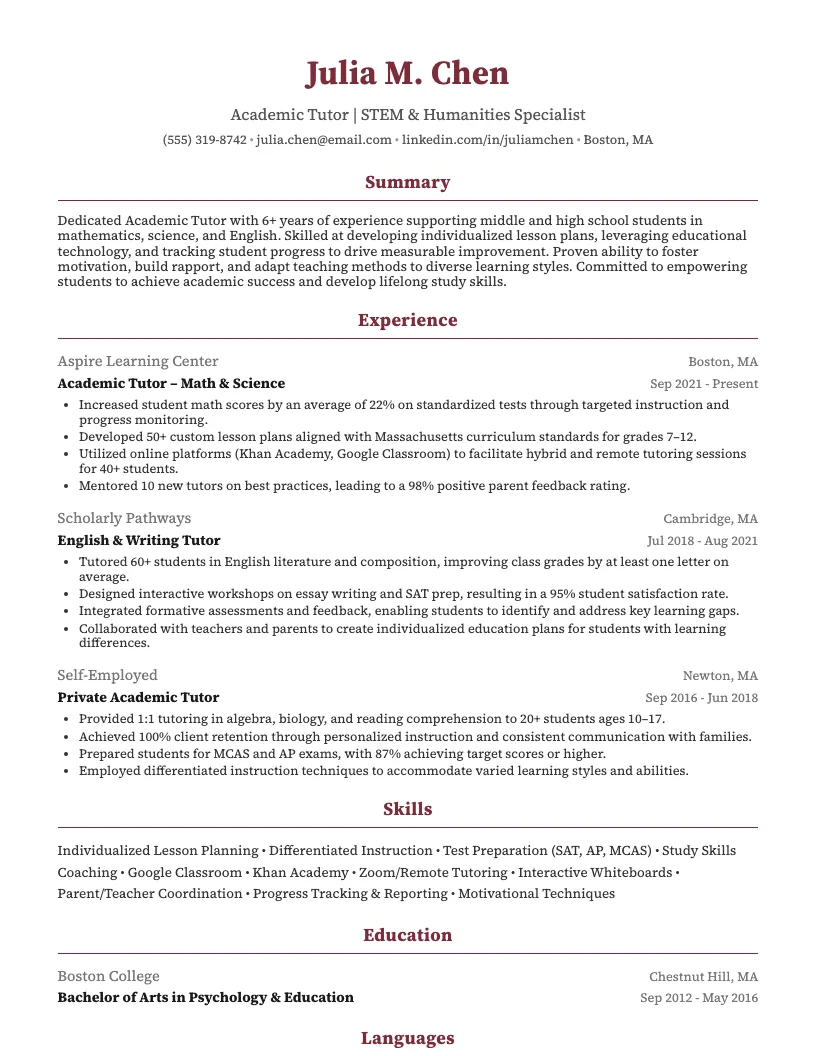 Click to enlarge
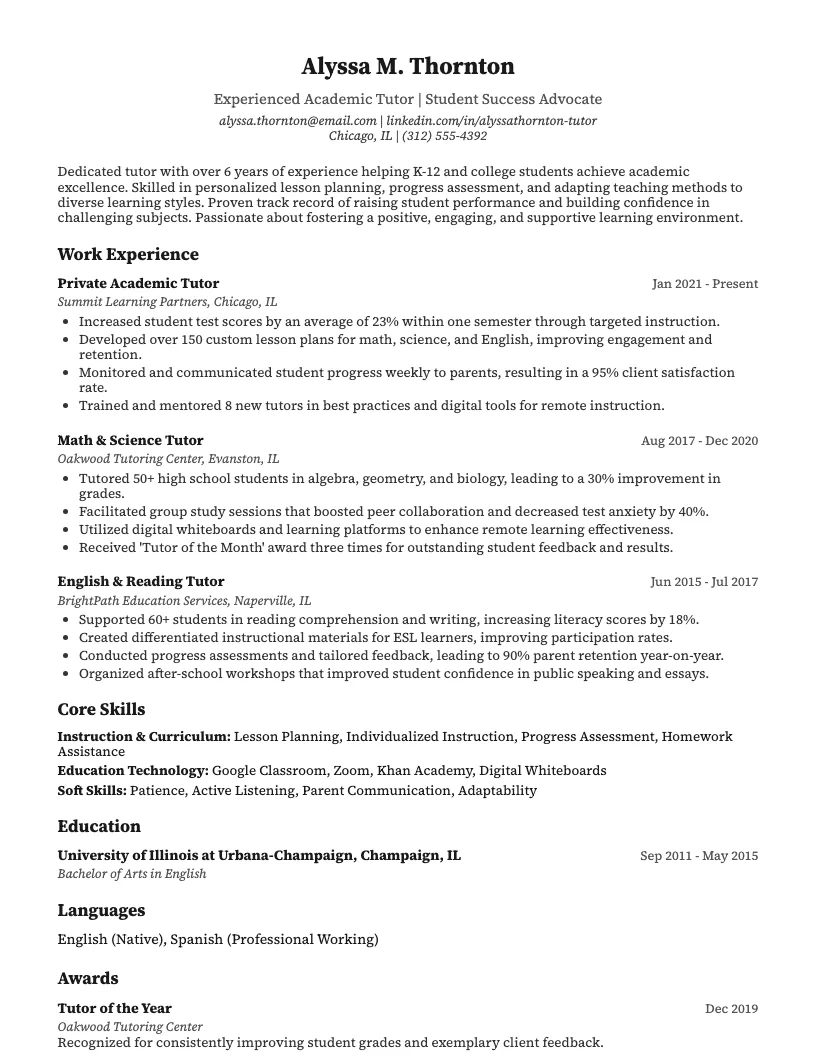 Click to preview

Get inspired by 56+ professional Tutor resume examples, each written by career experts and optimized to pass ATS scans. Pick a proven template, tailor it to your role, and download a polished resume in minutes.
Pick the specialization closest to your target role and start from a proven resume example.
Every tutoring job is different, so your resume should show what you actually do. I see hiring managers focus on subject knowledge and proven results.
Whether you tutor math, English, or science, your experience matters. You might work with kids one-on-one or run group sessions-both call for different skills.
I break down real resume samples, highlighting what works for each subject and setting. This helps you see what employers look for in a strong application.
Every tutoring job is different, so your resume should match your subject and environment. Math, science, and language tutors each highlight different skills and achievements.
I see a big difference between in-person and online tutoring resumes, too. You want to show how you adapt-whether that's using digital tools or managing a classroom of 15 students.
It helps to look at real examples for each subject and setting. You can spot what works-like quantifying student progress or listing specific curriculum experience-right away.
I see these tutor resumes stand out because they focus on impact. Clear, concise bullet points and action verbs grab attention fast-hiring managers spend just six seconds scanning.
Including quantifiable results makes a difference. Numbers like "boosted student test scores by 18%" or "led 50+ tutoring sessions" show real value, not just generic duties.
I always recommend using ATS-friendly formatting. That means simple layouts, consistent structure, and including relevant keywords from the job description. This helps your resume actually get seen.
Wrapping up, honesty and relevance matter. You want your resume to reflect your strengths, not just buzzwords. When you highlight the right details, you make your experience shine.

Writing a tutor resume means showing your strengths-your knowledge, patience, and results. Schools and families want to see proof you help students grow.
You want your resume to highlight your teaching skills, experience, and any measurable impact. I’ll walk you through each step so you can stand out.
Start your resume with a short summary at the top. This is your chance to introduce yourself and share what subjects you tutor and your experience level.
Mention your credentials-degrees, certifications, or relevant coursework. For example, say “B.A. in English, three years tutoring high school writing.”
Describe your tutoring style or unique strengths in a sentence. Maybe you use visual aids or break down tough concepts. This helps employers see what makes you stand out.
When you write your experience section, focus on what you’ve done for students, not just where you worked. Use action words and show real results.
I always include numbers. For example, “Helped 10+ students raise SAT scores by 150 points” or “Tutored 20 students-85% improved their grades.” This helps your impact stand out.
Don’t forget about volunteer gigs or private sessions. List your title, organization, and dates. Briefly explain how you made a difference, whether it’s test scores, GPA boosts, or assignment completion.
When I build my tutor resume, I always highlight my highest degree first. Listing majors, minors, and graduation dates makes it easy for recruiters to see my qualifications.
You want to include relevant certifications too, like Certified Math Tutor or a TESOL certificate. These show you’re serious about your field and boost your credibility right away.
If you tutor a specific subject, make sure your education matches. Around 80% of clients prefer tutors with a degree in the subject they teach, so don’t leave this out.
I always recommend listing both hard and soft skills. Schools and families want to see subject expertise, but also communication and adaptability.
Include specifics like grade levels taught, languages spoken, or EdTech tools you use. For example, you can mention Google Classroom, Zoom, or Kahoot-these show you're tech-savvy.
Try grouping your skills. I usually split them into categories: academic, interpersonal, and technical. Aim for at least 6-10 skills, since many resume scanners look for keywords.
I always keep tutor resumes to one page unless you’ve got over ten years of experience. Short and focused resumes get more attention.
Use a reverse-chronological format. Start with your latest tutoring job and work backwards. This helps hiring managers spot your recent experience fast.
Save your resume as a PDF unless the employer asks for something else. PDFs keep your layout clean and readable for both humans and applicant tracking systems.
Stick to bullet points instead of paragraphs. Four or five points per section work best. This keeps your achievements clear and easy to scan.
Once you’ve nailed the format, it’s time to focus on describing your tutoring roles clearly and concisely.
When you write a tutor job description resume section, focus on your core duties. I usually mention lesson planning, one-on-one support, and progress tracking for 5-20 students per term.
You want to be specific. For example, I might include, "Adapt materials for diverse learning styles," or "Boost student test scores by 15%." This helps recruiters see your impact.
Keep each bullet point clear and results-oriented. Show how you communicate, motivate, and organize. This wraps up your tutor resume and highlights your real-world contributions.
A clean, well-organized tutor resume makes a big difference. It helps parents, recruiters, and agencies quickly see if you’re the right fit.
You want your experience and skills to stand out. Simple formatting, clear sections, and the right details get you noticed faster.
I always make sure my resume layout highlights my strengths. It’s not just about looks-it’s about making things easy to read and understand.
Next, I’ll break down which sections you should include and what recruiters actually look for on tutor resumes.
When I build a tutor resume, I always start with the core sections. These give structure and make my skills stand out right away.
You want to include contact information, a summary or objective, skills, work experience, and education. These are non-negotiables for most recruiters.
A section for certifications or references can add credibility. If you tutor specific subjects, highlighting these areas with separate sections helps set you apart.
Keep each section clear and easy to scan. Recruiters spend about 7 seconds on a first look, so make every section count.
Recruiters want to see clear subject expertise. If you specialize in math, science, or languages, highlight it front and center. List certifications, test scores, or specific grade levels.
You should show actual results. Quantify your impact-mention things like “raised student grades by 20%” or “helped 15 students ace AP exams.” Numbers make your achievements clear.
Soft skills matter, too. I always mention patience, communication, and adaptability. If you’ve handled tricky student situations or used different teaching methods, share that. This shows you can connect with any learner.
Wrap up by keeping everything neat and easy to read. The right format helps your best qualities stand out, making it easier for recruiters to see you’re a great fit.
Your summary or objective sits right at the top of your tutor resume. It’s the first thing recruiters see, so it sets the tone for your whole application.
If you have five or more years of tutoring experience, a summary helps you highlight your biggest achievements. For newer tutors, an objective is a chance to show your career goals and key skills.
This section gives you a chance to sound human, not robotic. Keep it short-three or four sentences are enough to make a strong impression.
Your experience section is where you really prove your skills as a tutor. Whether you’ve helped one student or fifty, this is where you show what you’ve done.
You can highlight private sessions, freelance gigs, or time spent in a tutoring center. Listing details and numbers makes your impact clear.
Even if you’re just starting out, you probably have something relevant. I’ll show you how to make every experience count, no matter your background.
Highlighting the numbers behind your tutoring makes your experience pop. I always include stats like how many students I helped or the percentage of grade improvement.
Use bullet points to show results. For example, “Tutored 15 students in math-80% raised grades by at least one letter.” This helps hiring managers see your real impact.
Don’t forget group sessions, test prep, or subject variety. You can mention “Led 10 SAT prep classes with average score increases of 120 points.” Numbers make your story concrete.
If you’re new to tutoring, you can still build a strong resume. I focus on transferable skills from jobs like camp counselor, retail, or volunteering.
Highlight any teaching, coaching, or mentoring moments-even if they’re informal. For example, training new coworkers or helping classmates counts as relevant experience.
You want to match your skills to the job post, and referencing a cover letter can help you see how to present your experience. If they want communication or subject knowledge, show that in your bullet points. This helps recruiters see your potential fast.
If you’ve worked as a camp counselor, babysitter, or teaching assistant, you already have skills that translate to tutoring. These jobs show leadership, patience, and the ability to explain things clearly.
Sometimes I include roles like music instructor or youth group leader on my resume. If I taught a group of 20 kids or led weekly lessons, that’s relevant tutoring experience.
You want to highlight any training, mentoring, or academic support you provided in those roles. This helps hiring managers see you’ve got experience teaching-even if it wasn’t called “tutoring.”
Wrapping up, think about all your education-related jobs, not just formal tutoring. These experiences prove you’re ready to help students succeed.
When you build a tutor resume, your skills section matters a lot. It’s not just about what you know, but also how you help others learn.
You want to show both hard skills, like subject expertise, and soft skills, like communication. Employers look for a balance of both to make sure you fit their needs.
I always recommend tailoring your skills to the specific job. Highlight what makes you effective, whether that’s using online tools or helping students stay motivated.
Up next, I’ll break down the best hard and soft skills to feature on your tutor resume.
When I talk about hard skills for tutors, I mean the technical stuff you pick up through classes, certifications, and hands-on teaching experience.
You want to show you know your subject inside-out-like advanced math, science, or foreign language fluency. Proficiency with tools like Kahoot, Quizlet, or Google Classroom helps too.
If you use learning management systems or create digital content, mention that. These skills prove you’re ready for classrooms-virtual or in-person-and help you stand out to recruiters.
There’s also huge value in test prep experience (like SAT or ACT), grading, and assessment skills. List anything you can back up with certificates or measurable results.
Soft skills matter just as much as technical knowledge. I always highlight communication, patience, and adaptability-these show you can connect with students and adjust to different learning styles.
Employers value empathy and active listening. This helps you understand where a student struggles and offer targeted support. I also mention problem-solving and time management.
You don’t have to list every skill. Focus on those most relevant to the job description. This keeps your resume concise and tailored, showing you’re the right fit for the role.
When you’re building a tutor resume, your education and certifications matter. There’s no one-size-fits-all background, but most clients want to see you know your stuff.
You don’t always need a teaching degree. I see people with bachelor’s in anything from math to English, and some college students tutor, too. Certifications can boost your credibility fast.
Parents and agencies often ask about your qualifications. Listing your degrees, coursework, or any teaching certificates helps you stand out, even if you’re just starting out.
Certifications add real value to your resume. I see a lot of tutors list NTA Certified Tutor or CRLA credentials. These are recognized by schools and parents.
You can also get certified by the American Tutoring Association or complete a TEFL course if you want to teach English. These give you an edge in competitive markets.
Don’t forget about subject-specific awards or child safety certifications like CPR. This helps build trust, especially if you tutor younger students or work in private homes.
You can boost your tutor resume by adding a few extra sections. These give employers a better sense of your style and experience.
Think about including things like a portfolio, references, or testimonials. These show off your work and help you stand out.
I like to include a link to my portfolio or online profile right at the top of my resume. This helps recruiters check out my work instantly.
You can use platforms like LinkedIn, a personal website, or even a YouTube channel. Showing lesson plans, student feedback, or teaching videos builds real trust.
If you tutor online, highlight your digital teaching tools and any interactive modules you created—these are great to mention in your cover letter. Adding these links proves you’re up-to-date and tech-savvy.
If you're building your tutor resume, it helps to see what works for others in education. I’ve pulled together examples from different teaching and support roles.
You can also find resources for cover letters, job applications, and other career tips. These guides save time and make your application stand out.
If you’re looking to branch out beyond tutoring, I’ve got you covered. There are loads of other resume examples for roles in education and support.
You can check out templates for student teacher, ESL teacher, or even research assistant jobs. This helps you see what skills translate across different positions.
I suggest comparing your experience to an elementary school teacher or teacher assistant resume. You’ll spot common keywords and key achievements that you can highlight on your own resume.
If you want to boost your tutoring career, there are tons of resources out there. I always check sites like Edutopia and Teach.com for trends and advice.
You can join groups like the National Tutoring Association or LinkedIn communities. This helps you network, find jobs, and stay updated on best practices.
I also suggest using free tools-like resume builders and skills assessment quizzes. These let you see what top tutors list on their resumes and profiles.
If you want to stand out, a solid tutor cover letter matters. I always check out tutor cover letter examples to see what works best.
Highlight your teaching style, key results, and how you connect with students. Numbers help-try to mention how many students you’ve helped or success rates.
Keep it short, usually under one page. Proofread everything. Using examples as a guide gives you a clear structure and boosts your confidence when you apply.
That’s a wrap on resources. Good luck landing your next tutoring role!
Browse Tutor resume examples for related roles. Preview any example, open it in the builder, or read its full guide.
Click to enlarge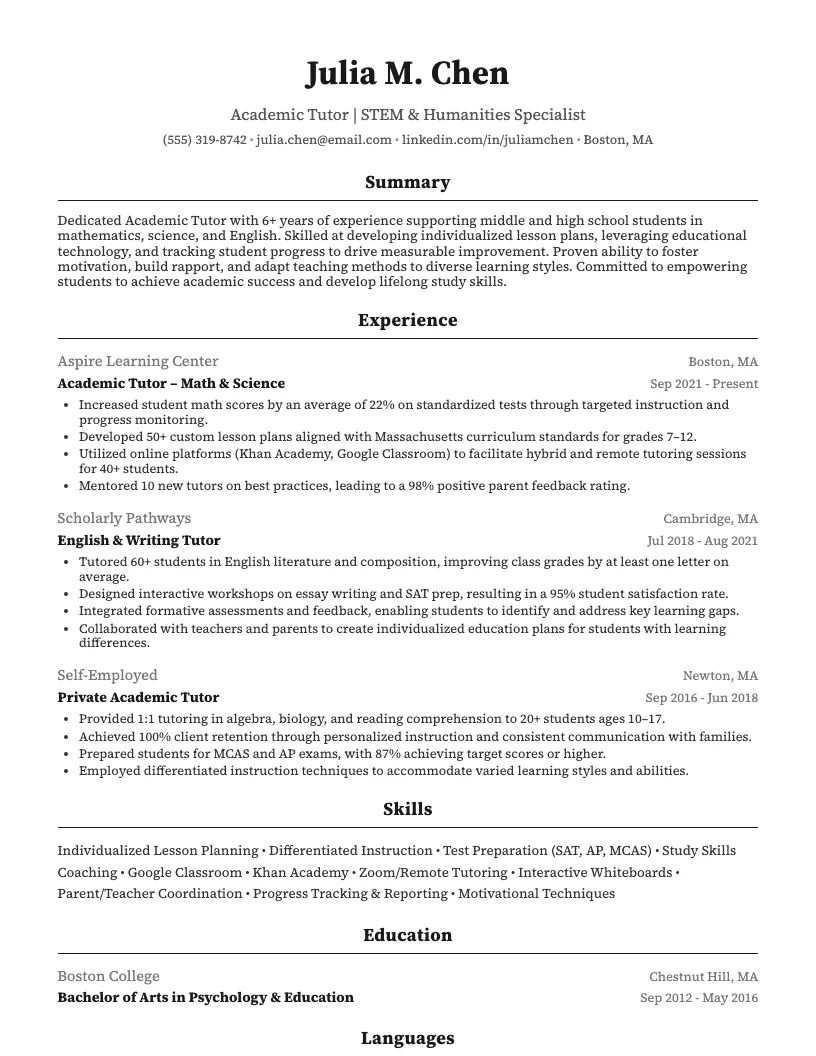 Click to enlarge Click to enlarge Click to enlarge Click to enlarge Click to enlarge Click to enlarge Click to enlarge Click to enlarge Click to enlarge
Common questions about Tutor resumes
A tutor resume template is a pre-designed document tailored for tutoring roles, helping you highlight teaching skills, certifications, and experience. ResumeJudge offers templates to make your application stand out.
Yes, ResumeJudge tutor resume templates are ATS-friendly, ensuring your application passes automated screening systems used by schools, agencies, and online tutoring platforms.
Use a tutor resume template when applying for private tutoring, language institutes, online platforms, or education agencies. ResumeJudge makes it easy for any teaching specialty.
Absolutely! ResumeJudge templates are fully customizable, letting you add subjects, tutoring methods, or achievements to match your unique experience and the specific job requirements.
Tutor templates focus on teaching skills, lesson planning, and educational results, unlike generic templates. ResumeJudge highlights relevant education experience and student outcomes for tutoring roles.
A tutor resume is usually one page for entry-level or part-time roles, and up to two pages for experienced or certified tutors. ResumeJudge helps you keep it concise and impactful.
Include skills like lesson planning, patience, subject expertise, and communication. ResumeJudge suggests industry-relevant skills to help you match job postings and ATS filters.
While not always required, a cover letter can strengthen your application for agencies or schools. ResumeJudge provides cover letter tips and examples tailored for tutoring jobs.
Yes, ResumeJudge templates work great for online tutoring jobs. You can highlight remote teaching tools, digital classrooms, or virtual lesson planning experience.
ResumeJudge offers ATS-friendly templates, skill suggestions, and easy customization, making it simple to create a strong tutor resume for any education or tutoring position.
Explore more professional resume examples to inspire your job search
Use our AI-powered resume builder to create a professional, ATS-friendly resume in minutes.
Free to use • No credit card required