Live In Nanny Resume Example
See full guide on Live In Nanny resumes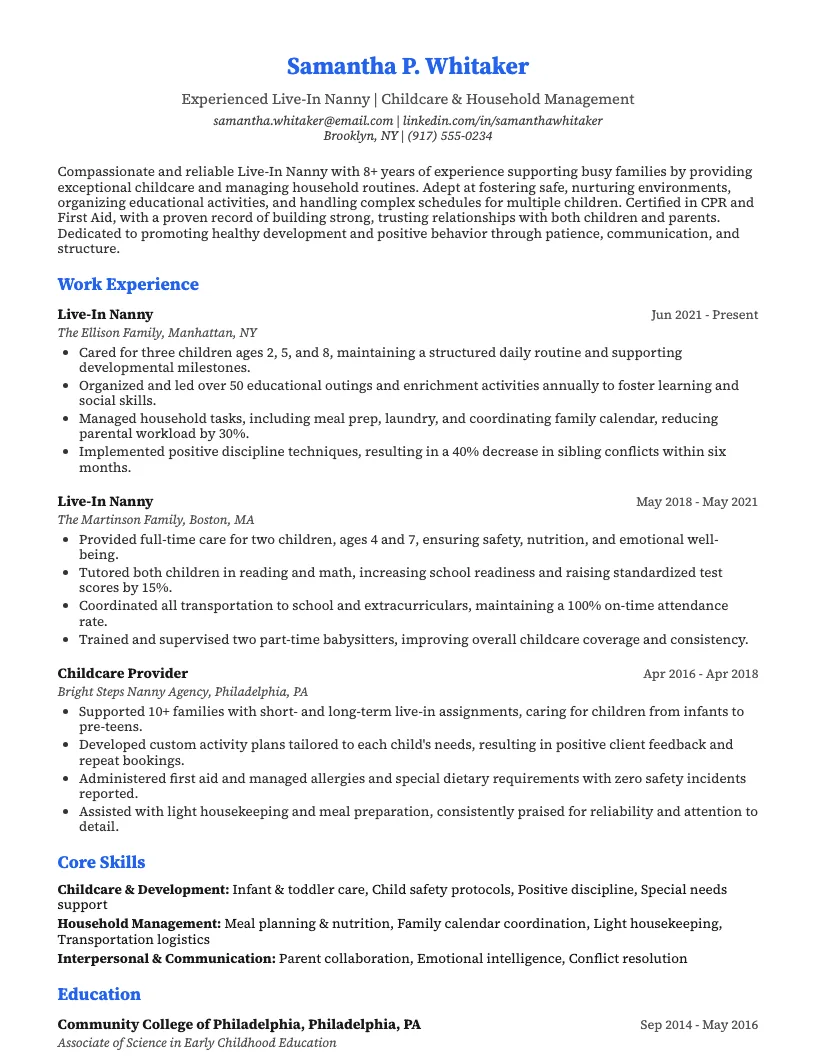 Click to enlarge
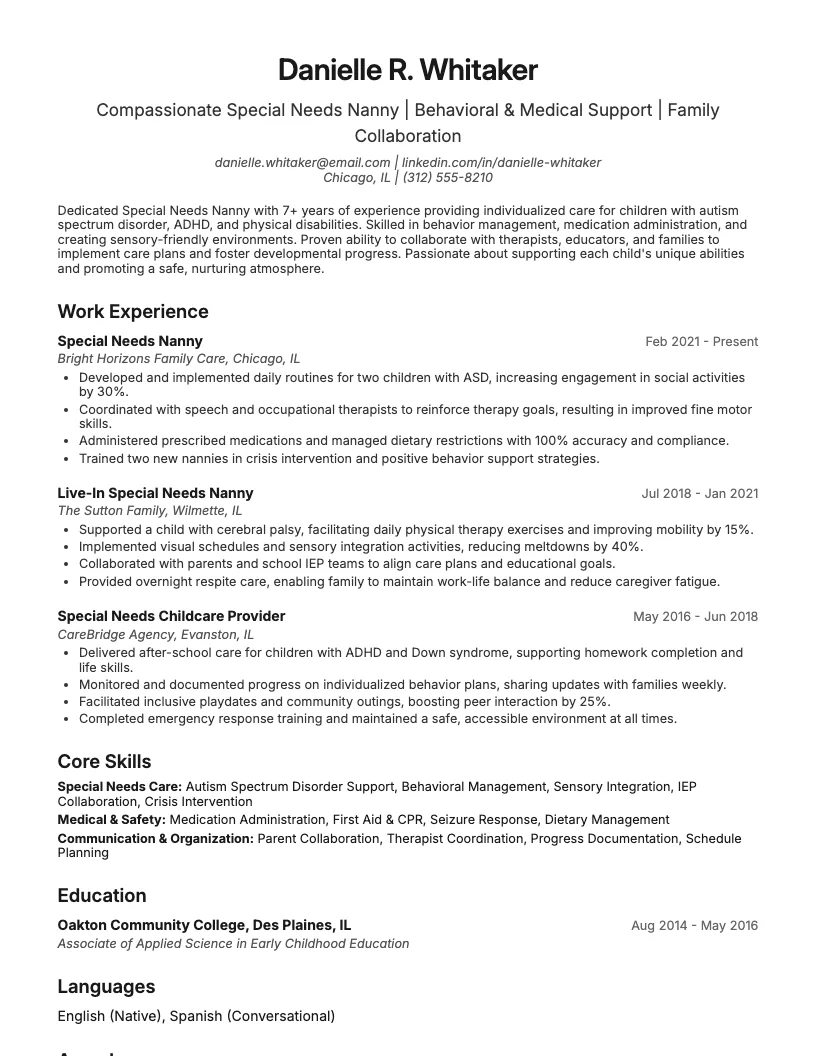 Click to preview

Get inspired by 62+ professional Special Needs Nanny resume examples, each written by career experts and optimized to pass ATS scans. Pick a proven template, tailor it to your role, and download a polished resume in minutes.
Pick the specialization closest to your target role and start from a proven resume example.
Working as a special needs nanny takes patience, flexibility, and real skills. I know you want a resume that shows your hands-on experience and compassion.
Here, I break down what makes a strong special needs nanny resume. You’ll see clear examples and tips that really work for this unique job.
Here’s a real-world special needs nanny resume example. I want you to see what actually works for this role, not just generic advice.
I include key sections like skills, work experience, and certifications. Practical details-like CPR training or experience with autism-matter to families and agencies.
You’ll notice the language is clear and specific. Numbers help, too-like “supported two children with ADHD” or “managed medications for three years.” This makes your impact obvious.
I know every nanny job is different. If you want to explore more than just special needs roles, there are plenty of other nanny cover letter examples out there.
You might look at infant nanny, live-in nanny, or even travel nanny resumes. Each one highlights different skills, like sleep training or managing multiple kids.
This helps you see what employers expect for various nanny jobs. Comparing examples can inspire you to tweak your own resume and stand out.

The way you lay out your resume matters a lot. Parents skim for details fast-most spend under 10 seconds deciding if they’ll keep reading.
You want your experience and training to stand out right away. A clean, organized format helps parents see your strengths and feel confident about your skills.
I always make sure my resume has the right sections and clear contact info. Let’s look at what to include, and what families actually want to see.
Start with a professional header-your name, phone, and email. If you skip this, families can't reach out, and that's a dealbreaker.
Add a summary or objective section. I use this to show my passion and highlight years of experience working with kids with special needs.
List your work experience in reverse chronological order. This helps families see your most recent roles first and understand your career path at a glance.
Include a skills section focused on what matters-think first aid, patience, or special education certifications. This gets you noticed fast.
Don’t forget references or testimonials. Even just two quotes from past families can boost your credibility and help you stand out.
Parents look for real hands-on experience working with kids who have special needs. Listing clear examples and numbers, like “3 years supporting children with autism,” makes your background stand out.
Certifications matter-things like CPR or Pediatric First Aid always catch an employer’s eye. You can include these in a separate section to make them super easy to spot.
Showcase your soft skills too. Employers love seeing words like patience, reliability, and communication. If you’ve worked flexible hours, mention it-it shows you get how families operate.
That’s the gist of what families and agencies check for. If you highlight these areas, your resume feels way more tailored and convincing.
Crafting your experience section can feel tricky. You want to show real impact, not just list daily routines. Employers look for specific achievements, not just general duties.
Focus on what sets you apart. Use numbers when you can, like how many kids you cared for or any progress they made. Next, I’ll share ways to highlight your impact.
When you write about your special needs nanny experience, numbers make your achievements pop. I always include details like years of experience or how many kids I’ve supported.
You can mention ages, conditions, or even how long you worked with each family. This helps employers see the scope of your work at a glance.
Showcase results with actual data-like decreasing meltdowns per week, or hours spent on learning activities. Concrete results make your impact way more convincing.
If you’re new to nanny work, focus on transferable skills like communication, patience, or problem-solving. These matter just as much as direct child care experience.
Use a functional resume format. This highlights your skills and strengths, not just your timeline of jobs. It’s the easiest way to stand out.
Think about times you’ve helped kids in your family, volunteered, or taken relevant courses. Even basic CPR training or babysitting counts-list anything that shows you’re prepared.
Tailor everything to the job. If the family wants someone with autism experience, mention any training, books, or workshops you’ve completed. This shows you’re serious and proactive.
Don’t stress about a short experience section. Focus on what you can offer and let your personality and dedication shine through. Employers value honesty and enthusiasm.
If you want to stand out as a special needs nanny, your resume needs to highlight both hard and soft skills. Families look for both every single time.
Hard skills show what you can do-like medication management or behavior support. Soft skills show how well you connect and communicate. Both matter just as much.
I always list my most relevant skills first. That way, families quickly see I’ve got the experience and qualities they want.
Before families look at your personality, they want proof you’ve got the right technical skills. Hard skills set you apart and show you’re ready for the job.
You want to highlight certifications like First Aid/CPR, experience with assistive technology, and even knowledge of child psychology. These catch a hiring manager’s eye fast.
Don’t forget to list early childhood education, medication administration, and behavior management techniques. Mentioning specific skills helps show exactly what you can handle day to day.
Empathy and patience top the list. I need to understand each child’s unique needs and respond calmly, even if things get stressful. That’s what makes a real difference every day.
Strong communication skills help me work with kids, parents, and therapists. I use clear, simple language so everyone stays on the same page. Active listening is essential, too.
Flexibility matters a lot. Every day brings new challenges, so I stay adaptable. If you can adjust quickly and stay positive, families notice and trust you more.
Bringing these soft skills together shows I’m more than just qualified-I’m someone families can rely on. That’s the key to standing out as a special needs nanny.
You don’t need a specific degree to be a special needs nanny. But certain certifications and education can make you stand out to families and agencies.
If you’ve taken first aid, CPR, or specialized training, you’re ahead of the game. Listing these clearly on your resume helps people see your qualifications right away.
I always recommend CPR and First Aid Certification first. Most families and agencies expect it, and it’s required for many live in nanny cover letter positions. Renewal is usually every 2 years.
You can boost your resume with credentials like the Child Development Associate (CDA) or Safe Sitter® Certification. These show your commitment to ongoing education and specialized skills.
Some nannies go further with a Newborn Care Specialist certificate or the INA Nanny Credential Exam. These certifications cover advanced topics, so they can set you apart in the field.
Your summary or objective is the first thing employers read. It quickly shows what you bring to the table and what you want in your next role.
If you have years of experience, a summary works best. If you’re new, an objective helps highlight your goals and passion.
Both need to be specific. Avoid generic statements. Focus on your unique skills, experience, and what you hope to achieve as a special needs nanny.
Want to stand out as a special needs nanny? Extra sections on your resume can show more about who you are and what you bring.
You can highlight unique skills, language abilities, or education. These details often make a real difference for families hiring nannies.
When you build your special needs nanny resume, focus on showing both your skills and your experience. Parents and agencies want to see clear, organized details.
Highlight your specialized training and certifications. Use numbers when possible-like years of experience or the ages of kids you’ve worked with.
Show your ability to connect with children and support families. Tailor every section to match what your ideal employer is actually looking for.
Starting your resume feels overwhelming, but I promise it's doable. Focus on clarity and organization-families and agencies love a resume that's easy to scan.
Use bullet points for responsibilities and achievements. This helps your experience stand out, especially if you list results, like supporting three children with autism or managing daily therapy routines.
Highlight any certifications or training you have, like CPR or ABA courses, and reference a cover letter to help you showcase these effectively. About 70% of families prefer nannies with relevant credentials, so don't skip this section.
Keep your resume to one page if possible. Parents spend less than 10 seconds on the first read, so every word counts.
Browse Special Needs Nanny resume examples for related roles. Preview any example, open it in the builder, or read its full guide.
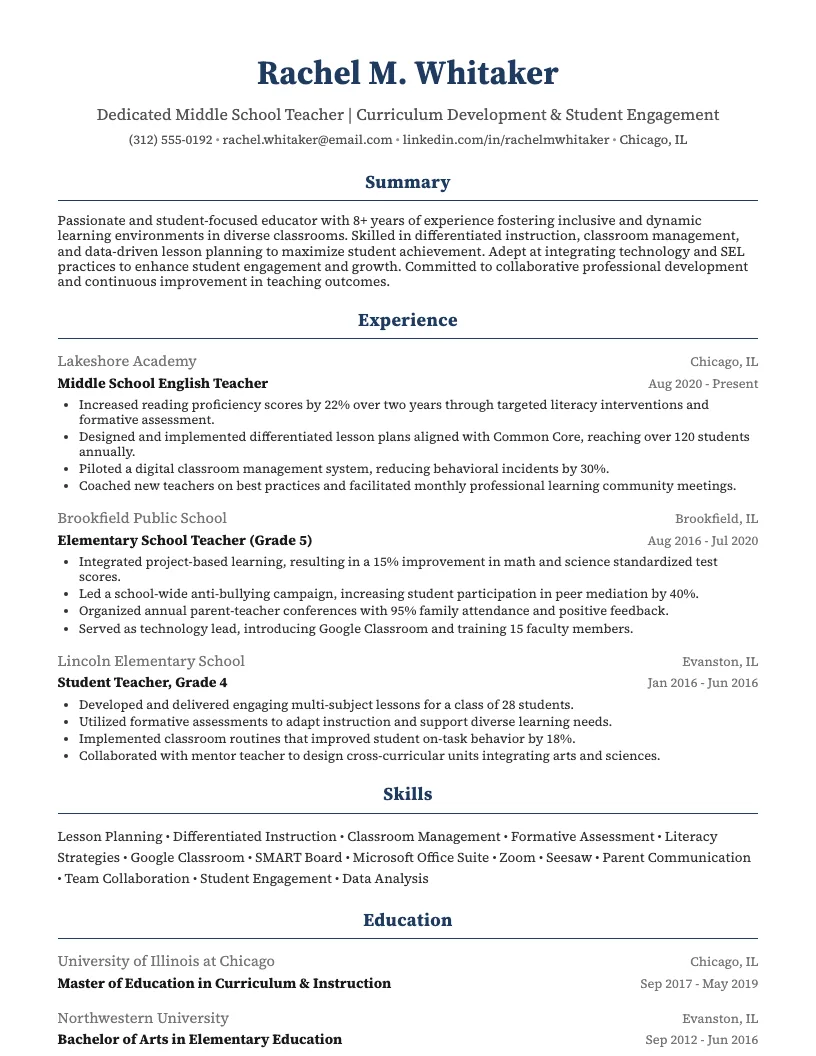
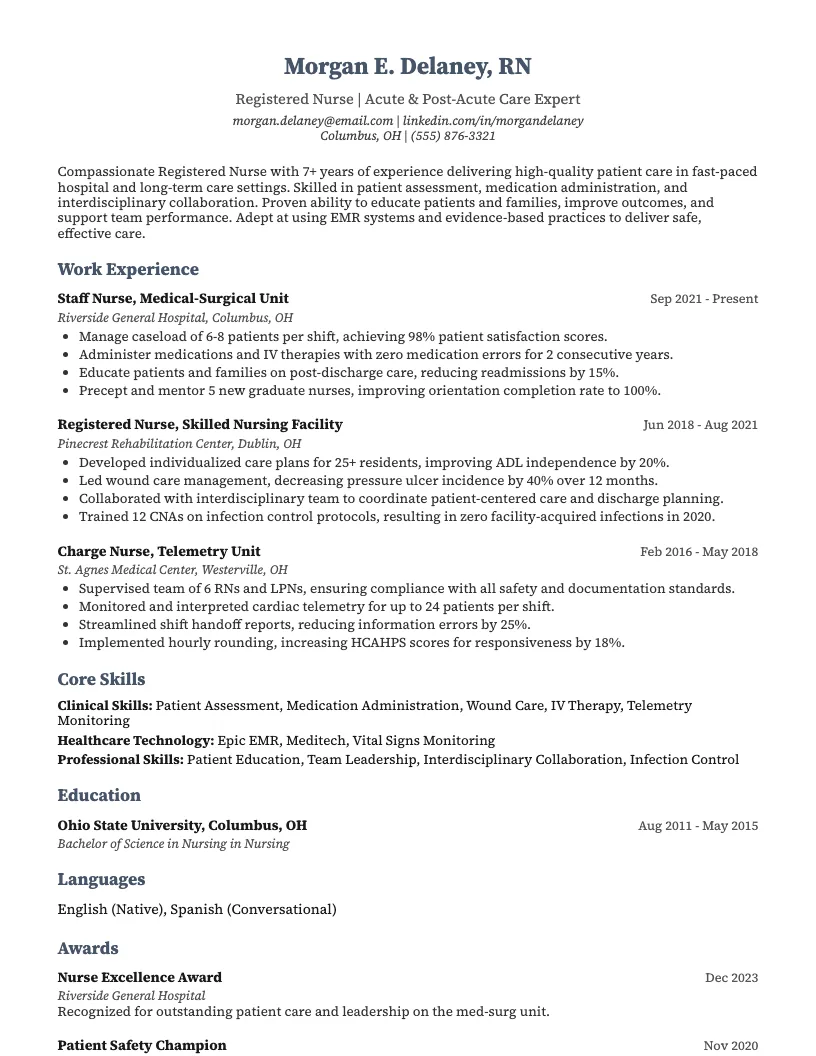
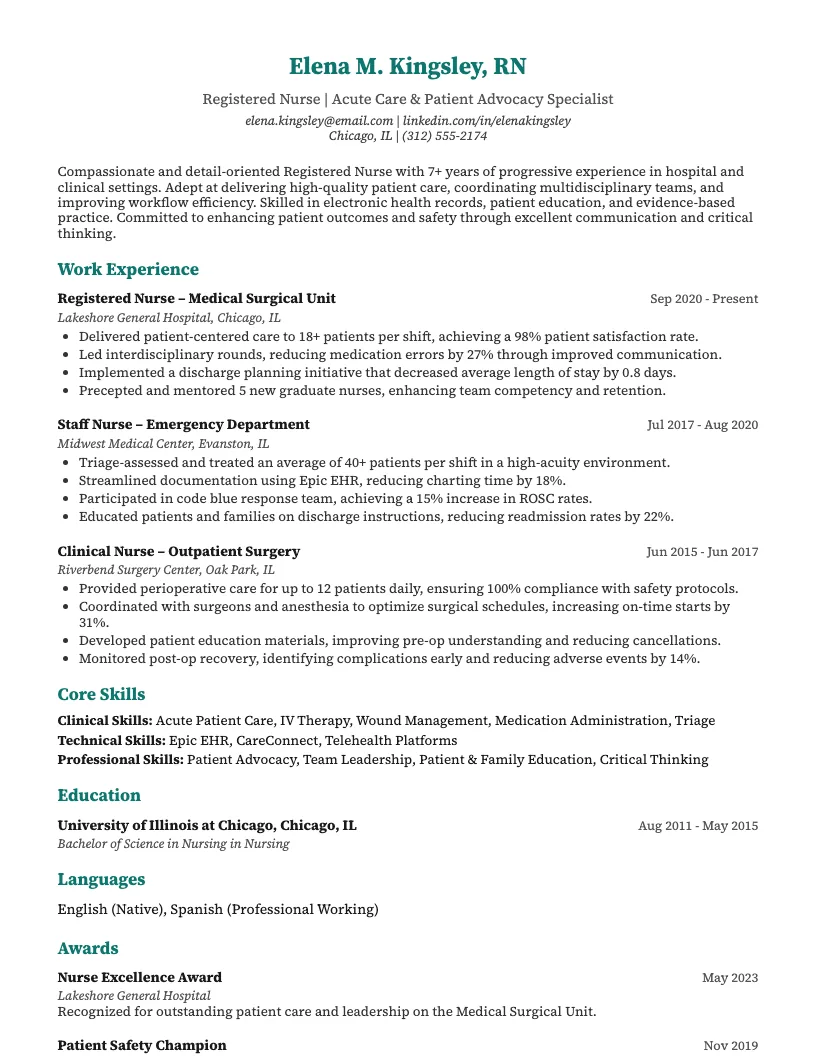
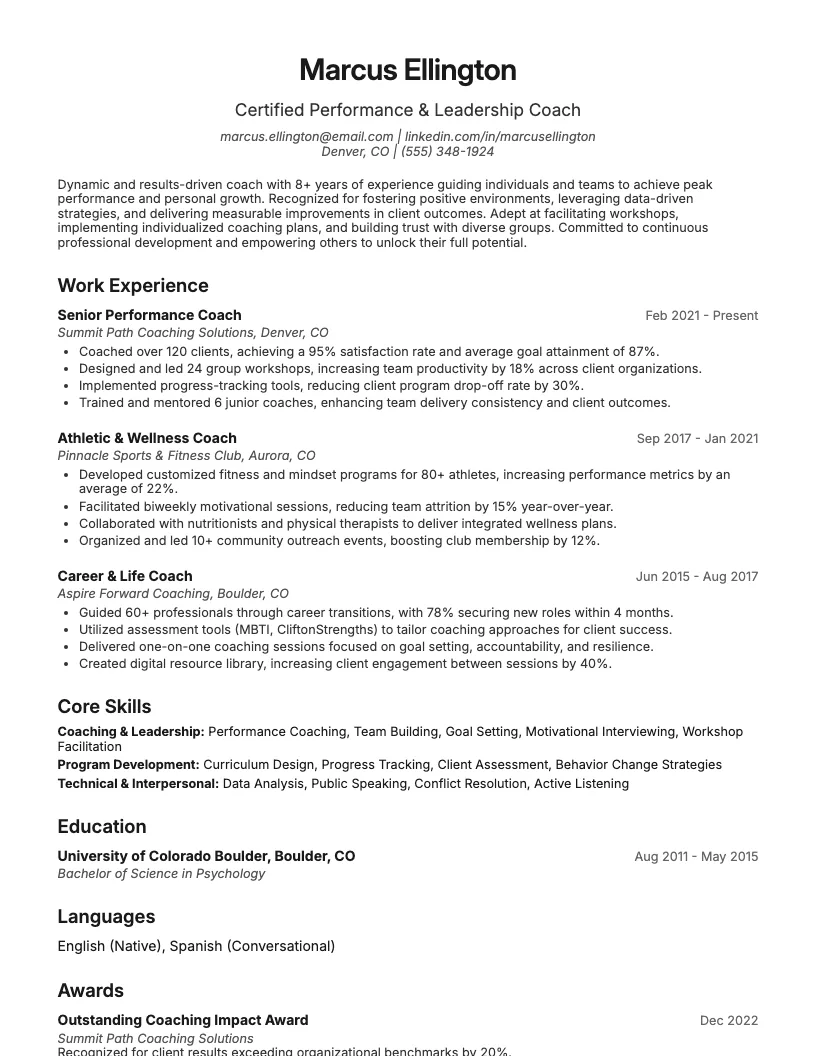
Click to enlarge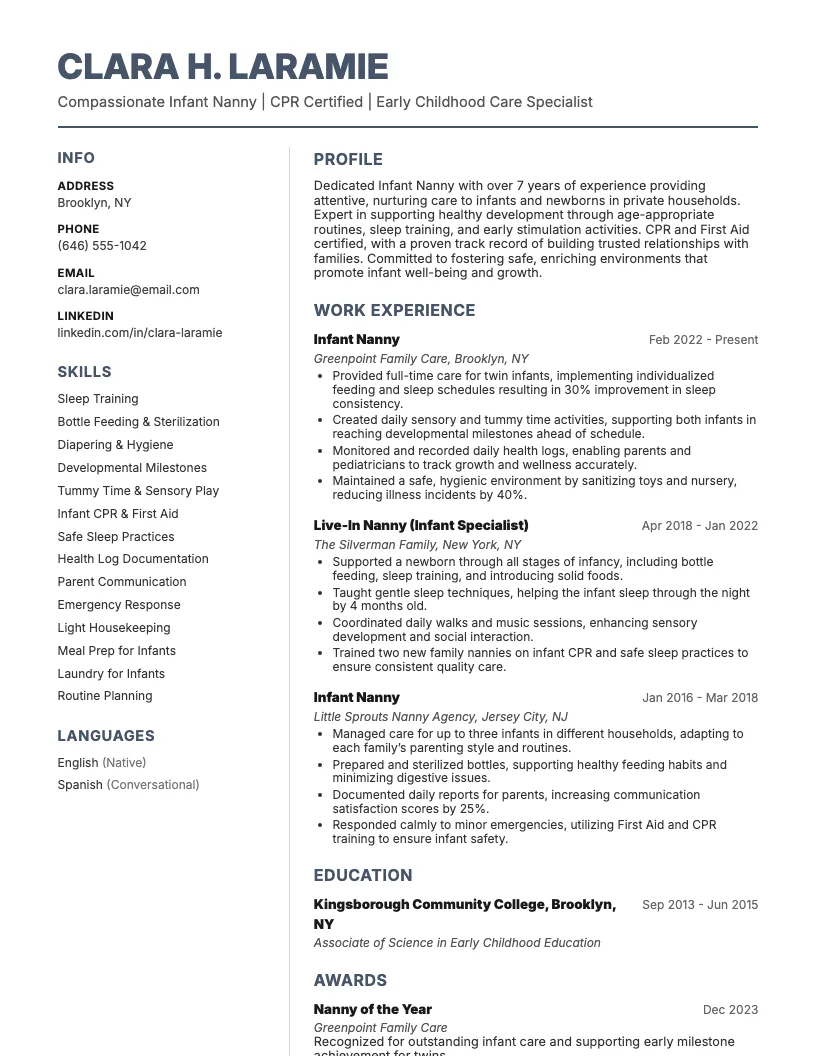 Click to enlarge
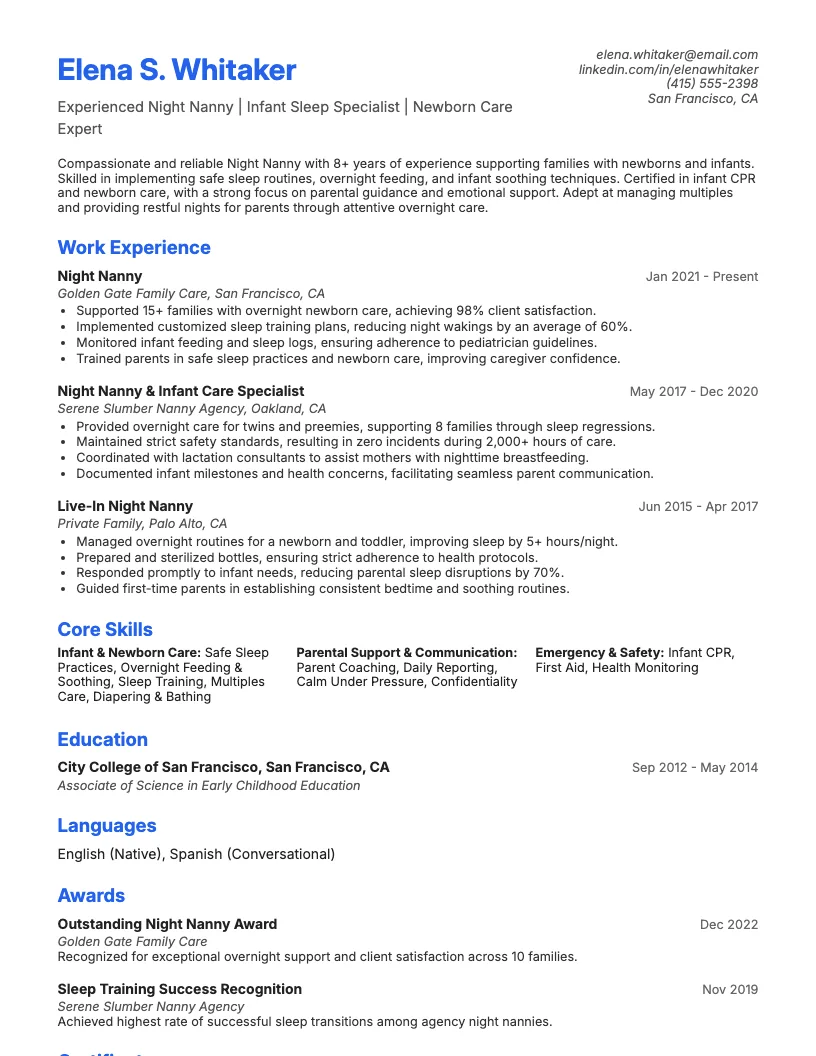 Click to enlarge
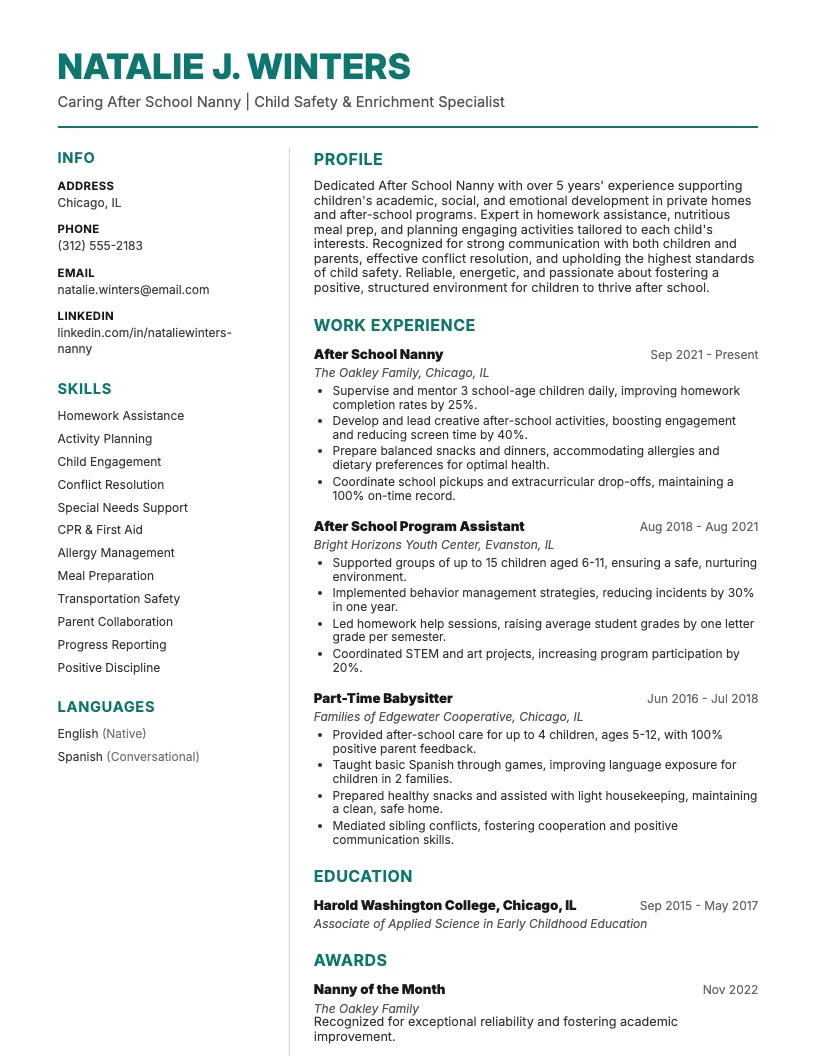 Click to enlarge
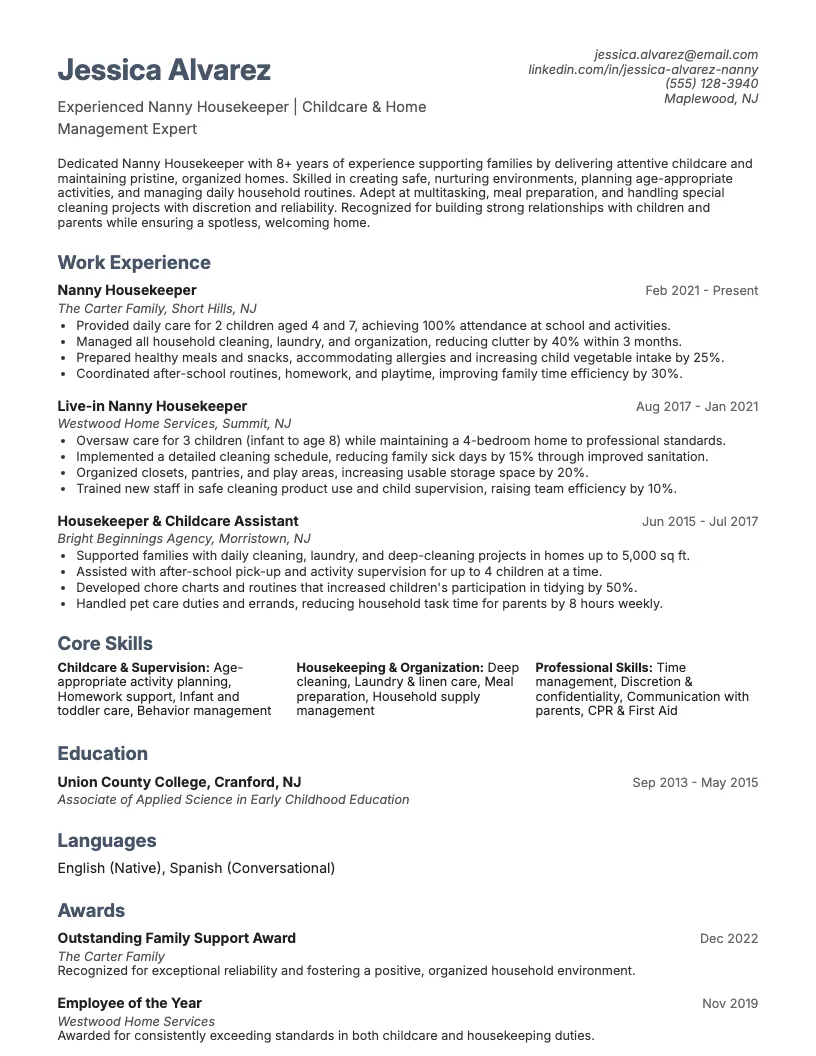 Click to enlarge
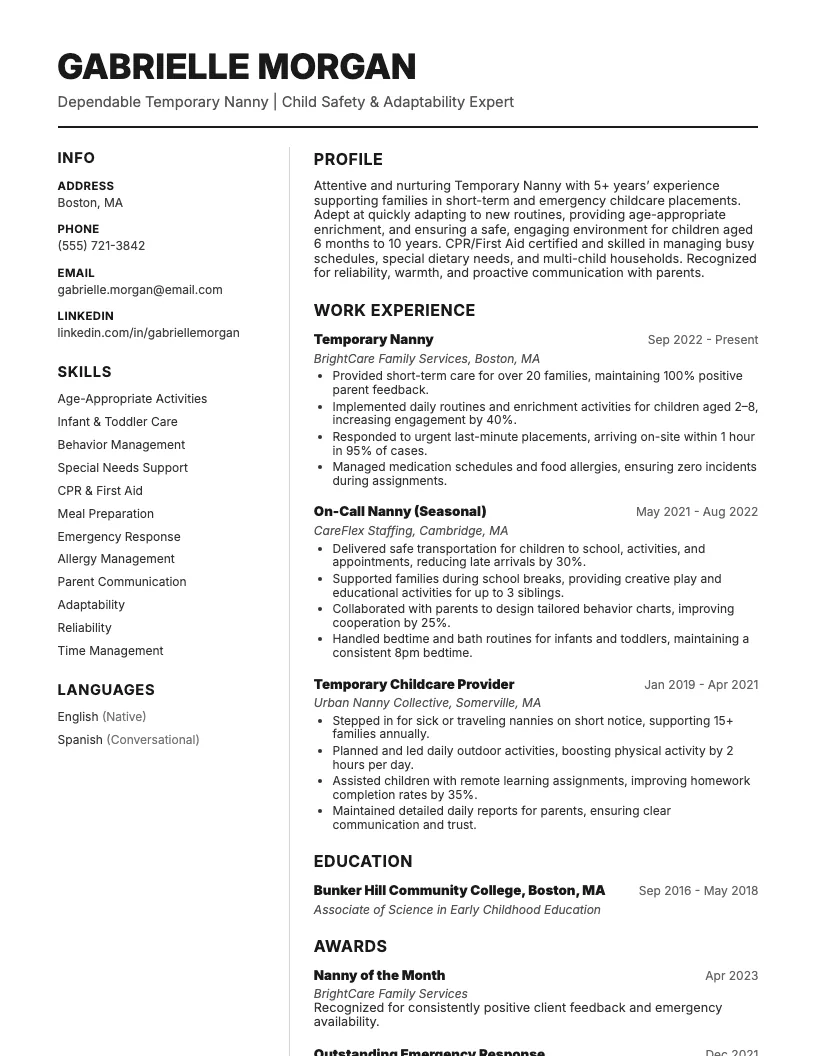 Click to enlarge
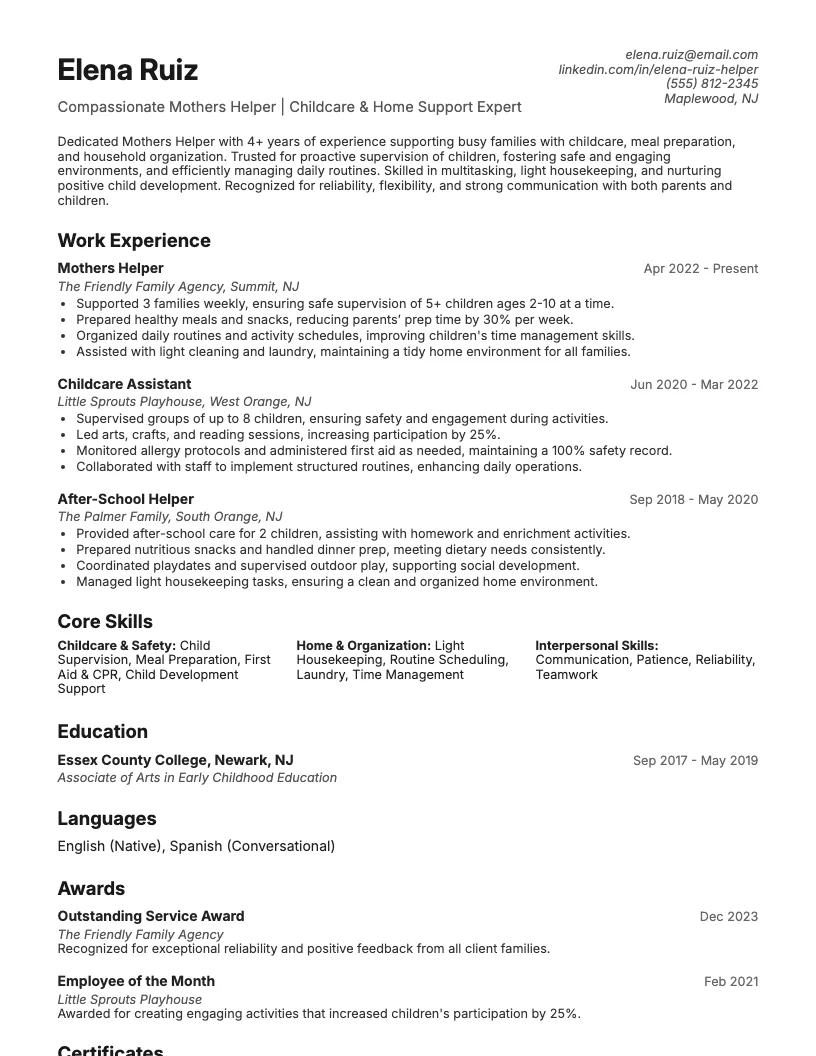 Click to enlarge
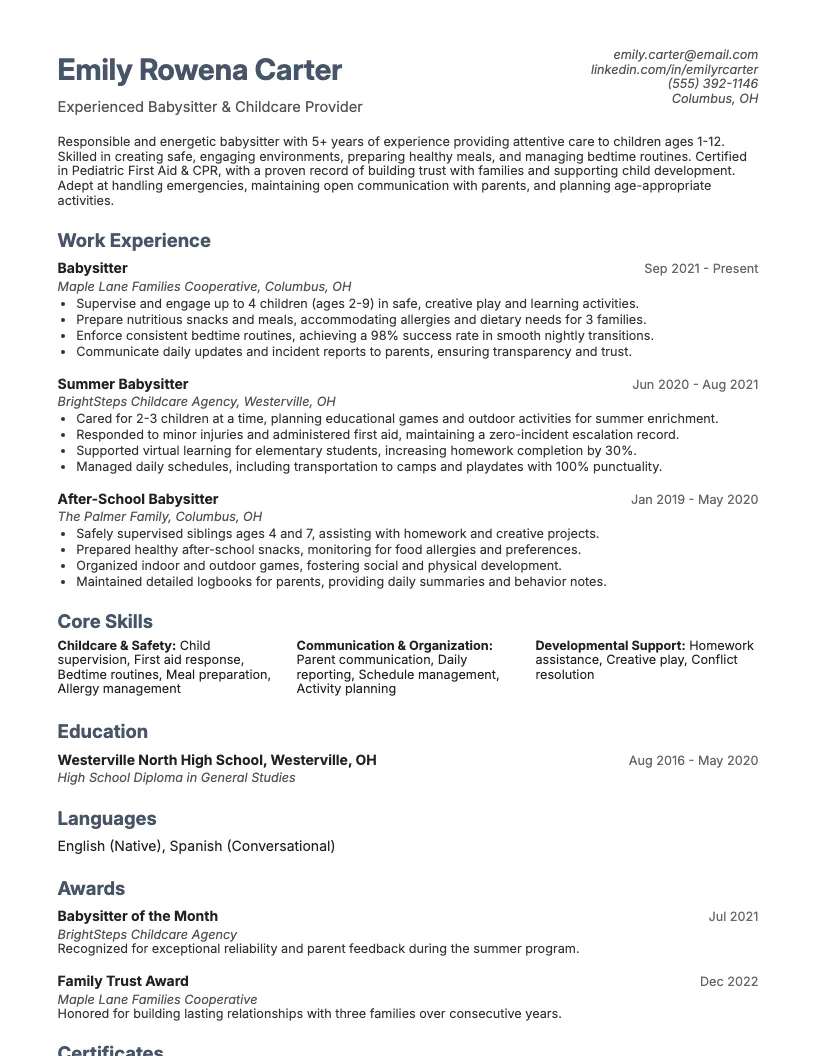 Click to enlarge
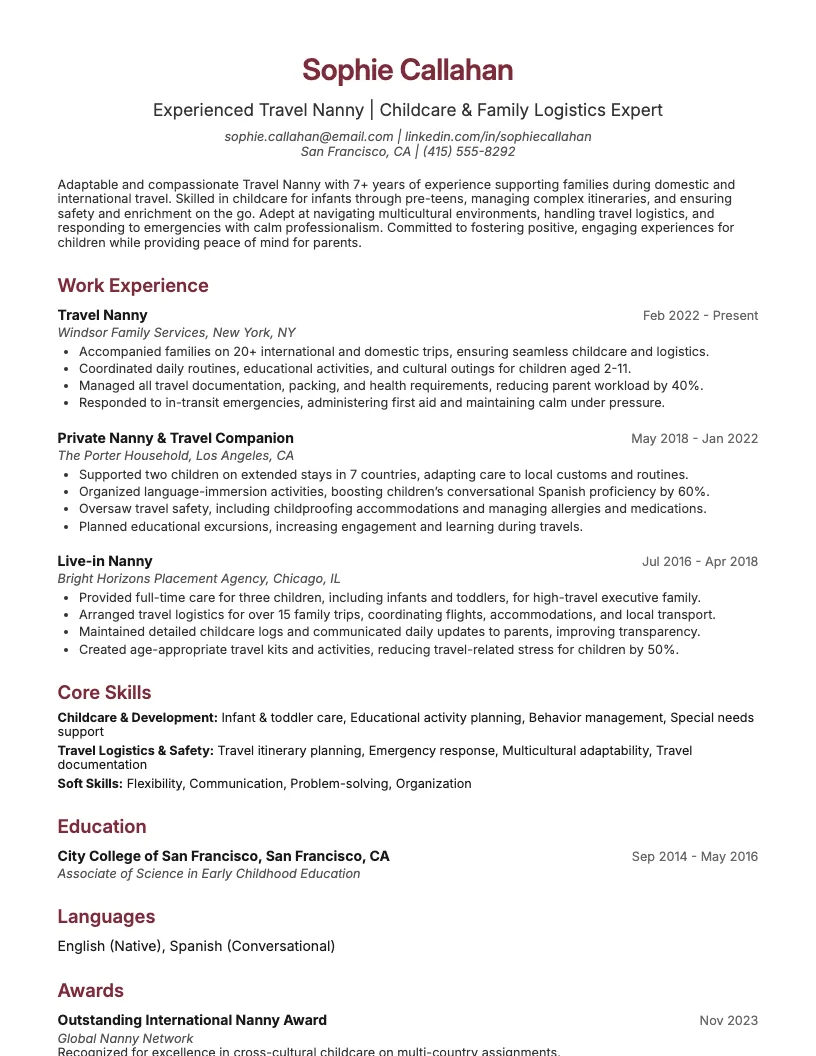 Click to enlarge
Common questions about Special Needs Nanny resumes
A Special Needs Nanny resume template highlights your experience caring for children with special needs. It’s tailored to show skills like patience, medical knowledge, and behavioral support. ResumeJudge makes it easy to showcase these strengths.
Yes, most Special Needs Nanny resume templates from ResumeJudge are ATS-friendly. This means they use simple formatting and keywords to help your resume pass automated screening systems used by agencies and families.
Use this template when applying for nanny positions with families, care agencies, or schools needing specialized care. ResumeJudge templates help you stand out for roles requiring expertise with autism, ADHD, or physical disabilities.
Absolutely! ResumeJudge templates are flexible-you can add certifications, adjust layouts, or highlight unique skills like medication administration or sensory integration, making your application more personal and relevant.
Special Needs Nanny templates focus on skills like communication with therapists, crisis management, and individualized care plans. ResumeJudge ensures these key qualities are highlighted, unlike standard childcare templates.
Keep your Special Needs Nanny resume to one page if you have less than 10 years’ experience. ResumeJudge formats help you fit essential skills and experience concisely, making your resume easy to read for busy employers.
Highlight skills like behavioral management, medication administration, and experience with specific conditions. ResumeJudge helps you showcase these skills to match job descriptions and stand out to families and agencies.
Yes, always list certifications like CPR, first aid, or special education training. ResumeJudge templates have dedicated sections for credentials, making your qualifications clear and impressive to employers.
It's best to mention that references are available upon request. ResumeJudge templates give you space to indicate this without taking up valuable room needed for your experience and skills.
Include any relevant education, such as early childhood development or special education courses. ResumeJudge makes it easy to organize your academic background alongside your hands-on experience.
Explore more professional resume examples to inspire your job search
Use our AI-powered resume builder to create a professional, ATS-friendly resume in minutes.
Free to use • No credit card required